The Law Offices of Anidjar and Levine investigates overloaded truck accidents in Daytona Beach by reviewing weight records, loading practices, maintenance history, driver conduct, and compliance with Florida and federal safety regulations.
The investigation may preserve photographs, surveillance footage, electronic data, inspection materials, cargo documents, and witness statements before evidence disappears.
Potential claims may involve the driver, carrier, loader, vehicle owner, or maintenance provider.
Injured individuals may seek compensation for medical expenses, lost income, property damage, pain, and other losses.
Learn more from a Daytona Beach Truck Accident Lawyer about your rights and legal options.
Main Takeaways
- A Daytona Beach overloaded truck accident lawyer investigates weight, cargo distribution, driver conduct, maintenance, and compliance with Florida and federal regulations.
- Attorneys preserve critical evidence, including scale tickets, loading records, electronic logs, vehicle data, photographs, surveillance footage, and witness statements.
- Potentially responsible parties may include the driver, trucking company, shipper, loading contractor, maintenance provider, or other negligent entities.
- Injury victims may seek compensation for medical expenses, lost income, property damage, pain and suffering, and other crash-related losses.
- A lawyer can identify insurance coverage, evaluate eligibility for punitive damages, handle insurers, and protect filing deadlines and settlement rights.


How We Can Help With Your Daytona Beach Overloaded Truck Accident Injury Claim
A Daytona Beach overloaded truck accident claim requires a careful investigation into the truck’s weight, loading practices, maintenance records, driver conduct, and the actions of the trucking company. Legal professionals can coordinate an efficient review designed to protect the injured person’s interests and preserve information before it disappears. Independent evidence preservation may include securing photographs, surveillance footage, electronic records, inspection materials, cargo documents, and vehicle data.
Counsel can also arrange witness statement collection while recollections remain reliable, identifying individuals who observed the loading process, roadway events, or immediate aftermath. The legal team may communicate with insurers, manage documentation, and evaluate available records to determine responsible parties and potential sources of recovery. It can also help organize medical records and claim materials without placing unnecessary demands on an injured individual or family. This support allows the client to focus on recovery while the matter receives careful, ethical, and accountable attention.
OUR CONSULTATIONSARE FREE
START YOUR FREE CASE REVIEW

Understanding Daytona Beach Overloaded Truck Accident Injury Cases
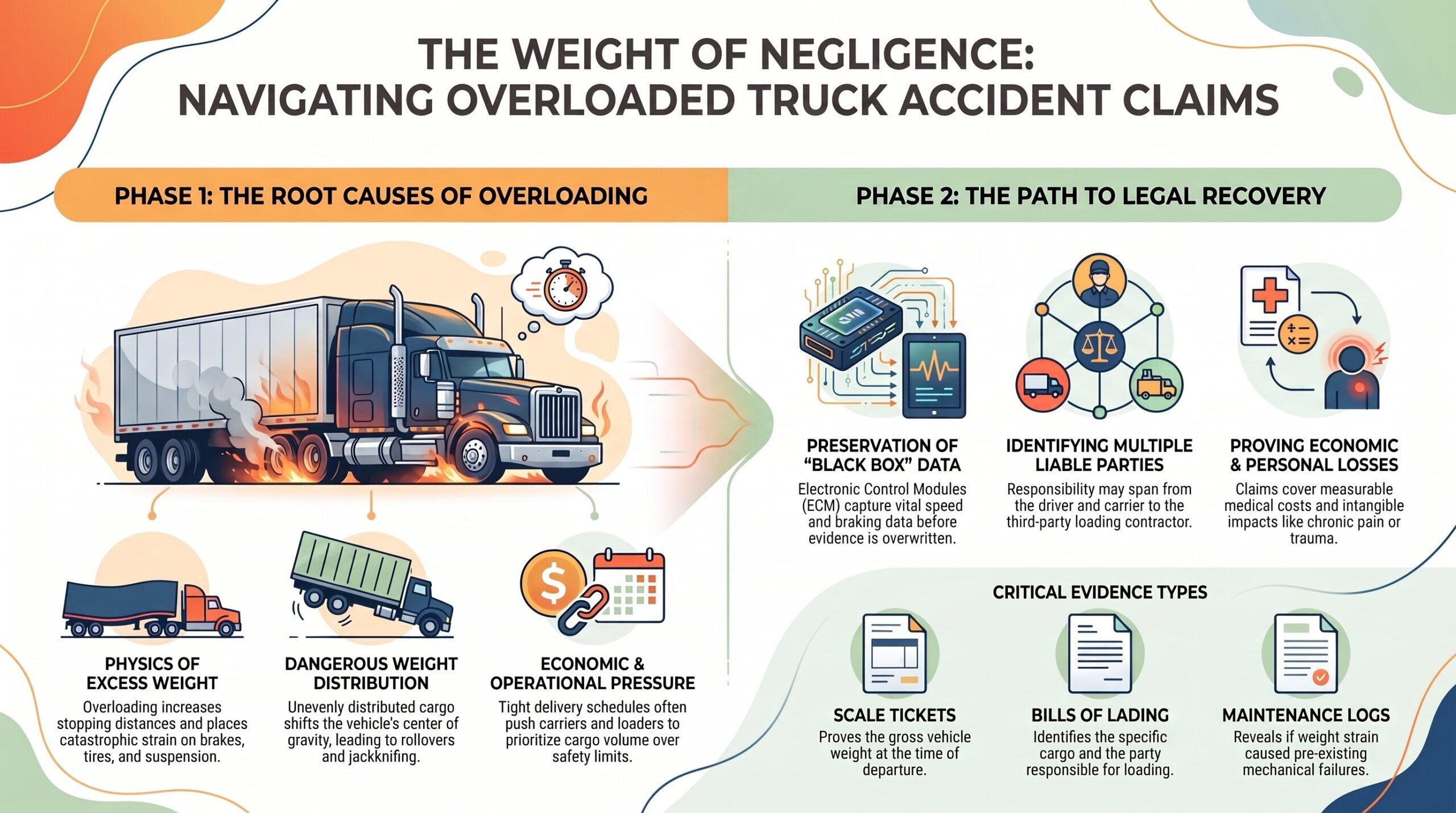
Several factors distinguish Daytona Beach overloaded truck accident injury cases from ordinary motor-vehicle claims, including the truck’s weight, cargo distribution, roadway conditions, and compliance with state and federal safety rules. These claims often require careful review of inspection records, loading documents, electronic logs, maintenance materials, and driver qualifications. Cargo Safety is central because improperly secured or unevenly distributed materials can affect braking, handling, and stability. Weight Limits also matter, as exceeding legal thresholds may increase stopping distances and place excessive stress on tires, brakes, and suspension systems.
Driver Fatigue may further complicate liability when hours-of-service requirements or rest obligations were not followed. Injured individuals may face fractures, traumatic brain injuries, spinal damage, lost income, and substantial medical expenses. A thorough evaluation identifies potentially responsible parties, preserves relevant evidence, and measures both immediate and long-term losses. Legal guidance can help families pursue accountability while protecting access to treatment and support throughout recovery.
Common Causes of Daytona Beach Overloaded Truck Accident
Common causes of Daytona Beach overloaded truck accidents include excessive cargo weight and improper load distribution, which can impair braking, handling, and vehicle stability. Inadequate weight monitoring may allow violations to go undetected, while pressure to meet delivery demands can encourage unsafe loading practices. Each factor may increase crash risks and raise questions about the conduct of trucking companies, drivers, and cargo handlers.
Excessive Cargo Weight
Excessive cargo weight is a leading cause of overloaded truck accidents in Daytona Beach because it can compromise a vehicle’s braking, handling, suspension, and overall stability. Trucks carrying more than permitted limits may require greater stopping distances, increasing the risk of collisions near intersections, work zones, and congested highways. Added weight can also strain tires, axles, and braking systems, potentially causing mechanical failures during travel. Federal and Florida regulations establish weight limits intended to protect motorists, passengers, and commercial drivers.
Carriers and drivers have a duty to verify cargo weights before departure and maintain appropriate Cargo securement throughout transportation. Careful inspection, maintenance, and speed compliance can help reduce hazards associated with excessive weight. When these responsibilities are neglected, injured individuals may seek guidance regarding available legal remedies and accountability.
Improper Load Distribution
When cargo is not distributed evenly across a truck or trailer, the vehicle’s balance, handling, and braking performance may be significantly affected. Concentrating weight on one axle or side can increase the risk of swaying, rollover, and loss of control, especially during turns, sudden stops, or evasive actions. Uneven pressure may also contribute to Vehicle tire failures, suspension damage, and reduced guidance responsiveness.
These conditions place other motorists, passengers, and pedestrians in unnecessary danger. Drivers may struggle to compensate for shifting cargo, particularly when securing methods are inadequate or freight moves during transit. The added physical and mental demands can contribute to driver fatigue, further impairing judgment and reaction time. Properly arranging and securing cargo supports safer transportation and helps protect everyone sharing Daytona Beach roads.
Inadequate Weight Monitoring
Accurate weight monitoring is necessary to prevent trucks from operating beyond legal or manufacturer limits. Inadequate monitoring can occur when carriers rely on estimates, outdated scale readings, or incomplete information from shippers. Without dependable measurements, drivers may unknowingly begin trips with cargo that exceeds axle, gross vehicle, or equipment capacities. Such oversights threaten cargo safety and increase stopping distances, tire stress, brake strain, and rollover risks. Proper procedures should include verified scale tickets, documented cargo weights, and inspections before departure.
Electronic systems can assist, but they require calibration, maintenance, and consistent use. Recordkeeping failures may also prevent companies from identifying recurring weight discrepancies or demonstrating compliance after a collision. Accurate records support accountability and help protect drivers, passengers, and other motorists who share Florida’s roadways. Regular audits further strengthen these safeguards.
Pressure To Overload
Economic and operational pressure can lead trucking companies, shippers, or drivers to place more cargo on a vehicle than its legal or manufacturer-rated capacity permits. Tight delivery schedules, customer demands, and payment structures may encourage shortcuts when businesses prioritize production over safety. A driver may accept an overloaded assignment to preserve employment, even when Driver fatigue, poor vehicle handling, or longer stopping distances create substantial risks.
Companies that knowingly tolerate excessive weights may also face enforcement fines, civil penalties, and increased liability after a collision. Investigators may examine dispatch records, loading instructions, scale tickets, and communications to determine who authorized the excess cargo. Any effort to conceal weight information, alter logs, or destroy records may constitute evidence tampering and can complicate efforts to protect injured people and establish accountability.


Legal Rights of Daytona Beach Overloaded Truck Accident Injury Victims
Daytona Beach overloaded truck accident injury victims may have legal rights to pursue compensation for medical expenses, lost income, property damage, pain and suffering, and other losses caused by the crash. A claim may involve the truck driver, carrier, loading company, maintenance provider, or other responsible parties. An attorney can preserve evidence, identify applicable insurance coverage, and evaluate deadlines for filing suit.
Daytona Beach truck accident victims may pursue compensation from negligent drivers, carriers, loaders, maintenance providers, and other responsible parties.
Potential legal considerations include:
- Documented treatment, wage records, repair estimates, and testimony may support the claimed losses.
- Comparative fault defenses could reduce recovery if another party alleges that the injured person contributed to the collision.
- Punitive damages eligibility may arise when conduct reflects conscious disregard for public safety, though such damages require specific proof.
Victims may also have rights to communicate through counsel, reject inadequate settlement offers, and pursue litigation when negotiations fail. Prompt, compassionate guidance can help protect evidence and support families seeking accountability while allowing injured individuals to focus on recovery. Legal assessments depend on the facts, injuries, and applicable Florida law.
Why Do Daytona Beach Overloaded Truck Accident Injuries Happen?
Overloaded truck accident injuries often occur because excess cargo changes a commercial vehicle’s handling, braking distance, stability, and ability to respond to traffic conditions. When weight limits are exceeded, tires, brakes, suspension systems, and guiding components may experience stress beyond their intended capacity. Improperly distributed cargo can shift during travel, causing rollovers, jackknifing, or sudden loss of control.
These crashes may result from several forms of negligence. A trucking company, shipper, or loading contractor might fail to weigh freight, secure materials, or follow applicable regulations. In other cases, driver training lapses may leave an operator unprepared to recognize dangerous weight distribution or adjust speed appropriately. Maintenance failures can further increase the likelihood of equipment breakdown.
Investigators often examine loading records, inspection reports, electronic data, and company policies when evaluating responsibility. Cargo negligence proof may establish that careless loading or supervision contributed to the collision. Understanding these causes helps injured individuals and their supporters recognize how preventable safety failures can affect the community.
What Should You Do After a Daytona Beach Overloaded Truck Accident Injury?
After a Daytona Beach overloaded truck accident injury, the injured person should seek immediate medical care, even if symptoms initially appear minor. Documenting the accident scene, including injuries, vehicle damage, and relevant conditions, may help preserve important evidence. Contacting a qualified truck accident lawyer can support the protection of legal rights and the evaluation of potential claims.
Seek Immediate Medical Care
Prompt medical evaluation should be obtained following an injury involving an overloaded commercial truck, even when symptoms initially appear minor. A qualified healthcare professional can identify internal trauma, concussions, fractures, or soft-tissue damage that may not be immediately noticeable. Whiplash symptoms, including neck stiffness, headaches, dizziness, and reduced mobility, can develop hours or days after a collision and should receive prompt attention. If severe pain, breathing difficulty, loss of consciousness, confusion, weakness, or uncontrolled bleeding occurs, emergency treatment may be necessary.
Injured individuals should follow medical instructions, attend recommended follow-up appointments, and explain every symptom accurately. Timely care supports recovery and creates a reliable medical record of the injury. Seeking help promptly also allows family members and caregivers to provide appropriate support while protecting the injured person’s health and well-being.
Document The Accident Scene
At the accident scene, injured individuals or their representatives should document conditions that may help establish how the Daytona Beach overloaded truck collision occurred. When safety permits, photographs should show vehicle positions, visible damage, road markings, traffic signals, weather conditions, cargo placement, and any apparent debris. Images from several distances can preserve context that individual close-ups may miss. A written record should note the time, location, lane configuration, lighting, and statements made by drivers or witnesses.
Witness statements should be gathered respectfully, including names and contact information when individuals voluntarily provide them. Scene walkthrough evidence, such as a careful video recording of travel paths and surrounding conditions, may help preserve details before vehicles, cargo, or roadway conditions change. Documentation should never delay emergency care or place anyone in additional danger.
Contact A Truck Accident Lawyer
Why should an injured person contact a truck accident lawyer following a Daytona Beach overloaded truck collision? An attorney can protect the injured person’s interests while evidence remains available and insurance representatives begin evaluating liability. Counsel may gather witness statements, preserve loading records, and identify whether cargo weight or placement violated safety requirements. A lawyer can also request ECM data, which may document speed, braking, and other operating conditions before impact.
In addition, counsel may obtain vehicle inspection reports to determine whether maintenance failures contributed to the collision. Prompt legal assistance helps coordinate medical documentation, communicate with insurers, and prevent statements from being misunderstood. By handling these responsibilities, a truck accident lawyer allows an injured person and supportive family members to focus on recovery while pursuing accountability and resources for necessary care.
Critical Evidence in a Daytona Beach Overloaded Truck Accident Injury Case
Critical evidence may establish whether excessive weight, improper loading, or negligent conduct contributed to a Daytona Beach truck collision.
- Truck weight records and loading or cargo data
- Accident scene photographs, measurements, and vehicle damage
- Driver and carrier records, including inspection and hours-of-service documentation
These materials can help clarify liability, regulatory violations, and the extent of the injured party’s claim.
Truck Weight Records
When a commercial truck’s weight may have contributed to a collision, truck weight records can provide essential evidence in a Daytona Beach overloaded truck accident injury case. These records may include certified scale tickets, roadside weighing results, axle measurements, and citations issued during enforcement inspections. Investigators can compare documented weights with federal standards and applicable Florida limits to determine whether the vehicle exceeded lawful thresholds.
A cargo inspection may also reveal whether the truck’s recorded weight was measured accurately and whether enforcement personnel identified a violation. Preserving these documents can help establish what the carrier or driver knew about the vehicle’s weight before the crash. Attorneys serving injured individuals may obtain records through subpoenas, agency requests, or litigation discovery, then use qualified experts to explain their significance to insurers, judges, or juries.
Loading And Cargo Data
Loading and cargo data can help determine whether improper planning, documentation, or distribution contributed to an overloaded truck accident in Daytona Beach. Bills of lading, shipping manifests, pallet counts, cargo descriptions, and electronic loading records may show what the carrier accepted and how the freight was arranged. Weight tickets and load plans can reveal whether distribution placed excessive pressure on particular axles or compromised vehicle stability.
Records identifying responsible employees, contractors, and dispatch personnel may further clarify operational duties. Careful review supports a thorough Risk assessment and helps counsel develop a focused trial strategy. Such evidence may assist in proving fault by connecting unsafe cargo practices with the collision and resulting injuries. It also addresses jury expectations for reliable, organized proof rather than unsupported conclusions.
Accident Scene Evidence
Accident scene evidence can establish how an overloaded truck contributed to a collision in Daytona Beach. Photographs of vehicle positions, roadway damage, tire marks, debris, and visible cargo conditions may help reconstruct the event and identify factors affecting braking, direction control, or stability. Surveillance footage from nearby businesses, traffic cameras, or private vehicles can preserve pivotal details that might otherwise disappear. Prompt efforts to locate and secure such recordings are important because systems may overwrite files quickly.
Eyewitness statements can provide independent accounts of truck movement, speed, lane position, unusual swaying, or the sequence of impacts. Investigators may also document lighting, weather, road design, signage, and traffic conditions. Preserving this evidence supports accurate analysis and helps injured individuals, families, and their representatives present a reliable account of the collision.
Driver And Carrier Records
Driver and carrier records can reveal whether an overloaded truck accident in Daytona Beach resulted from negligent loading, inadequate supervision, or violations of federal and state safety requirements. These materials may identify who assigned the load, approved its weight, and directed the driver to operate the vehicle. Vehicle inspection records can show whether brakes, tires, suspension components, and other systems were examined before the trip.
Dispatch logs, driver qualification files, training records, and hours-of-service documentation may also indicate whether the carrier promoted unsafe practices or ignored known risks. Loading compliance documents can clarify cargo weight, distribution, securement procedures, and required permits. Preserving these records promptly is important because electronic data may be altered or routinely deleted. Careful review can help injured individuals and their families pursue accountability and obtain appropriate support.
Long-Term Effects of Daytona Beach Overloaded Truck Accident Injuries
Long-term injuries from an overloaded truck collision may cause chronic pain, reduced mobility, and lasting limitations on daily activities. Survivors may also experience emotional and psychological trauma, including anxiety, depression, or post-traumatic stress. Ongoing treatment, rehabilitation, and lost income can create substantial medical and financial costs for injured individuals and their families.
Chronic Pain And Mobility Issues
When an overloaded truck crash in Daytona Beach causes serious trauma, chronic pain and mobility limitations may continue long after the initial injuries have improved. Persistent back, neck, joint, or nerve pain can restrict walking, lifting, driving, and ordinary household tasks. Reduced movement may require physical therapy, assistive devices, home modifications, or continuing medical evaluations. Sleep and recovery can be affected when discomfort interrupts rest, slowing rehabilitation and reducing daily functioning.
These limitations may also disrupt work when an injured person cannot perform prior duties, maintain hours, or return safely to the workplace. Disability accommodations may become necessary, including modified assignments, accessible facilities, or flexible scheduling. Coordinated medical care and mental health support can help address the practical effects of prolonged impairment without minimizing the person’s need for dignity, independence, and reliable assistance.
Emotional And Psychological Trauma
Emotional and psychological trauma may persist alongside chronic pain and mobility limitations after an overloaded truck accident in Daytona Beach. Survivors may experience anxiety, depression, irritability, sleep disruption, or intrusive memories that interfere with relationships, employment, and ordinary responsibilities. Some develop heightened vigilance around large vehicles, night driving hazards, or intersections where the collision occurred. Others avoid travel entirely, particularly after witnessing distracted driving behavior or fearing another preventable crash.
These responses can affect confidence and independence even after physical injuries are treated. Compassionate support from family members, counselors, physicians, and community advocates may help survivors recognize symptoms and pursue appropriate care. Documentation of emotional changes can also clarify the accident’s continuing impact for those assisting with recovery, without reducing the person’s experience to a diagnosis or temporary setback.
Ongoing Medical And Financial Costs
Beyond immediate treatment, injuries from an overloaded truck accident in Daytona Beach can create continuing medical and financial obligations. Surgeries, rehabilitation, prescription medication, follow-up examinations, and assistive equipment may remain necessary for months or years. Medical treatment delays can worsen conditions and complicate efforts to establish the injury’s full impact. Lost wages, reduced earning capacity, transportation expenses, and necessary household assistance may add substantial pressure to an injured person and family.
Accurate truck crash reporting helps preserve information about vehicle weight, loading practices, and responsible parties. However, insurance claim denials may interrupt access to needed care, particularly when insurers dispute causation or rely on incomplete records. Cargo manifest errors can further obscure responsibility and support for a claim. Careful documentation allows advocates to pursue compensation that addresses both present and future needs.
Proving Liability in Daytona Beach Overloaded Truck Accident Injury Cases
Proving liability in a Daytona Beach overloaded truck accident injury case requires establishing that a party violated a legal duty and that the violation caused the collision and resulting injuries. Potentially responsible parties may include the driver, trucking company, cargo loader, or vehicle owner. Evidence may show excessive weight, improper loading, inadequate inspections, unsafe driving, or violations of federal and Florida transportation rules.
Evidence preservation should begin promptly. Photographs, witness accounts, police reports, electronic driving records, weigh-station records, maintenance files, and cargo documents can clarify how the truck was operated and loaded. Medical documentation should connect diagnosed injuries to the crash and describe treatment, limitations, and expected recovery. Insurance claim timelines may affect notice requirements and the organization of supporting materials. A careful liability analysis also supports informed settlement negotiation while protecting the injured person’s interests. Legal professionals can coordinate investigations, obtain records, and present facts clearly so responsible parties are held accountable and injured individuals receive meaningful assistance.
Dealing With Insurance Companies After a Daytona Beach Overloaded Truck Accident Injury
Insurance companies often begin evaluating a Daytona Beach overloaded truck accident claim soon after the collision, making early communication and evidence preservation crucial. Adjusters may request recorded statements, medical authorizations, photographs, or explanations of how the injury occurred. Although cooperation can assist a fair review, injured individuals should avoid speculation, minimizing symptoms, or accepting responsibility before understanding the available evidence.
A lawyer can communicate with insurers, organize supporting documentation, and address attempts to shift blame onto another driver or the injured person. Relevant materials may include crash reports, medical records, wage information, vehicle data, loading records, and trucking-company safety documents. Because an overloaded vehicle can involve multiple responsible parties and insurance policies, careful review helps protect the injured person’s interests.
Counsel may develop a mediation strategy when negotiation could resolve the dispute efficiently and respectfully. If settlement discussions fail, trial preparation preserves leverage and ensures evidence, witnesses, and damages are presented effectively. Throughout these communications, a representative can help maintain accuracy, accountability, and consideration for the injured person’s recovery.
What to Expect During a Daytona Beach Overloaded Truck Accident Injury Claim Process
A Daytona Beach overloaded truck accident claim generally begins with an initial evaluation of the injuries, liability, and available insurance coverage. The evidence-gathering process may include medical records, crash reports, vehicle data, witness statements, and documentation concerning the truck’s weight and loading practices. After reviewing the evidence, the parties proceed through insurance negotiations, with the matter potentially resolving through settlement or advancing to trial.
Initial Claim Evaluation
When a Daytona Beach overloaded truck accident claim is first evaluated, the reviewing attorney typically examines the available evidence, the injuries involved, and the circumstances that may establish liability. This initial review helps determine whether the facts support a viable claim and which parties may bear responsibility. A liability investigation may consider vehicle loading practices, driver conduct, carrier oversight, and applicable safety requirements without yet undertaking a full evidence gathering process. Evidence preservation is addressed by identifying materials that could become unavailable or altered.
Insurance communication is also assessed, including insurer requests, recorded statements, and early settlement proposals. Medical documentation receives careful attention because treatment records, diagnoses, and prognosis help establish the nature and extent of claimed harm. The attorney then explains potential procedures, deadlines, risks, and practical options to support informed decisions.
Evidence Gathering Process
Following the initial claim evaluation, the evidence-gathering process organizes and verifies the facts needed to assess liability and damages in a Daytona Beach overloaded truck accident injury claim. Counsel may collect police reports, photographs, medical documentation, cargo measurements, and Eyewitness statements while memories and physical conditions remain reliable. Independent investigations can examine the crash site, vehicle configuration, loading practices, and applicable safety requirements without relying solely on preliminary reports.
Digital data, including electronic logging information, onboard systems, dispatch communications, and available surveillance footage, may help establish timing, speed, and operational decisions. Maintenance records can reveal inspection histories, mechanical concerns, or missed service obligations. Medical professionals may also document treatment, prognosis, and functional limitations. Preserving this material supports accurate evaluation and helps protect the injured person’s interests throughout the claim.
Insurance Negotiation Steps
Insurance negotiations typically begin after the available evidence, medical information, and damages have been organized into a demand package. The insurer reviews liability, the truck’s loading records, applicable coverage, and the claimant’s documented losses. A representative may request additional records, question treatment, or challenge whether the cargo weight caused the collision. Responses should remain accurate, consistent, and supported by evidence preservation efforts, including photographs, inspection reports, witness information, and electronic records.
Medical documentation should explain diagnoses, treatment, restrictions, and anticipated care without overstating recovery. Coverage must also be examined carefully, particularly when multiple commercial policies or uninsured motorist claims may apply. A legal representative may communicate with adjusters, address incomplete evaluations, and protect the claimant from recorded statements or premature releases while negotiations proceed through documented exchanges.
Settlement Or Trial
A Daytona Beach overloaded truck accident injury claim may resolve through a negotiated settlement or proceed to trial if the parties cannot agree on fair compensation. During evaluation, counsel may examine liability evidence, including loading records, maintenance files, driver logs, inspection reports, photographs, and witness statements. Medical documentation and testimony can establish the injury’s severity, treatment needs, lost income, and future limitations. A settlement strategy generally considers documented damages, disputed facts, insurance coverage, and the risks and costs of litigation.
If negotiations produce an acceptable offer, the claimant may resolve the matter without courtroom proceedings. If not, the case may advance through discovery, motions, expert testimony, and trial. The court or jury then determines liability and damages. Throughout either path, informed decisions should protect the claimant’s interests and support fair compensation.
Compensation for Daytona Beach Overloaded Truck Accident Injury Damages
Compensation for Daytona Beach overloaded truck accident injuries may cover medical expenses, lost income, reduced earning capacity, property damage, and pain and suffering when another party’s negligence caused the crash. Economic damages should be documented through medical records, billing statements, wage information, repair estimates, and testimony concerning future needs. A claim may involve the truck driver, motor carrier, cargo loader, maintenance provider, or other responsible entity, depending on the facts and applicable liability limits.
Evidence preservation is critical because inspection reports, electronic logging data, weigh station records, cargo documents, and vehicle components may establish how excess weight contributed to the collision. Injured individuals and families benefit from prompt guidance when communicating with insurers and protecting their interests. Insurance timelines can affect reporting requirements, claim evaluations, and settlement discussions, particularly when several policies apply. Careful review of responsibility, available coverage, and documented losses helps guarantee that compensation reflects the harm sustained and supports recovery.
Economic vs Non-Economic Damages in Daytona Beach Overloaded Truck Accident Cases
Economic damages may include medical expenses, lost wages, property damage, and other measurable financial losses caused by an overloaded truck collision. Non-economic damages address less tangible harm, such as pain and suffering, emotional distress, and diminished quality of life. Establishing the value of both categories generally requires organized records, expert testimony, and evidence connecting the losses to the accident.
Economic Damages
When an overloaded truck causes a collision in Daytona Beach, economic damages generally cover the measurable financial losses resulting from the crash. These losses may include emergency treatment, hospitalization, medication, rehabilitation, and other reasonable medical expenses connected to documented injuries. They can also include anticipated future healthcare costs when qualified professionals establish that continuing care will be necessary. Lost wages may be recoverable when injuries prevent work, reduce earning capacity, or require missed time for treatment.
Property damage, vehicle repairs, rental transportation, and damaged personal belongings may also form part of the claim. Thorough medical documentation helps link treatment to the collision and supports accurate valuation. During insurance negotiation, organized records, wage information, invoices, and professional estimates can help present the full financial impact and promote a fair resolution for affected individuals.
Non-Economic Damages
Although non-economic damages do not correspond to specific bills or invoices, they address the personal effects of an overloaded truck collision in Daytona Beach. These damages may encompass physical pain, emotional distress, diminished enjoyment of life, inconvenience, disfigurement, and loss of companionship. They recognize that serious injuries can alter family relationships, daily routines, independence, and participation in meaningful activities. The value assigned depends on the injury’s nature, duration, and effect on the person’s life, rather than on a fixed fee schedule.
Damages documentation may include treatment records, personal accounts, and statements from relatives or caregivers describing these effects. During settlement negotiation, counsel may present this information to seek compensation reflecting the harm experienced. Non-economic recovery is separate from economic losses, but both categories may arise from the same collision and related injuries.
Proving Damage Value
Establishing the value of damages in a Daytona Beach overloaded truck accident requires evidence that connects each claimed loss to the collision and demonstrates its effect on the injured person’s life. Economic damages may include emergency treatment, rehabilitation, medication, lost wages, reduced earning capacity, property damage, and anticipated medical needs. Bills, employment records, expert projections, and a disciplined medical record strategy can substantiate these amounts. Non-economic damages address pain, emotional distress, disability, disfigurement, and diminished enjoyment of life.
Testimony from the injured person, family members, physicians, and counselors may clarify these effects. Evidence preservation should begin promptly, including photographs, records, and communications. Careful insurance communication protects the claim from misstatements. A documented settlement timeline helps evaluate offers against continuing treatment, proven losses, and the person’s long-term needs.
When a Daytona Beach Overloaded Truck Accident Injury Case Goes to Trial vs Settlement
The decision to pursue settlement or proceed to trial in a Daytona Beach overloaded truck accident case depends on the strength of the evidence, the extent of the injuries, and the parties’ willingness to resolve the dispute. Settlement may provide compensation sooner, reduce litigation uncertainty, and spare injured individuals from the demands of testimony and cross-examination. Negotiations typically involve medical records, wage documentation, expert opinions, photographs, and evidence preservation tips addressing vehicle condition, loading practices, and accident-scene materials.
Trial may become necessary when insurers dispute responsibility, undervalue losses, or refuse reasonable negotiations. A judge or jury then evaluates liability, causation, and damages based on the evidence presented. Counsel should explain court settlement timelines, because discussions may occur before filing, during discovery, or shortly before trial. Preparation for either path requires organized records, credible witnesses, and careful attention to changing medical needs. The appropriate strategy should protect the injured person’s interests while supporting a fair resolution and preserving resources for recovery.
Florida Laws That May Affect Your Daytona Beach Overloaded Truck Accident Case
Florida law can affect nearly every stage of a Daytona Beach overloaded truck accident claim, including liability, compensation, evidence, and filing deadlines. State and federal Commercial trucking regulations may establish whether a carrier, driver, shipper, or loading company violated weight limits, inspection duties, maintenance requirements, or hours-of-service rules. Those violations can support negligence arguments when they contributed to a collision.
Other legal considerations may include:
- Florida’s comparative negligence rules, which can reduce recovery if an injured person shares responsibility for the crash.
- Vicarious liability principles, which may connect an employer to an employee’s conduct during work-related driving.
- Insurance compliance issues involving required coverage, policy exclusions, commercial endorsements, and possible disputes over available limits.
A careful review of crash reports, cargo records, weigh-station data, electronic logs, and medical documentation can clarify responsibility and damages. Legal professionals serving injured individuals may also assess whether multiple parties contributed to unsafe loading or transportation practices. These issues often influence negotiations, evidence presentation, and trial preparation without determining the applicable filing deadline.
The Statute of Limitations for Daytona Beach Overloaded Truck Accident Injury Cases
Because filing deadlines can determine whether a claim proceeds, injured individuals should identify the statute of limitations for their Daytona Beach overloaded truck accident case as soon as possible. Florida law generally imposes a limited period for filing a personal injury lawsuit, although the applicable deadline may vary according to the parties involved, the injury, and when the claim accrued. Government entities may require shorter notice periods, while wrongful-death claims follow specific statutory rules.
Insurance claim timelines do not necessarily extend the lawsuit deadline, so settlement discussions should not create a false sense of security. A claimant may also need time to preserve evidence, including trucking weight records, inspection materials, medical documentation, and witness information. Delays can weaken the factual record and may result in dismissal if the filing period expires. Because exceptions and deadline calculations are fact-specific, individuals serving injured communities should encourage prompt evaluation of the accident date, potential defendants, and available legal claims. Accurate attention to these limits supports fair access to the civil justice system.
How a Daytona Beach Overloaded Truck Accident Lawyer Can Help You
Prompt attention to filing deadlines is only one part of protecting an overloaded truck accident claim in Daytona Beach. A qualified lawyer can investigate the collision, preserve evidence, and coordinate communications so an injured person receives informed, compassionate guidance.
Key services may include:
- Arranging a Truck inspection, reviewing maintenance records, and examining loading practices for evidence of unsafe weight distribution.
- Evaluating compensation factors, including medical expenses, lost income, rehabilitation needs, property damage, and long-term limitations.
- Establishing driver negligence through logbooks, training records, electronic data, witness accounts, and applicable safety regulations.
Counsel can also identify responsible parties, such as trucking companies, cargo loaders, maintenance contractors, or vehicle owners. By organizing documentation and presenting a supported demand, the lawyer can address insurance tactics designed to minimize liability or undervalue losses. This work promotes accountability while helping families and communities secure fair treatment. The lawyer may negotiate with insurers or prepare the matter for litigation when evidence supports that course, always serving the client’s interests with diligence, clarity, and respect.
When to Contact a Daytona Beach Overloaded Truck Accident Lawyer
An overloaded truck accident lawyer should be contacted as soon as possible after a collision, particularly when injuries, significant property damage, or disputed liability are involved. Early guidance can help preserve evidence, identify witnesses, and protect deadlines that may affect a person’s ability to seek compensation.
Legal assistance is also appropriate when trucking companies or insurers request statements, offer settlements, or appear to control access to relevant records. A lawyer can help organize after-accident documentation, including photographs, crash reports, vehicle information, communication, and repair estimates. Prompt attention is especially important when symptoms develop after the crash, because Medical records can establish the nature, timing, and continuing effects of injuries.
Individuals should consider consultation even when fault seems clear, damages appear limited, or another party has accepted responsibility. Conditions involving cargo weight, loading practices, and commercial safety requirements can require careful review. Timely contact allows the injured person and their supporters to proceed responsibly while preserving information needed for a fair evaluation of the claim.
Why You Need an Experienced Daytona Beach Overloaded Truck Accident Lawyer
When an overloaded truck causes a collision, an experienced Daytona Beach overloaded truck accident lawyer can evaluate the circumstances with greater precision than a general personal injury practitioner. Such counsel understands how excess cargo, improper weight distribution, and inadequate securement can affect braking, guidance, and crash severity. This knowledge helps identify responsible parties, preserve evidence, and explain technical findings in a manner that supports injured individuals and their families.
An experienced lawyer can also examine loading records, inspection reports, driver logs, electronic data, and Safety equipment to determine whether safety requirements were ignored. Prompt investigation may reveal altered records or prevent valuable evidence from disappearing. Careful review of post-crash statements can expose inconsistencies, clarify what witnesses observed, and protect an injured person from unfair interpretations.
This focused representation helps guarantee that medical needs, lost income, property damage, and long-term limitations receive appropriate consideration. It also promotes accountability by addressing unsafe practices that may endanger other motorists, workers, and communities throughout Daytona Beach.
How to Choose the Right Daytona Beach Overloaded Truck Accident Lawyer for Your Case
Selecting the right Daytona Beach overloaded truck accident lawyer requires careful consideration of the attorney’s experience with complex commercial trucking claims. A qualified attorney should understand weight-limit regulations, carrier responsibilities, driver qualifications, and the insurance issues that can complicate recovery.
Potential clients should evaluate the lawyer’s approach to investigation. Early Evidence Preservation can protect maintenance records, loading documents, electronic logging data, inspection reports, and communications that may clarify how the collision occurred. The legal team should also know how to secure and analyze Truck Accident Photos, witness accounts, surveillance footage, and available vehicle data.
Clear communication is equally important. The attorney should explain legal options, potential challenges, timelines, and fees without making unrealistic promises. A careful review of case resources, professional credentials, and client-service practices can help families choose informed representation. The right lawyer should demonstrate preparedness, compassion, and a commitment to pursuing accountability while protecting the injured person’s long-term interests throughout the claim process.
About The Law Offices of Anidjar & Levine
The Law Offices of Anidjar & Levine represents individuals and families pursuing compensation after serious truck collisions, including crashes involving overloaded commercial vehicles.
Its legal team evaluates evidence concerning cargo weight, loading practices, maintenance records, driver conduct, and regulatory compliance to help identify responsible parties.
The firm assists clients with injury claims involving medical expenses, lost income, property damage, and other documented losses.
Attorneys may coordinate investigations, preserve relevant records, consult qualified professionals, and assess insurance coverage before pursuing a resolution.
Prompt documentation can be important, including Accident Scene Photos, witness information, medical records, and communications with insurers.
The firm also provides 24/7 Insurance Calls, allowing injured individuals to reach assistance when insurance representatives seek statements or offer settlement proposals.
Its attorneys explain available options and manage communications intended to protect a client’s interests.
While results depend on the facts of each matter, the firm’s approach emphasizes careful preparation, responsive service, and advocacy for individuals affected by overloaded truck crashes in Daytona Beach.
Frequently Asked Questions
Can Overloaded Truck Accidents Involve Multiple Responsible Parties?
Overloaded truck accidents can involve multiple responsible parties, depending on how the load was prepared, approved, and transported. The trucking company may face Negligent Dispatch Liability if it pressured a driver to operate an overweight vehicle or ignored safety limits. The driver may face Driver Negligence Claims for failing to inspect, secure, or control the truck. Shippers, loaders, maintenance providers, and manufacturers may also share responsibility when their conduct contributed to the collision.
What Types of Trucks Are Most Commonly Involved in Overload-Related Crashes?
Overload-related crashes most commonly involve tractor-trailers, dump trucks, delivery vehicles, and other heavy commercial carriers. Commercial pickups can also become dangerous when excessive cargo exceeds manufacturer limits or is poorly secured, reducing braking and handling control. Construction haulers, including gravel trucks and equipment carriers, face particular risks because dense materials can create substantial weight and shifting loads. Identifying the vehicle type helps investigators evaluate loading practices, maintenance, driver conduct, and potentially responsible parties.
Can I Still Recover Damages if I Was Partially at Fault?
Yes, an injured person may still recover damages when partially at fault, depending on the jurisdiction’s Comparative Negligence and Shared Fault Rules. Courts typically assign each party a percentage of responsibility and reduce the award accordingly. In some states, recovery is barred once the claimant reaches a specified fault threshold. Evidence regarding driver conduct, vehicle loading, and causation remains important. Legal guidance can help protect fair compensation and support accountability.
How Are Truck Weight Violations Investigated After an Accident?
Truck weight violations are investigated through after-accident inspections, weigh-station records, cargo manifests, and maintenance evidence. Investigators may examine axle weights, load distribution, securing methods, and whether the vehicle exceeded legal limits. DOT documentation, including electronic logs, inspection reports, shipping records, and citations, can establish the truck’s condition and operating history. Witness statements, photographs, and crash reconstruction may further connect excessive weight to braking failure, roadway damage, or increased collision severity.
Will My Case Require Testimony From Accident Reconstruction Experts?
Testimony from accident reconstruction experts may be necessary when fault, vehicle speed, braking, visibility, or weight-related handling is disputed. Their analysis can clarify how the collision occurred and whether regulatory violations contributed. However, straightforward cases may rely on police reports, photographs, witnesses, and vehicle data. Counsel generally evaluates the evidence before recommending an expert. Clear reconstruction findings can strengthen medical expenses claims and support effective insurance dispute resolution while serving the injured party’s interests.
—————————
Victims of overloaded truck accidents in Daytona Beach may suffer serious injuries, financial losses, and complex liability issues.
Determining responsibility often involves reviewing loading practices, driver conduct, maintenance records, and trucking company compliance.
Prompt legal guidance may help preserve evidence, evaluate damages, and protect an injured person’s rights throughout the claims process.
The Law Offices of Anidjar and Levine provides experienced representation for individuals seeking accountability and fair compensation after a preventable truck accident.
Learn more from a Daytona Beach Truck Accident Lawyer.