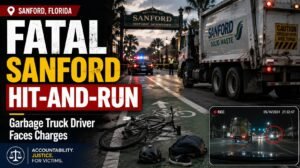
A Daytona Beach box truck accident lawyer can help injured people investigate how a collision occurred, identify potentially responsible parties, and preserve evidence such as crash reports, vehicle data, maintenance records, and witness accounts.
The Law Offices of Anidjar and Levine may assist with insurer communications, evaluate settlement proposals, document medical treatment and lost income, and pursue litigation when appropriate.
Prompt legal guidance can help protect claim-related rights and address filing deadlines.
Learn more from a Daytona Beach Truck Accident Lawyer about liability, evidence, injuries, and choosing appropriate representation.
Main Takeaways
- A Daytona Beach box truck accident lawyer can evaluate liability, injuries, insurance coverage, and applicable filing deadlines.
- Seek prompt medical care and maintain complete records documenting symptoms, treatment, restrictions, expenses, and future medical needs.
- Preserve crash reports, photographs, witness contacts, surveillance footage, maintenance records, delivery documents, and vehicle data.
- Electronic logs, dispatch records, tolls, fuel receipts, and tracking data may reveal fatigue, scheduling pressure, or regulatory violations.
- A lawyer can manage insurer communications, review settlement proposals, protect your rights, and pursue litigation when appropriate.
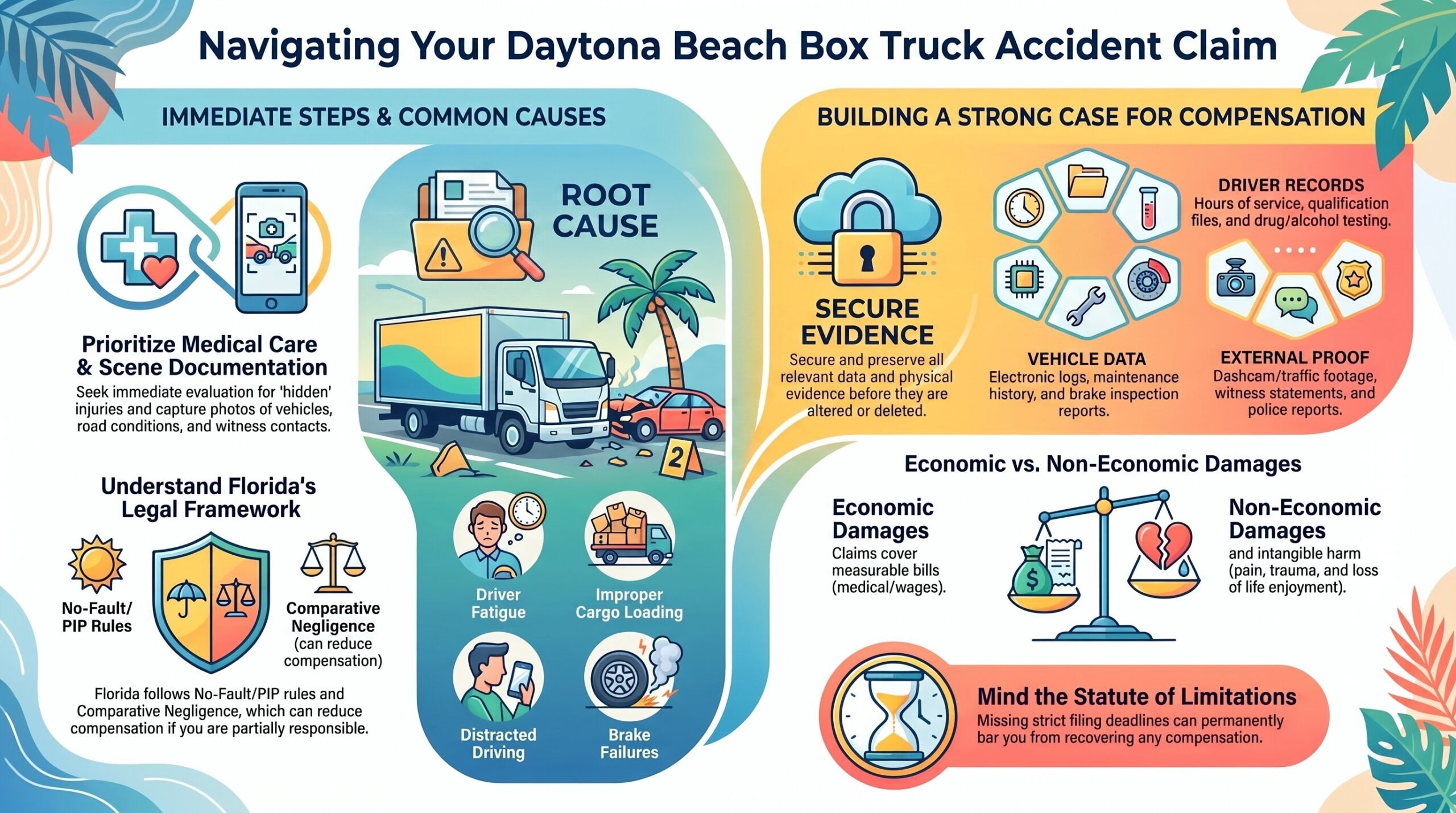


How We Can Help With Your Daytona Beach Box Truck Accident Injury Claim
When a box truck collision causes injuries, an experienced Daytona Beach truck accident lawyer can manage the legal process while protecting the injured person’s rights and interests. The legal team can begin by listening carefully to the injured person’s account, identifying immediate concerns, and establishing a practical plan for pursuing compensation. Counsel may communicate with insurers, review available coverage, and address settlement proposals without placing additional pressure on the client.
Evidence Preservation is a vital service. Attorneys can help secure crash reports, photographs, vehicle data, maintenance records, delivery documentation, surveillance footage, and witness information before relevant material disappears. They can also coordinate with medical providers to document treatment, restrictions, and continuing needs.
When a collision causes a fatality, the firm may assist eligible relatives with Wrongful Death Claims. This work can include evaluating funeral expenses, lost support, and other legally recognized damages. Throughout the claim, the legal team can provide organized updates and advocate for a fair, accountable resolution.
OUR CONSULTATIONSARE FREE
START YOUR FREE CASE REVIEW

Understanding Daytona Beach Box Truck Accident Injury Cases
Understanding a Daytona Beach box truck accident injury case requires examining the collision, the parties involved, and the full extent of the resulting harm. A case may involve the truck driver, an employer, a vehicle owner, an insurer, or another responsible entity. Each party’s legal duties and relationship to the vehicle must be evaluated before responsibility can be assigned.
The injury assessment should address emergency treatment, ongoing medical care, lost income, reduced earning capacity, pain, disability, and the effect on daily life. Records, photographs, witness accounts, employment information, and medical opinions may help establish these losses.
Negligent Maintenance may create responsibility when inadequate inspection or repair contributed to unsafe vehicle operation. Corporate Liability may also apply when a company’s policies, supervision, ownership, or employee conduct connects the business to the injury. Timely preservation of evidence is important because maintenance files, electronic data, and other records can change or disappear. A careful review supports fair treatment for injured individuals and informed resolution of their claims.
Common Causes of Daytona Beach Box Truck Accident
Common Daytona Beach box truck accidents may result from driver fatigue, improper loading, distracted driving, or brake failures. Each factor can impair vehicle control, alter handling, or prevent a timely response to changing roadway conditions. Identifying the underlying cause is vital when evaluating liability and the circumstances surrounding an injury claim.
Driver Fatigue
Driver fatigue is a significant cause of Daytona Beach box truck accidents, particularly when drivers operate for extended periods without adequate rest. Long shifts, overnight routes, irregular schedules, and pressure to meet delivery deadlines can reduce alertness and slow reaction times. Fatigued drivers may miss traffic signals, drift from their lanes, or misjudge stopping distances, placing motorists, pedestrians, and passengers at serious risk.
Truck safety regulations establish hours-of-service requirements intended to limit excessive driving and promote adequate rest. Violations of these requirements may provide important evidence when investigating a collision. After an accident, injured individuals may benefit from prompt medical attention, preservation of driver logs, and professional guidance regarding insurance negotiation tactics. A careful review of scheduling records, electronic data, and witness accounts can help clarify whether fatigue contributed to the crash.
Improper Loading
When cargo is improperly loaded or secured, a Daytona Beach box truck can become difficult to maneuver and more likely to cause a serious collision. Uneven weight distribution may affect maneuvering, braking, and stability, particularly when the vehicle turns, stops suddenly, or travels over irregular pavement. Unsecured items can shift during transit or fall from the cargo area, creating hazards for nearby motorists, pedestrians, and emergency responders.
Proper Cargo securement requires suitable restraints, balanced placement, and inspections before and during a trip. Failure to follow loading procedures may indicate truck operator negligence, especially when careless practices violate company policies or federal safety requirements. Evidence may include delivery records, loading photographs, inspection reports, and witness accounts. A careful investigation can help determine whether improper loading contributed to the crash and resulting injuries.
Distracted Driving
Distracted driving can materially impair a box truck operator’s ability to observe traffic, judge distances, and respond promptly to changing road conditions in Daytona Beach. Cellphone use, including texting, calling, or reviewing navigation applications, can divert visual, manual, and cognitive attention from surrounding vehicles and pedestrians. Other distractions may include eating, adjusting equipment, reading dispatch messages, or conversing with passengers. A momentary lapse can prevent an operator from recognizing a stopped vehicle, pedestrian crossing, or traffic signal.
During a lane change, inadequate mirror checks or delayed signaling may place nearby motorists in danger, particularly because box trucks have larger blind spots and require more space to operate. Identifying distraction-related conduct can help injured individuals, families, and community advocates understand potential negligence and pursue appropriate support after a collision occurs.
Brake Failures
Brake failures can greatly limit a box truck operator’s ability to stop, slow, or maintain control in Daytona Beach traffic. Worn brake pads, damaged rotors, leaking hydraulic lines, and improperly adjusted components may reduce stopping power without obvious warning. Heavy cargo can intensify these problems by increasing the vehicle’s momentum and placing additional demands on its braking system.
Maintenance negligence may occur when a trucking company, owner, or repair provider delays service, ignores reported defects, or fails to replace worn parts. A thorough brake system inspection should be completed at scheduled intervals and after concerns arise. Records from inspections, repairs, and driver complaints may help clarify whether preventable maintenance failures contributed to a collision. Identifying these issues can support injured individuals seeking accountability and appropriate assistance after a serious crash.


Legal Rights of Daytona Beach Box Truck Accident Injury Victims
A Daytona Beach box truck accident injury victim may have legal rights to pursue compensation for medical expenses, lost income, property damage, pain and suffering, and other losses caused by another party’s negligence.
An informed claim may identify responsible drivers, employers, owners, maintenance providers, or insurers while preserving evidence and meeting Florida’s applicable deadlines.
- A victim may seek assistance documenting injuries, treatment, employment losses, and continuing care needs so damages are presented accurately.
- Negligent hiring, inadequate supervision, or employer responsibility may create additional avenues for recovery, depending on available evidence and legal standards.
- Insurance companies may use defense strategies intended to reduce liability or valuation, making careful communication and professional representation important.
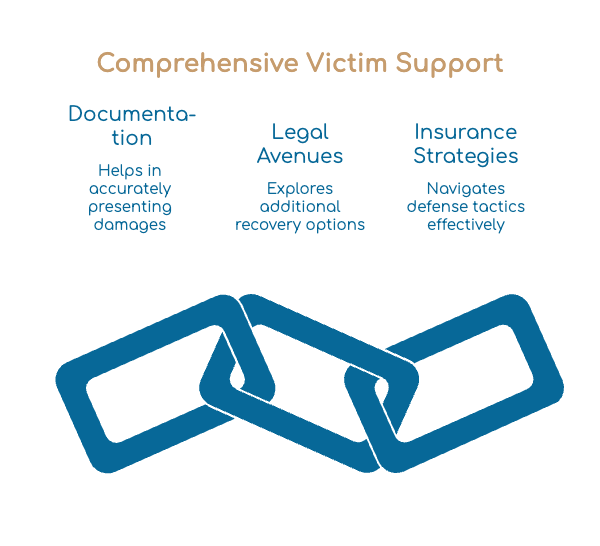
A qualified Daytona Beach box truck accident lawyer can evaluate fault, investigate records, negotiate with insurers, and, when appropriate, pursue litigation. Victims may also have rights concerning medical documentation, settlement review, and informed decisions throughout the claim. Prompt legal guidance can help protect those rights while supporting fair treatment for affected individuals and families.
Why Do Daytona Beach Box Truck Accident Injuries Happen?
Why do Daytona Beach box truck accident injuries happen? These collisions often result from the vehicle’s considerable size, weight, and limited visibility. A box truck may require greater stopping distance than a passenger vehicle, making sudden traffic changes especially hazardous. Wide turns, improperly secured cargo, and driver fatigue can also reduce control and increase the severity of a crash.
Mechanical defects contribute to some incidents. Brake failures, worn tires, defective steering components, and inadequate maintenance may prevent a driver from responding safely. Distracted driving, speeding, unsafe lane changes, and driving under the influence create additional risks. In some cases, a trucking company’s hiring practices, training standards, scheduling demands, or inspection procedures may contribute to negligent operation.
Evidence can help clarify how an injury occurred. Traffic camera footage may show vehicle movements and signal timing, while dashcam records can document following distances, sudden actions, or unsafe driving. Weather, roadway design, and congestion may also influence collision conditions, requiring careful evaluation by qualified professionals.
What Should You Do After a Daytona Beach Box Truck Accident Injury?
After a Daytona Beach box truck accident injury, the injured person should seek immediate medical care, even if symptoms initially appear minor. The accident scene should be documented through photographs, witness information, and relevant reports when possible. Contacting a truck accident lawyer can help preserve evidence, assess potential liability, and protect the individual’s legal rights.
Seek Immediate Medical Care
Prompt medical attention should be a priority for anyone injured in a Daytona Beach box truck accident, even when symptoms initially appear minor. A medical professional can identify concealed injuries, establish a treatment plan, and reduce the risk that symptoms worsen without supervision. Individuals should follow emergency personnel instructions and avoid driving themselves if pain, dizziness, confusion, or limited mobility is present.
Medical records, diagnostic results, and discharge instructions may later help explain the injury’s seriousness and required care. When possible, an injured person should provide accurate Emergency contact information to responders or hospital staff so family members or another trusted support person can assist with decisions and transportation. Treatment should not be delayed while gathering vehicle damage documentation or handling insurance communications. Consistent follow-up care remains important, even after initial evaluation.
Document The Accident Scene
If conditions permit, an injured person or another reliable individual should document the Daytona Beach box truck accident scene before vehicles, debris, or other evidence are moved. Photographs should capture the truck, other vehicles, road conditions, traffic signals, visible damage, skid marks, scattered cargo, and surrounding property from several angles. Images should be taken only when doing so does not compromise vehicle safety or place anyone in traffic.
Names and contact information for eyewitnesses should be recorded promptly, and Witness statements should reflect what each person directly observed rather than speculation. The location, time, weather, and apparent hazards should also be noted. Preserving damaged clothing, photographs, and relevant delivery materials may help maintain an accurate account for those assisting with the injury claim.
Contact A Truck Accident Lawyer
Why should an injured person contact a truck accident lawyer? A qualified attorney can protect an injured person’s legal interests while allowing that individual to focus on medical care and recovery. Box truck collisions may involve the driver, trucking company, maintenance providers, insurers, or other responsible parties, making liability difficult to determine.
Prompt legal guidance supports Evidence preservation before records, vehicle data, surveillance footage, or witness recollections disappear. Counsel may request accident reports, inspect the truck, identify regulatory violations, and consult qualified professionals regarding the collision and resulting injuries. A lawyer can also manage insurance negotiation, helping prevent rushed settlements or statements that could weaken a claim.
An attorney may evaluate medical expenses, lost income, ongoing treatment, and other damages. When necessary, legal counsel can pursue a fair resolution through litigation while treating all involved parties with professionalism and respect.
Critical Evidence in a Daytona Beach Box Truck Accident Injury Case
Risk evidence can clarify fault, regulatory violations, and the extent of injuries in a Daytona Beach box truck accident case.
- Police accident reports and truck driver records may establish how the collision occurred.
- Electronic logging data can indicate hours of service, while medical treatment documentation connects the crash to the claimed injuries.
These records should be preserved promptly because important information may be altered, lost, or destroyed.
Police Accident Reports
After a box truck collision in Daytona Beach, the responding police officer’s accident report may provide important early evidence regarding how the crash occurred. It typically identifies involved drivers, vehicles, roadway conditions, visible damage, citations, and the officer’s preliminary description of contributing circumstances. The report may also preserve witness statements, diagrams, photographs, and observations about injuries or apparent impairment. Although it is not conclusive proof of liability, the document can help establish a timeline and identify evidence requiring further investigation.
An attorney serving injured individuals may compare the report with medical records, photographs, surveillance footage, and testimony to evaluate inconsistencies or disputed facts. Electronic logging information may later provide additional context, but it should be reviewed separately from the officer’s initial findings and any conclusions recorded at the scene.
Truck Driver Records
Truck driver records can provide significant evidence in a Daytona Beach box truck accident injury case by showing the driver’s qualifications, training, licensing history, and compliance with applicable safety requirements. These documents may reveal prior violations, license restrictions, medical certification concerns, or disciplinary actions relevant to the collision. Maintenance and inspection records can also help establish whether the driver properly reported vehicle defects or followed required safety procedures.
Driver logkeeping issues may indicate inaccurate work-hour documentation, unauthorized driving, or inadequate rest before the crash, although other records must corroborate those concerns. Attorneys may request personnel files, training materials, qualification documents, and regulatory records through appropriate legal procedures. Careful Compliance verification can identify discrepancies and help determine whether negligent hiring, retention, supervision, or driver conduct contributed to the injuries.
Electronic Logging Data
Electronic logging data can help establish a box truck driver’s hours of service, trip activity, and compliance with applicable safety requirements before a Daytona Beach collision. Electronic Logging Basics include reviewing duty-status changes, vehicle movement, mileage, and recorded driving time. This information may reveal extended shifts, inadequate rest, unauthorized driving, or inconsistencies between the electronic log and other truck records. Investigators may compare the data with dispatch messages, fuel receipts, toll records, inspection documents, and onboard tracking information to develop an accurate timeline.
Data Access Requests can preserve relevant records before routine retention practices result in deletion or alteration. Parties may seek the original files, audit history, amendments, and supporting technical information. Properly authenticated logging evidence can clarify whether fatigue, scheduling pressure, or regulatory violations contributed to the crash.
Medical Treatment Documentation
Medical treatment documentation provides essential evidence of the injuries sustained in a Daytona Beach box truck accident and the care required to address them. Records may include emergency evaluations, diagnostic imaging, physician notes, prescriptions, therapy plans, and expert referrals. Together, these materials establish when symptoms appeared, how conditions progressed, and whether treatment recommendations were followed.
Accurate documentation can connect the claimed injuries to the collision while identifying related expenses and functional limitations. It may also address future medical needs, work restrictions, and the effect of treatment on daily responsibilities. Preserving complete records supports informed legal review and helps prevent disputes regarding causation or severity.
During financial negotiation, this evidence can strengthen a settlement strategy by demonstrating reasonable damages. Organized documentation also assists an attorney in presenting a clear, compassionate account of the injured person’s recovery and continuing needs.
Long-Term Effects of Daytona Beach Box Truck Accident Injuries
Long-term injuries from Daytona Beach box truck accidents may cause chronic pain, reduced mobility, and lasting limitations on work or daily activities. Emotional and psychological trauma, including anxiety, depression, or post-traumatic stress, may also affect a person’s recovery and quality of life. Continued treatment, rehabilitation, lost income, and related financial obligations can create substantial ongoing costs.
Chronic Pain And Mobility Loss
When a Daytona Beach box truck accident causes fractures, spinal damage, or severe soft-tissue injuries, the resulting pain and mobility loss may still persist long after the initial treatment ends. Affected individuals may require physical therapy, assistive devices, injections, or additional surgery to manage limitations and preserve independence. Chronic symptoms can interfere with walking, lifting, driving, personal care, and participation in community service or family responsibilities. Medical records should document pain levels, functional restrictions, treatment recommendations, and anticipated future care.
Medication side effects may create additional risks, particularly when drowsiness or impaired concentration affects daily activities. Employers may need to provide a workplace accommodation, such as modified duties, reduced hours, accessible equipment, or reassignment. Recognizing these long-term needs helps ensure that injury claims address continuing medical expenses, lost earning capacity, and necessary support services.
Emotional And Psychological Trauma
A Daytona Beach box truck accident can produce lasting emotional and psychological recovery, even after visible injuries have begun to heal. Survivors may experience anxiety, depression, sleep disruption, irritability, or fear of driving and traveling near commercial vehicles. Some develop post-traumatic stress symptoms, including intrusive memories, heightened alertness, and avoidance of reminders. These effects can interfere with employment, relationships, and ordinary responsibilities, while remaining difficult for others to observe.
Compassionate support from qualified mental health professionals can help identify symptoms and establish appropriate treatment. Attorneys may also help preserve records showing how trauma affects daily life, particularly during common insurance disputes. Financial documentation gathering should accurately reflect documented losses without replacing careful attention to emotional harm. Timely reporting, consistent treatment, and credible testimony can strengthen a survivor’s account and support meaningful recovery.
Ongoing Medical And Financial Costs
Beyond emotional trauma, Daytona Beach box truck accident injuries may create medical and financial obligations that continue for months or years. Victims may require emergency care, surgery, rehabilitation, prescription medication, mobility equipment, or follow-up appointments. Some injuries also reduce the ability to work, creating lost income while household expenses remain unchanged. Pain relief options can help manage persistent symptoms, but their costs may accumulate alongside diagnostic testing and consultant care.
Treatment payment plans, insurance claims, and community assistance programs may provide temporary support, although coverage disputes can leave families responsible for substantial balances. Careful documentation of bills, treatment recommendations, missed work, and projected needs can clarify the injury’s long-term impact. Legal guidance may help identify responsible parties and pursue compensation for current and anticipated medical and financial losses.
Proving Liability in Daytona Beach Box Truck Accident Injury Cases
Establishing liability in a Daytona Beach box truck accident requires evidence showing who caused the collision and how that conduct resulted in the injured person’s damages. A careful investigation may examine driver actions, traffic signals, roadway conditions, loading procedures, and company policies. Relevant proof can include crash reports, photographs, surveillance recordings, electronic driving data, and employment or training documents.
Witness testimony collection should occur promptly because memories can change and contact information may become difficult to obtain. Independent accounts may clarify vehicle movements, visibility, speed, and the moments immediately preceding impact. Investigators may also request vehicle maintenance records to determine whether defective brakes, worn tires, inadequate inspections, or other mechanical issues contributed to the crash.
Liability may involve the driver, trucking company, maintenance provider, cargo handler, or another responsible party. Medical documentation and financial records then help connect the established conduct to the claimant’s injuries and losses, supporting a complete, fair evaluation of the case. Each fact should be preserved carefully and presented consistently.
Dealing With Insurance Companies After a Daytona Beach Box Truck Accident Injury
After a Daytona Beach box truck accident, injured individuals may need to communicate with multiple insurance companies while managing medical treatment and financial losses. Adjusters may request recorded statements, medical authorizations, photographs, or employment information. Each response can affect how the claim is evaluated, so injured parties may benefit from reviewing requests carefully before providing information.
Evidence preservation remains important throughout these communications. Accident reports, medical records, bills, wage documentation, vehicle photographs, witness contacts, and correspondence should be organized and retained. A complete file can help clarify the nature and extent of losses while reducing confusion between insurers.
Insurance representatives may seek quick settlements that do not account for continuing treatment or future expenses. Claimants should understand settlement timelines, applicable policy limits, and any deadlines that could affect available remedies. A qualified attorney can communicate with insurers, protect the claimant from unfair tactics, and assess whether an offer reasonably addresses documented losses. Prompt, accurate communication supports a fair evaluation while preserving the injured person’s legal interests.
What to Expect During a Daytona Beach Box Truck Accident Injury Claim Process
A Daytona Beach box truck accident injury claim generally begins with an initial case evaluation to assess liability, injuries, and available legal remedies. The process may involve collecting evidence, reviewing medical records, and negotiating with insurers before determining whether a fair settlement is possible. If negotiations do not resolve the claim, the matter may proceed to trial.
Initial Case Evaluation
During an initial case evaluation, a Daytona Beach box truck accident lawyer reviews the collision, the claimant’s injuries, and the available evidence to determine whether a viable injury claim exists. The discussion typically addresses Medical urgency, treatment status, work limitations, and the effect of symptoms on daily responsibilities. The lawyer may explain potential legal theories, filing deadlines, and the parties who could bear responsibility, without promising a particular result. Insurance impacts are also considered, including available policies, claim communications, and possible coverage disputes.
The claimant can describe concerns, identify immediate needs, and ask how representation may support recovery. This evaluation helps establish practical next steps while protecting the claimant’s interests. It also clarifies whether legal assistance would provide meaningful value during the claim process.
Evidence Collection Process
When a Daytona Beach box truck accident injury claim begins, evidence collection typically establishes the factual foundation for evaluating liability and damages. The process may include obtaining crash reports, photographs, traffic-camera recordings, medical records, and available electronic data from the truck. Witness statements can clarify traffic conditions, vehicle movements, lighting, and events immediately before impact.
A vehicle inspection may document collision damage, maintenance concerns, tire condition, braking systems, and potential mechanical contributing factors. Investigators may also preserve roadway measurements, signage, debris patterns, and weather information before conditions change. Medical documentation helps connect reported injuries to the collision and records treatment, prognosis, and related limitations. Organized evidence supports an accurate reconstruction of events and helps protect the injured person’s interests while the claim is evaluated.
Insurance Company Negotiations
Once the available evidence establishes the circumstances of a Daytona Beach box truck collision, negotiations with the insurer generally focus on liability, injury-related losses, and the value of the claim. An adjuster may conduct a liability investigation by reviewing crash reports, driver statements, vehicle records, and company policies. Independent evidence, including photographs, surveillance footage, and witness accounts, can clarify disputed facts and counter incomplete interpretations. Medical records help document diagnoses, treatment, prognosis, and connections between the collision and claimed injuries.
Economic documentation may include wage statements, invoices, and estimates for necessary services. Through damages valuation, the parties assess medical expenses, lost income, physical limitations, and other legally recognized losses. Clear, organized submissions enable informed communication and help protect an injured person’s interests while negotiations proceed.
Settlement Or Trial
After insurance negotiations establish the available evidence and disputed issues, the claim may proceed toward settlement or trial. A settlement strategy evaluates medical records, lost income, property damage, liability, and the client’s future needs before determining an acceptable resolution. Counsel may use negotiation tactics such as documented demand packages, timed responses, and careful analysis of policy limits. If settlement discussions fail, trial preparation begins. This process can include identifying witnesses, consulting medical or accident reconstruction professionals, organizing exhibits, and preparing the injured person to testify clearly.
During trial, courtroom evidence may include photographs, vehicle data, medical opinions, employment records, and testimony concerning the collision’s consequences. The court ultimately decides disputed facts and damages. Throughout either path, the legal team should provide informed guidance, protect the client’s interests, and support a fair outcome.
Compensation for Daytona Beach Box Truck Accident Injury Damages
Compensation for Daytona Beach box truck accident injuries may include medical expenses, lost income, reduced future earning capacity, property damage, and pain and suffering, depending on the circumstances of the collision. A careful review of treatment records, employment information, repair estimates, and other documentation can help establish the losses connected to the crash. The responsible parties may include a truck driver, carrier, vehicle owner, maintenance provider, or another entity whose conduct contributed to the event. Insurance coverage denials can delay payment, particularly when insurers question fault, policy language, or the extent of an injury.
A liability dispute strategy may involve preserving crash evidence, examining driver qualifications and service records, reviewing electronic data, and obtaining qualified witness opinions. Legal representatives can communicate with insurers, protect an injured person’s interests, and pursue available compensation through negotiation or litigation. Prompt action may also help preserve evidence and comply with applicable deadlines while supporting a fair resolution for affected individuals and families.
Economic vs Non-Economic Damages in Daytona Beach Box Truck Accident Cases
Economic damages may include medical expenses, lost income, property damage, and other measurable financial losses resulting from the collision. Non-economic damages address less tangible harm, such as pain and suffering, emotional distress, and diminished quality of life, which require careful assessment. Evaluating both categories allows the total compensation claim to reflect the full impact of the box truck accident.
Economic Damages Explained
In Daytona Beach box truck accident cases, economic damages refer to the measurable financial losses caused by the collision, while non-economic damages address less tangible harm such as pain, emotional distress, and diminished quality of life. Economic losses may include emergency treatment, hospital bills, prescription costs, rehabilitation, property repairs, and transportation expenses. If injuries prevent work, recoverable amounts may also include lost wages, reduced earning capacity, and documented business losses.
Careful records help establish the value and connection of each expense to the crash. Medical invoices, pay statements, repair estimates, and employer documentation can support a claim. The Insurance claim timeline should be monitored carefully because deadlines and insurer requests may affect recovery. Prompt witness statement preservation can further clarify liability and protect evidence needed to verify financial losses.
Non-Economic Damages Assessed
Non-economic damages address the personal harm that follows a Daytona Beach box truck collision but cannot be calculated through ordinary bills or receipts. They may reflect physical pain, emotional distress, disfigurement, inconvenience, and the loss of enjoyment experienced after the crash. Courts and insurers often assess the severity and duration of injuries, medical testimony, treatment demands, and effects on ordinary activities when evaluating these losses. Permanent limitations or trauma may support a greater award than temporary discomfort.
Comparative negligence can reduce a claimant’s recovery if that person contributed to the collision, depending on Florida law and the assigned percentage of fault. In unusually wrongful cases, punitive damages may be considered separately to punish intentional misconduct or gross negligence rather than compensate personal suffering. Documentation and credible testimony help present these harms responsibly.
Calculating Total Compensation
After non-economic harms have been evaluated, total compensation is calculated by combining them with the claimant’s documented economic losses. Economic damages may include emergency treatment, ongoing medical care, rehabilitation, lost wages, reduced earning capacity, property damage, and necessary out-of-pocket expenses. Records such as invoices, pay statements, medical opinions, and repair estimates help establish these amounts with reasonable certainty. Non-economic damages address pain, emotional distress, disability, disfigurement, loss of enjoyment, and diminished quality of life.
Because these losses lack fixed prices, their value depends on the evidence, injury severity, recovery duration, and effects on daily responsibilities. During insurance negotiation, a detailed demand supported by organized documentation can strengthen the claimant’s position. A sound settlement strategy also considers future losses, comparative fault, policy limits, litigation risks, and the client’s long-term needs.
When a Daytona Beach Box Truck Accident Injury Case Goes to Trial vs Settlement
When a Daytona Beach box truck accident injury case proceeds, the injured person may resolve the claim through settlement negotiations or present the dispute to a jury at trial. Settlement can provide a predictable resolution, reduce litigation expenses, and spare witnesses from extended testimony. It may also allow compensation to be received sooner, although the final amount depends on the evidence and negotiations.
Trial becomes more likely when liability, injury severity, or damages remain sharply disputed. A courtroom process requires organized evidence, credible witnesses, and careful Trial courtroom strategy. Counsel may address opening statements, exhibits, cross-examination, and arguments concerning the person’s medical needs, lost income, and continuing limitations. Expert witness preparation is important when physicians, economists, accident reconstruction specialists, or vocational professionals must explain technical conclusions clearly.
The decision should reflect the strength of the evidence, the client’s needs, and the risks of an unpredictable verdict. A legal team serving injured people can provide informed guidance while preserving dignity, patience, and practical support throughout either path.
Florida Laws That May Affect Your Daytona Beach Box Truck Accident Case
Florida law can materially influence a Daytona Beach box truck accident case by establishing how fault is assigned, what evidence must be proven, and which damages may be recovered. Several rules may affect injured individuals, families, employers, and responsible insurers:
Florida law can shape fault, insurance coverage, evidence, and potential compensation in Daytona Beach box truck accident cases.
- Comparative Negligence: Florida may reduce a claimant’s compensation when that person shares responsibility for the collision. Evidence concerning traffic signals, following distance, visibility, and vehicle operation can accordingly influence recovery.
- Florida No Fault: Florida generally requires drivers to seek initial medical benefits through their own required coverage after a crash, regardless of who caused it. However, serious injuries may permit claims against an at-fault party.
- Insurance PIP: Personal Injury Protection can cover qualifying medical expenses and partial lost income, subject to policy limits and statutory conditions. Box truck policies may involve commercial coverage, employer responsibility, and additional liability insurance.
These laws can shape negotiations, evidence collection, and litigation strategy. A careful review may help protect available resources for injured people and support fair treatment for all affected parties.
The Statute of Limitations for Daytona Beach Box Truck Accident Injury Cases
Strict deadlines may determine whether an injured person can pursue a Daytona Beach box truck accident claim in court. Florida law generally provides a limited period to file personal injury actions, although the applicable deadline may vary with the injury, defendant, and case circumstances. Claims involving governmental entities can require earlier notice and shorter timelines. Missing a deadline may bar recovery, regardless of the seriousness of the harm.
Prompt action supports negligence proof by helping preserve collision reports, photographs, medical records, vehicle data, and witness accounts. Evidence preservation becomes increasingly important as physical conditions change and memories fade. A timely evaluation may also inform settlement negotiation before litigation expenses increase. In addition, policy limits analysis can clarify available insurance coverage and potential sources of compensation, but it does not extend the filing deadline. Injured individuals and families may benefit from learning the governing limitation period promptly, documenting losses carefully, and avoiding assumptions based on general deadlines. Each case requires attention to its specific facts and applicable Florida law.
How a Daytona Beach Box Truck Accident Lawyer Can Help You
A Daytona Beach box truck accident lawyer can help protect an injured person’s legal rights after a collision by evaluating liability, preserving evidence, and identifying all available sources of insurance coverage. The lawyer may also coordinate practical assistance so the injured individual can focus on medical care and family responsibilities.
- Through witness statement gathering, the lawyer can document consistent accounts, locate additional observers, and preserve details that may become difficult to verify.
- The lawyer can review medical records, employment information, vehicle data, photographs, and other evidence to calculate damages and support a fair demand.
- By managing the Insurance claim timeline, the lawyer can organize communications, address insurer requests, monitor deadlines, and negotiate without allowing pressure to undermine the claim.
When necessary, legal counsel can assess whether the trucking company, driver, maintenance provider, or another party shares responsibility. This structured guidance promotes accountability and helps an injured person pursue compensation while serving the broader goal of safer commercial transportation.
When to Contact a Daytona Beach Box Truck Accident Lawyer
Prompt legal guidance is generally appropriate after a Daytona Beach box truck accident, particularly when injuries, disputed fault, or significant property damage are involved. Early consultation can help an injured person understand available options before statements, repairs, or settlements affect the claim.
Contact should occur promptly if medical treatment is ongoing, an insurer requests a recorded statement, or another party denies responsibility. Insurance claim deadlines may limit the time available to notify carriers, submit documentation, or pursue compensation, and requirements can differ depending on the parties involved. A lawyer can help identify applicable deadlines without delaying necessary care.
Useful evidence preservation tips include photographing vehicles, road conditions, visible injuries, and relevant signage; obtaining witness contact information; saving medical records and receipts; and retaining employment or income documentation. Crash reports, electronic communications, and repair estimates should also be preserved. Prompt assistance is especially important when a commercial vehicle, employer, maintenance provider, or multiple insurers may be involved, because identifying responsible parties and securing records can become more difficult over time.
Why You Need an Experienced Daytona Beach Box Truck Accident Lawyer
An experienced Daytona Beach box truck accident lawyer can provide focused guidance when liability, injuries, and insurance coverage are disputed. Box truck collisions may involve drivers, employers, maintenance providers, leasing companies, and commercial insurers, creating multiple sources of evidence and competing explanations. Counsel can preserve records, identify responsible parties, and examine electronic data, vehicle inspections, delivery schedules, and witness accounts before vital information disappears.
Professional representation also helps an injured person understand medical documentation, lost income, future care needs, and other damages. When Distracted Driving, unsafe loading, inadequate training, or maintenance failures contributed to a crash, an attorney can present those facts clearly and support a claim with relevant evidence. During Insurance Negotiations, experienced counsel can evaluate settlement offers, address tactics that may undervalue injuries, and pursue appropriate compensation through litigation when necessary. This guidance allows injured individuals and their families to focus on recovery while a knowledgeable advocate works to protect their interests and promote accountability.
How to Choose the Right Daytona Beach Box Truck Accident Lawyer for Your Case
Selecting the right Daytona Beach box truck accident lawyer requires careful consideration of the attorney’s experience with commercial vehicle claims, record of handling serious injury cases, and ability to investigate complex liability issues. A qualified attorney should understand driver qualification rules, maintenance records, loading practices, insurance coverage, and the potential involvement of employers or contractors.
Prospective clients may review professional credentials, prior results, disciplinary history, and evaluations describing the lawyer’s conduct and reliability. During an initial consultation, the attorney should explain relevant legal issues clearly, identify possible challenges, and provide realistic expectations without promising a particular outcome.
Effective client communication is also critical. The lawyer should respond within reasonable timeframes, explain developments, and make sure that the injured person understands available choices. A thoughtful case strategy should address evidence preservation, medical documentation, damage calculations, negotiations, and litigation when appropriate. Selecting counsel who demonstrates preparation, integrity, and commitment helps injured individuals protect their interests while pursuing accountability.
About The Law Offices of Anidjar & Levine
The Law Offices of Anidjar & Levine represents individuals injured in serious motor vehicle collisions, including accidents involving box trucks and other commercial vehicles.
The firm approaches each matter with careful investigation, clear communication, and a commitment to serving injured people and their families.
Its attorneys may examine driver conduct, company policies, vehicle maintenance, loading practices, and available insurance coverage to understand how a crash occurred.
In pursuing a claim, the firm addresses issues such as Comparative Negligence, which may affect the amount an injured person can recover.
Counsel can also assist with Evidence Preservation, including photographs, electronic records, inspection materials, and vehicle data.
Witness Statements may help establish events that are disputed or unclear.
When insurers delay, minimize, or deny valid claims, the firm handles Insurance Disputes through informed negotiation and, when appropriate, litigation.
The offices provide case-specific guidance while seeking accountability and fair compensation under Florida law for those affected by preventable box truck collisions.
Frequently Asked Questions
Can I Still File a Claim if the Box Truck Driver Fled the Scene?
A claim may still be filed when a box truck driver flees the scene. The injured person should seek medical care, preserve evidence, identify witnesses, and promptly contact law enforcement. Police reports can document the collision and support efforts to locate the missing driver. Contact options may include the truck owner’s insurer or the injured person’s uninsured-motorist coverage. An insurer investigation may proceed despite the driver’s absence, but filing deadlines still apply.
Are Box Truck Accident Claims Different When the Vehicle Is Rented?
Yes, claims can differ when a box truck is rented because responsibility may involve the driver, rental company, employer, and applicable insurers. Rental Liability depends on the agreement’s terms, authorized-driver status, vehicle use, and any purchased protection. Insurance Limits may be higher or lower than expected, while commercial policies could apply separately. Evidence should include the rental contract, accident report, photographs, witness information, and communications with insurers to identify all responsible parties.
What Happens if Multiple Injured People Seek Compensation From Limited Insurance Coverage?
When multiple injured people pursue compensation, shared liability may affect each person’s entitlement, particularly if several parties contributed to the collision. Insurance limits can restrict total payments, leaving valid claims underfunded when damages exceed available coverage. Claim prioritization may depend on settlement agreements, legal rules, and the severity of injuries, rather than filing order alone. Consequently, recovery amounts can vary, and injured individuals may need coordinated negotiations or additional claims against responsible parties.
Can Dashcam Footage or Traffic Camera Recordings Be Obtained After an Accident?
Dashcam footage or traffic camera recordings may be obtained after an accident, depending on ownership, retention periods, and applicable law. A representative can request recordings from motorists, businesses, transportation agencies, or law enforcement. Public records requests may provide government-held video, although exemptions, fees, or delayed processing can apply. Prompt evidence preservation is critical because systems may overwrite footage. Investigators should document locations, timing, and custodians before requesting relevant materials.
Are Box Truck Companies Required to Follow Specific Maintenance and Inspection Schedules?
Yes. Box truck companies generally must follow specific federal and state maintenance and inspection requirements, particularly when vehicles operate in interstate commerce. Regulatory upkeep typically includes systematic inspections, repairs, brake and tire evaluations, and documentation of safety-related defects. Drivers may also be required to complete pre-trip and post-trip inspections. Inspection logs can help demonstrate compliance, identify recurring problems, and establish whether negligent maintenance contributed to an accident or endangered others.
—————————
Victims of Daytona Beach box truck accidents may suffer serious injuries, financial losses, and difficult insurance disputes.
Understanding liability, preserving evidence, and seeking timely legal guidance can help protect their rights and support a fair recovery.
An experienced Daytona Beach Truck Accident Lawyer can investigate the collision, identify responsible parties, and pursue available compensation.
The Law Offices of Anidjar and Levine provides informed representation to help injured individuals navigate each stage of their claim with confidence and clarity.