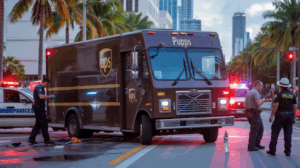
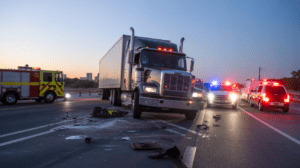
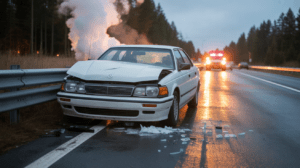
The Law Offices of Anidjar and Levine help victims pursue claims when rain, flooding, fog, or high winds contribute to a crash.
Liability depends on whether drivers acted with reasonable care by slowing down, increasing following distance, and responding to hazardous conditions.
Legal help may involve preserving photos, dashcam footage, weather records, witness statements, medical records, and insurance documents.
Victims may seek damages for medical bills, lost income, pain, and related losses, as explained further by a Florida Car Accident Lawyer.
Main Takeaways
- Florida drivers must adjust speed, following distance, and attention for rain, flooding, fog, wind, and reduced visibility.
- Poor weather does not excuse negligent driving or eliminate an injured person’s right to pursue compensation.
- Evidence such as photos, dashcam footage, witness statements, vehicle data, and weather records can help establish liability.
- Prompt medical care and accurate documentation support injury claims for medical bills, lost income, and pain.
- A Florida injury lawyer can handle insurance disputes, preserve evidence, and challenge unfair weather-related fault arguments.


How We Can Help With Your Florida Poor Weather Car Accident Injury Claim
When poor weather contributes to a serious collision, a Florida car accident injury lawyer can help determine whether another driver, business, or other party failed to exercise reasonable care under the circumstances. Counsel may act promptly to protect the injured person’s interests while allowing family members, caregivers, and community supporters to focus on service, recovery, and daily responsibilities. Assistance often begins with Evidence preservation, including securing photographs, vehicle data, witness information, roadway details, and available surveillance before it is lost.
The lawyer may also manage insurance documentation, ensuring that forms, correspondence, medical records, and claim materials are accurate, timely, and complete. By coordinating with medical providers, repair professionals, and investigators, legal counsel can present the claim in an organized manner. This support helps reduce administrative burdens, promotes accountability, and allows those affected to pursue fair compensation with informed guidance and a steady, professional advocate throughout the claim process.
OUR CONSULTATIONSARE FREE
START YOUR FREE CASE REVIEW

Understanding Florida Poor Weather Car Accident Injury Cases
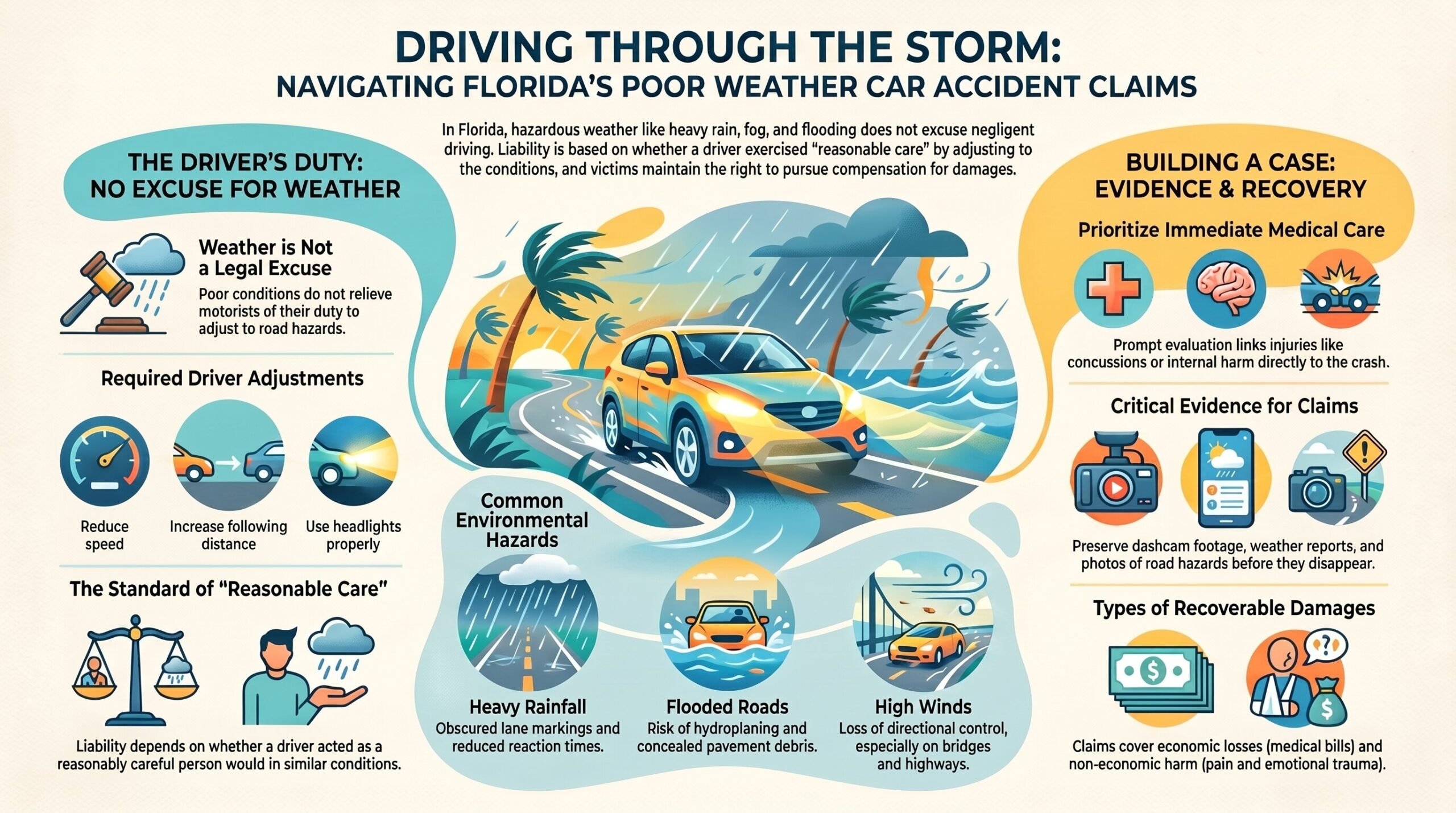
Although poor weather can make travel more dangerous, it does not excuse careless driving or relieve motorists of their duty to adjust to road conditions. Florida’s poor-weather car accident injury cases often require careful review of how drivers, insurers, and responsible parties responded before and after a collision. Rain, fog, wind, or standing water may affect visibility and control, yet liability still depends on whether reasonable care was used under the circumstances.
These cases may involve injured people who need support, medical care, and reliable guidance while they recover. A claim can examine driver conduct, vehicle condition, available insurance coverage, and possible road maintenance responsibilities when unsafe drainage, missing warnings, or neglected surfaces contributed to harm. Insurers must also handle claims fairly and promptly. When an insurer delays, denies, or undervalues a valid claim without a proper basis, Insurance bad faith may become an important issue in protecting the injured person’s rights.
Common Causes of Florida’s Poor Weather Car Accidents
Poor weather car accidents in Florida commonly arise from heavy rainfall, flooded roadways, reduced visibility, and high winds. These conditions can limit vehicle control, delay reaction time, and increase the likelihood of collisions, especially when drivers fail to adjust their speed or following distance. Understanding these causes is fundamental when evaluating liability, injuries, and potential compensation after a weather-related crash.
Heavy Rainfall
Heavy rainfall is one of the most frequent weather-related hazards on Florida roads, creating dangerous driving conditions within minutes. Sudden downpours can reduce visibility, distort lane markings, and make it difficult for drivers to judge distance or speed. When motorists fail to slow down, increase following distance, or use headlights properly, rear-end crashes and side-impact collisions become more likely.
Nighttime collisions are especially concerning because rain glare, dark pavement, and limited sightlines can conceal stalled vehicles, pedestrians, or sudden braking ahead. Heavy rain may also heighten driver stress, contributing to unsafe lane changes, tailgating, and road-rage incidents. For injury victims, careful investigation may reveal whether another driver ignored conditions and failed to exercise reasonable care for the safety of others on the roadway.
Flooded Roadways
When Florida storms overwhelm drainage systems, flooded roadways can quickly become a serious cause of weather-related car accidents. Standing water may conceal potholes, debris, lane markings, or damaged pavement, leaving drivers with little time to respond safely. Vehicles can hydroplane, stall, or be swept into adjacent lanes when water collects across intersections or low-lying roads.
Negligent maintenance may contribute when clogged drains, broken culverts, or poorly designed roadway grades allow predictable flooding to remain unaddressed. At intersections, a malfunctioning traffic signal can further complicate movement through pooled water, increasing the risk of side-impact crashes. Those committed to serving injured individuals often examine whether government agencies, contractors, or property owners failed to correct known drainage hazards, provide warnings, or close unsafe roads during severe weather.
Reduced Visibility
Beyond flooded roadways, reduced visibility is another frequent factor in Florida’s poor weather car accidents, particularly during sudden rainstorms, fog, smoke, or wind-driven debris. When drivers cannot clearly see lane markings, stopped vehicles, pedestrians, or roadway signage, reaction time decreases, and ordinary traffic decisions become more dangerous. Intersection hazards often increase because motorists may misjudge traffic signals, fail to notice turning vehicles, or enter crossings without a safe view of approaching traffic.
In these conditions, responsible drivers are expected to reduce speed, increase following distance, and use headlights appropriately. For injured individuals and families seeking help, visibility conditions may be important evidence in determining how a crash occurred. Weather reports, dash camera footage, witness statements, and traffic signal data can help clarify whether reasonable care was used.
High Winds
High winds can create serious roadway hazards during Florida storms, especially on bridges, open highways, coastal roads, and areas exposed to sudden gusts. Strong crosswinds may push vehicles out of their lanes, reduce directional control, and increase rollover risk for vans, trucks, and vehicles towing trailers. Flying debris, downed branches, and shifting construction materials can also force sudden braking or evasive actions.
Drivers serving passengers, patients, clients, or community members should evaluate Safety gear choices, including properly secured cargo, emergency kits, and reflective items for roadside stops. Public agencies and property owners may also be scrutinized when roadway lighting policies fail to support visibility during wind-related outages or debris conditions. Careful investigation can determine whether negligent driving, unsafe maintenance, or inadequate warnings contributed to a crash.


Legal Rights of Florida Poor Weather Car Accident Injury Victims
Although poor weather can complicate the facts of a crash, it does not eliminate an injured person’s legal rights under Florida law. Victims may still seek compensation when another driver failed to use reasonable care under dangerous conditions. Rain, fog, wind, or standing water may affect visibility and control, but drivers must still adjust their conduct to protect others.
Florida injury claims often require careful review of evidence, policies, and medical harm.
Core rights may include:
- The right to pursue damages for medical expenses, lost income, pain, and related losses caused by negligence.
- The right to challenge Comparative fault disputes when insurers argue that weather, rather than unsafe driving, caused the crash.
- The right to address insurance coverage disputes involving available benefits, liability limits, uninsured motorists, or claim denials.
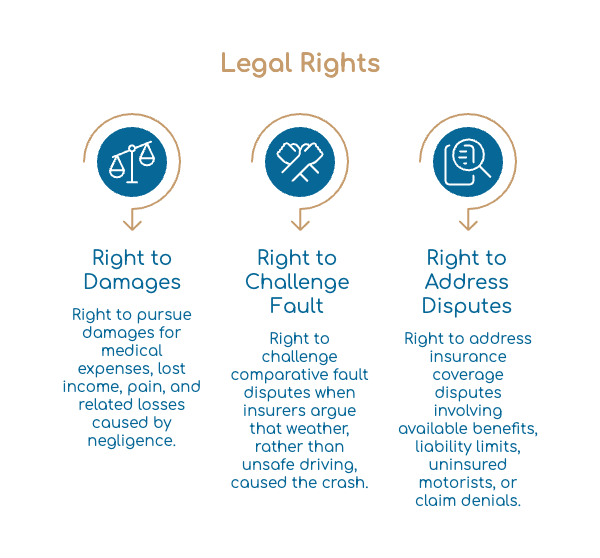
These rights help protect injured individuals and support accountability, while allowing families, caregivers, and advocates to serve victims with informed guidance.
Why Do Florida’s Poor Weather Car Accident Injuries Happen?
When severe weather affects Florida roads, car accident injuries often happen because drivers fail to respond to reduced visibility, slick pavement, sudden flooding, and changing traffic conditions. Rain, fog, wind, and tropical storms can make ordinary driving decisions more dangerous within seconds. Collisions may result when motorists drive too fast for conditions, follow too closely, brake abruptly, or ignore standing water. Inadequate Weather safety practices, such as failing to use headlights or maintain tires, also increase the risk of harm.
Driver awareness is especially important because Florida weather can shift quickly, leaving little time to react. A driver who is distracted, fatigued, impaired, or unfamiliar with local hazards may misjudge stopping distance or lane position. Commercial vehicles, motorcycles, pedestrians, and emergency responders can face heightened danger during poor weather. These injuries often occur not simply because weather is present, but because human conduct fails to account for foreseeable roadway risks.
What Should You Do After a Florida Poor Weather Car Accident Injury?
After a Florida car accident injury caused by poor weather, prompt medical care is vital, even when symptoms seem minor or delayed. The injured person should document visible weather conditions, roadway hazards, vehicle damage, and any available witness information, as these details may affect liability. Contacting an injury lawyer can help preserve evidence, address insurance issues, and protect the injured person’s legal rights.
Seek Medical Care
Because poor weather can mask the severity of a collision, prompt medical care is one of the most important steps an injured person can take after a Florida car accident. Rain, fog, wind, or standing water may cause sudden impacts that leave injuries developing slowly, including concussions, spinal trauma, or internal harm. A medical evaluation creates a clear treatment record, supports timely recovery, and helps caregivers understand the person’s needs with accuracy and compassion.
Delaying care may worsen symptoms and make it harder to connect injuries to the crash. Injured individuals should follow all treatment instructions, attend referrals, and preserve discharge papers, prescriptions, and billing records. Preserving weatherproof documentation and dashcam footage may also support the broader injury record, while medical needs remain the immediate priority.
Document Weather Conditions
Medical treatment records help show the nature of the injuries, but evidence from the surrounding weather can explain how and why the collision occurred. After a crash in Florida due to poor weather, a responsible person should document rain intensity, standing water, fog, wind, visibility, road surface conditions, and traffic signal function. Photographs and short videos taken safely from nearby areas may preserve details that later disappear.
Preserving dashcam footage is also important because recordings may show speed, braking, lane position, spray from other vehicles, and sudden loss of control. Notes should identify the time, location, and direction of travel. Weather reports and roadway maintenance information may help confirm Hydroplaning risk factors, including worn pavement, pooled water, bald tires, and excessive speed for conditions. This evidence supports fair evaluation.
Contact An Injury Lawyer
In the days following a Florida car accident due to poor weather, contacting an injury lawyer can help protect the injured person’s claim before evidence is lost or insurance positions harden. Counsel may evaluate crash reports, roadway hazards, medical records, and witness statements to determine how rain, fog, flooding, or reduced visibility affected fault. A lawyer can provide an insurance claim strategy, helping the injured person avoid premature statements, incomplete forms, or settlement offers that do not reflect future care needs.
Legal guidance may also include Evidence Preservation Tips, such as saving photographs, dashcam footage, repair estimates, and weather documentation. For those focused on serving family, coworkers, or community after an injury, timely legal support can reduce confusion, protect recovery options, and promote an orderly path toward accountability and fair compensation.
Critical Evidence in a Florida Poor Weather Car Accident Injury Case
Critical evidence can determine how liability is assessed when poor weather contributes to a Florida car accident injury claim. Key materials may include: 1. weather reports confirming conditions at the time of the crash, 2. police crash reports documenting observations and citations, and 3. photos, videos, and witness statements showing visibility, road hazards, and driver conduct. Promptly preserving this evidence helps establish whether the collision resulted from negligent driving despite hazardous conditions.
Weather Reports
Weather reports can provide an objective record of the conditions that existed before, during, and after a Florida poor weather car accident. These records may identify rainfall intensity, wind speed, visibility limits, flood advisories, and the timing of hazardous changes. Such information helps evaluate the impact of Storm, road safety, driver behavior, emergency response, and whether reasonable care was exercised under the circumstances.
For injured persons and those assisting them, accurate weather data can clarify how environmental conditions contributed to loss of control, reduced stopping distance, or impaired visibility. Forecasts, radar images, National Weather Service alerts, and local observations may also show whether dangers were foreseeable. When preserved promptly, weather reports support a careful review of causation, responsibility, and the measures needed to protect the public.
Police Crash Reports
After a Florida car accident in poor weather, a police crash report often becomes one of the earliest structured records of what occurred. It may identify drivers, passengers, witnesses, roadway conditions, visibility concerns, and whether rain, fog, wind, or standing water contributed to the collision. For those assisting injured people, the report can guide careful service by confirming emergency contacts, insurance details, and responding agency information.
It may also note citations, statements, vehicle positions, and observations about lane discipline, which can influence later fault analysis. Strong documentation habits include promptly obtaining the report, reviewing it for errors, and preserving related correspondence. While the report is not always conclusive, it provides a reliable starting point. Safety tips in the report may also help prevent similar harm.
Photos And Videos
Beyond the police crash report, photos and videos can provide direct visual evidence of the conditions that shaped a poor-weather car accident in Florida. Images of standing water, fog, debris, damaged vehicles, skid marks, traffic signals, and roadway lighting may help clarify how visibility and traction affected safe travel. Video from nearby businesses, traffic cameras, rideshare vehicles, or a police dashcam can also show vehicle speed, lane position, braking, and the timing of the collision.
This evidence may support a careful review of fault and help protect injured people from unfair assumptions. When preserved promptly, visual materials can strengthen case evaluation, guide reconstruction efforts, and confirm whether reported conditions match the scene. They may also affect Witness credibility by showing whether visual accounts are consistent with objective recorded evidence.
Witness Statements
When poor weather limits visibility or traction, witness statements can provide important context about how a Florida car accident occurred. Neutral observers may describe vehicle speeds, lane positions, traffic signals, braking, hydroplaning, or whether drivers used headlights and hazard lights appropriately. Their accounts can support injured parties by preserving details that may fade quickly after rain, fog, or standing water has cleared.
Eyewitness reliability should be evaluated carefully, because poor lighting, stress, distance, and brief observation periods may affect accuracy. Investigators may compare statements with photos, videos, crash reports, and vehicle damage to identify consistencies. Contradicting accounts should not be ignored; they may reveal confusion, bias, or overlooked facts. Clear, timely witness interviews help establish responsibility and assist those seeking fair recovery after weather-related collisions.
Long-Term Effects of Florida Poor Weather Car Accident Injuries
Poor weather car accidents in Florida may cause injuries that extend far beyond the initial emergency treatment. Chronic pain complications, emotional trauma, and ongoing medical needs can affect a person’s ability to work, manage daily activities, and maintain long-term stability. These lasting consequences often become central issues when evaluating the full value of an injury claim.
Chronic Pain Complications
Chronic pain can become one of the most disruptive long-term consequences of a Florida poor weather car accident, especially after collisions involving hydroplaning, reduced visibility, or sudden loss of vehicle control. Persistent neck, back, shoulder, or joint pain may limit mobility, reduce work capacity, and interfere with caregiving, volunteer service, or other responsibilities centered on helping others.
These conditions often require ongoing evaluations, imaging, therapy, medication management, and careful documentation. Timely records can support treatment planning while also preserving important legal and financial options. Insurance claim deadlines must be monitored closely because delayed reporting may affect recovery opportunities. When pain prevents sustained employment, long-term disability paperwork may become necessary. Thorough medical evidence, consistent follow-up, and clear functional assessments help establish the lasting impact of chronic pain.
Emotional Trauma Effects
After a collision caused by heavy rain, fog, standing water, or low visibility, emotional trauma may persist long after physical injuries begin to improve. Survivors may experience anxiety while driving, sleep disruption, irritability, intrusive memories, or fear during future storms. These effects can limit a person’s ability to work, manage family responsibilities, and engage in community service, especially when a person’s role involves caring for others. Documentation from counselors, family observations, and workplace records may help show how the crash changed daily functioning.
Insurance denial strategies often minimize emotional distress by calling it temporary or unrelated to the accident. Careful evidence review, consistent reporting, and settlement negotiation tips from qualified legal counsel may support a fair valuation of these harms, while preserving dignity and credibility throughout the claim process for injured Floridians and their families.
Ongoing Medical Needs
Emotional trauma is often only one part of the lasting harm caused by a weather-related collision, because many injured people also face ongoing medical needs that extend well beyond the initial emergency treatment. In Florida, poor weather crashes can leave victims requiring surgery, physical therapy, pain management, mobility support, or expert care for months or years. These needs affect family stability, work capacity, and caregivers’ ability to provide consistent support.
Medical billing documentation is necessary because it helps show the full cost of treatment, future care, and related limitations. Accurate records also support Insurance settlement negotiation, especially when insurers attempt to minimize long-term consequences. A careful legal review may help ensure that projected medical expenses are included rather than overlooked when pursuing compensation.
Proving Liability in Florida: Poor Weather Car Accident Injury Cases
Although poor weather can complicate a crash investigation, it does not excuse unsafe driving under Florida law. Drivers must adjust their conduct to rain, fog, wind, standing water, and reduced visibility. Proving liability often requires showing that a motorist failed to slow down, followed too closely, ignored roadway conditions, or made an unsafe act despite obvious hazards.
Negligence standards focus on whether the driver acted as a reasonably careful person would under similar circumstances. Evidence may include crash reports, witness statements, traffic camera footage, vehicle damage patterns, skid marks, and electronic data. Distracted driving can be especially significant when a driver is using a phone, adjusting navigation, or failing to watch the road during dangerous conditions.
For injured people and those assisting them, careful documentation supports accountability. Medical records, photographs, weather reports, and scene details can help connect unsafe conduct to the injuries suffered, even when severe weather played a role.
Dealing With Insurance Companies After a Florida Poor Weather Car Accident Injury
Once liability proof begins to take shape, insurance companies often become a central part of a Florida poor weather car accident injury claim. Adjusters may review police reports, vehicle damage, weather conditions, and medical treatment to assess fault and damages. Their role is financial, not charitable, so injured individuals should approach communications with care, accuracy, and restraint.
Statements given too soon may overlook pain, delayed symptoms, or roadway hazards made worse by rain, fog, or standing water. Maintaining Medical Records helps connect injuries to the collision and supports a fair evaluation. Hiring Accident Investigators may also assist in clarifying visibility, braking distance, skid evidence, and whether another driver failed to adapt to dangerous conditions.
For those committed to serving injured neighbors, careful insurance handling protects both dignity and accountability. A lawyer may manage insurer contact, organize documentation, and challenge unfair interpretations, helping ensure weather is not used to excuse negligent driving.
What to Expect During a Florida Poor Weather Car Accident Injury Claim Process
A Florida poor weather car accident injury claim typically begins with reporting the crash, preserving evidence, and identifying how weather conditions affected visibility, traction, or driver control. The process often requires gathering weather records, photographs, witness statements, and vehicle damage documentation while communicating carefully with insurers. Establishing fault and damages depends on showing how negligence contributed to the crash, even in the presence of rain, fog, flooding, or other hazardous conditions.
Reporting The Crash
After a crash in poor weather, promptly reporting the collision is a crucial first step in preserving the injury claim. Florida drivers should contact law enforcement when injuries, significant damage, or unsafe roadway conditions are present. An official crash report helps document the parties involved, location, time, visible injuries, and preliminary observations about Driver Behavior. This record may later assist insurers, attorneys, and medical providers in evaluating liability and damages.
Those serving injured people should encourage calm, accurate reporting without speculation or blame. The driver should share license, registration, and insurance information, then seek medical attention when needed. Following Road Safety Tips, such as moving to a safe area if possible, also protects others from further harm while responders manage the scene with care.
Gathering Weather Evidence
Proper reporting creates the initial record, but a poor weather injury claim often depends on evidence showing how rain, fog, wind, flooding, or reduced visibility affected the crash. Investigators may gather photographs of standing water, skid marks, debris patterns, damaged guardrails, and obscured traffic signs. Weather reports, traffic camera footage, dash camera video, and witness statements can help clarify visibility, roadway conditions, and driver conduct.
Records may also show whether Safety equipment, including headlights, wipers, tires, and hazard lights, functioned properly. Evidence of distracted driving, lane violations, or exceeding posted speed limits may indicate that a driver failed to adjust to hazardous conditions. Careful preservation of these materials supports a fair assessment of responsibility while helping injured persons pursue recovery with dignity and purpose.
Dealing With Insurers
When poor weather contributes to a Florida car accident, insurers often examine whether each driver responded reasonably to the conditions. Adjusters may request recorded statements, vehicle photographs, medical records, repair estimates, and policy details while reviewing the claim. A careful response protects the injured person’s interests and supports fair treatment throughout the process. Preparing a documentation checklist helps organize notices, bills, wage records, correspondence, and weather-related materials before discussions begin.
Claim negotiation strategies may include limiting speculative statements, confirming communications in writing, and evaluating early settlement offers with caution. Insurers may cite rain, fog, flooding, or reduced visibility to reduce payment, so clear organization remains important. Those assisting an injured person should encourage timely reporting, consistent records, and respectful communication, while avoiding admissions or assumptions beyond known facts.
Proving Fault And Damages
Because poor weather can complicate the question of fault, proving a Florida car accident injury claim usually requires evidence that separates unavoidable conditions from preventable driver conduct. Investigators may review police reports, crash photographs, traffic cameras, vehicle data, witness statements, and medical records. Evidence Preservation is crucial, especially when rain, debris, or skid marks may disappear quickly. A careful claim also addresses Comparative Negligence, because insurers may argue that more than one driver contributed to the collision.
Damages must be documented through treatment records, wage information, repair estimates, and professional opinions when needed. Insurance Denials often arise when carriers blame the weather alone, so organized proof helps demonstrate negligence despite adverse conditions. Attorney fees may depend on the fee agreement and case outcome, guiding access to representation.
Compensation for Florida Poor Weather Car Accident Injury Damages
After a serious crash in poor weather, compensation may be available for losses that can be proven through evidence and linked to another party’s negligence. In Florida, recovery often depends on how clearly the injured person can show that unsafe conduct, not weather alone, caused the harm. Rain, fog, standing water, or reduced visibility may affect road conditions, but drivers still have a duty to slow, maintain control, use their lights, and follow traffic laws.
Comparative negligence rules may reduce compensation if the injured person shares responsibility for the collision. A careful review of police reports, witness statements, vehicle damage, roadway evidence, and medical records can help assign fault fairly and accurately.
Insurance coverage limits also affect the amount that may be collected, even when damages are well supported. Legal guidance can help injured people, families, and caregivers pursue available recovery while preserving dignity, stability, and needed support after a preventable weather-related crash.
Economic vs Non-Economic Damages in Florida Poor Weather Car Accident Cases
In Florida, damages in poor-weather car accident cases are generally divided into economic and non-economic categories. Economic damages may include medical bills, lost wages, and vehicle repairs, while non-economic damages may include pain and suffering and loss of enjoyment of life. Proving weather-related losses often requires clear evidence, such as crash reports, medical records, repair estimates, and documentation showing how hazardous conditions contributed to the collision.
Economic Damage Examples
In Florida, in poor-weather car accident cases, economic damages are the measurable financial losses resulting from the collision and related injuries. Examples may include ambulance charges, emergency room care, surgery, prescription medication, physical therapy, and future medical expenses, all supported by a professional evaluation. Medical treatment documentation helps link these costs to the crash, allowing insurers, attorneys, and courts to review the claim accurately.
Lost wages, reduced earning capacity, vehicle repair or replacement, towing, rental transportation, and necessary household assistance may also qualify. Weather app evidence collection can help show the conditions present at the time of the crash, supporting the relationship between hazardous weather and the financial losses claimed. Careful records allow injured persons and their advocates to pursue compensation responsibly, while serving recovery needs and financial stability.
Non-Economic Damage Examples
When a crash in poor weather causes injury, non-economic damages may address the personal harm that cannot be measured by receipts or wage records. These losses may include physical pain, emotional distress, anxiety while driving, loss of enjoyment of daily activities, disfigurement, and the strain placed on family relationships.
In serious cases, a person may no longer be able to serve others, participate in community life, or maintain former routines with dignity and confidence. Fault vs. causation remains important because bad weather alone does not fully explain the human impact of negligent conduct. During insurance dispute resolution, these damages are often evaluated through medical findings, personal accounts, and the nature of the injuries. The goal is to recognize suffering that is real, consequential, and connected to the crash.
Proving Weather-Related Losses
After a collision involving rain, fog, standing water, or reduced visibility, proving weather-related losses requires more than showing that conditions were dangerous. The injured person must connect the crash to measurable economic damages, such as medical bills, lost wages, vehicle repairs, rehabilitation, and future care needs. Noneconomic damages require evidence of pain, emotional distress, loss of mobility, and reduced quality of life. Records, photographs, weather reports, witness statements, and treating provider opinions may support both categories.
Negligent vehicle maintenance can strengthen liability when worn tires, faulty brakes, or broken lights make poor weather more hazardous. In commercial crashes, truck overload documentation may show that excess weight increased stopping distance or loss of control. Careful proof helps ensure losses are presented accurately, fairly, and responsibly under Florida law.
When a Florida Poor Weather Car Accident Injury Case Goes to Trial vs Settlement
Although many Florida poor-weather car accident injury claims resolve through settlement, some proceed to trial when liability, causation, or the value of damages remains in dispute. Settlement may occur when evidence clearly shows how rain, fog, flooding, or reduced visibility contributed to the collision, while still confirming driver fault. Through Insurance Negotiations, a lawyer may present medical records, repair estimates, witness statements, photographs, and expert opinions to seek fair compensation without the burden of court.
Trial becomes more likely when an insurer denies responsibility, undervalues injuries, or argues that weather alone caused the crash. In those cases, Car Crash Liability must be established through careful proof of negligent choices, such as speeding, following too closely, or failing to use headlights. A trial allows a judge or jury to assess credibility, weigh evidence, and determine damages. For injured people and families, this process can support accountability and help restore stability after serious loss.
Florida Laws That May Affect Your Florida Poor Weather Car Accident Case
Whether a poor-weather car accident claim is resolved through settlement or trial, Florida law governs how fault is evaluated, how insurance benefits apply, and how compensation may be recovered. Rain, fog, flooding, or high winds do not excuse careless driving, especially when safer conduct could have protected others on the road.
- Comparative Negligence: Florida’s fault rules may reduce recovery when an injured person shares responsibility, such as driving too fast for conditions or failing to use headlights.
- No-Fault Insurance: Personal injury protection benefits may provide initial medical and wage-loss coverage, regardless of fault, subject to policy terms and injury requirements.
- Evidence and Reporting Duties: Crash reports, medical records, witness statements, and roadway conditions can help show whether a driver acted reasonably during hazardous weather.
The Statute of Limitations also remains an important legal consideration, requiring timely attention without delaying service to injured people, families, and communities affected by preventable roadway harm.
The Statute of Limitations for Florida Poor Weather Car Accident Injury Cases
Why does the filing deadline matter in a Florida poor weather car accident injury case? Florida law sets strict time limits for bringing a personal injury claim, and missing that deadline can prevent recovery, regardless of the injury’s seriousness. For crashes occurring on or after March 24, 2023, most negligence claims must be filed within two years. Earlier crashes may follow a different deadline, making accurate date review essential.
Poor weather conditions can complicate evidence because rain, fog, flooding, or reduced visibility may affect how responsibility is evaluated. Comparative fault may also reduce available compensation if an injured person is found partly responsible for the collision. For those committed to serving injured community members, adherence to timelines supports fairness, preserves evidence, and helps ensure claims are considered on their merits.
Prompt attention to deadlines also protects the availability of witnesses, roadway condition records, vehicle data, medical documentation, and other time-sensitive evidence. Delay can profoundly weaken otherwise valid claims.
How a Florida Poor Weather Car Accident Injury Lawyer Can Help You
After a crash in heavy rain, fog, flooding, or another hazardous weather condition, a Florida poor weather car accident injury lawyer can help identify whether the collision resulted from unavoidable circumstances or negligent action. This assistance supports injured people, families, and caregivers seeking accountability while preserving resources needed for recovery and service to others.
- Investigating fault: The lawyer may review police reports, roadway conditions, vehicle data, witness statements, and driver behavior to determine whether speeding, distracted driving, or unsafe following distance contributed.
- Managing claims: Legal counsel can address Insurance coverage disputes, communicate with adjusters, evaluate policy limits, and resist efforts to minimize damages by blaming weather alone.
- Documenting losses: The lawyer can help organize medical records, wage information, repair estimates, and future medical documentation to present a complete claim.
Through structured advocacy, counsel helps ensure that the case accurately reflects both immediate harm and long-term needs.
When to Contact a Florida Poor Weather Car Accident Injury Lawyer
Timing can affect the strength of a poor weather accident claim, particularly when evidence begins to change or disappear soon after the collision. A person injured during heavy rain, fog, flooding, or high winds should consider contacting a Florida poor weather car accident injury lawyer once immediate medical needs are addressed. Early contact may help preserve photographs, roadway conditions, witness information, vehicle damage records, and weather data before they become difficult to verify.
Prompt action is also important when insurers request statements, medical authorizations, or settlement discussions. A lawyer may review Insurance coverage options, identify applicable deadlines, and organize information needed for crash timeline reconstruction. This can be especially important when several drivers, unsafe speeds, reduced visibility, or standing water contributed to the collision.
For individuals committed to protecting their families and serving others responsibly, timely legal guidance can support informed decision-making and help avoid preventable missteps during the claims process.
Why You Need an Experienced Florida Poor Weather Car Accident Injury Lawyer
Because poor weather can complicate both fault analysis and Insurance coverage, an experienced Florida poor weather car accident injury lawyer may provide critical guidance in determining how the crash occurred and who may be legally responsible. Rain, fog, wind, and standing water can obscure evidence, affect braking distance, and create disputes over whether drivers acted reasonably under dangerous conditions.
A lawyer can evaluate police reports, witness accounts, vehicle damage, roadway conditions, and available video to build a careful record. This work is especially important when insurers argue Comparative fault, claiming the injured person contributed to the collision.
Experienced counsel may also address medical documentation, lost income, and future care needs, helping protect the injured person’s ability to serve family, workplace, and community responsibilities.
A sound settlement strategy can account for liability disputes, policy limits, injury severity, and long-term consequences, while resisting quick offers that fail to reflect the full harm caused.
How to Choose the Right Florida Poor Weather Car Accident Injury Lawyer for Your Case
Selecting the right attorney is the next important decision for an injured person facing the uncertainty of a poor-weather crash claim in Florida. A suitable lawyer should understand how rain, fog, standing water, reduced visibility, and unsafe driving choices affect liability. The selection process should focus on experience with weather-related collisions, careful review of evidence, and a record of diligent pursuit of fair compensation.
An injured person may benefit from evaluating Client communication before signing an agreement. The lawyer should provide clear updates, explain deadlines, and answer questions with patience and respect. A strong case strategy should also be discussed early, including how the attorney may use crash reports, witness statements, photographs, medical records, and expert opinions.
Effective insurance negotiations are another key factor. The right lawyer should recognize undervalued claims, respond to insurer defenses, and pursue a resolution that reflects the client’s losses while protecting the injured person’s dignity.
About The Law Offices of Anidjar & Levine
The Law Offices of Anidjar & Levine represents injured people throughout Florida, including those harmed in car accidents involving heavy rain, fog, slick roads, reduced visibility, and other poor weather conditions.
The firm assists clients by evaluating liability, insurance coverage, medical documentation, and the full extent of losses connected to a weather-related collision.
Its team seeks to provide organized support from the first contact through resolution.
During Personal injury intake, staff members gather essential facts, identify urgent needs, and help clients understand the next steps in the claim process.
This structured approach allows injured individuals to focus on recovery while their legal matters receive careful attention.
The firm also clearly explains its legal fee structure, including how representation may proceed without upfront attorney fees.
By combining practical guidance, responsive communication, and case preparation, The Law Offices of Anidjar & Levine serves injured Floridians with diligence, professionalism, and respect.
Frequently Asked Questions
Can Poor Weather Affect My Car Accident Claim Value?
Yes, poor weather can affect the value of a car accident claim. It may influence fault, visibility, stopping distance, and whether drivers acted reasonably under hazardous conditions. Rain Delays Evidence when skid marks, debris, or scene details disappear, making documentation more difficult. Insurers consider weather within the Claim Value Calculation, along with injuries, damages, and liability. A careful review helps protect injured persons and supports fair compensation for those needing assistance after harm.
Should I Report a Weather-Related Crash if Damage Seems Minor?
Yes, a weather-related crash should be reported even when damage appears minor. Reportable injuries may emerge later, and medical documentation helps protect everyone involved. A timely report also supports accurate facts, insurance review, and fair settlement timelines. When rain, fog, or slick roads contribute to a collision, comparative negligence may still be examined, so clear records serve the injured, insurers, and the public with accountability and responsible care.
Can Dashcam Footage Help After a Rainy-Weather Accident?
Yes, dashcam footage can provide valuable evidence after a rainy-weather accident. It may show vehicle speed, lane position, visibility, traffic signals, and whether another driver acted carelessly. Such footage can help clarify disputed facts, support accurate reporting, and promote fair insurance negotiations. For those seeking to serve injured people responsibly, promptly preserving the video, sharing it with appropriate professionals, and avoiding alteration are important steps after the crash.
What if Road Flooding Caused My Florida Car Accident?
Road flooding may support a claim when Waterlogged Roads result from negligent maintenance, poor drainage, missing warnings, or careless driving. An injured person, or one assisting them, should document conditions, vehicles, signs, and witness accounts. Responsibility may involve another driver, a contractor, or a government entity, but notice rules and Liability Limits can restrict recovery. Prompt evaluation helps preserve evidence, identify accountable parties, and protect the injured person’s rights.
Do Weather-Related Crashes Require Expert Accident Reconstruction?
Weather-related crashes do not always require expert accident reconstruction, but intricate cases often benefit from it. When visibility, hydroplaning, flooding, or driver conduct is disputed, an expert can clarify speed, braking, roadway conditions, and causation. Proper evidence preservation, including photos, vehicle data, and witness accounts, supports that analysis. Medical documentation also helps link injuries to the collision, enabling those serving the injured to pursue accountability with disciplined, accurate evidence.
—————————
A Florida car accident injury claim involving poor weather can involve complicated questions of negligence, insurance coverage, and recoverable damages.
Victims may benefit from prompt legal guidance, careful evidence collection, and informed negotiation with insurers.
An experienced Florida Car Accident Lawyer can assess liability, protect the victim’s rights, and pursue fair compensation for medical expenses, lost income, and related losses.
The Law Offices of Anidjar and Levine provides focused representation for injured individuals seeking accountability after weather-related collisions.