A Florida medical malpractice medication errors lawyer evaluates whether a prescribing, dispensing, administration, or monitoring mistake violated the applicable standard of care and caused identifiable harm. The Law Offices of Anidjar and Levine may review medical records, prescriptions, pharmacy logs, medication administration records, laboratory results, and expert opinions. Potential damages may include additional medical expenses, lost income, pain, disability, and lasting emotional effects. Because Florida imposes strict procedural requirements and deadlines, prompt legal evaluation can help preserve evidence and assess a claim’s viability. Learn more from a Florida Personal Injury Lawyer about the process and available legal considerations.
Main Takeaways
- A Florida medication error lawyer evaluates prescription, dispensing, administration, and monitoring failures against the applicable medical standard of care.
- Potential claims generally require proving a provider-patient relationship, breach of duty, causation, and legally recognized damages.
- Evidence may include medical records, prescriptions, pharmacy records, administration notes, communications, witness statements, and qualified medical opinions.
- Common errors include wrong medications, dosages, routes, patients, instructions, overlooked allergies, interactions, and inadequate follow-up.
- Recoverable damages may involve additional medical expenses, physical harm, emotional distress, lost income, disability, and reduced independence.
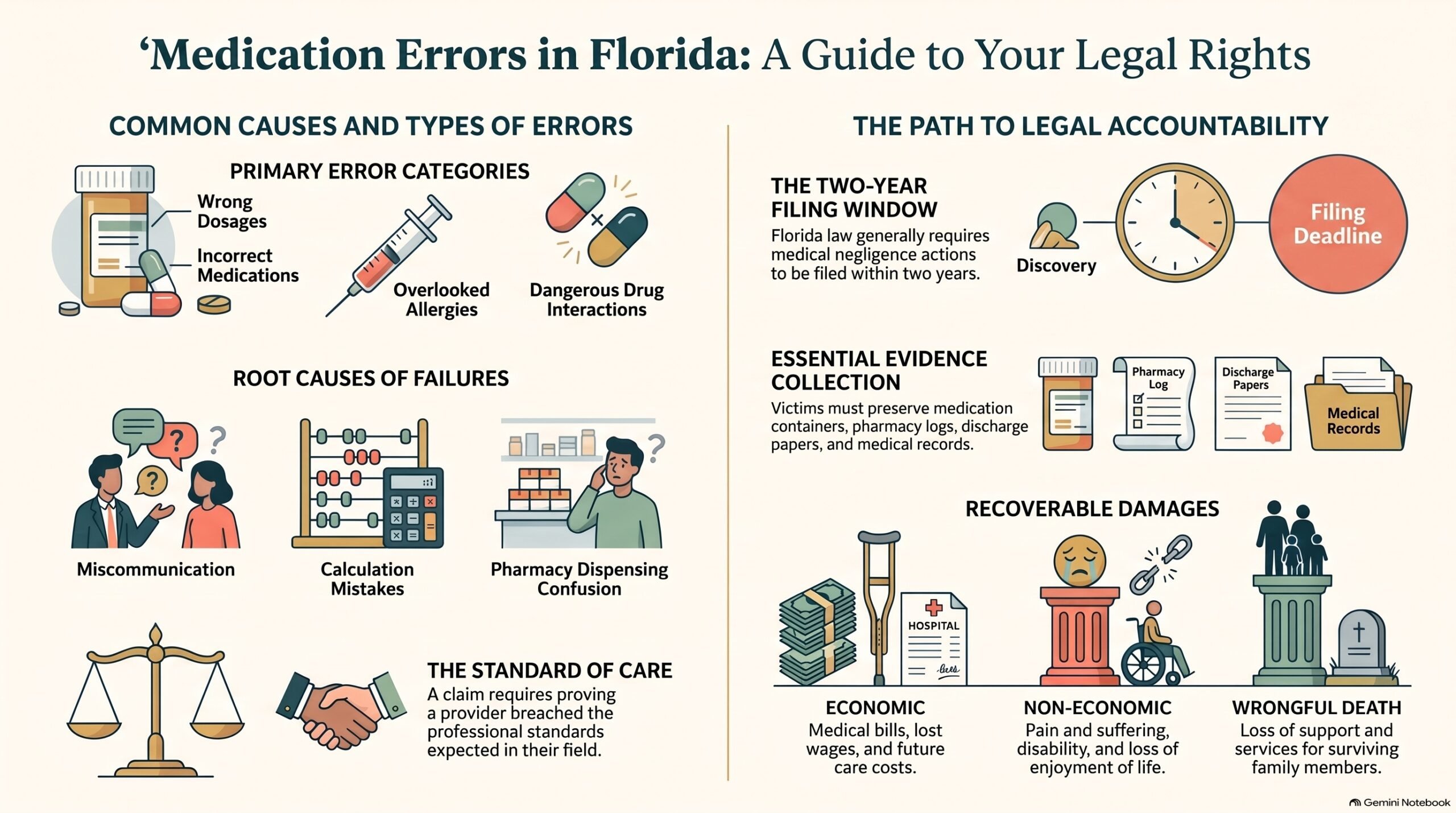


How We Can Help With Your Florida Medical Malpractice Medication Errors Injury Claim
When a medication error causes injury, an experienced Florida medical malpractice attorney can investigate the circumstances, identify responsible parties, and determine whether the conduct violated the applicable standard of care. The attorney may review prescriptions, dispensing records, administration notes, pharmacy communications, and relevant medical histories to clarify how the error occurred and how it affected the patient.
Representation can also include organizing evidence-collection checklists, securing relevant records, consulting qualified medical professionals, and preserving documentation before it becomes difficult to obtain. Counsel may communicate with healthcare providers, insurers, and other involved parties while protecting the injured person from statements or decisions that could weaken the claim.
A legal team can explain Insurance claim timelines, assess available coverage, and manage required notices or negotiations. If appropriate, the attorney may prepare a demand supported by documentation of medical expenses, lost income, future care needs, and other losses. Throughout the process, careful guidance allows families to focus on recovery while the claim receives orderly, diligent attention.
OUR CONSULTATIONSARE FREE
START YOUR FREE CASE REVIEW

Understanding Florida Medical Malpractice Medication Errors Injury Cases
Understanding a Florida medical malpractice medication error case requires examining whether a healthcare provider failed to meet the applicable standard of care and whether that failure caused identifiable injury. The relevant inquiry focuses on documented treatment decisions, patient monitoring, informed consent, and the resulting medical consequences. Evidence may include medical records, pharmacy documentation, witness statements, and opinions from qualified medical professionals.
Patient communication breakdowns can affect whether medication instructions, allergies, or adverse symptoms were accurately conveyed and understood. Hospital protocol violations may also support a claim when established safety procedures were disregarded, and the deviation contributed to injury. However, an unfavorable outcome alone does not establish negligence. The injured patient generally must demonstrate a provider-patient relationship, a breach of professional duties, causation, and legally recognized damages. Damages may include additional medical care, lost income, disability, pain, and diminished quality of life. Careful evaluation can clarify whether accountability is warranted and help affected individuals pursue appropriate support while promoting safer patient care.
Common Causes of Florida Medical Malpractice Medication Errors
Common causes of medication errors include prescription miscommunication, dosage calculation errors, and pharmacy dispensing mistakes. Inadequate medication monitoring may also prevent timely recognition of adverse reactions, contraindications, or ineffective treatment. Each circumstance can create potential grounds for evaluating whether appropriate professional standards were followed.
Prescription Miscommunication
Prescription miscommunication occurs when incomplete, unclear, or inaccurately conveyed medication instructions lead to an incorrect prescription or administration error. This problem may arise when a provider misreads a patient’s record, overlooks reported allergies, or fails to communicate a treatment change to the pharmacy. Conflicting information among physicians, nurses, pharmacists, and caregivers can further increase the risk of an inappropriate medication being dispensed or given. Effective patient communication is crucial, particularly when language barriers, hearing limitations, or confusion affect understanding. Discharge instructions should identify each medication, its purpose, timing, and relevant precautions in language the patient or caregiver can understand. When instructions are rushed, undocumented, or inconsistent, patients may follow unsafe directions despite reasonable efforts. Careful verification and clear documentation help protect patients and support accountable medical care.
Dosage Calculation Errors
Dosage calculation errors occur when a medication’s amount, concentration, frequency, or administration rate is determined incorrectly. These mistakes may result from confusion between measurement units, misreading decimal points, using an incorrect formula, or failing to adjust a dose for a patient’s age, weight, kidney function, or other clinical factors. Complicated dosing instructions and interruptions can further increase risk, particularly when calculations are performed under time pressure. Effective error prevention includes standardized formulas, independent verification, computerized clinical decision support, and clear documentation of the reasoning behind each dose. Patient counseling also provides an opportunity to confirm instructions, identify misunderstandings, and encourage questions before treatment begins. When a patient receives an excessive, inadequate, or improperly timed dose, the consequences may include treatment failure, toxicity, hospitalization, or lasting harm.
Pharmacy Dispensing Mistakes
When a pharmacy prepares or supplies the wrong medication, strength, quantity, or instructions, the resulting dispensing error can expose a patient to preventable harm. Common causes include confusing similar names, misreading prescriptions, entering inaccurate information into computer systems, selecting the wrong product from storage, and failing to identify labeling or packaging discrepancies. Workload pressures, interruptions, inadequate staff training, and communication failures may further increase risk. Pharmacies are expected to maintain patient safety programs that promote accurate verification, clear labeling, and effective error reporting. Pharmacy quality assurance procedures may include independent prescription checks, barcode scanning, inventory controls, and pharmacist counseling before medication leaves the facility. When these safeguards are absent or negligently applied, patients may experience injury, and affected individuals may seek guidance regarding potential medical malpractice claims.
Inadequate Medication Monitoring
Inadequate medication monitoring can allow adverse drug reactions, dangerous interactions, or ineffective treatment to go undetected. Healthcare professionals may fail to schedule timely follow-up appointments, review laboratory results, or reassess whether a prescription remains appropriate. A thorough medication review can identify duplicate therapies, contraindications, and changes in a patient’s condition that require treatment adjustments. Dosage verification is also vital when weight, kidney function, age, or other clinical factors affect how medicine should be administered. Without consistent treatment oversight, warning signs may be overlooked, and patients may continue receiving harmful or ineffective drugs. Proper monitoring supports patient safety by promoting communication among prescribers, pharmacists, caregivers, and patients. When established monitoring practices are neglected, resulting injuries may raise questions about whether the standard of care was followed.
Don’t Wait. Call Our Florida Personal Injury Lawyers Now!


Legal Rights of Florida Medical Malpractice Medication Errors Injury Victims
Florida medical malpractice medication error victims may have the right to seek compensation when a healthcare provider’s negligent prescribing, dispensing, or administration of medication causes injury. Florida law may permit claims for medical expenses, lost income, pain, disability, and related losses when negligence can be established. A claim may involve a physician, pharmacist, hospital, or other responsible provider.
Florida medication errors may support medical malpractice claims when negligent prescribing, dispensing, or administration causes injury and related losses.
Victims and families may pursue accountability for:
- Physical harm that disrupts daily life
- Emotional distress following a preventable injury
- Medical costs required for recovery
- Income lost during treatment or disability
- Reduced independence and future opportunities
Evidence may include medical records, prescriptions, pharmacy documentation, billing statements, and qualified expert opinions. Negligent training or failures to maintain patient safety protocols may support a claim when those failures contributed to the medication error. Florida’s statute of limitations can restrict the time available to file, making prompt legal evaluation important. A qualified attorney can protect evidence, identify responsible parties, and seek a resolution that supports recovery while promoting safer care for others.
Why Do Florida Medical Malpractice Medication Errors Injuries Happen?
Medication error injuries often arise from preventable failures in prescribing, dispensing, administering, or monitoring drugs. Errors may begin when a clinician overlooks allergies, contraindications, interactions, or a patient’s relevant medical history. Confusing names, unclear abbreviations, and inaccurate dosage calculations can also lead to an inappropriate prescription.
During dispensing, pharmacy personnel may select the wrong medication, strength, or instructions, particularly when workload pressures and similar packaging create confusion. Administration errors may occur when staff misidentify a patient, misread an order, use an incorrect route, or fail to verify timing. Effective medication reconciliation is crucial when patients are admitted, transferred, or discharged because incomplete lists can cause duplications, omissions, or dangerous interactions.
<
Don’t Wait. Call Our Florida Personal Injury Lawyers Now!
What Should You Do After a Florida Medical Malpractice Medication Error Injury?
After a medication error, the injured individual should seek immediate medical care to address potential complications and establish a medical record. The individual should also document the medication, dosage, instructions, symptoms, treatment, and communications with healthcare providers. Consulting a Florida medical malpractice attorney can help preserve evidence, evaluate liability, and identify available legal options.
Seek Immediate Medical Care
Prompt medical evaluation is essential when a patient experiences a suspected medication error, particularly if symptoms such as difficulty breathing, severe weakness, confusion, chest pain, or loss of consciousness develop. The patient or a concerned family member should call 911 for life-threatening symptoms and follow emergency dispatch instructions. For less urgent reactions, contacting the prescribing clinician, pharmacist, or an urgent care provider can help determine the appropriate next step. Medical professionals may assess vital signs, identify adverse interactions, adjust treatment, and provide necessary monitoring. The patient should explain which medication was taken, the dosage, and when symptoms began, without delaying emergency care. Preserve prescriptions, medication containers, and written instructions when possible. Patients may also request copies of treatment instructions and discharge records for continuity of care and later review.
Document the Medication Error
When a medication error is suspected, the patient or family member should create a detailed record of what occurred as soon as medical needs have been addressed. The record should identify the medication, dosage, time of administration, prescribing provider, and any symptoms that followed. Copies of prescription labels, discharge instructions, medication lists, pharmacy receipts, and relevant electronic messages may help preserve accurate information. A written timeline should distinguish observed facts from assumptions and include names of witnesses or personnel involved. Patients should request that concerns be noted in their medical records and retain copies of related documents. This information can support a facility’s Root Cause Analysis and help identify whether Preventive Protocols were followed. Careful documentation also helps patients communicate clearly with their treating providers during ongoing evaluation and recovery.
Consult a Florida Attorney
Because Florida medical malpractice claims are governed by strict procedural requirements, a patient injured by a medication error should consult a qualified Florida medical malpractice attorney as soon as practical. During a Legal Consultation, counsel can assess whether the provider’s conduct departed from the applicable standard of care and caused compensable harm. The attorney may investigate prescribing records, pharmacy documentation, treatment notes, witness accounts, and relevant Informed Consent materials. Prompt Evidence Collection is important because records can change, memories may fade, and Florida law imposes deadlines for pursuing claims. Counsel can also identify required pre-suit steps, obtain qualified medical opinions, and explain potential damages. Based on the available facts, the attorney can develop a focused Legal Strategy that supports the patient’s interests while preserving opportunities for accountability and recovery.
Critical Evidence in a Florida Medical Malpractice Medication Errors Injury Case
Essential evidence may include medication administration records, pharmacy dispensing documentation, and complete injury and treatment records. Expert medical testimony can help determine whether the medication error violated the applicable standard of care and caused the patient’s harm.
Preserving these records is essential because missing or inconsistent documentation may complicate a claim involving serious injury, prolonged treatment, or lasting impairment.
- A medication record may reveal the exact drug, dosage, timing, and administering provider.
- Pharmacy documentation can identify dispensing mistakes, labeling problems, or prescription discrepancies.
- Expert testimony may clarify how the error occurred and whether it caused the injury.
- Treatment records can connect the medication error to hospitalization, complications, and ongoing care.
- Clear evidence may help establish accountability when a patient’s health and future have been placed at risk.
Medication Administration Records
Medication Administration Records (MARs) provide a detailed account of the medications a patient was prescribed and received, including the drug name, dosage, route, timing, and administering healthcare professional. These records can help establish whether staff followed the physician’s orders, verified patient identity, documented patient consent, and responded appropriately to warnings or adverse reactions. Entries may reveal omitted doses, incorrect amounts, delayed treatment, unauthorized substitutions, or administration to the wrong patient. Corrections, late entries, and unexplained gaps may also raise questions regarding documentation accuracy and adherence to facility protocols. In a Florida medical malpractice medication error claim, MARs can be compared with nursing notes, vital-sign records, and clinical outcomes to clarify causation and responsibility. A lawyer may examine whether inaccurate records concealed negligence or contributed to wrongful discharge from necessary treatment or care.
Pharmacy Dispensing Documentation
Pharmacy dispensing documentation can extend the review beyond administration records by showing how a medication was selected, prepared, labeled, and released to the patient or healthcare facility. Relevant materials may include prescription orders, pharmacist verification records, compounding worksheets, dispensing logs, barcode scans, inventory data, and counseling notes. These records can help identify Medication label errors involving the drug name, strength, dosage instructions, patient identity, or expiration date. They may also reveal substitutions, unclear directions, delayed dispensing, or discrepancies between the prescription and the product supplied. Delivery confirmations and transfer records can address chain-of-custody issues, including whether the medication remained properly identified and secured before administration. Promptly preserving this documentation can assist in reconstructing events and protecting patients affected by preventable medication injuries.
Expert Medical Testimony
When a medication error causes injury, expert medical testimony can help determine whether the healthcare provider’s conduct departed from the applicable standard of care and whether that departure caused the patient’s harm. A qualified expert witness may explain how prescribing, dispensing, administering, or monitoring should have occurred under Florida’s professional standards. The testimony can clarify whether the mistake was foreseeable, whether appropriate safeguards were available, and whether the error medically contributed to the claimed injury. In some cases, expert analysis may also address Da es liability, including whether a facility, pharmacy, or other entity bears responsibility for deficient systems or supervision. Reliable testimony gives a court a structured medical basis for evaluating negligence, causation, and the seriousness of the alleged departure from accepted care. Its value depends on qualifications, methodology, and impartiality.
Injury And Treatment Records
In a Florida medical malpractice medication error case, injury and treatment records provide necessary evidence of the patient’s condition, the care received, and the consequences of the alleged mistake. These records may include medication orders, pharmacy logs, nursing notes, laboratory results, diagnostic images, discharge summaries, and follow-up evaluations. Together, they can establish when an incorrect drug or dose was administered, how providers responded, and whether the patient experienced lasting harm. Treatment records may also document additional procedures, rehabilitation, referrals, and projected medical needs. Billing records can support claimed expenses, though inconsistencies may prompt billing disputes that require careful review. Consent forms may clarify what treatment was authorized, but they generally do not excuse negligent medication administration. Preserving complete, chronological records helps attorneys and medical experts evaluate causation, damages, and accountability while supporting a patient’s pursuit of fair relief.
Long-Term Effects of Florida Medical Malpractice Medication Errors Injuries
Medication errors may cause chronic health complications that persist long after the initial injury and require continuing medical care. Ongoing treatment expenses can include medications, expert visits, rehabilitation, and other necessary care. These injuries may also produce lasting emotional and psychological effects, including anxiety, depression, and reduced quality of life.
Chronic Health Complications
Chronic health complications may arise when a medication error causes injury that persists beyond the initial recovery period. Patients may experience organ damage, impaired mobility, chronic pain, neurological symptoms, or lasting changes in emotional functioning. Some complications require treatment escalation, particularly when an incorrect dose, harmful interaction, or delayed medication causes continuing harm. Psychiatric aftercare may also be necessary when the error contributes to anxiety, depression, trauma-related symptoms, or reduced independence. Care teams can support recovery through careful monitoring, medication adherence, and patient education on medications, warning signs, and follow-up instructions. Documentation of symptoms and treatment responses may help clarify whether the condition reflects an underlying medication error. A qualified legal review can assess whether negligent prescribing, dispensing, or administration contributed to these enduring health consequences.
Ongoing Treatment Expenses
Persistent injuries from a medication error may create ongoing treatment expenses long after the initial emergency care ends. Patients may require prescription drugs, expert visits, corrective procedures, rehabilitation, medical equipment, or assistance with daily activities. Some costs arise immediately, while others continue for years as complications require monitoring and treatment. A careful review of medical records and provider opinions can help identify necessary services and estimate future expenses. Compensation documentation should include invoices, insurance statements, pharmacy records, treatment plans, and evidence of anticipated care. This information may support a negotiation strategy focused on the patient’s documented needs rather than speculation. Counsel should also maintain trial readiness by preserving expert testimony and organized financial evidence if settlement discussions fail. These efforts help advance fair recovery and support continued access to critical care.
Emotional And Psychological Effects
Often, medication error injuries produce emotional and psychological effects that persist after the physical condition has stabilized. Patients may experience anxiety, depression, sleep disturbances, diminished confidence, or fear of taking prescribed medicines. Some develop post-traumatic stress symptoms, particularly when an error caused hospitalization, permanent impairment, or threatened life. These effects can interfere with employment, relationships, medical adherence, and participation in daily activities. A qualified mental health professional may help document symptoms, provide treatment, and assess whether counseling or medication is appropriate. Families may also require guidance on how to support recovery without minimizing the patient’s concerns. Medication error reporting can identify recurring safety problems and create an important record. Patient advocacy support may help individuals communicate with providers, obtain appropriate care, and understand available legal remedies for lasting emotional harm.
Proving Liability in Florida Medical Malpractice Medication Errors Injury Cases
Proving liability in a Florida medical malpractice medication error case requires evidence that a healthcare provider owed the patient a professional duty, breached the applicable standard of care, and caused a compensable injury. Establishing breach may involve showing that a clinician prescribed the wrong drug or dosage, overlooked a contraindication, failed to monitor treatment, or administered medication incorrectly. Pharmacy record review can help identify prescription instructions, dispensing discrepancies, refill history, and communication between providers and pharmacists. Medication reconciliation services may also reveal whether an accurate medication list was obtained and compared during admission, discharge, or a clinical visit. Medical records, expert testimony, incident reports, and witness statements can connect the error to specific harm, such as additional treatment, disability, or lost earnings. Florida law generally requires competent medical evidence addressing the applicable standard and causation. Prompt preservation of records and consultation with qualified professionals can help clarify what occurred and support an objective evaluation of the patient’s claim.
Dealing With Insurance Companies After a Florida Medical Malpractice Medication Errors Injury
When a medication error causes injury, communications with insurers should be handled carefully because statements, medical authorizations, and settlement discussions may affect the evaluation of a Florida medical malpractice claim. An insurer may request recorded interviews, broad medical releases, employment information, or access to social media. Before responding, an injured patient should consider consulting qualified counsel who can protect legal rights and explain which requests are appropriate. Communications should remain accurate, limited to documented facts, and free from speculation about fault, repair, or future medical needs. Patients with limited English proficiency or communication disabilities may need interpreter services to understand insurance correspondence and avoid unintended admissions. Patient advocacy can also help coordinate records, preserve medication packaging, identify witnesses, and support clear communication with healthcare providers. Insurers may offer an early settlement, but accepting payment could restrict later recovery for additional treatment or complications. Legal guidance can help evaluate coverage issues while preserving the patient’s dignity, safety, and interests.
What to Expect During a Florida Medical Malpractice Medication Errors Injury Claim Process
The claim process generally begins with an initial case evaluation to assess the medication error, resulting injuries, and potential legal grounds. Counsel then gathers medical records and other evidence, followed by negotiations with insurers to seek an appropriate resolution. If negotiations fail, filing a lawsuit may be necessary to pursue the injured party’s claim through the courts.
Initial Case Evaluation
During an initial case evaluation, a Florida medical malpractice medication errors lawyer examines the circumstances surrounding the prescription, dispensing, or administration of the medication. The attorney considers whether conduct may have departed from accepted professional standards and whether that departure plausibly caused injury. The consultation typically addresses the client’s account, known treatment consequences, and important deadlines without prematurely determining the claim’s value.
Early evidence preservation may involve advising the client to retain medication containers, written instructions, photographs, and communications already in their possession. The lawyer may also explain appropriate insurance communication, including the risks of providing recorded statements or signing releases before receiving legal guidance. A preliminary damages assessment considers medical costs, lost income, ongoing needs, and nonfinancial harm. This attorney consultation helps establish practical next steps while protecting the individual’s interests.
Gathering Medical Evidence
As a medication errors injury claim progresses, counsel gathers medical records needed to evaluate the treatment provided, the medication involved, and the resulting harm. These materials may include prescribing records, pharmacy logs, medication administration charts, laboratory results, discharge instructions, and follow-up documentation. Counsel may request records from hospitals, physicians, pharmacies, and other providers involved in the patient’s care. Patient interview notes can clarify symptoms, instructions received, missed warnings, and changes occurring after the medication was administered. Counsel also compares entries across records to identify clues for timeline reconstruction, including dosage timing, communications, and treatment responses. Appropriate authorizations help obtain complete information while protecting confidentiality. Medical professionals may later review the evidence to assess whether the medication error departed from accepted standards and whether that departure caused identifiable injury.
Negotiating With Insurers
When negotiating with insurers, counsel typically presents documented evidence of the medication error, the resulting injuries, and the compensation sought. This package may include medical records, prescribing information, expert opinions, treatment costs, lost income documentation, and testimony describing ongoing limitations. Insurers often evaluate liability, causation, policy coverage, and projected damages before making an offer. Settlement value negotiation requires careful analysis rather than accepting an initial proposal, which may omit future care, rehabilitation, or related financial losses. Counsel may communicate with adjusters, clarify disputed facts, and respond to requests for additional documentation while protecting the claimant’s interests. An uninsured coverage review can identify applicable benefits when the responsible provider lacks adequate insurance. These discussions generally remain confidential and voluntary, allowing informed decisions without beginning court proceedings.
Filing A Lawsuit
If negotiations with an insurer do not result in a fair resolution, the injured patient may file a Florida medical malpractice lawsuit regarding the medication error. Counsel typically evaluates statute of limitations deadlines before preparing a complaint, because Florida’s filing requirements can bar an otherwise valid claim. The patient’s legal team may conduct evidence preservation, securing medication records, pharmacy documentation, electronic messages, and witness statements before information is lost. Expert review is generally required to assess whether the healthcare provider departed from the accepted standard of care and whether that departure caused injury. During litigation, both sides exchange records, answer written questions, and may participate in depositions or mediation. Damages proof supports requests for medical expenses, lost income, rehabilitation, pain, and other legally recognized losses. A court may ultimately determine liability and compensation.
Compensation for Florida Medical Malpractice Medication Errors Injury Damages
Compensation for Florida medical malpractice medication errors may cover the financial and personal harm caused by an improperly prescribed, dispensed, or administered drug. A successful claim may provide recovery for necessary medical treatment, rehabilitation, and related care arising from the error. It may also address lost earning capacity when an injury interferes with continued employment or the performance of professional responsibilities. In fatal cases, eligible family members may pursue Wrongful Death Claims for losses recognized under Florida law, including the consequences of losing a loved one’s support and services. Attorneys assess medical records, pharmacy documentation, witness accounts, and expert opinions to establish liability and connect the medication error to the claimed injuries. They also consider whether more than one provider contributed to the outcome. Careful Trial Strategy Decisions can influence settlement discussions, evidence presentation, and courtroom preparation. Each matter requires an individualized evaluation because available compensation depends on the injury, applicable deadlines, evidence, and circumstances surrounding the medication error. This process helps protect patients and families seeking accountability and meaningful assistance.
Economic vs Non-Economic Damages in Florida Medical Malpractice Medication Errors Cases
Economic damages may include medical expenses, lost income, rehabilitation costs, and other measurable financial losses resulting from a medication error. Non-economic damages address harm that is less readily quantifiable, including pain, emotional distress, disability, and diminished quality of life. Establishing both categories generally requires reliable records, medical testimony, and evidence connecting the losses to the provider’s negligent conduct.
Economic Damage Calculations
A medication error claim in Florida may involve both economic and non-economic damages, each addressing a different type of harm caused by the alleged negligence. Economic damage calculations generally begin with documented medical expenses, including emergency treatment, hospitalization, corrective procedures, rehabilitation, prescription costs, and necessary future care. Wage statements, tax records, employment histories, and expert projections may support lost income and diminished earning capacity. A medical causation analysis helps connect these losses to the medication error rather than to a preexisting condition or unrelated event. Records should be organized carefully so the damages reflect reasonable, necessary, and foreseeable costs. An attorney fee contingency agreement may allow representation without upfront legal fees, but the agreement should specify the percentage, case expenses, and responsibility for litigation costs.
Non-Economic Harm Valuation
When a medication error causes harm beyond measurable financial losses, non-economic damages may address the patient’s pain, emotional distress, disability, disfigurement, loss of enjoyment of life, and disruption of personal relationships. In Florida medical malpractice cases, valuation is individualized because these injuries lack fixed prices. A compensatory damages assessment may consider the severity, duration, and permanence of suffering, as well as how the condition affects daily activities, family relationships, independence, and emotional well-being. Non-economic impacts documentation can include personal accounts, treatment observations, and statements describing changes in routines or a diminished quality of life. The purpose is not to assign a perfect monetary equivalent to human suffering, but to provide fair compensation recognized under Florida law. Attorneys serving injured patients evaluate these effects carefully while distinguishing non-economic harm from documented financial losses.
Proving Medication Error Losses
Building on the assessment of non-economic harm, proving medication error losses requires separating documented financial consequences from personal injuries that lack a fixed monetary value. Economic damages may include hospital bills, medication costs, rehabilitation, lost wages, reduced earning capacity, and future medical care. Records, employment documentation, expert testimony, and life-care projections can help establish these amounts. Non-economic damages address pain, emotional distress, disability, disfigurement, and diminished quality of life, requiring evidence describing how the error altered daily living. In wrongful death claims, surviving relatives may seek eligible financial and relational losses under Florida law. Counsel must evaluate statute deadlines, insurance disputes, and settlement timing while preserving evidence and obtaining qualified opinions. Careful preparation supports fair compensation and helps injured patients and families continue receiving necessary care.
Don’t Wait. Call Our Florida Personal Injury Lawyers Now!
When a Florida Medical Malpractice Medication Errors Injury Case Goes to Trial vs. Settlement
The decision to resolve a Florida medical malpractice medication error case through settlement or trial depends on the strength of the evidence, the severity of the injuries, and the parties’ willingness to accept litigation risks. Settlement can provide compensation sooner, reduce uncertainty, and spare an injured patient and family from testimony and prolonged court proceedings. Negotiations may become productive once medical records, pharmacy documentation, witness accounts, and financial losses have been carefully evaluated.
Trial may be appropriate when liability is disputed, the offered settlement does not reflect the harm, or accountability requires a public judicial determination. Success generally depends on Expert causation proof connecting the medication error to the injury, supported by qualified medical testimony and consistent treatment records. An evidence preservation strategy helps protect prescriptions, dispensing records, electronic communications, photographs, and other relevant materials before they are altered or lost.
Counsel typically compares projected damages, litigation expenses, delay, and emotional demands with the client’s goals before recommending a resolution path.
Florida Laws That May Affect Your Florida Medical Malpractice Medication Errors Case
Florida laws governing medical malpractice, informed consent, statutes of limitations, pre-suit requirements, and damages recovery may substantially affect a medication error claim. Florida generally requires proof that a healthcare provider breached the applicable professional standard and caused injury. Presuit investigation and notice procedures must be completed before filing, allowing providers an opportunity to evaluate the allegations.
Relevant evidence may include:
- Patient safety training records that reveal preventable process failures.
- FDA reporting requirements that may identify recognized medication risks.
- Pharmacy protocols, dispensing records, and electronic medication histories.
- Informed-consent documents describing material risks and alternatives.
- Expert testimony connecting the error to physical, emotional, or financial harm.
Florida law may also limit certain damages or require specific proof, depending on the parties and circumstances. Families seeking accountability can help preserve medication containers, discharge papers, communications, and witness information. A qualified attorney can assess compliance with procedural rules, coordinate medical review, and pursue a resolution that supports injured patients while encouraging safer care for others. Each claim requires an individualized legal and factual evaluation.
The Statute of Limitations for Florida Medical Malpractice Medication Errors Injury Cases
Timely action is a central consideration in any Florida medical malpractice medication error claim because a lawsuit filed after the applicable deadline may be barred, regardless of the seriousness of the injury. Florida generally requires a medical negligence action to be filed within two years after the patient discovers, or reasonably should have discovered, the injury and its possible connection to malpractice. An absolute four-year statute of repose may also apply, subject to limited exceptions, including fraud, concealment, or misrepresentation. Cases involving minors, foreign objects, or delayed discovery may follow different rules. Because the correct deadline depends on specific facts, careful evaluation of medical records, pharmacy information, and treatment history is important. Prescription safety concerns should be documented promptly, particularly when an incorrect medication, dosage, or instruction caused harm. Patient advocacy also includes preserving relevant communications and reporting ongoing risks through appropriate channels. Delay can impair evidence, witness recollections, and access to meaningful legal remedies.
How a Florida Medical Malpractice Medication Errors Lawyer Can Help You
By reviewing the medical records, prescription history, and treatment timeline, a Florida medical malpractice medication errors lawyer can determine whether a healthcare provider or pharmacy may have breached the applicable standard of care. The lawyer can then:
A lawyer can assess medication errors, identify potential breaches of care, and help establish how those mistakes harmed the patient.
- Identify the medication error and its foreseeable consequences.
- Explain how the error affected the patient’s health, independence, and family.
- Coordinate Evidence preservation steps, including securing records, labels, communications, and billing information.
- Manage Expert witness selection to evaluate prescribing, dispensing, monitoring, and administration practices.
- Calculate documented losses, ongoing care needs, and other legally recoverable damages.
Counsel can communicate with insurers, healthcare systems, and opposing representatives while protecting the injured person’s interests. The lawyer may also organize medical evidence into a clear presentation that demonstrates causation and supports accountability. This work helps families pursue meaningful compensation while encouraging safer practices for future patients. By handling convoluted procedural and evidentiary responsibilities, counsel allows affected individuals to focus on recovery, caregiving, and preserving dignity throughout the legal process.
When to Contact a Florida Medical Malpractice Medication Errors Lawyer
When a patient experiences an unexpected reaction, a worsening condition, or another injury after taking medication, promptly contacting a Florida medical malpractice medication errors lawyer may help protect important legal rights. Early consultation can be appropriate when a prescription appears incorrect, dosage instructions conflict, a pharmacy dispenses the wrong drug, or a known allergy was overlooked. It may also be warranted when treatment records do not explain the event, medical billing inaccuracies suggest confusion about the medications administered, or healthcare providers provide inconsistent accounts.
A timely legal review can identify potential deadlines and advise the patient or family about practical next steps. Preservation of evidence may include securing prescription labels, discharge instructions, pharmacy records, medical charts, billing statements, photographs, and communications with providers. Patients should continue necessary medical care and avoid altering, discarding, or annotating original records. Contacting counsel does not require a decision to file a claim; it provides an opportunity to evaluate the circumstances while relevant information and witness recollections are still available.
Why You Need an Experienced Florida Medical Malpractice Medication Errors Lawyer
An experienced Florida medical malpractice medication errors lawyer can evaluate whether a medication-related injury resulted from a breach of the applicable standard of care and identify the parties who may be responsible. Such counsel can organize Medication proof, including prescriptions, pharmacy records, administration logs, medical histories, and communications concerning the error. Through expert review, the lawyer can compare the treatment provided against accepted standards of care and explain how an incorrect drug, dosage, timing, or instruction caused harm. This analysis may clarify whether responsibility rests with a physician, nurse, pharmacist, hospital, clinic, or another provider. Experienced representation also supports accurate damage assessment, including additional medical treatment, lost income, long-term care, and the effects on family members. Counsel can communicate with insurers and opposing parties while protecting the injured person’s interests during claim settlement discussions. By addressing procedural requirements and preserving essential evidence, an experienced lawyer helps ensure that a patient’s concerns are evaluated fairly and that responsible providers are held accountable.
How to Choose the Right Florida Medical Malpractice Medication Errors Lawyer for Your Case
Selecting the right Florida medical malpractice medication errors lawyer requires careful attention to the attorney’s experience with prescription, dispensing, and medication-administration claims. A qualified lawyer should understand how to investigate medical records, pharmacy documentation, treatment protocols, and expert opinions. This background helps determine whether a healthcare provider breached the applicable standard of care and caused measurable harm.
Potential clients should ask how the attorney evaluates proof of patient negligence, including whether allegations about a patient’s conduct could affect liability or damages. The lawyer should also explain the proposed strategy, expected timelines, litigation risks, and available remedies in clear terms. Experience with insurance dispute resolution is important because insurers may challenge causation, fault, or the extent of an injury.
Professional qualifications, communication practices, and access to appropriate medical experts merit careful consideration. A lawyer who listens respectfully and evaluates the facts objectively can better serve an injured patient and family. Written fee agreements and transparent explanations of costs also support informed decision-making.
About The Law Offices of Anidjar & Levine
The Law Offices of Anidjar & Levine represents individuals and families pursuing compensation for injuries caused by medication errors and other forms of medical negligence in Florida.
The firm evaluates cases involving incorrect prescriptions, dosage mistakes, inadequate warnings, pharmacy errors, and failures to monitor treatment.
Its attorneys review medical records, consult qualified professionals, and assess whether a healthcare provider breached the applicable standard of care.
A Patient rights overview can help injured individuals understand informed consent, safe treatment, access to records, and the ability to seek accountability when preventable harm occurs.
The firm’s approach centers on careful investigation and clear communication, allowing clients to make informed decisions while their legal options are examined.
Legal consultation benefits may include identifying responsible parties, preserving evidence, calculating damages, and understanding filing deadlines.
The Law Offices of Anidjar & Levine serves clients throughout Florida and provides case-specific guidance without promising a particular outcome.
Potential clients may contact the firm to discuss their circumstances and available remedies.

Frequently Asked Questions
Can Medication Errors Occur in Pharmacies Outside Hospitals or Clinics?
Yes, medication errors can occur in pharmacies outside hospitals and clinics. A Community pharmacy may experience dispensing mistakes involving incorrect drugs, strengths, labels, or instructions. Contributing factors can include workload, communication failures, incomplete medication reconciliation, and interruptions. Insurance audits may identify documentation or billing inconsistencies, but they do not prevent every clinical error. Patients and caregivers should review prescriptions carefully and promptly report unexpected symptoms or discrepancies to qualified healthcare professionals.
What Is the Difference Between a Medication Error and an Adverse Drug Reaction?
A medication error is a preventable mistake involving prescribing, dispensing, administering, or monitoring a drug, whether or not harm occurs. This Medication Error Definition includes incorrect doses, medications, patients, or instructions. An adverse drug reaction, by contrast, is harmful or unintended, even when the medication is correctly selected and used. This Adverse Reaction Distinction helps caregivers identify preventable system failures separately from unpredictable patient responses, supporting appropriate treatment, reporting, and prevention efforts.
Can Electronic Prescribing Systems Help Prevent Florida Medication Errors?
Electronic prescribing can help reduce errors in Florida by improving prescription legibility, checking for allergies, identifying drug interactions, and flagging unsuitable doses. Integrated systems may also connect prescribers with pharmacies, strengthening communication and pharmacy workflow. However, electronic tools cannot eliminate every mistake; inaccurate patient information, alert fatigue, selection errors, and inadequate verification may still cause harm. Patient safety depends on trained professionals reviewing prescriptions, confirming details, and promptly addressing discrepancies before dispensing medication.
Are Medication Errors More Common With Certain Drugs or Patient Populations?
Medication errors are more common with Riskier Medications, including anticoagulants, pain medications, chemotherapy, and drugs requiring precise dosing. Pediatric Patients face heightened vulnerability because doses depend on weight, age, and developmental factors. High-risk insulin can cause serious harm when administration or monitoring is incorrect. Elderly Polypharmacy increases danger through multiple prescriptions, drug interactions, and altered metabolism. Careful reconciliation, clear communication, and appropriate monitoring help protect these populations and support safer treatment.
Can Family Members Bring Claims After a Fatal Medication Error?
Yes, eligible family members may bring a Wrongful Death claim after a fatal medication error, provided the evidence supports medical negligence and causation. Standing Requirements vary by jurisdiction and may depend on the decedent’s relationship to the claimant, financial dependence, and applicable probate rules. A personal representative often files on behalf of the estate and survivors. Prompt consultation with qualified counsel helps preserve records, identify responsible parties, and protect statutory deadlines.
—————————
Medication errors can cause serious, lasting harm when healthcare providers fail to follow accepted safety standards.
Florida victims may have legal options to seek compensation for medical expenses, lost income, pain and suffering, and other damages.
Promptly consulting an experienced Florida medical malpractice medication errors lawyer can help preserve evidence, evaluate liability, and protect applicable deadlines.
The Law Offices of Anidjar and Levine can assess your circumstances and pursue an appropriate claim with diligence, clarity, and professional guidance.
Learn more from a Florida Personal Injury Lawyer.