We help Orlando victims of storm-driven crashes by evaluating weather data, road conditions, and municipal maintenance records to pinpoint liability, coordinating with medical experts to document injuries, and scrutinizing insurance policies for coverage gaps.
The Law Offices of Anidjar and Levine preserve vital evidence, secure expert testimony, and negotiate aggressively with insurers while preparing for trial if needed. We also guide you through statutory deadlines and make certain all documentation supports a full compensation claim.
Continue to discover how our proven strategy maximizes your recovery, or learn more from our Car Accident Lawyer in Orlando.
Main Takeaways
- Choose a lawyer experienced in evaluating weather‑related liability using meteorological reports, road‑condition data, and municipal maintenance records.
- Ensure the attorney coordinates with medical experts and accident reconstruction specialists to quantify injuries and demonstrate negligence.
- Verify the firm scrutinizes insurance policy language, identifies coverage gaps, and negotiates assertively with adjusters.
- Look for a team that promptly preserves scene evidence—photos, dash‑cam footage, police reports—and maintains a detailed timeline.
- Confirm the lawyer can develop a tailored settlement strategy and, if needed, prepare compelling evidence‑based arguments for trial.


How We Can Help With Your Orlando Poor Weather Car Accident Injury Claim
When severe weather turns Orlando’s streets into hazardous terrain, we recognize how quickly a routine drive can become a life‑changing accident, and we are prepared to guide you through every step of your injury claim. Our team evaluates weather liability by analyzing meteorological reports, road condition data, and municipal maintenance records to establish that the storm conditions were a direct factor in the collision.
We then coordinate with medical professionals to document injuries and quantify losses, ensuring that every expense is reflected in the demand package. In steering through insurance disputes, we scrutinize policy language, identify coverage gaps, and negotiate with adjusters to secure a fair settlement. Should negotiations stall, we are ready to file a lawsuit, presenting compelling evidence that underscores the defendant’s negligence and the insurer’s duty to pay. Throughout the process, we keep you informed, answer questions promptly, and uphold the highest standards of advocacy.
OUR CONSULTATIONSARE FREE
START YOUR FREE CASE REVIEW

Understanding Orlando Poor Weather Car Accident Injury Case
After outlining how we evaluate weather liability and coordinate medical documentation, we now turn to the fundamentals of an Orlando poor‑weather car‑accident injury case. We begin by evaluating how prevailing weather patterns—rain, fog, or sudden thunderstorms—alter road conditions and visibility. Understanding these patterns lets us determine whether the hazard was foreseeable and whether a reasonable driver should have adjusted speed or lane position. Next, we examine driver preparation: the extent to which the motorist checked the tire treads, windshield wipers, and headlights, and whether they maintained an extra stopping distance.
Proper preparation demonstrates adherence to safety standards, while neglect may imply contributory negligence. We also review police reports, eyewitness statements, and any traffic‑camera footage that captures the moment of impact. By integrating these elements, we construct a clear narrative that highlights the causal link between adverse weather, driver actions, and the resulting injuries, thereby strengthening the client’s claim.
Common Causes of Orlando Poor Weather Car Accident Injuries
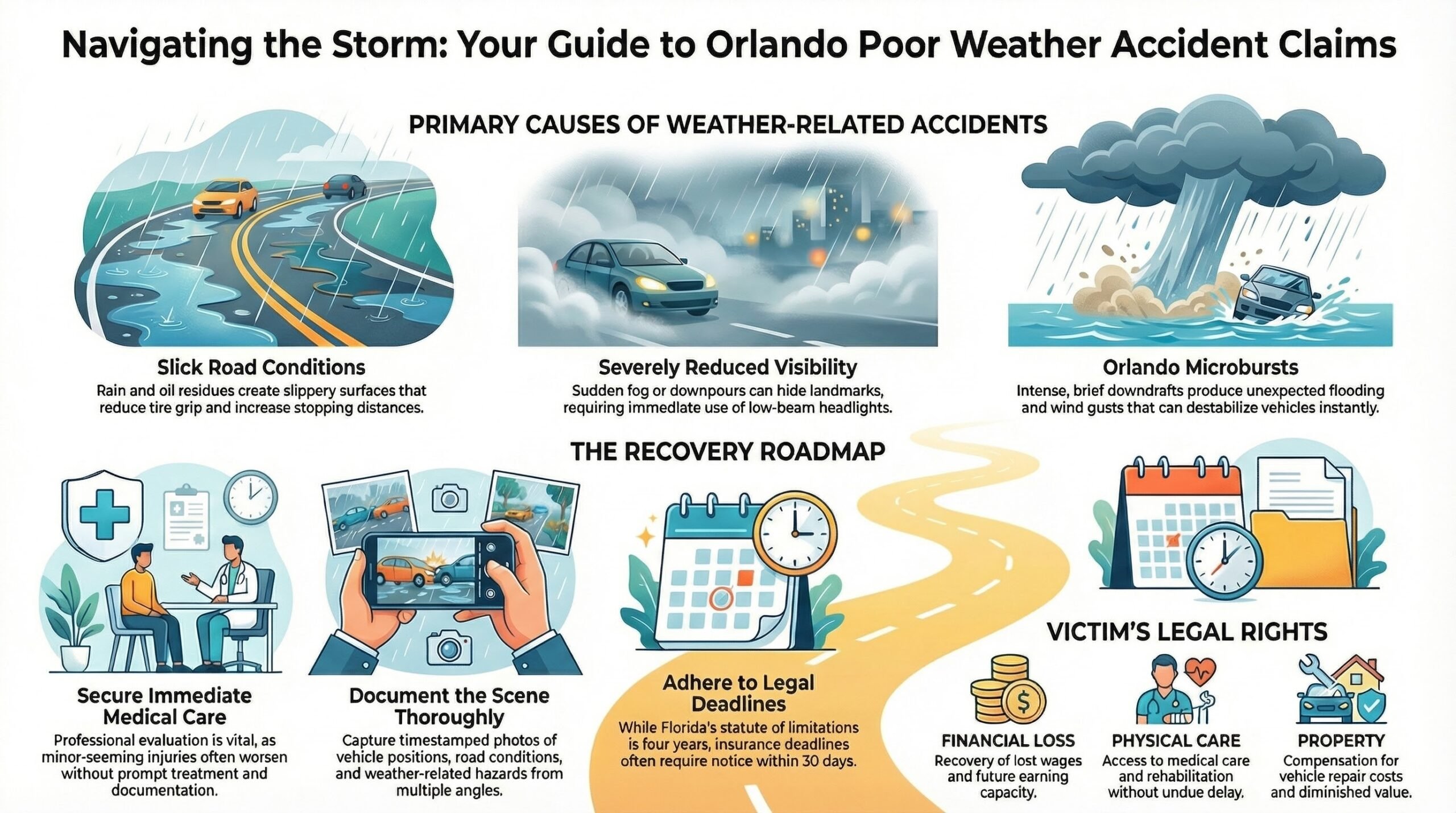
We encounter slippery road surfaces, reduced visibility, sudden weather shifts, and inadequate vehicle maintenance as primary contributors to weather‑related accidents. These factors often combine to impair driver control and increase the risk of collisions. Understanding each cause helps us advise clients on prevention and liability.
Slippery Road Surfaces
Typically, slick pavement caused by rain, algae, or oil residues creates a hazardous driving environment that can quickly turn routine trips into serious accidents. We advise drivers to recognize that wet surfaces reduce tire grip, making anti‑lock braking systems essential for maintaining steering control. By engaging ABS, we can prevent wheel lock‑up and reduce stopping distances, which is crucial for hydroplaning prevention.
We also recommend reducing speed, increasing following distance, and avoiding sudden maneuvers when road conditions are compromised. Proper tire tread and adequate tire pressure further enhance traction, allowing us to pilot safely. Our guidance emphasizes proactive measures to protect ourselves and others while minimizing the risk of injury on slippery surfaces in Orlando.
Reduced Visibility Conditions
When rain or fog blankets the road, visibility can drop to a point where even familiar landmarks disappear, and drivers must rely on headlights and road markings alone. We recognize that reduced visibility conditions demand immediate attention to safety protocols. By adhering to fog protocols, we advise drivers to slow down, increase following distance, and use low‑beam headlights to reduce glare.
We emphasize that headlights should be clean and properly aligned, and that windshield wipers must be in good condition. We also recommend that drivers avoid using high‑beam headlights in dense fog, as they can reflect off moisture and further impair vision. These measures help protect motorists and pedestrians, reducing the likelihood of accidents caused by compromised sight lines.
Sudden Weather Changes
If a sudden downpour or a rapid temperature drop catches drivers off guard, the road surface can become slick within seconds, dramatically reducing traction and increasing stopping distances. We emphasize that weather preparedness is indispensable; by monitoring forecasts and adjusting travel plans, we protect ourselves and others. In Orlando, microburst awareness is vital because brief, intense downdrafts can produce unexpected flooding and wind gusts that destabilize vehicles.
We recommend maintaining a safe following distance, reducing speed, and using headlights to improve visibility when conditions shift abruptly. By staying alert to these rapid changes, we reduce the likelihood of loss‑of‑control incidents and ensure we act responsibly to protect the safety of fellow road users. This proactive approach supports a community‑focused driving culture.
Inadequate Vehicle Maintenance
Weather can turn a routine drive into a hazardous event within moments, but even the best conditions won’t protect us if our vehicles aren’t properly maintained. When rain slicks the streets, worn brakes or failing tires can quickly turn a manageable slowdown into a loss of control. That’s why we stress regular vehicle inspections; they catch worn pads, uneven tread, and fluid leaks before they become dangerous.
Inadequate maintenance also raises parts liability questions, as manufacturers and service shops may be held accountable for defective components that contribute to accidents. By ensuring our fleets are inspected and repaired promptly, we protect our clients and the broader community. This proactive stance reduces injury risk and reinforces our commitment to public safety.


Legal Rights of Orlando Poor Weather Car Accident Injury Victims
Although rain‑slick roads and reduced visibility increase the likelihood of collisions, victims of poor‑weather car accidents in Orlando retain clear legal rights that protect their well‑being and finances. We must understand that these rights empower us to seek compensation, guarantee safety, and address any insurance disputes that arise. Our commitment to emergency preparedness also strengthens our position when negotiating with insurers.
By staying informed and proactive, we can safeguard our health and financial stability while supporting others facing similar challenges.
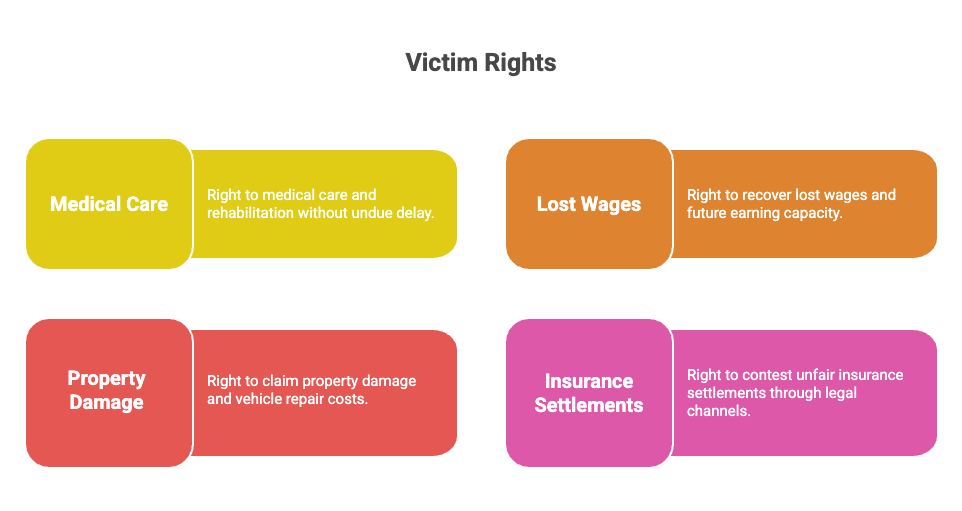
- Right to medical care and rehabilitation without undue delay.
- Right to recover lost wages and future earning capacity.
- Right to claim property damage and vehicle repair costs.
- Right to contest unfair insurance settlements through legal channels.
We encourage readers to review policy details, document all expenses, and consult experienced counsel promptly. This approach guarantees that our collective responsibility to serve each other translates into tangible legal protection and fair outcomes for every victim.
Steps to Take After an Orlando Poor Weather Car Accident Injury
We should first secure medical attention to address any injuries and prevent complications. Next, we must document the scene evidence, including photos, witness statements, and weather conditions, to support any future claim. Finally, we need to notify our insurer promptly and provide accurate details to ensure the timely processing of the case.
Secure Medical Attention
Prompt urgency of immediate medical care cannot be overstated after a poor‑weather car accident in Orlando; injuries that seem minor at first often worsen without proper evaluation. We advise you to seek professional assessment promptly, even if pain appears mild, because delayed diagnosis can lead to chronic complications. Our team will coordinate medical advocacy to ensure that providers document findings accurately and that you receive the appropriate treatment plan.
We also arrange transportation assistance, so you’re not forced to drive while injured or rely on unreliable rides. By securing timely care, you protect your health and preserve crucial evidence for any future claim. This proactive approach demonstrates our commitment to serving others and upholding the highest standards of responsibility.
Document Scene Evidence
Promptly capturing the scene preserves vital evidence that can determine the outcome of your claim. We advise taking thorough photo preservation of vehicle positions, road conditions, and any weather‑related hazards; these images should be clear, timestamped, and captured from multiple angles. We then create a timeline documenting the exact time of impact, weather changes, and any subsequent actions, such as police arrival or medical assistance.
We recommend recording witness statements while memories are fresh, ensuring their contact information is accurate. We also collect official reports, including police and weather agency logs, and preserve any physical debris or markings that may support your account. By systematically gathering and organizing this material, we strengthen your case and demonstrate diligence to insurers and courts.
Notify Insurance Promptly
After a poor‑weather car accident, we promptly notify our insurance carrier to secure coverage and preserve our right to compensation. We call the claims department within 24 hours, providing a concise summary of the incident, vehicle details, and any injuries. We then follow up with a written notice, attaching photographs, police reports, and medical records as timely documentation.
This disciplined approach supports the prevention of claim denials by demonstrating our diligence and cooperation. We keep a log of all communications, noting dates, representatives, and reference numbers, and we request written acknowledgment of our report. By maintaining organized records and responding swiftly to insurer inquiries, we safeguard our claims and reinforce our commitment to serving others who rely on us for guidance during difficult times.
How an Orlando Poor Weather Car Accident Lawyer Can Help You
When inclement weather turns Orlando’s roads treacherous, we recognize how quickly a minor slip can become a serious collision, and a skilled poor‑weather car accident lawyer can protect your rights and maximize compensation. We guide you through weather litigation, crafting settlement strategies that reflect the full scope of your losses while preserving your dignity. Our team coordinates with medical experts, investigators, and insurers to build a compelling case that demonstrates negligence and the impact of hazardous conditions. By staying proactive, we prevent common pitfalls and guarantee deadlines are met, allowing you to focus on recovery while we handle the legal intricacies.
Protecting your rights after Orlando’s treacherous weather accidents, we maximize compensation and preserve your dignity.
- Conduct a thorough accident scene analysis to establish liability under adverse weather conditions.
- Gather and preserve essential evidence, including dash‑cam footage and meteorological reports.
- Negotiate assertively with insurers using tailored settlement strategies.
- Prepare for trial if necessary, presenting clear, evidence‑based arguments to protect your interests.
Long-Term Effects of Orlando’s Poor Weather Car Accident Injuries
We recognize that chronic pain often persists long after the initial collision, requiring ongoing management strategies that can affect daily routines. Emotional trauma may also surface months later, influencing mood, sleep, and overall mental health. Additionally, many victims experience lasting mobility limitations, which can restrict work capabilities and personal activities.
Chronic Pain Management
Managing chronic pain after a car accident in Orlando’s inclement weather requires a thorough, evidence‑based approach that addresses both physical symptoms and the underlying physiological changes. We guide patients in integrating mindfulness techniques into daily routines, encouraging focused breathing and body scans to reduce perceived pain intensity.
We also recommend dietary adjustments, emphasizing anti‑inflammatory foods such as omega‑3‑rich fish, leafy greens, and nuts, while limiting processed sugars and saturated fats, which can exacerbate swelling. Collectively, these strategies support tissue repair and improve mobility, allowing individuals to serve their families and communities more effectively. By monitoring progress through regular assessments, we refine interventions, ensuring each plan remains personalized, sustainable, and aligned with the goal of long‑term functional recovery.
Emotional Trauma Effects
Chronic pain often masks the deeper psychological impact of a car accident, and in Orlando’s inclement weather, the emotional fallout can persist long after physical injuries have recovered. We see clients develop post‑traumatic stress that colors daily life, causing intrusive memories and heightened anxiety during rain‑slick roads. These reactions often intertwine with sleep disturbances, leaving them exhausted and less able to serve their families or communities.
Our approach emphasizes early assessment, counseling referrals, and coping strategies that restore confidence behind the wheel. By addressing emotional trauma promptly, we help survivors regain stability, maintain productivity, and protect their long‑term wellbeing. This all-encompassing care strengthens resilience, ensuring they can continue to contribute positively despite lingering psychological effects.
Long‑Term Mobility Limitations
When rain‑slick streets and sudden gusts turn a routine drive into a hazardous event, the resulting injuries can impose lasting restrictions on a survivor’s ability to move freely. We must recognize that long‑term mobility limitations often stem from joint damage, nerve impairment, or chronic pain that persists after the initial recovery phase. These constraints affect daily activities, work responsibilities, and the ability to assist others, necessitating thorough support strategies.
By evaluating each client’s functional deficits, we can recommend appropriate assistive devices, such as walkers, canes, or orthotic supports, and suggest mobility adaptations, such as home modifications and vehicle adjustments. Our guidance guarantees that survivors regain independence while maintaining safety, dignity, and the ability to continue serving their communities.
Proving Liability in Orlando Poor Weather Car Accident Car Accident Injury Cases
Establishing liability in Orlando’s poor‑weather car accidents requires a systematic review of the conditions, driver behavior, and applicable statutes. We begin by gathering precise weather data to confirm whether rain, fog, or slick roads were present at the time of the crash. Next, we analyze the driver’s actions, such as speed, following distance, and use of headlights, and compare them against the standard of care under Florida law. We also inspect police reports, dash‑cam footage, and maintenance records for evidence of negligence. To strengthen our case, we retain expert testimony from meteorologists who can explain how the forecasted conditions contributed to reduced traction, and from accident reconstruction authorities who can demonstrate how the driver’s response fell short of reasonable expectations. By integrating these elements, we create a compelling narrative that clearly attributes fault to the responsible party, ensuring that victims receive the justice they merit.
Compensation for Orlando Poor Weather Car Accident Damages
Having established liability, we now turn our attention to the compensation available for damages sustained in Orlando’s poor‑weather car accidents. We guide victims through the process of quantifying losses, ensuring that every dollar of property damage is documented and supported by evidence. Our team works diligently to recover repair costs, depreciation, and any diminished value of the vehicle, while also pursuing rental reimbursement for the period the claimant is without transportation.
We explain how insurers calculate these amounts, emphasizing the importance of detailed receipts, police reports, and photographs. By coordinating with repair shops and rental agencies, we secure fair market rates and prevent underpayment. Our approach prioritizes the claimant’s financial recovery, allowing them to focus on healing rather than navigating complex claims processes. We remain vigilant, reviewing each settlement to confirm that all entitled compensation for property damage and rental reimbursement is fully realized.
The Statute of Limitations for Orlando Poor Weather Car Accident Injury Cases
If a client is injured in a poor‑weather car crash in Orlando, the clock on their legal rights starts ticking the moment the injury occurs, and Florida’s statutes impose strict deadlines that must be met to preserve a claim. We remind readers that the personal injury statute of limitations is generally 4 years from the date of the accident, while medical malpractice claims may have different limitations periods.
However, insurance deadlines often require filing a claim within 30 days, and missing this window can jeopardize coverage. We also explain comparative negligence, which reduces recovery proportionally to any fault assigned to the injured party, making timely documentation crucial. By acting promptly, we protect clients from losing their right to compensation and make certain that any negligence by other drivers is accurately assessed. Our guidance emphasizes vigilance, accurate record‑keeping, and early consultation to steer both statutory limits and insurance requirements effectively.
Why You Need an Experienced Orlando Poor Weather Car Accident Lawyer
When a severe storm turns Orlando’s roads into slick, visibility‑reduced corridors, the risk of a serious collision rises dramatically, and steering through the resulting legal complexities requires more than a basic understanding of personal‑injury law. We know that weather-related negligence often involves complicated liability questions, such as whether a municipality failed to clear drainage or a driver ignored hazardous conditions.
An experienced Orlando poor-weather car accident lawyer can identify these nuances, preserve vital evidence, and build a compelling narrative for your case. We also develop tailored insurance claim strategies that anticipate adjuster tactics, secure timely medical documentation, and maximize compensation for property damage, lost wages, and pain. By leveraging our expertise, we protect your rights, reduce procedural delays, and ensure that the responsible parties are held accountable. Our focused approach translates technical legal concepts into actionable steps, giving you confidence throughout the claims process.
How to Choose the Right Orlando Poor Weather Car Accident Lawyer for Your Case
Selecting the right Orlando poor‑weather car accident lawyer begins with evaluating a firm’s proven track record in handling cases that involve hazardous road conditions and municipal liability. We should examine case outcomes, focusing on settlements and verdicts that reflect deep knowledge of local statutes and weather‑related negligence. During client interviews, we ask about their experience with similar incidents, communication style, and how they prioritize our needs throughout the process.
Understanding fee structures is equally crucial; we compare contingency arrangements, hourly rates, and any upfront costs to guarantee transparency and alignment with our financial expectations. We also verify that the attorney maintains active participation in community outreach, demonstrating a commitment to serving others beyond profit motives. Finally, we assess the firm’s resources, such as access to expert witnesses and investigative teams, which can strengthen our claim. By systematically reviewing these factors, we secure a lawyer who can effectively advocate for our interests while upholding the highest professional standards.
About the Law Offices of Anidjar and Levine
A seasoned team of attorneys at the Law Offices of Anidjar and Levine has built a reputation for handling complex personal‑injury cases throughout Central Florida, especially those arising from severe weather conditions.
We recognize that victims of weather‑related crashes need compassionate guidance and decisive action, so we combine rigorous legal analysis with a commitment to serving the community.
Our case results demonstrate consistent success in securing fair compensation, reflecting both strategic litigation and skilled negotiation.
Client testimonials repeatedly highlight our responsiveness, transparency, and unwavering dedication to each client’s welfare.
By focusing on clear communication, we keep families informed at every stage, ensuring they feel supported while we advocate on their behalf.
Our firm’s resources include seasoned trial attorneys, seasoned investigators, and a network of medical experts, all aligned to protect injured parties.
We endeavor to uphold the highest standards of professionalism, delivering outcomes that affirm our clients’ trust and reinforce our role as a reliable advocate in Orlando’s legal landscape.
Frequently Asked Questions
Do I Need a Police Report to File a Claim?
We recommend obtaining a police report before you file a claim, as it serves as the primary evidence insurers and courts rely on. A well‑documented report strengthens your case, especially when combined with witness statements and other supporting evidence such as photos or medical records. While some insurers may accept a claim without it, lacking a report often delays processing and reduces the likelihood of a favorable settlement.
Can I Claim Damages for Lost Vacation Time?
We can claim damages for lost vacation time if you demonstrate that the accident directly caused missed excursions and lost experiences. To support the claim, you’ll need documentation such as travel itineraries, reservation cancellations, and evidence of non‑refundable expenses. We’ll also gather witness statements and any correspondence showing the accident’s impact on your plans. Our team will quantify these losses and incorporate them into your settlement demand to ensure you receive full compensation.
Will My Insurance Rates Increase After Filing?
We’ll tell you that insurance premiums can rise after a claim, but the extent depends on fault determination and your insurer’s policies. If you’re found at fault, premium hikes are more likely; if the other driver bears responsibility, your rates may stay unchanged. We recommend reviewing your policy, promptly notifying your insurer, and gathering evidence to support your position. By understanding these factors, you can better anticipate any potential increase.
Is There a Deadline for Reporting Weather‑Related Accidents?
We confirm there is a deadline for reporting weather‑related accidents, and you must comply with the statute of limitations and notice requirements established by state law. Typically, you have 30 days to notify your insurer and the appropriate agency, while the legal claim must be filed within 2 years of the incident. Missing these timelines can jeopardize your right to recovery, so we advise prompt documentation and immediate reporting to protect your interests.
How Are Medical Expenses Calculated for Future Treatments?
We calculate medical expenses for future treatments by estimating the total cost of necessary procedures, then applying a discount rate to reflect present‑value considerations. We incorporate life‑care plans to project ongoing services, adjust for inflation to maintain purchasing power, and factor in any anticipated changes in medical technology or standards of care. This systematic approach guarantees that the compensation reflects realistic, future‑oriented financial needs while adhering to recognized actuarial principles.
—————————
We stand ready to protect your rights and obtain the compensation you deserve after a weather-related car accident in Orlando.
At the Law Offices of Anidjar and Levine, our team’s deep knowledge of local statutes, proven litigation strategies, and commitment to diligent case handling help ensure you receive expert representation.
By partnering with us, you benefit from focused advocacy, thorough investigation, and skilled negotiation, positioning you for the best possible outcome in your injury claim.
For more information, visit our Car Accident Lawyer in Orlando.