Law Offices of Anidjar and Levine help Tampa crash victims pursue poor-weather car accident claims by showing that rain, fog, standing water, or slick pavement don’t excuse unsafe driving.
Our team reviews reports, photos, witness statements, roadway conditions, vehicle damage, and medical records to identify liability and document losses.
We handle insurer communications, protect deadlines, and seek compensation for medical bills, lost income, pain, and future care.
Learn more about how a Tampa Car Accident Lawyer can assist with your claim and what steps matter most.
Main Takeaways
- A Tampa personal injury lawyer can evaluate liability despite rain, fog, flooding, or reduced visibility.
- Evidence may include police reports, photos, witness statements, traffic footage, vehicle damage, and documented roadway conditions.
- Poor weather does not excuse speeding, tailgating, distracted driving, unsafe lane changes, or failure to use headlights.
- Injury claims may seek compensation for medical bills, lost income, pain, future care, and reduced earning capacity.
- Legal support can manage insurer communications, preserve deadlines, negotiate claims, and protect your recovery.


How We Can Help With Your Tampa Poor Weather Car Accident Injury Claim
When poor weather contributes to a crash, we can help you identify every factor that may support your injury claim. We review the collision details, roadway conditions, driver conduct, vehicle damage, medical records, and available reports to build a focused path forward. Our team understands that you may be seeking care, stability, and a fair resolution while continuing to serve your family, workplace, or community.
We develop an Insurance claim strategy tailored to your losses, including medical expenses, missed income, reduced capacity, and ongoing treatment needs. We also guide Evidence preservation steps, such as securing photographs, witness information, traffic camera footage, repair records, and weather data, before crucial information disappears. When insurers question responsibility or minimize your injuries, we respond with organized documentation and firm advocacy. We handle communications, deadlines, and negotiations so you can focus on recovery, responsibilities, and the people who depend on you.
OUR CONSULTATIONSARE FREE
START YOUR FREE CASE REVIEW

Understanding Tampa Poor Weather Car Accident Injury Cases
Although Tampa drivers often face sudden rain, standing water, fog, and reduced visibility, poor weather doesn’t excuse careless driving or automatically eliminate liability after a crash. We help you understand how Florida law evaluates conduct under difficult conditions, including whether each driver acted with reasonable care for the circumstances. In these cases, evidence matters quickly. Police reports, witness statements, photographs, medical records, and dashcam footage can clarify what happened before memories fade or vehicles get repaired.
We also guide you through Insurance claim timelines, because missed deadlines can weaken an otherwise valid claim. When you’re recovering, serving your family, and trying to restore stability, legal details can feel burdensome. We shoulder that work with diligence and respect. Our role is to identify responsible parties, document your losses, and present a clear claim for medical expenses, lost income, pain, and other damages connected to the collision and your future needs.
Common Causes of Poor Weather Car Accidents in Tampa
We often see poor weather accidents in Tampa arise from heavy rainfall and flooding, reduced visibility, slick road surfaces, and reckless driving. When these conditions combine, you face a higher risk of sudden collisions, hydroplaning, and drivers failing to adjust their speed or following distance. We’ll examine these common causes so you can better understand how weather-related crashes happen and why liability may still rest with negligent drivers.
Heavy Rainfall And Flooding
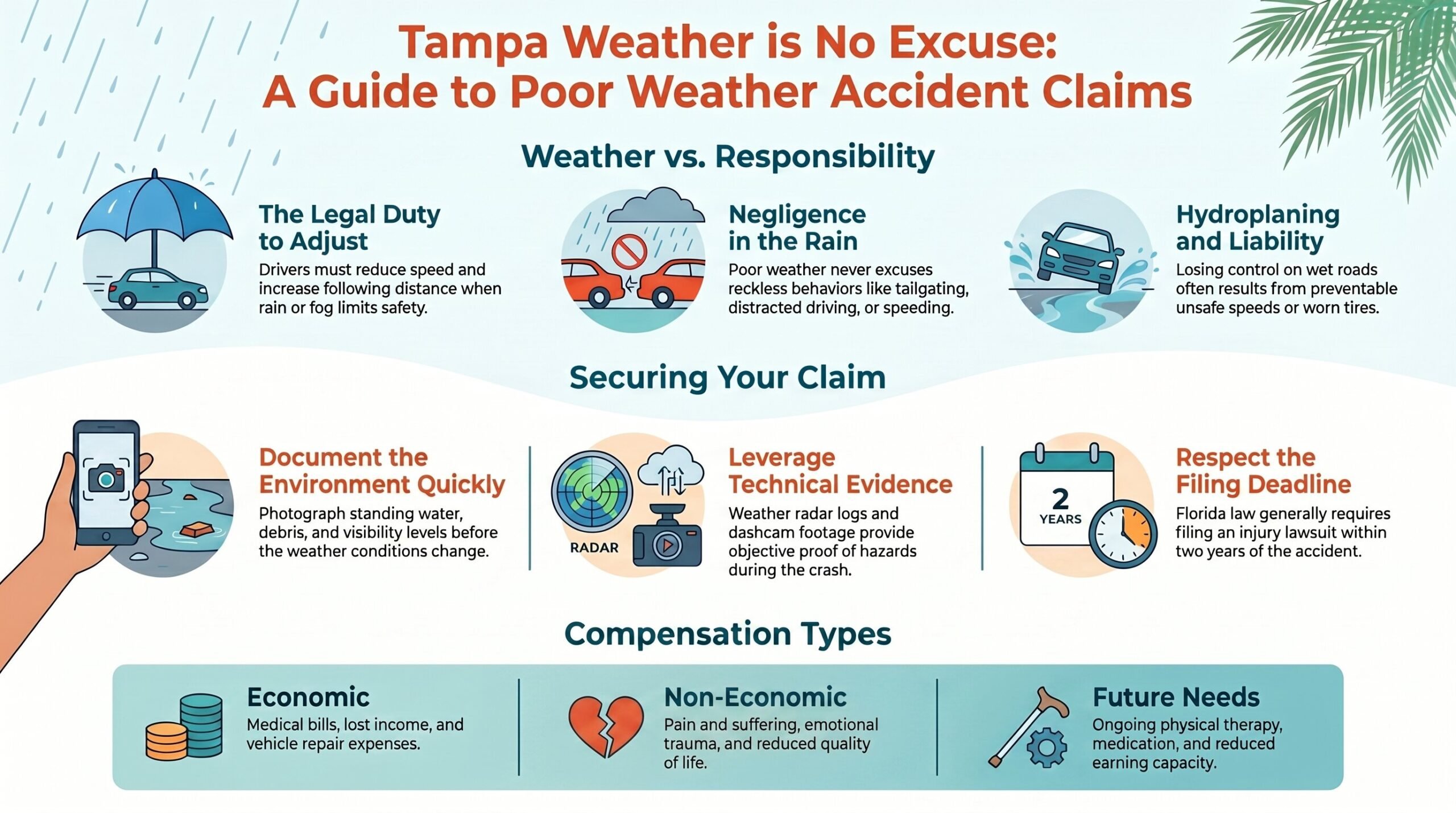
Because Tampa’s coastal climate can produce sudden downpours, heavy rainfall and flooding often create dangerous conditions for drivers with little warning. We see standing water reduce tire traction, increase stopping distances, and make ordinary routes unsafe within minutes. When motorists drive too fast on saturated roads, they may hydroplane, collide with another vehicle, or lose control near intersections and exits.
Flooded streets can also hide potholes, debris, and stalled vehicles, creating risks for people trying to reach work, school, or community service obligations. We examine whether negligent maintenance, unsafe speed, or poor decisions contributed to the crash. Brake failure claims may arise when wet conditions expose worn components, while lane change errors often occur when drivers misjudge slick pavement. We help you pursue accountability and compensation.
Reduced Visibility Hazards
When storms, fog, glare, or wind-driven rain limit a driver’s view, Tampa roads can become hazardous before traffic has time to adjust. We see how reduced visibility affects drivers, pedestrians, cyclists, and first responders who depend on others to act with care. A driver may miss brake lights, traffic signals, lane markings, or a person crossing near an intersection. Lane-splitting dangers can increase when motorists fail to see a motorcycle moving nearby.
Distracted phone use makes these conditions worse because even a brief glance away can prevent a timely reaction. We help you understand how visibility, driver choices, and roadway conditions may connect to a crash. By examining witness accounts, dash camera footage, and crash reports, we work to identify negligent conduct and protect your claim.
Slick Road Surfaces
After rain begins to fall, oil, tire residue, and debris can rise to the surface, making Tampa roads dangerously slick. We comprehend how quickly these conditions can endanger you, your passengers, and others who depend on safe travel. Slick pavement reduces tire traction, increases stopping distance, and raises the risk of hydroplaning, especially on highways, bridges, and low-lying streets where water collects.
When tires lose contact with the roadway, even careful guiding or braking may not prevent a crash. Poor drainage can also combine with limited visibility at traffic signals, making intersections especially hazardous. We examine roadway conditions, weather reports, vehicle data, and crash evidence to determine how slick surfaces contributed to your injuries and to help protect your legal interests.
Reckless Driving Behaviors
In poor weather, reckless driving can turn an already hazardous Tampa roadway into the scene of a serious collision. We often see drivers ignore the duty to adjust their conduct when rain, fog, or standing water reduces visibility and control. Distracted driving, including texting, searching for directions, or handling in-car devices, diverts attention when every second matters. Speed violations also increase the risk of losing traction, hydroplaning, or striking a vehicle that has slowed for safety. When drivers tailgate, weave through traffic, or make unsafe lane changes, they place families, workers, and first responders in greater danger. We help you identify these behaviors, preserve evidence, and pursue accountability because careful driving protects the community and supports those already serving others on Tampa roads.


Legal Rights of Tampa Poor Weather Car Accident Injury Victims
Although poor weather can complicate a crash investigation, it doesn’t erase an injured person’s right to seek compensation when another driver acted carelessly. We help you understand how Florida traffic statutes still require reasonable care, even during rain, fog, or limited visibility. When rainy road negligence causes harm, you may pursue damages for medical bills, lost income, pain, and future care.
Your rights matter because accountability protects both your recovery and the safety of others traveling Tampa roads.
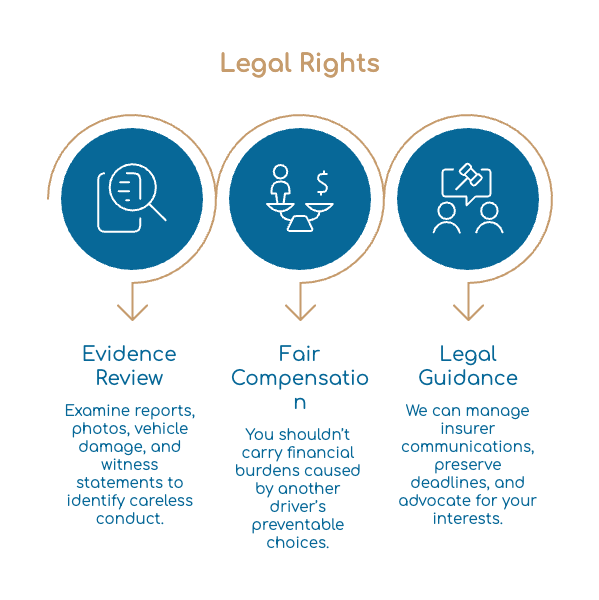
- Right to evidence review: We can examine reports, photos, vehicle damage, and witness statements to identify careless conduct.
- Right to fair compensation: You shouldn’t carry financial burdens caused by another driver’s preventable choices.
- Right to legal guidance: We can manage insurer communications, preserve deadlines, and advocate for your interests.
When you’re focused on recuperating and serving your family, we work to protect your claim with diligence.
Why Do Tampa Poor Weather Car Accident Injuries Happen?
Knowing your rights is only part of protecting a claim; understanding why poor weather crashes happen helps identify who may be legally responsible. In Tampa, heavy rain, fog, slick pavement, standing water, and sudden storms reduce visibility and traction.
We often see collisions occur because drivers fail to slow down, follow too closely, brake abruptly, or ignore the need for headlights and safe lane changes. Commercial drivers, rideshare operators, and delivery drivers may pose additional danger when schedule pressure forces them to keep moving despite unsafe conditions.
We also consider whether road design, poor drainage, defective tires, worn brakes, or negligent vehicle maintenance contributed to your injuries. These factors matter because responsibility may extend beyond one driver. When causes are overlooked, injured people can face medical delays, disputed treatment, and underpayment by insurers. By identifying why the crash occurred, we help you pursue accountability from every party whose choices or failures increased the risk.
What Should You Do After a Tampa Poor Weather Car Accident Injury?
After a Tampa poor weather car accident, we recommend that you seek medical attention first, even if your injuries seem minor. We also encourage you to document the weather, road conditions, vehicle damage, and any visible injuries as soon as it’s safe. Once you’ve addressed immediate concerns, we can help you contact an injury lawyer to protect your rights and evaluate your claim.
Prioritize Medical Attention
When poor weather contributes to a Tampa car accident, we should treat medical care as the first priority, even if injuries seem minor at the scene. We need to call 911 when anyone may be hurt, and we should cooperate fully with emergency responders. Their assessment can protect you, your passengers, and others who depend on prompt, responsible action.
We should not ignore injury symptoms such as headache, dizziness, neck pain, confusion, or numbness, because some conditions worsen after adrenaline fades. Seeking care quickly also creates medical documentation that connects the crash to your injuries, which may matter later. After the initial evaluation, we should keep appointments, follow provider instructions, and complete treatment follow-up. Consistent care supports recovery and shows respect for everyone affected.
Document Weather Conditions
Because poor weather can change quickly, we should document the conditions as soon as it’s safe to do so after a Tampa car accident. We can take clear photos or videos of rain, standing water, fog, debris, traffic signals, skid marks, and vehicle positions. We should also record the time, location, visibility, road surface, and any sudden changes in weather. If witnesses stopped to help, we can respectfully ask what they observed and preserve their contact information.
These details may support driver fault assessment, especially when another driver failed to adjust speed, maintain distance, or use headlights. Careful documentation also strengthens an insurance claim strategy by showing how weather affected the crash without excusing unsafe conduct. We serve everyone best by promptly preserving accurate facts.
Contact An Injury Lawyer
Strong documentation gives us a foundation, but we shouldn’t handle a poor-weather injury claim alone if another driver’s choices contributed to the crash. We should contact an injury lawyer as soon as our medical needs are stable, because early guidance helps protect our ability to serve our family, workplace, and community while we recover. A lawyer can review police reports, weather records, photographs, medical evidence, and witness statements to identify careless conduct despite dangerous conditions.
We also need counsel to address comparative negligence, since insurers may argue the weather, not the driver, caused the harm. With legal support, we can avoid making harmful statements, accurately track losses, and prepare for settlement negotiations from a position of strength. Prompt action helps preserve evidence and keeps the claim focused on accountability.
Critical Evidence in a Tampa Poor Weather Car Accident Injury Case
We build a strong Tampa poor weather car accident injury case by identifying evidence that shows how unsafe conditions affected the crash, including: 1. weather and road conditions, 2. police reports, and 3. witness statements and vehicle damage photos. We use this evidence to connect the hazardous weather, each driver’s decisions, and the physical results of the collision. When you preserve these details early, we’re better positioned to challenge unfair blame and pursue the compensation you may be owed.
Weather And Road Conditions
In a Tampa car accident injury case involving poor weather, weather and road conditions often provide critical evidence about how and why the crash occurred. We examine rain intensity, visibility, standing water, slick pavement, wind, lighting, and drainage problems to understand whether a driver acted reasonably. These facts help you show how dangerous conditions affected stopping distance, lane control, and reaction time.
We also consider Traffic signal failures when storms disrupt intersections, because a malfunction can create confusion for careful motorists. Road debris impacts may also show that loose objects, fallen branches, or scattered materials contributed to the collision. By quickly preserving this evidence, we help protect your claim, support accountability, and advance the broader goal of safer roads for everyone in our Tampa community following severe-weather crashes.
Police Reports
After a crash in poor weather, a police report often becomes one of the first documents that shapes the injury claim. We use it to confirm the date, location, vehicles involved, responding officer, reported violations, and conditions noted at the scene. When rain, fog, glare, or slick pavement contributed to the collision, those details can support evidence preservation and help explain how negligence occurred.
We also review the police report timeline because delays, corrections, or missing information may affect how insurers evaluate your case. If you serve others through your work or family responsibilities, accurate documentation matters because it protects your ability to recover and continue meeting those obligations. We obtain, examine, and compare the report with other case materials to strengthen your position.
Witness Statements
Witness statements can add context that a police report may not fully capture, especially when poor weather changes what drivers could see, hear, or safely do. We look for people who observed traffic speed, braking, lane position, signals, standing water, fog, glare, or sudden evasive actions. Their accounts can help us understand whether a driver acted carefully or ignored conditions that required greater caution.
We also evaluate witness credibility by considering location, vantage point, consistency, and any relationship to those involved. When available, Dashcam footage can support or challenge a witness’s account, helping us serve your claim with accuracy and fairness. Promptly identifying witnesses matters because memories fade, contact information changes, and insurers may question delayed statements.
Vehicle Damage Photos
When poor weather affects visibility, traction, and stopping distance, photos of vehicle damage can help show how the crash happened and whether a driver failed to adjust to the conditions. We use these images to identify impact points, vehicle positions, airbag deployment, broken glass, tire marks, and water or debris near the scene. Clear photos support liability timelines by showing what damage existed immediately after the collision.
They also strengthen insurance documentation, especially when insurers question severity or causation. We encourage you to preserve repair estimates, towing records, and photographs before any repairs begin. These records should align with medical recordkeeping because vehicle damage can help explain injury patterns. When we prepare a damages calculation, we use this evidence to serve your recovery with accuracy, diligence, and accountability.
Long-Term Effects of Tampa Poor Weather Car Accident Injuries
We acknowledge that poor weather crashes can leave you with lasting harm, including chronic pain conditions that limit work, mobility, and daily activities. We also recognize how emotional trauma can affect your sleep, concentration, and quality of life after a serious collision. We evaluate your ongoing medical needs carefully, so we can pursue compensation that reflects the full impact of your injuries.
Chronic Pain Conditions
Although some crash injuries appear manageable at first, chronic pain can develop after a Tampa poor weather car accident and disrupt a person’s health, work, and daily routine for months or years. We often see persistent neck, back, shoulder, and nerve pain arise after collisions involving slick roads, reduced visibility, or sudden braking. These conditions can limit mobility, weaken endurance, and make ordinary responsibilities difficult to complete.
We encourage you to seek consistent medical care because delayed treatment can make recovery harder and documentation weaker. Pain management may include medication, injections, therapy, or expert evaluations, depending on your needs. Rehabilitation planning also helps connect treatment goals with practical steps toward restored function. When we review your claim, we consider how chronic pain affects your service, employment, independence, and future care needs.
Emotional Trauma Impact
After a serious crash in poor weather, emotional trauma can last long after physical injuries begin to recover. We often see survivors struggle with anxiety, sleep disruption, fear of driving, and intrusive memories when rain, fog, or sudden storms return. These reactions can affect your work, family responsibilities, and ability to serve others with steadiness and confidence.
We help you recognize that emotional harm is not a weakness, and it can be a meaningful part of your claim. When another driver’s careless conduct creates Legal liability, your distress warrants careful documentation. Insurance pressure may lead you to minimize these effects or settle too soon. We work to protect your voice, present the full impact of the collision, and pursue accountability with dignity and purpose.
Ongoing Medical Needs
When poor weather causes or worsens a serious crash, your medical needs may continue for months or years beyond the initial emergency treatment. We help you understand how ongoing care affects your recovery, family responsibilities, and ability to serve others. Injuries may require follow-up visits, therapy, injections, surgery, medication, or adaptive equipment.
Through Medical record collection, we identify diagnoses, treatment gaps, provider opinions, and future care recommendations that support your claim. We also focus on long-term treatment planning because insurers may undervalue needs that haven’t happened yet. By coordinating documentation and reviewing medical projections, we work to show the full cost of care. You shouldn’t carry future medical burdens alone when another driver’s unsafe choices contributed to your injuries in dangerous Tampa weather.
Proving Liability in Tampa Poor Weather Car Accident Injury Cases
Poor weather can make a Tampa car accident more complicated, but it doesn’t eliminate a driver’s duty to operate safely. We look at whether a motorist adjusted speed, maintained a safe following distance, used headlights, and responded reasonably to rain, fog, standing water, or reduced visibility.
To prove liability, we gather evidence that shows how the crash happened and why preventable choices mattered. That may include police reports, traffic camera footage, witness statements, vehicle damage, roadway conditions, and medical records connecting your injuries to the collision.
We also examine whether GPS navigation errors caused sudden lane changes, missed turns, or unsafe stops. Distracted phone use can further show that a driver failed to focus when conditions required heightened care.
Our role is to help you serve your family and community by pursuing accountability with clear evidence. Weather may explain difficulty, but it doesn’t excuse negligence when safer choices were available.
Dealing With Insurance Companies After a Tampa Poor Weather Car Accident Injury
In the days following a Tampa poor weather car accident, insurance companies often look for ways to reduce what they pay by blaming the rain, fog, or wet roads instead of the at-fault driver. We protect your claim by controlling communications, preserving evidence, and preventing recorded statements from being used against you. Adjusters may sound helpful, but their goal is to limit exposure and close files efficiently.
We review coverage early through a Policy limits evaluation, then compare available insurance to your medical needs, lost income, and long-term recovery concerns. This helps us pursue fair compensation while you focus on recuperating and supporting your family. We also respond to settlement timeline delays, especially when insurers request repeated documentation or question weather-related liability without reason. By managing negotiations with discipline and care, we help you avoid pressure, protect your rights, and seek an outcome that reflects the full impact of the crash.
What to Expect During a Tampa Poor Weather Car Accident Injury Claim Process
We guide you through each stage of a Tampa poor weather car accident injury claim, beginning with promptly reporting the accident and protecting the record. We gather weather evidence, review roadway conditions, and determine driver liability based on the facts, not assumptions. We then negotiate injury compensation with insurers, ensuring your losses are clearly documented and firmly presented.
Reporting The Accident
After a crash in heavy rain, fog, or other hazardous weather, reporting the accident quickly helps protect both your safety and your injury claim. We recommend calling 911, requesting medical help when needed, and ensuring law enforcement creates an official crash report. That report can clarify who was involved, where the collision occurred, and what immediate hazards affected the scene.
We also help you notify your insurer promptly, while avoiding statements that could be misunderstood or used unfairly. If available, preserve dashcam footage and share it carefully through proper channels. Keep copies of claim numbers, adjuster communications, and insurance documentation because organized records support a smoother process. By reporting accurately and promptly, we serve your recovery, protect your rights, and strengthen the foundation of your claim.
Gathering Weather Evidence
Because weather conditions can change within minutes, gathering accurate evidence early can make a significant difference in your Tampa poor weather car accident claim. We help you preserve evidence showing what the roadway looked like, how visibility changed, and whether rain, wind, fog, or standing water affected travel. You can support this effort by saving dashcam footage, taking photographs of vehicle damage, skid marks, puddling, debris, traffic signals, and nearby signage.
We may also request weather station logs, emergency response records, traffic camera images, and witness statements from people who saw conditions unfold. This evidence helps create a reliable timeline and protects your claim from uncertainty. By acting promptly, we serve your recovery and help present the facts with accuracy, dignity, and care.
Determining Driver Liability
When poor weather contributes to a crash, driver liability still depends on whether each motorist acted reasonably under the conditions. We examine whether drivers slowed down, increased following distance, used headlights, obeyed signals, and adjusted to flooded roads, fog, wind, or reduced visibility. Even during heavy rain, every driver must follow road safety standards and protect others from preventable harm.
We also consider speeding, distracted driving, unsafe lane changes, worn tires, faulty brakes, and failure to maintain control. Police reports, witness statements, vehicle damage, traffic cameras, and weather evidence help us compare each driver’s conduct to what a careful person would’ve done. This liability review guides our Insurance settlement strategy while keeping the focus on accountability, public safety, and your need for clear direction.
Negotiating Injury Compensation
As your claim moves into negotiation, we use the liability evidence, medical records, wage documentation, and weather-related crash details to build a clear demand for compensation. We explain how rain, fog, slick pavement, or poor visibility affected the collision and show why the other driver still had a duty to act safely. We address Fault vs causation because insurers may admit careless driving yet dispute whether it caused your injuries.
We counter those arguments with treatment records, expert opinions, and consistent documentation. If an insurer delays, misrepresents coverage, or ignores valid evidence, we evaluate potential bad-faith insurance concerns. Our goal is to help you pursue fair recovery, protect your stability, and continue serving your family, workplace, and community with confidence.
Compensation for Tampa Poor Weather Car Accident Injury Damages
After a crash caused by poor weather in Tampa, compensation may cover the full range of losses the injury has caused, not just the immediate medical bills. We help you identify every available source of recovery, including the at-fault driver’s liability insurance, your personal injury protection benefits, and, when needed, uninsured motorist coverage. When rain, fog, flooding, or slick roads contribute to a collision, we still focus on the human choices that made the crash worse, such as speeding, unsafe following, or poor vehicle maintenance.
We also evaluate whether additional parties share responsibility, including commercial drivers, vehicle owners, or entities that failed to address known hazards. In the most severe cases, families may pursue Wrongful Death claims to seek accountability and financial support after a preventable loss. Our role is to protect your ability to recover compensation while you focus on mending, caregiving, and restoring stability for those who depend on you.
Economic vs Non-Economic Damages in Tampa Poor Weather Car Accident Cases
We separate your losses into economic damages, such as medical bills, lost wages, and vehicle repairs, and non-economic harm, including pain, suffering, and reduced quality of life. In poor weather car accident cases, we must connect each loss to the crash, even when rain, fog, or slick roads complicate fault and causation. We use records, expert analysis, and clear documentation to prove the full impact of your weather-related losses.
Economic Damage Examples
When poor weather contributes to a Tampa car accident, economic damages include measurable financial losses resulting from the crash. We look first at Medical treatment costs, including ambulance transport, emergency care, surgery, medication, rehabilitation, and follow-up visits. These records help show what you have paid and what care you may still need.
We also review vehicle repair or replacement expenses, towing charges, rental car fees, and transportation costs for medical appointments. If injuries keep you from working, lost wages documentation can include pay stubs, employer statements, tax records, and work schedules. We may also consider reduced earning capacity when your injury limits future employment. By gathering organized proof, we help you present a clear financial picture and pursue repayment for losses that disrupted your ability to serve and support others.
Non-Economic Harm
Although economic losses show the financial impact of a Tampa poor-weather car accident, non-economic harm reflects the personal toll that doesn’t come with a receipt. We consider how pain, emotional distress, anxiety, sleep disruption, reduced mobility, and loss of enjoyment affect your daily life and your ability to care for others. These harms matter because service-minded people often minimize their own suffering while focusing on family, work, and community responsibilities.
We approach insurance negotiations with a clear settlement strategy that accounts for both visible and invisible consequences. Poor weather may explain how a crash occurred, but it doesn’t lessen the human impact of an injury. We help you present non-economic damages with dignity, accuracy, and purpose, seeking fair compensation that supports recovery and restores stability after disruption.
Proving Weather-Related Losses
Because weather can blur the line between unavoidable conditions and preventable negligence, proving weather-related losses requires clear evidence that connects the crash, the injuries, and the resulting damages. We help you document economic losses, including ambulance bills, treatment costs, lost wages, vehicle damage, and future care needs. Gathering medical proof is critical because records, diagnostic tests, and physician opinions show how the collision affected your body and daily function.
We also work to show non-economic harm, such as pain, anxiety, sleep disruption, and reduced ability to serve family, work, or community. Poor weather often creates insurance claim delays, especially when insurers argue that rain or fog caused the crash. We counter that position with reports, photos, witness statements, and expert analysis that clarify responsibility.
When a Tampa Poor Weather Car Accident Injury Case Goes to Trial vs Settlement
As a poor weather car accident claim develops, we evaluate whether settlement or trial offers the stronger path to full compensation. We begin with evidence planning, preserving crash reports, photos, witness accounts, medical records, and weather data that show how unsafe conditions contributed to your injuries.
Settlement negotiation can protect your time, reduce stress, and secure resources for care without a public courtroom process. We use a damages valuation to clearly present medical needs, lost income, pain, and future limitations, so the insurer understands the full human impact.
If the other side refuses fair accountability, we prepare a Trial strategy that presents your story with discipline and purpose. We organize expert testimony, challenge weak defenses, and help you understand each step before court. Our goal remains consistent: support your recovery, protect your dignity, and pursue the compensation you need to restore stability after a serious weather-related crash.
Florida Laws That May Affect Your Tampa Poor Weather Car Accident Case
Whether your case resolves through settlement or proceeds to trial, Florida law shapes every stage of a Tampa poor weather car accident claim. We examine how these rules apply when rain, fog, flooding, or low visibility contributed to the crash, because careful legal analysis helps protect you and supports fair accountability.
Florida law guides weather-related crash claims and helps protect your right to fair accountability.
- Comparative Negligence: Florida may reduce compensation if you share fault, so we work to show how the other driver failed to adjust to dangerous conditions.
- Traffic Violations: Speeding, following too closely, or ignoring signals can strengthen your claim, especially when poor weather required greater caution.
- Insurance duties: Florida’s no-fault framework may require initial claims through personal injury protection benefits, while serious injuries may support claims against the at-fault driver.
We help you understand these laws so you can make informed decisions, serve your family’s needs, and pursue recovery with confidence.
The Statute of Limitations for Tampa Poor Weather Car Accident Injury Cases
After a poor weather crash in Tampa, the statute of limitations can directly affect your ability to pursue compensation for your injuries. In Florida, we generally must file a personal injury lawsuit within two years of the crash date. If we miss that deadline, the court may bar the claim, even when your injuries are serious and the other driver acted carelessly.
Rain, fog, flooding, and low visibility often complicate liability. Comparative negligence impacts the value of a claim when more than one person shares fault, so timely action matters. Delays can weaken witness memories, allow roadway conditions to change, and make vehicle data harder to obtain.
We encourage careful preservation of evidence, such as photos, medical records, repair estimates, weather reports, and insurance communications. When we protect deadlines and preserve proof, we help strengthen your ability to seek accountability while continuing to serve your family and community after the collision.
How a Tampa Poor Weather Car Accident Injury Lawyer Can Help You
Protecting your filing deadline is only one part of building a strong, poor-weather accident claim in Tampa. We help you organize the facts, identify every responsible party, and present your losses with clarity and care. Poor weather rarely excuses unsafe driving, Negligent maintenance, or improper truck loading when those choices endanger others.
- We investigate roadway conditions, vehicle damage, dashcam footage, maintenance records, and driver conduct to show how preventable decisions caused harm.
- We calculate medical costs, lost income, reduced capacity, and daily limitations, so your claim reflects the full impact on your service, family, and future.
- We communicate with insurers, challenge blame-shifting, and prepare evidence for settlement negotiations or litigation when accountability requires firmer action.
You merit guidance that lets you focus on recovery and continuing to support the people who depend on you. We build your claim with discipline, purpose, and respect.
When to Contact a Tampa Poor Weather Car Accident Injury Lawyer
Because weather-related crashes can involve fast-changing evidence, you should contact a Tampa poor weather car accident injury lawyer as soon as your immediate medical needs are addressed. We can help you take timely steps while you focus on recovery, family responsibilities, and the people who depend on your support.
Poor weather may wash away skid marks, scatter debris, or make road conditions harder to document. Photos, witness accounts, traffic camera footage, maintenance records, and weather data can become more difficult to obtain over time. Early contact also helps us track insurance claim timelines, including notice requirements and deadlines that may affect your ability to seek compensation.
You should reach out after any crash involving injury, significant vehicle damage, unclear fault, commercial vehicles, hazardous roads, or delayed symptoms. By acting promptly, we can help preserve information, protect your interests, and support your effort to move forward responsibly after the collision.
Why You Need an Experienced Tampa Poor Weather Car Accident Injury Lawyer
Timely legal guidance matters, but the quality of that guidance can shape the direction of your entire claim. In crashes during poor weather, we must act quickly to preserve evidence, identify unsafe driving choices, and explain how rain, fog, or standing water affected the collision. These cases often involve disputed fault because insurers may blame the weather rather than the driver who failed to slow down, brake safely, or maintain control.
We help you serve your recovery and your family’s stability by building a claim with discipline. Medical documentation connects your injuries to the crash, supports treatment needs, and helps prevent delays or undervaluation. We also manage insurance negotiations with a clear understanding of policy limits, damages, and liability arguments. When we guide the process, you’re not left responding to pressure, confusing requests, or incomplete settlement offers alone. Experienced representation helps protect your rights while you focus on recuperation.
How to Choose the Right Tampa Poor Weather Car Accident Injury Lawyer for Your Case
When you’re choosing a Tampa poor-weather car accident injury lawyer, you need a legal team that understands how hazardous road conditions affect liability, evidence, and insurance negotiations. We look for counsel who can connect rain, fog, flooding, or reduced visibility to driver negligence while also recognizing when another party failed to exercise reasonable care.
You should choose a lawyer who explains the Settlement timeline, insurance tactics, and what steps can protect your claim from early mistakes. We value clear communication, prompt investigation, and a disciplined Negotiation strategy, a case valuation process supported by medical records, crash reports, witness statements, and expert input when needed.
As we seek justice for injured people and support families facing difficult recovery periods, we also prioritize lawyers who listen, prepare thoroughly, and treat your goals with respect. The right attorney should pursue fair compensation while helping you make informed decisions at every stage.
About The Law Offices of Anidjar & Levine
The Law Offices of Anidjar & Levine helps injured people in Tampa pursue compensation after car accidents caused or worsened by poor weather conditions.
We recognize how rain, fog, wind, and slick roads can complicate liability, evidence, and insurance claims.
Our team serves you by investigating the crash, preserving records, consulting experts, and identifying every responsible party.
We build each Legal case strategy around your injuries, financial losses, and long-term needs.
We also explain your options clearly, so you can make informed decisions while focusing on recovery.
Our service includes guidance with medical care, property damage issues, insurer communications, and settlement negotiations.
We set clear expectations for Client communication from the beginning.
You’ll know who to contact, what updates to expect, and how we’ll move your case forward.
If litigation becomes necessary, we prepare with discipline, purpose, and a commitment to pursuing the compensation you are entitled to.
Frequently Asked Questions
Can Weather Radar Data Support My Tampa Poor Weather Accident Claim?
Yes, weather radar data can support your claim by showing Tropical storms, rainfall intensity, and storm movement near the crash scene. We use this accident documentation to connect roadway hazards with driver conduct, response time, and safety duties. Radar can also confirm lightning delays, sudden downpours, and visibility issues that affect careful driving. We’ll help you present this information clearly, so decision-makers understand how weather contributed to your injuries.
Do Dashcam Videos Work Well in Rainy Crash Cases?
Yes, dashcam videos often work well in rainy crash cases, especially when we secure Evidence preservation quickly. We help you assess rain visibility, lane position, braking, speed, and surrounding traffic with care for everyone affected. We also review dashcam authenticity, including timestamps, file history, and device source. Signal interference can affect audio, GPS, or image quality, so we compare the footage with reports, witnesses, and weather data.
Can Hydroplaning Automatically Excuse a Driver From Liability?
No, hydroplaning doesn’t automatically excuse a driver from liability. We assess whether the driver acted reasonably for the weather, including speed, tire condition, following distance, and braking choices. Liability still questions what the driver knew or should’ve known before losing control. We also review comparative negligence factors, since more than one party may share fault. You qualify for a careful evaluation that protects safety, accountability, and fair compensation after a serious crash.
Are Multi-Car Pileups Handled Differently During Severe Tampa Weather?
Yes, we handle multi-car pileups differently during severe Tampa weather because responsibility often involves several drivers, road conditions, and timing. We examine severe nighttime visibility, lane-merging hazards, and each impact sequence through crash reconstruction. We also guide you in preserving insurance documentation, witness accounts, and vehicle evidence. By serving your recovery and the broader public interest, we identify negligent conduct, challenge inaccurate claims, and pursue fair accountability.
Should I Repair My Vehicle Before My Claim Is Resolved?
No, we shouldn’t repair your vehicle before preserving proof and insurer access. We guide you through documenting vehicle damage with photos, estimates, storage records, and inspection requests, so your claim reflects the full loss. If repairs are necessary, we’ll first confirm approval and protect the evidence. We also build a rental reimbursement strategy to help you maintain transportation, reduce avoidable expenses, and support responsible recovery for those who depend on you.
—————————
If poor weather contributed to your Tampa car accident, you don’t have to manage the claim alone.
A Tampa Car Accident Lawyer from Anidjar and Levine can investigate the crash, identify liable parties, gather evidence, and pursue compensation for your injuries and losses.
Insurance companies may dispute fault when rain, flooding, or low visibility is involved, but weather doesn’t excuse negligent driving.
Contact us today for a free consultation and learn how we can help protect your rights.