The Law Offices of Anidjar and Levine helps injured claimants challenge delayed, denied, or undervalued insurance claims in Florida.
An attorney can review policy language, accident facts, medical records, wage losses, insurer communications, and denial reasons to identify coverage issues and protect important deadlines.
Disputes may involve causation, injury severity, medical necessity, exclusions, liability, or bad faith handling.
Legal guidance can support documentation, negotiations, and litigation when necessary.
If your claim involves a crash, a Florida Car Accident Lawyer can help you understand your options.
The sections below explain key rights, evidence, causes of disputes, and lawyer selection.
Main Takeaways
- A Florida insurance dispute injury lawyer reviews policy terms, accident facts, medical records, and denial reasons to identify coverage issues.
- Common disputes include claim denials, delayed payments, medical-necessity challenges, causation disputes, coverage limits, and low settlement offers.
- Strong claims require organized medical documentation, proof of wage loss, provider statements, insurer communications, and compliance with policy deadlines.
- A lawyer can respond to insurer tactics, correct incomplete submissions, negotiate settlements, and challenge unfair or unsupported claim decisions.
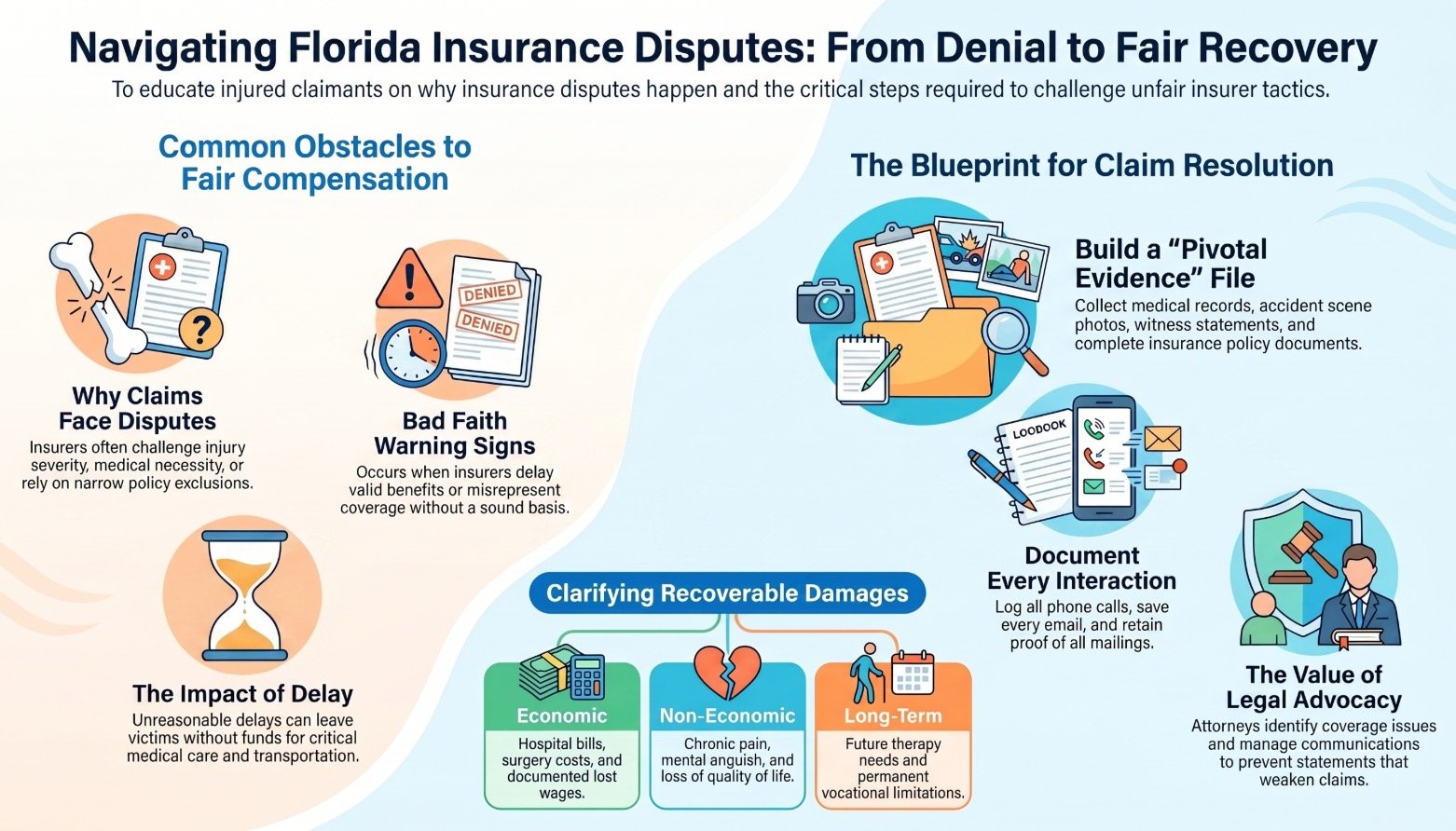
- Bad faith issues may arise when insurers unreasonably delay, misrepresent coverage, or deny valid benefits without a sound basis.
How We Can Help With Your Florida Insurance Dispute Injury Claim
A Florida insurance dispute injury claim often requires a careful review of the policy, the accident facts, the medical evidence, and the insurer’s stated reasons for delaying, reducing, or denying payment. Legal support may help injured individuals organize records, identify coverage issues, and respond with measured accuracy. A lawyer may compare the insurer’s position against the policy language, claim history, medical documentation, and applicable deadlines, then prepare a focused strategy for seeking fair payment.
Assistance may include building a Claim Denial Checklist, preserving communications, gathering provider statements, and correcting incomplete submissions. Counsel may also evaluate damages, document ongoing losses, and protect the claimant from statements that could weaken the claim. When resolution is possible, practical Settlement Negotiation Tips may guide discussions with adjusters and defense representatives. This service-centered approach helps claimants pursue needed resources while maintaining dignity, patience, and order during a difficult process for themselves and those who depend on them.
Understanding Florida Insurance Dispute Injury Cases


In Florida, insurance dispute injury cases often arise when an injured person seeks benefits under a policy and the insurer questions coverage, the extent of harm, medical necessity, liability, or the value of the claim. These matters require careful review because the outcome can affect a person’s access to treatment, wage support, and financial stability, all of which are already under strain.
OUR CONSULTATIONSARE FREE
START YOUR FREE CASE REVIEW

A dispute may turn on the interpretation of policy provisions, including exclusions, conditions, notice duties, and benefit limits. It may also involve medical records, expert opinions, prior claims history, and communications between the claimant, providers, and the insurer. Each detail can influence whether benefits are paid, reduced, delayed, or denied.
Settlement timelines depend on the intricacy of the evidence, the insurer’s review process, and the willingness of both sides to resolve contested issues. A clear legal approach helps protect the injured person’s rights while promoting fair, responsible, and timely claim resolution.
Common Causes of Florida Insurance Disputes
Florida insurance disputes often arise when insurers deny claims, delay payments, or challenge the scope of available coverage. These conflicts may involve disagreements over policy terms, medical documentation, liability findings, or the insurer’s interpretation of the loss. In more serious cases, allegations of bad-faith practices may arise, particularly when an insurer fails to handle a valid claim fairly and promptly.
Claim Denial Reasons


After an accident, an insurance claim may be denied for reasons that range from missing documentation to disputes over coverage, causation, or the severity of the injury. Insurers may assert that medical records do not connect the injuries to the incident, or that treatment was unnecessary, excessive, or unrelated. They may also question whether notice was timely, whether required forms were completed, or whether the claimant met policy conditions. Policy language interpretations often become central when terms are unclear or applied narrowly. Scrutiny of coverage exclusions may reveal whether the insurer properly relied on an exclusion or applied it too broadly. For injured persons and those assisting them, careful review of denial letters, medical evidence, and policy provisions helps identify whether the decision rests on valid grounds.
Delayed Claim Payments
Often, delayed claim payments arise when an insurer states that additional investigation, records, or verification is needed before benefits can be issued. In Florida injury matters, such delays may leave injured individuals without timely funds for medical care, transportation, household needs, or other critical support. A delay may result from incomplete claim documentation, repeated requests for the same materials, slow communication between adjusters, or extended review of medical treatment and billing records. Careful organization can help reduce confusion, especially when every report, invoice, and written exchange is preserved. During settlement negotiation, delay may also be used to pressure a claimant toward accepting less favorable terms. A Florida insurance dispute injury lawyer may assess the timeline, identify unreasonable delay, and pursue prompt, fair resolution through structured advocacy.
Coverage Disputes
When an insurer disputes whether a policy applies to an injury claim, the disagreement may affect access to medical benefits, liability protection, or settlement funds. Coverage disputes often arise from exclusions, unclear policy language, disputed accident facts, or questions about whether the injured person qualifies for benefits. In Florida injury matters, disputes over policy interpretation can determine whether care providers are paid, whether a claimant receives compensation, and whether a defendant has available insurance coverage. These disputes may also involve third-party liability claims, where an injured person seeks recovery from another party’s insurer. Careful review of policy terms, claim documents, medical records, and accident evidence helps clarify the scope of coverage. A measured legal response supports fair evaluation while protecting injured individuals and families seeking stability.
Bad Faith Practices
Bad faith practices may arise when an insurer fails to handle an injury claim with the fairness, diligence, and honesty required under Florida law. Such conduct can include unreasonable delays, inadequate investigations, misrepresentation of policy terms, or denial of valid benefits without a sound basis. In injury matters, insurers may improperly rely on preexisting conditions to reduce payment, even when medical evidence shows the accident worsened the claimant’s health. They may also accuse providers or claimants of claim overbilling without conducting a balanced review. These tactics can place injured individuals under financial strain, limiting access to treatment and support. A Florida insurance dispute injury lawyer can evaluate communications, deadlines, medical records, and payment decisions to determine whether the insurer’s conduct violated its duties and caused preventable harm to the claimant.
Legal Rights of Florida Insurance Dispute Injury Victims
Although insurance policies can be difficult to interpret, Florida injury victims have specific legal rights when an insurer delays, undervalues, or denies a valid claim. These rights help protect people seeking care, stability, and fair treatment after harm.
A Florida insurance dispute injury lawyer may evaluate whether the insurer complied with the duty of good faith, reviewed the evidence, and responded within the required timeframes.
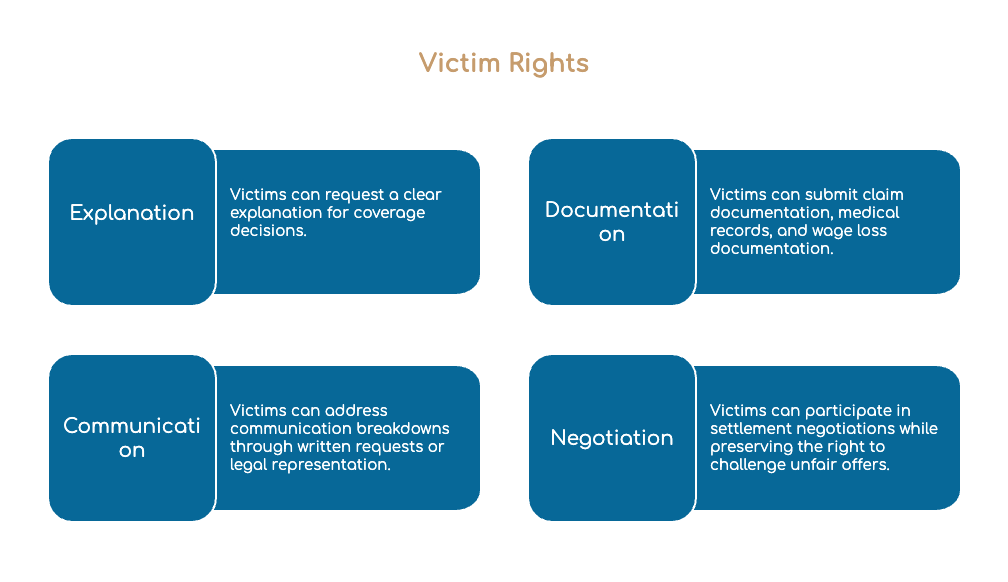
- Victims may demand a clear explanation for coverage decisions, including policy terms relied upon.
- They may submit claim documentation, medical records, wage loss documentation, and other evidence supporting recovery.
- They may address communication breakdowns through written requests, formal notices, or legal representation.
- They may participate in settlement negotiations while preserving the right to challenge unfair offers.
Policyholder obligations remain important, including timely notice, cooperation, and truthful information. When those duties are met, insurers must handle claims fairly and consistently with Florida law, supporting injured individuals and the communities depending on them.
Why Do Florida Insurance Dispute Injuries Happen?
In Florida, insurance disputes over injuries often arise when the harm caused by an accident is followed by financial pressure, delayed claim handling, or disagreement over the value of losses. When injured people depend on benefits to obtain care, pay bills, and preserve stability, conflict with an insurer can deepen the practical impact of the original event.
Common causes include Insurance paperwork issues, such as incomplete forms, inconsistent statements, or missed deadlines, which create grounds for delay. Policy coverage clarity may also be lacking, especially when exclusions, limits, or layered policies affect payment responsibility. Insurer claim tactics can further contribute, including low valuations, repeated requests for documentation, or challenges to the cause and extent of harm. Medical record gaps may also lead to disputes when treatment histories, diagnostic findings, or provider notes do not fully connect the injury to the accident. These factors often combine, creating hardship for people seeking fair support.
What Should You Do After a Florida Insurance Dispute Injury?
After a Florida insurance dispute injury, the injured party should take immediate steps to protect both the claim and the available evidence. This includes documenting injuries, preserving all insurance communications, and maintaining organized records of medical care, damages, and claim-related exchanges. Because insurers may challenge liability, coverage, or the value of the claim, contacting a lawyer can help guarantee that critical deadlines and legal rights are properly addressed.
Document Your Injuries
Clear documentation of injuries can materially affect the outcome of a Florida insurance dispute, especially when an insurer questions the severity, cause, or duration of the harm claimed. The injured person should seek prompt medical evaluation, follow treatment instructions, and keep records of diagnoses, prescriptions, therapy, limitations, and referrals. Photographs of visible injuries, assistive devices, and physical changes may help show progression over time. A written Accident timeline should note when symptoms began, how they developed, and which activities became difficult. Tracking Pain severity each day, including sleep disruption, mobility limits, and work restrictions, can support a clearer understanding of need. Caregivers, family members, or service providers may also record observed changes, helping present a responsible account focused on recovery, accountability, and fair support.
Preserve Insurance Communications
When an insurance dispute arises from a Florida injury, preserving all communications with the insurer can help establish what was reported, when it was reported, and how the claim was handled. Injured individuals should keep copies of emails, letters, portal messages, claim forms, recorded statement notices, and insurance denial letters. A clear file should also include medical billing records, payment explanations, and any requests for additional documentation. When serving an injured person, careful organization supports accountability and reduces confusion during a difficult recovery period. Each phone call should be logged with the date, time, representative’s name, and a brief summary of what was discussed. If documents are mailed, proof of delivery should be retained. These records may later clarify delays, conflicting statements, or improper claim decisions.
Contact A Lawyer
Why should an injured person contact a lawyer during a Florida insurance dispute? Legal guidance can help protect the person’s rights, clarify available benefits, and address delays or denials with a focused plan. During an Initial Consultation, the lawyer may examine policy language, accident details, medical records, and insurer communications to identify potential coverage issues. A careful Case Review can also reveal missed deadlines, inadequate claim evaluations, or bad faith concerns. For individuals committed to serving families, workplaces, and communities, timely legal support may help preserve financial stability while recovery continues.
The lawyer can communicate with the insurer, gather supporting evidence, and pursue a fair resolution through negotiation or, when necessary, litigation. Prompt contact helps ensure the dispute is handled with diligence, accuracy, and informed judgment.
Critical Evidence in a Florida Insurance Dispute Injury Case
In a Florida insurance dispute injury case, pivotal evidence can determine whether a claim is properly valued, delayed, denied, or resolved. essential materials often include: 1. Medical Treatment Records, 2. Accident Scene Evidence, 3. Insurance Policy Documents, and 4. Witness Statements. Each category helps clarify liability, damages, coverage obligations, and the insurer’s handling of the claim.
Medical Treatment Records
Medical treatment records often form the foundation of a Florida insurance dispute injury case because they document the nature, timing, and extent of the claimant’s injuries. These records may include emergency care notes, diagnostic findings, physician evaluations, therapy reports, prescriptions, and discharge instructions. When reviewed carefully, they help connect the reported harm to the incident, support the damage assessment, and clarify ongoing medical needs. A Florida insurance dispute injury lawyer may compare the records with the Accident report, claim timeline, and insurer correspondence to identify gaps or inconsistencies. For those serving injured individuals, an organized evidence checklist can ensure that every relevant record is requested, preserved, and presented accurately. Complete medical documentation strengthens credibility, promotes fair evaluation, and assists in resolving contested injury claims with diligence and integrity.
Accident Scene Evidence
Accident scene evidence can be critical in a Florida insurance dispute injury case because it preserves conditions that may change quickly after an incident. Photographs, video recordings, hazard locations, lighting, weather, debris, skid marks, and damaged property may help clarify how an injury occurred. In a barn accident, images of the flooring, gates, equipment, animal areas, or warning signs may help show whether unsafe conditions existed. Witness names, incident reports, and prompt notes can also support a clear account before memories fade. This evidence may help meet proof requirements by connecting the dangerous condition to the injury and addressing disputes raised by insurers. Careful preservation serves others by promoting fairness, accountability, and accurate evaluation of responsibility in the claim process. Early collection strengthens the injured person’s position.
Insurance Policy Documents
When an injury claim depends on disputed coverage, insurance policy documents become central evidence in a Florida insurance dispute injury case. These records identify who is insured, what losses may be covered, and which exclusions, endorsements, or conditions may affect recovery. A careful review can reveal whether an insurer properly applied deadlines, notice requirements, deductibles, or claim coverage limits. Attorneys, advocates, and service-focused professionals read policy language to determine whether a denial, delay, or reduced payment is supported by the contract. Declarations pages, amendments, renewal notices, and correspondence may also clarify the insurer’s obligations. Because policy terms often control the available benefits, accurate document collection helps protect injured persons, promotes fair evaluation, and supports accountable resolution of disputes under Florida insurance law.
Witness Statements
Because disputed injury claims often turn on facts outside the written policy, witness statements can provide critical context in a Florida insurance dispute injury case. Neutral observers, medical providers, coworkers, or family members may clarify how an accident occurred, what symptoms appeared, and how limitations affected daily service to others. A Florida insurance dispute injury lawyer may use these accounts to compare insurer conclusions against real-world observations and timelines. Careful collection also supports credibility assessment, especially when statements remain consistent with records, photographs, and claim communications. During deposition prep, witness accounts help identify pivotal facts, likely challenges, and areas needing clarification before testimony.
Reliable statements can strengthen a claim by presenting human detail without exaggeration, helping decision-makers evaluate responsibility, loss, and fair compensation.
Long-Term Effects of Florida Insurance Dispute Injuries
Long-term effects in Florida insurance dispute injury cases may include chronic pain complications, especially when injuries are disputed or undervalued by insurers. Delayed medical treatment can worsen physical conditions, weaken documentation, and create additional obstacles in proving the full extent of harm. Financial recovery challenges often arise when medical bills, lost income, and future care needs exceed the compensation initially offered.
Chronic Pain Complications
Although an injury may appear stable after initial treatment, chronic pain can continue to interfere with a person’s mobility, work capacity, sleep, and overall quality of life. In Florida insurance disputes, these complications may affect how damages are evaluated, especially when pain limits daily responsibilities and service to others. A careful Medical evidence checklist can help organize records, diagnostic findings, expert opinions, therapy notes, medication history, and functional limitations. This documentation may show whether pain is persistent, injury-related, and reasonably connected to the claim. A structured pain treatment plan may also demonstrate consistent care, symptom management, and the need for future support. Chronic pain can involve nerve irritation, joint dysfunction, muscle guarding, or reduced endurance, requiring clear proof before an insurer fairly considers long-term consequences.
Delayed Medical Treatment
When medical treatment is delayed after an injury, the long-term effects may become more difficult to evaluate in a Florida insurance dispute. Gaps in care can obscure whether symptoms arose from the incident, worsened over time, or resulted from an unrelated condition. For those committed to serving injured individuals, careful review of medical records, diagnostic findings, and provider opinions is crucial. Delayed care may also affect insurance claim timelines, especially when insurers request additional documentation to assess causation and necessity. In these matters, settlement negotiation tactics often focus on explaining why treatment was postponed, such as limited access to care, misjudged symptoms, or reliance on conservative measures. A clear account of the delay can support fair evaluation while preserving the dignity of the injured person.
Financial Recovery Challenges
Financial recovery after an injury may become increasingly difficult when an insurance dispute delays payment for medical care, lost income, or other necessary support. In Florida, these delays can create budgeting difficulties for injured individuals and families who are already managing physical limitations and reduced stability. Missed wages, ongoing treatment costs, transportation needs, and household expenses may compete for limited resources. Caregivers, advocates, and service providers may observe that unpaid bills and uncertainty often affect treatment decisions, employment plans, and long-term household security. Careful medical expense planning can help identify expected costs, document future needs, and support a clearer presentation of claims. When disputes persist, financial pressure may intensify, making timely legal evaluation important for preserving recovery options and promoting informed decisions grounded in practical needs.
Proving Liability in Florida Insurance Dispute Injury Cases
Proving liability in Florida insurance dispute injury cases necessitates a clear showing that the responsible party’s conduct caused the claimant’s injuries and that the insurance policy provides coverage for the resulting losses. This process often begins with identifying the duty owed, the breach of that duty, and the direct link between the breach and the harm suffered. A carefully organized evidence timeline can help clarify how events unfolded, when injuries occurred, and which facts support a valid claim.
Reliable documentation may include accident reports, medical records, photographs, repair estimates, and expert findings. Witness credibility also carries significant weight, especially when testimony confirms unsafe conduct, visible injuries, or the conditions surrounding the incident. For those committed to serving injured individuals, careful proof development promotes fairness and accountability. Strong liability evidence can support a claim, reduce uncertainty, and help ensure that covered losses are considered in accordance with Florida law.
Dealing With Insurance Companies After a Florida Insurance Dispute Injury
After an injury gives rise to an insurance dispute, communication with the insurer should be handled carefully and with a clear record of each exchange. Adjusters may request statements, medical authorizations, or broad releases, and each request should be reviewed for its purpose and scope. A measured response helps protect the injured person while supporting a fair evaluation of the claim.
Those assisting injured individuals should encourage organized documentation, including letters, emails, claim numbers, payment explanations, and call notes. When an insurer refuses to explain its position, shifts its reasons for denial, or delays action without adequate grounds, these facts may become important in wrongful-delay lawsuits. Counsel may also use coverage escalation tactics, such as demanding supervisory review or citing policy duties, to seek responsible handling.
Professional guidance can reduce confusion, preserve important rights, and promote service-centered advocacy focused on restoring stability, dignity, and practical support for the injured person.
What to Expect During a Florida Insurance Dispute Injury Claim Process
A Florida insurance dispute injury claim typically begins with filing the claim, followed by the insurer’s review and formal response. The process often depends on the strength of evidence and documentation, including medical records, policy terms, photographs, and communications with the insurance company. When disputes remain unresolved, the claim may proceed through negotiation or litigation, depending on the insurer’s position and the injured party’s legal options.
Filing Your Claim
Filing an injury-related insurance claim in Florida begins with providing the insurer with clear notice of the loss, the injuries claimed, and the coverage sought. This initial step should reflect careful attention to policyholder duties, including timely reporting, truthful information, and cooperation with reasonable requests. The claimant should provide basic facts, available medical documentation, accident details, and contact information for involved parties or witnesses. Proper insurer communication is best handled in writing, with copies retained for accountability and service to those depending on the claim. Evidence preservation is also crucial, including photographs, records, bills, and damaged property when relevant. Because legal deadlines may affect recovery, the filing process should be organized early, with dates tracked and supporting materials gathered before preventable problems arise.
Insurance Company Response
Once the insurer receives notice of an injury claim, its response typically begins with acknowledgment, assignment of the claim, and a request for information needed to evaluate coverage and damages. A claims adjuster may contact the injured person, medical providers, or representatives to clarify basic facts, confirm policy terms, and set expectations for review. Document requests often follow, and each request should be examined for relevance, scope, and timing. Adjuster statements may describe the insurer’s position, but they are not final determinations unless clearly issued as a result. In Florida, the company must act fairly, communicate within required periods, and avoid unnecessary delay. Those serving an injured claimant should track communications carefully, preserve professionalism, and recognize when a response signals cooperation, dispute, or preparation for denial.
Evidence And Documentation
After the insurer identifies the information it wants to review, the strength of the injury claim often depends on the quality, organization, and consistency of the supporting evidence. Medical records, diagnostic reports, billing statements, photographs, incident reports, wage records, and witness information may help explain how the injury occurred and how it affected daily life. Careful attention to insurer document requests can reduce confusion and help ensure that key facts are not overlooked.
Documentation should be accurate, complete, and provided in a timely manner. Gaps in treatment, inconsistent statements, or missing records may support a Claim denial strategy, even when harm is genuine. A well-prepared file allows the claim to be evaluated fairly, supports responsible advocacy, and helps protect the injured person’s dignity throughout review.
Negotiation Or Litigation
When the insurer has reviewed the submitted evidence, the dispute may move toward negotiation, litigation, or a combination of both. Counsel evaluates policy language, liability, damages, and the insurer’s stated reasons for denial or underpayment. A Mediation strategy may then be developed to encourage resolution while protecting the injured party’s rights and dignity. This process can involve settlement demands, conferences, and careful responses to insurer arguments. If fair compensation remains unavailable, trial readiness becomes crucial. Preparation may include witness coordination, expert opinions, discovery, and motions addressing disputed issues. For individuals committed to serving families, workers, and communities, this stage reflects disciplined advocacy rather than conflict for its own sake. The goal remains a just outcome, obtained through principled negotiation or, if necessary, court action in Florida.
Compensation for Florida Insurance Dispute Injury Damages
Although every insurance dispute is shaped by the policy language and the facts of the loss, compensation in a Florida insurance dispute injury claim generally focuses on placing the injured party in the position the coverage was intended to provide. This may require payment of benefits that were delayed, underpaid, or denied, along with any amounts supported by the claim record and applicable Florida law. A lawyer may review the policy, claim communications, medical documentation, and insurer conduct to determine whether the carrier fulfilled its obligations.
Settlement negotiations often center on presenting a clear, well-organized demand that allows the insurer to evaluate responsibility and coverage without confusion. Evidence preservation also serves an important role, because photographs, reports, notices, correspondence, and witness information may affect the value and timing of recovery. When handled carefully, the compensation process supports accountability, promotes fair claim resolution, and helps injured individuals regain stability with dignity.
Economic vs Non-Economic Damages in Florida Insurance Dispute Cases
In Florida insurance dispute injury cases, damages are generally divided into economic losses and non-economic harms. Economic damages may include medical bills, lost income, and other measurable financial losses, while non-economic damages address pain, suffering, and diminished quality of life. Establishing accurate damage values requires clear documentation, credible evidence, and a careful connection between the injury and the claimed losses.
Economic Damages Explained
Economic damages form the measurable financial portion of an injury-related insurance dispute, including losses that can be proven through records, bills, wage statements, and other documentation. In Florida insurance disputes, these damages help identify the practical costs an injured person has already incurred or is reasonably expected to incur as a result of the incident. A clear medical bill breakdown may include emergency care, hospital treatment, surgery, rehabilitation, prescriptions, diagnostic testing, and follow-up visits. Wage loss proof may include employer statements, payroll records, tax documents, and medical work restrictions showing missed time or reduced earning capacity. These records assist insurers, attorneys, and courts in evaluating payment obligations. For those serving injured individuals, careful documentation supports fair review, organized presentation, and responsible advocacy grounded in verifiable financial harm.
Non-Economic Damages Explained
Measurable financial losses do not capture every consequence of an injury, particularly when pain, emotional strain, and disruption to daily life become part of the claim. Non-economic damages address harms that do not have a fixed invoice, yet still affect dignity, independence, and personal well-being. In Florida insurance dispute cases, these losses may include painful symptoms, mental anguish, loss of enjoyment of life, inconvenience, disfigurement, or limitations on family and community participation.
Such damages recognize that an injured person may face more than medical bills or lost wages. A fair evaluation considers how the injury affects ordinary routines, relationships, and the ability to serve others consistently and with care. These losses are personal, but they remain legally significant when an insurer disputes the full value of an injury claim.
Proving Damage Values
Damage values in a Florida insurance dispute must be supported by evidence that connects the injury to both financial loss and personal harm. Economic damages often require bills, wage records, repair invoices, and expert analysis. Non-economic damages require credible testimony showing pain, limitation, anxiety, or loss of daily function. Proof of medical causation is central because insurers may argue that the condition arose from another source. Treating physicians, diagnostic records, and consistent documentation can help establish that relationship.
Calculating future expenses may require the services of life care planners, vocational experts, or medical specialists who can explain ongoing treatment, reduced earning capacity, and long-term needs. A careful presentation allows the claim to reflect the full impact of the harm while supporting fair service to the injured person and accountability by the insurer.
When a Florida Insurance Dispute Injury Case Goes to Trial vs Settlement
When a Florida insurance dispute injury case cannot be resolved through negotiation, the claim may proceed toward litigation and, in some cases, trial. Settlement negotiations remain common because they can reduce delays, expenses, and uncertainty while still addressing medical needs, lost income, and other harms. A lawyer may evaluate whether the insurer’s position leaves room for fair resolution or whether courtroom presentation is necessary to protect the injured person’s interests.
If trial becomes likely, the trial strategy focuses on organized evidence, credible testimony, and clear presentation of damages. Witness preparation may involve injured parties, treating providers, experts, and others who can explain the impact of the loss. In limited circumstances, punitive damages may be considered when conduct appears especially wrongful, though such issues require careful analysis. The decision between settlement and trial often depends on the strength of the evidence, risk tolerance, policy limits, and the client’s need for a timely, respectful resolution.
Florida Laws That May Affect Your Florida Insurance Dispute Case
Florida insurance dispute injury cases are shaped by statutes, court rules, policy language, and deadlines that can affect both the value of a claim and the ability to pursue recovery. Florida law may require careful attention to claim handling, notice duties, coverage exclusions, and proof-of-loss requirements. These rules matter because injured people often depend on fair insurance practices as they rebuild stability, support families, and return to service in their communities.
Insurance rules, deadlines, and claim duties can shape recovery options after a Florida injury dispute.
- Policy duties: The insured may need to provide notice, medical records, examinations, or sworn statements.
- Claim practices: Florida bad faith standards may apply when an insurer fails to act fairly and honestly.
- Evidence preservation: Photographs, repair records, medical documentation, and communications can strengthen the case in disputed claims.
- Court procedures: Pleading standards, discovery rules, and expert requirements may influence how evidence is presented.
A lawyer may assess these legal requirements, protect the record, and help guide responsible decisions about claims.
The Statute of Limitations for Florida Insurance Dispute Injury Cases
Deadlines can determine whether an injured person may pursue an insurance dispute in court, even when the underlying claim appears strong. In Florida, the statute of limitations depends on the nature of the dispute, the type of insurance policy, and the date the cause of action accrued. Injury-related insurance disputes may involve deadlines tied to negligence claims, contract claims, or statutory rights, and each category may carry a different filing period.
Policy deadlines may also require prompt notice of loss, cooperation with investigation, medical authorizations, or sworn proof of loss. These requirements can affect whether benefits remain available before a lawsuit is ever filed. Claim documentation guidelines should be followed carefully, including preservation of medical records, correspondence, estimates, photographs, and payment records. For individuals committed to protecting injured persons and serving their communities, careful attention to timing supports fairness, accountability, and orderly resolution of legitimate insurance disputes under Florida law.
How a Florida Insurance Dispute Injury Lawyer Can Help You
After timing issues are identified, the next concern is how to manage the claim or dispute to preserve rights and strengthen the injured person’s position.
A Florida insurance dispute injury lawyer can provide structured guidance, careful review, and steady advocacy while helping reduce burdens on those focused on recovery and service to others.
- Reviews coverage and claim history to identify policy benefits, exclusions, delays, and insurer obligations.
- Organizes Medical documentation so injuries, treatment needs, limitations, and future care concerns are presented clearly.
- Develops a settlement strategy based on liability, damages, available coverage, and the insurer’s conduct during the claim.
- Communicates with insurers to address improper denials, low offers, missing information requests, and disputed interpretations.
Through these efforts, the lawyer helps create an orderly record, supports informed decision-making, and promotes fair consideration of the injured person’s losses in accordance with Florida insurance procedures and claim practices.
When to Contact a Florida Insurance Dispute Injury Lawyer
When an insurance claim begins to stall, becomes disputed, or involves serious injuries, legal guidance should be considered before deadlines, recorded statements, or settlement decisions affect the claim’s value. A Florida insurance dispute injury lawyer is often contacted after a denial, a delayed payment, a low settlement offer, or a request for extensive documentation. Prompt consultation may help protect medical evidence, repair estimates, policy notices, and communications with adjusters.
Early claim strategy is especially important when injuries require ongoing care, income loss is uncertain, or fault is contested. Timely review may also support recording witness identities, preserving photographs, securing reports, and organizing records before memories fade or documents become harder to obtain. Individuals serving injured family members, clients, or vulnerable community members may benefit from seeking guidance as soon as concerns arise. Contact is also appropriate when an insurer changes its position, questions treatment, or pressures a claimant to resolve the matter before the full impact is known.
Why You Need an Experienced Florida Insurance Dispute Injury Lawyer
Because insurance disputes often hinge on policy language, medical proof, and claim-handling conduct, experience can significantly affect how an injury claim is evaluated and presented. An experienced Florida insurance dispute injury lawyer understands how insurers assess liability, damages, exclusions, and Coverage alternatives after an accident or harmful event. This knowledge helps protect injured individuals from delays, undervalued settlements, or denials that may limit access to care and financial stability.
Experience also enables organized advocacy that serves the injured person’s broader needs. A skilled lawyer can review records, identify absent evidence, monitor claim timelines, and respond to insurer requests with precision. When disputes arise, experienced counsel can explain the importance of policy terms, clearly document losses, and address unfair claim practices through appropriate legal channels. This measured guidance helps ensure that the claim is not shaped solely by the insurer’s interpretation but by the facts, the policy, and Florida law.
How to Choose the Right Florida Insurance Dispute Injury Lawyer for Your Case
Selection should begin with a careful review of the lawyer’s experience in both injury claims and insurance coverage disputes, since these matters often involve overlapping legal and factual issues. A suitable attorney should understand policy language, claim valuation, medical evidence, and the insurer’s duties under Florida law. Past results may offer useful context, but they should be considered alongside professionalism, preparedness, and ethical service to clients.
Prospective clients should also evaluate Client communication strategies, including how promptly questions are answered, how updates are provided, and whether the lawyer explains choices with patience and clarity. Strong representation supports informed decisions, especially when an injured person is already managing pain, financial strain, and family responsibilities.
The lawyer’s settlement negotiation tactics also merit close attention. Effective counsel should document losses thoroughly, challenge unsupported denials, and pursue fair resolution while remaining ready for litigation if needed. This balanced approach can help protect the client’s recovery and dignity.
About The Law Offices of Anidjar & Levine
The Law Offices of Anidjar & Levine represents injured clients in Florida insurance disputes involving claim denials, delayed payments, undervalued losses, and contested coverage. The firm approaches each matter with a service-focused commitment, recognizing that clients often need steady guidance as they recover from harm and financial disruption.
Its attorneys assist with the Claim process by reviewing policy language, identifying disputed issues, and preparing demands supported by relevant documentation. Careful evidence gathering may include medical records, repair estimates, expert opinions, photographs, and correspondence that show the insurer’s obligations. The firm also manages insurance communication, helping protect clients from statements or delays that could weaken a valid claim.
In every case, the legal team considers statute limits and other procedural deadlines that may affect the right to seek compensation. Through organized advocacy and consistent client support, the firm works to help injured Floridians pursue fair treatment and accountable insurance practices.
Frequently Asked Questions
Can I Switch Lawyers During My Insurance Dispute Case?
Yes, a person may change lawyers during an insurance dispute, provided the change complies with ethical and procedural rules. Changes to client consent require clear authorization, written notice, and the proper transfer of files. If litigation is pending, the court may need to approve withdrawal or substitution, especially where court-ordered representation exists. A responsible replacement helps protect deadlines, evidence, and service to all parties relying on orderly case management.
Will My Insurance Dispute Injury Case Require Expert Witnesses?
Yes, an insurance dispute injury case may require expert witnesses when disputed facts involve causation, damages, policy interpretation, or claim-handling practices. Medical treatment records often guide physicians or substantive experts in explaining injuries, prognosis, and necessary care. Industry standards consultations may assist in evaluating whether an insurer acted reasonably. A legal representative can determine which experts serve the claim’s purpose, helping protect the injured person’s interests with accuracy, discipline, and service-focused advocacy.
How Are Attorney Fees Handled in Insurance Dispute Injury Cases?
Attorney fees are commonly handled through a Contingent fee structure, meaning counsel is paid only if recovery is obtained. Payment timing details are usually defined in the fee agreement, including percentages, cost reimbursement, and when funds are disbursed after settlement or judgment. This arrangement can help injured claimants pursue accountability without upfront legal fees, allowing representatives to serve clients by advancing claims with disciplined, professional case management.
Can Social Media Affect My Florida Insurance Dispute Claim?
Yes, social media can affect a Florida insurance dispute claim. Public posts may conflict with reported injuries, activities, or limitations, creating Surveillance evidence and credibility concerns. Insurers may review photos, comments, locations, and timelines to challenge damages or coverage. A careful claim strategy should include limiting posts, adjusting privacy settings, and avoiding discussions about the incident. Those assisting the claimant should encourage consistency, discretion, and careful documentation throughout.
What if My Insurer Accuses Me of Fraud?
If an insurer alleges fraud, the claimant should respond carefully, preserve all records, and avoid unsupported statements. Proving Honest Conduct requires consistent documentation, truthful explanations, and prompt correction of any errors. Handling Denial Letters involves reviewing stated reasons, deadlines, and requested evidence with discipline. Those serving injured or vulnerable people should encourage transparency, patience, and qualified legal guidance, since fraud accusations can threaten benefits, credibility, and future recovery rights.
—————————
Insurance disputes can delay essential compensation after an injury, making legal guidance crucial. A Florida insurance dispute injury lawyer can evaluate coverage, challenge unfair denials, and pursue the benefits owed under the policy.
The Law Offices of Anidjar and Levine assist injured claimants with focused representation, clear communication, and thorough case preparation, including matters involving a Florida Car Accident Lawyer.
Those facing insurer resistance should seek counsel promptly to protect their rights and move their claim toward a fair resolution.