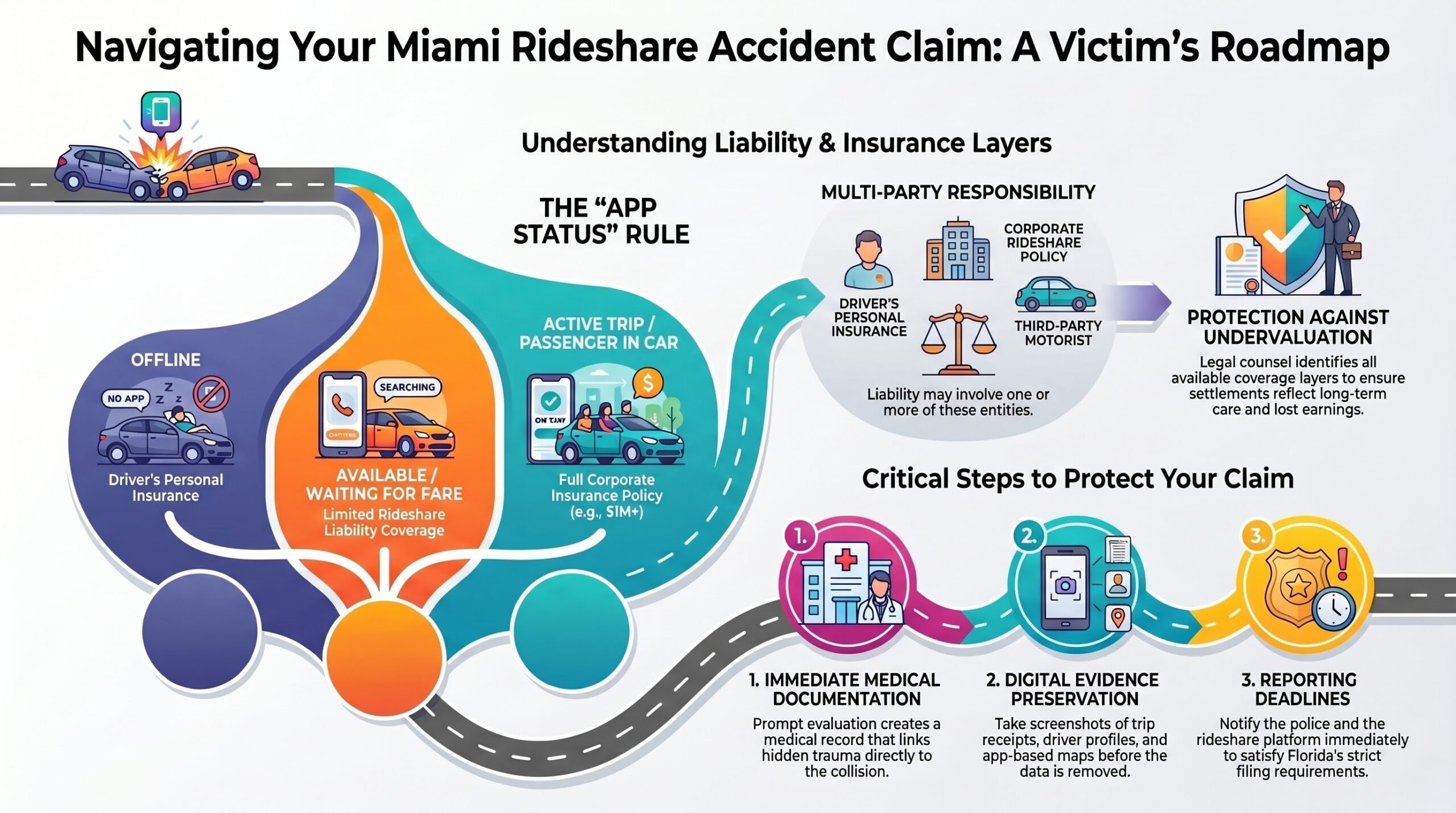
The Law Offices of Anidjar and Levine assists rideshare accident victims in Miami by identifying liable parties, preserving app data, trip records, medical documentation, and witness evidence, then pursuing claims through the proper insurance layers.
Liability often depends on the driver’s app status, the presence of passengers, and other involved motorists.
Counsel also helps avoid harmful insurer communications, documents wage loss and future care needs, and challenges undervalued offers.
The sections below explain the process, legal rights, and crucial steps in more detail.
For related guidance, see our Miami Car Accident Lawyer page.
Main Takeaways
- Seek prompt medical care and preserve records, photos, receipts, and app screenshots to connect your injuries and losses to the Miami rideshare crash.
- Report the accident to the police, the rideshare company, and insurers quickly to create official records and protect claim deadlines.
- Liability often depends on the driver’s app status, the passenger’s presence, and whether another driver or a third party also caused the collision.
- A Miami rideshare accident injury lawyer can identify coverage layers, gather trip data, and handle insurer communications and settlement negotiations.
- Compensation may include medical expenses, lost income, property damage, future treatment costs, and pain and suffering supported by strong evidence.


How We Can Help With Your Miami Rideshare Accident Injury Claim
Find your way through the aftermath of a rideshare collision with informed legal guidance, as a Miami rideshare injury lawyer can evaluate the facts of the crash, identify all potentially liable parties, and determine which insurance policies may apply. Counsel can support injured passengers, drivers, and families by organizing post-accident documentation, preserving crucial records, and coordinating communications with insurers and medical providers.
Through careful case management, legal counsel can help clients act with purpose while protecting their ability to serve loved ones and communities. This assistance may include gathering photographs, witness statements, electronic trip data, wage records, and treatment information, then presenting a clear claim supported by evidence. Attorneys also assess immediate and long-term needs, so Compensation strategies reflect medical costs, lost income, rehabilitation, and other measurable effects. When disputes arise, they can address delays, challenge low offers, and pursue fair resolution through negotiation or litigation. Their role is to provide steady direction, clarity, and disciplined advocacy throughout.
OUR CONSULTATIONSARE FREE
START YOUR FREE CASE REVIEW

Understanding Miami Rideshare Accident Injury Cases
In the context of Miami traffic patterns and app-based transportation services, rideshare accident injury cases often involve legal and factual issues that differ from ordinary motor vehicle claims. Coverage may depend on the driver’s app status, the company’s insurance layers, and compliance with local and state ride-hail regulations.
These matters also require careful review of digital trip records, communications, and timing data, which can clarify whether a driver was awaiting a fare, transporting a passenger, or acting outside platform duties. Questions of passenger rights, third-party liability, and comparative fault may arise, especially when multiple insurers dispute responsibility. A service-minded legal approach focuses on protecting injured people, preserving evidence, and guiding families toward informed decisions that support recovery and community well-being.
Because rideshare platforms operate through contracts and technology, these cases demand organized investigation, prompt action, and a clear understanding of how transportation network companies function within Miami’s broader legal framework.
Common Causes of Miami Rideshare Accidents
Several recurring factors contribute to rideshare accidents in Miami, often placing passengers, drivers, and other road users at significant risk. Common causes include distracted driving, speeding, and other reckless conduct, impaired driver errors, and hazardous weather conditions that reduce visibility and control. Recognizing how these issues lead to collisions provides a useful foundation for evaluating liability and injury claims.
Distracted Driving Risks
Distracted driving remains one of the most common causes of Miami rideshare accidents, particularly when drivers divide their attention between the road and a rideshare app, navigation system, or mobile phone. Even brief phone use can delay reaction time, reduce awareness of traffic signals, and place passengers, pedestrians, and other motorists at risk.
In rideshare service, distraction often involves more than looking away. Cognitive distraction can occur when a driver focuses on ride requests, passenger messages, route changes, or earnings updates rather than on surrounding conditions. This divided attention may lead to missed hazards at intersections, unsafe lane changes, and delayed braking. For individuals committed to protecting others, understanding these risks supports safer transportation choices and highlights why careful, attentive driving remains vital throughout every Miami trip each day.
Speeding And Recklessness
Beyond distraction, speeding and reckless driving frequently play a central role in Miami rideshare accidents, especially when drivers rush to complete more trips, respond to app demands, or make up lost time in traffic. Excessive speed reduces stopping distance, narrows reaction time, and increases crash severity for passengers, pedestrians, and other motorists. Reckless behaviors, including reckless overtaking, abrupt lane changes, tailgating, and ignoring traffic signals, further endanger everyone sharing the road.
In a service focused community, these choices can undermine public trust and expose vulnerable people to preventable harm. Effective speeding enforcement, combined with careful driver screening and accountability measures, helps discourage unsafe conduct. When a rideshare collision occurs, a careful legal review often examines whether excessive speed or reckless maneuvers contributed to injuries and avoidable losses for victims and families.
Impaired Driver Errors
Impaired driving remains a serious source of rideshare collisions in Miami, despite the professional expectations associated with app-based transportation services. When a driver operates while affected by alcohol impairment, judgment, reaction time, and coordination often decline in ways that place passengers, pedestrians, and other motorists at risk. Similar dangers arise from drug intoxication, including reduced focus, delayed responses, and poor decision-making during routine traffic situations.
For individuals committed to protecting others, understanding these errors helps identify preventable harm. A rideshare driver who is impaired may miss signals, misjudge distance, drift between lanes, or fail to stop in time. Even prescribed substances can create dangerous limitations when combined with fatigue or long hours behind the wheel. Careful investigation often reveals impairment as a central factor in serious Miami rideshare crashes.
Poor Weather Conditions
During periods of heavy rain, reduced visibility and slick pavement create serious risks for rideshare drivers and passengers throughout Miami. Storm conditions can lengthen stopping distances, obscure lane markings, and limit the time available to respond to sudden traffic changes. Even attentive drivers may struggle when streets flood quickly, intersections become congested, and other motorists act unpredictably.
Poor weather conditions also increase the risk of hydroplaning, especially on highways, entrance ramps, and roads with standing water. A rideshare vehicle that loses tire contact with the road may skid into nearby traffic or fixed objects. In service to injured individuals and families, legal advocates often examine whether a driver adjusted speed, following distance, and route selection to match conditions. Careful evaluation can help determine responsibility and support an injured person’s recovery and future stability.


Legal Rights of Miami Rideshare Accident Injury Victims
After a Miami rideshare collision, an injured victim generally has the legal right to pursue compensation for medical expenses, lost income, property damage, and other losses caused by the crash. Florida law and applicable insurance policies may shape victim compensation, while statutory protections can extend to passengers, pedestrians, cyclists, and other motorists harmed by negligent conduct.
These rights exist to promote accountability and support community wellbeing through fair financial recovery.
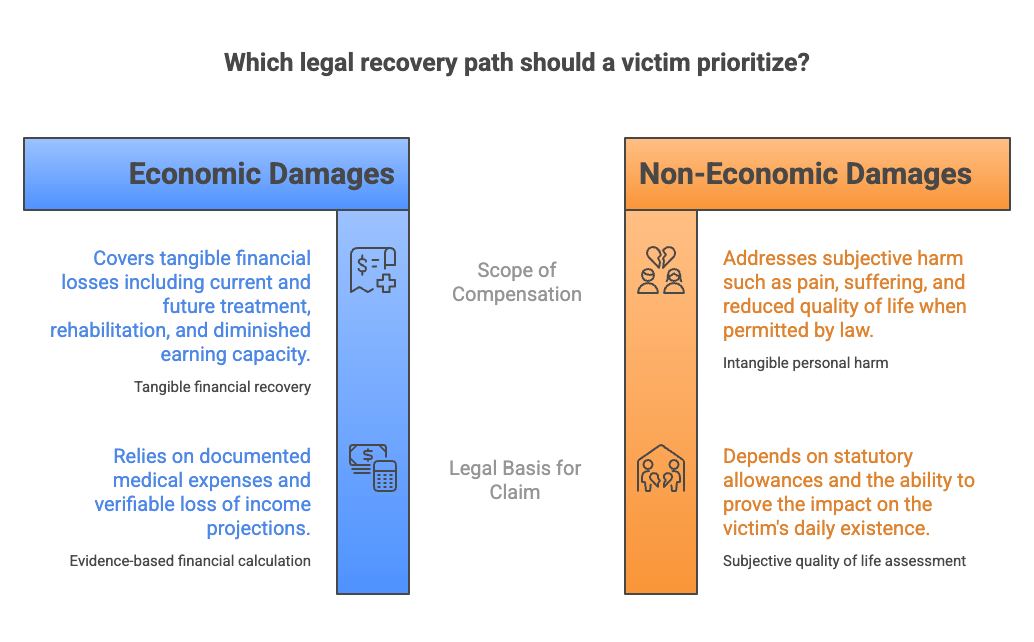
- Injured victims may seek damages for current and future treatment, rehabilitation, and diminished earning capacity.
- Liability may involve a rideshare driver, another driver, or corporate insurance coverage, depending on the driver’s status.
- Victims may assert claims for non-economic harm, including pain, suffering, and reduced quality of life, when permitted by law.
- Filing deadlines and coverage rules matter because delayed action can limit recovery under Florida law.
A careful legal evaluation often helps identify responsible parties and preserve the full scope of available rights.
Steps to Take After a Miami Rideshare Accident Injury
After a Miami rideshare accident injury, prompt medical attention is crucial to protect both health and any future claim. The incident should also be reported to law enforcement, the rideshare company, and any applicable insurance carriers to create an official record. In addition, preserving photographs, contact information, medical records, and other vital evidence can greatly affect the strength of a case.
Seek Immediate Medical Care
Seeking prompt medical evaluation is one of the most important steps a person can take following a Miami rideshare accident injury. Even when symptoms seem minor, an urgent assessment can identify hidden trauma, reduce complications, and guide timely treatment. Early care also creates a clear medical record that connects injuries to the collision.
Medical professionals may evaluate head injuries, spinal strain, internal bleeding, and soft tissue damage that often worsen without attention. Prompt treatment supports recovery and helps injured individuals remain able to care for family members, coworkers, and others who depend on them. Physicians may also recommend imaging, medication, therapy, or specialist referrals based on the person’s condition. Consistent follow-up monitoring is equally important because some symptoms may appear hours or days later and require additional intervention or a revised treatment plan.
Report The Accident
In addition to obtaining medical care, an injured person should report the rideshare accident as soon as reasonably possible to law enforcement, the rideshare company, and any applicable insurance carriers. Prompt police notification helps create an official record, supports public safety, and may assist others who could be affected by dangerous driving conditions or conduct.
When making a report, the injured person should provide accurate basic facts, including the date, time, location, and identities of involved parties. It may also be appropriate to mention known witness statements, passenger reports, or whether a nearby traffic camera may have captured the incident. Clear, timely communication can reduce confusion, encourage accountability, and help all responsible entities respond appropriately. Careful reporting is an important early step after a Miami rideshare accident.
Preserve Key Evidence
Because evidence can disappear quickly following a rideshare collision, an injured person should take reasonable steps to preserve photographs, video recordings, contact information, vehicle damage documentation, and any communications connected to the incident. If possible, the individual should secure photos of the scene, roadway conditions, injuries, license plates, and rideshare identifiers before vehicles are moved.
Screenshots of the trip receipt, driver profile, route map, and in-app messages may also help preserve timestamps and confirm important details. Witness names, phone numbers, and brief written observations can support a clearer account later. Medical records, repair estimates, and receipts for out-of-pocket expenses should be organized and saved in one place. Careful evidence preservation can protect the ability to seek accountability and resources that may support recovery and service to loved ones.
How a Miami Rideshare Accident Injury Lawyer Can Help You
A Miami rideshare accident injury lawyer can provide essential guidance from the outset of a claim, helping an injured person understand legal rights, insurance coverage, and the steps required to protect potential compensation. Through careful case review, counsel identifies liable parties, gathers records, and communicates with insurers so the injured person can focus on recovery and family responsibilities.
A Miami rideshare accident injury lawyer helps clarify rights, coverage, and next steps while managing insurers and preserving a strong claim.
- The lawyer offers Victim counseling, explaining options with patience, dignity, and a service-minded approach.
- The lawyer handles Policy negotiations, addressing rideshare company coverage, driver policies, and disputed liability.
- The lawyer prepares persuasive documentation, including medical bills, proof of wage loss, photographs, and witness statements.
- The lawyer advocates during settlement talks and, if needed, files suit within the required deadlines.
This assistance often reduces avoidable mistakes, prevents harmful statements to insurers, and strengthens the overall claim. In serving clients and the community, legal counsel helps achieve fair results with order, clarity, and professionalism at every stage.
Long-Term Effects of Miami Rideshare Accident Injuries
Miami rideshare accident injuries can produce lasting consequences that extend well beyond the initial recovery period. Many individuals face chronic pain challenges and emotional trauma that affect daily functioning, personal relationships, and overall quality of life. In serious cases, these conditions also reduce earning capacity, creating financial strain that may persist for years.
Chronic Pain Challenges
Many rideshare accident victims face chronic pain that persists long after fractures, soft tissue injuries, or spinal trauma appear to have healed. Ongoing discomfort can limit mobility, reduce stamina, and interfere with daily responsibilities, including work, caregiving, and community service. Chronic fatigue often develops when the body continuously compensates for pain and restricted movement. Sleep disruption may worsen symptoms, slowing recovery and weakening concentration.
Effective pain management frequently requires coordinated medical care, physical therapy, and practical support from family or service networks. Some individuals need assistive devices or modified duties to remain active and helpful to others. Physicians may also monitor for medication dependence when prescriptions are used over extended periods. These persistent conditions can create substantial financial strain, emphasizing the importance of careful documentation and informed legal guidance after a Miami rideshare collision.
Emotional Trauma Impact
Beyond ongoing physical pain, rideshare accident injuries may leave lasting emotional trauma that affects nearly every aspect of daily life. Survivors may experience anxiety, sleep disruption, irritability, and persistent fear when traveling, even as visible wounds begin to recover.
In many cases, post-traumatic stress interferes with concentration, decision-making, and a person’s sense of safety in ordinary routines. Emotional distress may also lead to withdrawal from loved ones, diminished participation in community activities, and relationship strain within households trying to provide support. Children and other dependents can also feel these changes. Because many injured people are deeply committed to caring for others, the loss of emotional stability can be especially difficult. Thoughtful appraisal of psychological harm is often crucial when evaluating the full long-term impact of a Miami rideshare collision.
Reduced Earning Capacity
For some injured rideshare passengers, drivers, and occupants of other vehicles, the most serious financial consequence is not the immediate loss of wages, but a lasting reduction in earning capacity. Severe injuries may limit stamina, mobility, concentration, or the ability to perform vital duties, especially in service-oriented professions that depend on reliability and physical presence.
Over time, diminished work capacity can affect promotions, professional licensing, and future job opportunities. What begins as short-term lost wages may develop into career derailment, forcing a person into lower-paying work or reduced hours. In cases involving permanent impairment, the financial burden may extend for decades and affect an entire household. Careful legal evaluation often considers medical evidence, employment history, and projected income, helping families pursue support that reflects both present hardship and future economic loss.
Proving Liability in Miami Rideshare Accident Injury Cases
Establishing liability in a Miami rideshare accident injury case requires a careful review of how the collision occurred, who contributed to it, and what evidence supports each claim. Attorneys and investigators often examine police reports, app data, driver status, traffic camera records, dashcam footage, and witness testimony to identify negligent conduct and clarify the sequence of events.
Liability may rest with a rideshare driver, another motorist, or, in limited circumstances, a third party whose unsafe actions contributed to the crash. Careful analysis may consider speeding, distraction, fatigue, failure to yield, improper stops, or violations of local traffic laws. Medical records, vehicle damage, scene photographs, and electronic trip information can strengthen causation by linking the crash to the claimed injuries. In service to injured individuals and their families, a thorough liability assessment helps preserve facts, protect legal rights, and support accountability for conduct that placed others at risk on Miami roads and community streets.
Dealing With Insurance Companies After a Miami Rideshare Accident Injury
Once liability has been evaluated, attention often turns to the insurance process, where rideshare accident claims in Miami can become complicated by overlapping policies and competing coverage positions. Insurers may dispute whether the driver was logged into the app, transporting a passenger, or acting outside company coverage, which can affect available benefits and Policy limits.
Careful documentation often supports fair Claims negotiation and helps protect injured people who are focused on recovery and serving their families and communities. Medical records, wage loss information, repair estimates, and rideshare app data may clarify damages and coverage obligations. Adjusters may request recorded statements or broad authorizations, yet these requests can affect how a claim is valued. In some matters, delayed responses, unreasonable denials, or selective investigations may raise concerns about bad-faith conduct. Attention should also be given to Medical liens, because reimbursements claimed by providers or insurers can reduce the net recovery available to an injured person.
What to Expect During a Miami Rideshare Accident Injury Claim Process
A Miami rideshare accident injury claim typically begins with the initial claim filing, followed by an assessment of liability and the insurance coverage available to the parties involved. The process often includes a careful review of medical evidence to determine the extent of the injuries, the need for treatment, and the value of the losses asserted. Depending on the strength of the evidence and the insurers’ response, the matter may proceed toward settlement negotiations or litigation.
Initial Claim Filing
Begin by notifying the rideshare company, the applicable insurance carriers, and, when appropriate, the at-fault driver that an injury claim is being pursued, because this early filing step helps preserve vital evidence and starts the formal claims process.
After notice is given, careful organization becomes indispensable. A claimant should track filing deadlines closely, since missed dates can delay review or harm the claim. An Evidence checklist is also helpful, allowing records to be gathered in a service-minded and orderly manner. This often includes photographs, medical records, wage information, witness names, crash reports, and communication logs. Accurate claim forms should be completed fully and submitted with supporting documents when available. Consistent follow-up is important because insurers may request clarifications or additional materials before moving the claim forward toward fair and timely evaluation for all parties involved.
Liability And Coverage
In many Miami rideshare accident claims, liability and insurance coverage become central issues soon after the initial filing. Investigators and counsel typically examine who caused the crash, whether Driver negligence played a role, and what policy applies at the time of impact. Coverage often depends on the driver’s app status, passenger involvement, and any contributing conduct by other motorists.
A careful review may identify overlapping policies from the rideshare company, the driver’s personal insurer, and third parties. When insurers dispute responsibility, claimants may face delays, reservation-of-rights letters, or Insurance arbitration. Legal guidance can help organize records, preserve communications, and clarify available benefits. This stage often shapes settlement discussions and supports a fair outcome for injured individuals and the families, communities, and caregivers who assist them.
Medical Evidence Review
Once liability and coverage questions begin to take shape, attention often turns to the medical evidence that supports the injury claim. During this stage, a careful review of medical records helps clarify the nature, severity, and timeline of the reported injuries. Providers’ notes, treatment plans, prescriptions, and follow-up visits may all be examined for consistency and completeness.
Diagnostic imaging, including X-rays, CT scans, and MRIs, can further illustrate injuries that are not always visible through symptoms alone. In many claims, the review also considers whether the injuries affected daily responsibilities, work duties, and the ability to care for others. A thorough medical evidence review helps ensure that the claim reflects the claimant’s actual condition while encouraging accurate documentation and responsible advocacy throughout the process for all involved parties.
Settlement Or Litigation
As the claim progresses, resolution often takes shape through settlement negotiations, though some disputes proceed to litigation when fault, damages, or insurance coverage remains contested. During settlement negotiations, counsel typically presents medical records, proof of wage loss, and liability findings to encourage a fair result. Many claims resolve here, allowing injured people to secure support sooner and focus on recovery and service to their families and communities.
If insurers deny responsibility or undervalue harm, filing suit may become necessary. The Litigation timeline often includes pleadings, written discovery, depositions, expert review, mediation, and possibly a trial. Each stage demands careful preparation, patience, and documentation. A disciplined legal strategy helps protect the claimant’s interests while promoting accountability. Whether by negotiated agreement or court judgment, the process seeks compensation that addresses losses and advances future stability.
Compensation for Miami Rideshare Accident Injury Damages
Accountability is central to any Miami rideshare injury claim, because compensation is intended to address the full scope of losses caused by the accident. In practice, recovery may include amounts tied to medical care, rehabilitation, lost income, future treatment needs, property loss, and other accident-related harm supported by credible evidence. Careful claim presentation helps ensure that injured individuals, their families, and the wider community are treated with fairness and dignity.
In some cases, additional recovery may be sought when the facts show especially reckless or intentional misconduct. That is where punitive damages may become relevant under Florida law, although they are not available in every matter. Wrongful death claims may also involve funeral compensation for surviving family members when a rideshare collision proves fatal. Because insurers often challenge the value, legal counsel typically gathers records, expert opinions, and testimony to present a well-supported demand that reflects the event’s true impact on daily life.
Economic vs Non-Economic Damages in Miami Rideshare Accident Cases
In Miami rideshare accident cases, damages are generally divided into economic and non-economic categories, each addressing a different type of loss. Economic damages typically include measurable financial harm, such as medical expenses, lost income, and other out-of-pocket costs, while non-economic damages concern pain, suffering, and diminished quality of life. Establishing the value of either category often depends on medical records, employment documentation, expert analysis, and other evidence that supports the extent of the claimant’s losses.
Economic Damages Explained
Under Florida law, economic damages represent the measurable financial losses that follow a Miami rideshare accident, while non-economic damages address the harder-to-quantify personal effects, such as pain, suffering, and reduced quality of life. In practice, economic damages focus on documented costs and projected monetary harm. These may include medical bills for emergency care, surgery, rehabilitation, medications, and ongoing treatment. They also cover lost wages when injuries prevent a person from working, as well as reduced future earnings if long-term limitations affect career capacity.
Property losses, such as damage to a vehicle, phone, or other personal items, may also be recoverable. Careful records, invoices, pay statements, and expert evaluations often help establish these amounts. A thorough claim seeks full financial accountability so injured individuals can restore stability and continue serving their families and communities.
Non-Economic Losses Overview
While economic damages address documented financial losses, non-economic damages concern the human impact of a Miami rideshare accident that does not appear neatly on invoices or wage records. These losses may include physical pain, emotional distress, loss of enjoyment of life, inconvenience, scarring, and diminished relationships with loved ones.
In service-minded legal advocacy, recognizing these harms reflects respect for the injured person’s dignity and daily struggles. Non-economic losses acknowledge that recovery involves more than repayment of bills. They address how an injury can alter sleep, mobility, confidence, family roles, and the capacity to participate in work, worship, or community care. Although pain valuation is less concrete than calculating medical expenses, these damages remain significant. In some cases, statutory rules or loss caps may affect recovery, depending on the claim and governing law.
Proving Damages Value
Accuracy is central to proving damages value in a Miami rideshare accident case, because compensation depends not only on showing that harm occurred, but also on presenting reliable evidence of its extent. Economic damages are commonly supported through medical bills, wage records, rehabilitation costs, and expert projections regarding future earnings. Non-economic damages, including pain, emotional distress, and loss of enjoyment, require consistent treatment records, testimony, and documented changes in daily functioning.
Legal counsel often evaluates comparative settlements, but those figures serve only as reference points rather than definitive measures. A careful presentation of damages helps insurers, judges, and juries understand the full impact of the collision. This process supports fair recovery, which can strengthen a victim’s ability to recover, regain stability, and continue contributing meaningfully to family and community.
When a Miami Rideshare Accident Injury Case Goes to Trial vs Settlement
Although many Miami rideshare accident injury claims are resolved through settlement, some cases proceed to trial when the parties cannot agree on liability, the extent of the injuries, or the value of damages. Settlement may benefit injured people by saving time, reducing stress, and limiting expenses, especially when insurers make fair offers supported by medical records and witness testimony.
Trial becomes more likely when facts remain disputed, policy limits are contested, or the defense minimizes harm. In those situations, counsel evaluates Jury dynamics, the strength of expert testimony, and the potential impact of a public verdict on accountability. Settlement leverage often increases after depositions, motion practice, and independent evaluations clarify weaknesses in the opposing position. A trial may also be necessary when an insurer refuses to recognize long-term care needs, lost earning capacity, or non-economic harm. Whether a case resolves privately or proceeds before a jury, the central aim remains securing resources that help the injured person recover and continue serving family and community.
The Statute of Limitations for Miami Rideshare Accident Injury Cases
In Florida, the time limit for filing a rideshare accident injury lawsuit can determine whether an injured person retains the right to pursue compensation in court. This filing deadline is governed by state law and generally begins on the date the accident occurred, making prompt attention to legal timelines crucial for preserving a valid claim.
Certain circumstances may affect how the statute of limitations is calculated. For example, if an injury was not immediately apparent, a legal principle sometimes described as discovery tolling may influence when the period begins to run. Other factors, including cases involving minors or legally incapacitated individuals, can also alter the analysis. Missing the applicable deadline can prevent recovery, regardless of the seriousness of the harm or the strength of the evidence. For those committed to helping injured community members, understanding these limits supports informed decisions, protects access to justice, and promotes responsible action after a Miami rideshare collision.
When to Contact a Miami Rideshare Accident Injury Lawyer
When injuries, insurance disputes, or questions about fault arise after a rideshare collision, contacting a Miami rideshare accident injury lawyer as early as possible can help protect an injured person’s legal and financial interests. Early action may be especially important when medical treatment is ongoing, evidence must be preserved, or insurers request statements that could affect a claim.
An immediate consultation may also be appropriate when multiple parties are involved, such as the rideshare driver, another motorist, or a commercial insurer. Prompt legal guidance can help an injured person understand insurance timelines, gather records, and respond carefully to communications from adjusters. It can also support families who are trying to act responsibly, serve loved ones well, and make informed decisions during a difficult period. Seeking counsel soon after the crash often reduces avoidable mistakes, preserves relevant documentation, and creates a clearer path for addressing losses related to medical care, income disruption, and recovery needs.
Why You Need an Experienced Miami Rideshare Accident Injury Lawyer
Because rideshare injury claims often involve layered insurance policies, app-based liability questions, and disputed facts, an experienced Miami rideshare accident injury lawyer can provide essential guidance that a general personal injury approach may not offer. Such counsel understands how platform status, driver conduct, and corporate policies can affect recovery for injured passengers, pedestrians, and other motorists.
Experienced representation also helps protect people whose losses may be overlooked. A knowledgeable lawyer can identify Insurance gaps, preserve digital evidence, and address disputes involving driver availability, trip acceptance, and off-app activity. Careful review of Driver screening records, prior complaints, and maintenance history may reveal facts that support accountability. This focused approach serves injured individuals and their families by pursuing compensation that reflects medical needs, lost income, and long-term care concerns. In a service-minded community, effective legal advocacy can promote responsibility, encourage safer practices, and help those harmed move forward with stability, dignity, and greater peace after preventable trauma.
How to Choose the Right Miami Rideshare Accident Injury Lawyer for Your Case
Selecting counsel for a rideshare injury claim requires more than comparing advertisements or settlement promises. Effective Attorney selection begins with reviewing a lawyer’s experience in rideshare collisions, insurance disputes, and serious injury litigation. A careful review of case results, courtroom readiness, and communication practices can help injured people identify representation that protects both financial recovery and personal dignity.
A prudent evaluation also includes responsiveness, professional reputation, and willingness to explain the process in clear terms. Clients often benefit from asking how the lawyer investigates fault, preserves app evidence, and addresses multiple insurance policies. Fee structures merit close attention as well. A reputable lawyer should explain contingency arrangements, litigation costs, and whether expenses are deducted before or after recovery. Compassion matters, but so does discipline. The right advocate combines legal skill with consistent service, helping injured individuals and families pursue accountability while remaining focused on recovery, stability, and the well-being of those who depend on them.
About The Law Offices of Anidjar & Levine
The Law Offices of Anidjar & Levine represents injured clients in Miami with a practice focused on personal injury claims, including rideshare accident cases that often involve layered insurance issues and disputed liability. The firm provides guidance through investigation, claim development, and settlement discussions, while maintaining attention to the practical needs of injured people and their families.
Its attorneys and staff emphasize responsive communication, careful case preparation, and service rooted in respect for each client’s circumstances. This approach can be important in rideshare matters, where Uber or Lyft policies, driver status, and third-party negligence may affect recovery. Public information, including client testimonials, often highlights accessibility and consistent support during difficult periods. Firm awards and professional recognitions may also reflect standards of advocacy and commitment to results.
For individuals seeking representation after a Miami rideshare crash, the firm offers a structured, service-oriented approach focused on accountability, legal guidance, and the pursuit of fair compensation under Florida law.

Frequently Asked Questions
Can I Sue if the Rideshare Driver Was off Duty?
Yes, a person may still sue if the rideshare driver was off duty, especially when driver negligence caused the collision. In such cases, the claim often proceeds against the driver directly, rather than the rideshare company. Insurance coverage may differ markedly because the driver was not logged into the app or transporting a passenger. A careful legal review helps determine liability, available policies, and the most effective path toward recovery.
Are Uber and Lyft Accidents Handled Differently in Florida?
Yes, Uber and Lyft accidents are often handled similarly in Florida, but insurance differences and case-specific facts can affect outcomes. Liability standards generally follow the same negligence principles applied to other motor vehicle crashes. However, coverage may change based on whether the driver was offline, waiting for a ride request, or transporting a passenger. Careful review of app status, policy terms, and evidence helps injured people pursue fair, service-minded recovery.
Will Deleting the Rideshare App Affect My Injury Claim?
Deleting the rideshare app can affect an injury claim if it deletes evidence such as trip records, messages, or account data. A claimant concerned about privacy concerns should preserve relevant information before removing the app. Courts and insurers may view lost records unfavorably, even when deletion was innocent. Careful documentation, screenshots, and account downloads help protect the claim while still addressing reasonable privacy concerns and preserving vital proof.
Can Tourists File Miami Rideshare Injury Claims After Returning Home?
Yes, tourists can usually file Miami rideshare injury claims after returning home, though jurisdictional challenges may affect procedure, deadlines, and court selection. Their claims often proceed through local counsel, remote documentation, and careful insurance coordination between rideshare companies, drivers, and personal insurers. Prompt medical records, witness information, and trip data remain important. A disciplined legal approach helps injured visitors protect their rights while pursuing fair recovery from another state or country.
Do Rideshare Accident Claims Differ for Self-Employed Passengers?
Rideshare accident claims can differ for self-employed passengers, chiefly when injuries disrupt income that is irregular, project-based, or client-dependent. They may need stronger documentation to prove lost earnings, including invoices, contracts, and tax returns. Attention to tax implications is often necessary when calculating damages. Insurance gaps may also affect recovery, especially if overlapping policies, coverage exclusions, or disputed liability complicate the compensation process. Early legal review usually serves their interests well.
—————————
A Miami rideshare accident injury claim often involves intricate insurance issues, liability disputes, and strict procedural requirements. With informed legal guidance, injured individuals can better protect their rights, document their losses, and pursue fair compensation.
Miami Car Accident Lawyer services from the Law Offices of Anidjar & Levine can help clients evaluate the facts, respond to insurer tactics, and build strong claims. Taking prompt action after a rideshare accident can improve the likelihood of a successful outcome and support a more stable recovery.