Offices of Anidjar and Levine helps injured passengers, drivers, pedestrians, and other motorists pursue compensation after Uber or Lyft crashes in Fort Myers. Counsel investigates driver status, app activity, crash reports, witness accounts, medical records, and insurance layers to identify fault and preserve evidence.
Legal assistance also includes insurer communications, damage valuation, settlement negotiations, and trial preparation when needed. Because coverage often changes with the driver’s status, further information from a Fort Myers Car Accident Lawyer can clarify rights, deadlines, and next steps.
Main Takeaways
- A Fort Myers rideshare accident injury lawyer investigates driver status, app activity, crash reports, and witnesses to identify fault and preserve evidence.
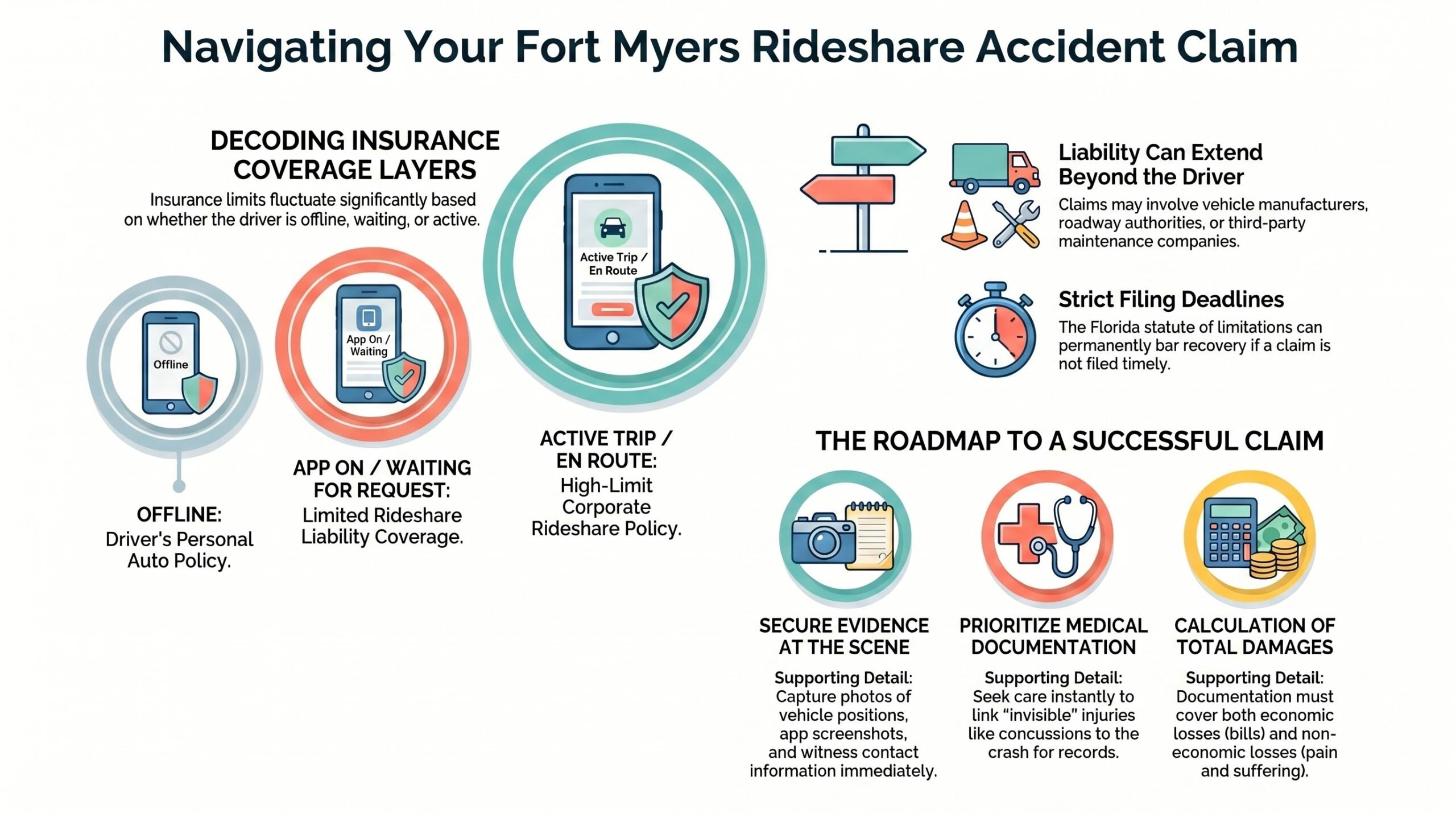
- Liability and insurance coverage depend on whether the rideshare driver was offline, waiting for a ride, or transporting a passenger.
- A lawyer gathers medical records, income loss proof, and expense documentation to calculate damages and support a strong claim.
- Attorneys handle insurer communications, settlement negotiations, coverage disputes, and deadlines to protect you from low offers or harmful statements.
- After a rideshare crash, seek medical care, report the accident promptly, save app screenshots, photos, receipts, and witness information.


How We Can Help With Your Fort Myers Rideshare Accident Injury Claim
Navigate through the aftermath of a rideshare collision with a clear legal strategy, because the steps taken early in a claim often affect both liability and recovery. A Fort Myers rideshare accident lawyer provides structured guidance, helping injured clients protect their rights while keeping attention on healing and family responsibilities.
The firm assists by gathering crash reports, witness statements, app data, and insurance information, then organizing Medical records to support the full extent of harm. It communicates with insurers, addresses disputed facts, and prevents premature statements that may weaken a claim. Counsel also evaluates lost income, future care needs, and other damages with disciplined attention to detail.
Throughout the process, the legal team explains options plainly, answers questions promptly, and offers steady direction rooted in service. By managing documentation, negotiations, and Settlement timelines, representation reduces avoidable delays and helps clients pursue fair compensation with confidence, dignity, and a practical understanding of each next step.
OUR CONSULTATIONSARE FREE
START YOUR FREE CASE REVIEW

Understanding Fort Myers Rideshare Accident Injury Cases
Complications often define Fort Myers rideshare accident injury cases, because liability, insurance coverage, and available evidence may shift depending on whether the driver was offline, waiting for a ride request, or actively transporting a passenger. In these matters, careful review of app data, trip records, witness statements, and medical documentation helps clarify responsibility and support fair recovery for injured people.
Fort Myers claims also require close attention to rideshare regulations and insurance nuances. A rideshare company may provide layered coverage, but the applicable policy limits often depend on the driver’s status at the time of impact. Injured passengers, other motorists, cyclists, and pedestrians may each face different claim paths.
Effective case evaluation thus considers contractual terms, state law, comparative fault issues, and the extent of physical, emotional, and financial harm. By understanding these factors, advocates for others can better protect vulnerable individuals and pursue accountability through a well-supported legal claim.
Common Causes of Fort Myers Rideshare Accident
Several recurring factors contribute to rideshare accidents in Fort Myers, often posing serious risks to passengers, drivers, and other road users. Common causes include distracted driving, fatigued driver errors, and speeding or other reckless conduct, all of which can reduce reaction time and impair judgment. Poor road conditions may further increase the likelihood of a collision, especially when combined with unsafe driving behavior.
Distracted Driving Risks
Because rideshare drivers rely heavily on smartphones to accept fares, follow navigation, and communicate with passengers, distracted driving presents a significant risk on Fort Myers roads. Frequent smartphone use can distract from changing traffic conditions, pedestrians, cyclists, and sudden stops. Even a brief visual distraction may prevent a driver from responding safely and promptly.
This danger often increases in busy corridors, near tourist destinations, and during airport pickups, where drivers must process multiple tasks at once. Looking at route updates, reading ride notifications, or adjusting app settings can reduce awareness and delay braking decisions. For individuals committed to protecting others, understanding these risks supports safer choices and stronger accountability. Careful attention behind the wheel remains crucial to serving passengers, neighboring motorists, and the broader Fort Myers community consistently.
Fatigued Driver Errors
Along with distraction, driver fatigue remains a frequent source of rideshare collisions in Fort Myers. Long shifts, nighttime driving, and irregular schedules can impair judgment, slow reaction time, and reduce awareness of surrounding traffic. In many cases, drowsy driving causes mistakes that resemble impairment, including missed signals, delayed braking, and drifting between lanes.
Rideshare drivers may feel pressure to continue accepting trips despite exhaustion, especially during high-demand hours. Circadian disruption can further weaken attention when a driver works late at night or very early in the morning. For passengers, pedestrians, and other motorists, these preventable errors can create serious harm. Careful investigation often considers work patterns, trip history, and driver statements to determine whether fatigue contributed to the crash and endangered the community.
Speeding And Recklessness
In many Fort Myers rideshare collisions, speeding and reckless driving play a direct role in causing preventable harm. When a rideshare driver exceeds safe speeds, reaction time decreases, stopping distance expands, and the force of impact often becomes far more severe for passengers, occupants of other vehicles, cyclists, and pedestrians.
Reckless driving may include abrupt lane changes, tailgating, running traffic signals, and aggressive attempts to complete more trips in less time. These choices can place profit and convenience above public safety, undermining the duty every driver owes the community.
Florida law imposes speeding penalties and other consequences intended to discourage dangerous conduct, yet violations still occur. When such behavior causes a crash, injured individuals often need clear legal guidance to pursue accountability, financial recovery, and protection for the people they serve.
Poor Road Conditions
Poor road conditions also contribute to many Fort Myers rideshare accidents, even when driver negligence remains part of the overall picture. Uneven pavement, faded lane markings, obstructed signs, and inadequate lighting can reduce reaction time and increase the likelihood of preventable harm. During heavy storms, poor drainage may leave standing water across travel lanes, increasing the likelihood of hydroplaning and sudden loss of control for rideshare vehicles and surrounding traffic.
Pothole hazards present another serious concern, especially on busy streets where frequent stops, turns, and passenger pickups occur. A rideshare driver who strikes a deep pothole may swerve unexpectedly, damage the vehicle, or lose control in seconds. When unsafe road maintenance contributes to injuries, careful investigation helps identify responsible parties and supports efforts to protect passengers, drivers, and the broader community.


Legal Rights of Fort Myers Rideshare Accident Injury Victims
Accountability becomes central when a Fort Myers rideshare accident causes injury, because victims generally have the right to pursue compensation from every party whose negligence contributed to the crash. These legal rights often include claims for medical expenses, lost income, pain and suffering, and other forms of injury compensation under Florida law.
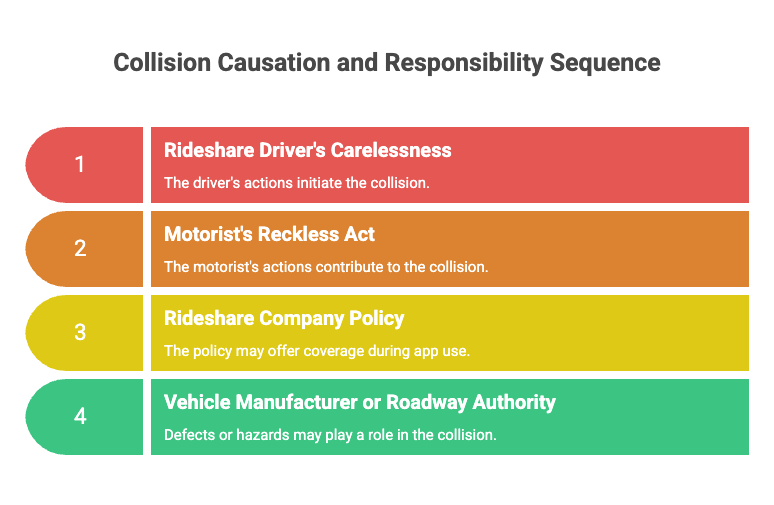
To picture those rights clearly, many cases involve:
- The rideshare driver, whose careless driving may have caused direct harm.
- Another motorist, whose reckless act may have set the collision in motion.
- A rideshare company policy, which may provide coverage during active app use.
- A vehicle manufacturer or roadway authority, when defects or hazards played a role.
Victims also benefit communities by asserting lawful claims, because accountability can encourage safer conduct and stronger public responsibility. However, the statute of limitations can restrict how long a claim may remain viable, making timely legal evaluation important for preserving rights and pursuing full recovery.
Steps to Take After a Fort Myers Rideshare Accident Injury
After a Fort Myers rideshare accident injury, the first priority is to ensure immediate safety by moving to a secure location and contacting emergency assistance when necessary. It is also important to gather essential evidence, including photographs, witness information, and details from the rideshare driver and other involved parties. Prompt medical care should follow, as timely evaluation supports both physical recovery and the documentation often needed in an injury claim.
Ensure Immediate Safety
In the moments immediately following a Fort Myers rideshare accident, immediate safety should remain the first priority for everyone involved. Passengers, drivers, and bystanders should assess hazards calmly, including traffic, fire, leaking fluids, or unstable vehicle positions, before making further decisions.
If conditions permit, individuals should follow basic evacuation procedures and move to a safer location away from active lanes. When someone cannot exit safely, remaining seatbelted until help arrives may be wiser. Emergency signaling, such as hazard lights, reflective markers, or calling 911, helps protect injured people and alerts approaching motorists.
Those present should check for urgent medical needs, offer reasonable assistance within their abilities, and avoid actions that could worsen injuries. A careful focus on safety creates a more secure environment for everyone affected and for first responders arriving on scene.
Gather Crucial Evidence
Once immediate dangers are addressed and medical needs are attended to, the next priority is to preserve evidence that may clarify how the Fort Myers rideshare accident occurred and who may bear legal responsibility. Photographs of vehicle positions, road markings, damage, traffic signals, weather conditions, and visible debris can provide useful context.
Screenshots of the rideshare app, trip receipts, driver details, and time stamps may also assist with metadata preservation. If bystanders observed the collision, obtaining contact information and brief witness statements can help protect an accurate account before memories fade. Notes regarding conversations with drivers, passengers, or responding officers may further support later review. Personal belongings damaged in the crash should be retained when possible. Careful documentation serves not only personal interests, but also the broader goal of promoting accountability and community safety.
Seek Prompt Medical Care
Beyond collecting evidence, prompt medical evaluation remains critical, as some injuries do not present with immediate symptoms despite significant underlying harm. Following a Fort Myers rideshare collision, Immediate assessment can identify internal injuries, concussions, soft tissue trauma, and other conditions that may worsen without timely treatment. Medical records also create a clear connection between the accident and the harm suffered.
Those who prioritize the well-being of passengers, drivers, and families should recognize that prompt treatment supports recovery and protects future claims. Even when pain appears minor, a physician can recommend testing, document symptoms, and begin an appropriate plan of care. Follow-up care is equally important because consistent treatment underscores the seriousness of the injury and helps ensure that no complications are overlooked during recovery.
How a Fort Myers Rideshare Accident Injury Lawyer Can Help You
Handling the aftermath of a rideshare collision often requires more than basic insurance guidance, particularly when liability is disputed, or multiple policies may apply. A Fort Myers rideshare accident injury lawyer helps injured people protect their ability to recover fair compensation while preserving energy for family, work, and community responsibilities.
A Fort Myers rideshare accident injury lawyer helps protect compensation rights when fault and insurance coverage are disputed.
- A lawyer investigates the scene, driver status, app activity, and witness accounts, creating a clear picture of fault.
- Counsel applies Legal strategies to rideshare insurance layers, policy exclusions, and third-party involvement.
- Through careful documentation, medical records, and evidence of income, the attorney supports Damage mitigation and strengthens the claim’s value.
- The lawyer handles insurer communications and settlement demands, allowing the injured person to focus on practical service to others.
When necessary, counsel prepares litigation, consults experts, and challenges attempts to minimize losses. This guidance promotes order, protects rights, and supports accountable resolutions for those harmed in Fort Myers rideshare crashes.
Long-Term Effects of Fort Myers Rideshare Accident Injuries
Fort Myers rideshare accident injuries may create long-term consequences that extend well beyond the initial recovery period. Many individuals face chronic pain that disrupts daily functioning, while emotional trauma can affect relationships, work performance, and overall stability. In many cases, these lasting physical and psychological effects are compounded by ongoing financial strain from medical care, lost income, and future treatment needs.
Chronic Pain Challenges
Following a rideshare collision, chronic pain can persist long after visible injuries have mended, disrupting a person’s ability to work, sleep, and manage ordinary daily tasks. Lasting discomfort may affect the neck, back, shoulders, or joints, and it can limit mobility, concentration, and endurance.
For many injured individuals, ongoing symptoms require consistent medical evaluation, rehabilitation, and thoughtful pain management. Some also experience chronic fatigue, which can reduce productivity and make routine responsibilities harder to complete. When pain remains unresolved, a person may need workplace accommodations, household assistance, or continued support from caregivers and community members.
Careful documentation of treatment, restrictions, and physical limitations often becomes crucial when pursuing compensation. A thorough legal review can help demonstrate how persistent pain alters long-term functioning, financial stability, and the ability to continue serving others.
Emotional Trauma Impact
Often, the emotional effects of a rideshare accident continue long after physical injuries begin to recover, affecting mental health, personal relationships, and overall daily functioning. Survivors may experience anxiety, depression, sleep disruption, and post-traumatic stress, especially when traveling or revisiting the crash location.
These symptoms can limit concentration, reduce confidence, and interfere with the ability to care for family, assist others, or participate in community life. Relationship strain may develop as irritability, withdrawal, or fear alters communication and trust within households.
Children and spouses are often affected as well, observing behavioral changes they may not understand. In many cases, emotional trauma requires consistent counseling, compassionate support, and careful documentation. Recognizing these lasting effects is crucial when evaluating the full impact of an injury from a Fort Myers rideshare accident.
Lasting Financial Strain
Uncertainty can persist long after a rideshare accident, as injury-related costs and disrupted income continue to place pressure on a household’s financial stability. Medical treatment, rehabilitation, transportation needs, and reduced work capacity may steadily erode Emergency savings, leaving families less prepared to meet ordinary obligations or respond to new hardships.
In many cases, the financial consequences extend beyond immediate bills. Ongoing care, lost earning potential, and debt accumulation can affect housing, education plans, and the ability to support others in the community. Financial counseling may help injured individuals evaluate expenses, manage obligations, and identify practical recovery strategies.
A careful legal review can also clarify whether compensation may address future losses, not only present costs. This broader perspective supports informed decisions and helps protect long-term financial security for those facing extended recovery.
Proving Liability in Fort Myers Rideshare Accident Injury Cases
In Fort Myers rideshare accident injury cases, proving liability requires a careful examination of who caused the crash, what role the rideshare driver was serving at the time, and whether another party contributed to the harm. This process often begins with police reports, witness accounts, digital trip records, and photographs from the scene.
Attorneys may also review Driver surveillance data, phone activity, vehicle damage patterns, and roadway conditions to determine whether negligence occurred. If the rideshare driver was transporting a passenger, heading to a pickup, or driving for personal reasons, that status may affect which party bears responsibility. Liability can also extend beyond the driver. Another motorist, a vehicle manufacturer, or a maintenance company may share fault.
In some cases, Rental liability becomes relevant when the vehicle was leased or supplied through a third party. A careful investigation helps injured individuals pursue accountability, protect community safety, and support the fair resolution of their legal claims.
Dealing With Insurance Companies After a Fort Myers Rideshare Accident Injury
After liability is identified, the insurance process usually becomes the next major challenge in a Fort Myers rideshare accident injury claim. Multiple policies may apply, including the rideshare company’s coverage, the driver’s personal policy, and another motorist’s insurer. Determining which carrier is responsible often requires careful review of app status, coverage exclusions, and policy limits.
Insurance representatives may request recorded statements, medical authorizations, or quick settlements that do not reflect the full extent of harm. A disciplined approach helps protect the injured person’s interests and preserves resources needed for recovery and continued service to family and community. Effective claim negotiation often depends on organized records, consistent medical documentation, and clear communication regarding losses.
Legal counsel can help evaluate settlement offers, identify undervaluation tactics, and address disputes over coverage. With informed guidance, injured individuals are better positioned to respond to insurers fairly, while keeping the focus on restoration, accountability, and long-term stability.
What to Expect During a Fort Myers Rideshare Accident Injury Claim Process
A Fort Myers rideshare accident injury claim typically begins with prompt reporting, medical evaluation, and the submission of basic claim information to the appropriate insurer. The process then turns to determining which insurance coverage applies, while evidence and documentation are gathered to support liability, damages, and the extent of the injuries. From there, the claim may proceed through negotiations toward a settlement or, when necessary, continue to further legal action and case resolution.
Initial Claim Steps
At the outset of a Fort Myers rideshare accident injury claim, the process typically begins with a careful review of the collision, the parties involved, and the rideshare driver’s status at the time of the crash. Initial reporting is often completed promptly so that facts are preserved, and public safety concerns are addressed with care.
From there, supporting materials are gathered, including photographs, witness information, medical records, and any available trip data. A formal notice of the claim may then be prepared, along with requests for relevant documentation. Claim timelines matter at this stage, because missed deadlines can affect the ability to pursue fair recovery. Throughout these early steps, an organized approach helps protect the injured person’s interests, supports accurate fact development, and promotes a responsible path toward accountability and meaningful assistance.
Insurance Coverage Determination
In the next phase of a Fort Myers rideshare accident injury claim, insurance coverage determination usually becomes a central issue, because liability may involve several policies rather than a single source of recovery. Insurers often examine whether the driver was offline, waiting for a ride request, or transporting a passenger, since each period may trigger different limits and obligations.
This stage commonly requires review of the rideshare company’s coverage, the driver’s personal auto policy, and any uninsured or underinsured motorist protections. Questions may arise regarding policy exclusions, commercial use restrictions, and coverage gaps, leaving injured people uncertain about available benefits. A careful legal assessment helps identify which insurer should respond first and whether multiple carriers share responsibility. That clarity can support timely assistance, fair treatment, and responsible resolution for all affected parties.
Evidence And Documentation
Thorough record-building often shapes the strength of a Fort Myers rideshare accident injury claim, because insurers and opposing parties typically rely on documentation to evaluate fault, damages, and coverage obligations. Helpful evidence may include crash reports, medical records, photographs of injuries and vehicle damage, rideshare app data, and communications with drivers or insurers.
Prompt preservation of video footage can be important, especially when nearby businesses, traffic cameras, or dashboard systems captured the collision. Witness statements may clarify how the crash occurred and support those harmed while memories remain fresh.
Organized records of treatment, missed work, transportation costs, and daily limitations also help demonstrate the claim’s full impact. Careful documentation allows those assisting injured people to present accurate information, protect important details, and reduce disputes throughout the claims process.
Settlement And Case Resolution
As a claim progresses, settlement discussions often begin once liability and damages can be evaluated with reasonable confidence. Attorneys typically review medical records, income losses, future care needs, and available insurance coverage before presenting a demand. This stage often reflects a practical effort to secure fair compensation while reducing further strain on injured people and their families.
If negotiations stall, mediation may be recommended. The benefits of mediation can include lower costs, faster resolution, and an opportunity for all parties to be heard in a structured setting. When agreement is reached, terms may address medical liens, release language, and payment timing. In some cases, structured settlements are considered, especially when long-term care or financial stability is a priority. If no fair resolution emerges, the claim may proceed toward trial preparation and courtroom review.
Compensation for Fort Myers Rideshare Accident Injury Damages
After a Fort Myers rideshare accident, injured passengers, drivers, and others may be entitled to compensation for a range of losses caused by the crash. Available recovery may include medical care, rehabilitation, medication costs, lost income, diminished earning ability, property repair, and rental reimbursement when a damaged vehicle cannot be used. In serious cases involving reckless misconduct, courts may also consider punitive damages under Florida law.
Compensation often depends on insurance coverage, fault, the rideshare driver’s app status, and the severity of the injuries. A careful claim can help families secure resources needed to support treatment, maintain stability, and continue caring for others during recovery. Documentation such as crash reports, medical records, photographs, receipts, and witness statements can strengthen the demand for payment.
Legal counsel may evaluate all liable parties, negotiate with insurers, and pursue full compensation through settlement or, when necessary, litigation. Prompt action also helps preserve evidence and protect important filing deadlines under applicable law.
Economic vs Non-Economic Damages in Fort Myers Rideshare Accident Cases
In Fort Myers rideshare accident cases, damages generally fall into two categories: economic losses, such as medical expenses, lost wages, and rehabilitation costs, and non-economic losses, including pain and suffering, emotional distress, and loss of enjoyment of life. The distinction matters because economic damages are often supported by bills, records, and income documentation, while non-economic damages require a careful assessment of how the injuries have affected daily functioning and overall well-being. Establishing the value of either type of damage depends on clear evidence, credible documentation, and a thorough presentation of the accident’s financial and personal impact.
Economic Damage Examples
Clarity is essential when distinguishing economic damages in a Fort Myers rideshare accident case, because these losses are measurable and supported by objective evidence. Common examples include emergency treatment costs, hospital bills, rehabilitation expenses, prescription costs, and projected future medical care tied directly to the collision.
Additional economic damages may include lost wages, reduced earning capacity, and property damage to a vehicle, phone, or other personal items affected in the crash. Transportation costs for medical appointments, household service expenses during recovery, and out-of-pocket payments for assistive devices may also qualify. These figures are often established through invoices, repair estimates, payroll records, tax documents, and medical recommendations.
By carefully identifying each documented loss, injured individuals and those assisting them can better pursue financial recovery that reflects the actual economic impact of a rideshare accident.
Non-Economic Losses
Perspective matters when evaluating non-economic losses in a Fort Myers rideshare accident case, because these damages address harm that does not appear on a bill or receipt. They concern the human consequences of an injury, including physical pain, emotional suffering, inconvenience, and diminished enjoyment of ordinary activities.
In these cases, non-economic losses often reflect how injuries alter relationships, independence, sleep, mobility, and overall quality of life. A person who once cared for family, volunteered, or supported neighbors may struggle to continue those efforts after a collision. Pain valuation consequently considers more than discomfort alone, recognizing the broader impact on daily living and personal dignity.
Within Fort Myers rideshare claims, these damages acknowledge the less visible burdens an injured person may carry while trying to recover and continue serving others faithfully.
Proving Damage Value
Evaluating those human losses is only part of a Fort Myers rideshare accident claim, because every category of damage must also be supported by persuasive proof. Economic damages often rely on records such as medical bills, wage statements, treatment plans, and repair estimates. When future losses are disputed, attorneys may use forensic valuation and expert economists to project diminished earning capacity, long-term care costs, and other measurable harms.
Non-economic damages require a different form of proof, yet they are no less important to a service-minded recovery effort. Testimony from physicians, counselors, family members, and the injured person can help show pain, emotional distress, disability, and loss of enjoyment of life. Strong documentation, consistent treatment, and credible witnesses often determine whether insurers or juries assign a fair value to these losses.
When a Fort Myers Rideshare Accident Injury Case Goes to Trial vs Settlement
Determining whether a Fort Myers rideshare accident injury case proceeds to trial or resolves through settlement depends on several factors, including the strength of the evidence, the extent of the injuries, the amount of available insurance coverage, and the willingness of the parties to negotiate in good faith.
Settlement is often favored when liability is reasonably clear, and the injured person’s losses can be documented through medical records, wage information, and expert opinions. Strong evidence can improve Settlement leverage, encouraging insurers to offer fair compensation without prolonged litigation.
Trial may become necessary when fault is disputed, damages are minimized, or policy limits create conflict among multiple claimants. In those situations, careful preparation is crucial to protect the injured party and those who depend on that recovery.
A courtroom outcome also involves Jury dynamics, which can introduce uncertainty even in well-supported claims. An attorney evaluates these risks, compares likely verdict ranges to settlement offers, and advises on the option that best serves accountability, stability, and future care needs.
The Statute of Limitations for Fort Myers Rideshare Accident Injury Cases
In Florida, the time limit for filing a rideshare accident injury claim can strongly affect whether an injured person retains the right to pursue compensation at all. This legal deadline, commonly called the statute of limitations, applies even when injuries are serious, and losses continue after the collision.
For Fort Myers rideshare accident cases, filing deadlines may vary depending on the facts, the parties involved, and the type of claim asserted. Certain nuances of the statute can arise if the case involves wrongful death, a claim against a government entity, or questions about when an injury was reasonably discovered. Missing the applicable deadline can prevent a court from hearing the case, regardless of its underlying worth.
Because rideshare collisions often involve multiple insurance policies and overlapping responsibilities, careful attention to timing helps protect the interests of injured people and the families who depend on them. A prompt, informed review of dates, records, and claim categories remains vital.
When to Contact a Fort Myers Rideshare Accident Injury Lawyer
Seek legal guidance as soon as possible after a Fort Myers rideshare accident, particularly when injuries require medical treatment, liability is unclear, or multiple insurers become involved. Early contact helps preserve records, identify responsible parties, and support decisions that protect passengers, drivers, pedestrians, and families affected by the collision.
Prompt consultation is also appropriate when police reports contain errors, witnesses are difficult to locate, or the rideshare company requests statements. A lawyer can help an injured person follow a careful post-accident checklist, including document collection, medical follow-up, and communication practices that reduce confusion. Attention to insurance notification timing is equally important, because delayed reporting may complicate claims with personal auto carriers, rideshare insurers, or other involved parties.
Seeking guidance soon after the crash allows those trying to care for others to proceed responsibly, maintain organized information, and avoid preventable mistakes during a stressful period. This approach supports accountability, stability, and informed next steps for everyone involved.
Why You Need an Experienced Fort Myers Rideshare Accident Injury Lawyer
Because rideshare accident claims often involve layered insurance policies, disputed fault, and company-specific reporting procedures, an experienced Fort Myers rideshare accident injury lawyer provides guidance that is difficult to replace. Such counsel helps injured people understand deadlines, preserve evidence, and avoid statements that may weaken a claim. It also allows families to focus on recovery and supporting others in their care.
A knowledgeable attorney can identify which Rideshare policy applies at each stage of the trip, whether the driver was waiting for a request, en route, or transporting a passenger. That analysis matters because coverage limits may change markedly. Counsel also protects Passenger rights by addressing denied claims, undervalued settlements, and attempts to unfairly shift blame.
When medical costs, lost income, and long-term recovery needs are carefully documented, the claim is presented with greater credibility. Experienced legal representation, therefore, ensures accountability and fair compensation after a serious rideshare collision in Fort Myers.
How to Choose the Right Fort Myers Rideshare Accident Injury Lawyer for Your Case
When evaluating legal representation after a rideshare collision, the focus should remain on attorneys with direct experience handling Uber and Lyft accident claims in Fort Myers and throughout Florida. A qualified lawyer should understand insurance layers, app-status issues, and the evidence needed to protect injured clients and the broader community they serve.
Careful selection also involves reviewing professional history, courtroom readiness, and communication practices. Client interviews can help reveal whether counsel listens respectfully, explains strategy clearly, and responds with consistent professionalism. Fee structures deserve close attention, especially when contingency arrangements, case costs, and settlement deductions are discussed.
It is also wise to contemplate whether the attorney has handled serious injury matters, negotiated with commercial insurers, and pursued litigation when necessary. A strong choice is one that combines legal skill, ethical standards, and a service-minded approach, so the injured person can pursue accountability, stability, and meaningful recovery after a difficult event.
About The Law Offices of Anidjar & Levine
Client-centered representation remains a defining feature of The Law Offices of Anidjar & Levine, a firm that assists injured people in Fort Myers rideshare accident matters and other complex personal injury claims throughout Florida.
The firm approaches each case with close attention to communication, responsiveness, and practical guidance, helping clients pursue accountability while they focus on recovery and family responsibilities.
Its firm history reflects steady growth built on advocacy for injured Floridians and on service that emphasizes accessibility and respect.
Attorneys and staff work to explain legal options clearly, gather supporting evidence diligently, and pursue compensation through negotiation or litigation when necessary.
This service-oriented approach may appeal to individuals who value helping others, because it prioritizes dignity, stability, and informed decision-making during difficult periods.
Client testimonials often highlight prompt updates, professional support, and compassionate treatment, suggesting a practice that seeks not only legal results but also a dependable experience for those navigating the aftermath of a serious rideshare collision.
Frequently Asked Questions
Can I Sue if the Rideshare Driver Was Off-Duty?
Yes, a person may sue if the rideshare driver was off duty, though off-duty liability often depends on facts. Courts examine employer vicarious liability, personal insurance implications, and evidence of driver intent to determine whether the conduct was purely personal or still connected to rideshare activity. A careful review helps injured parties pursue accountability, protect community safety, and identify every available source of compensation for those harmed and affected.
Are Uber and Lyft Background Checks Enough to Prevent Accidents?
No, Uber and Lyft background checks alone are not enough to prevent accidents. Driver screenings can identify certain risks, yet they cannot measure every driving habit, distraction, or lapse in judgment. Effective prevention also depends on strong safety protocols, vehicle maintenance, training, and active monitoring. Those who seek to protect others should recognize that background checks are only one safeguard, not a complete system for ensuring passenger and public safety.
Can Tourists File Claims for Fort Myers Rideshare Accidents?
Yes, tourists can file claims for Fort Myers rideshare accidents, provided they meet Florida’s legal requirements and deadlines. Their status as visitors does not bar recovery, though issues of tourist jurisdiction may affect where a claim is filed. Insurance nuances, including rideshare coverage layers and personal injury protections, often influence compensation. Careful documentation, prompt reporting, and informed legal guidance help injured visitors pursue fair outcomes while supporting accountability and public safety.
What Happens if a Rideshare Accident Involves Multiple Passengers?
When a rideshare accident involves multiple passengers, each injured person may pursue a separate claim based on individual losses, while passenger coordination often helps organize medical records, statements, and timelines. Insurance allocation becomes crucial when available coverage must be divided among several claimants, depending on fault and policy limits. A careful review of liability, injuries, and available insurance generally determines how compensation is pursued and distributed fairly.
Can Dashcam Footage From Another Vehicle Support My Claim?
Yes, dashcam evidence from another vehicle can support a claim by showing how the collision occurred, who may have acted negligently, and whether traffic conditions affected the event. Third-party recordings may also confirm timing, lane position, speed, and driver behavior. Such material often strengthens efforts to serve injured passengers and others fairly. Its value depends on authenticity, clarity, preservation, and alignment with other available evidence.
—————————
Fort Myers rideshare accident claims often involve multiple insurance policies, disputed liability, and significant financial losses.
A qualified attorney can assess the facts, protect the injured person’s rights, and pursue fair compensation for medical expenses, lost income, and other damages.
Fort Myers Car Accident Lawyer services from Law Offices of Anidjar and Levine provide focused legal guidance for those facing these challenges.
With timely action and experienced representation, injured victims may improve their chances of securing a just and efficient resolution.