Law Offices of Anidjar and Levine assists victims with preserving evidence, proving fault, and pursuing compensation after broadside crashes caused by red-light violations, failure to yield, distraction, or unsafe turns.
Counsel can gather police reports, witness statements, photographs, medical records, and repair estimates to support claims for medical expenses, lost income, and long-term care.
Legal guidance also helps manage insurers’ tactics, deadlines, and comparative-fault issues.
For more information, speak with a Miami Car Accident Attorney. The sections below explain these issues in greater detail.
Main Takeaways
- A Miami side-impact collision injury lawyer investigates fault using police reports, photos, witness statements, surveillance footage, and vehicle damage patterns.
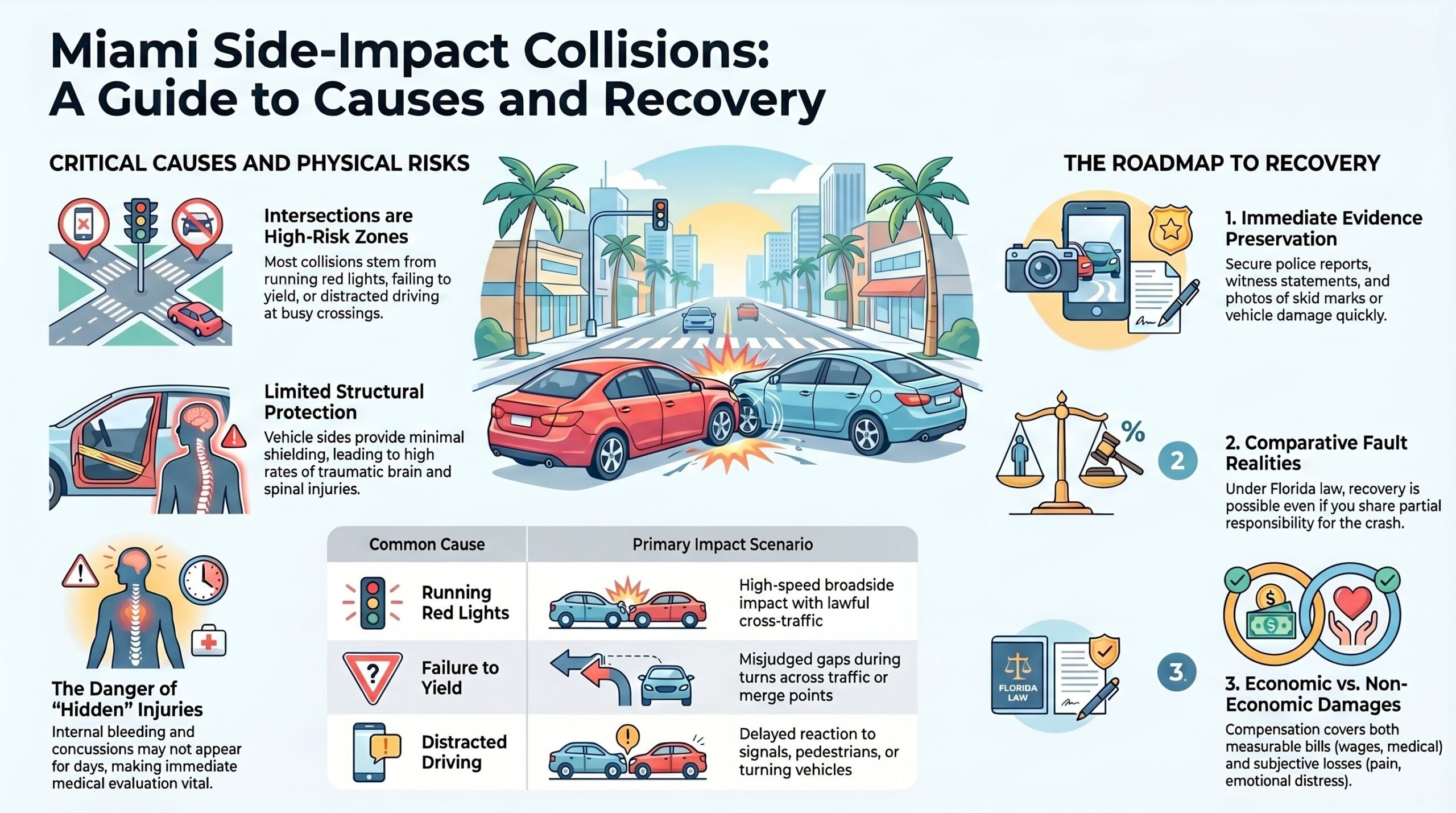
- Side-impact crashes often happen at intersections from red-light violations, failure to yield, distracted driving, speeding, or unsafe turns across traffic.
- These crashes can cause brain injuries, spinal trauma, fractures, internal injuries, and chronic pain because vehicle sides provide less protection.
- Seek immediate medical evaluation after a broadside crash, since concussions, internal bleeding, and soft-tissue injuries may appear hours or days later.
- Strong claims rely on preserved evidence, organized medical records, repair estimates, towing receipts, and documentation of long-term physical and emotional limitations.


How We Can Help With Your Miami Side-Impact Collision Injury Claim
From the outset, legal counsel can provide structured guidance for a Miami side-impact collision injury claim by evaluating the facts of the crash, identifying potentially liable parties, and preserving evidence that may prove fault and damages.
Counsel may coordinate record collection, communicate with insurers, and organize documentation so injured people can focus on recovery and supporting their families. A careful legal team can also help secure witness statements, photographs, electronic data, and repair information relevant to vehicle safety concerns. When immediate needs arise, they may guide clients toward appropriate medical documentation and other forms of post-impact support that strengthen a clear presentation of losses.
Throughout the process, attorneys can prepare demand materials, monitor deadlines, and address administrative obstacles with professionalism and care. Their service often reflects a broader commitment to helping community members move forward responsibly, with practical assistance that protects rights, promotes accountability, and supports informed decisions after serious collisions, during a difficult period for all involved.
OUR CONSULTATIONSARE FREE
START YOUR FREE CASE REVIEW

Understanding Miami Side-Impact Collision Injury Cases
In the context of Miami traffic litigation, side-impact collision injury cases often involve complex questions of fault, injury causation, and damages because these crashes frequently occur at intersections, during lane changes, or when one driver fails to yield. Courts, insurers, and counsel typically examine police reports, witness statements, medical records, and electronic data to evaluate what happened and how the impact affected occupants.
A careful review often includes vehicle dynamics and injury biomechanics, which help explain force transfer, occupant movement, and the relationship between impact severity and physical harm. These cases may involve traumatic brain injuries, spinal trauma, fractures, internal injuries, and lasting pain that disrupt work, caregiving, and community service.
Legal analysis also considers comparative negligence, insurance coverage, treatment history, future medical needs, and diminished earning capacity. For those seeking to support injured people and their families, understanding these elements promotes informed decisions, responsible advocacy, and fair recovery. It also encourages timely documentation and compassionate, coordinated assistance.
Common Causes of Miami Side-Impact Collision
Several recurring factors contribute to Miami side-impact collisions, particularly at busy intersections where driver judgment and timing are pivotal. Common causes include running red lights, failing to yield the right of way, distracted driving, and speeding through intersections, each of which can place other motorists in immediate danger. Identifying these patterns helps clarify how these crashes occur and why liability often becomes a central issue in injury claims.
Running Red Lights
Disregarding a red light is one of the most frequent causes of side-impact collisions in Miami because it places vehicles directly in the path of lawful cross traffic, leaving little time to react. These crashes often occur at busy intersections where speed, distraction, or impatience combine to create devastating consequences for drivers, passengers, pedestrians, and the broader community.
From a public safety perspective, prevention depends on consistent red light enforcement and thoughtful intersection engineering. Clear signal timing, visible signage, protected turn phases, and well-marked lanes can reduce conflict points and support safer travel for everyone.
When a driver enters an intersection against a signal, the resulting impact commonly strikes the side of another vehicle, where occupants have less structural protection and often suffer serious injuries requiring extensive medical care.
Failure To Yield
Failure to yield is another leading cause of side-impact collisions in Miami, particularly at intersections, merge points, and driveways where drivers must wait for a safe opening before proceeding. These crashes often occur when a motorist misjudges speed, turns across traffic, or enters a lane without honoring another vehicle’s lawful path. In many cases, careful driving habits and stronger right-of-way education could reduce preventable harm to passengers, pedestrians, and neighboring families.
Clear intersection signage also plays an important role by guiding motorists through intricate traffic patterns and reinforcing safe decision-making. When drivers fail to respect yielding rules, the resulting broadside impact can be severe because vehicle sides offer less protection. Accountability, roadway awareness, and consistent compliance remain vital to protecting the public and promoting safer travel.
Distracted Driving
Increasingly, distracted driving contributes to side-impact collisions in Miami by diverting a driver’s attention at pivotal moments, especially near intersections, traffic signals, and turning lanes. Even a brief lapse can prevent a motorist from noticing cross traffic, pedestrians, or a vehicle lawfully entering the roadway. Common examples include phone distraction, adjusting navigation systems, eating, or reaching for objects inside the car.
From a public safety perspective, distracted driving endangers everyone who shares the road and undermines the duty to exercise reasonable care. Visual impairment caused by looking away from mirrors, signals, and surrounding vehicles reduces the ability to judge gaps and react appropriately. Communities are better served when drivers remain attentive, keep both eyes forward, and treat each intersection as a place requiring patience, awareness, and responsible decision-making.
Speeding Through Intersections
Why do so many side-impact collisions occur at Miami intersections when a few seconds of caution could prevent them? Speeding often transforms ordinary crossings into high-speed intersections, where drivers have less time to perceive signals, yield appropriately, or respond to sudden movement. As velocity rises, stopping distance expands, impact forces intensify, and the margin for safe decision-making narrows markedly.
In many cases, misjudgment of timing plays a central role. A driver may assume there is enough time to beat a light, clear an intersection, or turn across traffic, only to meet another vehicle entering lawfully. Such choices place passengers, pedestrians, and other motorists at risk. Communities committed to protecting others benefit when drivers slow down, respect traffic controls, and recognize that patience at intersections is a practical act of public care.


Legal Rights of Miami Side-Impact Collision Injury Victims
Accountability often begins with a clear understanding of the legal protections available after a side-impact collision. Miami victims generally retain the right to pursue Victim compensation for medical costs, lost income, pain, and diminished earning capacity when another party’s negligence caused harm.
Florida law also imposes Procedural deadlines, which can affect whether a claim remains legally enforceable.
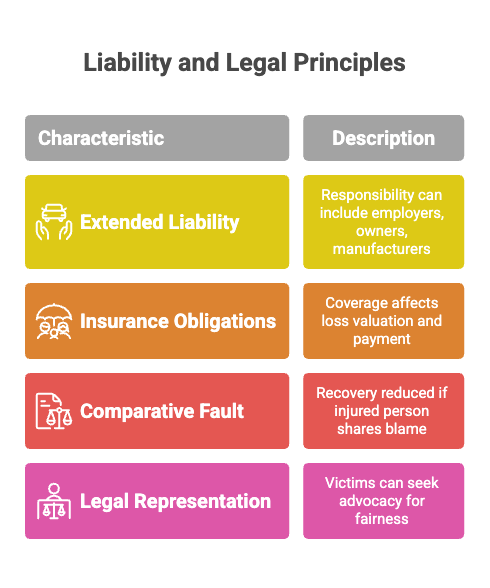
- Liability may extend beyond a single driver to include employers, vehicle owners, or manufacturers when the facts support a broader responsibility.
- Insurance obligations matter because available coverage can influence how losses are valued and paid.
- Comparative fault principles apply, meaning recovery may be reduced if an injured person shares responsibility, but not necessarily eliminated.
- Access to legal representation is protected, allowing victims to seek advocacy that promotes fairness, accountability, and service to affected families.
These rights exist to preserve dignity, encourage lawful conduct, and support community well-being through responsible civil justice systems and public trust.
Steps to Take After a Miami Side-Impact Collision Injury
After a Miami side-impact collision, prompt medical evaluation is vital to identify injuries and establish an early treatment record. It is also important to report the accident and preserve available evidence, including photographs, witness information, and official documentation. Once these immediate steps are addressed, contacting a Miami lawyer can help protect legal interests and guide the next course of action.
Seek Immediate Medical Care
In the hours following a Miami side-impact collision, obtaining prompt medical care should be treated as a priority, even when injuries do not appear severe at first. Side-impact crashes often produce hidden harm, including concussions, internal bleeding, neck strain, and soft tissue trauma that may deteriorate without notice.
An urgent assessment can help identify conditions requiring immediate treatment and can reduce the risk of complications. Emergency personnel, urgent care providers, or physicians may evaluate pain, mobility, neurological changes, and other symptoms that emerge over time. Consistent follow-up monitoring is also important because some injuries develop gradually in the days after impact.
By seeking timely care, an injured person protects health, supports recuperation, and remains better able to continue serving family, work responsibilities, and the broader community with strength and stability.
Report And Document Evidence
Preserve as much evidence as possible by reporting the collision promptly and creating a clear record of what occurred. A police report can provide an objective summary, identify involved parties, and note roadway conditions, vehicle positions, and visible damage. This early documentation may help protect everyone affected and support an accurate understanding of events.
If it is safe to do so, a careful photographic inventory should capture vehicle damage, skid marks, debris, traffic controls, weather conditions, and any apparent injuries. Names and contact details for witnesses should be collected respectfully, and witness statements should be requested while memories remain fresh.
Drivers should also save repair estimates, towing receipts, medical discharge papers, and correspondence from insurers. Organized records can reduce confusion, preserve important facts, and promote a fair, service-minded response to those harmed.
Contact A Miami Lawyer
Seeking legal guidance promptly can help an injured person understand available options, protect important deadlines, and avoid missteps when speaking with insurers or other parties. After a Miami side-impact collision, contacting a lawyer allows evidence to be reviewed, liability to be assessed, and communication to be handled with care and professionalism.
A Miami lawyer can explain how state law may affect compensation for medical bills, lost income, and future needs. Many firms offer a Free consultation, which gives injured people and concerned families an opportunity to ask questions and evaluate next steps. Counsel can also clarify Fee structures, including whether payment depends on a recovery. Early legal support often strengthens a claim, reduces procedural errors, and helps injured individuals focus on recovery while pursuing accountability and fair financial relief for all parties involved.
How a Miami Side-Impact Collision Injury Lawyer Can Help You
Navigating the aftermath of a side-impact collision often requires more than basic insurance communication, particularly when injuries, liability disputes, and mounting expenses begin to complicate recovery.
A Miami side-impact collision injury lawyer provides structured guidance that protects a victim’s rights while easing pressures affecting post-impact recovery, family stability, and financial decision-making.
- A lawyer investigates the crash, preserves evidence, and identifies every liable party.
- A lawyer handles insurer negotiations, preventing rushed statements or undervalued settlement offers.
- A lawyer carefully calculates losses, including medical costs, lost income, and necessary support services.
- A lawyer prepares a case for litigation when a fair resolution is not offered.
This assistance often benefits those focused on serving loved ones and restoring order after disruption. By handling legal demands efficiently, counsel allows injured individuals to focus their energy on recovery and community responsibilities. Client testimonials frequently reflect appreciation for clear communication, dependable advocacy, and a disciplined commitment to just compensation.
Long-Term Effects of Miami Side-Impact Collision Injuries
Miami side-impact collision injuries may produce lasting complications that extend well beyond the initial recovery period. Many individuals face chronic pain challenges, along with cognitive and emotional effects that can alter concentration, mood, and overall quality of life. These injuries may also cause mobility restrictions and daily limitations, affecting a person’s independence, work capacity, and routine activities.
Chronic Pain Challenges
Often, chronic pain becomes one of the most disruptive long-term consequences of a side-impact collision, even after fractures, soft tissue injuries, or spinal trauma appear to have stabilized. Survivors may face persistent discomfort that limits mobility, reduces stamina, and complicates daily responsibilities.
These symptoms often create Pain cycles, where restricted movement leads to weakness, inflammation, and further pain. Sleep disruption is also common, preventing restorative rest and making physical recovery more difficult. Individuals who care for family members, support coworkers, or serve their communities may find that ongoing pain interferes with dependable participation.
Effective management frequently requires consistent medical follow-up, physical rehabilitation, and practical adjustments at home or work. When pain remains unresolved, its long-term burden can affect independence, productivity, and overall quality of life for many years afterward.
Cognitive And Emotional Impact
Beyond persistent physical pain, many side-impact collision survivors experience lasting cognitive and emotional effects that can be just as disruptive as visible injuries. They may struggle with concentration, decision-making, and memory impairment, especially after traumatic brain injuries or significant psychological shock. These challenges can affect communication, judgment, and the ability to manage responsibilities with confidence and consistency.
Emotional harm may also emerge gradually, with symptoms such as anxiety, irritability, depression, sleep disruption, and post-traumatic stress. Survivors often require patient support, careful evaluation, and ongoing treatment to restore stability and well-being. Families, caregivers, and community members who serve others should recognize these injuries as serious and deserving of compassion. Early legal and medical guidance can help protect access to resources needed for meaningful recovery and long-term support.
Mobility And Daily Limitations
In the aftermath of a side-impact collision, long-term mobility problems can markedly limit a person’s independence and ability to manage ordinary daily tasks. Persistent pain, reduced range of motion, and weakness may affect walking, bathing, cooking, and transportation, creating significant disruptions to routine for injured individuals and their families.
Some people require Mobility aids, including canes, walkers, or wheelchairs, to move safely and prevent further harm. These limitations may also interfere with employment, childcare, and participation in community service, especially when recovery remains uncertain. A careful legal review often considers how these lasting restrictions alter the quality of life and increase ongoing needs.
By recognizing the full extent of functional loss, advocates and caregivers are better positioned to support recovery, secure appropriate resources, and protect the injured person’s long-term well-being and dignity.
Proving Liability in Miami Side-Impact Collision Injury Cases
Establishing liability in a Miami side-impact collision case requires a careful review of how the crash occurred, which driver failed to use reasonable care, and whether that failure directly caused the injured person’s losses. This process often begins with police reports, photographs, vehicle damage patterns, surveillance footage, and witness statements gathered soon after the impact.
Attorneys may also rely on forensic reconstruction to identify speed, point of contact, traffic signal timing, and lane position. When questions remain disputed, expert testimony can clarify how the collision unfolded and whether a driver ignored a red light, failed to yield, or drove while distracted. Medical records help connect the violent side impact to specific injuries, while repair estimates and scene measurements support the physical evidence.
In service to injured individuals and their families, a thorough liability analysis helps present a clear account of fault, strengthens the legal claim, and promotes accountability for conduct that placed others at risk on Miami roads.
Dealing With Insurance Companies After a Miami Side-Impact Collision Injury
After a Miami side-impact collision, communication with insurance companies often becomes a vital part of the injury claim, because early statements, medical documentation, and property damage assessments can influence how fault and damages are evaluated. Insurers may request recorded statements, broad medical authorizations, or quick settlements that appear helpful but may limit fair recovery. A careful, service-minded approach emphasizes accuracy, restraint, and preservation of records.
A lawyer often helps by organizing evidence, reviewing correspondence, and preventing injured people from making statements that can be misunderstood. This guidance supports families who wish to protect resources while remaining respectful and cooperative. Through tactical negotiation, counsel can challenge low valuations, disputed treatment, or attempts to shift blame.
Just as important, trusted legal guidance can provide emotional support by reducing confusion and allowing injured individuals to focus on recovery and caring for others. Consistent documentation, polite communication, and informed advocacy usually strengthen interactions with insurers after a serious side-impact crash.
What to Expect During a Miami Side-Impact Collision Injury Claim Process
A Miami side-impact collision injury claim process generally begins with the initial filing of the claim and the collection of supporting evidence and documentation. It then moves into insurance negotiations, where liability, damages, and compensation are carefully evaluated by the parties involved. If a fair resolution is not reached, the matter may proceed to settlement discussions or litigation in court.
Initial Claim Filing
Prompt reporting of the crash to the appropriate insurer typically marks the beginning of a Miami side-impact collision injury claim. Early notice helps preserve rights, opens the claims timeline, and allows carriers to explain policy requirements, deadlines, and communication procedures in a structured manner.
During initial claim filing, the injured person or legal representative generally provides basic facts about the collision, the parties involved, and the nature of the reported harm. The insurer may request an initial affidavit or recorded statement to confirm crucial details and identify available coverage. Counsel often assists by submitting notice, clarifying responsibilities, and monitoring compliance with filing rules.
This stage commonly includes claim number assignment, acknowledgment letters, and instructions regarding the next procedural steps. A careful, service-minded approach promotes order, accountability, and fair treatment for everyone involved thereafter.
Evidence And Documentation
In the next phase, evidence and documentation assume a central role in a Miami side-impact collision injury claim, because the strength of the record often influences both liability findings and the valuation of damages. Medical records, crash reports, witness statements, repair estimates, and employment documentation help establish how the event occurred and how it affected daily responsibilities.
Photographic timeliness matters, since prompt images of vehicle damage, roadway conditions, visible injuries, and traffic controls may preserve details that later disappear. Careful organization also protects the chain of custody, especially for damaged property, electronic data, and surveillance footage. Attorneys often guide clients to maintain journals, save receipts, and attend recommended treatment so the file remains accurate and complete. Thorough documentation supports accountability, promotes informed decision-making, and helps injured individuals seek resources needed to continue serving their families and communities.
Insurance Negotiations
During insurance negotiations, claimants in Miami side-impact collision cases can expect close scrutiny of liability, medical treatment, and the extent of financial and personal loss claimed. Adjusters often review police reports, witness statements, repair estimates, and treatment records to measure consistency and evaluate damages. They may also question whether prior conditions contributed to current symptoms.
Insurers commonly employ policy tactics to limit payouts, including requests for recorded statements, narrow interpretations of coverage, and challenges to necessary care. Claimants should expect repeated document requests and careful attention to settlement deadlines.
A disciplined response, supported by organized records and clear communication, helps protect the integrity of the claim. Legal guidance often assists by identifying undervaluation, correcting incomplete assumptions, and encouraging a fair evaluation that respects the claimant’s recovery needs and community responsibilities.
Settlement Or Litigation
Once insurance negotiations clarify the insurer’s position, a Miami side-impact collision claim typically moves toward either settlement or litigation, depending on the strength of the evidence, the extent of the injuries, and the parties’ willingness to resolve the dispute.
Settlement often provides faster financial relief, reduced stress, and greater privacy for injured people and their families. Counsel may review offers, calculate future losses, and explain the benefits of Mediation, including structured dialogue, lower costs, and opportunities for respectful resolution. If the settlement remains unfair, litigation may become necessary to protect the injured person’s long-term interests and hold negligent parties accountable.
During litigation, both sides exchange evidence, take depositions, and present legal arguments. Trial timing can vary based on court schedules, motion practice, expert availability, and ongoing negotiations. Even after a lawsuit begins, many claims still resolve before trial.
Compensation for Miami Side-Impact Collision Injury Damages
Accountability often begins with a clear understanding of the damages a side-impact collision can cause and the compensation available under Florida law. In Miami, compensation may address immediate medical care, ongoing treatment, rehabilitation needs, lost income, and diminished earning capacity when injuries interfere with a person’s ability to work and support others.
A careful evaluation also considers how the crash occurred and what evidence confirms the losses. Police reports, medical records, witness statements, and photographs of Property damage can help establish the scope of harm. The use of a Seat belt may also become relevant, because insurers and opposing parties often examine whether safety measures were in place at the time of impact.
When liability is established, compensation serves a practical purpose. It can help restore stability, protect access to treatment, and reduce financial strain on families caring for an injured loved one while moving responsibly toward recovery and closure.
Economic vs Non-Economic Damages in Miami Side-Impact Collision Cases
In Miami side-impact collision cases, damages are generally divided into economic losses, such as medical expenses, lost income, and other measurable financial costs, and non-economic losses, such as pain and suffering, emotional distress, and loss of enjoyment of life. This distinction is important because each category is evaluated under different standards and supported by different forms of evidence. Establishing the value of either type of damage often requires records, expert opinions, and clear documentation linking the collision to the claimed harm.
Economic Damage Categories
Several forms of compensation may arise in a Miami side-impact collision case, and they are generally divided into economic and non-economic damages. Economic damages address measurable financial losses connected to the crash and its aftermath. These categories often include emergency care, hospitalization, surgery, medication, rehabilitation, and follow-up treatment supported by bills and records.
Additional economic losses may involve Lost wages when an injured person cannot return to work during recovery or must accept reduced duties. Future earning capacity may also be considered if long-term impairment limits employment.
Property damage commonly includes vehicle repair or replacement, towing, storage fees, and the cost of damaged personal items. In cases involving ongoing care, projected medical expenses, and necessary household assistance may also form part of a fair, service-minded recovery plan for injured individuals.
Non-Economic Loss Examples
Unlike medical bills or wage records, non-economic damages concern the human effects of a Miami side-impact collision that do not come with fixed dollar amounts. These losses reflect how an injury alters daily living, relationships, and overall well-being.
Examples include pain and suffering, emotional distress, anxiety while driving, sleep disruption, physical impairment, disfigurement, and loss of enjoyment of ordinary activities. A person may no longer participate in family routines, community service, or hobbies that once gave life meaning.
In more severe cases, spouses and close relatives may experience loss of companionship, guidance, or affection when injuries change the injured person’s abilities and presence at home. These harms matter because serving an injured individual often requires recognizing not only financial hardship but also the personal burdens borne long after the collision.
Proving Damage Value
Accuracy becomes central when assigning value to damages in a Miami side-impact collision case, because the strength of any claim depends on proof that connects the crash to specific financial and personal losses. Economic damages often require records showing medical expenses, rehabilitation costs, lost wages, diminished earning capacity, and vehicle repair or replacement figures. In intricate matters, forensic valuation may help quantify future care needs or business losses with greater reliability.
Non-economic damages demand different proof, yet equal care. Testimony from physicians, counselors, relatives, and coworkers can illustrate pain, emotional distress, disability, and reduced quality of life. Photographs, treatment timelines, and daily journals may reinforce credibility. Property claims may also involve depreciation disputes, especially when insurers challenge pre-collision value. Careful documentation supports fair compensation and responsible advocacy for injured individuals and families.
When a Miami Side-Impact Collision Injury Case Goes to Trial vs Settlement
Often, a Miami side-impact collision injury case resolves through settlement, but a trial becomes more likely when liability is disputed, injuries are severe, or the insurer refuses to offer compensation that reflects the full extent of the claimant’s losses. In these matters, Settlement dynamics often depend on medical evidence, witness credibility, and the insurer’s risk evaluation.
A careful Trial strategy becomes important when negotiations stall. Counsel may prepare to present accident reconstruction findings, treating physician testimony, and documentation showing how the collision changed the claimant’s daily life and ability to serve family, work, and community responsibilities. Settlement remains attractive because it can reduce delay, expense, and uncertainty, while also allowing injured people to focus on recovery and stability.
However, trial may better serve the interests of justice when a defendant denies fault or minimizes the harm suffered. The decision usually reflects a practical assessment of evidence, damages, and whether a fair resolution can be reached without court intervention.
The Statute of Limitations for Miami Side-Impact Collision Injury Cases
In Miami side-impact collision injury cases, the statute of limitations establishes the legal deadline for filing a lawsuit, and missing that deadline can bar recovery regardless of how serious the injuries may be. Florida law generally sets strict filing deadlines, and those limits protect courts from stale claims while encouraging prompt investigation, preservation of evidence, and fair notice to all parties involved in the administration of justice.
Certain circumstances may affect when the limitations period begins or pauses. In limited situations, discovery tolling may apply when an injury or its cause could not reasonably have been identified earlier. Other exceptions can involve minors, incapacity, or concealed wrongdoing, though courts interpret them narrowly. Because each case depends on specific facts, careful review of accident dates, medical findings, and insurer communications is crucial.
Respecting these deadlines supports accountability, helps injured people pursue lawful remedies, and promotes orderly resolution for families, providers, and the broader community after serious side-impact harm.
When to Contact a Miami Side-Impact Collision Injury Lawyer
After a side-impact collision, early contact with a Miami side-impact collision injury lawyer is often advisable when injuries require medical treatment, fault is disputed, or an insurer seeks a recorded statement or quick settlement. Immediate consultation may also be prudent when a family faces lost income, vehicle damage, or uncertainty about available insurance coverage after a serious crash.
Prompt action can support Evidence preservation, including photographs, surveillance footage, witness information, medical records, and repair estimates that may otherwise become harder to obtain. Contact may be especially appropriate if the injured person cannot work, symptoms worsen over time, or multiple parties may share responsibility.
In service-minded communities, timely legal guidance can help injured individuals protect their ability to care for dependents and meet obligations while the matter proceeds. Reaching out soon after the collision may also reduce avoidable mistakes in communication with insurers, employers, and other parties involved during a demanding recovery period.
Why You Need an Experienced Miami Side-Impact Collision Injury Lawyer
Prompt contact helps protect a claim, but experience becomes particularly important when a side-impact collision involves disputed liability, significant injuries, or several possible sources of insurance coverage. An experienced Miami side-impact collision injury lawyer can evaluate police reports, witness accounts, medical records, and vehicle damage with disciplined attention to detail.
That experience also supports a more complete claim. Counsel may identify negligent drivers, employers, vehicle owners, or other parties whose conduct contributed to the crash, helping injured people pursue accountability in a manner that serves both their recovery and the broader safety of the community. Skilled legal guidance can also anticipate insurer tactics, calculate long-term losses, and present evidence persuasively during negotiations or litigation.
Client testimonials and Case studies often reflect how experienced representation brings structure, credibility, and steadiness to difficult circumstances. In serious side-impact cases, that level of knowledge may substantially affect both the process and the outcome for injured individuals and families.
How to Choose the Right Miami Side-Impact Collision Injury Lawyer for Your Case
How should an injured person evaluate counsel when several firms appear qualified on the surface? A careful selection process begins with reviewing a lawyer’s background in side-impact collision claims, courtroom readiness, and record of negotiated settlements. Attention should also be given to communication habits, professionalism, and a willingness to explain each step patiently and respectfully.
Effective attorney interviews help reveal whether counsel listens closely, answers direct questions, and understands the broader effect an injury can have on family, work, and community responsibilities. An injured person may also compare fee structures, including contingency percentages, litigation costs, and policies for case-related expenses. Clearly written terms reduce confusion later.
It is also wise to examine client reviews, disciplinary history, and available resources for investigation and expert support. The right lawyer combines legal skill with dependable service, allowing the injured person to pursue accountability while preserving energy for recovery and continued care for others.
About The Law Offices of Anidjar & Levine
Client-focused representation defines The Law Offices of Anidjar & Levine, a firm that assists injured people in Miami with side-impact collision claims and related personal injury matters.
The firm emphasizes responsive service, clear communication, and practical guidance for those seeking accountability after serious crashes.
Its approach reflects a commitment to easing the burdens on injured individuals and families while pursuing fair compensation through negotiation or, when necessary, litigation.
The firm’s history shows continued work on behalf of accident victims across Florida, supported by attorneys and staff who prioritize accessibility and timely updates.
In evaluating a law firm, many readers consider whether legal counsel treats clients with dignity and consistency, especially during difficult periods of recovery.
Publicly available client testimonials often highlight professionalism, compassion, and attention to detail, which can matter to people who value service-oriented advocacy.
For Miami residents facing the aftermath of a side-impact collision, the firm offers an experienced, structured legal resource.
Frequently Asked Questions
Can I Switch Lawyers During My Side-Impact Collision Case?
Yes, a person may change attorneys during a side-impact collision case because client rights generally permit the replacement of legal representation. The decision should be made carefully, with attention to timing, case progress, and any fee agreement already signed. A new lawyer can often manage the shift and request the file from prior counsel. Thoughtful action helps protect the claim, supports effective advocacy, and serves the injured person’s best interests overall.
Will My Case Stay Private or Become Part of the Public Record?
A case may remain partly private, but court filings generally become part of the public record once litigation begins. Medical details, settlement terms, and sensitive evidence can sometimes be protected through confidentiality agreements or sealed filings, when justified by law. If the matter resolves before trial, privacy is often easier to preserve. Careful legal guidance helps protect personal information while still advancing a claim in a manner that serves all involved responsibly.
Can I Recover Damages if I Wasn’T Wearing a Seatbelt?
Yes, damages may still be recoverable even if a seatbelt was not worn. Under comparative negligence, compensation can be reduced if the failure contributed to the injuries, but recovery is not automatically barred. Courts and insurers evaluate causation carefully, rather than relying on seatbelt myths or assumptions. A thorough legal review helps clarify fault, protect the injured person’s rights, and support a fair outcome that serves all affected parties.
How Are Medical Liens Handled After a Side-Impact Injury Settlement?
Medical liens are typically addressed post-settlement by identifying each medical lien, verifying its validity, and resolving hospital balances before funds are distributed. Counsel often uses negotiation strategies to reduce asserted amounts, especially when charges exceed reasonable value or impair the injured person’s recovery. The final settlement statement usually reflects lien payments, negotiated reductions, and any remaining proceeds, ensuring obligations are satisfied accurately, transparently, and in a manner that supports continued care.
Do Side-Impact Collision Claims Affect My Immigration Status?
Generally, side-impact collision claims do not create immigration consequences or cause visa jeopardy when they are truthful, lawfully filed, and supported by accurate records. Concern usually arises only if fraud, criminal conduct, or false statements become involved. A person seeking to protect family and community interests should carefully disclose facts and comply with all court and immigration requirements. Individual circumstances can differ, so qualified legal guidance remains vital before making important decisions.
—————————
Guiding a Miami side-impact collision claim requires clear legal guidance, careful evidence collection, and a thorough understanding of the victim’s rights.
These cases often involve serious injuries and intricate liability issues that can affect financial recovery.
With experienced legal representation, injured individuals may be better positioned to pursue compensation for medical costs, lost income, and related damages.
Working with a Miami Car Accident Attorney at the Law Offices of Anidjar and Levine can provide focused advocacy designed to protect clients’ interests throughout each stage of the claims process.