A Florida church sexual abuse lawyer helps survivors assess potential civil claims, preserve evidence, and pursue accountability against both individual abusers and institutions whose negligence may have enabled misconduct.
Law Offices of Anidjar and Levine typically reviews records, witness statements, reporting history, and church policies, while explaining filing deadlines, privacy protections, and damages for emotional, physical, and financial harm.
In some cases, survivors may also benefit from guidance from a Florida Sexual Assault Lawyer.
Lawyers may also coordinate victim support resources and reporting options.
The sections below outline significant rights, steps, and case considerations.
Main Takeaways
- A Florida church sexual abuse lawyer evaluates claims against abusers and institutions for negligence, supervision failures, concealment, or failure to report abuse.
- Counsel gathers and preserves evidence, including records, messages, witness accounts, treatment history, and internal church documents.
- A lawyer explains Florida filing deadlines, procedural requirements, and how specific facts may affect whether a civil claim can proceed.
- Legal representation manages communications with churches, insurers, and others while protecting survivors’ privacy, dignity, and the right to make informed decisions.
- An attorney may pursue compensation for therapy costs, medical care, lost income, and emotional harm while coordinating victim support resources.


How We Can Help With Your Florida Church Sexual Abuse Claim
When a survivor is prepared to pursue a Florida church sexual abuse claim, experienced legal counsel can provide the structure, discretion, and advocacy necessary to move the matter forward. Counsel may begin by listening carefully, preserving privacy, and outlining practical steps that respect the survivor’s pace. This approach helps create a stable path centered on dignity, accountability, and informed decision-making.
A legal team can gather records, identify supporting evidence, coordinate with appropriate professionals, and manage communications so that the survivor is not unnecessarily burdened. They may also connect individuals with Victim support services and trauma resources that strengthen personal stability during the process. In service of those seeking justice and protection for others, counsel can explain options clearly, prepare filings thoroughly, and advocate consistently at each stage. Thoughtful representation often allows survivors, families, and caring communities to focus on recovery, safety, and responsible action while the claim proceeds with care and professionalism.
OUR CONSULTATIONSARE FREE
START YOUR FREE CASE REVIEW

Understanding Church Sexual Abuse Cases in Florida
Beyond the role counsel plays in guiding a claim, it is helpful to understand how church sexual abuse cases arise and proceed under Florida law. These matters often involve civil claims against individual wrongdoers and, in some circumstances, institutions whose actions or omissions allowed harm to continue.
Florida cases commonly require careful review of records, witness statements, reporting history, and organizational policies. Attorneys assess whether negligence, supervision failures, concealment, or other legal theories may apply. They also evaluate how evidence can support accountability while protecting the dignity and privacy of those affected. Victim Support is often central, because survivors may need coordinated legal, therapeutic, and community resources during the process.
Another important issue involves Statute Deadlines. Florida law can impose filing limits that affect whether a claim may proceed, although specific facts may alter those timelines. A thorough legal evaluation helps clarify available options, preserve evidence, and promote informed decisions in the service of justice.
Common Scenarios When Church Sexual Abuse Might Take Place in Florida
Common scenarios in Florida church sexual abuse cases may arise during youth group activities, where minors often interact with adult leaders in less supervised settings. Risk may also be present during clergy counseling sessions, mission trips, and retreats, where privacy, travel, and authority can create opportunities for misconduct. Church volunteer programs may present similar concerns when screening, oversight, or reporting procedures are inadequate.
Youth Group Activities
Although youth group programs are often presented as safe and supervised environments, they can create circumstances in which sexual abuse occurs if churches fail to enforce clear boundaries, adequate oversight, and proper screening of adult volunteers and staff. Risks may arise during retreats, transportation, off-site service projects, overnight events, or informal gatherings where minors interact with adults in isolated settings.
In ministries centered on serving others, leaders should recognize that trust and access can be misused without consistent supervision. Warning signs include one-on-one contact outside approved activities, private messaging, favoritism, and unnecessary physical contact. Effective prevention requires written policies, safety planning, two-adult rules, background checks, and prompt reporting procedures. Adult counseling should never be substituted for structured youth supervision, and churches should maintain documented safeguards that protect children, families, volunteers, and the broader faith community.
Clergy Counseling Sessions
That imbalance can be misused through grooming, boundary violations, or coercive touching disguised as prayer or care. Survivors may hesitate to report misconduct because confidential disclosures feel sacred, and the fear of disbelief can be profound. Churches that serve others responsibly often reduce risk by requiring visible meeting spaces, documented policies, trained supervision, and clear limits on one-on-one interactions. Florida concerns may also arise when leaders fail to recognize abuse indicators or misunderstand mandated reporting duties. Strong accountability measures help protect congregants and reinforce trust in pastoral care for all.
Mission Trips And Retreats
Why do mission trips and church retreats present elevated risk factors for sexual abuse allegations in Florida? These events often involve overnight lodging, transportation in small groups, unfamiliar settings, and limited parental oversight. Participants may be encouraged to quickly trust leaders while focusing on service, spiritual growth, and team unity, which can reduce reliance on normal safeguards and reporting confidence.
In Florida, allegations may arise when supervision is inconsistent, sleeping arrangements are poorly controlled, or private communications continue during and after travel. A careful legal review may examine screening practices, adult-to-youth ratios, training, reporting procedures, and prior complaints. For survivors and families committed to recovery and service, therapist support and victim advocacy can help address trauma, preserve dignity, and strengthen informed decisions while accountability questions are evaluated under applicable civil and criminal standards.
Church Volunteer Programs
Church volunteer programs can present similar concerns, particularly when trusted members are given regular access to children or teenagers through childcare, youth ministry, tutoring, transportation, or mentoring roles. These settings often reflect sincere service, yet they may also create opportunities for misconduct when oversight is weak or policies are inconsistently followed. Effective protection usually depends on screening volunteers, conducting background checks, requiring training, and maintaining clear supervision standards.
Churches that value ministry and care for others are often best served by structured safeguards, including two-adult rules, restricted private communication, and prompt reporting procedures. When leaders overlook warning signs or fail to enforce established protections, abuse may occur and remain hidden. In Florida, these situations can raise serious legal questions about negligence, supervision, and the duty to protect vulnerable participants from foreseeable harm.


Legal Rights of Church Sexual Abuse Victims in Florida
In Florida, victims of sexual abuse connected to a religious institution have important legal rights that may allow them to pursue accountability through the civil justice system. These rights can include seeking compensation for physical, emotional, and financial harm, and pursuing claims against both individual abusers and institutions whose negligence enabled misconduct.
Florida law may also protect Survivor confidentiality during legal proceedings, helping preserve dignity and reduce unnecessary exposure.
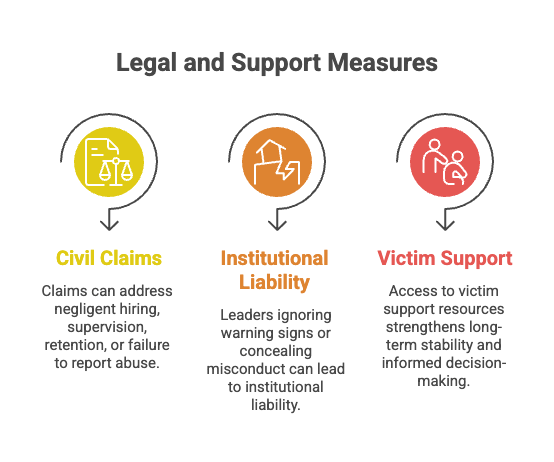
- Civil claims may address negligent hiring, supervision, retention, or failure to report abuse.
- Certain cases involve institutional liability when leaders ignored warning signs or concealed misconduct.
- Access to victim support resources can strengthen long-term stability and informed decision-making.
A legal review may clarify whether time limits apply and how evidence can support a claim. For communities committed to serving others, recognizing these rights affirms that justice, accountability, and compassionate care are crucial when harm occurs within places meant to provide trust, safety, and spiritual guidance.
Steps to Take After a Church Sexual Abuse Incident in Florida
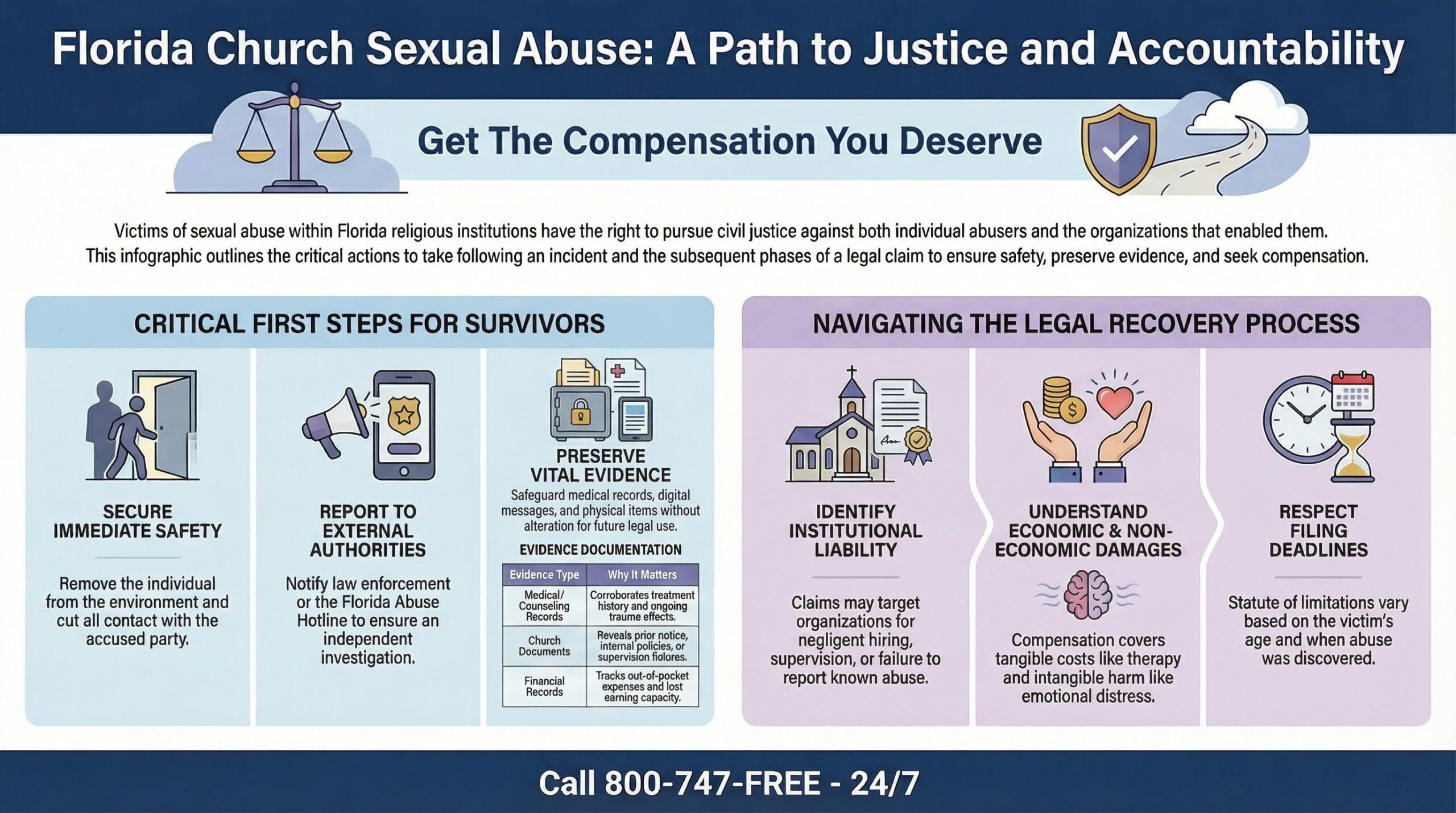
After a church sexual abuse incident in Florida, the first priority is to guarantee the victim’s immediate safety and remove the person from any ongoing risk of harm. The abuse should then be reported promptly to law enforcement, child protective authorities when applicable, and any other appropriate oversight bodies. It is also important to preserve crucial evidence, including communications, photographs, medical records, and written recollections, as these materials may support both criminal and civil proceedings.
Ensure Immediate Safety
When sexual abuse is suspected or disclosed, the first priority is to secure the person’s immediate safety by removing them from contact with the accused and any environment that could allow further harm. Trusted caregivers or church leaders should focus on transportation, supervised shelter, and calm support, while preserving dignity and minimizing additional trauma.
Immediate protection may also involve victim advocacy services, therapist coordination for urgent emotional stabilization, and consultation about emergency protective orders when ongoing access or intimidation is a concern. Florida organizations that serve vulnerable individuals should understand Mandatory reporting duties, but the immediate objective remains safety rather than investigation.
Practical steps include documenting current risks, limiting communication with the accused, arranging medical attention when needed, and creating a short-term plan that prioritizes secure housing, trusted supervision, and consistent support.
Report The Abuse
Why does prompt reporting matter so much in these cases? It helps protect vulnerable people, activates official oversight, and creates a clear route for care and accountability. In Florida, suspected church sexual abuse should be reported promptly to law enforcement or the Florida Abuse Hotline, especially when a minor or vulnerable adult may be at risk. Certain professionals and caregivers must also follow Mandatory reporting laws, which impose legal duties to notify authorities.
Reporting should be factual, timely, and focused on the survivor’s well-being. A trusted advocate may assist with making the report, identifying the correct agency, and documenting disclosures in a respectful, accurate manner. Church leaders should not be the only recipients of a report. External reporting helps ensure an independent response and supports broader community protection.
Preserve Key Evidence
Because evidence can fade quickly, preserving it as early as possible is an important step following the church sexual abuse in Florida. Those assisting a survivor should help safeguard clothing, messages, photographs, medical records, and any items that may confirm what occurred. Prompt collection and careful storage can support accountability and protect others from future harm.
Witness statement preservation is also critical. Names, dates, locations, and specific observations should be recorded while memories remain fresh. Digital evidence protection matters as well, including emails, texts, social media messages, call logs, and surveillance footage. Materials should be copied, dated, and stored securely without alteration.
A church sexual abuse lawyer in Florida can guide families, advocates, and caregivers in organizing evidence responsibly, strengthening a potential civil claim while honoring the survivor’s wellbeing and dignity.
How a Florida Church Sexual Abuse Lawyer Can Help You Initiate a Case
Initiating a church sexual abuse case in Florida requires a careful assessment of the facts, the applicable law, and the available evidence. A Florida church sexual abuse lawyer can guide that process by identifying viable legal claims, reviewing timelines, and explaining procedural requirements. Counsel may also coordinate Victim advocacy services, helping survivors and supportive families understand reporting options while preserving dignity and confidentiality.
Early legal review often clarifies compensation options and the institutions or individuals who may bear responsibility.
- Evaluates documents, communications, records, and witness accounts to determine whether a claim can be filed.
- Prepares notices, complaints, and related filings, while managing deadlines and court requirements.
- Advises on interactions with churches, insurers, and investigators to reduce avoidable harm to the case.
Long-Term Effects of Church Sexual Abuse Trauma
Church sexual abuse trauma can produce enduring emotional and psychological harm, often affecting mental health, self-worth, and daily functioning long after the abuse has occurred. Survivors may also experience persistent difficulties with relationships and trust, particularly in personal, familial, and institutional settings where safety and confidence were once expected. In many cases, the trauma extends to matters of faith, altering religious beliefs, spiritual practices, and a survivor’s sense of connection to religious communities.
Emotional And Psychological Impact
Although the abuse may end, its psychological effects often persist for years, shaping how survivors view themselves, other people, and institutions that once appeared safe. Many experience anxiety, depression, shame, intrusive memories, and hypervigilance, often without immediate recognition of the source. Ordinary settings, sounds, or religious imagery may become trauma triggers that disrupt concentration, sleep, and emotional stability.
In service-oriented communities, understanding these injuries can encourage patient-informed support. Survivors may struggle with self-worth, emotional regulation, and a lasting sense of safety, especially when authority was misused in sacred spaces. Some develop coping strategies that appear adaptive outwardly, yet conceal unresolved distress. Professional counseling, trauma-informed care, and consistent advocacy can help reduce isolation, strengthen resilience, and support long-term recovery without minimizing the seriousness of the harm.
Relationship And Trust Struggles
When sexual abuse occurs within a religious setting, the resulting breach of trust often extends far beyond the original misconduct and affects how a survivor relates to other people for years. Relationships may become difficult to navigate because ordinary expressions of care, authority, or guidance can trigger fear, suspicion, or withdrawal. Survivors often struggle with boundaries, intimacy, and confidence in their own judgment, especially when prior manipulation distorted what safety looked like.
These effects may influence family life, friendships, workplaces, and community service, limiting connection and cooperation. Meaningful support requires patience, consistency, and respect for autonomy rather than pressure to reconcile or disclose. Church accountability can help reduce further harm by reinforcing transparency and protection. Over time, trauma-informed care and reliable relationships can support survivor recovery and rebuild trust gradually.
Lasting Effects On Faith
Because spiritual authority is often closely tied to identity, belonging, and moral understanding, sexual abuse in a religious setting can leave lasting effects on faith long after the abuse itself has ended. Survivors may experience Spiritual Trauma that disrupts prayer, worship, and confidence in religious leaders. Teachings once associated with comfort can become sources of fear, confusion, or shame.
In many cases, the harm extends beyond individual belief and affects participation in faith communities, service, and relationships with others. Rebuilding Trust may require time, informed counseling, and support from compassionate advocates who respect both personal boundaries and spiritual concerns. A careful response recognizes that restoration is not simply emotional recovery. It may also involve reevaluating beliefs, restoring a sense of safety, and creating conditions where survivors can seek truth, dignity, and lasting stability.
What to Expect During a Florida Church Sexual Abuse Claim Process
A Florida church sexual abuse claim process generally begins with filing the initial claim and identifying the parties who may bear legal responsibility. It then moves to gathering critical evidence, which may include records, witness statements, and other documentation that support the allegations. As the matter progresses, settlement discussions or litigation may follow, while legal counsel works to protect the victim’s rights at each stage.
Filing The Initial Claim
Although each case turns on its own facts, filing the initial claim in a Florida church sexual abuse matter generally begins with a careful review of the survivor’s account, available records, and the identity of all potentially responsible parties. Counsel then determines where and how the claim should be submitted, while evaluating statute deadlines and possible jurisdiction disputes. Early attention to Evidence preservation helps protect the integrity of relevant materials and supports a more orderly process.
At this stage, formal notices may be prepared, allegations are framed with care, and witness statements may be identified for later use. The objective is to present a clear claim that honors the survivor’s experience, promotes accountability, and serves the broader goal of protecting others from preventable harm within faith communities and affiliated institutions statewide.
Gathering Key Evidence
How the main evidence is gathered often shapes the strength and direction of a Florida church sexual abuse claim. Attorneys typically begin by organizing records that clarify what occurred, when it happened, and who may have known. Trauma documentation, including treatment notes, counseling records, and related evaluations, can help establish the effects of abuse over time.
The process may also include collecting witness statements, internal church communications, personnel files, prior complaints, and reporting records. In some matters, digital messages, photographs, calendars, or location data may support a timeline. A careful review seeks consistency, preserves important details, and reduces the risk of lost information. Throughout this stage, legal counsel often works with sensitivity and discipline, recognizing that thorough evidence gathering can support accountability, protect others, and strengthen informed decision-making for families and communities.
Settlement And Litigation
Once evidence has been assembled and reviewed, attention often turns to whether a Florida church sexual abuse claim will resolve through settlement discussions or proceed into litigation. Attorneys may present documented losses, witness statements, and evidence-preservation records in seeking a fair resolution without trial. Settlement negotiations can reduce delay and provide a more private process, but they still require careful evaluation of liability, damages, and institutional conduct.
If settlement efforts do not succeed, the claim may move into formal litigation. That stage often includes pleadings, discovery, depositions, motions, and possible mediation before trial. Courts examine available records, testimony, and procedural compliance. Throughout this process, legal counsel generally prepares each step with discipline and sensitivity, helping clients understand timelines, responsibilities, and likely outcomes while maintaining focus on accountability and lawful resolution.
Protecting Victim Rights
Because these cases often involve significant privacy, safety, and emotional concerns, protecting victim rights remains a central part of the Florida church sexual abuse claim process. Attorneys commonly seek confidentiality measures, limit unnecessary disclosures, and coordinate trauma-informed communication so survivors are treated with dignity throughout each stage.
Florida claims may also involve court safeguards for minors, sensitive records, and protective orders when needed. Legal counsel helps preserve evidence, explain reporting options, and support informed decisions about participation in investigations or civil proceedings.
Child advocacy professionals may assist families by connecting them with counseling, community resources, and guidance tailored to the survivor’s well-being. In addition, attorneys pursue victim compensation for medical care, therapy, lost income, and related damages while working to reduce further harm and promote accountability, recovery, and lasting institutional change.
Compensation for Florida Church Sexual Abuse Damages
Although no financial recovery can restore the harm caused by sexual abuse, compensation in a Florida church sexual abuse case is intended to address the survivor’s tangible and intangible losses. Courts and counsel evaluate Evidence and documentation carefully, including treatment records, reports, witness statements, and institutional files. Thorough preparation may strengthen claims and support compensatory settlement options that reflect accountability and practical measures to support healing and stability.
| Consideration | Why It Matters |
|---|---|
| Medical records | Corroborate treatment history |
| Counseling notes | Show ongoing trauma effects |
| Witness accounts | Support credibility |
| Church documents | Reveal notice or failures |
| Financial records | Track related expenses |
A lawyer may assess available insurance, responsible parties, and procedural deadlines when pursuing compensation. This process can help survivors, families, and faith communities seek resources that promote care, safety, and restored dignity. A careful legal approach also encourages institutional responsibility and helps protect others from future harm.
Economic vs Non-Economic Damages in Florida Church Sexual Abuse Cases
In Florida church sexual abuse cases, damages are generally divided into economic and non-economic categories, each addressing a different type of harm. Economic damages typically include measurable financial losses, such as medical expenses, therapy costs, lost income, and other out-of-pocket expenses, while non-economic damages concern pain and suffering, emotional distress, and related personal losses. Proving either form of damages in Florida requires credible documentation, consistent testimony, and evidence that clearly connects the abuse to the losses claimed.
Economic Damages Explained
Two categories of damages generally shape a Florida church sexual abuse claim: economic damages and non-economic damages. Economic damages address measurable financial losses caused by the abuse and its aftermath. These losses may include medical treatment costs, therapy expenses, prescription needs, transportation for care, and other documented out-of-pocket obligations.
In many cases, economic damages also involve lost income, reduced earning capacity, and the need to prove employment loss through pay records, tax returns, employer statements, or vocational analysis. Careful documentation helps demonstrate how the misconduct disrupted education, work history, and long-term stability. For families and advocates committed to helping survivors rebuild, understanding these calculable losses can support informed legal action. A Florida church sexual abuse lawyer may assemble records, consult experts, and present evidence that connects specific financial harm to the wrongful conduct with precision.
Non-Economic Losses Overview
Recognizing the full impact of abuse requires more than adding receipts and wage records. Non-economic losses address harms that do not appear on invoices, yet they often shape a survivor’s daily life, relationships, and sense of safety for years. In Florida church sexual abuse cases, these damages may include pain and suffering, emotional distress, humiliation, loss of enjoyment of life, and lasting psychological injury.
This category reflects a service-minded concern for human dignity, acknowledging wounds that affect family bonds, spiritual trust, and personal stability. Trauma restitution seeks to recognize these profound injuries in a meaningful civil remedy. In some matters, punitive accountability may also be considered separately, focusing especially on wrongful conduct rather than the survivor’s internal losses. Taken together, these concepts present a fuller view of harm and justice.
Proving Damages In Florida
A damages claim in a Florida church sexual abuse case must be supported by clear, organized proof that connects the abuse to both financial losses and deeply personal harm. Economic damages often include therapy expenses, medication costs, lost income, and reduced earning capacity. These losses are commonly established through bills, employment records, expert opinions, and medical documentation.
Non-economic damages address pain, suffering, emotional distress, humiliation, and loss of enjoyment of life, which often require testimony from the survivor, family members, and qualified mental health professionals. Causation evidence is critical in both categories because the claimant must show that the abuse substantially contributed to the claimed injuries. When records are consistent, and witness accounts are credible, the case presents a stronger basis for accountability, financial recovery, and long-term support for growth and community restoration efforts.
When a Florida Church Sexual Abuse Case Goes to Trial vs Settlement
Although many Florida church sexual abuse claims resolve through negotiated settlements, some proceed to trial when the parties sharply disagree over liability, damages, or the strength of the available evidence. Settlement may offer privacy, faster closure, and reduced strain on survivors, caregivers, and ministries seeking a path that supports recovery and accountability.
A trial may become necessary when insurers deny fair value, witnesses conflict, or church responsibility standards are disputed. In court, each side presents documents, testimony, and expert opinions addressing institutional knowledge, supervision failures, and the survivor’s emotional recovery timeline. Judges and juries then evaluate credibility and decide whether the church or related entities should be held legally responsible.
Settlements allow both sides to control risk and avoid public litigation, but they may require compromise on compensation and terms. Trials can produce binding verdicts and public findings, yet they often demand more time, expense, and emotional endurance from everyone involved in the case.
The Statute of Limitations for Florida Church Sexual Abuse Cases
Because filing deadlines can determine whether a claim may proceed at all, the statute of limitations is a central issue in Florida church sexual abuse cases. These legal time limits govern how long a survivor has to file a civil lawsuit and can affect access to justice, accountability, and victim compensation.
Florida law has changed over time, especially for claims involving sexual abuse of minors, so the applicable deadline may depend on the survivor’s age, the date of abuse, and when the harm was discovered. In some situations, older claims may still be viable under revised statutes, while others may face procedural barriers despite strong underlying facts.
Careful review of the governing law is critical. For faith communities and those committed to protecting others, understanding these deadlines supports informed action and responsible care. A timely evaluation of the facts can preserve legal rights and help make sure that strong claims receive full and fair consideration under Florida law.
When to Contact a Church Sexual Abuse Lawyer in Florida
When concerns about church sexual abuse arise, prompt consultation with a Florida lawyer is often advisable, particularly where there is uncertainty about reporting obligations, filing deadlines, available evidence, or the potential liability of church leaders and institutions. Early legal guidance can help families, caregivers, and supportive community members take measured steps that protect those affected while preserving vital information for later review.
Contact may be appropriate immediately after disclosure, after suspected misconduct, or when past abuse is newly understood. A lawyer can help coordinate lawful reporting, advise on interactions with church representatives, and support Evidence preservation, including records, communications, and witness information.
Prompt consultation may also reduce the risk of missed deadlines or unintentional harm to a future claim. In many situations, victim advocacy is strengthened when supporters act carefully, document concerns, and seek direction before confronting institutional authorities alone. Timely action can promote accountability, informed decision-making, and protection for others.
Why You Need an Experienced Florida Church Sexual Abuse Lawyer
Since church sexual abuse claims in Florida often involve sensitive facts, institutional power, and complex legal issues, experienced legal counsel is important to protect the interests of survivors and their families. A seasoned attorney understands how to handle allegations discreetly, address reporting requirements, and pursue accountability without causing unnecessary additional harm.
Experienced representation also supports Trauma recovery by reducing avoidable stress throughout the legal process. Counsel can coordinate documentation, manage communications with churches, insurers, and opposing attorneys, and focus on evidence preservation before records disappear or witnesses become difficult to reach. This guidance helps survivors and families make informed decisions while maintaining dignity and stability.
In addition, an attorney with substantial experience in these matters can identify liable parties, evaluate damages, and manage Florida deadlines and procedural rules. Effective advocacy strengthens the pursuit of justice, promotes institutional responsibility, and helps protect other vulnerable people from similar misconduct in faith communities statewide.
How to Choose the Right Church Sexual Abuse Lawyer for Your Case in Florida
The selection of a church sexual abuse lawyer in Florida should center on proven experience, professional judgment, and the ability to handle highly sensitive matters with care. A careful review of the attorney’s background, prior case results, and approach to client communication can help families make a sound decision. It is also wise to vet the strategy early, including how evidence will be preserved and how witnesses may be approached.
An appropriate lawyer should explain legal options clearly, discuss possible case timelines, and outline realistic expectations without making promises. Attention should also be given to whether the attorney demonstrates respect, patience, and a service-minded commitment to protecting vulnerable people.
Strong courtroom ability matters, but so does skill in negotiation, investigation, and trauma-informed advocacy. Fee structures, available resources, and responsiveness should be evaluated before representation begins. A thorough selection process can support accountability, informed action, and the pursuit of justice with dignity for survivors.
About The Law Offices of Anidjar & Levine
Careful attorney selection naturally leads to a closer look at the law firm’s background, values, and approach to representation.
The Law Offices of Anidjar & Levine is recognized for client-focused advocacy, responsive communication, and disciplined case preparation in complex injury and abuse matters across Florida.
In church sexual abuse claims, the firm’s work centers on accountability, careful investigation, and informed guidance through each stage of the legal process.
Its approach may include developing a Church Legal Strategy tailored to the survivor’s circumstances, preserving evidence, identifying liable parties, and carefully evaluating long-term damages.
The firm also understands that meaningful service extends beyond litigation.
Helping clients locate Victim Support Resources, including counseling and community assistance, reinforces a broader commitment to recovery and stability.
For individuals and families seeking representation grounded in diligence, respect, and practical support, the firm offers a model of legal service that upholds protection, responsibility, and community-minded values across the state.
Frequently Asked Questions
Can Church Sexual Abuse Claims Remain Anonymous in Florida?
Yes, church sexual abuse claims in Florida may sometimes proceed with limited anonymity, particularly during early filings, but courts often balance privacy against fairness to defendants. Anonymous claim limits can apply, especially if litigation advances and identification becomes necessary. Careful preservation of evidence remains critical because records, witness accounts, and institutional documents may determine whether protective measures are granted. Prompt legal guidance helps survivors protect their rights while serving broader accountability and community safety.
Are Clergy Mandatory Reporters of Sexual Abuse in Florida?
In Florida, clergy are generally mandatory reporters of sexual abuse when they know or reasonably suspect a child is being abused, abandoned, or neglected. The state takes a firm Criminal Stance on protecting minors, and reporting duties usually override institutional preference. However, Privacy Limits may apply in narrow circumstances involving privileged communications, though those exceptions are limited. Faith leaders serving others should understand these duties clearly and act promptly to protect vulnerable people.
Can Abuse Occurring During Church Trips Create Liability in Florida?
Yes, abuse occurring during church trips can create liability in Florida. Liability may arise from negligent supervision, unsafe transportation, poor screening, or failure to respond appropriately to warning signs. As with school trip liability, organizations may be responsible when leaders breach their duties owed to minors or vulnerable adults. Florida notice requirements can also affect claims, especially when public entities are involved. Careful documentation and prompt reporting often support accountability and protection for others.
Do Immigration Concerns Affect Filing a Church Abuse Claim in Florida?
Yes, immigration concerns can affect filing a church abuse claim in Florida, particularly through immigration timing concerns and venue jurisdiction impacts. A claimant’s status does not automatically bar a civil action, yet fear of exposure may delay reporting or filing. Courts and counsel often carefully evaluate confidentiality, deadlines, and proper forum selection. Those assisting survivors should encourage prompt legal guidance to ensure that protective options and procedural rights are preserved under Florida law.
Can Social Media Posts Impact a Florida Church Sexual Abuse Case?
Yes, social media posts can meaningfully affect a Florida church sexual abuse case. Public statements, photos, messages, and comments may influence credibility, reveal timelines, or create social media liability concerns for all parties. Courts and insurers may closely review online activity. Careful evidence preservation is vital because deleted or altered content can raise questions and harm a claim. A disciplined, service-minded approach helps protect the integrity of the case and those involved.
—————————
Victims of church sexual abuse in Florida may have important legal options, and prompt action can help protect those rights.
A qualified attorney can evaluate the facts, explain available remedies, and pursue accountability against all responsible parties.
The Law Offices of Anidjar & Levine assist survivors with careful, informed representation throughout the claims process, and a Florida Sexual Assault Lawyer can help victims and their families make informed decisions as they seek the financial recovery and justice available under Florida law.