The Law Offices of Anidjar and Levine investigates whether a steering failure crash resulted from defective parts, negligent maintenance, or improper repairs. Counsel helps preserve the vehicle, guidance components, electronic data, repair records, and witness evidence needed to prove causation and identify all liable parties, including owners, mechanics, manufacturers, or fleet operators.
Legal representation by a Miami Car Accident Lawyer also addresses insurance disputes, comparative fault, and damages, including medical costs, lost income, and future care. The sections below explain the process.
Main Takeaways
- A Miami steering failure car accident lawyer investigates whether worn parts, poor maintenance, or manufacturing defects caused the loss of vehicle control.
- Counsel helps preserve critical evidence, including damaged steering components, black box data, repair records, photos, and witness statements.
- Potentially liable parties may include the driver, vehicle owner, repair shop, parts distributor, manufacturer, or fleet operator.
- Lawyers use engineers, mechanics, and accident reconstruction experts to prove causation and counter insurer arguments, minimizing the steering defect.
- Early legal help protects deadlines, manages insurer communications, evaluates damages, and strengthens claims under Florida comparative fault rules.
How We Can Help With Your Miami Steering Failure Car Accident Injury Claim
Secure the groundwork for a strong claim by conducting a prompt and thorough investigation into the steering failure accident, identifying whether the incident arose from a defective vehicle component, negligent maintenance, or another preventable cause. Counsel can collect repair records, inspection reports, electronic data, and witness statements, then evaluate whether vehicle recalls or manufacturer warnings should have prevented the crash.


A disciplined legal team can also preserve damaged parts, consult with engineers, and coordinate expert testimony to clarify how the helm system failed and who should be held accountable. They may communicate with insurers, organize supporting documentation, and present the facts in a manner that honors the injured person’s losses and promotes responsible conduct. When service to others motivates the process, each step is directed toward protecting the client’s interests, strengthening the claim, and encouraging safer practices within the community.
This careful approach helps families seek accountability while preserving dignity during a difficult period for all involved.
Understanding Miami Steering Failure Car Accident Injury Cases
OUR CONSULTATIONSARE FREE
START YOUR FREE CASE REVIEW

Building on the investigative work that supports a claim, an understanding of Miami’s guiding principles for car accident injury cases begins with the issues that commonly determine liability and damages. These matters often require careful review of maintenance records, repair history, inspection reports, product documentation, and witness accounts, so injured people and their families can pursue fair accountability.
In Miami maneuvering failure injury cases, legal analysis often centers on whether a manufacturer, repair facility, vehicle owner, or other party failed to meet a duty of care. Evidence may include expert evaluations, electronic data, service invoices, and information concerning vehicle recalls. Damages commonly address medical costs, lost income, rehabilitation needs, pain, and reduced quality of life. Courts and insurers may also consider comparative fault, timely notice, and the seriousness of permanent limitations.
Driver education can support broader public safety goals, yet case outcomes usually depend on documented facts, credible expert opinion, and a clear connection between the failure and the injuries claimed.
Common Causes of Miami Steering Failure Car Accidents


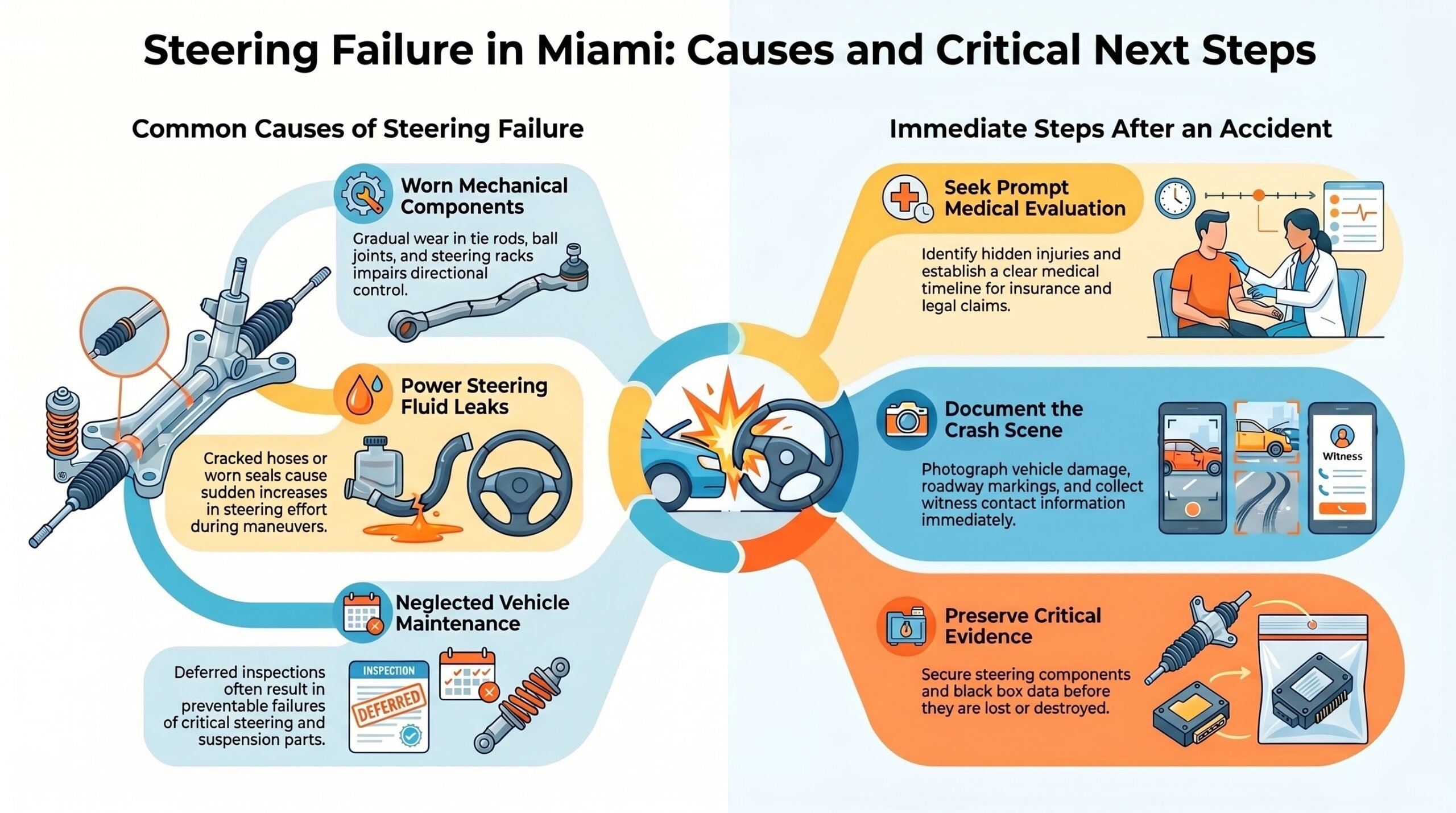
Several mechanical and maintenance-related problems can contribute to a guidance failure that causes a car accident in Miami. Common causes include worn guidance components, power steering fluid leaks, tire and suspension issues, and poor vehicle maintenance, each of which can undermine a vehicle’s stability and driver control. Identifying these conditions is important when evaluating how a guidance malfunction may have developed and whether it could have been prevented.
Worn Steering Components
Many steering failure accidents begin with gradual wear in critical components, including tie rods, ball joints, steering racks, and power steering parts. When neglected, these parts can loosen, separate, or respond unpredictably, placing drivers, passengers, and everyone nearby at risk. A worn steering rack may create excessive play, while damaged tie rod ends and ball joints can impair alignment and directional control.
Other aging parts also contribute to dangerous handling problems. Wear within the steering column, idler arm, center link, steering gearbox, and pitman arm may reduce responsiveness during turns or sudden maneuvers. In a service-minded community, careful inspection and timely replacement of these components help protect families, pedestrians, and fellow motorists. Recognizing early warning signs, such as vibration, wandering, or clunking, can support safer roads and prevent avoidable collisions.
Power Steering Fluid Leaks
Power steering fluid leaks are another frequent cause of directional failure, because hydraulic pressure must remain stable for the system to respond as intended. When fluid escapes through cracked hoses, worn fittings, or damaged hydraulic seals, steering effort can increase suddenly, especially during low-speed turns or emergency maneuvers. Drivers may also notice whining noises, delayed response, or visible fluid beneath the vehicle.
From a public safety standpoint, prompt diagnosis and maintenance help protect passengers, pedestrians, and others who share Miami’s roads. Routine reservoir inspection can reveal falling fluid levels before control becomes severely compromised. Mechanics may also identify contamination, heat damage, or corrosion that weakens related components and accelerates leakage. Addressing leaks early supports reliable steering performance and reduces the risk of collisions caused by unexpected loss of directional control during daily travel.
Tire And Suspension Issues
Tire-and-suspension defects can undermine direction accuracy by disrupting the vehicle’s contact with the road and its ability to respond predictably to driver input. Uneven Tire wear may reduce traction, increase drifting, and make steering corrections less effective during lane changes or sudden movements.
Likewise, compromised Suspension alignment can alter wheel angles, causing pulling, vibration, or delayed directional response. In busy Miami traffic, these conditions may leave little margin for safe avoidance of hazards, particularly in wet weather or at highway speeds. When investigators evaluate a steering failure collision, tire condition and suspension geometry often provide important clues about how control was lost. A careful legal review can help injured people and their families understand whether these mechanical issues contributed to the crash and identify potentially responsible parties under Florida law.
Poor Vehicle Maintenance
When routine maintenance is deferred, steering components may deteriorate in ways that are not immediately visible but can seriously affect vehicle control. Worn tie rods, leaking power steering systems, loose belts, and low fluid levels can each weaken responsiveness and increase the risk of sudden failure during everyday travel.
Responsible ownership requires consistent attention to vehicle inspections and adherence to maintenance schedules. These practices help identify developing problems before they place drivers, passengers, and others on Miami roads in danger. Service records may also reveal whether a manufacturer, fleet operator, or private owner ignored clear warning signs. In many steering failure collisions, poor maintenance is not an isolated oversight but a preventable condition that endangers the public. Careful evaluation of the repair history is often crucial to determining how the failure occurred and who may be accountable.
Legal Rights of Miami Steering Failure Car Accident Injury Victims
In the aftermath of a guidance failure crash, injured victims in Miami may have important legal rights under Florida law, including the right to seek compensation for medical expenses, lost income, pain and suffering, and other related losses. These rights may extend beyond negligent drivers to include vehicle manufacturers, parts suppliers, repair facilities, and other responsible parties. Florida law also imposes statutory limitations, so timely legal evaluation is often crucial.
Strong consumer protections may apply when defective steering systems, recalls, or undisclosed repair issues contributed to the collision.
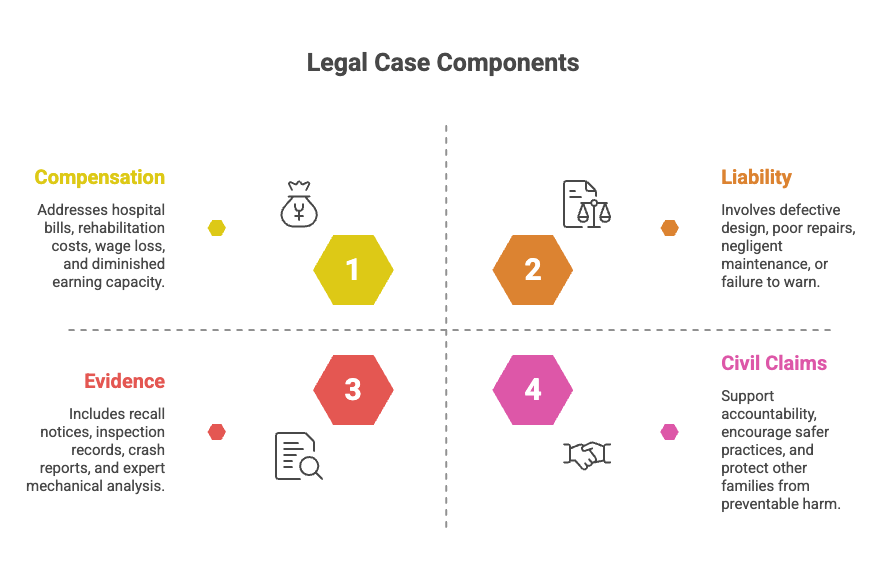
- Compensation may address hospital bills, rehabilitation costs, wage loss, and diminished earning capacity.
- Liability may involve defective design, poor repairs, negligent maintenance, or failure to warn.
- Evidence may include recall notices, inspection records, crash reports, and expert mechanical analysis.
- Civil claims can support accountability, encourage safer practices, and protect other families from preventable harm.
Understanding these rights helps victims and those serving them pursue fair, lawful recovery.
Steps to Take After a Miami Steering Failure Car Accident Injury
After a Miami steering failure car accident injury, prompt medical attention is vital to identify injuries and establish a clear record of treatment. It is also important to preserve crash evidence, including photographs, vehicle damage, witness information, and any indications of steering system malfunction. Early contact with a Miami lawyer can help guide legal interests and support a timely evaluation of potential claims.
Seek Immediate Medical Care
At the scene of a steering-failure crash, immediate medical evaluation should be a priority, even if symptoms appear minor or delayed. Prompt emergency evaluation can identify internal injuries, concussion symptoms, spinal trauma, or shock before conditions worsen and place additional strain on loved ones and caregivers.
Those involved should accept transport when recommended, or visit an emergency room or urgent care facility without unnecessary delay. Medical providers can assess pain, dizziness, numbness, breathing difficulty, and reduced mobility, then begin appropriate treatment. Even when a person feels stable, hidden injuries may surface hours or days later. Consistent follow-up monitoring helps protect health, supports recovery, and allows families to respond with care and responsibility. Seeking timely treatment also creates a clear medical timeline, which may become important during later legal or insurance discussions.
Document Crash Evidence
For purposes of preserving a clear record, crash evidence should be documented as soon as conditions are safe and medical needs have been addressed. Helpful actions include photographing vehicle damage, roadway markings, debris, traffic controls, weather conditions, and any visible injuries. Images should be taken from multiple angles and distances to support later review.
A carefully written account should also be created while memories remain fresh. It should note the time, location, traffic flow, unusual handling behavior, warning lights, and statements made by involved drivers. If others observed the collision, a respectful collection of witness statements can provide valuable independent details. Names, contact information, and brief summaries should be recorded accurately. Receipts, towing records, repair estimates, and medical visit documentation should likewise be kept jointly in an organized file.
Contact A Miami Lawyer
Once available evidence has been organized, prompt contact with a Miami steering-failure car accident lawyer can help protect the injured person’s legal position and guide the next steps. Early legal review allows counsel to assess liability, preserve crucial records, and explain how Miami regulations may affect notice requirements, vehicle inspections, and insurance communications.
A lawyer can also coordinate with medical providers, investigators, and mechanics so that facts are documented accurately and respectfully. This support helps injured people and their families focus on recovery while informed advocates manage deadlines and negotiations. During an initial consultation, counsel may discuss the claim’s value, available defendants, and Legal fees, including whether representation is offered on a contingency basis. Timely guidance often strengthens a claim and promotes accountability for unsafe vehicles, negligent maintenance, or defective steering components.
How a Miami Steering Failure Car Accident Injury Lawyer Can Help You
When a steering failure causes a serious collision, a Miami steering failure car accident injury lawyer can help by identifying the source of the defect, preserving vital evidence, and determining who may be legally responsible. Counsel may examine maintenance records, manufacturing data, and vehicle recalls to assess whether negligence, a defective part, or poor repairs contributed to the crash. Strong client communication also helps injured people understand their options and make informed choices that protect their families and communities.
- Investigate black box data, repair invoices, and inspection reports
- Coordinates experts who evaluate steering components and roadway factors
- Handles insurers and opposing parties to pursue fair compensation
- Organizes documentation so claims reflect the full scope of losses
Long-Term Effects of Miami Steering Failure Car Accident Injuries
Steering failure accidents can produce injuries that continue to affect a person long after the initial collision and emergency treatment. These long-term effects often include chronic pain challenges, lasting mobility limitations, and emotional trauma that interferes with daily functioning and overall quality of life. A clear understanding of these consequences is important when evaluating the full impact of a Miami driving control failure car accident injury.
Chronic Pain Challenges
Persistence often defines the long-term impact of injuries caused by a Miami navigation failure accident, as chronic discomfort can continue well after fractures, soft tissue damage, or spinal trauma appear to have healed. Some individuals experience daily discomfort that disrupts sleep, concentration, employment, and family responsibilities, creating ongoing strain on households and caregivers. Effective discomfort management may require coordinated medical treatment, counseling, and careful documentation of symptoms over time. Support groups can also provide practical guidance, reassurance, and a sense of connection for those adapting to persistent limitations.
When discomfort remains unresolved, emotional health may decline, and financial pressures often increase because repeated appointments, medications, and reduced work capacity can persist for months or years. Careful legal guidance may help injured people pursue resources that support stability, treatment, and long-term recovery.
Lasting Mobility Limitations
Beyond the initial period of treatment, lasting mobility limitations can become one of the most disruptive consequences of injuries caused by a Miami control failure car accident. Damage to the spine, joints, nerves, or muscles may reduce strength, balance, coordination, and range of motion for months or years.
These limitations often affect walking, climbing stairs, driving, bathing, and completing household tasks. Many injured people must rely on assistive devices, including canes, walkers, braces, or wheelchairs, to maintain safety and independence. In more serious cases, home modifications such as ramps, grab bars, widened doorways, or stair lifts may be necessary. Ongoing rehabilitation and practical support can help preserve function, prevent further complications, and allow families and caregivers to provide consistent, informed assistance in daily life routines.
Emotional Trauma Effects
Physical limitations are often accompanied by emotional trauma that continues long after a Miami guiding failure car accident. Many injured individuals experience persistent anxiety, fear of travel, and difficulty trusting ordinary routines that once felt safe. In more serious cases, post-traumatic stress develops, causing intrusive memories, hypervigilance, and emotional withdrawal from family, work, and community service.
These effects may also include sleep disturbances, irritability, depression, and reduced concentration, all of which can interfere with recovery and daily responsibilities. Caregivers and advocates often observe that emotional suffering limits a person’s ability to assist others, maintain relationships, or participate in meaningful activities. Proper evaluation, counseling, and ongoing support are thus vital. When these harms are documented carefully, they help demonstrate the full long-term impact of directing failure injuries.
Proving Liability in Miami Steering Failure Car Accident Injury Cases
Establishing liability in a Miami steering failure car accident injury case requires a careful review of how the malfunction occurred, who had control over the vehicle or its components, and whether negligence or a defective part caused the crash. Attorneys often examine maintenance records, repair invoices, recall notices, inspection reports, and physical damage to determine whether the failure developed over time or resulted from a sudden defect.
Liability may rest with a driver, vehicle owner, mechanic, parts distributor, or manufacturer, depending on the evidence. Claims involving manufacturer negligence often focus on faulty design, poor assembly, or inadequate warnings about known steering risks. In many cases, expert testimony from engineers, mechanics, and accident reconstruction consultants helps explain why the steering system failed and whether proper care could have prevented harm. Witness statements, electronic data, and photographs may further support causation. A thorough investigation serves injured individuals and families by identifying responsible parties and building a clear, evidence-based account of the collision.
Dealing With Insurance Companies After a Miami Steering Failure Car Accident Injury
After a Miami steering failure car accident injury, dealing with insurance companies often becomes a pivotal part of the recovery process, particularly when questions arise about driver negligence, vehicle maintenance, or a defective helm component. Insurers may request recorded statements, repair records, medical documentation, and other evidence intended to assess responsibility and damages. Careful communication helps protect accuracy and supports fair treatment for all parties.
A disciplined approach often benefits injured individuals and the families who support them. Maintaining organized records of medical care, vehicle inspections, towing invoices, and correspondence can strengthen claim negotiation and reduce misunderstandings. Insurance representatives may also evaluate policy limits, comparative fault issues, and whether a manufacturer or repair shop shares responsibility. Because helm failure cases can involve multiple sources of coverage, close attention to settlement timelines is important. Prompt reporting, consistent documentation, and measured responses can help preserve rights while encouraging a more efficient and service-minded resolution for everyone involved.
What to Expect During a Miami Steering Failure Car Accident Injury Claim Process
A Miami steering failure car accident injury claim typically begins with an initial evaluation of the facts, injuries, and available insurance coverage. The process then turns to gathering evidence, evaluating liability, and negotiating toward a settlement that reflects the full extent of the losses. If a fair resolution is not reached, the matter may proceed to a lawsuit, where the claim is presented through the formal court process.
Initial Claim Evaluation
At the outset, an initial claim evaluation in a Miami guidance failure car accident case focuses on whether the available facts support liability, causation, and compensable damages. This Initial assessment usually reviews the accident timeline, the nature of the steering problem, reported injuries, insurance coverage, and immediate financial losses.
From a service-minded perspective, the process also considers how a prompt legal response may protect the injured person’s well-being, family stability, and access to medical care. Counsel typically identifies urgent deadlines, communication issues with insurers, and practical concerns affecting recovery. A sound Claim strategy is then outlined, centered on realistic goals, procedural readiness, and the most efficient path toward fair compensation. This early evaluation helps clarify expectations and supports informed decisions before the claim advances into more demanding stages of the process.
Evidence And Liability
Evidence and liability become central once a Miami steering failure injury claim moves beyond the initial review, because the outcome often depends on whether the mechanical defect, negligent maintenance, or another party’s conduct can be tied directly to the crash and the resulting injuries.
To clarify responsibility, counsel may gather repair invoices, recall notices, inspection records, electronic vehicle data, photographs, and witness accounts. Vehicle preservation is often vital, since damaged steering components can reveal whether failure resulted from wear, poor repairs, manufacturing defects, or road hazards. In more intricate cases, forensic reconstruction helps explain how the loss of steering control occurred and whether another driver’s actions contributed. Expert testimony from engineers, mechanics, or medical professionals may further connect the defect to the collision and the injuries. Careful investigation supports accountability and helps protect those seeking justice.
Negotiation And Settlement
In the next phase, negotiation and settlement often determine whether a Miami guiding failure injury claim resolves efficiently or proceeds into formal litigation. Counsel typically presents medical records, repair findings, expert evaluations, and wage loss documentation to insurers, then assesses responses against the claim’s full value.
Effective Settlement Strategies focus on fair compensation for treatment costs, future care, diminished earning capacity, and pain-related losses. Adjusters may dispute causation or minimize the navigation defect’s role, requiring clear counterarguments supported by evidence. When direct talks stall, Mediation Techniques can encourage practical resolution through structured discussion and neutral guidance. Throughout this stage, careful communication protects the injured person’s interests while promoting accountability and responsible outcomes. A disciplined approach often serves families, communities, and broader public safety by reinforcing respect for lawful conduct.
Filing A Lawsuit
When settlement efforts do not produce an acceptable result, filing a lawsuit becomes the formal next step in a Miami-directed failure car accident injury claim. Counsel prepares a complaint, identifies liable parties, and files within applicable deadlines, while carefully evaluating Statute nuances that may affect rights and obligations.
After filing, defendants are served and given time to respond. The court then sets procedures for discovery, motions, and possible mediation. During discovery, each side exchanges documents, expert opinions, and testimony concerning vehicle defects, maintenance history, and injury losses. Settlement timing often remains fluid because productive negotiations may continue even after litigation begins. Throughout this stage, careful organization and respectful communication support stronger advocacy. A disciplined legal approach helps injured individuals pursue accountability, protect community safety, and seek resources needed for recovery and continued service.
Compensation for Miami Steering Failure Car Accident Injury Damages
Accountability often begins with a clear assessment of the damages caused by a steering failure collision. In Miami cases, compensation may depend on timely evidence showing how the defect, loss of control, and resulting impact affected the injured person’s health, daily functioning, and future care needs. Strong claims often rely on medical records, crash reports, photographs, and testimony from those who observed the event and its aftermath.
Careful investigation may also examine vehicle recalls and expert inspections to determine whether a manufacturer, repair shop, parts distributor, or another party contributed to the steering malfunction. When liability is established, compensation can help address treatment needs, rehabilitation, assistive services, property loss, and other measurable consequences tied directly to the crash. A Miami steering failure car accident lawyer may organize records, preserve crucial evidence, and present a thorough demand supported by credible documentation. This process helps injured individuals pursue accountability while protecting the interests of families and communities alike.
Economic vs Non-Economic Damages in Miami Steering Failure Car Accident Cases
In Miami guidance failure car accident cases, damages are generally separated into economic and non-economic categories, each addressing a different type of loss. Economic damages often include medical expenses, lost income, and other measurable financial costs, while non-economic damages concern pain and suffering, emotional distress, and reduced quality of life. Establishing these damages typically requires clear documentation, credible testimony, and evidence linking the failure to provide guidance to the claimed losses.
Economic Damage Categories
Beyond the immediate disruption caused by a navigation failure collision, damages in a Miami car accident case are generally divided into two broad categories: economic and non-economic losses. Economic damages address measurable financial harm and are supported by records, invoices, and other objective documentation.
In steering malfunction cases, common economic categories include emergency care, hospitalization, rehabilitation, medication costs, and anticipated future treatment. They also include Lost wages when injuries prevent a person from working or reduce future earning capacity. Property-related losses may involve vehicle replacement, towing, storage fees, and Repair estimates that reflect the cost of restoring transportation. Other recoverable expenses can include rental cars, household assistance, and necessary medical equipment. Careful documentation of each loss helps families, advocates, and legal representatives pursue fair reimbursement for tangible burdens.
Non-Economic Loss Valuation
Intangible harm often defines the most enduring consequences of a Miami guidance failure collision, even though it cannot be measured through bills or receipts. Non-economic losses address the human cost of injury, including physical suffering, emotional distress, inconvenience, and diminished enjoyment of daily living.
In these cases, pain valuation considers the severity, duration, and personal impact of symptoms on ordinary routines, relationships, and service to others. Courts and insurers may also assess life impairment, recognizing when injuries limit mobility, independence, sleep, concentration, or participation in family and community roles. Unlike economic damages, these losses do not reflect exact financial outlays, yet they remain central to a full accounting of harm. A careful valuation seeks fairness by acknowledging how profoundly a guidance-failure crash can alter a person’s overall lived experience.
Proving Steering Failure Damages
Accountability in a Miami guiding failure case depends on clear proof of both economic and non-economic damages, each supported by specific and credible evidence. Economic damages often include medical bills, rehabilitation costs, lost income, reduced earning capacity, and property damage, all documented through records, invoices, employment files, and repair estimates.
Non-economic damages require a different showing. Pain, emotional distress, disability, and loss of enjoyment of life are established through treatment notes, daily limitations, family observations, and expert testimony from medical or vocational professionals. In guiding failure claims, forensic analysis may link the mechanical defect to the collision and strengthen the presentation of the damage. A careful evidentiary approach serves injured individuals, families, and the broader community by promoting truthful claims, fair compensation, and responsible conduct from drivers, manufacturers, and insurers.
When a Miami Steering Failure Car Accident Injury Case Goes to Trial vs Settlement
In a Miami guiding failure car accident injury case, the decision to pursue settlement or proceed to trial usually depends on the strength of the evidence, the extent of the injuries, and the parties’ willingness to dispute liability and damages. Attorneys assess crash reports, vehicle inspections, medical findings, and witness accounts to determine whether settlement dynamics favor early resolution or continued litigation.
Settlement is often preferred when fault is reasonably clear, and the insurer offers compensation that reflects medical costs, lost income, and human losses. Trial becomes more likely when guidance defects, maintenance failures, or comparative negligence remain sharply contested. In those situations, a jury trial may be necessary to evaluate expert testimony and decide credibility. A service-minded legal approach emphasizes careful preparation, honest case valuation, and respect for the injured person’s long-term needs. Whether resolved through negotiated agreement or courtroom verdict, the goal remains the same: securing fair accountability and resources that support recovery, stability, and future care.
The Statute of Limitations for Miami Steering Failure Car Accident Injury Cases
Whether a guidance failure car accident claim resolves through settlement or proceeds to trial, the filing deadline set by Florida law can determine whether the injured person may recover at all. In many cases, Florida imposes strict statute deadlines for negligence actions, and missing them can end the claim regardless of injury severity or fault.
Because guidance failure collisions may involve drivers, repair shops, manufacturers, or public entities, the applicable timeline may vary by claim type and defendant. Certain filing exceptions can affect the calculation, but these situations are limited and fact-specific. For example, issues involving minors, incapacity, or delayed discovery in related product matters may alter when the period begins or pauses.
Careful attention to dates serves injured people, families, and the broader community by preserving accountability and encouraging orderly case handling. Accurate recordkeeping, prompt evaluation of the facts of an accident, and awareness of procedural rules help preserve the opportunity to seek compensation under Florida law.
When to Contact a Miami Steering Failure Car Accident Injury Lawyer
Recognizing the signs of a guidance-failure collision and promptly seeking legal guidance can materially affect the strength of an injury claim. Contact is often appropriate as soon as injuries appear, liability is disputed, or vehicle defects are suspected. Early action helps preserve evidence, identify witnesses, and protect records that may later support recovery for those harmed.
A Miami steering malfunction car accident injury lawyer should also be contacted when insurers request statements, settlement offers arrive, or repair shops note steering component problems. Prompt consultation allows an injured person to follow a careful post-accident checklist, avoid preventable mistakes, and organize medical documentation from the beginning. It is especially important to reach out when symptoms worsen after the crash, when multiple parties may share responsibility, or when a family is trying to support an injured loved one while also serving broader community obligations. Timely legal contact can help keep the claim orderly, informed, and properly documented throughout the process.
Why You Need an Experienced Miami Steering Failure Car Accident Injury Lawyer
After a guidance failure crash, experienced legal representation can be vital because these cases often involve more than ordinary negligence and may require proof tied to mechanical defects, maintenance history, and corporate responsibility. An experienced Miami steering failure car accident injury lawyer can identify liable parties, preserve essential evidence, and connect technical findings to the harm suffered by injured people and their families.
Such representation is important when claims involve manufacturers, repair shops, fleet owners, or insurers disputing fault. Counsel can investigate Vehicle recalls, service records, inspection reports, and prior complaints that may reveal a preventable danger. Expert testimony is often necessary to explain how steering components failed, why they failed, and whether safer actions should have been taken. Experienced counsel also protects victims from rushed settlements that overlook future medical needs, lost income, and long-term care. In service to community well-being, strong advocacy helps injured individuals pursue accountability and meaningful financial recovery.
How to Choose the Right Miami Steering Failure Car Accident Injury Lawyer for Your Case
How can an injured person identify the right Miami steering failure car accident injury lawyer for a case that may involve both serious losses and complex mechanical evidence? A careful evaluation often begins with the lawyer’s experience handling vehicle defect claims, knowledge of accident reconstruction, and ability to coordinate with engineers, physicians, and financial experts.
Client interviews can reveal whether counsel listens respectfully, explains strategy clearly, and values service to the injured person and family. It is also wise to review past results, courtroom readiness, communication practices, and the resources available for investigating manufacturers, maintenance records, and defective components. Fee structures should be discussed early, including contingency terms, litigation costs, and how expenses are handled if recovery is delayed or disputed. An informed choice generally favors a lawyer who demonstrates diligence, transparency, and a strong commitment to pursuing accountability while protecting the client’s well-being, financial stability, and long-term ability to guide others after a serious collision.
About The Law Offices of Anidjar & Levine
The Law Offices of Anidjar & Levine represents injured people in Miami with a client-centered approach supported by substantial legal resources and focused case preparation. The firm assists accident victims and their families by evaluating liability, gathering evidence, and pursuing compensation to ease medical, financial, and practical burdens after a steering failure crash.
Its service model emphasizes responsiveness, communication, and respect for each client’s circumstances. Attorneys and support staff work to reduce stress by managing insurers, documenting losses, and preparing claims for negotiation or litigation when necessary. Firm history reflects continued advocacy for injured Floridians, while Client testimonials often describe attentive guidance and dependable follow-through.
This combination of experience and service can help people who seek not only legal representation but also a reliable partner to protect their well-being and support recovery. In intricate vehicle defect cases, disciplined preparation may strengthen a claim and promote a more stable path forward after serious harm.
Frequently Asked Questions
Can a Recalled Vehicle Affect My Steering Failure Accident Claim?
Yes, a recalled vehicle can materially affect a claim arising from a steering failure. A recall may help show that a known defect existed, which can strengthen allegations of manufacturer liability and support damages. It may also counter arguments that the driver caused the loss of control. Courts and insurers often examine recall notices, repair history, and timing carefully. These facts can influence settlements, litigation strategy, and related consumer lawsuits arising from the defect.
What if Steering Failed in a Rental or Leased Car?
If steering failed in a rental or leased car, the claim may involve the driver, the rental company, the leasing company, the maintenance provider, or the manufacturer. Liability allocation depends on who controlled inspections, repairs, and vehicle condition before the crash. Insurance disputes often arise between personal, rental, and commercial policies. A careful review of service records, recall notices, and contract terms helps determine responsibility and supports fair recovery for injured people and affected families.
Does Black Box Data Help Prove Steering Malfunction Accidents?
Yes, black box data can help prove that steering malfunction accidents occurred. It may capture event data, such as vehicle speed, braking, throttle input, and direction- and control-related driver responses, immediately before impact. When reviewed alongside inspection findings, maintenance records, and witness accounts, this information can support crash reconstruction and reveal whether the driver attempted corrective action. Such evidence may help responsible parties understand the failure clearly and assist injured people seeking accountability and safer outcomes.
Can Poor Road Design Contribute to Steering Failure Crashes?
Yes, poor road design can contribute to crashes involving guiding-system failures by increasing vehicle instability and reducing driver control. Hazardous road geometry, inadequate signage, and sharp curves may place abnormal stress on steering components. Drainage issues can cause standing water, hydroplaning, and sudden loss of directional control, which may resemble mechanical failure. Careful investigation helps determine whether roadway conditions, vehicle defects, or both contributed, supporting those seeking accountability and safer public travel.
What if a Mechanic’s Repair Caused the Steering Failure?
If a mechanic’s repair caused the steering failure, the injured party may have grounds to pursue a claim based on mechanic negligence and repair liability. A careful investigation would examine service records, repair methods, replacement parts, and expert findings. If the mechanic or shop failed to meet professional standards, they may be held responsible for resulting harm, medical costs, lost income, and other damages affecting the injured person and family.
—————————
Steering failure accidents in Miami often involve serious injuries, intricate liability issues, and significant financial losses. Victims may benefit from prompt legal guidance to protect evidence, identify responsible parties, and pursue full compensation under Florida law.
The Miami Car Accident Attorney team at The Law Offices of Anidjar & Levine assists injured individuals with careful case evaluation, strategic advocacy, and consistent client support.
With experienced representation, claimants are better positioned to engage with insurers, establish negligence, and seek a fair recovery after a serious collision.