Law Offices of Anidjar and Levine assists injured victims after a parking lot crash by preserving evidence, securing surveillance footage, identifying liable parties, and managing communications with insurers. A Miami Car Accident Attorney can evaluate fault involving drivers, property owners, or hazardous lot conditions, while documenting medical treatment, lost income, and other damages.
Prompt legal guidance is often important because business video may be overwritten, and insurers may minimize low-speed injuries. The sections below explain principal causes, legal rights, claim steps, and recovery options in greater detail.
Main Takeaways
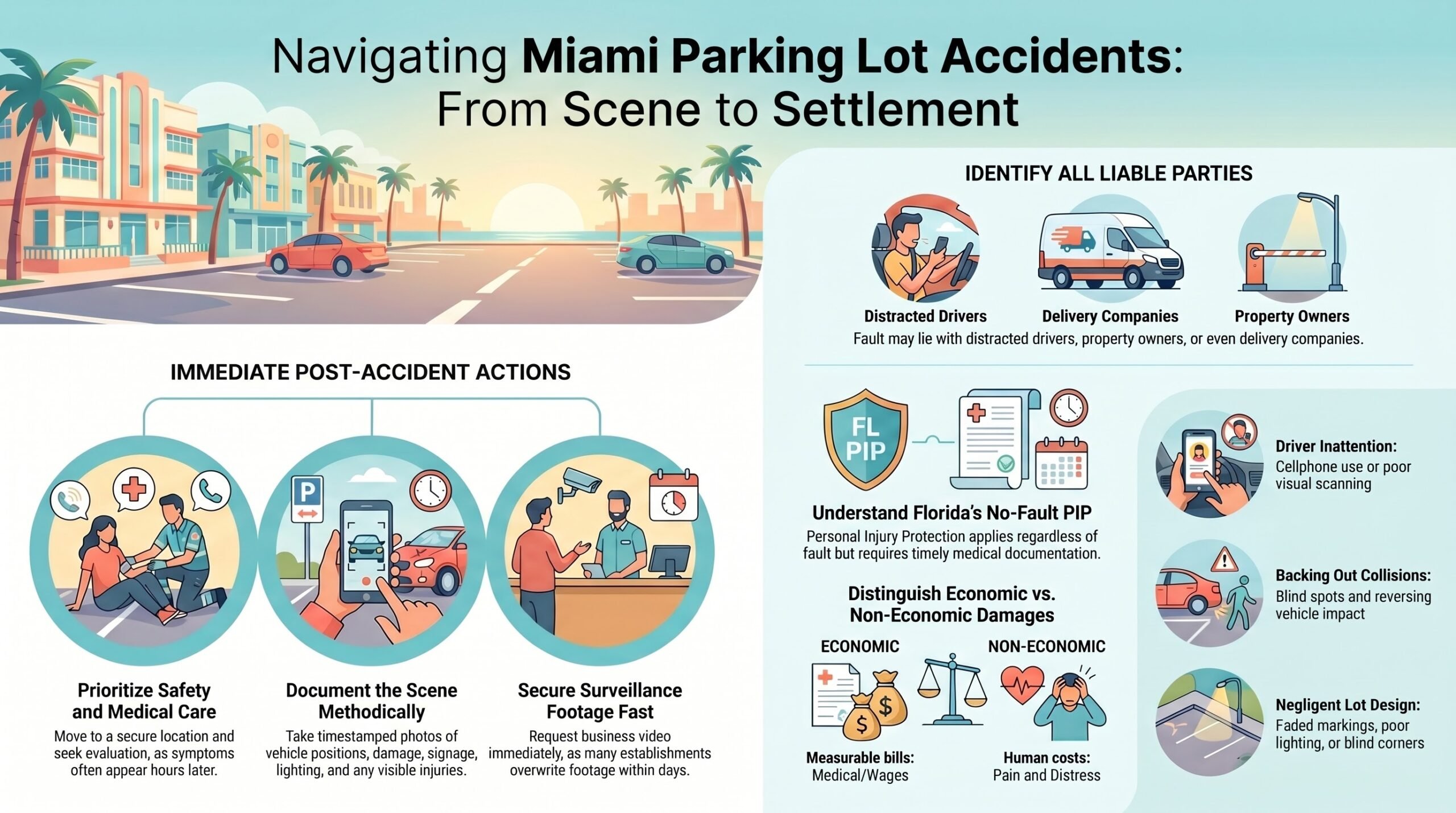
- Move to safety, check for injuries, call 911 if needed, and seek prompt medical care because symptoms may appear hours after a parking lot crash.
- Document the scene with photos, witness contacts, vehicle positions, damage, signage, and any visible injuries to preserve evidence for claims.
- A Miami parking lot car accident injury lawyer can secure surveillance footage, investigate fault, and identify liable drivers, property owners, or other parties.
- Parking lot claims often involve disputed fault, private property issues, skepticism about low-speed injuries, and hazards such as poor lighting, obscured markings, or backing collisions.
- An attorney can handle insurers, calculate medical costs and lost income, and negotiate or litigate if a fair settlement is denied.


How We Can Help With Your Miami Parking Lot Car Accident Injury Claim
Find your way through the aftermath of a parking lot collision with informed legal guidance, as these claims often involve disputed fault, surveillance evidence, and insurance challenges that can affect the outcome. A qualified legal team can carefully organize the claim, allowing injured individuals to focus on recovery and the well-being of those who depend on them.
Their support often begins with prompt evidence preservation, including photographs, video requests, repair records, and scene documentation. They may also gather witness statements, identify responsible parties, and manage communications with insurers to reduce pressure on the claimant. Through a structured approach, counsel can present a clear account of events and losses, while guarding against delay tactics or unfair blame.
This service-oriented representation helps families pursue accountability without unnecessary conflict. By handling deadlines, paperwork, and negotiations with diligence, an attorney can effectively protect the client’s interests and strengthen the claim from the earliest stages onward.
OUR CONSULTATIONSARE FREE
START YOUR FREE CASE REVIEW

Understanding Miami Parking Lot Car Accident Injury Cases
In the context of Miami traffic conditions, parking lot car accident injury cases often involve a distinct set of legal and factual issues that differ from collisions on public roadways. These matters frequently turn on careful review of surveillance footage, vehicle positioning, pedestrian activity, and property design, all of which may affect liability and recovery.
A Miami parking lot claim may require analysis of private property rules, insurance coverage questions, and duties owed by drivers, pedestrians, and property owners. Because speeds are lower, insurers sometimes minimize harm, yet injuries can still be significant and deserving of attentive advocacy. Accident causation is commonly evaluated through photographs, witness statements, repair patterns, and medical records that connect the event to physical recovery.
A thorough legal approach helps families, caregivers, and community-minded individuals pursue fair outcomes while preserving dignity and accountability. Understanding these cases allows injured people to make informed decisions and seek support that protects health, financial stability, and long-term well-being.
Common Causes of Miami Parking Lot Car Accidents
Several recurring factors contribute to parking lot collisions in Miami, often involving driver inattention, backing out accidents, and unsafe traffic flow patterns. Poor lot design can further increase risk by limiting visibility, creating congestion, and failing to effectively separate vehicles from pedestrians. Pedestrian right-of-way issues also play a significant role, particularly when drivers do not yield in crosswalks or shared driving lanes.
Driver Inattention
Driver inattention remains one of the most frequent causes of parking lot collisions in Miami, where constant vehicle movement, pedestrian traffic, and confined driving lanes demand close attention. Even brief lapses can place shoppers, children, and other drivers at risk. Cellphone distraction often prevents a motorist from noticing crossing pedestrians, shopping carts, or vehicles entering travel lanes. Poor visual scanning also contributes to crashes, especially when a driver focuses on one hazard and misses another nearby.
In many cases, inattention arises from multitasking, fatigue, unfamiliar surroundings, or conversations inside the vehicle. Safe parking lot travel requires patience, low speeds, and active observation of everyone sharing the space. When a driver fails to give full attention to these conditions, the likelihood of preventable harm rises markedly, affecting families, workers, visitors, and community safety.
Backing Out Collisions
Another frequent source of parking lot crashes in Miami involves vehicles backing out of parking spaces without a clear view of approaching traffic, pedestrians, or nearby obstacles. These incidents often occur when drivers reverse too quickly, fail to pause, or rely too heavily on mirrors alone. Effective blind spot awareness is crucial because children, shoppers, and carts may enter the vehicle’s path unexpectedly. Although newer cars may include warning systems, parking sensor limitations can reduce their reliability in crowded or noisy environments.
Responsible drivers are expected to check all directions, proceed slowly, and yield when uncertainty exists. When a backing vehicle strikes another car or person, injuries may range from soft tissue harm to fractures. Careful backing practices support safer parking areas and reflect the shared duty to protect neighbors, visitors, and families.
Poor Lot Design
In many Miami parking areas, poor lot design creates conditions that increase the likelihood of collisions even when motorists attempt to proceed cautiously. Narrow lanes, blind corners, confusing traffic flow, and limited visibility at exits can leave drivers with too little time to react safely.
Additional hazards often arise when property owners fail to address inadequate signage, faded markings, or obstructed directional arrows. Poor drainage may also contribute to unsafe conditions by allowing standing water to conceal potholes, reduce tire traction, and distort a driver’s judgment of distance or surface stability. When these design defects remain uncorrected, even attentive motorists may encounter unreasonable risks.
A careful review of site layout, maintenance practices, and safety features can help identify whether negligent design or upkeep contributed to a parking lot crash and resulting injuries.
Pedestrian Right-Of-Way
Maneuvering a parking lot safely requires motorists to remain alert to pedestrians who may be walking between vehicles, crossing travel lanes, or approaching store entrances with limited protection. In these confined areas, drivers often focus on open spaces, reversing vehicles, or traffic flow, while overlooking people on foot.
Pedestrian right-of-way is frequently violated when motorists ignore crosswalk priority, fail to observe yield signs, or proceed without checking blind spots. Children, older adults, and shoppers carrying bags face increased risk because their movements may be slower or less predictable.
A responsible driver is expected to reduce speed, watch continuously, and stop when pedestrians are present. When that duty is neglected, serious injuries can occur, even at low speeds, making vigilance and courtesy vital elements of parking lot safety for everyone.


Legal Rights of Miami Parking Lot Car Accident Injury Victims
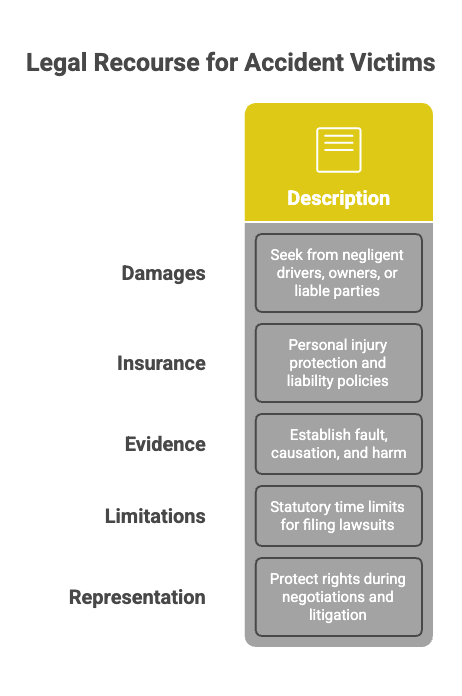
Accountability often begins with a clear understanding of the legal protections available after a parking lot collision. Miami injury victims may pursue compensation for medical costs, lost income, property damage, and pain caused by another party’s careless conduct. Florida law also recognizes comparative negligence, which may reduce recovery if an injured person shares fault, rather than barring a claim entirely.
These rights support fairness, responsibility, and meaningful recovery for affected families.
- Victims may seek damages from negligent drivers, owners, or other liable parties.
- Insurance coverage may apply through personal injury protection and liability policies.
- Evidence can help establish fault, causation, and the extent of physical and financial harm.
- Statutory limitations restrict the time allowed to file a lawsuit in court.
- Legal representation may help protect rights during insurer negotiations and civil litigation.
An informed understanding of these protections helps community-minded individuals respond lawfully while respecting the needs of others harmed by preventable incidents in parking lots.
Steps to Take After a Miami Parking Lot Car Accident Injury
After a Miami parking lot car accident injury, the first priority is to ensure immediate safety by moving to a secure location when possible and contacting emergency services if needed. It is also important to document the scene carefully, including vehicle positions, visible damage, injuries, and any relevant conditions that may have contributed to the incident. Prompt medical attention remains crucial, as timely evaluation can protect both health and any future injury claim.
Ensure Immediate Safety
Prioritize safety by moving to a secure location, if possible, and checking for injuries among all involved parties. In a Miami parking lot collision, this initial response helps reduce further harm and allows those present to assist vulnerable drivers, passengers, and pedestrians with calm efficiency. If vehicles can be moved safely, relocating them away from active lanes may improve traffic flow and reduce the risk of a secondary impact.
When conditions present fire, leaking fuel, or unstable vehicle positions, immediate evacuation may be necessary. Anyone with serious pain, bleeding, dizziness, or limited mobility should remain as still as possible until emergency personnel arrive, unless a greater danger exists. Hazard lights should be activated, and bystanders should be directed carefully so that the area remains orderly, accessible, and safe for those providing aid.
Document The Scene
Scene documentation begins with a careful, methodical record of the parking lot, the vehicles, and any visible injuries, because these details may later clarify how the collision occurred and who may bear responsibility. Helpful documentation often includes timestamped photos of vehicle positions, damage, skid marks, debris, signage, lighting conditions, and any obstructions that may have affected visibility.
Individuals may also prepare scene sketches that show traffic flow, parking spaces, directional arrows, and the relative locations of each vehicle before and after impact. Witness names and contact information should be gathered when possible, along with notes describing statements made at the scene. A prompt, organized record can protect everyone involved, support truthful reporting, and preserve facts that may otherwise fade or change as time passes after the incident.
Seek Medical Attention
Medical evaluation should follow as soon as immediate safety concerns and scene documentation have been addressed, because injuries from a Miami parking lot collision are not always apparent at the time of impact. Even low-speed crashes may cause concussions, soft tissue damage, internal bleeding, or spinal strain that worsens without an urgent assessment.
Prompt treatment protects health and supports those who depend on the injured person’s stability and care. A physician can identify hidden trauma, recommend follow-up testing, and create records that connect symptoms to the incident. This documentation may also reduce disputes with insurers and strengthen any future legal claim. If pain, dizziness, numbness, or limited movement appear hours later, further examination remains crucial, since delayed complications are common after seemingly minor parking lot impacts and injuries.
How a Miami Parking Lot Car Accident Injury Lawyer Can Help You
In the aftermath of a parking lot collision, a Miami parking lot car accident injury lawyer can provide vital guidance by evaluating the facts of the incident, identifying potentially liable parties, and protecting the injured person’s legal interests from the outset. Through a Free consultation, counsel may explain rights, outline practical next steps, and support informed decisions that help families and communities move forward responsibly.
A Miami parking lot car accident injury lawyer can clarify rights, identify liability, and guide injured individuals toward informed next steps.
A lawyer may assist by focusing on:
- Evidence preservation, including photos, video, statements, and repair records
- Communication with insurers to reduce confusion and prevent harmful misstatements
- Investigation of property owner, driver, or third-party negligence
- Calculation of medical costs, lost income, and other recoverable damages
- Negotiation or litigation when fair settlement efforts do not succeed
This assistance often brings structure to a difficult period. By managing deadlines, gathering evidence, and advocating professionally, legal counsel helps injured individuals pursue accountability while remaining focused on recovery and service to others.
Long-Term Effects of Miami Parking Lot Car Accident Injuries
Parking lot car accident injuries may produce consequences that extend well beyond the initial medical response, affecting an individual’s daily function and overall well-being. Common long-term effects include chronic pain challenges, emotional trauma effects, and lasting mobility limitations, each of which can interfere with work, independence, and routine activities. A clear understanding of these continuing issues is often important when evaluating the full impact of a Miami parking lot car accident injury.
Chronic Pain Challenges
Persistence often defines the aftermath of a Miami parking lot car accident, as chronic pain can continue long after visible injuries appear to have recovered. Lingering neck, back, shoulder, and joint discomfort may limit mobility, disrupt sleep, and reduce a person’s ability to work, drive, or assist family members and neighbors.
Effective care often requires Chronic management, including medical evaluation, physical therapy, monitored medication use, and practical adjustments to daily routines. Pain psychology may also support treatment by helping patients understand pain patterns, improve coping strategies, and maintain participation in rehabilitation.
In many cases, consistent documentation of symptoms, treatment responses, and functional limitations is important for demonstrating how persistent pain affects long-term health, independence, and the capacity to continue serving others with consistency, safety, and dignity over time.
Emotional Trauma Effects
Emotional trauma may become one of the most enduring consequences of a Miami parking lot car accident, even when physical injuries begin to improve. Survivors may experience fear, sleep disruption, irritability, and persistent anxiety that interferes with daily responsibilities and community involvement.
In some cases, post-traumatic stress develops, causing intrusive memories, heightened vigilance, and avoidance of parking areas or driving situations. These reactions can affect concentration, work performance, and confidence in routine tasks. Emotional distress may also contribute to relationship strain, as family members and caregivers attempt to provide support while managing their own concerns.
When these effects remain untreated, they may hinder recovery and diminish overall well-being. Compassionate legal guidance often helps injured individuals pursue resources for counseling, stability, and the long-term support necessary to rebuild their lives.
Lasting Mobility Limitations
In the aftermath of a Miami parking lot car accident, lasting mobility limitations may alter nearly every aspect of a person’s daily life, particularly when injuries affect the back, hips, knees, shoulders, or joints. Ordinary tasks, including walking, lifting, driving, or climbing stairs, may become painful, slow, or unsafe.
These limitations often require ongoing rehabilitation, workplace accommodations, and assistance from family members or caregivers. Physicians may recommend assistive devices, such as canes, braces, or walkers, to improve stability and reduce the risk of further harm. Physical therapy may include gait training to restore balance, coordination, and strength, although progress can be gradual.
For those committed to serving injured individuals, understanding these long-term consequences is vital. Mobility loss can diminish independence, limit employment, and increase financial and emotional strain, making thorough legal and medical support especially important.
Proving Liability in Miami Parking Lot Car Accident Injury Cases
Establishing liability in a Miami parking lot car accident injury case often requires a careful review of how the collision occurred, which driver had the duty to yield, and whether either party failed to use reasonable care under the circumstances. Relevant evidence may include photographs, vehicle damage patterns, scene measurements, and statements from witnesses.
Because parking lots contain intersecting lanes, pedestrians, and backing vehicles, fault is not always obvious. A thorough investigation commonly examines traffic markings, stop signs, lighting conditions, and whether a driver was distracted, speeding, or reversing without checking blind spots. Attorneys often assess witness credibility to determine whether accounts are consistent with physical evidence and the sequence of impacts.
Prompt surveillance preservation can also be crucial, since many businesses routinely overwrite video footage. Medical records, repair estimates, and electronic vehicle data may further help connect negligent conduct to the injuries suffered, allowing responsible parties to be identified accurately and with confidence.
Dealing With Insurance Companies After a Miami Parking Lot Car Accident Injury
Once liability has been examined, attention often turns to how insurance companies handle a car accident injury claim involving a Miami parking lot. Insurers commonly review medical records, repair estimates, photographs, and statements while evaluating exposure and determining claim valuation. Their goal is often to resolve matters efficiently, but policyholders should recognize that financial interests still guide many decisions.
A careful approach helps protect injured people and the families who depend on them. Insurance representatives may use adjuster tactics such as requesting broad recorded statements, minimizing pain complaints, or questioning whether a low-speed impact caused meaningful harm. Clear documentation, polite communication, and consistent treatment records can support a fair response.
Legal counsel often helps by organizing evidence, addressing misleading assumptions, and communicating in a manner that promotes accuracy rather than pressure. This measured advocacy can help injured individuals remain focused on recovery and service to others while their rights and losses are presented with care.
What to Expect During a Miami Parking Lot Car Accident Injury Claim Process
A Miami parking lot car accident injury claim typically begins with filing the initial claim and gathering crucial evidence, including photographs, witness statements, and medical records. The process often continues with insurance company negotiations, during which liability, damages, and settlement value are closely examined. If a fair resolution is not reached, the claim may proceed to litigation, where the dispute is addressed through the formal legal process.
Filing The Initial Claim
Initiating the claim typically begins with prompt notice to the applicable insurance carrier, supported by basic facts about the parking lot collision, the parties involved, and any known injuries. This first report helps open the file and establish the claim timeline. Insurers commonly request initial paperwork, including contact information, policy details, medical treatment dates, and a brief description of how the incident occurred.
At this stage, the injured person may also be asked to provide statements about symptoms, vehicle damage, and immediate expenses. Careful, accurate responses can reduce misunderstandings and help those assisting with the matter act responsibly. A lawyer may guide communications, explain filing requirements, and monitor deadlines. Early attention to procedural steps often strengthens organization, promotes fair review, and supports a more orderly path toward resolving the parking lot injury claim.
Gathering Key Evidence
In the course of a Miami parking lot car accident injury claim, gathering essential evidence often becomes one of the most important parts of the process. Attorneys and claimants typically work to preserve photographs, medical records, repair estimates, and scene details before conditions change. Prompt action can protect facts that may later help clarify how the collision occurred and who was affected.
Reliable support may also include video evidence from surveillance cameras, dashcams, or nearby businesses. Witness statements often provide helpful context about vehicle movement, speed, visibility, and driver conduct. In many cases, careful documentation of injuries, treatment, and daily limitations strengthens the overall claim. By assembling accurate records early, the injured person is better positioned to pursue accountability and promote fairness, responsibility, and care for everyone affected by the incident.
Insurance Company Negotiations
Navigate insurance company negotiations with careful preparation, because insurers often begin the claim process by reviewing liability, questioning the extent of injuries, and examining whether the requested compensation is supported by records. During this stage, adjusters may request statements, medical authorizations, repair estimates, and proof of lost income. Clear documentation helps present the facts responsibly and protects the interests of everyone affected.
A Miami parking lot car accident claim often involves strategic communication and patience. Insurers may rely on claim tactics designed to reduce payouts or shift fault, especially when damage appears minor. Consistent records, prompt responses, and organized evidence can strengthen credibility.
Counsel often monitors correspondence, identifies unfair pressure, and explains settlement timelines without creating false expectations. This measured approach promotes accountability, informed decision-making, and service to injured individuals and their families.
Settlement Or Litigation
Evaluating whether a parking lot accident claim will settle or proceed to litigation depends on the strength of the evidence, the severity of the injuries, and the parties’ willingness to resolve disputed issues. A clear liability picture, complete medical records, and credible witness statements often increase the likelihood of a fair settlement.
When insurers challenge fault, minimize damages, or delay meaningful offers, litigation may become necessary to protect the injured person’s interests and secure accountability. The Settlement timeline can vary from several months to longer periods, especially when treatment is ongoing or future care must be valued carefully.
Litigation costs also require consideration, because filing fees, expert analysis, and discovery can affect strategy. An attorney’s role is to guide the process with diligence, so informed decisions can support recovery, responsibility, and community well-being.
Compensation for Miami Parking Lot Car Accident Injury Damages
Accountability often extends beyond vehicle repairs after a parking lot collision, as an injured person may be entitled to compensation for medical expenses, lost income, pain and suffering, and other related losses. In Miami, a claim may also address rehabilitation costs, future treatment needs, transportation to appointments, and household services made necessary by the injury. When providers or insurers assert medical liens, those claims may affect the net recovery and should be evaluated carefully.
A thorough assessment of damages helps ensure that the responsible party and any applicable insurer contribute fairly to the injured person’s recovery and stability. In cases involving egregious misconduct, punitive damages may be pursued to address especially harmful behavior and reinforce community safety. Documentation remains crucial, including records of treatment, work absences, prescriptions, and professional opinions regarding ongoing limitations.
By pursuing full compensation with diligence and integrity, injured individuals may obtain the resources needed to mend, support their families, and continue serving others with greater confidence.
Economic vs Non-Economic Damages in Miami Parking Lot Car Accident Cases
Miami parking lot car accident claims often involve both economic damages, such as medical bills, lost wages, and vehicle repair costs, and non-economic damages, including pain, suffering, and reduced quality of life. This distinction matters because each category reflects a different type of harm and may require different forms of supporting evidence. In parking lot accident cases, proving these damages typically depends on medical records, employment documents, repair estimates, and other evidence that connects the losses to the collision.
Economic Damages Overview
In parking lot accident claims, economic damages refer to the measurable financial losses caused by the collision, while non-economic damages address the harder-to-quantify personal consequences, such as pain, suffering, and diminished quality of life.
Economic damages commonly include emergency care, follow-up treatment, rehabilitation costs, medication expenses, lost wages, and property damage. These losses are documented through bills, invoices, repair estimates, employment records, and other financial evidence. In Miami parking lot cases, careful calculation helps ensure that injured people are not left bearing costs caused by another party’s negligence.
A lawyer often reviews current expenses and projected future medical needs, especially when recovery disrupts work or daily responsibilities. This process supports fair compensation and allows families, caregivers, and community-minded individuals to focus on recovery, stability, and continued service to others after a preventable accident.
Non-Economic Losses Explained
Non-economic losses address the personal harm that follows a parking lot collision, even when those effects do not appear on a bill or wage statement. These damages recognize the human consequences of injury, including physical pain, emotional distress, inconvenience, reduced enjoyment of daily life, and strain on close relationships. In Miami parking lot accident cases, such losses matter because recovery should reflect the full impact on a person’s well-being, not only measurable expenses.
Thoughtful pain valuation considers how symptoms alter sleep, mobility, concentration, and participation in family or community responsibilities. Careful loss quantification also accounts for anxiety, embarrassment, or lasting discomfort that can limit service, caregiving, and ordinary independence. By acknowledging these harms, non-economic damages support a more complete and compassionate view of justice for those harmed and their families.
Proving Parking Lot Damages
Establishing damages in a parking lot collision requires more than listing losses, because every category of harm must be supported by credible evidence and tied to the incident itself. Economic damages often include medical bills, rehabilitation costs, lost wages, and vehicle repair expenses, each of which is proven through records, invoices, and employer statements.
Non-economic damages require a different showing. Pain, emotional distress, inconvenience, and reduced quality of life are usually demonstrated through treatment notes, testimony from family members, and consistent personal documentation. In many cases, photographic evidence helps connect visible injuries, property damage, and scene conditions to the claimed losses.
When fault or the severity of impact is disputed, expert reconstruction may clarify how the collision occurred and why the resulting injuries and hardships merit full, service-minded consideration under Florida law.
When a Miami Parking Lot Car Accident Injury Case Goes to Trial vs Settlement
For many injured drivers and pedestrians, a Miami parking lot car accident claim resolves through settlement when liability is reasonably clear, medical records support the extent of harm, and the parties can agree on fair compensation. In those matters, careful settlement valuation often considers treatment costs, future care, lost income, and the daily impact of pain and limitation on work, family, and community service.
A case may proceed to trial when fault is disputed, insurers minimize injuries, or settlement offers fail to reflect documented losses. Trial can also become necessary when witness credibility, surveillance footage, or vehicle damage requires a judge or jury to weigh competing narratives. Effective counsel prepares trial strategies that organize evidence, explain medical findings, and present damages in a disciplined way.
Whether pursuing settlement or trial, the legal process should remain focused on accountability, restoring stability, and helping injured people secure resources needed to continue caring for themselves and others after a serious parking lot collision.
The Statute of Limitations for Miami Parking Lot Car Accident Injury Cases
In Miami parking lot car accident injury cases, the statute of limitations sets a firm deadline for filing a lawsuit, and missing that deadline can bar recovery regardless of the claim’s underlying validity. Florida law generally provides a limited period to bring negligence actions, so careful attention to dates is crucial for anyone seeking accountability and fair compensation after a parking lot collision.
This deadline promotes orderly resolution of disputes, preserves evidence, and supports responsible service to injured people and their families. Certain circumstances may affect the filing period, including Toll extensions recognized by law when a defendant cannot be located or other specific conditions apply. In limited situations, Renewal exceptions may also become relevant, though they are narrow and fact-dependent.
Because these rules are applied strictly, claimants benefit from maintaining records, tracking medical treatment, and promptly documenting losses. A timely filing protects the opportunity to pursue recovery and to encourage safer conduct within Miami parking lots for all.
When to Contact a Miami Parking Lot Car Accident Injury Lawyer
Awareness of the filing deadline should be matched by prompt legal action after a Miami parking lot collision causes injury. Contact is often appropriate soon after emergency needs are addressed, especially when injuries appear delayed, fault is disputed, or vehicle damage seems minor but circumstances are unclear. Early communication helps preserve photographs, witness accounts, surveillance footage, and medical documentation before details fade.
Prompt outreach also supports early reporting to insurers and other responsible parties, while respecting insurance timing requirements that can affect coverage decisions. A lawyer may be contacted when a person faces pressure to give statements, receives conflicting information, or is uncertain about medical bills, lost wages, or liability.
Families who value protecting others may also seek guidance when a child, an older adult, or a rideshare passenger is injured in a parking lot crash. Reaching out quickly enables informed decisions, organized records, and careful compliance with notice obligations, without waiting until the situation becomes more difficult later.
Why You Need an Experienced Miami Parking Lot Car Accident Injury Lawyer
Secure legal guidance can make a meaningful difference after a parking lot collision, because these cases often involve disputed fault, limited physical evidence, overlapping insurance questions, and injuries that are initially underestimated. An experienced Miami parking lot car accident injury lawyer helps clarify liability, document losses, and protect the injured person from avoidable mistakes.
Parking lots present uncommon hazards, including unclear right-of-way, poor lighting, distracted drivers, and surveillance footage that may be erased quickly. Effective Evidence preservation can consequently determine whether a claim succeeds. Counsel can obtain video, witness statements, photographs, repair records, and medical documentation before crucial details disappear.
Experience also matters when addressing Insurance nuances, such as policy exclusions, comparative fault arguments, and disputes over low-speed impact injuries. With informed advocacy, the injured person is better positioned to pursue fair compensation, maintain focus on recovery, and continue serving family, work, and community responsibilities without unnecessary legal obstacles or added financial strain.
How to Choose the Right Miami Parking Lot Car Accident Injury Lawyer for Your Case
Choosing the right Miami parking lot car accident injury lawyer requires more than selecting a familiar name or responding to advertising, because the quality of representation can directly affect how fault is investigated, how evidence is preserved, and how insurers evaluate the claim. A careful review of experience, communication practices, and professional reputation helps families make informed decisions that protect injured people and support accountability.
Useful selection factors include prior results in parking lot collision cases, responsiveness during Client interviews, and a lawyer’s ability to explain strategy clearly. Attention should also be given to Fee structures, including contingency terms, litigation costs, and whether expenses are advanced or deducted later. A dependable attorney should demonstrate respect for clients, organize records efficiently, and pursue fair compensation without unnecessary delay.
Reviews, disciplinary history, courtroom readiness, and local knowledge may also indicate whether counsel can serve the client’s interests faithfully while guiding the case with diligence, integrity, and compassion.
About The Law Offices of Anidjar & Levine
With a longstanding presence in Florida injury litigation, The Law Offices of Anidjar & Levine represents people injured in Miami parking lot car accidents with an emphasis on responsive service, careful case preparation, and practical legal guidance.
The firm approaches each matter with disciplined attention to evidence, liability, and the client’s immediate needs after an unexpected collision.
Its firm history reflects continued work on behalf of injured Floridians and families seeking accountability, medical support, and financial recovery.
Attorneys and staff emphasize communication, timely updates, and a structured process intended to reduce confusion during difficult periods.
This service model aligns with individuals who value helping others, because effective legal advocacy can protect household stability and support long-term care needs.
Client testimonials often describe accessibility, professionalism, and respect, which are important qualities when a case involves physical pain, lost income, and insurance disputes.
In Miami parking-lot accident claims, the firm’s role is to provide informed representation and dependable guidance at every stage.
Frequently Asked Questions
Can Parking Lot Security Footage Be Obtained Before It Is Deleted?
Yes, parking lot security footage can often be obtained before it is deleted if prompt action is taken. A timely written request for video preservation should be sent to the property owner or manager, because many systems overwrite footage quickly. Proper chain custody also matters, especially if the recording may support an insurance claim or legal case. Early follow-up helps protect the footage, preserve accuracy, and support those seeking fair resolution.
Do Parking Lot Accidents Affect No-Fault PIP Insurance Claims in Florida?
Yes, parking lot accidents can affect Florida no-fault PIP insurance claims because coverage generally applies regardless of fault when an insured suffers injuries from the use of a vehicle. The no-fault implications remain important, yet claim payment may depend on timely treatment, medical documentation, and policy compliance. Serious injuries may also involve PIP thresholds, which influence access to additional damages. Careful reporting and prompt care help protect benefits and support responsible recovery efforts.
What if the At-Fault Driver Was Working for a Delivery Company?
If the at-fault driver was working for a delivery company, the company may also bear responsibility under principles of employer liability and vicarious liability. That often applies when the driver was acting within the scope of assigned duties at the time of the collision. A careful review of employment status, delivery records, and company control is important. This helps injured parties identify all responsible sources of coverage and pursue fair compensation.
Can Poor Parking Lot Design Contribute to Accident Responsibility?
Yes, poor parking lot design can contribute to accident responsibility. Liability may extend beyond a driver when property conditions create foreseeable hazards that endanger visitors and those assisting others. Factors such as inadequate signage, poor lighting, obstructed sightlines, confusing traffic flow, or unsafe pedestrian paths may support a finding of shared fault. A careful investigation often examines maintenance records, design standards, prior incidents, and whether reasonable steps were taken to reduce preventable risks.
Are Accidents in Private Parking Lots Reported Differently Than Roadway Crashes?
Yes, accidents in private parking lots are often reported differently than roadway crashes. Police reporting may be limited because officers sometimes treat these incidents as private property matters unless injuries, intoxication, or major damage are involved. Even so, insurance notification remains crucial, since insurers evaluate fault and coverage regardless of location. Those assisting affected individuals should encourage documentation, witness collection, and prompt reporting to protect legal, financial, and safety interests.
—————————
Parking lot collisions in Miami can lead to serious injuries, contested liability, and complex insurance issues.
Understanding the common causes of these accidents, the legal options available, and the important steps to take afterward can help strengthen a claim and protect valuable rights.
With experienced legal guidance from the Law Offices of Anidjar & Levine, injured parties may be able to pursue fair compensation for medical expenses, lost wages, and other damages.
Those seeking help from a Miami Car Accident Attorney can benefit from focused representation and practical support from the very beginning.