The Law Offices of Anidjar and Levine assists Lyft accident victims by preserving evidence, verifying the driver’s app status, identifying liable parties, and managing insurer communications.
Counsel helps properly report the crash, obtain medical documentation, value losses, and pursue compensation for treatment, lost income, and pain and suffering under Florida law.
Because Lyft claims often involve layered insurance coverage and disputed fault, early legal guidance can protect rights and strengthen recovery.
Learn more by speaking with a Miami Car Accident Lawyer. The sections below explain these issues in greater detail.
Main Takeaways
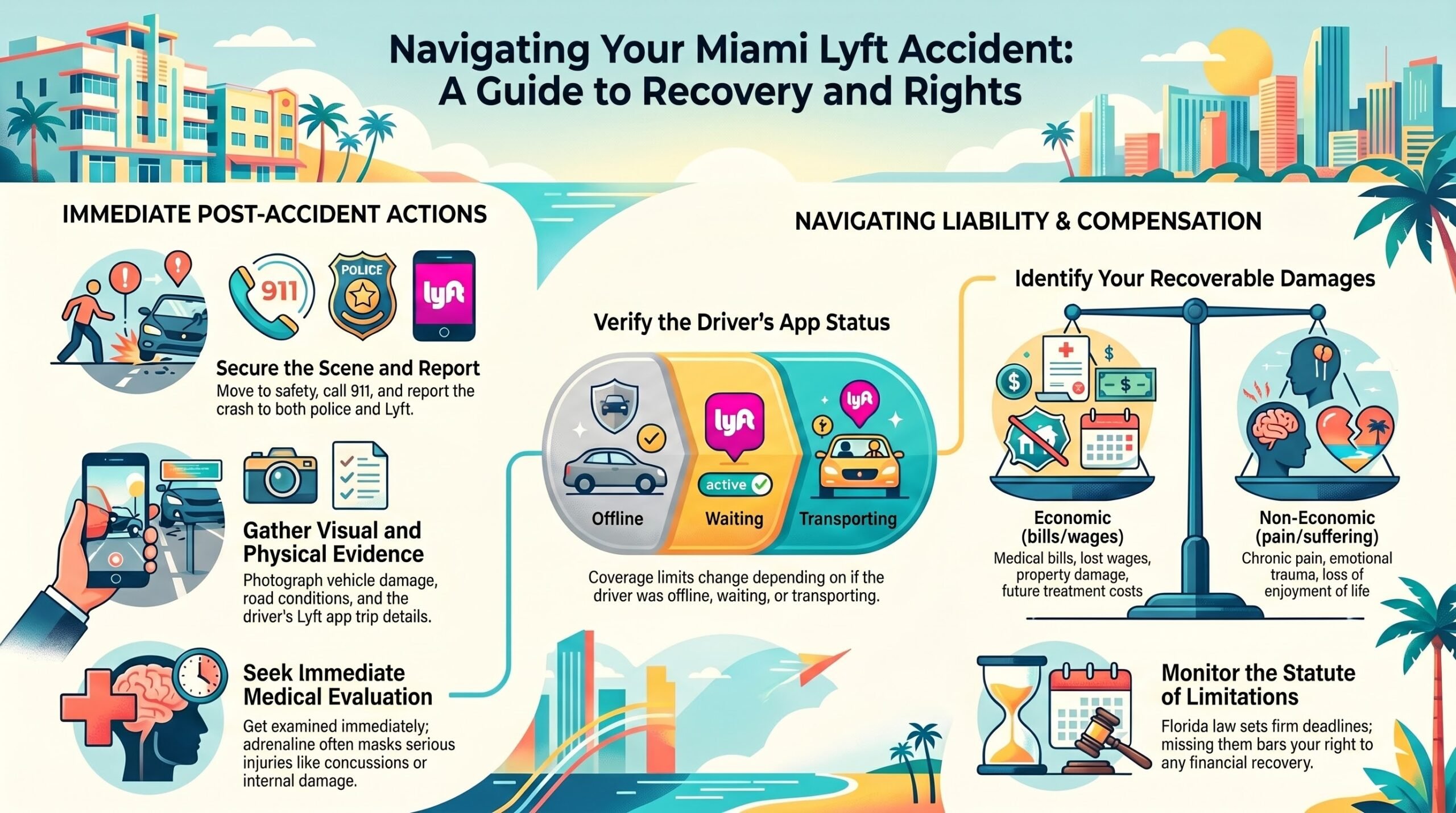
- Move to a safe location, call 911, and report the crash to police, Lyft, and the relevant insurance carriers as soon as possible.
- Photograph damage, injuries, road conditions, and app trip details, and collect witness names, driver information, and insurance details at the scene.
- Seek prompt medical care, follow treatment instructions, and keep records of diagnoses, bills, missed work, and daily limitations.
- A Miami Lyft accident injury lawyer can preserve evidence, manage communications with insurers, and avoid statements that may reduce compensation.
- Lyft claims depend on fault, injuries, and whether the driver was offline, waiting for a ride, or transporting a passenger.


How We Can Help With Your Miami Lyft Accident Injury Claim
After a Miami Lyft accident, effective legal representation can help protect an injured person’s rights and position the claim for a stronger recovery. Counsel can organize immediate steps, communicate with insurers, and help prevent avoidable mistakes that may weaken a valid demand for compensation and support.
A service-minded legal team can provide post-accident counseling that keeps the injured person informed, steady, and prepared for each stage of the process. Attorneys may gather records, preserve crucial evidence, coordinate necessary correspondence, and present a clear account of losses. They also offer Claim Documentation Tips, helping clients track medical visits, expenses, missed work, and daily limitations with accuracy and consistency. This structured support serves both the client and the broader goal of accountability.
By managing deadlines, reviewing statements, and assembling persuasive materials, counsel helps create an organized claim file that reflects the full impact of the accident and supports a fair financial outcome.
OUR CONSULTATIONSARE FREE
START YOUR FREE CASE REVIEW

Understanding Miami Lyft Accident Injury Cases
In Miami rideshare litigation, Lyft accident injury cases often involve a layered analysis of fault, insurance coverage, and the driver’s status in the app at the time of the collision. Courts and insurers examine whether the driver was offline, waiting for a ride request, or actively transporting a passenger, because each phase may trigger different coverage obligations under Florida law.
These cases also require careful attention to ride-share regulation, contractual terms, and the conduct of all parties. A service-minded claimant benefits from understanding how medical records, witness statements, app data, and crash reports shape the claim’s value and direction. Issues of passenger liability may arise when a rider’s actions affect safety or complicate the sequence of events, although such questions are highly fact-specific. A thorough legal review helps injured individuals protect their rights, support accountability, and pursue compensation in a manner that respects both community safety and responsible transportation practices.
Common Causes of Miami Lyft Accidents
Several recurring factors contribute to Lyft accidents in Miami, often arising from driver conduct and the demands of rideshare operations. Common causes include distracted Lyft drivers, speeding in heavy traffic, and fatigued rideshare driving, each of which can markedly increase the risk of a collision. Unsafe passenger pickups also remain a frequent concern, particularly in congested areas where quick stops and limited visibility can create hazardous conditions.
Distracted Lyft Drivers
Consider distracted driving one of the most persistent causes of Lyft accidents in Miami, particularly because rideshare drivers rely heavily on smartphone applications to accept trips, follow navigation, and communicate with passengers. This constant digital engagement can create mobile distractions that divide attention at critical moments. Roadway distractions, including unfamiliar intersections, pedestrians, cyclists, and sudden lane changes by other motorists, can further impair a driver’s ability to respond safely and responsibly.
When attention is compromised, even briefly, the risk of harming passengers, occupants of other vehicles, and people walking nearby increases markedly. Those who seek to protect and serve their communities often recognize that responsible rideshare operation requires sustained focus, careful observation, and disciplined decision-making. Identifying distraction as a contributing factor can be vital when evaluating liability after a Miami Lyft collision.
Speeding In Heavy Traffic
Accelerating through congested Miami streets often turns ordinary traffic pressure into a serious safety hazard for Lyft drivers, passengers, and nearby motorists. During rush hour, some rideshare drivers may exceed safe speeds to complete more trips, respond to navigation changes, or keep pace with aggressive traffic patterns. In dense conditions, even small increases in speed reduce stopping distance, narrow reaction time, and heighten the chance of chain-reaction collisions.
Heavy traffic also increases the risk of tailgating, especially when drivers attempt to pass, merge, or brake suddenly near intersections and exits. A speeding Lyft vehicle can place vulnerable road users, including pedestrians and cyclists, in immediate danger. Careful adherence to posted limits, traffic flow, and roadway conditions helps protect everyone involved and reflects the duty of care expected in passenger transportation services throughout Miami.
Fatigued Rideshare Driving
Fatigue presents another serious risk in Miami Lyft accidents, particularly after long shifts, late-night driving, or back-to-back trips with limited rest. In a service-centered city, many rideshare drivers work extended hours to meet demand, yet driver fatigue can quietly impair judgment, slow reaction time, and reduce awareness of changing road conditions.
Sleep deprivation may also affect decision-making, lane control, and the ability to respond safely to sudden hazards. A fatigued driver may miss traffic signals, overlook pedestrians, or misjudge stopping distance, creating preventable danger for passengers and others nearby. When evaluating these crashes, legal and insurance reviews often consider work patterns, trip histories, and available evidence showing exhaustion. Recognizing the role of fatigue helps injured people pursue accountability while encouraging safer practices that better protect the community.
Unsafe Passenger Pickups
At busy curbsides throughout Miami, unsafe passenger pickups remain a frequent cause of Lyft accidents. Drivers often stop abruptly, double-park, or pull into active traffic lanes to reach riders quickly. These hurried actions increase the risk to passengers, pedestrians, cyclists, and nearby motorists, who may have little time to react.
The danger grows in areas marked by curbside congestion, where visibility is limited, and traffic patterns change rapidly. Unmarked pickups also create confusion, causing riders to approach vehicles from unsafe directions or drivers to stop in prohibited spaces. A careful approach serves the well-being of everyone nearby. Safe pickups require lawful stopping locations, clear communication through the app, and patience from both drivers and riders. When these precautions are ignored, preventable injuries and serious collisions become more likely for all.


Legal Rights of Miami Lyft Accident Injury Victims
Rideshare-accident victims in Miami retain important legal rights when a Lyft driver’s negligence, another motorist’s misconduct, or a vehicle-related defect causes injury. Florida law may allow recovery for medical costs, lost income, pain and suffering, and other losses. Passenger rights may extend to occupants, pedestrians, cyclists, and sometimes family members affected by serious harm.
Miami Lyft accident victims may recover medical expenses, lost wages, pain and suffering, and other damages under Florida law.
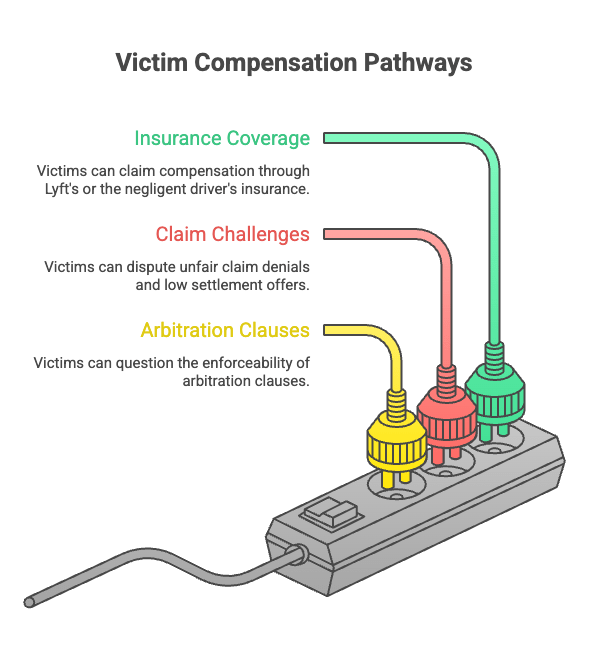
- Victims may pursue compensation through applicable Lyft insurance coverage, a negligent driver’s policy, or other liable parties.
- They may challenge unfair claim denials, low settlement offers, and attempts to minimize the extent of injury-related losses.
- They may question whether Arbitration clauses limit access to the courts, especially when contract terms are unclear or legally unenforceable.
These protections matter because fair compensation can support recovery, preserve household stability, and reduce burdens on caregivers and community members. A careful legal review often clarifies liability, available coverage layers, and whether multiple defendants share responsibility under Florida negligence principles and damages law.
Steps to Take After a Miami Lyft Accident Injury
After a Miami Lyft accident injury, the initial priority is to ensure immediate safety by moving to a secure location when possible and contacting emergency services. It is also important to gather critical evidence, including photographs, witness information, and details about the Lyft driver, vehicle, and crash scene. A prompt medical evaluation should follow, as timely treatment protects both health and the documentation of injury-related losses.
Ensure Immediate Safety
In the moments immediately following a Miami Lyft accident, immediate safety should remain the first priority for everyone involved. Passengers, drivers, and bystanders should assess urgent hazards, complete seatbelt checks, and determine whether anyone faces immediate danger from traffic, fire, or debris. If the vehicle can be moved safely, it should be relocated to a secure area away from active lanes.
When movement is unsafe or injuries appear serious, emergency services should be contacted without delay. Hazard lights should be activated, and traffic alerts may help warn approaching motorists and reduce the risk of secondary collisions. Individuals should remain calm, avoid sudden movements, and assist others only to the extent of their reasonable ability. A careful focus on safety protects recovery, supports emergency responders, and reflects responsible care for every person affected at the scene.
Gather Critical Evidence
At the scene, preserving and collecting evidence can strongly affect any later insurance claim or legal case arising from a Miami Lyft accident injury. A careful record may help protect passengers, drivers, and others who rely on fair accountability after a collision.
Useful evidence often includes photo documentation of vehicle damage, road conditions, traffic signals, skid marks, visible injuries, and the rideshare screen showing trip details. Names, phone numbers, license plate numbers, and insurance information should also be gathered when possible. If bystanders observed the event, witness statements can provide independent support regarding how the crash occurred. Notes about the time, weather, location, and the Lyft driver’s conduct may also prove valuable. A prompt, organized collection of these details can assist attorneys and insurers in evaluating responsibility accurately later.
Seek Medical Evaluation
Soon after a Miami Lyft accident, obtaining a prompt medical evaluation should be treated as a priority, even when injuries appear minor at first. Adrenaline can mask pain, and some conditions, including concussions, internal injuries, and soft tissue damage, may worsen without immediate assessment and treatment.
A physician’s examination also creates medical documentation that connects symptoms to the crash, which can protect both health and legal interests. Following all treatment instructions demonstrates diligence and a sincere commitment to recovery. When primary providers identify ongoing complications, specialist referrals may be necessary to address orthopedic, neurological, or rehabilitative needs. Timely follow-up care can reduce long-term harm and support a fuller return to daily responsibilities.
By seeking evaluation promptly, injured individuals put their wellbeing first and preserve important evidence for any future claim.
How a Miami Lyft Accident Injury Lawyer Can Help You
Navigating the aftermath of a Lyft accident often requires more than basic insurance guidance, and a Miami Lyft accident injury lawyer can provide focused legal support at each stage of the claim. Counsel helps clarify rideshare liability, preserve evidence, and protect passenger rights while clients devote attention to family, recovery, and community responsibilities.
- An attorney investigates the crash, gathers records, and identifies whether Lyft, another driver, or additional parties may share fault.
- Counsel manages insurer communications, accurately values losses, and resists tactics that minimize compensation or unfairly shift blame.
- Legal representation prepares negotiations or litigation, giving injured people a structured path toward accountability and practical resolution.
A lawyer also explains deadlines, filing requirements, and available insurance coverage in plain terms. This guidance can reduce confusion and support informed decisions that honor both personal needs and broader obligations to those who depend on the injured person’s stability, care, and consistent service.
Long-Term Effects of Miami Lyft Accident Injuries
Miami Lyft accident injuries may produce lasting consequences that extend well beyond the initial recovery period. Many individuals face chronic pain challenges and emotional trauma that affect daily functioning, employment, and overall quality of life. These long-term effects are often compounded by ongoing medical costs, which can create significant financial strain over time.
Chronic Pain Challenges
In the months following a Lyft accident, chronic pain can become one of the most disruptive long-term consequences of an injury. Persistent neck, back, joint, or nerve pain may limit mobility, interrupt sleep, and reduce a person’s ability to work, care for family, or continue serving others in daily life.
These ongoing symptoms often require consistent pain management, including medical evaluations, physical therapy, medication oversight, and lifestyle adjustments. Chronic fatigue may also develop when pain interferes with rest and routine activity, making recovery more difficult and prolonged. When discomfort remains unresolved, injured individuals may face repeated appointments, reduced endurance, and growing dependence on assistance. A careful legal review can help document these lasting effects, demonstrate the full scope of harm, and support claims for compensation that reflect future treatment needs.
Emotional Trauma Impact
Enduring emotional distress can become a significant long-term effect of a Lyft accident, even after visible physical injuries begin to mend. Survivors may experience fear, sleep disruption, irritability, and withdrawal from family, work, or community responsibilities. In some cases, symptoms develop into post-traumatic stress, affecting concentration, confidence, and the ability to travel without anxiety.
These emotional burdens often influence how a person serves others, since persistent distress can limit patience, energy, and daily engagement. Loved ones may notice mood changes or avoidance behaviors that strain important relationships. Healthy coping mechanisms, including counseling, structured routines, and support from trusted people, can help restore stability over time. When emotional trauma continues, careful legal guidance may help document its impact and support a fuller understanding of the accident’s long-term consequences for victims and families.
Ongoing Medical Costs
Over time, the financial impact of a Lyft accident may continue long after emergency treatment and initial recovery have ended. Many injured individuals require ongoing physician visits, prescription medications, rehabilitation, diagnostic imaging, and assistive devices. In more serious cases, future treatments may include surgery, pain management, home health support, or long-term therapy.
These expenses can exert sustained pressure on households already trying to care for others and maintain stability. Accurate cost forecasting helps estimate the likely value of ongoing medical needs, accounting for inflation, treatment frequency, and expert care. A careful assessment of ongoing medical costs also supports fair injury claims by showing how present injuries may affect future well-being. In Miami Lyft accident cases, documenting these projected expenses is often crucial to protecting an injured person’s long-term recovery and financial security.
Proving Liability in Miami Lyft Accident Injury Cases
Establishing liability in a Miami Lyft accident case requires a careful review of how the crash occurred, who was involved, and whether Lyft’s driver was actively using the app at the time of the collision. This analysis often begins with police reports, witness statements, electronic trip data, and photographs from the scene.
Attorneys may also rely on forensic reconstruction to clarify vehicle speed, braking, lane position, and impact angles. These details can help determine whether the Lyft driver, another motorist, or even a third party caused the crash. In some cases, ride-hailing regulations and company safety policies also shape the liability analysis, especially when questions arise about driver status, passenger pickup, or distracted driving.
A thorough investigation serves injured individuals and their families by identifying accountable parties and preserving evidence before it is lost. Clear proof of fault strengthens a claim and helps make certain that responsible parties are held to the duties they owed the public.
Dealing With Insurance Companies After a Miami Lyft Accident Injury
After a Miami Lyft accident, communication with insurance companies often becomes one of the most important stages of an injury claim. Insurers may quickly contact injured riders, drivers, or families to obtain statements and records that can influence the value of a case. Careful responses protect accuracy and preserve the ability to serve affected individuals responsibly.
A measured approach usually centers on claim documentation, including medical records, repair estimates, wage loss information, photographs, and correspondence. Thorough organization helps demonstrate losses clearly and reduces opportunities for unnecessary disputes. Insurance adjusters may question treatment, liability, or the extent of damages, making precise records especially important. In many matters, policy negotiation also requires close attention to Lyft coverage layers, the driver’s personal policy, and any uninsured or underinsured motorist benefits. Legal guidance can help make communications remain consistent, deadlines be met, and settlement discussions reflect the full impact of injuries, expenses, and ongoing care needs for everyone involved.
What to Expect During a Miami Lyft Accident Injury Claim Process
A Miami Lyft accident injury claim typically begins with reporting the crash to law enforcement, Lyft, and the appropriate insurance carriers. The process then centers on gathering crucial evidence, including medical records, accident reports, witness statements, and any available photographs or digital data. From there, claimants can expect a series of insurance claim stages and a settlement timeline that varies based on liability, injuries, and the strength of the supporting evidence.
Reporting The Lyft Crash
In the immediate aftermath of a Miami Lyft accident, prompt reporting is vital for preserving facts, documenting injuries, and protecting a potential claim. Those involved are generally expected to contact law enforcement so an official police report can be created, especially when injuries or significant property damage are present.
Notice to Lyft through the app is also important, as this starts the company’s internal incident process and may assist with insurance notification. Accurate, timely statements help public servants, medical providers, and claims representatives respond appropriately and responsibly. Individuals should remain factual, avoid speculation, and make certain basic identifying information is reported correctly. When serious harm is involved, counsel can help coordinate communications, reduce confusion, and support a process that respects everyone affected while protecting legal rights under Florida law.
Gathering Key Evidence
Beyond the initial reports, the strength of a Miami Lyft accident injury claim often depends on the quality and preservation of evidence gathered soon after the collision. Helpful documentation may include scene photographs, vehicle damage images, medical records, and contact information for all involved parties. Accurate photo timestamps can help establish sequence, visibility, road conditions, and the position of vehicles before they are moved.
Witness statements may also support a clearer account of what occurred, especially when memories begin to fade. If available, dash camera footage, traffic surveillance video, rideshare app screenshots, and repair estimates can further strengthen the factual record. A careful, service-minded approach to gathering these materials may protect the injured person’s interests while also promoting fairness, accountability, and a more complete understanding of the event for everyone affected thereafter.
Insurance Claim Stages
Steering through a Miami Lyft accident injury claim usually begins with notice to the relevant insurance carriers, followed by a review of available evidence, medical treatment records, and the rideshare driver’s status within the Lyft app at the time of the crash. This initial reporting helps preserve facts and supports informed advocacy for those affected.
The next stage often involves a Claim Investigation, during which insurers examine police reports, witness statements, photographs, vehicle damage, and policy details. Questions may arise regarding liability, coverage limits, and whether multiple policies apply. Medical documentation is then assessed to link injuries to the collision and accurately measure losses. Once the claim is documented, Settlement Negotiation may occur between representatives, with attention to fairness, accountability, and the injured person’s ongoing needs, while compliance with Florida requirements remains crucial throughout.
Injury Settlement Timeline
In a Miami Lyft accident injury claim, the settlement timeline often depends on the severity of the injuries, the clarity of fault, the availability of insurance coverage, and the time required to gather reliable medical and financial documentation. Early steps often include treatment, investigation, and medical billing review. Because delayed symptomatology can affect diagnosis and damages, prudent advocates may wait until physicians can better estimate recovery needs before finalizing the case valuation.
Once records, wage loss evidence, and liability findings are assembled, counsel may present a demand supported by a measured negotiation strategy. Insurers may respond quickly in straightforward claims, while disputed cases often require months of exchange. If long-term care is expected, structured settlements may be considered to protect injured individuals and support future needs. Patience and careful preparation often improve outcomes.
Compensation for Miami Lyft Accident Injury Damages
In the aftermath of a Miami Lyft accident, compensation may be available for a range of losses caused by another party’s negligence. Recovery often depends on insurance coverage, liability findings, and the evidence gathered soon after the collision. A careful claim can help injured people and their families restore stability while continuing to care for others.
Available compensation may include payment for medical treatment, rehabilitation, medications, transportation to appointments, and the cost of a rental car when a damaged vehicle cannot be used. It may also address lost wages when injuries prevent a victim from working or reduce the ability to earn income during recovery. Property damage, household assistance, and other practical accident-related expenses may also be considered. In more serious cases, compensation may reflect future care needs and long-term financial burdens. Because rideshare claims can involve multiple insurers, thorough documentation and prompt legal guidance are often important to protect the full value of a claim.
Economic vs Non-Economic Damages in Miami Lyft Accident Cases
In Miami Lyft accident cases, damages generally fall into two categories, economic and non-economic, each addressing a different aspect of the claimant’s losses. Economic damages typically include measurable financial harm such as medical expenses, lost income, and other out-of-pocket costs, while non-economic damages concern pain and suffering, emotional distress, and reduced quality of life. Establishing either form of damage requires persuasive evidence, as the strength of a claim often depends on clear documentation, credible testimony, and a direct connection between the accident and the reported losses.
Economic Damages Explained
Many Lyft accident claims in Miami fall into two broad categories of compensation: economic and non-economic damages. Economic damages are measurable financial losses resulting from the collision and its aftermath. These losses often include emergency care, hospital bills, rehabilitation costs, prescription expenses, and future medical treatment supported by records or expert review.
They may also include lost wages when injuries prevent a person from working, reduced earning capacity when long-term limitations affect employment, and property loss, such as damage to a vehicle, phone, or other belongings. In service-minded communities, understanding these damages helps injured individuals pursue resources that restore stability and support their families. A Miami Lyft accident lawyer typically gathers invoices, pay records, repair estimates, and medical documentation to present a clear, well-supported claim for fair recovery.
Non-Economic Losses Overview
Beyond medical bills and lost income, Miami Lyft accident claims often involve non-economic damages, which address the personal harm that does not appear on receipts or wage statements. These losses acknowledge the human consequences of a collision, including physical discomfort, emotional strain, diminished enjoyment of daily activities, and the impact of injuries on relationships and independence.
In service-oriented legal advocacy, attention to non-economic harm reflects concern for the whole person, not merely the financial record. Pain valuation considers how injuries affect comfort, sleep, mobility, and peace of mind. Life disruption may include missed family roles, diminished community involvement, and limits on hobbies or spiritual practice. In Miami Lyft cases, these damages help present a fuller picture of what the injured person has endured and what compassionate recovery should acknowledge for every affected individual.
Proving Damages In Claims
At the claim stage, proving damages requires clear evidence that links the Lyft accident to both measurable financial losses and the less visible effects of injury. Economic damages are usually established through medical bills, wage records, rehabilitation costs, and projected future care, supported by reliable calculation methodologies. Non-economic damages, including pain, emotional distress, and loss of normal life, require a fuller picture of the claimant’s daily limitations and recovery.
Attorneys often assemble treatment notes, employment documentation, photographs, and witness statements to show how the injury changed the person’s ability to work and serve family or community. In contested cases, expert testimony from physicians, vocational experts, or economists may strengthen the causation and valuation analyses. Consistent records and credible professional opinions often determine whether compensation reflects the true scope of harm suffered.
When a Miami Lyft Accident Injury Case Goes to Trial vs Settlement
In a Miami Lyft accident injury case, the path toward settlement or trial usually depends on the strength of the evidence, the extent of the injuries, and the parties’ willingness to dispute liability or damages. Many claims resolve through settlement negotiations when records, witness statements, and insurance findings strongly support the injured person’s position and encourage fair compensation.
A case may proceed to jury trials when fault remains contested, damages are disputed, or an insurer refuses to offer an amount that reflects medical needs, lost income, and lasting harm. Trial preparation often includes depositions, expert analysis, and careful presentation of Lyft’s coverage issues. Although settlement can reduce delay and uncertainty, a trial may better serve injured individuals when accountability and full valuation cannot be achieved voluntarily. A thoughtful legal strategy weighs cost, time, and risk while keeping the injured person’s recovery and long-term well-being at the center of every decision made.
The Statute of Limitations for Miami Lyft Accident Injury Cases
After a Miami Lyft accident, the statute of limitations sets a firm deadline for filing a personal injury lawsuit, and missing that deadline can bar recovery regardless of how strong the underlying claim may be. In Florida, these filing deadlines generally depend on the nature of the case, the date of injury, and which parties are involved.
Careful attention to the nuances of the statute is crucial because rideshare collisions may involve multiple insurers, comparative fault issues, or claims against non-driver entities. Certain circumstances can alter the standard time period, including cases involving minors, delayed discovery of injuries, or wrongful death. Accurate documentation, preserved evidence, and timely notice help protect the ability to pursue compensation that may support medical care, household stability, and long-term recovery.
For people committed to caring for family members and serving their communities, understanding these rules promotes responsible action and helps prevent avoidable loss of legal rights after a serious Miami Lyft accident, as well as financial hardship.
When to Contact a Miami Lyft Accident Injury Lawyer
Filing deadlines define the outer limit for legal action, but the decision to contact a Miami Lyft accident injury lawyer should usually occur much sooner. Early contact often helps preserve records, confirm insurance details, and organize a careful post-accident checklist while events remain fresh and verifiable.
Prompt communication is especially important when injuries require treatment, a Lyft driver or third party disputes fault, or important evidence may disappear. Timely witness outreach can help secure statements from passengers, pedestrians, and nearby drivers before memories fade. Families who prioritize service to others often benefit from acting quickly, because orderly legal guidance can reduce confusion and support responsible next steps for everyone affected. Reaching out soon after the crash may also assist with documenting expenses, gathering photographs, identifying surveillance footage, and tracking communications with insurers. Waiting too long can create avoidable gaps in proof, even when a valid claim exists. Early action supports clarity, accountability, and informed decision-making.
Why You Need an Experienced Miami Lyft Accident Injury Lawyer
Because Lyft accident claims often involve layered insurance policies, disputed liability, and digital evidence controlled by a rideshare company, experienced legal representation can be essential to protecting a claimant’s position. An experienced Miami Lyft accident injury lawyer understands how rideshare liability is analyzed, when corporate coverage may apply, and how prompt action preserves app records, trip data, and witness statements before they are lost.
Experienced counsel also helps claimants avoid mistakes that can weaken a case. Insurers may argue passenger negligence, driver error, or preexisting injuries to reduce payment, even when the injured person acted responsibly. A seasoned lawyer evaluates medical documentation, identifies all potentially liable parties, and presents a clear account of damages tied to treatment, lost income, and future needs. This guidance can support families who seek accountability not only for themselves, but also to promote safer transportation practices and protect others in the community from preventable harm.
How to Choose the Right Miami Lyft Accident Injury Lawyer for Your Case
While many attorneys advertise rideshare accident services, selecting the right Miami Lyft accident injury lawyer requires careful attention to experience, case strategy, and client communication. A qualified attorney should understand Florida injury law, Lyft insurance issues, and the evidence needed to support a claim effectively.
An informed choice often begins with reviewing the lawyer’s record in rideshare and vehicle collision cases. Prospective clients may also consider whether the attorney clearly explains legal options, responds promptly, and treats injured people with dignity and respect. Client communication is especially important when families are under stress and need reliable guidance. Fee structures should be reviewed closely to avoid confusion about contingency arrangements, litigation costs, or case expenses. It is also helpful to assess whether the lawyer is prepared to negotiate firmly or proceed to trial when justice requires it. Careful selection can support recovery, accountability, and long-term stability for those harmed.
About The Law Offices of Anidjar & Levine
For injured individuals seeking legal representation after a rideshare collision, The Law Offices of Anidjar & Levine is recognized for providing focused advocacy in personal injury matters throughout Florida. The firm serves clients with an emphasis on responsiveness, practical guidance, and steady support during difficult periods. Its attorneys handle accident claims with careful preparation, clear communication, and attention to each client’s immediate and long-term needs.
The firm’s history reflects years of representing injured people in motor vehicle accident cases, including matters involving Lyft and other transportation services. This background supports a structured approach to investigating liability, documenting losses, and pursuing appropriate compensation under Florida law. Client testimonials often highlight accessibility, professionalism, and a service-oriented commitment to keeping families informed throughout the legal process.
Through disciplined case management and a client-centered philosophy, the firm aims to reduce uncertainty, protect legal rights, and help injured individuals pursue outcomes that support recovery and future stability.
Frequently Asked Questions
Can I Sue Lyft Directly After a Miami Rideshare Accident?
Yes, Lyft may be sued directly after a Miami rideshare accident, but it depends on the driver’s status, available insurance, and the company’s role in causing harm. Proper suit procedures matter, especially when preserving evidence and identifying all liable parties. Florida law and Lyft’s policy terms can affect liability limits, which may restrict recovery. Careful legal review helps injured people pursue compensation in a way that serves justice and community wellbeing.
Does Lyft Provide Coverage if the Driver Was Off-Duty?
Generally, Lyft does not provide off-duty coverage when a driver is not logged into the app or available for ride requests. In that circumstance, personal insurance usually applies, subject to the driver’s policy terms and exclusions. If the driver had ended a trip or gone offline, coverage questions should be reviewed carefully. Those seeking to serve injured parties well often promptly verify app status, policy language, and all available insurance sources.
Can Undocumented Immigrants File Miami Lyft Accident Injury Claims?
Yes, undocumented immigrants can file Lyft accident injury claims in Miami. Florida law generally permits injured individuals to pursue compensation regardless of immigration status, and undocumented individuals ‘ rights should be respected throughout the process. Courts and insurers are not supposed to deny valid claims solely on that basis. Immigration protections may also limit improper inquiry into status, helping injured people seek medical care, recover lost wages, and pursue other damages with greater security.
Are Children Injured in Lyft Accidents Handled Differently Legally?
Yes, children injured in Lyft accidents are often handled differently under the law. Their claims usually require parental consent for settlements, and courts may review agreements to protect the child’s interests. Medical assessments are especially important because injuries may affect development and require long-term care. Filing deadlines can also differ, since minors may receive extended time under state law. Careful legal guidance helps families pursue fair compensation while safeguarding the child’s future.
Can a Miami Lyft Accident Claim Affect My Future Rideshare Account?
A Miami Lyft accident claim generally does not affect a future rideshare account, unless the platform identifies policy violations or fraudulent activity. In some cases, an account may be suspended during an internal review, particularly when safety complaints arise. The claim itself is usually handled separately from ordinary rider access. However, fare adjustments, reimbursement disputes, or repeated incident reports could prompt closer scrutiny, especially when the platform seeks to protect passengers and drivers alike.
—————————
Maneuvering a Miami Lyft accident injury claim requires clear legal guidance and careful attention to evidence, liability, and insurance issues. Victims who understand their rights and act promptly are better positioned to protect their interests and pursue fair compensation.
The Miami Car Accident Lawyer team at The Law Offices of Anidjar & Levine provides experienced representation for those facing the aftermath of a rideshare collision. With informed legal support, injured individuals can move forward with greater confidence and a stronger foundation for recovery.