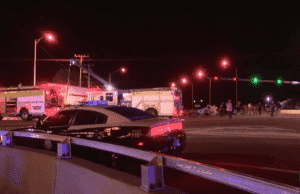
The Law Offices of Anidjar and Levine helps protect a claimant’s rights after a highway crash on Interstate I-195 by preserving evidence, organizing medical records, and managing insurer communications.
Counsel evaluates liability, identifies available insurance coverage, and calculates losses, including medical expenses, lost income, and long-term care needs.
Legal representation also helps avoid damaging statements, missed deadlines, and premature settlements that undervalue a claim.
The sections below explain the process, rights, and practical next steps, and additional guidance is available from a Miami Car Accident Attorney.
Main Takeaways
- An Interstate I-195 car accident lawyer preserves evidence, reviews crash reports, and investigates fault using photos, witnesses, vehicle data, and roadway conditions.
- Early legal help protects your rights, manages insurer communications, and helps prevent missed deadlines or damaging recorded statements.
- A lawyer gathers medical records, treatment notes, and expense proof to connect injuries to the crash and document full losses.
- I-195 cases may involve heavy traffic, commercial vehicles, chain-reaction collisions, and jurisdictional or insurance issues that require careful liability analysis.
- Attorneys prepare settlement demands, negotiate for fair compensation, and pursue litigation if the insurer refuses a reasonable resolution.
How We Can Help With Your Miami Interstate I-195 Car Accident Injury Claim
Navigate through the aftermath of an interstate collision with informed legal support that is tailored to the demands of an I-195 injury claim. Their role centers on guiding injured people and families with disciplined advocacy, so they can focus on recovery, stability, and continued service to those who depend on them daily.
An experienced legal team helps by organizing facts, preserving records, and building a clear presentation of losses. They coordinate medical documentation, communicate with insurers, and manage deadlines that could affect recovery. Through careful claim negotiation, they pursue fair compensation for treatment costs, lost income, property damage, and other related harm. They also explain each step in plain terms, helping clients make decisions with confidence rather than pressure.
When disputes arise, they prepare a strong case strategy and protect the client’s interests at every stage. This support provides structure, accountability, and practical direction during a difficult period, while honoring the client’s commitment to family, work, and community.
Understanding Miami Interstate I-195 Car Accident Injury Cases


In the context of interstate travel, I-195 car accident injury cases often involve a distinct set of legal and factual issues that can affect both liability and compensation. These matters require careful review of roadway conditions, vehicle damage, witness accounts, medical records, and official reports. Because I-195 connects communities and commercial routes, traffic patterns may influence how an event is reconstructed and evaluated.
OUR CONSULTATIONSARE FREE
START YOUR FREE CASE REVIEW

Interstate claims may also raise jurisdictional issues when drivers, insurers, or responding agencies come from different states. Determining where a claim should be filed, which laws apply, and how deadlines are calculated can shape the course of recovery. Injury cases on I-195 often demand prompt preservation of evidence and organized communication with insurers and providers. A service-minded legal approach focuses on protecting injured individuals, supporting families, and promoting accountability. By understanding the structure of these cases, those assisting others can better pursue fair outcomes and more informed decisions after serious highway collisions.
Common Causes of Miami Interstate I-195 Car Accidents
Interstate I-195 car accidents often result from a limited set of recurring factors that increase the likelihood of serious collisions. Among the most common are distracted driving, speeding, and other reckless behavior, impaired driving, and hazardous road conditions that reduce driver control and reaction time. A clear understanding of these causes helps frame how liability, negligence, and roadway safety concerns may be evaluated after a crash.
Distracted Driving Risks


Many collisions on I-195 begin with a moment of diverted attention, when a driver looks away from the road, focuses on a phone, adjusts a navigation system, or reacts to activity inside the vehicle. Even brief lapses can prevent a driver from recognizing slowed traffic, lane changes, or sudden hazards ahead. Common examples include phone distraction, eating, reaching for objects, and passenger distraction during stressful or routine travel.
Because conditions on interstate highways change quickly, distracted driving can place nearby families, commuters, and emergency responders at serious risk. A driver who is mentally, visually, or manually distracted may fail to maintain proper following distance or remain centered within a lane. Careful attention to the roadway protects others, reduces preventable harm, and supports a safer I-195 corridor for everyone who depends on it daily.
Speeding And Reckless Driving
Speeding and reckless driving are another major source of serious crashes on I-195, often amplifying the dangers posed by congestion, lane changes, and sudden stops. When drivers exceed posted limits or weave through traffic, they reduce reaction time and increase stopping distance, placing nearby families, commuters, and service workers at greater risk.
Courts, investigators, and safety professionals often examine speed-related psychology to understand why some motorists ignore clear hazards. Overconfidence, impatience, and competitive driving behaviors can lead to abrupt passing, unsafe merging, and aggressive tailgating. These actions frequently trigger chain reaction collisions, particularly during heavy traffic or poor weather. A careful legal review may identify witness statements, vehicle data, and roadway conditions that help injured people pursue accountability and support safer conduct along this heavily traveled interstate corridor.
Impaired Driver Collisions
Undermine reaction time and judgment, alcohol and drug impairment remain one of the most dangerous causes of crashes on I-195. Intoxicated drivers often drift between lanes, misread traffic patterns, and fail to brake in time to protect nearby motorists. The danger frequently increases during nighttime driving, when visibility is reduced, and fatigue may compound impairment. Prescription misuse, illegal substances, and drug diversion also contribute to serious collisions that place families, passengers, and first responders at risk.
From a public safety perspective, these crashes are especially troubling because they are preventable through responsible choices and community awareness. Evidence in impaired driving cases may include toxicology reports, officer observations, witness statements, and surveillance footage. Careful legal review helps identify liability, preserve vital proof, and support those harmed by another driver’s disregard for safety.
Hazardous Road Conditions
Roadway hazards present another significant source of collisions on I-195, even when no driver is impaired. Uneven pavement, debris, faded lane markings, and poor signage can reduce reaction time and create confusion, especially during heavy traffic or nighttime travel. Construction zones may also narrow lanes without adequate warning, placing careful motorists at sudden risk.
The weather often worsens these dangers. Standing water from drainage issues can cause hydroplaning, while potholes and broken shoulders may force abrupt maneuvers that endanger nearby drivers. In these situations, injured individuals often seek accountability not only from negligent motorists but also from entities responsible for roadway design, inspection, and maintenance. Careful legal review can help families understand whether hazardous conditions contributed to the crash and what options may exist for pursuing relief.
Legal Rights of Miami Interstate I-195 Car Accidents Injury Victims
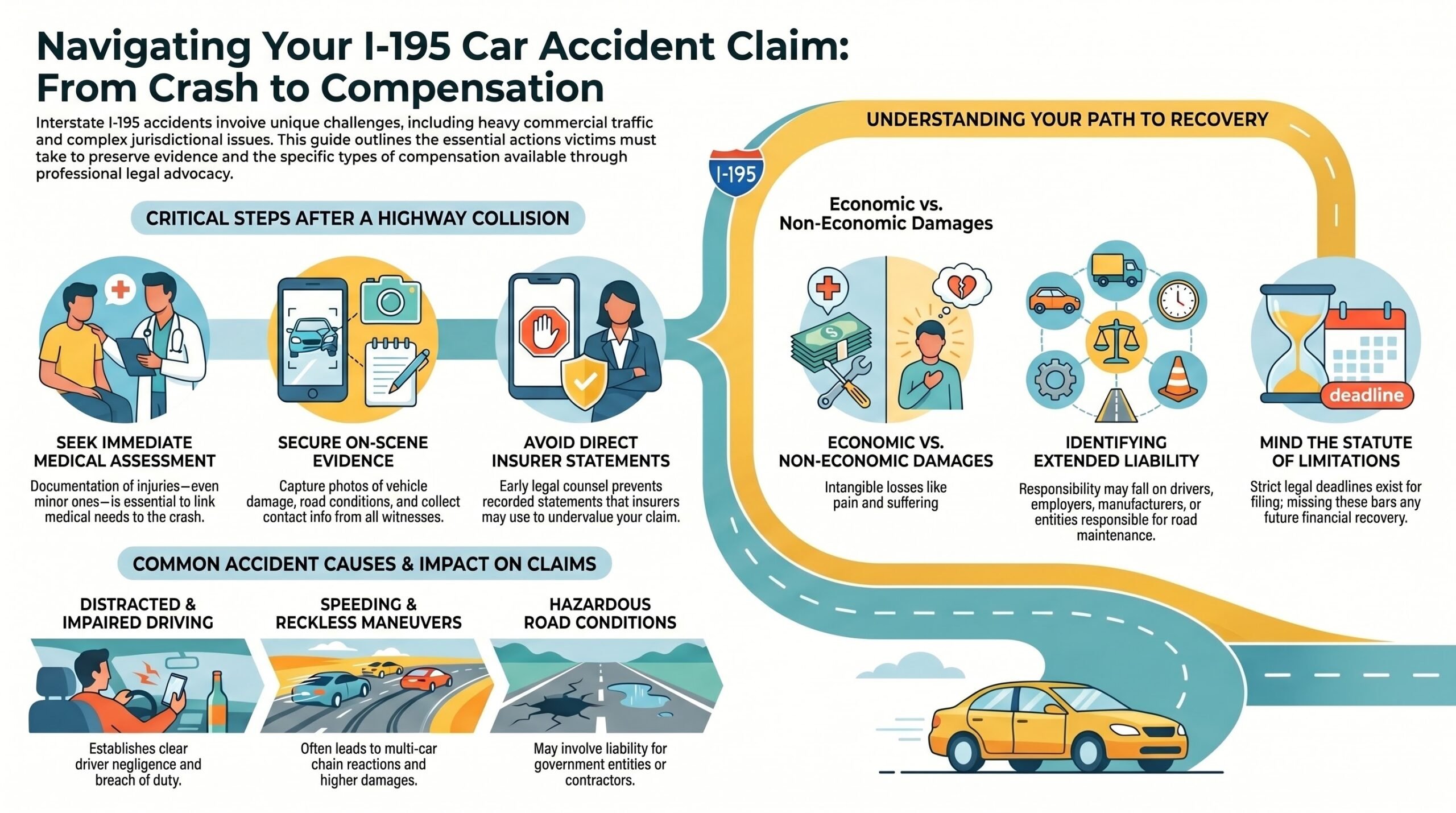
After a collision on Interstate I-195, an injured victim generally has the legal right to seek compensation from any party whose negligence caused or contributed to the crash. Those rights may extend to drivers, employers, vehicle owners, manufacturers, or public entities when defective roads or unsafe maintenance played a meaningful role. Because I-195 can involve Interstate jurisdiction, legal analysis may require attention to multiple states’ laws, insurance requirements, and filing rules.
Injured I-195 victims may pursue compensation from negligent drivers, companies, manufacturers, or public entities whose failures contributed to the crash.
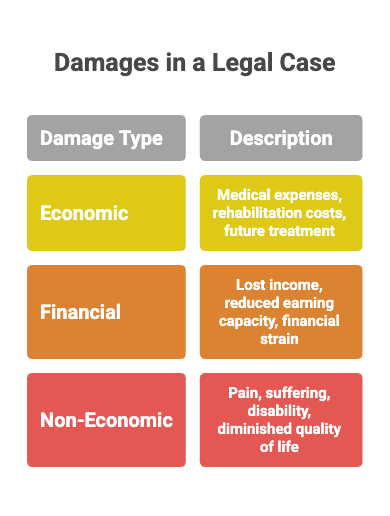
Victims are often entitled to pursue recovery for losses that affect both personal stability and family well-being, including:
- medical expenses, rehabilitation costs, and future treatment needs
- lost income, reduced earning capacity, and related financial strain
- pain, suffering, disability, and diminished quality of life
Compensation timelines also matter. Each claim is governed by notice requirements and statutes of limitation, and delays can jeopardize otherwise valid rights. A careful legal evaluation helps protect accountability, supports recovery, and promotes resources needed to continue serving loved ones and communities.
Steps to Take After a Miami Interstate I-195 Car Accident Injury
After an Interstate I-195 car accident injury, prompt medical care is vital to protect both health and any future claim. It is also important to gather crash-scene evidence, including photographs, witness statements, and official reports, because these materials may help establish fault and damages. Early contact with an injury lawyer can further protect the injured party’s interests and provide guidance through the legal process.
Seek Immediate Medical Care
Seeking prompt medical attention is one of the most important steps following an Interstate I-195 car accident injury, even when symptoms appear minor at first. An urgent assessment can identify hidden trauma, stabilize serious conditions, and guide timely treatment that protects long-term health. Many collision injuries, including concussions, internal bleeding, and soft tissue damage, may involve delayed symptoms that worsen without early intervention.
Medical providers also create records that document observed injuries, reported pain, recommended care, and follow-up needs. This information helps guarantee the injured person receives appropriate support from family members, employers, insurers, and legal advocates. Prompt evaluation demonstrates a responsible commitment to personal recovery and to the well-being of others who may depend on that individual’s health, service, and daily contributions. Immediate care often improves outcomes and safety.
Gather Crash Scene Evidence
Once immediate medical needs have been addressed, attention should turn to preserving evidence at the crash scene whenever it can be done safely. Helpful actions include taking clear photographs of vehicle damage, road conditions, skid marks, debris, traffic signals, weather, and visible injuries. Careful preservation of photographs can support an accurate account of what occurred.
If others witnessed the collision, their names and contact details should be collected respectfully. Notes should record the time, location, lane positions, and any statements made by involved drivers. When available, dash camera footage and nearby surveillance sources should be identified promptly. In some cases, wearable data from smart watches or fitness devices may help establish timing, movement, or impact details. These practical steps can protect facts and support those seeking accountability and proper care afterward.
Contact An Injury Lawyer
Consulting an injury lawyer promptly can help protect legal rights and preserve vital evidence after an Interstate I-195 car accident. Early legal guidance may assist with insurance communications, medical documentation, and deadlines that could affect recovery options. An attorney can evaluate liability, identify available coverage, and advise on practical next steps to support the injured person and those who depend on them.
Professional representation also strengthens organized client outreach to witnesses, insurers, and medical providers when records must be gathered efficiently. During an initial consultation, counsel may explain the fee structure, anticipated timeline, and the value of preserving receipts, photographs, and treatment notes. This measured approach promotes informed decisions, responsible advocacy, and service-oriented support for families seeking accountability and resources after a serious highway collision.
How a Miami Interstate I-195 Car Accident Injury Lawyer Can Help You
In the aftermath of an Interstate I-195 collision, an experienced car accident injury lawyer can provide structured guidance at every stage of the claim. Counsel often begins by preserving crucial evidence, coordinating records, and reviewing Traffic data, police reports, photographs, witness accounts, and Emergency tow documentation to build a clear account of events.
- Investigates liability, identifies responsible parties, and carefully organizes supporting evidence.
- Communicates with insurers, medical providers, and other parties to reduce confusion and protect the claimant’s position.
- Calculates losses, prepares demand materials, and, when necessary, advances the case toward litigation.
A lawyer also helps clients avoid preventable mistakes, such as incomplete statements or missed deadlines. By explaining legal options in practical terms, counsel enables injured people to make informed decisions that support their households and communities. This service-centered approach promotes accountability, encourages fair treatment, and allows clients to focus on recovery while the claim proceeds with discipline and purpose.
Long-Term Effects of Interstate I-195 Car Accidents Injuries
Interstate I-195 car accident injuries can produce consequences that extend well beyond the initial emergency response and recovery period. Many injured individuals face chronic pain challenges, ongoing emotional trauma effects, and lasting mobility limitations that can alter daily functioning and long-term independence. These persistent conditions often influence medical needs, employment capacity, and overall quality of life for years after the collision.
Chronic Pain Challenges
Persistence often defines the long-term burden of injuries sustained in I-195 car accidents, as chronic pain can continue long after fractures, soft tissue damage, or spinal injuries appear to have mended. For many injured individuals, daily functioning is limited by recurring discomfort, reduced mobility, and the need for ongoing medical oversight.
Chronic pain may interfere with work, household duties, and the ability to care for others. Effective Medication management often becomes necessary, requiring careful monitoring of side effects, dosage changes, and interactions with other treatments. Sleep disruption is also common, as ongoing pain can prevent restorative rest and worsen physical fatigue. Over time, these challenges may require rehabilitation, assistive devices, and coordinated support from medical professionals. A thorough legal evaluation may help document these continuing losses and related care needs.
Emotional Trauma Effects
Enduring emotional trauma can become a significant long-term consequence of injuries sustained in I-195 car accidents, even after visible physical wounds have begun to mend. Survivors may experience anxiety, sleep disruption, irritability, and persistent fear when traveling, all of which can affect relationships, work, and daily responsibilities.
Some individuals develop post-traumatic stress, marked by intrusive memories, heightened vigilance, or avoidance of reminders linked to the collision. Others may struggle with depression, guilt, or unresolved grief after losing a loved one or witnessing severe harm. In service-minded families and communities, these burdens can also hinder a person’s ability to care for others effectively. Early evaluation by qualified mental health professionals, along with grief counseling and consistent support, may improve coping, restore stability, and encourage meaningful long-term emotional recovery after serious crashes.
Lasting Mobility Limitations
Reduced mobility can become a lasting consequence of injuries sustained in I-195 car accidents, particularly when damage affects the spine, joints, nerves, or weight-bearing bones. Survivors may face chronic pain, reduced range of motion, muscle weakness, and balance difficulties that interfere with work, family responsibilities, and community involvement. Some require mobility aids such as canes, walkers, or wheelchairs, while others need ongoing rehabilitation and assistance with daily tasks.
In many cases, home modifications, including ramps, grab bars, and accessible bathrooms, become necessary to restore safety and independence. These limitations often affect not only physical function but also a person’s ability to serve others, maintain routines, and participate fully in meaningful activities. Careful legal evaluation can help account for long-term support needs, treatment costs, and diminished quality of life.
Proving Liability in Miami Interstate I-195 Car Accident Injury Cases
Establishing liability in Interstate I-195 car accident injury cases requires a careful review of how the collision occurred, who owed a duty of care, and whether that duty was breached. Attorneys and investigators examine police reports, roadway conditions, vehicle damage, traffic camera footage, and medical records to identify the sequence of events and the parties responsible.
In many cases, forensic reconstruction helps clarify speed, braking, lane position, and impact angles. This analysis can be especially valuable when drivers offer conflicting accounts. Courts also weigh witness credibility, because reliable testimony may support or challenge physical evidence. When commercial vehicles, road hazards, or multiple motorists are involved, liability may extend beyond one driver. Maintenance records, employment documents, and prior safety violations can reveal whether another entity contributed to the harm.
A thorough liability assessment serves injured individuals and their families by promoting accountability, preserving important evidence, and helping make certain that those harmed receive informed legal guidance after a serious Interstate I-195 crash.
Dealing With Insurance Companies After a Miami Interstate I-195 Car Accident Injury
Once liability has been examined, communication with insurance companies often becomes the next major issue after an Interstate I-195 car accident injury. Insurers may request statements, medical authorizations, and repair estimates while also reviewing fault and damages. Careful, organized responses can protect an injured person from misunderstandings that could weaken a valid claim.
A service-minded approach often emphasizes honesty, documentation, and restraint. Records of treatment, lost income, and correspondence help support accurate reporting and informed policy negotiation. Insurance adjusters may appear cooperative, yet their objective is often to limit payouts under the policy terms. For that reason, injured individuals are often encouraged to avoid speculation, minimize casual remarks, and review settlement language closely. A premature agreement may overlook future care needs or unresolved losses.
When a claim denial occurs, the stated reasons should be examined against the available evidence and policy language. Thoughtful advocacy can help families pursue fair treatment while preserving dignity, stability, and accountability.
What to Expect During a Miami Interstate I-195 Car Accident Injury Claim Process
An Interstate I-195 car accident injury claim typically begins with immediate post-crash steps, including medical care, evidence preservation, and formal notice to the insurance carrier. It then moves into an investigation period, during which records are reviewed, liability is assessed, and the extent of damages is examined as part of the claim timeline. From there, the process generally proceeds through insurance negotiations and may conclude with a settlement or, if necessary, a trial.
Immediate Post-Crash Steps
In the immediate aftermath of an Interstate I-195 collision, several pivotal steps typically shape the foundation of a personal injury claim. Those involved are generally expected to call emergency responders, seek prompt medical attention, and cooperate with law enforcement at the scene. Early medical documentation is often crucial because it links injuries to the crash and helps caregivers understand immediate needs.
Practical preservation of evidence also matters. Photographs of roadway conditions, damage, and visible injuries may support a clear account of events. Contact information for witnesses is often gathered, and a vehicle inspection may be arranged to document impact points and mechanical damage. Notification to the insurer usually follows soon after. Throughout these early actions, careful organization supports both accountability and the broader goal of helping injured people receive appropriate care and consideration.
Claim Investigation Timeline
After the initial emergency response and evidence preservation, a claim investigation generally moves into a structured review of liability, damages, and insurance coverage. Adjusters, attorneys, and supporting professionals gather records, inspect vehicles, analyze photographs, and organize an Evidence timeline that reflects how the collision developed on I-195 and what losses followed.
During this period, Witness interviews help clarify disputed facts, including lane changes, speed, visibility, and driver conduct before impact. Medical documentation is reviewed to connect injuries to the crash and to measure recovery needs with care and accuracy. Investigators may request police reports, traffic camera footage, employment records, and repair estimates. This stage can take weeks or months, depending on injury severity, document availability, and whether multiple parties or commercial vehicles are involved in the collision.
Insurance Negotiation Process
Once the investigation has organized liability evidence, medical records, and coverage information, the insurance negotiation process typically begins with a formal demand and a measured review by the carrier. The demand usually outlines injuries, expenses, lost income, and non-economic harm, while supporting documents help the adjuster evaluate value and available policy limits.
During this stage, the insurer may request clarification, question treatment, or compare the claim against internal guidelines and prior verdict data. Counsel generally responds with organized documentation and reasoned explanations that encourage fair consideration for the injured person and affected family. If delays, misrepresentations, or unsupported denials appear, those actions may raise concerns about bad faith. Throughout negotiations, careful communication, accurate records, and patience often protect the claim and promote a responsible, service-minded approach to compensation for all involved.
Settlement Or Trial
At the point when negotiations no longer appear likely to produce a fair resolution, an Interstate I-195 car accident injury claim generally moves toward either settlement finalization or formal litigation. Counsel typically evaluates medical records, liability evidence, and future losses before advising whether continued talks serve the injured person’s best interests. Settlement timing often depends on treatment completion, insurer responsiveness, and the strength of supporting documentation.
If a trial becomes necessary, discovery, depositions, and pretrial motions help clarify disputed facts and narrow legal issues. Preparation also includes evaluating witness credibility and jury dynamics, as community perspectives can influence findings on damages and fault. Throughout either path, the objective remains accountability and practical recovery, so affected individuals and their families can regain stability, meet ongoing needs, and continue serving others with greater confidence and support.
Compensation for Miami Interstate I-195 Car Accident Injury Damages
Accountability often begins with a clear understanding of the damages an injured person may be entitled to recover following an Interstate I-195 car accident. Compensation may address the full impact of harmful conduct while helping injured individuals restore stability, meet obligations, and continue to care for their families and communities after a serious collision.
A thorough claim may include payment connected to medical treatment, rehabilitation needs, property loss, diminished earning capacity, and other accident-related consequences supported by evidence. Attention may also be required for medical liens, which can affect how funds are distributed after recovery. In rare cases involving egregious misconduct, punitive damages may be pursued to promote accountability and deter similar behavior. Because insurers often challenge the scope and value of claimed losses, careful documentation, timely action, and informed legal guidance remain vital. A disciplined approach helps make certain that compensation reflects the injury’s true effects and supports a more secure recovery process for those harmed.
Economic vs Non-Economic Damages in Miami Interstate I-195 Car Accident Cases
In Interstate I-195 car accident cases, damages are generally divided into economic and non-economic categories, each addressing a different type of loss. Economic damages typically refer to measurable financial harm, such as medical bills, lost income, and property damage, while non-economic losses concern pain and suffering, emotional distress, and diminished quality of life. Establishing the value of either category often depends on records, expert opinions, and other evidence that supports the extent and impact of the claimed damages.
Economic Damages Explained
Most car accident claims arising from Interstate I-195 involve two broad categories of compensation: economic damages and non-economic damages. Economic damages address measurable financial harm caused by a collision. These losses are typically documented through records, invoices, estimates, and employment information, allowing insurers, attorneys, and courts to evaluate them with greater objectivity.
In I-195 cases, economic damages often include medical billing for emergency care, hospitalization, rehabilitation, medication, and follow-up treatment. They may also cover lost wages when injuries prevent a person from working, as well as reduced future earnings potential if long-term limitations affect employment. Property losses, including vehicle repair or replacement and damaged personal items, are also commonly included. A careful calculation of these damages supports fair recovery and helps injured individuals restore stability, meet obligations, and continue serving their families and communities.
Non-Economic Losses Overview
Intangible harm often forms a substantial part of damages in Interstate I-195 car accident cases, even though it does not appear on bills, pay stubs, or repair estimates. These non-economic losses address the human effects of an injury, including physical discomfort, emotional distress, inconvenience, disfigurement, and diminished quality of life.
In a service-minded legal context, non-economic damages recognize that injured people may struggle to care for their families, participate in community life, or enjoy their daily routines as they once did. Pain valuation is thus part of understanding the full impact of a collision beyond direct financial loss. Such damages aim to account for suffering that is real, consequential, and deeply personal, while remaining distinct from medical expenses, lost wages, property damage, and other measurable economic harms after serious accidents.
Proving Damage Value
Clarity becomes indispensable when establishing the value of damages after an Interstate I-195 collision, because compensation depends not only on the existence of harm but also on the strength of the proof supporting it. Economic damages are commonly demonstrated through medical invoices, wage records, repair estimates, and expert damage appraisal. Non-economic damages require a different showing, often relying on treatment notes, testimony, and documentation describing pain, emotional distress, and diminished daily function. A careful settlement valuation considers both categories jointly, linking objective losses with the human consequences of injury.
Those who assist injured people should recognize that insurers often challenge unsupported claims or minimize long-term effects. Thorough records, credible expert opinions, and consistent personal accounts help present a complete picture, allowing compensation demands to reflect actual losses sustained and future needs.
When a Miami Interstate I-195 Car Accident Injury Case Goes to Trial vs Settlement
Determining whether an Interstate I-195 car accident injury case will resolve through settlement or proceed to trial depends on several factors, including the strength of the evidence, the extent of the injuries, and the parties’ willingness to negotiate in good faith. In many matters, settlement is favored because it can reduce expenses, shorten delays, and provide injured people with the resources needed for recovery and family stability.
A trial becomes more likely when liability is disputed, damages are contested, or an insurer refuses to offer fair compensation. Counsel may then prepare for jury selection, witness testimony, and presentation of medical and financial evidence. In some cases, the parties may choose a bench trial, allowing a judge to decide disputed facts and legal issues without a jury. Although a trial may yield a stronger result, it also entails uncertainty, additional costs, and emotional strain. Careful evaluation helps injured individuals pursue an outcome that supports accountability, restoration, and service to those who depend on them.
The Statute of Limitations for Miami Interstate I-195 Car Accident Injury Cases
After an Interstate I-195 car accident, the statute of limitations establishes the deadline for filing a personal injury lawsuit, and missing that deadline can bar recovery regardless of the claim’s underlying value. This filing period varies by state, and Interstate I-195 cases may involve important nuances of state law when a crash occurs near a border, involves government entities, or includes claims for wrongful death or property damage.
A careful review of the governing law helps protect injured people and the families who support them. In some situations, tolling exceptions may pause or extend the deadline, such as when the injured person is a minor, lacks legal capacity, or the defendant cannot be located. Separate notice requirements may also apply to claims against public agencies, resulting in shorter timelines than in standard civil cases. Because courts enforce these rules strictly, accurate date calculation and prompt preservation of records are crucial to maintaining a claim and pursuing accountability after a serious roadway collision.
When to Contact a Miami Interstate I-195 Car Accident Injury Lawyer
Strict filing deadlines are only one part of protecting a claim arising from an Interstate I-195 collision, because early legal guidance can also affect evidence preservation, insurance communications, and the identification of all potentially liable parties. Contact is often advisable soon after medical needs are stabilized, especially when injuries, disputed fault, multiple vehicles, or commercial drivers are involved.
Prompt consultation can help organize records, secure crash reports, preserve photographs, and manage post-accident paperwork before important details are lost. It may also reduce avoidable mistakes in statements given to insurers, whose interests may not align with a full and fair recovery. Early review is likewise useful when a family faces mounting treatment costs, missed income, or questions about uninsured or underinsured coverage. If benefits are delayed or refused, counsel may assist with insurance denial appeals and related documentation. Reaching out early supports informed decisions and helps those assisting an injured person respond thoughtfully, consistently, and in the injured party’s best interests.
Why You Need an Experienced Miami Interstate I-195 Car Accident Injury Lawyer
In the context of an Interstate I-195 collision, experienced legal representation can be important because these cases often involve fast-moving traffic, overlapping insurance issues, and factual disputes that are not easily resolved through informal claims handling. An experienced lawyer can investigate crash dynamics, preserve evidence, and identify liable parties before pivotal details are lost.
Sound representation also supports families and communities by helping injured people pursue resources needed for medical care, lost income, and long-term recovery. An effective legal strategy may address comparative-fault arguments, commercial-vehicle involvement, and insurers’ efforts to minimize payouts. Careful Case valuation is equally important, since serious highway injuries often produce future expenses that are easy to underestimate without documented analysis.
How to Choose the Right Interstate I-195 Car Accident Injury Lawyer for Your Case
When selecting counsel for an Interstate I-195 collision claim, several practical factors deserve close review before any representation agreement is signed. A lawyer’s record with highway crash litigation, knowledge of insurance tactics, and ability to value medical and financial losses should be examined carefully.
A disciplined selection process also considers communication practices, availability, and commitment to respectful service. Prospective clients may review client testimonials for insight into professionalism, responsiveness, and case management. It is also prudent to compare fee structures, including contingency percentages, litigation costs, and expense handling if recovery is delayed. An attorney should explain deadlines, evidence preservation, and negotiation strategy in plain terms.
Community-minded individuals often benefit from choosing counsel who treats injured people with dignity and pursues compensation that can support family stability, medical care, and future needs. Careful evaluation at the outset can strengthen confidence and help align legal representation with the injured person’s best interests.
About The Law Offices of Anidjar & Levine
The Law Offices of Anidjar & Levine provides legal representation to individuals injured in motor vehicle collisions, including crashes on Interstate I-195 and other heavily traveled roadways. The firm assists clients seeking compensation for medical expenses, lost income, property damage, and other losses resulting from another party’s negligence.
Its approach emphasizes responsive communication, careful case preparation, and practical guidance during difficult periods. Drawing on its firm’s history, the practice has developed procedures to reduce burdens on injured people and their families while pursuing fair financial recovery. Attorneys and support staff work to investigate facts, gather records, and negotiate with insurers from a position of preparation.
The office’s reputation is also reflected in client testimonials that describe professionalism, accessibility, and consistent attention to client needs. For individuals who value service, accountability, and informed advocacy, the firm presents a structured legal resource for those facing the aftermath of serious roadway accidents and pursuing justice.
Frequently Asked Questions
Are I-195 Accident Reports and Traffic Camera Footage Publicly Accessible?
Yes, many I-195 accident reports are public records, though access often requires a formal request and fee. Traffic camera footage is less consistently available because retention policies, agency rules, and privacy concerns may limit release. A person seeking to serve affected individuals should confirm which police department or transportation agency controls the materials. Timely requests matter, since footage may be overwritten quickly, while reports usually remain available longer through official channels.
How Do Toll Transponders Affect Evidence in I-195 Crash Claims?
Toll transponders can provide valuable evidence in crash claims by establishing vehicle location and travel timing. Their records may supply toll timestamps that help confirm route, speed estimates, or presence near the incident scene. Questions of transponder ownership also matter, because the registered account holder may differ from the actual driver. When preserved promptly, this data can assist insurers, attorneys, and families seeking fair outcomes and a clearer factual record.
Can Weather or Road Construction on I-195 Impact My Case?
Yes, weather or road construction on I-195 can affect a claim by shaping fault, notice, and reasonable driving conduct. Weather conditions may reduce visibility, traction, or stopping distance, which can alter negligence findings. Construction liability may arise when contractors, agencies, or maintenance crews fail to provide warnings, safe lane shifts, or proper repairs. A careful investigation helps injured people and their families identify all responsible parties and preserve crucial evidence.
What if an Out-Of-State Driver Caused the I-195 Accident?
If an out-of-state driver caused the accident, the injured party may still pursue compensation, though jurisdictional challenges can affect where the claim is filed and which state laws apply. A careful review of insurance coverage is also necessary, because policy limits, exclusions, and reporting requirements may differ across states. Prompt documentation, notice to insurers, and informed legal guidance help protect rights and support a fair recovery for everyone involved.
Do Commercial Vehicles on I-195 Involve Different Claim Considerations?
Yes, commercial vehicles on I-195 often involve different claim considerations. Their cases may require review of Commercial liability policies, driver qualification records, maintenance logs, and Cargo inspections. Liability can extend beyond the driver to employers, contractors, shippers, or vehicle owners. Because these claims affect public safety and community welfare, careful documentation and prompt investigation serve injured parties more effectively. Regulatory compliance, evidence preservation, and insurance limits often markedly shape outcomes.
—————————
Miami Interstate I-195 car accident claims often involve significant injuries, complex liability issues, and strict legal deadlines. A qualified injury lawyer can evaluate the facts, protect the victim’s rights, and pursue compensation for medical expenses, lost income, and other damages.
With informed legal guidance, injured individuals are better positioned to steer the claims process and make sound decisions.
The Miami Car Accident Attorney at Law Offices of Anidjar & Levine provides experienced representation for those seeking accountability after an Miami Interstate I-195 accident.