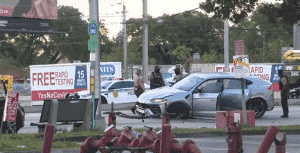
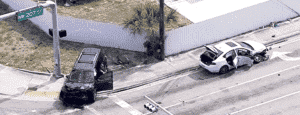
A Miami intersection crash injury lawyer helps protect a claim by investigating fault, preserving evidence, and handling insurer communications from the outset.
The Law Offices of Anidjar and Levine may review police reports, witness statements, signal timing, medical records, and damage documentation to build a clear demand for compensation. Legal help also addresses liens, disputed liability, and filing deadlines when litigation becomes necessary.
Victims may recover medical costs, lost income, and pain-related losses, with additional guidance available from a Miami Car Accident Lawyer below.
Main Takeaways
- A Miami intersection crash injury lawyer investigates fault using police reports, witness statements, traffic signals, photos, and surveillance footage.
- They preserve evidence, track deadlines, and protect your claim from insurer tactics that shift blame or undervalue injuries.
- Your lawyer handles insurer communications, prepares demand materials, and seeks compensation for medical bills, lost income, and related harm.
- They coordinate medical records, invoices, and expert opinions to document treatment needs, future costs, and financial losses.
- If settlement efforts fail, a lawyer can file suit, manage litigation requirements, and pursue fair recovery under Florida law.
How We Can Help With Your Miami Intersection Crash Injury Claim
Guide through the aftermath of an intersection collision with legal guidance that focuses on liability, damages, and procedural deadlines. A dedicated legal team can organize the claim, protect important evidence, communicate with insurers, and present a clear demand that reflects the client’s losses. This support allows injured people and their families to focus on recovery while still pursuing accountability and fair compensation.


Counsel can also coordinate records, invoices, and expert input to document treatment needs and financial harm. They can address medical liens, challenge unsupported insurer positions, and keep negotiations aligned with realistic settlement timelines. When necessary, they can prepare a case for litigation, meet court requirements, and advocate consistently through each phase. Their role is not only to manage paperwork but to serve clients with careful strategy, timely updates, and disciplined attention to detail. Such representation helps reduce uncertainty and promotes informed decisions for clients at every step of the claims process.
Understanding Miami Intersection Crash Injury Cases
OUR CONSULTATIONSARE FREE
START YOUR FREE CASE REVIEW

Because intersection collisions often involve multiple traffic controls, competing accounts, and several potential sources of fault, understanding these cases requires a careful review of how the crash occurred and which legal duties were violated. A thorough evaluation often includes vehicle positions, signal timing, witness statements, roadway design, and surrounding traffic patterns.
In Miami intersection crash injury cases, liability may depend on whether a driver yielded properly, obeyed signals, maintained a proper lookout, or respected pedestrian rights within marked or unmarked crosswalks. These matters are rarely resolved by assumption alone. They are examined through police reports, photographs, surveillance footage, medical records, and, when necessary, expert analysis. The legal process also considers the extent of injuries, the effect on daily responsibilities, and the financial losses that follow.
By carefully organizing evidence and identifying each party’s obligations, a claim can better reflect the harm suffered and support accountability in ways that serve injured people and their families.
Common Causes of Miami Intersection Crashes


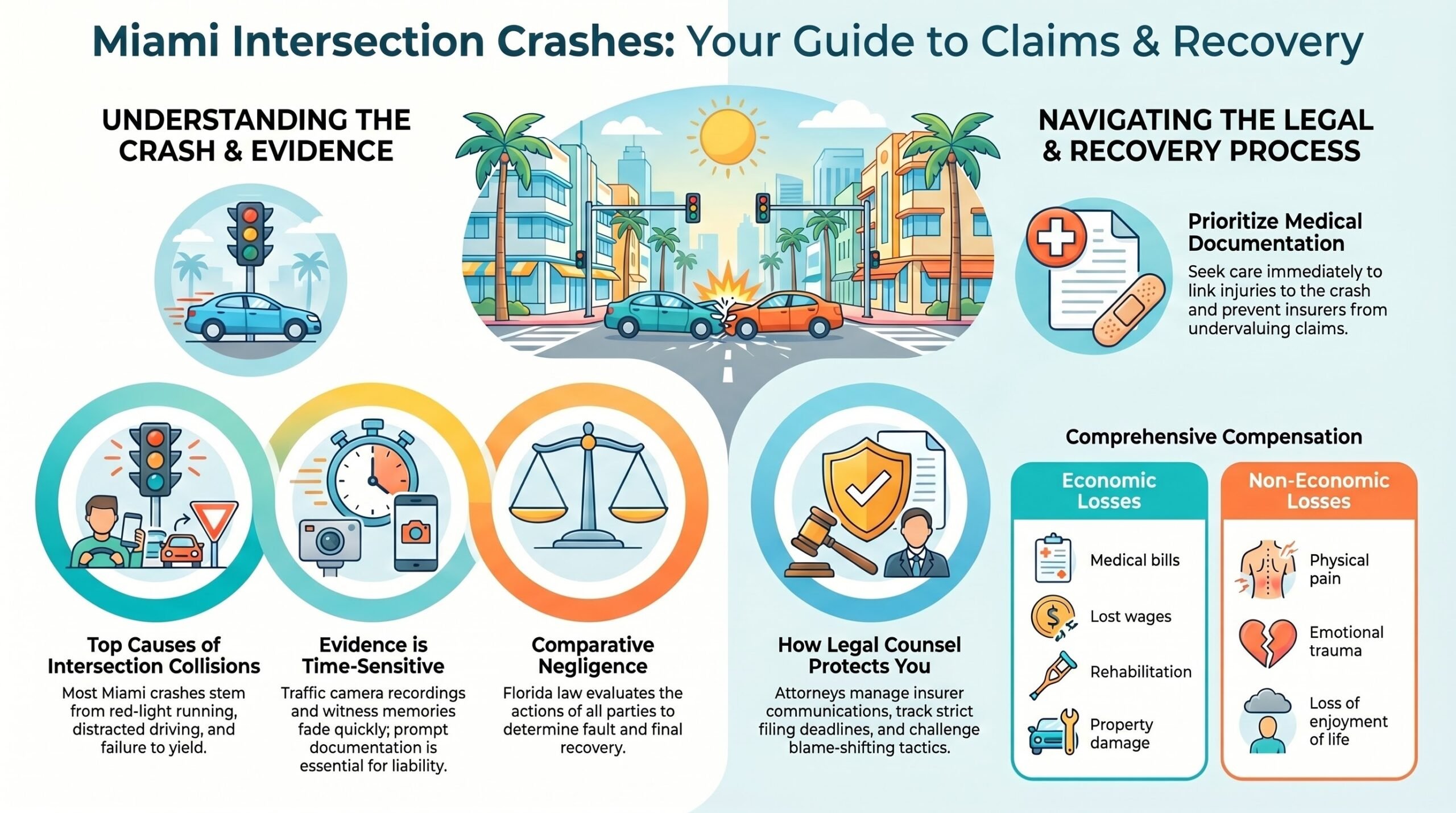
Several recurring factors contribute to Miami intersection crashes, often involving clear violations of traffic rules and preventable driver misconduct. Common causes include red-light running, distracted driving, failure to yield, and speeding through intersections, each of which markedly increases the risk of serious collisions. Identifying these patterns is important to understanding how liability may arise and why intersection accidents often result in substantial injuries.
Red Light Running
Far too many Miami intersection crashes begin with a driver entering against a red light, despite the clear duty to stop and yield to crossing traffic. This conduct places motorists, cyclists, and pedestrians in immediate danger, especially where pedestrian signals indicate a lawful crossing and others reasonably proceed.
Red light running often results from impatience, aggressive driving, or misjudging how much time is needed to clear the intersection before cross traffic starts. In busy Miami corridors, even a brief violation can cause high-impact side collisions and severe injuries. Red light cameras may help document violations and encourage compliance, but enforcement alone cannot prevent every crash. Safe intersections depend on drivers honoring traffic controls, respecting the right of way, and protecting vulnerable road users, who rely on careful, lawful decisions from every approaching vehicle each day.
Distracted Driving Errors
Diverting attention from the roadway is a persistent cause of intersection crashes in Miami, where drivers must process traffic signals, cross traffic, turning vehicles, cyclists, and pedestrians within seconds. Even brief lapses can prevent timely braking, lane positioning, or awareness of changing conditions. Common distractions include phone use, food handling, navigation adjustments, conversations with passengers, and reaching for items inside the vehicle. These behaviors reduce visual scanning, delay reaction time, and increase the likelihood of striking another road user in a crowded intersection.
A service-minded community benefits when drivers recognize that attentive driving protects not only themselves, but also families, visitors, workers, and vulnerable pedestrians. Careful focus on every approach supports safer streets, strengthens public trust, and reflects a practical commitment to the well-being of others in Miami.
Failure To Yield
Misjudging the right of way is a frequent source of intersection collisions in Miami, where drivers must make quick decisions amid signals, turn lanes, pedestrians, and moving cross traffic. Failure to yield often occurs when a motorist enters oncoming lanes during a left turn, proceeds from a stop sign without adequate clearance, or overlooks lawful movement by another vehicle. These errors also contribute to pedestrian conflicts, especially in marked crosswalks where walkers rely on drivers to respect crossing priority.
In many cases, misunderstandings arise when multiple vehicles approach concurrently or when lane design creates uncertainty about who should proceed first. A careful legal review may examine signage, signal timing, witness accounts, and roadway markings to determine whether a driver neglected a duty owed to others using the intersection safely.
Speeding Through Intersections
Speeding through intersections is another leading cause of serious crashes in Miami, often compounding the same right-of-way errors that place drivers, pedestrians, and cyclists at risk. Higher speeds reduce reaction time, increase stopping distance, and make injuries far more severe when collisions occur. In the service of community safety, careful review often focuses on whether a driver ignored posted limits, accelerated through a yellow light, or failed to adjust for congestion and weather conditions.
A thorough case analysis may also consider roadway conditions, speed camera data, witness accounts, and intersection design. These factors can reveal whether preventable hazards contributed to the crash. By identifying how excessive speed affects visibility, judgment, and impact force, legal advocates and safety professionals can better support injured individuals and encourage safer conduct at Miami intersections for all.
Legal Rights of Miami Intersection Crash Injury Victims
Accountability becomes a central concern after a Miami intersection crash, particularly when an injured person is left facing medical costs, lost income, and uncertainty about recovery. Florida law generally permits injured victims to pursue compensation when another party’s negligence contributed to the collision.
These rights exist to restore stability, protect families, and support the broader well-being of the community.
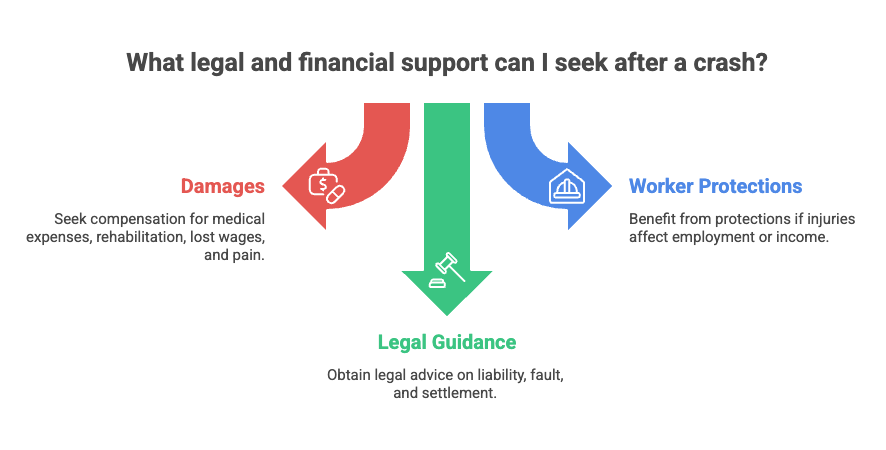
- Victims may seek damages for medical treatment, rehabilitation, lost wages, and pain-related losses, subject to available insurance and evidence.
- They may also benefit from worker protections when crash injuries affect employment, job duties, or the ability to earn a consistent income.
- They retain the right to legal guidance regarding liability, comparative fault, and settlement timelines, which often influence the value and duration of a claim.
In serious cases, additional recovery may be available for long-term disability or diminished earning capacity. A clear understanding of these rights can help injured people make informed, service-minded decisions for themselves and those who depend on them.
Steps to Take After a Miami Intersection Crash Injury
After a Miami intersection crash injury, the immediate priority is to guarantee safety by moving to a secure location, if possible, and contacting emergency responders. It is also important to gather crash evidence, including photographs, witness statements, and details from the other driver, as these materials may later support an insurance claim or a legal case. Prompt medical care should follow, as early evaluation helps mend health and creates documentation that may be important in proving the extent of the injury.
Ensure Safety First
In the immediate moments following a crash at a Miami intersection, personal safety should remain the first priority. Everyone involved should assess injuries, stay calm, and call 911 for emergency assistance. If seat belts are fastened and there is no immediate danger, occupants should remain inside until first responders provide direction.
When conditions allow, drivers should evaluate scene safety and move to a secure location away from traffic, leaking fluids, fire, or unstable vehicles. Hazard lights should be activated to warn approaching motorists. Those who are able may check on others respectfully, offering reassurance without attempting medical treatment beyond basic aid. Children, older adults, and visibly injured persons require particular attention. By emphasizing protection, order, and care for others, individuals help reduce further harm while awaiting police officers, paramedics, and roadway assistance in dangerous conditions.
Gather Crash Evidence
At the scene, careful documentation can preserve vital facts that may later clarify how the Miami intersection crash occurred and who may bear responsibility. If conditions permit, involved parties should collect photographic documentation showing vehicle positions, damage patterns, skid marks, traffic signals, lane markings, debris, and weather or lighting conditions. Images taken from multiple angles may help reconstruct the sequence of events with greater accuracy.
It is also prudent to obtain names and contact information for all drivers, passengers, and bystanders. Neutral observers can provide valuable witness statements regarding signal changes, speed, right-of-way, or distracted driving. Notes should be factual, timed, and organized, including the exact location and any visible hazards. When gathered respectfully and promptly, this information can support accountability and assist those working to protect injured individuals and families.
Seek Medical Care
Beyond documenting the crash scene, prompt medical evaluation is vital because some injuries from intersection collisions do not produce immediate symptoms. A timely examination helps identify internal injuries, concussions, soft tissue damage, and delayed pain before conditions worsen and affect recovery.
Medical care also protects the well-being of everyone involved by creating a clear treatment record. Emergency room visits, primary care evaluations, diagnostic imaging, prescribed medications, and follow-up appointments show that the injured person acted responsibly and sought appropriate care. Consistent treatment supports recovery and creates reliable medical documentation for insurance claims and any future legal review. If symptoms increase after the initial visit, returning for additional evaluation is necessary. Careful attention to medical advice helps injured people recover, remain informed, and continue serving their families and communities.
How a Miami Intersection Crash Injury Lawyer Can Help You
Secure legal guidance can materially affect the outcome of an intersection crash claim in Miami. A lawyer helps injured people act responsibly toward themselves and those who depend on them by protecting evidence, managing deadlines, and presenting a clear account of fault and damages.
This support allows families to focus on recovery while pivotal legal work proceeds in an orderly manner.
- Counsel investigates liability through police reports, scene analysis, Witness Interviews, and, when needed, Traffic Reconstruction to clarify how the collision occurred.
- Counsel handles insurer matters, prepares demand materials, and resists efforts to shift blame or to undervalue medical expenses, lost income, and related harms.
- Counsel files suit when necessary, coordinates expert input, and advocates for a resolution that reflects the full impact of the crash under Florida law.
With structured advocacy, injured residents are better positioned to pursue accountability, preserve important rights, and obtain compensation that supports stability, care, and continued service to others.
Long-Term Effects of Miami Intersection Crash Injuries
Miami intersection crash injuries may produce consequences that extend far beyond the initial medical emergency. Many individuals experience chronic pain, lasting emotional trauma, and a reduced ability to manage routine tasks, work responsibilities, and personal care. These long-term effects often influence medical needs, financial stability, and overall quality of life for an extended period.
Chronic Pain Challenges
Persistence often defines chronic pain after an intersection collision, as symptoms that appear manageable in the early weeks may continue for months or become permanent limitations. Individuals may face persistent neck, back, joint, or nerve pain that interferes with work, caregiving, and routine mobility. Chronic fatigue often develops alongside ongoing discomfort, reducing stamina and complicating rehabilitation efforts.
Effective Pain management frequently requires coordinated medical care, physical therapy, medication oversight, and consistent follow-up. Some injured people need assistive devices, modified duties, or household support to remain functional and continue serving their families and communities. When pain limits movement over time, muscle weakness, sleep disruption, and reduced independence may follow. Careful documentation of symptoms, treatment needs, and daily restrictions helps clarify the true long-term impact of these crash-related injuries.
Lasting Emotional Trauma
Beyond physical pain and reduced mobility, intersection crash injuries may leave lasting emotional trauma that alters a person’s daily functioning long after visible wounds begin to recover. Survivors may experience fear, intrusive memories, irritability, sleep disruption, and persistent anxiety when reminded of the collision or its aftermath.
In some cases, these symptoms develop into post-traumatic stress, depression, or prolonged emotional distress that strains relationships and undermines a sense of safety. Caregivers, advocates, and legal representatives often recognize that emotional injuries merit the same careful attention as bodily harm. Early evaluation by qualified mental health professionals can help document these effects and guide appropriate care. Depending on individual needs, therapy options may include counseling, trauma-focused treatment, support groups, and other structured interventions aimed at restoring emotional stability and resilience.
Reduced Daily Function
Over time, intersection crash injuries may substantially reduce a person’s ability to manage ordinary daily tasks, even after emergency treatment has ended. Survivors may struggle with bathing, dressing, meal preparation, transportation, and household responsibilities. Pain, weakness, and reduced mobility can disrupt employment, caregiving, and community involvement, limiting the ability to serve loved ones and consistently meet routine obligations.
These functional losses often develop into diminished independence, especially when recovery remains incomplete for months or years. A person may require assistive devices, rehabilitation, or regular help from family members for basic activities. Such limitations can also affect concentration, sleep, and stamina, making once-simple tasks feel burdensome. In many cases, the long-term impact extends beyond physical restoration, altering how a person contributes at home, at work, and within the broader community each day.
Proving Liability in Miami Intersection Crash Injury Cases
Establishing liability in a Miami intersection crash injury case requires a careful review of how the collision occurred, which driver failed to follow traffic laws, and whether that failure directly caused the resulting injuries. Attorneys often examine police reports, witness statements, traffic camera footage, vehicle damage, and roadway markings to identify negligent conduct and build a clear sequence of events.
Florida law may also require analysis of comparative negligence, especially when both drivers claim the other entered against a signal, turned improperly, or failed to yield. In service to injured people and their families, a thorough investigation helps preserve important facts and supports accountability grounded in evidence rather than assumption. When liability remains disputed, expert reconstruction can clarify vehicle speed, impact angles, visibility, and stopping distances. Medical records may further connect the crash to the physical harm reported. Collectively, these forms of proof help demonstrate fault, causation, and the full circumstances surrounding the intersection collision with reliable support.
Dealing With Insurance Companies After a Miami Intersection Crash Injury
Once the facts of the fault have been gathered, interactions with insurance companies often shape how a Miami intersection crash injury claim proceeds. Adjusters may appear cooperative, yet their role is to protect the insurer’s financial interests. Injured people who are focused on caring for family members or restoring stability should approach every conversation carefully and keep records of calls, emails, and documents.
Insurance representatives may use claim tactics such as requesting broad medical authorizations, seeking recorded statements, or minimizing symptoms before treatment is complete. Clear documentation, consistent medical follow-through, and measured communication can help reduce misunderstandings. It is also important to understand that settlement timelines vary based on injury severity, disputed damages, and policy limits. Early offers may not reflect the full extent of present and future losses. A careful review of proposed releases and payment terms is crucial, especially when continued care, wage loss, and household responsibilities remain affected after the collision.
What to Expect During a Miami Intersection Crash Injury Claim Process
A Miami intersection crash injury claim typically begins with prompt reporting, notice to insurers, and an initial review of liability and damages. The process then centers on gathering evidence and documentation, while insurance negotiations often unfold over weeks or months, depending on the injuries, disputed facts, and policy issues involved. If a fair resolution is not reached, the matter may proceed to settlement discussions with counsel or into formal litigation.
Initial Claim Steps
Prompt action after a Miami intersection crash can materially affect the course of an injury claim. Early steps often include obtaining medical attention, notifying insurers, and seeking legal guidance so responsibilities are addressed promptly and with care for all involved.
During the initial investigation, counsel typically reviews the collision timeline, identifies potentially liable parties, and evaluates immediate legal deadlines. A practical claim checklist may include reporting the crash, opening applicable insurance claims, confirming available coverage, and scheduling consultations about injuries and recuperation needs. Attorneys also explain how Florida’s no-fault rules may apply at the outset, what communications should be handled carefully, and when settlement discussions should be deferred. These initial claim steps help injured people protect their interests while maintaining focus on restoring well-being, family obligations, and respectful service to others in the aftermath.
Evidence And Documentation
Following those early claim steps, attention generally turns to the evidence and documentation that will shape the course of a Miami intersection crash injury claim. Careful collection often supports a clearer account of how the collision occurred and how injuries affected daily responsibilities, family care, and community service.
Key materials may include police reports, witness statements, surveillance footage, vehicle damage assessments, and photographs documenting the scene, signals, skid marks, and visible injuries. Consistent medical records are also central, because they connect treatment, diagnosis, prognosis, and related limitations to the crash. In many cases, organized timelines, repair invoices, employment records, and notes describing pain or reduced mobility help create a reliable factual picture. Thorough documentation can strengthen accountability while helping injured people pursue resources needed to continue serving others well.
Insurance Negotiation Timeline
In the weeks after a collision at a Miami intersection, insurance negotiations often begin only after basic evidence, medical treatment updates, and claim notices have been assembled. Adjusters usually review police reports, photographs, witness statements, and available medical records before making initial contact or requesting additional information. The claim timeline may move slowly when treatment is ongoing because insurers often wait for clearer proof of prognosis, work limitations, and related costs. During this period, counsel commonly submits organized documentation, answers inquiries, and tracks settlement deadlines imposed by policy terms or procedural rules.
Meaningful discussions typically develop after damages are better understood, not immediately after the crash. Patience, careful follow-up, and prompt responses often help protect the injured person’s interests while allowing insurers sufficient time to evaluate liability, coverage, and documented losses fairly and responsibly.
Settlement Or Litigation
Uncertainty often defines the period when a Miami intersection crash claim shifts from insurance negotiation toward either settlement or litigation. At this stage, counsel evaluates liability evidence, medical records, future care needs, and the insurer’s willingness to act reasonably. A careful settlement strategy seeks fair compensation without unnecessary delay, while remaining mindful of the client’s long-term recovery and ability to continue serving family and community.
If negotiations stall, filing suit may become necessary. Litigation introduces formal discovery, witness depositions, motion practice, and court supervision, all of which shape the litigation timeline. Although many cases still resolve before trial, preparation must remain thorough and disciplined. By understanding both paths, injured parties are better positioned to make informed decisions that protect their financial stability, ensure accountability, and secure the resources needed to support others after a serious collision.
Compensation for Miami Intersection Crash Injury Damages
Accountability often begins with a clear assessment of the losses an injured person has suffered after a Miami intersection crash. Compensation may include reimbursement for emergency care, follow-up treatment, rehabilitation, medication costs, transportation to appointments, and documented lost wages when injuries interrupt employment. Careful review of records helps establish what support is needed to restore stability and protect a household from avoidable financial strain.
A thorough claim also considers obligations that can affect recovery funds, including medical liens asserted by providers or insurers. In many cases, legal counsel evaluates billing statements, insurance payments, and future care recommendations to present a complete demand supported by credible evidence. This process serves a broader purpose than simply pursuing payment. It helps injured people access treatment resources, meet basic responsibilities, and move forward with dignity. When compensation is properly calculated and clearly presented, it strengthens accountability and promotes fair outcomes for individuals, families, and the community they continue serving.
Economic vs Non-Economic Damages in Miami Intersection Crash Cases
In Miami intersection crash cases, damages generally fall into two categories, economic and non-economic, each addressing a different type of loss. Economic damages often include medical bills, lost wages, rehabilitation costs, and other measurable financial harm, while non-economic damages may involve pain and suffering, emotional distress, and loss of enjoyment of life. Establishing the value of either category typically requires documentation, expert evaluation, and a clear connection between the collision and the claimed losses.
Economic Damage Examples
Several categories of economic damages may arise after a Miami intersection crash, each tied to a measurable financial loss. These damages commonly include medical expenses for emergency care, surgery, rehabilitation, medication, and follow-up treatment. They may also include lost wages when an injured person cannot work during recovery, as well as diminished earning capacity if long-term limitations affect future employment.
Additional economic losses may include property damage, transportation costs for medical appointments, household services replacement, and necessary assistive devices. In severe cases, projected future treatment expenses are calculated through records, billing statements, and expert evaluations. Careful documentation helps families, caregivers, and advocates pursue compensation that reflects actual out-of-pocket costs. By focusing on verifiable financial harm, economic damages provide a structured way to address the practical burdens created by a serious intersection collision.
Non-Economic Losses
Losses after a Miami intersection crash extend beyond bills and wage records. Many injured people also experience non-economic losses that affect daily life, relationships, and their ability to serve family, work, and community consistently. These harms may include physical pain, emotional distress, anxiety, sleep disruption, trauma, and the reduced enjoyment of ordinary activities.
In severe cases, non-economic losses also involve loss of grief connected to permanent impairment, disfigurement, or the death of a loved one. Spouses and close family members may feel changes in companionship, guidance, and shared routines. Because these injuries are personal and human, pain valuation addresses impact rather than receipts. A careful legal review considers how the crash altered well-being, dignity, and the person’s capacity to participate meaningfully in everyday life and relationships fully.
Proving Damage Value
Precision is central when proving damage value after a Miami intersection crash, because the strength of a claim often depends on how clearly each category of harm is supported. Economic damages are typically shown through medical bills, wage records, repair estimates, and future care projections. Non-economic damages require careful evidence of pain, emotional distress, disability, and diminished quality of life, often supported by treatment notes, testimony, and daily impact narratives. A disciplined damage calculation helps distinguish measurable financial loss from personal suffering without overstating either category.
Accurate settlement valuation also considers liability disputes, recovery time, permanency, and the effect of injuries on family and community responsibilities. When documentation is organized and credible, the claim is better positioned to secure resources that support restoration, stability, and continued service to others after the collision.
When a Miami Intersection Crash Injury Case Goes to Trial vs Settlement
Determining whether a Miami intersection crash injury case will proceed to trial or be resolved through settlement depends on the strength of the evidence, the extent of the injuries, and the parties’ willingness to compromise. In many matters, settlement talks begin after medical records, witness statements, crash reports, and insurance findings clarify liability and damages.
A negotiated resolution may serve everyone better when fault is reasonably clear, and both sides seek to avoid prolonged expense, delay, and uncertainty. Settlements can provide injured people with compensation sooner, helping families address treatment needs and daily burdens while reducing court involvement. However, jury trials become more likely when insurers dispute fault, minimize injuries, or refuse to offer fair value for losses.
Trial may also be necessary when conflicting testimony, intricate causation issues, or significant future damages require a judge or jury to weigh credibility and decide compensation. Each path should be evaluated carefully, with attention to justice, accountability, and community well-being.
The Statute of Limitations for Miami Intersection Crash Injury Cases
Under Florida law, the time allowed to file a lawsuit after a Miami intersection crash is limited, and missing that deadline can bar recovery regardless of how strong the underlying claim may be. For most negligence actions, filing deadlines are strict, and courts usually enforce them without exception. This rule reflects the legal system’s interest in fairness, reliable evidence, and orderly resolution of claims.
Important nuances of the statute can affect the exact period available. The timeline may differ when a government entity is involved, when a wrongful death claim is asserted, or when facts were not immediately discoverable. Insurance activity does not necessarily extend the deadline, and informal negotiations rarely preserve a claim. Those helping injured people after a crash should understand that preserving records, identifying responsible parties, and tracking calendar dates serve the broader goal of protecting lawful rights. Careful attention to timing supports accountability and helps injured individuals pursue compensation within the limits Florida law permits.
When to Contact a Miami Intersection Crash Injury Lawyer
After a Miami intersection crash, contacting an injury lawyer as early as reasonably possible often places an injured person in a stronger legal and practical position. Immediate consultation may be appropriate when injuries require treatment, when fault is disputed, when insurers request statements, or when crucial facts remain unclear. Early guidance can help a person act carefully, protect records, and avoid preventable mistakes while focusing on recovery and responsibilities to loved ones and the broader community.
Prompt contact is also important when witnesses may become harder to locate, surveillance footage may be erased, or vehicles may be repaired or removed. Evidence preservation frequently depends on timely action, especially at busy intersections where conditions change quickly. A lawyer may also be contacted when medical bills begin to arrive, time away from work creates strain, or an insurer presents a settlement offer before the full impact of injuries is understood. Early action supports informed decisions and orderly case preparation.
Why You Need an Experienced Miami Intersection Crash Injury Lawyer
Secure legal representation from an experienced Miami intersection crash injury lawyer because these cases often involve disputed right of way, conflicting witness accounts, comparative fault arguments, and insurance tactics designed to reduce payouts. Skilled counsel helps preserve evidence, interpret traffic laws, and connect medical proof to the collision with precision and credibility.
An experienced attorney builds a Legal strategy that protects injured people and the families who depend on them. That work may include reviewing camera footage, obtaining black box data, consulting with reconstruction experts, and identifying all liable parties. Strong representation also improves communication with insurers, prevents damaging statements, and supports accurate valuation of medical costs, lost income, and future care needs.
Careful guidance can reduce avoidable delays, clarify Settlement timelines, and position the claim for fair resolution or trial when necessary. In service-minded communities, effective advocacy helps injured individuals regain stability while preserving resources needed to care for others after a serious intersection crash.
How to Choose the Right Miami Intersection Crash Injury Lawyer for Your Case
Choosing the right Miami intersection crash injury lawyer requires more than confirming general personal injury experience, because intersection cases often present layered factual disputes and fast-moving insurance challenges. The selection process should focus on proven case handling, clear communication, and a disciplined approach to evidence preservation.
A thoughtful Client interview can reveal whether counsel listens carefully, explains options plainly, and respects the client’s goals for recovery and accountability. It is also wise to examine the lawyer’s familiarity with traffic camera footage, signal timing issues, witness conflicts, and comparative fault arguments. A transparent Fee structure merits close review, including litigation costs, contingency percentages, and how settlement decisions are communicated. Community-minded clients often value representation that treats every injured person with dignity while responsibly pursuing fair compensation. Strong professional standing, courtroom readiness, and consistent responsiveness often indicate whether the lawyer can effectively protect both the case and the client’s broader interests.
About The Law Offices of Anidjar & Levine
Client-focused representation defines The Law Offices of Anidjar & Levine, a firm known for handling personal injury claims with careful preparation, direct communication, and close attention to the practical needs of injured clients. In Miami intersection crash cases, the firm emphasizes responsive service, informed guidance, and practical support so injured people can pursue recovery with confidence and dignity.
The firm’s history reflects sustained work on behalf of accident victims throughout Florida, with an approach centered on accountability, accessibility, and thorough case development. Attorneys and staff coordinate investigations, gather medical records, evaluate losses, and communicate updates in a timely manner.
This structure helps clients make sound decisions while reducing avoidable stress during difficult periods. Client testimonials often describe professionalism, compassion, and a commitment to securing fair compensation. For people who value service, responsibility, and dependable advocacy, The Law Offices of Anidjar & Levine presents a disciplined legal resource for injury claims arising from intersection collisions.
Frequently Asked Questions
Can Weather Conditions Affect Intersection Crash Claims in Miami?
Yes, weather conditions can affect intersection crash claims in Miami. Rain often creates slippery surfaces and reduced visibility, which may influence fault determinations and insurance evaluations. A detached review typically assesses whether each driver adjusted their speed, braking, and attention to the conditions. Courts and insurers may also examine road design, signal timing, and maintenance issues. Careful documentation of weather reports, photographs, and witness accounts can support a clearer assessment and informed assistance.
Are Dashcams Helpful in Proving Intersection Accident Fault?
Yes, dashcams are often helpful in proving the fault in an intersection accident. They can show changes in signals, vehicle positions, speeds, and driver conduct, which may clarify conflicting accounts and support fair outcomes for all involved. Their value, however, depends on dashcam admissibility and proper video authentication. Courts and insurers usually examine whether the recording is reliable, unedited, and accurately tied to the incident. Clear footage can materially strengthen a claim or defense.
Do Traffic Camera Recordings Expire After a Miami Crash?
Yes, traffic camera recordings may expire after a Miami crash, because agencies and private entities follow different retention schedules. Some footage is overwritten within days or weeks, while other recordings remain longer, depending on policy and system capacity. Prompt requests matter. A legal preservation letter can help protect relevant evidence before it is deleted. Those assisting injured people should act quickly, verify the camera owner, and request copies through appropriate legal or administrative channels.
Can Tourists File Injury Claims After a Miami Intersection Accident?
Yes, tourists may file injury claims after a Miami intersection accident if another party’s negligence caused harm. Their residency usually does not bar recovery, though issues of tourist liability and insurance coverage can affect the process. A careful review of medical records, police reports, and applicable deadlines helps protect the claim. Prompt legal guidance often supports fair compensation, coordinated care, and informed decisions that serve the injured visitor’s recovery.
How Do Road Design Flaws Contribute to Intersection Crashes?
Road design flaws contribute to intersection crashes by reducing drivers’ ability to perceive, judge, and respond to hazards in time. Poor sightlines can obscure oncoming traffic, pedestrians, or signals, while inadequate signage may confuse right-of-way or lane use. Misaligned lanes, short turn bays, and confusing signal placement also increase error. Recognizing these hazards helps communities pursue safer intersections and better protect all road users through informed planning.
—————————
Miami intersection crashes often involve disputed liability, serious injuries, and intricate insurance issues. A clear understanding of legal rights, prompt action after a collision, and strong legal representation can markedly affect the outcome of a claim.
The Miami Car Accident Lawyers at Law Offices of Anidjar & Levine assist injured victims by evaluating the facts, protecting their interests, and pursuing fair compensation. With experienced counsel, victims are better positioned to address the legal and financial consequences of an intersection crash.