A Miami herniated disc car accident injury lawyer, such as The Law Offices of Anidjar and Levine, assists injured people with preserving medical evidence, documenting symptoms, proving fault, and pursuing compensation for treatment costs, lost wages, and ongoing pain.
Prompt medical evaluation, careful recordkeeping, and early legal guidance can strengthen a claim and protect against insurer tactics that minimize spinal injuries.
Neck and back injuries rank as some of the most commonly seen injuries in car accident victims. A recent Florida Highway Safety and Motor Vehicles (FLHSMV) report cited over 1,100 car accidents a day in 2018. With a large percentage of these crashes resulting in injuries, an alarming number of Florida drivers find themselves struggling to navigate unfamiliar legal terrain. A personal injury lawyer can help.
Counsel may also coordinate expert support, manage deadlines, and assess future care needs. For more information, speak with a Miami Car Accident Lawyer. The sections below explain these issues in greater detail.
Main Takeaways
- Seek prompt medical evaluation after a Miami crash to detect herniated disc injuries and create records linking symptoms and treatment to the collision.
- Document the accident thoroughly with photos, witness contact information, police report details, towing receipts, and notes on pain and mobility limitations.
- A Miami herniated disc car accident lawyer can collect medical records, imaging, and expert opinions to prove causation, damages, and future care needs.
- Be cautious with insurance companies, which may seek recorded statements or quick settlements before the full extent of spinal injuries is known.
- Consistent follow-up treatment and detailed symptom tracking help support recovery, case value, and claims for long-term pain, disability, and lost income.
How We Can Help With Your Miami Herniated Disc Car Accident Injury Claim


After a Miami car accident, a herniated disc claim often requires prompt, organized action to preserve evidence and establish the full extent of the injury. A law firm can assist by gathering records, securing witness statements, and coordinating Medical documentation that supports the claim with clarity and consistency. This structured approach helps protect the injured person while allowing caregivers and family members to remain focused on service and recovery.
OUR CONSULTATIONSARE FREE
START YOUR FREE CASE REVIEW

Counsel can also manage deadlines, communicate with insurers, and present losses in a clear, credible manner. Through careful Insurance negotiation, the firm works to reduce delays, challenge undervaluation, and secure the resources needed for treatment, income disruption, and related burdens. When questions arise, attorneys provide measured guidance so clients can make informed decisions that honor both personal wellbeing and responsibility to others. Effective representation brings order to a difficult process and strengthens the path toward fair financial recovery after a serious collision and injury.
Understanding Miami Herniated Disc Car Accident Injury Cases
Why do Miami herniated disc car accident injury cases so often require close legal and medical review? These matters often involve overlapping questions about diagnosis, symptom progression, treatment needs, and the effect of trauma on daily function. Careful evaluation helps determine whether imaging findings match reported limitations and whether the injury disrupted work, family care, and community service.


A detached review of these cases commonly includes medical records, imaging studies, expert opinions, and testimony about functional loss. Physicians may assess spinal biomechanics to explain how disc damage affects movement, stability, and nerve irritation. Lawyers then connect that evidence to liability, damages, and future care needs. Because symptoms may fluctuate, documentation of pain management, rehabilitation, and ongoing restrictions becomes important.
A thorough understanding supports fair case valuation and helps those assisting injured people advocate responsibly, protect resources, and promote access to treatment, accountability, and long-term recovery for the individual and the broader community.
Common Causes of Miami Herniated Disc Car Accident
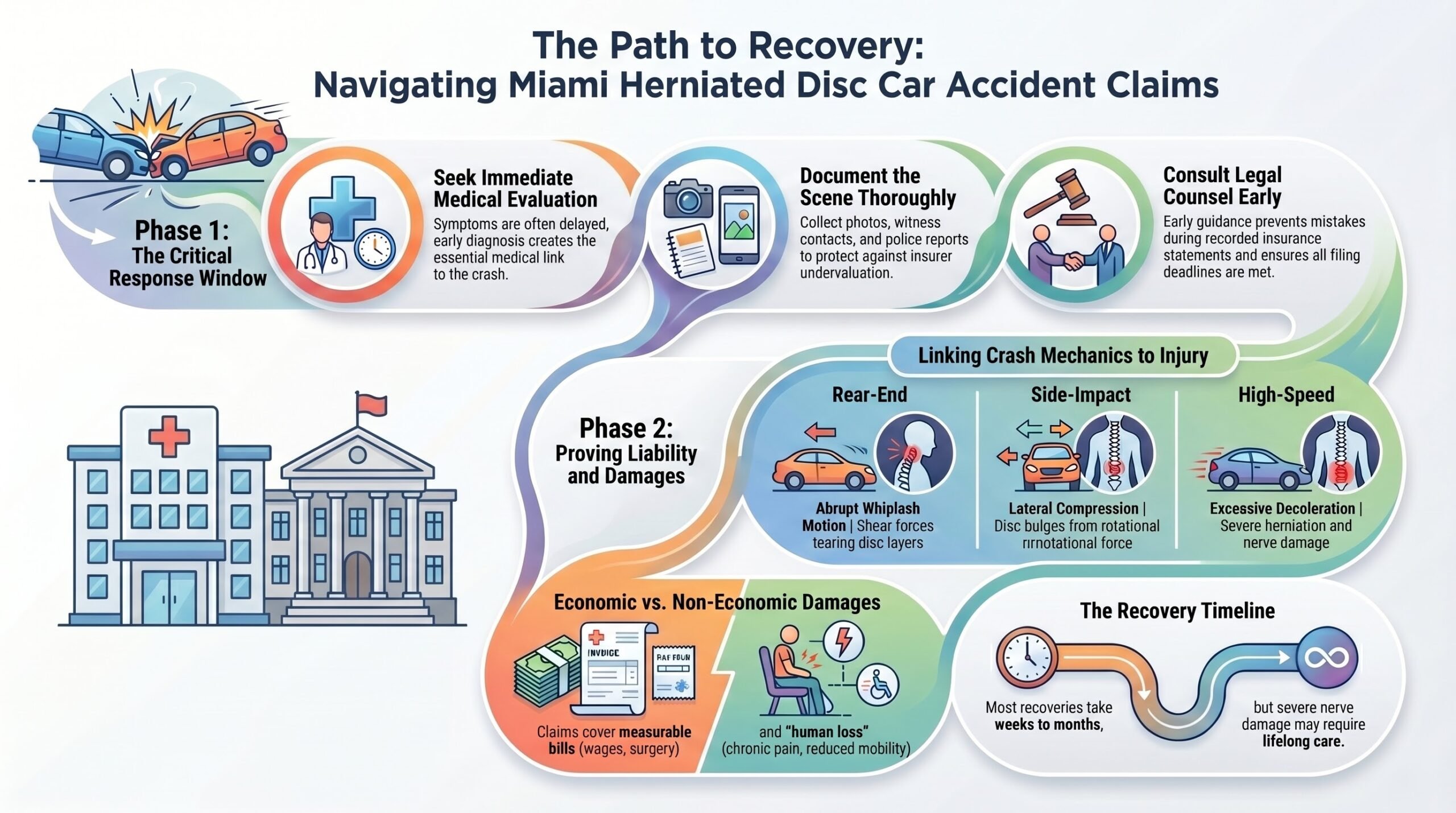
Several crash mechanisms are frequently associated with herniated disc injuries in Miami car accidents, particularly when strong forces are transmitted through the neck and spine. Rear-end collisions and sudden whiplash motion often place abrupt stress on spinal discs, while side-impact crash trauma can create damaging lateral pressure on the body. High-speed highway accidents may further increase the severity of disc damage because of the greater force involved at impact.
Rear-End Collision Forces
One of the most frequent mechanisms behind a herniated disc in a Miami car accident is the rear-end collision, which can subject the spine to sudden and substantial force within seconds. During these events, impact mechanics often drive the occupant’s torso forward while the seat propels the body from behind, creating abrupt motion through the neck and back. Even when vehicle deformation appears minor, spinal discs may still absorb damaging pressure and shear forces.
This can cause the disc’s outer layer to weaken or tear, allowing inner material to press against nearby nerves. Those seeking to help injured individuals should understand that symptoms may emerge immediately or worsen over time. Prompt medical evaluation, careful documentation, and informed legal guidance can support recovery and protect the injured person’s interests after such trauma.
Side-Impact Crash Trauma
In a side-impact collision, the body is often thrown laterally with little time for the spine to stabilize, exposing the discs to sharp compressive and rotational forces. Even at moderate speeds, the abrupt load transfer can strain spinal structures and produce disc bulges or herniation, especially when occupants are struck from the side nearest the impact point.
The danger may increase when door intrusion narrows the survival space and directs force into the torso and pelvis. Seatbelt injuries can also contribute by anchoring part of the body while adjacent segments continue to move, creating uneven stress on the lower back and neck. For those committed to helping injured neighbors recover, understanding these crash dynamics supports timely medical evaluation, careful documentation, and informed legal guidance after a serious Miami side-impact event.
Sudden Whiplash Motion
Consider the rapid back-and-forth motion that follows many rear-end collisions and abrupt stop collisions, in which the head and neck accelerate in opposite directions before the spine can properly respond. This sudden whiplash motion can place exceptional stress on discs, ligaments, and surrounding tissues, especially within the cervical and upper thoracic spine. When spinal acceleration exceeds the body’s ability to stabilize itself, a disc may bulge or herniate, causing pain, numbness, and limited mobility.
For those committed to helping injured people recuperate, understanding this mechanism matters. What appears at first to be minor neck strain may reflect more serious structural damage that worsens without timely evaluation. Careful medical assessment, prompt documentation, and attentive support can help protect the injured person’s health, clarify the source of symptoms, and encourage appropriate treatment and legal guidance.
High-Speed Highway Accidents
When a collision occurs at highway speeds, the force transmitted through the vehicle and into the occupant’s spine often rises far beyond what the discs can safely absorb. In these crashes, sudden deceleration, twisting, and compression may cause a disc to bulge or herniate, sometimes without immediate symptoms. The risk increases when seatbacks fail, airbags deploy unevenly, or occupants are struck from multiple directions.
High-speed highway accidents also involve vehicle instability, rollovers, and secondary impacts, each of which can intensify spinal trauma. Larger trucks, heavy traffic, and limited reaction time frequently worsen the severity of these events. Those who assist injured individuals after such collisions often recognize that prompt medical evaluation, careful documentation, and informed legal guidance may help protect health, clarify damages, and support a more secure recovery process.
Legal Rights of Miami Herniated Disc Car Accident Injury Victims
Clarity is essential when evaluating the legal rights of Miami car accident victims who suffer herniated disc injuries. Florida law may allow recovery for medical expenses, lost income, diminished earning capacity, pain and suffering, and other losses when negligence caused the collision.
Because many families hope to protect others from similar harm, understanding these rights supports informed, service-minded decisions.
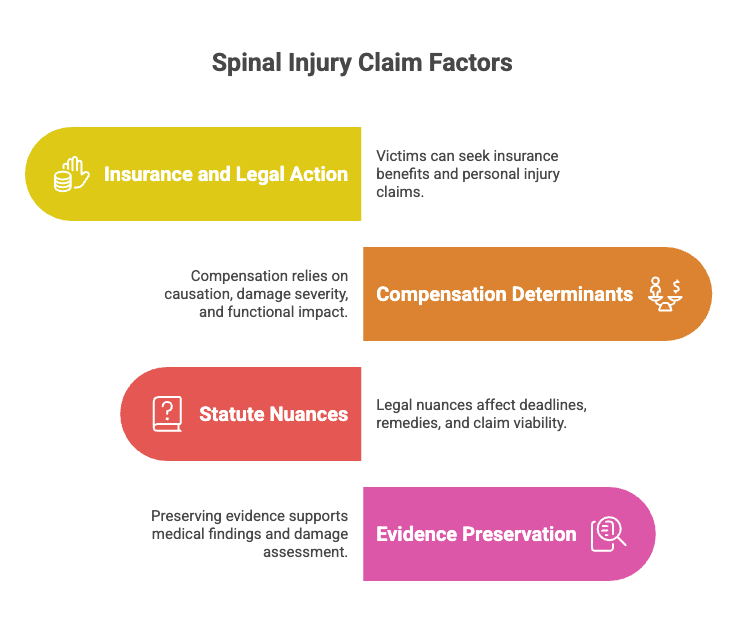
- Victims may pursue insurance benefits and, in qualifying cases, a personal injury claim against liable parties.
- Compensation often depends on proving causation, the severity of spinal damage, and the effect on daily function and community service.
- Statute nuances can affect filing deadlines, available remedies, and whether a claim remains legally viable.
- Evidence preservation strengthens a case by supporting medical findings, liability analysis, and the full scope of damages.
A careful legal review can clarify comparative fault issues, policy limitations, and options for pursuing accountability while safeguarding the injured person’s long-term well-being and stability.
Steps to Take After a Miami Herniated Disc Car Accident Injury
After a Miami car accident that may have caused a herniated disc, prompt medical care is vital to protect both health and the medical record. It is also important to document the accident thoroughly, including injuries, vehicle damage, and any available witness information. Early contact with a Miami lawyer can help preserve evidence, clarify legal options, and support the injury claim process.
Seek Immediate Medical Care
Because symptoms of a herniated disc may not fully appear until hours or even days after a collision, prompt medical evaluation is vital to identify spinal injuries before they worsen. Immediate assessment by emergency personnel or a physician can reveal nerve compression, soft tissue damage, or spinal instability that may not be obvious at the scene.
Timely care also protects the injured person’s long-term ability to work, care for family, and continue serving others in daily life. Physicians may recommend imaging, pain control, activity restrictions, and specialist referrals based on the initial findings. Follow-up scheduling is equally important because evolving symptoms can signal a more serious condition that may require additional treatment. By seeking care without delay, an injured person supports recovery, reduces complications, and gives medical professionals the best opportunity to provide effective intervention.
Document The Accident
Prompt medical treatment should be followed by careful documentation of the collision and its immediate effects. A person with a suspected herniated disc should preserve all available evidence, because accurate records can protect health, support accountability, and assist those working to remedy the harm caused.
Useful documentation often includes photographs of vehicle damage, roadway conditions, visible injuries, and traffic signs, organized into a clear photo inventory. Names and contact information for bystanders should be collected promptly, and witness statements should be requested while memories are still fresh. It is also helpful to retain the police report number, towing receipts, repair estimates, and notes describing pain levels, mobility limits, and daily disruptions. Thorough, orderly records create a reliable timeline and help others understand the full impact of the accident over time.
Contact A Miami Lawyer
In the days following a Miami car accident, contacting a lawyer can help protect a person’s legal interests while evidence is still available and medical records are still being developed. Early legal guidance may help preserve witness statements, obtain crash reports, and coordinate communication with insurers.
A Miami lawyer can also assess whether a herniated disc claim reflects the full extent of present and future losses. Through a free consultation, injured individuals can better understand deadlines, liability issues, and the documentation required to support their recovery. Many firms offer contingency representation, which allows a person to pursue accountability without upfront attorney’s fees. This structure can support families focused on rehabilitation and on serving loved ones, while counsel manages negotiations, carefully evaluates the claim, and prepares for litigation when fair settlement efforts do not succeed.
How a Miami Herniated Disc Car Accident Injury Lawyer Can Help You
Navigating the aftermath of a collision involving a herniated disc often requires more than medical treatment alone, as legal guidance can play a central role in protecting the injured person’s rights and financial recovery. A Miami herniated disc car accident injury lawyer supports that process through disciplined advocacy, clear Client communication, and a focused Case strategy tailored to the facts.
A Miami herniated disc car accident injury lawyer helps protect rights, clarify options, and pursue financial recovery with focused advocacy.
- The lawyer investigates the crash, gathers records, and preserves evidence before it is lost.
- The lawyer identifies liable parties, carefully assesses damages, and manages insurer correspondence to reduce pressure on the injured person.
- The lawyer coordinates with medical providers and other professionals to document the injury accurately and present a credible claim.
- The lawyer negotiates for fair compensation and, when necessary, prepares the matter for litigation.
This assistance allows the injured person to make informed decisions, protect family stability, and pursue accountability in a manner consistent with service, responsibility, and respect for the community.
Long-Term Effects of Miami Herniated Disc Car Accident Injuries
The long-term effects of a Miami herniated disc car accident injury may include chronic pain, reduced mobility, and ongoing physical limitations that interfere with normal movement. In some cases, nerve damage can worsen over time, leading to numbness, weakness, or persistent discomfort that requires continued medical attention. These lasting conditions may also affect a person’s ability to work, complete daily tasks, and maintain prior levels of independence.
Chronic Pain And Mobility
Over time, a herniated disc caused by a Miami car accident can produce persistent pain and steadily limit normal movement, especially when the injured person does not regain full spinal function. Daily tasks may become difficult, including standing, bending, lifting, walking, and sitting for extended periods. As discomfort continues, quality of life often declines, affecting work, caregiving, and participation in community life.
Long-term care frequently centers on pain management through medication, physical therapy, supervised exercise, and lifestyle adjustments that reduce strain on the spine. Some individuals also require mobility aids, such as braces, canes, or walkers, to move safely and preserve independence. For those committed to helping injured people recover, understanding these limitations supports compassionate guidance, practical assistance, and informed legal advocacy to secure appropriate long-term support.
Nerve Damage Progression
Progressive nerve impairment is a serious long-term concern after a Miami car accident causes a herniated disc to compress or irritate nearby spinal nerves. When nerve impingement persists, inflammation and reduced signal transmission may worsen over time. Individuals may begin with intermittent tingling or numbness, yet prolonged compression can lead to weakness, altered reflexes, and sensory decline.
Care focused on timely evaluation can help identify changes before they become more entrenched. Medical providers often monitor pain patterns, muscle response, and neurological deficits to determine whether the affected nerve is recovering or deteriorating. In some cases, untreated irritation contributes to lasting dysfunction, especially when surrounding tissues continue to place pressure on vulnerable structures. A careful, service-minded approach to treatment and documentation may support both recovery efforts and a clearer understanding of the long-term impact of injury.
Work And Daily Limitations
In daily life and at work, a herniated disc sustained in a Miami car accident may create lasting limitations that extend well beyond the initial period of pain. Individuals may struggle with prolonged sitting, standing, lifting, bending, or driving, making routine responsibilities harder to complete safely and consistently. Work limitations often affect attendance, productivity, and the ability to perform physical or repetitive tasks, especially in service-oriented roles that depend on reliability and mobility.
Daily accommodations may include modified schedules, ergonomic equipment, household assistance, and restrictions on childcare, exercise, or community involvement. Over time, these changes can reduce independence and place added demands on family members and caregivers. Careful medical documentation and legal evaluation may help demonstrate how these persistent limitations affect earning capacity, stability, and long-term quality of life after a serious collision.
Proving Liability in Miami Herniated Disc Car Accident Injury Cases
Establishing liability in a Miami herniated disc car accident case requires clear evidence that another party’s negligence caused the collision and directly contributed to the spinal injury. Useful proof often includes police reports, eyewitness accounts, photographs, traffic camera footage, vehicle damage, and medical records linking the crash to disc damage. When facts are disputed, burden shifting may occur as each side presents evidence to support or challenge fault.
Florida’s comparative negligence rules can also affect recovery if an injured person is found partly responsible. In service-oriented legal advocacy, careful investigation helps protect truthful claims and promotes accountability for preventable harm. Attorneys may work with accident reconstruction specialists and physicians to show how the force of impact caused symptoms, treatment needs, and functional loss. Prompt documentation is important because delays can weaken causal arguments. By organizing credible evidence and expert analysis, a claimant is better positioned to demonstrate liability with precision and support a just legal outcome.
Dealing With Insurance Companies After a Miami Herniated Disc Car Accident Injury
After a Miami car accident that causes a herniated disc, dealing with insurance companies often becomes a pivotal part of protecting the value of a personal injury claim. Insurers may request recorded statements, broad medical authorizations, or quick settlements before the full extent of spinal harm is understood. A careful, service-minded approach helps injured people respond truthfully while avoiding unnecessary disclosures that may weaken legitimate claims.
Strong documentation often guides productive communication. Medical records, diagnostic imaging, treatment recommendations, wage information, and repair estimates can help clarify losses and reduce disputes. Close attention to claim timelines is also important because missed deadlines may create avoidable obstacles. Insurance representatives may question causation, minimize pain, or issue policy denials based on incomplete information. Consistent records and measured correspondence can improve accuracy and accountability. Many injured individuals also benefit from professional guidance that keeps communications organized, protects their interests, and supports fair consideration of the injury’s human and financial impact.
What to Expect During a Miami Herniated Disc Car Accident Injury Claim Process
A Miami herniated disc car accident injury claim typically begins with a medical evaluation timeline, as treatment records often establish the nature and extent of the injury. It then proceeds through the insurance claim steps and the settlement negotiation process, during which documentation, liability findings, and damages are closely reviewed. If a fair resolution is not reached, the matter may advance to lawsuit and litigation, where formal legal procedures shape the next stage of recovery.
Medical Evaluation Timeline
In the days and weeks following a Miami car accident, the medical evaluation timeline often begins with an initial examination to document symptoms, assess the extent of a suspected herniated disc, and identify any signs of nerve involvement. Physicians may order imaging, monitor mobility, and note delayed symptoms that appear after swelling changes or routine activity resumes. Follow-up visits often track pain levels, numbness, weakness, and functional limitations affecting work, caregiving, and daily service to others.
If conservative care is initiated, providers may recommend rest, medication, physical therapy, or a referral to a consultant, depending on clinical findings. Independent evaluations may also be requested to compare diagnoses, confirm causation, or clarify long-term prognosis. Careful, timely records from each appointment help establish a consistent medical history and support informed decisions about treatment and recovery planning.
Insurance Claim Steps
During a Miami herniated disc car accident injury claim, the process typically begins with notice to the appropriate insurance carriers, collection of crash and medical records, and review of available coverage under Florida law. Insurers then request statements, bills, diagnostic imaging, and wage information to evaluate the reported losses and confirm eligibility for benefits.
Careful attention to Claim deadlines helps protect the injured person’s rights and supports timely access to medical care and financial assistance. Adjusters may examine liability, prior injuries, and treatment consistency, while policy language is reviewed for exclusions, limits, and required documentation. When questions arise, Policy disputes can concern coverage interpretation, PIP benefits, or uninsured motorist provisions. Throughout the process, organized records and prompt responses often help families, caregivers, and community members serve the injured person effectively.
Settlement Negotiation Process
After the initial claim review, settlement negotiations typically begin once medical records, imaging results, wage-loss information, and liability evidence provide a clearer picture of the herniated disc injury and its impact on daily functioning.
During this phase, the insurer evaluates damages, while counsel presents a structured Negotiation strategy grounded in treatment history, future care needs, lost income, and pain-related limitations. Initial offers are often conservative, requiring careful comparison against documented losses and practical long-term needs. Counteroffers may follow as each side reassesses risk and value. In some matters, Expert mediators help facilitate productive discussions, clarify misunderstandings, and encourage reasonable compromise. A well-prepared negotiation process seeks a settlement that supports medical recovery, financial stability, and the injured person’s ability to continue caring for family and community.
Lawsuit and Litigation
Initiating a lawsuit shifts a Miami herniated disc car accident claim from informal negotiation to a structured legal process governed by court rules, filing deadlines, and evidentiary requirements. Counsel typically files a complaint, serves the defendant, and initiates discovery, during which medical records, imaging, expert opinions, and witness testimony are exchanged. Depositions may clarify liability, damages, and the impact of the disc injury on daily functioning and future care.
Throughout litigation, careful attention to the statute’s nuances can protect the claim from procedural setbacks. Motions may address disputes over evidence, insurance defenses, or efforts to limit compensation. Mediation often remains available, allowing parties to resolve the matter in a way that supports accountability and needed treatment. If a trial becomes necessary, the court evaluates fault and damages. After judgment, an appeals strategy may be considered when a legal error affected fairness.
Compensation for Miami Herniated Disc Car Accident Injury Damages
Accountability becomes central when a Miami car accident causes a herniated disc, because the resulting damages often extend far beyond initial medical treatment. Compensation may address the full scope of harm, helping injured individuals secure stability while continuing to care for their families and communities. A careful claim may consider emergency care, diagnostic testing, rehabilitation, pain management, and future treatments that support long-term recovery and physical function.
Compensation also reflects how a herniated disc can disrupt daily responsibilities, mobility, and the ability to participate in meaningful service to others. In many cases, the psychological impact merits attention, especially when chronic pain, sleep disruption, or reduced independence affects overall well-being. Strong supporting evidence, including physician opinions, imaging results, and treatment records, often guides the evaluation of damages. By thoroughly documenting the injury and clearly presenting its lasting consequences, a legal advocate can pursue compensation that fairly addresses the injured person’s ongoing needs.
Economic vs Non-Economic Damages in Miami Herniated Disc Car Accident Cases
In Miami herniated disc car accident cases, damages are generally divided into economic and non-economic categories, each addressing a different type of loss. Economic damages typically include measurable financial harm, such as medical expenses, lost income, and anticipated treatment costs, while non-economic damages concern pain, suffering, and reduced quality of life. The value of these damages often depends on medical records, employment documentation, expert analysis, and other evidence that supports both the existence and extent of the claimed losses.
Economic Damages Explained
Most economic damages in a Miami herniated disc car accident case refer to the measurable financial losses caused by the injury. These damages commonly include emergency care, diagnostic imaging, surgery, rehabilitation, prescription costs, and future medical treatment that can be reasonably anticipated. They also include lost wages when the injured person cannot work during recovery, along with reduced earning capacity if physical limitations affect future employment.
Economic damages may also cover property loss, such as vehicle repair or replacement, transportation expenses, and other out-of-pocket costs directly related to the collision. In service-oriented legal representation, careful documentation of bills, pay records, and repair estimates helps present a clear claim. This approach supports accountability, promotes fair recovery, and allows injured individuals to focus on recuperation and responsible care for their families.
Non-Economic Loss Categories
Human loss often defines the most difficult part of a Miami herniated disc car accident claim, because non-economic damages address harm that does not appear on bills or wage statements. These losses reflect the injured person’s diminished quality of life, ongoing discomfort, and the personal consequences of reduced mobility or interrupted daily routines.
Common categories include physical pain, Emotional distress, mental anguish, loss of enjoyment of life, inconvenience, and strain on close relationships. In serious herniated disc cases, sleep disruption, reduced independence, and inability to participate in family, volunteer, or community activities may also be relevant. Pain valuation concerns the human effect of persistent symptoms rather than direct financial cost. These categories help recognize the broader ways an injury can limit a person’s ability to live, care for others, and remain meaningfully engaged.
Proving Damage Value
Accuracy becomes central when proving the value of damages in a Miami herniated disc car accident case, because economic and non-economic damages rely on different forms of evidence and are evaluated using different methods. Economic losses are commonly supported by medical bills, wage records, rehabilitation expenses, and projections of future care needs. This damage valuation process often requires physicians, vocational experts, and financial professionals to explain how the injury affects earning capacity and daily function over time.
Non-economic damages require careful presentation of evidence through treatment notes, pain journals, family observations, and testimony describing physical limitations, emotional strain, and reduced quality of life. A thorough record helps decision makers connect documented facts to fair compensation. Clear proof allows advocates to pursue outcomes that honor the injured person’s needs, dignity, recovery, and long-term stability.
When a Miami Herniated Disc Car Accident Injury Case Goes to Trial vs Settlement
In a Miami herniated disc car accident injury case, whether the matter proceeds to trial or ends in settlement generally depends on the strength of the medical evidence, the extent of disputed liability, and the parties’ willingness to resolve the claim without further litigation. Clear diagnostic imaging, consistent treatment records, and credible physician opinions often encourage meaningful negotiations and improve Settlement timing for all involved.
A case is more likely to reach trial when insurers challenge causation, argue that symptoms existed before the collision, or minimize the injured person’s limitations. Trial may also become necessary when settlement offers do not reflect future care needs, lost income, or pain-related impairment. In those circumstances, counsel evaluates Jury strategy carefully, including how jurors may respond to testimony from treating doctors, vocational experts, and family witnesses. Settlement remains common when both sides recognize litigation risk and seek a resolution that supports medical recovery, financial stability, and responsible service to the injured person and household.
The Statute of Limitations for Miami Herniated Disc Car Accident Injury Cases
After a Miami car accident causes a herniated disc, the statute of limitations sets the legal deadline for filing a personal injury lawsuit, and missing that deadline can bar recovery regardless of how serious the injury may be. In Florida, this deadline is generally strict, so timely action protects both the injured person and those who depend on that support and care.
Several factors can affect how the filing period is calculated. Statute nuances may arise when the claim involves a government entity, a minor, or disputed dates of injury discovery. Filing exceptions may also apply in limited situations, but they are narrowly interpreted and should never be assumed. Preserving medical records, crash reports, and treatment timelines helps establish when the claim accrued and whether any special rule could matter. Careful attention to deadlines also promotes accountability, allowing injured individuals to pursue lawful compensation while encouraging prompt resolution and responsible stewardship of evidence, resources, and community trust.
When to Contact a Miami Herniated Disc Car Accident Injury Lawyer
A Miami herniated disc car accident injury lawyer should be contacted as soon as there are signs of significant back pain, radiating numbness, weakness, or other symptoms that suggest a disc injury may be more than a temporary strain. Prompt action is also appropriate when emergency care, diagnostic imaging, or follow-up treatment indicates spinal involvement after a collision.
Early intervention helps guarantee that medical records, crash reports, witness statements, and photographs are gathered while details remain clear and reliable. Evidence preservation is especially important when symptoms worsen over time, because insurers may question whether the herniated disc was caused by the crash or by a prior condition. Contact is also advisable when missed work, reduced mobility, or ongoing therapy begins affecting daily responsibilities and the ability to care for others. Timely legal guidance can support informed decisions, protect important deadlines, and help injured individuals focus on treatment, recovery, and the practical needs of their families and communities.
Why You Need an Experienced Miami Herniated Disc Car Accident Injury Lawyer
Because herniated disc claims often involve delayed symptoms, disputed causation, and complex medical evidence, an experienced Miami herniated disc car accident injury lawyer provides vital value from the outset of the case. Such representation helps preserve records, coordinate medical documentation, and present a clear connection between the collision and spinal injury. This guidance supports families seeking accountability while protecting the injured person’s legal rights.
An experienced lawyer also understands how insurers challenge pain complaints, imaging results, and future care needs. By organizing expert opinions and respecting Patient confidentiality, counsel strengthens the claim without unnecessary disclosure. Careful advocacy can improve the accuracy of damage calculations for treatment, lost income, and diminished quality of life. Clear advice regarding Attorney fees also promotes trust and informed decision-making. In service-oriented communities, effective legal representation helps injured individuals pursue fair compensation, reduce avoidable stress, and focus attention on recovery, caregiving, and long-term stability after a serious crash.
How to Choose the Right Miami Herniated Disc Car Accident Injury Lawyer for Your Case
In selecting legal counsel for a spinal injury claim, careful evaluation of a lawyer’s experience with herniated disc cases, motor vehicle litigation, and local court practice is indispensable. A qualified advocate should demonstrate a record of handling intricate injury evidence, coordinating with medical providers, and presenting damages clearly and responsibly.
Prospective clients should also assess Attorney fit by considering communication style, responsiveness, and willingness to explain each stage of the process. A lawyer who listens carefully and respects the client’s goals is better positioned to advance a claim in a manner that promotes stability and service to loved ones. Fee structure merits close review as well, including contingency terms, litigation costs, and any obligations that may arise if recovery is delayed or disputed. Independent reviews, disciplinary history, and courtroom experience can further help distinguish capable counsel. Thoughtful comparison allows injured individuals to choose representation that is competent, ethical, and aligned with long-term recovery needs.
About The Law Offices of Anidjar & Levine
Among Miami injury firms handling serious vehicle collision claims, The Law Offices of Anidjar & Levine is known for representing accident victims in matters involving herniated disc injuries and other spinal trauma. The firm focuses on responsive counsel, careful case preparation, and practical guidance for people facing medical treatment, lost income, and insurance disputes after a crash.
Its Firm history reflects a commitment to accessible legal service and attentive client care. Attorneys and staff work to thoroughly investigate collisions, clearly document injuries, and pursue compensation that supports recovery and stability. This approach can appeal to readers who value service, accountability, and respectful communication during difficult circumstances.
Client testimonials often emphasize prompt updates, professionalism, and compassion shown to injured individuals and their families. In spinal injury cases, those qualities matter because claims may involve ongoing therapy, pain management, and long-term limitations. The firm’s role is to advocate steadily while helping clients make informed decisions from beginning to resolution.
Frequently Asked Questions
Can a Herniated Disc Worsen Weeks After the Car Accident?
Yes, a herniated disc can worsen weeks after a car accident. Symptoms may intensify as delayed inflammation develops around the injured spinal structures, and nerve sensitization can increase pain, numbness, or weakness over time. Care providers often observe that early discomfort seems manageable before later progression becomes clear. Prompt medical evaluation helps protect the injured person, supports appropriate treatment, and enables those assisting them to respond with informed, timely care.
Are MRI and CT Scans Both Necessary for Diagnosing Herniated Discs?
No, both scans are not always necessary for diagnosing herniated discs. MRI is often necessary because it shows discs, nerves, and soft tissues with superior detail, helping clinicians serve patients more accurately. CT alternatives may be used when MRI is unavailable, contraindicated, or when bone injury is also suspected. In many cases, a physician selects one study based on symptoms, examination findings, and the patient’s overall medical needs.
Can Pre-Existing Back Problems Affect My Herniated Disc Injury Claim?
Yes, pre-existing conditions can affect a herniated disc injury claim, but they do not automatically bar recovery. An insurer may argue the symptoms existed before the crash, requiring clear medical evidence that the collision worsened the condition. Under comparative negligence, compensation may be reduced if fault is shared, yet aggravation of a prior injury remains compensable. Careful records, consistent treatment, and credible expert opinions often substantially strengthen the claim.
What Activities Should I Avoid After a Herniated Disc Car Accident Injury?
After a herniated disc car accident injury, one should avoid heavy lifting, high-impact sports, repeated bending, twisting, and prolonged sitting without support. Sudden movements and strenuous exercise may worsen pain, delay recovery, and increase nerve irritation. Careful activity limits help protect recovery and preserve the ability to serve others well. Medical guidance should direct any return to work, driving, exercise, or household tasks, based on symptoms and progress.
How Long Does Recovery From a Car-Accident Herniated Disc Usually Take?
Recovery from a car-accident herniated disc usually ranges from several weeks to six months, though severe cases may require longer care. The typical timeline depends on nerve involvement, pain intensity, treatment response, and overall health. Early recovery milestones often include reduced inflammation and improved mobility within weeks. Later milestones may involve restored strength and daily function. Careful adherence to medical guidance helps support safer progress and better long-term outcomes for others.
—————————
A Miami herniated disc car accident claim often involves substantial medical, legal, and financial issues that require careful attention. Injured individuals benefit from understanding their rights, preserving evidence, and seeking timely medical and legal guidance.
With experienced representation, they may pursue compensation for treatment costs, lost income, and related damages.
An experienced Miami Car Accident Lawyer from the Law Offices of Anidjar & Levine provides focused support to help accident victims navigate the claims process and protect their interests with confidence and clarity.