span style=”font-weight: 400;”>The Law Offices of Anidjar and Levine helps crash victims prove how a collision caused or aggravated a spinal injury. A Florida Car Accident Lawyer can review medical records, imaging, treatment timelines, crash evidence, and work limitations to connect symptoms with the accident.
They also address PIP benefits, liability coverage, causation disputes, comparative fault, and damages for pain, lost income, future care, and reduced mobility. The following sections explain essential legal, medical, and claim issues in greater detail.
Main Takeaways
- A Florida herniated disc car accident lawyer helps prove the crash caused or aggravated a spinal disc injury.
- Key evidence includes medical records, MRI results, crash reports, witness statements, and documentation of pain or mobility limits.
- Compensation may include medical bills, lost wages, future care, pain, reduced mobility, and diminished daily functioning.
- Florida claims may involve PIP benefits, liability insurance, serious-injury thresholds, and comparative-fault disputes.
- Prompt medical treatment and evidence preservation can strengthen a herniated disc injury claim after a Florida car accident.


How We Can Help With Your Florida Herniated Disc Car Accident Injury Claim
When a car accident causes or worsens a herniated disc, a Florida injury lawyer can help connect the medical evidence, crash facts, and insurance issues into a clear claim for compensation. The lawyer’s role is service-focused: protecting the injured person’s time, health, and dignity while pursuing a fair result. This includes gathering Medical documentation, reviewing diagnostic imaging, confirming treatment timelines, and identifying how pain, mobility limits, and work restrictions affect daily life.
A disciplined claim also requires careful communication with insurers, employers, medical providers, and other parties. Counsel may calculate past and future losses, organize proof of liability, and prepare the case for settlement discussions or litigation. A sound Negotiation strategy should reflect the severity of the disc injury, the need for ongoing care, and the financial pressure placed on the injured person and family. Through steady advocacy, the claim can be presented with accuracy, compassion, and purpose.
OUR CONSULTATIONSARE FREE
START YOUR FREE CASE REVIEW

Understanding Florida Herniated Disc Car Accident Injury Cases
Although a herniated disc may develop from age-related degeneration, a Florida car accident can cause a new disc injury or aggravate a preexisting spinal condition. These cases often require careful review of medical records, imaging studies, prior treatment history, and physician opinions to determine whether the crash contributed to the injury. A herniated disc may lead to neck pain, back pain, numbness, weakness, or radiating symptoms that interfere with work, caregiving, and daily service to others.
Florida injury claims may involve personal injury protection benefits, liability coverage, and disputes about causation or the seriousness of the condition. When symptoms overlap with soft-tissue injuries, evidence supporting whiplash compensation may also become relevant. The settlement timeline can depend on medical improvement, documentation, insurance negotiations, and the need for expert evaluation. A well-prepared claim presents the injury’s medical impact, financial consequences, and human effect with accuracy, dignity, and purpose for fair recovery.
Common Causes of Florida Herniated Disc Car Accident
Common causes of a Florida herniated disc car accident injury often involve rear-end collision forces, sudden impact trauma, and the concentrated pressure created by seatbelt restraints. These mechanisms can place severe stress on the spine, particularly when the body is abruptly compressed, twisted, or forced beyond its normal range of motion. Preexisting disc degeneration may also increase vulnerability, making it important to examine how the crash aggravated or accelerated the spinal condition.
Rear-End Collision Forces
In a rear-end collision, the sudden transfer of force can cause the occupant’s spine to move beyond its normal range, placing significant stress on the discs in the neck and lower back. Rear-end crash mechanics often involve a rapid forward-and-backward motion, which may compress, stretch, or irritate spinal structures. Even at moderate speeds, this force can aggravate existing disc weakness or contribute to a new herniation.
For those serving injured individuals, understanding these forces helps connect reported pain, limited movement, and neurological symptoms with the crash event. Careful documentation, medical evaluation, and timely treatment are important to protect health and legal interests. Spine injury recovery may require coordinated care, including imaging, therapy, medication management, and medical expert review, depending on severity and functional limitations after impact.
Sudden Impact Trauma
A sudden impact can place intense stress on the spinal discs when a vehicle occupant’s body is forced to absorb energy faster than the spine can safely respond. In Florida crashes, this trauma may compress, stretch, or tear disc material, allowing a herniation to irritate nearby nerves. The resulting pain can extend from the neck or lower back into the arms, hands, legs, or feet.
Whiplash symptoms may include headaches, stiffness, dizziness, or reduced range of motion, even when the initial discomfort seems manageable. Medical providers often evaluate imaging findings, neurological signs, and functional limitations to determine the injury’s severity. For those serving injured clients, careful documentation helps connect the crash to treatment needs, lost capacity, and possible future surgery costs if conservative care fails over time.
Seatbelt Restraint Pressure
Seatbelt force can contribute to spinal disc injury when restraint pressure concentrates across the torso during a Florida car accident. Although seatbelts save lives, the abrupt locking mechanism may press on the chest, abdomen, and shoulder while the spine continues to move. This uneven restraint can create flexion, compression, or twisting forces that affect cervical, thoracic, or lumbar discs.
Seatbelt fit issues may increase this risk, especially when the lap belt rides too high or the shoulder strap crosses the neck improperly. Smaller adults, elderly occupants, and passengers seated in awkward positions may experience concentrated pressure.
Airbag deployment impacts can also combine with belt restraint, producing rapid opposing forces. Careful evaluation helps injured individuals, families, and advocates understand how safety systems may still contribute to disc trauma. Liability analysis often considers vehicle design, positioning, and collision severity.
Preexisting Disc Degeneration
Preexisting disc degeneration can make the spine more vulnerable to injury during a Florida car accident, even when the collision appears moderate. Degenerated discs may have reduced cushioning, weakened outer fibers, and limited tolerance for sudden force. In injury claims, careful pre-accident symptoms assessment helps distinguish a worsened condition from a long-standing, stable problem.
Medical records, prior treatment history, and witness observations may clarify whether pain, numbness, or mobility limits existed before the crash. MRI imaging credibility is also important because imaging can show disc desiccation, bulging, herniation, or nerve compression. A responsible evaluation considers both the preexisting condition and the crash’s aggravating effect. This approach supports fair treatment, protects injured individuals, and helps caregivers, advocates, and legal professionals serve clients with accuracy and compassion in Florida cases.


Legal Rights of Florida Herniated Disc Car Accident Injury Victims
When a herniated disc results from a Florida car accident, the injured person may have legal rights under both the state’s no-fault insurance system and traditional negligence law.
These rights may support medical care, wage loss recovery, and accountability when another driver’s conduct caused harm.
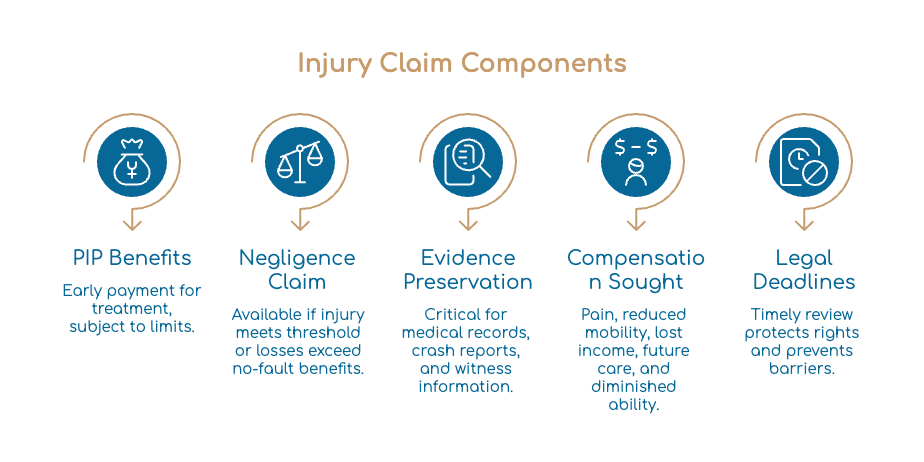
- Personal Injury Protection benefits may provide early payment for treatment, subject to Compensation limits and policy requirements.
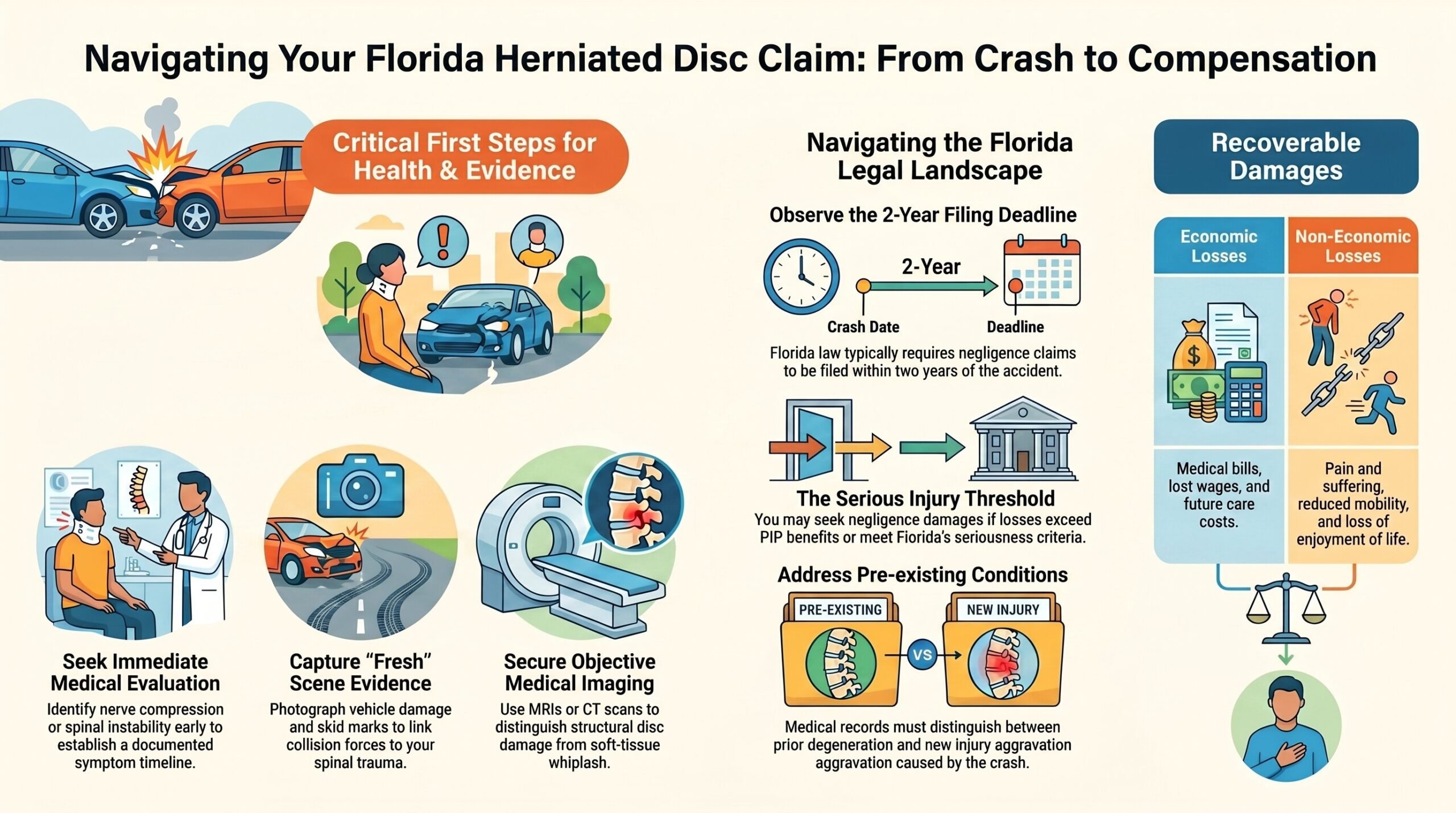
- A negligence claim may be available if the injury meets Florida’s serious injury threshold or losses exceed available no-fault benefits.
- Evidence preservation is critical, including medical records, crash reports, imaging studies, witness information, and vehicle damage documentation.
- The injured person may seek compensation for pain, reduced mobility, lost income, future care, and diminished ability to serve family or community.
- Legal deadlines may restrict recovery, so timely review helps protect rights and prevent avoidable barriers.
These protections help injured persons pursue stability while honoring responsibilities to themselves and others.
Why Do Florida Herniated Disc Car Accident Injuries Happen?
Understanding legal rights also requires understanding how these injuries occur, because the cause of a herniated disc often affects medical proof, insurance coverage, and fault analysis. In Florida car accidents, the spine may absorb violent forces from rear-end impacts, side collisions, rollovers, or sudden stops. These forces can compress, twist, or overstretch spinal discs, causing the inner disc material to press outward toward nearby nerves.
A herniated disc may appear immediately, or symptoms may develop as inflammation increases. Pain, weakness, numbness, and nerve damage can limit work, caregiving, and daily service to others. Preexisting degeneration may also make a person more vulnerable, but a crash can still aggravate the condition in legally significant ways.
Because causation is often disputed, insurers may argue that symptoms are unrelated, leading to insurance denials. Clear medical findings can influence treatment options, liability evaluations, and settlement timelines in these serious Florida injury claims.
What Should You Do After a Florida Herniated Disc Car Accident Injury?
After a Florida car accident causes a suspected herniated disc, the injured person should seek prompt medical care to evaluate symptoms and begin a documented treatment plan. Accurate documentation of the crash, including photographs, reports, and witness information, can help preserve important evidence. Contacting a lawyer early may also help protect legal rights, manage insurance issues, and assess potential compensation.
Seek Medical Care
How quickly should medical treatment begin after a Florida car accident involving a suspected herniated disc? Care should begin immediately, even when pain appears mild or delayed. A prompt evaluation helps identify nerve compression, spinal instability, or soft tissue injury before symptoms worsen. Physicians may review mobility, reflexes, sensation, and pain patterns, then order imaging when clinically appropriate. A clear Symptoms timeline helps providers determine whether numbness, weakness, radiating pain, or reduced function developed gradually or suddenly.
When symptoms suggest disc involvement, a consultation with a spine expert may be appropriate to guide treatment and reduce preventable harm. Early care also supports recovery, helps patients follow medical instructions, and promotes responsible decision-making for those who serve family, coworkers, or community while protecting their long-term physical capacity.
Document The Accident
Prompt medical care should be paired with careful accident documentation, because the facts gathered early may help explain how a suspected herniated disc occurred and how symptoms developed. Photographs should capture vehicle damage, skid marks, debris, traffic signals, weather conditions, and visible injuries. If safe, the injured person may note the location, time, road layout, and statements made by drivers before their memory fades.
Witness statements can be especially important, as neutral observers may describe the force of impact, body movement, or immediate signs of pain. Copies of police reports, insurance information, medical discharge papers, and repair estimates should be kept in a single organized file. Accurate documentation supports responsible decision-making and helps caregivers, insurers, and others understand the full circumstances surrounding the collision.
Contact A Lawyer
Once medical care has begun and important records are being preserved, contacting a Florida car accident lawyer can help protect an injured person’s rights during a complicated insurance and injury claim process. A lawyer can review crash facts, medical findings, and available coverage to build an Insurance claim strategy that reflects the seriousness of a herniated disc injury. This guidance may also include documentation tips for treatment records, pain limitations, lost wages, and communication with insurers.
Because the importance of emergency care often affects both health outcomes and claim value, legal counsel can help connect early medical evidence to later treatment needs. For those serving injured family members, timely legal support may reduce confusion, preserve deadlines, and promote careful decisions focused on recovery, accountability, and long-term stability after a Florida collision.
Critical Evidence in a Florida Herniated Disc Car Accident Injury Case
Critical evidence in a Florida herniated disc car accident injury case helps establish how the crash occurred, the severity of the spinal injury, and the financial impact on the injured person. Critical proof may include:
- Accident scene photographs and video
- Police crash reports and witness information
- MRI, CT scan, or X-ray results
- Physician treatment notes and specialist records
- Pay stubs, employer statements, and lost wage documentation
Accident Scene Documentation
Because a herniated disc may not be fully diagnosed until days or weeks after a crash, accident scene documentation can become a central part of proving how the injury occurred. Photographs of vehicle damage, skid marks, road conditions, debris, traffic signals, and visible injuries may help connect the collision forces to later spinal complaints. Witness contact details should be preserved promptly, since neutral observers may describe impact speed, vehicle positions, or post-crash limitations.
Police crash reports, emergency response notes, and Body cam footage may also clarify fault, statements, and scene conditions. Careful documentation serves injured people by protecting facts before they fade or are disputed. In a Florida injury claim, organized evidence at the scene can support causation, liability, and the need for fair accountability.
Medical Imaging Records
Scene evidence may explain the mechanics of a crash, but medical imaging often provides the objective record needed to document the spine’s condition after impact. X-rays, CT scans, and MRI studies can identify disc herniations, nerve compression, fractures, and other structural changes that may follow a collision. These records help distinguish visible spinal injury from soft-tissue complaints, including whiplash symptoms, and may clarify whether further evaluation is warranted.
In a Florida injury claim, imaging results can also support insurance documentation by creating a dated medical record tied to the accident timeline. For those assisting injured individuals, careful preservation of imaging reports and discs is critical. Clear imaging evidence may strengthen causation, guide claim review, and reduce disputes over the nature and extent of spinal trauma.
Physician Treatment Notes
When a herniated disc is alleged after a Florida car accident, physician treatment notes often become a central record of symptoms, examination findings, diagnosis, and medical judgment. These notes may document the location of pain, radiating symptoms, weakness, numbness, restricted range of motion, reflex changes, and functional limitations observed during treatment. They also help establish a symptom timeline, showing whether complaints began soon after the collision and how they progressed.
In many cases, physicians compare clinical findings with MRI or CT results, which can support imaging accuracy and clarify whether the disc injury matches the patient’s reported condition. Consistent notes may strengthen the evidence of causation, treatment necessity, and prognosis. Incomplete or inconsistent records may invite scrutiny. Careful documentation helps attorneys, insurers, and courts evaluate the injury fairly, diligently, and with respect for the patient.
Lost Wage Evidence
Although medical records may prove the physical injury, lost wage evidence helps show how a herniated disc affected the injured person’s ability to earn income after a Florida car accident. Employers, payroll records, tax returns, and attendance logs may indicate missed work, reduced hours, or lost opportunities for advancement. For service-minded advocates, this evidence helps present the real economic disruption caused by pain, treatment, and physical limitations. Medical billing records may support the timeline of appointments, procedures, and recovery periods that interfered with job duties.
In some cases, surveillance evidence may be reviewed to compare claimed limitations with observed activity. Clear documentation can also distinguish temporary wage loss from diminished future earning capacity. When carefully organized, lost-wage evidence supports a fair evaluation of financial harm tied to the injury and treatment.
Long-Term Effects of Florida Herniated Disc Car Accident Injuries
Long-term effects of Florida herniated disc car accident injuries may include chronic pain complications, reduced mobility, and lasting interference with daily activities. These conditions can create ongoing physical limitations, particularly when nerve compression, inflammation, or spinal instability persists after initial treatment. Future medical needs may also become a central issue, as injured individuals could require continued therapy, pain management, injections, or surgical evaluation.
Chronic Pain Complications
Often, chronic pain after a Florida car accident involving a herniated disc develops from ongoing nerve compression, spinal inflammation, or structural instability that does not fully resolve after the initial injury. This pain may persist for months or years, affecting sleep, concentration, mood, and the injured person’s ability to serve family, employers, or community responsibilities.
Medical records documenting symptom patterns, failed treatments, and consulting opinions can become central to evaluating long-term damages. Effective settlement strategy tips often include preserving diagnostic imaging, tracking pain levels, and obtaining clear statements from physicians about future care needs. Common pain management options may include medication, injections, physical therapy, nerve blocks, or surgical consultation. Careful legal and medical coordination helps ensure that chronic suffering is presented accurately and with dignity.
Reduced Mobility Challenges
When a herniated disc disrupts normal spinal function after a Florida car accident, reduced mobility may become one of the most limiting long-term consequences. Individuals may struggle to bend, lift, stand, walk, or sit for extended periods, which can affect work duties, household responsibilities, and community involvement. These limitations may also place added responsibility on family members, caregivers, employers, and service providers who seek to support daily independence with dignity.
Assistive device needs, such as braces, canes, walkers, or modified seating, may reflect the practical impact of impaired movement. Reduced mobility can also raise important disability accommodation rights concerns, particularly when an injured person needs modified job tasks, accessible spaces, or adjusted schedules. Careful documentation helps show how mobility restrictions affect ordinary life and service capacity.
Future Medical Needs
After a Florida car accident, future medical needs may become a central issue for a person living with a herniated disc. Ongoing care may include subspecialist visits, imaging, physical therapy, injections, medication management, or surgery if conservative treatment fails. These needs can affect work capacity, household responsibilities, and the ability to consistently serve family or community members. A careful legal review often considers projected treatment costs, likely limitations, and the medical opinions supporting long-term care.
Alternative financing may be relevant when immediate treatment is necessary, but payment is delayed by an injury claim. A well-developed trial strategy can present these future needs with clarity, using medical records, expert testimony, and life care planning to show how the injury may continue to shape daily life and financial stability.
Proving Liability in Florida Herniated Disc Car Accident Injury Cases
Although a herniated disc can cause serious pain and long-term limitations, a successful Florida car accident injury claim depends on proving that another party’s negligence caused the crash and the resulting spinal injury. Liability is commonly established through police reports, witness statements, roadway evidence, vehicle damage, medical records, and expert analysis. Each source helps connect unsafe conduct, such as speeding, distracted driving, or failure to yield, to the force that harmed the injured person.
Effective evidence preservation is crucial because skid marks fade, vehicles are repaired, and memories become less reliable. Prompt documentation allows a legal team to serve the injured person with diligence and accuracy.
Florida’s comparative fault defenses may also reduce compensation if the injured person is alleged to share responsibility for the crash. Careful investigation can address those claims by showing how the collision occurred, why the spinal injury is consistent with the impact, and who should be held accountable under Florida law.
Dealing With Insurance Companies After a Florida Herniated Disc Car Accident Injury
Because insurance companies often evaluate herniated disc claims with close scrutiny, an injured person should expect questions about the crash, medical history, treatment decisions, and the connection between the collision and the spinal injury. Adjusters may compare symptoms, diagnostic findings, and prior records to limit payment or support a Claim denial. Careful communication is important because incomplete statements can weaken an otherwise valid claim.
Effective dealings with insurers often depend on strategy planning, medical documentation, and evidence organization. Treatment records, imaging reports, physician opinions, work restrictions, and pain management notes can help show how the injury affects daily service, family responsibilities, and employment.
Organized evidence also helps address disputes about preexisting conditions or delayed symptoms. A lawyer may manage communications, protect the injured person from unfair pressure, and present the claim in a manner that reflects both medical reality and the full impact of the loss.
What to Expect During a Florida Herniated Disc Car Accident Injury Claim Process
A Florida herniated disc car accident injury claim often begins with an initial medical evaluation, which documents the injury and connects symptoms to the crash. The process typically continues with filing an insurance claim and gathering careful injury evidence, including medical records, diagnostic imaging, accident reports, and related financial losses. Settlement negotiation may follow once the extent of injury, liability, and damages are assessed, with each stage requiring organized documentation and strategic communication.
Initial Medical Evaluation
When a person seeks treatment after a Florida car accident, the initial medical evaluation often becomes the foundation of a herniated disc injury claim. A physician documents pain levels, mobility limits, neurological symptoms, and the accident history, creating records that may later guide responsible decision-making. Prompt care can identify warning signs, such as radiating pain, numbness, weakness, or reduced reflexes, which may suggest disc involvement. Diagnostic testing timelines are important because delays in MRI or CT imaging can affect how the injury is understood.
Care providers may also recommend conservative treatment while monitoring progression. Clear documentation helps compassionate advocates understand the injured person’s needs and reduces confusion. It may also address insurance denial strategies that question causation, treatment necessity, or whether symptoms existed before the collision.
Insurance Claim Filing
After the initial medical evaluation, the insurance claim filing stage usually begins with notice to the appropriate insurers and submission of basic claim information. The injured person, or counsel, identifies available policies, including personal injury protection, bodily injury liability, and Underinsured coverage. Insurers may request claim forms, recorded statements, authorization forms, and early medical documentation confirming the diagnosis of a herniated disc.
Careful review of policy limits helps clarify the potential sources of payment and guides expectations for recovery. Throughout this stage, treatment compliance remains important because missed appointments or gaps in care may invite disputes over the severity of injury. For those serving injured individuals, timely filing, accurate information, and organized communication support a respectful process while preserving the claimant’s rights under Florida insurance procedures and applicable coverage terms.
Injury Evidence Gathering
Once the claim has been opened and the available insurance coverage has been identified, attention often turns to gathering evidence linking the herniated disc to the motor vehicle collision. This stage may include medical records, diagnostic imaging, physician opinions, accident reports, witness statements, and photographs of vehicle damage. Careful evidence preservation helps protect the injured person from insurance tactics that may question causation, delay care, or minimize the seriousness of spinal trauma.
Providers, caregivers, and legal representatives may serve the claimant by organizing treatment history and documenting how pain limits work, mobility, and daily duties. Thorough settlement documentation is developed during this phase, although negotiation occurs later. A well-supported record can reduce the risk of Wrongful denial and clarify the true impact of the injury.
Settlement Negotiation Process
The settlement negotiation process usually begins with a demand package that presents the injured person’s medical history, diagnostic findings, treatment costs, wage losses, pain limitations, and evidence linking the herniated disc to the Florida car accident. The insurer reviews liability, causation, damages, and available insurance coverage options before making an offer. Counsel may compare the offer with documented losses, future care needs, and the injury’s effect on daily service to family, work, and community.
A negotiation leverage strategy may include medical opinions, prior claim handling conduct, policy limits, and readiness to file suit if discussions fail. Counteroffers should remain evidence-based, patient, and disciplined. When settlement terms are fair, releases are carefully reviewed so the injured person understands which rights are being permanently resolved.
Compensation for Florida Herniated Disc Car Accident Injury Damages
When a herniated disc results from a Florida car accident, compensation may be available for both financial losses and the broader physical consequences of the injury. A claim may address medical treatment, rehabilitation needs, reduced earning capacity, and the daily limitations caused by pain, nerve compression, or restricted mobility. These compensable losses are evaluated through records, expert opinions, and evidence showing how the collision changed the injured person’s life.
Available recovery may depend on fault, insurance coverage, and policy limits. If the at-fault driver has insufficient coverage, an uninsured or underinsured motorist claim may provide an additional avenue for relief. In severe cases, a herniated disc may contribute to complications that permanently reduce independence or require long-term care. If a collision causes fatal outcomes, a Wrongful death claim may allow surviving family members to seek lawful support. Thorough documentation helps ensure the claim reflects the full impact of the injury.
Economic vs Non-Economic Damages in Florida Herniated Disc Car Accident Cases
In Florida herniated disc car accident cases, damages are generally divided into economic losses, such as medical bills and lost income, and non-economic losses, such as pain, suffering, and reduced quality of life. Understanding these categories helps clarify how compensation may reflect both documented financial harm and the broader personal impact of the injury. Proving injury-related losses often requires medical records, employment documentation, expert opinions, and evidence connecting the herniated disc to the crash.
Understanding Economic Damages
After a Florida car accident causes a herniated disc, economic damages refer to the measurable financial losses tied to the injury and its treatment. These losses may include emergency care, diagnostic imaging, expert visits, physical therapy, medication, injections, surgery, assistive devices, and future medical needs. They may also include lost wages, reduced earning capacity, transportation to appointments, and necessary household support during recovery. A careful Medical documentation strategy helps connect each expense to the crash, the spinal injury, and the recommended care plan.
Accurate billing records, employer statements, and physician opinions can support a clear financial claim. Effective insurance evidence handling also protects the injured person from gaps, disputes, or undervaluation. These records help attorneys present damages with accuracy, discipline, and service-focused advocacy for recovery.
Common Non-Economic Damages
Economic losses show the financial impact of a herniated disc, but non-economic damages address the human harm that does not appear on bills or wage records. In Florida car accident cases, these damages may include pain and suffering, emotional distress, loss of enjoyment of life, inconvenience, and limitations on daily activity. A herniated disc can disrupt sleep, movement, family responsibilities, and the ability to serve others consistently and patiently.
Some injured people experience anxiety about driving, frustration from reduced independence, or sadness caused by ongoing physical restrictions. These harms are personal, yet they remain legally significant when an injury changes how a person lives. Non-economic damages recognize that recovery involves more than medical care, because dignity, comfort, relationships, and purpose may also be affected.
Proving Injury-Related Losses
For a Florida herniated disc car accident claim, proving injury-related losses requires evidence that connects the crash, the spinal injury, and the resulting harm. Economic damages may include medical bills, rehabilitation costs, lost wages, and reduced earning ability, supported by records, invoices, and employer statements. Non-economic damages, such as pain, loss of mobility, and diminished daily function, require medical opinions, consistent treatment notes, and credible personal accounts.
Comparative negligence factors may affect recovery if fault is shared, so clear documentation of conduct, timing, and causation remains important. Evidence preservation tips include saving diagnostic images, repair estimates, photographs, witness information, and all care-related receipts. Careful proof helps decision-makers understand the full impact of the injury and supports fair compensation for those seeking restoration.
When a Florida Herniated Disc Car Accident Injury Case Goes to Trial vs Settlement
Whether a Florida herniated disc car accident injury case settles or proceeds to trial often depends on the strength of the medical evidence, the severity of the injury, the clarity of fault, and the insurance company’s willingness to offer fair compensation. Settlement timeline planning helps counsel evaluate treatment progress, future care needs, wage loss, and the injured person’s readiness for resolution. A settlement may protect the client from delay, uncertainty, and the strain of courtroom testimony, while still honoring the full impact of the harm suffered.
When negotiations fail to reflect documented losses, a trial may become necessary. Jury trial strategy focuses on presenting clear medical testimony, credible daily-life limitations, and the connection between the crash and the disc injury.
Attorneys may prepare treating providers, expert witnesses, and family members to explain how the injury affects service, work, and personal responsibilities. The decision should be guided by evidence, risk, and the client’s long-term welfare.
Florida Laws That May Affect Your Florida Herniated Disc Car Accident Case
Florida law can shape nearly every stage of a herniated disc car accident case, from the first insurance claim to the final measure of recoverable damages. Courts and insurers evaluate medical evidence, insurance duties, and conduct after the crash with careful attention to statutory rules and the facts of the case.
- Florida’s no-fault system may require initial pursuit of personal injury protection benefits for medical care.
- Comparative negligence can reduce compensation when an injured person shares responsibility.
- Fault vs liability matters because unsafe conduct must connect legally to the disc injury.
- Evidence preservation, including medical records, imaging, vehicle data, and witness accounts, supports fair review.
- Damage rules may affect recovery for treatment costs, lost income, pain, and future limitations.
A lawyer may assess how these laws apply while helping protect the injured person’s dignity, family stability, and access to care. Careful legal guidance can also support truthful claims and responsible accountability.
The Statute of Limitations for Florida Herniated Disc Car Accident Injury Cases
Time limits are another legal factor that can determine whether a herniated disc car accident claim may proceed in court. In Florida, most negligence claims arising from car accidents must be filed within 2 years of the crash. Missing this deadline can prevent an injured person from seeking compensation through the court system, even when medical evidence shows a serious spinal injury.
The statute of limitations encourages timely action, preserves evidence, and supports fair resolution for all parties involved. Medical records, imaging results, witness accounts, and accident reports may become harder to obtain as time passes. Comparative negligence impacts the value of a claim when responsibility is shared, but it does not extend the filing deadline.
Settlement timeline factors, including treatment duration, insurance review, and disputed liability, may affect negotiations. However, ongoing discussions generally do not pause the statutory period unless a specific legal exception applies.
How a Florida Herniated Disc Car Accident Injury Lawyer Can Help You
After a crash causes a herniated disc, a Florida car accident injury lawyer can help evaluate the legal, medical, and insurance issues that shape the claim. Counsel may organize evidence, communicate with insurers, and present the injury’s effect on work, caregiving, and daily service to others.
Legal guidance can clarify a herniated disc claim and its impact on work, care, and recovery.
- Reviews medical records, diagnostic imaging, and physician opinions to connect the disc injury to the collision.
- Provides an overview of treatment options, helping the injured person understand how therapy, injections, or surgery may affect damages.
- Offers insurance documentation tips, including how to preserve bills, wage records, mileage logs, and written claim communications.
- Calculates losses with attention to medical needs, reduced earning capacity, household limitations, and future care concerns.
- Negotiates with insurers and prepares litigation materials when a fair resolution is not offered.
This guidance can bring order to a difficult process while allowing the injured person to focus on recovery, family responsibilities, and community obligations.
When to Contact a Florida Herniated Disc Car Accident Injury Lawyer
When should an injured person seek legal guidance for a herniated disc claim arising from a car accident? Contact should occur as soon as pain, numbness, weakness, or reduced mobility suggests a spinal injury, even if symptoms appear days later. A careful Symptoms Timeline can help connect the collision to the developing condition, which is important when medical records, insurance communications, and claim deadlines begin to matter.
Early consultation is also appropriate when diagnostic imaging is ordered, work duties become difficult, or Treatment Options include physical therapy, injections, medication, or possible surgery. Prompt legal guidance can help the injured person protect documentation while focusing on recovery and responsibilities to family, patients, clients, or the community.
It is also prudent to seek guidance before making recorded statements or entering into settlement discussions. Timely action supports orderly claim preparation, preserves available evidence, and reduces preventable complications during an already demanding period of recovery.
Why You Need an Experienced Florida Herniated Disc Car Accident Injury Lawyer
Because herniated disc claims often involve delayed symptoms, complicated medical proof, and disputed causation, an experienced Florida herniated disc car accident injury lawyer can provide critical guidance from the outset. Such counsel helps connect medical findings to the collision, document functional limitations, and present the full effect of the injury on work, caregiving, and daily service to others.
Experience also matters when confronting Insurance adjuster tactics, including early settlement pressure, requests for recorded statements, and efforts to blame degeneration or prior conditions. A lawyer can evaluate medical records, consult appropriate experts, and protect the injured person from decisions that may weaken a valid claim.
Knowledge of the basics of evidence preservation is equally important. Timely action may secure crash reports, vehicle damage photographs, witness information, imaging studies, treatment records, and electronic data before they are lost. This organized approach supports accountability, promotes fair evaluation, and helps injured individuals pursue recovery while preserving dignity.
How to Choose the Right Florida Herniated Disc Car Accident Injury Lawyer for Your Case
Selecting the right Florida herniated disc car accident injury lawyer requires more than finding a firm that handles personal injury claims. The choice should reflect the injured person’s medical needs, financial pressures, and long-term recovery goals. A careful review of experience in spinal injury cases, insurance negotiations, and trial preparation can help identify counsel who is prepared to serve effectively.
A Client interview checklist should address case strategy, communication practices, expected timelines, medical record review, and the documentation of damages. The lawyer should explain how pain, treatment costs, reduced mobility, lost income, and future care needs may be evaluated. Compassionate service also requires responsiveness, clear guidance, and respect for the client’s role in decision-making.
Fee agreement questions are equally important. The injured person should understand contingency fees, litigation costs, potential deductions, and when payment becomes due. Clear answers help prevent confusion and allow the client to choose representation with confidence, dignity, and purpose.
About The Law Offices of Anidjar & Levine
The Law Offices of Anidjar & Levine represents injured clients throughout Florida in personal injury matters, including car accident cases involving herniated disc injuries.
The firm focuses on helping clients seek compensation while they concentrate on medical care, family responsibilities, and recovery.
Its team handles Car Accident Legal matters with attention to evidence, deadlines, insurance communications, and the documented effect of spinal injuries on daily life.
The firm’s Client Intake Process is structured to identify the facts of each accident, the nature of the injury, and the client’s immediate needs.
This approach allows the legal team to evaluate liability, damages, and available insurance coverage early in the case.
Attorneys and staff work to provide responsive communication, practical guidance, and careful case preparation.
Through this service-oriented model, the firm supports injured Floridians by pursuing accountability from negligent parties and advocating for financial recovery under Florida law after serious collisions.
Frequently Asked Questions
Can a Herniated Disc Worsen Years After a Florida Car Accident?
Yes, a herniated disc can worsen years after a Florida car accident, especially when degeneration, reinjury, or untreated spinal stress progresses. Long-term symptoms may include radiating pain, numbness, weakness, or reduced mobility. Medical documentation is critical because delayed worsening can affect an Insurance Settlement and future care planning. A service-focused professional would encourage timely evaluation, clear records, and careful attention to functional limitations and ongoing treatment needs.
Will Surgery Be Required for My Herniated Disc Injury?
Surgery is not always required for a herniated disc injury. A physician typically evaluates pain severity, nerve involvement, weakness, and response to non-surgical options such as physical therapy, medication, injections, and activity modification. The recovery timeline varies because many patients improve within weeks or months. Surgery may be considered when symptoms persist, function declines, or nerve compression threatens lasting harm, especially when the injured person must continue serving others responsibly.
Can I Still Travel While My Herniated Disc Claim Is Pending?
Yes, a person may travel while a herniated disc claim is pending, if medical guidance supports Travel safety and the trip does not worsen the condition. They should follow treatment plans, keep appointments, document limitations, and avoid activities that could undermine the claim. Counsel should be informed before travel, especially for legal updates, deadlines, or insurer requests. Responsible planning helps protect health, obligations, and the interests of those who depend on it.
How Do Doctors Diagnose a Herniated Disc After a Crash?
Doctors diagnose a herniated disc after a crash through a clinical examination, symptom review, and Imaging diagnostics. They assess pain patterns, reflexes, muscle strength, sensation, and mobility to identify nerve involvement. An MRI evaluation is commonly used to confirm disc displacement, nerve compression, and related soft tissue injury. X-rays or CT scans may rule out fractures. Accurate diagnosis helps guide treatment, document injuries, and support responsible care planning.
Can Pre-Existing Back Problems Affect My Herniated Disc Claim?
Yes, pre-existing back problems can affect a herniated disc claim, mainly by creating evidence challenges over causation and damages. Insurers may argue that prior injuries caused the symptoms, not the crash. However, a claimant may still recover if the collision aggravated an existing condition or produced new harm. Medical records, imaging, physician opinions, and symptom history help distinguish old problems from accident-related worsening, supporting fair service to the injured person.
—————————
A herniated disc after a Florida car accident can create serious medical, financial, and legal challenges.
Victims may need prompt treatment, careful documentation, and informed guidance to protect their rights.
An experienced Florida Car Accident Lawyer can evaluate liability, calculate damages, negotiate with insurers, and pursue compensation through settlement or litigation.
The Law Offices of Anidjar and Levine offers focused representation for injured clients seeking accountability and recovery.