A Tampa Personal Injury Lawyer from The Law Offices of Anidjar and Levine investigates whether hazards such as potholes, flooding, obscured signs, or unsafe construction zones contributed to a crash. The investigation may identify responsible agencies, contractors, or private parties and preserve evidence, including photographs, maintenance records, and witness accounts. Claims can involve notice requirements, filing deadlines, and disputes over fault or causation. The following sections explain how these cases are evaluated, what injured people can do, and how legal counsel may assist.
Main Takeaways
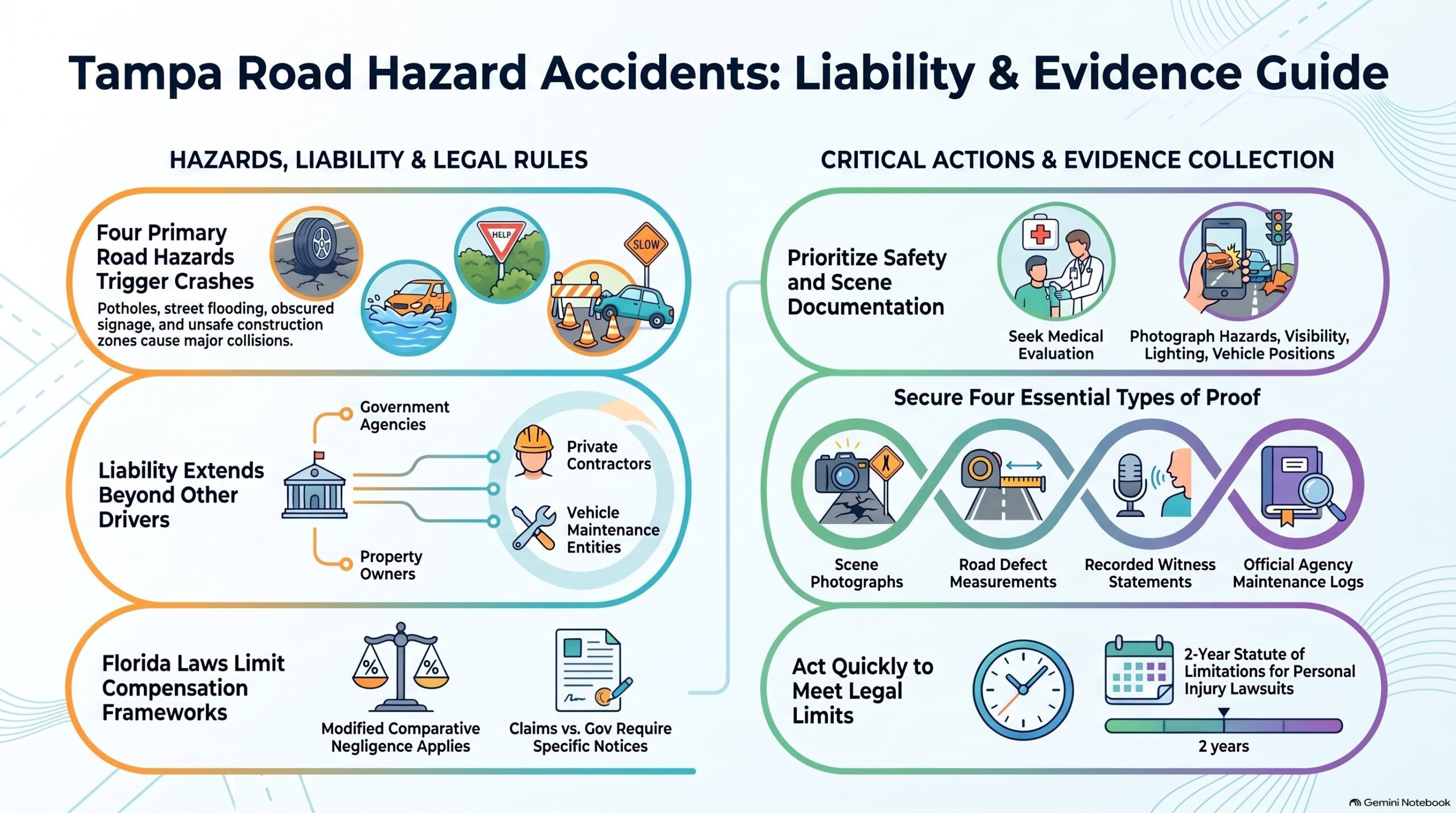
- A Tampa road-condition lawyer can assess whether potholes, flooding, poor signage, or unsafe construction contributed to a crash.
- Investigations may examine roadway ownership, maintenance duties, prior complaints, inspection records, and notice of the hazard.
- Responsibility may involve a public agency, contractor, private property owner, driver, or vehicle owner, depending on the evidence.
- Preserve scene photographs, witness details, crash reports, medical records, and vehicle documentation; request relevant records promptly.
- Medical and professional records can document chronic pain, mobility limits, emotional effects, and other ongoing consequences.


How We Can Help With Your Tampa Car Accident Road & Highway Conditions Injury Claim
A Tampa car accident lawyer can help injured motorists pursue compensation when unsafe road or highway conditions contribute to a collision. Legal counsel can manage the claim while clients focus on treatment and recovery. This support may include reviewing available records, organizing relevant documents, and communicating with insurers on the client’s behalf.
A carefully developed Claim Strategy can account for the client’s losses, supporting documentation, and the circumstances affecting the claim. Counsel may identify information that needs further review and explain available options in clear terms. This preparation helps clients make informed decisions without overlooking important deadlines or procedural requirements.
Attorney Advocacy also provides a structured point of contact for discussions with insurers and other involved parties. A lawyer can present the client’s position, respond to requests, and seek a resolution consistent with the evidence and applicable law. When negotiations do not produce a fair outcome, counsel can advise whether further legal action is appropriate. Throughout the process, professional guidance can help injured people pursue accountability while preserving their time and attention for recovery.
OUR CONSULTATIONSARE FREE
START YOUR FREE CASE REVIEW

Understanding Tampa Car Accident Road & Highway Conditions Injury Cases
When road or highway conditions contribute to a Tampa collision, determining how the crash occurred requires careful review of the surrounding circumstances. An injury case may involve more than the vehicles and their occupants. The roadway’s layout, maintenance history, signage, and available sightlines can help explain how the incident unfolded and whether a responsible party failed to meet a legal duty.
A thorough assessment considers Traffic flow, driver behavior, vehicle positions, and the timing of events. Investigators may review photographs, official reports, witness accounts, medical records, and relevant roadway documentation. This evidence can help distinguish the impact of road conditions from other factors and establish how injuries relate to the collision.
These cases can also involve questions about who controlled or maintained the roadway and what notice that party had of a dangerous condition. Clear documentation supports a fair evaluation of responsibility and damages. Careful analysis helps injured people pursue accountability while preserving reliable evidence.
Common Causes of Tampa Car Accident Road & Highway Conditions
Road and highway conditions can contribute to Tampa car accidents when maintenance is neglected or construction zones create unexpected hazards. Wet or flooded roads may reduce traction and visibility, while inadequate signage can leave drivers without timely guidance. These conditions may combine with driver error, increasing the risk of collisions and serious injuries.
Poor Road Maintenance
Poor road maintenance can turn routine travel on Tampa’s streets and highways into a serious safety risk. Pothole deterioration can damage tires, disrupt vehicle control, or force drivers to brake or swerve suddenly. These reactions may place nearby motorists, cyclists, and pedestrians in danger, particularly where traffic is heavy or visibility is limited. Pavement rutting can collect water and reduce tire contact with the road, increasing the risk of skidding during rain. Faded lane markings, uneven surfaces, and broken pavement edges can also make it harder to maintain control or identify safe paths. Local agencies generally have duties to inspect and maintain public roads, while responsibility for a crash depends on the circumstances and applicable law. Prompt reporting of hazards can help protect other road users and support timely repairs.
Highway Construction Zones
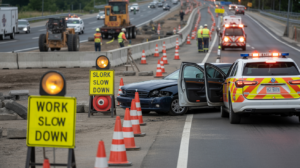
Highway construction zones can create sudden hazards for Tampa drivers as traffic patterns, lane widths, and speed limits change. Temporary signs, barriers, and pavement markings may require motorists to respond quickly while sharing limited space with other vehicles and construction crews. Lane shift confusion can arise when old markings remain visible or detours are poorly understood, increasing the risk of abrupt braking and sideswipes. Narrowed lanes leave less room for correction, particularly for drivers operating larger vehicles or traveling beside trucks. Reduced speed limits and work-zone warnings are intended to protect both road users and workers, but inconsistent compliance can undermine those safeguards. When a collision occurs, investigators may examine signage, lane layouts, visibility, and driver conduct to determine how the construction conditions contributed and whether responsible parties failed to take reasonable precautions.
Wet and Flooded Roads
When rain falls heavily, wet and flooded roads can make driving conditions in Tampa more hazardous. Water can collect in low-lying areas, drainage channels, and travel lanes, concealing potholes or other surface hazards. Drivers who encounter standing water may lose control, particularly when they travel too quickly or make sudden directional adjustments. Hydroplaning risk increases when tires cannot displace water effectively, reducing traction and making braking or turning less reliable. Floodwater depth can also be difficult to judge, and attempting to cross it may stall a vehicle or expose occupants to dangerous currents. Drivers can reduce risks by slowing down, increasing following distance, and avoiding flooded sections whenever possible. These precautions help protect passengers, other motorists, and emergency responders who may assist after a collision or vehicle breakdown.
Inadequate Road Signage
Beyond weather-related hazards, inadequate road signage can create serious risks for drivers in Tampa. Missing, damaged, or obscured signs may leave motorists without clear warnings about curves, lane changes, construction zones, or changing speed limits. When drivers receive incomplete information, they may brake suddenly, enter an intersection incorrectly, or fail to anticipate a hazard, increasing the likelihood of a collision.
Sign Visibility is crucial, particularly at night or during heavy rain, when faded lettering, poor lighting, or vegetation can make signs difficult to read. Sign Placement also matters; a sign positioned too close to a decision point may not give drivers enough time to respond safely. Transportation agencies and contractors are responsible for inspecting and maintaining signs. When inadequate signage contributes to a crash, identifying the responsible parties may help injured people pursue appropriate remedies.
Don’t Wait. Call Our Florida Personal Injury Lawyers Now!


Legal Rights of Tampa Car Accident Road & Highway Conditions Injury Victims
Tampa drivers injured by unsafe road or highway conditions may have legal rights when a dangerous condition contributed to a crash. A claim may seek compensation from a party whose negligence caused or failed to address a hazardous condition.
The responsible party may be a public agency or private entity, and different legal requirements can apply.
- Preserve evidence: Photographs, incident reports, medical records, and witness details can help document the condition and resulting harm.
- Identify responsible parties: The roadway’s ownership, maintenance, and control may determine which entity has a duty to act safely.
- Observe deadlines: Claims against government entities may involve notice rules and shortened filing periods. Sovereign immunity can limit liability, although exceptions may permit certain claims.
- Assess shared fault: Comparative negligence may reduce compensation when an injured person shares responsibility, depending on Florida law.
Prompt legal guidance can help victims understand available options and procedural obligations. Pursuing a claim may also encourage responsible parties to address hazards, supporting safer travel for the broader Tampa community.
Why Do Tampa Car Accident Road & Highway Condition Injuries Happen?
Road and highway condition injuries in Tampa often occur when a hazardous surface, poor design, or inadequate maintenance makes a roadway unsafe. Potholes, loose gravel, standing water, and uneven pavement can reduce tire traction or disrupt vehicle control. Faded lane markings, missing signs, poorly timed signals, and inadequate lighting may also prevent drivers from recognizing hazards in time.
Construction zones create additional risks when barriers, detours, or temporary signs are unclear or improperly maintained. Heavy rain can conceal roadway damage and increase the danger of flooding, while sharp curves and narrow shoulders may leave little room to recover from a mistake. In some collisions, driver fatigue, distraction, speeding, or impaired judgment combine with unsafe road conditions. Vehicle defects, including worn tires or faulty brakes, can further limit a driver’s ability to respond.
These incidents may involve preventable failures by drivers, contractors, vehicle owners, or public agencies responsible for roadway design and maintenance. Understanding contributing factors helps clarify how safer roads protect Tampa’s communities.
Don’t Wait. Call Our Florida Personal Injury Lawyers Now!
What Should You Do After a Tampa Car Accident Involving Road & Highway Conditions?
After a Tampa car accident, injured individuals should first check for injuries and contact emergency services when needed. When it is safe to do so, they should document relevant road and highway conditions, including hazards, signage, and weather. Seeking guidance from a qualified attorney may help clarify legal options and preserve important evidence.
Check for Injuries
Immediately after a collision, checking for injuries should take priority over evaluating vehicle damage or road conditions. If it is safe to do so, occupants should check themselves and others for pain, bleeding, confusion, or difficulty breathing. Because shock can mask discomfort, they should check for hidden injuries, including head, neck, and back trauma, without moving anyone who may have a serious injury. A person should call 911 when anyone is hurt, trapped, unconscious, or experiencing severe symptoms. Until help arrives, bystanders can offer calm reassurance and follow the dispatcher’s instructions, while avoiding food, drink, or unnecessary movement for an injured person. Even when injuries are not immediately apparent, those involved should monitor delayed symptoms and seek prompt medical evaluation if pain, dizziness, numbness, or other concerns develop.
Document Road Conditions
If it is safe, those involved should document the road and weather conditions that may have contributed to the collision. Photographs or video can show standing water, debris, potholes, faded lane markings, damaged signs, poor lighting, or obstructed visibility. Images should capture both close details and the surrounding roadway, while avoiding traffic or other hazards. Notes can record the time, location, weather, traffic flow, and any changes in conditions after the crash. Witnesses may also describe what they observed, including whether rain, oil, or loose gravel affected pavement friction. Reporting road conditions to the appropriate local or state agency can help identify hazards and support timely repairs, protecting other road users. Preserve records in their original form, with dates and locations noted whenever possible.
Seek Legal Guidance
Preserved photographs, notes, and witness accounts of road or weather conditions may help clarify how a Tampa collision occurred, but they do not resolve every legal question. After receiving necessary medical care, an injured person may benefit from a timely Legal consultation to understand possible claims, deadlines, and the evidence needed to evaluate responsibility. An attorney can review whether roadway design, maintenance, construction activity, weather, or another driver’s conduct may have contributed to the crash. Because claims involving public entities or multiple parties can raise specific notice and filing requirements, prompt advice may help preserve options. When selecting an attorney, consider relevant experience, communication practices, and the proposed fee arrangement. A careful review allows the injured person to make informed decisions while protecting records and supporting a fair process for everyone affected.
Critical Evidence in a Tampa Car Accident Road & Highway Conditions Injury Case
Evidence can help establish how roadway or highway conditions contributed to a Tampa car accident and resulting injuries. Relevant records may document the scene, identify hazards, and clarify who knew about a defect or was responsible for maintaining the area.
Crucial evidence may include:
- Crash scene photographs
- Roadway defect documentation
- Witness statements
- Maintenance records
Crash Scene Photographs
Photographs taken at a Tampa crash scene can document road and highway conditions that may have contributed to a collision. Images can show the vehicles’ positions, visible damage, traffic signs, lane markings, lighting, weather, and surrounding traffic. When taken safely soon after a crash, photographs can preserve details that change as vehicles are moved or conditions shift. Wide views can establish context, while closer images can clarify specific features without replacing a complete account of the scene. Preserve original files because photo metadata may record when and where images were captured. Image authentication can help establish that photographs are accurate and unaltered. Witnesses, passengers, or responding personnel may provide useful images to investigators and legal representatives. Careful collection supports a fair assessment of the collision and helps those affected pursue accountability.
Roadway Defect Documentation
When a Tampa collision may involve a roadway defect, prompt documentation can help establish the condition’s role in the crash. A record should identify the defect’s precise location, dimensions, and appearance, along with nearby traffic controls, lighting, and weather conditions. Photographs should include broad views showing the roadway context and close views that capture surface details. Retain original files because photographic metadata may indicate when and where images were created, depending on device settings and verification. Evidence preservation also includes keeping damaged vehicle parts, repair records, and any available inspection or maintenance documents. Conditions can change quickly through repairs, weather, or routine traffic, so timely documentation may help clarify what existed at the time of the collision. Organized, accurate records can support fair evaluation of responsibility and help protect the interests of those affected.
Witness Statements
Witness statements can help explain how road or highway conditions contributed to a Tampa car accident. People who saw the collision may describe standing water, obscured signs, poor lighting, debris, or a sudden change in pavement. Their accounts can clarify what drivers could see and how the roadway affected events before impact. Witness credibility depends on factors such as the person’s opportunity to observe, consistency, and independence from those involved. Statement timing also matters. Promptly recorded accounts may preserve details before memory fades, while later statements can be affected by stress or discussion with others. Investigators may compare each account with photographs, vehicle damage, and other available evidence. A careful, respectful approach helps preserve useful information and supports a fair assessment of the harm and circumstances surrounding the crash.
Maintenance Records
Maintenance records can help determine whether a roadway hazard existed before a Tampa car accident and whether the responsible agency or contractor knew about it. Inspection logs, repair orders, work schedules, and complaint histories may show when a defect was reported and what steps followed. These documents can also identify which entity was responsible for maintaining the road, shoulder, drainage system, or traffic controls. Public records requests may obtain materials held by government agencies, while contractors may maintain separate files. Prompt action matters because document retention policies can limit how long records are preserved, and routine deletion may remove useful evidence. A careful review can help clarify whether reasonable maintenance occurred and support a fair assessment of responsibility. Preserving these records may also serve others by encouraging safer road conditions.
Long-Term Effects of Tampa Car Accident Road & Highway Conditions Injuries
Injuries caused by unsafe road or highway conditions may persist long after initial treatment. Some people experience chronic pain or lasting mobility limitations that interfere with daily activities and work. Emotional trauma may also continue, making the full impact of an accident important to assess.
Chronic Pain
When a Tampa car accident occurs on congested highways or roads with uneven pavement, the resulting injuries may develop into chronic pain that persists long after the initial treatment. Neck, back, and joint injuries can cause recurring discomfort that interferes with work, family responsibilities, and daily routines. Pain may also affect concentration and emotional well-being, making consistent support important for injured people and those who care for them. A physician can assess symptoms, recommend appropriate Pain management, and monitor whether treatment is helping. Keeping records of medical visits, prescribed care, and symptom changes may help clarify the injury’s ongoing effects. Chronic pain can also disrupt sleep, which may intensify fatigue and make recovery more difficult. Timely medical attention can support informed decisions about care and potential legal claims.
Lasting Mobility Limitations
Uneven pavement, abrupt highway impacts, and collisions in congested Tampa traffic can damage bones, joints, or nerves in ways that limit movement long after initial treatment. Some injured people may struggle to walk, climb stairs, drive, or complete routine tasks independently. The extent of these limitations depends on the injury, recovery, and access to appropriate care. Rehabilitation, mobility aids, and Assistive technology may help individuals maintain independence and participate in family, work, and community life. Adaptive transportation can support access to medical appointments and necessary services when driving is no longer safe or practical. Family members, employers, and caregivers may need to adjust routines or spaces to provide practical support. Medical records and professional assessments can document lasting restrictions and guide decisions about ongoing treatment, accommodations, and related accident claims.
Emotional Trauma
A serious crash on Tampa’s roads or highways can leave emotional effects that persist after physical injuries begin to recover. Survivors may experience post-traumatic stress, including intrusive memories, sleep disruption, or distress when traveling near the collision site. Anxiety symptoms can also affect concentration, independence, and willingness to drive or ride in a vehicle. These reactions may interfere with work, family responsibilities, and community involvement, even when injuries are not outwardly visible. Their duration and severity vary, and persistent symptoms may require assessment by a qualified mental health professional. Timely counseling and appropriate support can help survivors regain stability and participate in daily life. When another party’s conduct contributed to the crash, treatment records and their effects may also help explain the broader consequences of the injuries.
Proving Liability in Tampa Car Accident Road & Highway Conditions Injury Cases
Proving liability in a Tampa car accident involving unsafe road or highway conditions requires evidence that a dangerous condition contributed to the crash and that a responsible party failed to address it with reasonable care. A careful Causation Analysis examines how the hazard, such as a large pothole, obscured sign, or poor drainage, affected vehicle movement and led to the collision. Photographs, measurements, maintenance records, traffic reports, and witness accounts may help establish when the condition existed and whether it was foreseeable.
Negligence Standards depend on the party responsible for the roadway and the circumstances surrounding the hazard. A public agency, contractor, or private property owner may have duties to inspect, repair, warn, or follow approved safety practices. Evidence must connect a specific failure to the injuries, not merely show that a road defect was present. Prompt documentation can preserve important details and support a fair review. Clear findings may also help prevent similar hazards from endangering other drivers, passengers, and community members.
Dealing With Insurance Companies After a Tampa Car Accident Road & Highway Conditions Injury
When a roadway defect contributes to a Tampa car accident, insurance companies may dispute whether the hazard caused the crash and who is responsible. Their representatives may ask injured people to describe events before the roadway condition, vehicle damage, and medical effects are fully understood. Because recorded statements can be used to evaluate coverage and liability, a person may benefit from seeking legal guidance before responding. Clear, accurate communication helps protect the interests of everyone affected, including passengers and other road users.
Insurers may also examine maintenance records, photographs, witness accounts, and reports concerning the road defect. A careful review can help distinguish established facts from assumptions and identify whether a public agency, contractor, driver, or another party may share responsibility. Assess settlement offers in light of documented losses and available policy limits, rather than accepting them under pressure. Counsel can communicate with insurers, address requests for information, and explain coverage issues while the injured person focuses on recovery and family responsibilities.
What to Expect During a Tampa Car Accident Road & Highway Conditions Injury Claim Process
A Tampa car accident injury claim generally begins with an initial review of the circumstances, followed by evidence collection to assess liability and damages. The parties may then pursue settlement negotiations based on the available documentation and applicable law. If they cannot reach an agreement, the case may proceed to court or another resolution.
Initial Claim Review
During the initial claim review, an attorney examines how road or highway conditions may have contributed to the Tampa car accident and the resulting injuries. This assessment considers the circumstances described by the injured person, the nature of the harm, and whether another party may bear legal responsibility. Claim eligibility depends on applicable law, the facts presented, and the connection between the roadway condition and the collision. The attorney may also consider whether a public agency, contractor, property owner, or another driver could have had a duty relevant to the incident. The review timeline varies with the claim’s intricacy and the availability of basic records. At this stage, the attorney explains potential legal options, important deadlines, and practical limits, helping the injured person make informed decisions while preserving the ability to pursue appropriate compensation.
Evidence Collection
After the initial review, evidence collection helps establish how road or highway conditions may have contributed to the collision and resulting injuries. Counsel may obtain police reports, photographs, witness statements, and records of prior complaints about the roadway. These materials can document hazards such as standing water, damaged pavement, missing signs, or inadequate lighting. Digital evidence, including nearby surveillance footage and dash camera recordings, may show conditions before and during the crash. Vehicle telematics can provide information about speed, braking, and other vehicle activity, subject to availability and preservation. Medical records and repair assessments help describe the injuries and physical damage connected to the incident. Investigators may inspect the location and consult qualified professionals to evaluate visibility, road design, or maintenance issues. Prompt preservation matters because footage and electronic data may be overwritten or lost.
Settlement Negotiations
With the available evidence reviewed, settlement negotiations may begin with a demand outlining how the road or highway condition contributed to the crash, the injuries sustained, and the resulting losses. The insurer may evaluate the claim, question responsibility, or request further documentation before responding. A negotiation strategy can address these concerns with photographs, maintenance records, witness accounts, medical information, and a clear explanation of the harm caused. It should also consider whether a public agency, contractor, or other party may share responsibility. Settlement timing can depend on the completeness of the evidence, the course of medical treatment, and the insurer’s review process. A careful assessment helps prevent premature decisions that overlook future care or financial effects. Throughout discussions, the injured person’s needs and ability to recover remain central to evaluating any proposed amount.
Lawsuit and Resolution
If settlement negotiations do not resolve a road or highway conditions injury claim, a lawsuit may allow the parties to present evidence and obtain a court decision. The process generally begins with filing a complaint, followed by the defendant’s response and an exchange of information. Each side may request records, question witnesses, and consult qualified experts to examine roadway design, maintenance, warning signs, and crash circumstances. Courtroom Preparation includes organizing evidence, preparing testimony, and addressing legal arguments before trial. A judge or jury then evaluates liability and damages under applicable law. A verdict may award compensation for medical expenses, lost income, and other legally supported losses, though outcomes depend on the evidence. If payment is not made as required, Verdict Enforcement may involve further court procedures. Careful preparation helps protect accountability and support safer roads for the community.
Compensation for Tampa Car Accident Road & Highway Conditions Injury Damages
Road and highway hazards in Tampa, including poorly maintained pavement, inadequate signage, or unsafe construction zones, can contribute to serious crashes and injuries. When another party’s negligence causes a collision, an injured person may seek compensation for related losses. Potentially responsible parties may include drivers, contractors, property owners, or government entities, depending on who controlled the roadway and had a duty to address the hazard.
Compensation may cover medical expense reimbursement for emergency care, treatment, rehabilitation, medication, and necessary future medical services. Lost income recovery may address wages missed during recovery and, when supported by evidence, reduced ability to earn income. Documentation such as medical records, bills, employment information, photographs, and incident reports can help establish the connection between the hazard, the crash, and the resulting losses. Claims involving public roads may require compliance with special notice rules and deadlines. A careful review can identify applicable coverage and responsible parties, helping injured people pursue fair support while protecting their families and access to needed care.
Economic vs Non-Economic Damages in Tampa Car Accident Road & Highway Conditions Cases
In Tampa car accident cases involving hazardous road or highway conditions, damages generally include measurable economic losses and less tangible non-economic harm. Economic losses may cover medical expenses, lost income, and other accident-related costs, while non-economic damages may address pain, emotional distress, and reduced quality of life. Supporting these claims typically requires clear evidence linking the losses to the collision.
Economic Losses
Economic losses are the measurable financial costs of a Tampa car accident, including medical bills, lost wages, and vehicle repair expenses. These damages may also include prescription costs, rehabilitation, diagnostic testing, and necessary transportation to medical appointments. Records such as invoices, pay statements, repair estimates, and treatment documentation can help establish the amount and connection of each expense to the collision. Lost wages may reflect income missed during recovery, while diminished earning capacity may apply when lasting injuries limit a person’s ability to perform work or earn at the prior level. Future medical care and other reasonably anticipated costs may also be considered when supported by reliable evidence. Careful documentation helps clarify the financial impact and supports a fair assessment of the resources needed for recovery and continued stability.
Non-Economic Harm
While economic damages account for measurable financial losses, non-economic damages address the personal effects of a Tampa car accident, including physical pain, emotional distress, and reduced enjoyment of daily activities. These harms can affect how an injured person functions at home, maintains relationships, and participates in community life. Emotional distress may include anxiety, fear, or persistent mental strain following a collision, particularly when road or highway conditions contributed to the event. Loss of enjoyment can reflect an inability to pursue hobbies, family activities, or routines that previously provided meaning and connection. Unlike medical bills or lost income, these effects do not have a fixed price, yet they can substantially alter a person’s quality of life. Recognizing non-economic harm helps present a fuller account of how an accident affects an individual and those who depend on them.
Proving Damages
How can the effects of a Tampa car accident tied to road or highway conditions be established? A claim typically requires clear evidence connecting the collision, the injuries, and the resulting losses. Damage documentation may include medical records, repair estimates, wage statements, photographs, and reports describing the roadway hazard or traffic conditions. These materials can help show how a dangerous road surface, inadequate signage, or another condition contributed to the crash.
Economic damages include measurable expenses and income losses, such as treatment bills, vehicle repairs, and reduced earnings. Future care costs may be supported by medical opinions and treatment plans that explain anticipated needs. Non-economic damages address harm that lacks a direct price, including pain, emotional distress, and limits on daily activities. Consistent records and credible testimony can help present both categories accurately and support a fair resolution.
Don’t Wait. Call Our Florida Personal Injury Lawyers Now!
When a Tampa Car Accident Road & Highway Conditions Injury Case Goes to Trial vs. Settlement
In a Tampa car accident case involving unsafe road or highway conditions, settlement may resolve the claim without a trial, but the appropriate path depends on the evidence, the parties’ positions, and the extent of the injuries and losses. A settlement can provide compensation sooner and avoid the uncertainty, expense, and demands of courtroom proceedings. It may also allow the parties to reach a practical resolution while limiting disruption for injured people and their families.
Trial may be considered when negotiations do not produce an acceptable offer or when important facts remain disputed. Evidence may include photographs, maintenance records, expert analysis, and trial testimony about the roadway, the crash, and resulting harm. A judge or jury then evaluates the evidence and decides the outcome; jury deliberations occur before a verdict is returned. The process can take longer, and no result is guaranteed. Careful assessment of the available proof, likely costs, and the injured person’s needs can help determine whether settlement or trial better serves a fair resolution.
Florida Laws That May Affect Your Tampa Car Accident Road & Highway Conditions Case
Florida law can shape a Tampa car accident claim involving unsafe road or highway conditions by setting rules for fault, deadlines, and claims against government entities.
Several legal principles may guide how responsibility is evaluated and what evidence is relevant.
- Negligence and fault: Florida negligence rules generally require proof that a responsible party failed to use reasonable care and that the failure contributed to the crash. A driver’s conduct and a road defect may both be considered.
- Shared responsibility: Florida’s modified comparative negligence framework can reduce recoverable damages based on a claimant’s share of fault. The evidence must support a careful assessment of each party’s actions.
- Public entities: Claims involving a city, county, or state agency may raise government immunity issues. Florida law permits certain claims, but special conditions and limits can apply.
- Road maintenance evidence: Inspection records, repair history, warning signs, and agency notice may help establish whether a public entity knew, or should have known, of a hazardous condition.
These rules can affect the parties’ obligations and the available avenues for accountability. A fact-specific legal review can clarify which duties apply and support informed decisions.
The Statute of Limitations for Tampa Car Accident Road & Highway Conditions Injury Cases
Because road-condition crashes may involve both private parties and government entities, filing deadlines can depend on who is responsible and what type of claim is brought. Florida law generally gives an injured person two years from the crash to file a negligence lawsuit. A wrongful death claim generally must be filed within two years of the death. These limits can be affected by the facts, the parties involved, or other legal rules, so confirm the applicable deadline promptly.
Claims involving a state or local government may require additional steps before a lawsuit. Government notice rules can require written notice to the responsible agency and the Florida Department of Financial Services within a specified period, commonly three years for negligence claims. The government may also have time to investigate before filing suit. Missing a notice requirement or filing deadline can bar recovery, even when a road hazard contributed to serious harm. Protecting injured people’s rights depends on identifying the responsible entity and acting within the governing time limits.
How a Tampa Car Accident Road & Highway Conditions Lawyer Can Help You
When a road or highway defect contributes to a crash, a Tampa car accident lawyer can investigate how the hazard developed and who may be responsible. The lawyer’s work may clarify whether a public agency, contractor, property owner, or another party failed to address a dangerous condition. This process can help injured people pursue accountability while supporting safer roads for the wider community.
A lawyer can investigate road hazards, identify potentially responsible parties, and help injured people pursue accountability.
- Gather evidence: The lawyer may obtain crash reports, photographs, maintenance records, inspection histories, and witness statements to document the hazard and its connection to the collision.
- Identify responsible parties: Reviewing ownership, maintenance duties, and construction work can help determine which entities may bear legal responsibility.
- Assess losses: A Case Evaluation considers medical expenses, lost income, future care needs, and other documented effects of the injury.
- Explain legal options: During an Attorney Consultation, counsel can discuss potential claims, evidence needs, and applicable procedures.
When to Contact a Tampa Car Accident Road & Highway Conditions Lawyer
Prompt legal guidance may help preserve evidence after a crash involving a road or highway hazard. Consider contacting a Tampa car accident road and highway conditions lawyer soon after receiving medical attention, especially if the collision may involve poor maintenance, missing signs, debris, or unsafe construction. Early advice can help identify records and physical evidence that may change or disappear, including roadway conditions, photographs, witness accounts, and agency reports.
Contact is also important when fault is disputed, or an insurer suggests that the injured person contributed to the crash. Comparative negligence may affect how responsibility and compensation are assessed, so a clear account of events can be significant. Legal deadlines may limit the time available to bring a claim, and special notice requirements may apply when a government entity is responsible. A prompt consultation can help clarify applicable time limits and practical next steps, while allowing the injured person to focus on recovery and family responsibilities.
Why You Need an Experienced Tampa Car Accident Road & Highway Conditions Lawyer
An experienced Tampa car accident road and highway conditions lawyer can help determine whether unsafe roadway conditions contributed to a collision and identify the parties that may be responsible. This work may involve examining crash reports, roadway design, maintenance records, traffic controls, and available photographs or witness accounts. Careful investigation can clarify whether a public agency, contractor, property owner, or another party had a duty to address a hazard.
Attorney Experience matters when evaluating how road defects, poor drainage, obstructed signs, or inadequate lighting may have affected a driver’s ability to respond. Counsel can preserve relevant evidence and explain how responsibility may be shared among multiple parties. Local Knowledge can also help assess Tampa-area roads, traffic patterns, and applicable procedures for claims involving government entities. These matters may involve strict notice requirements and limited timeframes. By pursuing a thorough, evidence-based review, a lawyer can help injured people seek accountability and support safer conditions for others who use the region’s roads.
How to Choose the Right Tampa Car Accident Road & Highway Conditions Lawyer for Your Case
Choosing the right Tampa car accident road and highway conditions lawyer requires careful attention to relevant experience, investigative resources, and communication practices. A qualified attorney should understand how roadway design, maintenance failures, construction zones, and inadequate warnings may contribute to collisions. The lawyer should also know how to preserve evidence, review crash reports, consult qualified experts, and identify potentially responsible parties.
When selecting an attorney, ask who will handle the case, how often updates will be provided, and what steps the firm takes to investigate road conditions. Clear answers help clients make informed decisions while maintaining focus on recovery and family responsibilities. Prospective clients should review the lawyer’s experience with comparable claims and assess whether the communication style supports a respectful working relationship.
Fee structures also warrant careful review. The agreement should explain costs, payment terms, and whether fees depend on a successful recovery. Comparing these details can help individuals choose representation that aligns with their needs and circumstances.
About The Law Offices of Anidjar & Levine
The Law Offices of Anidjar & Levine represents people injured in car accidents, including those involving hazardous road or highway conditions in Tampa.
The firm handles claims arising from crashes linked to unsafe road design, poor maintenance, inadequate warnings, or other roadway hazards.
Its attorneys assess the circumstances, identify potentially responsible parties, and explain available legal options to clients.
Firm history reflects a practice focused on representing injured people and pursuing compensation for losses caused by negligence.
For road-condition cases, that work may involve reviewing crash reports, gathering photographs and witness accounts, and examining maintenance records or other relevant evidence.
The firm can also communicate with insurers and manage claim-related deadlines, allowing clients to focus on recovery.
Community involvement is another aspect of the firm’s work, including efforts intended to support local residents and organizations.
For people seeking counsel in Tampa, the firm provides case-specific guidance and representation, while each claim’s outcome depends on its facts and applicable law.
Frequently Asked Questions
Can Poor Road Design Make a Government Agency Liable for a Tampa Crash?
Yes, poor road design can make a government agency liable for a Tampa crash if a dangerous condition caused the collision and the agency had notice or should reasonably have discovered it. Investigators may compare the roadway with applicable Design standards and review warning signs, sight lines, drainage, and maintenance records. However, agency immunity and statutory limits may restrict recovery, so liability depends on the facts, governing law, and timely compliance with notice requirements.
What Should I Do if a Road Hazard Caused My Accident but Was Repaired Afterward?
If a road hazard caused a crash but was later repaired, the injured person should promptly preserve evidence showing its earlier condition. Photographs, witness accounts, repair records, and documenting prior complaints may help establish what existed before the repair and whether officials had notice. Retain medical records and crash reports as well. Because government claims often involve strict deadlines and special procedures, a qualified attorney can assess the evidence and identify responsible parties.
Can I File a Claim if a Defective Traffic Signal Contributed to My Collision?
A claim may be available if a defective traffic signal contributed to a collision, but responsibility depends on the evidence and applicable law. Evidence of a signal malfunction may include maintenance records, inspection reports, witness accounts, and traffic camera footage. Intersection liability rules determine whether a public agency, contractor, or another party may be responsible and impose specific notice deadlines. Prompt investigation can preserve evidence and help affected people pursue fair compensation for their losses.
How Can I Report a Dangerous Tampa Road Condition to Local Authorities?
You can report a dangerous Tampa road condition to the agency responsible for the roadway, such as the City of Tampa, Hillsborough County, or the Florida Department of Transportation. Tampa roadway complaint contacts include municipal service channels and FDOT’s road issue reporting system. Documenting hazardous road conditions with the precise location, date, photographs, and a clear description helps crews assess the risk. For immediate danger, contact emergency services rather than relying solely on an online report.
Can Road Construction Contractors Be Held Responsible for Crash-Related Injuries?
Road construction contractors can be held responsible for crash-related injuries when Contractor Negligence contributes to unsafe conditions. Examples may include inadequate barriers, missing warning signs, poor lighting, or failure to follow approved traffic-control plans. Responsibility depends on the evidence, applicable safety standards, and each party’s role in the project. Promptly documenting the scene, reporting hazards, and preserving records can help injured people seek accountability and support safer Work Zone Safety for the wider community.
—————————
Road and highway conditions can contribute to serious Tampa car accidents, but injured people may have legal options when another party’s negligence played a role.
The Law Offices of Anidjar and Levine can review the circumstances, explain potential claims, and help preserve relevant evidence.
A Tampa Personal Injury Lawyer can also help you understand how deadlines and liability rules may affect recovery.
Each case depends on its specific facts, and an informed assessment can help victims make considered decisions about their next steps.