The Law Offices of Anidjar and Levine, a Daytona Beach unsecured load truck accident lawyer, investigates whether shifting or falling cargo caused the collision and identifies potentially responsible parties, including drivers, trucking companies, cargo owners, and loading contractors.
Counsel may preserve photographs, witness accounts, inspection records, electronic data, and medical documentation while handling insurer communications.
Claims may seek compensation for medical expenses, lost income, property damage, pain, and long-term impairment.
Prompt legal guidance from a Daytona Beach Truck Accident Lawyer can clarify deadlines, comparative fault, and available insurance coverage.
Main Takeaways
- A Daytona Beach unsecured-load truck accident lawyer can investigate the crash and identify liable drivers, trucking companies, cargo handlers, or owners.
- Counsel can preserve photographs, witness accounts, inspection reports, load-securement records, GPS data, and other evidence before it disappears.
- Lawyers can evaluate negligence, transportation-regulation violations, comparative fault, and insurance coverage involving multiple responsible parties.
- Legal representation can handle insurers, recorded statements, disputed losses, settlement negotiations, or litigation on your behalf.
- Prompt medical care and legal advice help document injuries, protect your rights, and pursue medical expenses, lost income, property damage, and pain and suffering.


How We Can Help With Your Daytona Beach Unsecured Load Truck Accident Injury Claim
When an unsecured load truck accident causes injuries in Daytona Beach, a seasoned attorney can investigate the crash, identify the responsible parties, and pursue compensation on the injured person’s behalf. The legal team can provide steady guidance while the injured person focuses on treatment and recovery.
Representation may include examining photographs, roadway conditions, vehicle damage, inspection materials, and available commercial records. Collecting witness affidavits can help preserve accounts of how cargo shifted, fell, or struck another vehicle. Preserving medical records is equally important because treatment documentation may establish the nature, duration, and impact of the injuries.
An attorney can also communicate with insurers, organize supporting evidence, and address requests for statements or releases. Careful preparation helps ensure that relevant information is not overlooked during claim evaluation. By handling investigative and administrative responsibilities, counsel can support a fair process and advocate for compensation related to medical care, lost income, and other documented consequences without making promises about the result.
OUR CONSULTATIONSARE FREE
START YOUR FREE CASE REVIEW

Understanding Daytona Beach Unsecured Load Truck Accident Injury Cases
Unsecured load truck accident injury cases in Daytona Beach often involve more than a basic traffic collision because liability may extend to the driver, trucking company, cargo owner, loading contractor, or other responsible parties. Determining responsibility requires examining contracts, inspection records, dispatch information, photographs, witness accounts, and applicable transportation regulations. Cargo Weight may be significant when evaluating whether the vehicle was operated within legal limits and whether the responsible parties fulfilled their obligations. Safety Compliance records can help establish whether required procedures, equipment standards, and supervisory duties were followed.
Injured individuals may pursue compensation for medical treatment, lost income, reduced earning capacity, pain, and other documented losses. The legal analysis may also address comparative fault, insurance coverage, and claims involving multiple defendants. Prompt preservation of evidence allows a qualified attorney to identify accountable parties and present a clear claim. A careful case review supports injured people and their families while promoting fair treatment throughout the legal process.
Common Causes of Daytona Beach Unsecured Load Truck Accident
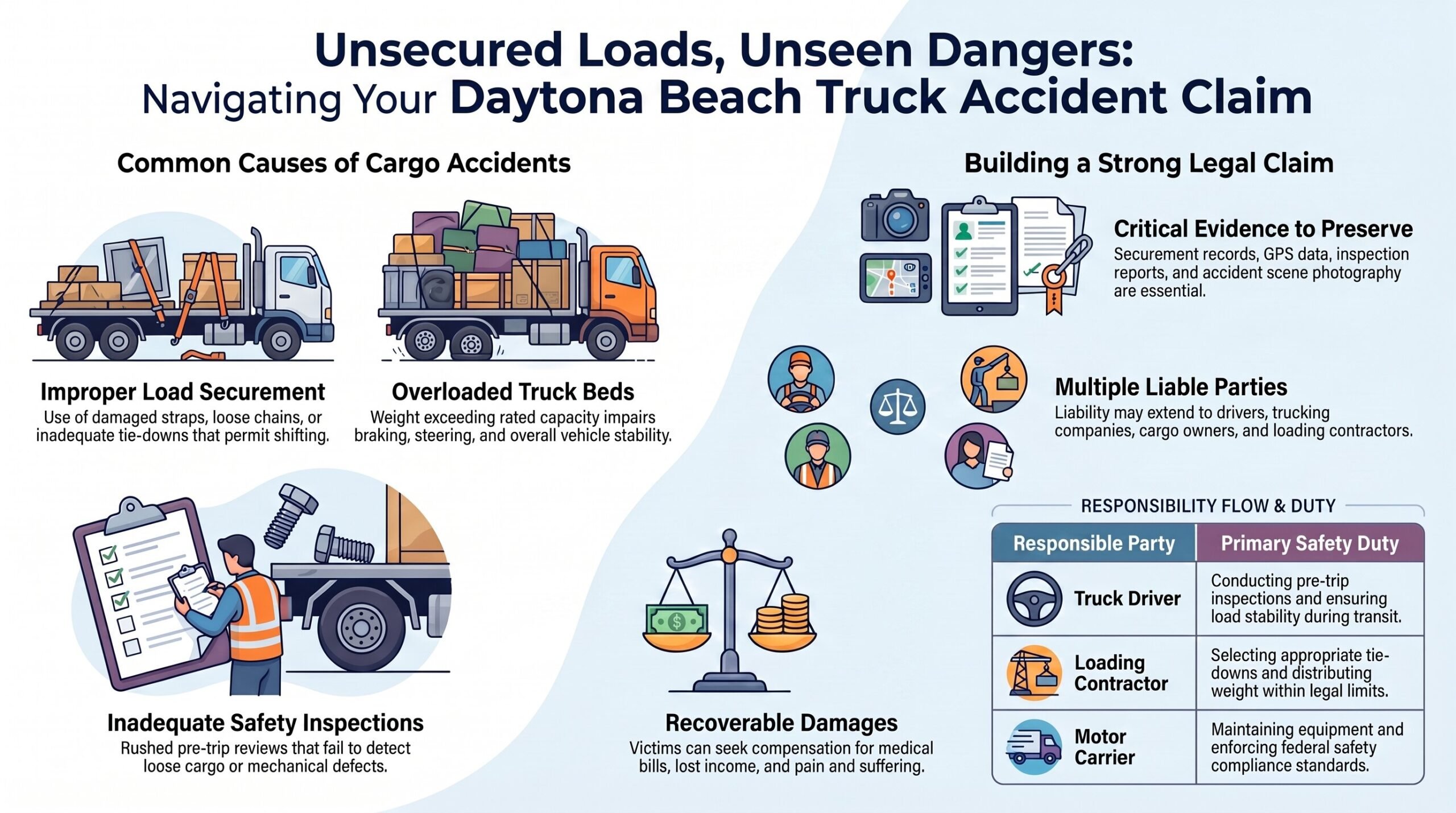
Common causes of unsecured load truck accidents in Daytona Beach include improper load securement and overloaded truck beds. Cargo may shift during transit when restraints are inadequate, increasing the risk of falling debris or loss of vehicle control. Inadequate safety inspections can allow these hazards to remain uncorrected before and during travel.
Improper Load Securement
Improper load securement is a significant cause of truck accidents in Daytona Beach, particularly when cargo is not properly restrained, distributed, or protected against shifting during transit. Drivers, carriers, and loading personnel have responsibilities to select appropriate tie-downs, blocking materials, and protective coverings for each shipment. Securement failures may result from inadequate inspections, damaged straps, loose chains, or poor placement that permits cargo to slide, roll, or fall onto the roadway.
Compliance with Cargo weight limits supports safe handling, but securement remains necessary even when a shipment is within permitted limits. Vehicle equipment maintenance also matters because worn anchor points, defective tensioning devices, and damaged trailers can undermine otherwise careful loading practices. When falling cargo causes injuries or collisions, affected individuals may seek assistance to understand liability and available remedies.
Overloaded Truck Beds
Overloaded truck beds can create hazardous conditions on Daytona Beach roads by exceeding a vehicle’s rated capacity or placing excessive weight in a limited area. Excess weight may impair braking, steering, suspension performance, and tire stability, increasing risks for occupants, pedestrians, and nearby motorists. Commercial operators and other responsible parties should verify cargo weight compliance before a vehicle enters traffic. Manufacturer limits, axle ratings, and applicable transportation rules provide crucial safeguards against unsafe loading practices.
A documented securement checklist review can help confirm that the load is distributed within permitted limits and that required equipment is suitable for the cargo. When these precautions are ignored, overloaded trucks may contribute to collisions and serious injuries. Investigators may examine weigh records, inspection reports, and loading procedures when determining responsibility for an accident.
Shifting Cargo During Transit
When cargo shifts during transit, a truck’s center of gravity and handling characteristics can change without warning, creating hazards on Daytona Beach roads. Movement may occur when freight is unevenly distributed, insufficiently restrained, or affected by sudden braking, sharp turns, roadway vibrations, or changing speeds. A shifting load can reduce directional control, increase stopping distances, and cause trailers to sway or roll. It may also allow materials to fall onto surrounding vehicles, exposing motorists, pedestrians, and cyclists to severe injuries.
Federal trucking regulations and load securement standards require carriers and drivers to use appropriate restraints, blocking, and distribution methods for the cargo involved. When those safeguards are disregarded, affected individuals may need assistance identifying responsible parties and preserving evidence. Legal guidance can help families pursue accountability while supporting safer transportation practices throughout the community.
Inadequate Safety Inspections
Although safety inspections are intended to identify unsecured cargo before a truck enters public traffic, inadequate inspections can allow dangerous loading conditions to go unnoticed. A rushed or poorly documented review may fail to detect loose straps, damaged tie-downs, uneven weight distribution, or cargo that exceeds safe limits. Inspection personnel may also overlook mechanical conditions that increase crash risks, including brake failure causes linked to worn components, leaks, or insufficient maintenance.
Driver fatigue factors can further reduce the quality of pre-trip checks when operators are pressured to meet demanding schedules. These failures may permit preventable hazards onto Daytona Beach roads, placing motorists, pedestrians, and other communities at risk. Thorough inspections, accurate records, and timely corrections help protect the public and may provide important evidence when injured individuals seek accountability after an unsecured load truck accident.


Legal Rights of Daytona Beach Unsecured Load Truck Accident Injury Victims
Daytona Beach victims injured by unsecured truckloads may have legal rights to seek compensation for medical expenses, lost income, property damage, pain and suffering, and other accident-related losses. A claim may proceed against responsible drivers, trucking companies, cargo handlers, or other parties, depending on the available evidence and applicable law.
Victims can protect those rights by reporting injuries, obtaining medical care, and consulting qualified legal counsel promptly.
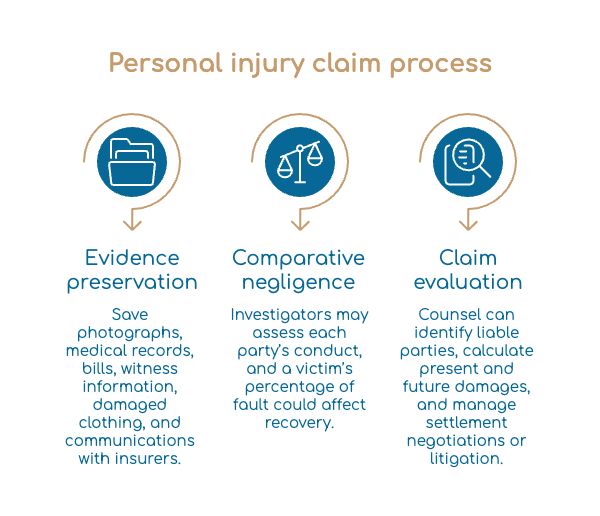
- Evidence preservation tips: Save photographs, medical records, bills, witness information, damaged clothing, and communications with insurers.
- Comparative negligence analysis: Investigators may assess each party’s conduct, and a victim’s percentage of fault could affect recovery.
- Claim evaluation: Counsel can identify liable parties, calculate present and future damages, and manage settlement negotiations or litigation.
A lawyer may also explain filing deadlines, insurance requirements, and procedures for documenting disputed losses. Supportive legal guidance can help injured individuals and families pursue fair treatment while preserving evidence needed for an accountable resolution. Each matter requires an individualized review of the facts and applicable Florida law.
Why Do Daytona Beach Unsecured Load Truck Accident Injuries Happen?
Unsecured load truck accident injuries often occur because cargo was improperly loaded, tied down, balanced, or inspected before transportation. When straps, chains, tarps, or containment systems are inadequate, materials can shift during braking, turning, or sudden roadway changes. Overloaded trailers may also exceed weight limits, weaken equipment, or affect a truck’s stability. In other cases, rushed loading procedures, poor supervision, defective tie-down devices, and failures to follow federal and state transportation rules contribute to hazardous conditions.
Weather can intensify these risks. Wind may dislodge lightweight materials, while rain can reduce visibility and make loose cargo more difficult to control. Mechanical problems, driver fatigue, and inadequate training may further limit a driver’s ability to recognize or correct an unstable load. Roadside Assistance personnel and Emergency Response teams may encounter scattered debris and secondary collision hazards while protecting affected travelers. Understanding these causes helps communities promote safer transportation practices and support individuals harmed by preventable trucking failures.
What Should You Do After a Daytona Beach Unsecured Load Truck Accident Injury?
After an unsecured load truck accident, the injured party should seek immediate medical care, even if symptoms initially appear minor. Accident-scene photographs, witness information, vehicle damage, and medical records can help document the circumstances and resulting injuries. Consulting a qualified truck accident lawyer may also protect the individual’s rights and support a thorough injury claim.
Seek Immediate Medical Care
Prompt medical evaluation is vital following an injury involving an unsecured load truck, even when symptoms initially appear minor. A qualified healthcare professional can identify concealed trauma, document symptoms, and establish a treatment plan before conditions worsen. Head injuries, spinal damage, and internal complications may develop gradually, making prompt attention important for protecting the injured person’s health and supporting recovery. Medical records may also clarify the connection between the collision and reported injuries.
Individuals should follow discharge instructions, attend recommended appointments, and promptly report new or worsening symptoms. They should provide accurate information about pain, limitations, and the accident’s circumstances without minimizing discomfort. Prioritize evidence preservation, avoid recorded statements until legal guidance is obtained, and focus first on necessary treatment. This approach helps preserve well-being and supports responsible assistance throughout the claims process.
Document The Accident Scene
When conditions permit, the injured person or a designated companion should document the Daytona Beach accident scene before vehicles, cargo, or roadway conditions change. Photographs should show vehicle positions, damaged areas, scattered materials, tie-downs, warning signs, lane conditions, lighting, and visible obstructions from multiple distances. A written record can identify the time, weather, traffic pattern, witnesses, and statements made at the scene. Witness contact information should be preserved without pressuring anyone to speculate about fault.
Records may also include photographs of medical injuries and damaged personal property, taken respectfully and securely. If available, GPS tracking evidence, onboard camera footage, delivery records, and driver logbooks and maintenance records may help establish movement, loading procedures, and compliance concerns. The information should be backed up and provided to appropriate authorities.
Contact A Truck Accident Lawyer
Because unsecured-load truck claims may involve the driver, trucking company, cargo loader, and insurers, an injured person should contact a Daytona Beach truck accident lawyer promptly. Early legal guidance can protect the person’s rights and help preserve evidence before vehicles, cargo records, and electronic data are altered or lost. Counsel may investigate driver negligence, including improper loading, inadequate inspections, excessive speed, or violations of safety rules. The lawyer can also review accident documentation, medical records, photographs, witness accounts, crash reports, and trucking-company files.
A qualified attorney may identify every potentially responsible party and communicate with insurers on the injured person’s behalf. This assistance allows the injured individual to focus on medical treatment while the legal team evaluates liability, damages, deadlines, and appropriate compensation through negotiation or litigation when necessary.
Critical Evidence in a Daytona Beach Unsecured Load Truck Accident Injury Case
Critical evidence may establish how the unsecured load caused the Daytona Beach truck accident and who failed to prevent it. Counsel may assess load securement records, truck inspection reports, accident scene photos, and witness statements to identify negligence and support the injured party’s claim. Important evidence may include:
- Load securement records and inspection reports
- Photographs documenting the accident scene and cargo condition
- Statements from witnesses who observed the truck or collision
Load Securement Records
Load securement records can provide direct evidence of whether a trucking company and its personnel followed required procedures before a collision in Daytona Beach. These records may identify the cargo description, placement, weight distribution, tie-down methods, and personnel responsible for securing the shipment. They can also show whether straps, chains, binders, blocking, or other equipment matched the cargo’s load rating.
Maintenance logs may reveal whether securing devices received appropriate care or had documented defects before departure. Dispatch records and company policies can help establish what instructions governed the loading process and whether employees were expected to complete written checks. Preserving these materials may assist an injured person and counsel in determining how the load shifted, fell, or entered traffic. Such evidence can support accountability and promote safer practices for other roadway users.
Truck Inspection Reports
During an inspection, truck inspection reports can document conditions that may have contributed to an unsecured load collision in Daytona Beach. These reports may identify defective tie-downs, damaged restraints, improper equipment maintenance, or violations of required inspection procedures. They can also show whether a driver or carrier recognized a problem before the truck entered traffic and whether corrective measures were taken. In post-accident investigations, inspection findings may help establish the timeline of responsibility and support comparisons with applicable safety requirements.
Attorneys may request these materials from trucking company records, including pre-trip inspections, roadside inspections, repair documentation, and company review forms. Promptly preserving the reports is important because records can be misplaced, altered, or discarded under routine retention policies. Such evidence can assist an injured person seeking fair treatment and accountability.
Accident Scene Photos
Photographs taken at an unsecured load truck accident scene in Daytona Beach can preserve physical evidence that may later change or disappear. Images may show scattered cargo, damaged vehicles, roadway conditions, skid marks, warning devices, and the truck’s load restraints. A careful safety checklist review can help identify which areas require immediate documentation without exposing anyone to additional danger.
Inspection procedure tips include photographing the scene from multiple distances, capturing identifying markings, and preserving original files with date and location information. Clear images may support analysis of how the cargo became unsecured and whether loading practices contributed to the collision. They also assist with damage documentation, while the importance of medical records remains central to connecting physical injuries, treatment, and claimed losses to the crash.
Witness Statements
When an unsecured load truck accident occurs in Daytona Beach, witness statements can provide highly important evidence about how the collision developed and who may have contributed to it. Independent observers may describe the truck’s speed, lane position, cargo movement, warning signs, and the driver’s response before impact. Eyewitness credibility depends on the person’s location, visibility, attention, and consistency, so each account should be evaluated carefully. Prompt statement collection helps preserve details before memories fade or become influenced by later discussions.
Investigators should focus on firsthand observations, avoiding hearsay that cannot reliably establish what occurred. Statements may also identify surveillance footage, additional witnesses, or roadway conditions requiring examination. Corroborating evidence, including photographs, vehicle data, and physical debris patterns, can strengthen reliable testimony and support a fair injury claim.
Long-Term Effects of Daytona Beach Unsecured Load Truck Accident Injuries
Long-term injuries from unsecured load truck accidents may cause chronic pain, reduced mobility, or permanent disability. Emotional and psychological effects, including anxiety, depression, and trauma, can also persist after physical recovery. These conditions may create continuing financial and lifestyle strain through medical expenses, lost income, and limitations on daily activities.
Chronic Pain and Disability
Chronic pain and disability can develop after an unsecured-load truck accident in Daytona Beach, particularly when victims suffer spinal injuries, nerve damage, fractures, or traumatic brain injuries. These conditions may limit mobility, reduce strength, and interfere with ordinary activities, employment, and caregiving responsibilities. Some individuals require surgeries, rehabilitation, assistive equipment, or continuing medical supervision. A disability may also create lasting restrictions that affect earning capacity and household independence.
Medical records, diagnostic studies, treatment histories, and professional evaluations can document the injury’s progression and future needs. Evidence preservation is crucial, including photographs, incident reports, vehicle information, and witness accounts. Attention to Workplace safety may help identify whether loading procedures, inspections, or supervision failed. Legal guidance can help injured individuals pursue resources that support treatment, accessibility, and long-term care.
Emotional and Psychological Effects
Emotional and psychological effects may persist alongside the physical limitations caused by an unsecured-load truck accident in Daytona Beach. Survivors may experience post-traumatic stress, including intrusive memories, heightened alertness, sleep disruption, or distress when encountering trucks, traffic, or similar roadway conditions. Emotional trauma can also contribute to anxiety, depression, irritability, and difficulty concentrating. These symptoms may emerge immediately or develop after the initial crisis has passed, particularly when injuries require prolonged recovery.
Some individuals withdraw from ordinary activities or struggle to feel secure while traveling, which can affect personal relationships and overall emotional stability. Mental health professionals can evaluate these concerns and provide counseling, trauma-focused treatment, or other appropriate support. Documenting symptoms and treatment may help establish the continuing psychological consequences of the accident for legal purposes.
Financial and Lifestyle Strain
In the aftermath of an unsecured-load truck accident in Daytona Beach, lasting injuries can create substantial financial and lifestyle strain for survivors and their families. Medical treatment, rehabilitation, medication, transportation, and necessary home modifications may produce significant Bills and Expenses, particularly when insurance coverage is limited or disputed. Ongoing pain or disability can also restrict daily activities, requiring assistance with childcare, household responsibilities, and personal care.
Career Disruptions may arise when an injured person cannot return to the same position, maintain regular hours, or pursue advancement. Lost income can affect housing stability, education, and long-term financial planning. Families may need to reorganize schedules and resources to provide support. A legal professional can help document these losses and seek appropriate compensation while protecting the survivor’s future needs.
Proving Liability in Daytona Beach Unsecured Load Truck Accident Injury Cases
When an unsecured load falls from a commercial truck and causes a collision in Daytona Beach, the injured party must establish that a responsible person or company failed to use reasonable care. Negligence Proof may include photographs, eyewitness accounts, vehicle inspections, shipping records, and testimony concerning how the cargo was loaded and secured. Evidence should connect the unsafe condition to the collision and resulting injuries.
Truck Driver Duties can include inspecting the load, confirming that tie-downs and coverings are adequate, and responding appropriately when cargo shifts or becomes unstable. Commercial carriers, loading contractors, and cargo owners may also share responsibility when their conduct contributed to the hazard. Safety Regulations and company procedures can help demonstrate the standard of care, although a violation does not automatically decide the claim.
Comparative Fault may reduce recovery if evidence shows that the injured person contributed to the incident. Careful preservation of records and prompt investigation can clarify each party’s role and support an accurate liability determination.
Dealing With Insurance Companies After a Daytona Beach Unsecured Load Truck Accident Injury
After liability evidence is preserved, communications with insurance companies should be handled carefully because early statements and settlement offers may affect the value of an unsecured load truck accident claim. Adjusters may request recorded interviews, medical authorizations, photographs, employment information, or other documentation. Information should be provided accurately, but unnecessary speculation or broad statements about fault, symptoms, and recovery can create harmful interpretations.
Evidence preservation remains important while an insurer evaluates the incident. Photographs, witness details, medical records, bills, wage information, and messages should be organized and retained. An Independent investigation may identify loading violations, maintenance concerns, driver conduct, or additional responsible parties that an insurer’s review does not address.
A representative can communicate with insurers, protect the injured person’s interests, and assess whether proposed compensation reflects documented losses and continuing needs. Settlement documents should not be signed before their terms and consequences are understood. Prompt, respectful communication helps preserve credibility while allowing the claim to be evaluated based on complete, reliable information rather than pressure or incomplete disclosures.
What to Expect During a Daytona Beach Unsecured Load Truck Accident Injury Claim Process
A Daytona Beach unsecured load truck accident claim typically begins with an initial assessment of the injuries, liability, and available legal options. The evidence collection process may include obtaining accident reports, medical records, photographs, witness statements, and trucking company documentation before insurance negotiations commence. If negotiations do not produce a fair resolution, the matter may proceed toward settlement or trial.
Initial Claim Assessment
The initial claim assessment establishes how an unsecured load truck accident may be investigated and pursued in Daytona Beach. During this stage, an attorney reviews the reported collision, injury diagnoses, medical treatment, and potential sources of liability. The assessment may consider whether the truck driver, carrier, loading company, or another party owed duties relevant to the incident. It also examines available coverage, filing deadlines, comparative fault concerns, and the anticipated value of damages.
Evidence collection is identified as a necessary later step, but the initial review generally avoids making conclusions before records and accounts are evaluated. Counsel may explain how insurance negotiation could develop, including communications, settlement authority, and possible disputes over responsibility. The objective is to provide an informed path forward while protecting the injured person’s interests and supporting service to the community.
Evidence Collection Process
When an unsecured load truck accident claim proceeds, evidence collection typically begins with preserving records and documenting conditions that may clarify how the collision occurred. Investigators may obtain crash reports, photographs, medical records, maintenance logs, cargo manifests, and driver qualification materials. Preserving surveillance video evidence from nearby businesses, traffic cameras, and vehicles can help establish the truck’s movements and the moment cargo became detached. Interviewing witnesses may reveal road conditions, loading practices, warnings, and the sequence of events.
Physical evidence, including damaged cargo, restraints, vehicle components, and debris patterns, may also be inspected before it is altered or removed. Timeline reconstruction organizes these materials into a coherent account, identifying potential gaps and responsible parties. This process supports an accurate evaluation while protecting evidence that may serve the injured person’s lawful interests.
Insurance Company Negotiations
During insurance company negotiations, an adjuster reviews the accident facts, medical documentation, claimed losses, and available evidence before determining whether to accept, dispute, or value the claim. The insurer may request recorded statements, authorizations, photographs, and employment information. Claimants should provide accurate, relevant materials while avoiding speculation or admissions that could undermine liability or damages. Counsel may communicate with the adjuster, organize supporting evidence, and address disputes concerning medical treatment, comparative fault, cargo securement, or insurance coverage.
The settlement timeline varies according to injury severity, treatment progress, documentation, and the insurer’s responsiveness. In a Wrongful death claim, negotiations may also involve funeral expenses, lost financial support, and eligible survivors’ legal interests. Regular updates help families understand requests, deadlines, and negotiation status while preserving an orderly claim process.
Settlement Or Trial
Although many unsecured load truck accident injury claims in Daytona Beach resolve through negotiated settlements, some proceed to trial when liability, damages, or insurance coverage remains disputed. During settlement discussions, the injured person’s representative presents evidence concerning the truck’s unsecured cargo, medical treatment, lost income, and future needs. Comparative fault considerations may affect the available recovery if allegations arise that the injured person contributed to the collision or failed to mitigate harm.
Post-accident insurance tactics can include delayed responses, disputed coverage, or requests for broad medical authorizations, making careful documentation critical. If negotiations fail, litigation may involve discovery, depositions, expert testimony, and pretrial motions. At trial, a judge or jury evaluates fault and damages. The process requires preparation, patience, and decisions guided by the claimant’s long-term welfare.
Compensation for Daytona Beach Unsecured Load Truck Accident Injury Damages
Compensation for injuries caused by an unsecured truck load in Daytona Beach may cover medical expenses, lost income, reduced earning capacity, property damage, and physical pain and suffering. The available recovery generally depends on the severity of the harm, the evidence establishing fault, and the applicable insurance coverage. Documentation such as medical records, wage statements, repair estimates, and photographs can help demonstrate the losses resulting from the collision.
An injured person may also seek compensation for necessary rehabilitation, ongoing treatment, and limitations affecting daily responsibilities. Families who lose a loved one may pursue Wrongful death damages, which can address funeral costs, financial support, and other legally recognized losses. Insurers may dispute responsibility, minimize injuries, or issue insurance claim denials despite supporting evidence. A careful review of the crash investigation, loading practices, driver conduct, and policy provisions may clarify available remedies. Legal guidance can help protect an injured person’s rights while pursuing fair compensation and serving the family’s long-term interests.
Economic vs Non-Economic Damages in Daytona Beach Unsecured Load Truck Accident Cases
Economic damages may include medical expenses, lost income, property damage, and other verifiable financial losses arising from an unsecured load truck accident. Non-economic damages address less tangible harm, such as pain and suffering, emotional distress, and diminished quality of life. Calculating total compensation requires evaluating both categories and considering the documented severity and lasting effects of the injuries.
Economic Damages
After an unsecured load truck accident in Daytona Beach, economic damages represent the measurable financial losses caused by the collision. These damages may include emergency transportation, hospital treatment, physician appointments, prescription medication, rehabilitation, and other reasonable medical expenses. Property damage, such as vehicle repairs, replacement costs, and damaged personal items, may also be documented. Lost wages can result when injuries prevent a person from working during recovery.
If the collision affects future employment capacity, Future earnings losses may be evaluated through medical evidence, work history, and vocational or financial analysis. Accurate records, including invoices, pay statements, tax documents, and repair estimates, help establish the value of these losses. A Daytona Beach truck accident attorney may assist injured individuals and families in organizing evidence and presenting a complete claim that supports fair financial recovery.
Non-Economic Damages
When an unsecured load truck accident causes lasting physical or emotional harm, non-economic damages address losses that do not have a specific bill or receipt. In Daytona Beach cases, these damages may recognize pain and suffering, emotional distress, disfigurement, loss of enjoyment, inconvenience, and reduced quality of life. They can also reflect the effect of permanent limitations on family relationships, independence, and daily activities.
Evidence may include medical observations, treatment records, testimony from relatives, and the injured person’s account of changed routines. Comparative fault considerations may reduce recovery if the claimant contributed to the accident, making careful factual review important. Punitive damages eligibility is a separate issue, generally requiring proof of intentional misconduct or gross negligence rather than ordinary carelessness. Legal guidance can help present these human losses accurately and respectfully.
Calculating Total Compensation
Calculating total compensation in a Daytona Beach unsecured load truck accident requires combining documented economic damages with the value of less tangible non-economic losses. Economic damages may include Past medical bills, emergency treatment, rehabilitation, prescription expenses, property damage, lost wages, and projected medical care. An evaluation may also account for reduced future earning capacity when injuries limit work, advancement, or hours.
Non-economic damages address pain, emotional distress, disfigurement, disability, loss of enjoyment, and diminished quality of life. Evidence such as medical records, employment documentation, expert opinions, and testimony can support both categories. A careful assessment helps ensure that an injured person’s needs are recognized without overstating the claim. Attorneys may examine liability evidence, insurance coverage, comparative fault, and long-term consequences before seeking a fair resolution that serves the client’s interests.
When a Daytona Beach Unsecured Load Truck Accident Injury Case Goes to Trial vs Settlement
A Daytona Beach unsecured load truck accident injury case may proceed to settlement or trial depending on liability evidence, injury severity, disputed damages, and the parties’ willingness to accept a fair resolution. Settlement can provide a predictable outcome, reduce litigation costs, and allow an injured person to receive compensation without the uncertainty of testimony. A carefully developed Settlement Strategy considers medical documentation, lost income, future care needs, and the strength of available evidence.
Trial may become necessary when the trucking company or insurer disputes responsibility, minimizes injuries, or refuses a reasonable offer. The Trial Timeline commonly includes investigation, pleadings, discovery, depositions, expert evaluations, motions, and preparation for jury presentation. Although trial can secure a fair judgment, it requires additional time, preparation, and personal participation.
An attorney can explain risks and benefits while protecting the client’s interests. The decision should reflect the injured person’s needs, informed preferences, and commitment to achieving accountability through an orderly legal process.
Florida Laws That May Affect Your Daytona Beach Unsecured Load Truck Accident Case
Florida law can substantially affect how a Daytona Beach unsecured load truck accident claim is investigated, valued, and resolved. Florida negligence principles may require proof that a driver, carrier, loader, or maintenance provider failed to use reasonable care and that the failure caused compensable harm. A Federal regulations overview may also help identify duties involving cargo securement, inspections, operating procedures, and driver qualifications.
- Comparative fault may reduce recovery when an injured person’s conduct contributed to the incident.
- Negligent hiring liability may apply when an employer failed to reasonably investigate qualifications, licensing, safety history, or competency before assigning driving duties.
- Evidence such as photographs, loading records, electronic logs, inspection reports, witness statements, and company policies can clarify responsibility.
Florida’s vicarious-liability rules may place an employer in the position of answering for an employee’s negligent conduct within the scope of employment. Insurance requirements, commercial transportation records, and agency investigations can further influence claim evaluation. Counsel serving injured individuals may coordinate evidence preservation and pursue accountability from every legally responsible party.
The Statute of Limitations for Daytona Beach Unsecured Load Truck Accident Injury Cases
Time limits can determine whether an injured person in Daytona Beach may pursue compensation for an unsecured-load truck accident. Florida law generally requires a personal injury lawsuit to be filed within a specified period after the accident. The applicable deadline may depend on the injury, the parties involved, and whether a wrongful-death claim arises. Claims against governmental entities can involve additional notice requirements and shorter deadlines.
Prompt action also protects evidence concerning loose cargo, inspection practices, loading records, and trucking company negligence. Although Comparative fault rules may reduce recovery when an injured person shares responsibility, they do not eliminate the need to comply with the filing deadline. Missing the limitations period can bar a court from hearing the claim, even when medical expenses and other losses are substantial.
Because exceptions and deadline calculations can be fact-specific, injured individuals and their families should preserve relevant records and promptly seek reliable information about the governing time limit, while focusing on recovery and supporting others affected by the collision.
How a Daytona Beach Unsecured Load Truck Accident Lawyer Can Help You
When an unsecured-load truck accident causes injury in Daytona Beach, legal counsel can help identify the responsible parties and pursue appropriate compensation. A lawyer may examine the driver’s conduct, trucking-company policies, loading procedures, and maintenance records to determine whether negligence contributed to the collision.
Effective representation can also support an injured person’s recovery by:
- Coordinating evidence preservation, including photographs, vehicle data, witness accounts, cargo records, and surveillance footage.
- Evaluating Comparative fault arguments that could reduce or defeat a claim, while presenting facts supporting the injured person’s position.
- Calculating damages such as medical expenses, lost income, rehabilitation costs, and nonfinancial losses, while addressing any medical lien.
Counsel can communicate with insurers, challenge inadequate settlement proposals, and organize documentation for negotiations or litigation. The lawyer may also coordinate with medical providers so treatment continues without unnecessary administrative burdens. By handling these responsibilities, legal counsel allows an injured individual and supportive family members to focus on recovery and informed decision-making while the claim proceeds through appropriate legal channels.
When to Contact a Daytona Beach Unsecured Load Truck Accident Lawyer
Prompt contact with a Daytona Beach unsecured-load truck accident lawyer can help preserve essential evidence and clarify the injured person’s legal options. Early consultation is particularly important when injuries, property damage, or disputed circumstances may affect a claim. Post-accident symptoms can emerge gradually, making prompt medical evaluation and documentation essential. A lawyer may help identify available records, photographs, vehicle damage, and loading information before evidence changes or disappears.
Contact should also occur when witnesses may be difficult to locate, since witness credibility can depend on timely interviews and consistent accounts. Potential trucking policy violations, including inadequate securement or inspection practices, may require focused investigation. A lawyer can evaluate whether the truck operator, carrier, owner, or another responsible party should be notified.
Because Florida comparative fault may reduce compensation based on an injured person’s share of responsibility, early legal guidance can help preserve accurate facts and ensure communications are handled carefully. Consultation does not require immediate litigation and can help protect the interests of those seeking fair resolution.
Why You Need an Experienced Daytona Beach Unsecured Load Truck Accident Lawyer
An experienced Daytona Beach unsecured-load truck accident lawyer can conduct a focused investigation into how cargo was loaded, secured, inspected, and transported. This work may identify negligent drivers, trucking companies, loading contractors, or maintenance personnel whose conduct contributed to the collision. Counsel can preserve photographs, electronic records, driver logs, inspection reports, witness accounts, and other evidence before it disappears or becomes difficult to obtain.
An attorney also can apply effective Injury documentation strategies that connect physical harm to medical treatment, lost income, rehabilitation needs, and long-term limitations. Clear documentation helps present an accurate account of the client’s losses while supporting fair evaluation by insurers and other responsible parties. Legal guidance may further reduce the risk of Insurance claim delays caused by incomplete submissions, disputed responsibility, or inadequate proof. Experienced representation allows an injured person to focus on recovery and continued service to family and community while the legal process is handled with diligence, accountability, and respect.
How to Choose the Right Daytona Beach Unsecured Load Truck Accident Lawyer for Your Case
Selecting the right Daytona Beach unsecured-load truck accident lawyer requires careful evaluation of the attorney’s experience, investigative resources, and approach to complex liability claims. A qualified lawyer should understand trucking regulations, identify potentially responsible parties, and pursue evidence before it disappears. The initial case evaluation should address medical documentation, crash reports, photographs, witness accounts, and the effect of injuries on daily life and future service to others.
Effective evidence preservation is critical when cargo shifts, falls, or causes a collision. The attorney should promptly examine loading procedures, inspection records, driver logs, company policies, and available vehicle or roadway video. Client communication also merits careful consideration. A dependable lawyer explains developments clearly, responds within reasonable periods, and ensures the injured person can make informed decisions.
Before representation begins, the fee structure should be explained in writing, including contingency percentages, litigation costs, and potential expenses. Comparing qualifications, investigative capacity, communication practices, and contractual terms can help a client select counsel prepared to pursue accountability responsibly.
About The Law Offices of Anidjar & Levine
With qualifications, resources, and communication practices in mind, the Law Offices of Anidjar & Levine represents injured individuals in Daytona Beach and throughout Florida.
The firm evaluates unsecured-load collisions by examining crash evidence, medical records, vehicle maintenance information, and applicable safety requirements.
Its attorneys may help clients understand how Daytona cargo laws affect claims involving improperly secured materials, shifting freight, or roadway debris.
The firm’s legal team also considers truck liability defenses that carriers, drivers, employers, insurers, or cargo handlers may raise.
This review can clarify responsibility and support informed decisions about pursuing compensation for medical expenses, lost income, property damage, and other documented losses.
Attorneys may communicate with insurers, gather relevant records, consult qualified professionals, and address procedural deadlines on a client’s behalf.
Individuals seeking assistance can discuss their circumstances during a case evaluation.
The firm’s approach emphasizes careful preparation, respectful communication, and service to people dealing with the consequences of serious truck accidents.
Its goal is to protect clients’ legal interests while presenting their claims accurately and responsibly.
Frequently Asked Questions
Can Unsecured Load Accidents Involve Multiple Liable Parties?
Yes, unsecured load accidents can involve multiple liable parties. Responsibility may extend to the truck driver, motor carrier, loading company, cargo owner, or maintenance provider, depending on who failed to secure, inspect, or supervise the shipment. Investigators typically review third-party evidence, including witness accounts, photographs, surveillance footage, and vehicle data. Trucking documentation, such as inspection reports, bills of lading, and training records, may clarify each party’s contribution.
What Types of Vehicles Commonly Cause Unsecured Load Accidents in Daytona Beach?
In Daytona Beach, unsecured load accidents commonly involve pickup trucks, flatbed trailers, dump trucks, landscaping vehicles, and commercial delivery vans. These vehicles transport varied Types of cargo, including lumber, roofing materials, appliances, tools, and loose waste. Construction debris accidents frequently arise when dump trucks or contractor trailers fail to secure materials properly. Passenger vehicles may also contribute when overloaded or improperly tied cargo falls into traffic, creating hazards for other road users.
Can Passengers File Claims After Unsecured Cargo Causes a Crash?
Passengers can generally file claims after unsecured cargo causes a crash if they suffered injuries or property damage. Their plaintiff standing usually arises from being directly harmed, even when they did not own or operate the vehicle. Passenger insurance may provide initial benefits, while liability coverage from the responsible driver, trucking company, or cargo owner may apply. Attorneys can evaluate coverage limits, identify negligent parties, preserve evidence, and pursue compensation for medical expenses, lost income, and related damages.
Are Unsecured Load Truck Accidents More Common During Certain Weather Conditions?
Unsecured load truck accidents may be more common during adverse weather, particularly when Rainy conditions reduce visibility, impair braking, and make roadway surfaces slick. Strong wind gusts can also destabilize vehicles and cause shifting cargo, increasing the likelihood of falling materials or sudden loss of control. Although weather alone may not establish responsibility, drivers and carriers must adjust operations, secure loads properly, and protect other road users from foreseeable hazards.
Can Rental Truck Companies Be Responsible for Unsecured Load Accidents?
Rental truck companies can be responsible for unsecured load accidents when their conduct contributes to the hazard. Liability may arise if the company negligently loaded, secured, inspected, or maintained the vehicle, or knowingly rented equipment unsuitable for transporting cargo. However, contracts do not automatically transfer every responsibility. Courts examine the facts, including the renter’s assumption of liability, company policies, warnings, and evidence of cargo negligence. Injured individuals may pursue compensation from all legally responsible parties.
—————————
Unsecured-load truck accidents can cause severe injuries, substantial financial losses, and complex disputes over responsibility.
Victims in Daytona Beach may need to determine whether improper loading, inadequate inspection, or negligent operation contributed to the collision.
Prompt legal guidance can help preserve evidence, identify liable parties, and pursue appropriate compensation.
The Law Offices of Anidjar and Levine evaluates each claim carefully and advocates for injured individuals seeking accountability and financial recovery under Florida law.
Learn more from a Daytona Beach Truck Accident Lawyer.