

The Law Offices of Anidjar and Levine investigates whether delayed diagnosis, inadequate bilirubin testing, monitoring failures, medication errors, or poor follow-up in jaundice cases violated accepted medical standards.
A West Palm Beach Personal Injury Lawyer may review medical records, laboratory trends, treatment timelines, communications, and expert opinions regarding causation and damages.
Counsel may also address Florida’s procedural deadlines and pursue recovery through negotiation, mediation, or litigation.
Main Takeaways
- A West Palm Beach jaundice malpractice lawyer reviews medical records, bilirubin test results, treatment decisions, and follow-up care to assess potential negligence.
- Claims may involve delayed diagnosis, inadequate monitoring, communication failures, medication-related liver damage, or untreated newborn jaundice.
- Qualified medical experts assess whether providers breached Florida’s standard of care and whether that breach caused injury.
- Potential damages may include medical expenses, lost income, ongoing care needs, pain, and other harm supported by evidence.
- Florida deadlines and procedural requirements apply, so promptly preserving records and obtaining legal guidance is important.


How We Can Help With Your West Palm Beach Medical Malpractice Jaundice Conditions Injury Claim
When jaundice results from a healthcare provider’s failure to recognize, evaluate, or treat an underlying condition, an injured patient may have grounds for a medical malpractice claim. A West Palm Beach attorney can provide patient advocacy by listening carefully, preserving relevant records, and explaining available legal options without promising a particular result.
The legal team may coordinate an Expert review of medical records, laboratory results, treatment decisions, and applicable standards of care. This assessment can help identify whether delayed diagnosis, inadequate monitoring, medication mistakes, or communication failures contributed to harm. Attorneys may also investigate lost income, treatment expenses, ongoing care needs, and billing errors that obscure the financial impact of an injury.
A structured Q&A can help clients understand the process, evidence requirements, deadlines, and potential obstacles. Throughout the representation, counsel can communicate with healthcare institutions, consult with qualified clinicians, and pursue a fair resolution through negotiation or litigation when appropriate. The goal remains accountability, informed decision-making, and meaningful support for affected patients and families.
OUR CONSULTATIONSARE FREE
START YOUR FREE CASE REVIEW

Understanding West Palm Beach Medical Malpractice Jaundice Conditions Injury Cases
Medical malpractice jaundice injury cases generally concern whether a healthcare provider failed to reasonably identify, evaluate, monitor, or treat jaundice and its underlying cause. A case typically examines the patient’s medical records, symptoms, test results, treatment decisions, and communications among providers. It also considers whether the care met the professional standard expected under similar circumstances and whether a departure caused a specific injury.
These claims may involve delayed recognition, inadequate follow-up, insufficient communication, or failure to explain warning signs and recommended care. Legal review often requires qualified medical professionals to assess both the provider’s conduct and the connection between that conduct and the patient’s harm. Families may preserve records, document changes in condition, and seek guidance promptly.
Public awareness outreach can encourage timely medical attention and informed questions. Patient advocacy programs may help individuals understand care plans, request records, and communicate concerns. A compassionate legal evaluation can clarify available options while supporting accountability and improved patient safety.
Common Causes of West Palm Beach Medical Malpractice Jaundice Conditions
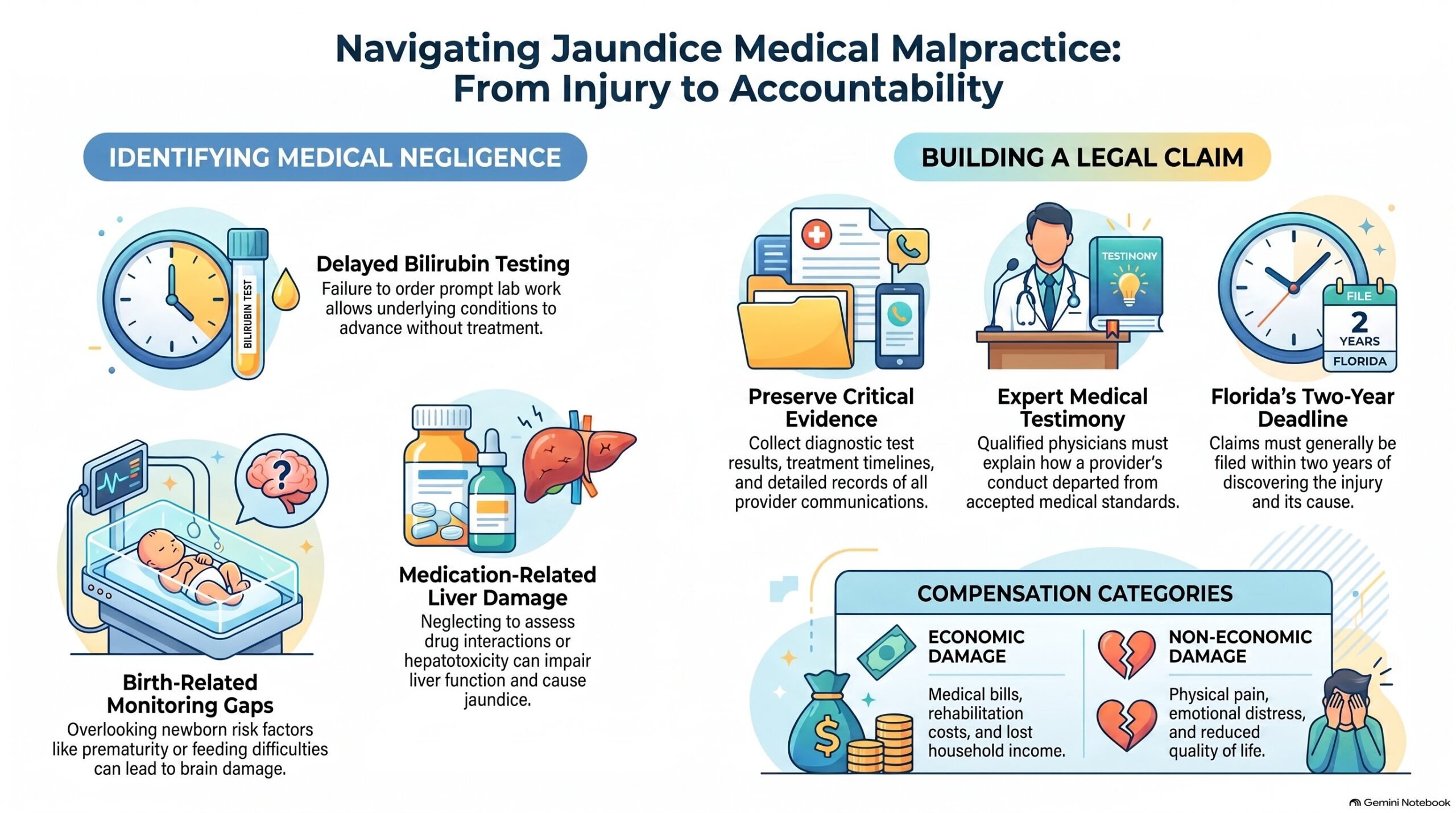
Common causes may include misdiagnosed jaundice symptoms and delayed bilirubin testing, which can prevent timely identification of serious liver or blood conditions. Medication-related liver damage may also result when providers fail to assess risks, interactions, or warning signs appropriately. In newborns, birth-related jaundice errors can arise from inadequate monitoring, delayed treatment, or failure to recognize escalating bilirubin levels.
Misdiagnosed Jaundice Symptoms
Misdiagnosed jaundice symptoms can allow a serious liver, gallbladder, blood, or pancreatic condition to progress without appropriate treatment. Clinicians may mistake yellowed skin or eyes for a temporary issue, overlooking accompanying fatigue, abdominal discomfort, dark urine, pale stools, or changes in alertness. Misinterpretation of fever can further complicate assessment when an infection is assumed to explain symptoms that require broader evaluation. In newborns, neonatal monitoring gaps may permit worsening jaundice, feeding difficulties, lethargy, or abnormal muscle tone to go unrecognized. Accurate history-taking, physical examination, and communication with caregivers are crucial when symptoms appear or change. A failure to recognize meaningful patterns may represent negligent care when a reasonably careful provider would have pursued appropriate evaluation, consultation, or follow-up. Legal review generally examines the records, timing, clinical decisions, and resulting harm.
Delayed Bilirubin Testing
When jaundice is suspected, delayed bilirubin testing can postpone recognition of a potentially serious underlying condition and the care needed to avoid complications. Bilirubin measurements help clinicians evaluate whether discoloration reflects normal variation, infection, obstruction, breakdown of blood cells, or impaired liver function. When testing is not ordered promptly, abnormal levels may go undetected while the condition progresses.
Medical providers generally should recognize warning signs, obtain appropriate laboratory studies, document findings, and communicate results without unreasonable delay. Monitoring protocols can help ensure that testing occurs within clinically appropriate timeframes, particularly for newborns, older adults, and patients with worsening symptoms. Follow-up assessments are also important when initial results are borderline or symptoms persist. A failure to test, review results, or arrange reassessment may support a medical negligence claim when delayed diagnosis causes preventable harm.
Medication-Related Liver Damage
Medication-related liver damage can impair the liver’s ability to process and eliminate bilirubin, resulting in jaundice and other signs of hepatic dysfunction. Physicians and pharmacists should review medications, dosages, allergies, interactions, and existing liver conditions before treatment. Certain pain relievers, antiseizure drugs, chemotherapy agents, and antibiotics may cause hepatotoxicity, making antibiotic-induced liver injury an important diagnostic consideration when yellowing of the skin or dark urine develops. Herbal supplement risks also warrant careful attention because products may contain undisclosed ingredients, inconsistent concentrations, or contaminants.
Appropriate monitoring can include liver-function testing, medication reconciliation, patient education, and timely evaluation of abnormal results. When a provider fails to recognize symptoms, investigate laboratory changes, discontinue a harmful drug, or arrange appropriate care, preventable injury may result. Legal review can help determine whether negligent medication management contributed to jaundice.
Birth-Related Jaundice Errors
Birth-related jaundice errors can occur when clinicians fail to identify, evaluate, or treat elevated bilirubin levels in a newborn. Effective care requires monitoring newborn bilirubin levels through timely screening, interpreting results based on the infant’s age and risk factors, and arranging follow-up after discharge. Staff should also emphasize ensuring adequate feeding, as inadequate intake can worsen bilirubin accumulation and dehydration. Delayed assessment may result when providers overlook bruising, blood-type incompatibility, prematurity, or difficulty feeding. Recognizing neonatal infection is equally important, since infection can contribute to jaundice and requires prompt evaluation. Hospitals are expected to maintain clear procedures for screening, documentation, consultation, phototherapy, and escalation of care. Failing to follow hospital protocols, communicate abnormal findings, or educate caregivers may expose an infant to preventable neurological injury and support a medical negligence claim.
Don’t Wait. Call Our Florida Personal Injury Lawyers Now!


Legal Rights of West Palm Beach Medical Malpractice Jaundice Conditions Injury Victims
West Palm Beach jaundice injury victims may have legal rights when negligent medical care causes preventable harm to an infant or patient. A medical malpractice claim may seek compensation for additional treatment, lasting disability, emotional suffering, and related financial losses. Legal protections can also promote accountability and encourage safer care for vulnerable patients.
Potential rights may include:
- The right to investigate: Families may obtain medical records, treatment timelines, test results, and expert opinions to evaluate whether care met accepted standards.
- The right to informed decision-making: Providers generally must support informed consent by explaining material risks, alternatives, and recommended monitoring in understandable terms.
- The right to pursue recovery: Eligible claimants may seek damages through negotiation, mediation, or litigation, subject to Florida deadlines and procedural requirements.
Patient communication can help identify unanswered questions, preserve important details, and support coordinated assistance. Because malpractice claims are fact-specific, an attorney may review evidence, consult qualified medical professionals, and protect the victim’s legal interests while the family focuses on necessary care.
Why Do West Palm Beach Medical Malpractice Jaundice Conditions Injuries Happen?
Jaundice-related injuries can happen when a healthcare provider fails to recognize, evaluate, or treat abnormal bilirubin levels within an appropriate timeframe. In newborns, untreated hyperbilirubinemia may allow bilirubin to reach the brain, causing kernicterus, hearing loss, developmental impairment, or movement disorders. A Risk factors overview may include prematurity, blood-type incompatibility, infection, dehydration, liver disease, or a prior sibling affected by severe jaundice. Injuries may result when clinicians do not identify these risks, obtain timely laboratory testing, interpret results accurately, or arrange appropriate follow-up.
Patient monitoring lapses can also occur when staff fail to perform scheduled examinations, reassess worsening yellowing, document feeding difficulties, or communicate important results between providers. Discharge without adequate screening instructions or timely outpatient review may further delay treatment. These outcomes can reflect failures in assessment, communication, staffing, or adherence to accepted neonatal care practices, rather than the condition alone. Each circumstance requires careful review of the medical record and applicable standards.
What Should You Do After a West Palm Beach Medical Malpractice Jaundice Condition Injury?
After a suspected jaundice-related medical malpractice injury, the patient should seek immediate medical care to address urgent health concerns and prevent further complications. The patient should document the medical history, diagnoses, treatments, prescriptions, and communications relevant to the injury. Consulting a qualified malpractice lawyer can help assess potential negligence and protect applicable legal rights.
Seek Immediate Medical Care
When symptoms of jaundice appear or worsen following suspected medical negligence, prompt medical evaluation is essential to identify the underlying cause and prevent potentially serious complications. A qualified clinician can assess liver function, bilirubin levels, infections, medication effects, and other conditions that require immediate treatment. Patients should follow discharge instructions carefully and seek emergency assistance for confusion, severe abdominal pain, vomiting, fever, bleeding, unusual sleepiness, or rapidly deepening skin discoloration. They should seek proper hydration unless a healthcare professional has restricted fluids, while avoiding alcohol and unapproved supplements or medications. Caregivers should monitor newborn symptoms closely, including poor feeding, persistent sleepiness, high-pitched crying, arching, or jaundice extending to the legs. Infants with these signs require urgent pediatric assessment because severe bilirubin elevation may cause permanent neurological injury without timely treatment.
Document Your Medical History
Accurate medical records can help establish what symptoms appeared, when they developed, and how healthcare providers responded. A patient or caregiver should maintain a symptom timeline describing jaundice, abdominal discomfort, fatigue, nausea, changes in urine or stool color, and any worsening or improvement. Dates and approximate times can clarify the sequence of events and support continuity among treating professionals.
Records should also identify medical visits, diagnoses, laboratory testing, imaging, procedures, prescriptions, and discharge instructions. Copies of portal messages, appointment summaries, and billing documents may preserve important details. The patient should list all medications, supplements, prior conditions, and medication allergy updates, including information reported to each provider. A written account should distinguish personal observations from statements made by healthcare personnel. Organized documentation can help ensure that later medical evaluations are based on complete, accurate information.
Consult a Malpractice Lawyer
A consultation with a medical malpractice lawyer can help determine whether a jaundice-related injury may have resulted from negligent diagnosis, delayed treatment, medication errors, or inadequate monitoring. The lawyer can review medical records, laboratory results, treatment timelines, and communications with healthcare providers to identify potential breaches of the applicable standard of care. Families should preserve bills, prescriptions, discharge instructions, and written accounts of symptoms while avoiding speculation or direct settlement discussions with insurers. A case evaluation checklist may organize pivotal facts, witnesses, expenses, deadlines, and supporting documents for a productive consultation. Counsel can also explain possible damages, including additional treatment, lost income, and long-term care needs. When financial disagreements arise, separate Billing dispute-resolution resources can address provider charges without compromising a potential malpractice claim or the patient’s access to necessary care.
Critical Evidence in a West Palm Beach Medical Malpractice Jaundice Conditions Injury Case
Critical evidence in a jaundice-related malpractice case may include:
- Essential evidence in a jaundice-related malpractice case may include:
- Diagnostic test results and a treatment timeline showing potential delays or errors; and
- Expert medical testimony explaining whether the care departed from accepted standards and caused harm.
Together, these materials can clarify the provider’s conduct, the patient’s progression, and the connection between the alleged negligence and resulting injury.
Medical Records
When jaundice is suspected or diagnosed, medical records can provide key evidence in a West Palm Beach medical malpractice case by documenting symptoms, test results, diagnoses, treatment decisions, and communications among healthcare providers. These records may show when concerns were reported, whether clinicians recognized warning signs, and how promptly appropriate care was arranged. Progress notes, medication lists, discharge instructions, and consultation records can clarify responsibilities and reveal inconsistencies in the treatment timeline. Remedy side effects should be documented, including reported reactions, prescribing decisions, and any failure to restore a patient after symptoms emerged. Records may also indicate whether patient follow-up protocols were explained, scheduled, and completed. A lawyer can review these materials with qualified medical professionals to assess whether the care provided met accepted standards of care and contributed to the injury.
Diagnostic Test Results
Diagnostic test results can establish how jaundice developed, progressed, and was addressed in a West Palm Beach medical malpractice case. Laboratory findings may reveal elevated bilirubin, abnormal liver enzymes, impaired bile flow, infection, or other indicators requiring clinical attention. Reviewing bilirubin trends helps determine whether results were improving, worsening, or remaining dangerously abnormal over time. The record may also show whether vital values were communicated promptly to appropriate clinicians. Careful interpretation of lab reports can identify overlooked abnormalities, inaccurate conclusions, or failures to order appropriate confirmatory testing. Results from blood panels, imaging studies, and expert examinations may clarify the underlying condition without relying solely on later recollections. A qualified medical reviewer can compare findings with accepted standards and explain whether the data supported timely recognition, escalation, or specialist consultation.
Treatment Timeline
The treatment timeline connects diagnostic findings to the care that followed, showing whether providers responded appropriately as jaundice developed or worsened. Records may indicate when symptoms were reported, examinations were performed, laboratory tests were ordered, and treatment began. Particular attention may focus on the timing of bilirubin follow-up, including whether repeat testing occurred within a clinically reasonable timeframe and whether abnormal results prompted escalation. Medication orders, referrals, hospital transfers, discharge instructions, and documented reassessments can reveal gaps between recognized risk and actual intervention. Patient communication errors may also appear when staff failed to explain warning signs, testing needs, or instructions clearly, leaving the patient or family unable to seek timely help. A chronological review can clarify whether delays contributed to the worsening of the injury and preserve a reliable account of care for those seeking accountability and support.
Expert Medical Testimony
How expert medical testimony interprets the record can be pivotal in a West Palm Beach medical malpractice case involving jaundice-related injury. A qualified physician may explain whether clinicians recognized warning signs, ordered appropriate testing, and responded promptly to changing results. Through a review of bilirubin trends, the expert can correlate laboratory findings with the expected progression of jaundice and identify deviations from accepted medical standards. Testimony may also address whether delayed diagnosis or treatment contributed to neurological injury, organ complications, prolonged hospitalization, or other harm. Causation expert opinions are particularly important because a medical error alone does not establish legal liability without evidence that it probably caused the claimed injuries. Clear, impartial explanations can help a court understand intricate records, while supporting compassionate accountability for patients and families affected by preventable harm.
Long-Term Effects of West Palm Beach Medical Malpractice Jaundice Conditions Injuries
Long-term injuries from medical malpractice involving jaundice may include neurological development delays that affect learning, movement, or communication. Ongoing liver complications can require continued monitoring, treatment, and expert medical care. In more serious cases, lifelong care requirements may create substantial medical, personal, and financial responsibilities.
Neurological Development Delays
When newborn jaundice is not promptly recognized or properly treated, excessive bilirubin can injure the developing brain and contribute to neurological development delays. Children may later experience difficulty with speech, movement, hearing, coordination, attention, or learning. The severity and timing of these challenges can vary, making regular developmental evaluations important. Pediatric experts may assess cognitive, motor, and communication skills, then recommend individualized therapies and educational accommodations. Speech therapy planning can address language production, comprehension, and alternative communication needs, while physical or occupational therapy may support mobility and daily functioning. Caregivers can benefit from family support resources, early-intervention programs, and coordinated guidance from medical and educational professionals. Documentation of symptoms, diagnoses, and treatment recommendations may also help families evaluate whether preventable medical errors contributed to the child’s injuries.
Ongoing Liver Complications
Persistent or severe newborn jaundice may contribute to ongoing liver complications when an underlying liver disorder is missed or treatment is delayed. Continuing bilirubin elevation can signal impaired bile processing, obstruction, infection, or another condition requiring timely evaluation. A documented bilirubin trend may help clinicians determine whether the infant improved appropriately or experienced prolonged exposure to harmful levels. When care is inadequate, untreated disease may progress to liver scarring, reduced liver function, or chronic inflammation that disrupts normal tissue repair. These complications can affect digestion, metabolism, growth, and the body’s ability to process medications. Medical records, laboratory results, imaging, and consultant opinions may help establish whether warning signs were recognized and addressed. Families serving affected children may seek guidance to understand potential negligence and resulting damages.
Lifelong Care Requirements
Children who sustain serious injuries from untreated jaundice may require lifelong medical care, extensive medical care, developmental support, and supervision for related disabilities. Care planning may involve pediatric experts, neurologists, therapists, educators, and community providers who coordinate services as needs change. Some children require speech, occupational, or physical therapy, assistive technology, educational accommodations, and help with daily activities. As they mature, treatment may continue through adult medical systems, creating challenges involving transportation, housing, employment, and independent decision-making. Families may also need respite services and structured support to protect the child’s safety and quality of life. Documented cost projections can help identify anticipated medical expenses, adaptive equipment, lost family income, and future caregiving needs. An extensive life-care assessment may clarify these requirements and support informed legal and financial decisions.
Proving Liability in West Palm Beach Medical Malpractice Jaundice Conditions Injury Cases
Proving liability in a West Palm Beach medical malpractice jaundice conditions injury case requires evidence that a healthcare provider breached the accepted standard of care and that the breach caused or worsened the patient’s condition. Medical records may show whether clinicians recognized warning signs, ordered appropriate testing, interpreted bilirubin levels correctly, and provided timely treatment. A qualified expert can explain the applicable standard, identify deviations, and connect those deviations to the patient’s harm. Expert witness credibility often depends on relevant clinical experience, objective reasoning, and a clear explanation of the medical evidence.
A causation standards discussion may address whether delayed diagnosis, inadequate monitoring, or treatment errors substantially contributed to worsening jaundice or related injury. Bilirubin test accuracy, timing, and laboratory procedures may also require review. Documentation audit tips include comparing test results, progress notes, medication records, discharge instructions, and follow-up communications for inconsistencies or omissions. Preserving complete records supports a careful, service-oriented evaluation of the claim.
Dealing With Insurance Companies After a West Palm Beach Medical Malpractice Jaundice Condition Injury
When a jaundice-related injury may result from medical negligence, communications with insurers should be handled carefully and based on documented facts. Affected patients or their representatives should preserve medical records, test results, treatment notes, invoices, and written correspondence before responding to coverage inquiries. Policyholder communication strategies may include using concise statements, avoiding speculation, and requesting explanations in writing. Insurers may seek recorded statements or broad medical authorizations that could affect the evaluation of a claim. Legal guidance can help determine which documents are relevant and how to protect confidential information.
Separate attention may be necessary when insurance payments are delayed, denied, or applied incorrectly. Medical billing dispute resolution can involve comparing itemized charges with explanation-of-benefits documents, identifying coding errors, and requesting corrected reviews from providers or carriers. Timely, organized communication may reduce misunderstandings while preserving important evidence. A qualified attorney can communicate with insurers on the patient’s behalf and help ensure that medical and financial concerns receive appropriate attention.
Don’t Wait. Call Our Florida Personal Injury Lawyers Now!
What to Expect During a West Palm Beach Medical Malpractice Jaundice Conditions Injury Claim Process
A West Palm Beach medical malpractice jaundice conditions claim generally begins with an initial case evaluation and a thorough review of the patient’s medical records. Expert medical testimony may then be required to establish whether negligence caused or worsened the condition. Depending on the evidence and negotiations, the claim may conclude through a settlement or proceed to trial.
Initial Case Evaluation
Typically, the initial case evaluation examines whether a healthcare provider’s failure to recognize, monitor, or treat jaundice may have caused preventable harm. The attorney generally discusses the patient’s symptoms, diagnosis, treatment, and resulting complications, while identifying the people involved and the central concerns. A timeline evidence checklist can help organize dates, communications, test results, referrals, and changes in the patient’s condition without prematurely assigning conclusions. Bilirubin test interpretation may also be considered to determine whether reported levels, trends, or warning signs warranted further action. The evaluation may address potential injuries, additional care, expenses, and the patient’s current needs. It also considers whether the circumstances appear consistent with a breach of professional standards and whether qualified medical experts could support that assessment. No outcome is guaranteed.
Medical Record Review
Medical record review provides the factual foundation for evaluating a potential medical malpractice claim involving jaundice. Counsel typically gathers hospital charts, laboratory results, imaging reports, medication lists, nursing notes, discharge instructions, and follow-up records. Treatment timeline tracking helps identify when symptoms appeared, whether bilirubin levels changed, and how promptly providers ordered testing, consultations, or treatment. The review may also compare documented observations with communications involving the patient or family. Billing record discrepancies can reveal missing services, inconsistent dates, or charges that do not align with the clinical record, although such differences require careful verification. Relevant records are organized chronologically and compared for completeness, accuracy, and internal consistency. This process helps clarify the care provided, the claimed injury, and remaining documentation needs before additional case evaluation occurs.
Expert Medical Testimony
How expert testimony is developed can materially affect the evaluation of a jaundice-related malpractice claim. Qualified medical experts typically review records, including bilirubin test results, imaging, treatment notes, discharge instructions, and communications among providers. They assess whether clinicians recognized warning signs, ordered appropriate testing, interpreted results promptly, and provided timely treatment or referral. The expert also considers the patient’s medical history and whether an alleged lapse more likely than not contributed to injury.
Attorneys may request a written opinion, conduct interviews, and prepare the expert for deposition questions. Clear explanations are important because medical testimony must connect clinical standards to the patient’s circumstances without overstating conclusions. Missing records, incomplete timelines, or delays in expert assessments can complicate preparation and may require additional documentation or independent review. The expert’s role is to clarify medical issues objectively for the claim evaluation.
Settlement Or Trial
When the evidence establishes the applicable standard of care, a jaundice-related malpractice claim may proceed toward settlement discussions or trial. During settlement, counsel presents medical records, expert opinions, treatment costs, and projected care needs to support the claimed damages. Settlement negotiation strategies may include structured payments, confidentiality terms, and efforts to resolve disputes without prolonged litigation. The patient or family generally retains authority to accept or reject an offer after receiving informed guidance. If negotiations fail, the case may proceed to trial, where each side presents witnesses and challenges the opposing evidence. Trial risk evaluation considers proof of negligence, causation, potential comparative fault, credibility concerns, and the uncertainty of a jury’s decision. A lawyer can explain procedural developments, protect the client’s interests, and promote accountability while pursuing compensation that supports ongoing medical care and recovery.
Compensation for West Palm Beach Medical Malpractice Jaundice Conditions Injury Damages
Compensation in a West Palm Beach medical malpractice claim involving jaundice depends on whether a healthcare provider’s negligent failure to recognize, diagnose, or treat the condition caused additional injury. Recoverable damages may address harm resulting from delayed testing, missed monitoring, improper treatment, or failure to arrange timely medical expert care. In an infant’s case, severe unaddressed jaundice may lead to neurological impairment and long-term assistance needs. Applicable birth injury statutes can affect filing deadlines, required notices, and the evidence needed to establish liability.
If the patient died, surviving family members may pursue Wrongful death damages for losses permitted under Florida law, subject to statutory requirements and procedural limitations. A careful evaluation generally considers medical records, bilirubin measurements, treatment decisions, expert opinions, and the connection between the provider’s conduct and the resulting condition. Families seeking to protect an injured person’s welfare may benefit from promptly preserving records and obtaining advice from counsel familiar with medical negligence claims.
Economic vs Non-Economic Damages in West Palm Beach Medical Malpractice Jaundice Conditions Cases
Economic damages may include medical expenses, rehabilitation costs, lost income, and other measurable financial losses resulting from jaundice-related malpractice. Non-economic damages address less tangible harms, such as pain, emotional distress, reduced quality of life, and loss of enjoyment. Calculating total compensation generally requires evaluating both categories, supporting documentation, and the specific impact of the injury on the patient and family.
Economic Damages
Medical malpractice claims involving jaundice conditions may include both economic and non-economic damages, depending on the harm caused by the alleged negligence. Economic damages address measurable financial losses connected to diagnosis, treatment, and resulting limitations. In a West Palm Beach case, recoverable amounts may include medical billing for hospital care, laboratory testing, physician consultations, medications, follow-up monitoring, and corrective procedures. If jaundice was misdiagnosed or treatment was delayed, additional expenses may arise from complications, rehabilitation, home assistance, or specialized care. Lost income may also be available when the condition prevents a patient from working, reduces earning capacity, or requires a caregiver to miss employment. Documentation such as invoices, employment records, tax information, and expert assessments can help establish these losses. A careful evaluation may distinguish reasonable compensation from unsupported expenses.
Non-Economic Damages
When negligent diagnosis or treatment causes jaundice-related harm, non-economic damages may address losses that cannot be measured through bills or wage records. These damages can include physical pain, emotional distress, anxiety, disfigurement, loss of enjoyment of life, and reduced ability to maintain family or community relationships. A patient whose delayed bilirubin testing permits serious liver injury may experience limitations that affect daily functioning long after treatment ends. Family members may describe observable changes in independence, mood, and participation, while medical records can help establish the underlying condition and its consequences. Florida law governs how such losses are presented and evaluated in medical malpractice claims. Damages caps likely influence recovery in some circumstances, making legal review important. Each case requires evidence connecting the provider’s conduct to the claimed non-economic harm.
Calculating Total Compensation
A total compensation assessment in a West Palm Beach medical malpractice jaundice case combines documented economic losses with the value of non-economic harm. Economic damages may include past treatment, diagnostic services, prescription costs, rehabilitation, lost wages, reduced earning capacity, and Future medical expenses. Records, expert opinions, and employment evidence help establish the amount and likely duration of these losses. Non-economic damages address pain, emotional distress, inconvenience, disfigurement, diminished quality of life, and the effects of lasting liver or neurological complications. Their valuation depends on the severity of injury, prognosis, and daily limitations rather than receipts alone. Counsel may also examine insurance payments, comparative fault, statutory limits, and punitive damages eligibility when conduct was exceptionally reckless or intentional. A careful calculation supports a fair resolution while preserving resources for continued care.
When a West Palm Beach Medical Malpractice Jaundice Conditions Injury Case Goes to Trial vs Settlement
In evaluating a West Palm Beach medical malpractice jaundice conditions injury case, the decision to pursue settlement or proceed to trial depends on the strength of the evidence, the extent of the child’s injuries, and the parties’ willingness to accept litigation risk. Settlement may provide a faster, more predictable resolution while reducing the emotional and financial demands of courtroom proceedings. It can also help ensure that resources become available for medical care, rehabilitation, and long-term support.
Trial may be appropriate when liability is strongly disputed, compensation remains inadequate, or accountability requires a public determination. Counsel may develop a jury selection strategy to identify impartial jurors who can carefully evaluate complex medical testimony. A thorough presentation of courtroom evidence may include treatment records, expert opinions, imaging, and testimony regarding the child’s daily needs.
The final decision should reflect informed consultation, realistic valuation, and the family’s priorities, with the child’s welfare remaining central throughout negotiations or trial preparation.
Florida Laws That May Affect Your West Palm Beach Medical Malpractice Jaundice Conditions Case
Florida law establishes procedural deadlines, evidentiary requirements, and damage-related rules that may substantially affect a West Palm Beach medical malpractice jaundice conditions case. A claimant generally must demonstrate that a healthcare provider breached the applicable professional standard and that the breach caused measurable harm. Medical records, laboratory results, bilirubin trends, treatment protocols, and qualified expert testimony may be critical to explaining whether delayed diagnosis or inadequate monitoring caused injury.
Florida medical malpractice claims involving jaundice require proof of negligence, causation, and harm supported by thorough records and qualified expert testimony.
- Consent requirements may require providers to disclose material risks, alternatives, and consequences before treatment, thereby supporting informed decision-making.
- Comparative negligence principles may affect recovery if a patient’s conduct contributed to the outcome, although evidence must be assessed carefully and fairly.
- Florida’s medical malpractice framework may limit or shape recoverable damages and requires compliance with pre-suit investigation procedures before litigation proceeds.
A careful review can help families understand available remedies, preserve evidence, and pursue accountability, while supporting patients and caregivers affected by complications of preventable jaundice. This process should be handled with accuracy, compassion, and respect for those seeking meaningful service.
Don’t Wait. Call Our Florida Personal Injury Lawyers Now!
The Statute of Limitations for West Palm Beach Medical Malpractice Jaundice Conditions Injury Cases
Strict deadlines may determine whether a West Palm Beach medical malpractice jaundice conditions injury claim can proceed. Florida generally requires a medical malpractice action to be filed within two years after the injured person discovered, or should have discovered, the injury and its likely medical cause. An outside four-year limit may apply from the date of the alleged negligent incident, subject to limited exceptions, including fraud, concealment, or misrepresentation.
The rationale for filing deadlines includes preserving reliable evidence, promoting timely investigation, and protecting healthcare providers from claims based on increasingly uncertain records. A claimant usually must also complete a pre-suit investigation and provide the required notice before filing, which can affect scheduling and available time.
A tolling periods overview shows that deadlines may pause in narrowly defined circumstances, such as qualifying concealment or the claimant’s legal disability. Birth-related claims may involve distinct rules. Because miscalculating a deadline can permanently bar recovery, prompt attention to medical records, dates, and applicable exceptions supports informed service to affected families.
How a West Palm Beach Medical Malpractice Jaundice Conditions Lawyer Can Help You
A West Palm Beach medical malpractice lawyer specializing in jaundice conditions can evaluate whether a healthcare provider’s failure to recognize, diagnose, or treat jaundice may constitute a breach of the applicable standard of care. The lawyer can organize medical records, consult with qualified experts, and explain how the delay in intervention affected the patient’s health and care needs.
- Confirming a diagnosis of jaundice may involve reviewing examination findings, laboratory tests, imaging, and documented symptoms.
- An independent medical review can assess whether clinicians appropriately considered urgent complications, monitored the patient, and followed accepted protocols.
- Evaluating bilirubin trends can help identify whether worsening results required additional testing or treatment, including investigation of genetic and metabolic causes.
The lawyer may also identify responsible parties, preserve relevant evidence, and calculate medical expenses, rehabilitation needs, lost income, and other legally recoverable damages. By presenting intricate medical information clearly, counsel supports a fair evaluation of accountability and helps families pursue resources necessary for continued care and recovery.
When to Contact a West Palm Beach Medical Malpractice Jaundice Conditions Lawyer
When jaundice is missed, improperly treated, or allowed to worsen without appropriate follow-up, prompt consultation with a West Palm Beach medical malpractice jaundice conditions lawyer may help determine whether medical negligence contributed to the patient’s harm. A consultation may be appropriate when clinicians fail to recognize jaundice, abnormal bilirubin levels, or other warning signs that require evaluation. It may also be warranted when delayed testing, inaccurate diagnosis, inadequate monitoring, or unclear discharge instructions precede serious complications.
Families should preserve medical records, laboratory results, imaging reports, prescriptions, billing documents, and communications with healthcare providers. A timeline describing symptoms, appointments, treatment decisions, and changes in condition can assist with an initial review. Patient education is also relevant because understandable instructions about jaundice prevention, warning signs, and follow-up can support informed care. Contact should occur promptly after suspected negligence, particularly when it results in hospitalization, permanent injury, or death. Early legal guidance may clarify potential concerns, applicable deadlines, and appropriate steps for protecting the patient’s interests.
Why You Need an Experienced West Palm Beach Medical Malpractice Jaundice Conditions Lawyer
An experienced West Palm Beach medical malpractice jaundice conditions lawyer can evaluate whether a healthcare provider’s failure to diagnose, monitor, or treat jaundice departed from accepted medical standards and caused avoidable harm. This assessment may require reviewing medical records, laboratory results, treatment decisions, and communication among providers.
Jaundice can involve rapidly changing bilirubin levels, making timely testing and appropriate follow-up critical. Counsel can determine whether clinicians recognized warning signs, applied accepted bilirubin benchmarks, and responded appropriately to abnormal findings. In pregnancy and newborn care, prenatal screening and post-delivery evaluations may also reveal whether risks were identified and addressed. An experienced lawyer can consult qualified medical professionals to clarify the applicable standard of care and connect a breach to complications such as neurological injury, developmental impairment, or other lasting conditions.
Legal guidance can also help preserve evidence, explain available remedies, and promote accountability and support for those harmed, while ensuring that an affected family’s concerns are given serious consideration.
How to Choose the Right West Palm Beach Medical Malpractice Jaundice Conditions Lawyer for Your Case
Selecting the right West Palm Beach medical malpractice lawyer for jaundice conditions requires careful attention to experience, resources, and the ability to evaluate complex medical evidence. A qualified attorney should understand how delayed diagnosis, inadequate monitoring, medication errors, or communication failures may contribute to preventable complications. During an initial Case evaluation, the lawyer should explain potential claims, applicable deadlines, necessary medical records, and realistic litigation considerations without making unsupported promises.
A local consultation can help families assess whether counsel understands Florida malpractice procedures, area courts, and the practical needs of injured patients. Prospective clients should ask about experience with neonatal, pediatric, or adult jaundice cases and the process for consulting qualified medical experts. Careful Evidence preservation is also critical. Counsel should provide guidance regarding photographs, treatment notes, laboratory results, billing records, correspondence, and witness information. Strong document safety practices protect original materials and help maintain reliable evidence. Clear communication, accessibility, and a demonstrated commitment to serving affected families should guide the final decision.
About The Law Offices of Anidjar & Levine
The Law Offices of Anidjar & Levine represents individuals and families seeking guidance after suspected medical negligence, including cases involving jaundice-related injuries.
The firm evaluates whether delayed diagnosis, inadequate monitoring, or treatment errors may have contributed to harm.
Its Client intake process is designed to gather relevant medical records, timelines, communications, and information about the patient’s condition.
This initial review helps attorneys identify potential legal issues while recognizing that each matter requires individualized assessment.
The firm may consult qualified medical professionals to assess whether healthcare providers met applicable standards and whether a connection exists between the alleged negligence and the resulting damages.
Through case strategy planning, attorneys consider available evidence, procedural requirements, and the client’s objectives.
They may discuss potential claims, responsible parties, and available legal remedies.
The firm’s approach emphasizes careful investigation, clear communication, and respectful service to people managing difficult medical circumstances.
Consultations generally provide an opportunity to understand possible next steps without assuming that every case will proceed identically.

Frequently Asked Questions
Can Jaundice Result From a Delayed Diagnosis of an Underlying Medical Condition?
Jaundice can result from a delayed diagnosis when an untreated condition obstructs bile flow, impairs liver function, or causes excessive red blood cell breakdown. Misdiagnosis delays may allow hepatitis, gallstones, medication reactions, infection, or cancer to progress, increasing the risk of liver damage and other complications. Medical professionals should promptly evaluate yellowing of the skin or eyes through examination, laboratory testing, and imaging. Causation generally requires review of records and qualified medical expert testimony.
Are Newborns More Vulnerable to Medical Malpractice Involving Untreated Jaundice?
Newborns are particularly vulnerable because their livers may not process bilirubin efficiently, allowing jaundice to worsen rapidly. Kernicterus risk increases when healthcare providers fail to recognize warning signs, order appropriate testing, monitor bilirubin levels, or arrange timely follow-up. Delayed treatment can permit bilirubin to reach the brain, potentially causing permanent neurological injury. Determining medical malpractice requires reviewing applicable standards, clinical records, causation, and whether earlier intervention would probably have prevented the harm.
What Symptoms May Indicate That Jaundice Has Become a Medical Emergency?
Jaundice may represent a medical emergency when yellowing intensifies rapidly, spreads to the arms or legs, or is accompanied by extreme sleepiness, difficulty feeding, a weak cry, fever, vomiting, arching, abnormal muscle tone, seizures, or unresponsiveness. Dark urine, pale stools, reduced wet diapers, and signs of severe dehydration also require immediate evaluation. Unusual bruising or persistent bleeding may indicate bleeding disorders or serious illness. Emergency services should be contacted without delay when these symptoms appear.
Can Hospital Staffing Problems Contribute to Negligent Jaundice Treatment?
Hospital staffing problems can contribute to negligent jaundice treatment when staff shortages lead to a breakdown in care. Limited personnel may delay bilirubin testing, monitoring, physician notification, or treatment, while delayed escalation can allow a serious condition to worsen. Protocol failures, including incomplete handoffs or missed warning signs, may also prevent timely intervention. Whether negligence occurred depends on the applicable standard of care, the specific circumstances, and evidence linking the failures to resulting harm.
Are Independent Medical Experts Needed to Evaluate Jaundice Malpractice Claims?
Independent experts are often needed to evaluate malpractice claims involving jaundice, particularly to determine whether the diagnosis, monitoring, or treatment met accepted medical standards. A qualified expert can review records, assess bilirubin levels, identify causation, and explain whether delayed intervention created preventable harm. Their testimony may be critical because legal standards generally require proof of professional negligence and medical causation. Courts may also consider conflicting opinions, applicable guidelines, and the patient’s clinical circumstances.
—————————
Jaundice-related medical malpractice claims may involve delayed diagnosis, inadequate monitoring, or improper treatment that causes serious harm.
Victims and their families can face significant medical expenses, lasting complications, and uncertainty about their legal options.
A qualified West Palm Beach Personal Injury Lawyer can review the evidence, identify potentially liable parties, and seek appropriate compensation within Florida’s strict filing deadlines.
The Law Offices of Anidjar and Levine can provide knowledgeable guidance and dedicated representation throughout the claims process.

