The Law Offices of Anidjar and Levine helps sex trafficking survivors in Florida protect legal rights, preserve evidence, identify liable traffickers or negligent third parties, and pursue civil compensation.
Counsel may organize records, manage deadlines, prepare filings, and communicate with insurers, institutions, or agencies while limiting harmful contact with traffickers.
Legal support can also connect survivors with trauma-informed resources and explain reporting, protective measures, and available damages.
Survivors seeking guidance may also review information from a Florida Sexual Assault Lawyer.
The sections below outline how these cases begin, what steps may strengthen them, and what legal options exist.
Main Takeaways
- A Florida sex trafficking victim lawyer evaluates facts, explains civil and criminal options, and identifies traffickers, businesses, or institutions that may be liable.
- Legal support helps preserve evidence, organize records, manage deadlines, and handle communications with courts, agencies, insurers, and opposing parties.
- Victims in Florida may pursue civil compensation separately from criminal cases for medical care, counseling, housing, lost income, and other damages.
- A lawyer can seek protective measures, support survivors’ privacy rights, and connect survivors with trauma-informed advocacy, shelter, medical care, and counseling resources.
- Florida trafficking cases often involve online grooming, false job offers, coercive relationships, or hotel exploitation, with warning signs like monitoring, fear, injuries, and cash payments.
How We Can Help With Your Florida Sex Trafficking Victim Claim
When a survivor seeks to pursue a Florida sex trafficking victim claim, legal counsel can provide structured guidance from the outset by evaluating the facts, identifying liable parties, and determining the most effective path forward. Attorneys assist by organizing records, preserving evidence, coordinating communications, and reducing burdens that might otherwise overwhelm survivors and those who support them.
A service-centered legal team also helps connect survivors with trauma support and trusted victim resources that promote stability during the claims process. Counsel may work with advocates, counselors, and community organizations to encourage informed decisions and sustained care. They explain each step clearly, prepare necessary filings, manage deadlines, and address institutions or insurers on the survivor’s behalf.


This approach allows caregivers, faith leaders, and community members to better understand how to serve with compassion while respecting professional boundaries. Through careful guidance and dependable advocacy, legal counsel helps create an orderly, protective, and responsive process that addresses the survivor’s immediate and longer-term needs.
Understanding Sex Trafficking Victim Cases in Florida
OUR CONSULTATIONSARE FREE
START YOUR FREE CASE REVIEW

Because these cases often involve coercion, fraud, force, or the exploitation of vulnerability, understanding sex trafficking victim cases in Florida requires careful attention to both the survivor’s circumstances and the legal framework that governs civil and criminal liability. Florida law recognizes that victims may suffer physical harm, psychological trauma, financial loss, and lasting disruptions to safety and stability.
A proper evaluation often examines evidence of control, recruitment, transportation, threats, and profiteering by traffickers or third parties. It also considers how institutions, businesses, or individuals may bear responsibility when negligence enabled abuse. Law enforcement response can affect case development, but criminal proceedings are separate from a survivor’s right to pursue civil remedies. In many matters, legal representation helps organize records, protect privacy, and identify available claims.
Effective victim support may include trauma-informed advocacy, coordination with service providers, and guidance that respects dignity, autonomy, and long-term recovery needs for survivors and their families.
Common Scenarios in Which Sex Trafficking Might Take Place in Florida


Sex trafficking in Florida may arise in several recurring settings that can obscure exploitation from public view. Common scenarios include online grooming schemes, false job offers, coercion within personal relationships, and exploitation occurring in hotels or similar temporary lodging environments. Identifying these patterns can help clarify how traffickers operate and why legal intervention may become necessary.
Online Grooming Schemes
Although online platforms can facilitate ordinary social interaction, they also provide traffickers with efficient tools to identify, contact, and manipulate vulnerable individuals through grooming schemes. These offenders often rely on cyber recruitment tactics, including flattery, persistent messaging, secrecy, and manufactured trust, to isolate a target from supportive adults, peers, or community resources.
In Florida, online grooming may unfold through social media, gaming platforms, messaging applications, or livestream interactions. Traffickers frequently study a person’s emotional needs, then use consent deception strategies to normalize exploitative conduct and reduce resistance. They may present themselves as caring companions, mentors, or protective figures while gradually introducing coercive expectations.
For those committed to helping others, recognizing these warning signs can support earlier intervention, informed reporting, and compassionate assistance for individuals facing hidden exploitation online.
False Job Offers
False job offers represent another common method traffickers use to target vulnerable individuals in Florida, particularly those seeking quick income, housing, travel opportunities, or entry-level work in hospitality, entertainment, domestic service, or modeling. These employment scams may appear legitimate through online ads, social media messages, or informal referrals promising high pay, flexible schedules, and immediate placement.
In many situations, applicants are asked to relocate quickly, surrender identification, accept transportation from strangers, or perform duties far different from those originally described. Warning signs often include vague job descriptions, pressure to keep arrangements secret, withheld wages, or dependence on an employer for shelter and basic needs. Communities, service providers, and advocates can help by promoting careful screening, verifying employers, and guiding at-risk individuals toward safe, lawful opportunities and support.
Coercion In Relationships
When coercion occurs within a dating or intimate relationship, the exploitation may be harder for outsiders to recognize because the trafficker often presents control as affection, protection, or financial support. In Florida, a victim may be isolated from family, monitored constantly, threatened with exposure, or pressured to engage in commercial sex to satisfy debts or household needs. These abusive control tactics often escalate gradually, making resistance more difficult and outside intervention less likely.
Service-minded professionals, relatives, and community members may observe sudden dependence, fear-based decision-making, restricted communication, or unexplained demands for earnings. Awareness of these patterns can support earlier identification and safer responses. Education about consent, manipulation, and healthy boundary setting may help communities recognize when a relationship has shifted from influence and trust into coercion, exploitation, and trafficking.
Exploitation In Hotels
Because hotels provide frequent guest turnover, relative anonymity, and easy access to transportation corridors, they are often identified as common settings where sex trafficking may occur in Florida. Traffickers may rent rooms for short periods, move victims between properties, and use online advertising to arrange repeated exploitation while avoiding detection by the public.
Warning signs can include excessive monitoring, cash payments, frequent male visitors, and signs of fear, injury, or disorientation. In some cases, Hotel staff complicity may enable continued abuse, though many employees instead play a crucial role by reporting concerns. A careful, service-minded response emphasizes safety, documentation, and prompt coordination with law enforcement and community partners. Legal advocates may also help survivors pursue protection, accountability, and victim-witness support during investigations and related proceedings.
Legal Rights of Sex Trafficking Victims in Florida
Although the legal process can appear intricate, sex trafficking victims in Florida are granted important rights intended to safeguard their safety, dignity, and access to justice. State and federal laws recognize these individuals as victims of serious crimes, not as offenders, and permit confidential treatment in many proceedings.
Their legal protections commonly include:
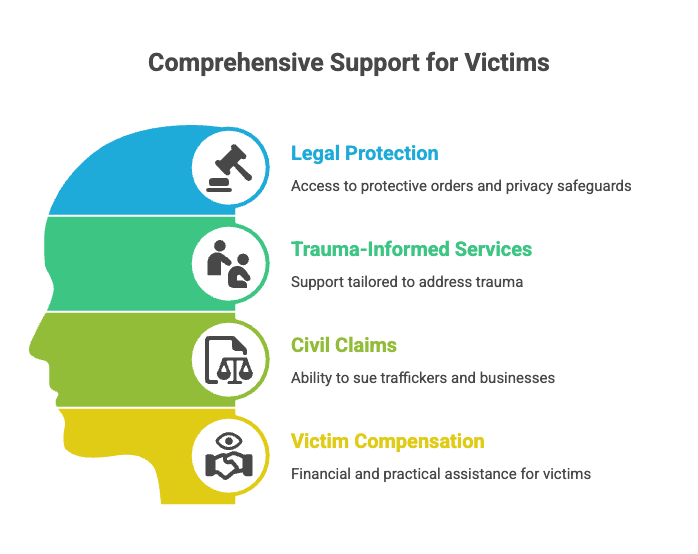
- Access to protective orders, privacy safeguards, and trauma-informed services through courts and agencies
- The ability to pursue civil claims against traffickers, facilitators, or negligent businesses for damages and accountability
- Eligibility in some cases for victim compensation, along with support related to medical care, counseling, housing, and lost income
Florida law may also support Evidence preservation, helping ensure that documents, digital records, and witness information remain available for legal review. Victims may have rights during criminal cases, including notice of hearings, participation in sentencing, and requests for restitution. These protections reflect a legal framework intended to serve vulnerable people with fairness, respect, and meaningful remedies.
Steps to Take After a Sex Trafficking Victim Incident in Florida
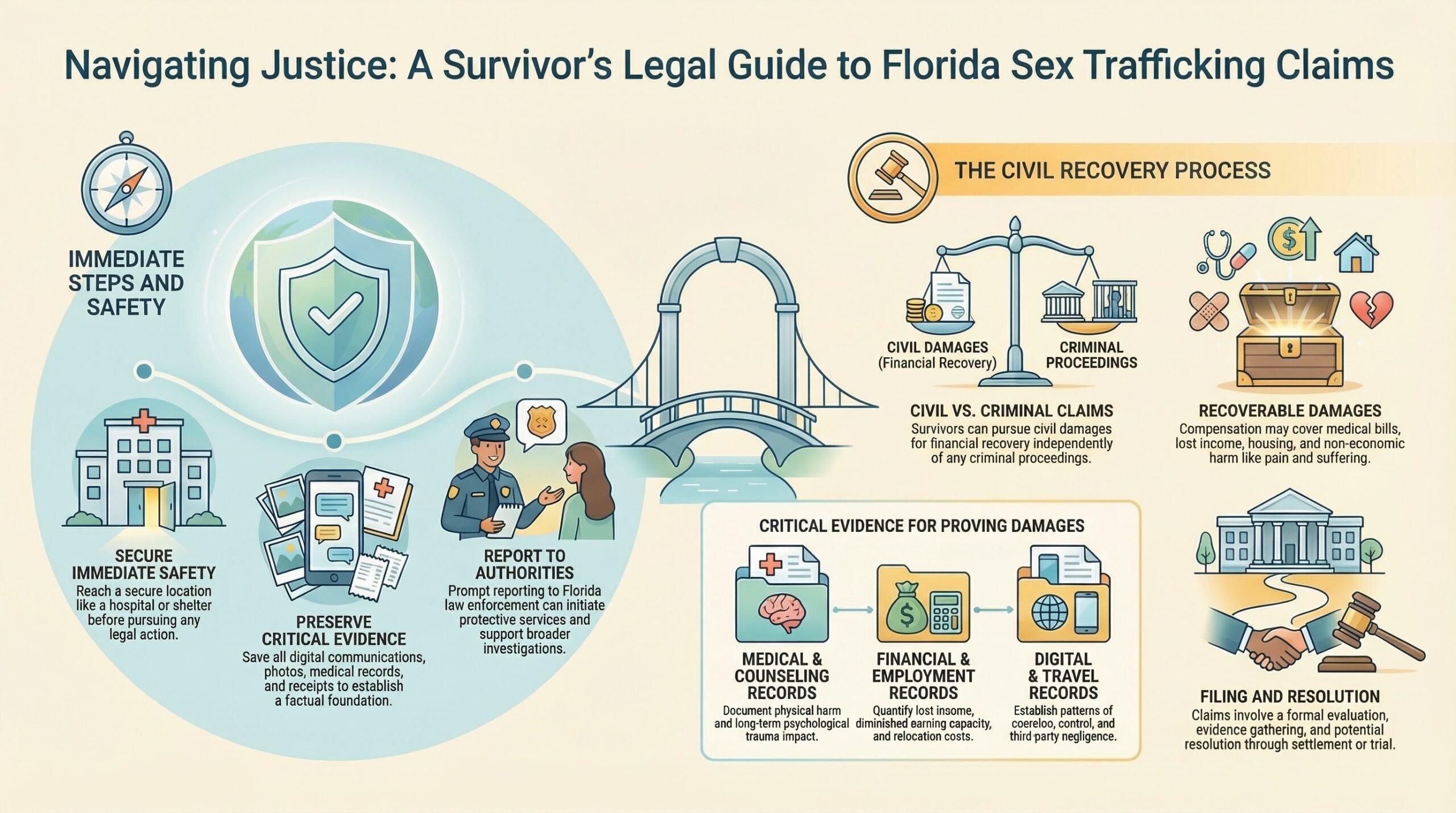
After a sex trafficking victim incident in Florida, the first priority is to secure immediate safety by leaving the dangerous environment and obtaining medical or emergency assistance when necessary. The incident should then be reported to law enforcement or other appropriate authorities, as prompt reporting may support both protection efforts and any later legal action. It is also important to preserve essential evidence, including messages, photographs, medical records, and other relevant documentation, because these materials may help establish the facts of the case.
Seek Immediate Safety
When a sex trafficking incident has occurred, the immediate priority is to reach a secure location away from the trafficker and any person connected to the exploitation. Safety may include a hospital, shelter, advocacy center, or the home of a trusted individual who can provide calm, practical assistance. Those serving victims should help limit contact, preserve privacy, and reduce further risk.
Once immediate danger has been interrupted, attention should turn to basic needs, including medical care, food, rest, and secure transportation. Trauma-informed care is crucial because shock, fear, and confusion often affect decision-making in the aftermath. Immediate legal support may also help protect the victim’s interests while service providers coordinate next steps. A stable environment gives survivors the foundation needed for recovery and informed choices.
Report To Authorities
If immediate safety has been secured, reporting the trafficking incident to law enforcement or an appropriate government agency is often a critical next step in Florida. Prompt reporting may help initiate protective services, support broader investigations, and connect the individual with trained responders who can coordinate care. Those assisting a survivor should remain attentive to Victim confidentiality, sharing information only with appropriate officials and service providers.
Florida agencies, local police, and specialized task forces may receive reports, depending on the circumstances. In some settings, healthcare workers, teachers, and social service professionals must also understand Mandatory reporting laws, especially when minors or vulnerable adults are involved. A careful, informed report can promote accountability while helping authorities address immediate risks, arrange resources, and restore a coordinated response centered on safety, dignity, and lawful protection.
Preserve Critical Evidence
Preserving evidence should begin as soon as personal safety and reporting needs have been addressed, because the materials connected to a sex trafficking incident may later support a criminal investigation, a civil claim, or both. Clothing, photographs, medical records, text messages, emails, call logs, social media posts, hotel receipts, rideshare histories, and location data may all prove important. Advocates, caregivers, and legal representatives can help organize these materials carefully and reduce the risk of loss or alteration.
It is also important to secure witness statements while memories remain fresh. Digital evidence preservation should include backing up files, saving screenshots, and documenting dates, times, and names. Items should be stored in a safe place, with a clear chain of custody when possible, so professionals can review reliable evidence later.
How a Florida Sex Trafficking Victim Lawyer Can Help You Initiate a Case
How does a Florida sex trafficking victim lawyer help initiate a case? A lawyer begins by listening carefully, identifying immediate legal needs, and explaining available civil and criminal pathways. Through victim advocacy, counsel helps survivors make informed decisions while reducing unnecessary contact with traffickers or other harmful parties. Early guidance also supports the preservation of evidence, including records, messages, witness names, and institutional documents that may prove coercion, profit, or negligence.
A lawyer may strengthen case initiation by helping with the following:
- Evaluating facts, timelines, and potential defendants under Florida and federal law
- Coordinating secure reporting to law enforcement, agencies, or service providers when appropriate
- Preparing filings, demand letters, and documentation needed to protect rights from the outset
This structured approach serves survivors and those assisting them by creating stability, promoting safety, and building a foundation for accountability. With prompt legal direction, a case can begin in an organized, purposeful, and survivor-centered manner, with care.
Long-Term Effects of Sex Trafficking Victim Trauma
Sex trafficking victim trauma often produces lasting psychological harm, including chronic anxiety, depression, and post-traumatic stress that can persist long after the exploitation ends. Survivors may also face serious physical health complications, such as untreated injuries, reproductive harm, substance-related conditions, and other medical issues linked to prolonged abuse. These effects are frequently compounded by significant barriers to recovery, including fear, stigma, financial instability, and limited access to consistent medical, legal, and psychological support.
Lasting Psychological Harm
Although the physical injuries associated with trafficking may recover over time, the psychological harm often remains deeply rooted and can disrupt nearly every aspect of a victim’s life. Survivors may struggle with anxiety, depression, hypervigilance, shame, and persistent mistrust, even after they have reached safety. These effects can impair relationships, employment, education, and the ability to make decisions with confidence.
Service-minded advocates should recognize that trauma recovery is rarely linear and often requires patient, informed support. Access to qualified counseling resources can help survivors process coercion, rebuild stability, and regain a sense of personal agency. Legal professionals, caregivers, and community organizations each serve an important role by responding with consistency, respect, and discretion. Thoughtful intervention may reduce isolation and support long-term emotional recovery for survivors and their families.
Physical Health Complications
Often, the long-term physical effects of trafficking extend well beyond the period of exploitation and may continue to interfere with a survivor’s daily functioning for years. Chronic pain, gastrointestinal disorders, reproductive injuries, sexually transmitted infections, sleep disruption, and untreated dental problems are commonly reported. Many survivors also experience headaches, fatigue, and weakened immune responses linked to prolonged stress and repeated harm.
These conditions may worsen when Trauma triggers reactivate the body’s stress response, causing muscle tension, rapid heartbeat, dizziness, or panic-like symptoms. Physical limitations can affect employment, parenting, and consistent medical care, making compassionate support especially important. Service providers, advocates, and legal professionals who recognize these medical realities are better equipped to respond with patience, credibility, and practical assistance, even when visible injuries have improved. Such symptoms also create Recovery barriers.
Barriers To Recovery
Because trauma can affect nearly every aspect of daily life, barriers to recovery for trafficking survivors are rarely limited to a single issue. Many face persistent fear, shame, disrupted trust, and trauma bonds that complicate decision-making and personal safety.
Housing instability, untreated medical needs, substance dependence, immigration concerns, and financial insecurity often interrupt trauma recovery. Survivors may also encounter stigma, fragmented systems, or difficulty accessing consistent victim support services, especially when transportation, childcare, or language access is limited. Legal proceedings can intensify distress, particularly when survivors must revisit abuse in interviews or court.
Recovery may therefore require coordinated, long-term assistance from professionals who understand intricate trauma. Service providers, advocates, and attorneys can help reduce these obstacles by supporting stability, informed choices, and access to protection, treatment, and compassionate community care.
What to Expect During a Florida Sex Trafficking Victim Claim Process
A Florida sex trafficking victim’s claim process generally begins with an initial case evaluation, during which the facts, legal options, and potential sources of recovery are assessed. It then typically moves to the collection of evidence and documentation, followed by the formal filing of the claim in accordance with applicable legal requirements. Depending on the strength of the evidence and the parties’ positions, the matter may be resolved through settlement or proceed to trial.
Initial Case Evaluation
What should a survivor expect during an initial case evaluation in Florida? An attorney typically begins by listening carefully, identifying immediate concerns, and explaining how a civil claim may proceed. The discussion often addresses Victim safety planning, urgent protective needs, and the preservation of digital evidence in a practical, survivor-centered manner.
During this meeting, counsel may outline possible legal options, relevant deadlines, and the roles of courts, agencies, and service providers. The evaluation usually clarifies confidentiality, communication preferences, and whether emergency measures are advisable. A careful lawyer also assesses the potential impact of participation on housing, employment, family stability, and emotional well-being. The purpose is not to pressure decisions, but to provide informed guidance so the survivor, and those supporting recovery, can consider next steps with greater confidence and security.
Evidence And Documentation
Although each case differs, evidence and documentation often shape the strength and direction of a Florida sex trafficking victim’s claim from the earliest stages. Records may include medical reports, counseling notes, photographs, travel records, employment information, and communications that help establish patterns of control, coercion, and harm.
Attorneys and advocates often encourage careful preservation of messages, emails, social media posts, financial statements, and Digital Receipts tied to lodging, transportation, or payments. These materials can support timelines and identify third parties. Witness Credibility also matters, so consistent statements from survivors, family members, service providers, and other observers may strengthen the overall account.
When available, law enforcement records and prior incident reports can provide added context. Thoughtful documentation helps those serving survivors assess needs, protect dignity, and build a clear factual foundation.
Filing The Claim
Once sufficient information has been gathered, filing a Florida sex trafficking victim claim typically begins with a careful review of the available facts, the parties involved, and the legal grounds for recovery. Counsel then prepares the formal claim, identifies responsible individuals or entities, and ensures all deadlines and notice requirements are met.
During this stage, Evidence preservation remains crucial because records, communications, financial materials, and witness statements may support the claim’s foundation. The attorney may also coordinate with service providers, advocates, and investigators to organize documentation in a manner that protects the victim’s dignity and strengthens presentation. A properly filed claim may seek Victim compensation for medical care, counseling, lost income, housing needs, and other related losses. Clear communication helps those assisting the survivor understand each procedural step and required participation.
Settlement Or Trial
Settlement discussions or trial preparation generally follow the filing stage, and each path requires careful evaluation of evidence, liability, and anticipated damages. Counsel commonly reviews records, witness statements, and expert opinions to assess the evidence of Wrongful Conduct and the likelihood of a favorable resolution. If defendants recognize substantial exposure, negotiations may begin, with the goal of securing resources that support recovery and long-term stability.
When settlement efforts do not produce fair terms, trial preparation becomes critical. Attorneys organize testimony, prepare exhibits, and refine the damages calculation to present economic losses, medical needs, and emotional harm with clarity. Throughout this stage, the legal team generally advises the survivor on procedural steps, timing, and possible outcomes. A disciplined approach helps protect the claim, uphold accountability, and pursue meaningful justice for those harmed and communities.
Compensation for Florida Sex Trafficking Victim Damages
Compensation for sex trafficking victim damages in Florida may include recovery for medical expenses, psychological treatment, lost income, diminished earning capacity, pain and suffering, and other losses directly tied to the trafficking conduct. In these cases, the valuation of damages depends on careful documentation, credible professional opinions, and clear evidence that connects harm to unlawful acts.
A service-minded legal approach often focuses on restoring stability, preserving dignity, and securing resources that support long-term recovery for survivors and their families.
| Consideration | Importance |
|---|---|
| Medical records | Show treatment needs |
| Counseling history | Supports trauma impact |
| Employment documents | Reflect income disruption |
| Expert assessments | Strengthen damages valuation |
| Witness statements | Help satisfy evidence requirements |
Florida claims may also consider future care needs, relocation costs, educational interruption, and safety-planning expenses when supported by reliable evidence. Thorough preparation can help decision-makers understand the full scope of harm and the practical assistance necessary for meaningful rebuilding.
Economic vs Non-Economic Damages in Florida Sex Trafficking Victim Cases
In Florida sex trafficking victim cases, economic damages generally address measurable financial losses, such as medical expenses, lost income, and treatment costs. Non-economic damages concern harms that are less readily quantified, including pain and suffering, emotional distress, and loss of enjoyment of life. In court, both categories require persuasive evidence, with documentation, expert testimony, and credible factual support often serving a central role in proving the extent of the losses.
Economic Damages Explained
Economic damages are the measurable financial losses a trafficking survivor may recover in a Florida civil case and are typically supported by records, bills, wage information, and expert analysis. These damages help quantify concrete setbacks so advocates and courts can pursue meaningful restoration.
Common examples include lost wages from missed work, medical costs for emergency care, counseling, medications, and rehabilitation, and property damage involving stolen, destroyed, or withheld belongings. A claim may also address transportation expenses, relocation needs, and other out-of-pocket losses directly tied to the trafficking conduct. In more serious matters, financial experts may evaluate future earning capacity when injuries, trauma-related limitations, or disrupted education reduce a survivor’s ability to work over time.
Careful documentation often strengthens these claims and supports accountable civil recovery for survivors.
Non-Economic Harm Valuation
Although non-economic harm cannot be measured by receipts or wage records, it often represents a substantial part of damages in a Florida sex trafficking civil case because it addresses the human consequences of exploitation. These damages may include pain, humiliation, fear, loss of dignity, emotional distress, and lasting disruptions to relationships, identity, and daily functioning.
Careful valuation depends on trauma recognition, informed assessment of the survivor’s lived experience, and respectful attention to long-term psychological effects. In service-centered advocacy, victim support helps frame these harms with dignity rather than in reductionist terms. Expert credibility also matters in explaining how coercion, repeated abuse, and control can alter trust, safety, and personal development. A thoughtful damages analysis then acknowledges suffering that is real, serious, and deeply connected to the survivor’s path toward stability and recovery.
Proving Losses In Court
Proving losses in court requires more than a general account of harm, because Florida sex trafficking civil cases typically demand evidence that connects each category of damages to the defendant’s conduct with reasonable clarity. Economic damages may include medical bills, counseling costs, lost wages, diminished earning capacity, and other measurable expenses supported by records, expert opinions, and testimony.
Non-economic damages often address pain, emotional distress, humiliation, and loss of dignity, which require credible statements from the survivor, treatment providers, and corroborating witnesses. Damages calculation must combine documentation with persuasive narrative evidence. Because the burden of proof rests on the plaintiff, careful preparation is critical. A service-minded legal team helps organize facts, present trauma-informed evidence, and show the court how both financial and human losses arose from the trafficking conduct.
When a Florida Sex Trafficking Victim Case Goes to Trial vs Settlement
In many Florida sex trafficking victim cases, the resolution occurs through settlement rather than trial, but the appropriate path depends on the evidence, the parties involved, and the survivor’s goals. Settlement may provide faster compensation, greater privacy, and less disruption, which can support recovery and ongoing service needs. It may also reduce exposure to credibility challenges that often arise in contested litigation.
Trial may become necessary when defendants deny responsibility, minimize harm, or refuse fair compensation. In that setting, survivor testimony can be central, but success often depends on careful preservation of evidence and thorough witness preparation. Medical records, digital communications, financial documents, and third-party accounts can strengthen the case and serve the broader goal of accountability.
Counsel evaluates both options with attention to risk, timing, and the survivor’s well-being. A service-minded legal approach seeks a resolution that protects dignity, advances justice, and secures meaningful resources for recovery and long-term stability.
The Statute of Limitations for Florida Sex Trafficking Victim Cases
Because filing deadlines can determine whether a civil claim may proceed at all, the statute of limitations is a critical issue in Florida sex trafficking victim cases. Florida law may set different deadlines depending on the facts, the legal claims asserted, and whether related criminal conduct affects civil remedies. Careful attention to Statute timing helps preserve accountability and supports efforts to protect vulnerable individuals through lawful action.
In some situations, tolling exceptions may pause or extend the filing period. These exceptions can arise when a victim is a minor, when coercion or concealment prevented earlier action, or when trauma delayed recognition of legal harm. Courts examine these issues closely, and outcomes depend on specific evidence and governing statutes. A timely review of records, dates, and case history is often necessary to determine whether a claim remains feasible. Understanding these limits serves both fairness and public protection by encouraging prompt action while recognizing the barriers trafficking victims may face.
When to Contact a Sex Trafficking Victim Lawyer in Florida
After any suspected trafficking-related harm, consulting a sex trafficking victim lawyer in Florida as early as possible can be important to protect legal rights and preserve key evidence. Prompt contact may be appropriate after threats, coercion, online exploitation, physical injury, forced labor, or commercial sexual activity involving fraud or control. Early guidance can also help families, caregivers, faith leaders, and advocates respond in ways that support safety and dignity.
A lawyer may be contacted when medical records, messages, financial documents, photographs, or witness information need protection, or when communication from traffickers creates fear or confusion. A Confidential legal consultation can help a survivor or supportive third party understand immediate steps without public exposure. During this period, Crisis counseling options may also be considered to address urgent emotional and practical needs.
Reaching out promptly can assist with reporting decisions, coordination with service providers, and the careful preservation of facts for any future civil action.
Why You Need an Experienced Florida Sex Trafficking Victim Lawyer
Experience matters when a sex trafficking victim pursues legal action in Florida, where claims often involve overlapping civil, criminal, and evidentiary issues. An experienced lawyer understands how to preserve evidence, identify all liable parties, and prevent procedural errors that can weaken a case before it is fully developed.
Seasoned counsel also recognizes that survivors often need more than litigation alone. Through a trauma-informed approach, an attorney can communicate carefully, reduce unnecessary retraumatization, and coordinate with Victim advocacy services that support safety, counseling, housing, and case management. This integrated response helps protect dignity while strengthening legal strategy.
In Florida, trafficking cases may involve businesses, property owners, recruiters, or online platforms. A lawyer with relevant experience can assess these relationships, accurately value damages, and pursue accountability with discipline and care. For those committed to serving vulnerable individuals, experienced representation helps transform legal action into a meaningful path toward stability, recovery, and justice.
How to Choose the Right Sex Trafficking Victim Lawyer for Your Case in Florida
Selecting the right sex trafficking victim lawyer in Florida requires careful attention to qualifications, case history, and the attorney’s approach to survivor representation. A suitable attorney should demonstrate meaningful experience with trafficking claims, civil litigation, and coordination with law enforcement or social service partners when necessary. Their record should reflect ethical practice, clear communication, and respect for survivor autonomy throughout each stage of representation.
Prospective clients should evaluate the lawyer’s Interview strategy, asking how initial meetings are structured, how confidentiality is protected, and whether trauma-informed advocacy guides every interaction. Attention should also be given to victim support resources, including referrals for counseling, housing, and crisis assistance. Strong counsel typically explains timelines, fee arrangements, and possible outcomes without overpromising.
Careful evidence reviews are also crucial, since trafficking cases often involve digital records, witness statements, and institutional negligence. Selecting counsel with compassion and discipline helps survivors pursue accountability and long-term stability.
About The Law Offices of Anidjar & Levine
A careful review of a law firm’s background and client service model can help survivors identify counsel equipped to handle the demands of a sex trafficking case in Florida.
The Law Offices of Anidjar & Levine presents itself as a firm focused on responsive communication, individualized representation, and practical guidance for people facing severe harm and instability.
Its approach emphasizes confidential consultations, allowing survivors and families to discuss legal options privately before deciding how to proceed.
The firm’s client service structure also reflects trauma-informed intake practices, which can reduce unnecessary stress during early case evaluation.
In matters involving exploitation, Victim support often requires coordination, patience, and steady attention to safety, documentation, and long-term needs.
The firm is also known for compassionate advocacy, a quality that can be important when pursuing accountability against traffickers, facilitators, or negligent third parties.
For service-minded readers, these features may indicate a commitment to legal representation grounded in dignity, respect, and care.
Frequently Asked Questions
Can I Remain Anonymous When Filing a Sex Trafficking Claim in Florida?
Yes, a person may sometimes remain anonymous when filing a sex trafficking claim in Florida, depending on court approval and case circumstances. Courts may allow confidential filing, use of initials, or pseudonyms to protect privacy and safety. In some matters, sealed records may further limit public access. Because these protections are not automatic, careful legal guidance is crucial to help survivors seek justice while preserving dignity, security, and confidentiality.
Will Pursuing a Claim Affect My Immigration Status or Visa?
Pursuing a claim does not automatically change immigration status or cancel a visa, though the details of the case can matter. Whether a criminal affects immigration consequences depends on arrest history, fraud issues, or prior violations, not merely reporting harm or seeking relief. Civil claims options often proceed separately and may support applications for protections, including T or U visas. Careful legal guidance helps a survivor protect rights while continuing to serve others safely.
Can a Minor File a Claim Without Parental Involvement in Florida?
Generally, a minor in Florida cannot independently file a civil claim without parental involvement. Minor guardianship rules usually require a parent, legal guardian, or court-appointed representative to act on the child’s behalf. In some circumstances, court approval may allow another responsible adult or guardian ad litem to proceed when parental participation is unavailable, unsafe, or contrary to the minor’s welfare. Careful legal guidance helps protect the child’s interests and rights.
Are There Florida Resources for Housing, Counseling, and Survivor Support?
Yes, Florida offers resources for housing, counseling, and survivor support through state agencies, community programs, and faith-based organizations. Victim housing may be available through emergency shelters, transitional residences, and specialized safe homes. Nonprofit counseling services often provide trauma-informed care, crisis intervention, and case management. Many counties also coordinate referrals for medical care, legal aid, education, and employment support, helping service-minded advocates connect survivors with stable, long-term assistance.
What Evidence Can Be Used if I Have No Police Report?
Evidence may still support a claim without a police report. Useful proof includes civilian documentation, credible affidavits, medical records, text messages, eyewitness statements, witness affidavits, employment records, shelter logs, financial evidence, and travel records. A careful advocate will organize these materials to show patterns, timelines, coercion, and harm. For those serving survivors, thorough documentation often strengthens credibility and helps decision-makers understand the full scope of exploitation.
—————————
Sex trafficking victims in Florida may have strong legal options, including civil claims against traffickers and negligent third parties.
A qualified attorney can evaluate the facts, protect the victim’s rights, and pursue compensation for medical care, lost income, pain and suffering, and other damages.
The Florida Sexual Assault Lawyer team at Law Offices of Anidjar & Levine assists survivors with clear guidance and focused advocacy.
Prompt legal action can preserve evidence, strengthen a claim, and support a more secure path toward accountability and recovery.