Law Offices of Anidjar and Levine evaluates the facts, identifies liable parties, and protects a survivor’s rights throughout a civil claim.
Case review may include timelines, messages, financial records, witness accounts, and evidence preservation needs.
Counsel may also coordinate with law enforcement, service providers, and advocacy groups to address safety, privacy, and potential immigration concerns.
Civil remedies can include compensation for medical care, counseling, lost income, and emotional harm.
The sections below explain these issues in greater detail.
Learn more by visiting our Florida Sexual Assault Lawyer page.
Main Takeaways
- A Florida human trafficking lawyer evaluates facts, records, communications, and witnesses to identify viable civil claims and responsible parties.
- They explain whether Florida or federal trafficking laws may apply and what remedies, protections, and privacy options are available.
- A lawyer helps preserve evidence, prepare filings, meet deadlines, and coordinate with law enforcement and victim service organizations.
- They provide trauma-informed guidance on safety planning, confidential intake, immigration concerns, and informed decision-making throughout the case.
- If trafficking is suspected, prioritize immediate safety, seek trusted support, and consider reporting to law enforcement or the National Human Trafficking Hotline.


How We Can Help With Your Florida Human Trafficking Claim
When a person has been harmed by human trafficking in Florida, legal counsel can help evaluate the facts, identify all liable parties, and build a civil claim that seeks meaningful compensation and accountability. Support often begins with careful listening, trauma-informed communication, and practical steps that protect the survivor’s immediate well-being while preserving important evidence.
A law firm serving this need may coordinate with trusted professionals, explain available remedies in plain language, and provide Safety planning guidance tailored to the person’s circumstances. Counsel may also outline self-advocacy options to help survivors make informed decisions about participation, privacy, and next steps. Throughout representation, the focus remains on restoring stability, reducing avoidable burdens, and advancing the client’s goals with dignity.
For those committed to helping others, this work reflects a disciplined effort to secure resources for recovery, encourage institutional responsibility, and promote safer communities through principled civil action and compassionate, survivor-centered legal support.
OUR CONSULTATIONSARE FREE
START YOUR FREE CASE REVIEW

Understanding Human Trafficking Cases in Florida
Because these matters often involve coercion, fraud, or force that is not immediately visible to outsiders, understanding human trafficking cases in Florida requires close attention to both the facts of exploitation and the legal standards that define the claim. These cases are evaluated by examining conduct, intent, control, and the harm imposed on another person.
Florida law and federal law may both apply, depending on the circumstances and the parties involved. A careful review of records, communications, financial activity, and witness statements often helps clarify whether trafficking occurred. Legal protections can affect safety planning, confidentiality, immigration concerns, and access to civil remedies or criminal accountability.
In service-centered legal work, Victim support remains an important part of the process, helping individuals understand options and make informed decisions. A clear legal assessment also helps advocates, faith communities, and caregivers respond responsibly, preserve evidence, and coordinate assistance in ways that protect dignity, safety, and long-term recovery.
Common Scenarios When Human Trafficking Might Take Place in Florida
Human trafficking in Florida may arise in several recurring settings where vulnerable individuals can be concealed, controlled, or exploited. Common examples include the hospitality and tourism industry, agricultural labor camps, residential exploitation rings, and online recruitment schemes that target people through deceptive offers. Recognizing these circumstances helps frame how trafficking activity may appear across different environments in the state.
Hospitality And Tourism
Given Florida’s year-round tourism economy and high volume of transient visitors, hotels, resorts, short-term rentals, bars, nightclubs, and related service venues can present conditions that traffickers exploit to conceal illegal activity. In these settings, victims may be moved quickly, isolated behind guest privacy norms, or controlled through debt, threats, or manipulation.
Those seeking to protect others should recognize warning signs linked to hotel recruitment tactics, frequent room turnover, excessive monitoring, and restricted movement. Traffickers may also use online tourism fraud, including deceptive job offers or fake travel arrangements, to lure vulnerable individuals. Effective intervention often depends on staff training, attentive management, Hidden victim resources, and coordinated survivor support. Prompt reporting, trauma-informed responses, and partnerships with community organizations can help identify victims and reduce further harm.
Agricultural Labor Camps
While Florida’s agricultural sector depends heavily on seasonal and migrant labor, certain labor camps and farm-related housing arrangements can create conditions that traffickers exploit for forced labor and related abuse. In these settings, isolation, language barriers, transportation control, and documentation gaps may prevent workers from seeking help or understanding their rights. Some situations involve withheld wages, excessive recruitment fees, threats of deportation, or workplace coercion tied to housing, food, or debt.
Service-minded advocates often watch for signs such as restricted movement, employer-controlled identification, hazardous conditions, and retaliation against those who report mistreatment. Careful legal review can help determine whether labor violations have escalated into trafficking. In Florida, early reporting, coordinated outreach, and trauma-informed assistance may protect vulnerable farmworkers and support meaningful pathways toward safety, stability, and justice.
Residential Exploitation Rings
Because trafficking often depends on secrecy and control, residential exploitation rings may operate out of ordinary houses, apartments, motels, or short-term rentals that attract little attention from neighbors or the public. These settings can conceal forced labor, commercial sexual exploitation, or coercive domestic servitude, especially when traffickers restrict movement, monitor communications, and isolate victims from support.
Those seeking to serve vulnerable people may note repeated visitors, signs of overcrowding, fearful behavior, unexplained injuries, or occupants who appear unable to speak freely. In Florida, some residential slavery schemes rely on debt, threats, substance dependence, or confiscated identification to maintain control. A careful response should prioritize victim safety planning, trauma-informed reporting, and coordination with trained professionals, so intervention protects dignity, reduces harm, and supports lawful accountability for all involved parties.
Online Recruitment Schemes
Trafficking activity in Florida may also begin online, where recruiters use social media, messaging applications, gaming platforms, dating sites, and job boards to identify and contact vulnerable individuals with little immediate scrutiny. They may build trust over time, present themselves as friends or mentors, and then introduce false job offers, travel assistance, or housing promises that conceal exploitation. Some schemes resemble social media scams, using fake profiles, urgent requests, and deceptive opportunities to draw victims away from support networks.
Young people, migrants, and persons facing financial hardship may be especially targeted. Warning signs can include secrecy, pressure to move quickly, requests for explicit images, or demands for personal documents. Early reporting, informed outreach, and legal guidance can help communities protect at-risk individuals and interrupt online recruitment efforts.


Legal Rights of Human Trafficking Victims in Florida
Although the circumstances of each case differ, victims of human trafficking in Florida are protected by important legal rights under both state and federal law.
These protections are designed to preserve dignity, support recovery, and promote accountability, while respecting victim confidentiality and encouraging trauma-informed care in every professional interaction.
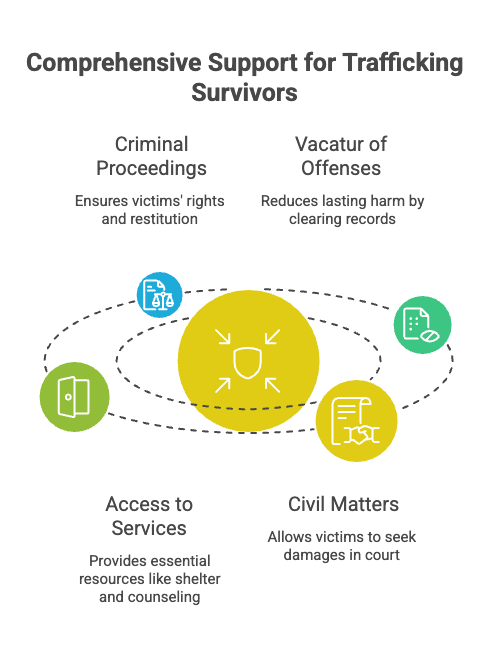
- Victims may seek protection through criminal proceedings and may be entitled to notice, participation, and restitution for certain losses.
- Florida law may allow eligible survivors to request vacatur of qualifying offenses tied to their trafficking experience, reducing lasting harm from exploitation.
- Federal and state systems may provide access to services, including shelter, counseling, medical care, and immigration related protections for qualifying noncitizens.
- Victims also have rights in civil matters, including the ability to pursue damages against traffickers or others who knowingly benefited from exploitation.
These legal safeguards reflect a broader commitment to justice, safety, and compassionate service for vulnerable individuals.
Steps to Take After a Human Trafficking Incident in Florida
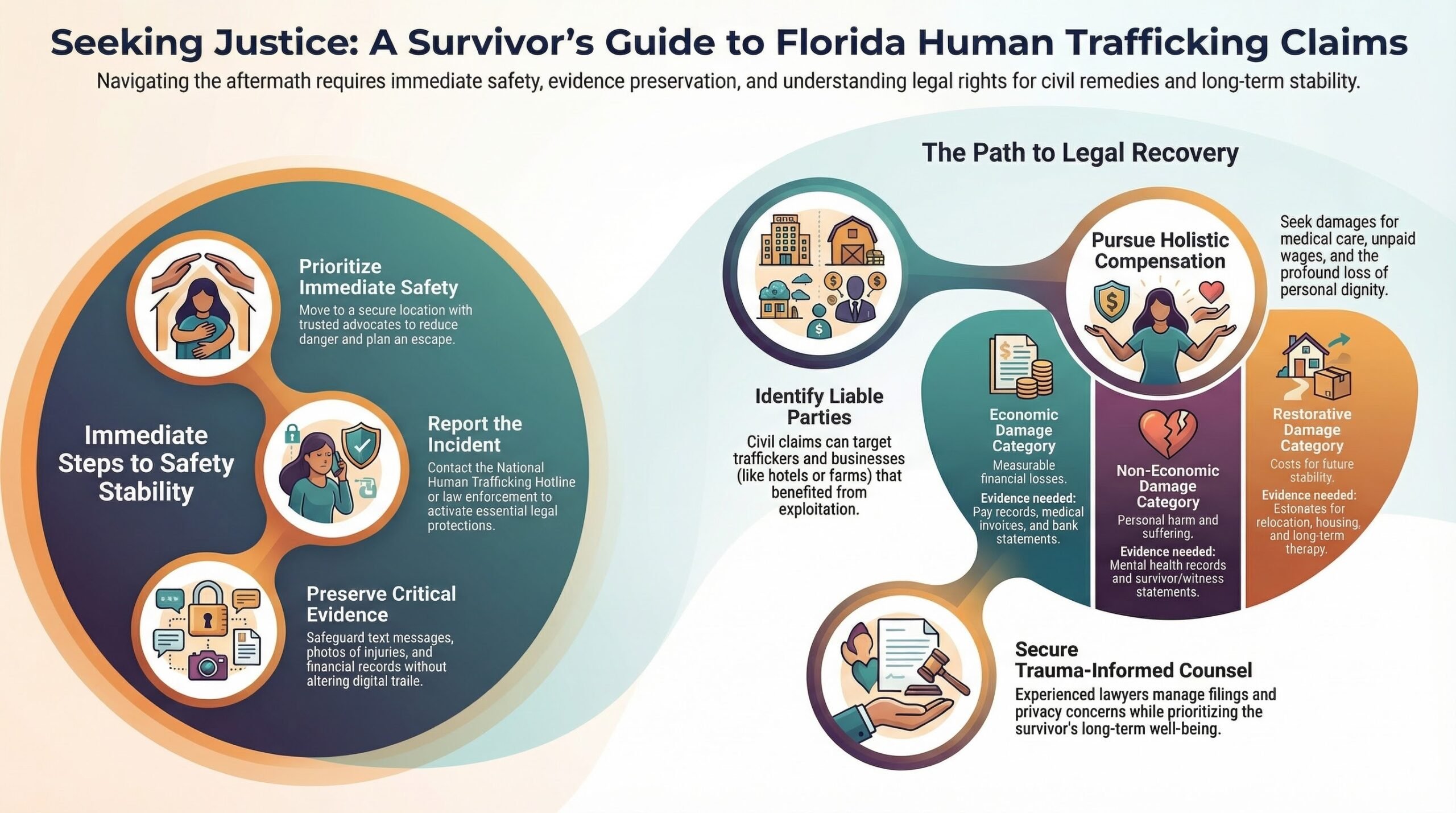
After a human trafficking incident in Florida, the first priority is to make sure immediate safety by reaching a secure location and obtaining emergency assistance when necessary. The matter should then be reported to law enforcement or an appropriate reporting agency, as timely reporting can support both protection and investigative efforts. It is also important to preserve crucial evidence, including messages, photographs, medical records, and other relevant documentation that may help establish the facts of the incident.
Ensure Immediate Safety
Seek a secure location immediately, as personal safety must remain the first priority following a suspected human trafficking incident in Florida. A survivor should move toward a protected environment, preferably one with trusted adults, trained advocates, or staff who can help reduce immediate danger and support calm decision-making.
Emergency escape planning may include leaving public digital trails behind, avoiding familiar routes, and securing essential items only when it can be done without added risk. Supportive individuals serving vulnerable populations should focus on identifying local resources such as shelters, victim service organizations, faith-based assistance, and medical providers experienced in trauma-informed care.
Attention should also be given to basic needs, including food, rest, clothing, and urgent medical treatment. Maintaining privacy and limiting contact with unsafe individuals can help preserve stability during this essential period.
Report The Trafficking
Once immediate safety has been addressed, reporting the trafficking can help activate legal protections, connect the survivor with victim services, and support efforts to prevent further harm. In Florida, Victim reporting options may include contacting local law enforcement, the Florida Abuse Hotline when minors are involved, or the National Human Trafficking Hotline for confidential guidance and referral.
Prompt reporting can also help professionals coordinate trauma-informed assistance, emergency housing, medical care, and legal support. Faith-based organizations, advocates, and community servants may assist the survivor in understanding available choices without pressure or judgment. State and federal resources, including victim compensation programs and specialized task forces, may become available after a report is made.
A lawyer can explain reporting pathways, protect the survivor’s rights, and help direct interactions with investigating agencies and service providers.
Preserve Key Evidence
Because critical evidence can disappear quickly, preserving available records and physical items should be treated as an important step following a human trafficking incident in Florida. Those assisting survivors should safeguard text messages, emails, call logs, identification documents, receipts, clothing, and location data without altering them. Careful photo preservation may help document injuries, living conditions, vehicles, and relevant surroundings.
Supporters should also encourage prompt Witness interviews while memories remain fresh and details are more reliable. Notes should identify dates, times, names, and observed events in an orderly manner. When physical items are collected, maintaining a clear chain-of-custody record helps protect their integrity for investigators and the courts. Creating secure digital backups of records, images, and communications can reduce the risk of loss, deletion, or damage and better support accountability efforts.
How a Florida Human Trafficking Lawyer Can Help You Initiate a Case
When a trafficking survivor is prepared to move forward, a Florida human trafficking lawyer can help begin a case by evaluating the facts, identifying potential legal claims, and explaining the procedural steps involved.
Counsel often begins with confidential intake, victim safety planning, and evidence preservation steps, helping protect the survivor while organizing information for civil or criminal proceedings.
- Case assessment: The lawyer reviews timelines, communications, financial records, and witness information to determine viable claims and responsible parties.
- Filing preparation: The lawyer drafts pleadings, gathers supporting documents, and ensures that deadlines, venue requirements, and service rules are properly addressed.
- Agency coordination: Counsel may communicate with law enforcement, service providers, and advocacy organizations to support a lawful, survivor-centered process.
- Client guidance: The lawyer explains expectations, possible remedies, privacy concerns, and available protections to enable informed decision-making.
This measured approach helps communities serve survivors with dignity, accountability, and practical legal support throughout the case-opening stage.
Long-Term Effects of Human Trafficking Trauma
Human trafficking trauma often produces lasting psychological harm, including anxiety, depression, post-traumatic stress, and persistent difficulty with trust and emotional regulation. Survivors may also face serious physical health consequences, such as chronic pain, untreated injuries, reproductive harm, and other conditions that continue long after the trafficking has ended. Recovery is frequently complicated by significant barriers, including fear, financial instability, limited access to care, and the ongoing effects of coercion and trauma.
Psychological Trauma Impact
Although the immediate danger may pass, the psychological effects of human trafficking often persist for years and can shape nearly every aspect of a survivor’s daily life. Many individuals experience Cognitive dysfunction, intrusive memories, and persistent PTSD symptoms that disrupt concentration, decision-making, and emotional regulation. Trust impairment is also common, making relationships, employment, and community support difficult to traverse.
For those seeking to serve survivors well, understanding survivor coping is critical. Some may appear withdrawn, hypervigilant, or emotionally detached, while others may struggle with shame, anxiety, or depression. These responses often reflect prolonged coercion and manipulation rather than personal weakness. Consistent, trauma-informed legal and social support can help create safety, restore dignity, and encourage gradual psychological stabilization, which is often necessary for meaningful recovery and traverse independence over time.
Physical Health Consequences
Beyond the lasting psychological harm, survivors of human trafficking often face serious physical health consequences that continue long after exploitation has ended. Chronic pain, untreated fractures, neurological symptoms, reproductive injuries, infectious disease, malnutrition, and sleep disruption may persist for years, limiting stability and daily function. Careful injury documentation can help service providers and legal advocates understand the full extent of harm and support appropriate interventions.
Medical evaluations often reveal conditions that require sustained treatment, rehabilitation, and monitoring. In legal matters, medical testimony may clarify how repeated abuse contributed to lasting impairment and future needs. Effective trauma recovery frequently depends on coordinated healthcare, including primary care, specialty treatment, and rehabilitative services. Thoughtful long-term care planning can help survivors obtain consistent support, restore physical functioning, and improve overall quality of life.
Barriers To Recovery
Because recovery from trafficking trauma often extends far beyond immediate safety, survivors may encounter persistent barriers that interfere with medical care, mental health treatment, housing stability, employment, and trust in support systems. Trauma responses may impair memory, concentration, and decision-making, complicating appointments, documentation, and long-term planning. Fear of retaliation, shame, immigration concerns, and prior exploitation by authority figures may also discourage disclosure and consistent participation in care.
Financial insecurity and limited transportation further reduce access to reliable treatment and stable housing. In many cases, fragmented systems require survivors to repeat painful histories to multiple providers. Coordinated support services and informed legal advocacy can reduce these burdens, protect rights, and create a more stable foundation for recovery, safety, and meaningful reintegration into daily life.
What to Expect During a Florida Human Trafficking Claim Process
A Florida human trafficking claim process typically begins with an initial case evaluation, during which the facts are reviewed, and the available legal options are identified. The matter then moves to gathering essential evidence and filing the claim, both of which require careful documentation and adherence to procedural requirements. From there, the process often proceeds through negotiation and resolution, with outcomes shaped by the strength of the evidence and the legal arguments presented.
Initial Case Evaluation
What should be expected during an initial case evaluation in a Florida human trafficking claim? During this first meeting, counsel generally reviews the survivor’s circumstances, explains legal options, and identifies immediate safety, privacy, and support needs. The purpose is to create a respectful foundation for informed decision-making and compassionate service.
The evaluation often includes Victim screening to assess indicators of trafficking, the general timeline of events, and potential parties involved. Counsel may also discuss Evidence documentation in broad terms, focusing on what categories of information may later support the claim, without beginning detailed collection. Questions usually address available services, communication preferences, and concerns about retaliation or immigration status.
By the end, the survivor should have a better understanding of the process, possible remedies, and the role legal counsel may play in pursuing accountability and meaningful recovery.
Gathering Key Evidence
After the initial evaluation, the evidence-gathering stage typically centers on identifying and preserving information that may substantiate the trafficking claim and clarify the extent of harm. Attorneys commonly review medical records, employment documents, travel histories, financial transactions, and communications that may reveal coercion, control, or exploitation. Witness statements from coworkers, neighbors, service providers, or family members can help confirm patterns of abuse and movement.
Digital footprints often play an important role. Text messages, emails, social media activity, location data, photographs, and online advertisements may connect individuals, places, and timelines. Careful documentation also supports those seeking accountability on behalf of vulnerable people. A lawyer may coordinate with investigators, counselors, and advocates to respectfully collect materials, reduce further trauma, and strengthen the factual foundation for the next stages of the process.
Filing The Claim
Once supporting records and witness information have been organized, the filing stage generally begins with preparing the formal legal documents that set out the trafficking allegations, identify the parties involved, and describe the losses or injuries at issue. Counsel typically reviews deadlines, confirms jurisdiction, and ensures accuracy before submitting the claim to the appropriate Florida court. During this phase, careful preservation of evidence remains critical because records, communications, and digital materials may later support the allegations.
Witness statements are also evaluated for consistency and completeness, helping present a clear account of events. After filing, the court may issue procedural requirements, including service on defendants and scheduling orders. Throughout the process, a service-minded legal team often emphasizes dignity, confidentiality, and thorough preparation, so the claim can move forward in an orderly and respectful manner.
Negotiation And Resolution
Although many Florida human trafficking claims proceed through formal litigation steps, a significant portion of the process may involve negotiation aimed at resolving the matter without a full trial. During this stage, counsel may exchange evidence, evaluate damages, and present demands designed to secure accountability and practical relief.
A careful settlement strategy often considers medical needs, lost income, safety concerns, and future support services. Effective Victim advocacy also remains central because any proposed resolution should respect the survivor’s goals, privacy, and long-term stability. Negotiations may involve insurers, businesses, or other responsible parties, and they can occur informally or through mediation. If a fair agreement is reached, the claim may be concluded with written terms and payment obligations. If not, the case generally proceeds toward further motions, discovery, and trial preparation.
Compensation for Florida Human Trafficking Damages
Because trafficking often causes severe physical, psychological, and financial harm, compensation in Florida civil claims is intended to address the full scope of a survivor’s damages. Courts may consider medical care, counseling, safety planning, Victim relocation, and Immigration relief when evaluating what support is reasonably necessary after exploitation. The purpose is restorative, helping survivors regain stability, dignity, and a secure path forward.
| Need | Human impact |
|---|---|
| Safe housing | Creates distance from fear and control |
| Trauma treatment | Supports repair after repeated abuse |
Compensation can also reflect ongoing protective needs, disrupted education, and services that strengthen independence. A careful legal presentation may connect documented harm to the resources required for recovery, while respecting the survivor’s privacy and autonomy. For those committed to serving others, this process represents more than a claim. It can become a practical means of restoring safety, honoring resilience, and supporting a future shaped by protection, accountability, and hope.
Economic vs Non-Economic Damages in Florida Human Trafficking Cases
Florida human trafficking cases often involve both economic damages, such as medical expenses, lost income, and other measurable financial losses, and non-economic damages, including pain and suffering, emotional distress, and loss of dignity. This distinction is important because each category addresses a different form of harm and may require different types of supporting evidence. A clear claim typically depends on proving these damages through records, testimony, and other documentation that connects the trafficking to the survivor’s losses.
Economic Damages Explained
When a human trafficking claim is pursued in Florida, economic damages refer to the measurable financial losses a survivor has suffered as a result of the trafficking, while non-economic damages address harms that do not come with a fixed dollar amount, such as pain, emotional distress, and loss of dignity. Economic damages may include unpaid wages, medical bills, therapy costs, relocation expenses, lost earning capacity, and other out-of-pocket losses resulting from wrongful recruitment or exploitation.
Courts and counsel often rely on proof of compensation, such as pay records, invoices, bank statements, employment history, and expert analysis. Strong victim documentation helps connect each loss to the trafficking conduct. In addition, witness credibility can support disputed facts regarding hours worked, withheld earnings, transportation costs, housing charges, and financial control, helping service-minded advocates pursue fair recovery.
Non-Economic Harm Categories
Although non-economic damages are not tied to receipts or wage statements, they often represent some of the most serious harm in a Florida human trafficking case. These losses may include pain and suffering, emotional distress, humiliation, loss of dignity, anxiety, depression, and lasting psychological injury. They can also involve disrupted relationships, diminished enjoyment of life, and the ongoing effects of coercion, fear, and isolation.
In service-focused legal advocacy, recognizing these categories is crucial because they reflect the human cost beyond financial loss. Attention to Trauma recovery may shape how harm is understood over time, especially when survivors face recurring symptoms or barriers to trust and stability. Within victim compensation, non-economic harm acknowledges that justice should address profound personal injury, not merely wages, medical bills, or other measurable expenses alone.
Proving Damage Claims
Because damage claims in human trafficking litigation often involve both measurable financial loss and deeply personal injury, proving them requires a structured presentation of evidence tailored to each category. Economic damages usually depend on wage records, medical bills, transportation costs, and expert analysis establishing future financial impact. Effective damage proof focuses on proving losses through reliable documents, testimony, and calculations that meet Florida evidence standards for admissibility and relevance.
Non-economic damages require equal care in documenting harm, though they are less tangible. Mental health records, survivor statements, family observations, and professional evaluations may help show pain, trauma, humiliation, and diminished quality of life. In service-oriented representation, careful preparation supports accountability, strengthens credibility, and helps courts understand the full extent of injury suffered by trafficking survivors and their families.
When a Florida Human Trafficking Case Goes to Trial vs Settlement
Whether a Florida human trafficking case proceeds to trial or resolves through settlement depends on the strength of the evidence, the extent of the victim’s damages, and the willingness of the parties to accept risk. Counsel evaluates trial strategy by reviewing evidence preservation, witness credibility, and victim safety planning, while also measuring the costs, timing, and emotional burdens of litigation.
Settlement may offer faster financial relief, greater privacy, and more control over outcomes, which can be valuable when a survivor needs stability and support services. Trial may be necessary when liability is denied, damages are contested, or defendants refuse meaningful accountability. In those situations, a court judgment can provide fuller compensation and public recognition of harm. A careful attorney prepares each case as if it will be tried, even while negotiating a resolution.
That approach strengthens bargaining power and helps ensure that decisions are guided by service, dignity, and the survivor’s long-term well-being, safety, recovery, and meaningful access to justice.
The Statute of Limitations for Florida Human Trafficking Cases
When a survivor is considering legal action, the statute of limitations becomes a pivotal issue in any Florida human trafficking case. Florida law applies different statutes of limitations depending on whether the matter proceeds as a criminal or civil matter, and this distinction can broadly affect the available remedies for those seeking justice and protection for others.
In criminal proceedings, prosecutors must comply with filing deadlines established by state law, although some trafficking offenses may allow extended or specialized timeframes. Civil claims, by contrast, are governed by separate limitation rules that can determine whether a survivor may pursue compensation against traffickers or related parties. Courts may also examine when the harm was discovered, whether coercion delayed reporting, and whether any tolling doctrine applies under the facts presented.
Because trafficking cases often involve prolonged abuse, fear, and control, careful review of limitation issues helps guarantee that persuasive claims are evaluated fairly under Florida law and procedure.
When to Contact a Human Trafficking Lawyer in Florida
Questions about filing deadlines often lead directly to a broader issue: when a survivor, family member, or concerned third party should seek legal counsel in Florida. Contact is often appropriate as soon as exploitation is suspected, safety concerns arise, or records, communications, and witness information need to be preserved. Early guidance can help people act carefully, protect options, and coordinate support without creating added risk.
Timely outreach may also assist with Victim confidentiality, reporting options, and referrals for trauma counseling or emergency services. Family members and advocates who wish to serve responsibly may use initial consultations to understand immediate steps, available protections, and how to document concerns. When immigration status is involved, prompt advice may also clarify pathways connected to legal immigration and related relief.
Even when a person is unsure about pursuing a claim, early legal contact can support informed decisions, planning, and stabilization during a difficult and uncertain period.
Why You Need an Experienced Florida Human Trafficking Lawyer
Because human trafficking matters often involve overlapping criminal, civil, and administrative issues, experienced Florida counsel can provide guidance that less dedicated representation may not be equipped to offer. Such cases may require immediate action to preserve evidence, coordinate with agencies, and protect a survivor’s safety, privacy, and future stability.
An experienced attorney understands how to pursue legal protections under Florida and federal law while supporting broader Victim advocacy efforts. Counsel can assess potential claims, respond to law enforcement inquiries, seek protective orders, and address immigration, housing, employment, or compensation concerns that often arise alongside trafficking allegations. Skilled representation also helps organizations, caregivers, and service-minded families understand their responsibilities when assisting survivors.
By managing procedural demands and reducing avoidable errors, seasoned counsel creates a more reliable path toward accountability and recovery. In matters where dignity, security, and long-term well-being are at stake, informed legal guidance serves both the individual survivor and the wider community.
How to Choose the Right Human Trafficking Lawyer for Your Case in Florida
Selecting the right human trafficking lawyer in Florida requires more than reviewing credentials or general litigation experience. A careful evaluation should focus on whether the attorney demonstrates a victim-centered approach, understands the unique trauma these cases involve, and prioritizes dignity throughout representation. Service-minded readers often value counsel who seeks justice while protecting the client’s safety, privacy, and long-term recovery.
Strong Client communication is also critical. A suitable lawyer explains options clearly, responds consistently, and builds trust without pressure. Attention should also be given to the lawyer’s proposed case strategy, including how evidence will be gathered, how liable parties may be identified, and how civil remedies can support stability. Trial preparation matters as well, because many trafficking cases require readiness for contested proceedings even when settlement remains possible. Choosing counsel with focused experience, disciplined judgment, and compassion can help restore the legal process, serving both accountability and meaningful recovery.
About The Law Offices of Anidjar & Levine
Why does firm background matter in a human trafficking case in Florida?
In matters involving exploitation, a law firm’s history, structure, and client-centered practices can affect both case preparation and survivor support.
The Law Offices of Anidjar & Levine is known for representing injured and vulnerable individuals across Florida, with an emphasis on responsive communication and practical guidance.
That background may help survivors and their families evaluate whether the firm can address urgent legal and personal concerns.
In human trafficking matters, survivors often need more than a litigation strategy alone.
They may also need victim resources, referrals, and steady communication during a difficult period.
The Law Offices of Anidjar & Levine presents itself as a firm that prioritizes accessibility, individualized attention, and timely legal consultation.
For people seeking to serve and protect others, those qualities may indicate a professional environment focused on accountability, informed advocacy, and meaningful support throughout the legal process in Florida.
Frequently Asked Questions
Can Undocumented Victims File a Human Trafficking Claim in Florida?
Yes, undocumented victims can file a human trafficking claim in Florida. State and federal law generally protect victims regardless of immigration status, allowing the pursuit of civil remedies and Survivor damages. They may also explore U Visa eligibility when cooperation with law enforcement is present, though legal advice remains crucial. A qualified attorney can assess claims, preserve evidence, and help victims seek protection, accountability, and meaningful recovery through appropriate legal channels.
Will My Identity Remain Confidential During a Human Trafficking Case?
Yes, identity often remains protected during a human trafficking case through confidentiality protections and victim privacy rights. Courts, law enforcement agencies, and counsel may restrict public disclosure of names, records, and sensitive testimony when safety or dignity is at risk. However, confidentiality is not absolute, and certain parties may still access necessary information. Careful legal guidance helps ensure protective measures are requested promptly and consistently throughout the process.
Can a Family Member File on Behalf of a Trafficking Victim?
Yes, a family member may sometimes act on a victim’s behalf, but filing authority depends on the victim’s age, capacity, safety needs, and the type of legal action involved. Courts or agencies may require guardianship, consent, or other formal authority before proceeding. The next step usually includes confirming standing, gathering records, and consulting qualified counsel. Careful guidance helps protect the victim’s interests while advancing lawful, service-centered action.
Are There Costs Upfront to Hire a Human Trafficking Lawyer?
Often, there are no Upfront Fees to retain counsel for trafficking-related civil claims, because many attorneys work on a contingency basis. Some firms also offer free consultations, allowing families and advocates to assess their options before making any commitment. Costs can vary by case type, urgency, and available evidence. A careful review of the fee agreement is important, so those seeking justice may choose representation that aligns with both service and financial realities.
Can I Pursue a Claim if the Trafficking Happened Years Ago?
Yes, a claim may still be pursued years later, depending on the statute of limitations and the facts surrounding the delay in reporting. Many trafficking survivors do not report immediately due to fear, coercion, or trauma, and the law may account for those realities. A careful legal review can determine whether filing remains possible, which deadlines apply, and how evidence can support a claim seeking accountability, protection, and meaningful assistance for survivors.
—————————
Human trafficking cases in Florida demand prompt action, careful documentation, and informed legal guidance.
Victims may have important rights under state and federal law, including access to compensation and protective remedies.
A qualified human trafficking lawyer can evaluate the facts, protect a victim’s interests, and pursue appropriate legal action.
Florida Sexual Assault Lawyer services from Law Offices of Anidjar and Levine may help clients navigate the serious legal and personal issues these cases often involve.