The Law Offices of Anidjar and Levine investigates whether defective brakes, tire blowouts, wheel issues, poor maintenance, unsafe repairs, or unresolved recalls contributed to a Florida car accident. Potentially liable parties may include drivers, manufacturers, distributors, repair facilities, and maintenance providers. Counsel can preserve vehicle evidence, secure records and electronic data, assess medical causation, review insurance coverage, and explain filing deadlines. A thorough investigation may also address comparative negligence and long-term damages. For additional guidance, consult a Florida Personal Injury Lawyer to learn how these claims are evaluated.
Main Takeaways
- A Florida vehicle-failure lawyer can investigate defective brakes, tires, steering systems, recalls, and other equipment problems contributing to a crash.
- Potentially liable parties may include drivers, manufacturers, distributors, repair shops, maintenance providers, and other responsible entities.
- Preserve vehicles, damaged components, photographs, electronic data, maintenance records, repair invoices, recall notices, and witness information.
- Automotive engineers, investigators, and medical professionals can help connect the equipment failure to collision mechanics, injuries, treatment, and recovery.
- Legal counsel can assess insurance coverage, comparative negligence issues, responsible-party disputes, and Florida filing deadlines.
How We Can Help With Your Florida Car Accident Vehicle & Equipment Failures Injury Claim
When a vehicle defect or equipment failure contributes to a Florida car accident, an injured person may have a claim against more than the at-fault driver. A qualified legal team can help identify potentially responsible manufacturers, distributors, repair facilities, maintenance providers, or other entities while protecting the claimant’s interests. Counsel can review Insurance coverage options, explain applicable deadlines, and communicate with insurers without placing the injured person under unnecessary pressure. Thorough post-accident documentation may include photographs, repair invoices, witness information, electronic data, and reports concerning the vehicle’s condition. Attorneys can coordinate a medical records timeline that connects treatment, symptoms, diagnoses, and functional limitations to the collision. They may also consult qualified professionals and apply appropriate crash investigation methods to preserve evidence and evaluate causation. This organized approach supports informed decisions, promotes fair treatment, and helps families pursue available compensation while they focus on recovery and critical responsibilities. The process remains attentive to each person’s circumstances, needs, and long-term interests.
Understanding Florida Car Accident Vehicle & Equipment Failures Injury Cases
Understanding these cases begins with recognizing that a vehicle or equipment failure may involve separate legal issues from the driver’s conduct. Liability can extend to manufacturers, repair facilities, parts suppliers, or other responsible entities, depending on the evidence and applicable law. Preserving evidence is crucial because damaged components, electronic data, maintenance records, and photographs may show what occurred. Crash reconstruction can clarify timing, vehicle movement, and mechanical involvement without prematurely assuming fault.


Injured individuals may seek compensation for medical treatment, lost income, long-term disability, and related losses. Property damage proof can support claims involving vehicle repairs, replacement value, and personal belongings. Comparative negligence may affect recovery if more than one party contributed to the incident. Insurance bad faith may become relevant when an insurer unreasonably delays, undervalues, or denies covered benefits. Careful evaluation allows legal professionals to serve affected families responsibly while preserving claims against every potentially liable party.
Don’t Wait. Call Our Florida Personal Injury Lawyers Now!
Common Causes of Florida Car Accident Vehicle & Equipment Failures
OUR CONSULTATIONSARE FREE
START YOUR FREE CASE REVIEW

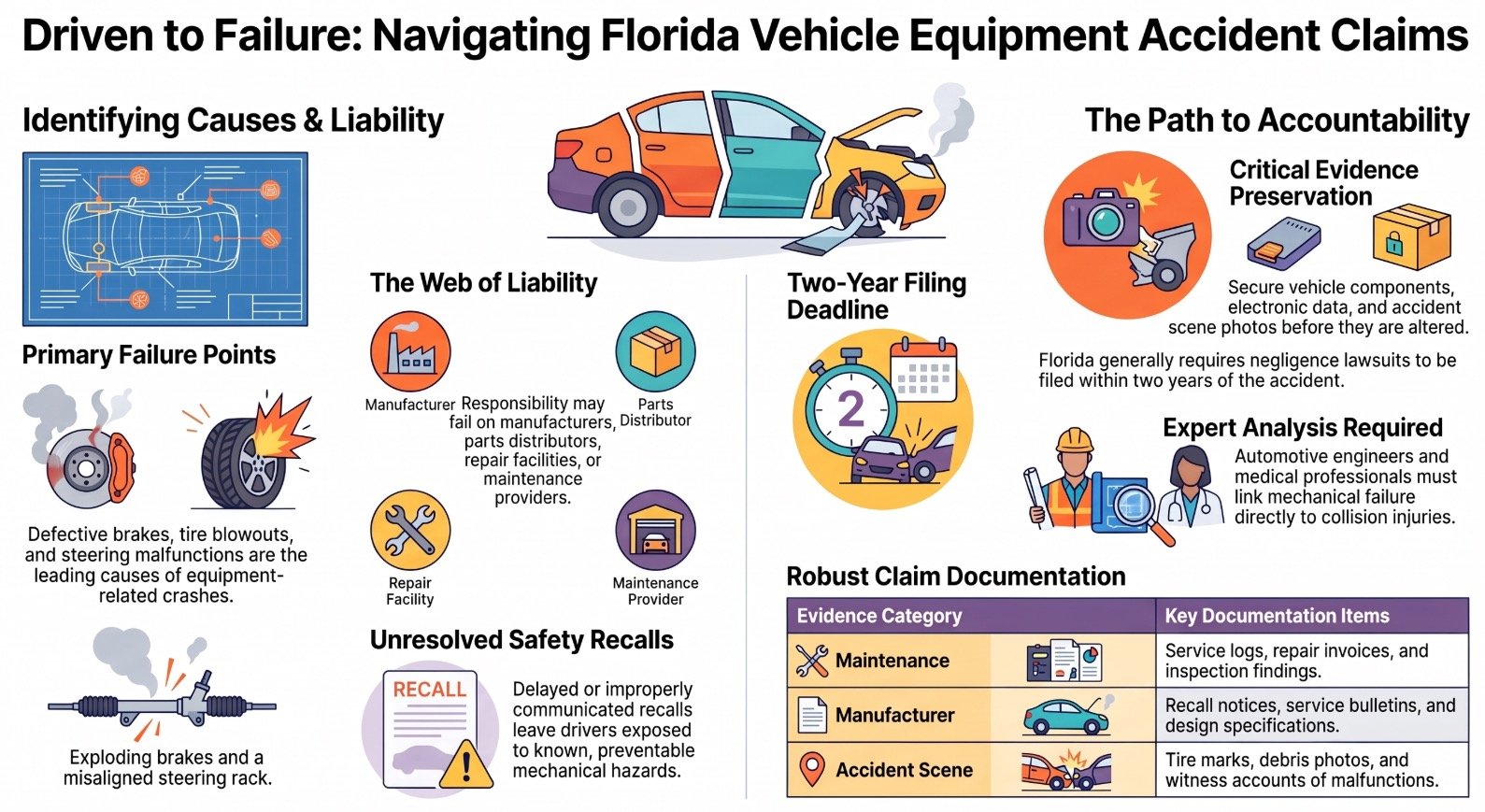
Vehicle and equipment failures can cause Florida car accidents when critical components malfunction without adequate warning. Common examples include defective brake systems, tire blowouts or failures, and guidance system malfunctions that impair a driver’s ability to direct the vehicle. Faulty vehicle recalls may also contribute to crashes when known safety defects remain unresolved.
Defective Brake Systems
Defective brake systems can prevent a vehicle from stopping properly, increasing the risk of a serious Florida car accident. Failures may result from worn brake pads, damaged rotors, leaking fluid lines, defective calipers, or improperly installed replacement components. Brake wear can develop gradually, yet drivers may not recognize warning signs such as grinding sounds, vibration, pulling, or a soft brake pedal. Inadequate Brake maintenance can allow minor defects to become dangerous mechanical failures, particularly in heavy traffic or during emergency stops. Manufacturers, repair facilities, and vehicle owners may each have responsibilities concerning inspection, repair, or recall compliance. Investigators typically review maintenance records, service invoices, inspection findings, and vehicle evidence to determine whether a brake defect contributed to the collision. Identifying the cause can help injured individuals pursue accountability and informed legal guidance.
Tire Blowouts And Failures


Tire blowouts and other tire failures can cause a Florida car accident by abruptly reducing a driver’s control, stability, and ability to stop safely. Common causes include underinflation, overloading, worn tread, roadway debris, manufacturing defects, and improper maintenance. Extreme heat and extended highway travel may also increase tire stress, particularly when tires are aging or damaged. A tire failure can cause a vehicle to veer, overturn, or collide with nearby traffic before the driver can respond. Evidence may include tire fragments, wheel damage, maintenance records, photographs, and witness accounts. Puncture analysis can help determine whether an object caused the failure or entered after the crash. Investigators may also examine tread separation, irregular wear, and manufacturing marks to identify a defective tire or installation error. Prompt preservation of the vehicle and tires may protect important evidence.
Steering System Malfunctions
Control system malfunctions can cause a Florida car accident by preventing a driver from maintaining direction or responding properly to changing traffic conditions. Problems may develop through normal wear, inadequate maintenance, impact damage, or defective repairs. Alignment issues can cause a vehicle to pull unexpectedly, reduce consistent tire contact, and make controlled driving more difficult. A bad tie rod may create excessive play or prevent the wheels from responding accurately to steering input. Similarly, loose steering linkage can delay movement between the steering wheel and wheels, leaving the driver with insufficient control during emergency maneuvers. Warning signs may include vibration, uneven tire wear, drifting, unusual noises, or a steering wheel that feels abnormally loose. Prompt inspection and repair can help protect occupants and other road users from preventable collisions and resulting harm.
Faulty Vehicle Recalls
When a manufacturer identifies a safety defect, it may issue a vehicle recall to notify owners and provide a repair or replacement procedure. However, recalls may be delayed, inadequately communicated, or improperly completed, leaving drivers exposed to defective brakes, tires, airbags, or other components. Evidence may include recall notices, repair records, dealership communications, and vehicle identification information. A manufacturer or repair facility that fails to address a known defect may face claims involving consumer protection laws, negligence, or product liability. If a recalled vehicle contributes to a fatal collision, surviving relatives may pursue a Wrongful death claim, while negligent hiring may apply when a business assigns repairs to unqualified personnel. Insurers must evaluate resulting claims fairly; unreasonable delays or denials can support a bad-faith insurance allegation.
Legal Rights of Florida Car Accident Vehicle & Equipment Failures Injury Victims
Florida car accident victims injured by defective vehicles or failed equipment may have legal rights beyond a claim against the other driver. Depending on the evidence, an injured person may pursue claims against manufacturers, distributors, repair facilities, or other responsible parties. A Florida attorney can help protect those rights by evaluating records, preserving evidence, and identifying available sources of compensation.
Florida car accident victims may pursue claims against manufacturers, distributors, repair facilities, and other responsible parties.
- Victims may seek payment for medical treatment, lost income, reduced earning capacity, property damage, and legally recognized pain and suffering.
- They may have rights under product liability, negligence, warranty, or wrongful death laws, subject to applicable deadlines.
- Careful representation can address Insurance coverage pitfalls and comparative negligence defenses that may reduce or delay recovery.
A legal professional may also coordinate with medical providers and insurers so the injured person receives informed guidance while focusing on recovery. Early consultation is important because evidence can disappear, responsible entities may dispute involvement, and Florida filing requirements can limit otherwise valid claims.
Why Do Florida Car Accident Vehicle & Equipment Failures Injuries Happen?
Vehicle and equipment failure injuries occur when a defect, poor maintenance, or improper repair prevents a car or its safety systems from functioning as intended. Brake failures, tire blowouts, defective steering components, and malfunctioning airbags can remove required protections during a collision. Manufacturing errors may affect multiple vehicles, while inadequate inspections or delayed repairs can allow known hazards to persist.
These incidents may also result from improper installation of replacement parts, neglected recalls, or worn components that fail under ordinary driving conditions. Environmental factors can intensify the danger. Flooding, debris, potholes, and poor road maintenance may damage tires, suspension systems, or vehicle controls, creating conditions that make failure more likely. In some crashes, driver distraction causes a motorist to miss warning signs, ignore dashboard alerts, or keep driving an unsafe vehicle. Understanding these contributing factors helps injured individuals, families, and community advocates recognize why accountability may extend beyond the person behind the wheel.
What Should You Do After a Florida Car Accident Vehicle & Equipment Failures Injury?
After a vehicle or equipment failure injury, the injured person should seek immediate medical care, even if symptoms seem minor at first. Document the accident scene, including vehicle damage, road conditions, and any witness information, to preserve essential evidence. A qualified vehicle failure lawyer can then evaluate potential liability and advise on appropriate legal action.
Seek Immediate Medical Care
When a collision involving vehicle or equipment failure causes injury, the individual should obtain immediate medical care, even if symptoms initially appear minor. Prompt evaluation helps prevent further injury by identifying conditions that may worsen without treatment. A healthcare professional can assess hidden trauma, provide necessary care, and explain activity restrictions or follow-up needs. Medical records may also help preserve evidence by linking reported symptoms to the collision and establishing the timing of treatment. The injured person should accurately describe pain, dizziness, weakness, numbness, or other changes and document symptoms as they develop. If safe and medically appropriate, leave vehicle safety checks to qualified personnel rather than attempting them yourself. Immediate care prioritizes recovery and helps ensure that later decisions are based on reliable medical information.
Document the Accident Scene
If it is safe to do so, document the accident scene to preserve important evidence of vehicle or equipment failure. Photographs should show vehicle positions, roadway conditions, traffic controls, visible damage, tire marks, debris, warning lights, and any defective or detached component. Photo documentation tips include taking wide and close views from multiple angles, preserving original files, and avoiding alterations. Witnesses may provide valuable details about sounds, smoke, braking, wheel control, or other signs of malfunction. Witness statement collection should include names, telephone numbers, email addresses, and brief accounts recorded as soon as practical. When possible, keep the involved vehicle and equipment available for inspection, and preserve relevant maintenance records, repair invoices, recall notices, and purchase documents. Careful documentation can help clarify what occurred.
Consult a Vehicle Failure Lawyer
A Florida vehicle failure lawyer can evaluate whether a defective part, inadequate maintenance, negligent repair, or a manufacturer’s failure to provide proper warnings contributed to the collision and resulting injuries. Prompt legal guidance may preserve evidence, identify responsible parties, and prevent crucial deadlines from affecting a potential claim. Counsel can also review Insurance coverage pitfalls, including recorded statements, premature settlements, policy exclusions, and disputes involving multiple insurers. Injured individuals should follow medical recommendations and maintain organized records of diagnoses, treatment, prescriptions, expenses, and work limitations. These medical documentation tips can help establish the connection between the failure and the physical consequences. A lawyer may coordinate with qualified investigators and experts to inspect vehicles, obtain maintenance histories, and determine whether other motorists or commercial entities share responsibility. This support helps protect an injured person’s rights while pursuing fair compensation.
Critical Evidence in a Florida Car Accident Vehicle & Equipment Failures Injury Case
Critical evidence can help establish whether vehicle maintenance or equipment failure contributed to the Florida accident and resulting injuries.
Critical categories include:
- Vehicle maintenance records and defective-parts documentation
- Accident-scene photographs, videos, and physical evidence
- Expert inspection reports identifying mechanical or manufacturing defects
Together, these materials may clarify the cause of the collision and support an injured party’s claim.
Vehicle Maintenance Records
Vehicle maintenance records can provide essential evidence in a Florida car accident involving a mechanical defect or equipment failure. These documents may show when a vehicle was serviced, which components were examined, and whether recommended repairs were completed. Maintenance logs can also identify recurring concerns, missed inspections, or delayed corrective work before the collision. Inspection findings may help establish whether a dangerous condition existed and whether responsible parties knew about it. Records can also clarify liability standards by linking maintenance practices to duties imposed on vehicle owners, operators, employers, or service providers. Warranty coverage documents may indicate authorized service requirements, repair obligations, or unresolved maintenance issues. Keeping complete records allows investigators to evaluate the vehicle’s condition objectively, helps injured individuals pursue accountability, and supports accurate, fair claim decisions.
Defective Parts Documentation
Alongside maintenance records, defective parts documentation can help establish whether a component contributed to a Florida car accident involving vehicle or equipment failure. Relevant materials may include manufacturer service bulletins, engineering notices, purchase invoices, warranty claims, and photographs or records identifying the failed component. Vehicle maintenance logs can show when a part was installed, inspected, repaired, or replaced, helping distinguish a manufacturing defect from ordinary wear or inadequate servicing. Recall notification records may indicate that the manufacturer or federal safety authorities identified a known hazard before the collision. Preservation of the part itself, packaging, and related communications can support later examination by qualified professionals. Such evidence may help an injured person, family, insurer, or public-serving advocate determine responsibility and pursue appropriate compensation without altering or discarding potentially significant materials.
Accident Scene Evidence
At the accident scene, photographs, measurements, witness information, and physical conditions may help clarify whether a vehicle or equipment failure contributed to the collision. Images can preserve damaged components, tire marks, roadway hazards, vehicle positions, warning lights, and debris before conditions change. Time-stamped photographs and videos may also document weather, lighting, traffic controls, and visibility. Record driver witness accounts promptly, including statements about unusual noises, handling problems, braking difficulties, or dashboard warnings. Contact information for bystanders and other motorists may help clarify disputed events later. Accident patrol reports can include observations about road conditions, apparent vehicle damage, measurements, citations, and statements gathered at the scene. Preserving this information helps injured individuals and their representatives evaluate potential responsibility while respecting the needs of everyone affected by the collision and supporting a careful, service-oriented investigation.
Expert Inspection Reports
Expert inspection reports can clarify whether a vehicle defect or equipment failure contributed to a Florida car accident. Qualified automotive engineers may examine tires, brakes, handling systems, airbags, lighting, and maintenance records for signs of defective design, improper installation, inadequate repairs, or neglected recalls. Their findings can identify the failure’s timing and explain whether it caused or worsened the collision.
A reliable report should document inspection methods, preserve photographs, record measurements, and distinguish confirmed facts from professional opinions. Investigators may compare physical evidence with Witness statements, crash data, service histories, and manufacturer specifications. Medical documentation can further establish how the alleged failure affected the injured person’s condition, treatment, and recovery. Because vehicles may be repaired, moved, or destroyed, prompt preservation and independent inspection can protect evidence and support a fair evaluation of responsibility.
Long-Term Effects of Florida Car Accident Vehicle & Equipment Failures Injuries
Vehicle and equipment failures can leave accident victims with chronic pain, reduced mobility, and long-term disability that affect daily activities and employment. Emotional trauma and anxiety may also persist, particularly when injuries require extensive recovery or limit independence. Ongoing medical expenses, including treatment, rehabilitation, medication, and assistive equipment, can create substantial financial burdens.
Chronic Pain And Disability
When a Florida car accident involves a defective vehicle component or failed safety equipment, resulting injuries may develop into chronic pain, permanent impairment, or both. These conditions can limit mobility, strength, coordination, or the ability to perform routine tasks. Affected individuals may require ongoing medical treatment, physical therapy, prescription medication, assistive devices, or corrective procedures. Functional limitations can also reduce earning capacity and interfere with vital responsibilities at home and work. Workplace restrictions may limit lifting, standing, driving, operating machinery, or maintaining a full schedule. Employers may need to examine disability accommodations, including modified duties, flexible hours, ergonomic equipment, or reassignment when appropriate. Medical records, employment documentation, and professional evaluations can help establish the injury’s duration and practical consequences. Legal guidance may help you pursue compensation for treatment, lost income, future care, and permanent impairment.
Emotional Trauma And Anxiety
Emotional trauma and anxiety may persist after a Florida car accident involving a defective vehicle component or failed safety equipment, particularly when the failure increases the severity or unpredictability of the crash. Survivors may experience fear while driving, sleep disruption, irritability, isolation, or difficulty concentrating. Recovery from panic attacks often requires consistent counseling, supportive relationships, and a gradual, professionally guided return to routine activities. PTSD symptom triggers can include braking sounds, dashboard warnings, traffic conditions, medical visits, or reminders of the equipment failure. These reactions may affect employment, family responsibilities, and participation in community life, even when physical injuries improve. Compassionate assistance can help survivors identify appropriate mental health resources, document symptoms, and communicate their needs. Early recognition may support recovery and preserve evidence concerning the accident’s lasting consequences for affected individuals and families.
Ongoing Medical Expenses
Although some injuries from a defective vehicle component or failed safety system improve with treatment, others require continuing medical care long after the initial accident. Ongoing medical expenses may include expert visits, physical therapy, prescription medication, diagnostic testing, rehabilitation, and future procedures. These costs can become substantial when injuries affect mobility, cognition, vision, or chronic pain levels. Medication side effects may create additional treatment needs, requiring physicians to adjust prescriptions or monitor organ function. An injured person may benefit from maintaining organized medical records, invoices, treatment recommendations, and evidence showing how vehicle or equipment failures caused the injuries. A careful insurance coverage review can identify available liability, personal injury protection, and other benefits. Legal counsel may also help evaluate projected expenses and pursue compensation that supports continued care and household stability.
Don’t Wait. Call Our Florida Personal Injury Lawyers Now!
Proving Liability in Florida Car Accident Vehicle & Equipment Failures Injury Cases
Proving liability in a Florida car accident involving a vehicle or equipment failure requires evidence establishing what malfunctioned, why it failed, and which party had a legal duty to prevent the resulting harm. Investigators may examine the vehicle, preserve failed components, review maintenance records, and obtain photographs, witness statements, and crash data. An automotive engineer or other qualified expert can explain whether a defective design, manufacturing defect, inadequate warnings, negligent repairs, or missed maintenance caused the collision.
Potentially responsible parties may include a manufacturer, dealership, repair facility, commercial operator, or driver. Records showing recalls, service recommendations, inspection practices, and prior complaints can help connect the failure to the injuries. Florida’s comparative negligence rules may reduce recovery when an injured person’s conduct contributed to the harm, making comparative negligence defenses significant. Counsel may also address insurance coverage disputes concerning policy limits, exclusions, and additional responsible parties, while maintaining evidence that supports the injured person’s service and recovery needs.
Dealing With Insurance Companies After a Florida Car Accident Vehicle & Equipment Failures Injury
After a Florida car accident involving a vehicle or equipment failure, insurance companies may investigate whether a mechanical defect, negligent maintenance, or driver conduct caused the collision. Their adjusters may request statements, medical records, repair documentation, photographs, and access to damaged components. Injured individuals should provide accurate information while avoiding speculation, recorded statements without preparation, or premature settlement agreements.
A careful review of coverage identifies applicable Policy limits, exclusions, additional insured parties, and potentially responsible manufacturers, repair facilities, or commercial operators. Counsel may communicate with insurers, preserve evidence, and protect the injured person from tactics that minimize responsibility. A focused discovery strategy can clarify maintenance histories, inspection records, defect notices, and prior incidents without unnecessarily delaying resolution.
Insurance representatives may make offers before fully understanding the harm. Settlement valuation should account for medical expenses, lost income, future care, pain, and lasting impairment. The injured person should also understand how attorney fees, case costs, liens, and available coverage affect the net recovery before accepting any proposal or releasing claims.
What to Expect During a Florida Car Accident Vehicle & Equipment Failures Injury Claim Process
A Florida vehicle and equipment failure injury claim typically begins with an initial assessment of the accident, injuries, and potential liability. The process then involves gathering evidence, reviewing medical records, and negotiating with insurers regarding fair compensation. If negotiations fail to produce an appropriate resolution, the injured party may pursue legal action.
Initial Claim Assessment
When a Florida car accident involves a suspected vehicle or equipment failure, the initial claim assessment examines how the defect or malfunction may have contributed to the collision and resulting injuries. The assessment generally considers the reported symptoms, medical consequences, insurance coverage, and potentially responsible parties, including drivers, manufacturers, repair facilities, or distributors. Counsel may explain applicable Florida deadlines, liability standards, and the distinction between negligence and product-defect theories. Early review also anticipates Insurance denial reasons, such as disputed causation, policy exclusions, or allegations that maintenance caused the failure. A representative may evaluate damages and establish realistic settlement negotiation tactics without promising a particular outcome. The purpose is to identify viable claims, protect the injured person’s interests, and determine whether further legal action or insurer communication is appropriate.
Gathering Evidence
Because evidence in a vehicle or equipment failure claim can become unavailable or altered, the injured person’s legal representative typically begins preserving relevant information promptly. This process may include photographing vehicles, components, roadway conditions, and visible injuries before repairs or disposal occur. Investigators may inspect the vehicle and arrange for qualified experts to evaluate design defects, maintenance issues, manufacturing problems, or failed safety equipment. They may also identify witnesses, obtain crash reports, and request electronic data from applicable vehicles or devices. Surveillance footage from nearby businesses, residences, traffic systems, or vehicles can help establish timing and circumstances. Repair shop records, inspection histories, maintenance invoices, recall notices, and manufacturer communications may clarify whether warning signs existed. The representative generally organizes these materials carefully to support an accurate, service-focused investigation.
Negotiating With Insurers
Insurance negotiations in a Florida vehicle or equipment failure claim typically begin after the injured person’s representative has reviewed the available evidence, medical records, and applicable coverage. The insurer may request documentation, question liability, or offer an initial settlement based on its evaluation of the accident and resulting losses.
Effective negotiation requires understanding policy limits, exclusions, deductibles, and how available coverage relates to documented damages. Organize medical expenses, lost income, property damage, rehabilitation needs, and other supported losses clearly. Careful handling of recorded statements is also important, because inaccurate or incomplete responses may affect the insurer’s assessment. A representative may communicate directly with adjusters, identify disputed issues, and present evidence supporting a fair valuation. Settlement discussions should remain professional and measured while protecting the injured person’s interests and preserving relevant claim documentation.
Pursuing Legal Action
Pursuing legal action may become necessary when settlement negotiations do not adequately address the injuries and losses arising from a Florida vehicle or equipment failure. The process generally begins with filing a complaint that identifies the parties, legal claims, and compensation sought. Counsel may help collect police reports, medical records, repair invoices, photographs, and witness statements to establish liability and damages. Investigators and engineers may examine the vehicle, maintenance history, and relevant safety standards. Identifying liable manufacturers can require reviewing design specifications, recall information, and distribution records, while other responsible parties may include drivers, repair facilities, or rental companies. During discovery, each side exchanges evidence and takes sworn testimony. If no resolution is reached, the matter proceeds to trial, where a judge or jury evaluates the evidence and determines responsibility and compensation.
Compensation for Florida Car Accident Vehicle & Equipment Failures Injury Damages
When a vehicle defect or equipment failure contributes to a Florida car accident, an injured person may be entitled to compensation from parties responsible for the resulting harm. Potentially responsible parties may include manufacturers, distributors, repair facilities, maintenance providers, or negligent drivers, depending on the evidence. A careful claim evaluation can identify how the failure occurred, whether warnings were adequate, and which conduct or product condition contributed to the collision.
Medical documentation can substantiate diagnoses, treatment recommendations, recovery limitations, and continuing care needs. Insurance documentation may establish reported facts, coverage positions, claim communications, and payments already issued. Photographs, vehicle inspections, maintenance records, witness statements, and expert opinions can further connect the defect or failure to the injuries.
An attorney may coordinate evidence collection and communications with insurers while protecting the injured person’s interests. Early preservation of the vehicle and relevant components is particularly important because repairs, disposal, or alteration can compromise proof. A timely legal assessment helps determine available remedies and responsible parties.
Economic vs Non-Economic Damages in Florida Car Accident Vehicle & Equipment Failures Cases
Economic damages may include medical expenses, lost income, vehicle repairs, and other measurable costs arising from a vehicle or equipment failure. Non-economic losses can involve pain and suffering, emotional distress, diminished quality of life, and other harms that lack a fixed financial value. Proving these damages generally requires evidence connecting the failure to the accident, supported by records, expert analysis, and testimony.
Economic Damages Explained
How can a Florida car accident victim determine which losses qualify as economic damages? Economic damages are objectively measurable financial losses caused by a collision involving vehicle or equipment failure. They may include emergency treatment, hospitalization, medication, rehabilitation, follow-up care, and transportation for medical appointments. Documented lost wages and reduced earning capacity may also qualify when injuries prevent work or limit future employment. Property-related losses can include vehicle repairs, replacement costs, towing, storage, and damaged personal items. A careful claim requires invoices, receipts, pay records, medical documentation, and repair estimates. Negligence proof connects the failure to the resulting expenses, while comparative fault analysis may reduce recoverable compensation if the victim contributed to the crash. Legal guidance can help preserve records, identify overlooked costs, and present an accurate, service-focused claim.
Non-Economic Losses
Beyond documented bills and income losses, a Florida car accident victim may recover non-economic damages for the personal effects of injuries caused by vehicle or equipment failure. These damages can address physical pain, emotional distress, inconvenience, disfigurement, disability, and diminished enjoyment of life. Unlike medical expenses or lost wages, non-economic losses lack a fixed invoice and depend on the injury’s severity, duration, and impact on daily relationships and activities. A person serving others may experience particular hardship when pain prevents caregiving, employment, or community responsibilities. The victim’s conduct may affect recovery under comparative negligence, reducing damages according to the assigned percentage of fault. Available compensation may also be constrained by insurance coverage limits, although additional responsible parties or applicable policies could influence potential recovery. Legal guidance can help protect the victim’s interests.
Proving Vehicle Failure Damages
When a defective vehicle part or equipment failure contributes to a Florida car accident, proving damages requires evidence linking the failure to both measurable financial losses and personal harm. Economic damages may include emergency treatment, rehabilitation, prescription costs, lost wages, reduced earning capacity, vehicle repairs, and other documented expenses. In contrast, non-economic damages address pain, emotional distress, disability, disfigurement, and diminished enjoyment of life. Establishing liability may require failing-part proof, such as photographs, maintenance records, expert inspections, and testimony concerning the vehicle’s condition. Manufacturer Recall Evidence, service bulletins, warranty records, and similar incidents can further support an argument that the defect was known or reasonably discoverable. Medical documentation, employment records, expert opinions, and personal accounts help show the extent of losses and the continuing effects for injured individuals and their families.
Don’t Wait. Call Our Florida Personal Injury Lawyers Now!
When a Florida Car Accident Vehicle & Equipment Failures Injury Case Goes to Trial vs Settlement
A Florida car accident injury case involving vehicle or equipment failure may be resolved through settlement or proceed to trial, depending on the strength of the evidence, the parties’ willingness to negotiate, and the extent of the injured person’s losses. Settlement may provide compensation sooner, reduce litigation expenses, and offer greater certainty regarding the outcome. It can also spare injured individuals and their families from the demands of testimony and extended court proceedings.
Trial may become necessary when liability, causation, or damages remain disputed, or when an insurer or opposing party refuses to make a reasonable offer. Counsel may present repair records, inspection reports, expert opinions, medical documentation, and witness testimony to establish what occurred and how the failure caused harm. Witness credibility challenges can affect how fact-finders evaluate conflicting accounts. Although a trial may result in greater compensation, jury verdict risks include an unfavorable decision or an award below expectations. A careful case assessment supports informed resolution decisions.
Florida Laws That May Affect Your Florida Car Accident Vehicle & Equipment Failures Case
Florida laws governing vehicle and equipment failures may affect liability, available damages, and the evidence required to prove an injury claim. Several legal principles may guide an evaluation:
- Comparative negligence rules can reduce compensation when an injured person shares responsibility for the crash, while preserving recovery in appropriate circumstances.
- Product-liability standards may apply when defective design, manufacturing, or warnings contributed to a failure. Maintenance records and recall notices can help identify responsible parties.
- Statute of repose deadlines may restrict claims involving older vehicles, parts, or equipment, regardless of when an injury was discovered. These deadlines require early investigation and careful evidence preservation.
Florida statutes may also affect governmental claims, uninsured motorist coverage, damage calculations, and the admissibility of expert testimony. A lawyer serving injured individuals can assess applicable rules, identify potentially responsible manufacturers, owners, mechanics, or insurers, and coordinate evidence collection. Prompt attention supports a fair, informed resolution while protecting the interests of those affected.
The Statute of Limitations for Florida Car Accident Vehicle & Equipment Failures Injury Cases
Time limits can determine whether an injured person may pursue a claim arising from a vehicle or equipment failure in Florida. Florida generally requires filing a negligence lawsuit within two years after an accident, although exceptions may change that deadline. Claims involving wrongful death, government entities, defective products, or delayed injury discovery can follow different rules and notice requirements. Because filing after the applicable period may permanently bar recovery, claimants must carefully evaluate the precise date and legal basis.
Potential claimants should preserve photographs, vehicle components, maintenance records, recall notices, inspection reports, and communications with insurers or manufacturers. Evidence preservation tips include avoiding repairs or disposal of damaged equipment before documenting and examining it. Medical documentation records should identify diagnoses, treatment dates, restrictions, prognosis, and related expenses. Organizing these materials promptly can clarify causation and damages while supporting informed decisions. A timely review of applicable deadlines helps protect the interests of injured individuals and their families.
How a Florida Car Accident Vehicle & Equipment Failures Lawyer Can Help You
Once applicable deadlines and evidence-preservation concerns are identified, legal counsel can help determine how a vehicle or equipment failure contributed to the collision and resulting injuries.
A lawyer may coordinate a focused investigation designed to clarify responsibility and protect the interests of injured individuals and families.
- Counsel can arrange inspections, collect maintenance records, preserve photographs, and consult qualified engineers regarding defective parts, inadequate repairs, or manufacturing problems.
- Counsel can identify potentially responsible parties, including drivers, owners, repair facilities, manufacturers, distributors, and insurers, while evaluating applicable Florida law.
- Counsel can organize medical documentation, calculate financial losses, and present a supported claim during an insurance dispute or settlement negotiation.
When to Contact a Florida Car Accident Vehicle & Equipment Failures Lawyer
Contact a lawyer as soon as a crash may involve a defective vehicle component, inadequate maintenance, or improper repairs, especially when the cause of the failure remains uncertain. Early legal guidance can help preserve evidence, identify potentially responsible parties, and prevent important facts from being overlooked. This is especially important when damaged vehicles, tires, electronic systems, or repair records may be altered, discarded, or repaired before inspection.
Contact should also occur when injuries appear serious, losses are substantial, or liability is disputed. A lawyer can help organize medical records, photographs, witness information, maintenance documents, and communications with insurers. Prompt attention may also help meet accident-reporting deadlines and other filing requirements that vary by circumstance.
Legal assistance may be appropriate after insurance claim denials, inadequate settlement offers, or requests for recorded statements and broad authorizations. Seeking advice before signing releases or accepting payment can help preserve available options while the investigation continues and necessary claims are evaluated.
Why You Need an Experienced Florida Car Accident Vehicle & Equipment Failures Lawyer
Because vehicle and equipment failures can involve manufacturers, repair facilities, maintenance providers, and other parties, these claims often require more than a standard accident investigation. An experienced Florida car accident vehicle and equipment failures lawyer can identify potential sources of liability, preserve key evidence, and assess whether a defective part, inadequate repair, or neglected maintenance contributed to the collision.
Skilled legal guidance also helps protect an injured person’s interests while communications with insurers and other responsible parties proceed. Insurance claim deadlines may affect available benefits or legal remedies, and missed requirements can jeopardize an otherwise valid claim. Counsel can review policy language, document losses, and address disputes concerning causation and damages.
A lawyer may also investigate discrepancies in police reports that conflict with physical evidence, witness accounts, or vehicle data. This careful analysis supports accurate presentation of the facts and promotes accountability. By handling intricate investigations and procedural demands, experienced counsel can help clients pursue compensation while reducing burdens during recovery.
How to Choose the Right Florida Car Accident Vehicle & Equipment Failures Lawyer for Your Case
Selecting the right Florida car accident vehicle and equipment failures lawyer requires careful consideration of the attorney’s experience with defective parts, negligent repairs, maintenance failures, and complex liability disputes. A qualified lawyer should clearly explain potential claims, identify responsible parties, and show familiarity with manufacturers, repair facilities, insurers, and commercial operators.
During initial meetings, prospective clients should request Client consultation tips, including questions about similar cases, investigative methods, communication practices, fee structures, and anticipated timelines. The lawyer should listen carefully, provide realistic guidance, and prioritize the injured person’s ability to recover medical costs, lost income, and other legally supported damages.
Experience with evidence preservation steps is equally important. Counsel should promptly advise clients to retain damaged components, photographs, medical records, repair invoices, electronic data, and witness information. A careful evaluation also considers courtroom experience, professional resources, and the ability to consult qualified engineers or accident investigators. Choosing counsel based on preparation, integrity, accessibility, and case-specific knowledge helps ensure victims and families receive responsible advocacy throughout the process.
About The Law Offices of Anidjar & Levine
The Law Offices of Anidjar & Levine represents individuals and families pursuing compensation after Florida car accidents involving defective vehicles, failed equipment, and negligent maintenance. The firm’s Local legal team examines crash circumstances, identifies potentially responsible parties, and explains available legal options in clear terms. During a case evaluation, attorneys may review medical records, police reports, vehicle histories, repair documents, recalls, and witness accounts to assess whether a defect or equipment failure contributed to the collision. Investigators can also build a case for a vehicle defect through inspections, expert analysis, manufacturer records, and service documentation.
Prompt evidence preservation is emphasized because damaged vehicles, electronic data, and maintenance records may change, disappear, or become difficult to obtain. The firm handles communication with insurers and opposing parties while pursuing claims for medical expenses, lost income, property damage, and other losses. Its approach provides informed guidance and meaningful support throughout the legal process.
Frequently Asked Questions
Can Defective Vehicle Equipment Lead to a Manufacturer Recall in Florida?
Yes. Defective vehicle equipment can prompt a manufacturer recall in Florida when investigations show a safety defect or noncompliance with federal standards. The National Highway Traffic Safety Administration may require corrective action, while manufacturers may voluntarily recall affected vehicles. Product liability lawsuits can address injuries separately. Evidence preservation, defect notice requirements, and post-crash documentation may help establish what failed, when notice occurred, and whether a recall should have been issued.
Which Vehicle Parts Commonly Fail During Florida’s Extreme Weather Conditions?
Florida’s heat, humidity, flooding, and hurricanes commonly damage tires, batteries, brakes, suspension components, and electrical systems. Prolonged heat can accelerate tire wear, weaken sidewalls, and contribute to blowouts, while standing water may impair braking and handling. Salt air and flood exposure can cause corrosion that affects brake lines, connectors, frames, and fasteners. Cooling systems also face increased strain, making hose failures and overheating more likely during extended periods of extreme weather.
Can Passengers Pursue Claims for Vehicle Defects Causing Accident Injuries?
Passengers may pursue claims when a defective vehicle part, unsafe design, or inadequate warning contributes to accident injuries. Passenger standing generally exists because injured occupants can seek compensation independently of the driver’s conduct. Defect liability may extend to manufacturers, distributors, repair facilities, or other responsible parties, depending on the evidence and applicable law. A careful investigation should preserve the vehicle, identify failed components, document injuries, and establish causation, damages, and timely legal filing.
Are Rental Car Companies Responsible for Maintenance-Related Equipment Failures?
Rental car companies may be responsible for maintenance-related equipment failures when they negligently inspect, repair, or remove unsafe vehicles from service. Liability depends on applicable law, the company’s maintenance duties, and whether the failure caused the injuries. Investigators should prioritize evidence preservation, including photographs, damaged parts, service reports, and inspection records. Comparative fault may affect recovery, while rental coverage can address temporary transportation and related losses during the claim.
How Are Vehicle Safety Recalls Reported and Investigated in Florida?
Florida vehicle safety recalls are reported through the National Highway Traffic Safety Administration’s Public recall system, where manufacturers and consumers submit defect information. Manufacturers must meet federal reporting deadlines and notify owners, while Florida agencies may share crash or defect evidence with federal regulators. The investigation process can include technical reviews, consumer complaints, inspections, and manufacturer records. Confirmed violations may lead to enforcement actions, civil penalties, corrective repairs, or additional safety notices.
—————————
Vehicle and equipment failures can complicate a Florida car accident claim by involving manufacturers, repair facilities, insurers, and other potentially responsible parties. The Law Offices of Anidjar and Levine can investigate the failure, preserve essential evidence, assess applicable liability, and pursue compensation for medical expenses, lost income, property damage, and other losses. Prompt legal guidance may protect an injured person’s rights and support a thorough claim. Victims should consider consulting a qualified Florida Personal Injury Lawyer before accepting a settlement or providing statements to insurers.