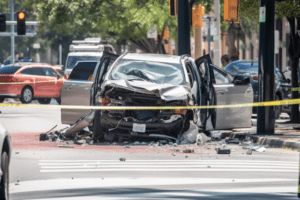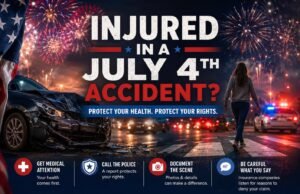
The Law Offices of Anidjar and Levine, an Orlando Personal Injury Lawyer firm, investigates whether defective parts, negligent repairs, inadequate maintenance, or malfunctioning safety systems caused a collision or worsened injuries. The investigation may include vehicle inspections, service records, recall information, electronic data, photographs, witness statements, and expert analysis. Evidence preservation is critical because damaged components and recordings can disappear. Legal counsel can identify responsible parties, communicate with insurers, and pursue compensation for medical care, lost income, disability, and other lasting effects.
Main Takeaways
- Investigate whether defective vehicles, faulty parts, improper repairs, or inadequate maintenance caused or contributed to the Orlando crash.
- Preserve vehicles, damaged components, electronic data, dashcam footage, photographs, records, and other evidence before it disappears or changes.
- Examine brake, tire, steering, suspension, airbag, seat-belt, and other equipment failures through qualified inspections and expert analysis.
- Review crash reports, witness statements, recalls, maintenance records, repair invoices, surveillance footage, and medical documentation to establish causation.
- Communicate with insurers and pursue compensation for medical expenses, lost income, property damage, pain, disability, and long-term consequences.
How We Can Help With Your Orlando Car Accident Vehicle & Equipment Failures Injury Claim
When a vehicle defect or equipment failure contributes to an Orlando car accident, determining liability may require a detailed investigation of the vehicle, maintenance records, repair history, and roadway conditions. A legal team can coordinate qualified investigators, preserve relevant evidence, and identify whether responsibility may involve a manufacturer, distributor, repair facility, vehicle owner, or another party. Counsel can also review crash reports, photographs, witness statements, inspection results, and available electronic data to develop a fact-based claim.
Support may include communication with insurers, documentation of injuries, and preparation of settlement materials that clearly explain the accident’s consequences. A careful policy limits analysis can help identify potentially available insurance and guide realistic recovery strategies. Attorneys may evaluate medical expenses coverage, lost income, property damage, and other legally recoverable losses while protecting the injured person from premature settlement demands. Throughout the process, the legal team can provide organized guidance designed to serve the claimant’s interests and promote fair treatment.
Understanding Orlando Car Accident Vehicle & Equipment Failures Injury Cases


Understanding an Orlando car accident involving vehicle or equipment failure requires examining how the defect or malfunction contributed to the collision and resulting injuries. These cases focus on evidence, responsibility, and the connection between a failed component and the harm sustained. Investigators may review maintenance records, inspection reports, recall information, repair invoices, electronic data, and witness accounts. Medical documentation helps establish the nature, duration, and financial impact of injuries.
OUR CONSULTATIONSARE FREE
START YOUR FREE CASE REVIEW

A claim may involve a driver, vehicle owner, maintenance provider, manufacturer, distributor, or another responsible party, depending on the available facts. Preservation of evidence is critical because damaged parts, onboard data, and surveillance recordings can change or disappear. Counsel may also assess cybersecurity negligence issues when compromised vehicle systems affect operation or evidence integrity. Digital materials require careful handling, including dashcam timestamp verification, to establish an accurate sequence of events. A thorough evaluation supports fair treatment for injured individuals and helps responsible parties be identified through reliable, objective proof.
Don’t Wait. Call Our Florida Personal Injury Lawyers Now!
Common Causes of Orlando Car Accident Vehicle & Equipment Failures
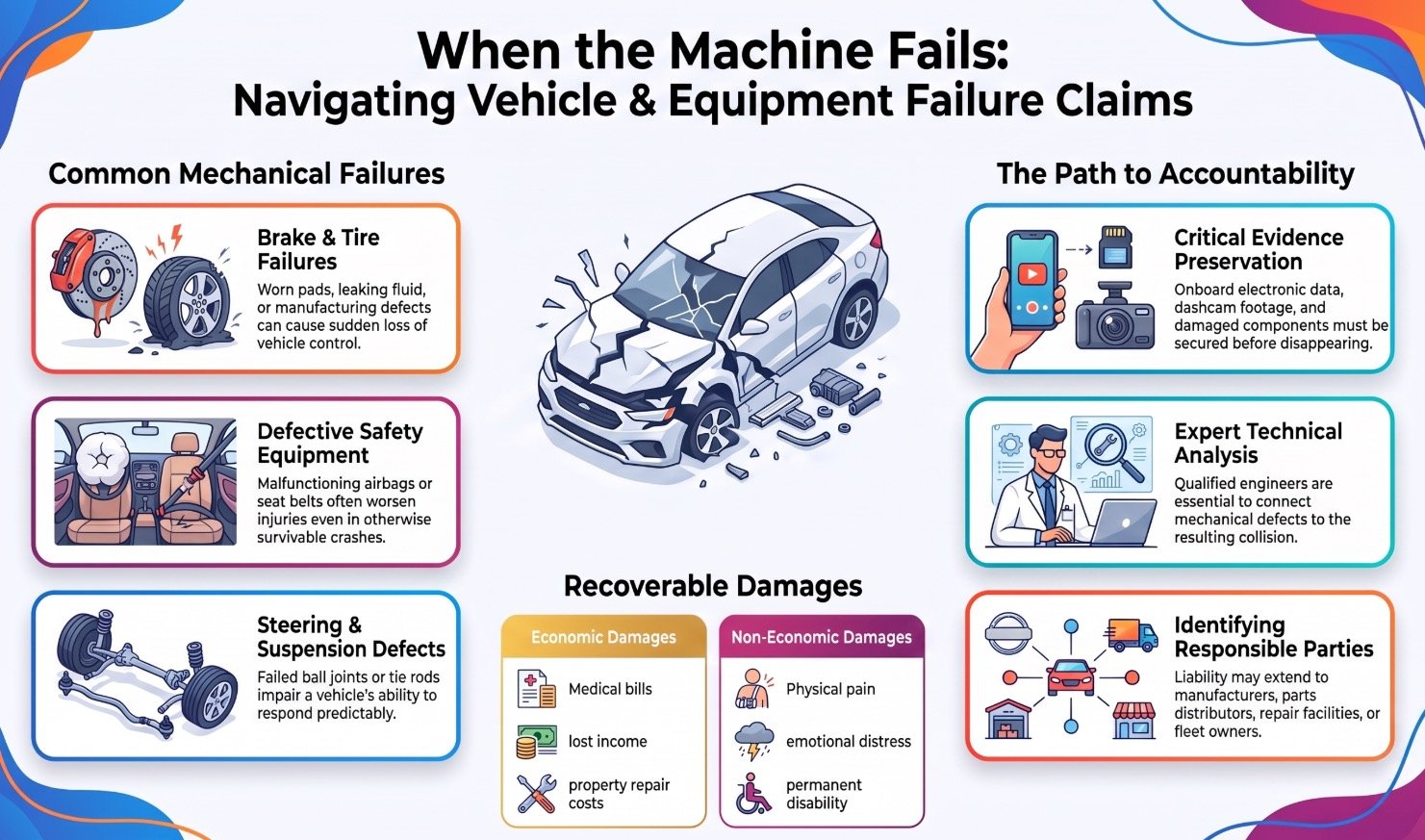
Common causes of Orlando vehicle and equipment failure accidents include brake system failures and tire blowouts, which can suddenly compromise a driver’s control. Defective safety equipment, such as airbags or seat belts, may increase the severity of resulting injuries. Guidance and suspension defects can also impair handling, stability, and a vehicle’s ability to respond safely to road conditions.
Brake System Failures


Brake system failures can prevent a vehicle from stopping or responding properly to a driver’s actions, largely increasing the risk of a collision. Common causes include brake pad wear, damaged rotors, malfunctioning calipers, and depleted or leaking brake fluid. Brake fluid contamination may reduce hydraulic pressure and interfere with consistent braking performance. Inadequate maintenance, manufacturing defects, improper repairs, and deferred inspections can allow these conditions to develop unnoticed. Warning signs may include grinding sounds, a soft or vibrating brake pedal, pulling during braking, or increased stopping distance. Drivers, vehicle owners, manufacturers, repair facilities, and fleet operators each may have responsibilities for identifying and addressing dangerous defects. After a crash, service records, inspection reports, repair invoices, and vehicle components can help clarify whether a brake failure contributed to the event.
Tire Blowouts
Tire blowouts can cause a driver to lose control when a tire suddenly ruptures or rapidly loses air pressure, increasing the risk of a serious collision. Common causes include underinflation, excessive heat, worn tread, manufacturing defects, and impact-related sidewall damage. A vehicle operated beyond its tire load rating may place excessive stress on the casing, particularly when carrying passengers or cargo. Retreaded tires can also fail when improperly inspected, maintained, or installed, although retreading itself is not necessarily unsafe. Drivers and fleet operators should check pressure regularly, follow replacement schedules, and examine tires for bulges, cracks, or uneven wear. When a blowout occurs, the resulting crash may raise questions about maintenance, inspection practices, tire selection, or negligent installation. Evidence from service records, damaged tires, and vehicle inspections can help clarify causation.
Defective Safety Equipment
When safety equipment fails to perform as designed, occupants may face greater injury risks even when a crash is otherwise unavoidable. Defects may affect airbags, seat belts, child restraints, head restraints, or electronic systems intended to reduce impact forces. A manufacturer error, improper installation, or maintenance schedule lapses can prevent protective equipment from deploying or securing occupants properly. In other cases, a faulty component recall may exist, yet owners may not receive timely notice or repairs. Warning indicators that remain illuminated, unexplained deployment failures, and malfunctioning belt tensioners can provide important evidence of a potential defect. After a collision, qualified professionals may preserve the vehicle, examine service records, and identify whether defective safety equipment contributed to injuries. Prompt investigation can support accountability and help protect other motorists from similar harm.
Steering And Suspension Defects
Steering and suspension defects can impair a vehicle’s ability to respond predictably, increasing the risk of collisions during turns, braking, or sudden evasive actions. Worn tie rods, failed ball joints, broken control arms, defective power-steering components, and improperly repaired suspension systems may cause drifting, uneven tire contact, or unexpected loss of control. Manufacturing flaws, inadequate maintenance, and negligent service can each contribute to these conditions. After a crash, qualified professionals may inspect the vehicle, review repair and maintenance records, and identify recall or defect information. Evidence preservation is essential because repairs, towing, or salvage handling can alter vital components. Careful insurance statement drafting can also help present mechanical-failure facts accurately without speculation. Documenting symptoms, warning lights, vehicle history, photographs, and witness observations may assist injured individuals seeking accountability and appropriate compensation.
Legal Rights of Orlando Car Accident Vehicle & Equipment Failure Injury Victims
Orlando car accident victims injured by a defective vehicle component or failed safety equipment may have legal rights beyond a standard negligence claim. Depending on the evidence, an injured person may pursue compensation from negligent drivers, manufacturers, distributors, repair facilities, or other responsible parties. Product liability principles can apply when a design, manufacturing, or warning defect contributes to harm.
Potential sources of recovery may include:
- Medical expenses, rehabilitation, lost income, and diminished earning capacity
- Non-economic damages for pain, disability, disfigurement, and reduced quality of life
- Wrongful death damages for eligible surviving family members
Florida no fault coverage may provide initial benefits for certain medical expenses and lost wages, but it may not fully compensate serious injuries. Claims involving buses, delivery vehicles, or tractor-trailers may also raise commercial trucking liability issues, including employer responsibility and regulatory compliance. Victims should preserve damaged equipment, obtain medical documentation, and seek timely legal evaluation because evidence can be lost and filing deadlines may restrict otherwise valid claims.
Why Do Orlando Car Accident Vehicle & Equipment Failures Injuries Happen?
Vehicle and equipment failure injuries generally occur when a defect, inadequate maintenance, improper repair, or safety-system malfunction prevents a vehicle from operating or protecting occupants as intended. Tire blowouts, brake failures, defective steering components, and broken suspension parts can cause sudden loss of control. Faulty airbags, seat belts, or crumple zones may increase the severity of injuries during a collision. Some failures arise from manufacturing defects, while others result from overlooked recalls, negligent servicing, worn components, or improper installation.
Environmental conditions can also expose weaknesses in vehicle equipment. Flooding, extreme heat, roadway debris, and poor visibility may contribute to failures when critical components are already compromised. In some cases, a commercial operator’s inadequate inspection practices allow unsafe vehicles to remain in service, placing other motorists at risk.
Investigators may examine maintenance records, recall information, electronic data, Surveillance footage, and witness statements to identify the failure’s cause. Understanding these contributing factors can help clarify responsibility and support safer transportation practices throughout Orlando.
What Should You Do After an Orlando Car Accident Vehicle & Equipment Failure Injury?
After an Orlando car accident involving a vehicle or equipment failure, the injured person should seek immediate medical care, even if symptoms seem minor at first. The person should document the suspected failure, preserve relevant evidence, and obtain available photographs, reports, and witness information. Consulting an Orlando attorney can help protect legal rights and assess potential claims against responsible parties.
Seek Immediate Medical Care
Prompt medical evaluation should be obtained as soon as possible following a crash involving suspected vehicle or equipment failure, even when injuries appear minor or symptoms have not yet developed. A qualified clinician can identify concussion symptoms, internal trauma, fractures, and soft-tissue damage that may worsen without treatment. Medical records may also help connect reported conditions to the collision. Individuals should follow discharge instructions, attend recommended follow-up appointments, and promptly report increasing pain, dizziness, weakness, numbness, breathing difficulty, or confusion. Children require particular attention because they may struggle to describe symptoms accurately. Car seat safety should be assessed after any significant impact, since hidden damage can compromise protection even when the seat appears intact. Appropriate child injury prevention measures and professional guidance can help protect young passengers during recovery and future travel.
Document Vehicle Failures
When a crash may involve a defective vehicle component or equipment malfunction, the injured person should preserve and document evidence before repairs, disposal, or alterations occur. Photographs should show vehicle damage, deployed airbags, tire conditions, lighting, warning indicators, and the surrounding roadway. The vehicle should remain secured in its post-crash condition whenever reasonably possible, and maintenance records, recall notices, repair invoices, and purchase documents should be retained. Witness names, contact information, statements, and emergency photographs can help establish what occurred. Documentation should also address possible Driver distraction, road rage incidents, weather impacts, and pedestrian hazards without assuming any single cause. A written timeline should record symptoms, observations, and communications while details remain fresh. These careful steps preserve information that may otherwise disappear or become difficult to verify.
Consult an Orlando Attorney
Consulting an Orlando attorney can help an injured person protect potential claims involving a vehicle defect, equipment malfunction, negligent maintenance, or another contributing cause. Counsel can evaluate collision evidence, medical records, repair histories, witness statements, and available insurance coverage. An attorney may also investigate vehicle recalls, manufacturer notices, service bulletins, and prior complaints to determine whether a dangerous condition contributed to the crash. Prompt legal guidance can help preserve evidence before a vehicle is repaired, sold, or discarded and can support communication with insurers. If a fatality occurred, surviving relatives may need advice regarding a Wrongful death claim, statutory beneficiaries, and applicable filing deadlines. By seeking representation early, an injured person or family can better understand legal options, coordinate with professionals, and pursue accountability while focusing on recovery and service to others.
Critical Evidence in an Orlando Car Accident Vehicle & Equipment Failures Injury Case
Critical evidence can establish whether a vehicle or equipment failure contributed to the Orlando crash and resulting injuries.
Relevant materials may include:
- Accident scene documentation
- Vehicle inspection reports and maintenance or repair records
- Expert witness testimony
Together, these sources can clarify the defect, identify responsible parties, and support the injured person’s claim.
Accident Scene Documentation
How the accident scene is documented can materially affect the ability to determine whether a vehicle or equipment failure contributed to the collision. Photographs should capture vehicle positions, roadway conditions, traffic controls, debris patterns, lighting, and visible damage before the scene changes. Measurements and location details may help clarify impact angles, sightlines, and potential hazards. Collect witness statements promptly while observations remain fresh. Accounts should identify what each person saw, heard, and noticed immediately before and after the crash, without leading questions. Dashcam video preservation may provide an objective record of traffic movement, warning signs, and the collision itself. Investigators should obtain recordings from nearby businesses or residences when available and document their source, timing, and continuity. Careful scene documentation can preserve facts that support an injured person’s pursuit of accountability.
Vehicle Inspection Reports
Vehicle inspection reports can provide important evidence about whether a mechanical defect or maintenance failure contributed to an Orlando car accident. These reports may identify the vehicle’s condition, safety-system performance, tire condition, brake operation, lighting, and other components examined after the collision. Investigators can compare inspection findings with manufacturer specifications and applicable safety standards to determine whether a dangerous condition existed before impact. Reports may also document inspection dates, testing methods, observed defects, and whether equipment met required operating standards. Equipment certification records can help establish whether commercial vehicles or specialized devices were properly approved for use. Such materials should be preserved promptly because later testing, towing, or disposal may alter relevant evidence. Inspection findings can also distinguish mechanical causes from driver distraction evidence or other contributing factors.
Maintenance And Repair Records
When a vehicle or equipment failure is alleged, maintenance and repair records can help determine whether a dangerous condition existed before an Orlando car accident. Service invoices, inspection logs, recall notices, warranty documents, and parts receipts may show when problems were identified and whether recommended work was completed. These records can also clarify which business or individual performed repairs, what components were replaced, and whether repeated warnings were overlooked. A prompt request to preserve relevant documents may help prevent routine record destruction or alteration. Witness statement collection can add context regarding unusual noises, warning lights, prior breakdowns, or repair discussions. Dashcam footage preservation may further document vehicle behavior immediately before the collision. Organized records assist in evaluating responsibility and protecting injured individuals seeking fair treatment and accountability.
Expert Witness Testimony
Because mechanical failures can involve complex technical issues, expert witness testimony may be essential in an Orlando car accident injury case. Qualified engineers, automotive specialists, or medical professionals can explain how a defective component, inadequate maintenance, or improper repair contributed to the collision and resulting injuries. Their opinions may connect technical documentation, inspection findings, photographs, and repair records to the facts of the event. Courts may evaluate expert credibility by considering professional experience, methodology, and the reliability of supporting evidence. Testimony can also clarify applicable liability standards, including whether a manufacturer, service provider, vehicle owner, or another party failed to exercise reasonable care. In addition, experts may assist with damages calculation by addressing medical needs, lost earnings, rehabilitation, and future limitations. Clear, unbiased explanations can help decision-makers understand complex evidence and support fair outcomes.
Long-Term Effects of Orlando Car Accident Vehicle & Equipment Failures Injuries
Vehicle and equipment failure injuries may result in chronic pain, permanent disability, and lasting limits on daily activities. Ongoing medical treatment, rehabilitation, and prescription needs can create continuing physical and practical challenges. These conditions may also produce significant emotional and financial strain for injured individuals and their families.
Chronic Pain And Disability
Chronic pain and disability can develop after Orlando car accidents involving vehicle or equipment failures, particularly when injuries damage the spine, joints, nerves, or other structures that support normal movement. These conditions may restrict walking, lifting, driving, concentration, or sustained attendance, affecting employment, family responsibilities, and independence. A person who once served coworkers, customers, or community members may need to modify duties or rely on assistance for ordinary tasks. Documentation of functional limitations can help clarify the accident’s effects and support discussions about Workplace disability benefits. Employer accommodation options may include adjusted schedules, ergonomic equipment, modified assignments, remote work, or reassignment when feasible. Legal guidance can help identify responsible parties and preserve evidence concerning the failed vehicle or equipment. The focus remains on protecting dignity, income, and meaningful participation despite lasting limitations.
Ongoing Medical Treatment
Ongoing medical treatment may be necessary when Orlando car accident vehicle or equipment failures cause injuries with lasting effects. Treatment can include follow-up examinations, physical therapy, diagnostic testing, prescription medication, mobility support, or corrective procedures. Consistent care helps medical professionals monitor recovery, identify complications, and document the injury’s continuing impact. Patients should follow prescribed plans, attend appointments, and maintain organized records of diagnoses, treatment recommendations, medications, and related limitations. Providers may also explain whether future care is reasonably expected and estimate its duration. Accurate documentation can support a claim by connecting ongoing services to the crash and demonstrating why treatment remains necessary. Individuals seeking to understand how to secure lost wages should preserve employer statements, pay records, and records from missed work, while allowing counsel to evaluate available compensation and supporting medical evidence.
Emotional And Financial Strain
The effects of an Orlando car accident or vehicle or equipment failures may extend beyond physical recovery, creating emotional distress and financial strain for injured individuals and their families. Anxiety, depression, and reduced independence can complicate trauma recovery, particularly when pain or disability limits employment and family responsibilities. Medical expenses, transportation costs, and lost income may require careful financial budgeting while treatment continues. Insurability issues can also arise if injuries affect employment, eligibility, or access to affordable coverage. Families may need to coordinate medical records, employer documentation, and benefit applications while monitoring the claim timeline. Supportive services, counseling, and practical assistance may help injured individuals regain stability. A legal evaluation can clarify potential compensation for continuing losses, helping families make informed decisions while protecting their long-term interests and preserving access to necessary care.
Don’t Wait. Call Our Florida Personal Injury Lawyers Now!
Proving Liability in Orlando Car Accident Vehicle & Equipment Failures Injury Cases
Establishing liability in an Orlando car accident involving vehicle or equipment failure requires evidence showing that a defective part, inadequate maintenance, improper repair, or other mechanical problem caused or contributed to the collision. Investigators may examine the damaged vehicle, maintenance records, repair invoices, inspection reports, recall notices, and event data from onboard systems. Photographs, witness statements, police reports, and testimony from qualified engineers can help connect the failure to the crash and resulting injuries. Liability may involve a driver, vehicle owner, repair facility, manufacturer, distributor, or other responsible party, depending on the defect and applicable duties. Attorneys may also evaluate whether warning signs were ignored or whether required inspections were skipped. Preserving evidence promptly is important because vehicles can be repaired, dismantled, or discarded. Counsel can identify applicable Insurance claim timelines and assess Policy limits negotiation without allowing those issues to replace the central task: proving fault, causation, and legally compensable harm.
Dealing With Insurance Companies After an Orlando Car Accident Vehicle & Equipment Failure Injury
After liability evidence is preserved, communication with insurance companies becomes an important part of protecting an injury claim after an Orlando vehicle or equipment failure accident. Injured individuals should provide accurate, limited information and avoid recorded statements before understanding how those statements may affect coverage or fault assessments. Medical documentation, repair records, photographs, witness information, and wage-loss evidence should be organized consistently.
Insurers may use Claim denial tactics, including requests for unnecessary authorizations, arguments about preexisting conditions, or assertions that equipment maintenance issues are unrelated to the collision. A careful response should address relevant facts without speculation. When responsibility is contested, a Liability dispute strategy may require separating driver conduct, vehicle defects, maintenance failures, and manufacturer or contractor obligations. Communications should remain professional and timely, while all offers and explanations should be reviewed carefully. An experienced Orlando injury lawyer can help protect the claimant’s interests, identify unfair practices, and pursue appropriate compensation without sacrificing accuracy, dignity, or service to affected families.
What to Expect During an Orlando Car Accident Vehicle & Equipment Failures Injury Claim Process
The claim process typically begins with an initial evaluation of the accident, injuries, and potential vehicle or equipment failures. Evidence is then collected, followed by negotiations with the insurance company regarding liability and compensation. If a fair settlement cannot be reached, the matter may proceed to trial.
Initial Claim Evaluation
During an initial claim evaluation, an Orlando car accident vehicle and equipment failures lawyer reviews the circumstances of the collision, the condition of the vehicle, and the available evidence to determine whether negligence or a defective component may have contributed to the injuries. The evaluation may address driver conduct, maintenance responsibilities, manufacturer obligations, and the relationship between the suspected failure and the reported harm. A Faulty part analysis can help distinguish ordinary wear from a design, manufacturing, or installation defect. The lawyer may also conduct an insurance denial review to assess whether coverage positions or liability arguments are supported by the policy and applicable law. This preliminary assessment clarifies potential claims, responsible parties, legal deadlines, and practical options while helping injured individuals pursue accountability and protect their ability to seek appropriate compensation.
Evidence Collection Process
Prompt evidence collection is important in an Orlando car accident vehicle and equipment failures injury claim because physical evidence, electronic records, and witness accounts may change or disappear over time. Investigators may photograph the collision scene, preserve damaged parts, and document roadway conditions, vehicle positions, and visible defects. Counsel may obtain Insurance documentation, maintenance records, recall notices, inspection histories, and available event data recorder information. Independent witness statements can clarify traffic conditions, vehicle behavior, and the sequence of events. Property damage estimates help establish repair needs and the apparent severity of the impact. In suspected mechanical or equipment failures, qualified experts may conduct vehicle teardown reports to identify defective components, improper repairs, or inadequate maintenance. Medical records and employment documentation also preserve evidence of injury-related losses for the claim.
Insurance Company Negotiations
When an Orlando car accident involves a suspected vehicle or equipment failure, insurance negotiations may require more than a routine review of liability and medical bills. Adjusters may examine maintenance histories, inspection reports, recall information, and Faulty repair records to determine whether a manufacturer, repair facility, employer, or another party contributed to the collision. Claimants may be asked for recorded statements, medical authorizations, employment information, and photographs. Thorough review helps ensure that requests are relevant and that important evidence is not overlooked. Policy language also requires attention, particularly when multiple vehicles or responsible parties are involved. Uninsured motorists coverage may provide protection if the at-fault driver lacks adequate insurance. A representative can organize documentation, communicate with insurers, and help preserve the claimant’s interests throughout the negotiation process.
Settlement Or Trial
How a claim proceeds toward settlement or trial depends on the available evidence, the severity of the injuries, and whether responsibility rests with a driver, vehicle manufacturer, repair facility, or another party. After medical records, crash reports, photographs, expert opinions, and insurance information are reviewed, counsel may evaluate a mediation strategy. Mediation can encourage a fair resolution while preserving time and reducing litigation costs. Settlement timing depends on treatment progress, liability disputes, and the parties’ willingness to negotiate. If discussions fail, the claim may proceed to court. Trial preparation includes organizing evidence, preparing witnesses, consulting qualified experts, and addressing anticipated defenses. During jury selection, attorneys assess prospective jurors for impartiality and relevant biases. A trial allows a judge or jury to determine liability and damages based on presented evidence.
Compensation for Orlando Car Accident Vehicle & Equipment Failures Injury Damages
Compensation for injuries caused by vehicle or equipment failures may include medical expenses, lost income, reduced earning capacity, property damage, and physical or emotional suffering. A careful evaluation may identify losses connected to emergency treatment, hospitalization, rehabilitation, prescriptions, follow-up care, and necessary medical equipment. Medical expense tracking helps preserve invoices, receipts, insurance statements, and records showing how treatment relates to the collision.
An effective insurance claim strategy may also address wages missed during recovery, diminished ability to perform prior work, and damage to the involved vehicle or personal property. Documentation can clarify the sequence of events and support payment requests from responsible insurers or other liable parties. Investigators may examine maintenance records, recall information, inspection reports, and defective components when determining responsibility. Witness accounts and photographs can further support the claim. Legal guidance may help injured individuals communicate with insurers, avoid premature settlements, and pursue compensation that reflects documented consequences while protecting their ability to serve family, coworkers, and community members during recovery.
Economic vs Non-Economic Damages in Orlando Car Accident Vehicle & Equipment Failures Cases
Economic damages may include medical expenses, lost income, property damage, and other measurable financial losses arising from a vehicle or equipment failure. Non-economic losses can encompass pain and suffering, emotional distress, disability, and diminished quality of life. Establishing either category generally requires evidence such as medical records, employment documentation, repair reports, expert opinions, and testimony concerning the accident’s effects.
Economic Damage Categories
When a vehicle or equipment failure contributes to an Orlando car accident, damages are generally divided into economic and non-economic categories. Economic damages represent measurable financial losses supported by records, invoices, and employment documentation. They may include emergency transportation, hospital treatment, physician visits, medication, rehabilitation, medical equipment, and necessary home or vehicle modifications. Future medical costs can require careful projections based on medical opinions, expected treatment, and the injury’s anticipated duration. Lost income may include wages missed during recovery, reduced earning capacity, and benefits no longer available. Accurate lost wage calculations typically consider pay history, work schedules, career progression, and documented limitations. Property damage, replacement transportation, and out-of-pocket expenses may also qualify. Thorough documentation helps establish the value of these losses and supports a fair claim for affected individuals and families.
Non-Economic Losses
Non-economic losses address the personal effects of injuries that cannot be established through receipts or wage records. In Orlando vehicle or equipment failure cases, these damages may include physical pain, emotional distress, inconvenience, disfigurement, disability, and diminished enjoyment of life. They recognize how an injury can affect relationships, independence, sleep, confidence, and participation in ordinary activities. Unlike medical expenses or lost earnings, non-economic harm does not have a fixed market price. A person’s suffering may continue after treatment ends, particularly when limitations become permanent or recovery requires substantial adaptation. Pain suffering evidence can provide context for the injury’s human consequences without reducing those experiences to a simple calculation. In fatal cases, wrongful death damages may address survivors’ loss of companionship, guidance, and emotional support resulting from the death.
Proving Accident Damages
Establishing accident damages in an Orlando vehicle or equipment failure case requires evidence that connects the incident to both measurable financial losses and less tangible personal harm. Economic damages may include emergency care, ongoing treatment, medication, rehabilitation, vehicle repairs, lost wages, and diminished future earning capacity. Medical records, employment statements, repair estimates, receipts, and insurance documentation can substantiate these amounts. Non-economic damages address pain, emotional distress, disability, disfigurement, loss of enjoyment, and diminished quality of life. Testimony from medical professionals, family members, and the injured person may explain how these effects altered daily activities and relationships. Evidence preservation is crucial, particularly when a defective component, maintenance record, or electronic data may establish responsibility. A careful damages presentation helps insurers, courts, and juries evaluate the full impact and support fair compensation for affected individuals.
When a Orlando Car Accident Vehicle & Equipment Failures Injury Case Goes to Trial vs Settlement
A vehicle or equipment failure injury case may proceed to trial or resolve through settlement, depending on the strength of the evidence, the parties’ willingness to negotiate, and the disputed value of the claim. Settlement can provide a predictable resolution, reduce litigation expense, and deliver compensation sooner. During discussions, counsel evaluates medical documentation, repair records, witness accounts, and projected losses to establish settlement valuation. Credible evidence of a defective part, inadequate maintenance, or another responsible party may create negotiation leverage, particularly when opposing parties face substantial trial risk.
A trial may become necessary when liability, causation, or damages remain contested, or when settlement offers do not fairly address the injured person’s needs. Trial preparation includes developing a clear trial strategy, organizing exhibits, preparing witnesses, and anticipating challenges to technical evidence. Jury selection may influence how evidence is presented and understood. Throughout either process, a lawyer can help protect the client’s interests, communicate respectfully, and pursue an outcome supporting recovery and long-term stability.
Florida Laws That May Affect Your Orlando Car Accident Vehicle & Equipment Failures Case
Florida law may affect how an Orlando vehicle or equipment failure case is investigated, valued, and resolved. Product liability principles may apply when a defective design, manufacturing error, or inadequate warning contributed to a crash. Negligence standards may also govern claims against drivers, repair facilities, maintenance providers, or employers.
Important considerations can include:
- Vicarious liability rules: An employer may bear responsibility for an employee’s negligent conduct performed within the scope of employment.
- Comparative fault impacts: A claimant’s assigned share of responsibility may reduce recoverable damages, depending on the facts and applicable statutory standards.
- Evidence and insurance requirements: Maintenance records, inspection reports, recall notices, expert opinions, and coverage provisions may influence fault and available compensation.
Florida law may also distinguish between claims involving personal injuries, property damage, and defective products. Counsel can help preserve evidence, identify responsible parties, and present a claim that accounts for the injured person’s medical needs, financial losses, and future support requirements. Safety-focused advocacy helps protect affected families and communities.
The Statute of Limitations for Orlando Car Accident Vehicle & Equipment Failures Injury Cases
Because statutory deadlines can determine whether a claim proceeds, injured individuals should address the filing period for an Orlando car accident involving a vehicle or equipment failure without unnecessary delay. Florida generally allows two years to file a negligence action arising from a motor-vehicle injury, although the applicable period may vary with the claim’s legal basis, defendant, and date of discovery. Claims involving defective parts, Faulty manufacturing, or product warnings may involve different accrual rules and potentially separate deadlines. A wrongful-death action also has distinct statutory requirements. Government defendants may require shorter notice periods and additional procedural compliance.
Prompt attention matters because evidence can disappear, witnesses’ recollections can fade, and insurance claim tactics may create confusion about whether negotiations preserve a filing deadline. Settlement discussions or an insurer’s investigation ordinarily do not extend the limitations period. Individuals seeking to protect injured people should identify every potentially responsible party, confirm all deadlines with qualified Florida counsel, and preserve medical, repair, and accident records.
How an Orlando Car Accident Vehicle & Equipment Failures Lawyer Can Help You
Protecting a claim after a vehicle or equipment failure requires more than tracking the applicable filing deadline. An Orlando lawyer can organize evidence, explain legal options, and pursue accountability for injured individuals and families. The investigation may address defective parts, inadequate maintenance, unsafe design, improper repairs, or negligent operation. Important services may include:
An Orlando lawyer can preserve critical evidence, investigate vehicle failures, and pursue accountability for injured individuals and families.
- Preserving vehicle components, photographs, medical records, and maintenance documentation
- Identifying manufacturers, repair facilities, employers, insurers, and other potentially responsible parties
- Evaluating Insurance claim timelines, coverage issues, settlement proposals, and litigation strategy
Counsel can also assess fault determination factors, including driver conduct, inspection practices, product warnings, service records, road conditions, and expert findings. By coordinating with qualified engineers, accident reconstruction professionals, and medical providers, a lawyer may clarify how the failure caused injury and document resulting losses. Representation can reduce communication burdens, protect the client’s interests during insurer inquiries, and present a structured demand supported by evidence. These efforts help injured people seek fair treatment while allowing families to focus on recovery, stability, and continued responsibilities.
Don’t Wait. Call Our Florida Personal Injury Lawyers Now!
When to Contact an Orlando Car Accident Vehicle & Equipment Failures Lawyer
When should an injured person contact an Orlando car accident vehicle and equipment failures lawyer? Contact should occur promptly after medical needs receive attention, particularly when a defective component, inadequate maintenance, or malfunctioning safety equipment may have contributed to the collision. Early guidance can help protect evidence before vehicles are repaired, altered, or released by insurers, repair facilities, or storage companies.
An attorney may recommend photographing the vehicle, roadway, warning lights, tire condition, and visible damage. Gathering witness statements while recollections remain clear can also help document what occurred and whether equipment appeared defective before impact. Injured individuals should avoid discarding damaged parts, authorizing extensive repairs without documentation, or providing recorded statements about fault before obtaining advice.
Preserving repair estimates, invoices, inspection records, maintenance histories, and product information may clarify the vehicle’s condition and associated losses. Prompt contact is especially important when injuries require continuing care, multiple parties may share responsibility, or an insurer requests a rapid settlement. Early organization supports a fair review of the claim and helps preserve options for serving the injured person’s interests.
Why You Need an Experienced Orlando Car Accident Vehicle & Equipment Failures Lawyer
An experienced Orlando car accident vehicle and equipment failures lawyer can evaluate whether a defective part, negligent maintenance, or inadequate safety system contributed to the collision. This analysis may identify responsible manufacturers, repair facilities, employers, or other parties whose conduct harmed an injured person.
A skilled attorney also conducts a focused liability investigation, reviews crash reports, inspects damaged vehicles, and consults qualified technical professionals when appropriate. Early evidence preservation can protect surveillance footage, maintenance records, electronic data, photographs, and physical components that might otherwise be altered or discarded. These steps help clarify how the failure occurred and who may bear legal responsibility.
Thorough medical documentation connects the collision to diagnosed injuries, treatment needs, and future limitations. Counsel can organize this information while addressing insurers through a carefully developed negotiation strategy. Experienced representation allows an injured individual or family to pursue accountability without overlooking important facts, legal deadlines, or recoverable losses. Such advocacy supports fair treatment and helps protect resources needed for recovery and continued service to others.
How to Choose the Right Orlando Car Accident Vehicle & Equipment Failures Lawyer for Your Case
Selecting the right Orlando car accident vehicle and equipment failures lawyer requires careful attention to experience, investigative resources, and communication practices. A lawyer serving injured individuals should understand defective components, maintenance failures, roadway evidence, and Florida’s applicable deadlines. Clients should choose an attorney by reviewing licensing, relevant trial experience, professional standing, and familiarity with accident reconstruction or product liability matters.
They should verify case results through reliable, documented sources rather than relying solely on advertising claims. Past outcomes don’t guarantee success, but they may show the lawyer’s ability to develop evidence and pursue fair compensation. Prospective clients should review fee agreements carefully, including contingency percentages, case expenses, responsibility for expert fees, and potential settlement deductions.
During consultations, individuals should check communication responsiveness by noting whether staff answer questions clearly and provide realistic timelines. A careful comparison of investigative capabilities, legal strategy, accessibility, and client-centered service can help families select counsel prepared to protect their interests and support recovery.
About The Law Offices of Anidjar & Levine
The Law Offices of Anidjar & Levine represents individuals who have suffered injuries in Orlando car accidents involving vehicle defects, equipment failures, or inadequate maintenance. Its attorneys evaluate available evidence to help determine whether a manufacturer, repair facility, property owner, or other party may share responsibility.
The firm’s approach includes reviewing maintenance records, inspection documentation, photographs, witness accounts, and accident report updates. Counsel may also examine whether violations of Florida traffic laws, negligent repairs, defective components, or inadequate warnings contributed to the collision. This process helps clarify the circumstances and supports informed decisions about potential claims.
The Law Offices of Anidjar & Levine serves clients by explaining legal options, communicating with insurers, and pursuing compensation for medical expenses, lost income, property damage, and other documented losses. Each matter receives individualized attention based on its facts and available proof. Through diligent investigation and professional advocacy, the firm seeks to protect injured individuals and promote accountability after preventable Orlando vehicle-related accidents.
Frequently Asked Questions
Can Defective Vehicle Parts Lead to a Manufacturer Recall or Safety Investigation?
Defective vehicle parts can lead to a manufacturer recall or a government safety investigation when reported failures suggest unreasonable risks to drivers or passengers. Regulators and manufacturers may review crash records, complaints, engineering data, and repair patterns before taking action. Evidence preservation, including damaged components, photographs, and maintenance records, can support that review. Establishing defect timelines helps identify when the problem emerged, who knew about it, and whether corrective measures were delayed.
Who Pays for Repairs When a Vehicle Defect Causes an Accident?
Who pays for repairs depends on the evidence and applicable policies. Insurance coverage may initially address vehicle damage, subject to deductibles, exclusions, and fault determinations. Repair responsibility may ultimately fall on the manufacturer, distributor, or negligent maintenance provider when a defective component caused the collision. Manufacturer liability generally requires proof of defect causation, meaning the defect substantially contributed to the accident and resulting losses. A careful investigation preserves claims and protects affected motorists.
Can I Report a Dangerous Vehicle Defect to Federal Safety Authorities?
Yes. A driver can report a dangerous vehicle defect to the National Highway Traffic Safety Administration (NHTSA), the federal agency responsible for investigating safety concerns and potential recalls. The NHTSA complaint process generally requires vehicle identification information, a description of the defect, and details about crashes, injuries, or repairs. Individuals should preserve photographs, service records, and related documentation. Prompt, accurate reports help protect other motorists and support federal safety investigations.
What Should I Do if My Vehicle Is Declared Unsafe After the Crash?
If a vehicle is declared unsafe after a crash, the owner should stop driving it and arrange secure transport to a qualified facility. The owner should obtain a written Safety Inspection describing each defect, preserve photographs, and request Repair Estimates before authorizing work. A Documented Condition can support insurance or regulatory reviews. Anyone injured should seek medical follow-up, retain medical records, and promptly notify the insurer and appropriate safety authorities about potentially defective equipment.
Can Rental-Car Companies Be Liable for Providing Vehicles With Known Defects?
Rental-car companies can be liable when they knowingly provide vehicles with dangerous defects, fail to conduct reasonable inspections, or ignore reported maintenance problems. Such conduct may constitute Rental Negligence if the defect contributed to a collision or injury. Liability Limits may arise from state law, rental agreements, insurance coverage, or federal protections, so responsibility depends on the facts. Preserving inspection records, repair histories, photographs, and witness information can help affected individuals seek accountability.
—————————
Vehicle and equipment failures can complicate an Orlando car accident claim, especially when defective parts, inadequate maintenance, or manufacturing negligence contributed to the injuries. An experienced Orlando vehicle and equipment failures lawyer can investigate the evidence, identify responsible parties, and pursue compensation under applicable Florida law. Orlando Personal Injury Lawyer services from The Law Offices of Anidjar and Levine can help evaluate the circumstances, protect the victim’s legal rights, and determine the appropriate course of action. Timely legal guidance may preserve crucial evidence and strengthen the claim.