The Law Offices of Anidjar and Levine helps injured people establish fault, address insurance disputes, and pursue compensation after crashes involving failure to yield, unsafe turns, speeding, distraction, or traffic signal violations.
Legal support from a Florida Car Accident Lawyer may include reviewing police reports, preserving video evidence, gathering witness statements, documenting medical harm, and responding to comparative negligence claims.
Early legal guidance can protect deadlines and reduce insurer pressure.
The sections below explain vital liability issues, evidence, damages, and claim options.
Main Takeaways
- A Florida left-turn accident lawyer can investigate fault, right-of-way disputes, traffic signal timing, and roadway conditions.
- Key evidence includes police reports, witness statements, crash photos, medical records, vehicle damage, and available traffic camera footage.
- Injured people should seek medical care promptly, document the scene, preserve evidence, and contact a lawyer early.
- Liability may involve turning drivers, speeding oncoming motorists, distracted drivers, pedestrians, cyclists, or multiple parties under comparative negligence.
- Legal help can protect against unfair blame, manage insurer communications, document damages, and pursue fair compensation.


How We Can Help With Your Florida Left-Turn Car Accident Injury Claim
After a left-turn collision, an experienced Florida car accident injury lawyer can help determine how the crash occurred, identify the liable parties, and pursue compensation for the injured person’s losses. Legal guidance may include reviewing police reports, obtaining witness statements, preserving video evidence, and coordinating medical documentation that shows the full impact of the injuries.
A lawyer also serves by protecting the injured person from unfair blame and inadequate settlement offers. Under Comparative negligence principles, fault may be divided between drivers, making careful evidence review essential. When an insurance dispute arises, counsel can respond to denials, delayed payments, or arguments that injuries were unrelated to the crash. This advocacy helps ensure that medical costs, lost income, pain, and future care needs are properly evaluated.
OUR CONSULTATIONSARE FREE
START YOUR FREE CASE REVIEW

Understanding Florida Left-Turn Car Accident Injury Cases
Left-turn car accident injury cases in Florida often involve disputes over right-of-way, driver attention, traffic signal timing, and roadway conditions. These claims require careful evaluation because a turning driver may face specific Statutory Duties when entering or crossing traffic. Florida law also applies the Intersection Rules, which guide how motorists should proceed when signals, lanes, or oncoming vehicles are present.
For injured individuals, these cases are not only legal matters but events affecting families, caregivers, employers, and communities. A clear review of evidence may help determine whether a driver acted with reasonable care and whether the injured person is entitled to compensation. Relevant evidence can include crash reports, witness statements, photographs, medical records, and available video footage.
A Florida left-turn car accident injury lawyer may assess liability, document damages, communicate with insurers, and help protect the claimant’s rights throughout the process, while pursuing a resolution grounded in fairness and accountability.
Common Causes of Florida Left-Turn Car Accidents
Common causes of Florida left-turn car accidents often involve failure to yield, distracted driving, speeding through intersections, and misjudging oncoming traffic. These factors can create dangerous conflicts when a driver attempts to turn across active lanes, particularly at busy or poorly controlled intersections. Identifying the cause of the collision is an essential step in evaluating fault, liability, and any resulting injury claim.
Failure To Yield
When a driver turns left without yielding to oncoming traffic, pedestrians, or cyclists, the resulting collision can cause severe injuries and complicated liability disputes. Florida law requires turning drivers to wait until the movement can be completed safely, especially at intersections, marked crosswalks, and uncontrolled roadway entrances. Failure to yield may involve misjudging a vehicle’s speed, ignoring the pedestrian’s right of way, or proceeding despite unsafe gaps in traffic.
In some cases, stoplight violations contribute to the crash, particularly when a driver turns after a signal change or disregards a protected crossing phase. Injury claims often require careful review of traffic signals, witness statements, roadway design, and vehicle damage. Proper evaluation helps identify responsible parties and supports fair recovery for those harmed while using public roads.
Distracted Driving
Although a left turn may appear routine, distracted driving can prevent a motorist from noticing oncoming vehicles, pedestrians in a crosswalk, or changes in traffic signals until it is too late to avoid a crash. A driver who looks at a phone, adjusts navigation, eats, or speaks with passengers may misjudge gaps in traffic or overlook a person lawfully crossing. These lapses are especially dangerous when a vehicle is angled across travel lanes, creating limited time for others to respond.
Texting violations may provide important evidence, particularly when phone records, witness statements, or camera footage show inattention near the moment of impact. Careful investigation helps clarify how the distraction occurred, who was harmed, and what support may be needed for recovery after a left-turn collision in Florida communities.
Speeding Through Intersections
As a vehicle approaches an intersection, excessive speed can sharply reduce the time available to recognize a turning car, react to changing traffic signals, or stop before impact. In left-turn crashes, Intersection speed often determines the severity of injuries, vehicle damage, and drivers’ ability to avoid a collision. When motorists accelerate to beat a yellow light or ignore posted limits, they place turning drivers, passengers, pedestrians, and roadside workers at heightened risk.
Florida traffic law enforcement efforts, including citations, crash investigations, and signal monitoring, may help establish whether unsafe speed contributed to the collision. For injured persons and those assisting them, documenting skid marks, signal timing, witness accounts, and roadway conditions can support a clearer evaluation of fault and available legal remedies after such crashes.
Misjudging Oncoming Traffic
Because left-turn drivers must often judge speed, distance, and available gaps within seconds, misjudging oncoming traffic is a frequent cause of serious intersection crashes in Florida. A driver may believe an approaching vehicle is farther away or traveling slower than it actually is, creating a dangerous conflict during the turn. Sightline misjudgment can occur when vehicles, roadway curves, landscaping, signs, or glare interfere with a clear assessment.
Intersection visibility is especially important in busy urban areas, where pedestrians, cyclists, and multiple lanes require careful attention. When a driver turns prematurely, those traveling straight may have little time to avoid impact. Careful investigation can help determine whether the turning driver failed to yield, acted impatiently, or overlooked conditions that responsible drivers should evaluate before entering the intersection.


Legal Rights of Florida Left-Turn Car Accident Injury Victims
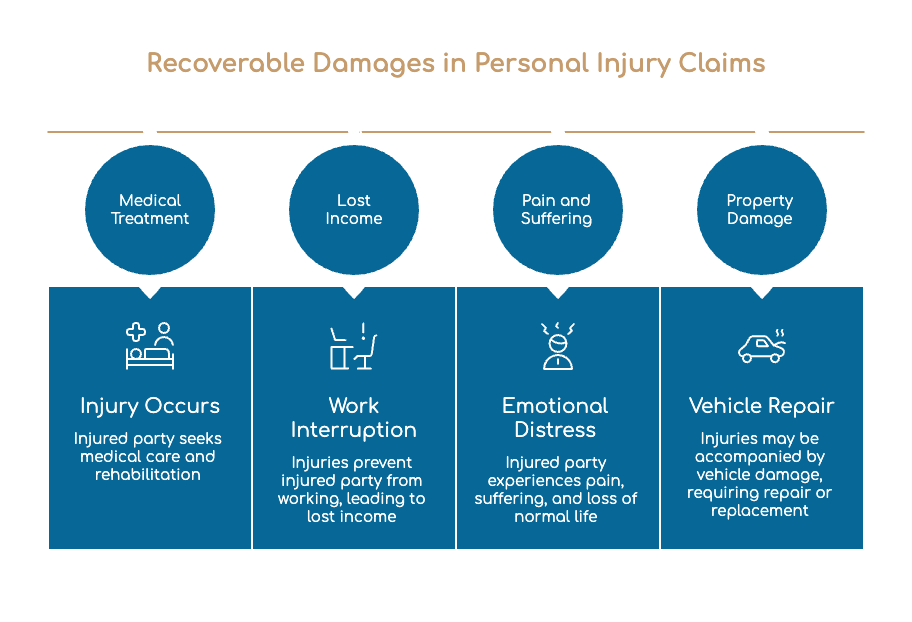
When a left-turn collision causes injury in Florida, the injured party may have the right to pursue compensation from the driver whose negligence contributed to the crash. Legal rights often depend on evidence, insurance coverage, and Florida’s Comparative negligence rules, which may reduce recovery if the injured person shares fault.
Compensation after a Florida left-turn crash depends on negligence, available evidence, insurance coverage, and shared fault rules.
- The injured party may seek payment for medical treatment, rehabilitation, and related care.
- Lost income and reduced earning ability may be recoverable when injuries affect work.
- Pain, suffering, and loss of normal life may be considered when supported by proof.
- Property damage, including vehicle repair or replacement, may also be included.
Those who serve injured people should recognize the importance of timely action. Reports, witness statements, medical records, and photographs can help preserve the truth. A careful legal review may identify responsible parties, available coverage, and deadlines that protect the victim’s claim under Florida law.
Why Do Florida Left-Turn Car Accident Injuries Happen?
Why do left-turn crashes so often result in serious injuries on Florida roads? These collisions commonly occur when a driver turns across oncoming traffic, misjudges speed, or fails to yield as required by Florida traffic rules. The impact often strikes the side of a vehicle, where occupants have less structural protection than in front-end or rear-end collisions. Higher urban traffic volume, distracted driving, speeding, impaired driving, and limited visibility at intersections can further increase the risk of severe harm.
Injury patterns may also reflect the conduct of multiple road users. A turning driver may make an unsafe movement, while an oncoming driver may be exceeding the speed limit or ignoring a signal. Under Comparative negligence laws, fault may be divided according to each party’s role in causing the crash. Careful evaluation of intersection design, signal timing, witness accounts, and vehicle damage helps clarify why the collision occurred and who may bear legal responsibility.
What Should You Do After a Florida Left-Turn Car Accident Injury?
After a Florida left-turn car accident injury, the injured person should prioritize medical attention, even when symptoms appear minor or delayed. The crash should also be documented with photographs, witness statements, police reports, and any other available evidence from the scene. Promptly contacting a lawyer may help protect legal rights, preserve critical evidence, and address insurance issues before they become more difficult to manage.
Prioritize Medical Attention
Because injuries from a Florida left-turn collision may not be immediately apparent, prompt medical evaluation should be a top priority. An injured person should seek care as soon as possible, even when pain seems minor or delayed. Emergency room triage can identify urgent conditions, including head trauma, internal injuries, fractures, or spinal damage, before symptoms worsen. Medical professionals also provide documentation of severity, which helps clarify the nature, timing, and extent of harm associated with the collision.
This step supports proper treatment, promotes long-term health, and allows caregivers to respond responsibly to developing needs. Follow-up appointments, prescribed therapy, and expert referrals should be honored carefully. When individuals place health first, they preserve their ability to recover, support their families, and continue serving others with stability and strength.
Document The Crash
Preserve evidence as soon as it is safe to do so, since crash details can change quickly at a Florida left-turn collision scene. A helpful bystander, injured driver, or family member should photograph vehicle positions, skid marks, debris, traffic signals, and visible injuries. They should Document Road Signs, lane markings, crosswalks, and obstruction points that may explain how the turn occurred. It is also important to Note Weather Conditions, lighting, roadway surface, and nearby construction.
Those assisting the injured should collect names, phone numbers, insurance details, witness statements, and responding agency information. They should See Medical Forms for diagnoses, treatment dates, and limitations, then Gather Receipts for prescriptions, transportation, repairs, and replacement services. Accurate records support fair evaluation while helping caregivers preserve needed information.
Contact A Lawyer
When should an injured person contact a Florida car accident injury lawyer? After medical care is secured and the crash is documented, prompt legal consultation scheduling can help preserve evidence, protect deadlines, and reduce confusion during insurance communications. A lawyer may review police reports, witness accounts, photographs, vehicle damage, and medical records to determine whether the left-turn driver failed to yield or acted negligently.
For those committed to responsible decision-making, a free case evaluation offers guidance without immediate financial pressure. This step helps the injured person understand available claims, possible compensation, and the practical duties involved in pursuing recovery. Early legal support may also prevent statements or settlement decisions that weaken a valid claim. Careful action serves the injured person, the family, and the broader interest of roadway accountability.
Critical Evidence in a Florida Left-Turn Car Accident Injury Case
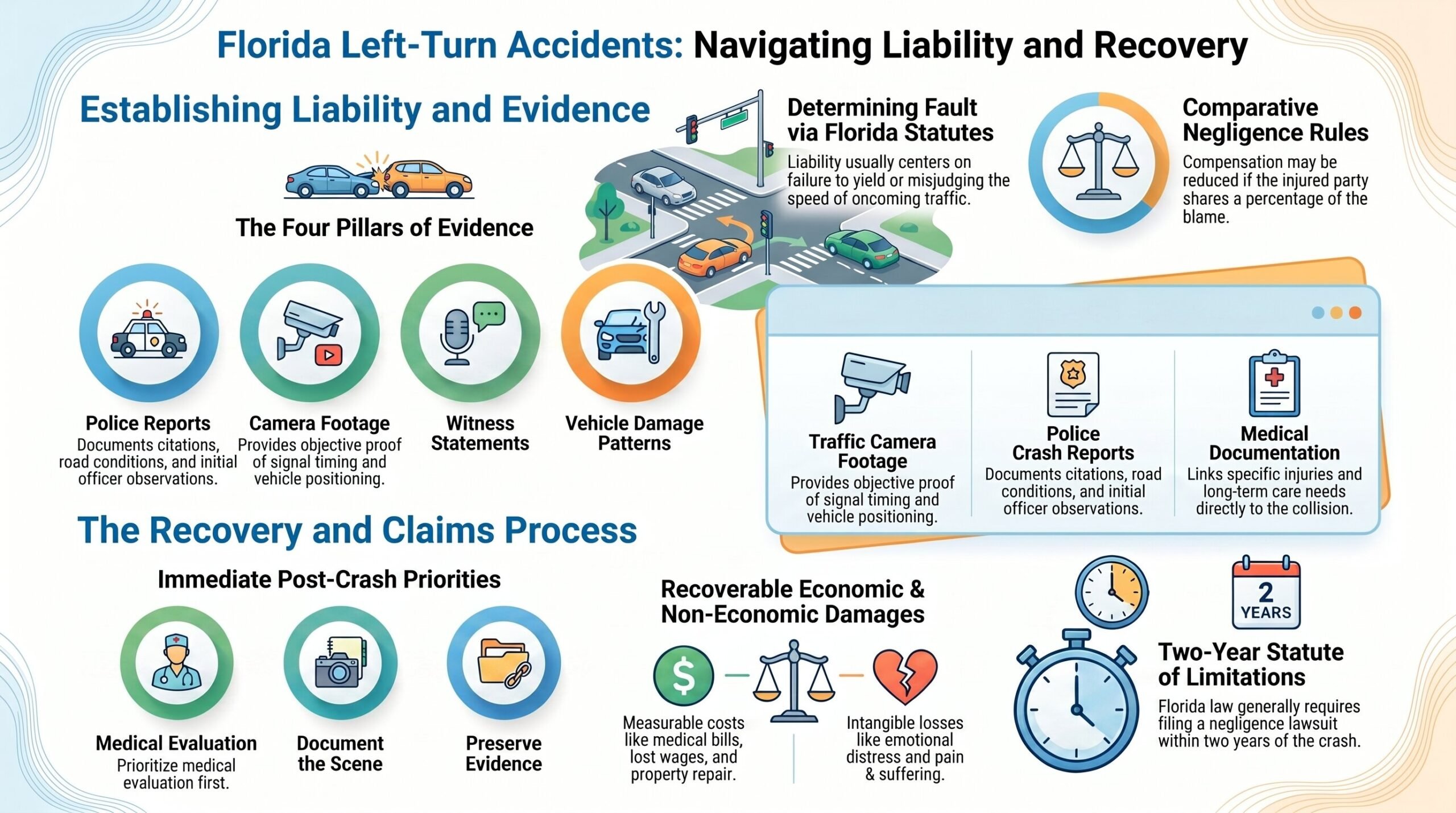
Critical evidence can determine how fault is assessed after a Florida left-turn crash, especially when drivers dispute right-of-way or signal use. Key evidence may include: 1. Police Crash Reports, 2. Traffic Camera Footage, 3. Witness Statements, and 4. Vehicle Damage Evidence. Each category can help clarify the sequence of events, support injury claims, and strengthen the evaluation of legal responsibility.
Police Crash Reports
Although a police crash report does not decide legal fault by itself, it often becomes one of the most important early records in a Florida left-turn car accident injury case. Prepared by the responding officer, it may identify drivers, passengers, witnesses, road conditions, vehicle positions, citations, and reported injuries. For injured persons and those assisting them, the report supports evidence preservation by recording facts before memories fade or vehicles are repaired.
It also provides insurance documentation that carriers commonly request when opening, reviewing, or disputing a claim. A careful legal review can determine whether the report contains helpful observations, omissions, or errors needing correction. Because left-turn collisions often involve conflicting accounts, this document can guide further investigation while helping advocates serve the injured with accuracy and diligence.
Traffic Camera Footage
How can traffic camera footage affect a Florida left-turn car accident injury case? It can provide objective visual evidence of signal timing, vehicle positioning, lane use, and the moment of impact. In left-turn collisions, footage may show whether a driver entered the intersection lawfully, yielded as required, or violated safety standards designed to protect roadway users. It may also reveal whether intersection signage was visible, obstructed, or ignored.
Attorneys and investigators often seek this footage quickly because many systems overwrite recordings within days. When preserved, the video can help clarify disputed accounts, support fault analysis, and assist insurers or courts in evaluating liability. For injured persons, accurate footage may strengthen a claim by showing how the crash occurred and whether a careless turn caused preventable harm.
Witness Statements
When accounts of a left-turn collision conflict, witness statements can provide independent details that help establish how the crash occurred. A bystander may describe signal timing, vehicle positions, driver behavior, or whether either motorist appeared distracted or speeding. These observations can support injured persons seeking fair treatment and can assist those responsible for evaluating fault with care and objectivity.
Statements taken promptly often preserve details before memory fades or outside influence arises. If a responding officer accurately records witness information, the officer’s credibility may strengthen the report’s value. In disputed cases, consistent witness accounts can also support accident reconstruction testimony by helping experts assess movement, timing, and right-of-way issues. Careful witness review can, as a result, promote a clearer, more service-focused pursuit of accountability for injured people.
Vehicle Damage Evidence
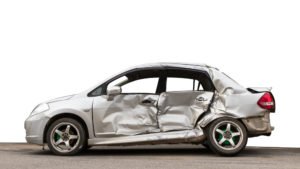
In a Florida left-turn collision, evidence of vehicle damage can help show the direction of impact, the relative positions of the vehicles, and the force involved in the crash. Photographs, repair estimates, crush patterns, paint transfer, and airbag deployment records may support a careful reconstruction of events. This evidence can clarify whether the turning driver failed to yield, whether the oncoming driver was speeding, or whether both contributed to the collision.
Comparative negligence impacts may depend on how convincingly the damage aligns with witness accounts, roadway markings, and electronic data. Severe structural damage may also help demonstrate the seriousness of injuries and the need for community-minded compensation. In rare cases involving reckless conduct, such evidence may support punitive damages claims, especially when paired with toxicology, phone, or traffic signal records.
Long-Term Effects of Florida Left-Turn Car Accident Injuries
Left-turn car accidents in Florida can cause injuries that persist long after the initial medical treatment ends. Chronic pain conditions, reduced mobility, and lasting emotional trauma may affect a person’s ability to work, manage daily tasks, and maintain independence. These long-term effects often play a significant role in evaluating the full impact of an injury claim.
Chronic Pain Conditions
A chronic pain condition may develop after a Florida left-turn car accident when injuries to the neck, back, shoulders, hips, or limbs do not fully resolve after initial treatment. Persistent pain can affect concentration, sleep, caregiving duties, and the ability to serve others with consistency. Medical records, diagnostic findings, and treatment histories may help establish liability for chronic pain when another driver failed to yield or acted carelessly.
Insurers may dispute ongoing symptoms, especially when pain is difficult to measure, and unfair claim delays or denials can raise concerns about insurance bad faith. Appropriate pain management options may include physical therapy, medication, injections, counseling, or subspecialty care. A careful legal evaluation can clearly connect the collision, medical evidence, and long-term losses.
Reduced Mobility
When injuries from a Florida left-turn collision affect the spine, joints, muscles, or nerves, reduced mobility can become a lasting limitation that changes daily life and future independence. A person may struggle to walk, lift, bend, drive, work, or perform basic household tasks without assistance. These limitations can also increase reliance on family members, caregivers, and community support, especially when permanent restrictions follow surgery, fractures, ligament damage, or nerve impairment.
Medical Documentation is critical because treatment records, imaging results, therapy notes, and physician opinions help connect the mobility loss to the crash. For those serving an injured person, consistent care records may support planning for accessibility needs and future treatment. Proving Liability may also require showing how the left-turn driver’s actions caused these lasting physical restrictions.
Lasting Emotional Trauma
Physical limitations are not the only long-term consequence of a serious Florida left-turn collision, as emotional trauma may continue long after visible injuries begin to recover. Survivors may experience anxiety at intersections, sleep disruption, irritability, depression, or intrusive memories of the impact. These symptoms can affect family responsibilities, caregiving roles, employment, and community service commitments.
Post-crash therapy may become a crucial part of recovery, helping injured individuals regain stability and confidence. However, insurance delays can limit timely access to counseling, psychiatric care, or trauma-focused treatment. When emotional harm is overlooked, recovery may remain incomplete despite physical improvement. Careful documentation from qualified providers can help demonstrate the continuing effect of psychological injuries and support a claim that reflects the full scope of loss.
Proving Liability in Florida Left-Turn Car Accident Injury Cases
How liability is proven in a Florida left-turn car accident often depends on whether the turning driver failed to yield, misjudged oncoming traffic, or violated a traffic control device. Evidence may include police reports, traffic camera footage, vehicle damage patterns, witness statements, and roadway measurements. These materials help establish how the collision occurred and whether the left-turning driver breached the duty to use reasonable care.
A thorough investigation also considers whether the injured person’s actions may be raised as comparative negligence defenses. For example, opposing parties may argue speeding, distraction, or failure to observe traffic conditions. Clear evidence can limit such claims and support a fair assessment of fault.
Proving medical causation is equally important. Medical records, diagnostic testing, and provider opinions connect the crash to specific injuries and treatment needs. This process helps ensure that those harmed are treated with dignity, accountability is properly assigned, and the legal record reflects the full impact.
Dealing With Insurance Companies After a Florida Left-Turn Car Accident Injury
After a Florida left-turn car accident, insurance companies often begin evaluating fault, damages, and coverage before the injured person fully understands the extent of the claim. Adjusters may request recorded statements, broad medical authorizations, or early discussions about payment. These communications should be handled with care, because incomplete information can be used to reduce or deny compensation.
Medical documentation is central to any evaluation of injuries, treatment needs, and long-term limitations. Accurate records help connect the collision to the harm suffered and support a fair assessment of losses. Individuals serving injured family members or community members can encourage consistent treatment, organized records, and careful communication.
Settlement deadlines also require close attention. Insurance carriers may present offers before the full impact of the injury is known, creating pressure to resolve the matter prematurely. A measured response helps protect the injured person’s interests while allowing the claim to be evaluated with dignity, accuracy, and fairness.
What to Expect During a Florida Left-Turn Car Accident Injury Claim Process
A Florida left-turn car accident injury claim typically begins with the initial filing of insurance claims, supported by medical records, crash reports, and evidence of damages. The process then proceeds to liability investigation steps, including a review of traffic laws, witness statements, vehicle damage, and any available camera footage. If settlement negotiations do not resolve the claim, the injured party may face a lawsuit timeline involving pleadings, discovery, mediation, and potential trial preparation.
Initial Claim Filing
When a left-turn collision causes injuries in Florida, the initial claim filing typically begins by notifying the appropriate insurance carriers and preserving the evidence needed to establish liability and damages. This early stage requires accurate policy information, prompt notice, and careful attention to deadlines that may affect benefits or recovery. Evidence preservation may include photographs, vehicle damage records, witness details, and the crash report, all organized to prevent avoidable gaps.
Medical documentation is also crucial because treatment records connect the injuries to the collision and help establish the extent of harm. If an insurance dispute arises, clear records may help address coverage, fault, or valuation concerns. A well-prepared filing supports liability proof while helping the injured person pursue fair compensation with dignity and careful service-focused advocacy.
Liability Investigation Steps
Once the claim has been filed and supporting records are organized, the liability investigation focuses on determining how the left-turn collision occurred and who may bear legal responsibility under Florida law. Investigators may review police reports, traffic signal timing, roadway design, vehicle damage, skid marks, and available camera footage. Witness statements are gathered promptly, because clear recollections can support accurate Fault Determination.
Evidence Preservation also includes securing photographs, medical documentation, event data recorder information, and repair estimates before important details are lost. In many left-turn crashes, the inquiry examines whether the turning driver failed to yield, misjudged oncoming traffic, or violated traffic controls. The process may also consider speeding, distraction, impairment, or unsafe lane changes by other drivers, ensuring the injured person’s claim rests on reliable facts.
Insurance Settlement Negotiations
After liability evidence and injury documentation have been evaluated, insurance settlement negotiations typically begin with a demand package sent to the at-fault driver’s insurer. This package may include medical records, wage loss information, photographs, witness accounts, and a clear explanation of damages. The insurer then reviews the claim, questions fault, evaluates treatment, and may issue a lower counteroffer.
During this stage, careful advocacy helps preserve accident evidence and present the injured person’s losses in an organized manner. Counsel may also Negotiate medical bills, address liens, and seek reductions that protect more of the recovery for the client. Negotiations often require patience, because adjusters may dispute necessity, causation, or value. A structured response supports fair evaluation while keeping the claimant’s needs central.
Possible Lawsuit Timeline
If settlement negotiations do not result in a fair resolution, a Florida left-turn car accident injury claim may proceed into litigation through the filing of a civil lawsuit. The process often begins with a complaint, followed by the defendant’s response and court scheduling orders. The Statute of limitations must be carefully observed, because missed deadlines can prevent recovery.
During pretrial discovery, both sides exchange records, answer written questions, take depositions, and evaluate expert opinions. This stage helps clarify liability, damages, and whether the case can still resolve before trial. Mediation may occur, offering another opportunity for respectful resolution. If no agreement is reached, the case may proceed to trial, where evidence is presented and a verdict determines responsibility and compensation. Counsel helps guide each step.
Compensation for Florida Left-Turn Car Accident Injury Damages
When a left-turn collision causes injuries in Florida, compensation may depend on the severity of the harm, the available insurance coverage, and the evidence showing how the crash occurred. Attorneys evaluating these claims often examine police reports, witness accounts, traffic camera footage, vehicle damage, and medical documentation to determine whether a pursuing driver, turning driver, or another party failed to use reasonable care.
Insurance coverage types may affect the practical recovery available after a crash, including personal injury protection, bodily injury liability, uninsured motorist coverage, and other applicable policies. Each source of coverage may have limits, exclusions, and notice requirements that must be reviewed carefully.
Comparative fault factors also influence compensation in Florida. If both drivers contributed to the collision, a claimant’s recovery may be reduced based on assigned responsibility. Careful claim preparation can help preserve evidence, support accountability, and promote fair resolution for injured individuals and families.
Economic vs Non-Economic Damages in Florida Left-Turn Car Accident Cases
In Florida left-turn car accident cases, economic damages may include medical bills, rehabilitation costs, and lost wages tied to the injured person’s recovery. Non-economic damages address less tangible harm, such as pain, emotional distress, and the reduced ability to enjoy daily life. Proving both categories requires clear documentation, credible testimony, and evidence connecting the losses to the crash.
Medical Bills And Lost Wages
Many left-turn collision claims in Florida begin with measurable financial losses, including emergency treatment, follow-up care, rehabilitation, prescription costs, and income missed during recovery. These losses are economic damages, supported by bills, wage records, tax documents, employer statements, and medical opinions. A careful review may also account for reduced earning capacity when injuries limit future work or require modified duties.
In serious cases, projected expenses for long-term medical treatment can become central to insurance settlement negotiations, especially when surgery, therapy, or assistive care is anticipated. Attorneys and claims professionals often evaluate whether available coverage, personal injury protection benefits, and liability evidence support full reimbursement. Accurate documentation helps protect injured individuals and allows service-focused advocates to pursue fair compensation with discipline, compassion, and practical judgment.
Pain And Emotional Distress
Although financial losses are often easier to measure, pain and emotional distress may represent a substantial part of a Florida left-turn car accident claim. These non-economic harms can include persistent pain, anxiety, sleep disruption, depression, and reduced participation in family, work, or community responsibilities. Traumatic brain injuries may intensify these challenges, affecting mood, memory, concentration, and personal independence.
Post-accident counseling can help injured individuals develop coping strategies while addressing fear, grief, or frustration after a serious collision. In service-focused communities, these losses matter because an injured person’s ability to care for others may be deeply changed. Insurance pressure may minimize suffering that is not shown on a bill, yet emotional harm can still affect daily life, dignity, and long-term recovery in meaningful ways after the crash.
Proving Damages After Crashes
After a Florida left-turn crash, proving damages requires clear documentation that connects the collision to the injured person’s measurable losses and personal harm. Economic damages may include medical bills, rehabilitation costs, lost wages, reduced earning ability, and future income when injuries affect long-term work. Non-economic damages address pain, emotional distress, loss of enjoyment, and disruption to family responsibilities or community service. Attorneys may use medical records, employment files, expert opinions, photographs, and witness statements to support each category.
Comparative Negligence can reduce recovery if the injured person shares fault, making accurate evidence crucial. Insurance coverage limits may affect practical compensation, even when losses are substantial. In rare cases involving intentional misconduct or extreme recklessness, punitive damages may also be considered under Florida law.
When a Florida Left-Turn Car Accident Injury Case Goes to Trial vs Settlement
When a left-turn accident injury claim in Florida cannot be resolved through negotiation, the case may proceed toward litigation and, in some situations, trial. Settlement is often pursued when liability, injuries, and financial losses can be evaluated with sufficient confidence. It may spare injured parties delay, uncertainty, and the strain of public testimony, while still supporting accountability and fair compensation.
Trial may become necessary when insurers dispute fault, minimize medical evidence, or undervalue long-term harm. In that setting, Trial Strategy focuses on organizing witness testimony, medical records, crash evidence, and expert opinions into a clear presentation. The goal is to help jurors understand how the collision affected the injured person’s health, work, and daily responsibilities.
Jury Verdicts can exceed or fall below settlement offers, depending on the evidence and credibility presented. Careful case evaluation helps determine whether settlement or trial better serves the injured person’s recovery and future stability needs.
Florida Laws That May Affect Your Florida Left-Turn Car Accident Case
Whether a left-turn accident case is resolved through settlement or proceeds to trial, Florida law governs how fault, insurance coverage, and damages are evaluated. These rules help injured people, families, insurers, and courts assess responsibility with fairness and care.
Florida law guides left-turn accident claims by shaping fault, coverage, and damages with fairness and care.
- Right-of-way duties: A driver turning left must usually yield to oncoming traffic, pedestrians, and cyclists unless a protected signal or traffic condition changes that duty.
- Comparative negligence impacts: Florida’s fault system may reduce compensation if an injured person shares responsibility, such as speeding, being distracted, or failing to avoid a hazard.
- Insurance coverage basics: Personal injury protection may provide initial benefits, while bodily injury, uninsured motorist, or other coverage may affect recovery options.
- Evidence and damages: Police reports, witness statements, vehicle damage, medical records, and roadway conditions can influence liability and the value of losses.
A careful legal review supports informed decisions and responsible advocacy.
The Statute of Limitations for Florida Left-Turn Car Accident Injury Cases
Because legal deadlines can determine whether an injury claim may proceed, the statute of limitations is a critical issue in Florida left-turn car accident cases. In most Florida negligence actions, an injured person must file a lawsuit within two years from the date of the crash. Missing this deadline may bar recovery, regardless of the severity of the injuries or the clarity of fault.
Timely action also supports responsible claim preparation. Evidence Preservation is often essential soon after a collision, when vehicle damage, roadway conditions, traffic signal data, and surveillance footage may still be available. Delay can weaken the ability to show how the left turn occurred and whether another driver acted carelessly.
Witness Availability may also decline with time, as memories fade, people relocate, or contact information changes. Those seeking to protect a valid claim while honoring their duties to family and community should remain mindful of these deadlines and act promptly.
How a Florida Left-Turn Car Accident Injury Lawyer Can Help You
Investigating a left-turn collision requires careful review of the facts, applicable traffic laws, and available evidence. A Florida left-turn car accident injury lawyer can organize the claim so the injured person may focus on recuperation, family duties, and service to others.
- Evidence review: Counsel may examine police reports, witness accounts, traffic signals, vehicle damage, and camera footage, including footage of parking lot collisions, where right-of-way issues can be disputed.
- Liability analysis: The lawyer can assess whether the turning driver, speeding motorist, or another party contributed, including cases involving rear-end impacts during an attempted turn.
- Claim management: Legal support may address Insurance paperwork, medical documentation, wage loss records, and communications with adjusters.
- Resolution support: When settlement delays arise, counsel can present organized proof of damages, respond to insurer objections, and pursue fair compensation through negotiation or litigation, while maintaining a disciplined, client-centered approach.
When to Contact a Florida Left-Turn Car Accident Injury Lawyer
Timing can greatly affect the strength of a left-turn accident claim, especially when evidence may disappear, witnesses may become harder to locate, and insurance deadlines may approach quickly. An injured person should consider contacting a Florida left-turn car accident injury lawyer soon after receiving medical care, reporting the crash, and securing immediate safety needs.
Early contact may help preserve traffic camera footage, evidence of vehicle damage, roadway photographs, police reports, and witness statements. It may also support careful communication with insurance companies before recorded statements or settlement discussions occur. Those assisting an injured family member should act promptly, particularly when the person faces hospitalization, disability, or uncertainty about next steps.
Florida’s Statute of Limitations places strict time limits on injury claims, so delay may affect available legal remedies. A consultation can also clarify Legal Fee Options, allowing individuals and families to make informed decisions while focusing on recovery, caregiving, and practical support.
Why You Need an Experienced Florida Left-Turn Car Accident Injury Lawyer
After prompt action protects a potential claim, the experience of the lawyer handling the case can importantly affect how liability, damages, and insurance disputes are addressed. Left-turn crashes often involve disputed right-of-way, traffic signal timing, witness reliability, and comparative fault. An experienced Florida injury lawyer understands how to evaluate these issues, preserve useful evidence, and present the injured person’s circumstances with accuracy and care.
Effective representation also supports a fair case valuation, including medical costs, lost income, reduced earning capacity, pain, and long-term limitations. Insurance carriers may minimize injuries or argue that another driver’s conduct was reasonable. Skilled counsel can respond with organized records, expert input, and disciplined Negotiation tactics that reflect the claim’s true impact. This work helps help ensure that injured people, and those who depend on them, are not left to carry avoidable financial burdens caused by another motorist’s unsafe turn. Experience provides structure when recovery, accountability, and stability matter most.
How to Choose the Right Florida Left-Turn Car Accident Injury Lawyer for Your Case
The right Florida left-turn car accident injury lawyer should have a clear understanding of how these collisions are investigated, disputed, and valued under state law. A careful selection process should focus on experience with liability disputes, comparative negligence, insurance negotiations, and injury documentation. The lawyer should know how to evaluate traffic reports, witness statements, video evidence, vehicle damage, and medical records to build a reliable case strategy.
Client communication is also critical. Injured individuals often need steady guidance while managing medical care, financial pressure, and family responsibilities. A qualified lawyer should explain legal options, provide timely updates, and answer questions with patience and accuracy. The firm’s approach should reflect respect for the client’s circumstances and a commitment to protecting the client’s future.
Before choosing representation, a person should consider the lawyer’s record with car accident claims, available resources, and willingness to prepare each case for settlement or trial when necessary.
About The Law Offices of Anidjar & Levine
When injured individuals need legal guidance after a Florida left-turn collision, The Law Offices of Anidjar & Levine provides representation focused on accountability, case preparation, and client support.
The firm assists accident victims by reviewing evidence, identifying liable parties, and developing a case strategy aligned with the client’s medical needs, financial losses, and long-term recovery concerns.
Its attorneys understand that service requires consistent communication, careful attention to detail, and respect for each client’s circumstances.
Client testimonials often reflect appreciation for responsiveness, preparation, and steady guidance during difficult legal processes.
The firm also helps clients stay informed through legal updates that explain relevant injury claims, insurance issues, and procedural developments.
A free consultation allows injured individuals to discuss the collision, ask questions, and understand potential next steps without initial cost.
Through disciplined advocacy and organized preparation, The Law Offices of Anidjar & Levine works to support clients seeking fair compensation after left-turn accidents.
Frequently Asked Questions
Can Traffic Camera Footage Prove a Left-Turn Crash?
Yes, traffic camera footage can help prove a left-turn crash by showing vehicle positions, Crash Timing, and Signal Compliance. Its Traffic Camera, Evidentiary Use may support fault analysis when the recording clearly captures the intersection, lights, and vehicle movements. Those assisting injured persons should quickly preserve footage, as systems may overwrite data. Investigators may compare video with reports, witness accounts, and damage patterns to serve a fair resolution.
Do Left-Turn Crashes Affect My Insurance Premiums?
Yes, left-turn crashes can affect insurance premiums when fault determination shows the driver caused or contributed to the collision. Insurers review police reports, witness accounts, damages, and injury documentation during the insurance timeline. A higher medical record value may increase claim exposure, influencing settlement negotiations and future rate decisions. Those serving injured people should encourage accurate records, timely reporting, and careful communication, because premium impacts often depend on liability and claim severity.
What if the Other Driver Was From Out of State?
If the other driver was from out of state, the claim may still proceed under Florida law when the crash occurred there. Jurisdiction considerations include where the collision happened, where parties reside, and where insurance coverage applies. Out-of-state evidence, such as registration, licensing, policy records, and witness availability, should be preserved promptly. A service-focused legal review helps protect injured persons while coordinating claims across state lines with care.
Can Passengers File Claims After a Left-Turn Accident?
Yes, passengers may file claims after a left-turn accident because they hold shared legal rights independent of the drivers. Their claims may seek damages recovery for medical care, lost income, and suffering. Comparative fault usually concerns the drivers, not the passenger, unless unusual conduct contributed to harm. Passenger proof may include medical records, witness statements, crash reports, and photographs, helping establish responsibility and support fair service to injured persons.
Are Rideshare Left-Turn Accidents Handled Differently in Florida?
Yes, rideshare left-turn accidents are often handled differently in Florida because insurance coverage may depend on the driver’s app status. If a passenger, another motorist, or pedestrian is injured, liability analysis may involve the rideshare company, the driver, and other parties. Negotiation strategies should address layered policies, medical damages, and Florida-specific defenses, while ensuring injured persons are treated with dignity, accuracy, and service-focused advocacy.
—————————
Left-turn collisions can leave Florida victims facing serious injuries, financial strain, and complex insurance disputes.
A qualified Florida Car Accident Lawyer can evaluate fault, preserve evidence, manage negotiations, and pursue fair compensation under applicable law.
The Law Offices of Anidjar and Levine provides knowledgeable legal guidance for injured motorists and passengers.
Prompt legal action can protect a claim, strengthen liability arguments, and help victims move forward with greater confidence after a preventable crash.