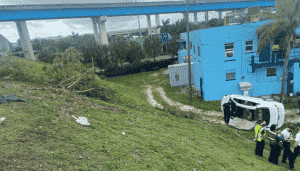
Law Offices of Anidjar and Levine assists injured people after left-turn crashes by investigating fault, preserving evidence, and handling communications with insurers.
These cases often involve failure to yield, disputed signal timing, conflicting witness accounts, and serious injuries that require prompt medical documentation.
A Miami Car Accident Attorney can evaluate damages for medical expenses, lost income, property damage, and pain and suffering under Florida comparative negligence rules.
The sections below explain what influences liability, which steps matter most, and when legal help becomes important.
Main Takeaways
- In Miami, in left-turn crashes, the turning driver usually must yield unless a protected green arrow clearly gives the right of way.
- A lawyer can use police reports, photos, video, witness statements, and vehicle damage to prove fault and strengthen your injury claim.
- Seek immediate medical evaluation because concussions, soft-tissue injuries, and internal injuries may appear hours or days after the collision.
- Preserve evidence by photographing the scene, getting the officer’s report number, and exchanging accurate insurance and contact information.
- An injury lawyer can handle insurers, calculate medical costs and lost income, and pursue compensation under Florida comparative negligence rules.


How We Can Help With Your Miami Left-Turn Car Accident Injury Claim
Steer through these claims with a clear strategy. A Miami left-turn car accident injury lawyer can help by evaluating liability, preserving crucial evidence, and building a claim that reflects the full extent of the injured person’s losses. Counsel provides organized guidance so injured people and their families can focus on recovery while still honoring obligations to employers, caregivers, and dependents.
Legal support often begins with a prompt investigation, collection of records, witness interviews, and communication with insurers. The lawyer identifies all available coverage, documents treatment needs, and calculates damages with care and discipline. Attention to Medical liens is vital because unresolved claims can reduce a client’s net recovery and complicate distribution.
Clear advice regarding Settlement timelines also helps clients make informed decisions, plan household finances, and avoid pressure from premature offers. Throughout the process, representation is grounded in service, accountability, and the practical goal of securing resources that support mend, stability, and long-term well-being for everyone involved.
OUR CONSULTATIONSARE FREE
START YOUR FREE CASE REVIEW

Understanding Miami Left-Turn Car Accident Injury Cases
At the outset, understanding Miami left-turn car accident injury cases requires close attention to how these collisions occur, why fault is often disputed, and what evidence most strongly supports an injury claim. These cases often turn on careful analysis of roadway positioning, signal timing, driver observations, and the sequence of movement within a busy intersection.
A proper evaluation generally considers intersection dynamics, including lane configuration, traffic control devices, and the conduct of all drivers immediately before impact. Visibility factors also matter, such as weather, lighting, obstructions, and sight lines that may affect perception and reaction. To serve injured people responsibly, legal review often relies on police reports, witness statements, photographs, video footage, vehicle damage patterns, and medical records.
Florida law may assign responsibility based on comparative fault, making precise documentation especially important. A disciplined, fact-based approach helps families pursue accountability, protect access to treatment, and support fair recovery after a serious left-turn crash.
Common Causes of Miami Left-Turn Car Accidents
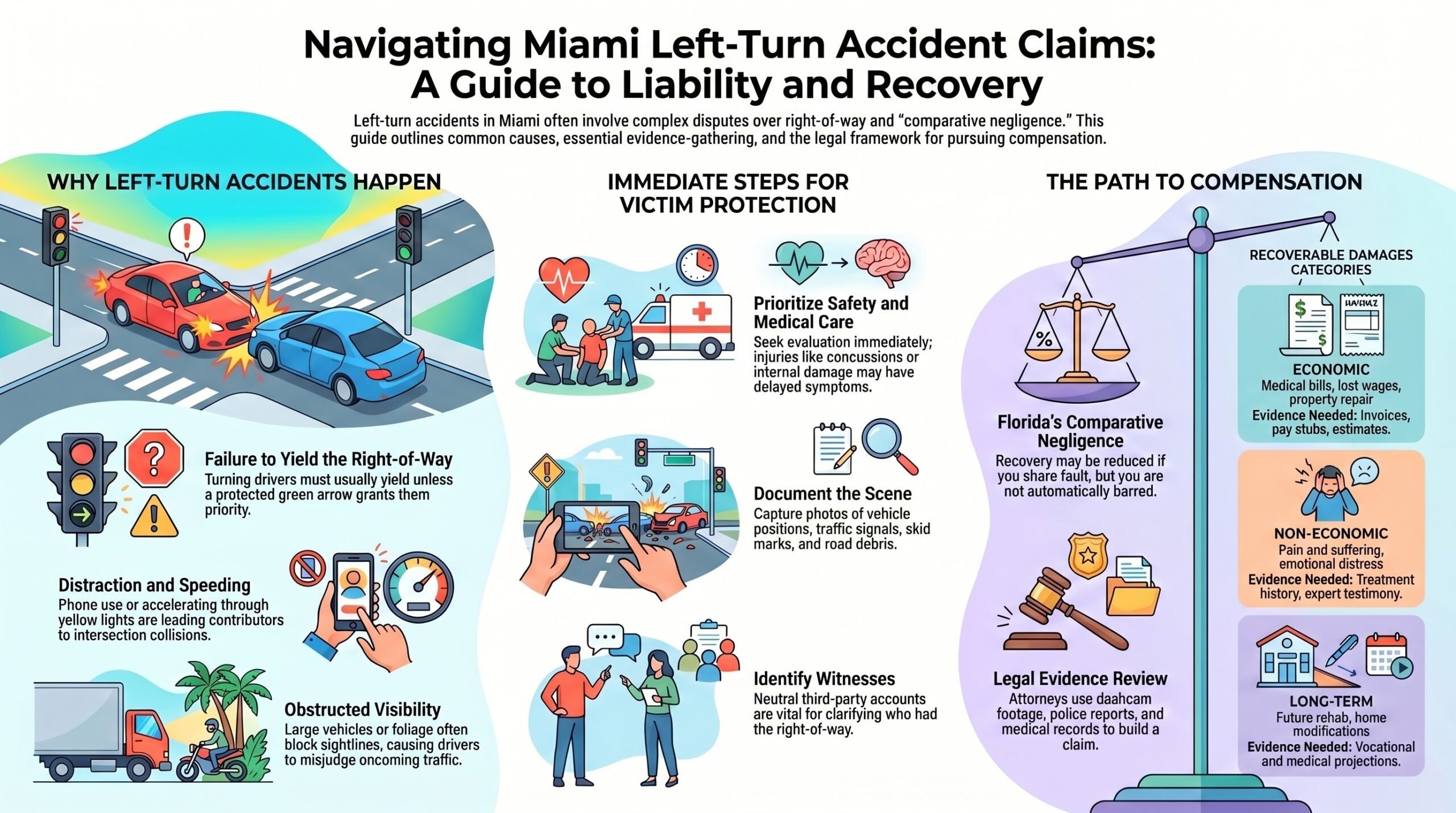
Several recurring factors contribute to Miami left-turn car accidents, which often occur at busy intersections and in high-traffic conditions. Common causes include failure to yield, distracted driving errors, and speeding through intersections, each of which can sharply reduce a driver’s ability to react safely. Obstructed intersection views also play a significant role, as limited visibility may prevent drivers from accurately judging approaching traffic and the timing of turns.
Failure To Yield
Among the most common causes of Miami left-turn collisions, failure to yield remains a significant factor because drivers turning left must wait until the intersection is clear and it is safe to proceed. When motorists misjudge oncoming traffic, ignore intersection signals, or overlook pedestrian priority, serious harm may follow. Such conduct can endanger drivers, passengers, cyclists, and people crossing lawfully.
A careful review of these crashes often shows that the turning driver entered the roadway without allowing adequate time or space for others. Florida traffic rules require drivers to yield before completing a left turn, especially at busy urban intersections. Respecting that duty helps protect vulnerable road users and supports safer travel for the community. In injury claims, this failure may serve as strong evidence of negligence and legal responsibility.
Distracted Driving Errors
Distracted driving frequently contributes to Miami left-turn collisions because a driver who looks away from the roadway, even briefly, may fail to judge speed, distance, or signal changes before entering an intersection. In many cases, attention is divided by phone use, dashboard controls, passengers, or eating distractions, leaving too little focus for safe decision-making.
A motorist attempting a left turn must continuously monitor oncoming traffic, pedestrians, and changing lights. When concentration lapses, even for seconds, the risk of harming others increases substantially. Careful driving reflects respect for everyone sharing the road, including families, cyclists, and nearby workers. By recognizing distraction as a preventable cause, injured people and those assisting them can better understand how negligent conduct may lead to serious left-turn crashes and lasting community consequences for all.
Speeding Through Intersections
Accelerating through intersections often plays a central role in Miami left-turn collisions because excessive speed reduces the time available to observe traffic signals, judge oncoming vehicles, and react to sudden changes in roadway conditions. Drivers approaching at high speed may assume the right of way without accounting for a turning vehicle’s limited margin for error.
In many cases, intersection running lights compounds the danger, creating sudden conflicts that leave little opportunity for safe evasive action. When speed and impatience combine, the force of impact often increases, leading to severe injuries for drivers, passengers, cyclists, and pedestrians. A careful review of vehicle movement, signal timing, and braking distances may help families and advocates understand how speeding through intersections contributed to the crash and disrupted others’ well-being.
Obstructed Intersection Views
Limited visibility at an intersection often creates the same kind of sudden conflict seen in high-speed left-turn crashes, but the hazard arises from blocked sightlines rather than reduced reaction time alone. When drivers cannot clearly see approaching traffic, pedestrians, or cyclists, a left turn may begin under unsafe assumptions. Common sources include parked trucks, oversized vehicles, signage, construction barriers, and foliage obstruction near corners or medians.
These conditions can conceal oncoming movement until impact becomes unavoidable. In Miami, obstructed views may also interfere with a driver’s ability to judge speed, distance, and right of way. Responsible roadway maintenance, careful property management, and cautious driving practices help protect everyone using the intersection. Identifying blocked sightlines after a crash may clarify how negligence contributed to serious injuries and losses.


Legal Rights of Miami Left-Turn Car Accident Injury Victims
Accountability often becomes the central issue after a left-turn collision in Miami, especially when an injured person must determine what legal protections may apply under Florida law. Victims may pursue compensation for medical costs, lost income, property damage, and pain and suffering when another party’s negligence caused harm. Florida’s comparative fault rules may reduce recovery if an injured person shares responsibility, yet they do not automatically eliminate a claim. Legal rights may also extend to disputes involving uninsured coverage, policy interpretation, and insurance bad faith when carriers fail to act fairly.
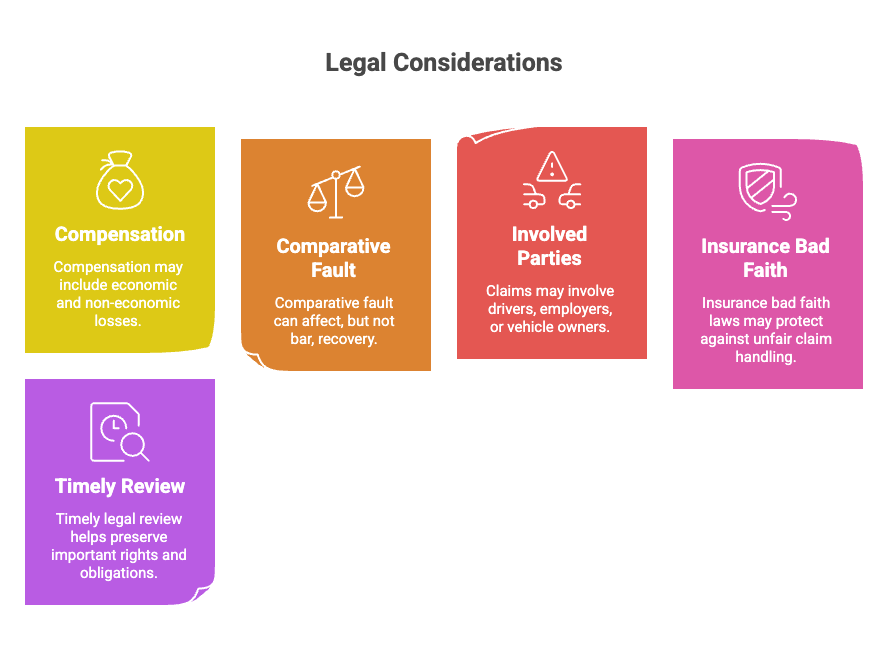
Florida law may protect left-turn collision victims through compensation rights, comparative fault rules, and remedies for unfair insurance practices.
- Compensation may include economic and non-economic losses.
- Comparative fault can affect, but not bar, recovery.
- Claims may involve drivers, employers, or vehicle owners.
- Insurance bad faith laws may protect against unfair claim handling.
- Timely legal review helps preserve important rights and obligations.
These protections exist to support accountability, encourage fair treatment, and help injured individuals seek resources needed to continue serving their families and communities.
Steps to Take After a Miami Left-Turn Car Accident Injury
After a Miami left-turn car accident injury, the priority is generally to ensure safety, including moving to a secure location when possible and contacting emergency services. Attention then turns to gathering crash evidence, such as photographs, witness information, and any available police report details, which may help clarify how the collision occurred. Prompt medical care is also crucial, both to protect health and to document injuries that could become important in an insurance claim or legal case.
Ensure Safety First
In the immediate aftermath of a Miami left-turn collision, personal safety should take priority over every other concern. Those involved should remain calm, assess injuries, and call 911 if anyone appears hurt or trapped. If the vehicle can be moved safely, it should be moved out of traffic to reduce further harm. If movement is unsafe, occupants should stay inside with seat belts fastened until help arrives, unless hazards require using emergency exits.
Individuals who are able should check on passengers, children, older adults, and nearby drivers with care and respect. Hazard lights should be activated, and a safe distance from fuel leaks, smoke, or oncoming traffic should be maintained. Accepting medical evaluation at the scene is often wise, since some injuries are not immediately apparent and prompt care can protect long-term well-being.
Gather Crash Evidence
Once immediate safety concerns have been addressed, attention should turn to preserving clear evidence from the scene. Careful collection of information can protect the interests of everyone affected and support a fair review of the circumstances surrounding the left-turn collision.
Helpful evidence often includes photographic documentation of vehicle positions, traffic signals, skid marks, debris, road conditions, and visible damage. If possible, license plates, intersection signage, and weather conditions should also be recorded.
Contact and insurance details should be exchanged accurately, and the responding officer’s name and report number should be noted. Independent witness statements can be especially valuable because neutral observations may clarify who had the right of way. In the service of accountability and community safety, organized evidence gathering helps establish facts and reduce confusion later in the claims process.
Seek Medical Care
Because some injuries are not immediately apparent at the scene, prompt medical evaluation should be considered a necessary step after a Miami left-turn collision. Early assessment can identify concussions, internal injuries, soft tissue damage, and delayed pain before symptoms worsen. Accurate records also help connect the injury to the crash and support later insurance or legal claims.
Those assisting an injured person should encourage emergency care when needed, followed by visits to a physician, diagnostic testing, and adherence to treatment instructions. Care plans may include medication, referrals to physical therapy specialists, and virtual follow-ups when travel is difficult.
Attention to recovery should also extend to rest, hydration, and post-accident nutrition, which can support recovery and stability. Consistent medical care protects health, strengthens documentation, and promotes a more responsible recovery process overall.
How a Miami Left-Turn Car Accident Injury Lawyer Can Help You
A Miami left-turn car accident injury lawyer can provide crucial guidance by evaluating the crash, identifying liable parties, and preserving evidence that may determine the strength of a claim. Counsel may review police reports, witness accounts, traffic footage, and vehicle damage while applying Miami statutes to the facts. This early work supports an organized claim strategy and helps protect injured people from avoidable mistakes.
Early legal guidance can clarify fault, preserve key evidence, and protect a Miami left-turn accident claim from preventable errors.
- Explains legal duties and available insurance coverage clearly.
- Collects records, photographs, statements, and expert opinions promptly.
- Communicates with insurers to reduce pressure on families.
- Calculates losses and addresses realistic Settlement timelines.
- Prepares the case for negotiation or court if needed.
An attorney also helps clients act with steadiness and purpose, which can serve both the injured person and the broader community. By managing deadlines, documenting losses, and presenting persuasive evidence, counsel allows clients to focus on recovery and responsible next steps. This assistance often strengthens accountability and supports fair resolution.
Long-Term Effects of Miami Left-Turn Car Accident Injuries
Left-turn car accident injuries in Miami can produce consequences that extend well beyond the initial recovery period. Many individuals face chronic pain challenges and lasting mobility loss, which can interfere with daily activities, employment, and long-term independence. These physical limitations are often accompanied by emotional trauma impact, creating continuing burdens that may require ongoing medical and legal attention.
Chronic Pain Challenges
Persisting pain often becomes one of the most disruptive long-term effects after a Miami left-turn car accident, even when initial injuries appear manageable. For many injured people, chronic pain can affect concentration, sleep, emotional stability, and the ability to meet family or community responsibilities with consistency and care.
Effective pain management usually requires ongoing evaluation, coordinated medical support, and patient commitment. Physicians may recommend medications, physical therapy, counseling, or other treatment innovations intended to reduce symptoms and improve daily functioning. In many cases, lifestyle adjustments, including structured rest, stress reduction, and changes to work routines, become necessary parts of recovery.
Because persistent symptoms may not be outwardly visible, careful documentation and credible medical assessment often play an important role in understanding the injury’s full long-term impact and supporting appropriate legal claims.
Lasting Mobility Loss
Reduced mobility can alter nearly every part of daily life after a Miami left-turn car accident, particularly when injuries affect the spine, joints, muscles, or nerves. Some individuals experience lasting difficulty walking, climbing stairs, driving, lifting objects, or completing routine household tasks. Recovery may require extended rehabilitation, ongoing physical therapy, and careful medical supervision.
In many cases, reduced function requires assistive devices such as canes, walkers, braces, or wheelchairs. Certain homes also require home modifications, including ramps, grab bars, wider doorways, or adjusted bathrooms, to support safer movement. These limitations can affect employment, caregiving, and community involvement. A thorough legal claim often considers future treatment needs, accessibility costs, and the practical assistance necessary to preserve independence and daily function over time.
Emotional Trauma Impact
Coping with the psychological aftermath of a Miami left-turn car accident can be as disruptive as managing the physical injuries themselves. Survivors may experience fear, sleep disturbance, irritability, and difficulty returning to daily responsibilities or community service roles.
In many cases, emotional injuries persist long after visible wounds mend. Some individuals develop post-traumatic stress, marked by intrusive memories, avoidance behaviors, and heightened anxiety while driving or crossing intersections. These symptoms can strain family relationships, reduce work performance, and limit a person’s ability to consistently assist others.
Professional evaluation is often vital because psychological counseling may help survivors process trauma, rebuild confidence, and restore stability. When emotional harm is severe, legal claims may account for these long-term consequences, recognizing that recovery involves both mental and physical restoration over time.
Proving Liability in Miami Left-Turn Car Accident Injury Cases
Establishing liability in a Miami left-turn car accident case requires a careful review of traffic laws, right-of-way rules, and the specific facts surrounding the collision. In many cases, the turning driver must yield to oncoming traffic unless a protected signal permits the turn. Determining fault often depends on police reports, photographs, roadway markings, and vehicle damage patterns.
Additional proof may come from surveillance footage, electronic data, and testimony from bystanders. Courts and investigators evaluate witness credibility closely, especially when accounts differ on speed, lane position, or traffic signalization. Medical records can also support the timing and force of impact, helping connect injuries to the crash.
Florida’s comparative negligence standard may apply when both drivers contributed to the event. A thorough liability analysis consequently considers distraction, impairment, visibility, weather, and whether either motorist violated a traffic control device. Careful fact gathering helps injured people pursue accountability while promoting safer conduct on Miami roads for everyone.
Dealing With Insurance Companies After a Miami Left-Turn Car Accident Injury
After a Miami left-turn collision, dealings with insurance companies often become a central part of the injury claim process. Insurers may request recorded statements, medical authorizations, or quick settlement discussions, often before the full extent of harm is understood. A careful, service-minded approach helps protect injured people while preserving accurate information for all parties.
Clear documentation usually strengthens communications with adjusters. Medical records, repair estimates, photographs, witness details, and proof of lost income can help present a complete picture of damages. Insurance representatives may question fault, minimize treatment needs, or delay responses. In those situations, organized records and consistent messaging remain important.
Attention may also be required for post-settlement negotiations when unresolved medical bills, liens, or coverage issues arise. If an insurer issues an unfair denial or undervalues losses, claim denials and appeals may become necessary. Thoughtful legal guidance can help families, caregivers, and community members pursue fair treatment with diligence, patience, and integrity.
What to Expect During a Miami Left-Turn Car Accident Injury Claim Process
A Miami left-turn car accident injury claim typically begins with the initial filing, followed by a liability investigation that examines police reports, witness statements, and other available evidence. The process also involves a careful review of medical records and treatment history to assess the nature and extent of the injuries. Depending on the findings and the parties’ positions, the claim may proceed toward settlement negotiations or, when necessary, litigation.
Initial Claim Filing
In the early stage of a Miami left-turn car accident injury claim, the filing process generally begins with notice to the appropriate insurance carrier, supported by basic facts about the collision, the parties involved, and the injuries reported. Prompt action helps preserve rights and supports orderly communication with insurers and medical providers.
A careful approach often includes confirming filing deadlines, gathering policy information, and preparing a practical checklist of paperwork. Common materials may include the crash report, photographs, medical records, repair estimates, wage-loss information, and contact details for the involved parties. Accuracy matters because incomplete or inconsistent submissions can delay review.
Many claimants also keep a dated record of treatment, expenses, and insurer correspondence, which can assist those working to protect the injured person’s interests and promote a fair, service-minded claims process for everyone involved.
Liability Investigation Steps
Once the claim has been opened and the basic records have been assembled, attention generally turns to the liability investigation, where insurers and legal representatives examine how the left-turn collision occurred and who bears responsibility under Florida law.
This stage often includes reviewing police reports, traffic camera footage, vehicle damage, roadway markings, and applicable signal patterns. Scene reconstruction may be used to evaluate speeds, points of impact, and turning angles. Witness interviews help clarify whether a driver failed to yield, misjudged distance, or entered the intersection against the light.
Investigators may also assess distractions, visibility conditions, and statements from all involved parties for consistency. The purpose is to identify facts that support a fair allocation of fault, allowing families and communities affected by the crash to pursue accountability and informed next steps.
Medical Evidence Review
Following the liability review, the claim process typically shifts to a careful examination of the injured person’s medical evidence, which helps link the left-turn collision to the reported harm and quantify damages under Florida law.
This stage often includes collecting medical records, diagnostic imaging, physician notes, therapy reports, prescription history, and billing statements. Reviewers compare symptoms, treatment timelines, and prior health conditions to determine whether the crash caused new injuries or worsened existing ones.
When questions arise, expert testimony from treating doctors or independent experts may clarify causation, prognosis, future care needs, and functional limitations. A thorough review also helps identify overlooked complications, supports requests for appropriate care, and promotes fair evaluation of losses. Careful attention to documentation can strengthen advocacy on behalf of injured individuals and the families who support recovery.
Settlement And Litigation
After the medical evidence has been evaluated, a Miami left-turn car accident claim generally proceeds to settlement discussions, although some matters proceed to litigation when liability, causation, or damages remain in dispute. During this phase, counsel exchanges demand packages, insurance evaluations, and supporting records to measure fair compensation. Negotiations often include mediation strategies designed to resolve conflict efficiently and preserve resources for injured people and their families.
If settlement efforts fail, a lawsuit may be filed, followed by discovery, depositions, motion practice, and expert review. Each step helps clarify disputed facts and assess legal exposure. Although many cases resolve before trial, preparation remains vital because credible readiness can influence outcomes. When necessary, jury trials provide a structured forum where evidence, witness testimony, and legal arguments are presented for a binding decision under Florida law.
Compensation for Miami Left-Turn Car Accident Injury Damages
Accountability often begins with a clear assessment of damages, because the value of a Miami left-turn car accident claim depends on the full extent of the injured person’s losses. Compensation may reflect emergency care, surgeries, rehabilitation, medication, and other treatment reasonably tied to the collision. It may also consider transportation needs, household assistance, and the practical impact of lasting limitations on daily service, family responsibilities, and community involvement.
A careful damages review also examines lost income already sustained and the effect of injuries on future earnings when recovery is incomplete. In serious cases, documentation from physicians, vocational experts, and financial professionals can help establish how physical restrictions alter work capacity over time. Pain valuation requires disciplined analysis, including symptom severity, treatment duration, and the consistency of medical records. By presenting complete evidence, counsel helps insurers, judges, and juries understand the human and financial consequences of a left-turn crash and assign fair compensation.
Economic vs Non-Economic Damages in Miami Left-Turn Car Accident Cases
In Miami left-turn car accident cases, damages are generally divided into economic losses, such as medical bills and lost income, and non-economic losses, such as pain, suffering, and reduced quality of life. A clear understanding of these categories helps explain how compensation is measured after a crash and why each type of loss carries different evidentiary demands. Establishing the value of either form of damages often depends on records, expert opinions, and other evidence that connects the accident to the claimant’s financial and personal harm.
Economic Damages Explained
From a legal and financial standpoint, economic damages refer to the measurable losses that may arise from a Miami left-turn car accident, while non-economic damages address the more subjective human effects of the injury. In practice, these damages often include emergency care, follow-up treatment, rehabilitation costs, medication expenses, and documented lost wages during recovery.
They may also include future medical needs when physicians can reasonably project ongoing care. Vehicle repair or replacement is commonly assessed through property valuation, repair estimates, and related out-of-pocket transportation costs.
In cases involving serious injury, economic damages can include reduced earning capacity, household services replacement, and necessary modifications to a home or vehicle. Careful documentation helps families, advocates, and legal representatives pursue compensation that restores financial stability and supports responsible recovery.
Non-Economic Loss Categories
While economic damages focus on documented financial loss, non-economic damages address the personal harm that does not appear on bills, receipts, or wage records. In Miami left-turn collision cases, these losses often include physical pain, emotional distress, mental anguish, disfigurement, disability, and reduced enjoyment of daily life. They also recognize relational harm, including loss of consortium, when injuries disrupt companionship, support, and shared responsibilities within a family.
These categories matter because serious injuries can limit a person’s ability to care for others, participate in community life, and maintain dignity and independence. Non-economic loss reflects the human cost of trauma beyond finances. Although pain valuation is often discussed within this framework, the central issue remains the injured person’s lived experience and the broader effect on loved ones and ordinary routines.
Proving Compensation Value
Accuracy is central to proving the value of compensation in a Miami left-turn car accident case, because both economic and non-economic damages must be supported by credible evidence rather than assumptions. Economic losses are measured through medical bills, wage records, repair estimates, and future care projections grounded in documented facts. Non-economic harm, including pain, emotional distress, and diminished quality of life, requires consistent testimony, treatment history, and professional evaluation.
Effective damages valuation depends on clearly and consistently connecting each loss to the collision. Attorneys, insurers, and experts review records, compare recovery timelines, and assess long-term limitations affecting daily functioning in family, work, and community.
During settlement negotiations, precise documentation strengthens credibility, reduces disputes, and helps ensure that compensation reflects both the financial burden and the human impact in a fair and responsible manner.
When a Miami Left-Turn Car Accident Injury Case Goes to Trial vs Settlement
In many Miami left-turn accident claims, the decision to resolve a case through settlement or proceed to trial depends on the strength of the evidence, the extent of the injuries, and the parties’ willingness to dispute fault and damages. Strong records, credible witnesses, and clear medical proof often encourage settlement negotiations, especially when both sides recognize the value of avoiding added expense and delay.
A case may move toward jury trials when insurers deny liability, minimize injuries, or refuse to offer fair compensation. A trial can be necessary when expert testimony, conflicting accounts, or disputed traffic law issues make compromise unlikely.
Although settlement usually provides faster closure and more predictable outcomes, a trial may better serve an injured person when accountability is contested and losses are substantial. Careful case preparation supports either path. By organizing evidence, evaluating risk, and focusing on the injured person’s needs, legal counsel can pursue a resolution that protects recovery and promotes responsible conduct within the community.
The Statute of Limitations for Miami Left-Turn Car Accident Injury Cases
After a Miami left-turn collision, the time allowed to file a personal injury lawsuit can have a decisive effect on whether compensation remains available through the court system. Florida law sets statute deadlines that generally require injured parties to act within a defined period, and missing that window can bar recovery regardless of the claim’s underlying validity.
Careful attention to timing helps protect resources that may support medical care, household stability, and continued service to loved ones. In some matters, filing exceptions may alter the usual deadline, such as cases involving delayed discovery of injuries, minors, or defendants who cannot be located. However, exceptions are limited and closely applied by courts.
Waiting too long can also weaken evidence, reduce witness reliability, and complicate proof of causation and damages. For those seeking accountability and relief after a left-turn crash, understanding the applicable limitations period is a practical step toward preserving the opportunity to pursue fair compensation under Florida law.
When to Contact a Miami Left-Turn Car Accident Injury Lawyer
Prompt contact with a Miami left-turn car accident injury lawyer is often advisable when fault is disputed, injuries require ongoing treatment, or insurers seek statements and quick settlements before the full extent of harm is known. Early intervention can help protect a claim while medical care continues and facts are still fresh. It may also support evidence preservation efforts, including photographs, vehicle damage records, witness statements, traffic camera footage, and medical documentation.
Contact is also prudent after severe collisions, crashes involving commercial vehicles, or incidents resulting in missed work or lasting limitations. Families serving injured loved ones may benefit from timely legal guidance when communication with insurers becomes confusing or burdensome. Reaching out soon after the accident can help ensure that deadlines are met, paperwork is handled properly, and avoidable mistakes are minimized.
In many situations, waiting too long can complicate record collection and leave important questions unanswered, thereby affecting recovery and community stability.
Why You Need an Experienced Miami Left-Turn Car Accident Injury Lawyer
Navigating a left-turn collision claim often requires more than a basic understanding of traffic rules, because these cases frequently involve disputed liability, competing witness accounts, and insurer efforts to place blame on the injured party. An experienced Miami left-turn car accident injury lawyer helps clarify facts, preserve evidence, and frame driver responsibility within the full context of the crash.
Such representation is important because left-turn cases can appear simple while hiding significant legal and factual complications. A seasoned lawyer evaluates traffic camera footage, vehicle damage, medical records, and witness statements to build a disciplined case strategy. This work supports fair compensation for medical care, lost income, and ongoing recovery needs.
Experienced counsel also manages communications with insurers, reducing opportunities for misstatements that may weaken a claim. For families and individuals focused on recuperation and serving others, strong legal guidance can protect time, resources, and peace of mind while advancing an accountable, evidence-based claim toward a just resolution under Florida law.
How to Choose the Right Miami Left-Turn Car Accident Injury Lawyer for Your Case
In selecting a Miami left-turn car accident injury lawyer, careful attention should be given to experience with intersection collision claims, familiarity with Florida negligence law, and the ability to manage disputed liability issues effectively. Sound Attorney selection begins with reviewing case results, courtroom readiness, and communication practices that keep injured people informed and treated with respect throughout the process.
A qualified lawyer should also demonstrate compassion for those seeking justice on behalf of themselves and their families. Evaluating client reviews, professional standing, and responsiveness can help identify counsel who is prepared to thoroughly investigate witness statements, traffic camera footage, and insurance arguments. Fee structures merit close review as well, including contingency terms, litigation costs, and whether consultations are offered without obligation.
Clear explanations of strategy, timelines, and realistic outcomes often reflect professionalism and integrity. By choosing counsel with proven skill, transparency, and service-minded values, injured individuals may place their case in capable hands and pursue recovery with greater confidence.
About The Law Offices of Anidjar & Levine
Once a careful attorney selection process is complete, attention often turns to the qualifications and client-focused approach of the firm under consideration.
The Law Offices of Anidjar & Levine is recognized for representing injured people in Miami with organized counsel, responsive communication, and a practical understanding of personal injury litigation.
The firm’s history reflects sustained service to individuals and families facing difficult circumstances after traffic collisions, including left-turn accidents.
Its attorneys and staff emphasize accessibility, case guidance, and timely updates so clients can make informed decisions while focusing on recovery and community responsibilities.
This service-oriented model often appeals to people who value helping loved ones and protecting others from further hardship.
Publicly available client testimonials frequently note professionalism, attentiveness, and consistent follow-through during the claims process.
These observations, while not guarantees of outcome, help illustrate how the firm approaches client care.
For those evaluating legal representation, this combination of experience, structure, and client-centered service can be highly relevant.
Frequently Asked Questions
Can Left-Turn Accidents Affect My Future Car Insurance Premiums?
Yes, left-turn accidents can affect future car insurance premiums, especially when the driver is found at fault. Insurers often view these collisions as indicators of elevated risk, which may lead to higher premiums and subsequent rate hikes. The effect depends on fault determination, claim severity, prior driving history, and insurer policies. Careful reporting, cooperative claims handling, and safe driving afterward can help limit long-term financial consequences while protecting others on the road.
What if a Left-Turn Crash Involved a Rental Car?
If a left-turn crash involved a rental car, liability often depends on the driver’s fault, the rental agreement, and available insurance coverage. Rental liability may extend through personal auto insurance, credit card benefits, or the rental company’s policy. Contract disputes can arise over unauthorized drivers, excluded uses, or damage fees. A careful review of accident reports, policy terms, and rental documents helps protect all parties and supports fair resolution.
Can Dashboard Camera Footage Help My Left-Turn Accident Case?
Yes, dashboard camera footage can materially strengthen a left-turn accident case. It may provide dashboard evidence of vehicle positions, signal use, speed, and right-of-way at the moment of impact. Clear video, paired with audio timestamps, can help investigators verify events and challenge inaccurate statements. When properly preserved, this material often supports a fair outcome, serving injured parties, witnesses, insurers, and courts seeking an accurate account.
How Do Traffic Light Malfunctions Impact Left-Turn Accident Claims?
Traffic light malfunctions can materially affect left-turn accident claims by shifting fault analysis toward roadway conditions and public entity negligence. Evidence of improper signal timing or sensor failures may show that a driver acted reasonably under confusing or unsafe circumstances. A careful investigation often includes maintenance records, witness statements, and traffic data. This approach helps injured parties pursue accountability, support community safety, and encourage corrective action that protects others.
Can Tourists File Miami Left-Turn Accident Claims After Returning Home?
Yes, tourists can often file accident claims after returning home, provided Florida retains proper jurisdiction, and the claim is filed within the applicable statute of limitations. Distance does not automatically preclude recovery, especially when medical records, witness statements, and crash reports are carefully preserved. They should expect possible jurisdiction issues involving defendants, insurers, and court procedures. Prompt legal guidance helps protect evidence, meet deadlines, and support a claim that may aid both personal recovery and broader public safety.
—————————
Left-turn collisions in Miami often involve intricate liability questions, serious injuries, and significant financial consequences.
A clear understanding of the causes, legal rights, and necessary post-accident steps can strengthen an injury claim and protect a victim’s interests.
With experienced legal guidance from the Miami Car Accident Attorney, injured individuals may pursue fair compensation more effectively and avoid costly mistakes during the claims process.
Anidjar and Levine provide focused representation for those seeking accountable, informed advocacy after a left-turn accident.