The Law Offices of Anidjar and Levine help victims determine who controlled, maintained, designed, or failed to warn about an unsafe roadway hazard.
These claims may involve potholes, poor drainage, missing signs, inadequate lighting, defective signals, or negligent repairs.
Legal support from a Florida Car Accident Lawyer can preserve evidence, review maintenance records, assess government notice rules, and pursue compensation for medical bills, lost income, and long-term harm.
The sections below explain how these claims are evaluated and pursued.
Main Takeaways
- A Florida dangerous road condition lawyer can identify liable parties, including agencies, contractors, property owners, or negligent drivers.
- Claims may involve potholes, poor drainage, missing signs, inadequate lighting, defective signals, faded markings, or negligent road design.
- Strong evidence includes maintenance records, inspection reports, prior complaints, crash reports, photos, video, witnesses, and expert opinions.
- These cases often require proving notice, maintenance duties, causation, injuries, lost income, and long-term damages.
- Prompt legal help can protect evidence, meet notice deadlines, calculate losses, and pursue settlement or trial compensation.


How We Can Help With Your Florida Dangerous Road Condition Car Accident Injury Claim
Accountability can be difficult to establish after a crash caused by a dangerous road condition, especially when multiple parties may share responsibility for the hazard. A Florida dangerous road-condition car-accident injury lawyer can help by reviewing the roadway, maintenance records, crash reports, photographs, witness statements, and available video evidence to determine how the unsafe condition contributed to the collision.
The firm may examine whether negligent design, poor repairs, missing signs, inadequate lighting, drainage failures, or a traffic signal impact played a role. It can also determine whether a government agency, contractor, property owner, or other responsible party failed to protect the public.
With careful investigation, legal counsel can preserve evidence, address notice requirements, calculate losses, and present a claim that reflects medical needs, lost income, and long-term harm. This support allows injured individuals and their families to focus on recovery while the legal process is handled with diligence and purpose.
OUR CONSULTATIONSARE FREE
START YOUR FREE CASE REVIEW

Understanding Florida Dangerous Road Condition Car Accident Injury Cases
After identifying how legal counsel may assist with a claim, it is important to understand what distinguishes dangerous road-condition cases from other Florida car accident claims. These matters often require evaluation of public responsibility, notice, maintenance duties, and the relationship between the roadway defect and the resulting harm.
A careful review helps determine whether an injured person’s losses should be attributed to another driver, a governmental entity, a contractor, or multiple responsible parties.
Because these cases may involve expertise-involving evidence, counsel often examines inspection records, prior complaints, repair history, photographs, and expert opinions. Jury Verdicts in similar matters may provide guidance, though each outcome depends on the facts, injuries, and available proof.
Settlement Timing can also differ, especially when public agencies or layered insurance issues are involved. For those committed to helping injured individuals seek stability, understanding these distinctions supports informed decisions, responsible advocacy, and a more complete pursuit of justice.
Common Causes of Florida Dangerous Road Condition Car Accidents
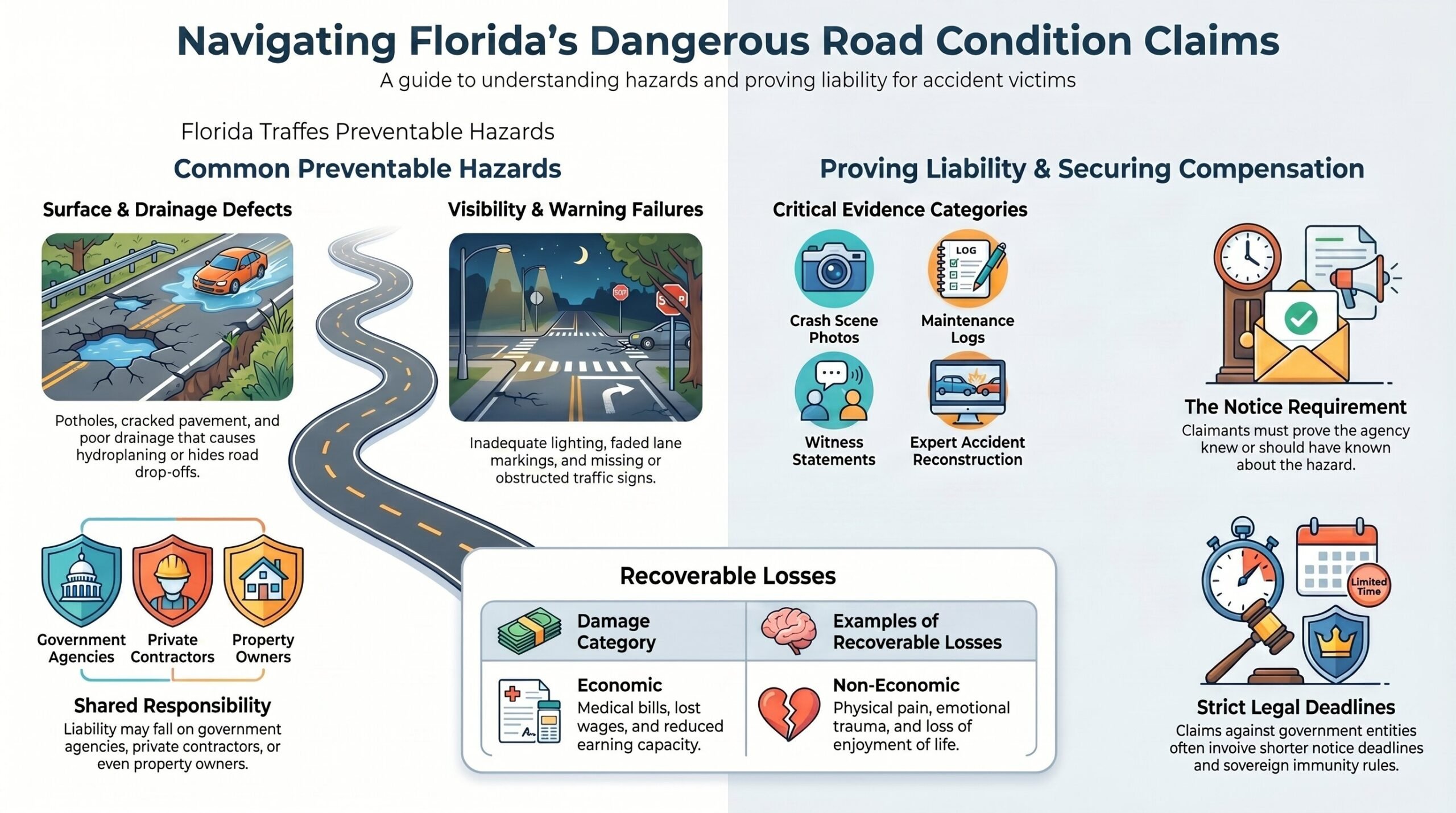
Dangerous road condition accidents in Florida often arise from preventable hazards that interfere with a driver’s ability to operate a vehicle safely. Common causes include potholes and cracked pavement, poor roadway drainage, missing traffic signs, and inadequate road lighting. Each condition may create distinct risks, and identifying the specific cause is critical when evaluating liability and injury claims.
Potholes And Cracked Pavement
When potholes, broken asphalt, or cracked pavement interrupt the normal flow of traffic, drivers may lose control while braking, swerving, or striking the damaged surface. These hazards can damage tires, bend wheels, and disrupt vehicle alignment, posing sudden risks to nearby motorists, passengers, cyclists, and pedestrians. In Florida, heavy traffic, heat, and deferred maintenance can allow pavement defects to worsen before repairs are made.
Public agencies and contractors responsible for roadway care may need to identify, warn about, or correct dangerous pavement conditions within a reasonable time. Similar concerns arise when Traffic signal failures or lane marking defects combine with uneven surfaces, increasing confusion and collision risk. Careful documentation, repair records, photographs, and witness statements may help determine whether preventable neglect contributed to an injury-producing crash.
Poor Roadway Drainage
Poor roadway drainage can turn ordinary rain into a serious traffic hazard, especially on Florida roads where sudden storms may overwhelm gutters, culverts, storm drains, or roadside grading. Standing water reduces tire traction, increases stopping distances, and can cause vehicles to hydroplane into nearby lanes, medians, or pedestrians. Flooded shoulders may also hide pavement defects, debris, or unsafe drop-offs, creating added risks for motorists trying to regain control.
When drainage systems are neglected, water can undermine roadbeds, weaken bridge approaches, and contribute to structural concerns, including circumstances associated with Bridge collapse. Heavy pooling near intersections may also damage electrical components, leading to signal failures that confuse traffic flow and increase collision risks. Agencies responsible for roadway safety must address drainage problems promptly to protect all who rely on public roads.
Missing Traffic Signs
Roadway hazards are not limited to surface defects or drainage failures because missing traffic signs can also create serious confusion for drivers who rely on clear instructions to make safe decisions. When stop signs, yield signs, lane-control signs, or warning signs are absent, motorists may enter intersections improperly, misjudge right-of-way, or fail to adjust speed near known hazards.
These failures can place careful drivers, passengers, pedestrians, and public servants at unnecessary risk. After a crash, investigators may review maintenance records, prior complaints, photographs, and vehicle damage documentation to determine whether the missing sign contributed to the collision. Claims involving absent signage may also require disciplined insurance negotiation tactics, because insurers may dispute fault or argue that driver error was the primary cause. Clear evidence helps protect injured people.
Inadequate Road Lighting
At night or during periods of limited visibility, inadequate road lighting can make ordinary driving conditions noticeably more dangerous. Poorly lit intersections, curves, crosswalks, and merge areas may prevent motorists from seeing hazards in time to respond safely. This risk increases when faded road markings make lanes, stop lines, or pedestrian areas difficult to identify. Distracted drivers may be even less prepared to recognize pedestrians, cyclists, stalled vehicles, debris, or sudden changes in traffic flow.
In Florida, lighting deficiencies can affect residents, visitors, and workers who depend on safe public roads. When preventable lighting problems contribute to a collision, investigators may examine maintenance records, prior complaints, design standards, and accident history. Careful review helps identify whether a public agency, contractor, or other responsible party failed to protect roadway users.


Legal Rights of Florida Dangerous Road Condition Car Accident Injury Victims
When dangerous road conditions contribute to a crash in Florida, injured victims may have the right to pursue compensation from the party responsible for creating, failing to repair, or failing to warn about the hazard. These claims may involve government agencies, contractors, property owners, or other entities entrusted with public safety.
Victims may seek recovery for medical expenses, lost income, reduced earning capacity, pain, and other legally recognized losses.
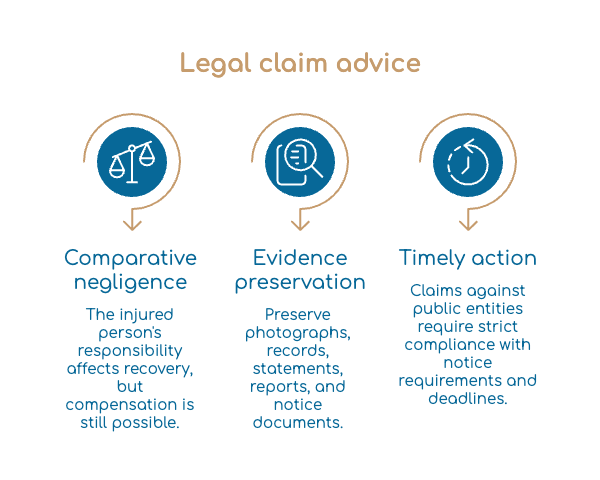
- Comparative negligence may affect recovery if the injured person is partly responsible, yet compensation may still be available based on the allocation of fault.
- Evidence preservation is essential, including photographs, maintenance records, witness statements, crash reports, and notice documents demonstrating that the hazard existed.
- Timely action matters because claims against public entities often require strict compliance with notice requirements and shorter deadlines.
A careful legal review helps identify responsible parties and supports the victim’s ability to seek fair accountability after a preventable roadway injury.
Why Do Dangerous Road Conditions in Florida Cause Car Accident Injuries?
Understanding the legal rights of injured victims also requires examining why crashes involving dangerous road conditions occur in the first place. In Florida, these injuries often arise when public or private entities fail to identify, repair, or warn about roadway hazards that place ordinary travelers at risk. Common contributing conditions include broken pavement, missing guardrails, poor drainage, faded lane markings, obstructed signs, defective traffic signals, and construction zones lacking proper controls.
Crashes may also occur because hazards develop quickly during heavy rain, flooding, or high traffic, leaving drivers with little time to react. When multiple agencies, contractors, or property owners share responsibility for road design and maintenance, determining accountability can be difficult. Insurance coverage disputes may then delay fair resolution, especially when parties deny control over the unsafe condition. Emergency response delays can further worsen injuries, particularly in remote areas, congested corridors, or locations where poor road design limits access.
What Should You Do After a Florida Dangerous Road Condition Car Accident Injury?
After a car accident injury caused by a dangerous road condition in Florida, the injured person should seek immediate medical care to protect both health and documentation. Evidence of road hazards, including photographs, witness information, and location details, may help establish how the crash occurred. An injury lawyer can evaluate liability, preserve crucial evidence, and guide the injured person through the claims process.
Seek Immediate Medical Care
Because dangerous road conditions can cause serious injuries that may not be immediately apparent, prompt medical evaluation should be a priority after any Florida car accident. A physician can assess trauma, identify delayed symptoms, and recommend treatment that supports recovery and stability. Injured individuals should cooperate with paramedics, accept transportation when necessary, and explain all pain, confusion, numbness, or dizziness.
Emergency response documentation may later help show the timing and seriousness of the injuries. After treatment, hospital discharge paperwork should be preserved, including diagnoses, medication instructions, referrals, and follow-up appointments. Continuing care is also important because missed appointments may weaken the connection between the crash and the injury. By seeking care quickly, a person protects health, supports family responsibilities, and creates a reliable medical record.
Document Road Hazards
Medical treatment helps establish the nature of the injuries, but the condition of the roadway must also be documented as soon as it is safe to do so. Photographs and video may capture potholes, missing signs, poor lighting, standing water, debris, obscured lane markings, or malfunctioning traffic signals. Wide views and close details can show how the hazard affected vehicle safety and contributed to the crash.
If possible, a person at the scene may note the date, time, weather, traffic flow, and exact location, including nearby intersections or landmarks. Witness names and contact information should be preserved, especially from those who saw the hazard before the collision. Records of prior complaints, repair markings, or visible road maintenance activity may also help explain whether the dangerous condition existed long enough for action.
Contact An Injury Lawyer
When a crash may involve a dangerous road condition, contacting an injury lawyer promptly can help preserve evidence, identify responsible parties, and protect the injured person’s legal position. Counsel can review photographs, maintenance records, crash reports, and roadway design issues to determine whether a government agency, contractor, or private entity may share fault. Early legal guidance also supports accurate documentation of medical needs, lost income, and community responsibilities affected by the injury.
A lawyer may evaluate a Witness’s credibility, secure statements before memories fade, and coordinate an expert review when road defects require technical analysis. During insurance negotiations, legal representation can help prevent the claim from being undervalued and reduce pressure to accept an inadequate settlement. Timely action serves the injured person, their family, and the broader public interest.
Critical Evidence in a Florida Dangerous Road Condition Car Accident Injury Case
Critical evidence in a Florida dangerous road-condition car-accident injury case may establish how the hazard existed, whether responsible parties had notice, and how the condition contributed to the crash.
Key proof may include: 1. Crash scene photographs, showing roadway defects, debris, signage, lighting, and vehicle positions; 2. Road maintenance records and witness statements, documenting prior complaints, repairs, or observations; 3. Expert accident analysis, explaining causation, visibility, and preventable risks. This evidence can help determine liability, support damages, and strengthen the injured party’s claim.
Crash Scene Photographs
At the scene of a Florida car accident involving a dangerous road condition, photographs may provide some of the clearest evidence of what caused the crash and how the hazard affected the driver’s ability to avoid harm. Images can document potholes, uneven pavement, missing signs, obstructed views, debris, poor lighting, or standing water before conditions change. They may also show vehicle positions, skid marks, traffic patterns, weather conditions, and visible injuries.
For those serving injured clients, crash-scene photographs help accurately and carefully connect roadway hazards to resulting harm. They may support Insurance claim handling by clarifying liability issues and preserving facts early. When paired with medical documentation reviews, photographs can help explain how the force, direction, and circumstances of impact relate to diagnosed injuries and needed treatment.
Road Maintenance Records
Although photographs may capture a roadway hazard as it appeared after a crash, road maintenance records can show what government agencies, contractors, or other responsible parties knew before the collision occurred. These records may include inspection logs, repair requests, resurfacing schedules, drainage reports, and prior complaints. When reviewed carefully, they can reveal delayed repairs, ignored hazards, or Negligent supervision of crews assigned to protect public safety.
In a Florida dangerous road condition case, such documentation may help establish notice, responsibility, and preventability. It may also support insurance claim tips focused on preserving written proof before records are lost, overwritten, or withheld. For injured persons and those assisting them, these materials can provide an orderly foundation for accountability, service-minded advocacy, and informed legal evaluation.
Witness Statements
Written records may show what agencies or contractors knew before a crash, but witness statements can explain how a dangerous road condition affected drivers, passengers, pedestrians, or nearby property owners in real time. A witness may describe standing water, missing signs, broken signals, poor lighting, loose gravel, or obstructed sightlines. These accounts can help preserve details that fade quickly after repairs begin or traffic patterns change.
Statements from nearby residents, workers, first responders, or other motorists may also support electronic traffic evidence by confirming speeds, signal timing, lane closures, or sudden evasive actions. When carefully gathered, witness statements assist attorneys in identifying responsible parties and protecting injured people. They may later help accident reconstruction experts understand the sequence of events without replacing the need for separate technical analysis.
Expert Accident Analysis
When a crash involves a suspected dangerous road condition, expert accident analysis can connect physical evidence, roadway design, vehicle movement, and driver response into a clear explanation of how the collision occurred. Experts may review skid marks, impact angles, sight distances, traffic controls, lighting, drainage, and surface defects to determine whether the roadway created an unreasonable hazard.
Their findings can help distinguish Driver negligence from conditions that limited safe reaction time or made ordinary driving unsafe. Engineers may also evaluate whether construction standards, maintenance practices, or warning measures were adequate under Florida law. This evidence is often key when public agencies, contractors, or insurers raise liability defenses. A well-supported expert opinion helps present the facts clearly, serving injured individuals and communities seeking safer roads.
Long-Term Effects of Florida Dangerous Road Condition Car Accident Injuries
Dangerous road condition accidents in Florida can leave injured individuals facing long-term consequences that extend beyond the initial crash. Chronic pain complications, emotional trauma, and ongoing medical needs may affect daily function, employment, and overall quality of life. These lasting effects often become central issues when evaluating the full scope of an injury claim.
Chronic Pain Complications
After a crash caused by unsafe road conditions, chronic pain can become one of the most disruptive long-term consequences for an injured person in Florida. Persistent neck, back, joint, or nerve pain may limit mobility, interfere with employment, and reduce the ability to care for family or community responsibilities. Medical providers may recommend ongoing therapy, injections, or prescription medicine, but Medication side effects can create additional challenges, including fatigue, dizziness, or reduced concentration.
Careful documentation of symptoms, treatment history, and functional limitations can help clarify the injury’s lasting impact. In some cases, coordinated care may include psychological support to help the person manage pain-related stress without shifting focus from the physical condition. Thorough evaluation supports fair consideration of future medical needs, lost earning capacity, and daily assistance.
Emotional Trauma Effects
Physical pain is often accompanied by emotional trauma, particularly where unsafe road conditions caused a sudden and violent collision in Florida. Victims may experience anxiety, sleep disruption, irritability, fear of driving, or intrusive memories tied to the crash location. These effects can reduce patience, concentration, and trust, limiting a person’s ability to work, care for family, or serve others with steadiness. Emotional harm may also influence insurance negotiations because adjusters often focus on visible injuries while undervaluing psychological consequences.
Careful documentation from counselors, family members, and employers can help show how distress changed daily functioning. When vehicle valuation disputes arise, the emotional meaning of losing reliable transportation may be overlooked, especially for caregivers and service-focused workers who depend on mobility to meet community responsibilities.
Ongoing Medical Needs
When crash injuries require treatment beyond the initial emergency response, ongoing medical needs can become one of the most significant long-term effects of a dangerous road condition accident in Florida. Injured individuals may need surgeries, rehabilitation, pain management, mobility assistance, or continued neurological care. These needs can affect work, caregiving duties, transportation, and daily independence.
For those serving injured people, careful attention to medical documentation is vital because future care must be evaluated under applicable legal standards. Records, treatment plans, expert opinions, and cost projections help show how the roadway hazard contributed to lasting harm. Evidence preservation also remains important, including photographs, inspection records, witness statements, and maintenance histories. A thorough approach supports accountability and helps ensure that long-term care requirements are recognized accurately and fairly.
Proving Liability in Florida Dangerous Road Condition Car Accident Injury Cases
Although dangerous road conditions may appear straightforward, proving liability in a Florida car accident injury case often requires a detailed showing of who controlled the roadway, what hazard existed, and whether the responsible party knew or should have known about the danger. Evidence may identify a government agency, contractor, property owner, or maintenance provider as responsible for unsafe design, poor repairs, missing signs, debris, flooding, or malfunctioning traffic controls.
A careful investigation may include photographs, crash reports, inspection records, repair requests, witness statements, and vehicle maintenance logs when the mechanical condition is relevant. Prior complaints, work orders, and public records can help show notice of the hazard and the failure to act within a reasonable time. Liability may also depend on compliance with statutory notice rules and Insurance dispute deadlines, which can affect how a claim is preserved. This disciplined approach helps injured people seek accountability while supporting safer roads for the public.
Dealing With Insurance Companies After a Florida Dangerous Road Condition Car Accident Injury
After a crash caused by dangerous road conditions in Florida, insurance companies often begin evaluating fault, damages, and coverage before the injured person fully understands the scope of the claim. Adjusters may request statements, medical authorizations, or quick settlement discussions, each of which can affect a case’s value. Careful communication is important, especially when roadway defects, poor maintenance, missing signs, or inadequate warnings contributed to the collision.
A thorough response includes preserving evidence of negligence, such as photographs, repair records, witness accounts, and reports identifying the hazardous condition. It also requires documenting medical expenses, including emergency care, follow-up treatment, rehabilitation, prescriptions, and future care recommendations. Insurance companies may question whether injuries were caused by the crash or whether treatment was necessary.
Clear records help answer those challenges. A Florida injury lawyer may assist by organizing evidence, limiting harmful communications, and advocating for fair compensation for losses while the injured person focuses on recovery.
What to Expect During a Florida Dangerous Road Condition Car Accident Injury Claim Process
A Florida dangerous road-condition car-accident injury claim often begins by identifying the specific hazard that contributed to the crash, such as poor signage, defective pavement, or inadequate maintenance. The process may then require proving government liability, complying with strict notice requirements, and filing injury claims within applicable deadlines. Once liability and damages are documented, negotiations typically focus on securing fair compensation for medical expenses, lost income, and related losses.
Identifying Road Hazards
In a dangerous road condition claim, identifying the specific hazard is one of the first steps in determining whether a Florida car accident injury case may involve government liability, contractor negligence, or another responsible party. Hazards may include potholes, missing signs, faded lane markings, uneven pavement, obstructed views, faulty traffic signals, debris, or poor drainage. Careful documentation supports fair evaluation and helps those affected move toward needed medical, financial, and personal recovery.
Photographs, witness statements, police reports, vehicle damage estimates, and location details may help show how the condition contributed to the crash. Early investigation also protects evidence before repairs or weather changes alter the scene. Insurance claim timelines should be monitored closely, as delays may affect available options and the orderly presentation of the injury claim.
Proving Government Liability
Once the hazardous condition has been identified and documented, the next issue is whether a government entity had legal responsibility for the roadway and failed to address a known or reasonably discoverable danger. This assessment may involve maintenance records, inspection schedules, prior complaints, crash history, and construction or design documents.
A careful review helps determine whether officials had notice of the defect and enough time to take reasonable corrective action. Because public resources serve the community, accountability must be evaluated with fairness and precision. Government liability may also affect Settlement timelines, since statutory procedures and agency review can slow resolution. A damages calculation should connect the roadway defect to medical costs, lost income, disability, and other proven losses, while separating unrelated causes from compensable harm.
Filing Injury Claims
After liability concerns are reviewed, the injury claim process generally begins with identifying all responsible parties, preserving evidence, and providing required notice to any government agency involved. In cases involving Florida road hazards, claimants often gather crash reports, medical records, repair estimates, photographs, and eyewitness documentation to support the account of how the collision occurred.
The process may include confirming maintenance duties, prior complaints, inspection records, and the timing of any warning signs or repairs. When government liability is possible, strict notice requirements and deadlines may apply before a lawsuit can proceed. Proving negligence requires showing that a hazardous condition existed, that responsible entities knew or should have known about it, and that the condition caused injury. Careful filing helps protect the claim while facts are formally reviewed.
Negotiating Fair Compensation
When the evidence has been organized and the responsible parties are identified, negotiations usually focus on whether the dangerous road condition caused the crash and how fully the injuries are documented. Insurers and government representatives may evaluate repair records, notice of the hazard, medical findings, wage losses, and future care needs. A lawyer may present the claim in a structured manner, showing how unsafe design, poor maintenance, or delayed correction harmed the injured person.
Negotiations also address practical concerns, including dealing with medical bills and filing insurance claims within required deadlines. For those committed to serving others, fair compensation supports recovery, family stability, and continued responsibility. If offers undervalue the harm, the attorney may recommend further advocacy, including litigation, while maintaining accurate records and measured communication throughout.
Compensation for Florida Dangerous Road Condition Car Accident Injury Damages
A careful claim presentation may help demonstrate how the hazardous condition caused the crash, why the danger should have been corrected, and how the injury affected the claimant’s life. Attorneys serving injured motorists often review crash reports, photographs, maintenance records, prior complaints, engineering evidence, and witness accounts.
Comparative fault defenses may be raised to argue that the driver failed to use reasonable care. Insurance settlement tactics may also attempt to minimize responsibility or pressure for early resolution. Thorough documentation and disciplined advocacy can support fair compensation while promoting accountability for safer public travel.
Economic vs Non-Economic Damages in Florida Dangerous Road Condition Car Accident Cases
In Florida dangerous road condition car accident cases, damages are generally divided into economic and non-economic categories. Economic damages may include medical expenses, lost income, and vehicle repair costs, while non-economic damages may account for pain, suffering, and diminished quality of life. Proving the value of each category requires organized evidence, credible documentation, and a clear connection between the unsafe road condition and the resulting harm.
Economic Damage Examples
Because dangerous road conditions can create both immediate and long-term financial burdens, economic damages in a Florida car accident claim focus on the measurable losses tied to the injury. These damages may include medical bills for emergency treatment, surgery, rehabilitation, prescription medication, diagnostic testing, and follow-up care.
They may also include Lost wages when an injured person cannot work, reduced earning capacity when job duties become limited, and documented costs for transportation to appointments or necessary home assistance. In cases involving unsafe roads, careful records help connect these losses to the crash and support fair insurance negotiations. Attorneys, adjusters, and courts often review receipts, employment records, medical statements, and expert evaluations when calculating settlement amounts intended to restore financial stability and promote responsible accountability.
Non-Economic Damage Examples
While financial losses can often be proven with records, non-economic damages address the personal harm that cannot be measured by invoices or wage statements. In dangerous road condition cases, these losses may include physical pain, emotional distress, anxiety while traveling, sleep disruption, scarring, disfigurement, and loss of enjoyment of daily activities. A seriously injured person may struggle to care for family, serve a community, or participate in meaningful routines that once provided purpose.
These damages may also reflect the burden of long-term impairment, loss of independence, or strain on close relationships. In Florida, comparative negligence factors can affect the recovery available, even when unsafe roadway conditions contributed to the crash. Insurance claim denials may further complicate access to fair compensation for these deeply personal injuries.
Proving Damage Value
After a crash linked to dangerous road conditions, proving the value of damages requires more than identifying who caused the collision. Economic losses may include medical bills, rehabilitation costs, lost wages, reduced earning capacity, vehicle repairs, and future care needs. These losses require proof of damage through records, invoices, employment statements, medical opinions, and reliable projections.
Non-economic damages, such as pain, emotional distress, disability, and loss of enjoyment, require careful victim documentation. Treatment notes, photographs, personal journals, caregiver observations, and testimony from family members may help explain how injuries changed daily life.
In Florida cases involving unsafe roads, clear evidence helps attorneys, insurers, judges, and juries understand the full extent of the harm suffered. Accurate valuation supports fair compensation and honors the injured person’s need for stability, dignity, and practical recovery assistance.
When a Florida Dangerous Road Condition Car Accident Injury Case Goes to Trial vs Settlement
As a Florida dangerous road-condition car-accident injury case develops, the decision to settle or proceed to trial often depends on the strength of the evidence, the severity of the injuries, and the willingness of the responsible parties to accept liability. Settlement may provide a timely resolution, allowing injured individuals to receive support without the stress and uncertainty of courtroom proceedings. A thoughtful Negotiation strategy can present roadway defects, medical needs, lost income, and long-term care concerns in a way that encourages fair compensation.
Trial may become necessary when fault is disputed, damages are undervalued, or meaningful offers are refused. In that setting, attorneys prepare witnesses, organize expert testimony, and address jury selection dynamics with careful attention to community perspectives. For those committed to serving injured people with dignity, the goal remains consistent: secure accountability, promote safer roads, and pursue a result that reflects the full human impact of the crash.
Florida Laws That May Affect Your Florida Dangerous Road Condition Car Accident Case
A Florida dangerous road-condition car accident case may be shaped by several state laws governing fault, deadlines, insurance coverage, and claims against government entities. These rules can affect how responsibility is evaluated and how compensation may be pursued for an injured person.
Florida road condition claims depend on fault, insurance rules, deadlines, and potential government liability.
- Comparative Fault Standards may reduce recovery when the injured driver, another motorist, or a public agency shared responsibility for the crash.
- Personal injury protection requirements generally require injured occupants to first seek certain benefits through their own no-fault coverage, depending on the losses involved.
- Sovereign Immunity Waivers may allow claims against state or local agencies when negligent road design, maintenance, signage, or traffic control contributed to harm, subject to specific procedures and statutory limits.
A careful legal review helps identify responsible parties, preserve evidence, and support a claim that serves the injured person’s needs with diligence, accuracy, and respect for accountability.
The Statute of Limitations for Florida Dangerous Road Condition Car Accident Injury Cases
When a crash in Florida involves a dangerous road condition, the statute of limitations can determine whether an injured person still has the legal right to pursue compensation. For most negligence-based injury claims, Florida law generally allows two years from the date of the accident to file a lawsuit. If a government agency may be responsible for unsafe design, poor maintenance, missing signage, or failure to correct known hazards, additional notice rules and shorter administrative deadlines may apply.
Timely action helps preserve roadway evidence, maintenance records, witness accounts, and inspection materials. These items may be important during a Damages Review, especially when medical losses, wage disruption, and long-term impairment must be assessed with care. The deadline also matters when Comparative Negligence is disputed, because fault may be divided among drivers, contractors, or public entities. Missing the applicable filing period can bar recovery, regardless of the injury’s seriousness or the road hazard’s severity.
How a Florida Dangerous Road Condition Car Accident Injury Lawyer Can Help You
How can legal representation affect a claim involving a dangerous road condition after a Florida car accident? A lawyer may help injured persons pursue accountability while reducing the burden on families, caregivers, and community members who support recovery. During an initial consultation, the lawyer can review the available facts, identify potential liable parties, and explain practical options.
- Investigation: Counsel may gather crash reports, photographs, maintenance records, witness statements, and expert opinions to connect the roadway hazard to the collision.
- Claim development: The lawyer may evaluate medical records, lost income, repair costs, and long-term care needs, helping present damages with accuracy and dignity.
- Client communication: Consistent updates can help the injured person and their support network understand progress, decisions, and settlement considerations.
When to Contact a Florida Dangerous Road Condition Car Accident Injury Lawyer
Because evidence can change rapidly after a roadway-related crash, legal guidance should be considered as soon as the injured person’s immediate medical needs are addressed. Prompt contact may help protect facts that support accountability, including photographs, maintenance records, witness statements, and roadway design details. In cases involving missing warnings, obscured signals, faded markings, or unsafe construction zones, early review may also assist in evaluating Road Signage Liability.
Families, caregivers, and advocates serving an injured person should seek guidance when the crash location appears poorly maintained, confusing, flooded, uneven, or inadequately marked. Timely communication allows for Accident Evidence Preservation before repairs, weather, traffic, or cleanup actions alter the scene. Contact may also be appropriate when a government agency, contractor, or property owner may have contributed to the hazard. Acting early helps ensure that the injured person’s circumstances are documented with care, accuracy, and respect for future needs and recovery.
Why You Need an Experienced Florida Dangerous Road Condition Car Accident Injury Lawyer
After a crash involving a dangerous road condition, an experienced Florida car accident injury lawyer can help identify whether roadway design, maintenance failures, inadequate warnings, or construction-related hazards contributed to the injury. These cases often involve public agencies, contractors, maintenance companies, and insurers, each with separate duties and defenses. Careful investigation is critical to preserving evidence, documenting the hazard, reviewing prior complaints, and determining who had notice of the unsafe condition.
Experience is important because claims involving public roads may be affected by government notice requirements and strict filing deadlines. A lawyer familiar with these issues can help prevent procedural mistakes that may weaken a valid claim. Legal guidance also supports injured people and their families when Insurance claim delays create financial strain, medical uncertainty, or pressure to accept less than full compensation. Through organized advocacy, counsel helps protect the injured person’s rights while promoting accountability for safer roads and responsible public service.
How to Choose the Right Florida Dangerous Road Condition Car Accident Injury Lawyer for Your Case
Choosing the right Florida dangerous road condition car accident injury lawyer requires careful attention to the lawyer’s experience with roadway defect claims, government liability issues, and elaborate accident investigations. A qualified lawyer should understand how poor signage, broken pavement, obstructed views, faulty traffic signals, or inadequate maintenance may contribute to a serious crash. This knowledge supports thorough evidence review and responsible advocacy for injured people and their families.
The selection process should include evaluating the lawyer’s history with similar claims, access to accident-reconstruction resources, and the ability to identify all potentially liable parties. Case strategy planning is also critical because dangerous road condition cases often involve strict notice rules, public records, and expert analysis. Strong client communication updates help individuals remain informed while they focus on recovery and service to loved ones. The right lawyer should demonstrate professionalism, diligence, and a clear commitment to pursuing fair compensation through careful preparation and principled representation.
About The Law Offices of Anidjar & Levine
The Law Offices of Anidjar & Levine represents injured clients across Florida in car accident cases, including claims involving dangerous road conditions and roadway defects.
The firm serves individuals and families seeking accountability after crashes caused by unsafe intersections, poor maintenance, missing warnings, lane closures, or defective traffic signaling.
Its legal team reviews evidence with a focus on public safety, using reports, photographs, witness statements, and expert insights to identify responsible parties.
A Safety checklist may guide the investigation, helping determine whether roadway hazards, driver distraction, or inadequate traffic controls contributed to the collision.
The firm also communicates with insurers, evaluates damages, and pursues compensation for medical care, lost income, pain, and other losses.
Its work reflects a service-focused approach, intended to help injured people protect their rights while encouraging safer roads for Florida communities.
Clients receive informed guidance, responsive communication, and advocacy directed toward meaningful recovery and accountability after serious accidents.
Frequently Asked Questions
Can Tourists File Dangerous Road Condition Accident Claims in Florida?
Yes, tourists may file claims for dangerous road-condition accidents in Florida when unsafe conditions contribute to injuries. Claims may involve Negligent maintenance, defective roadway signage, poor lighting, or unrepaired hazards. A visitor generally must show the responsible agency or entity knew, or should have known, about the danger and failed to correct it. Prompt documentation, medical care, and legal guidance can help protect rights while supporting accountability and public safety.
Do Weather Conditions Affect Dangerous Road Condition Injury Claims?
Yes, weather conditions can affect dangerous road condition injury claims by influencing fault, notice, and causation. Rain, fog, flooding, or poor visibility may complicate the determination of whether a road hazard was preventable or reasonably addressed. Public entities may argue limited control during severe weather, making the impacts of sovereign immunity important. Insurance coverage considerations also matter, especially when multiple drivers, maintenance failures, or emergency responses are involved. Careful evidence review supports those seeking accountability and public safety.
Can Multiple Drivers Share Fault for a Dangerous Road Condition Crash?
Yes, multiple drivers can share fault for a crash caused by a dangerous road condition when their actions contribute to the harm. Under Comparative Negligence, responsibility may be divided among speeding drivers, distracted motorists, or those failing to adjust to hazards. Shared Liability allows each person’s conduct to be evaluated fairly, while also considering road design, maintenance, or warnings. This approach supports accountability, protects injured parties, and promotes safer service to the community.
Are Rental Car Accidents Handled Differently in These Claims?
Rental car accidents may be handled differently because ownership, contract terms, and available coverage can affect responsibility. Rental agency liability is usually limited, yet it may arise if negligent maintenance or unsafe vehicle practices contributed. Insurance coverage differences also matter, including renter policies, credit card benefits, rental add-ons, and other driver coverage. Careful review helps protect injured persons and supports fair service to all affected by the crash.
Can Dashcam Footage Help Prove a Dangerous Road Condition Caused My Crash?
Yes, dashcam footage can help prove a dangerous road condition caused a crash. Investigators may use dashcam timestamp evidence to confirm when hazards appeared, how vehicles reacted, and whether traffic signal violations contributed. Clear video can support those serving injured people by preserving facts before conditions change. It may show potholes, debris, flooding, poor signage, or obstructed views, strengthening a claim when matched with reports, photographs, and witness statements.
—————————
Dangerous road condition accident claims in Florida often require careful investigation, clear evidence, and a precise understanding of liability.
Injured victims may face medical costs, lost income, and long-term consequences that demand serious legal attention.
A qualified Florida Car Accident Lawyer can identify responsible parties, protect the victim’s rights, and pursue fair compensation.
The Law Offices of Anidjar and Levine provides informed guidance for those seeking accountability after preventable roadway hazards.