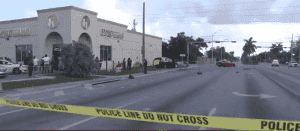
The Law Offices of Anidjar and Levine assists injured drivers when hazards such as potholes, flooding, missing signs, or construction defects contribute to a crash. Counsel helps identify liable parties, preserve photographs, witness statements, maintenance records, and repair histories, and manage insurer communications.
An attorney also evaluates deadlines, notice requirements, damages, and possible claims against public entities or contractors. The sections that follow explain how these cases are effectively investigated, valued, and pursued. For more information, speak with a Miami Car Accident Lawyer.
Main Takeaways
- A Miami dangerous road condition lawyer identifies liable parties, including government agencies, contractors, or private entities, responsible for unsafe roadway conditions.
- Preserve evidence immediately by photographing potholes, flooding, missing signs, poor lighting, vehicle damage, and the scene from multiple angles.
- Seek prompt medical care and keep records to connect injuries, treatment costs, and future care needs to the crash.
- An attorney handles insurers, deadlines, notices, and documentation to protect your claim and avoid harmful recorded statements or delays.
- Strong claims often use maintenance logs, repair histories, prior complaints, witness statements, and expert analysis to prove that the hazard caused the collision.
How We Can Help With Your Miami Dangerous Road Condition Car Accident Injury Claim
In the aftermath of a collision caused by unsafe roadway conditions, legal counsel can play a central role in protecting an injured person’s claim. Attorneys provide organized guidance, helping clients act promptly, preserve records, and avoid missteps that could weaken recovery efforts. Their work often begins with gathering photographs, witness statements, repair records, and official reports to support a clear account of what occurred.


From there, counsel develops a Legal strategy tailored to the client’s injuries, losses, and immediate needs. They communicate with insurers, manage documentation, calculate damages, and present evidence in a persuasive, service-minded manner that respects the client’s priorities. When appropriate, they pursue settlement negotiations to seek fair compensation without unnecessary delay. If resistance arises, they prepare the matter for stronger advocacy through formal proceedings. Throughout the process, legal counsel helps injured people focus on recuperation, family responsibilities, and the practical demands of daily life after a serious crash.
Understanding Miami’s Dangerous Road Condition Car Accident Injury Cases
OUR CONSULTATIONSARE FREE
START YOUR FREE CASE REVIEW

Across Miami, dangerous road conditions and car accident injury cases often arise when roadway defects, poor maintenance, inadequate warning signs, or unsafe traffic design contribute to a collision. In these matters, the central issue is whether a hazardous condition created an unreasonable risk and whether responsible parties failed to address it within a reasonable time.
A proper understanding of these cases helps injured people, families, and advocates respond in ways that protect both recovery and public safety. Evidence may include photographs, inspection records, maintenance logs, witness statements, and expert analysis concerning roadway lighting, visibility, and traffic control devices. Legal review also considers whether driver distractions affected events, while still examining how road conditions increased harm or limited safe responses.


Because these claims may involve government entities, private contractors, or property owners, procedures and deadlines can differ markedly. Careful documentation and timely action support accountability, encourage safer infrastructure, and help communities better serve those injured on Miami roads.
Common Causes of Miami Dangerous Road Condition Car Accidents
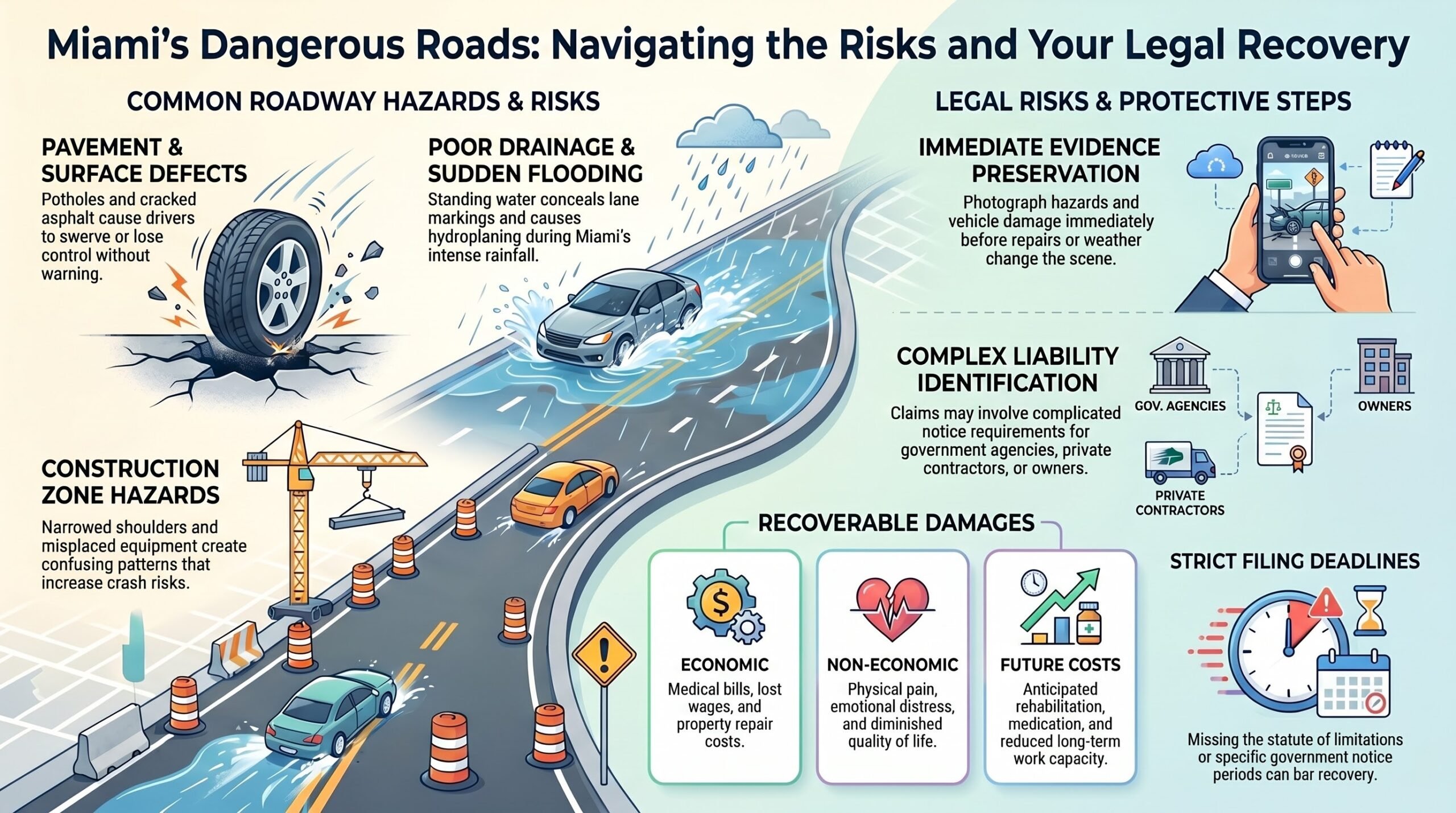
Several roadway hazards commonly contribute to dangerous road conditions and car accidents in Miami, often by reducing vehicle control or limiting driver awareness. Frequent examples include potholes and pavement defects, poor drainage and flooding, missing road signs, and construction zone hazards that alter normal traffic patterns. Each of these conditions can create preventable risks and may play a significant role in determining how liability is assessed after a crash.
Potholes And Pavement Defects
Along with heavy traffic and frequent rainfall, potholes and pavement defects create hazardous driving conditions that can quickly lead to serious collisions in Miami. These surface failures may cause drivers to swerve, lose control, or strike other vehicles, cyclists, or pedestrians without warning.
Cracked asphalt, uneven lanes, faded markings, and Roadway Settlements often develop gradually, yet their consequences can be immediate and severe for families and communities. Public agencies and private property owners may share responsibility when neglected maintenance contributes to harm, including claims involving Sidewalk Liability where defective adjoining surfaces affect roadway safety. Careful investigation often examines inspection records, repair histories, prior complaints, and notice of dangerous conditions. By identifying the source of the defect and the responsible party, injured individuals may more effectively pursue accountability and help support safer streets for everyone throughout the Miami area.
Poor Drainage Flooding
During periods of heavy rain, poor drainage and roadway flooding can transform ordinary Miami streets into sudden collision hazards. Water can conceal lane markings, reduce tire traction, and cause hydroplaning, leaving drivers with little time to react. Flooded intersections may also stall vehicles, block emergency access, and increase the likelihood of chain-reaction crashes involving unsuspecting motorists.
These conditions often arise when stormwater management systems are inadequate, clogged, or poorly maintained. Runoff from surrounding properties, including failures in yard drainage, can worsen pooling along curbs and low-lying roads. Public entities and private owners who neglect drainage responsibilities may contribute to preventable harm. Careful investigation can help identify whether hazardous flooding resulted from deferred maintenance, defective design, or unreasonable inattention, allowing injured individuals to pursue accountability and support community safety through lawful action.
Missing Road Signs
In the absence of clear road signs, even familiar Miami routes can become unreasonably dangerous, leading to preventable crashes. Missing stop signs, yield markers, speed advisories, and lane direction notices can deprive drivers of essential warnings needed to react safely and protect others on the road.
These hazards may arise from weather damage, neglect, vandalism, sign removal, or sign obstruction caused by overgrown vegetation, parked vehicles, or debris. When guidance is absent or hidden, motorists may enter intersections improperly, miss sharp curves, or fail to anticipate merging traffic. Such conditions can place pedestrians, cyclists, and emergency responders at heightened risk as well. A careful legal review may examine maintenance records, notice of the hazard, and whether a responsible public entity failed to correct a dangerous condition within a reasonable time.
Construction Zone Hazards
Across Miami, construction zones can transform ordinary roadways into high-risk areas when traffic patterns shift without adequate warning or safety controls. Drivers may encounter abrupt lane closures, narrowed shoulders, uneven pavement, and temporary barriers, leaving little time for safe decisions. When signage is unclear or lighting is poor, the danger increases for commuters, pedestrians, and those trying to assist others on crowded streets.
Construction activity may also create hazards from debris, exposed trenches, misplaced cones, and improperly stored equipment near active lanes. Large vehicles entering or exiting work areas can obstruct sightlines and force sudden braking or swerving. In these situations, careful investigation often focuses on whether contractors, agencies, or maintenance crews failed to provide reasonable protection, clear guidance, and a roadway environment that served the public safely.
Legal Rights of Miami Dangerous Road Condition Car Accident Injury Victims
Under Florida law, victims injured in Miami car accidents caused by dangerous road conditions may have the right to pursue compensation when a hazardous roadway, poor maintenance, missing signage, defective traffic signals, or improper construction contributed to the crash. These claims may involve government entities, contractors, or other responsible parties, depending on who created, ignored, or failed to correct the danger.
Dangerous road conditions in Miami car accidents may support compensation claims against agencies, contractors, or others responsible for roadway hazards.
Victims and families devoted to protecting others should understand several core legal principles:
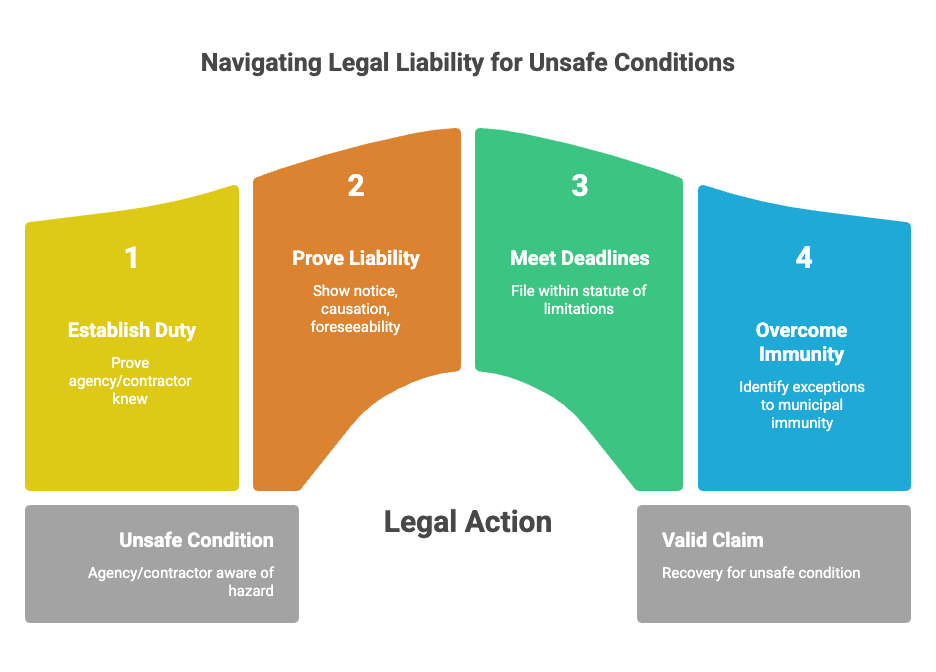
- Duty may arise when an agency or contractor knew, or should have known, of an unsafe condition.
- Liability can depend on notice, causation, and whether the hazard foreseeably increased the risk of crashes.
- The statute of limitations governs filing deadlines, and delay can restrict otherwise valid claims.
- Municipal immunity may limit actions against public entities, yet exceptions can still permit recovery.
Available damages may include medical expenses, lost income, rehabilitation costs, pain and suffering, and other losses recognized under Florida law and civil justice principles.
Steps to Take After a Miami Dangerous Road Condition Car Accident Injury
After a Miami car accident caused by dangerous road conditions, the immediate priority is to secure the accident scene and reduce further risk to all involved. It is also important to document visible road hazards, vehicle damage, and surrounding conditions, as this evidence may support a future claim. Prompt medical evaluation and qualified legal guidance are then crucial to protect both health and legal interests.
Secure The Accident Scene
In the immediate moments after a crash caused by a dangerous road condition, securing the accident scene is vital to protecting everyone involved and preserving important evidence. Those present should move to a safer location, if possible, activate hazard lights, and remain alert to approaching vehicles. Prompt notification of emergency responders supports scene preservation and allows trained personnel to manage traffic control effectively. If safe, warning triangles or flares may help prevent additional collisions and guide motorists away from danger.
Passengers and bystanders should avoid standing in travel lanes or creating new hazards while assistance is en route. A calm, organized response reflects care for others, reduces confusion, and helps first responders work efficiently. These immediate measures can limit further harm and support the orderly handling of the aftermath.
Document Road Hazards
Once the area has been made as safe as circumstances allow, attention should turn to documenting the road hazard that may have contributed to the collision. Clear photographs should capture potholes, missing signs, faded lane markings, standing water, debris, broken signals, or obstructed sightlines from several angles. Notes should record the exact location, time, weather, lighting, and traffic conditions present at the scene.
If possible, nearby landmarks and roadway identifiers should also be included to support accuracy. Witness observations may be carefully noted, especially when they describe how long the condition persisted or whether others had experienced similar danger. This information can assist community reporting efforts and strengthen hazard-mapping initiatives aimed at protecting other drivers, cyclists, and pedestrians from preventable harm on Miami roads and in surrounding neighborhoods.
Seek Medical And Legal Help
Securing prompt medical and legal assistance is a vital step when a dangerous road condition may have contributed to a Miami collision. Immediate evaluation helps identify injuries that may not appear immediately, protects health, and creates records that link the harm to the crash. Physicians may also provide medical referrals to experts, rehabilitation services, and continued monitoring.
Legal guidance is equally important. An attorney can review evidence, preserve claims, and determine whether a public entity, contractor, or other party may be responsible for unsafe roadway conditions. Counsel can also explain legal timelines, which often affect notice requirements and filing deadlines. By acting without delay, injured individuals place themselves in a stronger position to recover compensation while maintaining the ability to serve their families, workplaces, and communities through responsible recovery after injury.
How a Miami Dangerous Road Condition Car Accident Injury Lawyer Can Help You
After a crash caused by unsafe roadway conditions, a Miami dangerous road condition car accident injury lawyer can help identify the responsible parties, preserve crucial evidence, and assess whether a government agency, contractor, or another entity failed to maintain the road safely.
Counsel provides structured guidance focused on service, accountability, and careful coordination with investigators from the earliest stages.
- They gather photos, maintenance logs, witness statements, and roadway design records before essential proof disappears.
- They evaluate notice requirements, sovereign immunity issues, and filing deadlines that often apply when public entities are involved.
- They work toward fair claim valuation by examining medical costs, lost income, property damage, and other measurable losses.
- They negotiate with insurers and opposing counsel, and prepare a strong case for litigation when resolution is refused.
This assistance helps injured people pursue justice in a disciplined way, while supporting safer roads for neighbors, families, and the wider Miami community through responsible legal action.
Long-Term Effects of Miami’s Dangerous Road Conditions on Car Accident Injuries
Dangerous road conditions and car accidents in Miami can produce injuries that extend far beyond the initial collision, often leading to persistent chronic pain that mends slowly and disrupts daily function and long-term recovery. These injuries may also carry significant emotional trauma, affecting mental health, personal relationships, and the ability to return to normal routines. In many cases, reduced mobility becomes a lasting concern, limiting independence and creating ongoing medical, occupational, and financial challenges.
Chronic Pain Challenges
A collision’s physical impact can extend far beyond the initial emergency, especially when poor road conditions contribute to serious injuries that do not fully recover. In many cases, persistent pain affects mobility, sleep, concentration, and the ability to complete ordinary responsibilities safely and consistently.
Chronic Pain Challenges often require ongoing medical evaluation, rehabilitation, and careful Pain management tailored to the person’s condition. Individuals may experience recurring back pain, neck stiffness, nerve symptoms, headaches, or joint instability that interfere with work and service to family or community. Chronic fatigue can also develop when the body expends constant energy coping with discomfort and reduced function. Over time, these limitations may require adaptive routines, assistive devices, and long-term support from healthcare providers who prioritize stability, function, and improved daily quality of life.
Emotional Trauma Impact
For many injured individuals, the long-term effects of a Miami collision caused by hazardous road conditions include emotional trauma that persists well beyond physical recovery. Survivors may experience anxiety, irritability, sleep disturbance, and memory disruption that affect daily responsibilities and relationships. These psychological burdens often require deliberate support, especially when service to family, work, and community remains a central value.
In many cases, meaningful recovery involves trauma counseling, structured stress management, and consistent encouragement from trusted professionals and loved ones. Such measures can strengthen emotional resilience and help injured individuals regain confidence in travel, decision-making, and ordinary routines. Caregivers, advocates, and legal representatives often recognize that emotional harm merits the same careful attention as physical injury. Addressing these effects early may support stability, dignity, and long-term recovery after a preventable crash.
Reduced Mobility Risks
After a serious Miami crash linked to hazardous road conditions, reduced mobility may become one of the most disruptive long-term consequences of injury. Survivors may face chronic pain, joint stiffness, nerve damage, or diminished strength that limits walking, driving, working, and routine self-care. These restrictions often require ongoing rehabilitation and careful coordination from family members, employers, and community caregivers.
When mobility declines, a person may depend on assistive devices such as braces, walkers, wheelchairs, or modified vehicles to remain safe and engaged. Homes, workplaces, and public spaces may also need accessibility audits to identify barriers that threaten independence. In many cases, reduced mobility affects not only physical mobility but also income, social participation, and the ability to continue serving others consistently, with dignity and confidence, daily.
Proving Liability in Miami Dangerous Road Condition Car Accident Injury Cases
When a crash is linked to a dangerous road condition, proving liability in a Miami car accident injury case requires more than showing that the roadway was unsafe. A claimant must connect the hazard to the collision, identify the responsible party, and show that reasonable care was not exercised. This often depends on the preservation of prompt evidence, including photographs, repair records, maintenance logs, and prior complaints.
Courts also examine whether a city, contractor, or property owner knew or should have known about the defect and failed to correct it within a reasonable time. Tire marks, surveillance footage, weather data, and engineering analysis may clarify how the condition contributed to the crash. Witness credibility can be equally important, especially when describing visibility, warning signs, traffic flow, or recurring roadway problems. By presenting clear, organized proof, injured individuals place themselves in a stronger position to pursue accountability and support the broader goal of safer travel for everyone in the community.
Dealing With Insurance Companies After a Miami Dangerous Road Condition Car Accident Injury
Establishing how a dangerous road condition caused a collision often shapes the next challenge: managing communications with insurance companies. Insurers may contact injured people quickly, seeking facts, recorded statements, or broad authorizations before the full extent of harm is understood. A careful, service-minded approach emphasizes accuracy, patience, and protection of the injured person’s interests.
Helpful documentation usually includes photographs, repair estimates, medical records, witness information, and reports identifying the roadway hazard. Consistent communication matters, yet unnecessary detail can create confusion or invite unfair dispute. Attention to claim timelines is also important because delayed notice or missed deadlines may affect the availability of benefits. Many injured people benefit from having an attorney handle insurer correspondence, organize supporting evidence, and respond to requests in a measured way. This can reduce pressure, limit misunderstandings, and help guarantee the discussion remains focused on the road condition, the resulting losses, and the needs of those affected.
What to Expect During a Miami Dangerous Road Condition Car Accident Injury Claim Process
A Miami dangerous road condition car accident injury claim typically begins with formal filing steps, followed by the collection of records, photographs, witness statements, and other evidence needed for a thorough investigation. The process then turns to questions of liability and damages, including whether a hazardous roadway contributed to the crash and the extent of the claimant’s losses. Depending on the strength of the evidence and the parties’ positions, the matter may conclude through settlement negotiations or proceed into litigation.
Claim Filing Steps
In the aftermath of a Miami crash caused by dangerous road conditions, the claim process typically begins with a careful review of how the hazard contributed to the collision and who may bear legal responsibility. Counsel generally identifies applicable Filing timelines, provides notice to insurers, and determines whether a municipality, contractor, or private party should receive formal claim notice.
The next steps often include preparing required forms, organizing medical and repair records, and confirming compliance with policy obligations and statutory deadlines. An initial Evidence checklist may guide document gathering, but the focus remains on proper filing rather than deeper investigation. Communication with insurers, public entities, and opposing parties must remain accurate and timely. Throughout the process, a structured approach helps protect the injured person’s rights and supports an outcome that advances accountability and service to the community.
Evidence And Investigation
Once the filing requirements are addressed, attention generally shifts to the evidence and investigation that will shape a Miami dangerous-road-condition car-accident injury claim. Attorneys commonly gather photographs, roadway maintenance records, traffic camera footage, witness statements, and medical reports to preserve a clear factual timeline. Prompt site inspections may identify potholes, missing signs, poor lighting, standing water, or obstructed sightlines before conditions change.
Forensic documentation often supports this process by recording measurements, debris patterns, skid marks, vehicle damage, and weather data with disciplined accuracy. In some matters, expert reconstruction helps explain how roadway defects interacted with driver responses and surrounding traffic conditions. A careful investigation also reviews prior complaints, repair histories, and government inspection records. Thorough preparation helps families, caregivers, and community-minded clients pursue claims in an informed, orderly, and service-focused manner.
Liability And Damages
Determining liability is a central phase of a Miami dangerous road condition car accident injury claim, because recovery often depends on showing how a hazardous roadway contributed to the collision and who was responsible for preventing or correcting it. Attorneys often evaluate whether a government entity, contractor, or another party failed to inspect, warn, repair, or design the area safely for the public.
Damages are then assessed by examining medical costs, lost income, property loss, pain, and future care needs. Florida’s comparative negligence rules may reduce compensation if an injured person is found partly responsible. In rare cases involving extreme misconduct, punitive damages may be considered. A careful liability and damages analysis helps injured individuals understand their options and pursue accountability in ways that support safety, dignity, and community well-being.
Settlement Or Litigation
From the outset, a Miami dangerous road condition car accident injury claim may move toward settlement or litigation depending on the strength of the evidence, the parties involved, and the response of insurers or public entities. In many cases, counsel pursues Settlement Negotiation first, seeking fair compensation for medical costs, lost income, and future care needs. This process often includes document exchange, expert review, and careful valuation of damages.
If a reasonable resolution does not occur, litigation may follow through formal filings, discovery, motions, and possible mediation. Claims involving government agencies may be subject to strict notice requirements and shorter deadlines. While many cases still resolve before trial, some proceed to Jury Trials when accountability is disputed. Throughout either path, a disciplined legal strategy can help protect injured individuals and support meaningful recovery for families and communities.
Compensation for Miami Dangerous Road Condition Car Accident Injury Damages
Accountability often begins with a clear assessment of the losses resulting from an accident caused by a dangerous road condition. In Miami, claims, compensation may address medical care, rehabilitation, property repair, lost income, and other documented consequences tied to the roadway hazard. A careful damages review supports responsible advocacy and promotes loss mitigation, helping injured people obtain resources needed for recovery while preserving evidence of every expense and service need.
When government entities, contractors, or other responsible parties acted with extreme disregard for public safety, punitive damages may be awarded in limited circumstances under Florida law. Counsel typically gathers maintenance records, inspection history, photographs, witness accounts, and expert opinions to connect the hazard to the collision and resulting harm. This process helps establish the full scope of recoverable damages and encourages safer road practices to protect families, caregivers, volunteers, and others committed to serving their communities. Timely action also helps preserve crucial evidence.
Economic vs Non-Economic Damages in Miami Dangerous Road Condition Car Accident Cases
In Miami, dangerous road conditions and car accident cases, damages are generally divided into economic and non-economic categories, each addressing a different type of loss. Economic damages typically include measurable financial harm, such as medical expenses, lost income, and future treatment costs, while non-economic damages concern pain and suffering, emotional distress, and diminished quality of life. Establishing these damages in Miami often depends on medical records, wage documentation, expert opinions, and other evidence that connects the roadway hazard to the claimant’s injuries and losses.
Economic Damage Categories
Under Florida law, economic damages in a Miami dangerous road-condition car accident case refer to the measurable financial losses directly tied to the collision and resulting injuries. These damages commonly include emergency care, hospitalization, surgery, medication, rehabilitation, assistive devices, and anticipated medical treatment. They also cover property damage, transportation to appointments, household service expenses, and other out-of-pocket costs reasonably caused by the crash.
Economic damages may also include lost wages when injuries prevent a person from working during recovery. If the harm reduces long-term work capacity, a claim may seek compensation for future earnings through vocational and financial evidence. In matters involving public safety and community well-being, careful documentation of bills, records, and employment losses helps demonstrate the full economic impact and supports a fair recovery for those affected.
Non-Economic Losses Explained
Beyond medical bills and wage loss, a Miami dangerous road condition car accident claim may also involve non-economic damages, which address the human consequences of an injury that do not appear on receipts or payroll records. These losses often include physical pain, emotional distress, inconvenience, disfigurement, and diminished quality of life after a serious collision.
In a service-minded legal context, non-economic losses recognize that injuries can hinder a person’s ability to care for family, participate in community life, and maintain independence. Pain valuation is consequently not limited to momentary discomfort but also considers ongoing suffering and the broader effects on daily functioning. When dangerous roadway defects contribute to a crash, these damages help reflect the full personal impact of harm, even when no fixed dollar amount exists in traditional financial documents or accounting records.
Proving Damages In Miami
Clarity is essential when proving damages in a Miami dangerous road condition car accident case, because compensation depends on credible evidence that connects the roadway hazard, the collision, and the injured person’s losses. Economic damages are typically shown through bills, repair estimates, wage documentation, and medical records that verify treatment needs and related costs. They may include hospital expenses, rehabilitation, lost income, future earning capacity, and property damage.
Non-economic damages require persuasive proof of human impact. Testimony from the injured person, relatives, and treating professionals can help demonstrate pain, suffering, emotional distress, physical limitations, and diminished quality of life. Photographs, expert opinions, and consistent documentation often strengthen both categories of damages. A careful presentation allows those evaluating the claim to understand the full extent of the loss and respond fairly.
When a Miami Dangerous Road Condition Car Accident Injury Case Goes to Trial vs Settlement
Determining whether a Miami dangerous road condition car accident injury case proceeds to trial or resolves through settlement depends on the strength of the evidence, the extent of the injuries, and the willingness of the parties to accept risk. Settlement is often preferred when liability is reasonably clear, and both sides seek timely compensation and reduced expense. It can also help injured people secure resources sooner for treatment, family support, and continued community service.
A trial may become necessary when fault is disputed, damages are contested, or a government entity denies responsibility for unsafe roadway conditions. In those situations, counsel prepares witnesses, experts, and records for presentation in either jury trials or bench trials. Trial offers a formal path to accountability, but it also brings uncertainty, added cost, and delay. A careful evaluation of medical evidence, roadway documentation, and settlement offers helps determine which path best serves the injured person’s interests and broader responsibilities to others.
The Statute of Limitations for Miami Dangerous Road Condition Car Accident Injury Cases
In these cases, the statute of limitations sets a strict deadline for filing a lawsuit arising from a Miami car accident allegedly caused by a dangerous road condition. Florida law generally limits the time to pursue injury claims, and missing applicable filing deadlines can bar recovery entirely. This rule promotes fairness by preserving evidence, encouraging prompt action, and helping courts resolve disputes while facts remain reliable.
Cases involving a governmental entity may require additional notice procedures and shorter practical timelines, because road design, maintenance, or warning responsibilities often involve public agencies. Limited exceptions may affect the calculation period, including claim tolling in narrowly defined circumstances. However, tolling is not automatic, and courts apply it carefully. For people committed to protecting others and advancing community safety, understanding these time limits supports informed decisions and responsible action. Careful attention to dates, records, and procedural requirements can help preserve a claim and accountability for preventable roadway hazards.
When to Contact a Miami Dangerous Road Condition Car Accident Injury Lawyer
Because filing deadlines and notice rules can affect a roadway hazard claim early, prompt legal review is often advisable after a Miami car accident involving an allegedly dangerous road condition. Contact may be appropriate once injuries are stabilized, basic evidence is preserved, and the scene’s role in the crash is reasonably suspected, so community safety concerns can also be recognized.
Early consultation can help a person follow a careful post-accident checklist, including photographs, witness information, roadway observations, and medical documentation. It may also be prudent when a public entity could be involved, because statute nuances and special notice requirements may apply before a claim is fully understood. If road design defects, poor maintenance, obscured signs, flooding, debris, or malfunctioning signals appear relevant, timely outreach is often sensible. The same is true when insurers dispute fault, records seem incomplete, or families need orderly guidance while focusing on recovery, accountability, and prevention for others.
Why You Need an Experienced Miami Dangerous Road Condition Car Accident Injury Lawyer
For claims involving hazardous roadway conditions, experienced legal counsel can be vital to identifying how a defective road, poor maintenance, missing warnings, or signal failures contributed to a Miami crash. Such cases often involve public entities, contractors, maintenance records, engineering standards, and strict notice requirements, all of which demand careful investigation and disciplined case development.
An experienced lawyer helps preserve evidence, consult qualified experts, and connect roadway defects to injuries in a clear, persuasive manner. This work supports not only the injured person’s recovery, but also broader community safety by exposing dangerous conditions that may harm others. In that sense, effective representation reflects both preventive advocacy and legal skill. Client testimonials often highlight the value of timely communication, organized guidance, and steady focus during a difficult period. When serious injuries and intricate liability questions intersect, seasoned counsel provides structure, accountability, and a stronger path toward fair compensation and public protection for everyone.
How to Choose the Right Miami Dangerous Road Condition Car Accident Injury Lawyer for Your Case
How should an injured person evaluate counsel when a Miami crash may have been caused by a dangerous road condition? Selection should begin with reviewing the lawyer’s experience investigating roadway defects, preserving evidence, and identifying responsible public or private parties. A careful review of prior case results, professional reputation, and courtroom readiness can help clarify whether the attorney is prepared to serve both the client and the broader interests of accountability.
An informed choice also requires clear communication. The lawyer should explain likely challenges, timelines, and Client expectations in practical terms, without overstating possible outcomes. Attention to Fee structures is equally important, especially whether costs, contingency terms, and litigation expenses are explained in writing. Compassion matters, but discipline and responsiveness matter as well. A strong attorney-client relationship often depends on timely updates, organized case management, and a demonstrated commitment to pursuing a fair recovery while respecting the injured person’s immediate needs and long-term stability.
About The Law Offices of Anidjar & Levine
The Law Offices of Anidjar & Levine serves injured people in Miami with a practice centered on car accident claims, case preparation, and client-focused legal representation. The firm approaches each matter with disciplined attention to facts, medical records, liability issues, and the practical needs of individuals and families seeking stability after a crash.
Its Office history reflects a commitment to responsive service, organized advocacy, and clear communication throughout the legal process. The firm assists clients with investigations, negotiations, and litigation when necessary, while emphasizing accessibility and respect. This service model is often noted in Client testimonials, which commonly describe timely updates, careful guidance, and a genuine concern for client well-being. For people who value helping others and restoring order after preventable harm, the firm presents a structured legal resource.
In Miami, dangerous road condition cases that approach support informed decisions, protect legal rights, and advance claims with professionalism, diligence, and accountability for every stage.
Frequently Asked Questions
Can Weather Reports Help Prove Dangerous Road Conditions in My Accident Case?
Yes, weather reports can help prove dangerous road conditions in an accident case. They may support claims involving rain, fog, flooding, or reduced visibility at the relevant time and location. Courts and insurers often consider official reports, radar data, and satellite imagery alongside photographs, witness statements, and maintenance records. Such evidence can help establish foreseeability, notice, and whether a party failed to respond reasonably to hazardous conditions, protecting others from preventable harm.
Are Road Construction Companies Ever Liable for Unsafe Driving Conditions?
Yes, road construction companies are sometimes liable for unsafe driving conditions when their actions, omissions, or poor site management create foreseeable hazards. Construction liability may arise if warnings are missing, traffic patterns are confusing, or debris and equipment are left in travel lanes. Contractor negligence is often examined in terms of safety duties, regulatory compliance, and reasonable care. Careful investigation helps determine whether their conduct contributed to harm and warrants legal responsibility.
Do Road Condition Accident Claims Differ if a Motorcycle Was Involved?
Yes, road condition accident claims can differ when a motorcycle is involved. Evaluators often examine motorcycle dynamics because uneven pavement, debris, and poor drainage may affect stability more severely than they would for passenger vehicles. They also consider protective gear not to excuse negligence, but to assess the extent of the injury and damages. A service-minded advocate would carefully document roadway defects, causation, and comparative fault issues to support fair recovery for the injured.
Can Poor Street Lighting Contribute to a Dangerous Road Condition Claim?
Yes, poor street lighting can support a dangerous road condition claim when inadequate illumination creates unreasonable risk for drivers, cyclists, or pedestrians. It may impair hazard detection, delay reaction time, and worsen visibility due to roadway design, debris, or signage placement. Liability often depends on whether a public entity or property owner knew, or should have known, of the condition and failed to correct it within a reasonable time.
What if Multiple Drivers Were Affected by the Same Road Hazard?
If multiple drivers were affected by the same road hazard, they may pursue coordinated claims, and in limited situations, a class action may be considered. Each person’s damages, however, must still be evaluated individually. Courts and insurers will also assess comparative negligence, determining whether any driver’s conduct contributed to the harm. A careful investigation, shared evidence, and organized advocacy often help protect all affected parties and promote a more equitable outcome.
—————————
Dangerous road condition accidents in Miami often involve intricate questions of fault, evidence, and damages. Injured parties benefit from understanding their legal rights, preserving essential documentation, and acting promptly after a crash.
Skilled legal representation can help evaluate the roadway hazard, identify liable parties, and pursue appropriate compensation.
A Miami Car Accident Lawyer from Law Offices of Anidjar and Levine assists clients with focused guidance and strategic advocacy, helping them steer the claims process with clarity, efficiency, and confidence after serious roadway-related collisions.