

A Boynton Beach car accident vehicle and equipment failures lawyer from The Law Offices of Anidjar and Levine investigates whether defective parts, poor maintenance, improper repairs, or failed safety systems contributed to a crash. The attorney may preserve the vehicle, obtain inspection and maintenance records, review electronic data, consult qualified experts, and identify responsible drivers, owners, repair providers, or manufacturers. Legal claims may address medical expenses, lost income, disability, property damage, and documented pain-related losses. For more information about available legal protections and investigative steps, visit the Boynton Beach Personal Injury Lawyer.
Main Takeaways
- A Boynton Beach vehicle-failure lawyer investigates defective parts, poor maintenance, improper repairs, and failed safety systems causing crashes.
- Potentially responsible parties may include drivers, vehicle owners, fleet operators, repair shops, manufacturers, and rental companies.
- Evidence can include photographs, maintenance records, repair invoices, inspection reports, electronic data, witness accounts, and expert opinions.
- Brake failures, tire blowouts, steering defects, airbags, seat belts, and warning-system problems may support negligence or product-liability claims.
- Prompt medical care, vehicle preservation, and legal evaluation help protect evidence and pursue compensation for injuries, lost income, and property damage.


How We Can Help With Your Boynton Beach Car Accident Vehicle & Equipment Failures Injury Claim
When a vehicle or equipment failure contributes to a Boynton Beach car accident, establishing responsibility may require a detailed investigation of the vehicle, maintenance history, roadway conditions, and available safety records. A legal team can help coordinate this process while treating the injured person and family with respect, patience, and careful attention.
Investigators may collect defect photos, inspect damaged components, and consult qualified automotive professionals regarding possible design, manufacturing, or maintenance issues. Counsel can preserve maintenance receipts, repair invoices, inspection reports, and communications that may show whether a dangerous condition was known or reasonably preventable. The review may also identify factors related to distracted driving, visibility concerns, traffic signals, and other circumstances that could affect responsibility. By comparing records, witness accounts, vehicle data, and medical documentation, the team can establish a clear fault timeline. This organized approach helps protect evidence, communicate with insurers, and present a focused claim seeking appropriate compensation for injuries, treatment, lost income, and related burdens.
OUR CONSULTATIONSARE FREE
START YOUR FREE CASE REVIEW

Understanding Boynton Beach Car Accident Vehicle & Equipment Failures Injury Cases
A Boynton Beach car accident involving vehicle or equipment failure may result from a defective part, inadequate maintenance, improper repair, or a safety system that failed during operation. Injury cases require careful analysis of how the failure occurred, who controlled the vehicle, and whether reasonable precautions were taken. Evidence may include inspection records, repair invoices, maintenance schedules, photographs, electronic data, witness accounts, and qualified expert opinions.
Negligence standards determine whether a manufacturer, repair business, vehicle owner, employer, or another responsible party breached a legal duty and caused harm. Product liability principles may apply when a component was dangerously designed, manufactured, or marketed. In some cases, liability apportionment assigns responsibility among multiple parties, including an injured person whose conduct contributed to the event. Claims may seek compensation for medical care, lost income, disability, pain, and related losses. Timely investigation helps preserve evidence and supports fair treatment for injured individuals and their families.
Common Causes of Boynton Beach Car Accident Vehicle & Equipment Failures
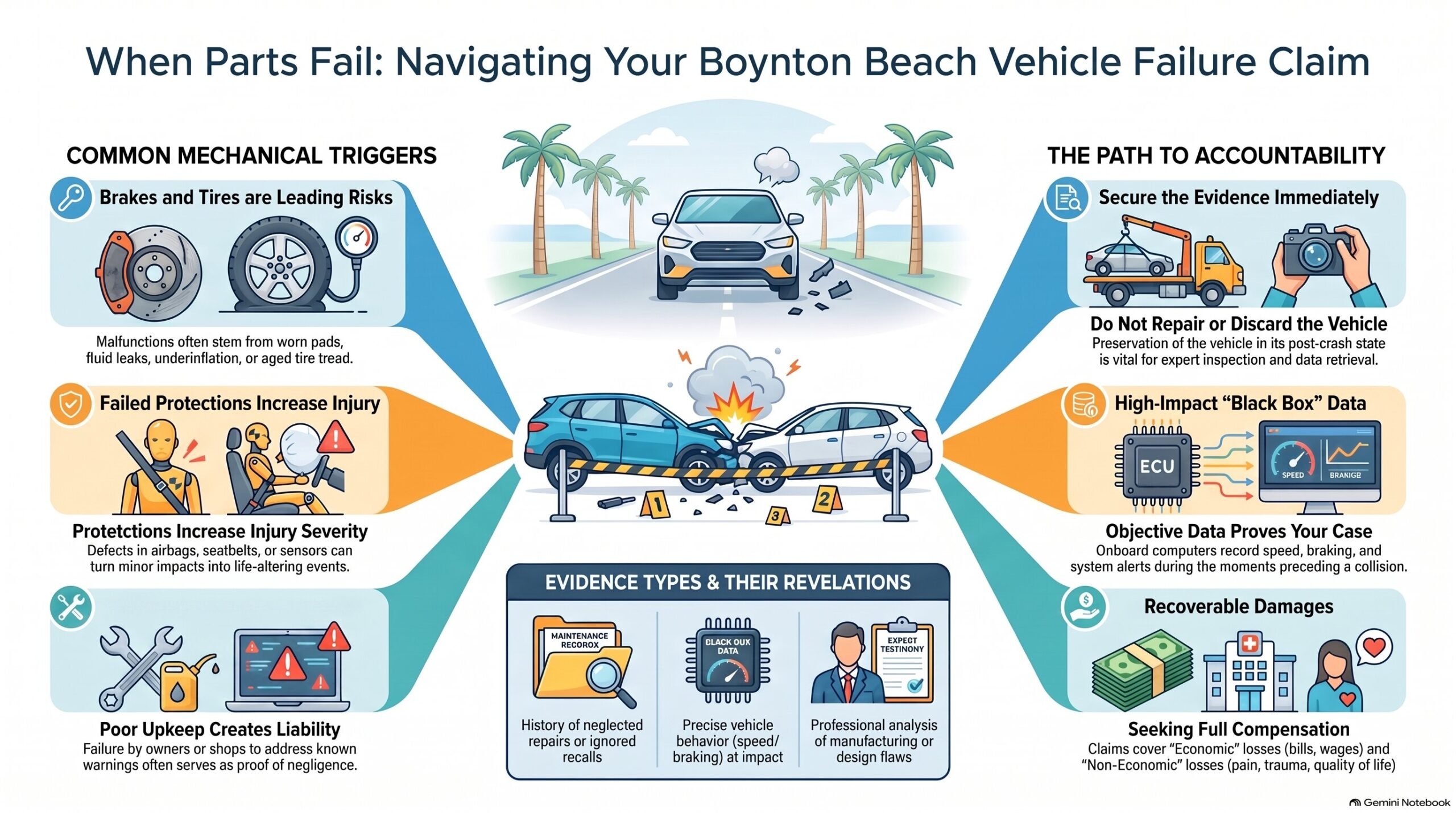
Common causes of vehicle and equipment failures include brake system failures, tire blowouts, defective safety equipment, and poor vehicle maintenance. Each condition can impair a vehicle’s operation or reduce occupant protection, increasing the risk and severity of a collision. Identifying the responsible failure often requires examining maintenance records, vehicle components, and applicable safety standards.
Brake System Failures
Brake system failures can prevent a vehicle from stopping or materially reduce the driver’s ability to control it, creating a serious risk of collision on Boynton Beach roads. Common causes include worn brake pads, damaged rotors, defective master cylinders, and deteriorated brake lines. Brake fluid leaks may reduce hydraulic pressure, resulting in a soft pedal or reduced braking force. Wheel cylinder wear can impair drum brake operation and cause uneven braking, particularly when maintenance is delayed. Corrosion, manufacturing defects, improper repairs, and failure to replace worn components may also contribute to sudden malfunction. Warning signs can include grinding, pulling, vibration, illuminated dashboard indicators, or a pedal that feels unusually low. Prompt inspection and documented repairs can help protect drivers, passengers, and others who depend on safe vehicle operation. When failures cause collisions, qualified legal guidance may assist affected individuals.
Tire Blowouts
Tire blowouts can cause a vehicle to lose stability, steering control, or braking performance with little warning, increasing the risk of a serious collision on Boynton Beach roads. Common causes include underinflation, overloading, worn tire tread, punctures, impact damage, age-related deterioration, and excessive heat. Drivers and vehicle owners can reduce risks by checking tire pressure according to the manufacturer’s specifications and regularly monitoring tire tread depth. Roadside inspection tips include examining sidewalls for bulges or cracks, removing visible objects only when safe, and confirming that valve stems and caps remain intact. Commercial operators should document maintenance and promptly address reported tire concerns. When a blowout contributes to a crash, inspection photographs, service records, and witness accounts may help clarify whether neglect, road conditions, or an unexpected defect caused the failure.
Defective Safety Equipment
When safety equipment fails, a vehicle may provide inadequate protection during a collision or fail to warn the driver of an imminent hazard. Defects may involve airbags, seat belts, child restraints, electronic stability controls, warning systems, or structural components designed to reduce injury. Manufacturing errors, flawed designs, and inadequate safety instructions can create dangers even when a driver operates the vehicle responsibly. An investigation may examine recall records, crash data, engineering documents, and the vehicle involved to determine whether a defect contributed to injuries or fatalities. When a defective component causes death, surviving family members may consider wrongful death claims. Manufacturers and distributors may raise product liability defenses, including misuse, alteration, lack of causation, or compliance with applicable standards. Evidence preservation can help protect the interests of affected individuals.
Poor Vehicle Maintenance
Poor vehicle maintenance can create hazardous conditions that contribute to collisions, even when a driver is otherwise attentive and follows traffic laws. Worn brake pads, underinflated tires, broken lights, and defective steering components may reduce a vehicle’s ability to stop, turn, or communicate with others on the road. Negligent maintenance by an owner, fleet operator, rental company, or repair provider can allow known problems to remain unresolved. In some cases, warranty violations or improper service may also contribute to equipment failure and complicate the assignment of responsibility for resulting injuries. Maintenance records, inspection reports, repair invoices, and photographs can help clarify whether a dangerous condition existed before the crash. A careful investigation may identify responsible parties and support efforts to protect injured individuals, preserve evidence, and pursue appropriate compensation.
Don’t Wait. Call Our Florida Personal Injury Lawyers Now!


Legal Rights of Boynton Beach Car Accident Vehicle & Equipment Failures Injury Victims
Victims injured in Boynton Beach car accidents caused by vehicle or equipment failures may have legal rights to pursue compensation from responsible parties, including negligent drivers, manufacturers, repair facilities, maintenance providers, or other entities whose conduct contributed to the crash.
A careful review of liability standards can identify applicable negligence, product liability, warranty, or statutory claims.
- Victims may seek damages for medical treatment, lost income, reduced earning capacity, property damage, and documented pain-related losses.
- Evidence preservation tips include photographing vehicles, retaining damaged parts, securing repair invoices, and obtaining maintenance and inspection records.
- Prompt notice to insurers may protect a claim, although recorded statements or settlements should be considered carefully.
- Florida deadlines and comparative-fault rules can affect recovery, making timely legal evaluation important.
Responsible representation also requires identifying every potentially accountable party and protecting vulnerable clients from avoidable procedural errors. An attorney may coordinate investigations, consult with qualified experts, and pursue fair compensation through negotiation or litigation while keeping the injured person’s needs at the center.
Why Do Boynton Beach Car Accident Vehicle & Equipment Failures Injuries Happen?
Vehicle and equipment failure injuries in Boynton Beach car accidents often arise from defects, inadequate maintenance, improper repairs, or the gradual deterioration of essential safety systems. Brake failures, defective tires, faulty guidance components, and malfunctioning airbags can prevent a vehicle from responding properly in normal traffic or emergencies. Manufacturing errors may affect vehicles before sale, while worn parts can become dangerous when owners or commercial operators postpone recommended service. Improper installation or the use of incompatible replacement components may also compromise performance. In some cases, companies fail to act promptly after identifying a recurring hazard, delaying corporate equipment recalls and leaving drivers exposed. Poorly maintained fleet vehicles present additional risks when operators do not review Safety inspection logs or correct documented problems. Environmental conditions, heavy use, and insufficient training can accelerate equipment deterioration. These failures may cause collisions, severe injuries, and preventable suffering for drivers, passengers, pedestrians, and families who depend on safe transportation.
What Should You Do After a Boynton Beach Car Accident Vehicle & Equipment Failure Injury?
After a Boynton Beach car accident involving a vehicle or equipment failure, the injured person should seek immediate medical care, even if symptoms initially appear minor. They should document suspected defects through photographs, repair records, witness information, and other available evidence. Consulting an experienced injury lawyer can help preserve evidence and evaluate potential claims against responsible parties.
Seek Immediate Medical Care
Prompt medical evaluation should be obtained as soon as possible following a Boynton Beach car accident involving a vehicle or equipment failure, even when injuries initially appear minor. Some conditions may worsen or remain hidden for hours or days. The injured person should report Immediate symptoms accurately, including pain, dizziness, numbness, breathing difficulty, confusion, or limited movement. If urgent assistance is needed, contacting an emergency contact or requesting emergency services can help secure prompt transportation and treatment. Medical professionals can assess injuries, provide necessary care, and explain warning signs requiring immediate attention. The patient should follow discharge instructions and attend every recommended medical follow-up appointment. Complete injury documentation, including diagnoses, treatment records, and prescribed restrictions, can help preserve an accurate health history for later review.
Document Vehicle Defects
Once medical care has been arranged, preserving evidence of the suspected defect can help clarify how the Boynton Beach car accident occurred. The vehicle should not be repaired, dismantled, or discarded until its condition has been recorded and properly examined. Photographs can show damaged tires, failed brakes, broken lights, deployed airbags, or other relevant conditions from multiple angles. A written account should identify warning signs, unusual sounds, maintenance history, and the sequence of events leading up to the collision. Witness contact information, dashboard warnings, repair invoices, and manufacturer communications may also assist with defect documentation. If possible, the vehicle should remain in a secure location to prevent additional damage or alteration. A qualified professional may later conduct a safety inspection, while preserving removed parts, electronic data, and service records for accurate evaluation.
Consult an Injury Lawyer
In a Boynton Beach vehicle or equipment failure case, consulting an injury lawyer can help protect the injured person’s legal rights and preserve evidence before it is lost or altered. Counsel can identify potentially responsible parties, including drivers, employers, manufacturers, maintenance providers, and contractors. The lawyer may obtain repair records, inspection reports, onboard data, photographs, witness statements, and relevant Fleet maintenance policies. Prompt legal guidance also helps an injured person avoid recorded statements or settlements that undervalue the claim. An attorney can evaluate medical documentation, lost income, rehabilitation needs, and long-term limitations while communicating with insurers. Knowledge of insurance dispute tactics may help counter delayed payments, disputed liability, or attempts to shift responsibility. By coordinating the investigation and negotiations, legal counsel can support a fair resolution and informed decisions.
Don’t Wait. Call Our Florida Personal Injury Lawyers Now!
Critical Evidence in a Boynton Beach Car Accident Vehicle & Equipment Failures Injury Case
Critical evidence can establish whether a vehicle or equipment failure contributed to the Boynton Beach accident and resulting injuries.
Relevant materials may include:
- Vehicle inspection reports
- Maintenance and repair records
- Black box data
- Witness and expert testimony
Together, these records and accounts can help identify defective components, inadequate servicing, driver actions, and potential liability.
Vehicle Inspection Reports
Vehicle inspection reports can provide essential evidence in a Boynton Beach car accident involving an alleged vehicle or equipment failure. These records may identify the vehicle’s condition before and after the collision, document observed defects, and show whether safety components appeared to operate properly. Investigators may compare inspection findings with photographs, witness accounts, electronic data, and Accident reconstruction conclusions. The reports can also help establish when a problem was discovered, whether warnings were documented, and which parties may have received relevant information. Maintenance logs may provide useful context by showing the vehicle’s inspection history and recorded concerns, although separate repair documentation may require independent evaluation. A careful review can preserve objective evidence, clarify disputed facts, and support a fair assessment of responsibility and the injured person’s needs.
Maintenance And Repair Records
Maintenance and repair records can provide important evidence in a Boynton Beach car accident involving an alleged vehicle or equipment failure. These documents may show when inspections, part replacements, recalls, and corrective work occurred, as well as whether reported defects were addressed. Records can also identify recurring problems, delayed repairs, or warnings that a vehicle owner, commercial operator, fleet manager, manufacturer, or service provider may have received. Such information helps establish whether reasonable care was exercised under applicable Driver negligence standards and maintenance liability laws. Incomplete, altered, or missing records may raise additional questions about responsibility and evidence preservation. Attorneys may compare invoices, work orders, warranty documents, and service schedules with witness accounts and physical evidence to clarify causation, support injured parties, and pursue appropriate accountability.
Black Box Data
In a Boynton Beach car accident involving an alleged vehicle or equipment failure, black box data may provide objective information about the events immediately before and during the collision. Event data recorders can preserve speed, braking, wheel direction, restraint use, and impact-related measurements, depending on the vehicle and system. Electronic logs from onboard computers may also reveal warning alerts, fault codes, or system interruptions relevant to the claimed failure. Investigators may compare this information with physical damage and roadway evidence during event reconstruction. Correlating crash footage with recorded timing can help assess whether braking, acceleration, or equipment performance changed before impact. Simulator testing may further evaluate competing collision sequences without altering the original data. Prompt preservation requests are important because diagnostic information can be overwritten, lost, or affected by repairs.
Witness And Expert Testimony
Beyond electronic records, witness and expert testimony can help explain how an alleged vehicle or equipment failure contributed to a Boynton Beach collision. Eyewitnesses may describe warning signs, unusual sounds, braking problems, roadway conditions, or events immediately preceding impact. Their accounts can support or challenge other evidence, although Eyewitness credibility issues may involve visibility, distance, distraction, memory, conflicting statements, or potential bias. Accident reconstruction professionals can analyze vehicle damage, debris patterns, photographs, inspections, measurements, and traffic conditions to assess speed, movement, and probable failure mechanisms. Reconstruction reliability factors include the quality of the available data, the accepted methodology, the accuracy of assumptions, and whether the expert considered alternative explanations. Mechanics, engineers, and medical professionals may also connect defective components to collision forces and resulting injuries. Careful testimony can clarify disputed facts and support fair treatment for injured individuals and their families.
Long-Term Effects of Boynton Beach Car Accident Vehicle & Equipment Failures Injuries
Injuries caused by vehicle or equipment failures may produce chronic pain, reduced mobility, and lasting disability that affect daily activities and employment. Emotional and psychological trauma, including anxiety, depression, or post-traumatic stress, may also continue long after the collision. Ongoing medical expenses for treatment, rehabilitation, medication, and supportive care can create substantial long-term financial burdens.
Chronic Pain and Disability
Chronic pain and disability can persist long after a Boynton Beach car accident involving a defective vehicle component or failed safety equipment. Injured individuals may experience limited mobility, nerve damage, reduced strength, or persistent pain that interferes with daily activities. Medical providers can evaluate surgical options, rehabilitation needs, and pain management strategies based on the injury’s severity and prognosis. Detailed records may document treatment, functional limitations, and whether symptoms prevent a return to prior duties. Work restrictions can affect income, career development, and household responsibilities, making accurate assessment especially important. Depending on eligibility, disability benefits may provide partial financial support during recovery or permanent impairment. A qualified attorney can help preserve medical evidence, identify responsible parties, and pursue compensation for continuing care, lost earnings, necessary accommodations, and diminished quality of life.
Emotional and Psychological Trauma
When a Boynton Beach car accident involves a defective vehicle component or failed safety equipment, the psychological effects may continue after physical treatment ends. Survivors may experience post-traumatic stress, recurring memories, sleep disruption, emotional detachment, or heightened reactions to traffic and mechanical sounds. Anxiety can affect work, relationships, driving, and ordinary responsibilities, particularly when the equipment failure created a sense of helplessness. Mental health professionals can evaluate these symptoms and recommend therapy support suited to the individual’s circumstances. Counseling, trauma-focused treatment, support groups, and carefully developed coping strategies may help restore confidence and emotional stability. Anxiety management techniques, including breathing exercises, structured routines, and gradual exposure, can assist recovery. Compassionate family members, employers, and legal advocates may also provide meaningful support while documenting the trauma’s continuing impact.
Ongoing Medical Expenses
Ongoing medical expenses may arise after a Boynton Beach car accident involving a defective vehicle component or a failure of safety equipment, particularly when the resulting injuries require ongoing treatment. Victims may need surgeries, rehabilitation, prescription medication, diagnostic testing, mobility devices, or ongoing medical expert care. A thorough record of bills, treatment recommendations, travel costs, and anticipated medical needs can help establish the injury’s full financial impact. Medical professionals may provide opinions regarding future care and associated costs, while legal representatives can investigate whether the vehicle defect, maintenance failure, or equipment malfunction contributed to the crash. Understanding future claim deadlines is critical because delayed action may restrict recovery. Careful insurance negotiation tactics may also be necessary when insurers challenge projected expenses or characterize continuing treatment as unrelated to the accident. Detailed documentation supports fair compensation and informed decisions.
Proving Liability in Boynton Beach Car Accident Vehicle & Equipment Failures Injury Cases
Proving liability in a Boynton Beach car accident involving vehicle or equipment failures requires evidence showing that a defective or improperly maintained component caused the collision and resulting injuries. Investigators may examine the vehicle, damaged parts, maintenance records, inspection reports, recall notices, and repair histories to identify the source of the failure. Evidence preservation issues can arise when a vehicle is repaired, sold, discarded, or altered before qualified professionals document its condition. Photographs, event data, surveillance footage, witness statements, and accident reconstruction analysis may help establish how the failure affected vehicle operation. Proof of negligent maintenance may include missed inspections, incomplete service records, worn components, or testimony that responsible parties ignored known safety concerns. Potentially liable parties can include drivers, vehicle owners, employers, repair facilities, manufacturers, or equipment distributors, depending on the facts. Careful documentation allows injured individuals and their families to support accountability while helping protect others from preventable roadway hazards. Expert testimony may clarify technical findings for a court.
Dealing With Insurance Companies After a Boynton Beach Car Accident Vehicle & Equipment Failures Injury
After a Boynton Beach car accident involving a vehicle or equipment failure, insurance companies may assess liability, coverage, and the extent of the claimed injuries before offering compensation. Adjusters may request medical records, repair documentation, photographs, statements, and information about the failed component. Injured individuals should provide accurate facts while avoiding speculation, recorded statements without preparation, or premature settlement agreements that could undervalue long-term needs.
Policy coverage disputes can arise when insurers question exclusions, limits, multiple responsible parties, or whether a defective part caused the collision. A careful review of the policy and available evidence may clarify obligations and identify additional sources of recovery. When an insurer denies responsibility or minimizes damages, Claim denial appeals may require organized documentation, written explanations, and timely responses in accordance with applicable procedures. Legal counsel can communicate with insurers, protect the injured person’s interests, and help ensure that evaluations reflect medical care, lost income, property damage, and continuing support needs. This assistance allows families to focus on recovery while pursuing fair treatment.
What to Expect During a Boynton Beach Car Accident Vehicle & Equipment Failures Injury Claim Process
The claim process typically begins with an initial evaluation of the accident, injuries, and potential vehicle or equipment defects. Evidence collection may include medical records, repair reports, photographs, witness statements, and expert inspections to establish liability and damages. The matter may conclude through settlement negotiations or proceed to trial if the parties cannot reach a fair resolution.
Initial Claim Evaluation
When a vehicle or equipment defect may have contributed to a Boynton Beach car accident, the initial claim evaluation examines the incident, the available evidence, the injuries, and the potentially responsible parties. This assessment helps determine whether negligence, a manufacturing problem, inadequate maintenance, or another failure may support legal action. It also considers the roles of drivers, vehicle owners, manufacturers, distributors, repair facilities, and other entities.
A review of medical records and expert medical assessments helps clarify the nature, severity, and expected duration of injuries. The evaluation may address treatment needs, lost income, ongoing limitations, and related financial effects. Counsel may also examine Insurance coverage options, including applicable liability, uninsured motorist, and commercial policies. Individuals often receive an explanation of potential claims, procedural requirements, and realistic outcomes, enabling informed decisions, protecting their interests, and supporting a fair resolution.
Evidence Collection Process
A thorough evidence-collection process begins by preserving information that may show how a vehicle or equipment failure contributed to a Boynton Beach crash. The injured person may be asked to provide photographs, repair records, inspection reports, purchase documents, and communications with manufacturers, dealers, or service providers. Photo preservation tips include saving original files, retaining metadata, and creating secure backups without editing the images. Accident scene documentation can include roadway conditions, vehicle positions, visible damage, warning signs, debris, lighting, and nearby surveillance sources. Witness names and contact information should be recorded promptly while recollections remain fresh. Investigators may inspect the vehicle, tires, restraints, electronic systems, or other equipment before repairs, disposal, or alteration occurs. Medical and employment records should also be organized to establish the incident’s immediate effects without prematurely addressing responsibility or damages.
Liability And Damages
After evidence has been preserved, liability and damages must be evaluated jointly to determine how a vehicle or equipment failure contributed to the Boynton Beach collision and what losses resulted. Investigators may examine maintenance records, recall notices, inspection reports, design specifications, and witness accounts to identify responsible parties. Potential defendants can include drivers, manufacturers, repair facilities, distributors, or vehicle owners, depending on the failure and applicable duties. Medical documentation, wage records, property damage estimates, and testimony concerning daily limitations help establish economic and non-economic losses. Comparative fault disputes may arise when another driver’s conduct, inadequate maintenance, or alleged failure to mitigate harm is asserted. Punitive damages eligibility generally requires evidence of intentional misconduct or gross negligence, rather than ordinary carelessness. Each determination should be supported by reliable evidence and applicable Florida law.
Settlement Or Trial
How a Boynton Beach vehicle or equipment failure claim proceeds depends on the strength of the evidence, the parties’ willingness to negotiate, and the extent of the injured person’s losses. Counsel typically investigates fault, preserves damaged parts, gathers medical records, and identifies applicable insurance coverage. Evidence preservation tips include photographing the vehicle, securing maintenance documents, recording witness information, and avoiding repairs that could destroy proof.
During negotiations, the claimant’s representative presents documented liability and damages through a demand package. Insurance negotiation strategies may include identifying policy limits, challenging unsupported denials, and calculating future medical needs and lost earning capacity. A settlement can provide a timely, predictable resolution, but it should reflect the full impact of the injuries.
If negotiations fail, litigation may proceed through discovery, depositions, expert testimony, and trial. A court or jury then determines responsibility and compensation.
Compensation for Boynton Beach Car Accident Vehicle & Equipment Failures Injury Damages
When a vehicle defect or equipment failure contributes to a Boynton Beach car accident, injured individuals may seek compensation for their losses. Potential recovery may cover reasonable treatment, rehabilitation, necessary medical equipment, and services required due to the injury. Future medical planning helps identify continuing care needs and supports a more informed valuation of the claim.
Successful recovery often depends on showing how the defective component or failed equipment caused or worsened the collision. Evidence preservation may include securing the vehicle, photographing damage, retaining parts, and collecting maintenance and inspection records. An insurance policy review can identify applicable coverage, exclusions, and additional policies that may affect available recovery. During compensation negotiations, documented medical opinions, repair records, accident reports, and testimony can help establish responsibility and the losses associated with it. A qualified attorney may coordinate these efforts, communicate with insurers, and protect the injured person’s interests while evaluating whether settlement or litigation offers the more appropriate path forward.
Economic vs Non-Economic Damages in Boynton Beach Car Accident Vehicle & Equipment Failures Cases
In vehicle and equipment failure cases, economic damages may cover medical expenses, lost income, property damage, and other measurable financial losses. Non-economic damages may address pain, emotional distress, disability, and diminished quality of life. Proving accident losses generally requires medical records, financial documentation, expert testimony, and evidence connecting the harm to the collision.
Economic Damages
Economic damages in Boynton Beach car accident cases involving vehicle or equipment failures represent the measurable financial losses caused by the collision. These damages may include emergency treatment, hospitalization, rehabilitation, prescription medication, diagnostic testing, and anticipated medical care related to the injuries. Repair or replacement costs for a damaged vehicle, as well as necessary transportation expenses, may also qualify when supported by reliable documentation.
Lost wages can reflect income missed during recovery, while diminished earning capacity may apply when injuries prevent a return to prior employment. Medical records, invoices, pay statements, tax documents, repair estimates, and expert evaluations help establish the amount and connection between each loss and the accident. A careful claim identifies every compensable expense, enabling responsible parties and insurers to accurately evaluate the financial impact and provide appropriate assistance to affected individuals.
Non-Economic Damages
Non-economic damages address the personal impact of a Boynton Beach car accident caused by a vehicle or equipment failure, rather than losses reflected in bills or pay records. They may include physical pain, emotional distress, inconvenience, disfigurement, loss of enjoyment, and diminished quality of life. These harms can affect an injured person’s relationships, independence, confidence, and ability to participate in meaningful activities. Evidence of emotional distress may include counseling records, statements from family members, and documented changes in behavior, although each case depends on the applicable proof requirements. Florida law may limit recovery in certain circumstances, making awareness of caps on non-economic damages important when evaluating potential compensation. A careful assessment helps identify how the accident altered daily living and supports fair treatment for individuals and families seeking accountability after preventable failures.
Proving Accident Losses
When a Boynton Beach car accident involves a defective vehicle part or equipment failure, proving accident losses requires separating financial expenses from personal harms. Economic damages may include emergency care, ongoing treatment, medication, property repairs, lost wages, reduced earning capacity, and necessary transportation. Receipts, invoices, wage records, medical statements, and other claims documentation help establish these amounts with accuracy.
Non-economic damages address harm without a fixed price, including physical pain, emotional distress, inconvenience, disfigurement, and diminished quality of life. Testimony from the injured person, family members, and treating professionals may demonstrate how these losses affect daily living. Because liability may depend on the failed component, expert causation evidence can connect the defect to the crash and resulting injuries. Complete records, consistent accounts, and timely evaluation help present a credible claim for full compensation.
Don’t Wait. Call Our Florida Personal Injury Lawyers Now!
When a Boynton Beach Car Accident Vehicle & Equipment Failures Injury Case Goes to Trial vs Settlement
Although many Boynton Beach vehicle and equipment failure injury claims resolve through settlement, a case may proceed to trial when the parties cannot agree on liability, damages, or the value of the evidence. Settlement can provide a predictable resolution, reduce litigation costs, and allow an injured person to receive compensation without having to testify in court. Negotiations may address medical expenses, lost income, rehabilitation needs, pain, and other documented losses.
A trial may be necessary when an insurer disputes whether a defective vehicle component, a maintenance error, or a safety failure caused the collision. Counsel may present photographs, repair records, inspection findings, witness accounts, and expert opinions. Evidence Preservation is critical because damaged parts, electronic data, and maintenance materials may change or disappear. Comparative Fault may also affect negotiations if each side assigns responsibility differently.
A decision to settle or proceed should consider the strength of the proof, expected recovery, time, expense, and the client’s ability to endure continued litigation. The goal remains a fair, informed resolution that supports recovery and protects the injured person’s interests.
Florida Laws That May Affect Your Boynton Beach Car Accident Vehicle & Equipment Failures Case
Florida laws governing negligence, product liability, comparative fault, and insurance claims may substantially affect a Boynton Beach car accident case involving vehicle and equipment failures.
These rules help determine responsibility, available compensation, and the evidence required to support a claim.
- Florida negligence standards: An injured person generally must show that another party owed a duty, breached it, and caused compensable harm. Maintenance records, inspection reports, photographs, and qualified testimony may clarify whether a defect or careless conduct contributed to the crash.
- Product liability: Manufacturers, distributors, and sellers may be held liable when defective design, manufacturing, or warnings make equipment unreasonably dangerous.
- Comparative fault rules: Florida may reduce an award according to an injured person’s assigned share of responsibility. Careful development of facts can help present an accurate account.
- Insurance requirements, including coverage terms, notice provisions, and available policies, can influence recovery. Counsel may help preserve evidence, communicate with insurers, and protect an injured person’s interests while serving the broader goal of fair accountability.
The Statute of Limitations for Boynton Beach Car Accident Vehicle & Equipment Failures Injury Cases
The statute of limitations can determine whether an injured person’s Boynton Beach car accident vehicle and equipment failures claim may proceed, regardless of the seriousness of the injuries or the strength of the evidence. Florida law generally requires personal injury claims to be filed within a specified period after the accident, although exceptions may alter when the deadline begins or how long it lasts. Claims involving defective vehicles, parts, or safety equipment can involve additional notice, discovery, and liability issues. A filing deadline may also differ when a government entity, wrongful death, or another legally protected circumstance is involved. Comparative Fault rules may affect compensation, but they generally do not extend the limitations period. Prompt attention enables injured people to identify responsible parties, review maintenance records, and obtain witness information. Evidence Preservation tips include photographing vehicles and roadway conditions, retaining damaged equipment, and requesting relevant records before they disappear. Missing the deadline can bar recovery entirely. Professional legal evaluation remains important for determining the applicable deadline.
How a Boynton Beach Car Accident Vehicle & Equipment Failures Lawyer Can Help You
When a vehicle or safety equipment failure contributes to a Boynton Beach car accident, a lawyer can investigate the incident and identify every potentially responsible party.
This assistance may help an injured person pursue accountability while protecting the interests of families, passengers, and other affected community members.
- Counsel can document scene evidence, inspect damaged vehicles, and consult qualified engineers regarding defective parts, maintenance failures, or inadequate warnings.
- The lawyer can obtain witness statements, traffic-camera footage, vehicle histories, recall information, and relevant manufacturer or service records.
- Counsel can organize medical records, bills, employment documentation, and professional opinions to demonstrate the collision’s physical, financial, and personal effects.
- During insurance negotiation, the lawyer can address disputed liability, evaluate settlement proposals, communicate with insurers, and present a supported demand.
This process allows evidence to be preserved and claims to be evaluated systematically. A lawyer may also coordinate communication among injured individuals, medical providers, insurers, manufacturers, repair facilities, and other involved parties.
When to Contact a Boynton Beach Car Accident Vehicle & Equipment Failures Lawyer
Prompt legal attention can be important after a Boynton Beach car accident involving a suspected vehicle or equipment failure. A lawyer should be contacted as soon as practical, particularly when injuries, disputed responsibility, or significant property damage are involved. Early legal steps can help identify potential parties, document the accident scene, and communicate with insurers before statements or settlements affect available remedies.
Evidence preservation is especially important in these cases. Damaged vehicles, tires, brakes, restraints, electronic data, maintenance records, purchase documents, and repair histories may help clarify whether a defect, inadequate maintenance, or improper repair contributed to the collision. Owners should avoid authorizing repairs, disposal, or alteration of suspected components until appropriate documentation and inspection arrangements are considered. Photographs, medical records, witness information, and incident reports should also be gathered promptly.
Immediate consultation is appropriate even when fault remains uncertain. Early guidance can help protect relevant information and support responsible decision-making while injured individuals focus on medical care and recovery.
Why You Need an Experienced Boynton Beach Car Accident Vehicle & Equipment Failures Lawyer
Why does experience matter in a Boynton Beach car accident involving a suspected vehicle or equipment failure? Experienced counsel can identify how a defective part, inadequate maintenance, poor design, or improper repair may have contributed to the collision. That analysis helps preserve evidence before vehicles are repaired, altered, or discarded.
A knowledgeable attorney can review maintenance records, inspection reports, recall information, electronic data, and witness accounts, and coordinate with qualified engineers or mechanics. This expert consultation may clarify whether a manufacturer, dealership, repair facility, owner, or another party bears responsibility. Experience also helps anticipate Liability defenses, including claims that the driver caused the crash or failed to maintain the vehicle.
How to Choose the Right Boynton Beach Car Accident Vehicle & Equipment Failures Lawyer for Your Case
Selecting the right Boynton Beach car accident vehicle and equipment failures lawyer requires careful evaluation of the attorney’s experience, investigative resources, and understanding of product liability and negligence law. A qualified lawyer should have experience examining defective brakes, tires, airbags, seat belts, and maintenance failures. The attorney should explain how evidence will be preserved, including vehicle inspections, photographs, maintenance records, event data, and witness statements.
Questions to ask during initial consultation should address prior case results, anticipated challenges, responsible parties, communication practices, and fee arrangements. The lawyer should provide clear answers without promising a specific outcome. Experience handling insurance settlement offers also merits attention. Counsel should evaluate medical expenses, lost income, future needs, property damage, and non-economic losses before recommending whether an offer is fair. A strong advocate remains attentive to the injured person’s goals, protects available evidence, and coordinates appropriate legal action while treating every client and affected family with diligence, respect, and compassion.
About The Law Offices of Anidjar & Levine
The Law Offices of Anidjar & Levine represents individuals and families pursuing compensation after car accidents involving defective vehicles, unsafe equipment, or negligent maintenance.
The firm evaluates collision circumstances, identifies potentially responsible parties, and develops claims designed to address medical expenses, lost income, property damage, and continuing needs.
Its attorneys may investigate manufacturing defects, maintenance records, warning failures, and equipment conditions, and coordinate with qualified professionals when technical analysis is necessary.
Early attention to Legal timelines and evidence preservation can help protect important records, photographs, electronic data, and witness accounts.
The firm also handles communication with insurers and may pursue settlement negotiations when a fair resolution is possible.
When insurers delay, undervalue, or improperly deny legitimate claims, attorneys assess potential bad-faith insurance issues.
Their work is intended to provide informed guidance and accountable representation for clients seeking recovery after preventable harm.
Each matter receives case-specific evaluation rather than a predetermined strategy, supporting decisions grounded in the available evidence and applicable Florida law.
Frequently Asked Questions
Can I Still Drive My Vehicle After a Suspected Mechanical Failure?
A driver should not continue operating a vehicle after suspecting mechanical failure if handling, braking, acceleration, tires, lights, or other critical systems may be compromised. Safety first: the vehicle should be moved only as necessary to reach a safe location, preferably with roadside assistance or towing. The driver should document evidence, including photographs, warning lights, sounds, maintenance records, and repair assessments. A qualified mechanic should inspect it before further use or determining liability.
Should I Preserve Defective Vehicle Parts After the Accident?
Defective vehicle parts should generally be preserved after an accident, because they may help establish whether a mechanical failure contributed to the incident. The vehicle should not be repaired, dismantled, or discarded without professional guidance. Investigators should photograph damaged components, preserve evidence in its current condition, collect witness contact information, and document symptoms reported before and after the collision. Prompt legal and technical evaluation can protect accountability and support injured individuals seeking appropriate assistance.
Will a Vehicle Recall Affect My Car Accident Claim?
A vehicle recall can affect a car accident claim by supporting an argument that a defective component contributed to the collision or worsened injuries. The Recall timeline matters, including whether notice preceded the crash and whether repairs were completed. Evidence must satisfy court admissibility requirements. Manufacturers may raise defenses involving misuse, maintenance, or unrelated causes. Ultimately, recall evidence can influence liability assessments, insurance negotiations, and the impact on claim settlements for affected individuals.
Can Vehicle Maintenance Records Help Identify the Cause of the Crash?
Vehicle maintenance records can help identify whether neglected service, defective repairs, or worn components contributed to a crash. They may establish inspection dates, reported problems, and recommended work, while also showing whether warnings were ignored or repairs were incomplete. An expert inspection can evaluate the vehicle’s mechanical condition and preserve relevant evidence. Telemetry data may further reveal speed, braking, guidance, or system alerts, helping clarify how equipment performance affected the incident.
What Happens if My Vehicle Is Declared a Total Loss?
When a vehicle is declared a total loss, the insurer generally determines that the repair costs exceed the vehicle’s actual cash value. The owner may receive an insurer payout based on that value, minus any deductible and outstanding loan balance. A lender is typically paid first if financing remains. The owner should review the valuation, provide supporting records, and consider salvage options, including retaining the vehicle or transferring it to the insurer.
—————————
Vehicle and equipment failures can complicate a Boynton Beach car accident, especially when defective parts, inadequate maintenance, or manufacturing errors contribute to injuries.
Victims may have claims against multiple responsible parties and should preserve evidence, medical records, and repair documentation.
An experienced Boynton Beach car accident vehicle and equipment failures lawyer can investigate the cause, identify liable parties, and pursue appropriate compensation.
Boynton Beach Personal Injury Lawyer from The Law Offices of Anidjar and Levine can help protect each client’s legal rights throughout the process.

