The Law Offices of Anidjar and Levine can help victims preserve crash evidence, obtain medical records, review reports, locate witnesses, and document how fractures affect work, mobility, and daily life.
A Florida Car Accident Lawyer may address Personal Injury Protection benefits, bodily injury claims, insurer challenges, future medical needs, and compensation for pain, lost income, and reduced independence.
Prompt guidance can protect deadlines and strengthen causation evidence after a collision. The sections below explain key rights, steps to claim, and lawyer selection.
Main Takeaways
- A Florida broken-bone car accident lawyer can preserve crash evidence, vehicle damage records, witness statements, and medical documentation early on.
- Prompt medical care helps diagnose fractures, uncover complications, guide treatment, and connect injuries to the crash.
- Strong claims rely on crash reports, photographs, X-rays, surgical notes, prescriptions, discharge paperwork, and follow-up records.
- Case evaluation should consider pain, rehabilitation, future care, lost income, work limits, and reduced physical function.
- An attorney can address insurer tactics that dispute fracture severity, question treatment, or seek early statements.


How We Can Help With Your Florida Broken Bone Car Accident Injury Claim
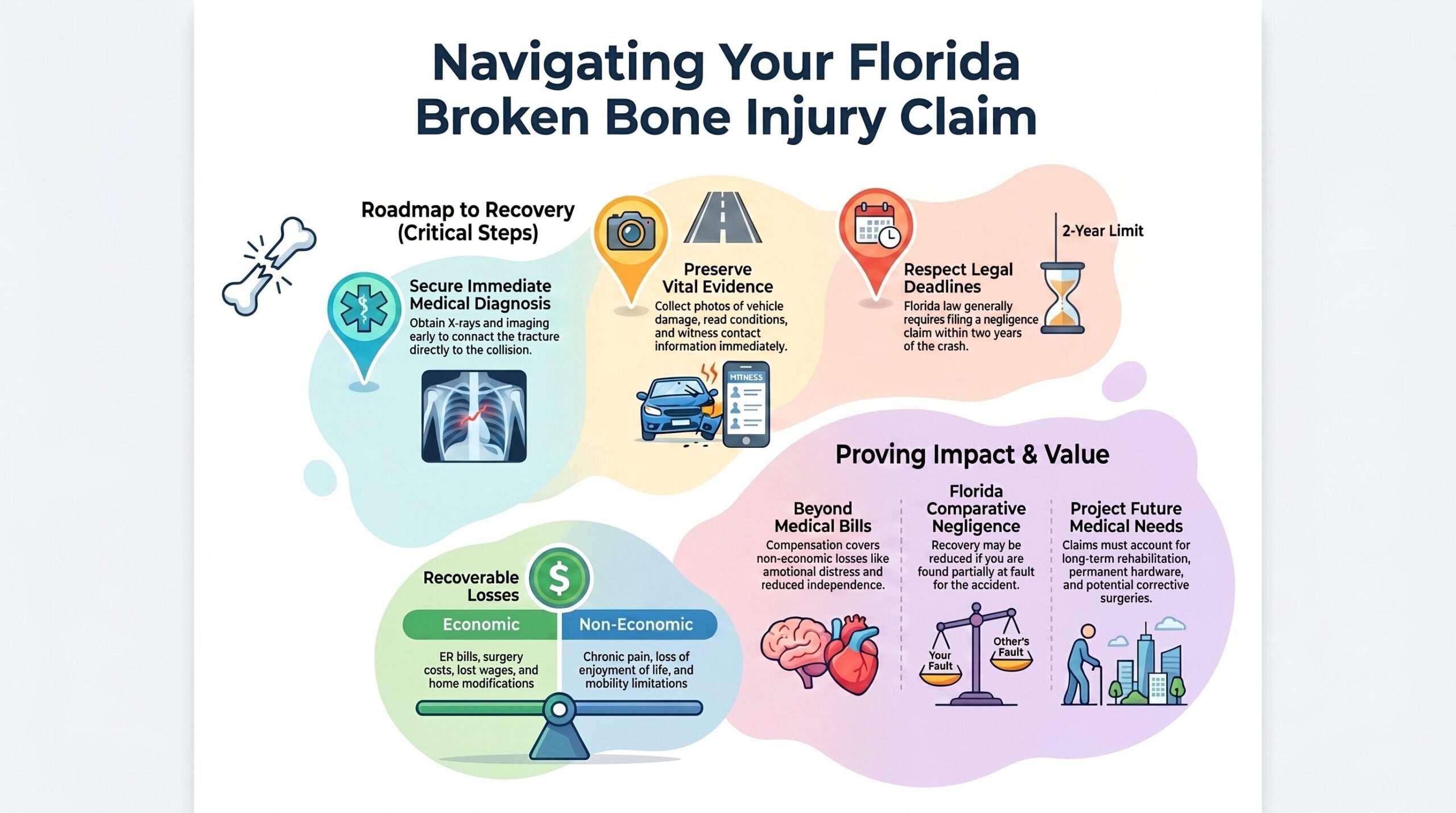
After a serious collision, how can an injury law firm help protect a broken bone claim from the start? A firm can step in quickly, preserve Liability evidence, and guide the injured person through decisions that may affect recovery. This support often includes reviewing crash reports, locating witnesses, securing photographs, obtaining medical records, and documenting how the injury limits daily responsibilities, work, and service to others.
A law firm can also manage communication with insurers, helping prevent statements or forms from being used unfairly. Through careful insurance negotiation, the firm may present the full extent of losses, including treatment costs, lost income, future care needs, and pain-related limitations. When the injured person is focused on recovery and caring for family or community obligations, legal counsel can handle deadlines, claim preparation, and settlement discussions. This organized approach helps ensure the claim is treated with seriousness, accuracy, and respect from the beginning through resolution.
OUR CONSULTATIONSARE FREE
START YOUR FREE CASE REVIEW

Understanding Florida Broken Bone Car Accident Injury Cases
Because broken bones can affect mobility, employment, and long-term physical function, Florida car accident injury cases involving fractures require careful evaluation from the outset. These cases often require a clear review of medical records, diagnostic imaging, treatment plans, work limitations, and the person’s ability to assist family, clients, or community members during recovery.
A fracture claim may involve emergency care, surgery, rehabilitation, follow-up appointments, and future medical needs. Proper valuation considers pain, reduced independence, lost income, and the burden placed on those who depend on the injured person. Insurance adjuster tactics may include questioning the severity of the fracture, arguing that treatment was excessive, or seeking statements before the full impact is known.
Evidence preservation tips include saving medical bills, photographs, prescriptions, mobility device records, employer communications, and witness information. Careful documentation helps connect the injury to the crash and supports a claim focused on fair accountability.
Common Causes of Florida Broken Bone Car Accident
Broken bones in Florida car accidents often result from forces that exceed the body’s ability to absorb impact safely. Common causes include high-speed collisions, distracted driving crashes, rear-end impacts, and intersection accidents, each presenting distinct risks for fractures. Understanding these crash patterns helps explain how liability, injury severity, and compensation issues may arise in a broken bone accident claim.
High-Speed Collisions
When vehicles collide at high speeds, the force of impact can exceed the body’s ability to absorb trauma, making fractures a common and serious injury. Speeding impacts often produce severe compression, twisting, or crushing forces, which may break arms, legs, ribs, hips, or facial bones. These crashes can also cause multiple fractures, requiring emergency care, surgery, rehabilitation, and long-term support.
In Florida injury claims, careful review of liability evidence is crucial. Skid marks, vehicle damage, roadway debris, event data recorders, traffic cameras, and witness statements may help determine whether excessive speed contributed to the collision. For injured individuals and those assisting them, documenting these details can protect access to compensation for medical treatment, lost income, and ongoing care needs after a high-speed crash.
Distracted Driving Crashes
Distracted driving crashes can produce fracture injuries with the same severity seen in high-speed collisions, particularly when a driver fails to brake, drifts across lanes, or strikes another vehicle at an unsafe angle. Phone use, texting, navigation adjustments, eating, or interacting with passengers can divert attention long enough to cause a forceful impact.
In Florida, distracted driving may contribute to broken wrists, arms, ribs, hips, legs, and facial bones, especially when occupants brace for impact or are thrown against interior structures. Those who serve injured people should recognize that these cases often require careful review of call records, witness statements, vehicle data, and crash reports. Identifying distraction helps establish responsibility, supports medical recovery needs, and promotes accountability for conduct that endangers others on public roads.
Rear-End Impacts
Rear-end impacts often occur with little warning, and the sudden transfer of force can cause serious fracture injuries even at moderate speeds. Victims may suffer broken wrists, arms, ribs, legs, or facial bones when bracing for impact, striking interior surfaces, or being compressed by seat belts. These crashes frequently arise from tailgating, speeding, fatigue, or a driver’s failure to observe slowing traffic.
For those committed to serving injured people, careful evaluation of medical records, vehicle positions, and Property Damage helps explain how the collision caused specific fractures. Florida’s Comparative Negligence rules may also affect recovery if questions arise about braking, following distance, or road conditions. Prompt documentation supports accountability, preserves evidence, and helps ensure fracture victims receive informed legal guidance after a rear-end collision, including fair compensation for lasting impairments.
Intersection Accidents
Intersection accidents often produce severe fracture injuries because vehicles may collide at angles that expose occupants to direct side impacts, abrupt rotation, or secondary collisions. These crashes frequently occur when a driver disregards the intersection right-of-way, turns left across traffic, or enters a roadway without confirming that cross traffic has stopped. Traffic signal errors, including malfunctioning lights or confusing signal timing, may also contribute when drivers receiving unclear guidance.
In such events, occupants can suffer broken arms, ribs, hips, legs, or facial bones from door intrusion, airbag deployment, or contact with interior surfaces. Careful investigation may help identify negligent conduct, roadway hazards, or maintenance failures. This process supports injured individuals while promoting accountability, safer driving behavior, and better protection for the broader Florida community.


Legal Rights of Florida Broken Bone Car Accident Injury Victims
When a Florida car accident causes a broken bone, the injured person may have significant legal rights to medical benefits, lost income reimbursement, and compensation from any at-fault party. These rights may involve personal injury protection benefits, bodily injury claims, and, when necessary, litigation to address serious losses.
A careful compensation strategy helps protect the injured person’s dignity while supporting recovery.
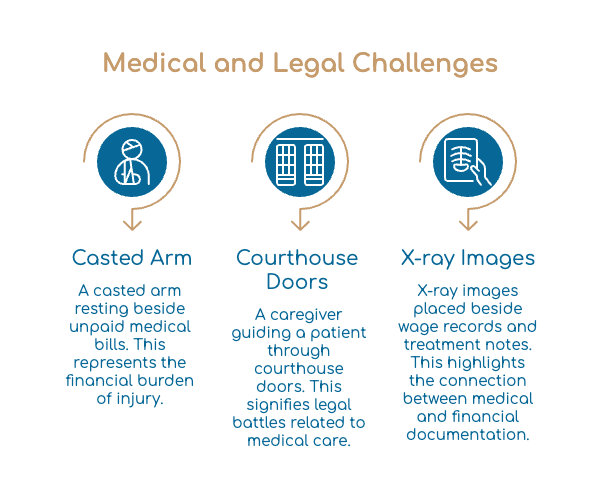
- A casted arm resting beside unpaid medical bills
- A caregiver guiding a patient through courthouse doors
- X-ray images placed beside wage records and treatment notes
Insurance negotiation often requires clear documentation of the injury, including medical records, work restrictions, photographs, and physician opinions. These materials can show how the fracture affected daily responsibilities and service to family or community. At-fault drivers, insurers, or other parties may raise liability defenses, so timely preservation of evidence is essential. Legal guidance can help ensure claims are presented accurately, deadlines are met, and available remedies are pursued with care.
Why Do Florida Broken Bone Car Accident Injuries Happen?
Why do broken bones occur so often in Florida car accidents? The force of a collision can overwhelm the body’s natural ability to absorb impact. When vehicles stop suddenly, occupants may strike dashboards, doors, steering wheels, or pavement, causing fractures of the arms, legs, ribs, hips, wrists, and facial bones. Side-impact crashes, rollovers, rear-end collisions, and pedestrian accidents often create twisting, crushing, or direct-blow forces that damage bone.
Florida’s heavy traffic, tourism, distracted driving, speeding, impaired driving, and sudden lane changes increase crash risks. Older adults, children, cyclists, motorcyclists, and rideshare passengers may be especially vulnerable because their bodies may have less protection in the event of an impact.
You may also have nerve damage, treatment delays, or complications when swelling, internal injuries, or multiple fractures are present. Understanding these causes helps caregivers, families, and advocates recognize how preventable choices can lead to serious harm and why accountability matters after a fracture-related crash for injured people statewide.
What Should You Do After a Florida Broken Bone Car Accident Injury?
After a Florida car accident involving a broken bone, the injured person should seek immediate medical care to confirm the injury, begin treatment, and create a clear medical record. Accident evidence, including photographs, witness information, and insurance details, should be documented as soon as possible. The injured person should also contact an injury lawyer, because legal guidance may help protect the claim and preserve important rights.
Seek Immediate Medical Care
Because broken bones may not be immediately obvious in the confusion following a collision, an injured person should seek prompt medical evaluation after a Florida car accident. Emergency physicians, urgent care providers, or bone-focused providers can identify fractures, internal complications, nerve involvement, and related trauma that may worsen without timely treatment.
This step reflects the importance because an early and accurate medical assessment helps guide care, reduce unnecessary suffering, and protect long-term function. Medical visits also create injury documentation, including imaging results, treatment plans, medication records, and follow-up instructions. These records may later help clarify the connection between the crash and the fracture. By obtaining care quickly, the injured person supports recovery, assists caregivers in making informed decisions, and preserves vital information for any future legal review.
Document Accident Evidence
At the accident scene and in the days that follow, careful evidence collection may help preserve important details about how a Florida car accident occurred and how a broken bone injury developed. Photographs of vehicle positions, road conditions, traffic signals, debris, visible injuries, and damaged personal items can support an accurate record. Witness names, phone numbers, and brief statements should be gathered when possible, with courtesy and respect for everyone involved.
Medical records, discharge papers, prescriptions, and follow-up instructions should be organized to show the injury’s progression. Relevant digital evidence may include GPS data, rideshare records, dash camera footage, surveillance videos, and black box footage from the involved vehicles. These materials can help clarify timing, movement, impact severity, and the physical consequences suffered after the collision in Florida.
Contact An Injury Lawyer
When should legal guidance be considered following a Florida car accident that results in a broken bone injury? It should be considered as soon as medical needs are stabilized and evidence is preserved. An injury lawyer may help the injured person understand insurance duties, filing deadlines, liability issues, and available compensation for medical care, lost income, and future limitations. This guidance can also support families, caregivers, and community members who are trying to serve the injured person responsibly.
Legal counsel may review crash reports, witness accounts, photographs, medical records, and vehicle data, including information involving safety technology. A lawyer may also evaluate whether negligent driving, roadway hazards, or failures in car crash prevention contributed to the harm. Prompt consultation helps protect rights while keeping recovery efforts organized.
Critical Evidence in a Florida Broken Bone Car Accident Injury Case
Critical evidence in a Florida broken bone car accident injury case often determines how clearly fault, injury severity, and financial losses can be established. Critical proof may include:
- Skid marks, debris fields, and roadway photos from the accident scene
- Emergency room charts, X-rays, surgical notes, and follow-up records
- Witness statements, vehicle damage photographs, and repair estimates
Accident Scene Evidence
After a serious collision, accident scene evidence can help establish how a broken bone injury occurred, who may be legally responsible, and whether the force of impact was consistent with the reported injuries. Relevant evidence may include vehicle positions, skid marks, roadway debris, traffic signals, weather conditions, lighting, and visible damage patterns.
Photographs, witness statements, police observations, and nearby camera footage may also clarify sequence, speed, and point of impact. This evidence can support legal eligibility for compensation and may be key in insurance disputes involving fault or causation of injury. In severe cases, including Wrongful death matters, scene documentation may help protect surviving family members’ rights. Prompt collection is important because conditions change quickly, and claim timelines may limit later opportunities to preserve proof.
Medical Treatment Records
Medical scene evidence may describe the mechanics of a collision, but medical treatment records often link those mechanics to the actual broken bone injury. Emergency room notes, imaging reports, orthopedic evaluations, surgical records, prescriptions, and rehabilitation plans can show diagnosis, severity, pain levels, restrictions, and projected recovery needs. Documentation timing is particularly important because delays in care may be used to question whether the fracture came from the crash or from another event.
A careful record of follow-up visits also helps establish ongoing impairment, missed work, and the need for future treatment. In many claims, the insurance adjuster’s strategy focuses on gaps, inconsistent histories, or incomplete records. Comprehensive medical documentation allows counsel to present the injury clearly, helping ensure the person’s needs are understood, respected, and addressed through lawful compensation.
Witness Statements
How can witness statements affect the strength of a Florida broken bone car accident injury case? Witnesses may offer neutral observations about driver conduct, traffic signals, speed, weather, and the injured person’s condition immediately after impact. These accounts can support medical treatment records by linking the collision to the fracture and clarifying whether pain, immobility, or visible distress appeared at the scene.
Accident timeline reconstruction often depends on prompt, detailed statements gathered before memories fade or outside influences arise. Attorneys may evaluate Eyewitness credibility issues, including vantage point, attention, consistency, bias, and ability to observe events clearly. Reliable statements can help insurers, courts, and opposing parties understand responsibility. In service to injured clients, careful witness development promotes fairness, accuracy, and a more complete presentation of the claim.
Vehicle Damage Documentation
In a Florida broken bone car accident injury case, vehicle damage documentation can provide critical insight into the force, direction, and severity of the collision. Detailed records of crushed panels, deployed airbags, broken glass, frame distortion, and interior impact points may help connect the crash mechanics to the injured person’s fractures. Photo evidence should be gathered promptly, before repairs, towing, or disposal alter the vehicle’s condition.
Images from multiple angles, repair estimates, tow yard records, and insurer inspections can strengthen the factual record. When paired with witness tracking, vehicle damage documentation may also confirm lane position, speed indicators, and points of impact described by observers. Careful preservation of this evidence supports fair evaluation, responsible advocacy, and service to injured individuals seeking recovery under Florida law after serious traumatic collisions.
Long-Term Effects of Florida Broken Bone Car Accident Injuries
Broken bone injuries from Florida car accidents may create lasting complications, including chronic pain that interferes with daily activities and employment. Reduced mobility can also affect independence, especially when fractures involve the legs, hips, spine, or joints. Future medical needs, such as surgery, rehabilitation, pain management, or assistive devices, may become central issues in evaluating the full value of an injury claim.
Chronic Pain Risks
Although many fractures repair with appropriate medical treatment, a broken bone from a Florida car accident can leave a person with chronic pain that lasts months or even years after the crash. Persistent pain may result from nerve irritation, surgical hardware, joint damage, improper recovery, or inflammation around the injured area. These conditions can require ongoing evaluations, physical therapy, medication management, and coordinated care from physicians who understand post-traumatic injury patterns.
Care teams may also consider opioid misuse prevention when prescribing pain relief, especially when long recovery periods create heightened risks. Insurers may rely on insurance denial tactics, arguing that pain is exaggerated, unrelated, or preexisting. Careful documentation, consistent treatment, and clear medical opinions can help protect an injured person’s claim for necessary support.
Reduced Mobility Challenges
Chronic pain often overlaps with reduced mobility, especially when a Florida car accident fracture affects a weight-bearing bone, joint surface, or limb needed for daily function. Limited movement may restrict walking, lifting, bathing, driving, or returning to work, placing added responsibility on relatives, caregivers, and community support systems. Some injured individuals require assistive devices, such as canes, walkers, braces, or wheelchairs, to move safely and preserve independence.
Others may need accessible home modifications, including ramps, grab bars, widened pathways, or adjusted bathroom features, to reduce the risk of falls and improve daily care. Reduced mobility can also affect social participation, spiritual involvement, and family duties. Careful documentation of these limitations helps explain how a fracture changes practical routines and the support required to live with dignity.
Future Medical Needs
When a fracture creates lasting complications, future medical needs may become a central part of evaluating the full impact of a Florida car accident injury. Ongoing care can include orthopedic follow-ups, imaging, pain management, medication, corrective surgery, and assistive devices. Rehabilitation planning may also address physical therapy, occupational therapy, mobility training, and workplace accommodations when daily function remains limited.
These needs should be documented with care, because incomplete projections can leave an injured person without resources for necessary treatment. In serious cases, medical professionals may assess whether arthritis, nerve damage, impaired strength, or permanent restrictions are likely. This evidence can guide settlement negotiation by connecting anticipated care to the crash-related fracture. Careful evaluation helps make sure that future support reflects both medical necessity and the person’s long-term ability to serve others.
Proving Liability in Florida Broken Bone Car Accident Injury Cases
After a serious collision, proving liability is often the central issue in a Florida broken bone car accident injury case. The injured person must show that another party owed a duty of care, breached that duty, and caused the fracture-related losses.
Evidence may include crash reports, witness statements, photographs, medical records, vehicle damage, surveillance footage, and expert reconstruction. Careful documentation helps identify whether speeding, distraction, impairment, unsafe lane changes, or failure to yield contributed to the harm.
Florida law also requires attention to the Comparative negligence defense, which may reduce recovery if the injured person shares fault. A thorough investigation can protect the truth and support fair accountability.
Counsel serving injured clients may also monitor the Statute of limitations, because missing a filing deadline can bar a valid claim. Strong liability proof helps link the negligent conduct to the broken bone, related treatment, loss of function, and long-term consequences.
Dealing With Insurance Companies After a Florida Broken Bone Car Accident Injury
Handling insurance communications requires caution, because adjusters often evaluate a Florida broken bone car accident injury claim with the goal of limiting the insurer’s financial exposure. Injured individuals may face requests for recorded statements, broad medical authorizations, or early settlement offers before the full impact of fractures is understood. A lawyer can help protect the claim by managing communications, reviewing policy language, and ensuring statements remain accurate, complete, and consistent.
Effective Claim Document Preparation often includes medical records, imaging reports, wage documentation, repair estimates, and evidence showing how the injury affects daily responsibilities. Careful organization supports a clear presentation of losses and reduces opportunities for confusion or mischaracterization.
When an insurer disputes responsibility, minimizes treatment, or questions coverage, Coverage Denial Negotiation may be necessary. In that setting, legal guidance helps preserve the injured person’s position while seeking fair consideration, especially when the person’s recovery affects family, work, and service to others.
What to Expect During a Florida Broken Bone Car Accident Injury Claim Process
A Florida broken bone car accident injury claim typically begins with prompt injury reporting, followed by organized medical documentation that connects the fracture to the crash. The process often includes filing insurance claims, responding to adjuster requests, and evaluating available evidence before negotiations begin. Settlement timelines may vary based on injury severity, treatment progress, liability disputes, and the insurer’s willingness to resolve the claim fairly.
Reporting Your Injury
During the initial stage of a Florida broken-bone car accident injury claim, reporting the injury establishes the record that insurers, medical providers, and attorneys will later evaluate. A claimant should promptly notify law enforcement, the involved insurer, and appropriate representatives, while remaining accurate and restrained in every statement. Incident documentation tips include recording the crash date, location, vehicle details, officer information, and visible hazards, without exaggeration or assumptions.
If the injured person serves family, clients, or community members, timely reporting also helps protect those responsibilities by preserving accountability. Witness follow-up steps may include obtaining names, contact information, and brief neutral descriptions from bystanders who observed the collision. Clear reporting supports later claim review, reduces confusion, and allows legal counsel to assess liability based on reliable facts.
Medical Documentation Needs
After emergency care or initial treatment, medical documentation becomes one of the most important parts of a Florida broken bone car accident injury claim. Accurate records help show the nature of the fracture, the treatment provided, and the effect on daily responsibilities. Imaging results, including X-rays, CT scans, or MRIs, may confirm the location and severity of the injury.
Physicians’ notes, discharge papers, prescriptions, therapy plans, and follow-up recommendations also create a timeline of care. When diagnosis delays occur, clear records can help explain why symptoms worsened or why additional treatment became necessary. Consistent documentation supports informed decisions by medical providers and helps preserve reliable evidence. For those serving injured individuals, organized records can clarify needs, reduce confusion, and promote careful attention throughout the recovery process.
Insurance Claim Steps
Medical records often become the foundation for the insurance claim process because they help connect the broken bone injury to the Florida car accident and support the damages being presented. After treatment begins, the injured person typically reports the crash, opens available PIP benefits, and provides documentation requested by the insurer. Claim representatives may review bills, wage information, diagnostic findings, and physician opinions to evaluate responsibility and loss value.
Careful attention to coverage limits is important because available insurance may affect what compensation can realistically be pursued. A lawyer may communicate with adjusters, organize evidence, and address questions intended to reduce payment. Sound negotiation tactics can help protect the claimant from undervalued offers while keeping the process focused on verified injuries, financial losses, and fair accountability.
Settlement Timeline Expectations
Although every Florida broken-bone car accident claim has its own facts, settlement timing often depends on medical progress, insurance coverage, liability disputes, and the strength of the supporting evidence. A straightforward claim may resolve after treatment stabilizes and records confirm the extent of injury. More intricate matters can require longer review, especially when surgery, future care, or lost earning capacity must be valued.
Fault determination may also affect the timeline, as insurers often examine police reports, witness accounts, photographs, and medical documentation before making meaningful offers. When insurance disputes arise, negotiations may slow while coverage limits, comparative negligence, or causation issues are addressed. A careful legal process supports fair evaluation, protects the injured person, and helps ensure that settlement decisions serve long-term recovery rather than short-term pressure.
Compensation for Florida Broken Bone Car Accident Injury Damages
When a car accident causes a broken bone, compensation in Florida may include both economic and non-economic damages tied to the injury’s severity and long-term impact. A fractured arm, leg, rib, hip, or vertebra can disrupt mobility, caregiving duties, employment, and daily service to family or community. A claim may account for medical treatment, follow-up care, rehabilitation, lost income, reduced earning capacity, pain, limitations, and future complications when supported by credible proof.
Careful evidence preservation helps link the fracture to the crash and demonstrate the full extent of harm sustained. Medical records, diagnostic imaging, photographs, witness information, vehicle damage records, and employer statements may strengthen the claim.
Accurate insurance documentation is also important, including policy details, claim correspondence, benefit explanations, and payment records. In serious cases, legal evaluation can help ensure that damages are identified, deadlines are protected, and negotiations reflect the actual burden placed on the injured person and those who depend on that person.
Economic vs Non-Economic Damages in Florida Broken Bone Car Accident Cases
In Florida broken bone car accident cases, damages are generally divided into economic losses, such as medical bills and lost wages, and non-economic losses, such as pain and emotional distress. This distinction helps define both the measurable financial impact of the injury and the broader human consequences that may affect daily life. Proving damage value requires clear evidence, including medical records, employment documentation, expert opinions, and a careful assessment of how the fracture has affected the injured person’s recovery and future.
Medical Bills And Lost Wages
After a broken bone car accident in Florida, medical bills and lost wages often form the foundation of an injury claim because they reflect the direct financial impact of the crash. These losses may include emergency care, surgery, hospital stays, rehabilitation, prescriptions, mobility devices, and follow-up treatment. They may also include missed income, reduced work hours, lost employment benefits, or diminished earning capacity when recovery limits future job performance.
Careful documentation supports a stronger insurance claim strategy, especially when records clearly connect the fracture to the collision and show the full financial burden. Pay stubs, tax records, medical invoices, and physician work restrictions can guide settlement negotiation tactics. A well-prepared claim helps ensure that injured people and their families receive practical support for necessary care and financial stability.
Pain And Emotional Distress
Although medical bills and lost wages are often easier to calculate, pain and emotional distress can represent a substantial part of a Florida broken bone car accident claim. A fracture may limit mobility, disrupt sleep, require pain treatment, and prevent a person from caring for family members or serving the community. Emotional distress may include anxiety, frustration, fear of driving, or loss of enjoyment in ordinary routines.
These harms are generally considered non-economic damages because they lack a fixed invoice or wage record. In Florida, Compensation limits may depend on the case type, available insurance, fault issues, and applicable law. A careful evaluation considers the severity of the break, recovery time, medical restrictions, and the lasting effect on daily life, independence, and personal dignity.
Proving Damage Value
Pain and emotional distress may explain the human impact of a fracture, but a Florida broken bone car accident claim must also prove the value of those losses with reliable evidence. Economic losses require economic proof, including medical bills, rehabilitation costs, wage records, and estimates for future care. Non-economic losses require documentation of pain, such as treatment notes, evidence of mobility restrictions, evidence of sleep disruption, and testimony from those who observe daily limitations.
Damage calculation should connect each loss to the crash, the fracture, and the recovery timeline. A careful injury valuation considers permanence, surgical repair, scarring, reduced function, and the injured person’s role in serving family or community. By organizing records and presenting them with discipline, a claim can reflect both measurable expenses and human harm.
When a Florida Broken Bone Car Accident Injury Case Goes to Trial vs Settlement
When a Florida broken-bone car accident injury case cannot be resolved through fair negotiation, the claim may proceed to litigation and, in some cases, trial. Settlement is often preferred when liability, medical evidence, and damages can be evaluated responsibly, allowing the injured person to receive support without prolonged court involvement. Effective negotiation tactics may include presenting imaging results, treatment records, wage-loss documentation, and physicians’ opinions in a clear, organized manner.
Trial becomes more likely when the insurer disputes fault, minimizes the fracture’s long-term impact, or refuses to account for future care, pain, and reduced function. Trial strategy may involve preparing medical experts, organizing testimony, and demonstrating how the injury has affected daily service to family, work, and community responsibilities. A lawyer’s role is to assess whether a settlement protects the client’s dignity and needs, or whether courtroom advocacy is necessary to pursue full and fair compensation.
Florida Laws That May Affect Your Florida Broken Bone Car Accident Case
Beyond settlement discussions and trial preparation, Florida law shapes how a broken bone car accident claim is evaluated from the outset. Florida’s no-fault system generally requires an injured person to first seek personal injury protection benefits, regardless of fault. However, a serious fracture may help satisfy the No Fault Threshold, allowing pursuit of damages beyond limited benefits.
Florida’s no-fault rules can shape recovery from the start, especially when a serious fracture changes what damages may be pursued.
- A shattered wrist limits a caregiver’s ability to lift, cook, or drive.
- A leg fracture disrupts work, service, and daily responsibilities.
- Medical records, imaging, and therapy notes form the claim’s foundation.
Florida also applies Comparative Negligence, which may reduce recovery if the injured person shares responsibility for the collision. Evidence regarding speed, distraction, roadway conditions, and seat belt use may affect the percentage assigned. For those committed to serving others, these rules matter because fair compensation can support treatment, stability, and the ability to return to family, work, and community obligations.
The Statute of Limitations for Florida Broken Bone Car Accident Injury Cases
After a Florida car accident involving a broken bone, the statute of limitations can determine whether an injured person retains the right to file a lawsuit for damages. In most Florida negligence cases, the filing deadline is two years from the date of the crash. If the claim is not filed on time, the court may dismiss it, regardless of the injury’s severity or the need for ongoing care.
This deadline also affects practical case preparation. Liability proof may become harder to preserve as witnesses relocate, vehicles are repaired, and records are lost. Medical documentation should be collected promptly, as treatment history helps link the fracture to the collision.
Compensation valuation also depends on timely evidence of medical bills, lost income, pain, limitations, and future care needs. Although insurance negotiations may occur before litigation, they generally do not stop the deadline. Careful attention to timing helps protect the injured person’s legal options.
How a Florida Broken Bone Car Accident Injury Lawyer Can Help You
In a Florida broken bone car accident case, an injury lawyer can help by investigating the crash, identifying liable parties, and building a documented claim for compensation. This work may include reviewing police reports, medical records, witness statements, photographs, and repair estimates. Through careful Florida fault determination, the lawyer assesses negligence and connects the fracture, treatment, and losses to the collision.
A lawyer can document fault, connect fracture injuries to the crash, and build a compensation claim.
- Ambulance lights reflecting on scattered glass beside a damaged vehicle.
- X-rays showing a fractured wrist, leg, rib, or collarbone.
- A recovery plan with therapy appointments, mobility aids, and medical bills.
The lawyer may also manage insurance settlement negotiation, presenting evidence of medical expenses, lost income, pain, limitations, and future care needs. This allows the injured person and family to focus on recovery, caregiving, and community responsibilities. When insurers dispute liability or minimize damages, legal counsel can respond with organized proof, protecting the claim’s value while pursuing fair compensation.
When to Contact a Florida Broken Bone Car Accident Injury Lawyer
When should an injured person contact a Florida broken bone car accident injury lawyer? Contact should occur as soon as practical after emergency medical needs are addressed. Early guidance can help preserve records, document symptoms, identify witnesses, and ensure that important communications are handled carefully. For individuals focused on caring for family members or supporting others after a crash, prompt action can reduce confusion and protect the injured person’s ability to pursue available compensation.
Knowing when to call is important if the fracture requires surgery, ongoing therapy, missed work, or assistance with daily tasks. Legal contact is also appropriate when fault is disputed, insurance representatives request statements, or medical bills begin arriving before the claim is understood.
Florida claims may involve strict Insurance Deadlines, including notice requirements and filing limits. Speaking with a lawyer early helps prevent avoidable delays, missed documentation, and decisions made without a clear understanding of rights and responsibilities after an accident.
Why You Need an Experienced Florida Broken Bone Car Accident Injury Lawyer
Because broken bone injuries can create medical, financial, and legal complications at the same time, an experienced Florida broken bone car accident injury lawyer can provide vital direction from the beginning of a claim. Such counsel helps injured individuals understand available remedies while protecting their ability to pursue fair compensation for medical care, lost income, and lasting limitations.
A lawyer can review crash evidence, coordinate treatment cost documentation, and address communication with insurers in a disciplined manner. This support is especially important when an insurance claim denial is based on disputed fault, alleged preexisting conditions, or incomplete records. By organizing medical proof and liability evidence, counsel helps guarantee that the harm suffered is presented accurately and respectfully.
For individuals focused on serving families, coworkers, and communities, legal guidance can reduce uncertainty during recovery. It allows attention to remain on recovery and responsibility, while the claim is managed with diligence and informed judgment throughout.
How to Choose the Right Florida Broken Bone Car Accident Injury Lawyer for Your Case
The right Florida broken bone car accident injury lawyer should have specific experience handling fracture-related claims arising from motor vehicle collisions, including cases involving surgery, long-term rehabilitation, disputed liability, and insurance resistance. Selection should begin with a careful review of the lawyer’s case history, communication practices, and ability to document the full impact of the injury on daily life, work, and family responsibilities.
Consultation questions should address how evidence will be preserved, how medical records will be used, and how future treatment needs may be valued. A lawyer should explain the claims process clearly, respect the injured person’s goals, and demonstrate a service-minded approach toward protecting recovery.
Fee structure evaluation is also important. The injured person should understand contingency fees, case costs, and any obligations if compensation is not recovered. A suitable lawyer offers transparency, disciplined advocacy, and practical guidance from the beginning of the case.
About The Law Offices of Anidjar & Levine
With a focus on personal injury representation throughout Florida, the Law Offices of Anidjar & Levine assists accident victims who have suffered broken bones in car crashes and other serious incidents.
The firm’s Legal team overview reflects a service-driven approach, combining case investigation, evidence review, insurance communication, and litigation preparation when needed.
Its attorneys and staff work to protect injured clients while helping them understand their rights and available legal options.
The firm emphasizes Client support through responsive communication, status updates, and practical assistance during the claims process.
For individuals recovering from fractures, this support may include addressing medical documentation, concerns about lost income, and the long-term impact of physical limitations.
The Law Offices of Anidjar & Levine seeks to reduce administrative burdens so clients can focus on getting better.
Its work is grounded in careful preparation, professional advocacy, and a commitment to serving people harmed by negligent drivers across Florida communities.
Frequently Asked Questions
Can a Broken Bone Injury Worsen After My Initial Diagnosis?
Yes, a broken bone injury can worsen after the initial diagnosis. Possible delayed complications include infection, poor alignment, nerve irritation, or impaired recovery. A medical re-evaluation may be needed if pain, swelling, numbness, or reduced mobility increase. Those assisting an injured person should monitor changes carefully. Worsening symptoms may affect the insurance claim timeline, and statute limitations considerations should be reviewed promptly to protect available legal and medical options.
Will Surgery Increase the Value of My Broken Bone Claim?
Yes, surgery can raise the value of a broken bone claim when it shows greater injury severity, longer recovery, and higher medical costs. Evaluators may consider the advantages of surgery, such as improved function, but still recognize the burden placed on the injured person. Pain compensation may increase when records document ongoing symptoms, limitations, and future care needs. Careful documentation helps ensure the claim reflects both medical impact and service-related responsibilities.
Can I Recover Damages for Permanent Hardware or Implants?
Yes, damages may be recoverable for permanent hardware or implants when another party caused the injury. A medical implant can support claims for pain, limitations, surgical recovery, and long-term complications. Its effect on a liability settlement depends on medical evidence, impairment, costs, and credible future care needs. Attorneys, providers, and advocates serving injured people should document function, restrictions, and anticipated treatment to present the full impact responsibly and clearly.
Do Pre-Existing Bone Conditions Affect My Car Accident Claim?
Yes, pre-existing bone conditions can affect a car accident claim, but they do not automatically prevent recovery. The pivotal issue is whether the crash aggravated, accelerated, or made the condition symptomatic. Causation disputes often arise, requiring medical records, expert opinions, and careful interpretation of statutes. A claimant may recover damages for the worsening caused by the collision, supporting fair service to injured persons seeking accountability and lawful compensation.
Can Children Receive Different Compensation for Broken Bone Injuries?
Yes, children can receive different compensation for broken bone injuries because their losses may involve growth concerns, school disruption, and future medical monitoring. Different Injury Records often document repair, limitations, and developmental risks in greater detail. Child-specific damages may include pain, emotional distress, therapy, educational support, and long-term impairment. Courts and insurers evaluate these needs carefully, prioritizing the child’s welfare while ensuring compensation reflects both present and future consequences.
—————————
A Florida broken bone car accident injury claim requires careful documentation, prompt medical care, and informed legal action.
Victims may face significant treatment costs, lost income, and long-term physical limitations.
An experienced attorney can evaluate liability, calculate damages, handle insurers, and pursue fair compensation under Florida law.
Florida Car Accident Lawyer representation from The Law Offices of Anidjar and Levine can help injured clients protect their rights and move forward with confidence after a serious collision.