
A Naples car accident vehicle and equipment failures lawyer from The Law Offices of Anidjar and Levine can investigate whether defective brakes, tires, steering, lighting, or other components contributed to a collision or worsened injuries. The investigation may examine vehicle inspections, maintenance and repair records, crash data, damaged parts, and roadway conditions. Potentially responsible parties can include manufacturers, parts suppliers, repair businesses, drivers, or vehicle owners. Prompt medical care and preservation of the vehicle and related evidence can support a claim. Learn more from a Naples Personal Injury Lawyer. The following sections explain essential causes, legal options, and next steps.
Main Takeaways
- A Naples vehicle-failure lawyer can investigate whether defective or poorly maintained brakes, tires, steering, suspension, or lights contributed to a crash.
- Potentially responsible parties may include drivers, vehicle owners, manufacturers, parts suppliers, and repair businesses.
- Evidence may include maintenance records, repair invoices, recalls, witness accounts, crash reports, and vehicle inspections.
- Preserve the vehicle and failed components; avoid repairs or disposal until you document their condition and consult qualified professionals.
- Seek prompt medical care, follow treatment instructions, and keep records of injuries, expenses, and appointments.


How We Can Help With Your Naples Car Accident Vehicle & Equipment Failures Injury Claim
When a vehicle or its equipment fails and contributes to a crash, identifying the cause is essential to evaluating an injury claim. A lawyer can help preserve relevant records, photographs, repair documents, and vehicle components before they are lost or altered. The legal team may coordinate inspections with qualified professionals and communicate with insurers on the injured person’s behalf.
An effective claim strategy depends on linking reliable evidence to the harm suffered. Counsel can review maintenance history, manufacturer information, and crash reports, then assess potential responsibility among drivers, repair providers, or manufacturers. This work helps the client understand their options and make informed decisions without navigating complex communications alone.
Recovery Planning also requires attention to medical needs, expenses, missed work, and future limitations. A lawyer can organize supporting documentation and explain how these losses may affect a claim. By managing deadlines, evaluating settlement proposals, and preparing for disputes, counsel helps protect the client’s interests while allowing greater focus on treatment and daily responsibilities.
OUR CONSULTATIONSARE FREE
START YOUR FREE CASE REVIEW

Understanding Naples Car Accident Vehicle & Equipment Failures Injury Cases
Vehicle and equipment failure cases arise when a defect or malfunction contributes to a Naples car accident and resulting injuries. These claims examine whether a vehicle component or safety system failed to perform as intended and whether that failure played a meaningful role in the collision or its consequences. The injured person generally must establish how the failure occurred, connect it to the crash, and document the resulting harm.
A careful review may consider vehicle condition, maintenance records, inspection findings, repair history, and available electronic data. Crash dynamics help explain how the vehicles moved, how forces were applied, and whether a failure affected the impact or injury severity. Investigators may also assess roadway conditions and other circumstances to distinguish a product-related issue from unrelated factors.
Clear evidence can support fair accountability and help injured people pursue treatment and financial recovery. Because vehicles may be repaired or discarded quickly, preserving relevant records and components can be important. Each case depends on its facts, applicable law, and reliable expert analysis.
Common Causes of Naples Car Accident Vehicle & Equipment Failures
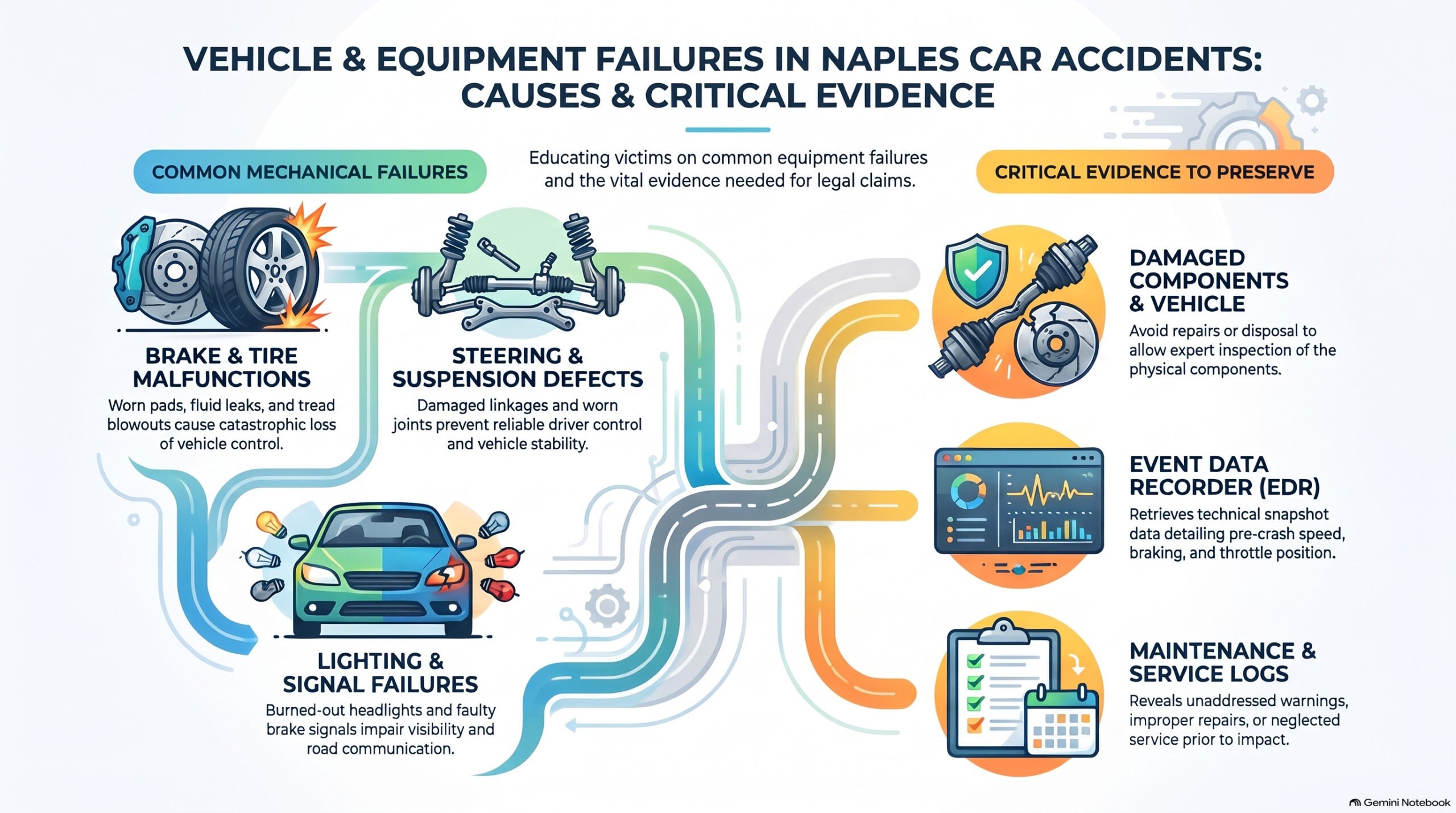
Common causes of vehicle and equipment failures in Naples car accidents include brake system malfunctions that prevent drivers from slowing or stopping safely. Tire blowouts, steering or suspension problems, and defective components can also cause a driver to lose control. Malfunctioning lights or turn signals may reduce visibility or prevent other road users from recognizing a vehicle’s movements.
Brake System Failures
Brake system failures can turn an ordinary drive in Naples into a serious collision risk. Worn brake pads, damaged rotors, or neglected maintenance may reduce stopping power and leave a driver unable to respond safely to traffic conditions. Brake overheating can occur during repeated hard stops or prolonged braking, weakening components and increasing stopping distance. Hydraulic leaks may lower brake fluid pressure, making the pedal feel soft or preventing the system from engaging effectively. Defective parts or improper repairs can also contribute to sudden or uneven braking. These problems may place drivers, passengers, pedestrians, and other road users at risk, especially in congested areas. After a collision, inspection records, repair histories, and vehicle evidence can help determine whether a brake defect or maintenance failure contributed to the crash.
Tire Blowouts and Defects
When a tire fails at highway speed, a driver may lose control before there is time to respond safely. Blowouts can follow from worn tread, underinflation, impact damage, overloading, or manufacturing flaws. Tire tread separation may cause a sudden loss of traction and send debris into nearby lanes, creating hazards for other motorists. Regular inspections can identify cracking, bulges, uneven wear, or underinflation, though some defects remain hidden until failure.
A tire’s age and maintenance history may also matter when investigators assess a crash. Drivers, vehicle owners, manufacturers, and repair providers may each have relevant responsibilities. Checking whether a tire was subject to a defective-tire recall can help determine whether a known safety issue contributed. Preserving the failed tire, photographs, service records, and recall information may assist a careful, evidence-based review.
Steering and Suspension Problems
Steering and suspension failures can make a vehicle difficult to control, particularly during turns, lane changes, or sudden stops. Steering linkage defects, including worn joints or damaged connections, may prevent a driver’s input from reaching the wheels reliably. Fatigue in suspension components can weaken springs, control arms, or other parts that help maintain tire contact with the road. These conditions may cause wandering, uneven handling, excessive bouncing, or reduced stability, increasing the risk of a collision. Poor maintenance, manufacturing flaws, corrosion, and prior impact damage can contribute to these failures. When a vehicle becomes difficult to guide or keep balanced, it can put other road users in unexpected danger. Careful inspections and timely repairs can help protect drivers, passengers, and the wider community. Maintenance and repair records may also help clarify how a failure occurred.
Lighting and Signal Malfunctions
Beyond guiding and suspension concerns, lighting and signal malfunctions can reduce a vehicle’s visibility or prevent drivers from communicating their intentions. Burned-out bulbs, damaged lenses, faulty wiring, or misaligned beams can impair headlight visibility. These problems can make it harder for drivers to see pedestrians, cyclists, road hazards, and other vehicles, especially at night or during heavy rain. Brake lights that fail to illuminate may also prevent following drivers from recognizing when a vehicle is slowing or stopping. Turn signal defects can leave nearby motorists unsure of a driver’s planned lane change or turn, increasing collision risk. Regular inspections and prompt repairs help preserve safe communication on the road. When a malfunction contributes to a crash, maintenance records and vehicle inspections may help identify its cause.
Don’t Wait. Call Our Florida Personal Injury Lawyers Now!


Legal Rights of Naples Car Accident Vehicle & Equipment Failures Injury Victims
A vehicle or equipment failure that contributes to a Naples car accident may give injured victims legal rights beyond a claim against the driver. Depending on the evidence, a claim may involve a manufacturer, repair business, parts supplier, or other party whose conduct contributed to the harm.
These rights can help victims pursue compensation while supporting safer practices for other road users.
- Victims may seek damages for medical expenses, lost income, and other documented losses.
- Product liability rules may apply when a defective component caused or worsened an injury.
- Comparative negligence may reduce recovery if a victim’s own conduct contributed to the crash.
- Product recalls, maintenance records, and expert inspections may help establish whether a responsible party breached a legal duty.
Prompt medical care and careful preservation of the vehicle and records can protect evidence. Because deadlines and liability rules vary, an attorney can assess potential claims, identify responsible parties, and explain available options without placing blame before the facts are established.
Why Do Naples Car Accident Vehicle & Equipment Failures Cause Injuries?
Why do vehicle and equipment failures cause injuries in Naples car accidents? These failures can prevent drivers from controlling the vehicle, braking, or protecting occupants as intended. A worn tire may lose traction, while defective brakes can increase stopping distance or fail entirely. Faulty lights may also keep a driver from seeing hazards or make a vehicle difficult for others to notice.
Some failures result from poor maintenance, aging components, or improper repairs. Others may stem from manufacturing defects that affect a part’s design or construction. In each case, an unreliable vehicle can put drivers, passengers, and nearby road users at risk.
Crash severity often depends on the vehicle’s speed, the point of impact, and whether safety equipment functions properly. Failing airbags or seat belts may increase injury risk. Roadway conditions, including rain, standing water, and uneven surfaces, can further challenge a vehicle with compromised equipment. These factors may combine, making an otherwise manageable event more dangerous for everyone involved.
What Should You Do After a Naples Car Accident Vehicle & Equipment Failure Injury?
After a crash involving a vehicle or equipment failure, the injured person should seek prompt medical attention, even if symptoms initially appear minor. Preserve photographs, damaged parts, repair records, and other evidence to document the failure and its role in the collision. A lawyer can assess potential claims, identify responsible parties, and advise on protecting the injured person’s rights.
Seek Medical Attention
Even when vehicle or equipment failure appears to cause a Naples car accident, injured occupants should seek medical attention promptly. Some injuries may not cause immediate symptoms, and delaying an evaluation can allow a condition to worsen. A medical professional can assess visible and hidden injuries, recommend appropriate treatment, and explain warning signs that require urgent care.
If symptoms are severe or life-threatening, take the injured person to an Emergency room or call emergency services. Otherwise, a prompt physician evaluation can help establish a clear treatment plan. Patients should describe their symptoms accurately, follow medical instructions, and attend all follow-up appointments. Consistent care supports recovery and helps clinicians identify changes in a patient’s condition. Prioritizing treatment also helps injured people maintain their health while they consider next steps.
Document The Failure
When a vehicle or equipment defect may have contributed to a Naples car accident, preserving evidence can help clarify how the failure occurred. The injured person or a trusted representative can photograph the vehicle, damaged parts, roadway, and visible warning indicators, provided doing so is safe. Images should show both close details and the wider scene, with dates and locations recorded when possible. Failure documentation may also include repair invoices, maintenance records, inspection reports, recall notices, and communications with manufacturers or service providers. Do not repair, discard, or alter the vehicle or any failed component before documenting its condition. A clear preservation protocol helps protect relevant evidence and reduces the risk of losing important details. Witness names and contact information can also support an accurate account of the incident.
Contact A Lawyer
A lawyer can help an injured person assess whether a vehicle or equipment failure contributed to a Naples car accident and identify steps to preserve relevant evidence. Prompt legal guidance may help protect damaged parts, maintenance records, photographs, and witness accounts before they are lost or altered. An attorney can also explain how to document medical treatment, expenses, and missed work while avoiding statements that could complicate a claim.
When choosing counsel, the injured person may ask about experience with defective vehicles, failed components, and accident investigations. A Free consultation can provide an opportunity to discuss the incident, possible responsible parties, and available legal options without an initial fee. Questions about attorney availability, communication practices, and case costs can help clarify what support to expect. Timely contact lets counsel assess deadlines and coordinate the right investigative steps.
Don’t Wait. Call Our Florida Personal Injury Lawyers Now!
Critical Evidence in a Naples Car Accident Vehicle & Equipment Failures Injury Case
Essential evidence can help establish whether a vehicle or equipment failure contributed to a Naples collision and resulting injuries.
Relevant materials may include:
1. vehicle inspection records; 2. event data recorder information; 3. maintenance history; and 4. photographs and witness accounts.
Together, these sources can clarify the vehicle’s condition, the events surrounding the crash, and the scene conditions.
Vehicle Inspection Records
Vehicle inspection records can help establish whether a car, truck, or commercial vehicle had a safety defect before a Naples crash. These documents may show reported concerns, repairs, replaced parts, and whether recommended maintenance was completed. A careful review can identify recurring problems, delayed repairs, or unaddressed warnings, helping clarify how a failure may have contributed to injuries.
Inspection intervals and technician qualifications can also matter. Records may indicate whether inspections occurred on schedule and whether qualified personnel performed them. For commercial vehicles, maintenance logs and inspection reports may reveal patterns that warrant further investigation. Promptly preserving these materials can help prevent loss or alteration and support a reliable account of the vehicle’s condition. Such evidence may help injured people and their families seek accountability while promoting safer practices for others on Naples roads.
Event Data Recorder
An event data recorder can preserve a brief technical snapshot of a vehicle’s operation just before and during a Naples crash. This information may show speed, braking, throttle position, seat belt use, and other recorded conditions, depending on the vehicle and system. Such evidence can help clarify how a collision unfolded and whether a suspected vehicle or equipment failure contributed to the harm. Qualified professionals should retrieve recorder data promptly because access may require specialized tools, and the data can be lost or altered if a vehicle is repaired, powered, or handled improperly. Investigators may also examine electronic control modules, which can store related diagnostic information. Careful preservation and interpretation can support a fair assessment of responsibility and help injured people and their families seek answers through the legal process.
Maintenance History
Maintenance records can help determine whether a mechanical failure contributed to a Naples car accident. Service invoices, inspection reports, and repair histories may show whether a vehicle received appropriate care before the collision. A lawyer can compare documented work with manufacturer recommendations and the vehicle’s service interval to assess whether a component was neglected, improperly repaired, or allowed to deteriorate. Maintenance gaps may raise questions about the owner’s practices, a repair facility’s work, or a commercial operator’s oversight. Records can also help distinguish a sudden defect from a failure that developed over time. Preserving these documents may support a careful investigation and help identify parties whose decisions affected road safety. This evidence can assist injured people seeking accountability while promoting safer practices for drivers, businesses, and repair professionals throughout the community.
Photographs And Witnesses
Photographs and witness accounts can preserve details that may otherwise disappear after a Naples car accident involving a vehicle or equipment failure. Images taken promptly may show vehicle positions, road conditions, visible damage, warning lights, and failed components before repairs or cleanup alter the scene. Scene Photographs should include broad views and close details, with dates and locations recorded when possible. A qualified professional may need to examine damaged parts before discarding them.
Witness Statements can clarify what happened before, during, and after the collision. Independent observers may describe unusual sounds, equipment behavior, traffic conditions, or drivers’ actions. Collect their names and contact information promptly, while memories remain clear. Investigators can compare these accounts with photographs, vehicle records, and inspection findings to assess how a failure contributed to the crash and resulting injuries.
Long-Term Effects of Naples Car Accident Vehicle & Equipment Failures Injuries
Vehicle and equipment failures can cause injuries that continue to affect a person long after the crash, including chronic pain and reduced mobility. Some survivors also experience lasting cognitive effects that interfere with daily activities and work. Ongoing treatment and rehabilitation may create substantial medical expenses over time.
Chronic Pain And Mobility
When a vehicle or safety component failure causes a serious crash, the resulting injuries may continue to affect a person’s health and mobility long after initial treatment. Fractures, spinal injuries, and joint damage can cause persistent pain, stiffness, or reduced strength. These limitations may interfere with walking, working, household tasks, and participation in community life. Recovery often requires coordinated care, including physical therapy and Pain management tailored to the person’s condition. Some individuals may rely on mobility aids, such as braces, canes, or wheelchairs, to move safely and preserve independence. Ongoing medical assessments can help identify changing needs and guide treatment decisions. Caregivers and service providers may also help injured people access appointments, adapt daily routines, and maintain meaningful connections while coping with lasting physical challenges after a crash.
Lasting Cognitive Effects
A serious crash caused by a vehicle or safety equipment failure can lead to lasting cognitive changes, particularly after a traumatic brain injury. These effects may interfere with a person’s ability to work, maintain relationships, and manage daily responsibilities. Memory impairment can make it difficult to recall conversations, follow instructions, or retain new information. Executive dysfunction may affect planning, judgment, attention, and the ability to complete tasks in sequence. Such changes are not always immediately apparent, and family members or colleagues may notice differences before the injured person recognizes them. Cognitive challenges can also limit participation in community and caregiving roles that once mattered to the individual. Documenting these changes and obtaining appropriate professional assessment can help clarify their impact and support informed decisions about recovery, accommodations, and future responsibilities.
Ongoing Medical Expenses
Cognitive and physical injuries from a crash caused by vehicle or safety equipment failure may require care long after the initial emergency treatment ends. Ongoing medical expenses can include specialist visits, rehabilitation, prescription medication, assistive devices, and treatment for complications that emerge over time. These costs may affect a person’s ability to support family members or contribute to the community.
Assess future treatment needs using medical records, clinical evaluations, and informed medical forecasting. A qualified provider can explain the likely duration, frequency, and cost of recommended care, while acknowledging that recovery may not follow a predictable course. Documenting these needs helps establish the financial impact of the injuries. When a defective component or failed safety feature contributed to the crash, careful records may also help clarify which expenses relate to the injury.
Proving Liability in Naples Car Accident Vehicle & Equipment Failures Injury Cases
Proving liability in Naples car accident cases involving vehicle or equipment failures requires evidence that a defective or poorly maintained component contributed to the crash and resulting injuries. Investigators may examine the vehicle, damaged parts, maintenance records, repair invoices, and scene photographs. An independent mechanical inspection can help identify whether brakes, tires, steering systems, airbags, or other equipment failed before impact.
Responsibility may rest with a manufacturer, parts supplier, repair shop, vehicle owner, or another party, depending on the evidence. Manufacturer Negligence may involve unsafe design, faulty production, or inadequate warnings. Product Recalls and technical service notices can provide relevant context, but they do not alone establish liability. Records showing whether a recall applied and whether repairs were completed may strengthen the factual assessment.
Promptly preserving the vehicle and failed components can prevent evidence from being lost or altered. Medical records and crash reports may also help connect the failure to the injuries and clarify the sequence of events.
Dealing With Insurance Companies After a Naples Car Accident Vehicle & Equipment Failures Injury
Once evidence suggests a vehicle or equipment failure contributed to a Naples crash, insurers may review the claim closely and dispute responsibility. They may review maintenance records, repair history, product condition, and whether driver conduct also contributed. Claim Adjusters may contact injured people soon after a collision to request details or discuss a settlement. Their questions can affect how the incident and resulting losses are understood.
Injured people may wish to respond carefully, using accurate information and avoiding speculation about the cause of a failure before it is established. Recorded Statements are not always required immediately, and a person may seek legal guidance before agreeing to provide one. Preserve and share documents about medical care, lost income, vehicle damage, and prior repairs accurately when appropriate.
Clear, consistent communication can help prevent misunderstandings while allowing insurers to assess the claim. Supporters can help organize records and encourage timely care without pressuring them to accept an early offer.
What to Expect During a Naples Car Accident Vehicle & Equipment Failures Injury Claim Process
A vehicle or equipment failure injury claim typically begins with an evaluation of the circumstances, injuries, and potential sources of liability. Evidence is then gathered and the claim is filed with the appropriate parties, supported by records and documentation. The process may conclude through settlement negotiations or proceed to trial if the parties cannot reach an agreement.
Initial Case Evaluation
When a Naples car accident involves a suspected vehicle or equipment failure, the initial case evaluation focuses on identifying how the defect may have contributed to the collision and resulting injuries. The review considers the crash circumstances, the nature of the reported malfunction, and the harm suffered by those involved. A lawyer may assess whether a driver, manufacturer, repair provider, or another party had a duty to act reasonably and whether a failure to meet that duty may have caused the injuries. This Fault Assessment helps clarify which legal theories may apply and who may bear responsibility. The evaluation also considers available information about damages, potential insurance coverage, and applicable deadlines. These factors inform Claim Viability and help determine whether pursuing a claim may support the injured person’s needs and recovery.
Evidence Collection
Because vehicle or equipment failures can leave important questions about how a collision occurred, evidence collection often begins with preserving the vehicle and documenting its condition. A qualified investigator may inspect damaged components, photograph the scene, and record vehicle positions, road conditions, and visible defects. Preserving evidence can prevent repairs, disposal, or routine handling from altering parts that may explain the failure. When appropriate, arrange an inspection so relevant parties can observe the process and obtain findings. Maintenance records, repair invoices, recall notices, and manufacturer information may also help establish the vehicle’s history. Chain-of-custody documentation records who collected, handled, stored, or tested each item, supporting its reliability. Witness accounts and available video may provide additional context. Careful collection helps clarify what happened and supports an accurate assessment of the injuries and losses involved.
Claim Filing
After preserving evidence, the injured person or their representative can begin filing a claim by notifying the relevant insurer and identifying the parties whose conduct or products may have contributed to the crash. Potentially responsible parties may include another driver, a vehicle owner, a manufacturer, or a repair provider. Accurate claim forms should describe the collision, reported injuries, property damage, and known vehicle or equipment failures. Supporting records, such as medical documentation, repair estimates, and witness information, can help insurers assess the reported losses. Filing deadlines vary by claim type and applicable law, so prompt review is important to protect the injured person’s rights. The claimant should retain copies of submitted materials and record communications with insurers. Careful, complete filing can also help clarify the issues and support an orderly review.
Settlement Or Trial
After an insurer reviews the claim, the injured person may receive a settlement offer or face a dispute that requires further negotiation or litigation. Assess the offer against documented medical costs, lost income, future care needs, and evidence linking the vehicle or equipment failure to the collision. A careful Settlement strategy considers both the compensation available and the risks of accepting less than the claim may warrant. Negotiations may involve presenting repair records, inspection findings, expert opinions, and treatment documentation. If the parties cannot reach a fair resolution, the injured person may file a lawsuit. Trial preparation can include gathering testimony, organizing records, and consulting qualified experts. Throughout either path, informed decisions help protect the claimant’s interests while supporting accountability and safer practices for other road users.
Compensation for Naples Car Accident Vehicle & Equipment Failure Injury Damages
Vehicle and equipment failures can cause serious crashes and leave injured people facing substantial medical expenses, lost income, and other losses. Compensation may be available when a defective component, inadequate maintenance, or a failure to warn contributed to a collision. Potentially responsible parties may include drivers, vehicle owners, repair shops, manufacturers, or distributors, depending on the evidence and applicable law.
An injured person may seek damages for harm caused by the crash, while eligible family members may pursue a claim after a Wrongful Death. In cases involving particularly reckless or intentional misconduct, Florida law may also allow punitive damages. These damages are not automatic; the claimant must establish the required legal basis.
Prompt investigation can help preserve vehicle parts, maintenance records, photographs, and witness accounts. A lawyer can assess liability, identify potentially responsible parties, and present evidence supporting a fair resolution. Each claim depends on its facts, and deadlines may limit the time available to take legal action.
Economic vs Non-Economic Damages in Naples Car Accident Vehicle & Equipment Failures Cases
Economic losses in vehicle and equipment failure cases may include medical expenses, lost income, and repair costs. Non-economic damages can address pain, emotional distress, and reduced quality of life. Establishing both categories requires evidence linking the losses and harm to the accident.
Economic Losses
When a vehicle or equipment failure causes a crash in Naples, the injured person may seek compensation for measurable financial losses, known as economic damages. These losses can include medical expenses, rehabilitation costs, prescription charges, and other necessary treatment expenses. Records such as invoices, payment statements, and treatment plans can help establish the amount and connection to the crash. You may also recover lost wages when injuries prevent you from working, including documented missed hours or reduced income. If an injury limits future work opportunities or the ability to earn at the prior level, diminished earning capacity may be considered. Property damage, including vehicle repair or replacement costs, may also qualify. Careful documentation helps clarify the financial impact and supports a fair assessment of the injured person’s needs and responsibilities.
Non-Economic Harm
Financial records can document medical bills, lost income, and property damage, but they do not capture every effect of a Naples crash involving a vehicle or equipment failure. Non-economic harm concerns the personal consequences that may continue after immediate treatment and financial losses have been addressed. These effects can include physical pain, emotional distress, anxiety, and disruption to family or community responsibilities. A person may also experience Loss of enjoyment when injuries limit participation in activities, relationships, or service to others that once gave daily life meaning. Unlike economic damages, these harms don’t have a direct price on a bill or wage statement. Their significance depends on how the collision and resulting injuries affect the individual’s well-being, independence, and ordinary routines over time. They are distinct from measurable financial losses.
Proving Damages
After a Naples collision involving vehicle or equipment failure, proving damages requires evidence linking the incident to the claimed losses. Economic damages may include medical expenses, rehabilitation costs, lost income, and vehicle repair or replacement expenses. Records such as invoices, pay statements, treatment notes, and repair estimates help establish these amounts. Damage documentation should also identify how the suspected defect or failure contributed to the collision and resulting costs. Non-economic damages address losses without a fixed price, including pain, emotional distress, and limits on daily activities or relationships. Medical records, personal accounts, and testimony from people familiar with the injured person’s circumstances may help describe these effects. Accurate evidence supports settlement valuation and allows a claim to reflect both measurable expenses and personal harm. Organized records can also help clarify disputed losses.
Don’t Wait. Call Our Florida Personal Injury Lawyers Now!
When a Naples Car Accident Vehicle & Equipment Failures Injury Case Goes to Trial vs Settlement
A Naples car accident involving a vehicle or equipment failure may proceed to trial if the parties dispute who was responsible, whether a defect or maintenance failure caused the crash, or how serious the injuries are. The parties may settle when they can agree on responsibility and compensation without asking a jury to decide. Settlement discussions can provide a more predictable resolution, while trial allows each side to present evidence and seek a jury verdict.
Trial preparation may include reviewing maintenance records, examining the damaged vehicle, consulting qualified experts, and organizing medical evidence. These steps can help clarify whether a component failed, whether inspection or repair was inadequate, and how the incident affected the injured person. A trial may take longer and involve uncertainty, but it can be appropriate when negotiations do not produce a fair agreement. Jury verdicts depend on the evidence presented and the jury’s assessment. The injured person’s needs and the strength of available proof can inform the choice between settlement and trial.
Florida Laws That May Affect Your Naples Car Accident Vehicle & Equipment Failures Case
When a vehicle or equipment failure contributes to a Naples crash, Florida law may determine who can be held responsible and what evidence is needed to support an injury claim. Product liability principles may apply when a defective design, manufacturing error, or inadequate warning caused the failure. Negligence rules may also govern claims against drivers, repair shops, or others whose conduct contributed to the collision.
Relevant considerations include:
- Federal safety standards may help assess whether a vehicle or component met applicable safety requirements.
- Florida inspection requirements and maintenance records may show whether a defect was detectable or repairs were neglected.
- Comparative fault rules may affect recovery if an injured person’s actions contributed to the crash.
- Evidence such as damaged parts, service records, photographs, and expert analysis may help establish how the failure occurred.
Preserving this evidence can support a fair evaluation of responsibility and help protect the interests of injured people and their families. Each case depends on its facts and applicable law.
The Statute of Limitations for Naples Car Accident Vehicle & Equipment Failures Injury Cases
Florida law sets deadlines for filing injury claims arising from Naples vehicle or equipment failures, and missing the applicable deadline can prevent an injured person from pursuing compensation in court. For most negligence-based personal injury claims, the filing period is generally two years from the date the cause of action accrues. Different deadlines may apply to wrongful death claims, claims involving government entities, or other legal theories, so the relevant facts and parties matter.
Deadline exceptions may affect when a filing period begins or whether it applies. Florida’s tolling rules can pause a deadline in limited circumstances, including certain periods of incapacity or a defendant’s absence from the state. These rules are fact-specific and do not automatically extend the time available. A claim involving a defective vehicle component may also raise distinct issues about when an injury was discovered and which parties may be responsible. Prompt attention to the applicable deadline helps preserve the injured person’s ability to seek a legal remedy and supports accountability for preventable harm.
How a Naples Car Accident Vehicle & Equipment Failures Lawyer Can Help You
After identifying the applicable filing deadline, an attorney can help investigate how a vehicle or equipment failure contributed to a Naples car accident. The attorney may preserve evidence, identify responsible parties, and explain legal options while keeping the injured person’s interests central. A careful investigation can also support safer roads and help prevent similar harm to others.
A focused investigation can preserve evidence, identify responsible parties, and help injured people understand their legal options.
- Review the vehicle, damaged components, maintenance records, and available electronic data for signs of failure.
- Consult qualified experts to assess whether a defect, improper repair, or inadequate warning played a role.
- Examine manufacturer and government records for product recalls, prior complaints, or related safety concerns.
- Evaluate potential Design liability and other claims involving manufacturers, distributors, repair shops, or sellers.
The lawyer can gather witness accounts, organize medical and financial documentation, and communicate with insurers or opposing parties. Where evidence supports a claim, counsel may seek compensation for treatment, lost income, and other legally recognized losses. This work requires distinguishing a product defect from ordinary wear, driver conduct, or unrelated damage. Clear findings can help affected families pursue accountability and encourage responsible safety practices.
When to Contact a Naples Car Accident Vehicle & Equipment Failures Lawyer
Prompt legal guidance may be important if a Naples car accident appears connected to a vehicle or equipment failure. A driver, passenger, or family member may contact a lawyer soon after receiving medical care, especially when a brake, tire, steering component, airbag, or other part may have malfunctioned. Timing matters because damaged vehicles and components may be repaired, moved, or discarded, while electronic records and witness recollections may become harder to obtain.
Urgent representation may be appropriate when a vehicle is scheduled for repair or disposal, an insurer requests a recorded statement, or multiple parties dispute how the crash occurred. A lawyer can explain practical steps to preserve relevant evidence and communicate about the claim. To protect an injured person’s interests, avoid altering or discarding suspected failed equipment before receiving appropriate guidance. If injuries worsen or new information suggests a defect, contacting counsel promptly can clarify your options and deadlines. Each matter depends on its facts.
Why You Need an Experienced Naples Car Accident Vehicle & Equipment Failures Lawyer
When a Naples car accident may involve a failed vehicle component, an experienced lawyer can help identify responsible parties and preserve evidence needed to evaluate the claim. This work may require examining the vehicle, maintenance records, crash reports, and relevant safety information before anyone alters or discards parts. A lawyer can also assess whether component defects, inadequate warnings, or improper repairs may have contributed to the collision and resulting injuries.
Vehicle failure claims can involve manufacturers, distributors, repair shops, or other entities, each with different responsibilities. Counsel can coordinate with qualified experts to interpret technical findings and explain how a failure may have affected the crash. Reviewing Manufacturer recalls and related notices may help establish whether a known safety concern existed, though a recall alone does not determine liability. An experienced lawyer can organize evidence, respond to insurer inquiries, and present a clear account of your losses. This support allows injured people and families to focus on recovery while their claim receives careful, informed attention.
How to Choose the Right Naples Car Accident Vehicle & Equipment Failures Lawyer for Your Case
Choosing the right Naples vehicle and equipment failure lawyer requires careful consideration of the attorney’s experience with technically complex claims. A suitable candidate should understand how defective components, maintenance failures, or safety equipment problems may contribute to a collision. This background can help counsel identify relevant evidence, consult qualified experts, and explain how the failure affected those involved.
Review attorney credentials alongside practical experience handling injury claims involving vehicle defects. Prospective clients can ask about prior cases, investigative methods, and the lawyer’s approach to preserving damaged vehicles and records. Clear answers can help determine whether the attorney is prepared to pursue a careful, evidence-based evaluation.
Client communication also merits attention. The lawyer should explain legal options, likely stages, and key decisions in plain terms, while promptly answering reasonable questions. For individuals seeking accountability and safer roads for others, a lawyer who combines technical knowledge, ethical judgment, and consistent communication can provide informed guidance throughout the claim.
About The Law Offices of Anidjar & Levine
The Law Offices of Anidjar & Levine represents people injured in car accidents in Naples and throughout Florida.
The firm helps clients with injuries caused by vehicle or equipment failures, including defective components, inadequate repairs, or malfunctioning safety systems.
Its attorneys review evidence, explain legal options, and pursue compensation when another party may be responsible.
This work may include reviewing crash reports, maintenance records, product information, and other relevant documents.
The firm’s history reflects a practice focused on representing injured people and helping them navigate the legal process.
The firm’s approach includes keeping clients updated on case developments and answering questions as they arise.
When a claim involves complicated technical issues, attorneys may consult qualified professionals to assess the evidence and clarify potential causes.
Community involvement also reflects the firm’s presence in Florida.
Through service and outreach, the firm supports local residents beyond individual legal matters.
Its work is intended to help people understand their rights and access informed guidance after a serious accident.
Frequently Asked Questions
Can a Vehicle Manufacturer Be Held Responsible for a Defective Car Part?
Yes, a vehicle manufacturer may be held responsible when a defective car part causes injury or property damage. Manufacturer liability can arise from a design flaw, a production error, or inadequate warnings about foreseeable risks. The injured person generally must show the part was defective, the defect existed when the vehicle left the manufacturer’s control, and it caused the harm. Defect evidence may include inspection findings, repair records, recalls, and expert analysis.
What Types of Vehicle or Equipment Defects Can Cause a Car Accident?
Vehicle or equipment defects that can cause a car accident include Brake system failures, tire blowouts, steering or suspension defects, faulty airbags, defective seat belts, and malfunctioning lights. Engine or transmission problems may also cause sudden power loss or prevent a driver from controlling the vehicle. Poorly designed components, manufacturing errors, or inadequate maintenance warnings can increase these risks. Identifying the defect may help protect injured people and support accountability for preventable harm.
Should I Preserve a Vehicle Involved in a Suspected Defect-Related Crash?
Yes. Preserving the vehicle can protect evidence needed to determine whether a defect contributed to the crash and may help prevent similar harm to others. The owner should avoid repairs, alterations, or disposal until qualified professionals have documented and inspected it. Inspection timing matters because damage, electronic data, and component conditions may change. Vehicle storage options should provide secure access and protect the vehicle from weather. The owner should promptly consult an attorney and insurer before moving it.
Can a Recall Affect a Claim Involving a Vehicle Defect?
Yes. A recall can affect a vehicle-defect claim by documenting that a manufacturer identified a potential safety problem, although it does not prove the defect caused a particular crash. The impact of a recall notice depends on the defect, the vehicle’s condition, and the evidence available. Recall repair timing may also matter, especially if the owner received notice before the collision or completed repairs afterward. Preserving the vehicle and relevant records can help clarify these issues.
What Happens if a Defective Replacement Part Contributed to the Accident?
A defective replacement part may support a product liability claim if evidence shows that its defect contributed to the accident and resulting injuries. Responsibility could extend to the part’s manufacturer, distributor, or installer, depending on the defect and each party’s role. Installer liability claims may arise from improper selection or installation, while Warranty coverage disputes can affect repair costs but do not determine fault. Preserving the part and service records can help clarify responsibility.
—————————
Vehicle and equipment failures can leave Naples crash victims with serious injuries, disputed liability, and costly recovery.
Identifying the cause may require a prompt investigation, preserving the damaged vehicle, and reviewing maintenance and manufacturing records.
An experienced attorney can assess potential claims, explain applicable deadlines, and pursue compensation from responsible parties.
The Law Offices of Anidjar and Levine represents injured people in these matters and can help them understand their legal options and next steps.
Learn more from a Naples Personal Injury Lawyer.