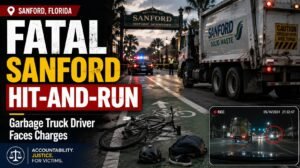
The Law Offices of Anidjar and Levine helps individuals injured in truck crashes understand their legal options. A Daytona Beach Truck Accident Lawyer can evaluate evidence, identify potentially liable drivers, trucking companies, manufacturers, or maintenance providers, and protect the injured person’s rights.
Counsel may preserve electronic logs, vehicle data, inspection records, photographs, witness accounts, and medical documentation before evidence disappears.
A claim may address emergency care, rehabilitation, prosthetics, home assistance, lost income, diminished earning capacity, pain, and lasting emotional effects.
Further information explains liability, documentation, deadlines, and selecting appropriate legal representation.
Main Takeaways
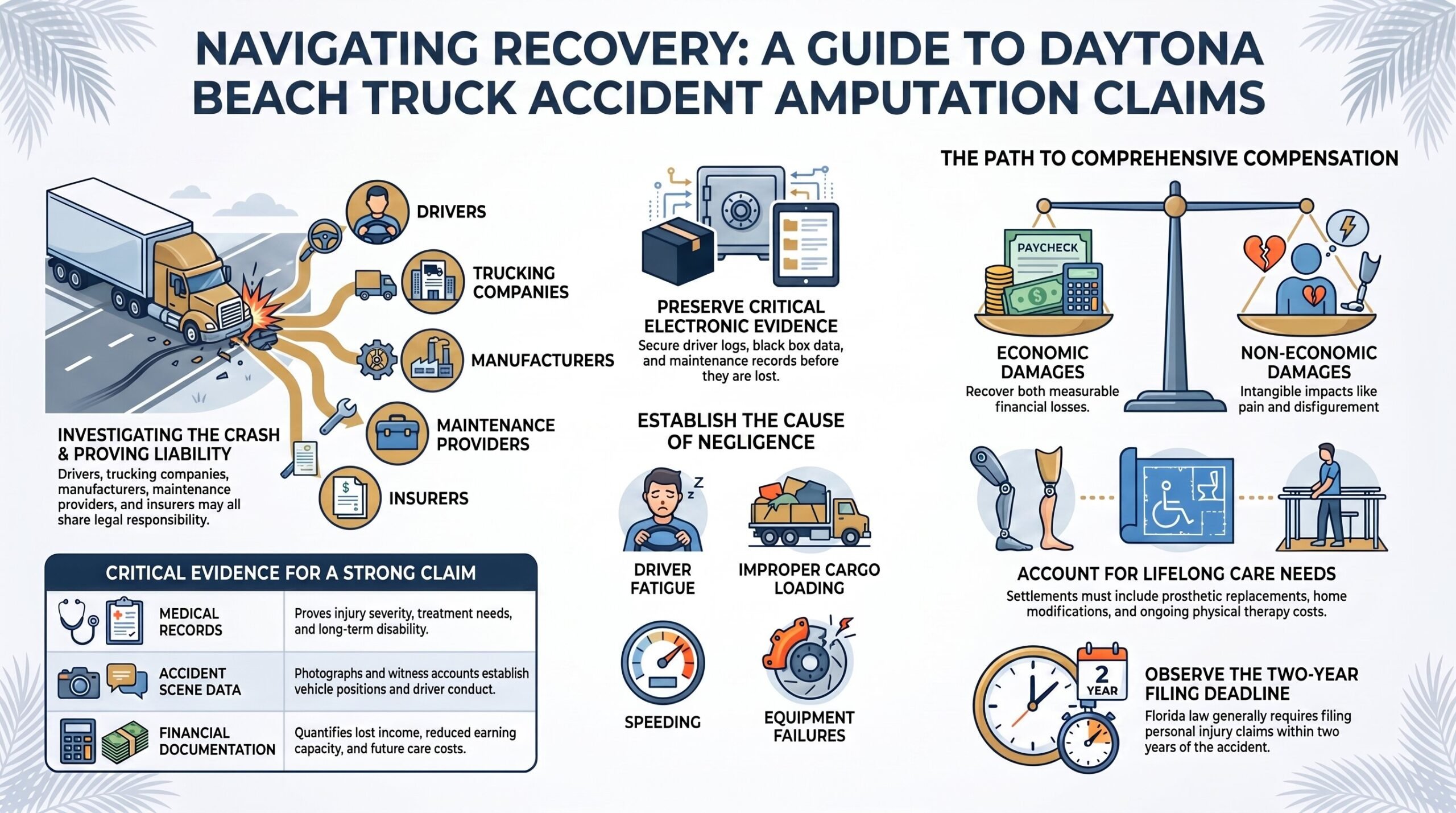
- A Daytona Beach truck accident amputation lawyer can investigate driver negligence, trucking violations, vehicle maintenance, cargo loading, and equipment failures.
- Potentially responsible parties may include truck drivers, motor carriers, contractors, manufacturers, maintenance providers, and insurers.
- Claims may seek compensation for emergency care, surgeries, rehabilitation, prosthetics, future medical needs, lost income, pain, and reduced quality of life.
- Important evidence includes medical records, photographs, witness information, police reports, electronic driving data, surveillance footage, and maintenance documents.
- Prompt legal guidance can preserve evidence, protect deadlines, coordinate with insurers, and support a claim reflecting long-term disability and future care needs.


How We Can Help With Your Daytona Beach Truck Accident Amputation Injury Claim
A Daytona Beach truck accident amputation lawyer can provide focused legal representation to individuals whose lives have been permanently altered by catastrophic injuries. The lawyer can evaluate available evidence, identify potentially responsible parties, and coordinate communications with insurers, trucking companies, and medical providers. This assistance may help preserve important deadlines while allowing the injured person to prioritize treatment and rehabilitation.
The legal team can investigate driver conduct, company policies, maintenance practices, and equipment conditions. Truck repair records may help establish whether a mechanical issue was reported, ignored, or improperly addressed before the collision. Counsel can also consult qualified professionals regarding future medical care, prosthetic needs, lost earning capacity, and daily assistance.
When a fatality accompanies the accident, the lawyer may assess Wrongful death eligibility and explain which relatives may pursue compensation under applicable law. Throughout the claim, representation can include evidence collection, settlement negotiations, and, when necessary, preparation for litigation. The objective remains securing accountability and resources that support long-term recovery.
OUR CONSULTATIONSARE FREE
START YOUR FREE CASE REVIEW

Understanding Daytona Beach Truck Accident Amputation Injury Cases
Understanding a Daytona Beach truck accident amputation injury case requires examining both the collision itself and the long-term consequences of the resulting loss. The analysis may include medical records, surgical reports, rehabilitation needs, and expert evaluations concerning future care, mobility, employment, and quality of life. Liability depends on applicable Daytona Beach traffic laws, trucking regulations, driver conduct, vehicle maintenance, and the relationship between the crash and the amputation.
A careful case review also considers available insurance coverage, the trucking company’s role, and damages supported by reliable documentation. Evidence preservation tips include photographing injuries and property damage, obtaining witness information, retaining medical bills, and requesting relevant vehicle, driver, and electronic records before they disappear. Prompt documentation can help clarify disputed facts and protect the injured person’s interests.
Because each injury affects physical independence, family responsibilities, and future planning differently, a thorough evaluation should remain individualized. Legal guidance can help coordinate medical evidence, preserve claims, and pursue accountability while supporting the person’s recovery and dignity.
Common Causes of Daytona Beach Truck Accident Amputation
Truck accident amputations may result from driver fatigue or distraction, speeding, reckless driving, and other unsafe roadway conduct. Improper cargo loading can destabilize a truck or cause unsecured materials to strike nearby motorists, while brake and equipment failures may prevent a driver from avoiding a collision. Identifying the contributing cause is crucial when evaluating liability and the circumstances surrounding an amputation injury.
Driver Fatigue and Distraction
When commercial truck drivers operate while fatigued or distracted, their reduced attention and slower reaction times can create severe collision risks for motorists in Daytona Beach. Long shifts, irregular schedules, insufficient rest, and extended nighttime driving may impair judgment and coordination. Cellphone use, dispatch communications, navigation systems, eating, or other in-cab activities can divert attention from changing traffic conditions. Nighttime visibility may further limit a driver’s ability to identify vehicles, pedestrians, or roadway hazards before a collision occurs.
Inadequate supervision, unrealistic delivery demands, and weak enforcement of required rest practices can increase these dangers across commercial fleets. When such conduct contributes to a crash, victims may suffer life-altering injuries, including traumatic amputations. Investigators may review driver logs, electronic records, company policies, surveillance footage, and witness statements to determine whether fatigue or distraction played a role.
Speeding and Reckless Driving
Excessive speed and reckless driving by commercial truck operators can make collisions in Daytona Beach more severe and leave motorists vulnerable to catastrophic injuries, including traumatic amputations. Speed reduces a truck driver’s reaction time and increases stopping distance, particularly near congested corridors, school zones, and work areas. Aggressive lane changes, following too closely, unsafe passing, and disregard for traffic signals can undermine intersection safety and place smaller vehicles in dangerous positions.
Road rage incidents may further escalate hazardous behavior, causing sudden acceleration, intimidation, or intentional tactics around other motorists. When a speeding truck strikes a passenger vehicle, the resulting force can crush occupants or trap limbs, requiring emergency surgery and long-term rehabilitation. Evidence such as event data, surveillance footage, witness accounts, and driver records may help establish negligence and support injured individuals seeking assistance.
Improper Cargo Loading
Improperly loaded or secured cargo can destabilize a commercial vehicle and create conditions that lead to severe collisions and traumatic amputations in Daytona Beach. Uneven weight distribution may shift a trailer’s center of gravity, reducing stability during turns, lane changes, or sudden traffic movements. Overloaded compartments can also place excessive stress on tires, suspension components, and structural restraints, increasing the likelihood of a rollover or jackknife. A securement failure may allow machinery, lumber, or other materials to move or fall into surrounding traffic.
Drivers, carriers, and loading personnel have responsibilities to inspect cargo, follow applicable regulations, and confirm that restraints are properly installed before departure. When these duties are neglected, innocent motorists may suffer life-altering injuries, and careful investigation can help identify the responsible parties and support affected families.
Brake and Equipment Failures
Brake and equipment failures can deprive a commercial truck of the stopping power, guidance control, or stability needed to avoid a collision, potentially causing catastrophic injuries and traumatic amputations in Daytona Beach. Worn brake components, defective tires, handling defects, and broken safety devices may result from inadequate maintenance or overlooked warnings. Investigators may examine whether cargo weight distribution placed excessive demands on braking and suspension systems.
They may also review safety inspection records, repair invoices, driver reports, and electronic data to determine when a defect developed and whether responsible parties knew about it. Trucking companies, maintenance contractors, manufacturers, and parts suppliers may share liability when negligence or defective equipment contributes to a crash. A careful investigation can preserve evidence, clarify responsibility, and support injured individuals seeking medical care and fair compensation.


Legal Rights of Daytona Beach Truck Accident Amputation Injury Victims
Truck accident amputation victims in Daytona Beach may have legal rights to pursue compensation from parties whose negligence contributed to the collision and resulting injuries. Potential claims may address medical treatment, rehabilitation, prosthetic devices, lost income, diminished earning capacity, and pain-related losses.
A careful legal review can help protect victims and their families while promoting accountability.
- Evidence Preservation: Accident reports, medical records, photographs, witness statements, vehicle data, and employment documentation may support a claim. Prompt preservation can prevent important information from being lost.
- Liability Disputes: Trucking companies, drivers, manufacturers, contractors, and insurers may contest responsibility. Investigation can identify each potentially liable party and applicable deadlines.
- Insurance Appeals: Insurers may undervalue or deny benefits. A documented demand, timely appeal, or civil action may challenge an unfair determination.
A Criminal Investigation may proceed separately from a civil claim and does not replace the victim’s right to seek damages. Qualified counsel can coordinate with medical providers, preserve evidence, evaluate settlement offers, and pursue relief through negotiation or court proceedings. Rules vary, so prompt guidance is important.</span
Don’t Wait. Call Our Daytona Beach Truck Accident Lawyers Now.
Why Do Daytona Beach Truck Accident Amputation Injuries Happen?
Daytona Beach truck accident amputation injuries often occur when excessive vehicle weight, high impact forces, and unsafe driving conditions combine to overwhelm a person’s ability to avoid or withstand a collision. Large trucks may cause catastrophic harm during rollovers, underride crashes, rear-end impacts, and intersection collisions because their size and momentum exceed those of passenger vehicles. Driver fatigue, distraction, speeding, impaired judgment, and inadequate training can reduce reaction time and increase crash severity.
Truck lane violations, including unsafe merges and improper passing, may place nearby motorists directly in a truck’s path. Mechanical failures also contribute when braking systems, tires, steering components, or lighting equipment are defective or poorly maintained. Vehicle inspection records can reveal whether required maintenance occurred and whether known safety concerns were ignored. Road construction, poor visibility, weather, and congested traffic may further limit escape options. These combined conditions can produce crushing forces, severe bleeding, and injuries requiring surgical amputation.
What Should You Do After a Daytona Beach Truck Accident Amputation Injury?
After a Daytona Beach truck accident involving amputation, the injured person should seek immediate medical care and follow all treatment instructions. When feasible, documenting the accident scene, injuries, vehicle damage, and witness information may help preserve important evidence. Consulting an experienced attorney can also clarify legal rights, potential compensation, and the steps needed to protect a claim.
Seek Immediate Medical Care
Immediate medical care is essential following an amputation injury caused by a commercial vehicle collision. The injured person should have someone call 911 immediately and request emergency medical services. Severe bleeding, shock, contamination, and additional trauma require rapid professional assessment. Until responders arrive, a trained bystander should provide Emergency wound care, applying firm pressure with clean material when appropriate and following dispatcher instructions.
A detached body part should be protected according to medical guidance, without placing it directly on ice or attempting reattachment. The injured person should remain as still and calm as possible. Family members or witnesses should not delay transportation or treatment while seeking information. Medical personnel can also create records that preserve evidence of the injury’s severity and necessary care, supporting later legal evaluation.
Document the Accident Scene
At the accident scene, witnesses or other capable individuals should document conditions without interfering with emergency treatment or creating additional danger. Photographs may show vehicle positions, road defects, traffic controls, weather, lighting, debris, and visible injuries, provided privacy and safety are respected. Names and contact information for witnesses can help preserve independent accounts before memories change. A brief written record should identify the time, location, apparent sequence, and statements made by involved individuals, without speculation or confrontation.
Damaged equipment, torn clothing, and other physical evidence should remain undisturbed when possible. Such documentation may support liability analysis, Wrongful death proof, and evaluation of Damages mitigation efforts. Records should be stored securely, with original files preserved and edits avoided. Emergency responders’ instructions and official reporting procedures should always take priority.
Consult an Experienced Attorney
Because a truck accident amputation claim may involve disputed liability, multiple insurance policies, and substantial long-term damages, the injured person should consult an experienced personal injury attorney as soon as medical circumstances permit. Counsel can preserve evidence, coordinate with medical professionals, and identify every potentially responsible party, including drivers, trucking companies, maintenance providers, and insurers. An attorney may also handle Witness Interviewing, review collision reports, obtain electronic driving records, and evaluate photographs or surveillance footage before evidence disappears. Legal guidance helps protect the injured person from recorded statements or settlement offers that undervalue permanent limitations. Counsel can calculate medical expenses, rehabilitation needs, lost income, adaptive equipment, and future care when evaluating a potential Personal Injury Settlement. Families may rely on this advocacy while focusing on recovery and supporting one another.
Don’t Wait. Call Our Daytona Beach Truck Accident Lawyers Now.
Critical Evidence in a Daytona Beach Truck Accident Amputation Injury Case
Important evidence can establish liability, the extent of an amputation injury, and its financial consequences.
Essential categories include:
- Accident scene evidence and witness statements;
- Medical records documenting treatment, prognosis, and rehabilitation;
- Proof of financial impact, including lost income and future care costs.
Together, these materials help evaluate the strength and potential value of the injury claim.
Accident Scene Evidence
When a truck collision results in an amputation injury, evidence documented at the accident scene can establish how the crash occurred and identify the parties responsible. Photographs should capture vehicle positions, roadway conditions, traffic signals, skid marks, debris, lighting, and visible damage before conditions change. Investigators may document lane measurements, point of impact, sight distances, and signs of mechanical failure.
Witness names and statements can preserve observations that may otherwise be forgotten, including speed, driver behavior, and warnings before impact. Black box footage may reveal braking, acceleration, speed, and control inputs, while dash camera analysis can clarify traffic movements and timing. Police reports, commercial vehicle inspection records, and electronic logs may further support reconstruction. Prompt preservation of this evidence helps protect an injured person’s interests and promotes accountability.
Medical Records Documentation
Medical records provide important evidence in a Daytona Beach truck accident amputation injury case by documenting the injury’s severity, treatment, prognosis, and resulting limitations. Emergency reports, surgical notes, imaging, rehabilitation records, and physician evaluations can establish injury causation and show how the condition affects mobility, employment, and daily activities. Consistent documentation helps demonstrate whether ongoing pain, phantom sensations, prosthetic needs, or complications require continuing care.
Records may also support applications involving Social Security benefits and explain why workplace accommodations are necessary. A complete medical history allows legal professionals to evaluate damages, including medical expenses, lost income, and future treatment. During settlement negotiations, reliable records provide an objective basis for presenting the injured person’s needs and responding to disputes concerning recovery, disability, or anticipated limitations.
Witness Statements
Eyewitness statements can provide critical evidence in a Daytona Beach truck accident amputation injury case by describing how the collision occurred, the vehicles’ movements, and the conditions immediately before and after impact. Witness accounts may clarify traffic signals, lane positions, visibility, driver conduct, and whether any warning signs appeared before the crash. Eyewitness credibility depends on the person’s location, ability to observe, consistency, and potential relationship with the parties.
Statement timing also matters because prompt reports may preserve details before memory changes, although later interviews can supply additional context. Investigators may compare accounts with police reports, vehicle damage, surveillance footage, and photograph verification of roadway conditions or visible hazards. Carefully preserved statements can help attorneys present an accurate account while treating every witness respectfully and avoiding unsupported conclusions.
Financial Impact Proof
Financial impact proof establishes the economic consequences of an amputation caused by a Daytona Beach truck accident and supports a claim for damages. Medical invoices, employment records, tax returns, and expert projections can document immediate expenses and long-term financial harm. Budgeting losses may include prosthetic devices, home modifications, transportation, and necessary personal assistance. Evidence of lost earning capacity should address reduced hours, changed occupations, career interruptions, and diminished future wages.
Detailed records also establish rehabilitation costs, including therapy, vocational services, and ongoing medical care. Documentation of disability benefits can clarify available resources while demonstrating continuing needs and potential offsets. Organized financial evidence helps insurers, courts, and families evaluate the claim fairly, enabling appropriate support for recovery, independence, and future security after a devastating injury.
Don’t Wait. Call Our Daytona Beach Truck Accident Lawyers Now.
Long-Term Effects of Daytona Beach Truck Accident Amputation Injuries
Long-term amputation injuries may cause chronic pain and phantom sensations that affect comfort, sleep, and daily functioning. Emotional and psychological challenges, including anxiety, depression, and adjustment difficulties, may also develop after the accident. Ongoing rehabilitation and personal adaptations can require prosthetic care, physical therapy, workplace changes, and continued medical support.
Chronic Pain And Phantom Sensations
After a Daytona Beach truck accident amputation, chronic pain and phantom sensations may persist long after the physical wound has recovered. A person may feel burning, pressure, tingling, or sharp pain in the missing limb, even though the sensation originates from altered nerve signals. Residual-limb pain can also develop around scar tissue, damaged nerves, or the prosthetic interface. These symptoms may limit mobility, interfere with rehabilitation, and require continuing medical evaluation.
Muscle weakness can increase strain on the remaining limb and contribute to balance problems, reduced endurance, and additional discomfort. Persistent symptoms may cause sleep disturbances when pain intensifies at night, affecting concentration and daily functioning. Treatment can include medication, physical therapy, desensitization techniques, prosthetic adjustments, and expert care. Documenting symptoms and treatment supports informed care and accountability.
Emotional And Psychological Challenges
How does an amputation sustained in a Daytona Beach truck accident affect psychological well-being over time? Survivors may experience grief, altered self-image, depression, anxiety, or post-traumatic stress long after physical wounds have recovered. Emotional reactions can intensify when daily reminders of the collision, financial uncertainty, or changes in personal relationships create additional strain. Some individuals may withdraw socially, struggle with sleep, or lose confidence in familiar responsibilities.
Early recognition can help families, caregivers, and legal advocates encourage appropriate treatment support without minimizing the survivor’s experience. Consistent counseling access may provide a structured setting to process trauma, identify harmful thought patterns, and address persistent distress. Mental health professionals can also recommend coping strategies suited to each person’s circumstances. Compassionate communication and patient, respectful support remain vital throughout recovery.
Ongoing Rehabilitation And Adaptations
Ongoing rehabilitation is often necessary for survivors of Daytona Beach truck accident amputation injuries as they adjust to lasting changes in mobility, balance, strength, and daily function. Treatment may include pain management, physical conditioning, occupational therapy, and prosthetic training to improve independence and safety. Rehabilitation professionals can evaluate home, workplace, and transportation needs, then recommend adaptations such as ramps, grab bars, modified vehicles, or assistive devices.
Regular medical follow-up helps identify complications, including skin irritation, nerve pain, and joint strain. Emotional support may also assist survivors and families as they manage grief, changing relationships, and renewed responsibilities. Because long-term care can be costly, financial planning should address medical expenses, equipment replacement, lost income, and future accessibility needs. Coordinated services help survivors pursue meaningful, stable lives.
Proving Liability in Daytona Beach Truck Accident Amputation Injury Cases
Establishing liability in a Daytona Beach truck accident amputation case requires evidence showing that another party’s negligence caused the collision and resulting loss of limb. Investigators may examine driver conduct, including speeding, distraction, impairment, fatigue, or violations of commercial driving regulations. Trucking companies can also face responsibility when negligent hiring, inadequate training, unsafe scheduling, poor maintenance, or improper cargo loading contributed to the crash.
Evidence preservation is critical. Accident photographs, vehicle data, surveillance recordings, electronic logging information, maintenance records, witness statements, and police reports may clarify how the collision occurred. Medical documentation can connect the traumatic injury to the accident and establish the extent of resulting limitations.
A qualified legal professional may coordinate accident reconstruction and consult trucking safety experts to identify violations and responsible parties. Comparative negligence may affect recovery if the injured person is alleged to share fault. Careful factual analysis helps protect the individual’s interests while supporting accountability and access to necessary assistance. Witness cooperation and timely documentation can further strengthen a complete, reliable liability presentation.
Dealing With Insurance Companies After a Daytona Beach Truck Accident Amputation Injury
After liability evidence is preserved, communication with insurance companies requires careful management, particularly when a truck accident causes amputation and permanent disability. Insurers may request recorded statements, employment information, medical documentation requests, and authorizations. A representative should review each request before any response, ensuring that relevant information is supplied without unnecessary disclosures or misleading statements.
Settlement discussions should account for current treatment, prosthetic needs, rehabilitation, lost earning capacity, and future care planning. Because an initial offer may not reflect long-term medical, vocational, and personal assistance needs, accepting payment prematurely can create serious financial hardship. Communications should remain accurate, respectful, and limited to documented facts.
The injured person should avoid posting case-related information publicly and should direct substantive questions to qualified counsel. This approach helps protect privacy, preserve negotiating leverage, and support a resolution that recognizes both immediate needs and lasting consequences. Careful coordination also allows family members and service providers to understand responsibilities while reducing avoidable confusion during recovery.
What to Expect During a Daytona Beach Truck Accident Amputation Injury Claim Process
The claim process typically begins with an initial case evaluation to assess liability, damages, and available legal options. Evidence is then collected, followed by insurance claim negotiations addressing medical costs, lost income, and long-term needs. If negotiations do not produce a fair resolution, the injured party may consider trial proceedings and other compensation options.
Initial Case Evaluation
When a prospective client reports a truck accident involving an amputation, a Daytona Beach truck accident amputation lawyer typically begins with a structured review of the incident, medical treatment, and resulting losses. The consultation generally addresses how the collision occurred, the client’s current condition, future medical needs, rehabilitation, employment impact, and daily challenges.
The attorney may explain potential liability theories and identify deadlines that could affect the claim. A careful evaluation also considers available insurance coverage, responsible parties, and whether the circumstances support a personal injury lawsuit. Counsel should clearly explain attorney fees, including contingency arrangements, case expenses, and possible obligations if recovery is unsuccessful. The discussion should also address case value factors, anticipated disputes, and how the attorney would discuss case strategy with the client.
Evidence Collection Process
Because an amputation claim may depend on evidence that becomes difficult to obtain or preserve, a Daytona Beach truck accident amputation lawyer generally begins collecting records and other proof as soon as representation starts. Evidence preservation may include securing crash photographs, vehicle damage images, roadway conditions, electronic logging data, maintenance histories, and available surveillance footage. Investigators may identify witnesses and obtain written or recorded accounts while memories remain reliable.
Medical records, operative reports, rehabilitation notes, prescription histories, and employment documentation can help establish the injury’s effects and anticipated care needs. The legal team may also organize insurance documentation, police reports, trucking company records, and communications concerning the collision. This orderly process helps protect the claimant’s interests and supports a complete presentation of facts for those seeking meaningful assistance after catastrophic harm.
Insurance Claim Negotiations
Insurance claim negotiations typically begin after the injured person’s legal team has reviewed the available evidence, documented the amputation’s consequences, and calculated current and future losses. Counsel may present a demand supported by medical records, wage documentation, rehabilitation projections, and evidence concerning liability. The insurer may request additional information, question responsibility, or propose a lower sum. Settlement strategy planning helps organize responses, establish priorities, and ensure communications remain focused on the injured person’s needs.
A policy limit assessment may determine whether available coverage can address past medical expenses, continuing treatment, prosthetic care, lost income, and related losses. Negotiations can involve several exchanges, each requiring careful review before acceptance. The legal team generally protects the client from premature statements and explains proposed terms, timelines, releases, and potential effects.
Trial And Compensation Options
If negotiations do not produce an acceptable resolution, the claim may proceed toward trial or another compensation option. The legal team may evaluate mediation, arbitration, or a structured settlement when those approaches could provide timely support while reducing litigation demands. If trial becomes necessary, preparation generally includes witness interviews, medical documentation, expert testimony, and a Jury selection strategy designed to identify impartial jurors.
During proceedings, the claimant’s representatives present evidence establishing liability, the amputation’s medical consequences, rehabilitation needs, lost income, and continuing care requirements. A careful Damages evidence presentation may also address prosthetic devices, home modifications, pain, and diminished quality of life. The jury or settlement process then determines recoverable compensation. Counsel may continue advocating for practical resources that help the injured person and family pursue stability, independence, and necessary long-term services.
Compensation for Daytona Beach Truck Accident Amputation Injury Damages
Compensation for a Daytona Beach truck accident amputation may tackle the full range of losses caused by the injury, including emergency treatment, surgeries, rehabilitation, prosthetic devices, and future medical care. A thorough claim may also include transportation, home modifications, assistive equipment, vocational services, and income disrupted during recovery or reduced by lasting limitations.
Strong preparation requires documenting financial losses through bills, wage records, insurance statements, employment documents, and receipts. Medical opinions may be necessary for proving future medical needs, including replacement prostheses, maintenance, additional procedures, and long-term therapy. Organizing evidence timeline materials can connect the collision, treatment, complications, and continuing consequences in a clear sequence.
Economic vs non-economic damages will be addressed separately, but complete records help ensure that each legally recognized loss is evaluated. A qualified attorney may coordinate medical, financial, and vocational evidence, communicate with insurers, and pursue a settlement or court award that supports rehabilitation, independence, and the injured person’s long-term ability to serve family and community.
Economic vs Non-Economic Damages in Daytona Beach Truck Accident Amputation Cases
Economic damages may include medical expenses, lost income, rehabilitation costs, and future care needs resulting from the amputation. Non-economic damages address less tangible losses, such as pain and suffering, emotional distress, disfigurement, and diminished quality of life. Calculating total compensation requires evaluating both categories and considering the injury’s lasting effects on the individual’s personal and professional life.
Economic Damages Explained
A Daytona Beach truck accident amputation claim may involve both economic and non-economic damages, which address different categories of harm caused by the injury. Economic damages represent measurable financial losses linked to treatment, recovery, and changed earning capacity. Medical records can establish hospitalization, surgery, medication, prosthetic devices, and follow-up care costs. Rehabilitation expenses may include physical therapy, occupational therapy, transportation, and adaptive equipment.
Future care planning helps estimate continuing medical needs, prosthetic replacement, home modifications, and personal assistance over the claimant’s expected lifetime. Lost wages and reduced future income may also be calculated through employment records and professional evaluations. Insurance documentation, billing statements, and payment histories can support these figures. Careful documentation allows a legal team to present a reliable damages assessment and pursue resources needed for recovery and long-term stability.
Non-Economic Damages Explained
When an amputation results from a Daytona Beach truck accident, non-economic damages address the significant personal harm that cannot be measured through bills or employment records. These damages may recognize physical pain, emotional distress, loss of enjoyment, disfigurement, and the disruption of family or community relationships. They can also reflect reduced independence, anxiety about daily activities, and the lasting psychological effects of adapting to a permanent disability.
Damages valuation typically considers medical testimony, personal accounts, treatment records, and evidence describing how the injury changed ordinary routines. A claimant’s credibility and consistency may influence how decision-makers understand these losses. During courtroom presentation, attorneys may use testimony from the injured person, relatives, counselors, or other witnesses to explain the injury’s human consequences. Non-economic damages accordingly provide recognition for suffering beyond financial expenses.
Calculating Total Compensation
Total compensation in a Daytona Beach truck accident amputation case generally combines economic and non-economic damages to reflect both measurable financial losses and the injury’s broader personal effects. Economic damages may include emergency treatment, rehabilitation, prosthetic devices, medication, transportation, lost wages, reduced earning capacity, and anticipated lifetime medical care. Documentation from healthcare providers, employers, economists, and vocational experts can help establish these amounts.
Non-economic damages address pain, emotional distress, disfigurement, loss of independence, and diminished enjoyment of life. Because these harms lack fixed prices, their valuation requires careful evidence and reasoned presentation. An effective Insurance negotiation strategy should rely on an Evidence preservation checklist covering photographs, medical records, witness accounts, employment documentation, and accident data. Legal counsel may also assess comparative fault, available insurance coverage, and future needs before pursuing settlement or trial.
When a Daytona Beach Truck Accident Amputation Injury Case Goes to Trial vs Settlement
Deciding whether a Daytona Beach truck accident amputation case should proceed to trial or be resolved through settlement depends on the strength of the evidence, the extent of the victim’s losses, and the parties’ willingness to accept litigation risks. Settlement may provide a faster, more predictable resolution, allowing the injured person and family to address medical care, rehabilitation, transportation, and long-term support without awaiting a verdict.
Negotiation leverage often increases when liability documentation, medical records, expert evaluations, and evidence of future needs are well developed. However, settlement timelines can vary considerably as insurers investigate, damages are evaluated, and negotiations continue.
Trial may become necessary when the responsible parties dispute fault, minimize the injury, or offer inadequate compensation. A trial permits presentation of testimony and evidence before a judge or jury, but it involves preparation, delay, expense, and an uncertain result. Careful legal guidance helps families compare immediate needs with long-term interests while preserving dignity and focusing on meaningful recovery.
Florida Laws That May Affect Your Daytona Beach Truck Accident Amputation Case
Florida law can considerably influence a Daytona Beach truck accident amputation case, including how fault is established, how damages are calculated, and how long a claim may be pursued.
Several legal principles can guide responsible advocacy for an injured person:
- Florida comparative fault: A claimant’s recovery may be reduced by the percentage of responsibility assigned to that claimant. Evidence concerning driver conduct, roadway conditions, and other contributing factors can thus be significant.
- Trucking regulatory compliance: Federal and state safety requirements involving driver qualifications, hours of service, vehicle maintenance, cargo securement, and inspection records may help determine whether negligence occurred.
- Damages rules: Compensation may address medical treatment, prosthetic devices, rehabilitation, lost income, reduced earning capacity, pain, and diminished quality of life. Future needs often require testimony from medical and vocational professionals.
Vicarious liability, negligent hiring, and insurance coverage may also affect available recovery. Careful investigation can preserve evidence and support a fair result for individuals adapting to permanent disability.
The Statute of Limitations for Daytona Beach Truck Accident Amputation Injury Cases
The statute of limitations sets the deadline for filing a Daytona Beach truck accident amputation claim in court, and missing that deadline may prevent recovery regardless of the severity of the injury. In Florida, personal injury claims generally must be filed within two years after the accident, although exceptions may alter the deadline. Claims involving government entities can require shorter notice periods and additional procedural steps. The date of discovery, a minor’s status, or delayed recognition of an injury may also affect when limitations begin, but these issues require careful legal analysis.
A potential claimant should promptly preserve medical records, accident reports, employment documentation, and witness information. Comparative negligence rules may reduce compensation when an injured person shares responsibility, making timely evidence preservation particularly important. Even when parties pursue a settlement negotiation strategy, filing deadlines usually continue to run unless a legally recognized tolling provision applies. Early attention to the limitations period helps protect a family’s opportunity to seek accountability and necessary support.
How a Daytona Beach Truck Accident Amputation Lawyer Can Help You
When a truck accident causes an amputation, a Daytona Beach truck accident amputation lawyer can investigate the collision, identify responsible parties, and pursue compensation for the full scope of the injury. The lawyer can coordinate with medical professionals, rehabilitation experts, economists, and life-care planners to document the individual’s present and future needs.
Key services may include:
- Applying Damages calculation methods to evaluate medical treatment, prosthetic devices, rehabilitation, lost income, reduced earning capacity, pain, and necessary lifelong assistance.
- Using Evidence preservation strategies to secure photographs, vehicle data, maintenance records, driver logs, witness statements, surveillance footage, and relevant trucking-company policies.
- Negotiating with insurers or presenting a carefully supported claim in court while protecting the injured person’s legal interests.
The lawyer may also explain liability theories involving negligent driving, inadequate training, defective equipment, improper maintenance, or regulatory violations. By managing communications and coordinating documentation, counsel can help families focus on recovery and long-term support while pursuing accountability for preventable harm.
When to Contact a Daytona Beach Truck Accident Amputation Lawyer
Prompt legal advice can be important after a truck crash involving amputation, particularly when fault is disputed or the injury requires extensive medical care. A Daytona Beach attorney may be contacted as soon as immediate medical needs are addressed, even if the full impact of the injury remains uncertain. Early consultation can clarify potential claims, identify responsible parties, and explain practical steps for protecting the injured person’s interests.
Statute deadlines can limit the time available to pursue compensation, and different rules may apply when government vehicles, employers, or multiple insurers are involved. Delaying action can also make evidence gathering more difficult. Vehicle data, driver records, photographs, witness accounts, and maintenance information may become unavailable or less reliable as time passes.
A legal consultation may be especially appropriate when an insurer requests statements, offers an early settlement, or disputes medical treatment and lost income. Families and caregivers can seek guidance on preserving records and documenting continuing needs while supporting the injured individual throughout recovery and rehabilitation.
Why You Need an Experienced Daytona Beach Truck Accident Amputation Lawyer
Because truck accident amputation claims often involve complex evidence and substantial long-term losses, experienced legal representation can be vital. A qualified Daytona Beach attorney can coordinate Evidence preservation before records, vehicle data, or scene conditions are lost. This process may include securing photographs, maintenance files, driver logs, witness statements, and call documentation that could clarify how the collision occurred.
The attorney can also organize Medical device records and treatment histories to document current needs, future procedures, rehabilitation, prosthetic care, and necessary home or workplace modifications. This evidence helps present a thorough account of economic and personal losses without overstating the claim.
Truck insurers may use specialized insurance negotiation tactics, rapid settlements, or disputed liability positions to limit payment. Experienced counsel can evaluate those strategies, address responsible parties, and communicate through appropriate channels while protecting the injured person’s interests. Such guidance allows families and caregivers to focus on recovery, dignity, and practical support rather than managing complicated legal demands alone.
How to Choose the Right Daytona Beach Truck Accident Amputation Lawyer for Your Case
Choosing the right Daytona Beach truck accident amputation lawyer requires careful evaluation of experience, resources, and communication practices. A qualified attorney should demonstrate substantial experience with commercial trucking collisions, catastrophic injuries, and the long-term effects of limb loss. Case results alone should not determine selection; the lawyer’s ability to explain legal options, risks, timelines, and potential compensation is equally important.
During consultations, prospective clients may ask how the attorney handles Medical documentation strategies, including records concerning surgeries, rehabilitation, prosthetics, and future care. The lawyer should also explain evidence preservation, such as securing vehicle data, driver logs, maintenance records, photographs, witness statements, and relevant surveillance footage. These steps can support a thorough investigation before evidence disappears.
A dependable lawyer should identify responsible parties, coordinate with medical and vocational professionals, and maintain consistent communication. Clear written agreements regarding fees and responsibilities help prevent misunderstandings. Compassionate representation also requires respect for the injured person’s dignity, independence, family needs, and ability to make informed decisions throughout the claim.
About The Law Offices of Anidjar & Levine
The Law Offices of Anidjar & Levine represents individuals and families involved in serious truck accidents, including cases involving traumatic amputations and other catastrophic injuries.
The firm’s attorneys review the circumstances surrounding each collision, identify potentially responsible parties, and explain available legal options to those seeking meaningful support after life-changing harm.
Their work may address Truck accident liability involving commercial drivers, trucking companies, contractors, vehicle manufacturers, or maintenance providers.
Through a careful review of records, medical evidence, employment impacts, and accident reports, the attorneys seek to clarify how negligence contributed to the injury.
They also apply Florida negligence law when determining fault, damages, insurance coverage, and applicable filing requirements.
The firm’s approach emphasizes communication, preparation, and individualized attention.
Clients may receive assistance coordinating evidence, consulting qualified experts, and pursuing compensation for medical care, rehabilitation, lost income, future needs, and other legally recognized losses.
Its representation is intended to help injured people and their families make informed decisions during demanding circumstances.
Frequently Asked Questions
Can I Afford a Daytona Beach Truck Accident Amputation Lawyer Without Upfront Payment?
Many Daytona Beach truck accident amputation lawyers accept cases with no fee and no upfront payment under contingency billing. The lawyer generally receives a percentage of any recovery, rather than charging hourly fees. The agreement should clearly explain that percentage, case expenses, and potential settlement costs before representation begins. An injured person should review the contract carefully and ask whether costs are owed if the claim does not succeed, ensuring informed decisions while preserving access to legal assistance.
Can Family Members Pursue a Wrongful Death Claim After a Truck Accident Amputation?
Family members may pursue a wrongful death claim after a truck accident if the injured person later dies from accident-related complications. Eligibility depends on state law, the relationship to the deceased, and applicable filing deadlines. Wrongful Death Criteria generally require proof of negligence, causation, and measurable damages. Family Standing may belong to a surviving spouse, children, parents, or estate representative, depending on statutory priority. Legal guidance can clarify rights.
Will My Immigration Status Affect My Daytona Beach Truck Accident Injury Claim?
Immigration status generally does not prevent an injured person from pursuing compensation after a truck accident in Daytona Beach. The claim typically depends on liability, medical evidence, lost income, and documented damages, not citizenship or visa classification. However, statements about employment and residency should remain accurate, because inconsistencies may affect credibility. A Confidential Legal Review can assess Proof of Eligibility, preserve rights, and identify protections available under Florida law without unnecessary exposure.
Can I Change Lawyers During My Daytona Beach Truck Accident Amputation Case?
Yes, an injured person generally may change lawyers during an amputation case, although the timing and fee agreement require careful review. Switching Lawyers is often possible when communication, trust, or case strategy has become inadequate. Consultation Timing matters because changing counsel shortly before mediation, trial, or a filing deadline may create complications. The person should review the retainer, notify current counsel in writing, and obtain guidance about liens, fees, records, and preserving all legal deadlines.
What Happens if the Truck Driver Was Uninsured or Underinsured?
If the truck driver was uninsured or underinsured, recovery may depend on the injured person’s own Uninsured Coverage or Underinsured Motorist Coverage. An attorney can review applicable policies, identify all potentially responsible parties, and pursue compensation within available Policy Limits. Additional sources may include the trucking company, vehicle owner, maintenance contractor, or other negligent parties. Prompt investigation is crucial because evidence, insurance information, and legal deadlines can affect the ability to obtain full compensation.
—————————
A severe truck accident amputation can affect a victim’s health, finances, employment, and future independence.
Determining liability and pursuing full compensation requires careful investigation, strong evidence, and informed legal guidance.
An experienced Daytona Beach Truck Accident Lawyer can evaluate the claim, address insurance disputes, and seek damages for medical treatment, lost income, rehabilitation, pain, and long-term needs.
The Law Offices of Anidjar and Levine can help victims understand their rights and pursue an appropriate legal resolution.