
The Law Offices of Anidjar and Levine, a Daytona Beach negligent truck maintenance accident lawyer, investigates whether worn brakes, defective tires, handling failures, missed inspections, or improper repairs contributed to a collision.
Counsel can preserve inspection data, maintenance records, photographs, defective parts, and witness statements while identifying potentially responsible carriers, owners, contractors, or manufacturers.
A claim must connect the maintenance failure to the crash and resulting injuries, which may include medical costs, lost income, pain, and lasting disability.
Learn more from a Daytona Beach Truck Accident Lawyer about available legal options and case priorities.
Main Takeaways
- A Daytona Beach negligent truck maintenance lawyer investigates whether worn brakes, defective tires, steering failures, or missed inspections caused the collision.
- Lawyers preserve maintenance records, inspection reports, repair invoices, electronic data, photographs, and communications about known mechanical defects.
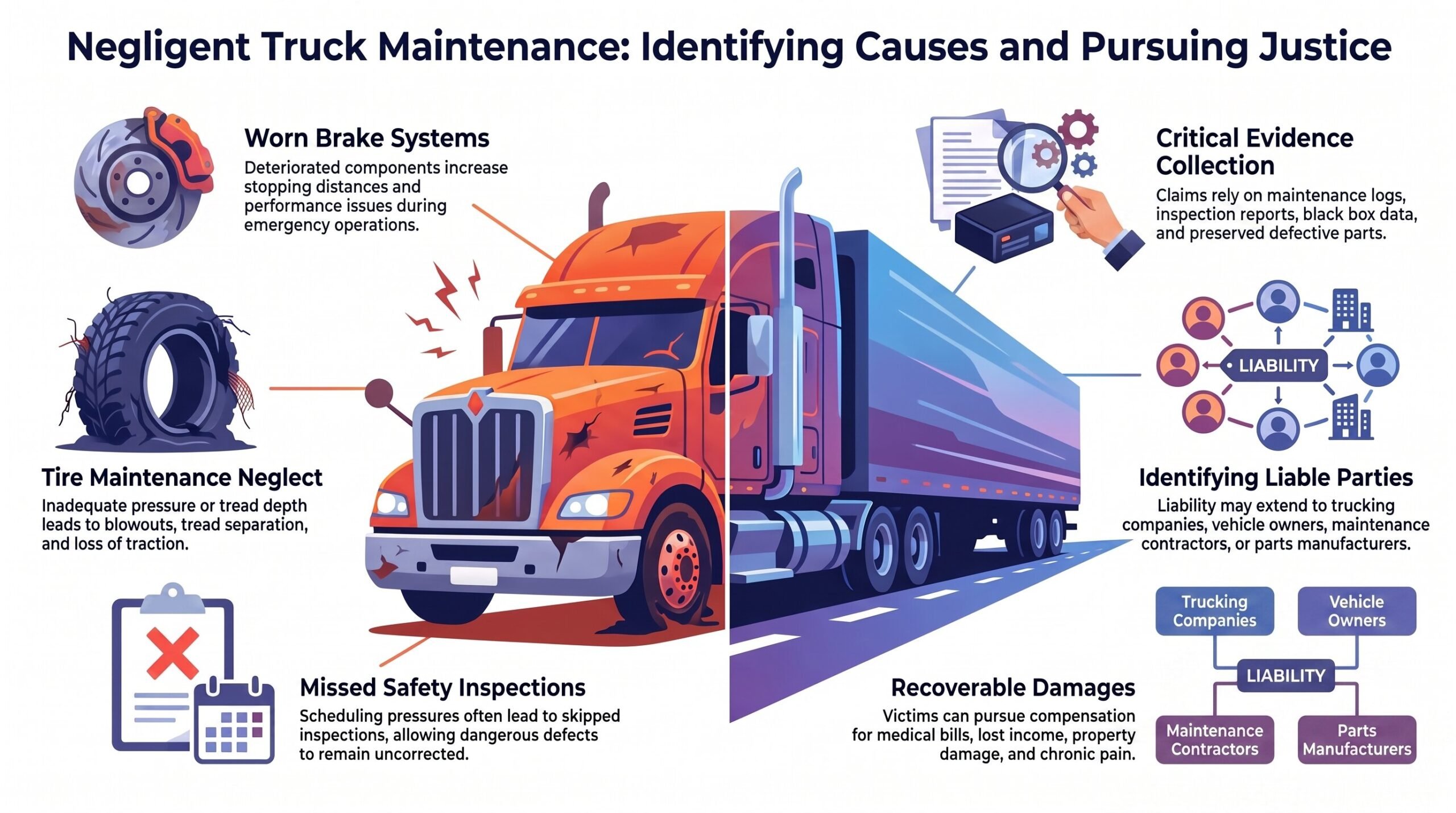
- Liability may involve trucking companies, vehicle owners, maintenance contractors, or others who knew or should have corrected dangerous conditions.
- Claimants must connect the maintenance failure to the crash and injuries using qualified investigators, component examinations, and professional testimony.
- Compensation may include medical expenses, lost income, property damage, pain and suffering, reduced earning capacity, and eligible wrongful-death damages.


How We Can Help With Your Daytona Beach Negligent Truck Maintenance Accident Injury Claim
When a truck accident results from negligent maintenance, an injured person may face complicated questions involving inspection records, repair histories, safety regulations, and responsibility for the vehicle’s condition. A legal team can help organize the claim by identifying potentially responsible parties, preserving relevant evidence, and reviewing available maintenance documentation. This process may include examining service invoices, inspection reports, driver reports, and communications concerning known mechanical defects.
Counsel can also assist with communications involving insurers while protecting the claimant’s interests. Medical documentation may establish the nature of the injuries, necessary treatment, prognosis, and related financial losses. Attorneys can coordinate with healthcare providers and help present records clearly and accurately without interfering with medical care.
Because insurance deadlines and legal filing requirements may affect available remedies, timely review can be important. A firm committed to serving injured people can explain procedural options, address questions, and pursue appropriate compensation while treating each claimant with professionalism, respect, and careful attention to individual circumstances.
OUR CONSULTATIONSARE FREE
START YOUR FREE CASE REVIEW

Understanding Daytona Beach Negligent Truck Maintenance Accident Injury Cases
Negligent truck maintenance accident cases arise when inadequate inspection, repair, or servicing contributes to a commercial vehicle crash in Daytona Beach. These claims generally require evidence connecting a maintenance failure to the collision and resulting injuries. Investigators may examine service records, inspection reports, company policies, electronic data, and testimony from qualified professionals.
Florida truck inspection rules can establish important standards for identifying unsafe conditions and documenting required maintenance. However, a violation does not automatically determine liability. The case may also involve questions concerning the trucking company, vehicle owner, maintenance contractor, driver, or other responsible parties.
Damages can include medical treatment, lost income, reduced earning capacity, property damage, and non-economic losses. The available recovery may depend on the circumstances and the types of commercial insurance coverage applying to the vehicle and business. Because evidence can change or disappear, prompt preservation efforts are important. A careful legal review helps injured individuals and families understand potential claims, responsible parties, and available avenues for meaningful compensation.
Common Causes of Daytona Beach Negligent Truck Maintenance Accident
Common causes of negligent truck maintenance accidents in Daytona Beach include worn brake systems that reduce stopping ability and tire maintenance failures that increase the risk of blowouts or loss of control. Faulty guidance components can impair a truck’s direction and stability, while missed safety inspections may allow dangerous defects to remain uncorrected. These maintenance failures can create hazardous conditions for truck occupants and other roadway users.
Worn Brake Systems
Worn brake systems are a serious maintenance failure that can prevent commercial trucks from stopping safely in Daytona Beach traffic. Brake components may deteriorate through friction, heat, corrosion, improper adjustment, or missed inspection intervals. When carriers, fleet managers, or repair personnel overlook these conditions, stopping distances can increase and braking performance may become uneven, especially during emergency operations. A careful brake wear diagnosis can identify thinning linings, damaged drums, leaking hydraulic components, or air-system deficiencies before a truck returns to service.
Failure mode analysis may further reveal whether inadequate inspections, delayed repairs, defective parts, or poor maintenance records contributed to the hazard. Commercial operators have a responsibility to protect motorists, passengers, and pedestrians by following inspection schedules and promptly correcting brake defects. Evidence of neglected maintenance may support an injured person’s legal claim.
Tire Maintenance Failures
Although tires may appear serviceable during a brief visual check, inadequate maintenance can cause tread separation, blowouts, uneven wear, or loss of traction on Daytona Beach roads. Trucking companies and maintenance personnel should monitor inflation pressure, tread depth, sidewall damage, valve condition, and load requirements through documented inspections. Proper rotation and timely replacement can reduce hazards created by worn or mismatched tires. Retreaded tires safety also depends on qualified inspection, correct casing selection, and adherence to manufacturer and federal standards.
Tire blowout prevention requires routine pressure checks, prompt attention to punctures, and removal of tires showing bulges, exposed cords, or severe deterioration. When these responsibilities are neglected, a disabled or unstable truck may endanger motorists, pedestrians, and passengers. Evidence of maintenance records, inspection practices, and tire condition can help clarify whether preventable failures contributed to a collision.
Faulty Steering Components
When guiding components are neglected, a truck may become difficult to control or fail to respond properly during braking and evasive handling on Daytona Beach roads. Worn tie rods, damaged steering gears, loose connections, and inadequate lubrication can impair directional stability. A commercial vehicle with these defects may drift, require excessive steering correction, or resist the driver’s efforts to avoid hazards. Maintenance personnel may also overlook how steering problems interact with the Brake System, particularly when uneven braking increases stress on compromised components.
Although Tire Blowouts arise from separate failures, a driver facing both conditions may have little ability to maintain control. Such defects can endanger occupants, pedestrians, and nearby motorists. When neglected maintenance contributes to a crash, careful review of service records and repair practices may help clarify responsibility and support affected individuals.
Missed Safety Inspections
Missed safety inspections can allow serious mechanical and regulatory violations to remain undiscovered until a truck is involved in a collision on Daytona Beach roads. Carriers may overlook worn brakes, defective tires, damaged lights, fluid leaks, or handling problems when inspections are delayed, undocumented, or performed without adequate care. Federal Regulations require motor carriers and drivers to conduct specified inspections, maintain records, and remove unsafe vehicles from service. Failure to follow these requirements may indicate negligent maintenance and contribute to preventable injuries.
Scheduling pressures, inadequate supervision, and Driver Fatigue can increase the likelihood that inspection procedures will be skipped or completed inaccurately. After a crash, maintenance logs, inspection reports, and repair histories may help determine whether a carrier recognized hazards and failed to address them before placing the truck in service.


Legal Rights of Daytona Beach Negligent Truck Maintenance Accident Injury Victims
Victims injured in a Daytona Beach truck accident caused by negligent maintenance may have the legal right to pursue compensation from the responsible parties. Florida law may support claims against trucking companies, maintenance contractors, vehicle owners, or other entities whose conduct contributed to the crash. Negligence standards generally require proof that a party breached a duty of care and that the breach caused compensable harm.
Potentially recoverable damages may include:
- Emergency treatment and future medical expenses
- Lost wages and diminished earning capacity
- Physical pain and emotional suffering
- Property damage and related out-of-pocket costs
- Wrongful death damages for eligible survivors
Florida comparative negligence can reduce compensation if an injured person is assigned partial responsibility. Evidence such as maintenance records, inspection documents, witness statements, and electronic data may help establish liability. Traffic law violations can further support a negligence claim, although each case depends on its facts. Prompt legal guidance may help victims preserve evidence, identify responsible parties, and pursue fair recovery while protecting the interests of affected families.
Why Do Daytona Beach Negligent Truck Maintenance Accident Injuries Happen?
Daytona Beach negligent truck maintenance accident injuries often result from preventable failures to inspect, repair, or service essential vehicle systems. Brake wear, defective tires, guidance problems, damaged lights, and fluid leaks can impair a truck’s operation and increase collision risks. These conditions may develop when carriers postpone scheduled maintenance, use unqualified repair personnel, or fail to correct defects identified during inspections.
Maintenance records may also be incomplete, inaccurate, or unavailable, making it difficult to determine whether required servicing occurred. Driver distraction impacts can compound mechanical dangers when operators do not notice warning signs, unusual handling, or dashboard alerts. Improper loading may further strain suspension, tires, and braking components.
Deficient loading dock safety practices can contribute to shifting cargo, falls, and equipment damage before a truck enters public roads. Pressure to meet delivery schedules, inadequate oversight, and poor communication among carriers, mechanics, and drivers can allow hazards to persist. These combined failures place motorists, pedestrians, and other road users at unnecessary risk.
What Should You Do After a Daytona Beach Negligent Truck Maintenance Accident Injury?
After a Daytona Beach negligent truck maintenance accident, the injured person should seek immediate medical care, even if symptoms initially appear minor. The accident scene should be documented through photographs, witness information, and relevant vehicle or roadway details. Consulting a truck accident lawyer can help preserve evidence, assess liability, and protect the individual’s legal rights.
Seek Immediate Medical Care
Prompt medical evaluation is crucial following an injury caused by negligent truck maintenance, even when symptoms initially appear minor. Affected individuals should seek Emergency room treatment for severe pain, breathing difficulty, bleeding, head trauma, loss of consciousness, or other urgent concerns. A medical professional can identify internal injuries and begin appropriate care before complications develop. Medical documentation should accurately describe symptoms, diagnoses, treatment, and restrictions, creating a reliable health record for continued care.
Providers may also recommend follow-up care planning, including consultant referrals, physical therapy, prescriptions, and scheduled evaluations. Injury symptom tracking can help patients and clinicians recognize worsening pain, delayed neurological symptoms, or mobility changes. Prompt attention supports recovery and helps individuals remain available to assist family members, coworkers, and others who depend on them.
Document The Accident Scene
When a negligent truck maintenance accident causes an injury, documenting the scene can preserve evidence that may otherwise disappear or become difficult to verify. If medically able, the injured person or a trusted companion should photograph vehicle damage, roadway conditions, debris, warning signs, visible injuries, and nearby equipment from multiple angles. Images should include wide views showing location and close views showing specific defects, such as damaged tires, detached parts, or fluid leaks.
Witness names and contact information should be recorded, along with the truck’s identifying numbers, company name, and license plate. Emergency response procedures should be followed, including instructions from dispatchers, firefighters, and medical personnel. Securing personal documentation also matters; copies of medical records, receipts, photographs, and written observations should be stored safely with dates and descriptions.
Consult A Truck Accident Lawyer
Consulting a truck accident lawyer can help an injured person preserve legal rights and evaluate whether negligent maintenance contributed to the collision. Counsel can promptly address evidence preservation, including inspection records, repair invoices, driver reports, electronic logging data, and available surveillance footage. These materials may disappear or be altered if requests are delayed.
A lawyer can also identify potentially responsible parties, such as the trucking company, maintenance contractors, manufacturers, or owners. The investigation may examine inspection schedules, worn or defective components, safety violations, and Negligent Hiring practices that placed an unqualified driver or technician in a responsible position. Professional guidance can help coordinate medical documentation, communicate with insurers, and assess damages without premature settlement decisions. Seeking counsel allows an injured person to pursue accountability while supporting safer transportation practices and protecting others from preventable harm.
Critical Evidence in a Daytona Beach Negligent Truck Maintenance Accident Injury Case
Critical evidence can establish whether inadequate truck maintenance contributed to the Daytona Beach collision and resulting injuries. Relevant materials may include maintenance records, inspection reports, defective parts, and witness statements, each of which can clarify responsibility.
Attorneys may also examine electronic logs, photographs, repair invoices, and other documentation to develop a complete factual record.
- Maintenance and repair records
- State and federal inspection reports
- Preserved defective or failed components
- Statements from witnesses and employees
- Photographs, electronic logs, and related documentation
Maintenance Records
Maintenance records can provide decisive evidence in a Daytona Beach negligent truck maintenance accident injury case by showing whether a carrier or vehicle owner fulfilled required inspection, repair, and service obligations. These records may identify recurring defects, overdue servicing, replacement-part histories, and personnel responsible for completed work. They can also reveal whether management knew about braking, guiding, tire, lighting, or suspension concerns before a collision and failed to address them.
Accurate records may help establish notice, causation, and departures from reasonable safety practices without relying solely on recollections formed after the event. Investigators may compare maintenance timelines with dispatch information and other operational materials, including evidence relevant to driver fatigue exposure. Careful preservation also supports Inspection report accuracy by allowing qualified professionals to evaluate the vehicle’s documented condition before the crash.
Inspection Reports
When properly completed and preserved, inspection reports can provide critical evidence in a Daytona Beach negligent truck maintenance accident injury case by documenting the vehicle’s condition before and after a collision. These reports may identify missed inspections, unresolved safety concerns, or deviations from required Maintenance schedules. Entries made by drivers, mechanics, supervisors, or outside inspectors can help establish who observed a problem and whether responsible parties received notice.
Comparison of reports over time may reveal recurring deficiencies or unexplained changes that warrant further investigation. Records should be collected promptly, including electronic inspection data, repair referrals, and follow-up confirmations. Driver qualification records may also provide context regarding whether personnel were trained and authorized to perform required inspections. Preserving this evidence can assist injured individuals and their families in seeking accountability and informed legal guidance.
Defective Parts
Defective truck parts can provide key evidence in a Daytona Beach negligent truck maintenance accident injury case by showing that a failed component caused or contributed to the collision. A qualified inspection may identify worn brake pads, damaged steering components, defective tires, or improperly installed replacement parts. Evidence from the vehicle can help determine whether the carrier, maintenance contractor, manufacturer, or another responsible party failed to address a dangerous condition.
The Brake System merits particular attention because inadequate stopping performance may increase crash severity and prevent timely avoidance. Part numbers, photographs, maintenance invoices, and preserved components can support a technical evaluation of causation. Such evidence may also help distinguish equipment failure from Driver Negligence, ensuring that injured people receive fair consideration while responsible parties are held accountable.
Witness Statements
Witness statements can provide critical evidence in a Daytona Beach negligent truck maintenance accident injury case by documenting what occurred before, during, and after the collision. Drivers, passengers, pedestrians, and nearby employees may describe warning signs, unusual vehicle behavior, maintenance conditions, or the truck’s actions immediately before impact. Their observations can help establish whether a mechanical problem contributed to the crash and whether responsible parties had notice of potential dangers.
Eyewitness credibility depends on factors such as visibility, distance, attention, consistency, and the absence of bias. Promptly obtained written witness statements can preserve details that may otherwise fade or change over time. Investigators may also compare witness accounts with photographs, vehicle records, electronic data, and surveillance footage. Accurate testimony can assist injured individuals and their families in presenting a clear, fair account of the incident.
Long-Term Effects of Daytona Beach Negligent Truck Maintenance Accident Injuries
Negligent truck maintenance injuries may result in chronic pain, lasting disability, and significant limitations on daily activities. Victims may require ongoing medical treatment, rehabilitation, medication, or expert care as their conditions develop or persist. These physical consequences can also create substantial emotional distress and financial strain through lost income, continued expenses, and reduced quality of life.
Chronic Pain and Disability
Injuries caused by poorly maintained commercial trucks can produce chronic pain and lasting disability, even after initial medical treatment is complete. Persistent back, neck, joint, or nerve pain may restrict movement, reduce stamina, and interfere with employment, family responsibilities, and community service. Some injured individuals develop permanent limitations that require workplace modifications or assistance with ordinary tasks. Others experience depression, sleep disruption, or anxiety as they adjust to diminished independence.
Reliance on a Prescription Drug may create additional concerns, including side effects, tolerance, or impaired functioning, particularly when pain continues for an extended period. A Secondary Injury can also arise when weakness, altered movement, or reduced balance causes a later fall or strain. Documenting these effects helps establish how negligent maintenance has changed an individual’s daily life and future capacity.
Ongoing Medical Treatment
Long-term effects of a Daytona Beach truck accident may require ongoing medical treatment when negligent maintenance causes serious or lasting harm. Physicians may monitor fractures, spinal injuries, nerve damage, or other conditions through periodic examinations and diagnostic testing. Treatment can include prescriptions, injections, surgical follow-up, mobility assistance, and care for complications that develop over time. Medication management helps coordinate prescriptions, identify adverse reactions, and adjust dosages as a patient’s condition changes.
Rehabilitation planning may involve physical therapy, occupational therapy, pain management, and structured home exercises designed to preserve function and independence. Medical records should document symptoms, treatment recommendations, progress, and future care needs. Consistent follow-up allows providers to address setbacks promptly and helps establish the continuing medical consequences associated with negligent truck maintenance.
Emotional and Financial Strain
Emotional and financial strain can persist after serious injuries caused by negligent truck maintenance in Daytona Beach. Medical expenses, rehabilitation, and reduced earning capacity may affect an injured person’s household for years. Family members can also face caregiving responsibilities, transportation costs, and uncertainty about future employment. Emotional consequences may include anxiety, depression, sleep disruption, and diminished confidence, particularly when pain limits independence or community involvement.
In fatal cases, surviving relatives may consider Wrongful Death Claims to seek accountability and address lost financial support, funeral expenses, and related losses. Investigations may examine maintenance records, repair practices, and contributing conditions such as Truck Driver Fatigue. Careful documentation helps clarify the injury’s long-term effects and supports informed decisions. Legal guidance can help families pursue appropriate compensation while protecting their dignity and stability.
Proving Liability in Daytona Beach Negligent Truck Maintenance Accident Injury Cases
When a truck accident results from inadequate maintenance, proving liability requires establishing that a responsible party knew or should have known about a dangerous mechanical condition and failed to correct it. Evidence may include inspection reports, repair invoices, maintenance schedules, driver complaints, company policies, and electronic records showing when defects were identified. Qualified investigators can examine failed components, photograph the vehicle, and compare maintenance practices with federal and state safety requirements.
Testimony from mechanics, fleet managers, drivers, and accident reconstruction professionals may clarify whether reasonable precautions were neglected. A claimant must also connect the maintenance failure to the collision and resulting injuries, rather than relying on the accident alone. Preserving medical documentation is critical because treatment records, diagnostic results, and physician opinions help establish the nature and extent of harm. A Comparative fault analysis may be necessary when multiple parties or conduct contributed to the incident. Careful evidence preservation supports accountability and helps protect injured individuals seeking appropriate assistance.
Dealing With Insurance Companies After a Daytona Beach Negligent Truck Maintenance Accident Injury
Insurance companies often respond to a negligent truck maintenance claim by conducting their own investigation before accepting responsibility. Their representatives may review repair records, inspection reports, photographs, medical documentation, and statements from involved parties. An injured person should avoid providing speculative answers or signing broad releases before understanding the legal consequences.
Clear documentation steps can strengthen communication with the insurer. These may include preserving treatment records, tracking expenses, recording missed work, and keeping correspondence organized. Claim timelines can vary, but prompt notice and consistent follow-up may help prevent avoidable delays. An adjuster may use tactics such as requesting recorded statements, emphasizing prior conditions, or presenting an early settlement that does not reflect long-term harm.
Denied claims should be reviewed carefully rather than treated as final. The written explanation may identify disputed facts, missing evidence, or policy defenses. A qualified Daytona Beach truck accident attorney can communicate with insurers, protect the injured person from unfair pressure, and evaluate available remedies while preserving the person’s dignity and interests.
What to Expect During a Daytona Beach Negligent Truck Maintenance Accident Injury Claim Process
A negligent truck maintenance injury claim typically begins with an initial evaluation of the facts, injuries, insurance coverage, and potential liability. The evidence collection process may include maintenance records, inspection reports, photographs, witness statements, and relevant medical documentation, followed by settlement negotiations with responsible parties and their insurers. If negotiations do not produce a fair resolution, the matter may proceed to litigation and trial, where evidence and legal arguments are presented in court.
Initial Claim Evaluation
How does the initial claim evaluation begin after a Daytona Beach truck accident involving negligent maintenance? The process typically starts with a confidential discussion of the collision, injuries, treatment, and financial effects. Medical documentation helps clarify diagnoses, treatment requirements, recovery expectations, and potential long-term limitations. The reviewing professional also considers liability basics, including whether a maintenance failure may have contributed to the crash and whether the trucking company, carrier, owner, or service provider may bear responsibility.
At this stage, evidence collection is recognized as important, but detailed investigative work generally occurs later. An insurance evaluation may then examine available coverage, reported facts, claimed losses, and possible defenses. The injured person may receive guidance about communication with insurers, treatment continuity, and preserving important records. This initial assessment helps determine appropriate next steps while supporting a fair, service-focused resolution.
Evidence Collection Process
When a Daytona Beach truck accident may involve negligent maintenance, the evidence collection process typically begins by identifying and preserving records that can clarify how the vehicle was inspected, repaired, and operated. Evidence preservation may include securing electronic data, inspection reports, work orders, driver statements, and communications concerning known defects. Counsel may coordinate retrieval of maintenance logs from the trucking company, repair facilities, leasing entities, or parts suppliers.
Photographic documentation of the truck can record damaged components, worn tires, leaking systems, altered equipment, and the vehicle’s overall condition before repairs occur. Investigators may also examine service schedules, recall notices, compliance records, and prior incident reports. Witness interviews and accident-scene measurements can help connect maintenance failures to the collision, while medical and employment records document resulting injuries and losses.
Settlement Negotiations
Settlement negotiations in a Daytona Beach negligent truck maintenance injury claim generally begin after the available evidence establishes the accident’s likely cause, the parties’ potential liability, and the extent of the injured person’s losses. The injured person’s representative may present a demand supported by medical records, repair histories, photographs, wage documentation, and other proof of damages. Insurers evaluate liability, treatment, future care needs, and comparative fault before responding.
Insurance claim timelines can vary according to investigation intricacy, medical progress, and policy requirements. Counsel may use settlement leverage strategies such as identifying maintenance violations, preserving witness testimony, and documenting the financial effect of continued impairment. Offers and counteroffers should be reviewed carefully, with attention to liens, release language, and whether compensation adequately addresses past and anticipated losses. A fair agreement can provide meaningful support without unnecessary delay.
Litigation And Trial
If settlement negotiations do not resolve a Daytona Beach negligent truck maintenance injury claim, the injured person may pursue litigation in civil court. The process generally begins with filing a complaint, serving the defendants, and allowing them to respond. Both sides then exchange evidence through discovery, which may include maintenance records, inspection reports, driver logs, photographs, medical documentation, and witness statements. Discovery disputes can arise when a party withholds records or challenges requested information, requiring court intervention.
Attorneys may consult mechanics, safety professionals, medical providers, and accident reconstruction experts. Their expert witness testimony can explain how inadequate maintenance caused the collision and contributed to the injuries. If the case proceeds to trial, each side presents evidence, questions witnesses, and makes legal arguments. The judge or jury then determines liability and damages.
Compensation for Daytona Beach Negligent Truck Maintenance Accident Injury Damages
Compensation for injuries caused by negligent truck maintenance in Daytona Beach may include medical expenses, lost income, diminished earning capacity, property damage, and pain and suffering. A careful assessment can identify losses arising from brake failures, worn tires, defective steering components, or inadequate inspection procedures. Recoverable medical costs may involve emergency treatment, hospitalization, rehabilitation, medication, and anticipated future care. Income-related compensation may address missed work, reduced hours, and lasting limitations affecting future employment.
Property damage can include vehicle repairs or replacement and other personal items damaged in the collision. When injuries result in death, surviving relatives may pursue Wrongful Death Claims for qualifying losses under Florida law. Insurance companies must evaluate claims fairly and within applicable legal requirements; conduct involving unreasonable delays, inadequate investigations, or improper claim denials may support an Insurance Bad Faith claim. Documentation, expert analysis, and timely legal guidance can help establish responsibility and protect the injured person’s interests throughout settlement discussions or litigation.
Economic vs Non-Economic Damages in Daytona Beach Negligent Truck Maintenance Accident Cases
Damages in negligent truck maintenance cases generally include economic losses, such as medical expenses, lost income, and future treatment costs. Non-economic damages may address pain, emotional distress, disability, and diminished quality of life. Calculating total compensation requires evaluating documented financial losses alongside the injury’s lasting personal effects.
Economic Damages
Economic damages in a Daytona Beach negligent truck maintenance accident case generally cover the measurable financial losses caused by the collision. These losses may include emergency treatment, hospital bills, medication, rehabilitation, and future medical care supported by qualified evidence. They can also include repair or replacement costs for damaged property, transportation expenses, lost wages, reduced earning capacity, and necessary household services. Evidence preservation is critical, including maintenance records, invoices, employment documentation, medical bills, and photographs of the truck and scene.
During liability analysis, investigators may examine inspection schedules, repair histories, company policies, and witness credibility to determine whether inadequate maintenance contributed to the crash. Accurate calculations strengthen settlement negotiations and help ensure that injured individuals receive the resources needed for recovery, treatment, and financial stability after the collision.
Non-Economic Damages
When a negligent truck maintenance accident causes consequences that cannot be measured through bills or receipts, non-economic damages may address the injury’s personal impact. These damages can reflect physical pain, emotional distress, diminished enjoyment of life, inconvenience, and lasting limitations caused by the collision. They may also recognize anxiety, sleep disruption, or reduced ability to participate in family and community activities.
The impact of property damage can intensify these hardships by disrupting transportation, housing arrangements, work routines, and personal independence, even when repair costs constitute economic losses. Although non-economic harm lacks a fixed price, consistent descriptions of symptoms and daily limitations can support its evaluation. Medical records, witness accounts, personal journals, and evidentiary photo documentation may help show how negligent maintenance affected the injured person’s life and relationships.
Calculating Total Compensation
A total compensation assessment in a Daytona Beach negligent truck maintenance accident case generally combines documented economic losses with non-economic harm arising from the collision. Economic damages may include emergency treatment, rehabilitation, medication, lost wages, reduced future earning capacity, property damage, and necessary transportation. Medical bills documentation, employment records, repair estimates, and expert projections can help establish these amounts.
Non-economic damages address pain, emotional distress, disfigurement, disability, loss of enjoyment, and disruption of family relationships. Pain and suffering estimating typically considers injury severity, treatment duration, permanent limitations, and the claimant’s daily experiences rather than relying on a single formula. Evidence concerning defective inspections, worn components, or ignored repairs may also support liability. A careful evaluation helps ensure that compensation reflects both measurable costs and less visible consequences, while promoting accountability and supporting the injured person’s recovery.
When a Daytona Beach Negligent Truck Maintenance Accident Injury Case Goes to Trial vs Settlement
Because negligent truck maintenance cases often involve disputed evidence and substantial damages, the decision to pursue settlement or proceed to trial requires careful legal and factual analysis. Settlement may provide a predictable resolution, reduce litigation stress, and deliver compensation sooner. It can also preserve privacy and avoid the uncertainty associated with a verdict. Trial may be appropriate when an insurer refuses a fair offer, liability remains contested, or the injury’s long-term consequences require a public evaluation.
Counsel may examine maintenance records, employment relationships, and allegations involving Negligent hiring vs. vicarious liability when determining how claims should be presented. If trial becomes necessary, jury selection is important because jurors must evaluate technical evidence impartially. Expert witnesses may explain inspection failures, mechanical defects, collision dynamics, medical needs, and future losses in understandable terms. Throughout either process, the client’s well-being and ability to serve family or community should guide decisions. A careful lawyer prepares every case for trial while pursuing a settlement that genuinely reflects the harm sustained.
Florida Laws That May Affect Your Daytona Beach Negligent Truck Maintenance Accident Case
Florida law may affect nearly every aspect of a Daytona Beach negligent truck maintenance accident case, including liability, available damages, and the time allowed to file a claim. Several legal principles may guide investigation, negotiation, and litigation while protecting injured individuals and their families.
Florida law may shape liability, damages, deadlines, and legal strategy in Daytona Beach negligent truck maintenance accident claims.
- Comparative negligence may reduce compensation when an injured person shares responsibility for the incident.
- Fault determination can involve maintenance records, inspection reports, driver statements, and qualified mechanical testimony.
- Florida negligence law may support claims against trucking companies, maintenance contractors, owners, or other responsible parties.
- Vicarious liability principles may connect an employer to negligent conduct performed within the scope of employment.
- Damage evaluations may include medical expenses, lost income, disability, property damage, and non-economic harm.
Federal motor-carrier safety rules may also provide evidence of the applicable standard of care, although their relevance depends on the facts. A careful legal review can help identify responsible parties, preserve evidence, and promote informed decisions that serve the injured person’s long-term interests. Insurance coverage and statutory damage rules may further influence resolution.
The Statute of Limitations for Daytona Beach Negligent Truck Maintenance Accident Injury Cases
Timely filing is a critical consideration in Daytona Beach negligent truck maintenance accident injury cases because Florida law imposes deadlines that can bar recovery if they expire. Generally, Florida’s negligence statute of limitations provides two years from the date of injury to file a lawsuit, although exceptions may alter that period. Claims involving a government-owned vehicle may require shorter notice deadlines and additional procedural steps.
Early attention also preserves documentary evidence, including inspection records, repair invoices, electronic logs, and trucking company policies. Such materials can clarify whether inadequate maintenance caused the collision and identify responsible parties before records are lost or altered. Comparative negligence may affect the amount recoverable, but it does not necessarily extend the filing deadline.
Medical documentation should be maintained because continuing treatment can affect a future damages calculation, including projected care, lost earning capacity, and related expenses. Missing a statutory deadline can permanently prevent compensation, making prompt evaluation vital for protecting an injured person’s interests and supporting an orderly, service-focused legal process.
How a Daytona Beach Negligent Truck Maintenance Accident Lawyer Can Help You
A Daytona Beach negligent truck maintenance accident lawyer can help an injured person protect legal rights while investigating how inadequate inspection, repair, or servicing contributed to a collision.
The lawyer may coordinate a focused review of records, vehicle conditions, and applicable Truck maintenance standards to identify responsible parties and establish whether preventable defects caused or worsened the crash.
- Request maintenance logs, inspection reports, repair invoices, and driver qualification materials.
- Arrange qualified professionals to examine damaged vehicles and explain mechanical failures.
- Identify potentially responsible carriers, contractors, owners, manufacturers, or repair facilities.
- Manage evidence preservation by sending notices that discourage destruction or alteration of relevant records.
- Calculate medical expenses, lost income, rehabilitation needs, and other recoverable damages.
The lawyer can also organize communications with insurers and opposing parties, reducing confusion while preserving the injured person’s position. Through careful investigation and clear legal analysis, counsel helps present a coherent claim that recognizes the needs of injured individuals, families, and communities. This assistance supports accountability and promotes safer commercial transportation practices without relying on speculation or unsupported allegations.
When to Contact a Daytona Beach Negligent Truck Maintenance Accident Lawyer
When should an injured person contact a Daytona Beach negligent truck maintenance accident lawyer? Ideally, contact should occur soon after the collision, particularly when mechanical failure, inadequate inspections, or neglected repairs may have contributed. Early guidance can help preserve photographs, maintenance records, electronic data, witness accounts, and other evidence that may become difficult to obtain.
A lawyer may also be appropriate when injuries require continuing treatment, income has been lost, or the trucking company and its insurer request statements or documents. Before accepting an insurance settlement, an injured person should understand whether the payment accounts for medical expenses, future care, lost earnings, property damage, and other legally recognized losses. A prompt consultation allows an attorney to review available facts, identify potential responsible parties, and develop a negotiation strategy suited to the circumstances.
People assisting injured neighbors, coworkers, or family members can encourage timely legal contact while respecting the person’s choices. Immediate medical care remains the first priority, followed by careful documentation and preservation of relevant communications.
Why You Need an Experienced Daytona Beach Negligent Truck Maintenance Accident Lawyer
An experienced Daytona Beach negligent truck maintenance accident lawyer can identify how inspection failures, defective repairs, or overlooked mechanical problems contributed to a collision and resulting injuries. This professional can preserve maintenance records, electronic data, driver reports, and other evidence that may disappear or become difficult to obtain. The lawyer can also determine whether trucking companies, contractors, manufacturers, or maintenance providers share responsibility, allowing an injured person to pursue appropriate compensation from each liable party.
Knowledge of Insurance claim timelines helps prevent missed deadlines, incomplete submissions, and premature settlements that may undervalue medical care, lost income, rehabilitation, or future needs. Experienced counsel can address traffic collision myths, including assumptions that a truck driver’s statement is conclusive or that visible vehicle damage reflects the full severity of injuries. By presenting organized evidence and communicating with insurers, the lawyer supports a fair process for injured individuals and their families while allowing them to focus on recovery and serving the needs of others.
How to Choose the Right Daytona Beach Negligent Truck Maintenance Accident Lawyer for Your Case
Selecting the right Daytona Beach negligent truck maintenance accident lawyer requires careful consideration of the attorney’s experience, investigative resources, and record handling complex commercial vehicle claims. A qualified lawyer should understand inspection failures, defective repairs, maintenance schedules, and federal safety requirements that may establish responsibility. The attorney should also demonstrate the ability to collect service records, driver logs, electronic data, photographs, and witness statements before evidence disappears.
Prospective clients can ask how the lawyer approaches evidence preservation tips, communicates with insurers, and coordinates independent vehicle inspections. Client communication updates should be clear, timely, and accessible throughout the investigation and litigation process. It is also important to evaluate whether the firm has sufficient resources to consult mechanics, accident reconstruction professionals, and medical experts when necessary.
A careful consultation can clarify potential claims, anticipated challenges, applicable deadlines, and fee arrangements. Selecting counsel based on diligence, transparency, and relevant experience helps injured individuals pursue accountability while protecting their families’ interests.
About The Law Offices of Anidjar & Levine
The Law Offices of Anidjar & Levine represents individuals injured in serious truck accidents, including collisions involving negligent vehicle maintenance.
The firm examines whether inadequate inspections, delayed repairs, defective parts, or improper service contributed to a crash.
Its attorneys may also investigate company practices involving Negligent Hiring, driver qualifications, maintenance oversight, and Safety Training.
For injured individuals and their families, the firm’s role includes identifying responsible parties, preserving relevant evidence, and explaining potential legal options.
Counsel may review maintenance records, inspection reports, employment files, electronic data, and witness accounts to develop a clear understanding of the incident.
When appropriate, the firm communicates with insurers and other parties on a client’s behalf while pursuing compensation for medical expenses, lost income, property damage, and other documented losses.
The Law Offices of Anidjar & Levine serves clients throughout Florida, including Daytona Beach.
Its legal team evaluates each matter individually and works to provide informed guidance during a difficult recovery.
Frequently Asked Questions
Can Negligent Truck Maintenance Claims Involve Multiple Responsible Parties?
Negligent truck maintenance claims can involve multiple responsible parties when unsafe conditions result from several failures. Potential defendants may include trucking companies, vehicle owners, maintenance contractors, parts manufacturers, and mechanics, depending on the evidence. Comparative negligence may affect how liability and damages are allocated among the injured person and multiple defendants. Investigators typically examine inspection records, repair invoices, service contracts, driver reports, and regulatory compliance to identify each party’s contribution.
What Happens if the Truck’s Maintenance Records Are Missing or Destroyed?
If truck maintenance records are missing or destroyed, the matter may involve spoliation evidence, particularly if a party had a duty to preserve documents after an accident or anticipated claim. A court may impose sanctions, draw unfavorable inferences, or limit the responsible party’s defenses, depending on intent and prejudice. Counsel can pursue record recovery through repair facilities, electronic systems, invoices, inspection agencies, driver communications, and testimony from custodians and mechanics to reconstruct the vehicle’s maintenance history.
Can I Pursue a Claim if I Was Partially at Fault for the Crash?
A person may pursue a claim even if partially responsible, although the recovery can be reduced under Florida’s Comparative negligence rules. The assigned percentage depends on evidence regarding each party’s conduct, including maintenance failures, driver behavior, road conditions, and warnings. Missing or destroyed records may create significant evidence impacts, potentially weakening or strengthening arguments depending on who controlled them and why. Legal counsel can preserve records, investigate causation, and present a fair account of all contributing circumstances.
Are Truck Maintenance Violations Reported to Federal Transportation Authorities?
Truck maintenance violations may be reported to federal transportation authorities, particularly when they involve commercial motor carriers subject to federal requirements. Inspectors can document defects during roadside inspections, compliance reviews, or post-crash investigations, and serious violations may affect a carrier’s safety rating. Reporting oversight varies by agency and circumstance, so not every defect produces a federal filing. Records, inspection results, and maintenance documents can help determine whether authorities were notified and whether enforcement followed.
Can Family Members Bring a Claim After a Fatal Negligent Maintenance Accident?
Yes, eligible family members may bring a claim after a fatal accident caused by negligent truck maintenance, subject to state law and filing deadlines. Wrongful death standing typically belongs to specified relatives or a personal representative acting for the estate. A claim may seek funeral expenses, lost financial support, and other legally recognized damages. An insurance beneficiary claim may involve separate policy rights, so counsel should evaluate both claims and preserve evidence promptly.
—————————
Victims of Daytona Beach truck crashes caused by negligent maintenance may suffer serious injuries, financial losses, and complex liability issues.
Determining responsibility may require a thorough review of inspection records, repair histories, driver reports, and applicable federal safety regulations.
An experienced negligent truck maintenance accident lawyer can evaluate the evidence, identify all potentially responsible parties, and pursue appropriate compensation.
The Law Offices of Anidjar and Levine provides knowledgeable legal guidance while protecting clients’ rights throughout the claims process and, when necessary, litigation.
Learn more from a Daytona Beach Truck Accident Lawyer.