
A Daytona Beach improper loading truck accident lawyer at The Law Offices of Anidjar and Levine investigates whether unsecured, overloaded, or unevenly distributed cargo caused a collision.
The attorney may preserve loading records, inspection checklists, electronic data, photographs, witness accounts, and damaged vehicles before evidence changes or disappears.
Potential claims may involve drivers, carriers, loading contractors, warehouses, or other responsible parties.
Compensation can include medical expenses, lost income, property damage, pain and suffering, and future care needs.
For additional guidance on liability, evidence, and legal options, visit our Daytona Beach Truck Accident Lawyer page.
Main Takeaways
- A Daytona Beach truck accident lawyer can investigate whether improper loading, shifting cargo, or inadequate restraints caused the collision.
- Potentially responsible parties may include drivers, carriers, loading contractors, warehouse operators, and other negligent businesses.
- Preserve photographs, inspection records, shipping documents, electronic data, video, witness information, and damaged vehicles promptly.
- Seek immediate medical care and follow treatment instructions to document injuries, recovery needs, and related losses.
- Compensation may include medical expenses, lost income, property damage, and pain and suffering when negligence is established.


How We Can Help With Your Daytona Beach Improper Loading Truck Accident Injury Claim
When an improperly loaded truck causes a collision, an injured person may face substantial medical expenses, lost income, and long-term physical limitations. A qualified legal team can help organize the claim, explain available options, and pursue a resolution that accounts for the full effect of the injuries.
The process may begin with a review of liability basics, including loading procedures, cargo securement duties, driver conduct, and the responsibilities of trucking companies or contractors. Attorneys can identify potentially responsible parties and assess how each contributed to the collision. Prompt evidence preservation is also important. This may involve obtaining photographs, inspection records, electronic data, shipping documents, witness statements, and relevant video before materials disappear or conditions change.
Legal representatives can communicate with insurers, evaluate settlement offers, document damages, and coordinate with medical providers when appropriate. They can also prepare the claim for litigation if negotiations do not provide fair compensation. Throughout the matter, careful guidance helps protect the injured person’s interests while promoting accountability and informed decision-making.
OUR CONSULTATIONSARE FREE
START YOUR FREE CASE REVIEW

Understanding Daytona Beach Improper Loading Truck Accident Injury Cases
Improper loading truck accident injury cases in Daytona Beach often involve detailed questions about how cargo was selected, placed, secured, and monitored before the collision. Investigators may examine shipping records, weight documentation, photographs, inspection reports, and electronic data to determine whether established procedures were followed. Cargo inspection can reveal whether restraints, coverings, and distribution methods met applicable requirements without speculating about broader accident causes.
Liability standards may apply to carriers, drivers, loading contractors, warehouse operators, or other responsible parties, depending on their contractual duties and conduct. Evidence can also show whether Driver fatigue or inadequate safety training affected required inspections, communication, or decision-making. Medical records, employment information, and accident reconstruction findings help establish the nature and financial impact of injuries. Each claim requires careful attention to deadlines, insurance coverage, comparative responsibility, and available evidence. A clear evaluation can support injured individuals and families while promoting accountability and fair treatment throughout the legal process.
Common Causes of Daytona Beach Improper Loading Truck Accident
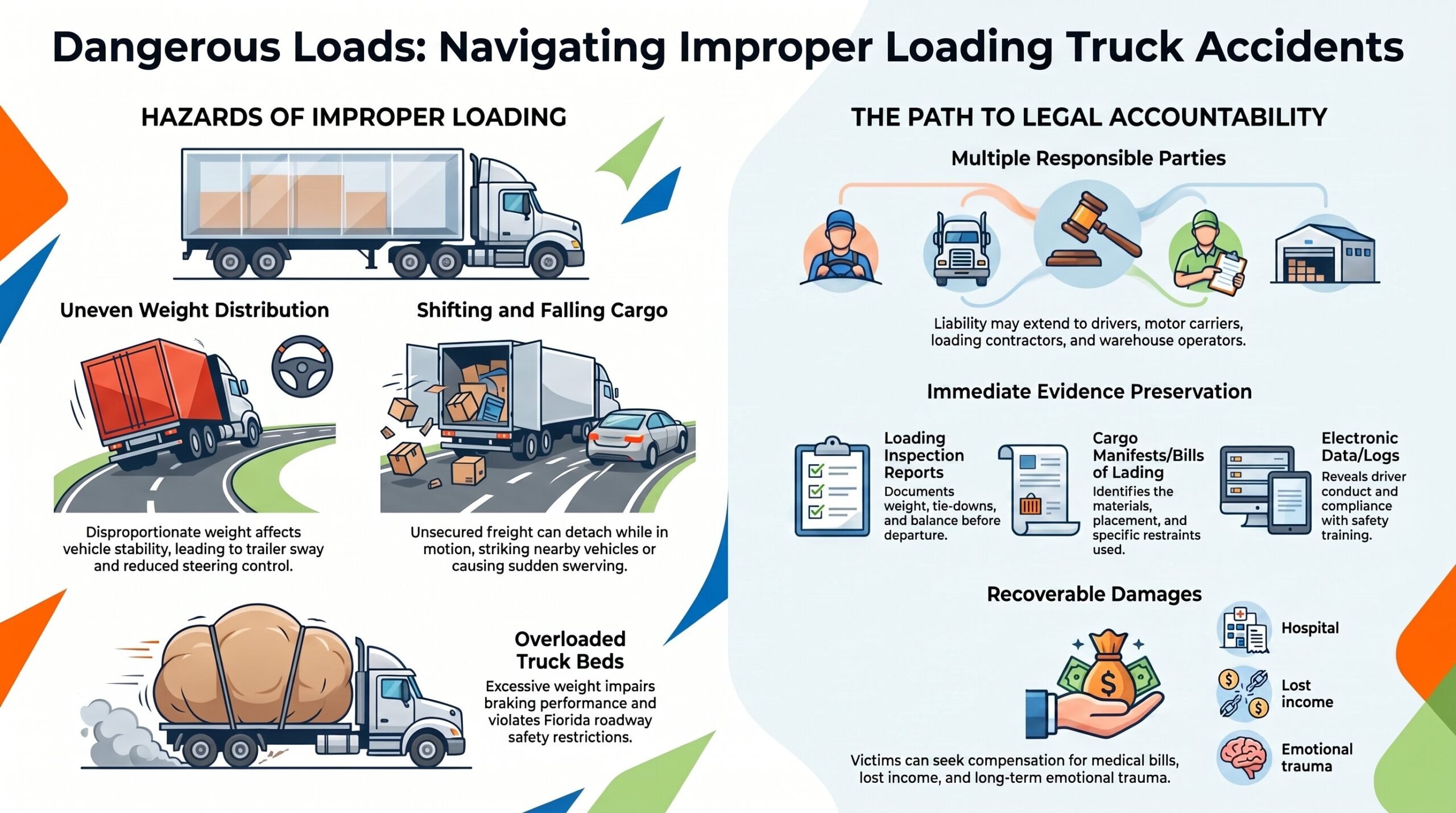
Common causes of Daytona Beach improper loading truck accidents include uneven weight distribution and inadequate cargo securing. Overloaded truck beds can impair vehicle control, braking, and stability, increasing the likelihood of a collision. Shifting or falling cargo may also endanger nearby motorists, creating sudden roadway hazards.
Uneven Weight Distribution
Uneven weight distribution occurs when cargo is loaded disproportionately across a truck’s trailer, axles, or individual compartments, affecting the vehicle’s stability and handling. This condition may develop when heavier freight is placed too far forward, too far back, or primarily on one side. It can alter axle loads, reduce driving control, increase stopping distances, and contribute to trailer sway, particularly during turns or sudden actions. Compliance with cargo loading standards helps carriers assess weight limits and distribute freight appropriately before departure.
Proper planning also supports shifting cargo prevention by accounting for the vehicle’s configuration, route, and cargo characteristics. When loading practices ignore these considerations, other road users may face heightened crash risks. Drivers, carriers, and loading personnel share responsibility for identifying imbalance and correcting it before transportation begins.
Inadequate Cargo Securing
When cargo is not adequately secured, freight may shift, fall, or become detached while a commercial truck is in motion. Loose materials can obstruct traffic, strike nearby vehicles, or force drivers to brake and maneuver suddenly. These events may create roadway hazards, particularly on busy routes, bridges, and construction areas. Improperly fastened equipment can also damage a trailer, interfere with steering, or contribute to a Tire blowout when cargo contacts a tire or causes unstable handling.
Federal and state safety rules generally require carriers and drivers to inspect restraints, use appropriate tie-downs, and verify that cargo remains secure throughout transportation. Evidence may include photographs, inspection records, witness accounts, and electronic tracking data. A careful investigation can clarify whether inadequate securing caused the crash and identify responsible parties.
Overloaded Truck Beds
Overloaded truck beds can impair a commercial vehicle’s stability, braking performance, and ability to respond safely to changing roadway conditions. Excess weight may result from inaccurate estimates, combining dense materials, or failing to account for equipment and fuel. Operators and companies must verify Cargo weight limits established by the vehicle manufacturer, applicable federal rules, and roadway restrictions before departure. Florida inspection requirements may identify weight-related violations, defective suspension components, or braking deficiencies that increase danger to surrounding motorists.
Proper loading requires weighing materials, distributing the permitted amount across the bed, and documenting compliance before the truck enters traffic. Supervisors should provide clear procedures and training so employees can protect passengers, pedestrians, and other road users. When excessive weight contributes to a crash, records, inspection findings, and maintenance evidence may help establish responsibility.
Shifting or Falling Cargo
Beyond the dangers of excessive weight, cargo that shifts or falls from a truck can create immediate hazards for nearby motorists, pedestrians, and property. Unsecured materials may slide during braking, overturn when a vehicle turns, or fall through damaged restraints. Debris entering traffic can cause sudden swerving, collisions, and serious injuries, while unstable loads may contribute to rollovers.
Proper Cargo restraint methods, including suitable tie-downs, blocking, bracing, and protective coverings, help maintain load stability throughout transportation. Drivers and loading personnel should verify that restraints match the cargo’s size, weight, and shape. Trucking inspection checklists can identify loose equipment, uneven distribution, damaged straps, and inadequate containment before departure. When these safeguards are neglected, investigators may examine loading practices, maintenance records, and driver conduct to determine whether preventable failures contributed to the accident.


Legal Rights of Daytona Beach Improper Loading Truck Accident Injury Victims
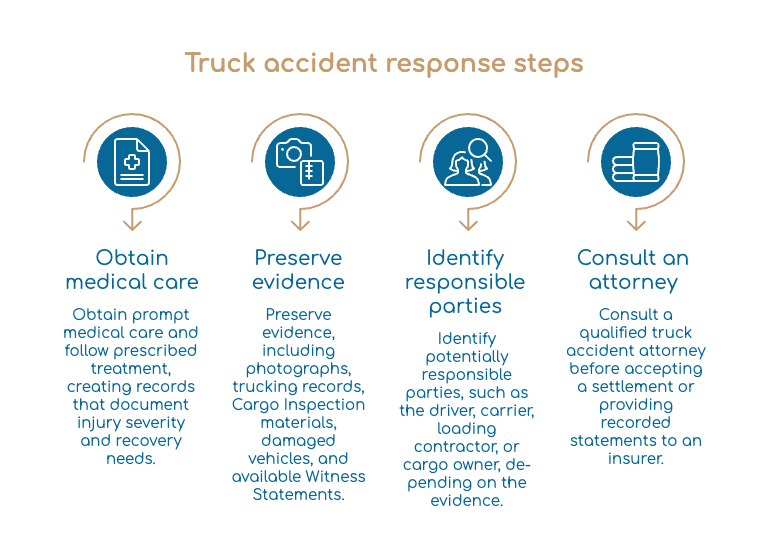
Daytona Beach victims injured in truck accidents caused by improper loading may have the legal right to seek compensation from the parties responsible for the unsafe cargo. Florida law may permit recovery for medical expenses, lost income, property damage, and pain and suffering when negligence caused the collision. Victims can protect those rights by taking these steps:
Daytona Beach truck accident victims may seek compensation for injuries and losses caused by improperly loaded cargo.
- Obtain prompt medical care and follow prescribed treatment, creating records that document injury severity and recovery needs.
- Preserve evidence, including photographs, trucking records, Cargo Inspection materials, damaged vehicles, and available Witness Statements.
- Identify potentially responsible parties, such as the driver, carrier, loading contractor, or cargo owner, depending on the evidence.
- Consult a qualified truck accident attorney before accepting a settlement or providing recorded statements to an insurer.
A legal representative may investigate the incident, calculate losses, communicate with insurers, and pursue a claim within applicable deadlines. Timely action can help preserve evidence and support a fair resolution while respecting each victim’s need for guidance.
Why Do Daytona Beach Improper Loading Truck Accident Injuries Happen?
Improper loading truck accident injuries often occur when cargo is placed, secured, or distributed in a manner that compromises the vehicle’s stability and safe operation. Uneven weight distribution can reduce steering control, increase stopping distances, or cause a trailer to sway and overturn. Cargo that is inadequately tied down may shift during transit, creating sudden imbalances or falling into traffic. These conditions can result from rushed loading procedures, insufficient training, defective restraints, or pressure to meet delivery schedules.
Improper loading may also reflect failures in supervision and compliance with transportation safety standards. Reliable cargo inspection checklists can help workers verify weight placement, securement equipment, and clearance before departure. Driver fatigue awareness is equally important because exhaustion can impair a driver’s ability to detect instability, respond to shifting cargo, or maintain control during an emergency. Poor communication among loaders, dispatchers, and drivers can compound these risks. Injuries therefore often arise from multiple preventable failures rather than a single careless act.
What Should You Do After a Daytona Beach Improper Loading Truck Accident Injury?
After an improper loading truck accident, an injured person should seek immediate medical care, even if symptoms initially appear minor. The accident scene should be documented with photographs, witness information, and relevant records when conditions permit. Contacting a qualified truck accident lawyer can help preserve evidence and evaluate potential claims.
Seek Immediate Medical Care
When a truck’s improperly secured or distributed cargo causes an accident, injured individuals should seek immediate medical care, even if symptoms initially appear minor. A prompt evaluation can identify concussions, internal injuries, spinal damage, or soft-tissue trauma that may worsen without treatment. Medical records also establish the relationship between the collision and reported conditions, supporting an informed Insurance claim timing strategy. Following discharge instructions, attending recommended appointments, and reporting new symptoms can protect recovery and clarify the full extent of harm.
Post-accident counseling may help individuals and families address emotional distress, anxiety, or difficulty returning to normal activities. Caregivers should assist with transportation, medication schedules, and communication with providers when injuries limit independence. Emergency symptoms, including breathing difficulty, severe pain, confusion, or weakness, require immediate emergency attention.
Document The Accident Scene
A person injured in a Daytona Beach improper loading truck accident should document the scene as soon as it is safe to do so. If possible, the individual or a trusted companion should photograph the vehicles, cargo placement, roadway, traffic signals, visible injuries, and surrounding property. Photo documentation should include wide views and close images that preserve relevant details without disturbing evidence.
Witness statement collection can capture names, contact information, and brief accounts of what observers saw before memories fade. Weather conditions logging may record rain, wind, visibility, and lighting, while road surface notes should describe debris, potholes, skid marks, or uneven pavement. The person should also preserve damaged clothing and personal items, avoid posting online, and provide copies of records to medical providers when requested.
Contact A Truck Accident Lawyer
Prompt consultation with a truck accident lawyer can help an injured person in Daytona Beach protect legal rights and identify all potentially responsible parties. Counsel can assess whether a loader, trucking company, driver, maintenance provider, or shipper contributed to the collision. A lawyer may also interview trucking witnesses promptly, while recollections remain reliable and available evidence can be secured. The injured person should preserve medical records, including emergency reports, diagnostic images, treatment notes, prescriptions, and rehabilitation documentation.
These materials help establish the injury’s severity, required care, and relationship to the crash. Legal counsel can communicate with insurers, prevent damaging statements, and investigate applicable deadlines. Early representation also supports respectful advocacy for the injured person and family, allowing necessary recovery efforts to proceed while the claim receives careful, informed attention.
Critical Evidence in a Daytona Beach Improper Loading Truck Accident Injury Case
Critical evidence can establish how improper loading contributed to the collision and resulting injuries. Key materials may include:
- Loading Inspection Reports
- Driver and Carrier Records
- Cargo Securement Documentation
- Accident Scene Evidence
Together, these records can help clarify responsibility, identify safety violations, and support an injury claim.
Loading Inspection Reports
When a commercial truck is improperly loaded, loading inspection reports may provide essential evidence regarding how the cargo was secured, distributed, and approved for transport. These records can identify whether personnel documented cargo weight, placement, tie-downs, and balance before departure. A completed vehicle inspection checklist may also show whether straps, chains, blocking materials, and other restraints were examined for defects or proper installation. Photographs, measurements, signatures, and inspection times can help establish the condition of the load and clarify whether required safeguards were followed.
Such reports may reveal discrepancies between the cargo’s actual condition and the information recorded during inspection. Preserving these materials can assist injured individuals, families, and their advocates in evaluating accountability while supporting accurate reconstruction of the loading process without relying on assumptions or speculation.
Driver and Carrier Records
Driver and carrier records can supplement loading inspection reports by showing who handled the cargo, what instructions were provided, and whether the vehicle was authorized to operate with its specific load. Dispatch logs, driver qualification files, training records, route assignments, and hours-of-service data may help establish responsibility before the crash. These materials can reveal Driver fault, inadequate supervision, or departures from company procedures without relying solely on recollections. An attorney may seek the records promptly because electronic information can be altered, lost, or routinely deleted.
Expert review can help interpret technical entries and connect documented conduct to the collision. The evidence may also address insurer defenses concerning causation or comparative negligence. Medical records remain critical for evaluating injuries, treatment, limitations, and the damages attributable to the trucking event.
Cargo Securement Documentation
Cargo securement documentation can help establish whether the truck’s load was properly restrained before a Daytona Beach collision. Bills of lading, cargo manifests, loading instructions, and photographs taken during loading may identify the materials, their placement, and the restraints selected. Truck inspection checklists can show whether drivers or carriers verified straps, chains, binders, blocking, and weight distribution before departure. These records may also reveal recurring omissions or inconsistencies relevant to safety compliance.
Investigators typically examine who prepared, reviewed, and retained each document, then establish a reliable chain of custody for original files, electronic records, and photographs. Prompt evidence preservation can reduce the risk that routine retention policies, damaged equipment, or altered digital metadata will obscure important information. A careful review may assist injured individuals and their advocates in evaluating responsibility and pursuing appropriate support.
Accident Scene Evidence
Accident scene evidence can help establish how improper loading contributed to a truck collision in Daytona Beach. Photographs should document vehicle positions, roadway conditions, debris patterns, damaged cargo, and visible shifts in the trailer’s contents. Measurements may clarify stopping distances, impact angles, and whether spilled materials created additional hazards. Witness statements can preserve observations about swerving, unsecured items, unusual trailer movement, or events immediately before the crash.
Video from nearby businesses, traffic cameras, and dashboard systems may provide an objective timeline. A prompt cargo inspection can reveal broken restraints, displaced freight, overloaded sections, or packaging failures before conditions change. Investigators may also examine skid marks, lighting, weather, and signage. Properly preserved evidence helps attorneys, insurers, and safety professionals evaluate responsibility and supports fair assistance for injured individuals and affected families.
Long-Term Effects of Daytona Beach Improper Loading Truck Accident Injuries
Improper loading truck accident injuries may produce chronic pain, reduced mobility, and lasting limitations on a person’s ability to work or perform daily activities. Emotional trauma and related mental health concerns can also develop, particularly when recovery is prolonged or independence is affected. Medical expenses, lost income, and necessary lifestyle changes may create substantial financial strain over time.
Chronic Pain and Mobility Loss
Chronic pain and mobility loss can persist long after a Daytona Beach truck collision involving improperly secured or distributed cargo. Victims may experience spinal injuries, damaged joints, fractures, or nerve impairment that restrict walking, lifting, driving, and employment. Ongoing treatment can include physical therapy, medication management, injections, assistive devices, or corrective surgery. Medical records, diagnostic imaging, treatment histories, and physician opinions may establish the injury’s progression and functional limitations.
Causation Evidence is particularly important when a carrier or insurer argues that symptoms resulted from a preexisting condition rather than the crash. Liability Challenges may also arise when multiple parties handled loading, inspection, maintenance, or transportation duties. Careful documentation can help clarify responsibility and support compensation for medical costs, lost income, reduced earning capacity, and necessary long-term assistance.
Emotional Trauma and Mental Health
Beyond physical limitations, a Daytona Beach truck collision caused by improperly loaded cargo can produce lasting emotional recovery and mental health conditions. Survivors may experience anxiety, depression, irritability, or heightened fear when traveling near commercial vehicles. Sleep disturbances and post-accident nightmares can interfere with concentration, relationships, and daily responsibilities, even after visible injuries improve. Some individuals develop avoidance behaviors, emotional numbness, or persistent concern that another crash will occur.
These effects may be especially difficult for people who previously served as caregivers, professionals, or dependable members of their communities. Prompt evaluation by a qualified mental health provider can help identify trauma-related conditions and support recovery. Documented symptoms, treatment recommendations, and changes in functioning may also help clarify the full extent of harm when legal guidance is sought.
Financial Strain and Lifestyle Changes
Often, injuries from a Daytona Beach truck accident involving improperly secured or distributed cargo create financial strain that continues long after initial treatment. Medical bills, rehabilitation expenses, prescription costs, and lost income may affect housing, transportation, and family responsibilities. Some injured individuals must reduce work hours, change careers, or depend on others for routine tasks. Long-term limitations can also require home modifications, assistive equipment, or ongoing personal care. Careful documentation of expenses and employment losses helps clarify the accident’s broader economic impact.
Avoiding insurance pitfalls requires caution before providing statements, signing releases, or accepting an early settlement. Legal guidance may assist with preserving evidence, evaluating damages, and selecting preferred medical providers without compromising necessary treatment. Community support and coordinated services can help injured people maintain stability while pursuing appropriate compensation for lasting changes.
Proving Liability in Daytona Beach Improper Loading Truck Accident Injury Cases
Proving liability in a Daytona Beach improper loading truck accident injury case requires establishing that negligent cargo handling created an unsafe condition that contributed to the collision and resulting injuries. Evidence may include photographs, inspection records, cargo manifests, driver statements, electronic logs, and testimony from loading personnel or accident reconstruction professionals. These materials can show whether freight was unsecured, unevenly distributed, overloaded, or placed in violation of federal and state safety requirements.
A claim must also connect the loading error to the specific harm suffered. Medical records, employment documentation, and expert opinions may help establish the nature, duration, and financial impact of injuries. If a fatality occurred, Wrongful death claims may require evidence concerning dependency, funeral expenses, and the conduct that caused the death.
Careful investigation is important because evidence can disappear as vehicles, cargo, and records change. Counsel may identify responsible parties, preserve relevant materials, and explain applicable settlement timelines without guaranteeing an outcome. Each case depends on its facts, available proof, and governing law.
Dealing With Insurance Companies After a Daytona Beach Improper Loading Truck Accident Injury
Insurance companies may begin assessing a Daytona Beach improper loading truck accident claim soon after the collision, sometimes before the injured person understands the full extent of the harm. Adjusters may request recorded statements, medical authorizations, photographs, and other information while assessing fault and potential damages. An injured individual may benefit from providing accurate facts without speculating, minimizing symptoms, or signing releases before understanding their scope.
Documentation can support a careful response. Medical records, wage information, repair estimates, witness details, and communications related to the crash may help establish the claim’s value. Filing deadlines should also receive prompt attention because missing a legal deadline can restrict recovery, regardless of the insurer’s internal review.
Settlement strategies should reflect documented injuries, anticipated treatment, lost income, and other legally recognized losses. A measured assessment may prevent premature acceptance of an inadequate offer. When liability or damages remain disputed, a qualified representative can communicate with insurers and protect the injured person’s interests while pursuing a fair resolution.
What to Expect During a Daytona Beach Improper Loading Truck Accident Injury Claim Process
The claim process typically begins with an initial assessment of the injuries, liability, and available insurance coverage. Evidence is then gathered, insurers are approached for negotiations, and the claim’s value is evaluated based on documented losses. If a fair resolution cannot be reached, the injured party may pursue court remedies to seek appropriate compensation.
Initial Claim Assessment
A Daytona Beach improper loading truck accident claim begins with an initial assessment of the collision, the resulting injuries, and the circumstances that may establish liability. An attorney typically reviews the client’s account, vehicle damage, reported symptoms, and immediate financial concerns to determine whether a viable claim exists. This evaluation may include a Police report request and a preliminary review of Medical treatment records to understand diagnosis, prognosis, and necessary care.
Counsel may also explain Evidence preservation steps, such as retaining relevant notices and avoiding statements that could mischaracterize the event. Witness statements collection can help clarify what occurred, although detailed investigation generally follows during the evidence-gathering phase. The assessment also considers applicable filing deadlines, insurance coverage, potential responsible parties, and the client’s service-oriented goal of securing fair support for recovery.
Gathering Evidence
During the evidence-gathering phase, counsel investigates how the truck was loaded, secured, inspected, and operated before the Daytona Beach collision. The investigation may include obtaining photographs, surveillance footage, crash reports, electronic logging data, maintenance records, cargo documents, driver qualifications, and applicable loading procedures. Witness interviews can clarify whether cargo shifted, warnings were ignored, or unsafe conditions were reported. Counsel may also consult accident reconstruction professionals and medical experts to connect the loading defect with the injuries and necessary care.
If a death occurred, a Wrongful death overview can help families understand available evidence and legal considerations. Records may reveal whether an insurer mishandled communications or withheld relevant information, potentially raising insurance bad faith concerns. Preserving evidence promptly is required because physical conditions, digital data, and witness recollections can change.
Negotiating With Insurers
When insurers evaluate an improper-loading truck accident claim, they typically review liability evidence, medical records, lost-income documentation, and the extent of any permanent impairment before making or responding to a settlement demand. Negotiations may involve questions about cargo securement, driver conduct, carrier policies, and whether other parties share responsibility. A claimant’s representative can organize supporting records, calculate current and projected losses, and present a demand that reflects the injury’s full impact.
Policy limits may affect available compensation, particularly when multiple injured people seek recovery from the same coverage. Clear documentation and consistent communication can create settlement leverage without overstating the claim. Insurers may counter with a lower offer, request additional information, or dispute specific damages. Careful review helps protect the claimant’s interests while encouraging a fair, timely resolution.
Pursuing Court Remedies
Pursuing court remedies may become necessary if settlement negotiations fail or an insurer disputes liability, the severity of the injuries, or the value of the claim. A lawsuit typically begins with a complaint identifying the parties, alleged negligence, and requested damages. The trucking company and other defendants receive an opportunity to respond, after which discovery may require records, witness testimony, medical evidence, and expert analysis. Evidence concerning Truck loading safety, inspection practices, cargo securement, and regulatory compliance can help establish how the incident occurred.
Documentation preservation strategies should protect photographs, medical bills, employment records, electronic communications, and accident reports before information disappears. Depositions and pretrial motions may follow. If no resolution occurs, a judge or jury evaluates liability and damages, while counsel presents evidence supporting fair compensation.
Compensation for Daytona Beach Improper Loading Truck Accident Injury Damages
Compensation for injuries caused by an improperly loaded truck may include medical expenses, lost income, reduced future earning capacity, property damage, and pain and suffering. A Daytona Beach attorney may evaluate available compensation by examining crash evidence, treatment records, employment documentation, and the circumstances surrounding the loading process. Evidence preservation is crucial because photographs, cargo records, inspection reports, electronic data, and witness statements may clarify how instability or shifting cargo contributed to the collision.
Liability apportionment may involve the truck driver, carrier, loading company, maintenance provider, or another responsible party. During insurance negotiation, counsel may present organized evidence and a documented demand that reflects the client’s injuries and losses. A careful settlement strategy can help protect an injured person from premature resolution and address future consequences supported by medical or vocational assessments. When negotiations do not produce a fair result, a lawyer may prepare the claim for trial and seek accountability through appropriate court remedies.
Economic vs Non-Economic Damages in Daytona Beach Improper Loading Truck Accident Cases
Economic damages may include medical expenses, lost income, property damage, and other documented financial losses resulting from an improperly loaded truck accident. Non-economic damages address less measurable harm, such as pain and suffering, emotional distress, and diminished quality of life. Calculating total compensation requires evaluating both categories in light of the evidence, injury severity, and long-term consequences.
Economic Damages
When improper loading causes a truck accident in Daytona Beach, the resulting damages may include both economic and non-economic losses. Economic damages represent measurable financial harm documented through records, invoices, and professional estimates. They may include emergency transportation, hospital care, surgery, medication, rehabilitation, and anticipated medical treatment. If injuries prevent employment, a claim may also address lost wages, reduced earning capacity, and employer-provided benefits. Property damage, vehicle repairs, replacement transportation, and necessary household assistance may be recoverable when supported by reliable evidence. An attorney may gather medical records, payroll documentation, tax information, repair estimates, and expert opinions to calculate the full financial impact. Effective trial preparation strategies include organizing proof of negligence, identifying responsible loading parties, and presenting clear evidence connecting the accident to each claimed expense.
Non-Economic Damages
Non-economic damages address the human consequences of an improperly loaded truck accident that cannot be measured through bills or receipts. They may include physical pain, emotional distress, diminished enjoyment of life, disfigurement, and loss of companionship. These losses can affect an injured person’s independence, relationships, confidence, and ability to participate in ordinary activities. Evidence may include treatment records documenting pain management strategies, professional opinions concerning disability determination, and testimony from family members, coworkers, or friends.
Attorneys may assist with witness testimony gathering to present a clear account of daily limitations and lasting changes. Careful damage valuation considers the severity, duration, and personal impact of each harm, rather than reducing suffering to a simple financial formula. Such evidence supports a fair assessment of non-economic injury while honoring the individual’s recovery and dignity.
Calculating Total Compensation
Determining total compensation in a Daytona Beach improper loading truck accident case requires evaluating both financial losses and the less measurable effects of the injury. Economic damages may include emergency treatment, rehabilitation, prescriptions, lost wages, reduced earning capacity, property damage, and future medical bills planning. Documentation such as invoices, payroll records, medical opinions, and employment evidence helps establish the amount and duration of these losses. Non-economic damages address pain, emotional distress, disability, disfigurement, loss of enjoyment, and disruption of family relationships.
Their value depends on the injury’s severity, recovery outlook, and effect on daily life. Evidence vs negotiations often determines whether an insurer’s offer reflects actual harm. A careful assessment allows representatives to pursue compensation that supports recovery, protects household stability, and serves the injured person’s long-term needs.
When a Daytona Beach Improper Loading Truck Accident Injury Case Goes to Trial vs Settlement
A Daytona Beach improper loading truck accident injury case may resolve through settlement or proceed to trial, depending on the strength of the evidence, the severity of the injuries, and the parties’ willingness to accept a fair outcome. Settlement discussions can address medical expenses, lost income, future care, and other documented losses without requiring courtroom testimony. Settlement negotiation timelines vary, particularly when treatment remains ongoing or liability evidence requires further review. A trial may become necessary when insurers dispute responsibility, minimize damages, or refuse reasonable compensation.
Counsel may present loading records, inspection materials, photographs, witness accounts, and expert opinions to establish how unsecured cargo contributed to the collision. Trial vs arbitration outcomes can differ in procedure, decision-making authority, cost, and appeal options. Throughout either path, careful preparation helps protect an injured person’s interests and supports a resolution that accounts for immediate needs, continuing recovery, and the practical challenges created by a serious truck accident.
Florida Laws That May Affect Your Daytona Beach Improper Loading Truck Accident Case
Because Florida law addresses both roadway conduct and cargo security, several statutes and regulations may affect a Daytona Beach improper loading truck accident case. Applicable rules may influence liability, evidence, and available compensation.
- Cargo securement: Federal trucking safety regulations, including cargo securement standards, may require proper weight distribution, tie-downs, and inspections. Violations can support allegations of negligence.
- Driver and carrier duties: Florida traffic laws and federal regulations may govern safe operation, vehicle maintenance, loading procedures, and supervision by motor carriers.
- Negligence principles: Florida comparative negligence may reduce a claimant’s recovery if that person’s conduct contributed to the collision or resulting injuries. Fault can be assigned among drivers, carriers, loaders, and other responsible parties.
- Evidence and damages: Inspection records, bills of lading, dispatch communications, photographs, and witness accounts may help establish how loading occurred and who controlled it. Medical documentation can connect injuries to the crash and clarify losses.
A careful legal review can help protect affected individuals and support accountability.
The Statute of Limitations for Daytona Beach Improper Loading Truck Accident Injury Cases
Time limits may affect whether an injured person can pursue a Daytona Beach improper loading truck accident claim, regardless of the available evidence or severity of the injuries. Florida law generally establishes a deadline for filing personal injury actions, and the applicable period can depend on the accident date, parties involved, and specific legal circumstances. Claims involving governmental entities may require earlier notices or different procedures. Missing a deadline can result in dismissal, even when negligent loading, inadequate securement, or resulting injuries appear well documented.
Early attention also supports evidentiary preservation, including photographs, inspection records, loading documents, electronic data, medical records, and witness statements. Delays can make physical conditions harder to evaluate and memories less reliable. Comparative negligence, liability challenges, multiple responsible parties, and disputes concerning carrier or shipper duties may further complicate timely filing. Because exceptions and deadline calculations can be fact-specific, injured individuals and families serving their communities may benefit from promptly identifying the governing limitation period and protecting relevant information before it disappears.
How a Daytona Beach Improper Loading Truck Accident Lawyer Can Help You
When an improperly loaded truck causes a collision, a Daytona Beach improper loading truck accident lawyer can investigate the incident, identify responsible parties, and pursue compensation for an injured person’s losses. The lawyer may coordinate with professionals who examine loading practices, vehicle conditions, driver conduct, and company policies.
- Evidence preservation: Counsel can secure photographs, inspection records, cargo documents, electronic data, witness accounts, and other evidence before it disappears or becomes difficult to obtain.
- Liability analysis: The investigation may determine whether a trucking company, loading contractor, driver, maintenance provider, or another party contributed to the crash.
- Insurance dispute handling: The lawyer can communicate with insurers, challenge unsupported denials, evaluate settlement proposals, and protect the injured person from unfair pressure.
- Damage documentation: Counsel may organize medical records, wage information, rehabilitation needs, and other proof supporting financial and personal losses.
Through these services, a lawyer helps injured individuals and their families pursue accountability while allowing them to focus on recovery and necessary responsibilities.
When to Contact a Daytona Beach Improper Loading Truck Accident Lawyer
Prompt legal guidance can be vital after a truck crash involving improperly secured, distributed, or loaded cargo. A Daytona Beach improper loading truck accident lawyer should be contacted as soon as possible, after medical needs are addressed and immediate safety concerns are resolved. Early consultation can help preserve information about cargo placement, loading procedures, vehicle conditions, and roadway events before evidence becomes difficult to obtain.
Legal assistance may be particularly appropriate when injuries require continuing treatment, property damage is substantial, or responsibility is disputed. An attorney can help organize witness statement collection, identify relevant records, and communicate with involved parties while the injured person focuses on recovery. Timely advice also supports insurance claim filing and helps ensure that deadlines, required documentation, and potential sources of compensation are not overlooked.
A lawyer may also be contacted when an insurer requests a recorded statement, offers a quick settlement, or attributes the collision entirely to another factor. Prompt review can help protect informed decision-making without unnecessary delay.
Why You Need an Experienced Daytona Beach Improper Loading Truck Accident Lawyer
Because improperly loaded cargo can create complex and disputed causes of a truck crash, an experienced Daytona Beach improper loading truck accident lawyer can provide valuable legal guidance. Such counsel can examine whether shifting, unsecured, or overloaded freight affected the vehicle’s stability, braking, or ability to remain in its lane. The lawyer may identify responsible parties, including carriers, loading contractors, drivers, and companies responsible for cargo procedures.
Effective representation also involves preserving evidence before it disappears or becomes altered. Witness statement collection can document roadway conditions, cargo movement, driver conduct, and events immediately following the collision. In addition, truck inspection requests may help secure examinations of tie-downs, restraints, trailers, load distribution, and mechanical components. These steps can clarify whether safety rules or company procedures were disregarded.
An experienced lawyer can organize technical findings, communicate with insurers, and present a focused claim for injured individuals and families. This support allows clients to pursue accountability while concentrating on medical care, recovery, and service to those who depend on them.
How to Choose the Right Daytona Beach Improper Loading Truck Accident Lawyer for Your Case
Selecting the right Daytona Beach ineffective loading truck accident lawyer requires careful consideration of the attorney’s experience with cargo-related collisions, trucking regulations, and disputed liability. A suitable lawyer should explain how loading records, inspection reports, photographs, electronic data, and maintenance documents may establish responsibility.
Clients should ask how the attorney will develop a Case timeline, preserve an evidence timeline, and obtain witness statements before memories fade or records disappear. Clear communication about investigation steps, potential challenges, and expected decisions helps families participate meaningfully in the legal process. The lawyer should also explain the insurance timeline, including insurer communications, coverage issues, and the risks of accepting an early settlement.
Experience with commercial carriers, cargo handlers, and multiple insurance policies can be especially important when several parties share responsibility. Prospective clients may review professional credentials, disciplinary history, references, and pricing agreements. A careful selection process helps ensure that the chosen advocate is prepared to protect injured individuals and pursue accountability through lawful, compassionate representation.
About The Law Offices of Anidjar & Levine
After evaluating an attorney’s experience and approach, injured individuals may consider The Law Offices of Anidjar & Levine for representation in improper loading truck accident claims.
The firm represents clients who have suffered injuries in collisions involving unsecured, unbalanced, or improperly distributed cargo.
Its legal team may investigate shipping records, inspection reports, driver statements, vehicle damage, and available video evidence to determine how loading practices contributed to a crash.
Counsel can also explain applicable Florida trucking regulations, including duties involving cargo securement, weight limits, and safe vehicle operation.
Early legal guidance may support Evidence preservation tips such as photographing the accident scene, obtaining medical documentation, identifying witnesses, and requesting relevant trucking records before they are altered or lost.
The firm may coordinate with investigators and qualified professionals when technical analysis is necessary.
Early legal guidance can help preserve evidence, document injuries, identify witnesses, and secure critical trucking records.
Individuals seeking to serve injured members of their community can review the firm’s experience, communication practices, and approach to client support.
A consultation may clarify potential claims, responsible parties, deadlines, and available legal remedies.
Frequently Asked Questions
What Types of Trucks Are Most Commonly Involved in Improper Loading Accidents?
The trucks most commonly involved in improper loading accidents include tractor-trailers, box trucks, flatbed trucks, dump trucks, and delivery vehicles. Tractor-trailers frequently present risks because their large cargo areas require careful weight management and securement. Box and delivery trucks may experience Overloaded Cargo or Misaligned Pallets, while flatbeds are vulnerable to Loose Straps. Dump trucks can cause hazards through Improper Distribution, increasing rollover, shifting, or falling cargo risks for surrounding road users.
Can Improperly Loaded Cargo Cause Accidents Without Falling From the Truck?
Improperly loaded cargo can cause accidents without falling from a truck. Unexpected cargo shifts may alter the vehicle’s center of gravity, impair steering, increase stopping distances, or trigger rollovers during turns and sudden changes in direction. Uneven weight distribution can also strain tires, suspension components, and brakes, creating hazardous mechanical conditions. DOT inspection failures may reveal unsecured or improperly balanced loads, but unsafe cargo can cause collisions before an inspection identifies the violation, endangering surrounding motorists.
Who Is Responsible for Inspecting Cargo Before a Truck Leaves the Loading Facility?
Responsibility for inspecting cargo before departure generally rests with both the loading facility and the motor carrier. Facility personnel should secure and distribute freight properly, while the driver must conduct required loading inspections and confirm that the cargo is safe, balanced, and compliant with applicable regulations. This shared responsibility may vary by contract, company policy, and jurisdiction. If a defect remains undiscovered, investigators typically examine each participant’s actions and available documentation.
Are Cargo Loaders, Freight Companies, or Manufacturers Potentially Liable for Resulting Injuries?
Cargo loaders, freight companies, and manufacturers may be liable when improper loading, inadequate supervision, defective equipment, or unsafe instructions contribute to injuries. Responsibility depends on each party’s conduct, contractual duties, and applicable state law. Freight companies may face claims involving negligent hiring, training, or supervision, while manufacturers may be responsible for defective products. Indemnity agreements can allocate payment obligations between businesses, but they do not necessarily eliminate liability to injured individuals.
Can a Passenger Injured in an Improperly Loaded Truck Accident File a Claim?
A passenger injured in an improperly loaded truck accident may file a claim against responsible parties, including the truck driver, carrier, cargo loader, or equipment manufacturer. Liability depends on proving negligence, causation, and legally compensable damages. Comparative negligence claims may reduce recovery if the passenger contributed to the harm. If inadequate insurance applies, uninsured motorist benefits could provide compensation, subject to policy terms, notice requirements, and applicable state law.
—————————
Improperly loaded cargo can contribute to serious truck accidents, leaving Daytona Beach residents facing medical bills, lost income, and lasting physical challenges.
Determining liability may require examining loading procedures, inspections, trucking regulations, and the actions of responsible parties.
An experienced Daytona Beach improper loading truck accident lawyer can assess the circumstances, protect the victim’s rights, and pursue appropriate compensation.
For additional information, visit our Daytona Beach Truck Accident Lawyer page.
The Law Offices of Anidjar and Levine remains available to discuss potential claims and explain the next steps.