The Law Offices of Anidjar and Levine can investigate a Daytona Beach flatbed truck accident, preserve vehicle data, inspection records, cargo documentation, photographs, and witness accounts, and communicate with insurers and other responsible parties.
A Daytona Beach Truck Accident Lawyer may pursue compensation for medical treatment, rehabilitation, lost income, property damage, emotional effects, and future care.
Because drivers, carriers, loaders, maintenance providers, or manufacturers may share responsibility, prompt action can help protect deadlines and evidence.
Further information explains case evaluation, injury documentation, and selecting appropriate legal representation.
Main Takeaways
- A Daytona Beach flatbed truck accident lawyer can investigate liability, injury causation, and potentially responsible drivers, carriers, maintenance companies, or cargo handlers.
- Attorneys preserve critical evidence, including inspection records, electronic logs, cargo documentation, vehicle data, photographs, videos, and witness statements.
- Common causes include unsecured or overloaded cargo, driver fatigue, unsafe lane changes, speeding, inadequate training, and mechanical failures.
- Legal counsel can document medical expenses, lost income, rehabilitation, property damage, emotional effects, and future-care needs.
- Prompt consultation helps protect deadlines, address shared-fault allegations, communicate with insurers, and evaluate settlement offers before acceptance.
How We Can Help With Your Daytona Beach Flatbed Truck Accident Injury Claim
When a flatbed truck collision causes injuries in Daytona Beach, an experienced legal team can help the injured party pursue compensation while protecting the claim from avoidable challenges. The team can promptly organize medical records, wage information, photographs, witness accounts, and other evidence relevant to liability and losses. It can also communicate with insurers and opposing representatives, reducing the risk that statements or settlements will undervalue the injured person’s needs.
A careful review identifies available truck accident damages, including treatment costs, lost income, rehabilitation, property damage, and possible future care. Attorneys may consult medical and financial professionals when a condition affects long-term earning capacity or daily functioning. Through a documented compensation calculation, the legal team can present a reasoned demand supported by evidence rather than speculation. It can explain procedural requirements, monitor deadlines, and provide clear updates throughout the claim. This service allows the injured party and family to focus on recovery while a qualified advocate works to preserve their interests.
Understanding Daytona Beach Flatbed Truck Accident Injury Cases


Flatbed truck accident injury cases in Daytona Beach often involve detailed questions about how the truck was loaded, secured, operated, and maintained. They may also require careful evaluation of medical records, employment impacts, insurance coverage, and the legal responsibilities of carriers, drivers, manufacturers, and other involved parties. Each case depends on evidence showing what occurred, who owed a duty of care, and how that duty may have affected resulting injuries.
OUR CONSULTATIONSARE FREE
START YOUR FREE CASE REVIEW

Relevant evidence can include inspection records, electronic logs, cargo documentation, witness statements, and accident scene video. Prompt preservation is important because evidence spoliation may occur when photographs, vehicle data, or maintenance materials are lost or altered. Defendants may raise Product liability defenses when equipment or component failures are alleged, making technical evidence and litigation history significant.
A thorough evaluation helps identify viable claims, applicable deadlines, and responsible parties. Attorneys serving injured individuals can coordinate investigations, communicate with insurers, and present documented damages while treating each client’s circumstances with diligence, respect, and objectivity.
Common Causes of Daytona Beach Flatbed Truck Accident


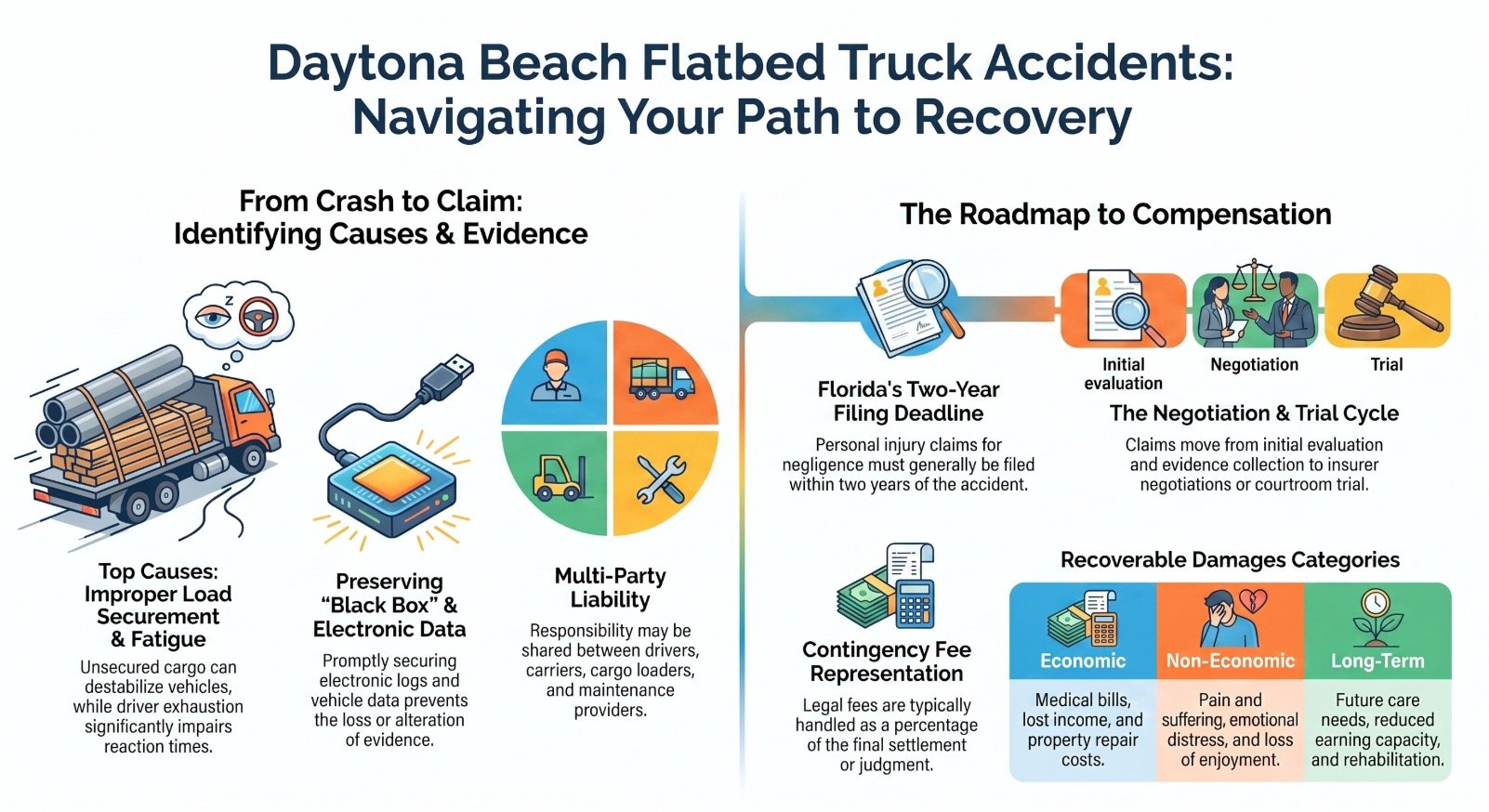
Common Daytona Beach flatbed truck accidents often result from improper load securement, which can allow cargo to shift or fall into traffic. Driver fatigue may impair reaction times, while equipment failure can compromise braking, handling, or other essential systems. Unsafe lane changes, particularly when a truck has limited visibility, can also create serious collision risks.
Improper Load Securement
Improper load securement is a significant cause of flatbed truck accidents in Daytona Beach because unsecured or unevenly distributed cargo can shift, fall, or destabilize the vehicle during transit. Cargo may move when straps, chains, tie-downs, or blocking materials are inadequate, damaged, improperly positioned, or insufficient for the load’s weight and shape. Poorly secured materials can strike nearby motorists, obstruct traffic, or cause the truck to roll over while turning or braking.
Load Securement Violations may result from rushed inspections, inadequate training, overloaded equipment, or failure to account for changing road conditions. Federal Safety Standards require carriers and drivers to secure cargo using appropriate devices and inspection procedures. When those duties are neglected, injured individuals and their families may require assistance identifying responsible parties, preserving evidence, and pursuing fair compensation through the legal process.
Driver Fatigue
Driver fatigue is a significant cause of Daytona Beach flatbed truck accidents because exhaustion can impair judgment, reaction time, attention, and the ability to control a heavily loaded vehicle. Long shifts, inadequate sleep, night driving, and pressure to meet delivery schedules may increase this risk. A fatigued driver might miss changing traffic conditions, respond slowly to hazards, or lose focus during crucial moments. Investigators may review hours-of-service records, dispatch communications, medical information, and workplace policies to determine whether fatigue contributed to the collision.
Black box evidence can reveal driving duration, speed changes, braking patterns, and rest intervals before impact. Post crash surveillance, including nearby business footage, may help establish the truck’s route and operating times. Identifying fatigue can support accountability and protect other roadway users from preventable harm.
Equipment Failure
When a flatbed truck’s essential equipment fails, the resulting loss of control can create serious hazards for surrounding motorists. Defective components may prevent the vehicle from stopping, maintaining stability, or guiding its cargo. A neglected Brake System can reduce stopping power, increase stopping distances, or cause uneven braking. Tire Blowouts may produce sudden instability, particularly when tires are worn, underinflated, overloaded, or damaged by road debris. Other contributing failures can include broken suspension parts, steering defects, malfunctioning lights, and improperly secured tie-down equipment. Trucking companies and maintenance providers generally have responsibilities to inspect, repair, and replace unsafe components before operation.
When those duties are overlooked, affected individuals may need medical care, transportation assistance, and legal guidance. Careful investigation can help identify maintenance records, inspection failures, and responsible parties after a collision.
Unsafe Lane Changes
Unsafe lane changes occur when a flatbed truck moves into an adjacent lane without adequately checking surrounding traffic, signaling, or accounting for its limited visibility. Because these vehicles are longer and wider than passenger cars, drivers may misjudge blind spots, closing speeds, or the space required to merge safely. Unsecured cargo or shifting loads can further distract operators and affect vehicle control during a turning. Failure to maintain lane discipline may cause sideswipes, forced evasive actions, or collisions with vehicles traveling in neighboring lanes. Proper mirror use, timely signals, and deliberate speed adjustments help reduce these risks. At intersections, heightened attention supports intersection safety, particularly when turning paths and nearby cyclists complicate traffic movements. Witness accounts, traffic footage, and vehicle data may clarify how an unsafe lane change contributed to a crash.
Legal Rights of Daytona Beach Flatbed Truck Accident Injury Victims
In Daytona Beach, flatbed truck accident injury victims have legal rights that may allow them to seek compensation for medical expenses, lost income, property damage, and the physical and emotional effects of their injuries. A victim may pursue a claim against responsible parties, including a trucking company, driver, insurer, or other entity, depending on the available facts and applicable law.
Important protections may include:
- The right to receive appropriate medical evaluation and treatment.
- The right to request compensation supported by documented losses.
- The right to obtain and preserve accident-related evidence.
- The right to consult an attorney before accepting an insurance settlement.
Evidence preservation can include medical records, photographs, witness information, vehicle data, and communications with insurers. Comparative negligence may affect recovery if a victim is alleged to share responsibility; however, an allegation does not eliminate the need for a careful investigation. Prompt legal guidance can help protect deadlines, evaluate damages, and support a fair resolution while allowing injured individuals to focus on recovery and their families.
Why Do Daytona Beach Flatbed Truck Accident Injuries Happen?
Understanding the causes of flatbed truck accidents can help identify responsible parties and clarify how an injury claim should be evaluated. These crashes may result from unsecured cargo that shifts, falls, or extends beyond the trailer’s legal boundaries. Overloaded equipment can reduce braking performance, destabilize the vehicle, and increase rollover risk, particularly during turns or sudden lane changes.
Driver fatigue, distraction, speeding, and inadequate training may further impair judgment. Nighttime Visibility problems can make it harder to detect motorcycles, pedestrians, stopped vehicles, or roadway hazards. Improper Signaling may prevent nearby motorists from anticipating a wide turn, lane change, or sudden merge. Mechanical defects, including worn tires, defective brakes, and damaged lighting, can also contribute to collisions.
Roadway design, construction zones, weather, and poor maintenance may create additional hazards. Responsibility may involve the driver, trucking company, cargo loader, maintenance provider, manufacturer, or another negligent party. A careful investigation can distinguish among these contributing factors while supporting fair treatment for injured people and their families.
What Should You Do After a Daytona Beach Flatbed Truck Accident Injury?
After a Daytona Beach flatbed truck accident injury, the injured person should seek immediate medical care, even if symptoms initially appear minor. The accident should be reported to law enforcement, and relevant information should be obtained when possible. Medical records, photographs, witness details, and other documentation can help establish the nature and extent of the injuries.
Seek Immediate Medical Care
Prompt medical care should be a priority for anyone injured in a Daytona Beach flatbed truck accident, even when symptoms initially appear minor. A physician can identify hidden injuries, document symptoms, and establish a treatment plan before conditions worsen. Medical records may also clarify the injury’s connection to the collision, which can matter when dealing with insurance adjusters. The injured person should describe every symptom accurately, disclose relevant medical history, and follow prescribed instructions.
Delaying evaluation can complicate recovery and provide insurers with an opportunity to question the seriousness or timing of the injury. A trusted companion may assist with transportation, communication, and preserving witness statements about visible injuries or immediate distress. Prompt care also supports recovery, helping injured individuals remain available to serve family members and others who depend on them.
Report the Accident
When a Daytona Beach flatbed truck accident causes an injury, the incident should be reported promptly to law enforcement, even if the parties believe the damage appears limited. An official response can promote safety, identify involved parties, and create an objective record of events. Officers may assess the roadway, speak with drivers and passengers, and gather Witness statements before conditions change. The police report may document vehicle positions, apparent violations, insurance information, and the accounts provided at the scene. Each person involved should provide accurate information without speculating or accepting blame. If the truck driver or another party leaves, the incident should still be reported immediately, with available identifying details supplied to investigators. A timely report can assist injured individuals, witnesses, insurers, and legal representatives in understanding what occurred.
Document Your Injuries
Medical documentation should begin as soon as possible following a Daytona Beach flatbed truck accident injury, even if symptoms initially seem minor. A prompt medical evaluation can identify hidden trauma, establish a treatment plan, and connect physical findings to the collision. The injured person should follow prescribed care, attend each appointment, and retain records of diagnoses, medications, referrals, and expenses. Photographs can document bruising, swelling, lacerations, vehicle damage, and changing symptoms when taken safely and consistently.
A written symptom journal may help explain pain levels, limitations, and effects on work or daily responsibilities. Witness Statement Collection can preserve observations that support the injury account. Copies of Insurance Claim Forms and related correspondence should also be retained. Organized documentation can assist insurers, medical providers, and legal representatives in evaluating the claim accurately.
Critical Evidence in a Daytona Beach Flatbed Truck Accident Injury Case
Evidence can establish whether unsafe loading, inadequate driver qualifications, roadway conditions, or resulting injuries caused the collision.
Major categories include:
- Flatbed load securement records and photographs
- Driver qualification and training records
- Crash scene photographs, video, and witness statements
- Medical records, bills, and treatment documentation
A Daytona Beach flatbed truck accident lawyer may use these materials to evaluate liability and document the full extent of the injured person’s losses.
Flatbed Load Securement
Proper flatbed load securement is central to determining whether a truck operator, carrier, or loading party caused or contributed to a Daytona Beach collision. Investigators may examine photographs, inspection reports, bills of lading, and available onboard records to assess whether chains, straps, tarps, binders, and edge protection were properly selected and applied. Evidence may show shifting materials, broken restraints, or inadequate blocking after impact. Cargo Distribution Failures can alter a flatbed’s balance, increase stopping distance, and create an Unexpected Lane Alignment when the load moves during travel. Witness accounts and roadway debris patterns may help establish when cargo became unstable and whether it struck another vehicle. Prompt preservation of the truck, restraints, and remaining materials can protect injured individuals seeking a fair evaluation of responsibility and available remedies.
Driver Qualification Records
When a flatbed truck accident occurs, Driver Qualification Records may provide important evidence about whether the driver was legally and professionally prepared to operate the vehicle. These records may include applications, employment history, medical certifications, driving evaluations, training documentation, and required safety inquiries. They can help establish whether the carrier verified qualifications before assigning the driver to a commercial vehicle. A CDL history may reveal suspensions, serious traffic offenses, prior crashes, or other concerns requiring review. Records concerning hours of service violations may indicate fatigue risks or inadequate supervision. Investigators may also examine disciplinary actions, refresher training, and compliance with federal qualification standards. Preserving these materials can assist an injured person in evaluating negligence and identifying responsible parties. Careful review promotes accountability and supports fair compensation for affected individuals and families.
Crash Scene Documentation
Beyond driver qualification records, crash scene documentation can provide direct evidence about how a Daytona Beach flatbed truck accident occurred. Investigators may examine vehicle positions, roadway conditions, skid marks, debris patterns, traffic signals, and visible damage. These details can help clarify speed, braking, lane movement, cargo involvement, and the sequence of impacts before conditions change. Witness statement collection should occur promptly, while observations remain fresh and before memories are influenced by later discussions. Each account should identify what the witness personally saw, heard, or experienced, without speculation. Photo evidence preservation is equally important. Time-stamped images and video should capture the entire scene, vehicle damage, road defects, signage, lighting, and relevant cargo restraints from multiple angles. Properly preserved documentation can support accurate evaluation and responsible advocacy for injured individuals.
Medical Treatment Evidence
Medical treatment evidence provides an important record of the injuries sustained in a Daytona Beach flatbed truck accident and the care required afterward. Emergency reports, diagnostic images, physician notes, prescriptions, and therapy records can establish when symptoms appeared, how seriously they affected daily activities, and whether treatment remained consistent.
Complete documentation also helps connect medical expenses and future care needs to the collision. Gaps in appointments, unreported symptoms, or conflicting statements may create uncertainty about causation and damages. Patients therefore benefit from following treatment instructions, attending scheduled visits, and retaining bills, discharge paperwork, and mileage records.
Although Rental Car Evidence may address transportation losses, it does not replace medical proof. Similarly, Insurance Denial Appeals may require organized treatment records supporting disputed claims. Careful preservation of this evidence allows advocates to present an accurate, compassionate account of recovery.
Long-Term Effects of Daytona Beach Flatbed Truck Accident Injuries
Daytona Beach flatbed truck accident injuries may produce chronic pain, reduced mobility, and permanent disability that affect a person’s ability to work and manage daily activities. Emotional and psychological effects, including anxiety, depression, and trauma-related symptoms, may also persist long after physical treatment begins. These lasting conditions can create ongoing medical and financial needs, including rehabilitation, assistive services, lost income, and related household expenses.
Chronic Pain And Disability
Chronic pain and disability can remain long after initial treatment for injuries sustained in a Daytona Beach flatbed truck accident. Fractures, spinal damage, nerve injuries, and traumatic amputations may limit mobility, strength, endurance, or the ability to perform ordinary tasks. Some individuals require continuing medical care, assistive equipment, medication, or modifications to their homes and vehicles. Permanent restrictions can also affect employment, earning capacity, and eligibility for specific occupations. Vocational rehabilitation may help an injured person identify suitable work, develop new skills, and pursue a realistic return to employment. Documentation from physicians, therapists, and vocational professionals can clarify the injury’s long-term consequences.
During settlement negotiation, this evidence may support compensation for future treatment, lost income, reduced earning ability, disability-related expenses, and necessary personal assistance. Accurate projections help protect long-term needs.
Emotional And Psychological Impact
Emotional and psychological effects can persist after physical injuries from a Daytona Beach flatbed truck accident have stabilized. Survivors may experience anxiety, depression, irritability, sleep disruption, or recurring memories related to the collision. Some develop fear of driving, difficulty trusting traffic conditions, or withdrawal from family and community activities. These reactions can affect employment, relationships, and the ability to participate confidently in daily life, even when others cannot see the distress. Early recognition may help relatives, caregivers, and advocates respond with patience rather than judgment.
Post-accident counseling options can include trauma-informed therapy, support groups, and evaluations by qualified mental health professionals. Community support resources, including survivor organizations and local assistance programs, may reduce isolation. Documentation of these effects can help professionals understand the injury’s full human impact and guide appropriate support.
Ongoing Medical And Financial Needs
Long-term injuries from a Daytona Beach flatbed truck accident may require continuing medical care, rehabilitation, prescription medication, medical equipment, or assistance with daily activities. These needs can create substantial expenses that persist long after initial treatment ends. Victims may also lose income, experience reduced earning capacity, or require workplace accommodations and in-home support. Careful documentation of medical bills, treatment recommendations, projected costs, and employment consequences can help establish the full extent of damages. A legal professional may consult physicians, life-care planners, economists, and occupational therapists to evaluate future needs and pursue appropriate compensation.
Families managing fatal injuries may consider Wrongful Death Claims for funeral costs, lost financial support, and related losses. Applicable Damages Caps can affect recoverable amounts, making knowledgeable legal guidance especially important when planning long-term care and protecting household stability.
Proving Liability in Daytona Beach Flatbed Truck Accident Injury Cases
Proving liability in a Daytona Beach flatbed truck accident injury case requires evidence showing that another party’s negligence caused the collision and resulting harm. Relevant evidence may include photographs, video footage, witness statements, police reports, vehicle data, and medical records documenting the injury’s connection to the crash.
Negligence proof may establish that a truck driver exceeded safe speeds, failed to secure cargo, violated hours-of-service rules, or operated while distracted. Responsibility may also involve a trucking company, maintenance provider, cargo loader, or vehicle manufacturer, depending on the facts. Investigators can examine inspection records, training materials, dispatch communications, and employment relationships to identify contributing conduct.
A careful damages calculation should connect medical expenses, lost income, rehabilitation needs, and other legally recognized losses to the proven injuries. Insurance claim timelines should be monitored because Florida deadlines and policy requirements can affect available remedies. Thorough trial preparation preserves evidence, organizes testimony, and presents a clear account of liability, causation, and damages for those seeking accountability and assistance.
Dealing With Insurance Companies After a Daytona Beach Flatbed Truck Accident Injury
After a Daytona Beach flatbed truck accident injury, insurance companies may promptly request statements, medical permissions, and settlement discussions that can affect the injured person’s claim. An injured individual should communicate carefully and avoid guessing about speed, symptoms, or responsibility. Insurers may use recorded statements or extensive authorizations to examine unrelated medical history, so requests should be reviewed before signing.
Preserving evidence can strengthen a fair evaluation. Photos, damaged clothing, vehicle details, scene conditions, and electronic records should be retained. Witness statements should be gathered promptly, with names and contact information documented accurately. A detailed timeline can help clarify events without speculation.
Medical bills, treatment records, prescription receipts, and employment-loss information should be arranged as they arrive. Useful documentation tips include keeping copies, recording claim communications, noting adjusters’ comments, and avoiding social-media posts about the accident or recovery. A qualified Daytona Beach flatbed truck accident lawyer can communicate with insurers, safeguard the injured person’s interests, and help ensure that necessary information is presented without surrendering important rights.
What to Expect During a Daytona Beach Flatbed Truck Accident Injury Claim Process
A Daytona Beach flatbed truck accident injury claim typically begins with an initial evaluation of the facts, injuries, and potential liability. The evidence collection process may include medical records, accident reports, photographs, witness statements, and trucking documentation, followed by negotiations with the insurance company. If settlement efforts fail, the claim may proceed to trial, where the available evidence and applicable law will determine the outcome.
Initial Claim Evaluation
When a Daytona Beach flatbed truck accident is reported, the initial claim evaluation establishes whether the available facts support a viable injury claim and identifies the parties who may bear responsibility. This review commonly considers the reported collision circumstances, apparent injuries, medical treatment, insurance coverage, and applicable filing deadlines. It may also examine whether the driver, trucking company, cargo loader, maintenance provider, or another entity could have contributed to the harm. A preliminary damages calculation considers medical expenses, lost income, property damage, ongoing care, and other legally recognized losses. Early evidence preservation is important because records and relevant materials may become unavailable as time passes. The evaluation does not determine the final outcome; instead, it helps clarify potential claims, required next steps, and the assistance needed to protect an injured person’s interests.
Evidence Collection Process
During the evidence collection process, the claim record is developed through documents, physical materials, and witness information relevant to the flatbed truck collision. Investigators may obtain the crash report, photographs, medical records, vehicle maintenance files, loading documentation, and applicable driver logs. Witness statements can clarify traffic conditions, vehicle movements, warnings, and events immediately before impact. Dashcam footage, surveillance recordings, electronic data, and photographs may preserve details that disappear as vehicles are repaired or conditions change. Physical inspection can document damage patterns, cargo placement, road conditions, and possible equipment failures.
The legal burden generally requires sufficient liability proof to connect negligent conduct with the injuries and losses claimed. Attorneys may organize these materials, identify inconsistencies, and consult qualified professionals when targeted opinions are necessary. Prompt preservation efforts help protect relevant evidence and support a fair evaluation.
Insurance Company Negotiations
Insurance company negotiations typically begin after the claim is reported and supporting evidence is assembled. An adjuster reviews medical records, crash reports, photographs, witness statements, and available trucking documentation to evaluate responsibility and claimed losses. The claimant may be asked for recorded statements, authorizations, employment information, or additional explanations regarding treatment and expenses. Careful, consistent responses help prevent misunderstandings while preserving the accuracy of the claim.
Adjusters may identify Improper Documentation or Incomplete Information and request clarification before proceeding. Missing records, inconsistent descriptions, or delayed disclosures can complicate communication and affect the insurer’s assessment. A Daytona Beach flatbed truck accident lawyer can communicate with the insurer, organize supporting materials, and address requests without allowing pressure to produce premature or inaccurate statements. Claimants should continue following medical advice and maintain organized records throughout negotiations.
Settlement Or Trial
After negotiations clarify the available evidence and claimed losses, the parties may resolve the Daytona Beach flatbed truck accident injury claim through a settlement or proceed toward trial. A settlement can provide timely compensation, reduce uncertainty, and spare an injured person the demands of courtroom proceedings. Its fairness depends on medical documentation, proof of liability, projected expenses, and the claim’s overall settlement value. If negotiations fail, counsel may recommend litigation after evaluating the strength of the evidence and the likely costs, duration, and risks of trial. A trial strategy may address driver conduct, loading practices, company oversight, and the full impact of the injuries. Through jury persuasion, attorneys present witnesses, records, and expert opinions in a clear sequence. The final decision remains with the jury, while preparation continues to protect the injured person’s interests.
Compensation for Daytona Beach Flatbed Truck Accident Injury Damages
Compensation for injuries caused by a Daytona Beach flatbed truck accident may cover medical expenses, lost income, reduced future earning capacity, property damage, and pain and suffering. The available recovery depends on the collision’s circumstances, the severity of the injuries, and evidence connecting those injuries to the truck operator’s conduct.
A careful insurance settlement strategy may address liability findings, applicable policy limits, documented treatment, and the claimant’s anticipated recovery needs. Medical expense proof can include hospital invoices, physician records, prescription receipts, rehabilitation statements, and testimony concerning necessary future care. Pay stubs, tax documents, employment records, and vocational information may support income-related losses.
Property damage evidence should establish repair costs or the vehicle’s fair value when repair is impractical. A legal professional can help preserve photographs, witness accounts, accident reports, and other records while communicating with insurers. This organized approach supports a fair claim and helps protect resources needed for recovery, family responsibilities, and continued service to the community.
Economic vs Non-Economic Damages in Daytona Beach Flatbed Truck Accident Cases
Damages in Daytona Beach flatbed truck accident cases may include economic losses, such as medical expenses, lost income, and property damage. Non-economic losses can address pain and suffering, emotional distress, and reduced quality of life. Calculating total compensation requires evaluating documented financial harm alongside the accident’s broader personal impact.
Economic Damage Categories
Economic damages represent the measurable financial losses caused by a flatbed truck collision in Daytona Beach, while non-economic damages address the injury’s personal and subjective effects. These losses commonly include emergency transportation, hospital services, physician visits, prescription medication, rehabilitation, medical equipment, and anticipated future treatment. They may also cover wages lost during recovery, reduced earning capacity, business interruption, property damage, and necessary household or transportation assistance. Documentation strengthens each category. Relevant records can include invoices, employment statements, tax documents, repair estimates, medical forecasts, and receipts for out-of-pocket expenses.
A careful review helps identify continuing costs that insurers may overlook or dispute. An informed negotiation strategy evaluates the full financial record, while awareness of insurance tactics helps prevent premature settlements, incomplete calculations, or unsupported deductions from the amount needed for recovery and continued service to dependents.
Non-Economic Losses
In addition to documented financial losses, a flatbed truck collision may cause non-economic harm that does not have a fixed invoice or readily measurable market value. Such losses can include physical pain, emotional distress, mental anguish, inconvenience, disfigurement, and diminished enjoyment of daily activities. A serious injury may also affect family relationships, independence, and the ability to participate in valued community or personal responsibilities. When a collision results in death, surviving relatives may pursue wrongful death damages for the loss of companionship, guidance, protection, and emotional support. Punitive damages considerations are separate because these damages may apply only when the responsible conduct involved particularly reckless or intentional wrongdoing, rather than ordinary negligence. Careful documentation of symptoms, treatment, lifestyle changes, and witness observations can help present the human consequences of the collision.
Calculating Total Compensation
Calculating total compensation in a Daytona Beach flatbed truck accident case requires separating measurable economic losses from non-economic harm and evaluating how both categories affect the injured person’s life. Economic damages may include emergency treatment, ongoing medical care, rehabilitation, lost wages, reduced earning capacity, property damage, and necessary household assistance. Non-economic damages address pain, emotional distress, diminished enjoyment of life, disability, and loss of companionship. Documentation such as medical records, pay statements, expert opinions, and personal accounts helps establish the value of each loss. Comparative Negligence may reduce recovery if the injured person contributed to the collision. Coverage Limits also matter because available insurance may restrict payment, even when proven damages are substantial. A careful assessment seeks fair compensation that supports recovery and protects the person’s future needs.
When a Daytona Beach Flatbed Truck Accident Injury Case Goes to Trial vs Settlement
When a Daytona Beach flatbed truck accident causes significant injuries, the decision to pursue settlement or proceed to trial depends on the strength of the evidence, the extent of damages, and the parties’ willingness to reach a fair resolution. Settlement timing factors may include medical stability, documentation of lost income, liability disputes, and the insurer’s responsiveness. A settlement can provide earlier financial support and reduce uncertainty, but an offer may not reflect future treatment, rehabilitation, or diminished earning capacity.
Trial becomes more appropriate when negotiations fail, responsibility remains contested, or the available compensation does not address documented losses. A Trial preparation checklist typically includes organizing medical records, employment evidence, witness statements, photographs, vehicle data, and expert evaluations. Counsel may also prepare the injured person for testimony and assess courtroom risks. Throughout the process, the legal team can help protect the client’s interests while pursuing a resolution that supports recovery, family responsibilities, and long-term stability.
Florida Laws That May Affect Your Daytona Beach Flatbed Truck Accident Case
Florida law can materially affect a Daytona Beach flatbed truck accident claim by establishing filing deadlines, liability standards, insurance requirements, and the damages available to an injured person. Rules governing commercial vehicles may help determine whether a carrier, driver, loading company, or maintenance provider breached a duty of care. Relevant considerations include:
Florida law shapes Daytona Beach flatbed truck claims through deadlines, liability standards, insurance requirements, and available damages.
- Truck weight limits: Overloaded equipment can impair braking, handling, and stability, supporting evidence of negligence when violations contribute to a collision.
- Daylight driving rules: Oversized or projecting loads may face restrictions on when they can operate, along with lighting, flagging, and visibility requirements.
- Securement standards: Chains, straps, tarps, and other restraints must be selected and applied appropriately to prevent shifting or falling cargo.
- Comparative responsibility: An injured person’s conduct may affect recovery, while violations by multiple parties can support shared liability.
Accident investigations may involve inspection records, electronic logs, cargo documents, witness accounts, and roadway evidence. Applying these laws carefully can help protect injured motorists and support fair treatment throughout the claim process.
The Statute of Limitations for Daytona Beach Flatbed Truck Accident Injury Cases
A statute of limitations sets the deadline for filing a lawsuit after a Daytona Beach flatbed truck accident, and missing that deadline may permanently bar an injured person from pursuing compensation in court. Florida law generally allows two years for personal injury claims arising from negligence, although exceptions can shorten or extend the period. Claims involving wrongful death, governmental entities, or minors may follow different rules. The filing deadline usually begins on the accident date, but the precise calculation can depend on the facts and parties involved. Prompt attention supports evidence preservation, including medical records, photographs, vehicle data, witness accounts, and trucking documentation that may become unavailable over time.
Early action also provides time for insurance negotiation without allowing discussions to jeopardize the filing deadline. Because an insurer’s investigation or settlement discussions typically does not pause the limitations period, injured individuals should identify the applicable deadline and legal requirements promptly. Accurate timing protects access to judicial remedies and promotes responsible service to those affected.
How a Daytona Beach Flatbed Truck Accident Lawyer Can Help You
Following a Daytona Beach flatbed truck accident, an experienced lawyer can evaluate the circumstances, identify potentially responsible parties, and protect the injured person’s legal interests. Legal guidance may help families pursue fair treatment while preserving evidence and organizing critical documentation.
After a Daytona Beach flatbed truck accident, legal guidance can help protect rights, preserve evidence, and pursue fair compensation.
A lawyer can assist by:
- Investigating loading practices, vehicle maintenance, driver conduct, roadway conditions, and company policies.
- Identifying liable parties, including drivers, trucking companies, cargo handlers, manufacturers, or insurers.
- Managing communications with insurers and opposing counsel to reduce pressure and prevent harmful statements.
- Preparing a claim that addresses medical expenses, lost income, future care, pain, and other losses.
Through careful Damages Calculation, counsel can develop a supported valuation based on records, expert opinions, and the individual’s anticipated needs. When a collision causes a fatality, the lawyer may also pursue Wrongful Death Claims for eligible surviving relatives, including funeral costs, lost support, and related damages. This representation allows the injured person or family to focus on recovery and service to loved ones while legal responsibilities receive disciplined attention.
When to Contact a Daytona Beach Flatbed Truck Accident Lawyer
Prompt legal guidance can be important after a Daytona Beach flatbed truck accident, particularly when injuries are serious, fault is disputed, or multiple parties may share responsibility. A consultation should occur promptly, before statements, evidence, or deadlines affect a potential claim. Early review can help preserve photographs, vehicle records, medical documentation, witness accounts, and information concerning loading or maintenance.
Contact becomes especially important when an insurer requests a recorded statement, offers a quick settlement, or suggests that another person caused the collision. A lawyer can explain available options without pressuring an injured person to act beyond personal capacity. During an initial discussion, the potential client may ask about the attorney fee structure, litigation expenses, and responsibility for costs if the case does not succeed.
The timing of a Settlement vs trial decision depends on evidence, damages, liability, and the opposing parties’ responses. Prompt advice can support informed choices, protect legal rights, and help families focus on recovery and continued service to others.
Why You Need an Experienced Daytona Beach Flatbed Truck Accident Lawyer
When a flatbed truck accident involves severe injuries, disputed fault, or complex trucking operations, an experienced Daytona Beach flatbed truck accident lawyer can provide essential guidance. Such counsel can investigate loading practices, secure maintenance records, and identify violations that may have contributed to the collision. Early Evidence preservation tips can help protect photographs, electronic data, witness accounts, and other information vulnerable to loss.
Experienced representation is particularly valuable in Truck insurance disputes, where commercial carriers and insurers may assign blame or minimize damages. A lawyer can evaluate medical needs, lost income, property damage, and future hardships while developing a focused case strategy. Familiarity with trucking regulations and local procedures also supports effective communication with opposing parties and responsible resolution efforts.
If litigation becomes necessary, thorough courtroom preparation helps present evidence clearly, question witnesses effectively, and respond to technical defenses. This informed assistance allows injured individuals and their families to pursue accountability while preserving their ability to focus on recovery and supporting one another.
How to Choose the Right Daytona Beach Flatbed Truck Accident Lawyer for Your Case
Choosing the right Daytona Beach flatbed truck accident lawyer requires more than selecting the first available attorney. A careful evaluation can help an injured person secure responsible guidance while protecting family interests during a difficult recovery. The lawyer’s experience with commercial vehicle collisions, rollover claims, and disputed liability merits particular attention. Clients should ask how the attorney investigates Truck incident evidence, including driver logs, cargo records, inspection reports, photographs, and available surveillance footage. Clear communication is equally important; the lawyer should explain legal options, deadlines, potential obstacles, and the expected role of the client. A Legal fees consultation should identify the fee structure, case expenses, and circumstances that could affect the client’s recovery. References, professional standing, and courtroom experience may provide additional insight. The strongest choice is an attorney who demonstrates careful preparation, ethical service, adequate resources, and genuine commitment to pursuing a fair result without making unrealistic promises. Safety, accessibility, and respectful treatment should remain central throughout representation.
About The Law Offices of Anidjar & Levine
The Law Offices of Anidjar & Levine represents individuals and families affected by serious vehicle collisions, including flatbed truck accidents in Daytona Beach. Its attorneys evaluate the circumstances of each crash, identify potentially responsible parties, and explain legal options in clear, accessible terms.
The firm assists clients seeking compensation for medical expenses, lost income, property damage, pain and suffering, and other Truck accident damages. Case preparation may involve reviewing vehicle maintenance records, driver qualifications, cargo securement, electronic logs, and available evidence from the collision scene. Knowledge of Florida trucking regulations can help determine whether violations contributed to the incident and support a thorough liability assessment.
The Law Offices of Anidjar & Levine also handles communications with insurers and opposing parties, allowing injured individuals to focus on treatment and recovery. Through individualized attention and diligent investigation, the firm seeks to protect clients’ interests while pursuing fair outcomes. Prospective clients can contact the office to discuss their circumstances and potential claims.
Frequently Asked Questions
Can I Afford a Daytona Beach Flatbed Truck Accident Lawyer?
Many injured people can afford a Daytona Beach flatbed truck accident lawyer because representation commonly uses contingency options rather than upfront payment. Under this arrangement, the attorney receives a percentage of any settlement or judgment, so payment generally depends on a successful recovery. Cost payment terms vary, including case expenses and fees, and should be explained in a written agreement. A consultation can clarify eligibility, financial obligations, and available legal support.
What Documents Should I Bring to My Initial Attorney Consultation?
For an initial attorney consultation, the prospective client should bring identification, contact information, medical records, treatment bills, photographs, witness details, and employment records showing lost income. Police report requests and any completed reports should be included, along with insurance claim summaries, policy information, correspondence, and settlement offers. Copies of vehicle titles, repair estimates, towing receipts, and relevant electronic messages can help counsel evaluate liability, damages, and available recovery options efficiently.
Will My Case Require Me to Attend Every Legal Proceeding?
A client will not necessarily need to attend every legal proceeding. Counsel typically handles routine filings, negotiations, and certain hearings, while attendance may be required for depositions, mediation, trial, or testimony. Case scheduling depends on the court, opposing counsel, and procedural developments. The attorney should explain each obligation promptly and prepare the client thoroughly. Local court visits may be limited, but missed appearances can seriously affect the case.
Can Family Members Pursue Claims After a Fatal Flatbed Truck Accident?
Family members may pursue claims after a fatal flatbed truck accident, depending on state law, their relationship to the deceased, and whether they qualify as statutory beneficiaries. Wrongful death eligibility commonly includes a surviving spouse, children, or parents, while estate representatives may bring additional claims. Families may also seek insurance claim support to address medical expenses, funeral costs, lost income, and related damages. Prompt legal guidance helps preserve evidence and meet filing deadlines.
How Are Attorney Fees Handled in a Flatbed Truck Accident Case?
Attorney fees in a flatbed truck accident case are commonly structured through contingency fee options, meaning the client generally pays no attorney fee unless compensation is recovered. The agreement should identify the percentage, case expenses, responsibility for costs if unsuccessful, and whether deductions occur before or after expenses. Billing transparency standards require clear communication, regular updates, and written explanations of charges. Clients should review every provision before authorizing representation to protect their interests.
—————————
Victims of Daytona Beach flatbed truck accidents may suffer serious injuries, financial losses, and complex insurance disputes. Understanding liability, preserving evidence, and meeting Florida’s legal deadlines can significantly affect a claim’s outcome. An experienced Daytona Beach Truck Accident Lawyer can investigate the crash, identify all potentially responsible parties, and pursue appropriate compensation. The Law Offices of Anidjar and Levine carefully evaluates each case, helping injured individuals make informed decisions while protecting their legal rights throughout the process.