The Law Offices of Anidjar and Levine’s Daytona Beach Truck Accident Lawyer investigates collision causes, identifies potentially liable drivers, contractors, employers, or equipment owners, and preserves essential evidence.
This may include crash reports, vehicle data, maintenance files, driver qualifications, surveillance footage, witness accounts, and construction records.
The lawyer also coordinates medical documentation, evaluates current and future expenses, lost income, property damage, and other legally recognized losses while addressing comparative negligence and insurance disputes.
Further information explains available legal protections and important next steps.
Main Takeaways
- A Daytona Beach construction truck accident lawyer investigates liability involving drivers, contractors, employers, equipment owners, and other responsible parties.
- Attorneys preserve crash reports, vehicle data, maintenance records, surveillance footage, photographs, and witness statements before evidence disappears.
- Lawyers evaluate medical expenses, future treatment, lost income, property damage, and other legally recognized losses for settlement purposes.
- Evidence may include driver qualification files, training records, inspection documents, electronic data, and accident reconstruction analysis.
- Florida comparative negligence rules may affect recovery, making organized evidence and careful insurance negotiations especially important.


How We Can Help With Your Daytona Beach Construction Truck Accident Injury Claim
A Daytona Beach construction truck accident lawyer can help an injured person pursue compensation by investigating the collision, identifying all potentially responsible parties, and documenting the full extent of the resulting losses. The lawyer may coordinate with medical providers to obtain medical documentation describing diagnoses, treatment, prognosis, and related expenses. This information supports a careful Settlement valuation that accounts for current bills, anticipated care, lost income, and other legally recognized damages.
Counsel can also focus on evidence preservation before records, vehicle data, photographs, surveillance footage, or construction-site materials become unavailable. Witness statements and employer or contractor records may clarify how the incident occurred without requiring the injured person to manage these demanding tasks alone. During insurance negotiation, the lawyer can present organized evidence, address disputed issues, and evaluate proposed resolutions against the claim’s documented value. By handling communications and deadlines, legal assistance allows the injured person to concentrate on recovery while pursuing a fair and responsible outcome through appropriate channels.
OUR CONSULTATIONSARE FREE
START YOUR FREE CASE REVIEW

Understanding Daytona Beach Construction Truck Accident Injury Cases
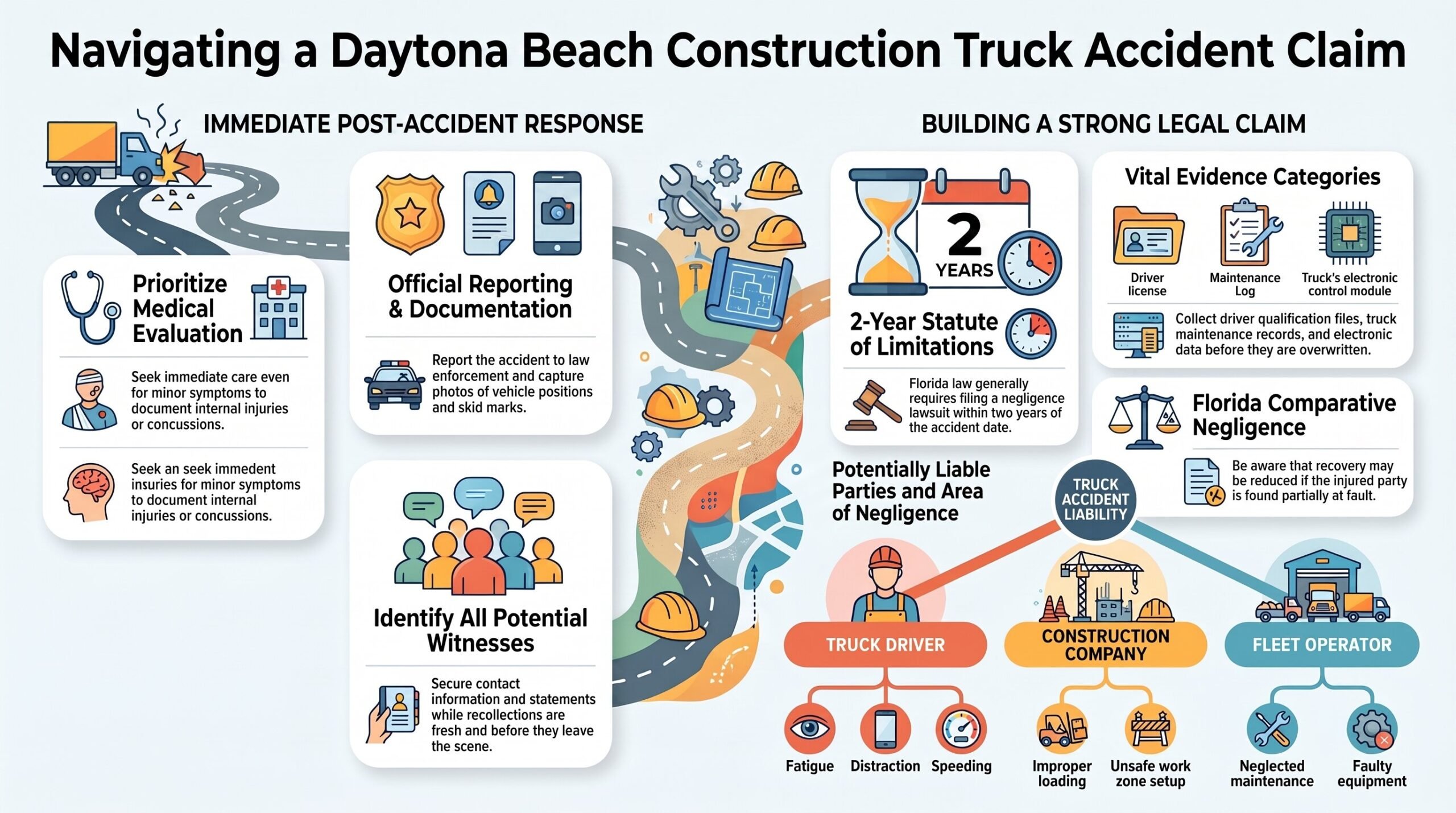
When a construction truck collision occurs in Daytona Beach, understanding the legal and factual issues involved is pivotal to evaluating an injury claim. These cases may involve injured motorists, pedestrians, workers, contractors, trucking companies, or equipment owners. Liability depends on establishing who owed a duty, whether that duty was breached, and whether the breach caused documented harm.
A claim may include medical expenses, lost income, rehabilitation costs, property damage, and compensation for continuing limitations. Records should connect each condition to the collision and explain its effect on daily activities. A Comparative Negligence Analysis may also determine whether an injured person’s conduct affects recovery under Florida law.
Evidence Preservation Tips include obtaining medical records, photographing vehicles and the scene, identifying witnesses, retaining damaged equipment, and requesting available surveillance or electronic data. Prompt preservation can prevent important information from being altered or lost. Careful review of insurance coverage, employment relationships, safety records, and applicable deadlines helps guarantee that potential claims are evaluated responsibly and that injured individuals receive informed guidance.
Common Causes of Daytona Beach Construction Truck Accident
Construction truck accidents in Daytona Beach may result from driver fatigue or distraction, which can impair judgment and reaction time. Improper loading practices, equipment failures, and defective parts may also create serious hazards for workers, motorists, and pedestrians. Additionally, poorly managed or unsafe construction zones can increase collision risks by restricting visibility, narrowing travel lanes, or creating confusing traffic patterns.
Driver Fatigue and Distraction
Driver fatigue and distraction are significant contributors to construction truck accidents in Daytona Beach, particularly when operators work extended shifts, travel through congested work zones, or manage demanding delivery schedules. Reduced alertness can delay braking, impair judgment, and make it difficult to recognize pedestrians, lane changes, or sudden traffic conditions. Distractions may include mobile devices, radio adjustments, onboard paperwork, conversations, or navigation systems.
Employers and drivers have a responsibility to support safe operations through appropriate rest periods, realistic schedules, and attention to changing roadway conditions. Safety signage compliance helps operators identify warnings, detours, and restricted areas before hazards develop. Speed limit adherence is equally important because excessive speed reduces reaction time and increases crash severity. Investigators may examine work records, communication logs, and witness accounts when evaluating whether fatigue or distraction contributed to injuries.
Improper Loading Practices
Improper loading practices can cause construction trucks to become unstable, exceed legal weight limits, or lose materials in traffic, creating serious hazards on Daytona Beach roads. Construction companies and drivers must distribute cargo evenly, secure materials against movement, and verify that the load remains within the vehicle’s rated capacity. Failure to follow load securement standards may allow pipes, equipment, debris, or other materials to shift, fall, or strike nearby vehicles and pedestrians.
Overloaded trucks may also require longer stopping distances and become difficult to control during turns or sudden movements. Compliance with trucking compliance requirements includes inspecting tie-downs, confirming weight documentation, and reassessing cargo after transport begins. When improper loading contributes to a collision, injured individuals may need assistance identifying responsible parties and pursuing appropriate compensation for resulting losses and medical needs.
Equipment Failure and Defects
Beyond loading errors, equipment failure and defective components can cause construction trucks to lose control or operate unsafely on Daytona Beach roads. Worn brake assemblies, tire defects, handling problems, and neglected maintenance may prevent a driver from stopping or responding effectively. Hydraulic system failures can also disable lifting mechanisms, create unexpected movement, or interfere with vehicle stability. Manufacturers, owners, fleet operators, and maintenance contractors may share responsibility when a preventable defect or overlooked warning contributes to a collision.
Evidence may include inspection records, repair histories, electronic data, photographs, and expert evaluations. Brake failure lawsuits often depend on proving that responsible parties knew, or reasonably should have known, about dangerous conditions. Similarly, faulty hydraulics claims may require technical analysis connecting the defect to the resulting injuries and property damage. Families and injured road users may seek accountability through informed legal guidance.
Unsafe Construction Zones
Unsafe construction zones can create serious hazards when traffic controls, warning signs, lighting, or barriers are inadequate. In Daytona Beach, lane shifts, narrowed roadways, and uneven surfaces may leave motorists with little time to respond to construction trucks. Poor signage visibility, whether caused by placement, weather, or obstruction, can prevent drivers from recognizing changing traffic patterns.
How truck blindspots affect nearby vehicles is another significant concern, particularly when large trucks merge, turn, or reverse beside workers and motorists. Construction companies and contractors generally must maintain clear warnings, adequate illumination, stable barriers, and properly designed traffic controls. When these safeguards are neglected, collisions may result in serious injuries. Careful documentation of conditions, vehicle movements, and warning devices can help injured individuals and their families evaluate potential responsibility.


Legal Rights of Daytona Beach Construction Truck Accident Injury Victims
Construction truck accident injury victims in Daytona Beach may have legal rights to pursue compensation when another party’s negligence caused the collision and resulting harm. Potential claims may address medical expenses, lost income, rehabilitation, property damage, and pain and suffering. Determining responsible parties requires careful review of available facts and applicable insurance coverage.
Victims may strengthen their position by:
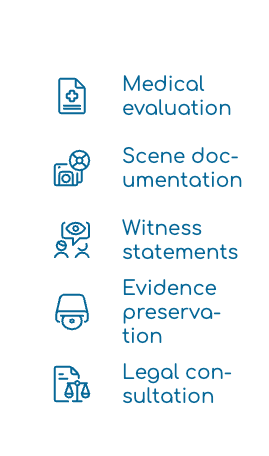
- Seeking prompt medical evaluation and preserving medical documentation.
- Recording the scene, vehicle damage, road conditions, and visible hazards.
- Obtaining witness statements while recollections remain reliable.
- Requesting evidence preservation, including vehicle data, project records, and surveillance footage.
- Consulting a qualified attorney before accepting an insurer’s settlement offer.
An Insurance claim denial does not necessarily eliminate a victim’s legal options. Additional investigation may reveal policy coverage, employer responsibility, or other viable sources of recovery. Because Florida deadlines can limit when a lawsuit may be filed, timely legal guidance helps protect procedural rights. A careful claim process also supports fair treatment for injured individuals and their families.
Why Do Daytona Beach Construction Truck Accident Injuries Happen?
Why do Daytona Beach construction truck injuries happen? These crashes often result from heavy vehicles operating in confined work zones, where limited visibility, shifting traffic patterns, and uneven surfaces increase danger. Drivers may travel too quickly, follow too closely, or fail to check blind spots before turning or reversing. Mechanical defects, inadequate maintenance, unsecured loads, and defective safety equipment can also contribute. Construction companies may create additional risks by failing to provide training, enforce rest requirements, or separate trucks from pedestrians and passenger vehicles. Weather, poor lighting, and rushed scheduling can further reduce reaction time and control.
Identifying the cause is important because responsibility may involve a driver, contractor, trucking company, equipment manufacturer, or property owner. Serious injuries can affect a person’s ability to work, support family members, and serve the community. Fatal crashes may raise questions about Wrongful death eligibility. In addition, Florida venue issues can influence where related claims are properly filed and evaluated.
What Should You Do After a Daytona Beach Construction Truck Accident Injury?
After a Daytona Beach construction truck accident, an injured person should seek immediate medical care, even when symptoms initially appear minor. The accident should also be reported to law enforcement and the appropriate employer or property owner, with all relevant details recorded. Careful documentation of injuries, treatment, expenses, and accident conditions can help preserve important evidence for a potential claim.
Seek Immediate Medical Care
Prompt medical evaluation is important for anyone injured in a Daytona Beach construction truck accident, even when symptoms initially appear minor. Some conditions, including internal bleeding, concussions, and spinal injuries, may develop gradually and require timely treatment. An injured person should request ambulance services when pain, confusion, breathing difficulties, loss of consciousness, or serious bleeding occurs.
Hospital contact should be arranged promptly when emergency transport is unnecessary, allowing professionals to document symptoms and begin appropriate care. An ER evaluation can identify hidden injuries, establish a treatment plan, and connect the patient with necessary medical experts. Medical instructions should be followed carefully, including prescribed restrictions, medications, and referrals. Consistent follow-up care helps improve recovery and creates reliable health records concerning the accident’s physical effects and ongoing needs.
Report The Accident
A construction truck accident should be reported promptly to the appropriate law enforcement agency, particularly when injuries, property damage, or hazardous conditions are involved. An official report can preserve vital facts, identify involved drivers and companies, and support public safety efforts around construction zones. The injured person should provide accurate information without speculating about fault.
If emergency personnel respond, their observations may also become relevant to later proceedings. The individual should obtain the report number and ask how to request a copy when it becomes available. They should notify the appropriate insurer promptly while avoiding recorded statements or settlements before understanding the claim. To strengthen an insurance claim strategy, the person should seek medical documentation through qualified providers and retain communications, receipts, and official records for review by counsel.
Document Your Injuries
Thorough injury documentation should begin as soon as the injured person receives medical attention. Medical records should identify diagnoses, treatments, prescribed restrictions, and expected recovery periods. The injured person should follow every medical recommendation and attend scheduled appointments, since gaps in care may complicate an injury claim. Clear photographs can preserve visible bruising, swelling, lacerations, burns, or mobility aids as those conditions develop.
This photo evidence should include dates when possible and remain stored securely. A written recovery journal may record pain levels, limitations, medication effects, and changes in daily activities. Employment records, pay statements, and missed-work dates can support a reliable wage loss calculation. Witnesses or caregivers may also document assistance required at home. These materials can help counsel present an accurate account of the injury’s consequences.
Critical Evidence in a Daytona Beach Construction Truck Accident Injury Case
Establishing liability in a Daytona Beach construction truck accident may require evidence from the scene, the vehicle, the driver, and qualified witnesses.
- Accident scene documentation
- Truck maintenance records
- Driver qualification files
- Eyewitness testimony
- Expert accident analysis
A Daytona Beach construction truck accident lawyer can evaluate these materials to identify safety violations, preserve vital proof, and determine whether negligent parties may be held responsible.
Accident Scene Documentation
When a construction truck collision occurs, prompt documentation of the accident scene can preserve evidence that may later clarify how the crash happened and who was responsible. Photographs should capture vehicle positions, roadway conditions, traffic controls, debris, skid marks, lighting, and visible injuries from multiple angles. Property damage documentation should include close images of every affected vehicle, equipment, structures, and personal belongings, supplemented by repair estimates and receipts when available.
Witness names, contact information, and concise accounts can help preserve independent observations before memories change. Preserving dashcam footage is equally important; original files should be copied promptly, protected from alteration, and retained with their metadata. A responding agency’s report, dispatch information, and nearby security recordings may further establish timing and movement. Careful records can assist injured individuals and their families in pursuing fair accountability.
Truck Maintenance Records
Beyond photographs and witness accounts, truck maintenance records may reveal whether a construction vehicle was properly inspected and kept in safe operating condition before a Daytona Beach collision. Service invoices, inspection checklists, repair orders, and defect reports may identify worn brakes, faulty tires, guidance problems, or other conditions contributing to injury.
These materials can assist accident reconstruction by establishing when a defect appeared and whether repairs were timely. They may also distinguish vehicle failures from roadway condition proof, such as debris, uneven pavement, or inadequate signage. Because electronic and paper records can disappear, preservation tactics should be pursued promptly. Spoliation of evidence may become significant if a company discards, alters, or fails to preserve relevant maintenance information after receiving notice of a potential claim. Attorneys may seek complete records and responsible accountability.
Driver Qualification Files
Driver qualification files may provide essential evidence concerning whether a construction truck operator was legally and professionally prepared to perform the work involved in a Daytona Beach collision. These records may identify license classifications, medical certifications, employment history, disciplinary actions, and required background checks. They can also show whether the employer followed applicable hiring and supervision procedures before assigning the driver to a construction vehicle.
Documentation concerning driver training programs may reveal instruction involving load security, vehicle operation, work-zone awareness, and federal or state safety requirements. In addition, qualification materials may indicate whether management verified continuing eligibility or ignored warning signs. Truck maintenance policies remain a separate source of evidence, but qualification files can establish the driver’s responsibilities for reporting defects and complying with established safety procedures during assigned duties after hiring.
Witness And Expert Testimony
Witness and expert testimony can clarify how a construction truck accident occurred and establish which parties may be legally responsible for the resulting injuries. Eyewitnesses may describe traffic conditions, vehicle movements, warnings, and actions taken immediately before impact. Their observations can help determine whether a driver, contractor, employer, or equipment provider failed to follow required safety practices. Accident reconstruction experts may analyze photographs, electronic data, measurements, and vehicle damage to explain speed, visibility, braking, and collision dynamics.
Medical experts can connect diagnosed injuries to the crash and address expected treatment or lasting limitations. A careful deposition strategy helps preserve testimony, test inconsistencies, and prepare witnesses for questioning. Credibility challenges may arise from conflicting accounts, limited visibility, relationships with involved parties, or prior statements. Objective documentation can strengthen reliable testimony and assist fair resolution.
Long-Term Effects of Daytona Beach Construction Truck Accident Injuries
Construction truck accident injuries may produce chronic pain conditions that persist long after initial treatment and interfere with daily activities. Ongoing medical expenses can include rehabilitation, medication, expert care, and future procedures, creating significant financial burdens. Emotional and psychological effects, including anxiety, depression, and trauma-related symptoms, may also require continuing professional support.
Chronic Pain Conditions
Chronic pain can become one of the most persistent consequences of injuries sustained in a Daytona Beach construction truck accident. Damage to nerves, joints, muscles, or the spine may produce continuing discomfort, limited mobility, sleep disruption, and difficulty performing ordinary responsibilities. Some individuals also experience headaches, sensitivity, or pain that intensifies with physical activity.
Accurate medical documentation can help distinguish chronic symptoms from temporary soreness and explain how they affect work, family duties, and the ability to serve others. Treatment providers may recommend rehabilitation, medication management, behavioral support, or other strategies for maintaining function. Investigators should also examine whether violations of Workplace safety standards contributed to the collision. Careful records and informed insurance claim tactics can help present the injury’s lasting impact without overstating its consequences or ignoring legitimate limitations.
Ongoing Medical Expenses
After a Daytona Beach construction truck accident, ongoing medical expenses may continue long after the initial emergency treatment has ended. Injured individuals may require follow-up visits, prescription medications, physical therapy, assistive devices, or corrective procedures. Some injuries also require periodic evaluations to monitor complications and determine whether additional treatment is necessary. Accurate records of every bill, appointment, mileage expense, and recommended service can help establish the full financial impact.
When negligence involves Faulty traffic signals, unsafe work zones, or other roadway failures, liability may extend beyond the truck operator. A Daytona Beach construction truck accident lawyer can assist with documenting projected costs and negotiating settlement demands that account for future care. Careful preparation helps protect injured people and families from bearing expenses that responsible parties or insurers should address.
Emotional And Psychological Effects
A Daytona Beach construction truck accident can produce lasting emotional and psychological effects, including anxiety, depression, sleep disturbances, irritability, and fear of driving or entering work zones. These conditions may interfere with employment, family responsibilities, and recovery. Prompt evaluation by qualified mental health professionals can identify trauma-related symptoms and support an appropriate treatment plan. Post-accident documentation, including counseling records and symptom journals, may help establish the injury’s continuing impact.
Evidence preservation can also protect information relevant to a claim, such as medical records and witness accounts. Insurance claim stress may intensify distress when insurers dispute treatment or delay payment. Careful legal guidance can reduce administrative burdens while preserving a person’s opportunity to seek compensation. Attention to long-term mental health remains required because psychological injuries may persist after physical wounds improve.
Proving Liability in Daytona Beach Construction Truck Accident Injury Cases
When a construction truck accident occurs in Daytona Beach, establishing liability requires evidence showing who caused the collision and which legal duties were breached. Investigators may examine crash reports, photographs, traffic-camera footage, vehicle data, witness statements, and roadway conditions. Driver conduct, including speeding, distraction, fatigue, or impaired operation, can support a negligence claim. Liability may also involve a construction company that failed to train, supervise, inspect, or maintain its vehicle properly. Contractors, equipment owners, and other responsible parties could share fault when unsafe work practices or defective components contributed to the event.
Evidence Preservation is crucial because electronic records, maintenance logs, inspection reports, and construction-site documentation may change or disappear. Promptly identifying relevant materials helps clarify responsibility and protect the injured person’s interests. Medical records, employment information, and expert opinions further support Damages Calculation by connecting the collision to treatment costs, lost income, disability, and continuing care needs. A careful liability analysis can promote accountability and assist affected individuals in seeking appropriate relief.
Dealing With Insurance Companies After a Daytona Beach Construction Truck Accident Injury
Insurance companies may contact an injured person shortly after a Daytona Beach construction truck accident to obtain statements, evaluate medical records, and assess potential liability. An insurer’s representative may appear helpful, but the company’s purpose generally includes limiting financial exposure. Injured individuals should avoid recorded statements, broad medical permissions, or signed releases before understanding their rights and the claim’s full value. They should preserve photographs, wage information, medical bills, and correspondence while communicating accurately and respectfully.
A Daytona Beach attorney can manage insurer communications, identify applicable commercial policies, and contest attempts to shift responsibility onto the injured person. Settlement strategies should account for continuing treatment, lost earning capacity, rehabilitation needs, and documented pain-related limitations rather than relying solely on immediate expenses. In fatal accidents, wrongful death claims may involve funeral costs, lost financial support, and the surviving family’s other legally recognized damages. Careful review helps ensure that proposed compensation reflects the harm sustained. Any settlement should be evaluated only after the person’s medical condition and long-term needs are reasonably understood.
What to Expect During a Daytona Beach Construction Truck Accident Injury Claim Process
A Daytona Beach construction truck accident injury claim typically begins with an initial case evaluation to assess liability, injuries, and available legal options. The process then involves gathering accident evidence, negotiating injury compensation with insurers, and addressing disputed issues. If a fair resolution cannot be reached, the injured party may need to prepare for trial.
Initial Case Evaluation
The initial case evaluation establishes whether a Daytona Beach construction truck accident claim has a viable legal and factual foundation. Counsel typically reviews the reported collision, injuries, employment circumstances, and available insurance information while identifying immediate concerns. Evidence preservation may be discussed in general terms to prevent loss of relevant records, without undertaking the broader collection process. Medical documentation is assessed to determine whether treatment records reasonably connect diagnosed conditions to the incident and support anticipated care.
A preliminary liability analysis considers potentially responsible drivers, contractors, employers, or other entities based on the known circumstances. Insurance disputes, including coverage questions or premature settlement proposals, may also be identified. The evaluation concludes with guidance concerning legal options, deadlines, expected procedures, and the claimant’s responsibilities in supporting a careful, service-oriented case.
Gathering Accident Evidence
When a Daytona Beach construction truck accident claim moves beyond the initial evaluation, counsel begins gathering and preserving evidence that may establish how the collision occurred and who bears responsibility. Investigators may obtain crash reports, photographs, vehicle inspection records, driver logs, employment information, and electronic data from the truck. Surveillance cameras near businesses, intersections, and construction sites can preserve valuable views before recordings are overwritten. Witness statements may clarify traffic conditions, warnings, equipment movement, and the driver’s conduct.
Medical records and employment documentation can also connect the collision to documented injuries and limitations. Counsel typically sends preservation requests to prevent relevant materials from being altered or destroyed. Because legal timelines govern notice requirements, filing deadlines, and evidence collection, prompt action helps protect the injured person’s interests and supports a thorough, service-oriented investigation.
Negotiating Injury Compensation
Once the available evidence documents liability and the nature of the injuries, negotiations typically begin with a demand that outlines the claimant’s losses and the compensation sought. The demand may address medical expenses, lost income, property damage, rehabilitation, and anticipated future care. The insurer usually reviews the documentation, evaluates policy coverage, and responds with questions or an initial offer. During the Insurance claim timeline, communication may involve several exchanges as both sides assess medical progress and financial impacts.
A Daytona Beach construction truck accident lawyer can organize supporting records, explain valuation methods, and present counteroffers grounded in documented losses. If responsibility remains contested, fault dispute resolution may require additional evidence, witness statements, or structured negotiations. Any settlement should clearly reflect the claimant’s needs, legal rights, and long-term recovery considerations.
Preparing For Trial
If negotiations do not produce a fair resolution, the claim may proceed toward trial, where a judge or jury evaluates liability, damages, and the evidence supporting each position. Trial preparation generally begins with organizing records, identifying witnesses, and confirming the testimony needed to explain how the construction truck accident occurred. An attorney may develop an evidence-gathering checklist covering medical documentation, employment records, photographs, inspection reports, electronic data, and communications with insurers or contractors.
The injured person may also need a Deposition preparation strategy, including a review of likely questions, accurate timelines, and guidance about answering clearly without speculation. During trial, each side presents opening statements, evidence, witness testimony, and closing arguments. A careful, service-oriented legal team helps protect the claimant’s interests while treating all participants with fairness and professionalism.
Compensation for Daytona Beach Construction Truck Accident Injury Damages
Compensation for injuries sustained in a Daytona Beach construction truck accident may include medical expenses, lost income, reduced future earning capacity, and damages for pain and suffering. A thorough claim may also address rehabilitation, necessary transportation, property damage, and anticipated treatment supported by medical records and qualified professional opinions.
An injured person may pursue compensation from a truck driver, construction company, contractor, vehicle owner, manufacturer, or other responsible party, depending on the evidence. Liability may involve negligent driving, inadequate training, unsafe loading, defective equipment, or violations of workplace and traffic regulations. Counsel can preserve records, identify applicable insurance coverage, and present evidence showing how the accident affected the individual’s recovery and responsibilities.
Damages negotiation tactics should be based on documented losses, credible medical evaluations, and the full extent of legal responsibility rather than an early settlement offer. In fatal cases, surviving relatives may consider Wrongful death claims for qualifying losses and statutory damages. Legal guidance can help protect clients’ interests while seeking fair, timely compensation.
Economic vs Non-Economic Damages in Daytona Beach Construction Truck Accident Cases
Economic damages may include medical expenses, lost wages, property damage, and other objectively documented financial losses. Non-economic damages address less tangible harm, such as pain and suffering, emotional distress, and diminished quality of life, which require careful assessment. Comparing these categories helps establish the full scope of compensation in a Daytona Beach construction truck accident case.
Economic Damages Explained
When a construction truck accident causes injury in Daytona Beach, damages are generally divided into economic and non-economic categories. Economic damages represent measurable financial losses connected to the collision and resulting treatment. They may include emergency care, hospitalization, surgery, rehabilitation, prescription medication, medical equipment, and anticipated future medical needs. Lost Wages may also be recoverable when injuries prevent work, reduce earning capacity, or require a shift to less demanding employment.
Accurate Injury Documentation helps establish the nature, duration, and financial impact of these losses. Relevant evidence may include pay records, tax documents, employment statements, medical bills, treatment plans, and testimony from qualified professionals. A careful assessment can account for both expenses already incurred and reasonably expected costs, supporting a complete claim that addresses the injured person’s practical needs and future security.
Non-Economic Damages Assessed
Non-economic damages address the personal effects of a construction truck accident that cannot be calculated through bills or wage records. They may reflect physical pain, emotional distress, disfigurement, disability, loss of enjoyment, and disruption of family relationships. Assessment generally considers injury severity, treatment duration, permanent limitations, psychological consequences, and the testimony of the injured person, relatives, and medical professionals. Florida juries may also evaluate how the injury affects ordinary activities and future quality of life.
Comparative fault rules can reduce an award when the injured party shares responsibility for the occurrence. Documentation should be developed while insurance claim timelines remain active, including medical evaluations, counseling records, and personal accounts of daily challenges. Careful presentation helps decision-makers recognize hardships that financial receipts alone cannot adequately express.
Comparing Damage Categories
Because construction truck accidents can produce both immediate expenses and lasting personal harm, Daytona Beach claims generally distinguish between economic and non-economic damages. Economic damages include measurable losses such as emergency treatment, rehabilitation, lost income, reduced earning capacity, and property damage. Medical records, invoices, employment statements, and repair estimates can substantiate these amounts and support a reliable valuation.
Non-economic damages address harms that lack a fixed price, including pain, emotional distress, disfigurement, loss of enjoyment, and diminished quality of life. Evidence may include treatment notes, testimony from family members, and professional opinions regarding ongoing limitations. A careful documentation strategy helps present both categories coherently while preventing overlooked losses. Serving injured individuals requires recognizing that financial reimbursement and personal recovery are related but distinct objectives. Legal evaluation may also consider comparative fault, insurance coverage, and the accident’s lasting consequences.
When a Daytona Beach Construction Truck Accident Injury Case Goes to Trial vs Settlement
A Daytona Beach construction truck accident injury case may resolve through settlement or proceed to trial, depending on the strength of the evidence, the extent of the injuries, liability disputes, and the parties’ willingness to negotiate. Settlement can provide a defined outcome without the uncertainty, expense, and delay of courtroom proceedings. It may also help an injured person obtain support sooner while reducing stress for affected family members.
Trial may become necessary when insurers dispute responsibility, undervalue losses, or refuse meaningful negotiations. Counsel may assess negligence standards, evidence preservation, medical documentation, and expert review before recommending a strategy. Testimony from witnesses, medical professionals, accident investigators, and career experts can clarify how the collision occurred and how injuries affect daily life, work, and future needs.
Throughout either process, careful preparation promotes accountability and protects the interests of injured individuals. A lawyer may communicate with opposing parties, organize records, evaluate offers, and explain risks so decisions remain informed and focused on obtaining fair compensation.
Florida Laws That May Affect Your Daytona Beach Construction Truck Accident Case
When a construction truck accident occurs in Daytona Beach, Florida law may determine who bears responsibility, which damages may be recovered, and how long an injured person has to pursue a claim. Several rules can shape an evaluation:
- Comparative Fault may reduce recovery when an injured party contributed to the collision.
- The Florida Standard generally requires proof that another party’s negligence caused the injuries.
- No Fault Coverage may provide initial medical benefits through personal injury protection, subject to policy terms.
- Damages Thresholds can affect whether pain and suffering compensation is available under applicable insurance rules.
- Commercial vehicle regulations, employer responsibility, and maintenance records may identify additional liable parties.
Construction companies, drivers, contractors, and insurers may each present different legal issues. A careful review of crash reports, employment relationships, vehicle ownership, safety procedures, and medical documentation can help protect an injured person’s interests. Legal guidance may also support families and communities by pursuing accountability while preserving clear evidence. These laws require case-specific analysis because coverage, fault, and recoverable damages depend on the accident’s circumstances.
The Statute of Limitations for Daytona Beach Construction Truck Accident Injury Cases
In Florida, the statute of limitations establishes the deadline for filing a Daytona Beach construction truck accident injury lawsuit. Generally, an injured person has two years from the accident date to bring a negligence claim, although specific circumstances may alter that period. Claims involving wrongful death, government entities, minors, or delayed discovery can carry different deadlines and notice requirements. Missing the applicable deadline may result in dismissal, regardless of injury severity or available Insurance documentation.
Prompt attention also supports evidence preservation. Accident reports, medical records, photographs, witness information, vehicle data, and construction-site records may become difficult to obtain as time passes. Early review can clarify settlement timelines and identify potential liability defenses, including comparative fault, unavoidable conditions, or challenges to causation. Because statutory rules are fact-dependent and exceptions can be narrowly applied, injured individuals and their families should obtain reliable legal information promptly. Timely action helps protect access to compensation and supports informed decisions while serving the needs of those affected by serious construction-truck crashes.
How a Daytona Beach Construction Truck Accident Lawyer Can Help You
Prompt legal action also allows a Daytona Beach construction truck accident lawyer to begin safeguarding the injured person’s rights and interests. The lawyer can coordinate a careful investigation, interact with insurers, and pursue compensation while the client concentrates on medical recovery. Assistance may include:
Prompt legal action helps protect rights, preserve evidence, and pursue fair compensation while injured clients focus on recovery.
- Preserving photographs, worksite records, vehicle data, and electronic evidence
- Identifying negligent drivers, contractors, employers, manufacturers, or property owners
- Consulting medical and vocational professionals to document lasting impairment
- Calculating medical expenses, lost income, rehabilitation costs, and nonfinancial harm
- Explaining settlement timelines, negotiation strategies, and potential courtroom procedures
A lawyer can also evaluate whether safety violations, inadequate training, defective equipment, or improper supervision contributed to the collision. When a fatality occurs, counsel may help eligible relatives understand a Wrongful death claim and the damages potentially available under Florida law. By managing communications and legal documentation, counsel reduces avoidable burdens for injured individuals and families. Representation also promotes accountability, supports fair treatment, and helps ensure that evidence is presented clearly to insurers, opposing counsel, or a court. This guidance allows affected people to make informed decisions throughout the claim.
When to Contact a Daytona Beach Construction Truck Accident Lawyer
Seeking legal guidance soon after a construction truck accident can help protect evidence and preserve potential claims. A Daytona Beach construction truck accident lawyer may be contacted promptly when injuries, property damage, or disputed responsibility are involved. Early consultation is also appropriate if medical treatment continues, an employer or insurer requests a recorded statement, or multiple parties may share responsibility.
Prompt assistance allows counsel to explain reporting deadlines, identify potentially responsible entities, and recommend practical evidence preservation steps. These may include photographing the scene, securing medical records, preserving damaged equipment, documenting treatment, and requesting relevant vehicle or worksite records before they are lost or altered. An injured person should avoid signing releases or accepting a settlement without understanding the claim’s scope.
Effective Client communication strategies can help ensure that concerns, updates, and documents reach counsel promptly. Individuals who witness unsafe conduct or fear retaliation may also benefit from early legal guidance. Timely contact supports informed decisions while allowing the injured party to focus on recovery and service to family or community.
Why You Need an Experienced Daytona Beach Construction Truck Accident Lawyer
An experienced Daytona Beach construction truck accident lawyer can provide essential guidance when liability, insurance coverage, and injury damages are contested. Construction collisions may involve drivers, contractors, equipment owners, employers, and insurers, creating overlapping responsibilities that require careful investigation. Counsel can compare common accident evidence, including crash reports, photographs, electronic logs, maintenance records, work-site policies, and witness statements, to identify inconsistencies and preserve key facts.
A qualified lawyer can analyze liability standards applicable to negligent driving, unsafe loading, inadequate maintenance, and violations of workplace or transportation regulations. This analysis helps establish which parties may owe compensation and supports a claim that accurately reflects medical care, lost income, rehabilitation, and lasting limitations. Legal representation can also track settlement timelines, respond to insurer tactics, and maintain communication with injured individuals and their families. If negotiations fail, counsel can evaluate trial preparation, organize admissible evidence, consult qualified experts, and present the case clearly, helping protect the claimant’s interests while promoting accountability and fair treatment for everyone affected.
How to Choose the Right Daytona Beach Construction Truck Accident Lawyer for Your Case
Choosing the right Daytona Beach construction truck accident lawyer requires more than comparing advertising claims or consultation fees. An injured person should examine the attorney’s experience with commercial vehicle collisions, workplace hazards, insurance disputes, and serious injury claims. A lawyer who understands construction operations can identify responsible parties, preserve important evidence, and evaluate how safety violations may affect the case.
Client communication should also guide the selection process. The attorney should explain legal options clearly, respond within reasonable timeframes, and ensure the client understands significant decisions before action is taken. During an initial consultation, the prospective client may ask who will manage the case, how updates will be provided, and what information is needed.
Effective case strategy planning is equally important. Counsel should discuss potential evidence, liability theories, damages, and settlement considerations without promising a particular result. A careful comparison of qualifications, communication practices, resources, and professional approach can help an injured person choose representation capable of serving the case responsibly.
About The Law Offices of Anidjar & Levine
The Law Offices of Anidjar & Levine represents individuals injured in construction truck accidents and other serious motor vehicle collisions.
The firm’s attorneys evaluate accident evidence, identify potentially responsible parties, and explain legal options to people seeking fair compensation.
Their work may involve reviewing driver conduct, vehicle maintenance records, work-site practices, insurance coverage, and compliance with applicable Trucking Regulations.
The firm approaches each matter by considering the client’s medical needs, lost income, property damage, and anticipated future expenses.
Attorneys may coordinate with investigators, medical professionals, and other experts to develop a clear account of how a collision occurred.
They also help clients understand claim procedures and communicate with insurers when appropriate.
Beyond legal representation, the firm recognizes the importance of Community Resources and may help injured individuals locate services relevant to recovery.
Its Daytona Beach team serves clients with a focus on preparation, communication, and responsible advocacy throughout the legal process.
Each case receives individualized attention based on its facts.
Frequently Asked Questions
Can I Afford a Daytona Beach Construction Truck Accident Lawyer?
Affording legal representation may be possible even when immediate funds are limited. Many personal injury attorneys offer contingency fees, meaning payment generally comes from a settlement or court award rather than upfront charges. A prospective client should ask about the percentage, case expenses, and responsibility for costs if the claim is unsuccessful. Comparing firms’ Affordability options, requesting a written agreement, and confirming consultation policies can help determine whether representation fits the individual’s financial circumstances and legal needs.
Will My Case Remain Confidential During Legal Proceedings?
Legal proceedings do not make every detail automatically public. Attorney-client privilege generally protects confidential communications between an injured person and legal counsel, allowing candid discussions about the claim and strategy. Evidence confidentiality may apply to sensitive records, medical information, and documents exchanged during discovery, although some materials can become part of the public court file. Counsel can request protective orders, limit disclosures, and explain which information must be shared under applicable rules.
Can Family Members Pursue a Wrongful Death Claim?
Yes, eligible family members may pursue a wrongful death claim when another person’s negligence caused the death. Eligibility requirements generally depend on state law, family relationship, financial dependence, and appointment as a personal representative. Recoverable damages may include medical and funeral expenses, lost income, and loss of companionship. Claim time limits apply, and missing the filing deadline can bar recovery. Prompt legal guidance helps protect the family’s interests and serve affected dependents.
What Happens if the Construction Truck Driver Was Uninsured?
If the construction truck driver was uninsured, an injured person may still pursue compensation through the trucking company, employer, vehicle owner, or other responsible parties, depending on the evidence. An accident investigation should identify negligence, insurance coverage, vehicle ownership, and potential safety violations. Uninsured coverage under the injured person’s automobile policy may provide benefits, subject to policy terms and deadlines. Prompt legal guidance helps preserve evidence and protect available claims.
Can I Change Lawyers if I Am Unhappy With Representation?
Yes, a client generally may change lawyers when representation is unsatisfactory, although the agreement should be reviewed first. The client should communicate concerns directly, request the complete case file, and seek clarification regarding deadlines, strategy, and fee transparency. Ethical communication can help resolve misunderstandings and support an orderly changeover. Depending on the case stage and applicable rules, court approval or payment of earned fees may be required before new counsel assumes responsibility.
—————————
Construction truck accidents can result in serious injuries, complex liability disputes, and significant financial losses.
Victims may have claims against drivers, contractors, construction companies, or insurers.
Prompt legal guidance can help preserve evidence, assess negligence, and pursue appropriate compensation.
The Law Offices of Anidjar and Levine represents individuals injured in Daytona Beach construction truck crashes.
A timely consultation with a Daytona Beach Truck Accident Lawyer can help protect a victim’s rights and support a focused recovery strategy.