The Law Offices of Anidjar and Levine can investigate whether alcohol, drugs, fatigue, or phone use contributed to a collision and injuries. Our team may help preserve video, witness accounts, vehicle data, and other evidence before it is lost. Police reports and toxicology results require careful review, since neither alone necessarily establishes fault or impairment at the time of impact. Legal guidance from a Daytona Beach Personal Injury Lawyer can clarify potential compensation, insurance communications, and important deadlines. The following sections explain these issues in more detail.
Main Takeaways
- A Daytona Beach car accident lawyer can assess whether alcohol, drugs, medication, fatigue, or distraction contributed to a crash.
- Liability depends on evidence linking a driver’s negligent conduct to the collision and resulting injuries.
- Relevant evidence may include crash reports, witness accounts, vehicle damage, toxicology results, phone records, and available video.
- Seek prompt medical care, document the scene when safe, and preserve original photos, witness details, and other records.
- Ask a lawyer about evidence preservation, fees, availability, and next steps before giving a recorded statement or accepting a settlement.


How We Can Help With Your Daytona Beach Car Accident Impaired & Distracted Driving Injury Claim
When an impaired or distracted driver causes a collision in Daytona Beach, an injured person may face medical expenses, lost income, and uncertainty about how to pursue compensation. Legal counsel can provide clear direction while treating each client with respect and care. Through Personalized Legal Guidance, an attorney can learn how the collision affected the person’s health, work, and daily responsibilities, then explain available options in understandable terms.
Support may include organizing records, communicating with insurers, and responding to information requests. Counsel can also help identify practical next steps as the client focuses on treatment and recovery. Claim Strategy Development considers the person’s circumstances, documented losses, and goals, allowing the legal team to pursue a measured approach rather than a generic response.
Throughout the process, consistent updates and careful preparation can reduce confusion and help clients make informed decisions. A service-minded legal team works to protect the client’s interests, answer questions promptly, and pursue fair compensation through negotiation or, when appropriate, further legal action.
OUR CONSULTATIONSARE FREE
START YOUR FREE CASE REVIEW

Understanding Daytona Beach Car Accident Impaired & Distracted Driving Injury Cases
Impaired and distracted driving cases in Daytona Beach arise when alcohol, drugs, fatigue, or inattention contributes to a collision and resulting injuries. These claims examine how a driver’s conduct affected others’ safety and whether that conduct caused harm. A careful review considers the available evidence, the sequence of events, and the connection between the collision and each reported injury.
Crash dynamics can help clarify how vehicles moved, where impact occurred, and how occupants may have been affected. Investigators may assess vehicle damage, photographs, witness accounts, and official reports. Roadway conditions, traffic patterns, visibility, and other circumstances can also shape the analysis. Medical records and qualified professional opinions may help explain the nature, duration, and likely consequences of an injury.
Each case depends on its specific facts, and evidence should be evaluated objectively. A thorough understanding supports fair consideration of injured people’s needs, helps identify disputed issues, and provides a sound basis for discussing responsibility and potential compensation with the parties involved.
Common Causes of Daytona Beach Car Accident Impaired & Distracted Driving
Impaired and distracted driving can result from alcohol or drug use, texting, and other activities that divert a driver’s attention from the road. These behaviors can reduce judgment, reaction time, and vehicle control, increasing the risk of a collision. Identifying the specific cause may help clarify how an accident occurred and who may be responsible.
Alcohol-Impaired Driving
Alcohol-impaired driving remains a serious cause of car accidents in Daytona Beach, where alcohol can reduce a driver’s judgment, coordination, and reaction time. These effects may make it harder to maintain a lane, judge distance, or respond safely to traffic signals and sudden hazards. Alcohol metabolism varies by person and may be affected by factors such as the amount consumed, the pace of drinking, and whether food was eaten. A driver may consequently remain impaired even after drinking has stopped or feel capable of driving despite reduced abilities. BAC testing can help establish alcohol concentration after a collision, while witness accounts, officer observations, and other evidence may provide additional context. Careful investigation can clarify how impairment contributed to a crash and support injured people seeking accountability and resources for recovery.
Drug-Impaired Driving
Beyond alcohol, prescription medications, illegal drugs, and some over-the-counter products can impair driving in Daytona Beach. These substances may slow reaction time, impair coordination, blur vision, or impair judgment, posing serious risks to drivers, passengers, and others on the road. Sedatives, sleep aids, some pain medicines, and certain antihistamines can cause drowsiness, even when taken as directed. Prescription medication interactions may intensify these effects, particularly when medications are combined with alcohol or other drugs. Drivers may not recognize impairment until their ability to respond safely has diminished. Drug detection windows vary by substance, dosage, frequency of use, and testing method; a positive test does not necessarily establish impairment at the time of a collision. Careful investigation can help clarify medication use, testing results, and whether drug-related impairment contributed to the crash.
Texting Behind the Wheel
Texting while driving diverts a driver’s eyes, hands, and attention from the road, increasing the risk of a collision in Daytona Beach. Even a brief glance at a message can delay a driver’s response to traffic, pedestrians, or changing road conditions. Sending, reading, or composing texts behind the wheel can consequently endanger passengers and other road users.
Florida law generally prohibits texting while driving, though exceptions to the ban may apply in limited circumstances. Drivers should understand the rules and avoid relying on an exception when a safe alternative is available. Pulling over in a lawful, secure location allows messages to be handled without exposing others to unnecessary danger. Where appropriate, hands-free technology can support communication, but it does not eliminate the need for attentive driving.
Other Driver Distractions
What other behaviors can divert a driver’s attention from the road? Distractions extend beyond texting and may involve visual, manual, or cognitive demands that interfere with safe driving. Passenger interference can occur when occupants argue, request assistance, or draw the driver into an extended conversation. Although passengers may not intend to create danger, their actions can shift attention from traffic and delay a driver’s response to changing conditions.
Other risks include in-car grooming, such as applying makeup, shaving, or adjusting clothing while a vehicle is moving. Eating, reaching for objects, changing the music, and using navigation systems can also take a driver’s eyes or hands off the road. These behaviors may reduce awareness of pedestrians, cyclists, and nearby vehicles. Recognizing these hazards can help drivers protect others and support safer roads throughout Daytona Beach.
Don’t Wait. Call Our Florida Personal Injury Lawyers Now!


Legal Rights of Daytona Beach Car Accident Impaired & Distracted Driving Injury Victims
When an impaired or distracted driver causes a crash in Daytona Beach, injured victims may have the right to seek compensation from the at-fault driver. Florida law may allow recovery for documented losses, subject to applicable deadlines and rules on shared fault.
Understanding available options supports informed decisions and helps protect a victim’s ability to pursue a fair resolution.
- Victims may seek payment for medical expenses, lost income, and other losses connected to the collision.
- They may preserve evidence, obtain records, and report relevant information to insurers or authorities.
- They can consult a qualified attorney to assess liability, explain legal procedures, and communicate with insurers.
- They may pursue a settlement or file a lawsuit when negotiations do not provide an appropriate outcome.
Victim advocacy and rights awareness can help injured people understand their choices while respecting their individual needs. Legal guidance may also help families manage claims and focus on recovery. Each case depends on its facts, available evidence, and governing law.
Why Do Daytona Beach Car Accident Impaired & Distracted Driving Injuries Happen?
Impaired and distracted driving injuries in Daytona Beach often occur when a driver’s judgment, attention, or ability to react is compromised. Alcohol, cannabis, certain medications, and fatigue can reduce coordination, slow responses, and weaken decision-making. Impaired driver risk factors may include driving after drinking, combining substances, misjudging personal limits, or traveling while exhausted. These conditions can make it harder to notice pedestrians, cyclists, traffic signals, and changing road conditions.
Distraction creates similar dangers by diverting a driver’s eyes, hands, or mental focus. Texting, handling a phone, adjusting navigation, eating, or interacting with passengers can delay braking and cause a vehicle to drift from its lane. Busy intersections, tourist traffic, and unfamiliar routes may intensify these risks in Daytona Beach. Distraction prevention strategies include setting directions before departure, silencing notifications, securing loose items, and asking passengers to assist. Consistent attention and sober driving help protect everyone who shares local roads, including people traveling to work, school, and community activities.
What Should You Do After a Daytona Beach Car Accident Involving Impaired & Distracted Driving?
After an impaired or distracted driving crash in Daytona Beach, injured individuals should seek prompt medical care, even if their symptoms initially seem minor. They should document the scene when it is safe to do so, including photographing vehicle damage and collecting witness contact information. Contacting a lawyer can help clarify available legal options and preserve important evidence.
Get Medical Care
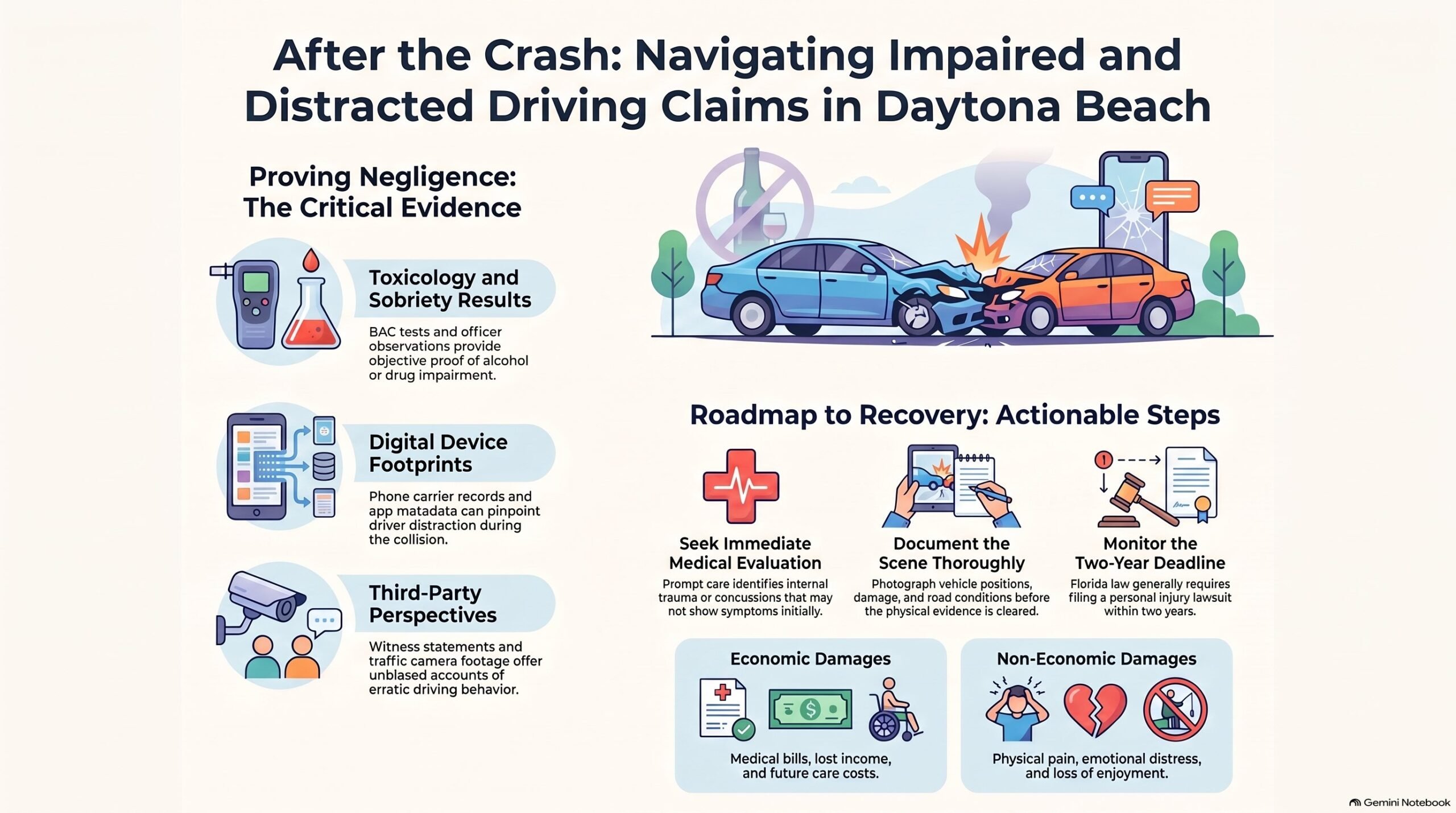
Prompt medical evaluation is important after a Daytona Beach car accident involving suspected impaired or distracted driving, even if the injured person feels well. Some injuries, including concussions and internal trauma, may not produce obvious symptoms immediately. A prompt assessment can identify urgent conditions and help establish an appropriate treatment plan. The injured person should call emergency services for severe symptoms or go to an emergency department; otherwise, a qualified healthcare provider can advise on the need for timely evaluation. They should describe the collision and all symptoms accurately, including pain, dizziness, confusion, or changes that develop later. Follow-up appointments allow providers to monitor recovery and adjust care as needed. Medication management should follow professional instructions, with questions about side effects or interactions directed to a clinician or pharmacist. Consistent care supports recovery and helps reduce complications.
Document The Scene
When it is safe to do so, documenting the crash scene can preserve details that may help clarify how an impaired or distracted driver caused a collision in Daytona Beach. The injured person or a trusted companion can photograph the surroundings, including vehicle positions, damage, skid marks, traffic signals, road conditions, and nearby businesses. Images should be taken from several angles without entering traffic or interfering with emergency responders. Names and contact details for witnesses can help preserve independent accounts of what occurred. Notes should record the time, location, weather, and any statements or observations about possible impairment or phone use, without confronting another driver. If clothing is torn or stained, preserve clothing in a clean bag after medical needs are addressed. Keep original files and avoid altering photographs or recordings.
Contact A Lawyer
Because evidence can be lost and insurance companies may seek statements soon after a crash, an injured person may benefit from promptly contacting a Daytona Beach car accident lawyer. A lawyer can help preserve available records, identify witnesses, and explain how impaired or distracted driving may affect a claim. Before providing recorded statements or accepting a settlement, the injured person can seek legal guidance and understand the potential consequences.
Many firms offer a Free consultation to review the circumstances, discuss possible next steps, and answer questions about fees. The injured person may also ask about attorney availability, including who will handle the matter and how quickly the firm can respond. Prompt communication can support a well-documented claim while allowing the injured person to focus on medical care and recovery. Legal support may also help protect the person’s ability to pursue fair compensation.
Don’t Wait. Call Our Florida Personal Injury Lawyers Now!
Critical Evidence in a Daytona Beach Car Accident Impaired & Distracted Driving Injury Case
Evidence can help establish whether impairment or distraction contributed to a Daytona Beach crash and support an injury claim.
Essential sources may include:
- Police and crash reports
- Phone and device records
- Toxicology and sobriety evidence
- Witness accounts and video footage
Together, these records can clarify how the collision occurred and who may be responsible.
Police and Crash Reports
Police and crash reports can provide an important early record of a Daytona Beach collision involving suspected impaired or distracted driving. Officers may document the scene, vehicle positions, visible injuries, witness statements, and observations that led to an impairment investigation. These details can help injured people and their representatives understand what was recorded and identify issues requiring further review. A report is not a final determination of fault, and errors or omissions may need to be addressed with supporting evidence. Report access and filing procedures vary by agency; requests may require case details, identification, or payment of a fee. Timely review can help preserve useful information and support accurate insurance or legal claims. When a report is unavailable or incomplete, other records and witness accounts may help clarify the collision and serve those affected.
Phone and Device Records
While police and crash reports record what officers observed, phone and device records may help show whether a driver was using a device before a Daytona Beach collision. Carrier records can identify call or text activity and its timing, while app metadata may indicate when certain applications were active. These materials can help investigators assess whether device use may have distracted a driver and contributed to injuries. Their meaning depends on context; a timestamp alone does not establish that a person was viewing or interacting with a screen at impact. Preservation is important because records may be deleted or become unavailable under retention policies. Access generally requires appropriate legal process, and privacy rules may limit what can be obtained. Careful review can support an accurate account and help protect the interests of those harmed.
Toxicology and Sobriety Evidence
After a Daytona Beach crash, toxicology results and sobriety observations may help determine whether alcohol or drugs affected a driver’s ability to operate a vehicle. Blood alcohol concentration testing can indicate the amount of alcohol in a driver’s system, while drug testing may identify substances that could impair judgment or coordination. The timing and method of testing matter because results may not reflect a driver’s condition at the exact moment of a collision. Officers may also document field sobriety tests, including instructions given, observed performance, and any conditions that could affect the results. Medical issues, injuries, fatigue, or prescribed medication may provide relevant context. A careful review of these records can help clarify what the evidence supports and identify concerns about its reliability. Accurate evaluation can support fair accountability and informed decisions for those harmed.
Witness and Video Evidence
Witness statements and video recordings can help establish what happened before, during, and after a Daytona Beach collision involving suspected impairment or distraction. Independent accounts may describe erratic driving, phone use, delayed reactions, or statements made at the scene. Eyewitness credibility depends on factors such as the person’s vantage point, ability to observe, consistency, and independence from the parties. Investigators may also review footage from nearby businesses, traffic cameras, vehicle systems, or personal devices to clarify timing and movements.
Video preservation is important because recordings may be overwritten or deleted quickly. A prompt request can help secure relevant footage before it becomes unavailable. When considered alongside toxicology results, crash reports, and physical evidence, reliable witness accounts and recordings can help explain how the collision occurred and identify responsible conduct. Careful documentation also supports a fair evaluation of injuries and the needs of those affected.
Long-Term Effects of Daytona Beach Car Accident Impaired & Distracted Driving Injuries
Impaired and distracted driving injuries may cause chronic pain or disability that limits a person’s ability to work and manage daily activities. Some survivors also experience lasting cognitive changes, including difficulties with memory, attention, or decision-making. These effects can create significant emotional and financial strain for individuals and their families.
Chronic Pain and Disability
Chronic pain and disability can develop when injuries from an impaired or distracted driving crash cause lasting damage to the spine, joints, nerves, or other tissues. Symptoms may persist after initial treatment and limit a person’s ability to work, travel, or manage routine tasks. The effects vary, ranging from reduced mobility and recurring pain to dependence on assistive devices. A coordinated care plan may include physical rehabilitation, medication, and other Pain management options tailored to the injury and the individual’s needs. Some people also require disability accommodations at work or in public settings to maintain access and independence. Medical records documenting symptoms, treatment, and functional limits can help explain the lasting impact of a crash. Consistent support can help injured people preserve dignity and participate in daily life.
Lasting Cognitive Changes
A crash caused by impaired or distracted driving can lead to lasting cognitive changes, particularly when the brain sustains a concussion or other traumatic injury. These changes may affect attention, memory, processing speed, judgment, and the ability to organize everyday tasks. A person may struggle to follow conversations, retain instructions, or return to responsibilities that once felt routine. Because symptoms can emerge gradually or persist after other injuries improve, timely medical assessment is important. Neuropsychological testing can help identify specific difficulties and guide appropriate treatment. Providers may recommend cognitive rehabilitation to strengthen practical skills and develop strategies for managing ongoing limitations. Family members, caregivers, and employers can support recovery by recognizing changes, communicating clearly, and allowing reasonable time for tasks. Consistent follow-up helps track progress and adjust care as needs evolve.
Emotional and Financial Strain
When injuries from an impaired or distracted driving crash persist, their effects can extend beyond physical symptoms and create lasting emotional and financial strain. Ongoing pain, reduced independence, or cognitive difficulties may contribute to anxiety, depression, and uncertainty about recovery. These challenges can affect a person’s ability to work, manage daily responsibilities, and participate in community life.
Medical appointments, rehabilitation, medication, and lost income may disrupt the household budget, particularly when expenses continue after insurance payments or employment benefits are limited. Family members may assume caregiving duties, adjust work schedules, or take on additional costs. Such changes can lead to relationship stress, especially when communication and support are strained by fatigue or financial pressure. Documenting treatment needs, expenses, and changes in daily functioning can help clarify the injury’s continuing impact and support informed decisions about care and compensation.
Proving Liability in Daytona Beach Car Accident Impaired & Distracted Driving Injury Cases
How can liability be established in a Daytona Beach car accident involving impaired or distracted driving? Establishing responsibility requires evidence showing that a driver acted negligently and that the conduct caused another person’s injuries. Relevant evidence may include police reports, photographs, traffic camera footage, vehicle data, and statements from people who witnessed the collision. Records of alcohol or drug testing may help demonstrate impairment, while phone records or in-car data may indicate distraction. Each item must be evaluated in context and connected to the events leading to the crash.
Accident reconstruction can help explain vehicle movements, impact points, and timing when the sequence is disputed. Jury testimony from witnesses and qualified experts may clarify how the collision occurred and whether the driver’s conduct contributed to the harm. Medical records and other documentation can establish the nature and extent of resulting injuries. A careful investigation preserves useful evidence and supports an accurate account of responsibility, helping injured people pursue accountability without overstating what the available facts prove.
Dealing With Insurance Companies After a Daytona Beach Car Accident Impaired & Distracted Driving Injury
After evidence of impaired or distracted driving has been gathered, insurance communications can shape how a Daytona Beach car accident claim is evaluated. An injured person may be contacted by the at-fault driver’s insurer, which may request a recorded statement, medical authorization, or details about the collision. Careful responses help preserve accuracy and prevent speculation from being treated as fact. An Insurer communication strategy can include maintaining call records, routing questions through counsel, and sharing relevant documentation in an organized manner. Medical treatment, missed work, and other losses should be documented consistently, while personal information unrelated to the crash should not be volunteered.
A settlement offer evaluation should consider whether the proposed amount reflects documented medical expenses, anticipated care, lost income, and the injury’s effects on daily responsibilities. A quick payment may not account for continuing treatment or lasting limitations. Clear, measured communication can support a fair review while preserving resources for the injured person’s recovery and family needs.
What to Expect During a Daytona Beach Car Accident Impaired & Distracted Driving Injury Claim Process
A Daytona Beach impaired or distracted driving injury claim typically begins with an initial case review to assess the circumstances and potential losses. Evidence is then collected to support the claim, followed by negotiations with the responsible party’s insurer. The process concludes with a resolution, which may provide compensation for documented injuries and related damages.
Initial Case Review
During an initial case review, a Daytona Beach car accident lawyer examines the available evidence to assess whether impaired or distracted driving contributed to the crash and resulting injuries. At an intake appointment, the injured person or a representative typically describes the collision, reported symptoms, medical treatment, and interactions with insurers. The lawyer may ask focused questions to clarify the timeline, identify potential responsible parties, and understand how the injuries affect daily responsibilities. This discussion helps evaluate case eligibility, including whether the claim may be pursued under Florida law and whether deadlines or other legal requirements apply. The lawyer can also explain possible next steps, the general claims process, and the information needed to provide informed guidance. The review is preliminary; it does not guarantee a particular outcome or establish liability.
Evidence Collection
When a Daytona Beach car accident claim involves suspected impaired or distracted driving, evidence collection helps establish how the collision occurred and what losses followed. Investigators may obtain crash reports, photographs, surveillance footage, witness statements, and vehicle damage records. In suspected impairment cases, available toxicology results, officer observations, and testing records may help clarify the driver’s condition. For distraction allegations, phone records or vehicle data may show activity near the time of impact, subject to applicable privacy rules and legal procedures.
Evidence preservation should begin promptly because footage can be erased and physical conditions may change. Counsel may send preservation requests and arrange inspections before vehicles are repaired or discarded. Maintaining a documented chain of custody for physical items and digital files helps show that evidence remained identifiable and unaltered. Medical records and expense documentation also connect injuries to the collision and support an accurate claim record.
Claim Negotiations
Once the evidence has been gathered and reviewed, the claim typically moves into negotiations with the at-fault driver’s insurer. The insurer may assess the reported impairment or distraction, the circumstances of the collision, and the documented injuries before responding to a demand. A claimant’s representative can present supporting records, explain how the crash affected daily responsibilities, and address questions about fault or damages. Negotiation strategy should reflect the available evidence, applicable Florida law, and the claimant’s medical progress. Insurers may request additional documentation or propose terms that require careful review. Responses should remain measured and supported, particularly when an offer does not account for known losses or unresolved concerns. Settlement timing can vary based on investigation, treatment, and communication between the parties. Negotiations may involve several exchanges, and no proposal requires acceptance without informed consideration.
Resolution And Compensation
After negotiations conclude, a Daytona Beach impaired or distracted driving injury claim may resolve through a settlement or, if the parties cannot agree, a court judgment. A settlement generally requires signed release documents before payment is issued. The injured person should review the terms carefully because a release may end the right to seek additional compensation for the crash. Settlement timelines depend on document processing, insurer procedures, and the time needed to address outstanding medical bills. Lien resolution may involve identifying and paying valid claims from health insurers, medical providers, or government programs. In a court case, a judgment may require further steps to collect payment, and an appeal can delay final resolution. Careful review of the proposed distribution helps make certain the funds are handled responsibly, and obligations are addressed.
Compensation for Daytona Beach Car Accident Impaired & Distracted Driving Injury Damages
Compensation after a Daytona Beach car accident caused by impaired or distracted driving may cover medical expenses, lost income, reduced future earning capacity, property damage, and pain and suffering. These damages reflect the effects of the collision on an injured person’s health, work, and daily responsibilities. Medical costs may include emergency treatment, rehabilitation, medication, and anticipated Future care when injuries require ongoing support. If recovery limits routine tasks, household assistance may also be relevant to documenting practical needs.
The available compensation depends on the evidence connecting the driver’s conduct to the injuries and resulting losses. Medical records, employment information, repair estimates, and statements from treating professionals can help establish the scope and duration of harm. A careful assessment should account for both immediate consequences and limitations that may continue over time. In serving injured people and their families, legal guidance can help preserve records, identify relevant losses, and present a clear account of how the crash has affected their lives. Each claim remains dependent on its specific facts.
Economic vs Non-Economic Damages in Daytona Beach Car Accident Impaired & Distracted Driving Cases
In impaired and distracted driving cases, economic damages may include medical expenses, lost income, and costs of future care. Non-economic damages address losses such as pain, emotional distress, and reduced quality of life. Establishing both categories typically requires clear documentation and evidence linking the losses to the crash.
Economic Damage Types
When an impaired or distracted driver causes a crash in Daytona Beach, the resulting claim may include both economic and non-economic damages. Economic damages address measurable financial losses supported by records, bills, or other evidence. Medical expenses may include emergency care, hospital treatment, medication, rehabilitation, and anticipated future care related to the collision. Property damage can cover vehicle repairs or replacement, as well as damage to personal items. Lost income may reflect wages missed during recovery, while diminished earning capacity may apply when lasting injuries limit a person’s ability to work or reduce future earnings. Other documented costs, such as transportation to medical appointments or necessary assistance at home, may also be considered. Organized records help establish these losses and support a claim that accurately reflects the financial consequences of the crash for the injured person and household.
Non-Economic Losses
Beyond measurable financial costs, a Daytona Beach car accident claim may also include non-economic losses resulting from an impaired or distracted driver. These losses relate to the personal effects of an injury rather than to bills or lost income. They may include physical pain, emotional distress, anxiety, and reduced ability to participate in daily activities. A person may experience loss of enjoyment when injuries prevent involvement in hobbies, community service, family events, or other meaningful pursuits. Relationship strain can also arise when pain, limited mobility, or emotional changes affect communication and shared responsibilities. Unlike economic damages, these harms do not have a direct price tag, yet they can substantially affect a person’s quality of life. Florida law may allow recovery for qualifying non-economic losses, depending on the circumstances and applicable legal standards.
Proving Your Damages
Establishing the value of a Daytona Beach car accident claim requires evidence connecting the impaired or distracted driver’s conduct to the injured person’s losses. Medical records, diagnostic results, and treatment notes can show the nature and extent of physical injuries. Pay stubs, tax records, and employer statements may document missed work and reduced earning capacity. These economic losses should be supported by organized Damage Documentation, including receipts, repair estimates, and insurance statements. Future Care Costs may require treatment plans or opinions from qualified medical professionals, particularly when injuries are expected to require ongoing care. Non-economic damages, such as pain, emotional distress, and loss of normal activities, are less readily measured. Consistent medical records and personal accounts can help explain their effects. Thorough evidence allows a claim to reflect both financial harm and human consequences.
Don’t Wait. Call Our Florida Personal Injury Lawyers Now!
When a Daytona Beach Car Accident Impaired & Distracted Driving Injury Case Goes to Trial vs. Settlement
The decision to resolve an impaired or distracted driving injury claim through settlement or trial depends on the strength of the evidence, the extent of the injuries, and whether the parties can agree on fair compensation. A settlement may provide a more predictable resolution and avoid the time and uncertainty of a trial. It can also allow injured people to focus on treatment and recovery while obtaining compensation without waiting for a court decision.
When negotiations do not produce a fair offer, trial may be necessary. A judge or jury can evaluate testimony, records, and other evidence before deciding responsibility and damages. Trial readiness supports informed negotiations because each side can assess the case’s strengths and risks. A sound settlement strategy should account for documented losses, future care needs, and the possibility that a verdict may differ from expectations.
The injured person’s priorities, medical outlook, and willingness to accept uncertainty can help guide the choice. Careful preparation supports either path and helps make certain the claim is presented clearly and responsibly.
Florida Laws That May Affect Your Daytona Beach Car Accident Impaired & Distracted Driving Case
When an impaired or distracted driving crash occurs in Daytona Beach, Florida law may shape how fault is determined, and compensation is pursued. Several rules can affect an injured person’s claim and the responsibilities of others involved.
- Comparative negligence: Florida’s modified comparative negligence system may reduce a plaintiff’s recovery when the injured party shares responsibility. A person found more than 50 percent at fault generally cannot recover damages.
- Impaired driving: Evidence of intoxication, such as test results or witness accounts, may support findings of negligence and influence the assessment of damages.
- Distracted driving: Phone records, vehicle data, and witness statements may help establish whether a driver’s inattention contributed to the collision.
- Dram shop liability: Florida law allows limited claims against certain alcohol vendors when statutory conditions are met, including knowingly serving a person habitually addicted to alcohol or a minor.
These rules can help clarify accountability and support fair, informed decisions that protect injured people and their families.
The Statute of Limitations for Daytona Beach Car Accident Impaired & Distracted Driving Injury Cases
Beyond the rules governing fault and liability, Florida’s filing deadlines can determine whether an injured person may pursue compensation after an impaired or distracted driving crash in Daytona Beach. Under current Florida law, most negligence-based personal injury actions must be filed within two years of the crash. Missing that deadline can bar recovery, regardless of the seriousness of the injuries or the strength of the evidence. A separate deadline may apply when a claim is brought against a government entity, and required notice procedures can shorten the time available.
Deadline exceptions may affect when the filing period begins or whether it applies. For example, a minor’s circumstances or a defendant’s concealment or absence may raise questions about claim tolling, but exceptions depend on specific facts and statutory requirements. Insurance negotiations generally do not pause the court filing deadline. Prompt attention to dates helps preserve a potential claim and supports a fair process for injured people and their families. Because deadlines can vary, the applicable period should be confirmed promptly.
How a Daytona Beach Car Accident Impaired & Distracted Driving Lawyer Can Help You
After a crash involving impaired or distracted driving, a Daytona Beach car accident lawyer can help an injured person assess potential claims and take steps to protect their rights. The lawyer can explain how evidence of impairment or inattention may affect liability, while keeping the client’s needs central. Attorney Advocacy may include coordinating with investigators, reviewing crash reports, and communicating with insurers so the injured person can focus on treatment and family responsibilities.
A lawyer can help assess liability, coordinate with investigators, and handle communications with insurers after an impaired or distracted driving crash.
A lawyer may also help by:
- Preserving available evidence, including photographs, witness accounts, and relevant records.
- Identifying responsible parties and evaluating applicable insurance coverage.
- Organizing medical documentation and calculating losses tied to care, income, and daily limitations.
- Preparing a clear, evidence-supported claim and presenting it during settlement discussions or litigation.
Recovery Planning can help connect legal decisions with practical needs, such as ongoing treatment and household support. Counsel can explain options and risks in understandable terms, allowing the injured person to make informed choices while pursuing fair compensation and maintaining stability.
When to Contact a Daytona Beach Car Accident Impaired & Distracted Driving Lawyer
Prompt legal guidance can help an injured person protect evidence and understand available options after a suspected impaired or distracted driving crash. Prompt consultation is especially important when injuries require ongoing care, the other driver’s conduct is disputed, or an insurer requests a recorded statement or settlement decision. A lawyer can review the circumstances and explain what information may be relevant, while the injured person remains focused on medical treatment and recovery.
Contact may also be appropriate when witnesses are difficult to reach, vehicle damage needs to be documented, or phone use or impairment is suspected but not confirmed. Early communication can help preserve available records and clarify practical next steps without assuming that misconduct has been established.
Deadline awareness matters because Florida law sets time limits for filing many injury claims, and exceptions may apply. Waiting can complicate evidence collection and reduce the time available to assess options. A person seeking to support family members or others affected by the crash can request an initial discussion promptly, even if the full extent of losses remains uncertain.
Why You Need an Experienced Daytona Beach Car Accident Impaired & Distracted Driving Lawyer
When a crash involves suspected impairment or distraction, an experienced Daytona Beach car accident lawyer can help assess the evidence and explain the injured person’s legal options. This support can help an injured person pursue accountability while protecting access to compensation needed for treatment, lost income, and other harms.
Impaired or distracted driving cases may require careful review of police reports, witness statements, phone records, and available video. A lawyer can organize relevant evidence, identify responsible parties, and address disputes about how the collision occurred. These steps matter when an insurer questions the claim or delays a fair evaluation.
Florida’s Comparative negligence rules may reduce compensation if an injured person is found partly responsible, making accurate evidence and clear legal analysis important. Depending on the facts, punitive damages may also be available when conduct shows a high degree of wrongdoing. An experienced lawyer can explain whether that remedy may apply and pursue a claim with care, helping the injured person seek a fair resolution and focus on recovery.
How to Choose the Right Daytona Beach Car Accident Impaired & Distracted Driving Lawyer for Your Case
Choosing a Daytona Beach car accident lawyer for an impaired or distracted driving case requires more than comparing advertisements or promises of results. A careful selection process can help an injured person pursue accountability while protecting the interests of family members and others affected by the crash.
Attorney Credentials should be reviewed for relevant experience with impaired and distracted driving claims, knowledge of Florida injury law, and a record of handling cases involving disputed fault or serious injuries. The lawyer should explain how evidence such as police reports, witness statements, phone records, and medical documentation may support the claim. Clear answers about investigation, deadlines, fees, and possible case outcomes allow clients to make informed decisions without relying on guarantees.
Client Communication is equally important. A suitable attorney should provide timely updates, explain legal developments in understandable terms, and respond respectfully to questions. During an initial consultation, the prospective client can assess whether the lawyer listens carefully, identifies practical next steps, and treats the case with appropriate diligence.
About The Law Offices of Anidjar & Levine
The Law Offices of Anidjar & Levine represents people injured in car accidents, including crashes involving impaired or distracted driving, in Daytona Beach and throughout Florida.
The firm assists clients seeking accountability and compensation after preventable collisions, while recognizing that each person’s circumstances and needs differ.
Its attorneys can explain available legal options, handle communications with insurers, and pursue claims based on the evidence and applicable law.
The firm’s history reflects a practice focused on representing injured people and helping them navigate the legal process.
The firm’s work includes investigating the circumstances of accidents, identifying potentially responsible parties, and presenting claims for losses such as medical expenses, lost income, and pain and suffering.
Clients may receive guidance about case progress and decisions that affect their claims.
Community involvement is another part of the firm’s public presence.
Through service and outreach, the firm seeks to support individuals and families across Florida.
Its role is to provide informed legal representation while treating clients with respect and attention.
Frequently Asked Questions
Can I Recover Damages if I Was Partially at Fault for the Crash?
Yes, an injured person may recover damages even when partially at fault, although compensation can be reduced. Under Florida comparative negligence, a court generally assigns each party a percentage of responsibility and adjusts damages accordingly. However, if the injured person is found to be more than 50 percent at fault, recovery in most negligence claims is barred. Because shared fault depends on evidence and applicable law, a careful review of the crash circumstances can clarify potential options.
Can I File a Claim if the Impaired Driver Was Uninsured?
Yes, an injured person may be able to file a claim even if the impaired driver has no insurance. Uninsured motorist coverage may compensate for qualifying losses, subject to policy terms and coverage limits. Personal injury protection may also pay certain medical expenses and lost wages, regardless of fault. A claimant should promptly notify the insurer, preserve evidence, and review available coverage with a qualified attorney before accepting any settlement.
Will the At-Fault Driver’s Criminal Case Affect My Injury Claim?
The at-fault driver’s criminal case may affect an injury claim, but it does not determine the outcome. Criminal conviction evidence may support the injured person’s account, though the civil court applies a different burden of proof and evaluates liability and damages independently. Civil claim independence means the injury claim can proceed even if criminal charges are reduced, dismissed, or unresolved. Medical records, witness statements, and insurance evidence remain important to establishing responsibility and losses.
Can Passengers Pursue Claims After an Impaired or Distracted Driving Crash?
Yes, passengers may pursue claims after an impaired or distracted driving crash if another party’s negligence caused their injuries. Passenger injury claims can seek compensation for medical expenses, lost income, pain and suffering, and other documented losses. Negligent driver liability may apply to the driver who caused the collision, even if that driver transported the passenger. Available claims depend on the evidence, insurance coverage, and applicable law; prompt medical care and preserving records can support review.
Do I Have to Attend Medical Examinations Requested by the Insurance Company?
Attendance depends on the applicable insurance policy, claim type, and court orders; it is not automatically required in every case. An insurer-requested evaluation, often called an Independent medical exam, may be required under certain policy terms or during litigation. Refusing without first obtaining legal advice could affect benefits or the claim. The injured person should review the request, confirm its purpose and conditions, and consult counsel before agreeing or declining.
—————————
Impaired and distracted driving crashes can leave victims facing serious injuries, financial strain, and difficult questions about their legal options.
The Law Offices of Anidjar and Levine can investigate the collision, preserve evidence, identify responsible parties, and pursue compensation for documented losses.
A Daytona Beach Personal Injury Lawyer can review the circumstances of an injury claim and explain available next steps.
Prompt legal guidance may help preserve important evidence and ensure deadlines are not missed.