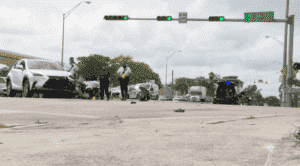
The Law Offices of Anidjar and Levine help victims injured in Florida car accidents involving fractures or broken bones establish that another party’s negligence caused the collision and resulting harm. Counsel can preserve crash evidence, obtain medical records and imaging, document lost income, evaluate insurance coverage, and negotiate disputed claims. Recoverable damages may include emergency treatment, surgery, rehabilitation, medication, pain and suffering, reduced earning capacity, and future care. Prompt legal review may also help protect filing rights and address comparative fault. Learn more from a Florida Personal Injury Lawyer about the claims process and available legal options.
Main Takeaways
- A Florida car accident lawyer can investigate negligence and connect the collision to fractures, broken bones, and required treatment.
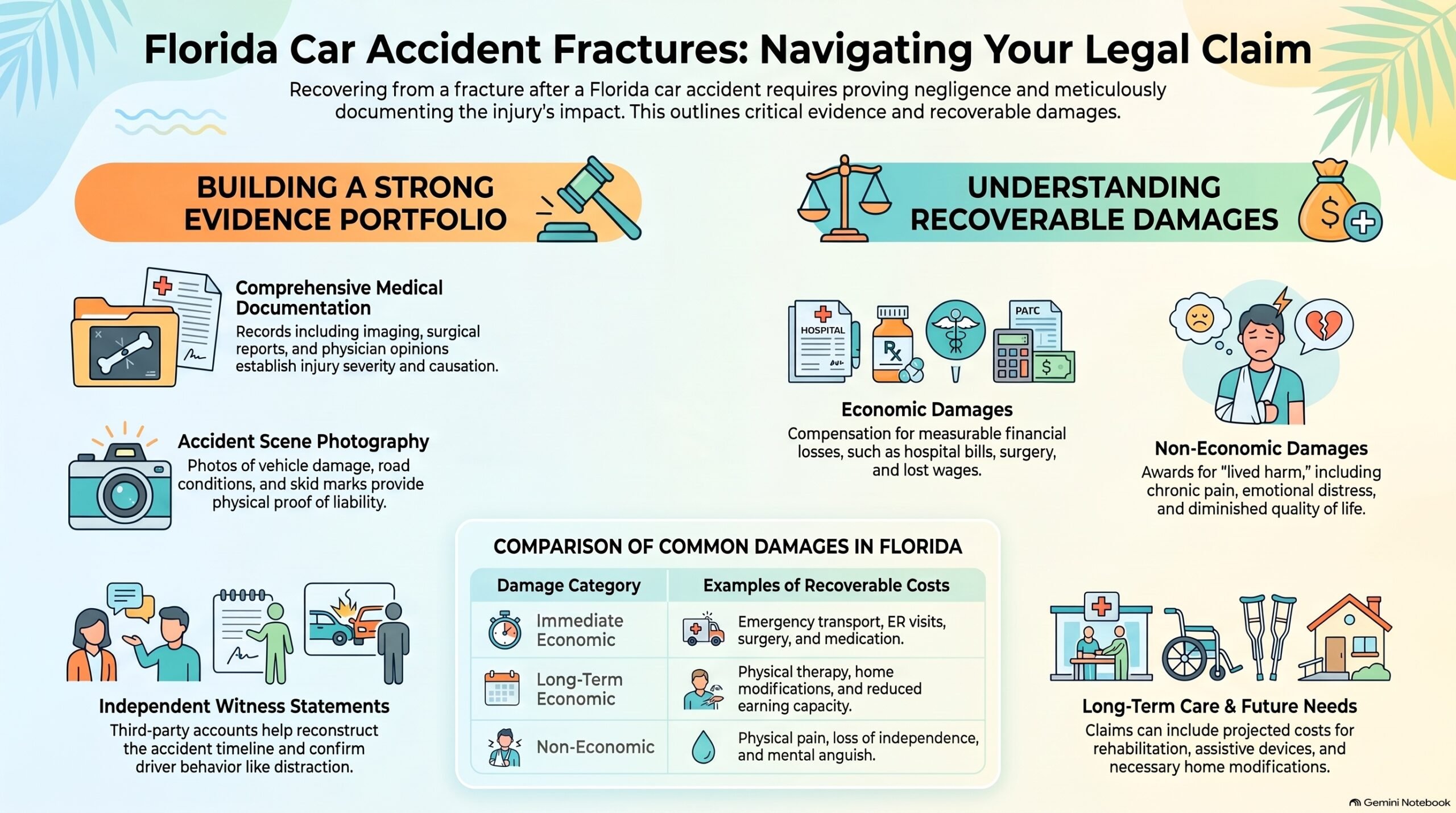
- Medical records, imaging, physician opinions, photographs, and witness statements help establish injury severity and causation.
- Recoverable damages may include emergency care, surgery, rehabilitation, medication, lost wages, reduced earning capacity, and pain and suffering.
- Preserve insurance documents, police reports, medical bills, photographs, vehicle evidence, and witness information promptly after the crash.
- An attorney can challenge denied or undervalued claims, identify available coverage, and protect potential recovery before deadlines expire.


How We Can Help With Your Florida Car Accident Fractures & Broken Bones Injury Claim
When a Florida car accident causes fractures or broken bones, an injured person may face extensive medical treatment, lost income, and lasting limitations. A qualified legal team can provide steady guidance while protecting the individual’s right to pursue appropriate compensation.
The process may include reviewing collision evidence, identifying responsible parties, gathering medical records, and documenting wage losses or reduced earning capacity. Attorneys can coordinate with healthcare providers and other professionals to clarify the injury’s effect on daily activities and future needs. They may also handle communications with insurers, helping prevent statements or paperwork from undermining the claim.
Effective representation includes evaluating insurance settlement tactics and comparing proposed payments with documented damages. Counsel can explain negotiation strategies, litigation risks, and available legal remedies in understandable terms. When appropriate, the team may help organize information about pain management options and related expenses without directing medical care. This service allows injured people and their families to focus on restoration while informed advocates pursue a fair resolution.
OUR CONSULTATIONSARE FREE
START YOUR FREE CASE REVIEW

Understanding Florida Car Accident Fractures & Broken Bones Injury Cases
A Florida car accident fracture or broken bone injury case generally depends on proving that another party’s negligence caused the collision and resulting harm. The injured person must establish liability, document the fracture, and connect required treatment to the crash. Medical records, diagnostic imaging, physician opinions, and testimony concerning limitations can help demonstrate the injury’s nature and consequences.
Damages may include emergency care, surgery, rehabilitation, medication, lost income, reduced earning capacity, and non-economic harm. A case may also involve related conditions, such as Dealing With Whiplash, when neck pain or soft-tissue symptoms accompany a broken bone. Pelvic Injury Claims may require particularly careful evaluation because these injuries can affect mobility, internal organs, employment, and long-term independence.
Each claim depends on its evidence, prognosis, insurance coverage, and applicable legal deadlines. Prompt medical attention and organized documentation can preserve important information. A qualified legal professional may help injured individuals and families understand the available remedies as they pursue accountability and fair compensation.
Common Causes of Florida Car Accident Fractures & Broken Bones
Florida car accident fractures and broken bones commonly result from high-speed collisions, distracted driving crashes, and impaired driving incidents. Rollover vehicle wrecks can also produce severe forces, particularly when occupants are thrown against the interior or roadway. Identifying the crash’s cause may help establish liability and clarify the circumstances surrounding the victim’s injuries.
High-Speed Collisions
High-speed collisions generate extreme forces that can cause fractures and broken bones throughout the body, even when occupants are protected by seat belts and airbags. The sudden impact may fracture the skull, ribs, spine, pelvis, arms, or legs, while crushing forces can produce intricate injuries requiring surgery. Safety tech, including airbags, reinforced vehicle structures, and automatic braking, may reduce injury severity, but it cannot eliminate the risks created by excessive speed. Prompt medical evaluation helps identify hidden fractures and supports injury prevention through appropriate treatment. Victims may require trauma rehab to restore mobility, strength, and independence after hospitalization. Effective recovery planning can coordinate experts, therapy, transportation, and home assistance while documenting the continuing effects of the collision. Supportive legal guidance may help injured individuals pursue resources needed for long-term care.
Distracted Driving Crashes
When drivers divert their attention to phones, navigation systems, passengers, or other distractions, they may fail to recognize hazards and react in time to avoid a collision. Smartphone distractions can include texting, reading messages, adjusting applications, or placing calls while a vehicle is moving. Even brief inattention may cause a driver to cross lanes, miss a traffic signal, or strike another vehicle without effective braking. Fatigue driving can create similar dangers because exhaustion slows perception, weakens judgment, and increases the likelihood of momentary lapses. These crashes may produce substantial forces, leading to fractures in the arms, legs, ribs, pelvis, or spine. Medical evaluation can identify injuries that are not immediately apparent. An injured person may also need assistance preserving records, determining responsibility, and pursuing appropriate compensation for treatment and related losses.
Drunk Driving Accidents
Although alcohol-impaired drivers may believe they can operate a vehicle safely, intoxication reduces judgment, coordination, reaction time, and the ability to recognize hazards. A drunk driver may speed, ignore traffic signals, drift across lanes, or fail to respond to changing traffic conditions. These actions can produce violent collisions that cause fractures, broken bones, spinal injuries, and other substantial harm. Injured individuals may require emergency treatment, surgery, rehabilitation, and extended time away from work. A careful investigation can help establish impairment, identify responsible parties, and preserve evidence from police reports, medical records, and witnesses. Insurance may not fully cover losses, making Underinsured coverage important when available. If a crash causes a fatality, surviving relatives may pursue wrongful death claims to seek accountability and financial support. Timely legal guidance can protect victims’ rights.
Rollover Vehicle Wrecks
Rollover vehicle wrecks can occur when a car, SUV, or truck overturns after a sharp handling maneuver, collision, tire failure, excessive speed, or loss of control on an uneven roadway. These crashes may cause occupants to strike the roof, windows, or interior structures, producing fractures in the skull, spine, ribs, arms, and legs. Seatbelt effectiveness can greatly reduce ejection risks, although improperly worn or defective restraints may fail to prevent serious injuries. Higher centers of gravity, overloaded vehicles, and inadequate roadway maintenance can also increase the risk of rollover. In some cases, vehicle design defects, such as unstable suspension systems or weak roof structures, may contribute to a crash or worsen its consequences. Investigators typically examine vehicle condition, impact evidence, roadway features, restraint use, and manufacturer safety records when evaluating responsibility and injury claims.
Don’t Wait. Call Our Florida Personal Injury Lawyers Now!


Legal Rights of Florida Car Accident Fractures & Broken Bones Injury Victims
Florida car accident victims who suffer fractures or broken bones may have legal rights to pursue compensation for medical expenses, lost income, rehabilitation, pain and suffering, and other accident-related damages. Florida law may permit an injured person to seek recovery from a negligent driver or another responsible party, subject to evidence, deadlines, and applicable insurance requirements.
Florida fracture victims may pursue compensation for medical costs, lost income, rehabilitation, pain, and other accident-related damages, subject to Florida law.
Key considerations include:
- Documenting diagnoses, treatment, work limitations, expenses, and continuing effects strengthens a potential claim.
- Prompt legal review can protect filing rights and clarify available sources of compensation.
- Pain management options, follow-up care, and rehabilitation should be recorded because they may establish the injury’s duration and financial impact.
Victims may also request assistance with insurance dispute resolution when adjusters undervalue claims, delay payment, or question responsibility. A qualified attorney can investigate the collision, preserve records, communicate with insurers, and evaluate settlement proposals. Serving injured individuals requires accurate guidance, respect for personal circumstances, and focused advocacy aimed at securing fair treatment without overstating the law or expected outcome.
Why Do Florida Car Accident Fractures & Broken Bones Injuries Happen?
Fractures and broken bones in car accidents commonly result from the intense forces generated when vehicles collide, stop suddenly, or strike pedestrians and other objects. Biomechanical causes include direct impact, crushing forces, rapid changes in speed, and twisting movements that exceed the body’s ability to absorb stress. Occupants may suffer broken ribs, arms, legs, wrists, or hips when struck by airbags, dashboards, doors, hand-operated controls, or other passengers. Seat belts generally reduce movement and prevent ejection, yet they can also produce concentrated pressure during severe crashes. Unrestrained occupants face greater risks because they may come into contact with vehicle interiors or be thrown from the vehicle. Vehicle design, road conditions, poor visibility, mechanical failures, and driver behavior can further influence injury severity. Speeding, distracted driving, impairment, unsafe lane changes, and failure to follow motor vehicle laws often increase the forces involved in collisions. Pedestrians, bicyclists, motorcyclists, older adults, and children may experience especially serious fractures because they have less physical protection.
What Should You Do After a Florida Car Accident Fractures & Broken Bones Injury?
After a Florida car accident causes fractures or broken bones, the injured person should seek immediate medical care, even if symptoms initially appear manageable. Documenting the accident scene, injuries, treatment, and related expenses can help preserve important evidence. Contacting a Florida injury lawyer may clarify available legal options and protect the person’s interests during the claims process.
Seek Immediate Medical Care
Prompt medical evaluation is important when a car accident may have caused a fracture or broken bone, even if the injured person experiences limited pain or can still move the affected area. A qualified healthcare professional can identify hidden injuries through examination and imaging, then recommend appropriate stabilization or other treatment. Immediate care also supports effective pain management and may reduce complications that interfere with long-term recovery. The injured person should follow medical instructions, attend scheduled appointments, and report worsening pain, swelling, numbness, or changes in skin color without delay. Records of diagnoses, prescriptions, procedures, and rehabilitation plans can help organize ongoing care and clarify treatment expenses. Prompt attention allows family members and other supporters to coordinate transportation, assistance, and follow-up care while the patient focuses on recovery safely.
Document the Accident Scene
When wellness permits, documenting the accident scene can preserve information that may later help establish how the collision occurred and how the injuries developed. A person should move to a safe location only when possible, following emergency personnel’s instructions and prioritizing the use of safety gear, including reflective clothing or warning devices when available. Photographs may capture vehicle positions, visible damage, road conditions, traffic signals, debris, weather, and relevant signage. Witness names and contact information should be recorded, while statements remain factual and non-speculative. Medical symptoms, including pain, swelling, limited movement, or visible fractures, should be noted without disturbing injured areas. Helpful post-crash reporting tips include obtaining the responding officer’s report information and recording the time, location, and sequence of events. Secure copies of photographs, messages, and related records promptly for accuracy.
Contact a Florida Injury Lawyer
A Florida injury lawyer can help evaluate a fracture or broken-bone claim after a car accident and explain the legal options available. Early legal guidance may protect evidence, identify responsible parties, and prevent statements or agreements that could undermine a claim. The injured person should provide medical records, imaging results, photographs, insurance information, witness contacts, and documentation of missed work. Counsel can coordinate with healthcare providers to understand treatment needs, including surgery, physical therapy, rehabilitation planning, and pain management. A lawyer may also calculate current and future medical expenses, lost income, reduced earning capacity, and other legally recognized damages. Prompt consultation allows an attorney to investigate before evidence disappears and communicate with insurers on the injured person’s behalf. This support helps families focus on getting better while pursuing fair compensation.
Critical Evidence in a Florida Car Accident Fractures & Broken Bones Injury Case
Critical evidence may establish the severity of fractures, liability, and the full scope of recoverable losses.
- Medical records and accident-scene photographs; 2. Witness statements and insurance documentation; 3. Related treatment, billing, and claim records.
A Florida car accident lawyer may assess these materials to identify inconsistencies, preserve essential proof, and present a well-supported injury claim.
Medical Records
Medical records provide critical evidence in a Florida car accident case involving fractures or broken bones because they document the injury, its treatment, and its effect on the injured person’s health. Emergency department reports, imaging results, physician evaluations, prescriptions, and surgical records can establish the nature and severity of the damage. Consistent documentation supports proof of medical causation by linking the diagnosed fractures to the reported collision and identifying related symptoms or complications. Follow-up notes may indicate whether recovery progressed normally, required additional procedures, or resulted in lasting limitations. These records also assist treatment timeline planning by organizing appointments, rehabilitation, work restrictions, and anticipated future care. Accurate, complete records help attorneys, medical providers, and insurers evaluate damages responsibly while protecting the injured person’s opportunity to pursue appropriate compensation under Florida law.
Accident Scene Photos
Photographs taken at the accident scene can supplement medical records by showing how the collision occurred and why the resulting fractures or broken bones may be consistent with the reported impact. Images should capture vehicle damage, deployed airbags, broken glass, roadway conditions, traffic signals, skid marks, and visible debris. Photographs of seatbelts, child restraints, and interior damage may also help address seatbelt injury prevention and whether restraint systems functioned properly. Wide-angle views can establish positions and surrounding conditions, while close images preserve details that may disappear after vehicles are moved or repairs begin. Accurate timestamps and original files can strengthen reliability. Scene photographs may also help evaluate a Comparative fault defense by documenting visibility, lane positions, and traffic conditions without relying solely on recollection or speculation.
Witness Statements
When available, witness statements can provide independent evidence of how a collision in Florida occurred and whether another party’s conduct contributed to the resulting fractures or broken bones. Witnesses may describe vehicle positions, traffic signals, speed, roadway conditions, driver actions, and statements made immediately after impact. Their observations can assist with accident timeline reconstruction, particularly when injuries, vehicle damage, or stress prevent an injured person from recalling events clearly. Identifying witnesses promptly is important because memories can fade and contact information may change. Names, telephone numbers, written accounts, photographs, and recorded interviews should be preserved carefully. An evidence preservation checklist can help organize these materials and document when they were obtained. A legal representative may also evaluate inconsistencies, clarify firsthand knowledge, and determine whether testimony could support a fair injury claim.
Insurance Documentation
Insurance documentation can link the reported collision to available coverage and help establish how a fracture or broken bones claim should be assessed. The injured person should preserve the insurance policy, declarations page, claim number, adjuster correspondence, recorded statements, and payment records. These materials may identify applicable personal injury protection, bodily injury coverage, medical payment benefits, or exclusions that affect recovery.
Documentation should also be compared with the police report, medical records, photographs, and wage-loss evidence. Consistent dates, vehicle information, and descriptions can support the connection between the crash and diagnosed fractures. An insurer’s requests should be answered accurately, while important communications remain organized and dated. A Car Accident Basics review can clarify coverage responsibilities, and an Injury Reporting Checklist can help ensure prompt notice, thorough preservation of evidence, and proper documentation of treatment-related expenses.
Don’t Wait. Call Our Florida Personal Injury Lawyers Now!
Long-Term Effects of Florida Car Accident Fractures & Broken Bones Injuries
Fractures and broken bones from Florida car accidents may cause chronic pain and stiffness that persist long after the initial treatment. Lasting injuries can also reduce mobility and daily function, limiting work, self-care, and other routine activities. These physical challenges may cause emotional distress and financial strain due to ongoing medical expenses, lost income, and reduced earning capacity.
Chronic Pain and Stiffness
Although many broken bones recover with appropriate treatment, Florida car accident victims may continue to experience chronic pain and stiffness long after the initial injury has resolved. Persistent symptoms may result from nerve damage, scar tissue, inflammation, or changes in how the injured area mends. Pain can occur at rest, with movement, or during weather changes, while stiffness may make ordinary tasks uncomfortable. Medical providers may recommend medication, physical therapy, heat or cold therapy, and range-of-motion exercises to address these symptoms safely. Detailed medical records can help document ongoing discomfort, treatment requirements, and its effect on daily life. A qualified Florida car accident lawyer can help an injured person pursue compensation for continuing medical care, related expenses, and pain and suffering when another party’s negligence caused the fracture.
Reduced Mobility and Function
Reduced mobility and function may persist after a Florida car accident fracture, even when the bone has technically repaired. Joint stiffness, muscle weakness, nerve involvement, or improper healing can limit walking, lifting, reaching, gripping, or maintaining balance. These limitations may interfere with personal care, household responsibilities, employment duties, and participation in community activities. Continued physical or occupational therapy may help restore strength, coordination, and safe movement, although progress depends on the fracture’s location and severity. Medical providers may recommend Assistive Devices, including canes, walkers, braces, wheelchairs, or specialized tools, to promote independence and reduce fall risks. Home Modifications, such as grab bars, ramps, improved lighting, and rearranged living spaces, may also improve safety. Ongoing functional restrictions should be documented through examinations, treatment records, and rehabilitation assessments.
Emotional and Financial Strain
The emotional and financial strain of a Florida car accident fracture may continue long after initial medical treatment ends. Persistent pain, reduced independence, and uncertainty about recovery can contribute to anxiety, depression, or difficulty returning to normal responsibilities. Family members may also experience stress while providing transportation, household assistance, or caregiving.
Financial pressure may develop when missed work, diminished earning capacity, medical expenses, and transportation costs accumulate. Some injuries require long-term rehab, additional procedures, adaptive equipment, or continuing expert care. Insurance claims can become more difficult when insurers use hidden insurance tactics, question treatment, or minimize the injury’s lasting effects. Careful documentation of symptoms, expenses, medical recommendations, and work limitations may help clarify the claim. Legal guidance can assist injured individuals and their families in evaluating damages and pursuing appropriate compensation.
Proving Liability in Florida Car Accident Fractures & Broken Bones Injury Cases
When a Florida car accident causes fractures or broken bones, the injured party must establish that another driver’s negligence caused the collision and resulting harm. This generally requires evidence showing a duty of care, a breach of that duty, causation, and documented damages. Helpful materials may include crash reports, photographs of vehicle positions and injuries, witness statements, traffic-camera footage, and medical records connecting treatment to the collision.
Negligence evidence preservation should begin promptly because vehicles may be repaired, surveillance recordings overwritten, and witness recollections weakened. An attorney may obtain relevant records, identify witnesses, and consult accident reconstruction or medical professionals when disputed facts require expert analysis. Medical documentation should describe the fractures, procedures, recovery limitations, and anticipated needs.
Comparative fault arguments can affect financial recovery if the opposing party claims the injured person contributed to the crash or worsened the injuries. Careful evaluation of testimony and physical evidence helps distinguish unsupported allegations from facts. A methodical liability investigation supports fair treatment and accountability for those harmed.
Dealing With Insurance Companies After a Florida Car Accident Fractures & Broken Bones Injury
Insurance companies often begin evaluating a Florida car accident claim soon after receiving notice of fractures or broken bones. Adjusters may request recorded statements, medical authorizations, photographs, and information about prior injuries. An injured person can protect their interests by providing accurate facts while avoiding speculation, admissions, or statements minimizing pain and limitations.
Negotiation tactics may include presenting organized medical records, treatment recommendations, wage documentation, and evidence describing how the injury affects daily responsibilities. A lawyer can communicate with the insurer, identify incomplete evaluations, and assess whether an offered settlement reflects documented losses. Settlement discussions should account for ongoing care, physical therapy, possible complications, and permanent impairment when supported by medical evidence.
Insurance bad faith may arise if an insurer unreasonably delays investigation, misrepresents policy provisions, or refuses to consider relevant evidence. Careful documentation of communications and deadlines can help identify concerns. Individuals serving injured communities should encourage prompt medical attention and informed legal guidance before accepting payment or signing a release.
What to Expect During a Florida Car Accident Fractures & Broken Bones Injury Claim Process
A Florida car accident fracture and broken-bone injury claim typically begins with an evaluation of liability, damages, and available insurance coverage. The process then involves collecting medical evidence, documenting treatment and prognosis, and conducting negotiations with the insurer. If settlement efforts fail, the injured party may proceed to trial, where liability and compensation are determined through formal litigation.
Initial Claim Evaluation
During the initial claim evaluation, a Florida car accident lawyer examines the circumstances of the crash, the nature of the fractures or broken bones, and the available evidence supporting the injury claim. The evaluation generally addresses liability, insurance coverage, treatment status, and the impact of the injuries on daily activities, employment, and future needs. The lawyer may discuss Pain Management concerns to understand whether ongoing discomfort, mobility restrictions, or rehabilitation create additional burdens. The process also emphasizes Evidence Preservation, including the protection of accident-related records, photographs, communications, and other materials that may clarify responsibility. A lawyer may identify potential legal deadlines and explain how to communicate with insurers. Clients can expect a candid assessment of strengths, risks, and likely next steps, allowing informed decisions while protecting the injured person’s interests throughout the claim.
Medical Evidence Collection
Thorough medical evidence establishes the nature, severity, and likely duration of fractures or broken bones sustained in a Florida car accident. Claimants generally provide emergency department records, diagnostic images, surgical reports, prescriptions, and follow-up evaluations. Orthopedic doctors may document healing progress, permanent limitations, anticipated complications, and recommended treatment. Consistent symptom reports and treatment attendance help connect ongoing pain to the collision rather than unrelated conditions. Records should also identify pain management options, assistive devices, work restrictions, and physical therapy planning. Medical providers may explain how injuries affect daily activities, caregiving responsibilities, and future needs. A complete file enables counsel to assess damages responsibly and develop a settlement negotiation strategy based on documented harm. Privacy authorizations may be required, while organized records reduce delays and support accurate claim evaluation.
Insurance Negotiations
When insurance negotiations begin, the claimant’s medical records, liability evidence, and documented financial losses form the basis for evaluating compensation for fractures. An insurer may review treatment necessity, recovery duration, wage documentation, and available policy limits before presenting questions or a proposed valuation. The claim timeline should be organized carefully, including accident reports, diagnostic imaging, physician recommendations, and communications with adjusters. Evidence preservation remains important because missing records or inconsistent statements can weaken the evaluation. Comparative negligence may also affect responsibility if the insurer alleges that the injured person contributed to the collision. A well-supported settlement strategy addresses disputed facts, explains ongoing medical needs, and documents measurable losses without overstating the claim. Professional guidance can help protect the claimant’s interests while maintaining accurate, respectful communication throughout negotiations.
Settlement Or Trial
If the insurer and claimant cannot agree on the value of a fracture or broken-bone injury claim, the matter may proceed toward either settlement or trial. Settlement allows the parties to resolve compensation without a courtroom decision. Negotiations may continue through structured discussions or mediation. Understanding mediation vs. arbitration can help a claimant evaluate whether a neutral facilitator or a binding decision-maker better serves the dispute.
If litigation begins, each side presents evidence concerning fault, medical treatment, lost income, future care, and lasting limitations. The court may address motions, discovery, expert testimony, and a trial schedule before jurors hear the case. Counsel may develop a jury selection strategy designed to identify impartial jurors who can evaluate medical evidence fairly. Throughout the process, informed guidance supports a claimant’s interests and promotes accountability.
Compensation for Florida Car Accident Fractures & Broken Bones Injury Damages
Fractures and broken bones from a Florida car accident can result in substantial compensation when another party’s negligence caused the crash. An injured person may seek recovery for necessary medical care, surgical treatment, assistive devices, and follow-up services connected to the injury. Documentation from physicians, therapists, and other providers can help establish the severity of the fracture and the services required for recovery.
Future recovery planning may address continuing treatment, pain management options, and the anticipated rehabilitation timeline. Medical opinions can explain whether the injury is likely to cause lasting limitations, require additional procedures, or result in reduced physical capacity. When an accident affects the ability to work, records concerning missed employment and functional restrictions may support related claims. Some individuals may also need guidance regarding disability benefits eligibility, particularly when recovery is prolonged, or permanent impairment is possible. Attorneys can coordinate with medical professionals and families to pursue a resolution that reflects both present needs and reasonably foreseeable consequences while serving the injured person’s long-term interests.
Economic vs Non-Economic Damages in Florida Car Accident Fractures & Broken Bones Cases
Economic damages may include medical expenses, lost income, rehabilitation costs, and other documented financial losses resulting from fractures. Non-economic damages address less-measurable effects, such as pain, emotional distress, disability, and diminished quality of life, that require careful evaluation. Total compensation is calculated by considering both categories, the injury’s long-term impact, and the evidence supporting each claimed loss.
Economic Damages Explained
When a Florida car accident causes broken bones or other fractures, the injured person may seek economic damages for the measurable financial losses resulting from the injury. These damages may include emergency transportation, hospital treatment, surgery, medication, physical therapy, medical equipment, and follow-up appointments. Compensation can also address anticipated medical care when qualified providers document the need for continuing treatment. Lost wages may be recoverable when fractures prevent the injured person from working, while reduced earning capacity may apply if lasting limitations affect future employment. Receipts, invoices, pay records, medical opinions, and employment documentation help establish the amount claimed. Comparative negligence may reduce recovery if the injured person shares responsibility for the collision. Dashcam evidence can assist in determining fault and connecting documented expenses to the accident.
Non-Economic Damages Valued
Non-economic damages address the physical pain, emotional distress, inconvenience, and diminished quality of life that may follow broken bones sustained in a Florida car accident. Valuation considers the injury’s severity, duration, treatment demands, scarring, mobility limitations, sleep disruption, and interference with family, work, or community responsibilities. A claimant’s testimony, observations from relatives, and professional medical opinions may help demonstrate how the fracture affects daily living. Injury documentation tips include maintaining symptom notes, preserving photographs, attending recommended appointments, and recording activity restrictions without exaggeration. Comparative negligence considerations may affect recovery if the injured person is found to be partly responsible for the collision. Florida law may also impose limits or special rules in particular claims, making careful legal review important. These damages recognize lived harm rather than measurable bills and require evidence presented with consistency, credibility, and compassion.
Calculating Total Compensation
A Florida fracture claim typically combines documented economic losses with non-economic harm to estimate total compensation. Economic damages may include emergency treatment, surgery, hospital stays, rehabilitation, medication, transportation, and future medical care. Lost wages, reduced earning capacity, and necessary household assistance may also be calculated when supported by employment and medical records. Non-economic damages address pain, emotional distress, disfigurement, inconvenience, and diminished ability to participate in ordinary activities. Their value depends on injury severity, recovery duration, permanent limitations, and credible testimony. Strong evidence preservation helps protect photographs, medical records, treatment instructions, and communications that demonstrate the injury’s consequences. Insurance documentation, including policy limits, claim correspondence, and settlement offers, may clarify available coverage. A careful assessment considers comparative fault, causation, and future needs before determining a fair demand or litigation strategy.
When a Florida Car Accident Fractures & Broken Bones Injury Case Goes to Trial vs Settlement
Although many Florida car accident fracture and broken-bone claims resolve through settlement, some proceed to trial when the parties cannot agree on liability or the full value of the injury. Settlement can provide a predictable recovery, reduce litigation stress, and allow injured individuals to address medical expenses, rehabilitation, lost income, and continuing care sooner. However, accepting an offer requires careful evaluation of future limitations and whether the evidence supports fair compensation.
At trial, each side presents testimony, medical records, accident evidence, and arguments concerning responsibility and damages. Witness credibility challenges may affect how jurors assess conflicting accounts, while expert testimony can explain the fracture’s severity, treatment, prognosis, and impact on daily life. A thoughtful jury selection strategy may help identify impartial jurors capable of fairly considering intricate medical evidence. Trial also involves uncertainty, delay, and additional expense, with no guaranteed outcome. Legal counsel can compare these risks with the available settlement and guide decisions that protect the injured person’s long-term interests.
Don’t Wait. Call Our Florida Personal Injury Lawyers Now!
Florida Laws That May Affect Your Florida Car Accident Fractures & Broken Bones Case
Florida laws governing car accident injury claims can materially affect a fractured-or-broken-bone case, including the time available to file, the evidence required to establish fault, and the compensation potentially recoverable.
Several legal principles merit careful evaluation:
- Comparative Negligence may reduce recovery when an injured person shares responsibility for the collision.
- Liability Thresholds, particularly in no-fault insurance disputes, can influence access to certain noneconomic damages.
- Damages Caps may restrict specific awards, depending on the defendant and applicable law.
Florida’s evidence rules also shape how medical records, imaging, treatment recommendations, wage documentation, and expert testimony are used to establish injury severity and causation. Insurance requirements, coverage limits, and available benefits can further affect practical recovery. Attorney Fees may depend on the representation agreement, applicable statutes, or an authorized fee-shifting provision, so prospective clients should review those terms carefully. Counsel serving injured individuals can assess fault, preserve supporting evidence, identify responsible parties, and pursue compensation consistent with governing Florida law while explaining realistic outcomes. Specific facts may substantially change the analysis.
The Statute of Limitations for Florida Car Accident Fractures & Broken Bones Injury Cases
Timely action is essential in Florida car accident cases involving fractures or broken bones because the statute of limitations can bar a claim filed after the applicable deadline. Under Florida law, many negligence claims must generally be filed within two years after the crash, although specific circumstances may alter that period. Claims involving wrongful death, government entities, minors, or delayed discovery can involve different rules and notice requirements. A claimant should preserve medical records, accident reports, imaging results, wage documentation, and witness information while the evidence remains available. Comparative fault rules may reduce compensation when an injured person is found partly responsible, but they do not necessarily eliminate the claim. Potential third-party liability, including responsibility by an employer, vehicle owner, manufacturer, or roadway entity, may also affect applicable deadlines and parties. Because missing a filing deadline can permanently defeat otherwise valid rights, prompt evaluation supports informed decisions and protects the interests of injured individuals and their families.
How a Florida Car Accident Fractures & Broken Bones Lawyer Can Help You
A Florida car accident fractures and broken bones lawyer can help an injured person evaluate legal rights, preserve evidence, and pursue compensation before applicable deadlines expire.
The lawyer may coordinate a focused strategy to support the injured person and protect the interests of dependents or caregivers.
- Counsel can investigate collision reports, witness accounts, photographs, vehicle data, and insurance coverage to identify responsible parties.
- Counsel can assess medical records, treatment projections, lost earnings, rehabilitation costs, and long-term effects when valuing a claim.
- Counsel can negotiate with insurers or present evidence in litigation while addressing a comparative fault defense.
A lawyer can also distinguish accident-related injuries from later complications and determine whether medical malpractice claims may involve a separate provider or treatment decision. This analysis helps prevent improper releases and supports accurate allocation of damages. Counsel may communicate with opposing parties, organize documentation, and explain procedural choices in clear terms. Such assistance enables families, advocates, and caregivers to focus on recovery while the legal process receives disciplined, evidence-based attention.
When to Contact a Florida Car Accident Fractures & Broken Bones Lawyer
Because fractures and broken bones may require extensive treatment and create lasting limitations, contacting a Florida car accident lawyer promptly can help preserve evidence and protect potential claims. Legal guidance may be appropriate immediately after emergency care, particularly when another driver may have caused the collision. Early contact allows relevant records, photographs, witness information, and insurance communications to be organized before evidence becomes difficult to obtain.
A consultation may also help when injuries worsen, surgery becomes necessary, work is missed, or medical expenses exceed available coverage. Some conditions develop gradually; whiplash symptoms, treatment needs, and related limitations should be documented even when initial examinations appear reassuring. A lawyer can also explain deadlines that may affect an injured person’s ability to seek compensation.
If a collision causes a fatality, surviving relatives should seek advice promptly regarding wrongful death claims, eligibility, and applicable filing requirements. Early assistance can help families understand available options while they focus on medical recovery, caregiving responsibilities, and other immediate needs.
Why You Need an Experienced Florida Car Accident Fractures & Broken Bones Lawyer
Experienced legal representation can provide meaningful guidance when fractures or broken bones create extensive medical, financial, and long-term consequences after a Florida car accident. An experienced attorney can investigate liability, preserve necessary evidence, and explain how Florida law may affect available compensation. This support is especially important when injuries require surgery, rehabilitation, assistive equipment, or ongoing treatment, which can complicate damage calculations.
Counsel can coordinate medical records, evaluate lost income, and address future care needs while communicating with insurers whose settlement offers may not reflect the injury’s full impact. Dealing with Property Damage can also be handled alongside injury claims, helping prevent vehicle losses from distracting an injured person from medical recovery.
When disputed facts or complex injuries are involved, Hiring Expert Witnesses may strengthen the case. Medical professionals can explain prognosis and limitations, while accident reconstruction specialists can clarify how the collision occurred. Skilled advocacy helps protect injured individuals and families seeking fair, accountable outcomes.
How to Choose the Right Florida Car Accident Fractures & Broken Bones Lawyer for Your Case
Selecting the right Florida car accident fractures and broken bones lawyer requires careful consideration of the attorney’s experience, resources, and approach to injury claims. A qualified lawyer should understand orthopedic injuries, treatment timelines, permanent limitations, and the documentation needed to establish their effect on daily life and future work.
Prospective clients may ask how the attorney evaluates liability, communicates case developments, and coordinates with medical providers. Experience with Settlement negotiation strategies can indicate whether counsel can pursue a fair recovery while preparing effectively for possible litigation. The firm should also provide a clear explanation of fees, expenses, deadlines, and expected responsibilities.
Attention to financial details is equally important. A thorough Medical billing review can identify errors, outstanding balances, insurance issues, and expenses that should be included in a claim. References, professional credentials, and a record of handling comparable cases may assist with comparison. The selected lawyer should demonstrate patience, integrity, and a commitment to protecting injured people throughout the legal process.
About The Law Offices of Anidjar & Levine
The Law Offices of Anidjar & Levine represents individuals injured in Florida car accidents, including those who suffer fractures and broken bones.
The firm assists clients who face medical treatment, lost income, insurance disputes, and the practical challenges that follow serious collisions.
Its attorneys evaluate the circumstances of the accident, gather supporting evidence, communicate with insurers, and pursue compensation for eligible damages.
During the Injury Claim Process, counsel may review medical records, assess long-term effects, identify responsible parties, and explain available legal options.
This structured approach allows injured individuals and their families to make informed decisions while focusing on recovery.
The firm also provides Legal Representation Tips, including preserving accident evidence, following medical recommendations, documenting expenses, and avoiding statements that could undermine a claim.
Each matter requires individualized analysis because injury severity, liability, coverage, and deadlines can vary.
The Law Offices of Anidjar & Levine evaluates these factors and advocates for clients seeking accountability and appropriate compensation under Florida law.
Frequently Asked Questions
Can I Recover Damages for a Pre-Existing Bone Condition Worsened by the Crash?
An individual may recover damages when a crash aggravates a pre-existing bone condition, even if the condition made the injury more susceptible. The claimant generally must establish that the collision caused the worsening, rather than merely reflecting natural progression. Causation Evidence may include physician opinions, imaging comparisons, treatment history, and testimony regarding symptoms before and after impact. Medical Documentation should clearly identify the aggravation, necessary care, related limitations, and resulting financial losses.
Will My Health Insurance or Medicare Seek Reimbursement From My Settlement?
Yes, health insurance or Medicare may seek reimbursement from a settlement for accident-related medical expenses. Medicare subrogation rules may require repayment of conditional payments before funds are distributed, while private insurers may assert health lien rights under their policies and applicable law. The responsible party should obtain itemized claims, verify amounts, and address disputes promptly. Legal counsel can coordinate these obligations, protect the settlement, and ensure compliance with required notices and deadlines.
Can Family Members Claim Compensation for Services They Provide During Recovery?
Family members may claim compensation for caregiving services when the injured person demonstrates that assistance was reasonably required and related to the accident. Recovery typically depends on evidence documentation, including medical records, caregiver logs, witness statements, and proof of missed work or financial loss. Medical necessity should be established by treating professionals. Settlement calculations may include treatment costs and reasonable caregiver limits, but eligibility varies according to insurance rules, liability findings, and applicable Florida law.
What Happens if Multiple Injured Passengers Pursue Claims Against the Same Driver?
When multiple injured passengers pursue claims against one driver, each claim is evaluated separately, although available insurance coverage may be limited. Investigators and insurers assess fault, medical expenses, lost income, and long-term needs for every passenger. Shared liability may reduce or reallocate recovery if another driver or party contributed to the crash. A coordinated settlement strategy can protect each claimant’s interests while preventing one resolution from unfairly exhausting available coverage or compromising others’ rights.
Can I Still Pursue a Claim if My Fracture Appears Weeks After the Accident?
A claimant may still pursue compensation when a fracture appears weeks after an accident, provided medical evidence connects the injury to the collision. Evidence timing matters: prompt evaluation, diagnostic imaging, treatment records, and consistent physician opinions can establish causation despite delayed symptoms. The claimant should preserve all records and avoid gaps in care. Statute implications also require prompt legal review, because filing deadlines may begin on the accident date and exceptions vary by circumstances.
—————————
Florida car accident fractures and broken bones can result in significant medical expenses, lost wages, ongoing treatment, and lasting limitations.
When another party’s negligence causes the crash and resulting injuries, victims may have legal grounds to seek compensation.
An experienced Florida Personal Injury Lawyer can investigate the accident, establish liability, document damages, and handle insurance negotiations.
The Law Offices of Anidjar and Levine provides informed representation to protect injured clients’ interests throughout the claims process and, when necessary, litigation.