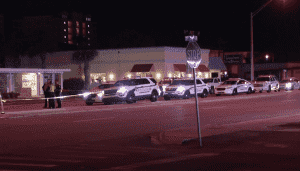
A Florida car accident at-fault parties lawyer investigates whether a negligent driver, employer, vehicle owner, manufacturer, or government entity caused the collision. The Law Offices of Anidjar and Levine reviews crash reports, medical records, photographs, witness accounts, insurance coverage, and electronic evidence to establish fault and damages. Representation may include preserving evidence, challenging comparative negligence arguments, negotiating with insurers, and pursuing litigation when appropriate. Prompt legal guidance can protect deadlines and available compensation. Learn more from a Florida Personal Injury Lawyer about how these claims are evaluated and supported.
Main Takeaways
- A Florida car accident lawyer can investigate which drivers, employers, vehicle owners, manufacturers, or government entities may be responsible.
- Liability may depend on proving duty, breach, causation, damages, and evidence such as reports, photographs, videos, and witness statements.
- Common at-fault conduct includes distracted driving, speeding, impairment, unsafe lane changes, following too closely, and failing to yield.
- Florida’s modified comparative negligence rules may reduce recovery when an injured person shares responsibility for the crash.
- A lawyer can preserve evidence, identify applicable insurance coverage, negotiate with insurers, and pursue litigation when appropriate.


How We Can Help With Your Florida Car Accident At-Fault Parties Injury Claim
When a Florida car accident results from another party’s negligence, an injured person may face medical expenses, lost income, property damage, and lasting physical or emotional harm. A legal team can provide steady guidance while protecting the person’s interests throughout the claim process.
Initial assistance may include reviewing accident reports, insurance communications, medical records, and available photographs. Counsel can explain applicable deadlines, identify potentially responsible insurance coverage, and organize documentation supporting damages without making promises about an outcome. Evidence preservation is vital because vehicle conditions, roadway details, electronic records, and other information may change or disappear.
A careful investigation can also include witness credibility reviews, helping assess whether accounts are consistent, firsthand, and supported by available evidence. The legal team may communicate with insurers, address disputed issues, and present a well-supported demand for appropriate compensation. By handling procedural and investigative responsibilities, counsel allows the injured person to focus on medical care and recovery while pursuing a fair resolution through authorized legal channels.
OUR CONSULTATIONSARE FREE
START YOUR FREE CASE REVIEW

Understanding Florida Car Accident At-Fault Parties Injury Cases
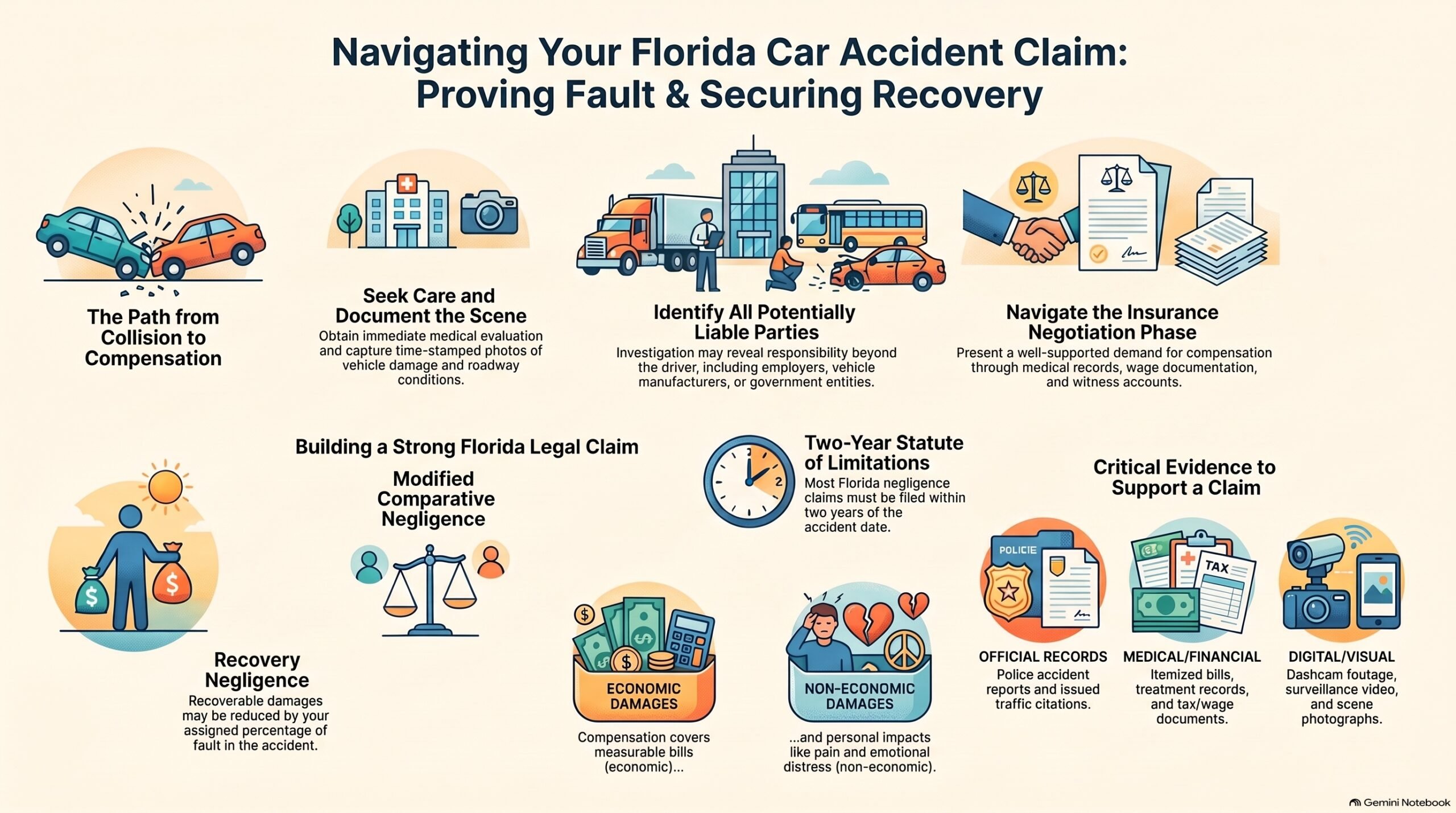
Florida car accident injury cases often require a careful analysis of how the collision occurred, which parties contributed to it, and what losses resulted. Florida follows a modified comparative negligence system, so liability may be apportioned among drivers, vehicle owners, employers, manufacturers, or other legally responsible parties. An injured person generally must establish duty, breach, causation, and damages through records, testimony, photographs, and qualified expert analysis.
Damages may include medical expenses, lost income, reduced earning capacity, property damage, and non-economic losses. Insurance coverage, policy exclusions, and timely notice can materially affect available recovery. Insurance dispute resolution may involve documentation, mediation, arbitration, or formal litigation when liability or valuation remains contested. During settlement negotiation tactics, counsel may organize evidence, assess future needs, and respond to insurer offers without sacrificing legitimate interests. A careful case evaluation helps protect the injured person’s rights while promoting a fair and efficient resolution for everyone affected by the collision.
Common Causes of Florida Car Accident At-Fault Parties
Common causes of Florida car accidents include distracted driving, speeding, reckless driving, and impaired driving. Traffic law violations, such as running red lights or failing to yield, may also establish a driver’s responsibility for resulting injuries and property damage. Identifying the specific conduct involved is crucial to determining fault and evaluating potential legal claims.
Distracted Driving
Although distracted driving may appear momentary, it can substantially impair a driver’s attention, reaction time, and ability to control a vehicle. Common distractions include texting, adjusting navigation, eating, grooming, and reaching for items inside the vehicle. Visual, manual, and mental distractions can prevent a driver from recognizing traffic signals, roadway hazards, or vulnerable road users. When negligence causes a collision, the distracted driver may be responsible for injuries, medical expenses, lost income, and vehicle repairs. Pedestrian claims may arise when a driver fails to notice someone crossing legally or traveling near the roadway. Evidence such as phone records, witness accounts, surveillance footage, and admissions can help establish liability. Property damage claims may also involve repair costs, diminished value, towing, and replacement transportation expenses for affected individuals and families.
Speeding And Reckless Driving
Speeding and reckless driving can create conditions in which a driver has insufficient time or distance to respond to traffic, roadway hazards, or vulnerable road users. Excessive speed may increase stopping distance, magnify collision forces, and reduce a driver’s ability to maintain control during turns or sudden traffic changes. Reckless conduct may include aggressive lane changes, tailgating, passing where prohibited, or disregarding signals and posted restrictions. After a collision, evidence may include vehicle damage, tire marks, surveillance footage, witness accounts, and available electronic data. Traffic enforcement records can help establish whether a driver violated applicable laws. A crash reconstruction may further assess vehicle speeds, impact points, visibility, and roadway conditions. These findings can assist injured individuals and their families in identifying responsible parties and pursuing appropriate legal remedies.
Impaired Driving
Impaired driving may result when a driver operates a vehicle while affected by alcohol, illegal drugs, prescription medication, or other substances that diminish judgment, coordination, perception, or reaction time. These effects can prevent a motorist from recognizing hazards, maintaining lane position, or responding safely to changing traffic conditions. In Florida collision claims, evidence may include officer observations, witness accounts, toxicology records, and Blood alcohol testing. DUI checkpoints, field investigations, and post-crash medical evaluations may also produce information relevant to determining whether impairment contributed to the incident. A driver’s criminal charge or conviction does not alone resolve civil liability, but it may support an injured person’s account when corroborated by admissible evidence. Careful documentation helps protect injured individuals, families, and communities seeking accountability and appropriate compensation after preventable crashes.
Traffic Law Violations
Traffic law violations are a common basis for determining fault in Florida car accident claims. Drivers who disregard established rules may create hazards that injure other motorists, passengers, pedestrians, or cyclists. Traffic signal violations, including running red lights or failing to yield at controlled intersections, frequently support evidence of negligence. Speed limit enforcement also plays an important role because excessive speed can reduce reaction time, increase stopping distance, and intensify collision forces. Other violations may include unsafe lane changes, following too closely, improper passing, and distracted driving. Investigators may review crash reports, photographs, witness statements, surveillance footage, and vehicle data to determine whether a violation contributed to the collision. A careful evaluation helps injured individuals pursue accountability and supports fair treatment for all affected parties under Florida law.
Don’t Wait. Call Our Florida Personal Injury Lawyers Now!


Legal Rights of Florida Car Accident At-Fault Parties Injury Victims
When a Florida car accident involves an at-fault driver, injured victims may still possess important legal rights and avenues for financial recovery. Florida law may permit recovery for medical expenses, lost income, property damage, and certain non-economic damages, subject to the availability of evidence and applicable deadlines. Victims should preserve records, obtain medical evaluations, and communicate carefully with insurers while a claim is reviewed.
Key protections may include:
- The right to investigate liability and gather witness statements
- The right to pursue compensation through negotiations or litigation
- The right to present Emotional Distress Claims when legally supported
- The right to challenge Comparative Fault Defenses affecting recovery
An injured person may also seek assistance from a qualified attorney who can explain insurance coverage, assess damages, and protect procedural rights. Prompt legal guidance can help preserve evidence and support fair treatment. Individuals serving accident victims should provide accurate information without promising outcomes, respect confidentiality, and encourage timely professional evaluation, particularly when injuries or financial consequences remain uncertain.
Why Do Florida Car Accident At-Fault Parties Injuries Happen?
Understanding how injuries occur can help establish liability and identify the evidence needed to support an insurance claim or lawsuit. Florida car accident injuries commonly result from negligent driving, including speeding, distracted driving, impaired operation, unsafe lane changes, and following too closely. These behaviors can reduce reaction time and increase the force of a collision, causing fractures, spinal trauma, head injuries, or lasting emotional harm.
Weather-related crashes may occur when heavy rain, flooding, fog, or strong winds reduce visibility and roadway traction. Drivers who fail to adjust speed or maintain control may contribute to resulting injuries. Vehicle defects, poor maintenance, defective traffic signals, and hazardous road design can also create dangerous conditions.
Pedestrian accidents frequently happen when motorists fail to yield, disregard crosswalks, drive while distracted, or travel too quickly near sidewalks and intersections. Clear identification of the responsible conduct helps protect injured individuals and supports fair accountability for medical needs, lost income, rehabilitation, and other damages.
What Should You Do After a Florida Car Accident At-Fault Parties Injury?
After a Florida car accident injury, the injured party should seek immediate medical care, even when symptoms initially appear minor. Documenting the accident scene, including injuries, vehicle damage, and witness information, can help preserve important evidence. Consulting a Florida lawyer may clarify liability, protect legal rights, and support a potential injury claim.
Seek Immediate Medical Care
Prompt medical evaluation should be a priority for anyone injured in a Florida car accident, even if the symptoms initially appear minor or delayed. A qualified healthcare professional can identify hidden injuries, establish appropriate treatment, and reduce the risk of complications. Medical records should accurately describe pain, limitations, emotional distress, and changes in daily functioning. This information supports documentation of emotional distress and helps providers coordinate effective care. The injured person should follow all treatment instructions, attend recommended appointments, and promptly report worsening symptoms or new concerns. Consistent care also creates a reliable record of recovery and supports long-term medical follow up when injuries require rehabilitation or medical attention. By seeking care promptly, an injured individual protects personal health and provides information that can assist family members, caregivers, and legal representatives.
Document the Accident Scene
When circumstances allow, documenting the accident scene can preserve important evidence concerning how a Florida car crash occurred and which parties may be responsible. A person should first move to a safe location and avoid interfering with traffic or injured individuals. Vehicle damage documentation should include photographs of every affected area, nearby vehicles, license plates, roadway conditions, traffic controls, and, when appropriate, visible injuries. A scene photograph checklist can help ensure that wide-angle images establish context while closer photographs capture specific details. Time-stamped evidence may include photographs, videos, and notes recorded promptly after the collision. Debris location mapping, including broken glass, vehicle parts, and skid marks, can help show impact positions and movement. Witness names and contact information should also be recorded, without pressuring anyone to provide statements.
Consult a Florida Lawyer
Consulting a Florida car accident lawyer can help an injured person identify potentially responsible parties, protect relevant evidence, and understand available legal remedies. Counsel may examine driver conduct, vehicle maintenance, roadway conditions, employer responsibility, and insurance coverage to determine whether multiple parties contributed to the collision. Early guidance also helps preserve photographs, medical records, witness statements, vehicle data, and other materials in accordance with Florida evidence preservation practices. A lawyer can explain Insurance claim timelines, required notices, policy provisions, and potential filing deadlines, reducing the risk that an avoidable delay harms a claim. Legal counsel may also communicate with insurers, evaluate settlement proposals, and coordinate referrals for medical or support services. Prompt consultation allows an injured person to make informed decisions while preserving the ability to seek fair compensation and assist affected family members.
Don’t Wait. Call Our Florida Personal Injury Lawyers Now!
Critical Evidence in a Florida Car Accident At-Fault Parties Injury Case
Important evidence can establish how the Florida crash occurred, identify responsible parties, and document the resulting injuries and losses.
Essential materials commonly include:
- Police accident reports
- Medical records and bills
- Witness statements
- Photos and video evidence
A Florida car accident attorney may evaluate this evidence to assess liability, support an injury claim, and preserve information needed for negotiations or litigation.
Police Accident Reports
Police accident reports can provide important evidence in a Florida car accident injury case by documenting the responding officer’s observations, statements from involved parties and witnesses, road conditions, vehicle damage, and any citations issued at the scene. This information may help establish how the collision occurred and identify facts relevant to cause and liability. Although an officer’s conclusions are not automatically decisive, the report can support a careful investigation and reveal inconsistencies in later accounts. Traffic citations may further indicate alleged violations, such as speeding, careless driving, or failure to yield. An attorney can obtain and review the report, compare it with photographs and witness testimony, and identify other potentially responsible parties. Because reports may contain errors or incomplete information, prompt review helps preserve accurate evidence and supports fair representation.
Medical Records and Bills
Medical records and bills provide important evidence in a Florida car accident injury case by documenting the nature of the injuries, treatment received, medical expenses, and the connection between the collision and the claimed harm. Consistent records can show when symptoms began, whether treatment followed medical advice, and how injuries affected daily activities or employment. Itemized bills help establish reasonable costs, outstanding balances, and losses that may support a compensation claim. Diagnostic imaging, physician notes, therapy records, prescriptions, and discharge instructions may also clarify the severity and progression of harm. These materials can assist a lawyer in evaluating whether driver conduct, including distractions or violations identified through speed enforcement, caused the crash and resulting injuries. Preserving complete records enables informed advocacy and helps serve injured individuals with accuracy, fairness, and accountability.
Witness Statements
When available, witness statements can provide independent accounts of how a Florida car accident occurred and help establish which parties may be at fault. Witnesses may describe traffic signals, vehicle movements, driver behavior, road conditions, and statements made immediately after the collision. Their contact information and recollections should be preserved promptly because memories can change over time. A lawyer may interview witnesses, obtain signed statements, or present testimony supporting claims against negligent drivers, employers, vehicle owners, or other responsible parties. Witness accounts can also help challenge inconsistent allegations and clarify disputed facts during insurance negotiations or litigation. If the at-fault driver lacks adequate insurance, reliable testimony may support an Uninsured motorist coverage claim. It may further help contest wrongfully withheld payments by showing liability and resulting damages.
Photos and Video Evidence
Photos and video evidence can document vehicle positions, roadway conditions, traffic signals, visible injuries, and property damage after a car accident in Florida. Such records may clarify how a collision occurred and help identify potentially responsible drivers, vehicle owners, employers, or other parties. Individuals should photograph the scene from multiple angles, preserve original files, and avoid editing images. Surveillance availability should be investigated promptly because businesses, residences, intersections, and transportation systems may overwrite recordings within days. Dashcam recordings can provide valuable timing and movement details, while social media footage may capture the crash or conditions immediately afterward. A person recording the event should retain the device and related metadata when possible. Legal counsel can help secure, authenticate, and present this evidence while protecting injured individuals’ interests throughout the claim.
Long-Term Effects of Florida Car Accident At-Fault Parties Injuries
Long-term injuries from Florida car accidents may cause chronic pain, reduced mobility, permanent disability, or limitations on daily activities. Emotional and psychological trauma, including anxiety, depression, and post-traumatic stress, can also persist after physical wounds recover. These effects may lead to substantial financial and lifestyle consequences, including medical expenses, lost income, ongoing care needs, and diminished quality of life.
Chronic Pain And Disability
Chronic pain and disability can develop after a Florida car accident, particularly when victims sustain spinal injuries, traumatic brain injuries, nerve damage, or complex fractures. These conditions may restrict mobility, reduce strength, and interfere with vital daily activities. Some injured individuals require continuing medical care, physical therapy, assistive devices, or modifications to their homes and vehicles. Others may be unable to return to their prior occupations or may need reduced hours, reassignment, or vocational retraining. The resulting loss of income can compound substantial medical expenses and affect long-term financial security. Workplace injuries may create additional workers’ compensation issues when employment duties contribute to ongoing limitations. During settlement negotiations, documentation from physicians, therapists, vocational specialists, and economists can help demonstrate future treatment needs, diminished earning capacity, and permanent functional restrictions.
Emotional And Psychological Trauma
Emotional and psychological trauma can persist after the physical effects of a Florida car accident have stabilized. Survivors may experience anxiety, depression, irritability, or fear when riding in vehicles or approaching the crash location. Intrusive memories and heightened alertness can interfere with ordinary responsibilities, relationships, and recovery decisions. Sleep impairment is also common, sometimes causing fatigue that intensifies emotional distress and complicates medical treatment. Some individuals develop post-traumatic stress symptoms that require evaluation by qualified mental health professionals. Treatment may include trauma-focused therapy, medication management, support groups, and long-term counseling tailored to the survivor’s condition. Family members and caregivers can assist by recognizing behavioral changes and encouraging appropriate care without judgment. Documentation of symptoms, diagnoses, and recommended treatment may help clarify the injury’s continuing effects.
Financial And Lifestyle Consequences
When injuries from a Florida car accident persist, their financial and lifestyle consequences may extend well beyond initial medical treatment. Medical expenses can include surgery, rehabilitation, prescription medication, adaptive equipment, and recurring expert visits. If an injured person cannot return to work, wage loss may affect housing, transportation, insurance, and household stability. Permanent limitations can also require home modifications, personal assistance, or long-term care, creating obligations that families may struggle to manage without planning. Daily activities, education, employment, and family responsibilities may need substantial adjustment. Community support can provide transportation, meal assistance, caregiving, and connections to local resources, but it may not replace lost income or continuing treatment. Documentation of these effects helps clarify the injury’s full impact and supports informed decisions concerning available compensation and future care.
Proving Liability in Florida Car Accident At-Fault Parties Injury Cases
Proving liability in a Florida car accident injury case requires evidence showing that another party owed a duty of care, breached that duty, and caused the resulting injuries and losses. The liability proof burden generally rests with the injured person, who must establish these elements by a preponderance of the evidence. Helpful evidence may include crash reports, photographs, vehicle damage records, medical documentation, witness statements, traffic-camera footage, and testimony from accident reconstruction professionals. Records concerning speeding, distraction, impairment, unsafe lane changes, or ignored traffic controls can clarify how negligence occurred. Car crash patterns may also reveal recurring hazards, roadway design problems, or conduct involving commercial drivers and employers. Florida’s comparative negligence rules make accurate evidence particularly important because an injured person’s recoverable damages can be reduced by the person’s assigned share of fault. Prompt investigation and careful preservation of evidence help clarify disputed facts and support a fair evaluation of responsibility for affected individuals and families.
Dealing With Insurance Companies After a Florida Car Accident At-Fault Party Injury
Insurance companies often become involved soon after a car accident in Florida, and their communications can affect how an injury claim develops. Adjusters may request recorded statements, medical authorizations, photographs, or other information while evaluating responsibility and damages. An injured person should provide accurate facts but avoid speculation, admissions, or statements minimizing pain and limitations. Communications should remain professional, organized, and limited to relevant information.
A careful Policy limits review can identify available liability coverage, uninsured or underinsured motorist benefits, and potential sources of payment. This review helps clarify realistic recovery options without assuming that an insurer’s initial offer reflects the claim’s value. Documents, medical records, wage information, and repair estimates should be preserved and reviewed before significant decisions are made.
An insurer’s conduct may also require scrutiny if it delays communication, ignores evidence, or refuses a reasonable settlement opportunity. However, a bad faith defense can involve intricate factual and legal issues. Legal counsel may protect the injured person’s interests while communicating with carriers and reviewing coverage.
What to Expect During a Florida Car Accident At-Fault Parties Injury Claim Process
A Florida car accident injury claim typically begins with an initial evaluation of liability, damages, and available insurance coverage. The process may involve collecting medical records, crash reports, witness statements, and other evidence before negotiations with the insurance company commence. If negotiations do not produce an acceptable resolution, the claim may proceed to settlement discussions or trial.
Initial Claim Evaluation
How does an initial claim evaluation determine the direction of a Florida car accident injury case? It establishes whether the reported injuries, treatment, and losses support a legally viable claim. A qualified professional reviews the accident circumstances, applicable insurance coverage, deadlines, and the relationship between the collision and medical conditions. Medical documentation receives careful attention because diagnoses, treatment plans, and physician opinions can clarify the injury’s seriousness and anticipated needs. The evaluation also identifies potential at-fault parties and considers whether comparative negligence may affect recovery, without prematurely deciding disputed facts. Claim representatives may explain available options, likely challenges, and communication procedures. If an insurer refuses to make appropriate payment, appeals of insurance denials may become necessary. This early review helps injured individuals make informed decisions and protect their interests throughout the claims process.
Evidence Collection Process
Once an initial claim evaluation identifies the issues requiring further review, the evidence collection process begins. A Florida car accident at-fault-party lawyer may gather crash reports, medical records, photographs, witness statements, repair estimates, and documentation of lost income or other damages. Data preservation is addressed promptly because electronic records, vehicle information, and communications may be altered or deleted over time. Counsel may send preservation requests to relevant parties and identify custodians who possess important materials. Video retrieval can include obtaining traffic-camera recordings, business surveillance footage, dashcam files, and nearby residential security recordings before retention periods expire. Investigators may inspect the collision location, document roadway conditions, and compare physical evidence with the accounts provided. This organized process helps protect the injured person’s interests while presenting reliable facts for later claim evaluation.
Insurance Company Negotiations
After the evidence is organized, negotiations with the insurance company typically begin through written claim submissions and direct communications with an adjuster. The submission generally summarizes the crash, establishes fault, documents medical treatment, and explains financial losses. The adjuster may request records, statements, photographs, or additional information before evaluating the claim. A representative may communicate with the insurer to protect the injured person’s interests and ensure that responses remain accurate and consistent with the available evidence. Liability disputes can arise when an insurer questions causation, comparative negligence, or the severity of reported injuries. The insurer also reviews policy limits, which may affect the available coverage for damages. Communications should remain measured and documented, while deadlines, requests, and valuation positions receive careful attention throughout the claims process for everyone involved.
Settlement Or Trial
The insurer’s evaluation may lead to a settlement, continued negotiations, or litigation when the parties cannot agree on liability or the value of the injury claim. A settlement provides compensation without a trial, but the injured person generally must release further claims against the responsible parties. Before accepting an offer, counsel may assess medical evidence, lost income, future care, and available insurance coverage. If negotiations fail, a lawsuit may be filed, and each side must present evidence under Florida’s Negligence standards. The defense may raise comparative fault defenses, alleging that the injured person contributed to the collision or resulting harm. At trial, the court or jury determines fault and damages. A lawyer serving the client’s interests can explain deadlines, risks, costs, and likely outcomes throughout the process.
Compensation for Florida Car Accident At-Fault Parties Injury Damages
When another driver’s negligence causes a Florida car accident, an injured person may seek compensation for damages supported by medical records, employment documentation, and other reliable evidence. Recoverable compensation may address treatment needs, rehabilitation, ongoing Pain Management, and limitations caused by accident-related injuries. A claim may also include costs associated with transportation to medical appointments, necessary assistive devices, and professional care when those expenses are reasonably connected to the collision. Evidence should establish the at-fault party’s conduct, the causal relationship between that conduct and the injuries, and the extent of resulting harm. Comparative Negligence may reduce recovery if the injured person contributed to the accident, making a careful investigation especially important. Insurance negotiations and litigation require organized records, consistent medical follow-through, and clear communication with providers. A Florida car accident attorney may help preserve evidence, identify responsible parties, and pursue a resolution that reflects the client’s documented needs while supporting fair treatment throughout the process.
Economic vs Non-Economic Damages in Florida Car Accident At-Fault Parties Cases
Florida car accident claims may involve economic damages, such as medical expenses, lost income, and property damage, as well as non-economic damages for pain, emotional distress, and diminished quality of life. The value of each category depends on the injuries, financial consequences, and personal losses established in the case. Documentation, witness testimony, medical records, and other supporting evidence can help prove both financial and personal harm.
Economic Damages Explained
Because car accident injuries can affect both finances and quality of life, Florida law distinguishes between economic and non-economic damages when determining compensation. Economic damages represent measurable financial losses caused by the collision. They may include emergency treatment, hospitalization, rehabilitation, medication, medical equipment, property damage, and transportation expenses related to care. Lost wages may be recoverable when injuries prevent a person from working, while diminished future earnings can apply if lasting limitations reduce earning capacity. Claimants generally support these requests with billing documentation, employer records, tax documents, and proof of reimbursement for covered expenses. An attorney may organize these materials, identify responsible parties, and present a complete calculation to insurers or the court. Accurate records help ensure that injured individuals receive appropriate financial support without overstating or overlooking legitimate losses.
Non-Economic Damages Explained
Non-economic damages address the personal effects of a car accident that cannot be measured through bills or pay records. In Florida, they may include physical pain, emotional distress, mental anguish, inconvenience, disfigurement, and loss of enjoyment of life. These damages recognize how an injury can alter daily routines, relationships, confidence, and participation in meaningful activities. Their value depends on the circumstances, severity, duration, and lasting consequences of the harm rather than a fixed invoice. Attorneys may use injury valuation methods to present a reasoned assessment while identifying each potentially responsible party. Digital evidence, including photographs, messages, and activity records, can help illustrate relevant changes without replacing personal testimony. Careful liability mapping keeps the focus on responsibility, while respectful advocacy seeks a fair recovery for injured individuals and their families.
Proving Financial And Personal Losses
A successful claim for financial and personal losses requires clear evidence connecting each claimed harm to the crash and to the conduct of the responsible party. Economic damages may include medical bills, rehabilitation costs, lost wages, diminished earning capacity, and repair expenses. Records should include invoices, pay statements, tax documents, treatment notes, and property damage proof showing the extent and value of losses. Non-economic damages, including pain, emotional distress, disability, and loss of enjoyment, require consistent medical documentation and credible testimony describing daily limitations. Family members may provide relevant observations, while treating professionals can explain prognosis and lasting effects. In wrongful death claims, survivors generally document funeral expenses, lost support, and the deceased person’s contributions. A careful evidence file helps establish liability, necessity, causation, and a fair damages calculation.
Don’t Wait. Call Our Florida Personal Injury Lawyers Now!
When a Florida Car Accident At-Fault Parties Injury Case Goes to Trial vs Settlement
In Florida car accident injury cases, the decision to pursue settlement or proceed to trial depends on the strength of the evidence, the extent of the claimant’s damages, and the parties’ willingness to accept legal risk. Settlement may provide a faster, more predictable resolution, helping an injured person address medical needs, income disruption, and family responsibilities without the delays of extended litigation. Attorneys often use documented losses, witness statements, and liability evidence to build leverage in settlement negotiations.
A trial may become appropriate when an insurer denies responsibility, undervalues damages, or refuses to engage in meaningful negotiations. A judge or jury then evaluates the evidence and determines whether compensation is warranted, but the outcome remains uncertain. Trial timelines can be delayed for months or longer due to discovery, motions, court scheduling, and preparation. Counsel should explain expected costs, stress, risks, and potential benefits before recommending either path. The central goal remains to secure fair support while protecting the claimant’s ability to recover and to serve dependents responsibly.
Florida Laws That May Affect Your Florida Car Accident At-Fault Parties Case
Florida law establishes the framework governing fault, insurance coverage, deadlines, and available compensation in a car accident injury case. Comparative negligence rules may reduce an injured person’s recovery when that person shares responsibility for the collision. A fact-specific assessment can clarify how conduct, evidence, and causation affect liability.
Florida law shapes fault, insurance coverage, deadlines, and compensation in car accident injury cases, with recovery potentially reduced by shared responsibility.
Florida’s no-fault personal injury protection generally pays certain medical expenses and lost income regardless of who caused the crash, subject to policy limits and statutory requirements. A claim may also involve bodily injury liability coverage, uninsured or underinsured motorist benefits, and evidence supporting damages.
Key legal considerations include:
- Police reports, witness accounts, photographs, and medical records may establish fault and injury.
- Insurance notices and cooperation requirements can affect claim handling.
- Serious injuries may support a liability claim beyond available personal injury protection.
- Medical treatment and documented losses help present an accurate compensation request.
A qualified attorney can evaluate these issues, communicate with insurers, and protect the injured person’s interests while supporting a fair resolution.
The Statute of Limitations for Florida Car Accident At-Fault Parties Injury Cases
Timely action is essential because Florida law generally imposes a limited period for filing a personal injury lawsuit after a car accident. Under current Florida law, many negligence claims must be filed within two years from the accident date. Missing that deadline can result in dismissal, even when another driver appears clearly responsible. Certain circumstances may alter the calculation, including a delayed discovery of injury, a defendant’s absence from Florida, or claims involving a government entity. Government claims commonly require earlier notice and follow different procedures.
In addition, Florida’s modified Comparative negligence system may reduce recovery when an injured person shares responsibility. The limitations period does not pause simply because insurance negotiations continue, medical treatment is ongoing, or liability remains disputed. Evidence preservation should begin promptly, since vehicle damage, photographs, medical records, witness accounts, and roadway conditions can become difficult to document over time. Individuals should identify the accident date, preserve relevant materials, and obtain advice regarding deadlines before relying on informal settlement discussions.
How a Florida Car Accident At-Fault Parties Lawyer Can Help You
A Florida car accident at-fault parties lawyer can investigate the collision, identify all potentially responsible parties, and build a claim supported by reliable evidence. Counsel may obtain crash reports, photographs, medical records, vehicle data, and witness statements while preserving evidence that could otherwise disappear. A police negligence investigation may examine roadway conditions, signage, maintenance records, and governmental conduct when public entities contributed to the harm.
Legal representation can also clarify each party’s role and address insurers’ efforts to minimize responsibility.
Important services may include:
- Evaluating driver, employer, manufacturer, and governmental liability
- Consulting accident reconstruction and medical experts
- Calculating medical costs, lost income, and future care needs
- Responding to Comparative negligence defenses with documented facts
A lawyer can communicate with insurers, organize supporting records, and present a demand grounded in Florida law. If negotiations fail, counsel can prepare pleadings, manage discovery, and advocate for the injured person in court. This assistance helps families pursue accountability while allowing them to focus on recovery and supportive responsibilities.
When to Contact a Florida Car Accident At-Fault Parties Lawyer
Because important evidence and legal deadlines can affect a car accident claim, injured individuals should contact a Florida car accident at-fault parties lawyer as soon as practicable after the collision. Early consultation allows counsel to identify potentially responsible drivers, vehicle owners, employers, manufacturers, or other parties before relevant information becomes difficult to obtain.
Prompt legal attention is especially important when injuries appear serious, treatment may continue, or Liability Disputes arise regarding traffic signals, road conditions, vehicle maintenance, or comparative fault. A lawyer can help coordinate Evidence Preservation by documenting the crash scene, obtaining any available video, securing photographs of the vehicle, and requesting records from witnesses, medical providers, insurers, and public agencies.
Contact should also occur before making recorded statements or signing releases that could affect available remedies. Florida claims may be subject to specific filing deadlines and notice requirements that vary depending on the parties involved. Timely guidance helps protect a claimant’s interests while permitting organized communication with insurers and other affected parties.
Why You Need an Experienced Florida Car Accident At-Fault Parties Lawyer
An experienced Florida car accident at-fault parties lawyer can evaluate the full range of potentially liable parties rather than focusing solely on the driver who caused the collision. A thorough review may identify responsibility on the part of an employer, vehicle owner, manufacturer, maintenance provider, or governmental entity. This broader assessment helps protect injured people from accepting an incomplete explanation of what happened.
Experienced counsel can also investigate applicable Insurance policy limits and determine whether multiple policies may contribute to recovery. Prompt evidence preservation is important because surveillance footage, electronic vehicle data, witness recollections, and physical conditions can change or disappear. The lawyer can coordinate this work while the injured person focuses on treatment and recovery.
Careful medical documentation connects injuries to the crash and supports claims for treatment costs, lost income, and continuing care. It may also establish the effects of emotional trauma, which can be substantial even when physical injuries appear limited. Skilled legal guidance promotes accountability and helps families pursue fair compensation.
How to Choose the Right Florida Car Accident At-Fault Parties Lawyer for Your Case
Selecting the right Florida car accident at-fault parties lawyer requires more than reviewing advertising claims or general litigation experience. A careful evaluation should consider whether the lawyer regularly handles liability disputes, identifies all potentially responsible parties, and explains legal options without making unrealistic promises.
Effective Client communication is critical. The lawyer should provide timely updates, answer questions clearly, and establish who will manage communications throughout the claim. During an initial consultation, the client can ask how the lawyer develops a case strategy, investigates competing accounts, and addresses insurance defenses.
A dependable lawyer should also describe the evidence checklist, including crash reports, photographs, medical records, witness information, vehicle data, and lost-income documentation. Understanding how evidence will be gathered helps prevent avoidable delays. The lawyer should explain the anticipated settlement timeline, factors that may affect negotiations, and circumstances that may require litigation. Comparing experience, responsiveness, investigative resources, fee terms, and professional judgment can help an injured person choose representation that can serve the client’s interests responsibly.
About The Law Offices of Anidjar & Levine
The Law Offices of Anidjar & Levine represents individuals injured in Florida car accidents, including claims involving disputed liability and multiple potentially responsible parties.
The firm evaluates collision evidence, insurance policies, medical records, and witness accounts to help identify each party whose conduct may have contributed to a client’s injuries.
Its attorneys may assist people pursuing compensation for medical expenses, lost income, rehabilitation, property damage, and other legally recognized losses.
When a crash results in a fatality, the firm also handles Wrongful death claims for eligible surviving relatives and personal representatives.
Assistance may include investigating negligence, preserving evidence, communicating with insurers, and preparing litigation when settlement efforts do not resolve the dispute.
The firm further provides support with Insurance denial appeals, helping clients understand coverage positions and challenge potentially improper claim decisions.
Its work is directed toward protecting clients’ interests while pursuing accountability through diligent case preparation, clear communication, and service tailored to the circumstances of each Florida accident.
Frequently Asked Questions
Can I Still Recover Damages if the At-Fault Driver Has No Insurance?
Yes, an injured person may still pursue damages recovery even if the at-fault driver has no insurance. Potential sources include uninsured motorist coverage, personal assets, employer-related insurance, or claims against other legally responsible parties. Uninsured Liability does not automatically eliminate available remedies, but recovery depends on policy terms, evidence of fault, injury severity, and applicable deadlines. A qualified attorney can investigate coverage, preserve evidence, negotiate with insurers, and pursue litigation when appropriate, helping protect the injured person’s interests.
Will My Florida Car Accident Case Affect My Immigration Status?
A Florida car accident case generally does not affect a person’s immigration status, DACA eligibility, or U.S. citizenship impacts, especially when the individual is seeking compensation as an injured party. Filing an insurance claim or a civil lawsuit is typically a lawful exercise of rights and does not, by itself, trigger immigration enforcement. However, statements, criminal charges, fraud, or unresolved legal violations could create concerns. Consulting an immigration attorney before settlement may help protect long-term interests.
Can Passengers File Separate Claims After a Florida Car Accident?
Yes. Passengers may file separate claims against responsible drivers, even when other injured people pursue compensation. Passenger liability generally depends on who caused the collision, while insurance coverage may involve the driver’s policy, the passenger’s uninsured or underinsured motorist protection, or other applicable policies. With multiple claimants, available limits can become contested, so each passenger should document injuries, avoid premature settlements, and obtain individualized legal guidance regarding separate lawsuits.
What Happens if the At-Fault Driver Dies Before My Claim Is Resolved?
If the at-fault driver dies before a claim is resolved, the claim generally does not automatically end. Florida law may permit survival of claims against the driver’s estate, subject to applicable deadlines, insurance coverage, and probate procedures. The injured person may need to present a creditor’s claim in probate and continue negotiations or litigation through the personal representative. A wrongful death filing is separate and applies when the accident caused the claimant’s family member’s death.
Are Car Accident Settlements Taxable Under Federal or Florida Law?
Car accident settlements are generally not taxable under federal or Florida law when they compensate physical injuries or related medical expenses. Taxability basics require distinguishing insurance settlements from payments for lost wages, emotional distress, or investment income, which may be treated differently. Medical reimbursements typically remain nontaxable when tied to documented expenses and not previously deducted. Punitive damages are generally taxable at the federal level and may require careful reporting. Professional tax guidance can protect recipients and beneficiaries.
—————————
Determining fault after a Florida car accident can affect insurance recovery, medical expenses, and an injured party’s legal options.
Liability may involve negligent drivers, employers, vehicle manufacturers, or other responsible parties, making a careful investigation essential.
An experienced Florida car accident lawyer can evaluate the evidence, protect applicable rights, and pursue compensation through negotiation or litigation.
The Law Offices of Anidjar and Levine offer informed guidance tailored to each claim.
Learn more from a Florida Personal Injury Lawyer and make informed decisions throughout the legal process.