The Law Offices of Anidjar and Levine, a Jacksonville Personal Injury Lawyer, can assess how a rear-end, side-impact, head-on, rollover, sideswipe, or multi-vehicle crash caused specific injuries. The firm may gather police reports, photos, medical records, repair estimates, and witness statements to help establish fault, damages, and the connection between the crash and injuries. This support may also address insurance disputes, comparative fault, filing deadlines, and settlement negotiations. The following sections explain how the type of collision, evidence, and liability can affect an injury claim.
Main Takeaways
- A Jacksonville car accident lawyer evaluates the type of collision to connect crash mechanics with injury patterns and liability evidence.
- Rear-end, side-impact, head-on, rollover, sideswipe, and multi-vehicle crashes each require specific proof.
- Key evidence includes police reports, medical records, photos, repair estimates, witness statements, and insurance communications.
- Common fault factors include distracted driving, speeding, impairment, recklessness, and failure to yield.
- Legal support helps preserve evidence, meet Florida claim deadlines, calculate losses, and pursue compensation.


How We Can Help With Your Jacksonville Car Accident Collision Types Injury Claim
After a crash disrupts a person’s wellness, work, and daily routine, a Jacksonville car accident collision types lawyer can evaluate how the specific nature of the collision affects the injury claim. Counsel may gather reports, medical records, photographs, repair estimates, and witness statements to build a disciplined record of what occurred. This support allows injured people and their families to focus on recovery, caregiving, and community responsibilities while the legal process moves forward.
A lawyer can also monitor Insurance claim timelines, prepare communications with carriers, and identify applicable coverage. Careful review of Florida traffic statutes, police findings, and available evidence helps clarify liability and damages without overstating the case. By organizing documentation, calculating losses, and responding to insurer requests, legal counsel may reduce avoidable delays. The goal is to pursue fair compensation through a structured process that respects the client’s circumstances, medical needs, and long-term stability.
OUR CONSULTATIONSARE FREE
START YOUR FREE CASE REVIEW

Understanding Jacksonville Car Accident Collision Types Injury Cases
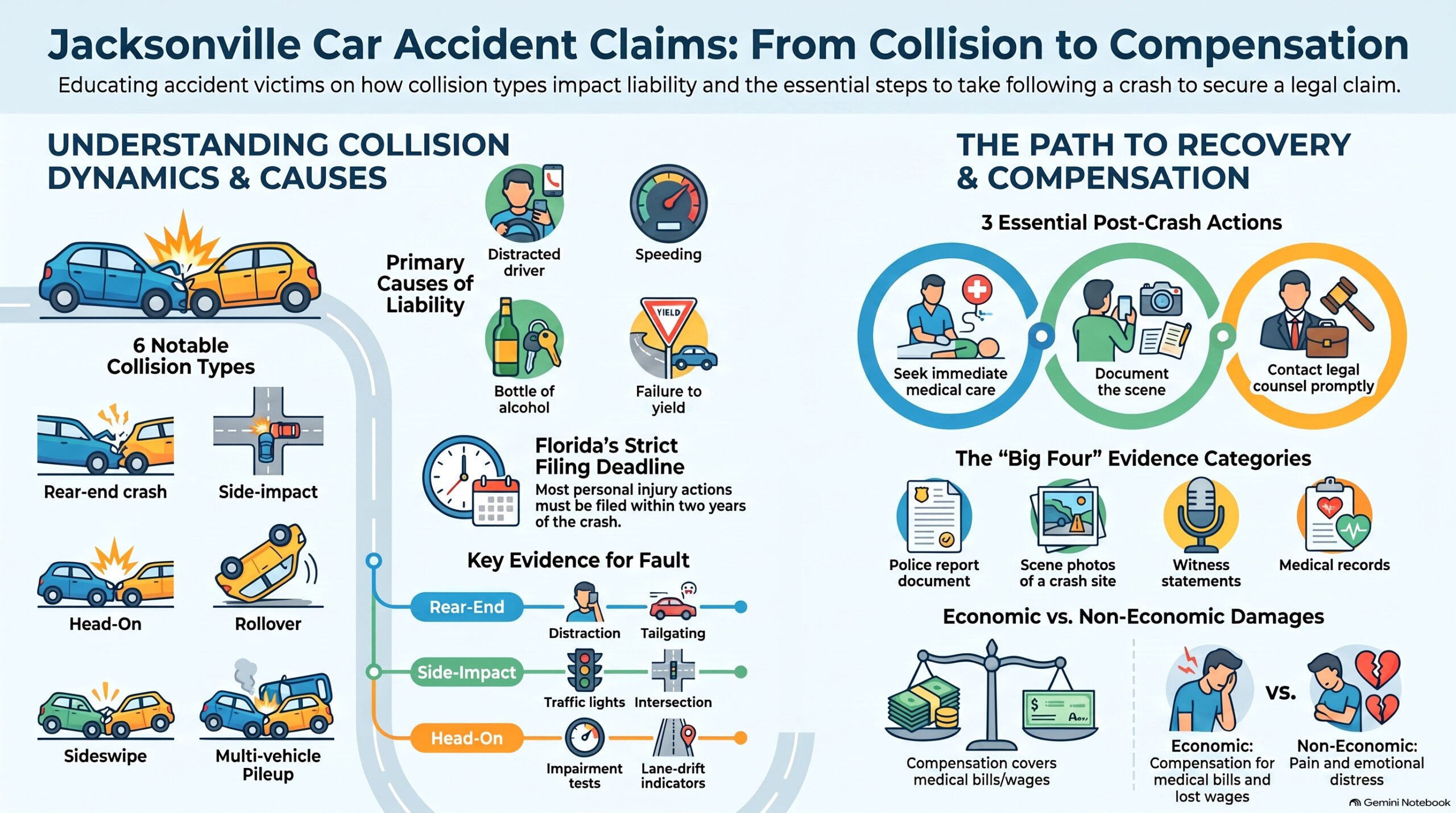
A collision’s structure often determines the direction of force, the likely injury pattern, and the evidence needed to explain how harm occurred. In Jacksonville injury cases, attorneys may evaluate rear-end impacts, side-impact crashes, head-on collisions, rollovers, sideswipes, and multi-vehicle events as Notable Types requiring distinct proof. Each category can affect occupants differently, including spinal strain, fractures, traumatic brain injuries, internal harm, or aggravation of prior conditions.
A careful case review links medical records, vehicle damage, crash reports, photographs, and witness accounts to the specific type of collision. This process helps clarify how an injury occurred and whether treatment needs are reasonably related to the crash. When insurers dispute fault, severity, or medical necessity, documented analysis can support negotiations and, when necessary, Insurance Appeals. For injured people, families, and advocates serving their community, understanding collision types helps ensure claims are presented with accuracy, dignity, and respect for the full impact of harm.
Common Causes of Jacksonville Car Accident Collision Types
Common causes of Jacksonville car accident collision types often include distracted driving, speeding and recklessness, impaired driving, and failure to yield. Each factor can influence how a collision occurs, the severity of resulting injuries, and the evidence needed to determine fault. Careful evaluation of these causes helps clarify liability, insurance issues, and the legal options available after a crash.
Distracted Driving
Because a driver’s attention must remain divided between roadway conditions, traffic signals, and surrounding vehicles, distracted driving can quickly lead to serious collisions in Jacksonville. Distractions may be visual, manual, or cognitive, and each can reduce the care owed to passengers, pedestrians, cyclists, and other motorists. Cell Phone Use remains a frequent concern, especially when drivers glance at screens, adjust applications, or engage in conversations that limit awareness. Texting and driving is particularly dangerous because it combines multiple forms of distraction during moments when safe judgment is required. For those committed to serving injured individuals and families, identifying evidence of distraction may help explain how a crash occurred. Phone records, witness statements, vehicle data, and scene details can support a clearer understanding of responsibility.
Speeding And Recklessness
When motorists exceed posted limits or drive too aggressively for roadway conditions, the risk of a severe Jacksonville collision can rise sharply. Speeding reduces reaction time, increases stopping distance, and magnifies the force of impact, often leaving injured people dependent on prompt Emergency response. Reckless actions, such as unsafe lane changes, tailgating, or ignoring traffic controls, can endanger families, workers, and first responders alike. After such incidents, proper crash-scene protocol helps preserve evidence while protecting those who offer assistance. Police report accuracy is important because speed estimates, witness statements, skid marks, and vehicle positions may influence liability assessments. Documenting injuries early, including pain, mobility limits, and medical treatment, can support a clearer understanding of harm caused by careless conduct on Jacksonville roads.
Impaired Driving
Aggressive driving and excessive speed can make a collision more destructive, but impairment often makes a driver dangerous before any evasive action is possible. Alcohol, controlled substances, and certain medications can reduce perception, delay reaction time, and distort judgment on Jacksonville roads. These crashes may involve lane drift, rear-end impacts, head-on collisions, or a sudden loss of control. Careful investigation is important because the impaired driver’s condition may not be fully shown by the crash scene alone. DUI evidence preservation can include police reports, body camera footage, field sobriety records, toxicology results, and witness statements. Breathalyzer calibration issues may also affect the reliability of test results. For those serving injured people, identifying impairment helps explain preventable harm and supports accountability through a disciplined legal process after serious collisions.
Failure To Yield
Failure to yield often creates dangerous conflicts at Jacksonville intersections, highway ramps, parking lot exits, and pedestrian crossings. These crashes may occur when drivers misjudge speed, ignore signs, turn left across oncoming vehicles, or enter traffic without sufficient clearance. Right-of-way rules exist to protect orderly movement, but violations can place motorists, cyclists, and pedestrians in immediate harm. Intersection traffic is especially vulnerable because multiple lanes, turning vehicles, and signal changes require careful attention.
When a failure-to-yield collision occurs, investigators may review police reports, witness accounts, traffic cameras, roadway markings, and vehicle damage patterns. This evidence helps determine whether a driver failed to respect another road user’s lawful priority. For injured individuals and families, careful legal evaluation can support accountability, fair compensation, and safer community practices.
Don’t Wait. Call Our Florida Personal Injury Lawyers Now!


Legal Rights of Jacksonville Car Accident Collision Injury Victims
After a collision occurs, injured victims in Jacksonville may have the right to pursue compensation for losses caused by another driver’s negligence or wrongful conduct. These rights may include recovery for medical expenses, lost income, reduced earning capacity, pain, and other legally recognized damages. For those committed to serving others, protecting an injured person’s dignity often begins with a clear understanding of the available remedies.
Knowing available remedies can help injured Jacksonville victims protect their dignity after a negligent collision.
- Medical care: Victims may seek prompt treatment and document how injuries affect their daily responsibilities.
- Claim evaluation: Comparative fault determination may influence compensation when more than one party shares responsibility.
- Evidence protection: Preserving accident evidence, including photographs, reports, witness details, and vehicle damage, may support a fair claim.
Florida law imposes deadlines and procedural duties that can affect recovery. A Jacksonville car accident lawyer may help assess rights, communicate with insurers, and pursue accountability while the injured person focuses on restoration and community responsibilities.
Why Do Jacksonville Car Accident Collision Injuries Happen?
While every crash has its own circumstances, Jacksonville car accident injuries often occur because a driver fails to recognize risks, obey traffic laws, or respond safely to changing road conditions. Rear-end impacts may stem from distraction or following too closely, while side-impact crashes often involve red-light violations, unsafe turns, or failure to yield. Head-on collisions can result from impaired driving, fatigue, or drifting across a centerline. Even low-speed impacts may cause serious harm when occupants are older, medically vulnerable, or positioned awkwardly at impact.
Road design, weather, vehicle defects, and poor visibility may also contribute to injury severity. For advocates, caregivers, and professionals serving injured people, understanding causation helps frame responsibility with care and accuracy. Medical documentation can connect symptoms to crash forces, treatment needs, and functional limits. Insurance timelines may also influence how collision facts, injury reports, and liability issues are evaluated after a Jacksonville crash.
What Should You Do After a Jacksonville Car Accident Collision Types Injury?
After a car accident in Jacksonville, an injured person should seek immediate medical care to address urgent conditions and create a record of treatment. If safe to do so, the crash scene should be documented with photographs, witness information, and relevant details about the vehicles and roadway. A Jacksonville lawyer may then evaluate the type of collision, preserve evidence, and explain the legal options available.
Seek Immediate Medical Care
When a collision occurs in Jacksonville, prompt medical evaluation is one of the most important steps an injured person can take to recover and preserve a potential legal claim. Some injuries, including concussion, internal trauma, and soft tissue damage, may not show immediate symptoms. Medical professionals can identify these conditions, recommend treatment, and create records that connect the injury to the crash. Those assisting an injured person should encourage emergency care when pain, dizziness, confusion, bleeding, or limited movement is present. A practical Car safety checklist should include noting whether restraints, airbags, child seats, and other protections functioned properly, since Safety device usage may affect injury assessment. Consistent follow-up care also supports recovery, demonstrates responsible conduct, and helps future advocates understand the full medical impact.
Document The Crash Scene
Prompt medical care should be followed by careful documentation of the crash scene, if it can be done safely and without interfering with emergency responders. A responsible person may photograph vehicle positions, roadway debris, skid marks, traffic signals, lane markings, weather conditions, and visible injuries. Preserving traffic details can help clarify how the collision occurred, especially when multiple vehicles or changing signal patterns are involved. Eyewitness documentation should include names, phone numbers, and brief statements from those who observed the impact or events immediately before it. Notes should identify the time, location, direction of travel, and any hazards present. This careful recordkeeping serves injured individuals, families, insurers, and investigators by supporting accurate decisions and reducing confusion after the scene has been cleared. Records should be stored securely.
Contact A Jacksonville Lawyer
For injured individuals facing medical bills, insurance calls, and uncertainty about fault, contacting a Jacksonville lawyer can provide early guidance before important decisions are made. Legal counsel may evaluate collision reports, medical records, witness details, and available coverage to determine whether a claim should proceed. This support can help injured people protect their rights while focusing on recovery and family responsibilities.
A lawyer may also assist with Traffic incident preparation, including preserving evidence, identifying deadlines, and explaining how different types of collisions affect liability. Careful insurance claim documentation can strengthen communication with insurers and reduce the risk of incomplete submissions. For those committed to serving loved ones, clients, or communities, timely legal guidance may help restore stability and support informed choices after a serious crash.
Critical Evidence in a Jacksonville Car Accident Collision Types Injury Case
Critical evidence in a Jacksonville car accident injury case often determines how fault, causation, and damages are evaluated. Key materials may include: 1. Police crash reports 2. Photos and videos, 3. Witness statements and medical records. Each category can help establish what occurred, how injuries developed, and whether the available proof supports a collision-related claim.
Police Crash Reports
When a Jacksonville car accident involves disputed fault or serious injuries, the police crash report often becomes one of the earliest and most important records in the claim. It may identify drivers, witnesses, insurance details, roadway conditions, cited violations, and the officer’s initial assessment of contributing factors. For injured individuals and those assisting them, this report supports careful evidence gathering and helps organize the facts before memories fade. A Jacksonville car accident lawyer may review the report for accuracy, compare it with medical records and witness statements, and request corrections when needed. Ongoing police investigation updates may also clarify fault, reveal pending citations, or confirm whether impairment, distraction, or reckless conduct was suspected. This record can guide negotiations and strengthen a well-prepared injury claim.
Photos And Videos
After a Jacksonville car accident, photos and videos can preserve details that may disappear within hours, including vehicle positions, skid marks, traffic signals, weather conditions, debris fields, and visible injuries. Such visual records help document the collision scene before cleanup, repairs, or roadway changes alter important facts. They may also show damage patterns that support Accident reconstruction, helping professionals evaluate impact angles, speeds, and the sequence of events. Images of injuries, vehicle interiors, road hazards, and traffic-control devices can strengthen a claim by giving insurers and courts objective context. Digital files should be stored carefully, with dates, locations, and original versions preserved. Social media evidence should be handled cautiously, because posts, tags, or videos may affect liability and damages. Proper collection supports fair service to injured individuals.
Witness Statements
Because memories can fade quickly, witness statements may provide important details about how a Jacksonville car accident occurred, who had the right of way, and whether any driver acted carelessly before impact. Neutral witnesses may describe traffic signals, vehicle speed, lane changes, distracted driving, weather, or roadway hazards. As part of Evidence collection, these accounts can help clarify rear-end, side-impact, head-on, and multi-vehicle collisions. Attorneys and investigators often evaluate witness credibility by considering vantage point, consistency, timing, and any relationship to the parties. Reliable statements may support injured people, assist those working to protect community safety, and reduce confusion during insurance disputes. When statements align with physical evidence and medical documentation, they can strengthen a claim and help decision-makers understand responsibility and the full context of the collision.
Medical Records
In a Jacksonville car accident injury case, medical records often serve as critical evidence linking the collision to the claimed injuries. These records may include emergency room notes, diagnostic imaging, physician evaluations, therapy plans, prescriptions, and future care recommendations. They help establish the nature, severity, and duration of harm, and show whether treatment was sought soon after the crash. Careful Evidence preservation supports that these documents remain complete, organized, and available for insurers, attorneys, and courts reviewing the claim. Medical records may also support or clarify witness testimony by confirming complaints of pain, mobility limits, or visible trauma described after the collision. When accurately collected and reviewed, these records help promote fair accountability, informed advocacy, and responsible service to injured individuals seeking recovery and stability.
Don’t Wait. Call Our Florida Personal Injury Lawyers Now!
Long-Term Effects of Jacksonville Car Accident Collision Types Injuries
Long-term injuries from Jacksonville car accidents may include chronic pain conditions, reduced mobility, and emotional trauma that affect daily life well beyond the initial recovery period. Different collision types can produce lasting physical limitations, particularly when spinal injuries, joint damage, or soft tissue trauma remain unresolved. These effects may influence medical needs, work capacity, and the overall value of an injury claim.
Chronic Pain Conditions
After a serious collision, chronic pain conditions may develop when soft tissue injuries, nerve damage, spinal trauma, or joint injuries fail to recover properly. Persistent pain can affect sleep, concentration, mood, and the ability to maintain employment or household responsibilities. For injured individuals, ongoing care may require diagnostic testing, physical therapy, expert visits, injections, counseling, or Medication management. These needs can place significant pressure on families, caregivers, and community members who offer support during recovery. In legal claims, documentation from physicians and pain experts may help connect lasting symptoms to the crash and explain future treatment expenses. A Jacksonville car accident lawyer may review medical records, accident evidence, and expert opinions to assess how chronic pain has affected victims’ daily lives and long-term financial stability, helping them seek fair compensation.
Reduced Mobility
Persistent pain may also contribute to reduced mobility when injuries limit strength, flexibility, balance, or coordination over time. After a Jacksonville collision, spinal trauma, fractures, joint damage, or nerve injuries may restrict walking, standing, lifting, and routine self-care. These limitations can affect employment duties, household responsibilities, and the ability to assist family or community members.
Medical providers may recommend therapy, braces, canes, walkers, or surgical care to preserve function. In more serious cases, Accessibility accommodations may be necessary at home, work, or public settings, including ramps, modified bathrooms, wider pathways, and adjusted workstations. When permanent impairment exists, wheelchair benefits may help secure mobility equipment and related support. Careful documentation of functional loss helps clarify long-term needs, future care costs, and the practical impact on daily living.
Emotional Trauma Impacts
Although physical injuries often receive immediate attention, emotional trauma can create lasting challenges following a Jacksonville car accident. Survivors may experience anxiety, sleep disruption, depression, or fear of driving, especially after severe rear-end, side-impact, or head-on collisions. These conditions can affect employment, family responsibilities, and the capacity to serve others consistently and with focus. Post-accident counseling may help injured individuals process distress, rebuild confidence, and manage symptoms that interfere with daily life. However, Therapy Costs can become a significant burden, particularly when treatment extends for months or years. Careful documentation of emotional symptoms, clinical visits, and related expenses may support a broader injury claim. A Jacksonville car accident lawyer can evaluate how psychological harm relates to collision type, medical evidence, and long-term recovery needs.
Proving Liability in Jacksonville Car Accident Collision Types Injury Cases
Proving liability in a Jacksonville car accident injury case requires a careful analysis of how the collision occurred, which traffic laws applied, and whether a driver’s conduct caused or contributed to the crash. Different collision types may reveal different evidence, including skid marks, vehicle damage, intersection timing, lane position, and witness observations. Attorneys often review police reports, photographs, medical records, and expert opinions to determine fault with accuracy.
Negligence standards guide this assessment by asking whether a reasonably careful driver would have acted differently under similar circumstances. Speeding, unsafe lane changes, distracted driving, impaired driving, or failure to yield may establish a breach of duty. In service to injured individuals and their families, the legal process also requires proving damages through medical documentation, employment records, and evidence of pain, limitations, and future care needs. Clear proof connects careless conduct to harm and supports fair accountability under Florida law.
Dealing With Insurance Companies After a Jacksonville Car Accident: Collision Types and Injury
After a Jacksonville car accident, insurance communications can quickly become significant, especially when the type of collision affects fault, injury severity, or the value of the claim. Adjusters may request recorded statements, medical authorizations, or early settlement discussions before the full impact of the injury is clear. Careful guidance helps protect the injured person from statements that may be misinterpreted or used to reduce compensation.
Different collision patterns, such as rear-end, T-bone, sideswipe, or multi-vehicle crashes, may prompt insurers to dispute responsibility in different ways. Coverage review is also important, including uninsured motorist coverage when an at-fault driver lacks sufficient insurance. In serious injury matters, negotiating policy limits may be necessary to obtain available compensation from all responsible coverage sources. A lawyer can manage communication, preserve accurate records, and present the claim in a disciplined manner. This approach supports fair treatment while allowing injured individuals and their families to focus on recovery.
What to Expect During a Jacksonville Car Accident Collision Types Injury Claim Process
A Jacksonville car accident collision types injury claim typically begins with an initial evaluation of the crash, injuries, available coverage, and potential sources of liability. The process then focuses on gathering evidence, determining fault, and managing insurance negotiations with attention to medical records, accident reports, and documented losses. If a fair settlement is not reached, the claim may proceed toward litigation, where liability, damages, and legal strategy become central considerations.
Initial Claim Evaluation
Typically, the initial claim evaluation in a Jacksonville car accident collision-type injury claim focuses on identifying how the crash occurred, which parties may be legally responsible, and what damages can be supported by available evidence. At this stage, a legal team reviews the client’s account, collision category, treatment status, wage loss concerns, and insurance coverage. Careful attention to the accuracy of medical records is important because incomplete histories or inconsistent symptom reports may affect valuation. The evaluation also considers deadlines, communication needs, and whether immediate guidance can help protect the injured person’s position. Insurance adjuster tactics may include early settlement offers, broad requests for recorded statements, or efforts to minimize injuries. A measured review allows the claim to proceed with discipline, fairness, and a service-focused commitment to the injured person’s recovery.
Evidence And Liability
When liability is disputed, or injuries are significant, evidence collection becomes a central part of a Jacksonville car accident collision types injury claim. Investigators may review police reports, vehicle damage, medical records, roadway conditions, photographs, witness statements, and available video. Each item helps clarify how the crash occurred and which conduct contributed to harm.
Comparative negligence may affect recovery when more than one driver shared fault, making careful analysis critical. A rear-end, sideswipe, head-on, or intersection collision can raise different factual questions about speed, distraction, visibility, or right-of-way. Documentation also helps identify applicable insurance coverage, including policies connected to drivers, vehicle owners, or commercial entities. For injured persons and those assisting them, organized proof supports accountability, informed decisions, and responsible stewardship of available legal options.
Insurance Negotiation Process
Insurance negotiations often begin after liability, damages, and available coverage have been evaluated with enough precision to support a demand for compensation. In a Jacksonville collision claim, the insurer investigation may include reviewing crash reports, medical records, photographs, witness statements, and repair estimates. Policy limits are also assessed because available coverage can shape the practical value of negotiations. A well-prepared demand explains the injured person’s losses, links those losses to the type of collision, and requests a specific amount. The insurer may respond with questions, a lower offer, or a denial of the claim if it disputes fault, causation, or coverage. Throughout the settlement timeline, careful documentation helps protect the claimant’s interests and encourages a fair review. For the patient, organized communication can support an outcome that responsibly addresses harm and community obligations.
Settlement Or Litigation
After negotiations reveal the insurer’s position, a Jacksonville car accident claim may move toward settlement or litigation depending on the strength of the evidence, the extent of damages, and the disputed issues in the collision. Counsel evaluates liability, medical proof, lost income, and future care needs to determine whether resolution serves the injured person’s recovery and responsibilities. A sound Negotiation strategy may improve settlement timelines, but delayed responses, low offers, or denied coverage can require an insurance appeal. When settlement is not fair, trial readiness becomes critical, including witness preparation, expert review, and careful presentation of collision facts. This process helps ensure the claim remains organized, credible, and focused on restoring stability for those affected while encouraging responsible accountability from all parties involved.
Compensation for Jacksonville Car Accident Collision Types Injury Damages
In a Jacksonville car accident claim, compensation for collision-related injury damages depends on the severity of the injuries, the type of crash, available insurance coverage, and the evidence connecting the collision to the losses claimed. Different collision types, including rear-end impacts, side-impact crashes, head-on collisions, and multi-vehicle accidents, may require distinct evidence to demonstrate how force, vehicle motion, and occupant position caused harm.
A careful fault determination analysis helps identify responsible parties and supports a claim for appropriate recovery. This may involve police reports, witness statements, vehicle damage, medical records, and expert evaluation. Insurance coverage options also affect the path to compensation, including personal injury protection, bodily injury liability, uninsured motorist coverage, and other applicable policies.
For those committed to helping injured people regain stability, organized documentation and timely claim development are vital. A lawyer may evaluate liability, preserve evidence, communicate with insurers, and pursue fair compensation through negotiation or litigation.
Economic vs Non-Economic Damages in Jacksonville Car Accident Collision Types Cases
In Jacksonville car accident collision types cases, damages are generally divided into economic losses, such as medical bills and lost wages, and non-economic losses, such as pain and emotional distress. This distinction helps clarify how a collision has affected both the injured person’s finances and overall quality of life. Proving these damages requires organized evidence, including treatment records, income documentation, expert opinions, and credible accounts of the injury’s personal impact.
Medical Bills And Wages
Following a Jacksonville car accident, medical bills and lost wages often form the basis of an economic damages claim, especially when a collision results in emergency treatment, ongoing care, or time away from work. These losses may include ambulance charges, hospital care, surgery, rehabilitation, medication, follow-up visits, and necessary medical equipment. Long-term treatment costs can become significant when injuries require therapy, expert care, or future procedures. Wage-related losses may involve missed workdays, reduced hours, or diminished employment opportunities during recovery. In more serious cases, Lost Earning Capacity may be evaluated when injuries limit a person’s ability to perform prior job duties or advance professionally. Careful documentation helps establish these damages, allowing legal advocates to present a clear account of financial harm and support fair compensation for injured individuals.
Pain And Emotional Distress
Medical bills and wage losses address measurable financial harm, but Jacksonville car accident cases often also involve pain and emotional distress that affect daily life in less easily quantified ways. These non-economic damages may include physical discomfort, anxiety while driving, sleep disruption, loss of enjoyment, and strain within family or caregiving roles. A serious collision can also create an emotional impact in the workplace, especially when an injured person returns to duty with fear, reduced confidence, or difficulty concentrating. For individuals committed to serving others, these effects may interfere with patience, reliability, and personal purpose. Some injuries contribute to long-term mental health effects, including depression, trauma responses, or persistent stress. In Jacksonville collision cases, recognizing these harms helps present the full human cost beyond financial loss alone.
Proving Collision Damages
Although every Jacksonville car accident case depends on its specific facts, proving collision damages generally requires clear evidence that separates economic losses from non-economic harm. Economic damages may include medical bills, lost income, repair estimates, proof of property damage, expert testimony, and wage records that connect losses to the crash. Non-economic damages require careful support with treatment notes, witness statements, documentation of pain and its impact, future treatment costs, and descriptions of how injuries limit daily service to family, work, or community responsibilities. In collision-type cases, the evidence should show not only what happened, but how the impact caused measurable financial loss and lasting personal harm. A lawyer may organize records, consult qualified professionals, and present damages in a manner that helps insurers or courts evaluate the claim fairly under Florida law.
When a Jacksonville Car Accident Collision Types Injury Case Goes to Trial vs Settlement
When a Jacksonville car accident injury claim involves a specific collision type, such as a rear-end crash, sideswipe, head-on collision, or intersection impact, the path toward settlement or trial often depends on the strength of the evidence, the seriousness of the injuries, and the insurer’s willingness to value the claim fairly. A resolution may be reached through a Settlement Negotiation Strategy when medical records, repair data, witness accounts, and crash analysis clearly demonstrate harm and responsibility.
Trial may become necessary when disputes remain over how the collision occurred, whether the injuries were related, or what compensation is appropriate. In that setting, Trial Evidence Gathering becomes central, including photographs, expert opinions, treatment history, and testimony that help a jury understand the full impact of the crash. A careful lawyer evaluates both options with discipline, aiming to protect the injured person while encouraging fair, respectful resolution whenever possible without delay or pressure.
Don’t Wait. Call Our Florida Personal Injury Lawyers Now!
Florida Laws That May Affect Your Jacksonville Car Accident Collision Types Case
Because Florida law shapes nearly every stage of a Jacksonville car accident case, the type of collision must be evaluated alongside rules governing fault, insurance coverage, deadlines, and recoverable damages. These rules help determine how an injured person may seek care, document losses, and pursue accountability from those who caused harm.
- Florida PIP: Personal injury protection benefits may cover certain medical expenses and lost income, regardless of who caused the crash, making prompt treatment and notice important.
- Comparative negligence: If an injured person shares responsibility, compensation may be reduced according to that percentage of fault, especially in rear-end, sideswipe, or intersection collisions.
- Injury thresholds and damages: Certain claims may require proof of significant injury before non-economic damages, such as pain and suffering or loss of enjoyment, can be pursued.
A careful legal review can help protect an injured person’s dignity, preserve evidence, and support a service-focused path toward recovery.
The Statute of Limitations for Jacksonville Car Accident Collision Types Injury Cases
Florida’s deadlines for filing injury claims are a central part of evaluating any Jacksonville car accident case, including rear-end crashes, head-on collisions, T-bone accidents, sideswipes, rollovers, and multi-vehicle impacts. In Florida, most personal injury actions arising from negligence must be filed within two years from the date of the crash. These Statute deadlines help courts preserve reliable evidence, encourage timely action, and provide structure for injured people seeking orderly resolution.
Different circumstances may affect timing, including claims involving government vehicles, minors, fatal injuries, or delayed discovery of certain harms. Insurance notice requirements and claim filing procedures may also impose earlier practical deadlines, even when the court filing period remains open. Missing a filing deadline can bar recovery, regardless of the severity of the injuries or the service-oriented intentions of those supporting the injured person. Careful attention to dates, records, medical documentation, and correspondence helps protect a claim’s viability from the beginning.
How a Jacksonville Car Accident Collision Types Lawyer Can Help You
After a serious crash, a Jacksonville car accident collision types lawyer can evaluate how the specific manner of impact affects liability, evidence, insurance coverage, and the value of the injury claim. Different collisions create different proof needs, and careful legal guidance helps injured people protect their families, coworkers, and communities from avoidable financial harm.
- Collision analysis: The lawyer may review crash reports, vehicle damage, witness accounts, and medical records to accurately address fault and damages.
- Insurance advocacy: The lawyer can respond to delayed, denied, or undervalued claims, including potential insurance bad faith, and pursue claims for medical bills, lost income, and property damage.
- Claim presentation: The lawyer may organize evidence for negotiation or litigation, including in severe injury and wrongful death cases, so that the full human and financial impact is presented with dignity.
This support allows injured clients to focus on recovery while legal responsibilities are handled with discipline.
When to Contact a Jacksonville Car Accident Collision Types Lawyer
When should an injured person seek legal guidance after a collision in Jacksonville? Contact should occur as soon as practical after emergency needs are addressed, especially when injuries, disputed fault, commercial vehicles, pedestrians, cyclists, or multiple vehicles are involved. Early guidance can help preserve medical documentation, vehicle damage records, photographs, and witness evidence before memories fade or records become difficult to obtain.
Prompt attention also matters because Insurance claim deadlines may affect available benefits and required notices. An injured person may need help understanding the Florida legal process, including how claims are evaluated, how to communicate with insurers, and what information to gather. Delays can create gaps in treatment history, weaken proof of damages, or complicate coordination with healthcare providers. For those committed to protecting family stability and serving others responsibly, timely consultation supports informed decisions while preserving the factual record needed for a careful assessment of the collision.
Why You Need an Experienced Jacksonville Car Accident Collision Types Lawyer
Timely legal guidance is most effective when it comes from counsel who understands how different types of collisions affect liability, injury proof, insurance coverage, and case value. A rear-end crash, sideswipe, rollover, intersection impact, or multi-vehicle collision may require distinct evidence, including scene photos, vehicle damage analysis, medical records, and witness statements. Experienced representation helps injured people protect their claims while they focus on recovery, family responsibilities, and service to others.
A Jacksonville car accident collision types lawyer can evaluate how Comparative Fault may reduce compensation when insurers argue that an injured person shared blame. Counsel can also respond to Insurance Denials by identifying policy language, missed evidence, or improper claim handling. This guidance is important because serious crashes often create medical bills, lost income, and long-term limitations. Skilled advocacy helps present the full effect of the harm, supports fair negotiations, and prepares the claim for litigation when necessary.
How to Choose the Right Jacksonville Car Accident Collision Types Lawyer for Your Case
Choosing the right Jacksonville car accident collision types lawyer begins with evaluating their experience, communication, and ability to investigate the specific crash in question. A careful selection process helps injured people and their families find guidance that supports recovery, accountability, and responsible service to the community.
The lawyer should understand rear-end crashes, side-impact collisions, head-on impacts, rollovers, and multi-vehicle accidents. Strong Client communication is vital, since clients need clear updates, practical expectations, and prompt answers during a difficult period. Fee transparency should also be reviewed before representation begins, including how costs are handled and when payment may be owed.
An effective lawyer will explain the case strategy, identify available evidence, evaluate insurance coverage, and address medical documentation. The firm should also discuss settlement timelines without making unrealistic promises. By considering these factors, an injured person can choose counsel prepared to protect legal rights while pursuing a fair and orderly resolution.
About The Law Offices of Anidjar & Levine
For those seeking legal guidance after a collision in Jacksonville, The Law Offices of Anidjar & Levine represents injured clients in car accident cases involving a range of crash types and insurance disputes.
The firm assists individuals and families who need steady support while addressing medical care, lost income, vehicle damage, and insurer communications after a serious crash.
Its attorneys evaluate each matter through a Legal consultation, identifying liability issues, available insurance coverage, and evidence needed to support a claim.
From rear-end collisions to intersection crashes and multi-vehicle accidents, the firm develops a case strategy tailored to the client’s injuries, circumstances, and long-term needs.
The Law Offices of Anidjar & Levine also emphasizes responsive service, allowing clients to focus on recovery while legal professionals manage deadlines, documentation, and negotiations.
This approach reflects a service-minded commitment to helping injured people pursue fair compensation through disciplined, organized representation.
Frequently Asked Questions
Are Certain Collision Types More Common on Jacksonville Highways?
Yes. Common crash patterns on Jacksonville highways often include rear-end crashes during congestion, lane-change collisions near merges and exits, and sideswipe crashes in heavy traffic. Intersection impacts are more frequent at highway-to-surface road intersections, especially during turns or signal changes. These trends matter for those serving injured people, because identifying the collision type helps clarify fault, document hazards, and support informed safety and recovery decisions.
Can Vehicle Defects Influence How a Collision Type Is Classified?
Yes, vehicle defects can influence how a collision type is classified, especially when brake failure, tire separation, handling malfunction, or airbag defects alter the crash sequence. Investigators may distinguish between rear-end, rollover, sideswipe, or loss-of-control events based on mechanical evidence. Product liability may arise if a defective part contributed to harm. Liability apportionment then helps assign responsibility among drivers, manufacturers, repair providers, and others serving public safety.
Do Multi-Car Pileups Require Different Legal Strategies?
Yes, multi-car pileups often require different legal strategies because liability may be divided among several drivers, insurers, and contributing factors. Legal strategy variations focus on sequencing impacts, identifying negligent conduct, and protecting injured parties from unfair blame. Multi-claim evidence handling becomes vital and includes coordinated witness statements, crash reports, vehicle damage analysis, and medical documentation. A service-minded approach helps guarantee each affected person’s losses are evaluated with accuracy, fairness, and care.
How Are Rideshare Accidents Categorized by Collision Type?
Rideshare accidents are categorized by Collision Classification, such as rear-end, side-impact, head-on, sideswipe, rollover, pedestrian, or multi-vehicle events. Rideshare Definitions also affect evaluation, including whether the driver was offline, awaiting a request, en route, or transporting a passenger. This structure helps service-minded professionals identify duties, layers of insurance, injured parties, and fault patterns. Clear classification supports fair assistance, accurate reporting, and responsible advocacy for those harmed.
Can Accident Reconstruction Identify the Exact Collision Sequence?
Accident reconstruction can often identify the exact collision sequence, though the degree of certainty depends on the available facts. Analysts evaluate vehicle damage, roadway marks, final resting positions, electronic data, and injury patterns to determine the impact sequence. Witness statements help, especially when independent accounts align with scene findings. Physical evidence corroborates those accounts, supporting a reliable timeline. This process can assist those serving injured individuals, insurers, or courts by clarifying responsibility with disciplined, objective analysis.
—————————
A car accident in Jacksonville, regardless of the collision type, can lead to complex medical, financial, and legal concerns.
Victims may benefit from prompt legal guidance to protect their rights, document damages, and pursue fair compensation.
The Law Offices of Anidjar and Levine help injured parties understand their options and navigate the claims process with care and precision.
Those affected by a crash should consider speaking with a qualified Jacksonville Personal Injury Lawyer as soon as possible.