

The Law Offices of Anidjar and Levine helps families in Jacksonville evaluate whether a nursing home, staff member, administrator, or other party caused preventable harm. A lawyer reviews medical records, incident reports, witness statements, care plans, staffing logs, and facility policies to identify failures in supervision, medication administration, fall prevention, hygiene, or emergency response. Legal support may also protect residents from insurer tactics and preserve important evidence, including surveillance footage. Learn more from a Jacksonville Personal Injury Lawyer about residents’ rights, evidence, and potential claim options.
Main Takeaways
- A Jacksonville nursing home injury lawyer can help identify liable facilities, staff, administrators, or other responsible parties.
- Legal review often includes medical records, incident reports, photos, witness statements, staffing logs, care plans, and expert opinions.
- Common claims involve falls, pressure sores, medication errors, unsafe conditions, neglect, abuse, or delayed emergency response.
- Families should seek prompt medical care, document injuries, preserve evidence, and avoid broad insurer statements or authorizations.
- Compensation may cover medical care, pain and suffering, emotional distress, disability, funeral costs, and other related losses.


How We Can Help With Your Jacksonville Nursing Home Injury Claim
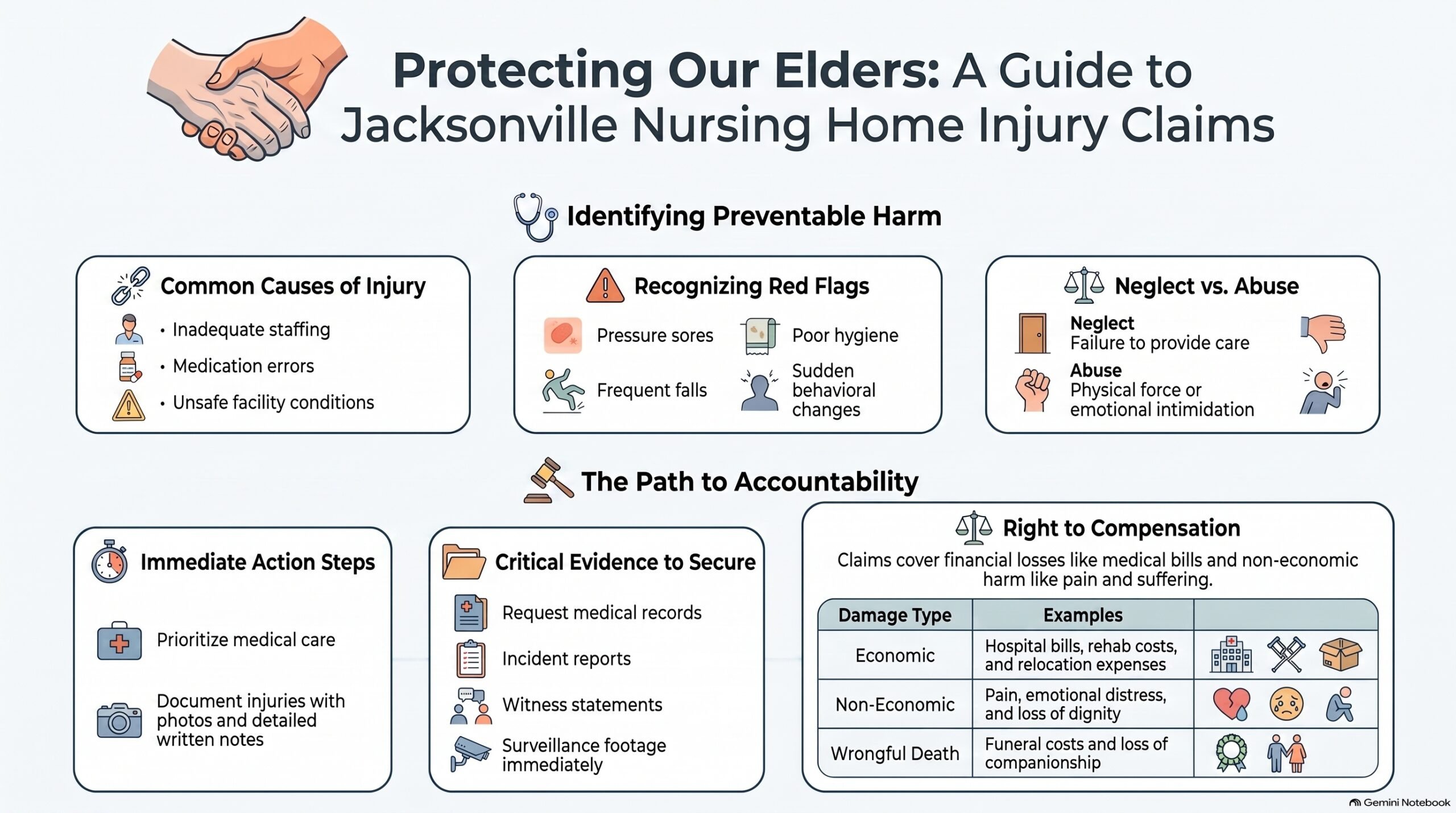
When a nursing home resident suffers harm due to neglect, abuse, or unsafe conditions, a Jacksonville nursing home injury lawyer can help determine whether the facility, staff members, administrators, or other parties may be legally responsible. Legal support may include reviewing medical records, gathering witness statements, preserving facility documents, and consulting appropriate care standards to identify preventable failures. For families devoted to protecting an elder’s dignity, this guidance can provide structure during a difficult and urgent time.
Counsel may also communicate with insurers, evaluate damages, and prepare claims seeking compensation for medical care, pain, emotional distress, and related losses. If neglect or abuse results in a resident’s death, the lawyer may assist eligible survivors with wrongful death claims. Many firms also explain contingency fee options, which may allow families to pursue accountability without paying attorney fees upfront. This assistance helps families act responsibly while focusing on the resident’s safety, comfort, and ongoing care.
OUR CONSULTATIONSARE FREE
START YOUR FREE CASE REVIEW

Understanding Jacksonville Nursing Home Injury Cases
After legal support is considered, it is important to understand what makes a nursing home injury case legally actionable. These cases often involve evidence that a facility failed to meet its required care obligations, resulting in measurable harm to a resident. In Jacksonville, evaluation may include Resident Rights, facility policies, medical records, witness statements, and documented changes in the resident’s condition.
A legally valid claim generally depends on Liability Standards that connect the facility’s conduct to the injury. This may involve whether caregivers followed care plans, responded appropriately to known limitations, and maintained safe supervision. Staffing Ratios can also matter when records show that resident needs were not reasonably supported. Inadequate Transfers may be relevant when movement from a bed, chair, wheelchair, or bathroom setting is performed without proper assistance. For families committed to protecting vulnerable residents, understanding these legal elements helps identify whether an injury reflects preventable neglect rather than an unavoidable medical event.
Common Causes of Jacksonville Nursing Home Injury
Common causes of Jacksonville nursing home injuries often involve inadequate staff supervision, medication administration errors, unsafe facility conditions, and neglect or abuse. These factors may pose serious risks to residents, particularly those with limited mobility, cognitive impairments, or complex medical needs. A careful review of the circumstances can help determine whether facility practices, staffing decisions, or individual misconduct contributed to the injury.
Inadequate Staff Supervision
Inadequate staff supervision can leave nursing home residents exposed to preventable harm, especially when employees fail to monitor residents with known mobility limits, cognitive impairment, fall risks, or medical needs. A Staffing shortage may reduce response times, limit resident monitoring, and prevent caregivers from noticing unsafe wandering, transfers, or unattended distress. Effective supervision requires clear fall prevention practices, proper assistance with movement, and timely checks based on each resident’s care plan. Facilities must also meet training requirements, so staff understand how to identify hazards, document concerns, and seek help when risks increase. When supervision lapses, vulnerable residents may suffer fractures, head injuries, bruising, or emotional trauma. Careful oversight reflects respect for dignity and safety, ensuring residents receive attentive support in a setting meant to protect them.
Medication Administration Errors
Resident safety also depends on accurate medication administration, because even brief lapses in communication, documentation, or clinical judgment can cause serious harm. In nursing homes, errors may include missed doses, incorrect timing, improper medication, incorrect dosage, or failure to monitor for side effects. These mistakes can be especially dangerous for residents with complicated medical needs, cognitive impairment, or multiple prescriptions.
Responsible facilities reduce risk through consistent Staff training, careful pharmacy coordination, and clear supervision of medication aides and nurses. Accurate records, physician orders, and prompt reporting help maintain regulatory compliance while supporting attentive care. When patterns of medication errors appear, they may indicate understaffing, poor oversight, or weak internal procedures. Careful review can determine whether preventable mistakes contributed to injury, decline, or hospitalization.
Unsafe Facility Conditions
When a nursing home fails to maintain a safe physical environment, residents may face preventable hazards that increase the risk of falls, injuries, and medical complications. Unsafe facility conditions may include wet floors, poor lighting, broken handrails, uneven walkways, damaged beds, obstructed hallways, or malfunctioning safety equipment. For residents with limited mobility, impaired vision, or chronic illness, these dangers can have serious consequences. Staffing shortages may contribute to delayed maintenance reporting, reduced supervision in common areas, and slower responses to environmental risks. Compliance violations involving sanitation, accessibility, fire safety, or building maintenance may also indicate broader failures in facility oversight. Families and caregivers who seek to protect vulnerable residents should recognize that a safe setting is vital to preserving dignity, independence, and health within long-term care.
Neglect And Abuse
Unsafe facility conditions can place residents at immediate risk, but injuries may also result from harmful conduct or prolonged failures in daily care. Neglect may involve missed meals, poor hygiene, untreated wounds, medication errors, or delayed assistance after falls. Abuse may include physical force, verbal intimidation, isolation, financial exploitation, or improper restraint. These events often develop when staffing levels are inadequate, supervision is weak, or caregivers lack proper training. Residents with limited mobility, dementia, or communication barriers may face greater risk because they depend on others for protection and routine support. A delayed emergency response can worsen injuries and signal deeper operational failures. A careful review of records, witness accounts, and facility practices can help determine whether a resident’s harm resulted from preventable neglect or intentional misconduct.
Don’t Wait. Call Our Florida Personal Injury Lawyers Now!


Legal Rights of Jacksonville Nursing Home Injury Victims
Although nursing home injuries can arise in many circumstances, victims in Jacksonville retain clear legal rights when harm results from neglect, abuse, inadequate supervision, medication errors, unsafe premises, or violations of required care standards. These rights protect residents’ dignity, safety, and access to accountability.
- Right to compensation: Injured residents may seek recovery for medical expenses, pain, disability, emotional harm, and related losses caused by substandard care.
- Right to investigation: Families may request records, report concerns to the appropriate agencies, and seek legal review when caregivers or facilities fail to meet their duties.
- Right to timely action: Statute basics matter, because filing deadlines can affect whether a claim may proceed in court.
When an injury causes death, wrongful death claims may allow eligible survivors to seek accountability for funeral costs, lost support, and the resident’s suffering. Legal action can help protect vulnerable residents and promote higher standards of compassionate care.
Why Do Jacksonville Nursing Home Injuries Happen?
Legal rights provide a path to accountability, but understanding why nursing home injuries happen is often the first step in evaluating whether those rights were violated. In Jacksonville facilities, injuries may arise when staffing levels are inadequate, caregivers lack proper training, or supervision is inconsistent. Residents who need help with mobility, hygiene, medication, or nutrition face increased risk when care plans are ignored or poorly followed.
Many injuries also stem from unsafe conditions, including wet floors, broken equipment, poor lighting, or delayed maintenance. These circumstances may reflect broader Facility Violations rather than isolated mistakes. When a facility fails to monitor changes in health, prevent falls, address pressure sores, or respond to signs of neglect, Resident Rights may be at risk.
For families and advocates committed to serving vulnerable adults, these causes matter because they reveal whether harm resulted from preventable failures in care, oversight, communication, or compliance with required standards.
What Should You Do After a Jacksonville Nursing Home Injury?
After a Jacksonville nursing home injury, prompt action can protect the resident’s health, preserve crucial evidence, and support any potential legal claim. The resident should receive appropriate medical care, and the injury should be documented through photographs, records, witness information, and facility reports. Families may also need to contact an attorney, particularly when neglect, abuse, or unsafe conditions may have contributed to the harm.
Seek Medical Care
A resident who suffers harm in a Jacksonville nursing home should receive prompt medical evaluation, even when the injury appears minor at first. Timely care can identify fractures, internal bleeding, infections, medication complications, or cognitive changes that may not be immediately visible. Staff members and relatives should request an assessment from qualified medical personnel, and emergency services should be contacted when symptoms indicate an urgent danger.
Medical attention also supports the resident’s dignity, comfort, and safety, which remain central duties of any care facility. Physicians can recommend treatment, monitoring, or transfer to a hospital when needed. If concerns arise about improper supervision or delayed response, families may later consider Family Legal Options and Investigate Neglect with guidance from appropriate professionals, while first ensuring the resident’s health is restored.
Document The Injury
Once the resident’s immediate medical needs are addressed, careful documentation helps preserve an accurate record of what occurred and how the injury affected the resident. Family members or trusted advocates may note the date, time, location, staff present, and any statements made about the incident. Photo documentation can be valuable, including clear images of bruises, wounds, bedding, equipment, or unsafe conditions, taken from several angles when appropriate. Written observations should describe pain, changes in mobility, confusion, emotional distress, or delays in receiving assistance. Copies of care plans, discharge papers, medication lists, and incident reports should be organized promptly. A preservation timeline helps track when evidence was created, requested, or received. Accurate records support accountability, protect the resident’s dignity, and help caregivers understand the full impact of the injury.
Contact An Attorney
When should legal guidance be sought following a nursing home injury in Jacksonville? After medical needs are addressed and the incident is documented, families or caregivers should promptly consult an attorney. Early legal review helps preserve records, identify responsible parties, and evaluate whether neglect, unsafe staffing, medication errors, wrongful discharge, or improper use of consent forms contributed to the harm.
An attorney may communicate with the facility, insurers, and investigators, reducing pressure on those focused on the resident’s recovery. Legal guidance also helps determine applicable deadlines and available remedies under Florida law. For individuals committed to protecting vulnerable residents, contacting counsel is a practical step toward accountability. Timely advice can support safer care, preserve dignity, and help prevent similar injuries from affecting others.
Don’t Wait. Call Our Florida Personal Injury Lawyers Now!
Critical Evidence in a Jacksonville Nursing Home Injury Case
Significant evidence in a Jacksonville nursing home injury case often determines whether negligence can be identified, proven, and connected to the resident’s harm.
Essential materials may include:
1. medical records showing diagnoses, treatment, and injury progression; 2. incident reports documenting how staff described the event; and 3. witness statements or surveillance footage that may confirm what occurred.
Each category should be preserved promptly, because delays can affect the availability, accuracy, and legal value of the evidence.
Medical Records
Although many nursing home injury claims involve conflicting accounts, medical records often provide the most reliable timeline of what occurred and how the resident’s condition changed. These records may include physician notes, medication logs, wound assessments, care plans, therapy entries, and hospital transfer summaries. In nursing home litigation, they help clarify whether staff recognized warning signs, followed orders, and responded appropriately to declining health. Understanding the basics of medical negligence allows attorneys to compare documented care against accepted standards and identify omissions that may reflect neglect. Proper record retention is essential because missing or altered documentation can affect accountability. Facilities must also maintain HIPAA compliance when releasing records, protecting resident privacy while allowing lawful review. For families seeking answers, complete medical records can support informed, compassionate action.
Incident Reports
Because an incident report is usually created soon after an injury or unusual event, it can become a central source of evidence in a Jacksonville nursing home injury case. This document may identify when and where the event occurred, the condition in which the resident was found, and the immediate steps the facility reported taking. When reviewed with medical records, Staffing records, and resident complaints, the report may reveal whether the facility responded with appropriate care or overlooked warning signs. It may also show delays in treatment, incomplete documentation, or inconsistent explanations that require closer review. For families seeking accountability while protecting vulnerable residents, incident reports can help clarify whether safety policies were followed and whether the nursing home acted with proper attention, dignity, and care.
Witness Statements
When a resident is injured or found in distress, witness statements can provide details that are not fully captured in an incident report or medical chart. Statements from roommates, visitors, nurses, aides, therapists, or housekeeping staff may clarify what occurred before, during, and after the event. These accounts can help establish incident timelines, identify missed warnings, and reveal whether staff responded with appropriate care. Witness credibility is evaluated by consistency, firsthand knowledge, and any connection to the facility or resident. A careful review may also uncover gaps in staff training, especially when multiple witnesses report confusion, delayed assistance, or improper handling. A facility’s complaint history may further support or challenge these statements. Reliable witness accounts help advocates assess responsibility while honoring the resident’s safety, dignity, and need for protection.
Surveillance Footage
Witness statements may describe what occurred, but surveillance footage can often confirm, refine, or challenge those accounts in a Jacksonville nursing home injury case. Video from hallways, dining areas, entrances, or common rooms may show how long a resident remained unattended, whether staff responded promptly, or whether hazards contributed to harm. This evidence can be especially important when evaluating Fall prevention practices, including the use of mobility aids, clear walkways, and supervision after known risks were identified. Footage may also reveal patterns connected to staff scheduling, such as delayed assistance during understaffed shifts or limited monitoring during high-need periods. Because recordings may be overwritten quickly, timely preservation requests are critical. A careful review helps determine whether the facility fulfilled its duty to protect vulnerable residents through consistent, attentive care.
Long-Term Effects of Jacksonville Nursing Home Injuries
Nursing home injuries in Jacksonville can lead to long-term consequences that extend well beyond the initial incident. Residents may experience chronic pain conditions, reduced mobility, and lasting emotional trauma, each of which can affect daily functioning and quality of life. These outcomes may require ongoing medical care, rehabilitation, and careful legal evaluation when evaluating the full impact of an injury.
Chronic Pain Conditions
After a serious injury in a Jacksonville nursing home, chronic pain may become a lasting and disruptive condition that affects mobility, sleep, mood, and overall quality of life. Persistent pain may follow fractures, pressure injuries, nerve damage, soft tissue trauma, or complications from delayed medical attention. Residents may require consistent assessment, timely medication review, physical therapy, and compassionate monitoring to reduce suffering and preserve dignity. Care teams should document pain complaints carefully, especially when cognitive impairment limits clear communication. Mobility device issues, such as poorly fitted walkers or unsafe wheelchairs, may aggravate pain and increase distress. Effective falls prevention planning can also reduce repeated trauma that worsens chronic symptoms. When pain is overlooked, the resident’s daily comfort, trust, and sense of safety may decline markedly.
Reduced Mobility
Persistent pain often contributes to a broader loss of function, and reduced mobility may become one of the most significant long-term effects of an injury in a Jacksonville nursing home. When movement becomes limited, residents may struggle with bathing, dressing, transfers, and participation in daily routines that support dignity and independence. Reduced mobility can also increase reliance on caregivers, making consistent Staff Training essential for safe assistance, proper positioning, and careful use of mobility devices. Facilities committed to serving vulnerable residents should maintain individualized care plans that address strength, balance, and changing physical limitations. Effective Fall Prevention measures, including clear walkways, supervision, and timely response to call lights, may reduce the risk of additional harm. When mobility declines after an injury, careful evaluation may reveal whether neglect contributed to preventable loss.
Emotional Trauma
Emotional trauma may develop gradually when an injured nursing home resident experiences fear, humiliation, isolation, or a loss of trust in caregivers. These psychological injuries can affect sleep, appetite, communication, and willingness to participate in treatment. A resident who once accepted assistance may become withdrawn, anxious, or resistant to care, which can complicate repair and daily support. Care teams and families should observe behavioral changes carefully, because trauma documentation may help clarify how the injury affected the resident’s emotional well-being over time. Accurate notes, counseling records, and witness observations can provide valuable context. Compassionate coping support, including consistent routines, respectful communication, and access to mental health services, may help restore stability and promote dignity, safety, and confidence for vulnerable residents within the care environment.
Proving Liability in Jacksonville Nursing Home Injury Cases
Establishing liability in a Jacksonville nursing home injury case requires evidence that the facility, its staff, or another responsible party failed to meet the applicable standard of care. This proof may include medical records, incident reports, staffing logs, photographs, witness statements, care plans, and expert opinions. Each item can help show whether neglect, unsafe conditions, poor supervision, medication errors, or inadequate training contributed to the resident’s harm.
A careful investigation also considers whether the injury was preventable and whether prior warning signs were ignored. Families seeking accountability often serve a broader purpose by protecting other residents from similar harm. Compliance with the statute timeline is crucial, because delayed action can weaken evidence and limit available remedies. Legal counsel may also evaluate early insurance tactics, not to negotiate coverage issues, but to understand how responsibility may be disputed. Strong liability evidence provides the foundation for a focused, principled claim.
Dealing With Insurance Companies After a Jacksonville Nursing Home Injury
Handling insurance communications after a Jacksonville nursing home injury requires caution, because insurers often begin evaluating liability, damages, and potential defenses soon after the incident is reported. Families seeking to protect a vulnerable resident should avoid making recorded statements, granting broad medical authorizations, or making informal comments that could be used to reduce responsibility. A careful review of policy coverage can identify applicable limits, exclusions, and the entities responsible for payment.
Insurance representatives may use Negotiation tactics that appear cooperative while challenging injury severity, prior conditions, or the facility’s role. Understanding common reasons for claim denials, such as alleged lack of notice, disputed causation, or incomplete documentation, helps preserve the resident’s interests. Counsel can organize evidence, communicate with adjusters, and respond to unfair characterizations with measured accuracy.
The settlement timeline may be affected by medical stabilization, document gathering, and coverage disputes. Patient advocacy requires patience, diligence, and clear communication focused on safety, accountability, and fair compensation.
What to Expect During a Jacksonville Nursing Home Injury Claim Process
The Jacksonville nursing home injury claim process typically begins with an initial claim evaluation, during which the facts, injuries, and potential liability are reviewed. Evidence collection may follow, including medical records, facility reports, witness statements, and documentation of care standards. Depending on the strength of the claim, the matter may proceed through settlement negotiations or, when necessary, the filing of a lawsuit.
Initial Claim Evaluation
During an initial claim evaluation, a Jacksonville nursing home injury lawyer reviews the facts surrounding the resident’s harm, the facility’s conduct, and the available evidence to determine whether a viable legal claim may exist. This assessment often begins with listening carefully to the family’s concerns, the resident’s condition, and the care setting involved. The lawyer may explain the basics of medical negligence, including whether staff failed to act with reasonable skill, attention, or compassion. The review may also consider Florida caregiver standards, which help measure whether the facility met duties owed to vulnerable residents. This stage helps identify potential liability, damages, and responsible parties. It also gives families a clearer understanding of possible next steps, allowing them to serve their loved one’s interests with informed, steady judgment.
Evidence Collection Process
After the initial evaluation identifies a possible claim, evidence collection becomes the next major step in determining what occurred and why. This process often begins with preserving evidence that may reveal unsafe care, neglect, or preventable harm. A lawyer may focus on gathering documentation, including medical records, care plans, incident reports, staffing notes, and prior complaints. Witness interviews may also be conducted with residents, family members, staff, or visitors who observed changes in condition or facility practices. Collecting photos of injuries, living conditions, mobility equipment, or hazards can help clarify the circumstances. Each item is reviewed for accuracy, relevance, and consistency. Careful evidence collection supports a fact-based approach, helping responsible advocates protect vulnerable residents while honoring the dignity and safety they are entitled to.
Settlement Negotiation Steps
Begin settlement negotiations only when the evidence has been organized, the injuries are understood, and the potential value of the Jacksonville nursing home injury claim can be assessed with reasonable care. At this stage, the representative may prepare a demand package that explains the resident’s harm, medical needs, financial losses, and the facility’s conduct. Evidence Preservation remains important because records, photographs, witness statements, and care plans support each position during discussions. A careful Liability Assessment helps determine whether neglect, understaffing, poor supervision, or unsafe practices contributed to the injury. The facility or insurer may respond with questions, objections, or a lower offer. Each response should be reviewed patiently, with attention to the resident’s dignity, future care, and fair compensation. Negotiations may continue until a reasonable resolution appears possible.
Filing A Lawsuit
If settlement negotiations do not lead to a fair resolution, filing a lawsuit may become the next step in a Jacksonville nursing home injury claim. This process begins with a formal complaint, which identifies the parties, describes the alleged neglect or abuse, and states the damages sought. The nursing home is then served and given time to respond. During litigation, attorneys may request records, conduct witness interviews, and pursue the preservation of evidence, including medical charts, staffing logs, photographs, and surveillance footage. Discovery allows each side to evaluate the facts before trial. For families focused on protecting vulnerable residents, this stage can provide accountability and structure. Although many cases still resolve before trial, filing suit shows a prepared effort to seek justice through the civil court system.
Compensation for Jacksonville Nursing Home Injury Damages
Compensation for Jacksonville nursing home injury damages may include payment for medical treatment, rehabilitation, pain and suffering, emotional distress, and other losses connected to neglect or abuse. Such recovery can help restore dignity, support ongoing care, and address harm caused when vulnerable residents were not protected with appropriate vigilance.
A claim may consider hospital bills, therapy needs, assistive equipment, medication, relocation costs, and expenses required to improve safety after an injury. Legal representation can help identify responsible parties, preserve evidence, and communicate with insurers whose Insurance strategy may focus on limiting payment. In some cases, compensation also encourages facilities to improve patient safety through better supervision, training, documentation, and staff recruitment practices.
For families committed to serving and protecting elders, compensation is not merely financial. It may provide resources for recovery, accountability, and safer future care, while recognizing the serious impact that neglect can impose on a resident’s life and well-being.
Economic vs Non-Economic Damages in Jacksonville Nursing Home Injury Cases
In Jacksonville nursing home injury cases, damages are generally divided into economic and non-economic losses, each serving a distinct role in measuring the harm suffered. Economic damages cover financial losses such as medical expenses, rehabilitation costs, and related out-of-pocket expenses, while non-economic damages encompass pain and suffering, emotional distress, and loss of dignity. Proving these damage values requires clear documentation, credible testimony, and a careful connection between the injury and the resulting losses.
Economic Damages Explained
When a nursing home injury causes measurable financial loss, economic damages provide a framework for calculating the costs tied directly to the resident’s harm. These damages may include hospital bills, physician charges, rehabilitation expenses, medication costs, mobility equipment, and transportation for necessary care. They may also cover relocation expenses when a safer placement becomes necessary, as well as documented payments for attendant support.
In Jacksonville nursing home injury cases, careful recordkeeping helps establish the amount owed and link each expense to the facility’s conduct. For Wrongful Death Claims, economic damages may include funeral costs, final medical bills, and lost financial support, subject to Florida’s Eligibility Requirements. This category focuses on verifiable losses, allowing families and advocates to pursue accountability while addressing practical needs created by neglect or abuse.
Non-Economic Damages Explained
Although financial records may show part of a resident’s loss, non-economic damages address the personal harm that cannot be measured by receipts or invoices. In Jacksonville nursing home injury cases, these damages may include pain, emotional distress, loss of dignity, fear, humiliation, and reduced enjoyment of daily life. They recognize that neglect can affect a resident’s trust, comfort, independence, and sense of safety. Family members may also encounter these issues in Wrongful death claims, where grief, companionship, and the loss of guidance become central concerns. Because these losses are deeply personal, compassionate legal representation can help families seek accountability while honoring the resident’s humanity. Counsel may also explain the legal fee structure, helping families understand representation costs while focusing on care, service, and responsible advocacy.
Proving Damage Values
Proving damage values requires a clear connection between the resident’s injuries, the nursing home’s conduct, and the measurable or personal losses that followed. Economic damages may be shown through medical bills, rehabilitation costs, medication records, transportation expenses, and documentation of future care needs. Non-economic damages require careful proof of pain, fear, loss of dignity, emotional distress, and diminished quality of life. Evidence preservation is critical and includes photographs, incident reports, staffing records, witness statements, and medical chart entries. These materials help establish liability causation by showing how neglect, abuse, or unsafe conditions contributed to harm. A well-supported claim presents both financial losses and human suffering accurately, allowing decision-makers to understand the full extent of the resident’s damages while respecting the seriousness of the injuries in each case.
Don’t Wait. Call Our Florida Personal Injury Lawyers Now!
When a Jacksonville Nursing Home Injury Case Goes to Trial vs Settlement
As a nursing home injury claim develops, the decision to pursue settlement or proceed to trial depends on the strength of the evidence, the severity of the harm, and the facility’s willingness to accept responsibility. Settlement may serve an injured resident’s needs when it provides fair compensation without prolonged stress, delay, or uncertainty. It can also preserve resources for care, support, and family stability.
A trial may become necessary when a facility disputes clear neglect, undervalues serious injuries, or refuses to accept reasonable accountability. In those situations, counsel evaluates Jury verdict factors, including medical proof, witness credibility, prior safety concerns, and the lasting effect on the resident’s dignity and daily life. Careful trial strategy planning helps present the resident’s experience with accuracy, compassion, and discipline. Whether resolved through negotiation or a courtroom presentation, the guiding objective remains the same: protecting vulnerable residents, honoring their needs, and seeking a result that reflects the true harm they suffered.
Florida Laws That May Affect Your Jacksonville Nursing Home Injury Case
When a resident is injured in a Jacksonville nursing home, Florida law may shape nearly every stage of the claim, from the facility’s duties to the evidence required for recovery. These laws are designed to protect vulnerable adults while guiding families, advocates, and caregivers seeking accountability.
Florida law helps define nursing home duties, resident protections, and the path toward accountability after injury.
- Residents’ Rights: Florida law recognizes rights related to dignity, privacy, safe care, communication, and freedom from abuse or neglect. A violation may support evidence of improper treatment.
- State Regulations: Nursing homes must comply with licensing rules, staffing standards, care planning duties, medication procedures, and reporting obligations. Regulatory records may reveal patterns that help explain how an injury occurred.
- Negligence standards: A claim may require proof that the facility failed to provide reasonable care under the circumstances, and that this failure caused harm.
Understanding these laws helps service-minded families act carefully, preserve relevant information, and pursue protection for injured residents with purpose and respect.
The Statute of Limitations for Jacksonville Nursing Home Injury Cases
Florida’s nursing home laws may define the duties involved in a Jacksonville injury claim, but filing deadlines determine how long an injured resident or family has to act. In Florida, many negligence-based nursing home injury cases must be filed within a limited period, often measured from the date the injury was discovered or reasonably should have been discovered. Claims involving death may follow a different deadline. Missing the applicable statute of limitations can prevent recovery, even when poor safety standards, emotional distress, or serious physical harm are well documented.
Families who serve vulnerable residents should promptly preserve records, including medical notes, incident reports, photographs, witness information, and Medicare coverage documents. These materials may clarify when the injury became known and whether delayed discovery applies. Because deadlines can vary based on the facts, a timely legal consultation may help families understand the filing period before the right to pursue accountability expires.
How a Jacksonville Nursing Home Injury Lawyer Can Help You
How can legal guidance change the course of a Jacksonville nursing home injury claim? A lawyer can evaluate records, identify neglect, and organize evidence so a harmed resident’s dignity remains central. This support helps families serve vulnerable loved ones with informed decisions and steady advocacy.
- Investigation: Counsel may review care plans, incident reports, photos, and witness accounts to determine whether safety protocols were ignored or injuries were preventable.
- Accountability: When Wrongful restraint, poor staff training, or delayed medical response contributed to harm, legal action can seek responsibility from the facility and involved parties.
- Protection: A lawyer can address ongoing risks, emphasize resident autonomy, and pursue compensation for medical costs, pain, relocation expenses, and related losses.
Through careful communication with insurers, administrators, and opposing counsel, representation can reduce confusion and preserve important evidence. This assistance allows families to focus on care, comfort, and responsible decision-making.
When to Contact a Jacksonville Nursing Home Injury Lawyer
After a nursing home injury is discovered, the timing of legal guidance can greatly affect the strength of a potential claim. Families and caregivers should consider when to contact a Jacksonville Nursing Home injury lawyer as soon as they notice unexplained injuries, sudden health decline, medication concerns, falls, poor hygiene, or signs of neglect. Prompt action helps preserve records, photographs, witness memories, and other information that may become difficult to obtain later.
Legal Assistance may also be appropriate when facility staff provide unclear explanations, delay communication, or discourage questions about an incident. An Initial Consultation allows concerned parties to discuss what occurred, review available details, and understand possible next steps without unnecessary delay. For those committed to protecting vulnerable residents, early outreach supports responsible decision-making and helps ensure that concerns are brought to the right channels. Timely contact can be especially important when medical care, facility reports, or regulatory complaints are already involved.
Why You Need an Experienced Jacksonville Nursing Home Injury Lawyer
Because nursing home injury cases often involve medical records, facility procedures, staffing issues, and regulatory standards, experienced legal guidance can be critical to identifying what went wrong and who may be responsible. A skilled Jacksonville nursing home injury lawyer can review records, compare care practices against accepted standards, and determine whether preventable harm occurred.
Experience matters because facilities and insurers may raise liability defenses that shift blame to illness, age, or unavoidable decline. Careful analysis can uncover patterns of negligence, including delayed treatment, inadequate supervision, medication errors, or unsafe transfer practices. Staffing ratios may also reveal whether residents received the attention required to restore their health and dignity.
For families committed to serving and protecting vulnerable loved ones, a knowledgeable lawyer can develop a legal strategy rooted in evidence, compassion, and accountability. This support helps clarify complex facts, preserve critical evidence, and pursue accountability when a resident’s injury reflects a failure of care.
How to Choose the Right Jacksonville Nursing Home Injury Lawyer for Your Case
Selecting the right Jacksonville nursing home injury lawyer requires more than finding an attorney who handles personal injury claims. Families should look for counsel with direct experience in nursing home neglect, abuse, falls, medication errors, pressure injuries, and wrongful death matters. During the initial consult, the attorney should listen carefully, review available records, and explain whether the facts support a claim.
Strong Client communication is crucial because families often seek justice while caring for a vulnerable loved one. A suitable lawyer should provide clear updates, answer questions promptly, and treat the resident’s dignity as central to the representation. The fee agreement should be explained in writing, including costs, contingency terms, and any responsibilities the family may have.
A thoughtful case strategy also matters. The lawyer should identify needed evidence, potential defendants, expert support, and settlement or litigation options, helping families choose representation that protects their loved one’s interests with care and purpose.
About The Law Offices of Anidjar & Levine
The Law Offices of Anidjar & Levine represents injury victims and families throughout Florida, including those seeking guidance after suspected nursing home abuse or neglect in Jacksonville.
The firm works to protect vulnerable residents by examining injuries, facility records, staffing concerns, and patterns of neglect that may reveal preventable harm.
Its legal team approaches each matter with careful attention to the client’s needs, offering a client-focused consultation designed to identify concerns, explain legal options, and determine whether compensation may be available.
Families often face difficult decisions while trying to safeguard an elderly loved one, and the firm provides measured support throughout that process.
A Free case assessment allows potential clients to discuss the circumstances without financial obligation.
The Law Offices of Anidjar & Levine pursues accountability from negligent facilities, insurers, and responsible parties, while maintaining clear communication, organized case preparation, and a service-driven commitment to those affected by nursing home injuries.
Frequently Asked Questions
Can I Move My Loved One During an Ongoing Injury Claim?
Yes, a loved one may be moved during an ongoing injury claim if the transfer is necessary to protect health and preserve evidence. Documenting injuries before relocation is important, including photographs, witness notes, and current medical records. A safe transfer should be arranged through caregiver coordination, with physicians, facility staff, and receiving providers informed. The move should not interrupt treatment, access to medication, or follow-up care, because continuity supports both recovery and the claim.
Will Reporting Abuse Affect My Loved One’s Medicaid Benefits?
Reporting abuse generally does not reduce or terminate Medicaid Eligibility. Medicaid benefits are based on financial and medical criteria, not on whether a family reports suspected mistreatment. Investigations impact care oversight, facility accountability, and protective measures, but they should not penalize the resident for seeking safety. Advocates, caregivers, and service-minded family members should document concerns, cooperate with investigators, and notify the Medicaid caseworker if placement or care needs change.
Can Multiple Family Members Participate in the Legal Process?
Yes, Multiple Relatives may participate, although one authorized representative often guides communication and decisions. Family Participation can support accurate records, witness information, and care history. Legal Options may include individual involvement, estate representation, or guardianship-based authority, depending on the resident’s condition and documents. Coordinated Claims help prevent conflicting actions, protect the resident’s interests, and allow relatives to serve responsibly while seeking accountability through an organized legal process.
Are Nursing Home Injury Consultations Confidential?
Yes, nursing home injury consultations are generally confidential. Legal privilege may protect attorney-client communications when advice is sought from a lawyer in a professional capacity. Consent rules determine whether relatives, caregivers, or advocates may join discussions or receive updates. Privacy limits can apply when safety concerns, mandatory reporting duties, or shared third parties are involved. A careful legal team explains these boundaries, helping families serve vulnerable residents with informed discretion.
What if My Loved One Cannot Communicate What Happened?
If a loved one cannot communicate what happened, caretakers and advocates may rely on evaluating unreported injuries, evidentiary medical records, witnessing nonverbal cues, and documenting behavioral changes. Third parties can examine bruising, fear responses, withdrawal, appetite changes, or sudden decline. Medical evaluations, incident reports, staffing records, and photographs may support responsible action. A careful, service-minded approach helps protect the resident’s dignity while identifying whether neglect, abuse, or preventable harm occurred.
—————————
Nursing home injury claims in Jacksonville require prompt attention, careful evidence review, and a clear understanding of residents’ rights.
An experienced lawyer can help identify negligence, protect the victim’s interests, and pursue compensation for medical care, pain, and related losses.
The Law Offices of Anidjar and Levine provides focused legal guidance for families facing these difficult circumstances.
For additional support, visit a Jacksonville Personal Injury Lawyer.
Timely legal action can help preserve important evidence and support a stronger claim for accountability and recovery.

