
The Law Offices of Anidjar and Levine helps Daytona Beach truck accident victims with traumatic brain injuries investigate disputed liability, preserve driver and vehicle evidence, and pursue compensation for medical treatment, rehabilitation, lost income, and lasting impairments.
Counsel may coordinate medical records, witness statements, electronic logs, and expert testimony concerning cognitive, emotional, and physical effects.
Because Florida comparative negligence can reduce recovery, prompt legal guidance is important before speaking with insurers or accepting settlement offers.
Learn more from a Daytona Beach Truck Accident Lawyer about available legal protections and case considerations.
Main Takeaways
- A Daytona Beach truck accident lawyer can investigate liability, including fatigue, distracted driving, speeding, maintenance failures, and unsafe loading.
- Traumatic brain injury claims require medical documentation addressing symptoms, cognitive changes, treatment, prognosis, and long-term limitations.
- Evidence may include crash reports, electronic logs, vehicle data, photographs, witness statements, maintenance records, and medical records.
- Potential compensation may cover medical expenses, rehabilitation, lost income, reduced earning capacity, pain, and diminished quality of life.
- An attorney can communicate with insurers, preserve evidence, evaluate comparative fault, and help protect claim deadlines and legal rights.
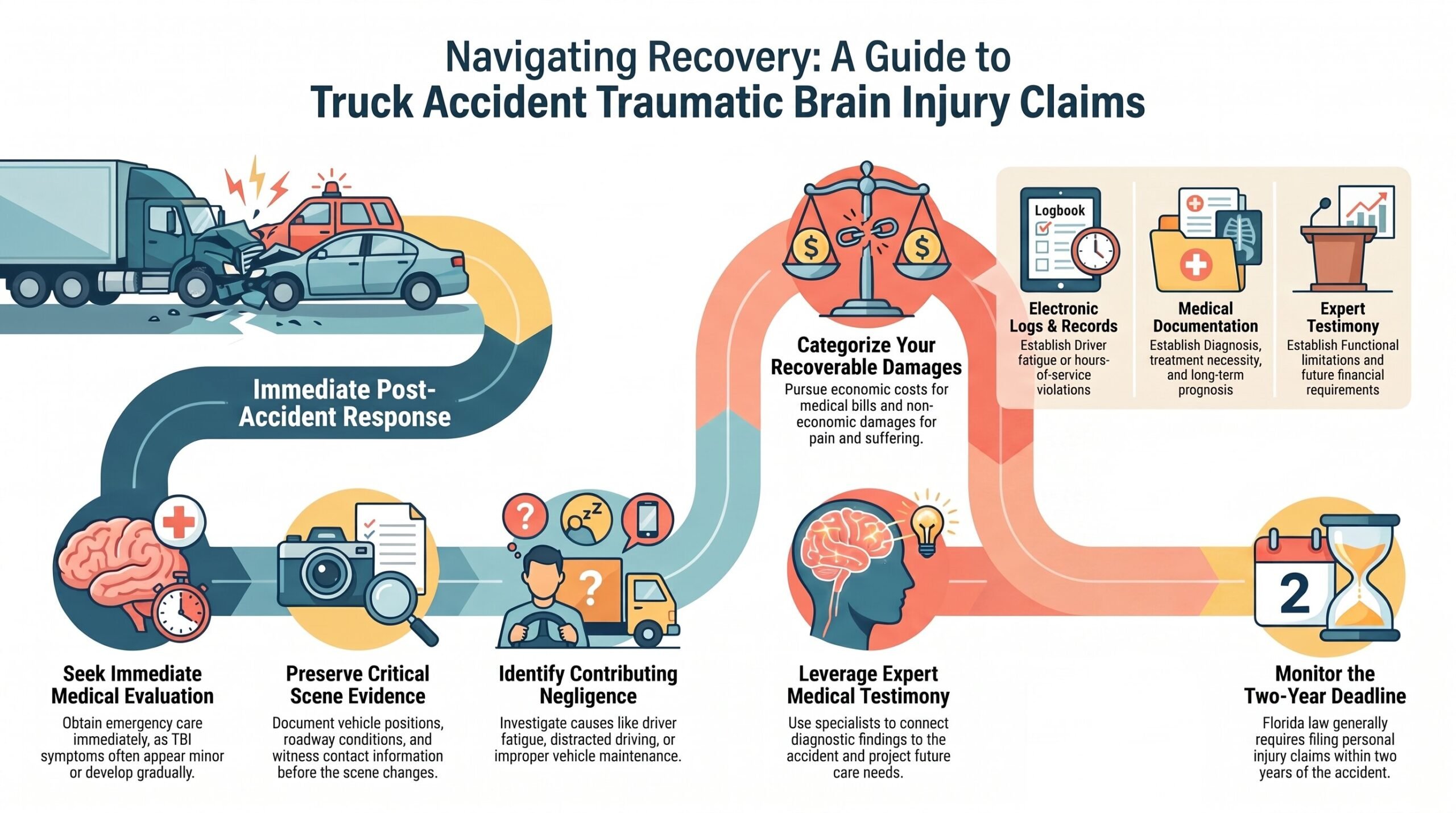


How We Can Help With Your Daytona Beach Truck Accident Traumatic Brain Injury Claim
After a Daytona Beach truck accident, a traumatic brain injury claim may involve complex medical, legal, and insurance issues that require careful investigation. A legal team can help clients organize medical records, document symptoms, and identify how cognitive, emotional, or physical changes affect daily responsibilities. This support may help present a clear account of immediate and continuing needs.
Attorneys can also review available evidence, communicate with insurers, and protect a claimant from premature statements or inadequate settlement proposals. Attention to Insurance claim timelines helps prevent missed deadlines and supports timely responses to requests for documentation. Early witness statement preservation may protect important recollections before details fade or witnesses become unavailable. Counsel may coordinate with medical professionals and other qualified consultants when additional clarification is needed.
Throughout the process, the legal team can provide informed guidance, explain procedural developments, and pursue an outcome that reflects the claimant’s documented losses while treating the individual and family with dignity.
OUR CONSULTATIONSARE FREE
START YOUR FREE CASE REVIEW

Understanding Daytona Beach Truck Accident Traumatic Brain Injury Cases
When a truck collision in Daytona Beach causes a traumatic brain injury, the resulting legal case may involve disputed liability, extensive medical evidence, and significant questions about the injury’s long-term effects. A claim typically examines crash records, medical diagnoses, treatment history, and testimony concerning cognitive, emotional, or physical limitations. Because symptoms may develop gradually or remain difficult to measure, credible documentation can be crucial to establishing both injury and causation.
Damages may include past and future medical care, rehabilitation, lost earnings, reduced earning capacity, and compensation for diminished quality of life. Comparative fault analysis may affect recovery if another driver, the injured person, or a trucking entity is alleged to share responsibility. Multiple insurance policies can further complicate negotiations, particularly when coverage limits and liability positions conflict.
Insurance dispute resolution may require organized evidence, careful evaluation of settlement offers, and, when necessary, formal litigation. A thorough case assessment helps protect the injured person’s interests while supporting informed decisions throughout the legal process.
Common Causes of Daytona Beach Truck Accident Traumatic Brain
Common causes of truck accidents resulting in traumatic brain injuries include driver fatigue, distracted driving, speeding, and other reckless conduct. Improper truck maintenance may also contribute to collisions when essential systems, such as brakes or tires, fail. Identifying the contributing cause is essential to evaluating liability and the circumstances surrounding the injury.
Driver Fatigue
Driver fatigue is a significant contributor to commercial truck crashes in Daytona Beach, particularly when drivers exceed federally regulated hours of service or fail to obtain adequate rest. Sleep deprivation risks include delayed reaction times, impaired judgment, reduced coordination, and brief periods of involuntary sleep. These impairments can prevent a truck operator from recognizing roadway hazards or controlling a heavily loaded vehicle before impact.
Long shifts, irregular schedules, overnight routes, and untreated sleep disorders may intensify fatigue, even when a driver appears alert at the beginning of a trip. Distracted drowsiness can develop as concentration gradually declines, causing missed signals, drifting lanes, or delayed braking without intentional misconduct. Investigators may review electronic logs, dispatch records, rest documentation, and medical information when determining whether fatigue contributed to traumatic brain injuries.
Distracted Driving
Distracted driving is a serious cause of Daytona Beach truck accidents that may result in traumatic brain injuries. Commercial truck operators must maintain constant awareness because their vehicles require greater stopping distance and careful control. Phone distractions, including calls, navigation changes, and alerts, can divert attention from traffic conditions and nearby motorists. Texting violations are particularly dangerous because reading or composing a message removes visual, manual, and mental attention from driving.
Other distractions may include eating, adjusting equipment, reviewing paperwork, or interacting with passengers. When a distracted truck driver fails to recognize a developing hazard, a collision may occur with devastating consequences for occupants of smaller vehicles. Prompt medical evaluation can identify brain trauma, while legal guidance may help injured individuals and families pursue accountability, necessary treatment, and support.
Speeding And Recklessness
Excessive speed and reckless driving frequently contribute to Daytona Beach truck accidents that cause traumatic brain injuries. A commercial truck traveling too quickly may require substantially more distance to stop, increasing the likelihood of severe collisions at intersections, crossings, and congested roadways. Aggressive lane changes, tailgating, disregarding signals, and passing in unsafe conditions can further endanger motorists, pedestrians, and passengers.
Investigators may examine electronic logging data, onboard systems, traffic-camera recordings, witness accounts, and crash-scene measurements to determine whether unsafe speed or deliberate disregard for traffic laws played a role. This reckless evidence collection can help clarify responsibility and preserve information for an injured person’s claim. Depending on the circumstances, citations, fines, license consequences, and other speeding penalties may apply, while legal guidance can help families pursue appropriate support and accountability.
Improper Truck Maintenance
Improper truck maintenance can cause Daytona Beach crashes by allowing preventable mechanical failures to occur on public roads. Worn brakes, defective tires, broken steering components, inadequate lighting, and unsecured cargo may limit a driver’s ability to respond safely. Trucking companies, owners, and maintenance providers may share responsibility when inspections, repairs, or required service schedules are ignored. These failures can contribute to collisions that produce traumatic brain injuries, even when the driver was otherwise attentive.
Legal standards may require carriers to follow federal and state maintenance rules, retain inspection records, and correct known defects before operation. Evidence preservation is crucial after a crash. Service logs, inspection reports, electronic records, photographs, and damaged components can help establish whether neglect caused or contributed to the collision. Witness accounts may further clarify the vehicle’s condition.
Don’t Wait. Call Our Daytona Beach Truck Accident Lawyers Now.


Legal Rights of Daytona Beach Truck Accident Traumatic Brain Injury Victims
When a Daytona Beach truck accident causes a traumatic brain injury, the injured person may have legal rights to pursue compensation from parties whose negligence or misconduct contributed to the collision. Potential recovery may include medical expenses, rehabilitation, lost income, reduced earning capacity, and damages for lasting impairment or diminished quality of life.
Daytona Beach truck accident victims with traumatic brain injuries may pursue compensation for medical care, lost income, and lasting impairments.
A victim may also seek accountability from a trucking company, driver, manufacturer, or other responsible party, depending on the available evidence.
Florida comparative negligence can reduce recovery if the injured person is assigned a portion of fault, making careful legal evaluation important.
- Compensation may address current treatment and reasonably anticipated future care.
- Evidence preservation steps can include obtaining medical records, securing crash reports, photographing injuries, and identifying witnesses.
- A legal representative may protect deadlines, communicate with insurers, and present evidence supporting the victim’s interests.
Because brain injuries may affect judgment, memory, and communication, supportive family members often help preserve information and coordinate assistance. Prompt advice can help safeguard rights while respecting the victim’s recovery and dignity.
Why Do Daytona Beach Truck Accident Traumatic Brain Injuries Happen?
Don’t Wait. Call Our Daytona Beach Truck Accident Lawyers Now.
Daytona Beach truck accident traumatic brain injuries often result from collisions involving excessive speed, distracted driving, fatigue, impaired judgment, or inadequate following distance. The substantial size and weight of commercial trucks can intensify impact forces, causing occupants’ heads to strike interiors, windows, or other objects. Sudden acceleration, deceleration, and vehicle rollover may also produce brain movement within the skull, even without a visible external wound.
Some crashes arise from roadway or equipment conditions. Poorly maintained pavement, unclear markings, inadequate lighting, and other Road Hazard Design concerns can limit a driver’s ability to react safely. Mechanical failures, defective brakes, tire problems, and improper maintenance may further increase collision severity.
Weight Distribution Errors can make a truck unstable, lengthen stopping distances, or contribute to jackknifing and rollovers, particularly when cargo is unsecured or loaded improperly. Driver training deficiencies, unrealistic delivery schedules, and inadequate safety supervision may compound these hazards, creating conditions in which preventable negligence causes catastrophic neurological harm.
What Should You Do After a Daytona Beach Truck Accident Traumatic Brain Injury?
After a Daytona Beach truck accident, the injured person should seek immediate medical care, even if symptoms initially appear minor. Accident details should be documented carefully, including injuries, vehicle damage, witness information, and available photographs. Contacting a truck accident lawyer can help protect legal rights and support an informed evaluation of potential claims.
Seek Immediate Medical Care
Immediate medical care is highly important after a Daytona Beach truck accident because traumatic brain injuries may not produce obvious symptoms at the scene. An injured person should accept emergency evaluation, even when discomfort appears minor or temporary. Physicians can identify warning signs, order appropriate imaging, and establish treatment instructions that may prevent complications. Prompt care also supports Road Safety by addressing impaired awareness, balance problems, or other symptoms that could endanger the patient and others.
Medical records may become important in a Personal Injury claim because they connect symptoms with the collision and demonstrate consistent treatment. Following professional recommendations helps clarify the Claim Timeline and can assist with Settlement Planning. Family members or witnesses should help arrange transportation and monitor changes, seeking emergency assistance if symptoms worsen or consciousness changes.
Document The Accident
At the accident scene, documenting available evidence can help preserve crucial information about the collision and any resulting traumatic brain injury. If medically able, the injured person or a responsible companion should photograph vehicle positions, roadway conditions, traffic signals, visible damage, and relevant warning signs. Scene documentation should also include the truck’s identifying information and any apparent safety violations, without disturbing evidence or creating additional danger.
Witness statements can preserve independent accounts, including observations about speed, impact, lighting, and the injured person’s condition immediately afterward. Contact information for each witness should be recorded accurately. Following treatment, medical records should be retained, including emergency reports, imaging results, prescriptions, and follow-up instructions. A thorough injury evaluation may document symptoms that develop later, supporting continuity between the collision and the traumatic brain injury.
Contact A Truck Accident Lawyer
Promptly contacting a Daytona Beach truck accident lawyer can help protect an injured person’s legal rights and preserve evidence relevant to a traumatic brain injury claim. A qualified attorney can assess medical records, crash reports, vehicle data, witness accounts, and applicable insurance coverage before important information disappears.
Legal counsel can also explain Insurance claim deadlines, which may differ depending on the parties involved and the nature of the claim. Families serving an injured individual may benefit from guidance when communicating with insurers, arranging medical documentation, and avoiding statements that could be misinterpreted. Evidence preservation tips include saving photographs, treatment records, employment information, and correspondence related to the collision. Early representation may support a thorough investigation, identify responsible parties, and help pursue compensation for medical care, lost income, rehabilitation, and long-term needs.
Don’t Wait. Call Our Daytona Beach Truck Accident Lawyers Now.
Critical Evidence in a Daytona Beach Truck Accident Traumatic Brain Injury Case
Critical evidence can establish how the collision occurred, who was responsible, and how the traumatic brain injury affected the injured person.
- Truck driver records, including logs, training files, and impairment or fatigue evidence
- Accident scene evidence, such as photographs, vehicle data, witness accounts, and roadway conditions
- Medical documentation and expert brain injury testimony addressing diagnosis, treatment, prognosis, and long-term limitations
Together, these materials help connect the crash to the injury and support the damages claimed.
Truck Driver Records
Because truck driver records can reveal whether safety rules were followed before a collision, they often serve as important evidence in a Daytona Beach truck accident traumatic brain injury case. Driver logbooks may show driving time, rest periods, and work activities before the crash. These entries can help determine whether fatigue, excessive hours, or pressure to meet delivery deadlines contributed to unsafe driving. Electronic logging devices, dispatch messages, payroll records, and company schedules may provide additional information when records appear incomplete or inconsistent.
Federal hours-of-service requirements limit how long commercial drivers may operate without adequate rest. Violations may support an argument that negligence caused or worsened the collision. Preserving these records promptly is important because trucking companies may have document-retention policies that permit relevant information to be deleted or overwritten.
Accident Scene Evidence
When a truck collision results in a traumatic brain injury, evidence from the accident scene can help establish how the crash occurred and identify the factors that contributed to it. Photographs and video may document vehicle positions, roadway conditions, skid marks, debris, traffic signals, visibility, and property damage before the scene changes. Investigators can preserve measurements, inspect collision points, and compare physical evidence with the accounts provided by each driver.
Witness statements may clarify vehicle speed, lane movement, warnings, lighting, and conduct immediately before impact. Driver conduct notes can record apparent distraction, fatigue, impairment, phone use, or failure to follow traffic rules, without prematurely treating observations as conclusions. Prompt collection helps protect reliable information and supports a fair evaluation of responsibility for the injured person and affected family.
Medical Documentation
Medical documentation provides the clinical record needed to connect a Daytona Beach truck collision with a diagnosed traumatic brain injury and its resulting limitations. Emergency department records, imaging results, neurological evaluations, and follow-up notes can establish symptoms, treatment, and changes in functioning over time. Consistent reporting of headaches, dizziness, memory problems, sleep disruption, or emotional changes may help clarify the injury’s continuing effects. Medication lists, therapy records, work restrictions, and referrals can further document necessary care and lost capacity.
These records should be preserved promptly, including statements made during initial treatment because early observations may be especially reliable. When organized chronologically, medical evidence supports Accident Timeline Reconstruction and can be compared with Witness Statement Collection. Accurate documentation also helps legal representatives identify gaps, protect privacy, and present the injured person’s needs responsibly.
Expert Brain Injury Testimony
How can expert brain injury testimony clarify the medical and functional consequences of a Daytona Beach truck collision? Qualified specialists can connect diagnostic findings, treatment records, and observed symptoms to the traumatic event. Their opinions may explain cognitive impairment, communication difficulties, emotional changes, fatigue, and limitations affecting employment or independent living. Careful selection helps ensure that neurologists, neuropsychologists, rehabilitation professionals, and life-care planners possess relevant credentials and can address the injured person’s specific needs.
Counsel may also develop a focused depositions strategy to test opposing opinions, clarify assumptions, and preserve testimony concerning future care and damages. Clear expert evidence assists judges and juries in understanding consequences that may not appear on imaging or routine examinations. It also supports compassionate, accurate evaluation of services required for long-term recovery.
Long-Term Effects of Daytona Beach Truck Accident Traumatic Brain Injuries
Long-term traumatic brain injuries may cause persistent cognitive and memory challenges that interfere with work, communication, and daily decision-making. Emotional and behavioral changes can also affect relationships, independence, and overall quality of life. Because recovery may require continuing treatment, rehabilitation, supervision, and support, injured individuals may face substantial ongoing medical and financial needs.
Cognitive And Memory Challenges
When a Daytona Beach truck accident causes a traumatic brain injury, cognitive and memory challenges may persist long after visible injuries have recovered. Survivors may struggle to concentrate, process information, follow conversations, or recall appointments and instructions. These limitations can interfere with work, education, household responsibilities, and the ability to manage medical care independently. Sleep apnea may worsen fatigue and reduce attention, while vision impairment can make reading, threading areas, or recognizing information more difficult.
Careful medical evaluation may identify the injury’s effects and distinguish them from related conditions. Rehabilitation, structured routines, written reminders, and supportive supervision can help individuals perform crucial tasks safely. Documentation of symptoms, treatment, and functional limitations may also assist families and legal professionals seeking appropriate resources, accommodations, and compensation for long-term needs.
Emotional And Behavioral Changes
Emotional and behavioral changes may emerge after a Daytona Beach truck accident traumatic brain injury, even when physical recovery appears substantial. Survivors may experience irritability, anxiety, depression, impulsiveness, or reduced emotional control, sometimes without recognizing how their conduct has changed. Sleep deprivation can intensify mood instability, frustration, and difficulty managing ordinary demands. These effects may create family strain when relatives must respond to unpredictable reactions or altered relationships.
They can also diminish workplace productivity through conflict, poor stress tolerance, absenteeism, or difficulty maintaining professional judgment. Careful observation by family members, employers, and treating professionals may help identify patterns and encourage appropriate mental health support. A compassionate, structured environment can promote safer communication and preserve dignity while the survivor adapts to lasting changes in emotional regulation and behavior.
Ongoing Medical And Financial Needs
Because traumatic brain injuries can produce persistent cognitive, physical, and behavioral impairments, affected individuals may require continuing medical care long after a Daytona Beach truck accident. Treatment may include neurological evaluations, rehabilitation, counseling, medication, assistive equipment, and help with daily activities. Some individuals also need workplace accommodations or cannot return to their former employment, creating lasting income losses and increased household expenses.
Caregivers may provide substantial unpaid support, while future complications can make immediate costs difficult to predict. During the insurance settlement process, reliable medical documentation and life-care projections can help demonstrate these needs. Evidence preservation steps, including securing medical records, employment information, accident reports, and witness accounts, may protect the individual’s ability to seek appropriate compensation. Coordinated legal and medical guidance can help families plan responsibly.
Proving Liability in Daytona Beach Truck Accident Traumatic Brain Injury Cases
Establishing liability in a Daytona Beach truck accident traumatic brain injury case requires evidence showing that another party’s negligence caused the collision and resulting harm. Investigators may examine driver logs, employment records, vehicle maintenance histories, electronic data, surveillance footage, and witness accounts. These materials can reveal speeding, distracted driving, fatigue, inadequate training, defective equipment, or violations of federal and state safety requirements.
Medical documentation must connect the crash to the traumatic brain injury and describe its effects on cognition, mobility, employment, and daily independence. Expert testimony may explain collision dynamics, trucking practices, and the injury’s probable cause. Evidence preservation is critical because photographs, black-box information, inspection records, and roadway conditions can change or disappear. Prompt preservation requests and careful documentation help protect reliable proof.
Comparative fault laws may reduce recovery when an injured person is assigned a portion of responsibility. A thorough liability analysis identifies each contributing party and presents facts clearly, supporting accountability and service to the injured individual and community.
Dealing With Insurance Companies After a Daytona Beach Truck Accident Traumatic Brain Injury
After a Daytona Beach truck accident causes a traumatic brain injury, insurance companies may seek statements, medical authorizations, and other information before the full extent of the injury is known. Early communications can influence how adjusters interpret symptoms, treatment, and responsibility. An injured person should avoid guessing about memory gaps, minimizing limitations, or discussing fault before receiving appropriate guidance. Insurance paperwork mistakes, including incomplete descriptions, inconsistent dates, or overly broad authorizations, can create unnecessary disputes and expose private medical information. A careful recorded statement strategy helps protect accuracy by identifying known facts, distinguishing observations from assumptions, and accounting for cognitive symptoms that may affect recall. Counsel may review forms and communications, limit authorizations to relevant records, and request that questions be presented in a manageable manner. Family members and caregivers can assist by documenting changes in behavior, concentration, and daily functioning. Prompt, organized communication can help preserve reliable information while protecting the injured person’s dignity and interests.
What to Expect During a Daytona Beach Truck Accident Traumatic Brain Injury Claim Process
A Daytona Beach truck accident traumatic brain injury claim generally begins with an initial case evaluation to assess liability, injuries, and available legal options. The process may include collecting accident records and other evidence, evaluating medical damages and future needs, and negotiating with insurers. If settlement efforts do not produce a fair result, the claimant may proceed to trial.
Initial Case Evaluation
The initial case evaluation examines the circumstances of the Daytona Beach truck accident, the nature of the traumatic brain injury, and the evidence supporting potential liability. A lawyer typically reviews medical records, diagnoses, treatment recommendations, employment effects, and the injured person’s current limitations. The discussion may also address insurance coverage, involved parties, deadlines, and the client’s goals for recovery and accountability. Counsel develops a thorough case timeline to clarify events before, during, and after the collision, including symptom onset and changes in functioning.
The client may receive guidance about Evidence preservation steps, communication with insurers, and avoiding statements that could be misunderstood. This consultation helps determine whether a claim is viable, what challenges may arise, and how representation can protect the injured person’s interests throughout the process.
Evidence Collection Process
Once a Daytona Beach truck accident claim is accepted for further review, counsel begins gathering evidence to establish how the collision occurred, who may be legally responsible, and how the traumatic brain injury has affected the injured person’s life. Investigators may obtain crash reports, photographs, vehicle inspection records, electronic driving data, and trucking-company policies. Witness statements can clarify traffic conditions, driver conduct, and events immediately before impact.
Counsel also preserves vital documentation, including employment records, communications with insurers, and evidence concerning the truck’s ownership or maintenance. This organized process helps identify inconsistencies and potential violations of safety requirements. Attorneys may communicate with insurers on the claimant’s behalf, protecting the evidence from premature disposal or misinterpretation. These efforts provide a reliable foundation for liability decisions and informed insurance negotiations while respecting the claimant’s need for support.
Medical Damage Assessment
Medical damage assessment examines the full scope of a traumatic brain injury and the financial consequences it may create. Medical professionals review emergency records, imaging studies, neurological evaluations, and treatment plans to document the injury’s severity and expected progression. This review may identify Cognitive Impairment, memory problems, behavioral changes, mobility limitations, or other conditions affecting daily activities and employment.
The assessment also considers ongoing care, including expert visits, medication, therapy, assistive equipment, and potential supervision. Rehabilitation Costs can vary substantially depending on the injured person’s recovery needs and the duration of treatment. Employment records and vocational evaluations may help clarify diminished earning capacity when symptoms interfere with work. Family observations can provide valuable information about functional changes that clinical appointments may not capture. Accurate documentation helps guarantee that the injury’s medical and practical consequences are fully understood during the claim process.
Settlement Or Trial
With the medical and financial effects documented, the claim may proceed toward settlement negotiations or trial. During negotiations, counsel presents evidence of liability, medical treatment, future care needs, lost income, and related expenses. Insurance negotiation strategies may include challenging inadequate offers, explaining long-term cognitive effects, and demonstrating how the injury affects daily responsibilities. A settlement can provide compensation without courtroom uncertainty, but the injured person generally must understand the release terms and future consequences before accepting.
If negotiations fail, the case may proceed to litigation. Discovery, depositions, and an expert witness evaluation can clarify the injury’s cause, prognosis, and financial impact. At trial, attorneys present testimony and evidence to a judge or jury, which determines responsibility and damages. Throughout either path, careful preparation helps protect the claimant’s interests and supports informed decisions.
Compensation for Daytona Beach Truck Accident Traumatic Brain Injury Damages
Compensation for a traumatic brain injury sustained in a Daytona Beach truck accident may include medical expenses, rehabilitation costs, lost income, reduced future earning capacity, and non-economic damages such as pain, cognitive impairment, and diminished quality of life. A thorough claim may also account for transportation to treatment, assistive services, medication, and necessary home modifications. Documentation from neurologists, therapists, employers, and family members can help establish how the injury affects daily functioning and long-term needs.
Because symptoms may emerge or worsen over time, careful evaluation of prognosis is critical before a claim is resolved. Medical bias verification may help identify opinions influenced by incomplete records, assumptions, or inadequate testing. A lawyer may use those findings in developing a settlement negotiation strategy that presents supported damages without overstating the evidence. Families serving injured individuals should preserve records, follow medical recommendations, and avoid statements that could undermine the claim. Legal guidance can help protect the injured person’s interests throughout the process.
Economic vs Non-Economic Damages in Daytona Beach Truck Accident Traumatic Brain Cases
Economic damages may include medical expenses, lost income, rehabilitation costs, and other documented financial losses resulting from a traumatic brain injury. Non-economic damages address less measurable harm, such as pain, emotional distress, diminished quality of life, and permanent impairment. Calculating total compensation requires evaluating both categories in light of the injury’s severity, projected needs, and lasting effects.
Economic Damages Explained
When a truck accident causes a traumatic brain injury, economic damages address the measurable financial losses resulting from the collision and its long-term effects. These damages may include emergency treatment, hospitalization, rehabilitation, medications, assistive equipment, and continuing medical care. Records such as invoices, treatment plans, employment histories, and expert projections help establish the value of each claim. A person may also seek reimbursement for out-of-pocket expenses, including transportation, home modifications, and necessary caregiving.
Lost wages and reduced Future earning capacity can reflect the injury’s effect on employment. Available disability benefits may offset some losses but do not necessarily replace all income. A Daytona Beach attorney may pursue medical reimbursement from responsible parties and insurance sources while documenting anticipated costs, ensuring that injured individuals receive practical support for recovery.
Non-Economic Damages Valued
Non-economic damages address the human consequences of a traumatic brain injury that cannot be calculated through bills or employment records. They may reflect physical pain, emotional distress, cognitive limitations, disfigurement, loss of enjoyment, and disruption of family relationships. In Daytona Beach truck accident cases, valuing these losses requires careful attention to medical findings, treatment history, testimony from relatives, and the injured person’s daily experience.
Calculating pain does not rely on a universal formula; severity, duration, prognosis, and interference with ordinary activities may guide the assessment Establishing liability remains vital because non-economic recovery depends on proving that the truck driver, carrier, or another responsible party caused the injury. Attorneys and courts evaluate credible evidence to assign a fair value, recognizing personal suffering while maintaining disciplined, compassionate analysis.
Calculating Total Compensation
Total compensation in a Daytona Beach truck accident traumatic brain injury case generally combines economic and non-economic damages. Economic damages may include emergency care, rehabilitation, medication, cognitive therapy, lost wages, reduced earning capacity, transportation, and anticipated future treatment. Medical treatment timelines help establish the injury’s progression, necessary care, and probable long-term expenses. Non-economic damages address pain, emotional distress, cognitive limitations, loss of enjoyment, and effects on family relationships.
A careful assessment considers medical records, employment documentation, expert opinions, and the injured person’s daily challenges. Insurance denial defenses may arise when carriers dispute causation, treatment necessity, or claimed losses. Legal counsel can organize supporting evidence, respond to those defenses, and present a detailed calculation. The objective is fair compensation that supports recovery, preserves dignity, and helps affected families manage continuing responsibilities.
When a Daytona Beach Truck Accident Traumatic Brain Injury Case Goes to Trial vs Settlement
A Daytona Beach truck accident traumatic brain injury case may resolve through settlement or proceed to trial, depending on the strength of the evidence, the parties’ willingness to negotiate, and the extent of the injured person’s medical and financial losses. Settlement negotiation can provide earlier financial support, privacy, and greater predictability, while avoiding the demands of courtroom proceedings. A careful damages valuation considers medical treatment, rehabilitation, lost earning capacity, daily limitations, and anticipated future care.
If negotiations do not produce a fair resolution, trial may become necessary. Trial strategy typically includes presenting medical testimony, accident evidence, and documentation showing how the injury affects the individual and family. During jury selection, counsel evaluates potential jurors for impartiality and their ability to understand traumatic brain injuries. At trial, each side presents evidence, examines witnesses, and argues the appropriate compensation. The final decision rests with the jury, making preparation and clear communication critical throughout the process.
Florida Laws That May Affect Your Daytona Beach Truck Accident Traumatic Brain Case
Florida law can greatly influence a Daytona Beach truck accident traumatic brain injury claim, including the filing deadline, available damages, comparative fault, and insurance requirements.
Understanding these rules helps a legal team protect an injured person’s interests and pursue accountability.
- Comparative negligence may reduce compensation when evidence shows the injured party contributed to the collision, making careful fact development critical.
- Florida trucking regulations address driver qualifications, service hours, vehicle maintenance, cargo securement, and safety procedures. Violations may support liability when they contributed to the crash.
- Evidence preservation should begin promptly. Crash reports, electronic logging data, inspection records, onboard camera footage, medical documentation, and witness statements can clarify what occurred and identify responsible parties.
Florida’s insurance framework may involve commercial policies, statutory minimums, and coverage disputes among carriers, owners, and contractors. Damage evaluation can include medical expenses, rehabilitation, lost income, reduced earning capacity, and non-economic harm. A knowledgeable attorney can coordinate with medical professionals, investigators, and families to present a clear claim while respecting the injured person’s long-term needs and dignity.
The Statute of Limitations for Daytona Beach Truck Accident Traumatic Brain Injury Cases
The statute of limitations establishes the deadline for filing a Daytona Beach truck accident traumatic brain injury lawsuit, and missing that deadline may permanently bar recovery. Florida law generally provides two years for personal injury claims, although exceptions can alter the period. Claims involving a government entity may require earlier notice, while a victim’s age, delayed discovery, or death can affect applicable deadlines. Because traumatic brain injuries may initially appear minor, medical documentation should carefully establish when symptoms emerged and how the collision caused lasting impairment.
Potential claimants should promptly identify the correct filing period rather than rely on assumptions. They should preserve critical evidence, including medical records, imaging, trucking logs, inspection reports, photographs, witness information, and electronic data that could later become unavailable. Early organization can help avoid common delays caused by incomplete records, uncertain legal theories, or unsuccessful attempts to determine responsible parties. A timely filing protects access to the civil justice process and supports accountability for injured individuals and their families. Consulting qualified legal counsel promptly can clarify deadlines and preserve available remedies.
How a Daytona Beach Truck Accident Traumatic Brain Lawyer Can Help You
When a truck collision causes a traumatic brain injury, seasoned legal counsel can coordinate the investigation, medical documentation, and insurance claims process required to confirm the full extent of the harm.
A Daytona Beach truck accident traumatic brain lawyer may assist by:
- Documenting symptoms, treatment, cognitive changes, and effects on employment or daily responsibilities.
- Preserving crash evidence, including vehicle data, maintenance records, driver logs, photographs, and witness accounts.
- Developing insurance negotiation strategies that address medical expenses, rehabilitation, lost income, and future care.
Counsel can communicate with insurers and opposing parties, reducing pressure on injured individuals and their families while protecting relevant rights. The lawyer may also consult neurologists, rehabilitation specialists, economists, and life-care planners to explain how the injury affects long-term needs. By organizing evidence and presenting a complete damages assessment, legal representation can help ensure that decision-makers understand both visible limitations and less apparent cognitive difficulties. This support allows families to focus on recovery and caregiving while counsel handles procedural demands with diligence, accuracy, and respect for the injured person’s dignity.
When to Contact a Daytona Beach Truck Accident Traumatic Brain Lawyer
Prompt legal guidance is especially important after a truck collision involving possible traumatic brain injury, even if symptoms initially appear mild or delayed. A consultation should occur promptly when Possible Signs include confusion, persistent headaches, dizziness, memory problems, unusual fatigue, mood changes, or difficulty concentrating. Urgent Action is warranted after loss of consciousness, repeated vomiting, seizures, worsening headaches, or significant behavioral changes; emergency medical care takes priority.
A Daytona Beach truck accident traumatic brain lawyer may also be contacted when medical providers recommend neurological evaluation, symptoms interfere with work or daily responsibilities, or the collision involved substantial vehicle damage. Early communication can help preserve relevant information while memories remain clear and records are available.
It can also provide direction before statements are given to insurers, particularly when Insurance Tactics may minimize symptoms or shift responsibility. Medical Documentation should be requested and maintained, including emergency records, diagnostic results, treatment plans, prescriptions, and restrictions. Caregivers should promptly seek guidance when an injured person cannot advocate independently.
Why You Need an Experienced Daytona Beach Truck Accident Traumatic Brain Lawyer
Because truck collisions often involve multiple parties, extensive records, and serious injuries, an experienced Daytona Beach truck accident traumatic brain lawyer can provide essential guidance throughout the claim. Traumatic brain injuries may produce symptoms that develop gradually, making careful medical documentation and informed legal assistance especially important.
A qualified lawyer can establish a focused case strategy by examining crash reports, driver qualifications, vehicle maintenance histories, loading practices, and applicable regulations. Prompt evidence preservation helps protect electronic logs, surveillance footage, onboard data, and witness accounts that may otherwise disappear. The lawyer can also coordinate with medical professionals to explain how the injury affects treatment, work, independence, and future care.
Clear Client communication supports informed decisions while reducing confusion during a demanding recovery. In addition, skilled insurance negotiation can address liability disputes, incomplete offers, and pressure to settle before the full impact becomes known. This guidance allows injured individuals and their families to concentrate on recovery while their legal interests receive diligent protection.
How to Choose the Right Daytona Beach Truck Accident Traumatic Brain Lawyer for Your Case
Selecting the right Daytona Beach truck accident traumatic brain lawyer requires careful evaluation of experience, resources, and communication practices. A suitable attorney should understand commercial trucking regulations, traumatic brain injuries, and the long-term effects these conditions may create for injured individuals and families.
During consultations, prospective clients can assess Client communication by asking how updates are provided, who answers questions, and how promptly concerns receive attention. The lawyer should explain a proposed case strategy in understandable terms, including liability investigation, insurance negotiations, and potential litigation.
A thorough documentation checklist can help organize medical records, employment information, crash reports, witness details, and evidence of ongoing care needs. Counsel should also identify when expert consultation may be necessary, such as opinions from neurologists, rehabilitation experts, economists, or accident reconstruction professionals.
The selection process should consider professional judgment, preparation, accessibility, and a demonstrated commitment to protecting the client’s interests. Clear written agreements and realistic expectations can support a productive attorney-client relationship.
About The Law Offices of Anidjar & Levine
The Law Offices of Anidjar & Levine represents individuals injured in serious truck collisions, including cases involving traumatic brain injuries and their lasting consequences.
The firm’s work centers on helping injured people and families pursue accountability, medical support, and fair compensation after disruptive crashes in Daytona Beach.
During a Case Evaluation, attorneys review collision circumstances, medical records, employment effects, and potential liability before recommending practical next steps.
Evidence Collection may include gathering vehicle data, photographs, witness statements, maintenance records, driver logs, and relevant surveillance footage.
This process can clarify how negligence, equipment failures, or unsafe practices contributed to the collision.
The firm also addresses Truck Accident Defense strategies when trucking companies or their insurers dispute responsibility.
Its attorneys examine Insurance Tactics that may minimize injuries, shift blame, or pressure claimants into premature settlements.
By organizing evidence and presenting the injury’s full impact, the firm seeks to protect clients’ interests while supporting informed decisions throughout negotiations or litigation and helping families pursue stability after serious harm.
Frequently Asked Questions
Can a Traumatic Brain Injury Affect My Ability to Work or Return to School?
A traumatic brain injury can affect concentration, memory, processing speed, judgment, stamina, and emotional regulation, potentially limiting a person’s ability to work or return to school. Work limitations may require reduced hours, modified duties, additional breaks, or a gradual return. School accommodations can include extended testing time, note-taking assistance, flexible deadlines, reduced course loads, and quiet environments. Medical professionals and educators can assess functional needs and support a safe, documented progression.
What Symptoms May Indicate a Hidden Traumatic Brain Injury After a Truck Crash?
Hidden traumatic brain injuries may present through persistent headaches, dizziness, nausea, blurred vision, sensitivity to light, confusion, memory problems, slowed thinking, or unusual fatigue. Changes in mood, sleep, balance, speech, or coordination also warrant attention, particularly when symptoms worsen after the crash. These unrecognized symptoms can emerge hours or days later. Concussion red flags, including repeated vomiting, seizures, unequal pupils, increasing drowsiness, or loss of consciousness, require immediate emergency evaluation.
Can Family Members Pursue Compensation for Changes in a Victim’s Personality or Behavior?
Family compensation may be available when a victim’s personality change or behavioral impairment results from a truck-crash traumatic brain injury. Eligibility depends on state law, the victim’s losses, and whether relatives experienced legally recognized damages, such as loss of companionship, support, or necessary caregiving expenses. Medical documentation, witness accounts, employment records, and neurological evaluations can help establish causation and impact. A qualified attorney can assess applicable claims and preserve evidence promptly.
How Can Caregivers Support Someone Living With Permanent Traumatic Brain Injury Effects?
Caregivers can support someone living with permanent traumatic brain injury effects by establishing consistent routines, monitoring safety, and coordinating medical, rehabilitative, and community services. Caregiver training helps them recognize cognitive, emotional, and behavioral changes while responding appropriately to fatigue, confusion, or frustration. Clear communication strategies, including brief instructions, patience, and confirmation of understanding, can reduce distress. Ongoing documentation, respite planning, and respect for the individual’s autonomy also promote stability, dignity, and quality of life.
Are Traumatic Brain Injury Support Groups or Rehabilitation Resources Available in Daytona Beach?
Yes, Daytona offers Support Groups and Rehabilitation Centers serving people with traumatic brain injuries and their caregivers. Daytona Resources may include hospital-based therapy, outpatient Therapy Programs, vocational services, and community organizations. TBI Counseling can address adjustment, communication, behavioral changes, and family stress. Survivor Networks may provide peer guidance and practical referrals. A healthcare professional or social worker can help identify appropriate programs, confirm eligibility, and coordinate individualized rehabilitation services.
—————————
Truck accident-related traumatic brain injuries can result in long-term medical, financial, and personal challenges for victims and their families.
Prompt legal guidance may help preserve evidence, determine liability, and pursue compensation for medical treatment, lost income, and future care needs.
The Law Offices of Anidjar and Levine can evaluate a Daytona Beach claim and explain available legal options.
Individuals affected by these serious injuries should consider contacting an experienced Daytona Beach Truck Accident Lawyer without delay.