A Daytona Beach truck black box accident lawyer from The Law Offices of Anidjar and Levine can help preserve electronic control module data, GPS records, hours-of-service logs, maintenance files, and dispatch communications before they are overwritten or lost.
The firm may coordinate investigators, secure witness statements, document the crash scene, and compare vehicle data with photographs, reports, and medical records.
This evidence can clarify speed, braking, fatigue, mechanical defects, causation, and damages while addressing insurance disputes.
Learn more from a Daytona Beach Truck Accident Lawyer about protecting your claim and evaluating legal representation.
Main Takeaways
- A Daytona Beach truck black box accident lawyer can promptly request preservation of ECM, GPS, dispatch, inspection, and maintenance records.
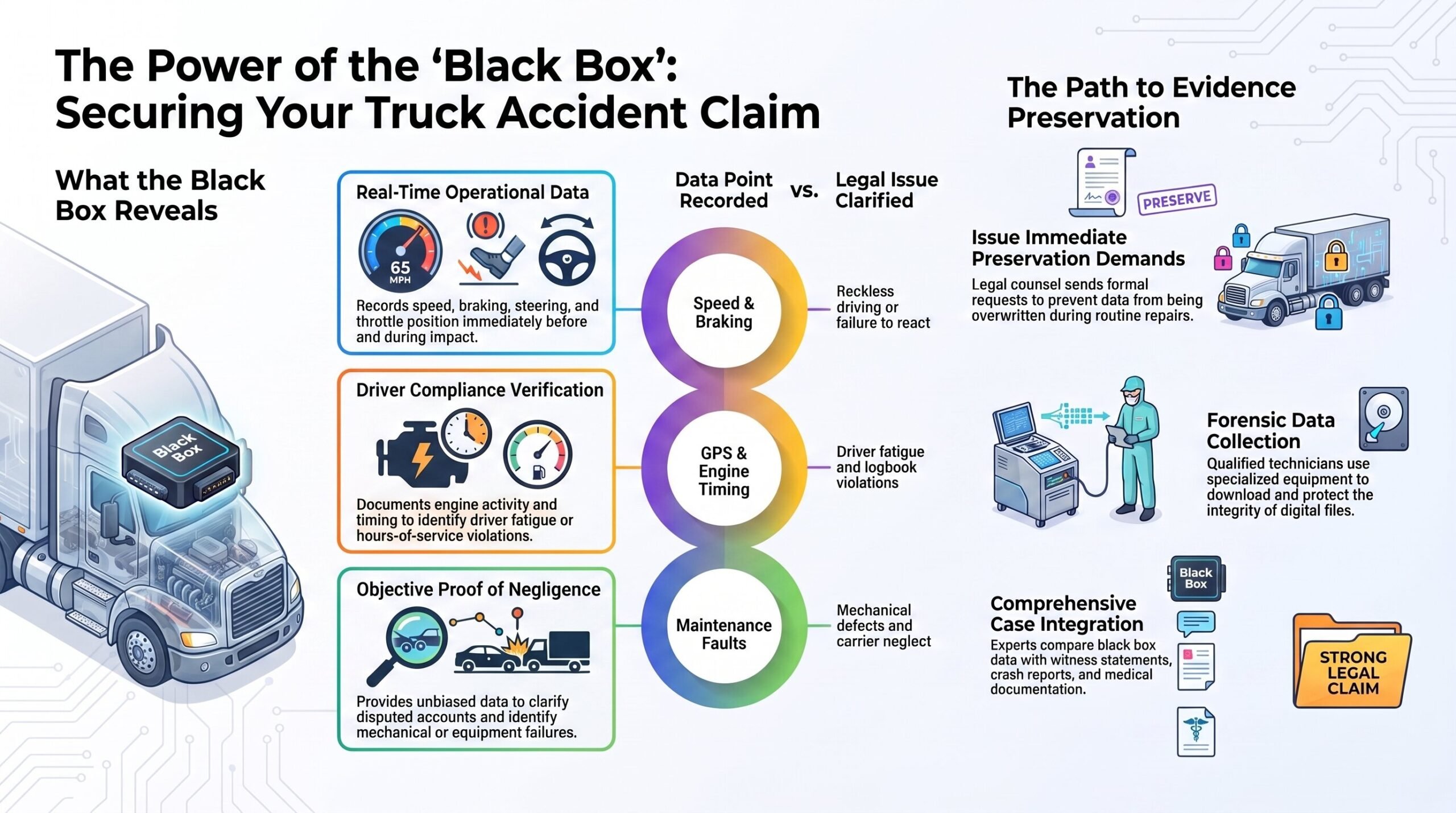
- Black box data may show speed, braking, steering, throttle position, engine activity, and timing before or during the collision.
- Prompt forensic collection helps prevent electronic data from being overwritten, altered, or lost during repairs or system changes.
- Lawyers compare vehicle data with witness statements, crash reports, photographs, driver-hours records, maintenance history, and medical documentation.
- Preserved evidence can help address disputed causation, injury severity, driver compliance, mechanical failures, and insurance coverage under Florida law.


How We Can Help With Your Daytona Beach Truck Black Box Accident Injury Claim
A Daytona Beach truck black box accident lawyer can help preserve and examine electronic data that may clarify how a commercial truck crash occurred. Counsel may promptly send preservation requests to trucking companies, insurers, maintenance providers, and other parties holding relevant records. Document retention efforts can address electronic control module downloads, GPS history, dispatch communications, inspection materials, driver logs, and related safety documentation before routine practices or system changes cause information to disappear.
The lawyer can also organize witness statements from passengers, motorists, emergency responders, and nearby workers. These accounts may help identify traffic conditions, vehicle movements, timing, and conduct preceding the collision. Counsel may coordinate with qualified investigators and technical professionals to compare testimony with available vehicle data and physical evidence.
OUR CONSULTATIONSARE FREE
START YOUR FREE CASE REVIEW

Understanding Daytona Beach Truck Black Box Accident Injury Cases
In Daytona Beach truck black box accident injury cases, electronic vehicle data may provide important evidence about a collision and the events leading up to it. These records can include speed, braking activity, steering inputs, engine performance, and event timing. When properly interpreted, they may help clarify disputed facts and support an injured person’s account.
The data must be identified, preserved, and reviewed promptly because it can be overwritten, altered, or lost during repairs. Evidence preservation mistakes may weaken a claim, particularly when a carrier or trucking company controls the vehicle and related records. A qualified legal professional may issue preservation demands and seek inspection of the system, maintenance documents, driver logs, and medical evidence.
Insurers may rely on insurance denial tactics, including disputes over causation, injury severity, or policy coverage. A careful case evaluation compares electronic data with witness statements, crash reports, photographs, and treatment records, helping ensure that legitimate injuries receive fair consideration under applicable Florida law.
Common Causes of Daytona Beach Truck Black Box Accident
Common causes of Daytona Beach truck black box accidents include driver fatigue or distraction, speeding, and other reckless driving behaviors. Brake or equipment failures may also contribute when critical systems malfunction during travel. Improper loading and inadequate maintenance can further compromise vehicle stability, handling, and stopping ability.
Driver Fatigue And Distraction
Driver fatigue and distraction frequently contribute to serious commercial truck crashes in Daytona Beach, impairing a driver’s reaction time, judgment, and ability to maintain control. Long shifts, irregular schedules, insufficient rest, and demanding delivery timelines can undermine effective Sleep management, leaving a driver vulnerable to microsleep and delayed responses. Distraction may arise from mobile devices, dispatch communications, eating, navigation systems, or other activities that divert attention from traffic.
These conditions can reduce lane awareness, obscure changing roadway hazards, and interfere with safe decision-making at intersections or work zones. A truck’s electronic control module or event data recorder may document braking, control, and operating periods that help clarify whether fatigue or distraction preceded a collision. Preserving such evidence can support injured individuals and promote accountability while serving the broader goal of safer commercial transportation.
Speeding And Reckless Driving
Speeding and reckless driving can substantially increase the severity of a commercial truck collision in Daytona Beach by reducing the time available to identify hazards, brake, or maintain control. Excessive speed may also lengthen stopping distances and amplify the force transferred during impact. Aggressive passing, following too closely, abrupt maneuvering, and disregard for traffic signals can endanger motorists, pedestrians, and cyclists, particularly in congested areas. Intersection safety depends on predictable driving and careful observation of turning vehicles, cross traffic, and changing roadway conditions.
Evidence from a truck’s electronic control module may help establish speed, steering inputs, hard maneuvers, and lane departure before a crash. Investigators may also examine whether distracted texting, pressure to meet schedules, or prior violations contributed to the conduct. Such information can support accountability and informed assistance for injured individuals and families.
Brake And Equipment Failures
Brake and equipment failures can cause a commercial truck collision in Daytona Beach by preventing the vehicle from stopping, turning, or maintaining stability as intended. Brake failure causes may include worn components, hydraulic leaks, air-pressure loss, or defects in braking controls. An equipment malfunction involving direction—related components, tires, lighting, or stability systems can also increase crash risks, particularly during traffic congestion or sudden roadway hazards. Investigators may review electronic control modules, maintenance data, and brake system diagnostics to determine whether a defect existed before the collision.
Vehicle inspection records can reveal missed warnings, recurring problems, or inadequate safety checks. Identifying these conditions helps injured individuals and their families understand how the incident occurred, preserve relevant evidence, and evaluate whether responsible parties failed to protect motorists, passengers, and other roadway users.
Improper Loading And Maintenance
Improper loading and inadequate maintenance can create conditions that a truck’s black box may help document after a Daytona Beach collision. Excess cargo, uneven weight distribution, or unsecured materials can affect direction control, braking, and stability, increasing the risk of a rollover or jackknife. Improper loading violations may be reflected in inspection records, dispatch communications, cargo documentation, or data showing sudden vehicle movements before impact. Maintenance failures can involve worn tires, defective brakes, lighting problems, or neglected safety inspections.
Investigators may compare the electronic control module’s speed, braking, and fault information with service invoices and inspection reports. Maintenance record gaps can raise questions about whether required repairs were delayed or omitted. Careful evidence preservation helps clarify contributing conditions and supports informed assistance for those affected by the crash.
Don’t Wait. Call Our Daytona Beach Truck Accident Lawyers Now.


Legal Rights of Daytona Beach Truck Black Box Accident Injury Victims
When a commercial truck’s black box contains evidence relevant to a crash, injured victims may have important legal rights to seek compensation and preserve information that could establish liability.
A Daytona Beach truck accident attorney may help protect those rights through timely legal action and careful evidence preservation.
- Victims may request that trucking companies preserve electronic data, driver logs, inspection records, and related communications before routine deletion occurs.
- They may pursue compensation for medical expenses, lost income, rehabilitation, pain, and other losses supported by damages documentation.
- Comparative negligence may affect recovery if an insurer or defendant alleges that the injured person contributed to the collision.
- Victims may obtain legal representation during insurer communications, evidence review, settlement negotiations, or litigation.
Prompt consultation allows counsel to identify responsible parties, evaluate applicable deadlines, and serve the victim’s interests responsibly. Families and caregivers can support this process by retaining records, avoiding speculative statements, and directing requests for information to counsel. Specialized guidance may also clarify privacy, evidentiary, and procedural protections.
Don’t Wait. Call Our Daytona Beach Truck Accident Lawyers Now.
Why Do Daytona Beach Truck Black Box Accident Injuries Happen?
Truck black box accident injuries in Daytona Beach often result from preventable failures in driver judgment, vehicle maintenance, carrier oversight, or roadway awareness. Excessive speed, distracted driving, fatigue, impaired operation, and unsafe lane changes can reduce a truck operator’s ability to respond to traffic conditions. Mechanical defects, including defective brakes, worn tires, or handling problems, may also contribute when inspections or repairs are neglected.
Some collisions arise from inadequate training, unrealistic delivery schedules, improper cargo securement, or pressure to violate safety rules. Weather, construction zones, heavy traffic, and unfamiliar roads can further increase hazards when drivers or carriers fail to adjust appropriately. Investigators may examine electronic logging data, event recorder information, maintenance records, dispatch communications, and witness statements to determine how the incident occurred.
These facts can help clarify whether conduct met applicable negligence standards. Understanding the contributing factors also supports more accurate evaluation of injury claims and encourages transportation companies to strengthen practices that protect motorists, passengers, and communities.
What Should You Do After a Daytona Beach Truck Black Box Accident Injury?
After a Daytona Beach truck black box accident injury, the injured person should seek immediate medical care and follow all recommended treatment. Preserving potential black box evidence, including vehicle data and related records, may help establish how the collision occurred. Consulting a truck accident lawyer can help protect legal rights and guide evidence collection and claim decisions.
Seek Immediate Medical Care
Prompt medical evaluation should be a priority for anyone injured in a Daytona Beach truck accident, even if symptoms initially appear minor. Some injuries, including concussions, internal bleeding, and spinal damage, may worsen or remain difficult to recognize without professional assessment. Emergency first aid should be provided when necessary, followed by transportation to an emergency department, urgent care facility, or personal physician. Early diagnosis can support appropriate treatment, reduce complications, and establish a clear connection between the crash and reported symptoms.
The injured person should accurately describe pain, limitations, and changes in condition to medical personnel. All instructions should be followed carefully, including referrals, prescriptions, and follow-up appointments. Complete medical records can support insurance documentation and help demonstrate the extent of accident-related harm during any later claim.
Preserve Black Box Evidence
Preserving a commercial truck’s black box data should be addressed promptly because the information may record speed, braking, guiding, engine activity, and other conditions before and during a collision. A vehicle owner or fleet operator may control this electronic evidence, and routine downloads, repairs, or data overwriting can affect its availability. The injured person or a supporting representative should document the truck’s identifying information, carrier, and collision date, then request that relevant records be preserved.
Witness statement preservation is also important, since recollections may change and contact information can become outdated. Medical record retrieval can help organize treatment details, diagnoses, and work restrictions while memories remain clear. Photographs of vehicles, roadway conditions, and visible injuries should be stored securely with related communications and incident reports.
Consult A Truck Accident Lawyer
A truck accident lawyer can help an injured person pursue relevant black box evidence and evaluate whether the data supports a negligence claim. Prompt consultation also helps protect medical records, witness accounts, photographs, and maintenance documents before evidence spoliation compromises the investigation. Counsel can identify potentially responsible parties, including drivers, carriers, manufacturers, and maintenance providers, while explaining deadlines that may affect recovery. In fatal collisions, legal guidance may be necessary for wrongful death claims and related family interests.
A lawyer can assess case valuation factors such as medical expenses, lost income, future care, pain, and insurance coverage. Many firms explain contingency fee options, allowing an injured person to seek representation without paying attorney fees in advance. Early legal assistance can coordinate communication with insurers and promote a careful, service-oriented response.
Don’t Wait. Call Our Daytona Beach Truck Accident Lawyers Now.
Critical Evidence in a Daytona Beach Truck Black Box Accident Injury Case
A Daytona Beach truck black box accident injury case may depend on evidence that clarifies the vehicle’s operation, the driver’s compliance, and the conditions surrounding the collision.
Essential sources include:
- Electronic Control Module Data
- Driver Hours Records
- Vehicle Maintenance History
- Crash Scene Documentation
Together, these records can help establish causation, identify regulatory violations, and support a reliable assessment of liability.
Electronic Control Module Data
When a commercial truck collision occurs, Electronic Control Module (ECM) data can provide objective evidence about the vehicle’s operation immediately before and during the crash. The module may record speed, braking activity, throttle position, engine performance, and impact-related changes. Properly preserved downloads can help clarify disputed accounts, identify mechanical concerns, and support a careful reconstruction of events. Because data may be overwritten, altered, or lost during repairs, qualified professionals generally seek prompt preservation and forensic collection.
Telematics privacy concerns may arise when connected systems transmit location, diagnostic, or driving information to carriers and third-party providers. Access should accordingly follow applicable legal protections and documented authorization. Data retrieval costs can vary according to the vehicle, software, storage method, and required expert analysis, making early evaluation important for protecting an injured person’s interests.
Driver Hours Records
Beyond ECM data, driver hours records can help establish whether fatigue or hours-of-service violations contributed to a truck collision. Hours of service logs may show driving periods, required rest breaks, and discrepancies between reported schedules and available evidence. Electronic logging devices, dispatch communications, payroll records, fuel receipts, and delivery timestamps can help verify whether entries accurately reflect the driver’s activities. When records indicate excessive driving or insufficient rest, they may provide important fatigue evidence in an injury claim.
Attorneys can preserve these materials promptly and compare them with crash timelines, witness accounts, and medical findings. Careful review may also identify pressure to meet delivery deadlines or repeated compliance failures. This evidence can support a fair investigation and help protect injured people seeking accountability and appropriate compensation after a serious collision.
Vehicle Maintenance History
Vehicle maintenance history can reveal whether a truck’s mechanical condition contributed to a collision and whether responsible parties failed to address known hazards. Pre-accident inspections may identify problems involving brakes, tires, control components, lighting, or other safety systems. Maintenance records can show when defects were reported, what repairs were authorized, and whether work was completed properly and within required intervals.
These documents may also identify the carrier, owner, leasing company, or repair facility responsible for preserving safe operating conditions. Comparing service entries with black box information can help clarify whether a mechanical failure existed before the event or developed afterward. Gaps, inconsistent entries, repeated warnings, and overdue repairs may warrant closer review. Preserving this evidence allows injured individuals and their families to pursue an accurate investigation and seek accountability from parties whose decisions may have increased the risk of harm.
Crash Scene Documentation
Crash scene documentation provides an independent record for evaluating how a truck collision occurred and how the vehicles, roadway, and surrounding conditions affected the outcome. Photographs should capture vehicle damage, skid marks, debris, traffic controls, lighting, weather, lane positions, and sight distances before conditions change. Measurements and diagrams can help establish impact points, travel paths, and vehicle resting locations.
Witness statement collection may preserve observations that later clarify speed, signaling, braking, or driver behavior. Investigators should identify the source, date, and method for every photograph, video, measurement, and recovered object. Evidence chain integrity is critical when physical evidence or digital files may be compared with electronic control module data. Proper documentation allows attorneys, experts, insurers, and courts to evaluate competing explanations responsibly while protecting the injured person’s right to informed, fair representation.
Long-Term Effects of Daytona Beach Truck Black Box Accident Injuries
Long-term truck accident injuries may cause chronic pain, reduced mobility, and lasting limitations on work or daily activities. Emotional and psychological challenges, including anxiety, depression, or trauma-related symptoms, may also persist after physical treatment ends. These effects can create ongoing medical needs and substantial financial burdens involving treatment, rehabilitation, lost income, and future care.
Chronic Pain and Mobility Loss
When a truck collision causes spinal, joint, or nerve damage, the resulting chronic pain and mobility loss can affect nearly every aspect of an injured person’s daily life. Persistent symptoms may limit walking, lifting, driving, working, and participation in crucial household activities. Whiplash severity can influence neck movement, while a back injury may produce recurring pain, weakness, or restricted flexibility. Some individuals require braces, mobility devices, physical therapy, injections, or surgery to preserve function and reduce discomfort.
These limitations may also increase the need for assistance with transportation, childcare, personal care, and other daily responsibilities. Consistent treatment and follow-up evaluations help document progression and necessary support. Insurance documentation should correspond with medical records, treatment plans, and functional limitations, providing a reliable account of long-term injury effects.
Emotional and Psychological Challenges
Emotional and psychological challenges may develop alongside the physical limitations caused by Daytona Beach truck accident injuries. Survivors may experience post-crash anxiety, sleep disruption, irritability, or persistent fear when traveling near commercial vehicles. Some individuals also face depression, reduced confidence, and difficulty resuming ordinary responsibilities after a serious collision. These responses can affect relationships, concentration, and participation in valued community roles.
Trauma coping often requires consistent support from qualified mental health professionals, trusted family members, and compassionate service providers. Counseling may help survivors process frightening memories, identify harmful thought patterns, and develop strategies for managing distress. Recognition of these effects is important because emotional suffering may remain hidden even when physical wounds appear restored. Patient, respectful assistance can encourage recovery while preserving each survivor’s dignity and autonomy.
Ongoing Medical and Financial Needs
Serious truck accident injuries may create ongoing medical and financial needs that extend well beyond the initial emergency treatment. Victims may require surgeries, rehabilitation, prescription medication, mobility equipment, home modifications, and continuing expert evaluations. Some injuries also limit employment, reduce earning capacity, or require family members to provide unpaid assistance. A careful assessment should address projected treatment costs, lost income, insurance limitations, and future personal-care needs.
Medical records, provider opinions, employment documentation, and related receipts can help establish the scope of these losses. Although EMERGENCY RESPONSE planning concerns immediate safety, organized documentation afterward remains crucial. EVIDENCE COLLECTION checklists may help preserve black-box data, photographs, witness information, and treatment records. A qualified Daytona Beach truck accident lawyer can coordinate with medical and financial professionals to protect long-term interests.
Proving Liability in Daytona Beach Truck Black Box Accident Injury Cases
Establishing liability in a Daytona Beach truck accident may depend on electronic evidence preserved by the vehicle’s black box, formally known as an event data recorder. This device can document speed, braking, steering input, and other conditions shortly before impact. Attorneys may obtain and interpret the data with qualified experts, comparing it with photographs, roadway conditions, vehicle damage, and crash-reconstruction findings.
Witness statements collection can preserve accounts from drivers, passengers, pedestrians, and first responders before memories change. Employment records verification may reveal driver qualifications, training, hours of service, disciplinary history, and whether company policies were followed. Maintenance files, inspection reports, dispatch communications, and loading documents can also help identify negligent conduct by a driver, trucking company, maintenance provider, or cargo handler.
A careful liability analysis considers whether any party violated traffic regulations, safety standards, or duties of reasonable care. Preserving records promptly is vital because electronic information may be overwritten, altered, or lost. This evidence can clarify responsibility and support an injured person’s pursuit of accountability.
Dealing With Insurance Companies After a Daytona Beach Truck Black Box Accident Injury
After a Daytona Beach truck black box accident, insurance companies may swiftly seek statements, medical records, and other information that could affect the value or outcome of a claim. Injured individuals may benefit from restricting recorded statements until they understand their rights and the information already available. Adjusters can request extensive insurance documentation, including employment records, treatment histories, and authorization forms. Each request should be reviewed carefully because incomplete, inaccurate, or excessively broad responses may create disputes about liability, medical causation, or damages.
A representative serving the injured person’s interests can organize relevant records, communicate with insurers, and preserve evidence without making unnecessary concessions. The truck’s electronic data, maintenance materials, driver logs, and carrier policies may require prompt preservation requests. Clear communication may also reduce settlement delays caused by missing documents or conflicting accounts. Insurance offers should be evaluated against documented medical needs, lost income, ongoing limitations, and applicable coverage before acceptance. Professional guidance helps ensure that negotiations remain accurate, respectful, and focused on fair compensation rather than premature resolution.
What to Expect During a Daytona Beach Truck Black Box Accident Injury Claim Process
A Daytona Beach truck black box accident injury claim typically begins with collecting electronic data and preserving other relevant accident evidence. The evidence is then reviewed to assess liability and damages before negotiations with the insurance companies commence. Depending on the available proof and negotiation results, the claim may conclude with a settlement or proceed to trial.
Black Box Data Collection
When a commercial truck collision is reported, its black box data can provide important evidence about the vehicle’s speed, braking, handling, engine performance, and driver activity before impact. During a Daytona Beach truck injury claim, attorneys may promptly request preservation of the electronic recording device and related records. A Federal investigation may also involve securing information from the carrier, manufacturer, or investigating agencies, depending on the collision’s circumstances. Qualified technicians generally perform data retrieval using specialized equipment and documented procedures to protect the recording’s integrity. The process may require access to the truck, its electronic control modules, and compatible software. Because data can be overwritten, damaged, or lost after a crash, timely preservation efforts help guarantee that potentially significant information remains available for authorized review and future claim proceedings.
Accident Evidence Review
Once preserved, black box information is reviewed alongside the broader evidence from the collision. A Daytona Beach truck black box accident lawyer may compare speed, braking, steering, and event timing with photographs, roadway conditions, medical records, and the official crash report. Witness statement collection can clarify traffic movements, driver conduct, visibility, and events that electronic data cannot capture. Investigators may also examine maintenance documents, driver logs, dispatch records, and training materials to identify circumstances relevant to responsibility.
Insurance policy review helps determine available coverage, applicable exclusions, and the parties connected to each policy. This stage organizes reliable facts, identifies inconsistencies, and protects the injured person’s interests. Careful review also helps steer that evidence is preserved for those seeking accountability and support after a serious truck collision.
Insurance Claim Negotiations
Insurance claim negotiations typically begin after the available evidence, injury documentation, and applicable coverage have been evaluated. A Daytona Beach truck black box accident lawyer may present a demand supported by collision data, witness accounts, Medical Records, wage information, and documented losses. The insurer may review liability, policy limits, causation, and the consistency of treatment before responding. Adjusters can request clarification, challenge certain expenses, or propose revisions to the claimed amount.
A careful Negotiation Strategy addresses those issues with organized evidence and timely communication while protecting the injured person’s interests. Legal counsel may also explain applicable deadlines, authorization forms, and information requests, helping the claimant avoid statements that could be misunderstood. Throughout this stage, accurate records and measured responses can support fair consideration of the injury claim.
Settlement Or Trial
A truck injury claim may conclude through a negotiated settlement or proceed to trial if the parties cannot reach a fair resolution. During settlement discussions, counsel evaluates medical records, lost income, vehicle data, witness accounts, and applicable insurance coverage. A focused negotiation strategy seeks compensation that reflects both current losses and anticipated care, while protecting the injured person from premature or incomplete resolution. If negotiations fail, the claim moves into litigation. Trial preparation tactics may include securing expert testimony, organizing black box evidence, interviewing witnesses, and developing clear explanations of liability and damages. The court then reviews admissible evidence before determining responsibility and compensation. Throughout either path, counsel communicates significant developments, preserves the claimant’s interests, and helps the injured individual make informed decisions while pursuing a fair outcome.
Compensation for Daytona Beach Truck Black Box Accident Injury Damages
Compensation for injuries sustained in a Daytona Beach truck accident may include medical expenses, lost income, reduced earning capacity, property damage, and pain and suffering. A careful evaluation should account for current treatment, anticipated medical needs, rehabilitation, transportation, and other documented consequences of the collision. Employment records, medical opinions, invoices, and testimony can help establish the extent of the losses and connect them to the truck driver’s or carrier’s conduct.
A lawyer may use the truck’s electronic data, inspection records, delivery schedules, and other evidence to support a demand for fair compensation. The Negotiation strategy should reflect the strength of the evidence, the client’s needs, and the risks of delay or disputed liability. At the same time, jury trial readiness can encourage meaningful settlement discussions and protect the injured person if negotiations fail. Prompt preservation requests and organized documentation help prevent important evidence from being lost while the claim is investigated and pursued.
Economic vs Non-Economic Damages in Daytona Beach Truck Black Box Accident Cases
Economic damages may include medical expenses, lost wages, property damage, and future financial losses resulting from a truck collision. Non-economic losses, such as pain, emotional distress, and diminished quality of life, require careful evaluation because they lack a fixed monetary value. Black box evidence can support both categories by clarifying vehicle speed, braking, driver conduct, and other facts relevant to liability and damages.
Economic Damages Explained
When a truck collision causes financial losses, the injured party may pursue economic damages supported by medical records, wage statements, repair invoices, and other reliable documentation. These damages may include emergency treatment, hospitalization, rehabilitation, prescription costs, future medical care, vehicle repairs, transportation expenses, and income lost during recovery. If injuries limit future employment, documented reductions in earning capacity may also be evaluated. A careful case assessment connects each claimed expense to the crash and identifies responsible parties, including trucking companies or insurers.
Effective Insurance negotiation strategies rely on organized records, accurate calculations, and timely communication. Evidence preservation tips include obtaining medical files, securing employment documentation, photographing property damage, and requesting available electronic truck data before it is overwritten. Accurate documentation helps counsel serve injured individuals by presenting credible, complete financial claims.
Non-Economic Losses Valued
Beyond documented financial costs, a truck collision may produce substantial non-economic losses that affect an injured person’s daily life and overall well-being. These losses can include physical pain, emotional distress, diminished enjoyment of life, inconvenience, disfigurement, and loss of companionship. Unlike medical bills or lost income, they lack fixed prices and require careful evidence-based assessment. Damages calculation methods may consider injury severity, recovery duration, permanent limitations, treatment experiences, and the effect on family and community participation.
An emotional distress evaluation can address anxiety, depression, sleep disruption, trauma symptoms, and documented changes in behavior or relationships. Testimony from the injured person, relatives, coworkers, and healthcare providers may help establish these impacts. A fair valuation recognizes personal suffering while remaining grounded in credible evidence and consistent legal standards.
Black Box Evidence Impact
Black box evidence can materially influence both economic and non-economic damage claims in a Daytona Beach truck accident case. Recorded speed, braking, guidance, impact forces, and hours-of-service data may help establish how the collision occurred and whether fatigue, distraction, or unsafe driving contributed. These findings can support economic claims for medical treatment, rehabilitation, lost income, diminished earning capacity, and property damage.
They may also strengthen non-economic claims involving pain, emotional distress, disability, disfigurement, and reduced enjoyment of life by connecting the crash to documented limitations. Investigators may compare the data with Cell phone records, driver logs, dispatch communications, and witness accounts. Evidence concerning FMCSA compliance can further reveal negligent supervision or regulatory violations. Proper preservation and interpretation allow decision-makers to evaluate losses fairly while serving injured individuals and their families.
When a Daytona Beach Truck Black Box Accident Injury Case Goes to Trial vs Settlement
A Daytona Beach truck black box accident injury case may proceed to trial or resolve through settlement, depending on the strength of the evidence, the disputed issues, and the parties’ willingness to accept financial risk. A settlement can provide compensation sooner, reduce litigation uncertainty, and spare injured individuals from testimony and cross-examination. The Settlement timeline overview commonly includes evidence preservation, medical documentation, demand preparation, insurer review, counteroffers, and final agreement. Insurance negotiation tactics may involve challenging liability, questioning injury severity, or emphasizing gaps in treatment, making careful documentation important.
Trial becomes more likely when the parties disagree about fault, damages, or the meaning of recorded vehicle data. A court may hear testimony from the injured person, medical professionals, accident investigators, and trucking personnel. Although trial may produce a larger award, it also requires greater time, expense, preparation, and acceptance of an uncertain result. Legal counsel can evaluate evidence, communicate respectfully, and pursue the resolution that best serves the injured person’s recovery and long-term needs.
Florida Laws That May Affect Your Daytona Beach Truck Black Box Accident Case
When a Daytona Beach truck black box accident involves serious injuries, several Florida laws may affect how liability, evidence, and compensation are evaluated. These rules help protect injured people while promoting accurate, accountable investigations.
- Florida trucking regulations: State and federal safety requirements may govern driver hours, vehicle maintenance, cargo loading, inspections, and electronic logging devices. Violations can support a negligence claim when they relate to the collision.
- Negligence standards: Florida’s comparative-fault framework may reduce compensation when an injured person is assigned part of the responsibility. Evidence from the crash scene, medical records, and the truck’s data can help clarify disputed facts.
- Evidence preservation rights: A party may request preservation of electronic control module data, onboard camera recordings, dispatch records, and inspection materials before routine deletion or overwriting occurs.
- Vicarious and corporate liability: Employers may bear responsibility for conduct performed within the scope of employment. Separate claims may arise from negligent hiring, training, supervision, or retention when supported by admissible evidence.
These laws can guide a careful, service-oriented response to affected families.
The Statute of Limitations for Daytona Beach Truck Black Box Accident Injury Cases
Florida’s statute of limitations generally sets a strict deadline for filing a personal injury lawsuit after a Daytona Beach truck accident, making prompt legal evaluation essential. In many Florida negligence cases, an injured person has two years from the accident date to file, although exceptions can shorten or extend that period. Claims involving government vehicles, wrongful death, minors, or delayed discovery may follow different rules. Missing the applicable deadline can permanently bar recovery, regardless of the seriousness of the injuries or the strength of the evidence.
The limitations period also makes early attention to crash causation particularly crucial. Evidence preservation may become difficult as electronic data is overwritten, vehicles are repaired, and witnesses’ memories fade. Relevant materials can include event-recorder information, inspection records, dispatch communications, driver negligence evidence, and trucking logs. Prompt documentation helps protect the interests of injured individuals and their families while supporting accurate evaluation of what occurred. Because deadlines depend on specific facts, a timely assessment serves both accountability and fair treatment for everyone affected.
How a Daytona Beach Truck Black Box Accident Lawyer Can Help You
How can a Daytona Beach truck black box accident lawyer assist after a serious collision? A qualified attorney can protect an injured person’s interests by examining electronic records, evaluating legal responsibility, and coordinating communication with insurers and trucking companies.
This service helps families pursue accountability while preserving accurate evidence.
- Evidence interpretation: Counsel can obtain and analyze event data recorder information, driver logs, maintenance records, inspection reports, and applicable safety documentation.
- Liability development: The investigation may identify negligent driving, inadequate training, mechanical failures, overloaded cargo, or regulatory violations involving multiple parties.
- Damages assessment: Medical expenses, lost income, rehabilitation needs, property damage, and long-term personal consequences can be documented for an inclusive claim.
- Resolution planning: Settlement strategy planning supports informed negotiations and helps determine whether litigation is necessary. In fatal crashes, the attorney may also develop Wrongful death claims for eligible survivors, addressing funeral costs, lost financial support, and related losses.
Through disciplined advocacy and clear explanations, counsel can help clients and their families pursue fair treatment while serving their broader need for safety, accountability, and recovery.
When to Contact a Daytona Beach Truck Black Box Accident Lawyer
Prompt legal attention may help preserve evidence and protect a person’s ability to pursue compensation after a serious truck collision. A Daytona Beach truck black box accident lawyer should be contacted as soon as practical, particularly when injuries, fatalities, disputed responsibility, or substantial property damage are involved. Early consultation supports evidence preservation urgency because electronic control modules, driver logs, inspection records, surveillance footage, and vehicle data may be overwritten, altered, or discarded.
The black box retention timeline differs by device, trucking company, manufacturer, and preservation policy. A lawyer can promptly identify potentially relevant systems and send preservation requests to the carrier, insurer, maintenance providers, and other responsible parties. Contact is also appropriate when an insurer seeks a recorded statement, offers an early settlement, or requests access to medical information before the collision’s circumstances are understood. Serving injured individuals requires timely attention to deadlines, documentation, and changing evidence. Prompt action does not require a person to decide the entire case immediately; it allows informed choices while vital information remains available.
Why You Need an Experienced Daytona Beach Truck Black Box Accident Lawyer
Because truck black box evidence can influence disputed issues of speed, braking, driver conduct, and vehicle performance, experienced legal counsel may be essential after a serious collision. A knowledgeable Daytona Beach attorney can identify relevant electronic data, recognize potential gaps, and pursue timely Evidence preservation before information is overwritten, altered, or lost. This work may involve coordinating with qualified investigators, reviewing maintenance and inspection records, and comparing recorded events with physical evidence and witness accounts.
Experience also supports a careful truck liability determination. Commercial crashes may involve the driver, motor carrier, vehicle owner, maintenance provider, or other responsible parties. Counsel can evaluate applicable safety duties, examine company practices, and organize evidence in a manner that helps injured people and their families seek accountability. Effective representation further allows clients to focus on medical care and supporting loved ones while legal professionals address communications, deadlines, and disputed facts. By protecting reliable evidence and presenting a complete factual record, experienced counsel can help advance a fair resolution for those affected.
How to Choose the Right Daytona Beach Truck Black Box Accident Lawyer for Your Case
Selecting the right Daytona Beach truck black box accident lawyer requires careful attention to experience with electronic evidence, commercial trucking regulations, and complex liability disputes. A qualified attorney should explain how event data recorders, driver logs, maintenance records, and related materials may support the claim.
During Client consultations, prospective clients should ask about prior truck crash matters, communication practices, resources for technical analysis, and familiarity with opposing insurers. A thorough case evaluation should identify potential defendants, applicable filing deadlines, and the evidence needed to establish negligence and damages.
Prompt evidence preservation is required because electronic data can be overwritten, altered, or lost after a collision. The lawyer should describe steps for sending preservation demands and obtaining records through lawful procedures. Finally, the proposed liability strategy should address the conduct of drivers, trucking companies, maintenance providers, and other responsible parties. Choosing counsel who values accuracy, compassion, and service helps protect injured individuals while supporting a fair, well-prepared resolution.
About The Law Offices of Anidjar & Levine
With a focus on serious injury claims, The Law Offices of Anidjar & Levine represents individuals involved in commercial truck collisions, including cases involving electronic evidence from vehicle black boxes.
The firm’s attorneys examine crash circumstances, identify responsible parties, and pursue compensation for medical treatment, lost income, property damage, and other legally recognized losses.
Its approach may include reviewing driver qualifications, maintenance records, dispatch communications, and company policies.
When a Truck Company fails to investigate an applicant’s background or assigns unsafe drivers, Negligent Hiring may become relevant to the claim.
Attorneys can also assess whether fatigue, inadequate training, improper loading, or regulatory violations contributed to the collision.
The firm serves clients by organizing sophisticated evidence and communicating with insurers, trucking companies, and opposing counsel.
Black box data may help establish speed, braking, driving hours, and other events before impact, although preservation and interpretation require prompt legal attention.
The firm offers case evaluations to help injured individuals understand potential claims and available legal options.
Frequently Asked Questions
What Information Is Stored in a Truck’s Black Box?
A truck’s black box, formally called an electronic control module or event data recorder, stores Event data concerning speed, braking, throttle position, engine performance, seatbelt use, and collision forces. It may also record trip details, including distance, operating hours, ignition cycles, and diagnostic alerts. Depending on the vehicle and manufacturer, recorded information can show actions immediately before, during, and after a crash, helping investigators reconstruct events and evaluate safety compliance.
Can Black Box Data Be Altered or Deleted After a Crash?
Black box data can sometimes be altered, overwritten, or deleted after a crash, depending on the device, access controls, and preservation efforts. Digital Tampering may occur through unauthorized downloads, software changes, physical damage, or failure to secure the vehicle promptly. Data Integrity is best protected by isolating the recorder, documenting its condition, and creating a forensic copy. Qualified investigators can examine metadata, audit logs, and inconsistencies to identify manipulation and preserve reliable evidence.
Who Owns the Truck’s Black Box Data?
The trucking company or vehicle owner generally owns the truck’s black box, although the manufacturer may control certain software and technical functions. Ownership does not automatically grant unrestricted use, particularly when litigation or privacy laws apply. Black box ownership rules vary by jurisdiction and contract terms. The data access process may involve preservation requests, subpoenas, court orders, or cooperation from insurers and qualified attorneys seeking reliable evidence for affected individuals.
How Long Does Black Box Information Remain Available?
Black box information may remain available from several months to multiple years, depending on the truck, device, carrier, manufacturer, and whether data was downloaded after the collision. Post crash retention timelines are not uniform, and overwritten records may become unrecoverable without prompt action. Investigators or attorneys should preserve the vehicle, send targeted preservation notices, and follow records request procedures quickly. Serving affected individuals requires careful coordination with carriers and qualified technical professionals.
Can Passengers Access Black Box Data After a Truck Accident?
Passengers generally cannot directly access truck black box data after an accident. The recording typically belongs to the vehicle owner, carrier, or manufacturer, and release may require consent, a subpoena, or formal discovery in litigation. Data access procedures vary by jurisdiction and device type. A qualified representative can request preservation and review records while protecting passenger privacy, especially when information involves other occupants, drivers, or unrelated operational details.
—————————
Truck black box data can provide crucial evidence in a Daytona Beach collision, including information about vehicle speed, braking, and driver actions before impact.
Preserving and interpreting this data requires prompt legal attention and experienced representation.
The Law Offices of Anidjar and Levine can help injured victims investigate the crash, identify responsible parties, protect their rights, and pursue appropriate compensation.
Learn more from a Daytona Beach Truck Accident Lawyer to support informed decisions throughout the legal process.