The Law Offices of Anidjar and Levine, a Daytona Beach truck driver hours-of-service violation lawyer, investigates whether excessive driving, inadequate rest, falsified logs, or ELD discrepancies contributed to a collision.
The attorney may preserve dispatch records, inspection reports, surveillance footage, medical documentation, and crash-scene evidence while identifying responsible parties, including drivers, carriers, or maintenance providers.
Legal counsel also handles insurers and evaluates injury, wrongful-death, and long-term disability claims before Florida deadlines expire.
For additional information, visit the Daytona Beach Truck Accident Lawyer page to learn about available protections and key steps after such a crash.
Main Takeaways
- A Daytona Beach lawyer can investigate whether a truck driver exceeded federal hours-of-service limits or falsified required records.
- Attorneys may preserve ELD data, logbooks, dispatch messages, GPS records, fuel receipts, inspections, and surveillance footage.
- Liability may involve the driver, trucking company, maintenance provider, or other responsible parties, depending on evidence and applicable law.
- Lawyers connect fatigue-related conduct to crashes by evaluating reaction time, lane control, braking, roadway conditions, and medical evidence.
- Florida filing deadlines may limit injury or wrongful-death claims, so prompt legal evaluation can protect compensation rights.
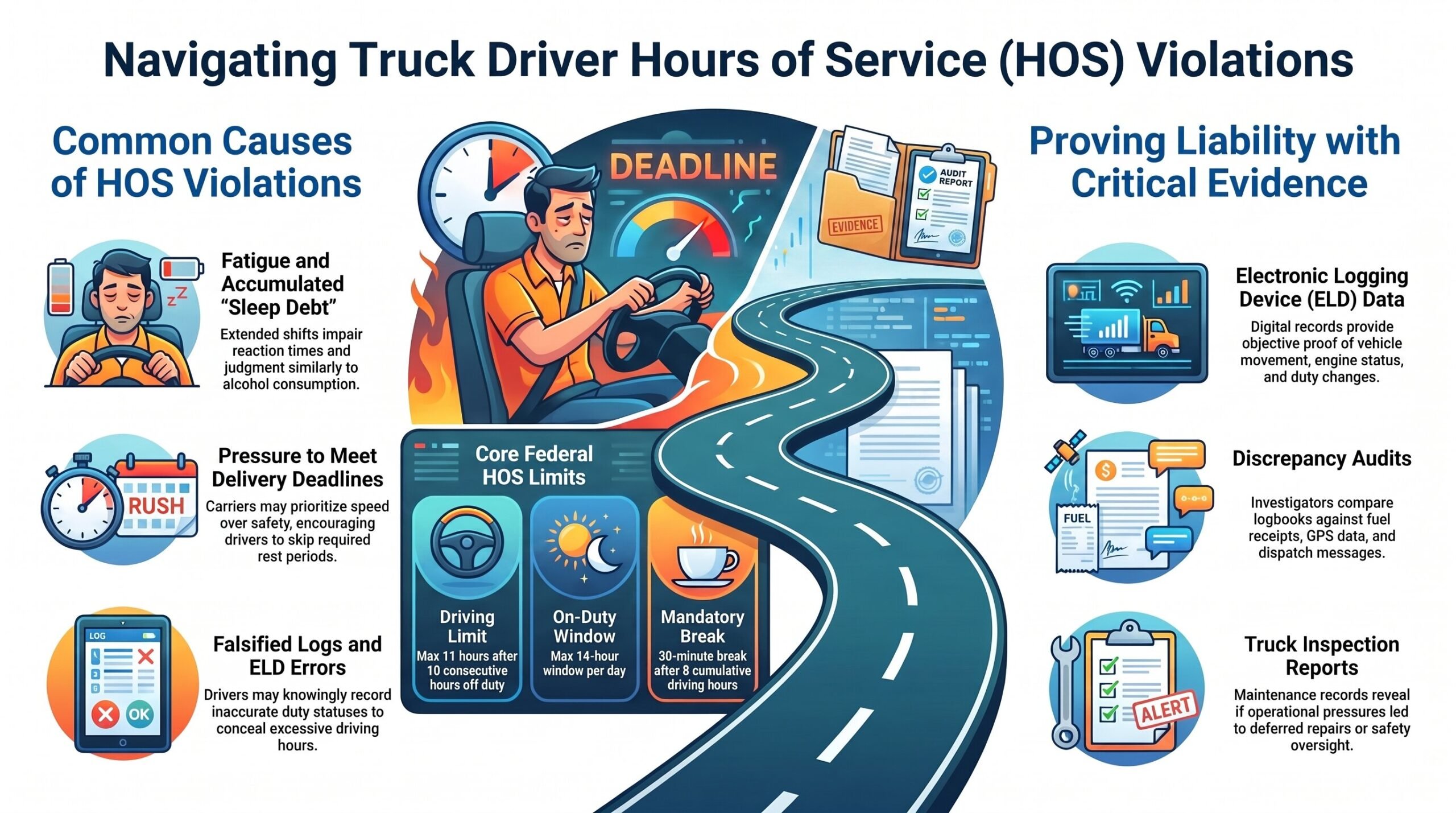


How We Can Help With Your Daytona Beach Truck Driver Hours of Service Violation Injury Claim
When a truck driver violates federal hours-of-service limits, the resulting fatigue may create serious risks for other motorists and complicate the process of establishing liability after a crash. Assistance may begin with a careful review of the collision, available records, and the injuries sustained. Counsel can identify potentially responsible parties, explain legal options, and coordinate communications so that an injured person or family can make informed decisions without unnecessary pressure.
Evidence preservation is particularly important because electronic logging data, dispatch communications, inspection records, surveillance footage, and vehicle information may change or disappear. Timely requests and appropriate investigation can help protect materials relevant to the claim. Medical documentation and employment records may also clarify the effects of the injuries on daily life and financial stability.
When a fatality occurs, families pursuing wrongful death may receive guidance concerning applicable claims, damages, and procedural requirements. A service-focused legal approach seeks accountability while treating each person with dignity, patience, and respect throughout the process.
OUR CONSULTATIONSARE FREE
START YOUR FREE CASE REVIEW

Understanding Daytona Beach Truck Driver Hours of Service Violation Injury Cases
Truck driver hours-of-service violation injury cases involve more than determining whether a collision occurred. They require careful examination of whether a driver or carrier exceeded legally permitted driving or on-duty limits and whether that conduct contributed to the injuries. Relevant evidence may include electronic logging device data, dispatch records, inspection materials, medical documentation, and witness accounts.
Investigators may assess Driver fatigue signals, such as delayed reactions, impaired attention, or difficulty maintaining a lane, while distinguishing documented observations from speculation. They also evaluate crash causation factors, including roadway conditions, vehicle maintenance, visibility, and the actions of other motorists. This analysis helps clarify responsibility without assuming that a regulatory violation alone establishes liability.
An injured person may need assistance preserving records, identifying responsible parties, and presenting the effects of physical, financial, and emotional harm. A careful case evaluation supports informed decisions and promotes accountability. Qualified legal guidance can help families pursue fair treatment while ensuring that evidence is collected respectfully and efficiently.
Common Causes of Daytona Beach Truck Driver Hours of Service Violation
Common causes of truck driver hours-of-service violations include driver fatigue, inadequate fatigue management, and pressure to meet delivery deadlines. Falsified logbook entries may also conceal excessive driving or insufficient rest periods, creating significant compliance concerns. Electronic logging device errors, including inaccurate entries or technical malfunctions, can further contribute to violations and require careful review.
Driver Fatigue And Fatigue Management
Driver fatigue is a significant factor in Daytona Beach truck driver hours-of-service violations because inadequate rest can impair judgment, reaction time, and the ability to accurately maintain required driving records. Sleep debt may accumulate across consecutive shifts, increasing crash risk and reducing awareness of changing roadway conditions. Effective fatigue management requires realistic scheduling, protected rest periods, and careful attention to personal warning signs, including frequent yawning, slowed responses, and difficulty maintaining focus.
Consistent hydration habits and balanced meals can support alertness, although they cannot replace adequate sleep. Employers may use fatigue biomarkers, screening tools, and wellness education to identify elevated risks while preserving worker dignity. Drivers who recognize impairment should follow safety procedures, communicate promptly, and seek rest before continuing, thereby protecting themselves and other road users.
Falsified Logbook Entries
Accurate recordkeeping is a central requirement of federal hours-of-service compliance, yet some violations arise when a driver or motor carrier knowingly records information that does not match actual duty status. Falsified logbook entries may involve altered driving times, inaccurate off-duty periods, or misuse of personal-conveyance classifications. Electronic logging devices can reveal inconsistencies between recorded activity, vehicle movement, fuel purchases, toll records, and dispatch data.
During CDL compliance reviews, investigators may compare these sources to identify repeated discrepancies and fatigue patterns that suggest a driver worked beyond permitted limits. Such conduct can expose both the driver and carrier to citations, civil penalties, safety ratings, and increased scrutiny. Accurate logs protect motorists by allowing regulators, employers, and legal advocates to evaluate whether roadway risks were properly managed and addressed.
Pressure To Meet Deadlines
When delivery schedules are tight, trucking companies and drivers may face pressure to reach destinations before legally required driving limits expire. Deadlines pressure can encourage extended driving, skipped rest periods, or decisions that place delivery commitments above public safety. Over time, sleep deprivation may impair judgment, reaction time, and attention, increasing the risk of crashes and hours-of-service violations. Employers that reward speed without supporting lawful scheduling may contribute to Safety culture neglect.
Supervisors and dispatch personnel have a responsibility to plan routes realistically, recognize fatigue concerns, and avoid urging drivers to continue when they are no longer fit to operate safely. Enforcement gaps may allow repeated practices to persist, leaving drivers, carriers, and members of the public exposed to preventable harm. Legal guidance can help identify responsibility and protect affected individuals.
Electronic Logging Device Errors
Electronic logging device errors can distort a commercial driver’s record of on-duty, driving, and rest periods, creating apparent or actual hours-of-service violations. Common problems include incorrect vehicle information, malfunctioning hardware, missed duty-status changes, connectivity failures, and inaccurate location data. A driver may also forget to annotate an unidentified driving event or misunderstand instructions after a trailer, truck, or account changes.
These discrepancies can trigger roadside inspections, carrier investigations, or enforcement action even when the driver attempted to comply. Driver fatigue training should explain proper ELD use, required annotations, and procedures for documenting malfunctions. Carriers can reduce preventable disputes through regular system maintenance, prompt record corrections, and Electronic compliance audits. When an alleged violation arises, preserved dispatch records, receipts, repair reports, and witness information may help clarify the driver’s actual activities and support fair treatment.


Legal Rights of Daytona Beach Truck Driver Hours of Service Violation Injury Victims
Victims injured in crashes involving truck drivers who violate federal hours-of-service rules may have legal rights to pursue compensation for their losses. A claim may address medical expenses, lost income, reduced future earning capacity, property damage, and pain and suffering.
Families may also seek damages when a fatal collision causes wrongful death.
- Preserving evidence: Accident reports, driver logs, electronic data, employment records, and surveillance footage can help establish responsibility. Legal counsel may promptly request records before they disappear.
- Identifying liable parties: The truck driver, carrier, maintenance provider, or another entity may share responsibility, depending on the evidence and applicable law.
- Seeking accountability: Workplace safety training, regulatory compliance, and appropriate CDL licensing penalties may help protect other road users, although administrative sanctions do not replace civil compensation.
Florida deadlines can limit the time available to file an injury or wrongful-death action. A qualified Daytona Beach attorney can evaluate the claim, communicate with insurers, and advocate for injured individuals and families while respecting their need for informed, compassionate service.
Why Do Daytona Beach Truck Driver Hours of Service Violation Injuries Happen?
Truck driver hours-of-service violations can cause Daytona Beach injuries because fatigue impairs reaction time, judgment, attention, and physical coordination. When a driver exceeds permitted driving or on-duty limits, the resulting exhaustion can make it difficult to maintain lane position, recognize hazards, or brake promptly in heavy traffic.
Several Fatigue risk factors may contribute to these violations. Insufficient sleep, irregular schedules, overnight driving, untreated sleep disorders, demanding routes, and pressure to meet delivery deadlines can reduce alertness. Truck scheduling practices may also encourage extended shifts, inadequate rest periods, or unrealistic arrival times, particularly when dispatch decisions prioritize speed over safety.
Fatigue-related impairment can affect everyone using Daytona Beach roads, including passenger vehicle occupants, motorcyclists, pedestrians, and other commercial drivers. The danger increases when an exhausted driver operates a large truck that requires greater stopping distance and can cause severe damage during a collision. Understanding these causes helps explain how preventable operational decisions may contribute to serious injuries and lasting consequences for affected individuals and families.
What Should You Do After a Daytona Beach Truck Driver Hours of Service Violation Injury?
After a Daytona Beach truck driver hours of service violation injury, the injured party should seek immediate medical care, even if symptoms initially appear minor. The individual should document the crash scene by preserving photographs, witness information, medical records, and other relevant evidence. Consulting a truck accident lawyer can help protect legal rights and support a thorough investigation of driver logs, company records, and liability.
Seek Immediate Medical Care
Prompt medical evaluation is highly important when a collision involving an hours-of-service violation causes suspected injury, even if symptoms initially appear minor or delayed. An Emergency room evaluation can identify concussions, internal bleeding, spinal trauma, and other conditions that may worsen without treatment. A person should follow discharge instructions, attend recommended follow-up appointments, and promptly report new or increasing symptoms to medical professionals. Consistent care also supports recovery and helps physicians connect symptoms to the collision.
Patients should accurately describe pain, limitations, medications, and any changes in functioning, while avoiding speculation about legal responsibility. They should preserve medical notes, diagnostic reports, prescriptions, billing records, and treatment instructions in an organized file. Timely attention protects health and creates reliable documentation for those seeking fair support after a preventable trucking injury.
Document the Crash Scene
At the crash scene, the injured person or a responsible companion should document conditions that may later clarify how the collision occurred and whether driver fatigue or excessive driving hours contributed. If safety permits, photographs should capture vehicle positions, roadway markings, skid marks, traffic signals, visible injuries, cargo, and damage from several angles. Weather condition documentation should include rain, fog, darkness, standing water, or glare, along with the approximate time and lighting conditions.
Witness statement collection should record names, contact information, observations, and comments about the truck driver’s alertness, conduct, or statements regarding driving time. A person should avoid moving evidence, confronting anyone, or interfering with emergency operations. Notes should be made promptly, while details remain fresh. Any available dash-camera footage, nearby surveillance locations, and company identifiers should also be preserved.
Consult a Truck Accident Lawyer
Consulting a truck accident lawyer can help an injured person determine whether a driver’s hours of service violation contributed to the Daytona Beach collision and identify the parties that may be legally responsible. Counsel can explain reporting requirements, preserve evidence, and coordinate communication with insurers while protecting the injured person’s interests. Relevant evidence may include electronic logging device data, dispatch records, fuel receipts, inspection reports, medical records, and available surveillance footage.
Witness accounts describing Driver fatigue signals, such as repeated yawning, drifting lanes, or delayed reactions, may also support the investigation. A lawyer can organize crash investigation steps, including reviewing police reports, examining vehicle damage, consulting qualified reconstruction professionals, and comparing driving records with federal limits. Prompt legal guidance may help families pursue appropriate compensation and support recovery.
Critical Evidence in a Daytona Beach Truck Driver Hours of Service Violation Injury Case
Critical evidence may establish whether a driver exceeded lawful service limits and whether that violation contributed to the collision.
Key sources include:
- Driver logbook records and electronic logging device data.
- Truck inspection reports and maintenance documentation.
- Crash scene evidence, including photographs, witness accounts, and vehicle data.
Together, these materials can clarify the driver’s activity, vehicle condition, and events leading to the injury.
Driver Logbook Records
Driver logbook records can provide essential evidence in a Daytona Beach truck driver hours of service violation injury case by documenting whether a commercial driver complied with federally mandated driving and rest limits. These entries may establish when driving began, required breaks occurred, and a duty period ended. Investigators and legal representatives can compare the recorded schedule with delivery documents, fuel receipts, dispatch communications, and witness accounts to identify omissions or inconsistencies.
Logbook accuracy is significant because altered, incomplete, or implausible entries may suggest that fatigue risks were concealed. Preserving original records supports legal defensibility and helps present reliable evidence to insurers, courts, and regulatory authorities. Careful review can clarify whether a violation contributed to the collision, assist injured individuals seeking accountability, and help protect other roadway users from preventable commercial vehicle hazards.
Electronic Logging Device Data
Electronic Logging Device (ELD) data can supplement traditional logbook records by providing electronically generated information about a commercial driver’s duty status, vehicle movement, and operating time. In a Daytona Beach truck accident case, these records may help determine whether a driver exceeded applicable limits or operated without required rest. Attorneys may compare ELD entries with dispatch communications, fuel transactions, and available location information to identify data discrepancies.
Such comparisons can reveal inaccurate status changes, unexplained driving periods, or possible ELD manipulation. The evidence may also illuminate whether inadequate fatigue mitigation contributed to unsafe operation, helping explain risks to Driver health and roadway safety. Properly preserved ELD files can support a careful, fact-based evaluation of liability, damages, and compliance while assisting injured individuals and their families in seeking fair treatment through the legal process.
Truck Inspection Reports
When properly preserved, truck inspection reports can provide objective evidence about a commercial vehicle’s mechanical condition, regulatory compliance, and safe operation at relevant points in time. These records may identify when inspections occurred, who performed them, and whether reported defects were corrected before the vehicle operated. Maintenance compliance documentation can help determine whether the carrier followed required service schedules and responded appropriately to known problems.
Brake inspections are particularly significant because brake deficiencies can affect stopping performance and may reflect broader failures in safety oversight. Reports may also reveal repeated violations, deferred repairs, or discrepancies between maintenance practices and company policies. Attorneys reviewing an hours-of-service injury claim may compare these records with driver logs and dispatch information to evaluate whether operational pressures contributed to unsafe decisions, while preserving evidence for injured individuals.
Crash Scene Evidence
Crash scene evidence can help establish how a truck driver’s fatigue, delayed reactions, or hours-of-service violation contributed to a collision in Daytona Beach. Investigators may document skid marks, vehicle positions, roadway conditions, lighting, and damage patterns before the scene changes. Dashcam footage, surveillance video, electronic logging device data, and driver inspection materials may help compare the truck’s operation with legally permitted driving periods.
Cell phone records can reveal whether device use or communications distracted the driver near the time of impact. Eyewitness statements may describe erratic movement, lane departures, slow reactions, or visible signs of exhaustion. Photographs and measurements can preserve details for accident reconstruction experts. A careful evidence review may assist injured individuals and their families in identifying responsible parties and presenting an accurate account to insurers, investigators, or a court.
Long-Term Effects of Daytona Beach Truck Driver Hours of Service Violation Injuries
Hours of service violations can cause injuries with lasting consequences, including ongoing medical treatment and rehabilitation needs. Affected individuals may also experience reduced earning capacity when physical limitations prevent a return to prior employment. Persistent pain, disability, and emotional challenges can further influence daily activities, family responsibilities, and overall quality of life.
Ongoing Medical Treatment
Ongoing medical treatment may be necessary for individuals who suffer injuries in collisions caused by truck drivers violating federal hours-of-service requirements. Recovery may involve physician visits, diagnostic testing, prescription medications, physical therapy, and medical expert care for persistent pain, neurological symptoms, or limited mobility. Some individuals may also require surgery, assistive devices, or counseling to recover from trauma and related emotional conditions. Workplace rehabilitation can help coordinate safe, structured progress toward daily activities while respecting medical restrictions.
Consistent treatment allows providers to monitor changes, identify complications, and adjust care when necessary. Treatment documentation should include diagnoses, recommendations, bills, prescriptions, and functional limitations. Such records can help demonstrate the injury’s continuing effects and support communication among healthcare professionals, insurers, and legal representatives. Following medical guidance remains important for protecting recovery and long-term wellbeing.
Lost Earning Capacity
Medical documentation may also help establish how a truck driver’s hours-of-service violation injury affects a person’s ability to earn income over time. Records can identify work restrictions, reduced stamina, permanent limitations, and the expected duration of those conditions. These findings may demonstrate why an injured worker cannot return to commercial driving or must accept lower-paying employment. Financial evidence, including prior wage statements, employment history, and industry pay data, can help estimate lost income and diminished future earnings.
A vocational expert may evaluate transferable skills, education, licensing, and realistic employment options. Vocational retraining could improve employability, but its cost, duration, and effect on earning potential should be considered. A careful assessment may support compensation for past losses and the projected difference between anticipated income and post-injury earning capacity.
Emotional And Physical Challenges
Long-term injuries caused by a Daytona Beach truck driver hours-of-service violation can create lasting emotional and physical challenges that affect nearly every area of a person’s life. Chronic pain, reduced mobility, traumatic brain injuries, and permanent disabilities may require continuing treatment, rehabilitation, medication, or assistance with routine activities. Emotional consequences can include anxiety, depression, sleep disruption, post-traumatic stress, and diminished confidence. These conditions may strain family relationships and limit participation in work, education, and community service.
A careful legal evaluation can identify responsible parties, including carriers that may face vicarious liability for a driver’s conduct. When evidence shows reckless or deliberate disregard for safety, punitive damages may also be available. Compassionate representation helps injured individuals obtain resources, accountability, and long-term support while preserving their dignity throughout recovery.
Proving Liability in Daytona Beach Truck Driver Hours of Service Violation Injury Cases
When a truck driver’s hours-of-service violation contributes to a collision, proving liability requires connecting the unlawful driving conduct to the resulting injuries and losses. A careful investigation may examine electronic logging device data, dispatch records, fuel receipts, GPS information, and inspection documents to determine whether the driver exceeded federal limits or falsified records. Evidence preservation is critical because relevant data can be overwritten, altered, or lost after a crash. Attorneys may issue preservation demands and obtain qualified analysis of the carrier’s records.
Physical evidence, crash reports, medical documentation, and employment records can help establish causation and the full scope of harm. Witness interviews may clarify the driver’s condition, behavior, speed, and actions before impact. Testimony from accident reconstruction professionals, medical providers, and trucking-safety experts can further explain how fatigue affected performance and why the violation mattered. Liability may extend to a motor carrier when negligent hiring, supervision, scheduling, or monitoring contributed to the collision.
Dealing With Insurance Companies After a Daytona Beach Truck Driver Hours of Service Violation Injury
After a Daytona Beach truck collision involving an hours-of-service violation, insurance companies may promptly seek statements, records, and authorizations that affect the value of the claim. An injured person should consider consulting counsel before providing an insurance statement, signing releases, or accepting an early settlement. Adjusters may request broad access to medical histories, while relevant Medical documentation should be organized to connect treatment, expenses, and functional limitations to the crash.
Counsel can help preserve electronic records, dispatch communications, inspection materials, and driver logs when logbook disputes arise. Inaccurate or incomplete entries may influence liability assessments, but insurers may challenge evidence that is not properly authenticated or explained. A careful review of policy coverage can identify applicable commercial limits, additional insureds, exclusions, and possible sources of compensation.
Prompt, courteous communication remains appropriate, but claimants should avoid speculation, unnecessary recorded statements, and social media disclosures. Assistance from a qualified attorney may protect injured individuals while allowing them to focus on recovery and supporting their families.
What to Expect During a Daytona Beach Truck Driver Hours of Service Violation Injury Claim Process
A Daytona Beach truck driver hours of service violation injury claim typically begins with an initial evaluation of liability, injuries, and available insurance coverage. The process then involves gathering major evidence, negotiating with insurers, and determining whether a fair resolution can be achieved. If negotiations fail, the injured party may need to prepare for litigation with appropriate legal guidance.
Initial Claim Evaluation
During an initial claim evaluation, a Daytona Beach truck driver hours of service violation lawyer examines the collision, the driver’s records, and the injured party’s medical condition to determine whether a viable injury claim exists. The lawyer may investigate evidence preservation procedures, including whether relevant materials remain available and whether responsible parties can be identified under applicable law. This review commonly considers the trucking company’s potential oversight, the driver’s conduct, and the relationship between any hours-of-service violation and the crash.
Medical information is evaluated to understand diagnoses, treatment needs, and likely consequences without minimizing the injured person’s experience. The lawyer also discusses deadlines, available insurance coverage, and practical objectives. This early assessment helps determine appropriate next steps while supporting a fair, orderly process for everyone affected.
Gathering Key Evidence
The evidence-gathering phase establishes the factual foundation of a Daytona Beach truck driver hours of service violation injury claim. A legal team may obtain crash reports, photographs, medical records, witness statements, dispatch communications, and employment documentation. Electronic logging device data can reveal whether driving time, rest periods, or required breaks complied with federal regulations. Black box preservation is also vital because vehicle event data may record speed, braking, wheel positioning, and collision conditions before the information is overwritten.
A Driver fatigue analysis may examine log inconsistencies, scheduling practices, sleep opportunities, and available evidence of impairment from exhaustion. Investigators can inspect roadway conditions, vehicle maintenance records, and the carrier’s safety policies. Preserving these materials promptly helps clarify responsibility, support accurate injury documentation, and protect the interests of affected individuals throughout the claim process.
Negotiating With Insurers
Once evidence establishes the potential effect of a hours-of-service violation, negotiations with insurers typically focus on liability, injury severity, and the value of the resulting losses. A Daytona Beach truck driver hours-of-service violation lawyer may present medical records, wage documentation, crash reports, and electronic records to support a fair demand. Insurers may challenge causation, question treatment, or argue that unrelated conditions caused the claimed limitations. Logbook accuracy disputes can affect whether fatigue or excessive driving contributed to the collision.
Similarly, ELD data reliability may be examined through device maintenance records, edits, missing entries, and consistency with fuel, dispatch, and toll information. Counsel generally responds with organized evidence and reasoned valuation. Settlement discussions may involve counteroffers, releases, and payment terms, while keeping the injured person’s recovery and practical needs central throughout negotiations.
Preparing For Litigation
Litigation in a Daytona Beach truck driver hours-of-service violation injury claim typically begins after informal negotiations fail or the available evidence requires formal court involvement. The claimant’s legal team files pleadings, identifies responsible parties, and establishes the factual basis for damages. Discovery may require written questions, document requests, depositions, and review of electronic logging device data, dispatch records, medical files, and vehicle maintenance materials. Evidentiary readiness becomes crucial because opposing counsel may challenge causation, regulatory violations, injury severity, or financial losses.
Attorneys may consult accident reconstruction experts, medical professionals, and trucking safety authorities to clarify disputed issues. A carefully developed trial strategy addresses witness testimony, exhibits, legal arguments, and settlement opportunities. Throughout the process, counsel should provide clear updates, protect the claimant’s interests, and pursue accountability while preparing for court if resolution remains unavailable.
Compensation for Daytona Beach Truck Driver Hours of Service Violation Injury Damages
When a truck driver or motor carrier violates federal hours-of-service requirements and causes a crash, injured individuals may pursue compensation for the resulting damages. A claim may include documented ambulance services, hospital care, physician visits, prescription medication, rehabilitation, and necessary medical equipment. Proof of medical expenses, such as itemized bills, treatment records, and insurance statements, can help establish the amount reasonably connected to the collision.
A qualified attorney may also evaluate future treatment costs when injuries require continuing care, additional procedures, therapy, or long-term medication. Medical opinions, life-care assessments, and treatment projections may support a request for compensation that accounts for reasonably anticipated needs. Records concerning missed work and reduced earning capacity can further demonstrate the collision’s financial consequences without relying on speculation.
Because hours-of-service violations may involve logbooks, electronic records, dispatch communications, and inspection materials, timely investigation is important. Preserving evidence can help connect the violation to the crash and support a fair recovery for affected individuals and families.
Economic vs Non-Economic Damages in Daytona Beach Truck Driver Hours of Service Violation Cases
Damages in these cases may include economic losses, such as medical expenses, lost income, and future earning limitations. Non-economic losses can involve pain, emotional distress, diminished quality of life, and other personal harms. Establishing both categories generally requires medical records, financial documentation, witness testimony, and evidence linking the losses to the hours-of-service violation.
Economic Damage Categories
Economic damages in a Daytona Beach truck driver hours-of-service violation case generally cover measurable financial losses caused by the crash, including medical expenses, lost income, reduced future earning capacity, property damage, and other necessary out-of-pocket costs. Medical documentation, wage records, repair estimates, and expert evaluations can help establish the amount and cause of each loss. Future treatment or diminished earning ability may require evidence from physicians, economists, or vocational experts.
Transportation expenses, household assistance, rehabilitation, and replacement services may also qualify when reasonably related to the collision. A Comparative fault analysis can reduce recovery if the injured party contributed to the incident. Insurance coverage disputes may affect payment, particularly when commercial policies, multiple defendants, or policy exclusions are involved. Careful recordkeeping assists fair evaluation and supports clients seeking practical assistance during recovery.
Non-Economic Losses
Non-economic losses address the personal effects of a truck crash that cannot be measured through bills or receipts, including pain and suffering, emotional distress, inconvenience, disfigurement, and loss of enjoyment of life. In hours-of-service violation cases, these damages may reflect the disruption caused by fatigue-related collisions and the continuing effects of resulting injuries. Their value depends on the nature, severity, and duration of the harm, as well as its impact on ordinary activities and relationships.
Insurer negotiation tactics may minimize these losses or portray them as subjective, making careful legal evaluation important. Medical record retrieval can clarify diagnoses, treatment, limitations, and prognosis without reducing personal suffering to paperwork. A Daytona Beach attorney may present the claim respectfully, recognizing the injured person’s dignity while seeking compensation that acknowledges consequences beyond financial expenses and property damage.
Proving Financial and Personal Harm
When a truck driver’s hours-of-service violation contributes to a crash, proving financial and personal harm requires evidence of both measurable losses and the injury’s broader effects. Economic damages may include medical bills, rehabilitation costs, lost wages, diminished earning capacity, property damage, and anticipated future care. Payroll records, invoices, tax documents, employment testimony, and expert projections can connect those losses to the collision. An evidentiary timeline breakdown may demonstrate how fatigue, the violation, the crash, treatment, and financial consequences relate in sequence.
Non-economic damages address pain, emotional distress, disability, disfigurement, loss of companionship, and reduced quality of life. Non-economic loss documentation can include medical observations, therapy records, personal journals, witness statements, and testimony describing changed routines. Careful evidence collection helps counsel present a complete, credible account while supporting fair compensation for affected individuals and families.
When a Daytona Beach Truck Driver Hours of Service Violation Injury Case Goes to Trial vs Settlement
Two primary paths may resolve a Daytona Beach truck driver hours of service violation injury case: settlement or trial. A settlement concludes the dispute through negotiated payment, often providing a predictable result without the delay, expense, and uncertainty of courtroom proceedings. It may help an injured person obtain resources for recovery while avoiding the strain of testimony and cross-examination.
Trial becomes more likely when insurers deny responsibility, undervalue proven harm, or refuse reasonable negotiations. Trial timelines can extend for months or longer because attorneys must prepare witnesses, exchange records, conduct depositions, and address court scheduling. Evidence disputes may concern electronic logging data, dispatch communications, driver statements, medical documentation, or conflicting accounts of the crash.
A legal representative generally evaluates the strength of the evidence, anticipated costs, and the client’s goals before recommending either path. Settlement discussions may continue during trial preparation, and a case can resolve before a verdict. Serving the injured person’s interests requires informed decisions rather than pressure to choose speed or confrontation.
Florida Laws That May Affect Your Daytona Beach Truck Driver Hours of Service Violation Case
Florida laws governing commercial trucking may affect how a Daytona Beach hours of service violation injury claim is investigated and pursued. Federal limits generally control driving and rest periods, while Florida rules may influence licensing, evidence, insurance, and enforcement.
A careful FMCSA regulations overview can help identify whether logbooks, electronic records, dispatch communications, or vehicle data indicate noncompliance.
- Florida permits enforcement of applicable federal hours of service requirements and may impose administrative consequences for violations. Florida trucking penalties can include citations, fines, commercial license consequences, and adverse safety evaluations.
- Negligence principles may connect a driver’s unlawful fatigue, a carrier’s inadequate supervision, or unrealistic scheduling to a collision. Employers may also face responsibility when conduct occurred within assigned duties.
- Florida evidence rules affect how inspection reports, medical records, witness statements, and electronic logging data are presented. Preserving these materials can support an accurate investigation and promote accountability for injured individuals.
Because outcomes depend on specific facts, qualified counsel may coordinate with investigators, medical professionals, and safety experts while seeking fair treatment for affected families and communities.
The Statute of Limitations for Daytona Beach Truck Driver Hours of Service Violation Injury Cases
The statute of limitations establishes the deadline for filing a Daytona Beach truck driver hours of service violation injury lawsuit, and missing that deadline can prevent an injured person from pursuing compensation in court. Florida deadlines may depend on the injury, defendant, and applicable legal theory, so the controlling period should be identified promptly. Claims involving a government entity can require earlier notice and shorter filing periods. The deadline may begin when the crash occurs, although limited exceptions can affect when time starts.
Tolling deadlines may apply in specific circumstances, such as a minor’s status or a defendant’s absence, but tolling is fact-specific and should not be assumed. Early action also supports evidence preservation. Electronic logging device records, dispatch messages, inspection documents, medical records, photographs, and witness accounts may become unavailable or altered over time. Careful attention to filing requirements helps protect an injured person’s opportunity to seek accountability and meaningful compensation for resulting losses.
How a Daytona Beach Truck Driver Hours of Service Violation Lawyer Can Help You
When a commercial truck crash may involve hours of service violations, a Daytona Beach truck driver hours of service violation lawyer can investigate the circumstances and identify the parties whose conduct contributed to the injury.
The lawyer’s work may support accountability and help protect people affected by preventable collisions.
- Counsel can examine electronic logging device data, dispatch records, fuel receipts, GPS information, and vehicle inspection materials to identify logbook discrepancies or excessive driving.
- Counsel can assess fatigue reporting, driver statements, employer policies, and scheduling practices to determine whether pressure, inadequate supervision, or inaccurate records contributed to unsafe operation.
- Counsel can preserve relevant evidence, consult qualified crash and medical experts, communicate with insurers, and present a clear claim addressing medical care, lost income, rehabilitation, and other documented losses.
A careful investigation may also reveal whether a motor carrier, contractor, maintenance provider, or another responsible party failed to meet applicable safety obligations. This approach can help injured individuals and families pursue fair treatment while encouraging safer commercial transportation practices.
When to Contact a Daytona Beach Truck Driver Hours of Service Violation Lawyer
Prompt legal guidance may be appropriate as soon as a commercial truck crash raises concerns about driver fatigue, excessive driving, or inaccurate hours of service records. Affected individuals or their families may contact a Daytona Beach truck driver hours of service violation lawyer when injuries, fatalities, or substantial property damage result. Early consultation can help clarify potential deadlines, identify relevant records, and support informed decisions while facts remain available.
Contacting trucking company representatives or insurers without legal advice may create confusion about statements, releases, or responsibility. A lawyer can help direct communications and evaluate whether electronic logging device data, dispatch messages, inspection reports, surveillance footage, and witness accounts require immediate attention.
Prompt action is particularly important when a carrier may alter records, repair vehicles, or dispose of onboard technology. Preserving safety evidence can assist investigators in determining whether driving-time limits, rest requirements, or recordkeeping duties were violated. Legal contact is also appropriate when a claim involves disputed fault, delayed treatment, or pressure to settle quickly.
Why You Need an Experienced Daytona Beach Truck Driver Hours of Service Violation Lawyer
Because hours of service violations often depend on technical records and regulatory details, an experienced Daytona Beach truck driver hours of service violation lawyer can evaluate evidence that may be overlooked in a routine injury claim. Such counsel can examine electronic logging device data, dispatch messages, fuel records, inspection reports, and medical documentation to determine whether fatigue or unlawful scheduling contributed to a collision.
This experience also helps identify inconsistencies in a carrier’s records and preserve evidence before it disappears. A careful legal review may clarify whether a driver, trucking company, or other responsible party failed to follow federal requirements designed to protect the public. Those requirements support Workplace Safety by limiting excessive driving and encouraging adequate rest.
Knowledge of Logbook Training and compliance practices can also reveal whether records were misunderstood, altered, or improperly maintained. By presenting these findings clearly, experienced counsel can help injured individuals and families pursue accountability while supporting safer transportation practices for everyone who shares Florida’s roads.
How to Choose the Right Daytona Beach Truck Driver Hours of Service Violation Lawyer for Your Case
Choosing the right Daytona Beach truck driver hours of service violation lawyer requires careful consideration of the attorney’s experience with commercial trucking cases, federal safety regulations, and electronic logging device records. A qualified lawyer should understand how fatigue allegations, inaccurate logs, and roadside inspection findings can affect licensing, employment, insurance claims, and civil liability.
During an initial consultation, the attorney should conduct a thorough Client goals assessment, identify immediate concerns, and explain available legal options in understandable terms. The lawyer should also review citations, dispatch records, vehicle data, medical documentation, witness accounts, and communications with employers or investigators. This information supports informed case strategy planning tailored to the driver’s circumstances.
Clients may evaluate whether the attorney communicates promptly, explains risks candidly, and demonstrates a commitment to protecting the driver’s rights while serving the broader interests of roadway safety. Clear fee arrangements, realistic timelines, organized preparation, and relevant courtroom experience can further indicate whether counsel is equipped to handle the matter effectively.
About The Law Offices of Anidjar & Levine
The Law Offices of Anidjar & Levine represents individuals facing legal challenges arising from truck driver hours of service violations in Daytona Beach and throughout Florida.
The firm assists injured individuals and families seeking accountability after collisions potentially linked to driver fatigue, inadequate supervision, or regulatory violations.
Its attorneys examine Compliance Basics, including driving limits, required rest periods, electronic logging data, and employer oversight.
They prioritize Evidence Preservation by pursuing records, vehicle information, dispatch communications, witness accounts, and available video before relevant materials disappear.
This approach can clarify whether Fatigue Prevention measures were followed and whether a carrier ignored warning signs.
The firm also evaluates Insurer Tactics, including attempts to minimize injuries, shift responsibility, or obtain premature statements.
By addressing these issues methodically, the legal team helps clients understand their options and pursue appropriate compensation.
Its work is directed toward protecting public safety, supporting affected families, and ensuring that intricate trucking claims receive careful, informed attention throughout the legal process.

Frequently Asked Questions
Can Hours-Of-Service Violations Affect a Truck Driver’s Commercial Driving License?
Hours-of-service violations can affect a driver’s commercial driving license through citations, safety records, and disqualification proceedings. The seriousness depends on the violation, enforcement findings, prior history, and whether it involved falsified logs, repeated noncompliance, or an accident. Administrative consequences may include civil penalties, temporary suspension, or disqualification, although not every violation causes immediate license loss. Affected drivers should promptly review official notices and obtain qualified guidance to protect their rights.
What Federal Hours-Of-Service Rules Apply to Interstate Truck Drivers?
Federal regulations overview: Interstate truck drivers generally may drive up to 11 hours after 10 consecutive hours off duty, within a 14-hour on-duty window. They must receive a 30-minute break after eight cumulative driving hours and obtain required weekly rest under the 60- or 70-hour limits. Interstate scope rules apply to qualifying commercial operations crossing state lines or transporting goods connected to interstate commerce. Electronic logs document compliance.
How Are Electronic Logging Devices Used to Monitor Driver Hours?
Electronic logging devices monitor driver hours by automatically recording driving time, vehicle movement, engine status, and duty-status changes. Connected to the truck, an ELD uses telematics data to document compliance with federal hours-of-service limits and reduce reliance on handwritten records. Authorized personnel can review real-time tracking information, inspect log edits, and identify potential violations. Drivers must certify accurate entries, explain exceptions, and present records during inspections or compliance reviews.
Can a Trucking Company Face Regulatory Penalties Beyond an Injury Lawsuit?
Yes. A trucking company may face regulatory penalties beyond an injury lawsuit, including civil fines, compliance orders, license restrictions, and enforcement actions against responsible managers. Federal or state agencies can investigate company audits, examine electronic logs, review maintenance records, and identify repeated hours-of-service violations. Prompt corrective action, accurate documentation, and cooperation with investigators may mitigate civil penalties. Companies should also strengthen training, supervision, and monitoring to prevent future violations and protect public safety.
Do Hours-Of-Service Exemptions Apply to Certain Florida Truck Drivers?
Yes. Certain Florida truck drivers may qualify for hours-of-service exemptions, but eligibility depends on the operation, cargo, vehicle, and route. Florida farmworkers transporting agricultural products may receive limited relief during seasonal periods. Intrastate exemptions can apply when drivers remain within Florida and meet state requirements. Emergency transport may receive temporary flexibility when responding to declared emergencies. Recreational hauling sometimes qualifies for separate exceptions, although safety duties and documentation obligations remain.
—————————
Victims of crashes involving truck driver hours-of-service violations may suffer serious injuries, financial losses, and uncertainty about their legal rights.
A qualified Daytona Beach truck driver hours-of-service violation lawyer can investigate driving records, identify responsible parties, preserve critical evidence, and pursue appropriate compensation.
The Law Offices of Anidjar and Levine evaluates these claims and helps injured individuals understand their options.
For legal guidance, contact a Daytona Beach Truck Accident Lawyer promptly to protect important evidence and support a well-founded personal injury claim.