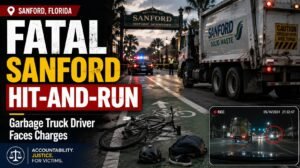
A Daytona Beach drunk driving truck accident lawyer from The Law Offices of Anidjar and Levine can investigate impairment, preserve evidence, and identify potentially liable parties, including the driver, trucking company, vehicle owner, and insurers. Counsel may pursue compensation for medical treatment, lost income, property damage, pain, disability, and future needs while addressing Florida’s no-fault requirements and applicable coverage.
Prompt medical care, evidence preservation, and careful communication with insurers are important. Learn more from a Daytona Beach Truck Accident Lawyer about legal rights, common causes, claim procedures, and selecting qualified representation.
Main Takeaways
- A Daytona Beach truck accident lawyer can investigate drunk-driving evidence and establish liability against the driver, trucking company, owner, or insurers.
- Prompt medical evaluation and no-fault eligibility review help protect injury benefits and document expenses, symptoms, and future treatment needs.
- Lawyers can preserve photographs, witness statements, surveillance, electronic logs, dashcam footage, toxicology results, and vehicle maintenance records.
- Potential compensation may include medical costs, lost income, reduced earning capacity, property damage, pain, disability, and other legally recognized losses.
- Legal counsel can review commercial insurance coverage, exclusions, recorded statements, settlement tactics, and applicable Florida deadlines before negotiations or litigation.


How We Can Help With Your Daytona Beach Drunk Driving Truck Accident Injury Claim
A Daytona Beach drunk driving truck accident lawyer can help establish liability, protect the injured person’s legal rights, and pursue full compensation for medical expenses, lost income, property damage, and other related losses. The lawyer may begin by preserving photographs, vehicle data, witness statements, and available surveillance footage before evidence disappears.
Insurance documentation review can identify coverage limits, exclusions, recorded statements, and settlement tactics that could affect recovery. Counsel may also communicate with insurers, organize medical records, and help ensure that claims accurately reflect continuing treatment and future needs. Investigation can include evaluating alcohol testing, commercial driving records, employer policies, vehicle maintenance, and road conditions without placing additional burdens on the injured person.
Night road hazards, including limited visibility, glare, and inadequate lighting, may require careful documentation when determining the incident. Throughout the claim, the legal team can provide informed guidance, protect deadlines, and support a fair resolution while treating the injured person and family with dignity.
OUR CONSULTATIONSARE FREE
START YOUR FREE CASE REVIEW

Understanding Daytona Beach Drunk Driving Truck Accident Injury Cases
When a commercial truck driver operates while impaired by alcohol, the resulting Daytona Beach crash may involve multiple sources of liability and extensive, long-term injuries. An injury case may address the driver’s conduct, the trucking company’s responsibility, insurance coverage, and the full measure of harm sustained by occupants or other road users. Evidence can include medical records, employment documentation, vehicle data, witness accounts, and law enforcement findings. Damages may include emergency treatment, rehabilitation, lost income, reduced earning capacity, property damage, and continuing pain or disability.
Florida’s no-fault system may affect initial medical benefits, making no-fault eligibility an important issue for injured individuals and households. Serious truck collisions can also require careful review of available car insurance options, commercial policies, and potential supplemental coverage. A qualified legal team can help preserve evidence, explain procedural requirements, and pursue fair compensation while treating each injured person with dignity, patience, and respect. Cases may proceed through negotiation, mediation, or litigation depending on the evidence and applicable coverage.
Common Causes of Daytona Beach Drunk Driving Truck Accident
Common causes of Daytona Beach drunk driving truck accidents include impaired driver judgment, excessive speeding, fatigued driving, and poor vehicle maintenance. Alcohol impairment can reduce reaction time and decision-making ability, while speed and fatigue may further increase the risk of a serious collision. Mechanical failures resulting from inadequate maintenance can also contribute to crashes or worsen their consequences.
Impaired Driver Judgment
Impaired driver judgment is a significant cause of Daytona Beach drunk driving truck accidents because alcohol and drugs can reduce concentration, slow reaction times, and weaken a driver’s ability to assess traffic conditions accurately. Impaired judgment factors may include poor decision-making, reduced awareness of surrounding vehicles, confusion about traffic signals, and difficulty maintaining safe control of a commercial truck. These impairments can prevent a driver from recognizing hazards or responding appropriately to changing road conditions.
Alcohol impairment signs may include slurred speech, delayed responses, unsteady movements, odor of alcohol, and glassy or unfocused eyes. A truck driver displaying these signs may pose a serious risk to motorists, pedestrians, and passengers. Recognizing impaired driving can help witnesses report dangerous conduct promptly and support efforts to protect injured individuals and their families.
Excessive Speeding
Excessive speeding can markedly increase the danger of a Daytona Beach drunk driving truck accident because alcohol or drug impairment may prevent a commercial driver from adjusting speed to traffic, weather, and road conditions. A truck traveling too fast has less time and distance to respond to roadway signage, changing lanes, stopped vehicles, or unexpected vehicle debris.
When an impaired driver recognizes a hazard late, Panic braking can cause loss of directional control, jackknifing, or a collision with nearby motorists and pedestrians. Speed also magnifies the force of impact, potentially causing severe injuries to occupants of smaller vehicles. Defective tires, worn brakes, or overloaded trailers may further limit stopping ability at high speeds. Prompt assistance to injured people remains vital, while investigators can preserve evidence and assess whether unsafe speed contributed to the crash.
Fatigued Driving
Fatigued driving can compound the dangers of a Daytona Beach drunk driving truck accident by reducing a commercial driver’s alertness, reaction time, and ability to maintain consistent vehicle control. Long shifts, inadequate sleep, overnight routes, and demanding delivery schedules may leave drivers less capable of recognizing hazards or responding appropriately.
Federal hours-of-service requirements are intended to limit fatigue, yet violations or inaccurate logs can increase roadway risks. A driver holding a commercial license has a heightened responsibility to assess fitness for duty and avoid operating a truck while impaired by exhaustion. Cell phone use can further divide attention when fatigue is already affecting judgment. Other motorists and pedestrians may suffer serious injuries when a fatigued, intoxicated driver drifts across lanes, misses signals, or fails to stop in time.
Poor Vehicle Maintenance
Poor vehicle maintenance can increase the likelihood and severity of a Daytona Beach drunk driving truck accident by causing failures that an impaired driver may be less capable of detecting or correcting. Worn brakes, defective tires, malfunctioning lights, and steering problems can reduce a commercial truck’s ability to stop, maneuver, or remain visible in traffic. Maintenance violations may also indicate inadequate inspection procedures, poor fleet oversight, or Inadequate Training among drivers and service personnel.
When alcohol impairment is combined with mechanical defects, the risk of delayed reactions and catastrophic loss of control rises substantially. Distracted Driving may further prevent a driver from noticing warning signs before a failure occurs. Investigators may examine inspection records, repair histories, and company policies to determine whether negligent maintenance contributed to injuries and property damage.


Legal Rights of Daytona Beach Drunk Driving Truck Accident Injury Victims
Victims injured in Daytona Beach truck crashes involving an allegedly impaired driver may have the right to pursue compensation for medical expenses, lost income, property damage, pain and suffering, and other legally recognized losses. Rights may extend to claims against negligent drivers, trucking companies, vehicle owners, and insurers, depending on the evidence and applicable Florida law.
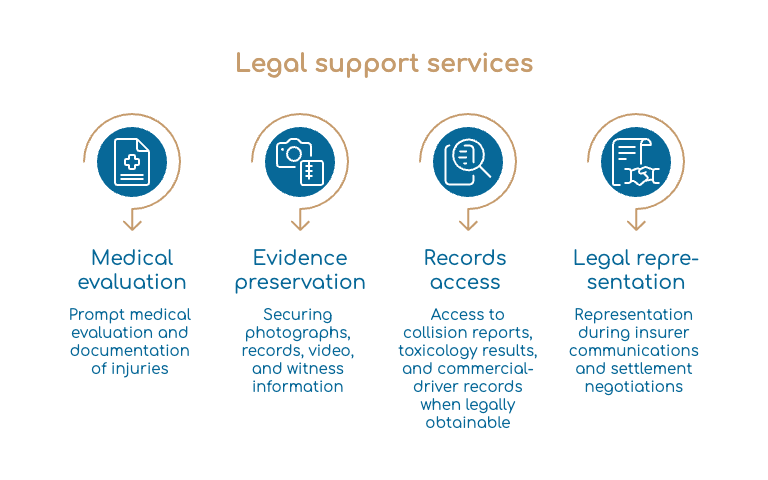
Important protections may include:
- Prompt medical evaluation and documentation of injuries
- Evidence preservation steps, including securing photographs, records, video, and witness information
- Access to collision reports, toxicology results, and commercial-driver records when legally obtainable
- Representation during insurer communications and settlement negotiations
An injured person generally has the right to consult counsel before providing a recorded statement or accepting payment. Insurance dispute tactics may include minimizing injuries, challenging liability, delaying review, or offering an inadequate settlement. Careful documentation and timely legal guidance can help protect a claim. Counsel may also identify filing deadlines, pursue available insurance coverage, and coordinate communications so victims and their families can focus on recovery.
Why Do Daytona Beach Drunk Driving Truck Accident Injuries Happen?
Drunk driving truck accident injuries in Daytona Beach often occur when alcohol or drug impairment reduces a commercial driver’s judgment, coordination, vision, and reaction time. These impairments can cause speeding, unsafe lane changes, delayed braking, and failure to recognize hazards involving smaller vehicles, pedestrians, or bicyclists. The size and weight of commercial trucks can magnify the consequences of even a brief driving error.
Other contributing conditions may include fatigue, unfamiliar roads, distracted driving, and poor vehicle maintenance. Nighttime visibility can make it harder to identify stopped traffic, roadway debris, or people near travel lanes, particularly when impairment further limits perception. In busy intersections, misunderstanding traffic signal timing may lead a truck driver to enter against a red light or fail to anticipate vehicles proceeding lawfully. Weather, construction zones, congested highways, and inadequate following distance can also increase collision risks. These injuries commonly result from several preventable factors combining, rather than from a single mistake, placing vulnerable road users in serious danger.
What Should You Do After a Daytona Beach Drunk Driving Truck Accident Injury?
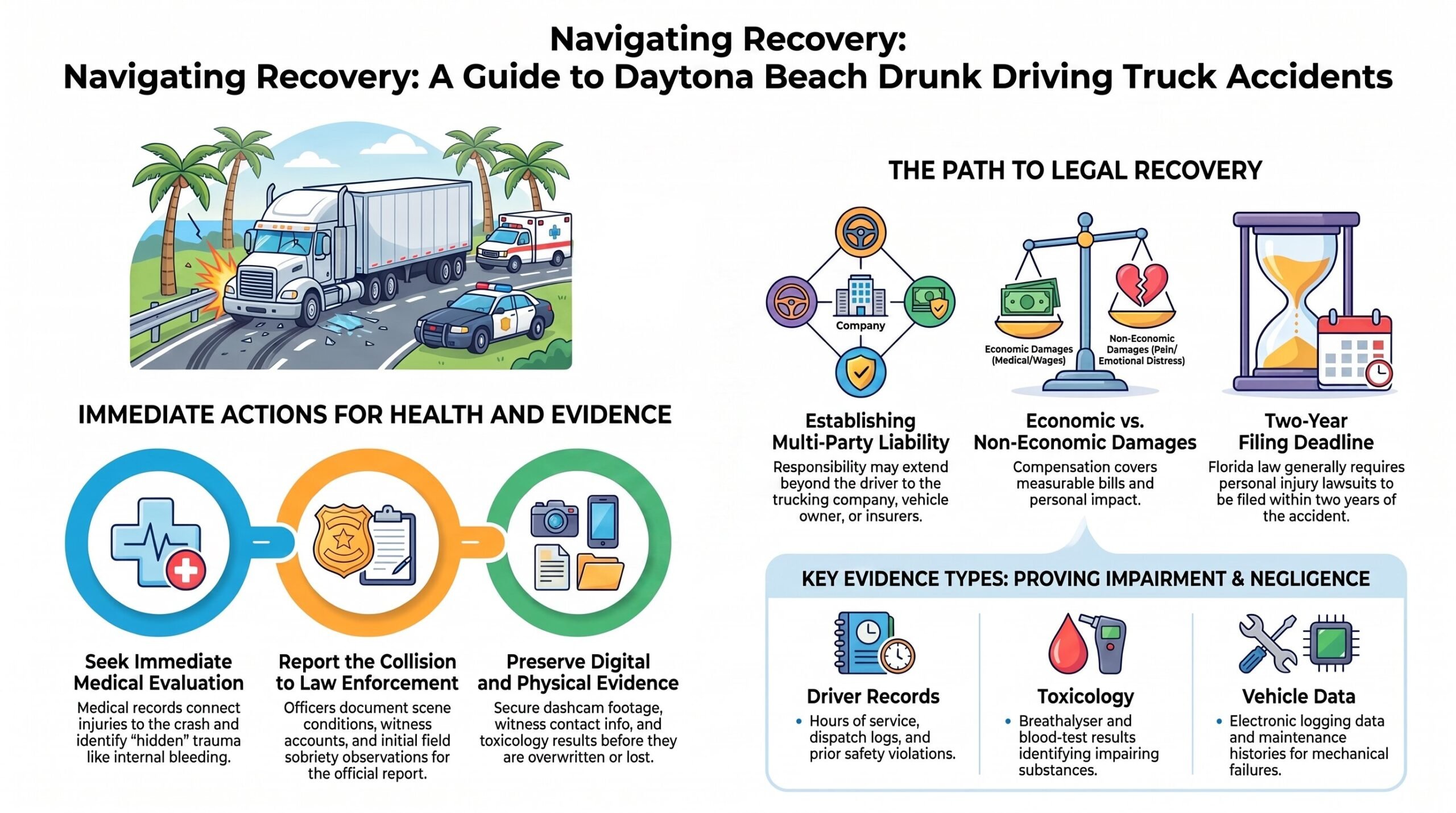
After a Daytona Beach drunk driving truck accident injury, the injured person should seek immediate medical care, even if symptoms initially appear minor. The accident should be reported to law enforcement, and relevant medical records, photographs, and witness information should be preserved. Prompt consultation with a truck accident lawyer can help protect the injured person’s rights and guide potential legal claims.
Seek Immediate Medical Care
Because truck-collision injuries may worsen without obvious warning, anyone involved in a Daytona Beach drunk driving truck accident should obtain immediate medical care, even when symptoms initially appear minor. A prompt evaluation can identify concussions, internal bleeding, spinal trauma, or other conditions that may not be immediately apparent. Medical professionals can provide necessary treatment, recommend follow-up care, and explain warning signs requiring urgent attention.
Treatment records also create reliable medical documentation connecting reported symptoms to the collision, which may support later injury-related decisions. Following discharge instructions and attending scheduled appointments can help prevent complications and demonstrate responsible efforts toward recovery. For those assisting injured individuals, arranging transportation and offering practical support may be appropriate, particularly when pain, confusion, or limited mobility makes independent care unsafe. Immediate treatment thus protects health and supports evidence preservation.
Report The Accident
Report the collision promptly by calling 911 and requesting law enforcement and emergency medical assistance at the scene. The injured person or a responsible bystander should provide the dispatcher with the location, number of vehicles, apparent injuries, and any immediate hazards. Remaining at a safe distance, individuals should avoid confronting the truck driver or attempting to investigate suspected impairment.
Officers can document conditions, interview participants, and arrange appropriate medical evaluation. Scene documentation may include photographs of vehicle positions, roadway conditions, visible damage, traffic controls, and relevant debris, provided doing so does not create additional danger. Witness canvassing should be conducted carefully by noting names and contact information for people who observed the collision. Accurate, prompt reporting helps protect injured individuals, supports emergency responders, and preserves reliable information for later review.
Contact A Truck Accident Lawyer
A truck accident lawyer can help an injured person evaluate potential claims, preserve important evidence, and identify all parties who may be legally responsible. After a Daytona Beach drunk driving truck accident, prompt legal guidance can protect the injured person’s interests while medical treatment continues. A lawyer may investigate alcohol testing, commercial driver records, vehicle maintenance, hiring practices, insurance coverage, and available eyewitness accounts.
These details can become difficult to obtain if evidence is not preserved quickly. An injured person or supporting family member may request a 24-hour consultation to discuss the incident, immediate concerns, and possible next steps. During that meeting, the attorney should explain the legal fee structure, case expenses, communication practices, and potential outcomes. Careful representation allows the injured person to focus on recovery while informed decisions are made.
Critical Evidence in a Daytona Beach Drunk Driving Truck Accident Injury Case
Important evidence can establish how the collision occurred, whether impairment was involved, and the extent of the resulting injuries. Important sources may include:
- Police accident reports
- Breathalyzer and blood-test results
- Truck driver records
- Witness statements and video footage
Together, these materials may support liability and help document the injured party’s damages.
Police Accident Reports
When a suspected impaired truck driver causes a collision in Daytona Beach, the investigating officers’ accident report may provide an important initial account of how the crash occurred. This police Documentation can identify roadway conditions, vehicle positions, visible damage, reported symptoms, and statements recorded at the scene. Officers may describe Field Sobriety observations, without establishing final legal conclusions, and note whether the driver received traffic Citations.
Witness Interviews can preserve early accounts concerning lane movements, speed, braking, and conduct before impact. The report may also identify photographs, diagrams, responding agencies, and potential inconsistencies requiring further investigation. Although an accident report is not conclusive proof of fault, it can help an injured person’s representatives organize evidence, locate witnesses, and request additional records while advocating for fair treatment and accountability.
Breathalyzer And Blood Tests
Breathalyzer and blood-test results may provide important evidence in a Daytona Beach truck accident injury case by documenting whether a driver had alcohol or certain impairing substances in the system after the collision. Breath tests can indicate alcohol concentration, while blood testing may identify drugs or provide more precise alcohol measurements. The timing of collection matters because substance levels can change after an accident, making prompt testing particularly significant.
Investigators may also compare these results with observations from field sobriety evaluations, witness accounts, and dashboard cameras. Testing procedures, chain of custody, calibration, and laboratory methods can affect reliability. An injured person’s legal representative may examine whether officers followed required protocols and whether the results fairly reflect impairment at the time of the crash. These details can support accountability and informed assistance.
Truck Driver Records
Truck driver records can provide important evidence that complements breathalyzer and blood-test findings in a Daytona Beach drunk driving truck accident injury case. These records may show a driver’s hours of service, dispatch instructions, trip schedules, and prior violations. Such information can help determine whether fatigue, pressure to meet deadlines, or repeated safety concerns contributed to the collision. Maintenance logs may reveal whether defective brakes, tires, lighting, or suspension components created additional risks or reflect neglected inspection duties.
Electronic logging data can also establish the vehicle’s movements and timing before impact. In addition, dash camera footage may document roadway conditions, driver conduct, and events immediately preceding the crash. Attorneys serving injured individuals may preserve these materials promptly through formal requests, subpoenas, and litigation holds before routine retention policies result in deletion.
Witness Statements And Videos
Witness statements and video recordings can provide independent evidence of how a Daytona Beach drunk driving truck accident occurred and who may be responsible. Passengers, pedestrians, nearby motorists, and first responders may describe lane departures, speeding, delayed reactions, visible impairment, or statements made by the truck driver. Their observations can help establish timing and clarify disputed events.
Traffic cameras, business surveillance systems, dashcams, and mobile-phone recordings may capture the collision, road conditions, vehicle movements, and conduct immediately afterward. Attorneys typically preserve these materials promptly because recordings can be overwritten or deleted. Investigators may also compare accounts with police reports and physical evidence to assess witness credibility.
This evidence can support insurance claims, identify negligent parties, and help counsel negotiate settlements based on documented facts. When testimony or footage reveals serious misconduct, it may also strengthen arguments concerning liability and damages.
Long-Term Effects of Daytona Beach Drunk Driving Truck Accident Injuries
Long-term injuries from a Daytona Beach drunk driving truck accident may cause chronic physical pain, reduced mobility, or permanent disability. Emotional trauma, including anxiety, depression, and post-traumatic stress, can also affect a person’s recovery and daily functioning. Ongoing medical expenses, lost income, and reduced earning capacity may create substantial financial strain for the injured individual and family.
Chronic Physical Pain
Chronic physical pain is a common and potentially disabling consequence of injuries sustained in a Daytona Beach drunk driving truck accident. Fractures, spinal trauma, nerve injuries, and extensive soft-tissue damage may continue causing pain long after initial treatment. Scar tissue damage can restrict movement, compress nerves, and complicate rehabilitation, particularly when multiple procedures were required. Persistent symptoms may interfere with walking, lifting, sleeping, personal care, and the ability to perform occupational duties.
Medical evaluation can identify the pain’s source and establish whether additional surgery, physical therapy, injections, medication, or adaptive equipment is appropriate. Physicians may also monitor medication risks and recommend opioid dependency treatment when prolonged opioid use creates concerns. Detailed medical records, treatment plans, and functional assessments help document the injury’s long-term effects and support appropriate assistance for affected individuals.
Emotional Trauma
Although physical injuries may receive immediate medical attention, emotional trauma can develop or persist long after a Daytona Beach drunk driving truck accident. Survivors may experience anxiety, depression, irritability, sleep disturbances, or recurring memories of the collision. Some may avoid driving, traveling near trucks, or discussing the event, while others struggle with reduced concentration and diminished confidence. These effects can interfere with relationships, employment, and daily responsibilities, even when visible wounds have recovered.
Early evaluation by a qualified mental health professional may help identify symptoms and guide appropriate treatment. Trauma counseling options can include individual therapy, group counseling, and evidence-based approaches for processing traumatic experiences. Supportive family members, medical providers, and community resources may provide meaningful mental health support. Compassionate assistance can help survivors regain stability, safety, and independence.
Ongoing Financial Strain
Ongoing financial strain can accompany the physical and emotional effects of injuries sustained in a Daytona Beach drunk driving truck accident. Medical treatment may continue for months or years, creating medical billing obligations that exceed available insurance coverage. Lost wages, reduced earning capacity, rehabilitation expenses, transportation costs, and necessary home modifications can further disrupt household stability.
Families may experience budgeting stress while prioritizing rent, utilities, caregiving, and ongoing care. These pressures can also affect a person’s ability to support dependents or contribute to community responsibilities. Accurate records of expenses, missed work, insurance communications, and treatment recommendations may help document the financial impact. A qualified attorney can evaluate potential compensation, communicate with insurers, and help injured individuals pursue resources that protect long-term recovery and financial security.
Proving Liability in Daytona Beach Drunk Driving Truck Accident Injury Cases
When a commercial truck driver causes a collision while impaired by alcohol, establishing liability requires evidence that connects the driver’s intoxication and negligent conduct to the resulting injuries. Police reports, field sobriety observations, breath or blood test results, and witness accounts may demonstrate impairment. Commercial vehicle records, electronic logging data, dispatch communications, and surveillance footage can help establish the driver’s actions before impact. Medical records and qualified testimony must connect the collision to the claimed physical, emotional, and financial harm.
Liability may also extend to a trucking company if negligent hiring, inadequate supervision, unsafe scheduling, or violations of federal safety rules contributed to the crash. Investigators may examine maintenance records and cargo documentation for additional causes. Careful evidence preservation supports accurate evaluation and protects an injured person’s opportunity to seek accountability. Although insurance negotiation tactics and maximizing compensation strategies arise later, proving fault first provides the factual foundation for a fair legal claim and responsible service to affected families.
Dealing With Insurance Companies After a Daytona Beach Drunk Driving Truck Accident Injury
Insurance companies may begin evaluating a Daytona Beach drunk driving truck accident claim soon after the collision, often before the injured person understands the full extent of the harm. Adjusters may request recorded statements, medical authorizations, photographs, and other information while attempting to assess responsibility and limit payment. An injured person can protect personal interests by providing accurate facts without speculating about fault, minimizing symptoms, or accepting an early settlement before treatment is understood.
Legal guidance may help with negotiating medical bills, documenting continuing care, and distinguishing reasonable compensation from an inadequate offer. Counsel can also assist with preserving accident evidence, including vehicle damage, electronic records, surveillance footage, witness information, toxicology results, and trucking-company documents. Communications should remain organized, and deadlines in applicable insurance policies should not be overlooked. Because commercial trucking coverage can involve multiple insurers and layered policies, careful review is important. Compassionate advocacy helps ensure that injured individuals and families receive informed support while pursuing fair financial assistance.
What to Expect During a Daytona Beach Drunk Driving Truck Accident Injury Claim Process
A Daytona Beach drunk driving truck accident injury claim typically begins with an initial evaluation of the injuries, losses, and available legal grounds. The process then involves gathering evidence, conducting an investigation, and pursuing settlement negotiations with the responsible parties and insurers. If negotiations do not produce a fair resolution, the claim may proceed to trial, where the court determines the outcome.
Initial Claim Evaluation
How does the initial claim evaluation begin after a Daytona Beach drunk driving truck accident? The process generally starts with a confidential consultation concerning the collision, injuries, medical care, employment effects, and immediate concerns. A legal professional may explain potential claims, applicable deadlines, and the responsibilities involved in representing an injured person. The evaluation also includes a preliminary damages assessment, considering medical expenses, lost income, property damage, pain, disability, and anticipated treatment.
Evidence preservation is addressed at this stage so relevant records, photographs, communications, and other materials are not unnecessarily lost or altered. Without making premature promises, the representative considers apparent liability, available insurance, and practical recovery options. This careful initial review helps the injured person and family make informed decisions while protecting their interests throughout the claim process.
Evidence And Investigation
Evidence and investigation typically begin with securing and reviewing materials that may establish how the collision occurred, who was responsible, and how the injuries developed. A Daytona Beach drunk driving truck accident lawyer may obtain crash reports, photographs, video footage, vehicle data, medical records, and toxicology information when available. Witness statement collection can preserve observations about traffic conditions, driver behavior, lighting, and the sequence of events.
Counsel may also examine trucking-company logs, maintenance records, inspection documents, and employment policies for indications of negligent supervision or regulatory violations. Prompt preservation of digital evidence is important because surveillance recordings, dispatch communications, electronic logging data, and mobile-device information can be overwritten or altered. Investigators may consult accident-reconstruction and medical professionals to clarify causation, impairment, injury severity, treatment needs, and anticipated recovery.
Settlement Negotiations
Following the investigation, settlement negotiations address whether the trucking company, driver, insurer, or other responsible parties will provide compensation without proceeding to trial. The injured person’s representative typically presents a demand supported by medical records, wage information, crash evidence, and injury documentation. Insurers may question liability, impairment evidence, treatment decisions, or the projected cost of future care.
Careful responses should rely on verified facts rather than speculation. Negotiations may involve written demands, counteroffers, and discussions concerning medical expenses, lost income, pain, rehabilitation, and other damages. A settlement evaluation also considers available insurance coverage and the strength of the evidence. Trial strategy can influence bargaining positions, even while the parties work toward a voluntary resolution. Any proposed agreement should be reviewed carefully before acceptance, including its release terms and payment obligations.
Trial And Resolution
Trial becomes a consideration when settlement negotiations do not produce an acceptable resolution or when significant disputes remain regarding liability, impairment, damages, or available insurance coverage. During this stage, counsel organizes Evidence preservation records, including crash reports, toxicology results, vehicle data, medical documentation, and witness statements. Legal timelines govern pleadings, discovery, expert disclosures, and other required filings, making prompt preparation crucial.
The injured party may provide testimony, undergo depositions, and participate in medical examinations requested by opposing counsel. Attorneys evaluate Insurance tactics, such as disputed policy limits, delayed responses, or comparative-fault allegations, while protecting the claimant’s interests. A carefully developed Trial strategy presents admissible evidence, explains the truck driver’s conduct, and establishes damages. Resolution may occur through a verdict, structured agreement, or post-trial settlement, depending on the evidence and risks.
Compensation for Daytona Beach Drunk Driving Truck Accident Injury Damages
Compensation in a Daytona Beach drunk driving truck accident claim may cover the full range of losses caused by the collision, including medical expenses, lost income, reduced earning capacity, property damage, pain and suffering, and permanent disability. A careful claim evaluation connects each requested amount to evidence such as medical records, employment documentation, repair estimates, and professional assessments of future needs. The truck driver’s intoxication may provide powerful evidence of negligence, although other parties, including trucking companies or vehicle owners, may also bear responsibility.
Determining fault percentages can affect the amount recoverable under Florida’s comparative negligence rules. Insurance coverage, policy exclusions, and available assets may further influence the practical value of a settlement or judgment. Claimants should observe Florida insurance timelines and preserve evidence promptly, particularly when commercial carriers and multiple insurers are involved. A qualified legal representative can coordinate communications, protect an injured person’s interests, and pursue compensation that supports recovery, stability, and continued service to others.
Economic vs Non-Economic Damages in Daytona Beach Drunk Driving Truck Accident Cases
Damages in Daytona Beach drunk driving truck accident cases may include economic losses, such as medical expenses, lost income, and future treatment costs. Non-economic damages can address pain and suffering, emotional distress, and diminished quality of life. Proving either category generally requires organized documentation, credible testimony, and evidence linking the losses to the collision.
Economic Damages
When a truck collision involves an impaired driver, economic damages generally represent the measurable financial losses caused by the crash. These damages may include emergency care, hospitalization, surgery, rehabilitation, prescription medication, and other Medical treatment costs documented after the incident. A claim may also address future medical expenses when physicians anticipate continuing care or permanent treatment needs. Lost wages, reduced earning capacity, property damage, transportation expenses, and necessary household services can provide additional economic categories.
Records such as invoices, pay statements, repair estimates, and expert projections help establish value and connect losses to the collision. During settlement negotiation tactics, counsel may organize this evidence, assess insurance coverage, and present a detailed demand. Careful documentation enables informed decisions and supports fair compensation for individuals and families recovering from serious truck crashes.
Non-Economic Damages
Beyond documented financial losses, non-economic damages address the personal effects of a Daytona Beach drunk driving truck accident. These damages may include physical pain, emotional distress, loss of enjoyment, disfigurement, disability, and diminished quality of life. They can also reflect the strain placed on family relationships and the disruption of ordinary routines. Unlike medical bills or lost wages, these harms lack a fixed market price, so Florida law evaluates them through the circumstances and lasting consequences of the injury.
A Comparative fault analysis may affect the amount recovered if the injured person shares responsibility for the collision. Evidence preservation tips include maintaining treatment records, personal journals, photographs, and testimony describing daily limitations. Careful documentation can help present the human impact respectfully while supporting a fair assessment of compensation for affected individuals and families.
Proving Damage Claims
A successful damage claim in a Daytona Beach drunk driving truck accident case requires clear proof of both economic and non-economic losses. Economic damages include medical expenses, rehabilitation costs, lost wages, diminished earning capacity, property damage, and future care needs. Documentation of damages should include invoices, employment records, tax information, medical evaluations, and expert projections connecting each loss to the collision. Non-economic damages address pain, emotional distress, disability, disfigurement, loss of enjoyment, and effects on family relationships.
Although these harms lack fixed prices, treatment records, testimony, journals, and statements from relatives or coworkers can demonstrate their extent. Attorneys and insurers use this evidence in settlement valuation, considering liability, available coverage, permanence, and comparative fault. Thorough proof supports fair compensation and helps protect injured individuals and their families from uncompensated consequences.
When a Daytona Beach Drunk Driving Truck Accident Injury Case Goes to Trial vs Settlement
Although many Daytona Beach drunk driving truck accident injury cases resolve through settlement, some proceed to trial when the parties cannot agree on liability, damages, or the value of the claim. During the Opening settlement timeline, counsel typically gathers records, evaluates medical treatment, reviews available insurance coverage, and presents a demand supported by evidence. Florida traffic citations, crash reports, witness accounts, and trucking company records may influence negotiations without determining the outcome alone.
Settlement can provide a faster, more predictable resolution and may reduce the strain on an injured person and family. A trial, however, allows each side to present testimony, documents, and expert opinions before a judge or jury. It may be appropriate when an insurer denies responsibility, disputes the severity of injuries, or offers inadequate compensation. Trials also involve greater uncertainty, expense, and delay. The decision requires careful assessment of evidence, projected recovery, litigation risks, and the injured person’s practical needs.
Florida Laws That May Affect Your Daytona Beach Drunk Driving Truck Accident Case
Florida law can affect nearly every aspect of a Daytona Beach drunk driving truck accident case, including fault, available damages, insurance coverage, and the time allowed to file a lawsuit. Several legal rules may shape how evidence is evaluated and how compensation is pursued.
Florida law shapes fault, damages, insurance coverage, evidence, and filing deadlines in Daytona Beach drunk driving truck accident cases.
- Florida’s comparative fault rules may reduce recovery when an injured person shares responsibility.
- ALCOHOL LIMITS differ for ordinary motorists and commercial drivers, with stricter standards often applying to truck operators.
- COMMERCIAL ENFORCEMENT requirements can involve federal safety rules, employer responsibilities, drug and alcohol testing, and driver qualification records.
- Florida insurance requirements and available coverage may depend on the truck’s ownership, cargo, employer relationships, and applicable policies.
Punitive damages may be available when intoxicated conduct reflects conscious disregard for others’ safety, although specific proof is required. Evidence such as toxicology results, surveillance footage, electronic logging data, maintenance records, and witness statements can clarify disputed issues. Attorneys serving injured individuals commonly examine these rules carefully to protect public safety, preserve evidence, and pursue an informed resolution.
The Statute of Limitations for Daytona Beach Drunk Driving Truck Accident Injury Cases
The statute of limitations establishes the deadline for filing a Daytona Beach drunk driving truck accident injury lawsuit, and missing that deadline can result in the loss of the right to seek compensation through the courts. In Florida, personal injury claims generally must be filed within two years after the accident. However, exceptions may alter this period, particularly when a government entity, wrongful death, or delayed injury is involved. The applicable deadline can depend on the parties, claim type, and facts surrounding the collision.
Prompt attention supports Evidence preservation, including obtaining medical records, crash reports, photographs, witness information, and electronic truck data before materials disappear or become difficult to authenticate. The deadline also affects insurance negotiation because an insurer may use delay as leverage or question whether a claim remains enforceable. Families and injured individuals may benefit from documenting losses and seeking timely legal information. Careful attention to filing requirements helps preserve accountability and protects the opportunity to pursue fair compensation for medical care, lost income, and continuing needs.
How a Daytona Beach Drunk Driving Truck Accident Lawyer Can Help You
A Daytona Beach drunk driving truck accident lawyer can provide structured guidance from the initial investigation through resolution of the claim. Counsel may protect the injured person’s interests while coordinating evidence, communications, and legal strategy with appropriate care.
A Daytona Beach truck accident lawyer can help protect your interests while coordinating evidence, communications, and legal strategy throughout your claim.
Key services may include:
- Conducting a Hiring Investigation into the truck driver’s conduct, employer policies, vehicle maintenance, and alcohol-related evidence.
- Preserving photographs, medical records, electronic logs, witness statements, and available surveillance footage.
- Identifying responsible parties, including drivers, trucking companies, contractors, or other entities whose conduct contributed to the collision.
- Valuing medical expenses, lost income, rehabilitation needs, pain, and related damages, including Wrongful Death Claims when a fatality occurred.
A lawyer can also manage insurer communications and evaluate settlement proposals against the documented losses. If negotiations do not produce a fair result, counsel may prepare pleadings, organize expert testimony, and present the matter in court. This support allows families and injured individuals to focus on treatment, recovery, and serving those who depend on them while the legal process proceeds systematically.
When to Contact a Daytona Beach Drunk Driving Truck Accident Lawyer
Because evidence can disappear quickly after a collision, injured individuals or surviving family members should contact a Daytona Beach drunk driving truck accident lawyer as soon as reasonably possible. Early consultation allows counsel to identify urgent deadlines, preserve relevant records, and advise the injured person about immediate decisions. Medical documentation, crash reports, vehicle data, witness accounts, and available surveillance footage may become harder to obtain with time. Prompt legal guidance can also help prevent avoidable mistakes during insurer interviews or other post-accident communication.
A lawyer can explain potential claims, required filings, and applicable settlement timelines without pressuring a person to make premature choices. Families who lost a loved one may need assistance protecting estate-related interests while managing funeral arrangements and other responsibilities. Contact remains appropriate even when injuries initially appear minor, because symptoms and financial effects can develop later. Individuals should gather available documents, avoid deleting messages or photographs, and follow medical recommendations before the consultation. Early action supports an orderly, informed response during a difficult period.
Why You Need an Experienced Daytona Beach Drunk Driving Truck Accident Lawyer
When a commercial truck crash involves suspected impaired driving, experienced legal representation can be essential to protecting an injured person’s rights and identifying all available sources of compensation. A knowledgeable attorney can investigate the driver’s conduct, employer policies, vehicle maintenance, loading practices, and potential violations of federal and state trucking regulations. Prompt evidence preservation may include securing electronic logs, camera footage, dispatch records, toxicology results, inspection reports, and witness accounts before information is lost or altered.
Truck claims often involve multiple insurers and responsible parties, creating issues that require careful coordination and informed advocacy. An experienced lawyer can evaluate medical documentation, calculate future care needs, and pursue damages for lost income, pain, and diminished quality of life. When a fatal collision occurs, counsel can guide surviving family members through a wrongful death claim while protecting their interests during difficult circumstances. This work helps injured people and families obtain accountability and support without bearing the investigative burden alone.
How to Choose the Right Daytona Beach Drunk Driving Truck Accident Lawyer for Your Case
Selecting the right Daytona Beach drunk driving truck accident lawyer requires careful consideration of experience, investigative resources, and the ability to handle complex commercial vehicle claims. A qualified attorney should understand federal motor carrier regulations, electronic logging data, maintenance records, and insurance coverage issues. These materials may clarify whether impaired driving, inadequate Fatigue mitigation, negligent supervision, or unsafe scheduling contributed to the collision.
Prospective clients may evaluate the lawyer’s record with serious truck accident cases, communication practices, and capacity to explain litigation decisions clearly. The attorney should coordinate accident reconstruction, medical documentation, and economic-loss analysis while preserving evidence before it disappears. Experience with DUI defense strategies can also help counsel anticipate arguments concerning testing procedures, causation, and responsibility, although injury claims require a separate civil analysis.
A suitable lawyer should provide candid assessments rather than promises, explain fee arrangements, and demonstrate respect for every affected person. Careful selection helps that the case receives organized, ethical, and service-oriented representation from investigation through resolution.
About The Law Offices of Anidjar & Levine
The Law Offices of Anidjar & Levine represents individuals and families pursuing compensation after serious motor vehicle and truck accidents, including collisions involving suspected impaired driving.
Its attorneys evaluate crash circumstances, identify potentially responsible parties, and explain legal options in clear, practical terms.
The firm may investigate driver conduct, commercial transportation records, vehicle maintenance, and the relationship between a trucking company and its driver.
Counsel also considers applicable insurance coverage and the documentation needed to support a claim.
In suspected drunk-driving cases, the legal team examines testing procedures, arrest records, witness accounts, video footage, and other evidence relevant to liability.
It can address drunk-driving defenses raised by opposing parties while presenting facts that support an injured person’s position.
Evidence preservation strategies may include prompt requests for trucking logs, electronic data, surveillance recordings, and vehicle inspection materials.
Through organized preparation and professional communication, the firm seeks to protect clients’ interests and pursue fair compensation while treating affected families with respect and care.
Frequently Asked Questions
Can I File a Wrongful Death Claim After a Drunk Driving Truck Accident?
Yes, an eligible surviving family member or personal representative may file a wrongful death claim after a drunk driving truck accident, subject to state law and filing deadlines. Potential recovery may include medical expenses, funeral costs, lost financial support, and certain non-economic damages. Prompt evidence preservation is critical, including collision reports, toxicology results, electronic logs, and witness accounts. A qualified attorney can assess liability, identify beneficiaries, and explain settlement timelines while protecting the family’s interests.
Can Undocumented Victims Pursue Compensation for Daytona Beach Truck Accident Injuries?
Undocumented victims may pursue compensation for Daytona Beach truck accident injuries, and Immigration status generally does not eliminate compensation eligibility. Recovery may include medical expenses, lost income, pain, and other damages when another party caused the crash. Strong crash evidence, including reports, photographs, witness accounts, and medical records, can support the claim. Because immigration concerns may affect communications with insurers, attorney guidance can help protect the victim’s rights and interests.
What Happens if the Truck Driver Faces Criminal Charges After the Accident?
If a truck driver faces criminal charges after an accident, the Criminal Process may involve arrest, arraignment, evidence review, plea negotiations, or trial. Prosecutors must establish guilt beyond a reasonable doubt, while injured parties generally pursue separate civil claims under a lower proof standard. Impaired Intent may influence criminal penalties, but negligence or liability can exist even without intentional misconduct. Victims should preserve records and obtain informed legal guidance throughout both proceedings, ensuring their interests remain protected.
Can Multiple Injured Passengers Bring Claims Arising From the Same Truck Accident?
Yes, multiple injured passengers may bring claims arising from the same truck accident, although each person’s injuries, losses, and legal circumstances remain individually evaluated. Joint lawsuit options may allow passengers to coordinate evidence, reduce duplicated proceedings, and present consistent facts, while separate claims may better address distinct damages. Passenger compensation rights can include medical expenses, lost income, pain, and future care. Counsel should assess liability, insurance coverage, deadlines, and potential criminal proceedings before recommending the most appropriate strategy.
Are Punitive Damages Available in Florida Drunk Driving Truck Accident Cases?
Punitive damages may be available in Florida drunk driving truck accident cases when clear and convincing evidence shows intentional misconduct or gross negligence, such as knowingly operating while highly intoxicated. They are separate from compensation for medical expenses, lost income, and emotional damages. Criminal liability and civil penalties do not automatically establish entitlement. Insurance coverage may exclude punitive awards, so an attorney can assess responsible parties, evidence, statutory limits, and available recovery.
—————————
Victims of Daytona Beach drunk driving truck accidents may face serious injuries, financial losses, and complex insurance disputes.
Establishing liability may require evidence of impairment, negligent hiring, regulatory violations, and the truck driver’s conduct.
An experienced Daytona Beach Truck Accident Lawyer can evaluate the claim, preserve crucial evidence, and pursue appropriate compensation through negotiation or litigation.
The Law Offices of Anidjar and Levine provides informed legal guidance to help injured individuals understand their rights and make well-supported decisions.