
The Law Offices of Anidjar and Levine helps people injured in tanker truck crashes understand their legal options.
A Daytona Beach Truck Accident Lawyer can investigate the collision, identify potentially liable drivers, trucking companies, cargo handlers, and manufacturers, and preserve important evidence before it disappears.
This may include medical records, photographs, witness statements, inspection files, electronic driving data, cargo documents, and video footage.
Legal support may involve insurance negotiations, comparative negligence issues, medical expenses, lost income, chronic pain, emotional trauma, and future care needs.
Families may also receive guidance regarding wrongful death claims and available next steps.
Main Takeaways
- A Daytona Beach tanker truck accident lawyer can investigate driver conduct, loading practices, maintenance records, hazardous-material compliance, and other potential causes.
- Legal support may include preserving vehicle data, inspection records, photographs, crash reports, medical documentation, and witness accounts.
- Injured individuals may pursue compensation for medical expenses, lost income, rehabilitation, pain, emotional distress, property damage, and future care.
- Prompt medical evaluation is important after chemical exposure because respiratory problems, burns, or other symptoms may develop gradually.
- Florida comparative negligence may reduce compensation, but a claim can remain viable when another party bears partial responsibility.
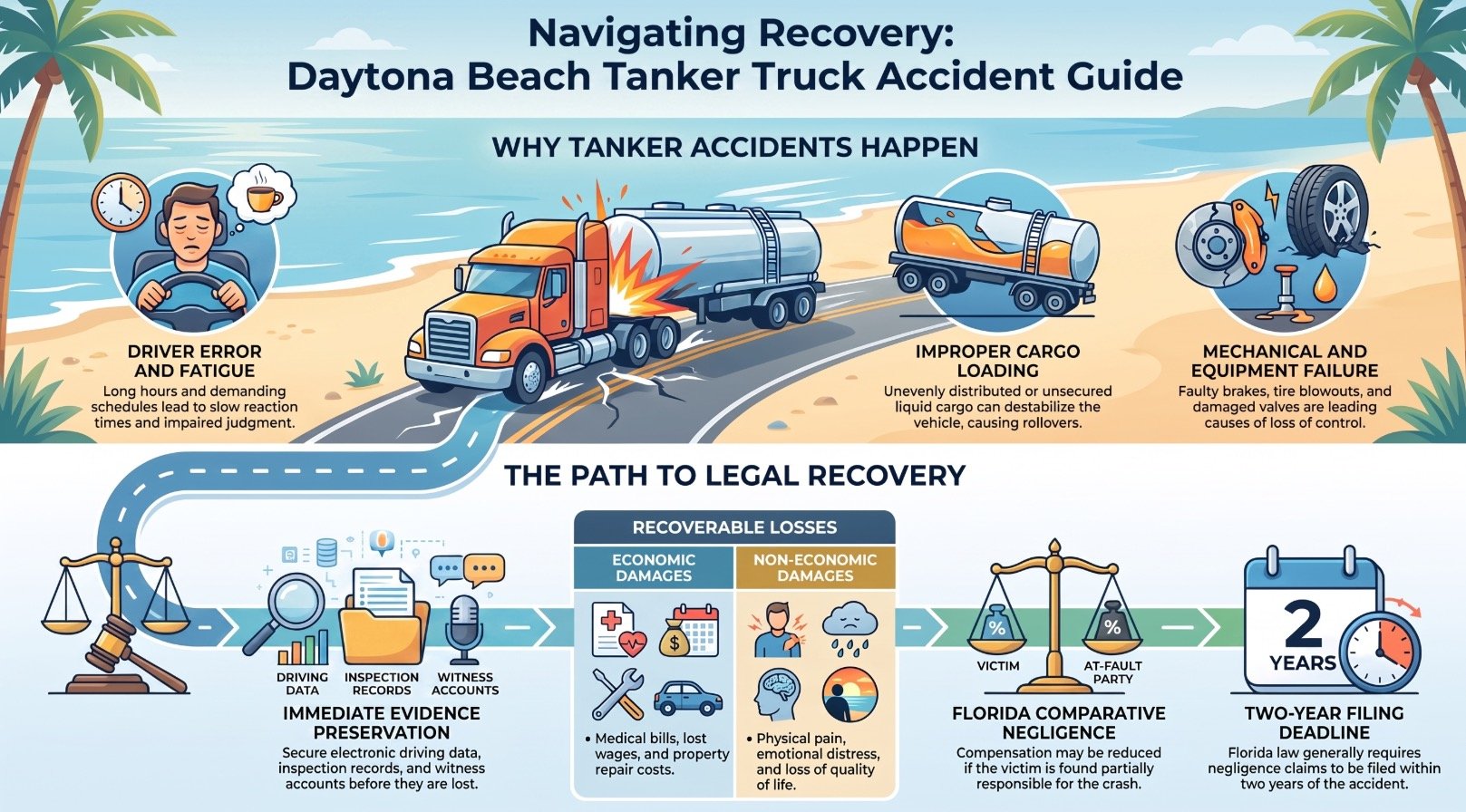
How We Can Help With Your Daytona Beach Tanker Truck Accident Injury Claim
When a tanker truck accident causes injuries, an experienced Daytona Beach tanker truck accident lawyer can help protect the injured person’s legal rights and pursue appropriate compensation. The lawyer may begin by reviewing medical records, crash reports, photographs, witness accounts, and available commercial vehicle information to identify responsible parties and evaluate the claim.


Assistance may include evidence preservation, which helps protect physical records, vehicle data, inspection materials, and other information that could become unavailable. The legal team can also manage Insurance negotiation, presenting a supported demand and addressing attempts to minimize payment. Careful damages documentation may establish medical expenses, lost income, rehabilitation needs, property losses, and other recoverable effects.
OUR CONSULTATIONSARE FREE
START YOUR FREE CASE REVIEW

If an insurer alleges comparative negligence, counsel can assess that position and respond with relevant facts concerning roadway conditions, vehicle conduct, and the collision’s circumstances. Throughout the process, the lawyer can provide organized guidance, communicate with involved parties, and help the injured person make informed decisions while focusing on recovery.
Understanding Daytona Beach Tanker Truck Accident Injury Cases
Daytona Beach tanker truck accident injury cases often involve complex facts because the vehicle may carry hazardous, flammable, or otherwise dangerous materials and may be operated under extensive commercial safety requirements. Injuries may include fractures, traumatic brain injuries, burns, respiratory problems, and emotional trauma. Chemical exposure risks can create symptoms that appear immediately or develop gradually, making prompt medical evaluation crucial. Medical records, treatment histories, and expert assessments help establish the nature, severity, and likely duration of each condition. Some individuals may require long term health monitoring to identify delayed complications and preserve access to appropriate care.


A case may also involve vehicle occupants, pedestrians, emergency responders, or nearby residents, each with distinct circumstances and potential losses. Damages can include medical expenses, rehabilitation, lost income, reduced earning capacity, and pain-related harms. Careful evidence preservation allows affected individuals and their families to pursue informed, responsible solutions while supporting accountability and recovery.
Common Causes of Daytona Beach Tanker Truck Accident
Common causes of tanker truck accidents in Daytona Beach include driver fatigue, which can impair reaction time and judgment. Improper tanker loading may destabilize the vehicle, while speeding and reckless driving can increase the likelihood and severity of a collision. Equipment failure, including defective brakes, tires, or safety systems, may also contribute to these crashes.
Driver Fatigue
Driver fatigue is a significant cause of tanker truck accidents in Daytona Beach, particularly when commercial drivers operate for extended periods without adequate rest. Long routes, overnight schedules, and demanding delivery timelines can reduce alertness, slow reaction times, and impair judgment. Fatigued drivers may drift from lanes, miss traffic signals, or fail to respond promptly to changing roadway conditions. Driver distraction can compound these dangers, especially when cellular use diverts attention from driving. Federal hours-of-service requirements are intended to limit excessive driving and encourage safe rest practices, but violations and inaccurate logs may still occur. Employers can help prevent harm through fatigue training, effective scheduling, and consistent sleep regulation policies.
Recognizing these risks supports safer transportation and helps protect passengers, motorists, emergency responders, and communities throughout Daytona Beach from preventable collisions.
Improper Tanker Loading
Improper tanker loading can create serious hazards even when a commercial driver is alert and follows traffic laws. Cargo that is unevenly distributed, inadequately secured, or incompatible with the tank may shift, leak, or destabilize the vehicle during ordinary travel. Loading personnel and carriers should follow Safety compliance procedures, verify weight limits, and inspect valves, closures, and restraints before departure. Accurate cargo documentation is also crucial because it identifies the substance, quantity, handling requirements, and emergency measures. Incomplete or inaccurate records can delay first responders and complicate spill cleanup after a collision. Mechanical defects, including faulty loading equipment or damaged tank components, may further increase the risk. Evidence of loading practices, inspection records, and facility procedures can help clarify responsibility and support injured individuals seeking appropriate assistance.
Speeding And Reckless Driving
When a tanker truck travels at an excessive speed or is operated recklessly, its size, weight, and liquid cargo can make a collision especially severe. Speeding reduces the time available to recognize traffic changes, respond to stopped vehicles, or maintain a safe following distance. Abrupt braking may also increase the risk of losing control, particularly when the tanker’s cargo shifts during movement. Aggressive passing, distracted driving, and disregard for traffic signals can place motorists, pedestrians, and emergency responders in danger. Weather and visibility conditions further magnify these hazards by limiting traction and reducing a driver’s ability to identify roadway threats. A lane departure at high speed can lead to a rollover, a multi-vehicle crash, or a hazardous spill. Evidence such as surveillance footage, witness accounts, and electronic driving records may help establish whether unsafe driving contributed.
Equipment Failure
Equipment failure can cause a tanker truck accident even when traffic conditions and roadway design are not contributing factors. Brake defects, tire blowouts, guidance problems, coupling failures, and improperly maintained valves may prevent a driver from controlling the vehicle or containing hazardous cargo. Federal and state safety rules require trucking companies to inspect, repair, and maintain equipment, while manufacturers may bear responsibility for defective components. Evidence may include maintenance records, inspection reports, electronic data, photographs, and expert evaluations. Investigators should also consider whether Distracted driving or distracted cellphones contributed to delayed responses, without assuming equipment defects excuse unsafe conduct. After an injury, prompt legal guidance can help preserve evidence, identify responsible parties, and protect Legal deadlines and filing deadlines. Careful preparation supports injured individuals and families seeking accountability and meaningful assistance.
Legal Rights of Daytona Beach Tanker Truck Accident Injury Victims
Tanker truck accident injury victims in Daytona Beach may have legal rights to seek compensation when another party’s negligence caused the collision. These rights can help injured individuals obtain necessary medical care and support their households during recovery.
Potential claims may address:
- Medical expenses, rehabilitation, and future treatment.
- Lost wages, reduced earning capacity, and related financial losses.
- Pain, disability, emotional distress, and diminished quality of life.
- Property damage and other documented accident-related costs.
Surviving relatives may also pursue Wrongful death claims when a tanker collision fatally injures a family member. Eligibility and recoverable damages depend on Florida law, the relationship to the deceased, and evidence establishing liability. Comparative fault rules may reduce compensation if an injured person is found partly responsible, although the claim may remain viable. Prompt documentation, witness information, medical records, and preservation of relevant evidence can strengthen a case. A qualified attorney can evaluate responsible parties, communicate with insurers, protect filing deadlines, and help victims or families pursue fair recovery while supporting their broader needs.
Why Do Daytona Beach Tanker Truck Accident Injuries Happen?
Daytona Beach tanker truck injuries often result from a combination of driver error, hazardous road conditions, vehicle defects, and improper cargo handling. Tanker vehicles carry heavy, shifting, or combustible materials, making abrupt braking, excessive speed, distracted driving, and unsafe lane changes particularly dangerous. Inadequate training, fatigue, impairment, and violations of federal hours-of-service rules may further increase collision risks.
Roadway construction, standing water, poor lighting, and congested traffic can reduce visibility and traction. Mechanical failures involving tires, brakes, steering systems, or tank components may also cause a driver to lose control or release dangerous substances. Improper loading can alter a tanker’s center of gravity, while inadequate inspection may allow preventable defects to remain in service.
These crashes can produce burns, toxic exposure, traumatic injuries, and fatalities. Resulting legal concerns may include Wrongful death, survivorship claims, Property damage, reimbursement limits, and disputes over responsibility among drivers, carriers, maintenance providers, shippers, and manufacturers. Each contributing factor may affect accountability and available compensation.
What Should You Do After a Daytona Beach Tanker Truck Accident Injury?
After a Daytona Beach tanker truck accident injury, the injured person should seek immediate medical care, even when symptoms initially appear minor. The accident should be reported promptly to law enforcement, and medical records, photographs, and other relevant evidence should be preserved. Consulting a tanker truck lawyer can help protect the person’s rights and clarify potential claims for compensation.
Seek Immediate Medical Care
When a person is injured in a tanker truck collision, prompt medical evaluation should be obtained even if the symptoms initially appear minor. Some conditions, including internal bleeding, concussion, or soft-tissue damage, may worsen without immediate warning. A medical professional can identify hidden injuries, provide appropriate treatment, and create records connecting the condition to the collision. Following discharge instructions and attending recommended appointments may support recovery and help prevent complications. If transportation is unsafe, emergency services or another responsible adult should assist the injured person. On scene documentation and Witness statements may later help explain the circumstances, but medical needs should take priority over collecting information.
A person should avoid strenuous activity and should not minimize pain when communicating with healthcare providers. Prompt care also serves others by preserving health and enabling informed decisions about treatment and recovery.
Report The Accident
Although emergency medical needs take priority, the accident should be reported promptly to the appropriate authorities. In Daytona Beach, contacting 911 allows law enforcement and emergency personnel to secure the scene, address hazards, and document the tanker truck collision. This response is especially important when fuel, chemicals, or other hazardous materials may have spilled.
The injured person or a responsible companion should provide accurate information without speculating about fault. Relevant details include the location, direction of travel, vehicle descriptions, apparent injuries, and any visible warning labels or leaks. Witness statements can help preserve independent accounts before memories change. Available dashcam footage, photographs, and scene observations should be retained and shared with responding officers. The official crash report may later provide an important record for medical providers, insurers, and others assisting with recovery.
Consult A Tanker Truck Lawyer
Consulting a Daytona Beach tanker truck accident lawyer can help an injured person understand available legal options and protect important rights. Counsel may evaluate medical records, crash reports, insurance communications, and the circumstances surrounding the tanker collision. A lawyer can also explain applicable deadlines, identify potentially responsible parties, and preserve evidence before it disappears. During an initial consultation, the injured person should ask about Legal fees, litigation costs, and whether representation is offered on a contingency basis.
Counsel may provide an evidence checklist covering photographs, witness information, treatment records, employment documentation, and communications with insurers. This information can support a Tanker claim and help prevent avoidable errors. Selecting a lawyer committed to serving injured people may provide organized guidance while the individual focuses on medical recovery and necessary family responsibilities.

Critical Evidence in a Daytona Beach Tanker Truck Accident Injury Case
Critical evidence can establish how the tanker crash occurred, whether safety duties were followed, and the extent of resulting harm.
Key materials may include:
- Tanker inspection records
- Driver qualification files
- Accident scene evidence
- Cargo and spill documentation
A Daytona Beach tanker truck accident lawyer can evaluate these records and preserve additional evidence before it is lost or altered.
Tanker Inspection Records
When a tanker truck accident occurs, inspection records may provide key evidence regarding whether the vehicle was properly maintained and legally operated. These documents can show dates, findings, and corrective actions from required inspections, helping establish whether mechanical defects existed before the collision. They may also reveal recurring problems involving brakes, tires, valves, tanks, lights, or other safety equipment. Investigators can compare reported defects with repair invoices, service schedules, and roadway evidence to determine whether maintenance was timely and adequate. Inspecting driver credentials may confirm authorization to operate the vehicle, while logging maintenance records can identify omissions, altered entries, or patterns of neglect. Preserving these materials promptly supports an accurate investigation and helps protect injured individuals seeking accountability, compensation, and safer transportation practices throughout the Daytona Beach community.
Driver Qualification Files
Driver qualification files can provide important evidence in a Daytona Beach tanker truck accident injury case by showing whether the driver was properly screened, trained, licensed, and authorized to operate the vehicle. These records may include applications, employment history, medical certifications, testing results, disciplinary reports, and required endorsements for transporting hazardous materials. License verification can reveal suspensions, restrictions, or expired credentials that should have prevented assignment to the tanker. Training documentation may show whether the driver understood safe loading, handling, and emergency procedures. Employers’ compliance reviews can also identify ignored warnings or incomplete evaluations. Maintenance logs, although maintained separately, may help clarify whether responsibility was properly assigned between the driver and carrier. Careful examination of these files can support accountability and help protect injured individuals seeking appropriate assistance and fair compensation.
Accident Scene Evidence
Accident scene evidence can establish how a Daytona Beach tanker truck collision occurred and identify the conditions that contributed to the resulting injuries. Photographs may document vehicle positions, roadway damage, skid marks, debris patterns, lighting, weather, and visible traffic-control devices before conditions change. Witness statements can preserve observations about speed, lane movements, braking, distractions, and events immediately preceding impact. Traffic camera footage, nearby business recordings, and dashcam videos may provide an objective timeline, although such evidence can be overwritten or discarded without prompt preservation efforts. Investigators may also examine vehicle damage and electronic data when available to assess collision dynamics. A careful record helps clarify disputed facts, supports accountability, and assists injured individuals and their families in pursuing appropriate relief while preserving reliable information for all involved.
Cargo And Spill Documentation
Thorough cargo and spill documentation can establish what a Daytona Beach tanker truck was carrying, how the substance was released, and whether the spill contributed to the injuries or property damage. Shipping papers, manifests, safety data sheets, and tank inspection records may identify the material’s hazards, required containment procedures, and responsible parties. Photographs and video should capture the tanker, damaged valves, roadway contamination, warning signs, and cleanup efforts before conditions change. Witness accounts can clarify the spill’s timing, appearance, odor, and effects on traffic. Weather and visibility records may show whether rain, darkness, or glare affected detection and response. Reports from firefighters, hazardous-materials teams, and transportation authorities can document containment decisions and exposure risks. This evidence supports public road safety by identifying preventable failures and preserving facts for injured individuals and the community.
Long-Term Effects of Daytona Beach Tanker Truck Accident Injuries
Tanker truck accident injuries may produce chronic pain conditions that persist long after initial treatment and interfere with daily activities. Emotional trauma, including anxiety or post-traumatic stress, can also affect a person’s recovery and quality of life. Ongoing medical expenses for treatment, rehabilitation, medication, and related care may create substantial long-term financial burdens.
Chronic Pain Conditions
Over time, injuries sustained in a Daytona Beach tanker truck accident may develop into chronic pain conditions that interfere with mobility, sleep, employment, and routine activities. Persistent back, neck, joint, or nerve pain may require continuing medical care, prescription medication, physical therapy, injections, or surgery. Symptoms can fluctuate, making consistent treatment records important for demonstrating the condition’s duration and effect on daily functioning. Secondary injury documentation may also show how altered movement, weakness, or reduced activity caused additional complications. Medical evaluations should identify diagnoses, recommended treatment, limitations, and expected future needs. A person may benefit from maintaining appointment records, medication histories, and work-related documentation. Careful organization supports accurate communication with insurers and helps address insurance claim timelines while preserving evidence concerning long-term medical expenses, reduced earning capacity, and ongoing assistance requirements for affected individuals and families.
Emotional Trauma
Emotional trauma may accompany the physical harm caused by a Daytona Beach tanker truck accident, even when visible injuries begin to recover. Survivors may experience Survivor guilt, particularly when others were injured or killed, and may question decisions made during the collision. A persistent fear of driving can restrict employment, family responsibilities, and community participation. PTSD symptoms may include heightened alertness, avoidance, irritability, emotional detachment, and difficulty concentrating. Recurrent memories or nightmares can interfere with rest and personal relationships, making nightmares recovery an important part of overall healing. Mental health professionals can evaluate these effects and recommend counseling, trauma-focused therapy, or other appropriate support. Family members and caregivers may assist by listening without judgment, recognizing warning signs, and encouraging consistent treatment. Documenting symptoms can also help establish the accident’s continuing emotional impact.
Ongoing Medical Expenses
When injuries from a Daytona Beach tanker truck accident require continuing treatment, medical expenses may extend well beyond the initial emergency care. Patients may need surgeries, rehabilitation, prescription medication, mobility equipment, home assistance, or ongoing expert evaluations. Some conditions also require periodic procedures and future monitoring, creating costs that are difficult to estimate without medical guidance. Thorough medical documentation can connect each service to the accident and establish the expected duration of care. Records may include treatment plans, invoices, diagnostic results, physician opinions, and evidence of functional limitations. During insurance negotiations, a careful assessment of projected expenses can help prevent a premature settlement that fails to address future needs. Legal professionals may consult medical and financial experts to calculate anticipated costs, protect available compensation, and support families seeking dependable care for affected individuals.
Proving Liability in Daytona Beach Tanker Truck Accident Injury Cases
Establishing liability in a Daytona Beach tanker truck accident requires evidence showing that another party’s negligence caused the collision and resulting injuries. A careful investigation may examine driver conduct, vehicle maintenance, loading procedures, company supervision, roadway conditions, and compliance with federal and Florida trucking regulations. Records such as electronic logs, inspection reports, dispatch communications, black-box data, photographs, medical documentation, and accident reports can help connect the negligent conduct to the harm suffered.
Witness statement collection should begin promptly because memories may change and evidence can disappear. Independent witnesses, first responders, medical professionals, and nearby businesses may provide important accounts or surveillance footage. The Insurance claim timeline can also help organize reports, deadlines, medical developments, and communications without replacing the need for independent proof. Attorneys may consult accident reconstruction experts and safety specialists when fault is disputed. A well-supported liability presentation serves injured individuals by clarifying responsibility and preserving evidence needed for a fair legal evaluation.
Dealing With Insurance Companies After a Daytona Beach Tanker Truck Accident Injury
After liability evidence is preserved, communication with insurance companies becomes an important part of pursuing compensation for a Daytona Beach tanker truck accident injury. An injured person may receive calls, written requests, or settlement proposals from one or more insurers. Those communications should be handled carefully because statements about injuries, medical treatment, or the collision may be interpreted narrowly and used to reduce payment.
Evidence preservation remains important while insurers evaluate the incident. Medical records, photographs, witness information, employment documentation, and spill documentation can help establish the injury’s connection to the tanker truck crash and clarify resulting losses. An attorney may review policy information, identify potentially responsible insurers, and communicate on the injured person’s behalf. This approach can reduce confusion and help protect a claimant from signing an overly broad release or accepting an inadequate offer before the full impact is understood. Accurate, respectful communication also supports efficient cooperation with adjusters while maintaining the injured person’s legal protections and preserving the ability to seek appropriate compensation.
What to Expect During a Daytona Beach Tanker Truck Accident Injury Claim Process
A Daytona Beach tanker truck accident injury claim typically begins with an initial case evaluation to assess liability, injuries, and potential damages. The process may involve gathering accident reports, medical records, witness statements, and other evidence, followed by negotiations with the responsible insurer. If settlement efforts fail, the injured party may proceed toward trial to seek compensation.
Initial Case Evaluation
Typically, an initial case evaluation begins with a detailed review of the tanker truck collision, the resulting injuries, and the available evidence. The reviewing attorney generally discusses medical treatment, current limitations, lost income, and the client’s primary concerns. This conversation helps determine whether the circumstances may support a viable claim and identifies immediate priorities for protecting the injured person’s interests.
Insurance coverage details receive careful attention because commercial policies, excess coverage, and potentially multiple responsible parties can affect available compensation. The evaluation may also address applicable deadlines, communications with insurers, and evidence preservation steps without undertaking the broader evidence-gathering process. The attorney explains potential legal options, expected responsibilities, and likely challenges in clear terms. Clients are encouraged to provide accurate information and seek guidance before accepting settlements or signing documents.
Evidence Gathering Process
Once a claim appears viable, the attorney generally begins organizing and preserving evidence that may establish how the tanker truck collision occurred and how it affected the injured person. This process may include obtaining crash reports, photographs, traffic-camera footage, vehicle data, and available inspection or maintenance records. A Witness statement can clarify traffic conditions, vehicle movements, warnings, and events immediately before or after impact. Counsel may also identify businesses or agencies that possess relevant surveillance footage before routine deletion occurs. Medical documentation is collected to connect diagnosed injuries, treatment, prognosis, and limitations to the collision. Employment records may help document missed work and functional restrictions. The attorney typically maintains a chronological evidence file, verifies sources, and protects original materials so the claim rests on reliable, complete information.
Insurance Claim Negotiations
Because tanker truck claims may involve commercial insurers, multiple policy layers, and disputed liability, negotiations often begin after counsel has assembled sufficient evidence to present a supported demand. The demand generally identifies responsibility, documented injuries, medical expenses, lost income, and other provable damages. Document preservation remains important throughout this stage because photographs, electronic records, maintenance materials, driver logs, and communications may address disputed facts. Counsel may communicate with adjusters, request policy information, evaluate coverage positions, and respond to requests for medical or employment documentation. A careful negotiation strategy distinguishes reasonable information requests from efforts to minimize payment. Claimants may be advised to avoid recorded statements or signing releases without review. Progress can involve counteroffers, clarification, and continued evidence analysis, while counsel provides measured guidance and protects the claimant’s interests.
Settlement Or Trial
Settlement or trial represents the point at which a Daytona Beach tanker truck injury claim moves toward resolution. After reviewing medical records, liability evidence, and available insurance coverage, the parties may negotiate compensation for treatment, lost income, property damage, and continuing care.
A lawyer’s negotiation strategy should reflect the injured person’s documented losses, long-term needs, and willingness to proceed to court. The settlement timeline can vary substantially, depending on medical recovery, evidence collection, insurer responses, and disputed responsibility. A written agreement generally ends the claim and requires careful review before acceptance.
If negotiations fail, litigation may begin through a formal complaint, discovery, depositions, expert testimony, and trial preparation. A judge or jury then evaluates liability and damages. Throughout either path, counsel can help protect the claimant’s interests while seeking a fair, accountable resolution.
Compensation for Daytona Beach Tanker Truck Accident Injury Damages
When a tanker truck accident causes injuries, an injured person may pursue compensation for the financial and personal losses resulting from the collision. Recoverable compensation may address medical treatment, rehabilitation, prescription costs, necessary medical equipment, and other accident-related expenses. A claim may also account for lost wages, reduced earning capacity, and assistance required during recovery. In cases involving permanent impairment, future needs and the continuing effect on employment or daily activities may require careful evaluation.
Compensation may further recognize physical pain, emotional distress, disfigurement, and diminished quality of life. If the injured person dies, eligible relatives may pursue a Wrongful death claim for losses permitted under Florida law, including funeral expenses and the family’s financial and personal losses. Punitive damages are not awarded in every case; they may be considered when particularly egregious conduct demonstrates intentional misconduct or gross negligence. An attorney can help preserve evidence, identify responsible parties, and present a complete claim that supports the injured person and affected family.
Economic vs Non-Economic Damages in Daytona Beach Tanker Truck Accident Cases
Economic damages cover verifiable financial losses, including medical expenses, lost income, property damage, and anticipated treatment costs. Non-economic damages address less tangible harm, such as pain, emotional distress, disability, and diminished quality of life, which must be assessed through the available evidence. Calculating total compensation requires evaluating both categories and determining how the tanker truck accident affected the injured person’s present and future needs.
Economic Damages Explained
Evaluating financial losses is a central part of a Daytona Beach tanker truck accident claim because these damages can often be documented through bills, employment records, repair estimates, and other objective evidence. Economic damages may include emergency treatment, hospitalization, medication, rehabilitation, transportation, property repairs, and income lost during recovery. If injuries limit future work, projected diminished earning capacity may also be considered. Accurate damages calculations require organized records and careful review of employment history, medical expenses, and anticipated care. Document preservation helps protect invoices, insurance communications, wage statements, and other proof from being overlooked. Witness statements may clarify how the collision affected work attendance or property condition. When liability disputes arise, precise financial documentation can help attorneys present a reliable claim and support fair compensation for accident-related losses.
Non-Economic Damages Assessed
Non-economic damages address the personal effects of a tanker truck collision that do not have a fixed price, including physical pain, emotional distress, disfigurement, loss of enjoyment of life, and diminished relationships. Assessment requires careful attention to medical records, testimony from family members, treatment providers, and evidence describing changes in daily activities. The severity, duration, and permanence of these effects may influence the amount sought. Settlement value factors can include the strength of liability evidence, the credibility of reported symptoms, and the impact on a person’s independence and responsibilities. An attorney may use Expert negotiation tactics to present these human consequences clearly while addressing insurer efforts to minimize them. The evaluation should reflect dignity, fairness, and the need to support affected individuals without overstating losses or converting non-economic harm into unsupported financial claims.
Calculating Total Compensation
Determining total compensation in a Daytona Beach tanker truck accident necessitates combining documented financial losses with the less tangible effects of the injuries. Economic damages may include emergency treatment, rehabilitation, prescription costs, property damage, lost wages, diminished earning capacity, and anticipated medical care. Records, employment documentation, expert projections, and Evidence safeguarding help establish these amounts accurately. Non-economic damages address pain, emotional distress, disfigurement, disability, loss of enjoyment, and disruption to family relationships. Their value depends on injury severity, recovery duration, daily limitations, and long-term consequences rather than fixed bills. Insurance company tactics may involve disputing causation, minimizing symptoms, or presenting early settlement offers that exclude future losses. A careful evaluation, supported by medical evidence and testimony, helps ensure that compensation reflects both measurable expenses and the full human impact of the collision on affected individuals.
When a Daytona Beach Tanker Truck Accident Injury Case Goes to Trial vs Settlement
A Daytona Beach tanker truck accident injury case may resolve through settlement or proceed to trial, depending on the strength of the evidence, the severity of the injuries, the parties’ willingness to negotiate, and the amount of compensation at issue. Settlement can provide a predictable resolution, reduce litigation stress, and deliver funds without requiring an injured person to testify. The settlement timeline may range from several weeks to many months, particularly when medical treatment or damages remain uncertain. Negotiation leverage often increases when liability evidence is well documented, injuries are substantial, and future needs are supported by qualified professionals. If negotiations fail, trial strategy becomes crucial. Counsel may present testimony, medical records, accident reconstruction evidence, and financial documentation to explain the consequences of the collision. Jury selection, opening statements, witness examination, and closing arguments then shape how jurors evaluate responsibility and damages. A trial offers a formal decision but involves greater uncertainty, expense, and delay for all parties.
Florida Laws That May Affect Your Daytona Beach Tanker Truck Accident Case
Florida law can substantially influence how a Daytona Beach tanker truck accident claim is investigated, valued, and pursued. Several legal principles may affect injured people, families, employers, and those supporting community safety:
Florida law can significantly shape how Daytona Beach tanker truck accident claims are investigated, valued, and pursued.
- Comparative Negligence: Florida may reduce compensation when an injured person shares responsibility for the collision. Evidence concerning speed, awareness, and roadway conduct can be crucial.
- Negligent Hiring: A trucking company may face liability if it failed to reasonably investigate a driver’s qualifications, licensing, experience, or safety history before employment.
- Vicarious Liability: An employer may bear responsibility for a driver’s negligent conduct when the driver was acting within the scope of assigned work.
- Commercial Safety Rules: Federal and Florida requirements concerning inspections, maintenance, hours of service, cargo securement, and hazardous-material transportation may provide important evidence.
A careful review of crash records, company policies, driver qualifications, medical documentation, and witness accounts can help clarify responsibility and support a fair resolution for those affected.
The Statute of Limitations for Daytona Beach Tanker Truck Accident Injury Cases
In Florida, the statute of limitations establishes the deadline for filing a Daytona Beach tanker truck accident injury lawsuit, and missing that deadline may permanently bar recovery. Generally, an injured person has two years from the crash date to bring a negligence claim. Different deadlines may apply when a government entity, minor, or other legally protected party is involved, so the specific circumstances require careful evaluation.
Wrongful death claims are generally subject to a two-year period beginning on the date of death, rather than necessarily the date of the collision. The limitation period can also be affected by facts such as delayed discovery, incapacity, or statutory exceptions, although these situations are narrowly interpreted. Evidence may become unavailable as time passes, including vehicle records, driver logs, medical documentation, and witness accounts. Prompt attention supports accurate preservation of information and informed decisions. Timely legal review also helps clarify insurance disputes resolution issues without allowing procedural deadlines to undermine a valid claim.
How a Daytona Beach Tanker Truck Accident Lawyer Can Help You
Once statutory deadlines and preservation concerns are recognized, legal guidance can help protect a tanker truck accident claim from avoidable procedural and evidentiary problems. A Daytona Beach tanker truck accident lawyer may serve injured individuals and their families by coordinating a careful investigation and presenting documented losses to insurers or a court.
Legal guidance helps protect tanker truck accident claims by preserving evidence, meeting deadlines, and presenting documented losses to insurers or courts.
- Counsel can gather crash reports, photographs, medical records, witness accounts, and tanker maintenance materials relevant to proving liability.
- Counsel can determine potentially responsible parties, including drivers, carriers, maintenance contractors, manufacturers, or cargo handlers.
- Counsel can compute economic damages, such as treatment expenses, lost income, rehabilitation costs, and future care needs.
- Counsel can assess noneconomic harm and develop a clear claim presentation supported by reliable evidence.
This assistance can reduce confusion during negotiations and help ensure that a claimant’s interests receive serious consideration. Through organized preparation, legal counsel can also respond to disputed facts, evaluate settlement proposals, and pursue appropriate relief when an insurer or responsible party refuses fair compensation for documented injuries.
When to Contact a Daytona Beach Tanker Truck Accident Lawyer
Prompt legal guidance may be appropriate immediately after a tanker truck crash, particularly when injuries, hazardous cargo, disputed fault, or significant property damage are involved. Early consultation can help an injured person understand reporting duties, medical documentation, insurance communications, and deadlines that may affect a claim. It may also support Evidence preservation steps before vehicles are repaired, cargo is moved, surveillance footage is overwritten, or witnesses become difficult to locate. A lawyer can identify relevant records, including inspection histories, driver logs, maintenance materials, shipping documents, and emergency response reports.
When technical issues arise, counsel may assess the need for choosing expert witnesses with knowledge of collision reconstruction, trucking operations, hazardous materials, or medical consequences. Contact is especially important when an insurer requests a recorded statement, offers an early settlement, or disputes responsibility. Timely assistance can help protect accurate information and promote a fair process for injured individuals, families, and others affected by the crash.
Why You Need an Experienced Daytona Beach Tanker Truck Accident Lawyer
Because tanker truck collisions can involve severe injuries, hazardous materials, complex regulations, and multiple potentially responsible parties, experienced legal representation may be important. A qualified Daytona Beach attorney can investigate the crash, identify applicable federal and Florida requirements, and assess liability involving drivers, carriers, maintenance providers, cargo interests, or manufacturers.
Counsel can also coordinate with medical professionals and other experts to document injuries, future care needs, and financial losses. Evidence preservation steps may include securing vehicle data, inspection records, electronic logs, chemical documentation, photographs, witness accounts, and surveillance footage before they disappear or are altered. These efforts can strengthen a claim while supporting an orderly investigation that respects affected families and communities.
Knowledge of Comparative fault rules is equally important. An attorney can evaluate whether allegations concerning another person’s conduct could reduce recovery and present facts accurately in response. Skilled representation also helps manage communications with insurers, employers, and government agencies, reducing avoidable confusion during an already difficult process.
How to Choose the Right Daytona Beach Tanker Truck Accident Lawyer for Your Case
Choosing the right Daytona Beach tanker truck accident lawyer requires careful evaluation of the attorney’s experience, investigative resources, and understanding of commercial trucking and hazardous-material regulations. A qualified lawyer should demonstrate familiarity with carrier safety records, driver qualifications, maintenance documentation, and cargo-handling requirements. This knowledge helps identify negligence and preserve evidence before it disappears.
Potential clients should ask how the attorney manages Client communication strategies, including response times, case updates, and explanations of significant decisions. Clear communication supports informed participation and helps families coordinate medical, financial, and practical needs while recovery continues. The lawyer should also explain evidence timeline planning, which may involve securing crash reports, electronic logging data, inspection records, photographs, witness statements, and available video footage.
Reviewing courtroom experience, professional credentials, staffing, and fee terms can further clarify whether representation is suitable. A careful selection process prioritizes integrity, accessibility, and preparation, enabling the lawyer to advocate effectively for injured individuals, families, and others affected by tanker truck negligence.
About The Law Offices of Anidjar & Levine
With the right representation identified, prospective clients may evaluate the background and capabilities of The Law Offices of Anidjar & Levine. The firm represents individuals and families affected by tanker truck collisions, addressing the legal and practical challenges that follow serious crashes. Its attorneys may examine collision circumstances, pursue Investigations and liability assessments, and identify potentially responsible drivers, trucking companies, maintenance providers, or other parties.
The firm’s approach can include Evidence preservation and records collection, such as photographs, medical documentation, vehicle data, inspection histories, cargo information, and witness statements. This work may help establish how a crash occurred and document the client’s resulting losses. Attorneys can also communicate with insurers, evaluate settlement proposals, and prepare cases for litigation when appropriate.
Prospective clients may consider the firm’s experience, communication practices, and ability to coordinate with qualified investigators and experts. By seeking informed legal guidance, injured people and their families can better understand available options while focusing on recovery and important personal responsibilities.

Frequently Asked Questions
What Types of Cargo Do Tanker Trucks Commonly Transport?
Tanker trucks commonly transport liquids, gases, and dry bulk materials that require specialized containment. General fuel tanking includes gasoline, diesel, aviation fuel, and heating oil, while chemical tankers may carry acids, solvents, or industrial compounds. Food grade hauling involves milk, edible oils, juices, and other consumable liquids transported under strict sanitation standards. Some tankers carry liquefied gases, asphalt, or powdered materials, each requiring appropriate equipment, inspections, and handling procedures to protect communities and recipients.
Are Tanker Truck Accidents More Dangerous Than Other Commercial Truck Crashes?
Tanker truck accidents can be more dangerous than many other commercial truck crashes because liquid cargo may ignite, leak, or shift suddenly, increasing collision complication. Fire risk factors include flammable materials, damaged valves, vapor accumulation, and delayed emergency access. Explosion consequence patterns may involve rapid ignition, expanding pressure, cascading vehicle fires, and hazardous exposure beyond the initial impact area. Severity ultimately depends on cargo type, roadway conditions, and response effectiveness.
Can Hazardous Material Spills Cause Evacuations After a Tanker Truck Accident?
Yes, hazardous material spills can prompt evacuations after a tanker truck accident, particularly when vapors, fire, explosions, or contamination threaten nearby residents and responders. Emergency response agencies assess the substance, wind conditions, exposure risks, and affected areas before establishing protective measures. Through incident command, officials coordinate public safety messaging, road closures, sheltering, and evacuation planning. Residents should follow verified instructions promptly, avoid contaminated areas, and remain available for official updates until authorities declare the scene safe.
What Safety Regulations Apply Specifically to Tanker Truck Drivers and Companies?
Tanker truck drivers and companies must follow federal hazardous-materials rules, including Federal hours of service that limit driving and require adequate rest. Safety training must cover loading, securement, inspections, spill prevention, and required documentation. Vehicles must meet equipment standards, including reliable vehicle braking systems, tires, lighting, and emergency controls. Companies also need emergency response plans, proper placarding, maintenance records, and compliant shipping papers to protect workers, motorists, and nearby communities.
How Are Tanker Trucks Inspected and Maintained Before Traveling?
Tanker trucks are inspected before travel through documented inspection checklists covering tires, lights, guidance, suspension, valves, hoses, emergency equipment, and cargo-securing systems. Drivers examine the vehicle for leaks, damage, and unsafe conditions, while qualified technicians address defects identified during inspections. Brake component maintenance receives particular attention because loaded tankers require dependable stopping performance. Companies must also follow manufacturer schedules, retain service records, and remove vehicles from operation when safety-critical deficiencies remain unresolved.
—————————
Tanker truck collisions can cause severe injuries, extensive property damage, and complicated insurance disputes. Victims in Daytona Beach may face significant medical expenses, lost income, and long-term recovery challenges. A qualified Daytona Beach Truck Accident Lawyer can investigate the crash, identify responsible parties, preserve vital evidence, and pursue appropriate compensation. The Law Offices of Anidjar and Levine can help injured individuals understand their legal rights and evaluate available remedies. Prompt legal guidance may protect a claim and support a more informed path toward recovery.