The Law Offices of Anidjar and Levine help injured victims after tire-blowout crashes determine why a tire failed, preserve key evidence, and identify liable parties. Claims may involve negligent drivers, vehicle owners, maintenance providers, tire retailers, manufacturers, or commercial carriers.
Important evidence can include tire remnants, maintenance records, crash reports, photographs, witness statements, and medical documentation linking injuries to the collision.
Legal guidance from a Daytona Beach Car Accident Lawyer can also address insurance negotiations, comparative fault, and recoverable losses, with further details explained below.
Main Takeaways
- A Daytona Beach tire blowout lawyer can investigate tire failure, driver conduct, maintenance history, roadway hazards, and product defects.
- Preserve tire remnants, vehicle evidence, photos, witness details, crash reports, and maintenance records as soon as possible.
- Seek prompt medical care to document injuries, hidden trauma, pain progression, and the crash-related cause of symptoms.
- Potentially liable parties may include negligent drivers, vehicle owners, maintenance providers, tire retailers, manufacturers, or commercial carriers.
- A lawyer can help document medical costs, lost income, caregiving needs, mobility limits, and other legally recognized losses.


How We Can Help With Your Daytona Beach Tire Blowout Car Accident Injury Claim
After a tire blowout causes a serious collision, an injury claim often requires prompt investigation, careful preservation of evidence, and a clear understanding of liability. Legal support can help injured individuals and their families organize medical records, document lost income, obtain crash reports, and identify responsible parties, including negligent drivers, maintenance providers, tire retailers, or manufacturers. This guidance allows claimants to focus on recovery, caregiving, and restoring stability while the legal process is managed with discipline.
A lawyer may review Policy coverage options, including bodily injury liability, uninsured motorist benefits, personal injury protection, and commercial coverage when applicable. Counsel can also coordinate expert evaluations, preserve damaged tires, and communicate with insurers to prevent misstatements or unfair pressure. Effective settlement negotiation strategies may involve presenting medical evidence, future care needs, wage loss, and the human impact of the injury. If fair compensation is not offered, litigation may be pursued with preparation and purpose.
OUR CONSULTATIONSARE FREE
START YOUR FREE CASE REVIEW

Understanding Daytona Beach Tire Blowout Car Accident Injury Cases
A tire blowout accident in Daytona Beach can involve far more than a sudden loss of vehicle control, as these cases often raise questions about driver conduct, tire condition, vehicle maintenance, roadway hazards, and product safety. Injury cases require careful review because the harm may affect mobility, employment, caregiving duties, and the injured person’s ability to serve family or community needs.
A well-developed claim usually depends on timely evidence, consistent medical care, and clear records linking the crash to specific injuries. Medical documentation errors can weaken that connection, especially when symptoms are recorded inaccurately or follow-up care is omitted. Common insurance delays may also create hardship by delaying payment for treatment, resulting in lost wages, or causing vehicle loss. Attorneys reviewing these matters often examine reports, treatment histories, photographs, witness accounts, and expert opinions. This process helps identify responsible parties and supports a fair evaluation of damages under Florida law and applicable insurance coverage.
Common Causes of Daytona Beach Tire Blowout Car Accident
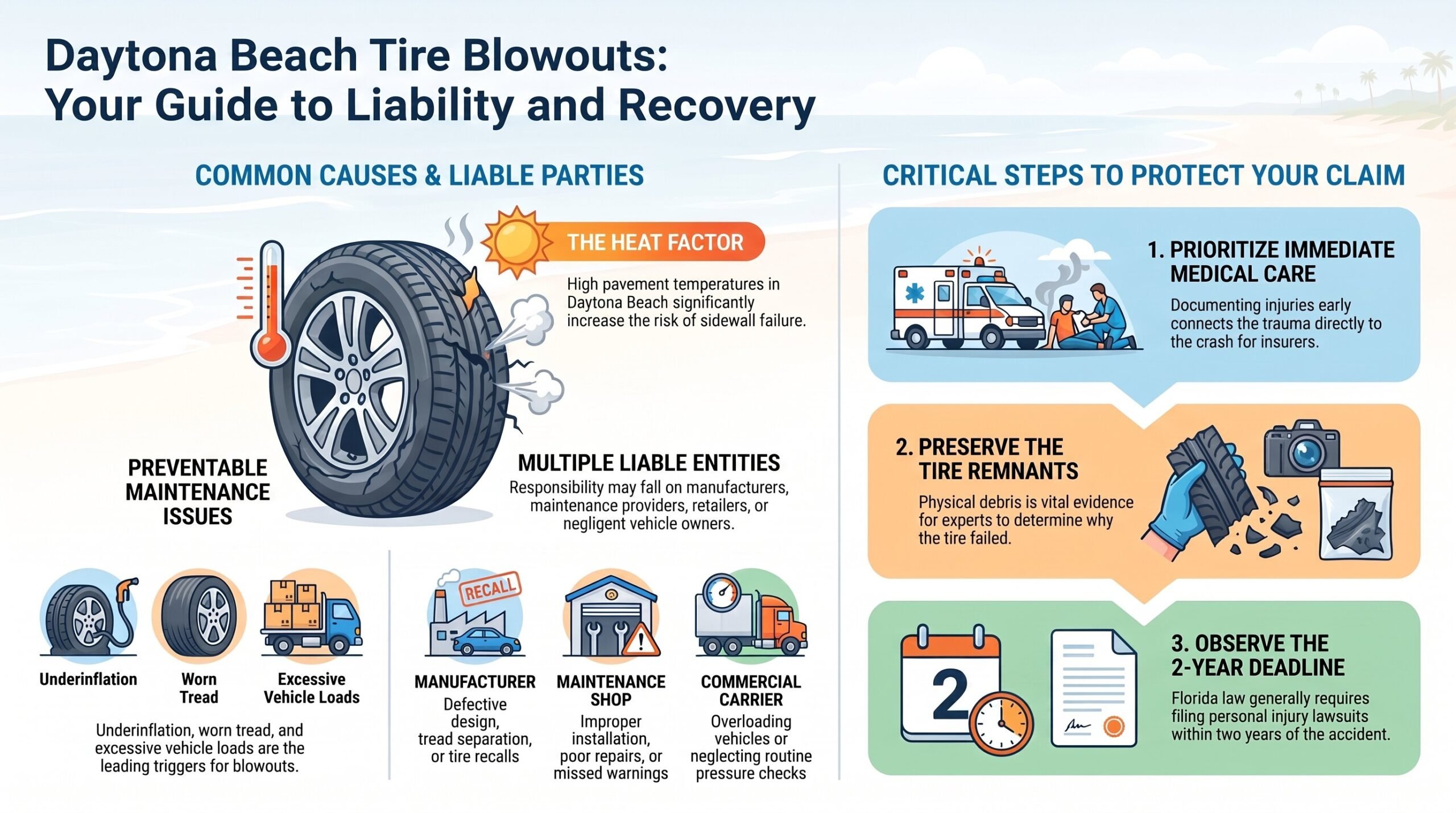
Tire blowout crashes in Daytona Beach often result from preventable vehicle maintenance issues and roadway hazards. Common causes include underinflated tires, worn tire tread, road debris, and excessive vehicle loads, each of which can compromise tire integrity and reduce driver control. Identifying the cause of a blowout is important because it may help determine whether a driver, vehicle owner, maintenance provider, or another party contributed to the accident.
Underinflated Tire Pressure
When a vehicle operates with underinflated tires, excessive heat can build within the tire structure and weaken the rubber, sidewall, and internal components. In Daytona Beach, warm pavement, heavy traffic, and long travel distances may heighten this risk, especially when drivers neglect routine maintenance. Low pressure forces more of the tire to contact the roadway, creating added friction and stress that can lead to sudden failure.
Seasonal tire checks help identify pressure changes caused by temperature shifts, vehicle load, or slow air loss. Tire pressure monitoring systems may also alert drivers before conditions become unsafe. For those committed to protecting passengers, pedestrians, and other motorists, proper inflation is a practical safety measure that reduces the risk of preventable blowouts and supports responsible vehicle operation.
Worn Tire Tread
Worn tire tread can greatly increase the risk of a blowout by reducing the tire’s ability to maintain proper grip, dissipate heat, and withstand road stresses. As tread becomes shallow, the tire’s structure may face greater strain during braking, turning, or sustained highway travel near Daytona Beach. This condition can be especially dangerous when combined with Retread quality failures, where weakened bonding or uneven wear may leave the tire less capable of safe operation.
Careful maintenance serves not only the driver, but also passengers, pedestrians, and other motorists who depend on responsible vehicle care. Driver distraction factors may worsen the danger when a motorist fails to notice vibration, pulling, or other warning signs. Regular inspections help identify worn tread before a preventable crash occurs.
Road Debris Hazards
Although many blowouts result from poor maintenance, road debris can cause sudden tire failure even when a vehicle appears properly serviced. In Daytona Beach, nails, metal fragments, broken glass, fallen cargo, and construction materials may puncture or cut a tire without warning. These hazards are especially dangerous at higher speeds, where a driver may lose control before reaching safety. Regular car tire maintenance helps identify embedded objects, sidewall damage, and slow leaks before they become emergencies. However, careful inspections cannot prevent every roadway hazard. Public agencies, contractors, and property owners may share responsibility when poor road debris cleanup allows dangerous materials to remain in travel lanes. For injured occupants and concerned families, determining how debris reached the roadway can be important to identifying accountable parties.
Excessive Vehicle Loads
Because tires are engineered to carry only a specified load, excessive vehicle loads can place dangerous stress on the tire structure and increase the risk of a blowout. In Daytona Beach traffic, overloaded passenger vehicles, delivery vans, and commercial trucks may generate heat buildup, sidewall strain, and tread separation, especially during long trips or warm conditions. Cargo distribution errors can worsen these hazards when weight is unevenly placed, causing one or more tires to bear more pressure than intended.
Responsible drivers, fleet operators, and service providers help protect the public by observing load ratings, securing cargo, and checking tire pressure before travel. When a blowout occurs, investigators may also examine maintenance records, loading practices, and manufacturer tire defects to determine contributing causes and responsible parties.


Legal Rights of Daytona Beach Tire Blowout Car Accident Injury Victims
When a tire blowout causes a crash in Daytona Beach, injured victims may have the right to pursue compensation from any party whose negligence or misconduct contributed to the collision. These rights may include recovery for medical expenses, lost income, diminished earning capacity, pain, and other legally recognized losses. Those who serve injured individuals should recognize the importance of timely action and careful proof.
Timely evidence can help injured victims pursue fair compensation after a Daytona Beach tire blowout crash.
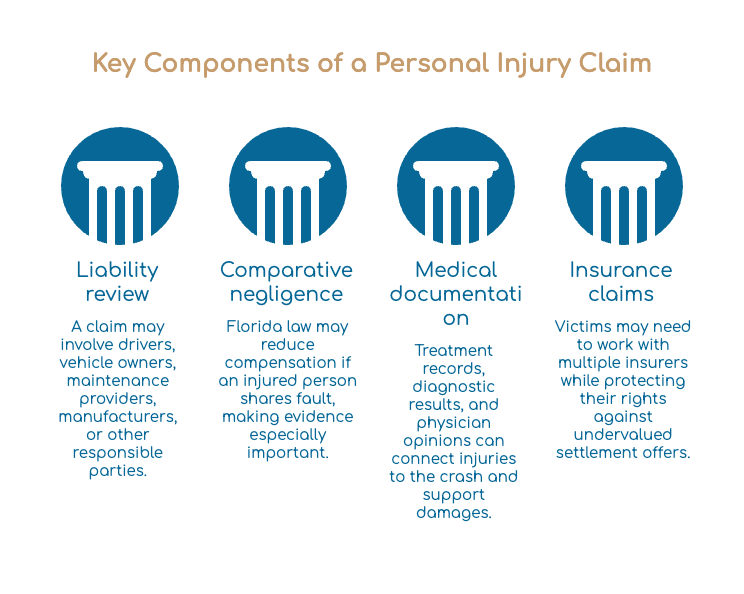
- Liability review: A claim may involve drivers, vehicle owners, maintenance providers, manufacturers, or other responsible parties.
- Comparative negligence: Florida law may reduce compensation if an injured person shares fault, making evidence especially important.
- Medical documentation: Treatment records, diagnostic results, and physician opinions can connect injuries to the crash and support damages.
- Insurance claims: Victims may need to work with multiple insurers while protecting their rights against undervalued settlement offers.
A Daytona Beach tire-blowout car accident lawyer can evaluate available remedies and guide you through each step.
Why Do Daytona Beach Tire Blowout Car Accident Injuries Happen?
Tire blowout injuries in Daytona Beach often occur when a sudden loss of tire pressure causes a driver to lose control, veer into another lane, leave the roadway, or strike another vehicle. These events may result from worn tread, underinflation, overloading, road debris, poor installation, or defective tire design. High heat, long highway travel, and coastal road conditions can also increase stress on weakened tires.
Responsibility may involve a driver, maintenance provider, tire retailer, manufacturer, or commercial carrier, depending on the facts. Tire safety tips, such as regular pressure checks, tread inspections, and timely replacement, help reduce preventable harm and protect passengers, pedestrians, and other motorists. After a crash, insurers may examine maintenance records, vehicle load, tire age, and driver conduct. Insurance denial strategies may focus on blaming poor upkeep, preexisting damage, or unavoidable hazards, making careful investigation important to determine why the injury occurred.
What Should You Do After a Daytona Beach Tire Blowout Car Accident Injury?
After a Daytona Beach tire-blowout car accident injury, the injured person should seek immediate medical care, even if symptoms appear minor. If it is safe to do so, the accident scene should be documented with photographs, witness statements, and relevant vehicle details. Prompt contact with a lawyer can help preserve evidence, assess liability, and protect the injured person’s claim.
Seek Immediate Medical Care
Immediate medical evaluation is often crucial for anyone injured in a Daytona Beach tire-blowout accident, even if symptoms may appear minor at first. Prompt care helps identify hidden injuries, including concussions, internal trauma, soft tissue damage, or delayed pain that may worsen without treatment. A physician can assess the person’s condition, recommend diagnostic testing, and create an appropriate treatment plan.
Following medical instructions also supports recovery and responsible self-care. An Aftercare checklist may include prescribed medications, consultant referrals, therapy appointments, and activity restrictions. Consistent follow-up visits show commitment to mend and help providers monitor progress. Medical records, bills, discharge summaries, and treatment notes may also serve as important insurance documentation when injury-related losses must be reviewed. Timely care protects health, preserves continuity of treatment, and strengthens later claims.
Document The Accident Scene
Once medical needs are addressed and safety permits, documenting the accident scene can help preserve important details that may later become difficult to verify. A person may assist by securing photographic documentation of vehicle positions, tire debris, skid marks, road conditions, traffic signals, and visible injuries. Images should include wide views and close details when doing so does not interfere with responders.
Witness statements may also be important, especially from drivers, passengers, pedestrians, or nearby workers who observed the blowout or loss of control. Names and contact information should be recorded accurately. Notes about weather, lighting, construction zones, and vehicle damage can further support a clear account. Careful documentation serves the truth, helps responsible parties understand what occurred, and protects the interests of injured individuals.
Contact A Lawyer
When injuries, vehicle damage, or disputed facts arise from a tire blowout crash, contacting a lawyer can help protect the injured person’s rights before evidence is lost or insurance positions harden. Counsel may assess liability, preserve the failed tire, request maintenance records, and communicate with insurers on the claimant’s behalf. This support allows the injured person and family members to focus on recovery while ensuring that responsible parties are properly identified.
A lawyer may also explain Roadside assistance options, including towing, storage, and documentation steps that may affect the claim. Early guidance can include vehicle inspection tips, such as avoiding repairs until photographs, measurements, and an expert review are in place. Prompt legal contact promotes orderly action, fair evaluation, and service-centered protection after a serious Daytona Beach crash.
Critical Evidence in a Daytona Beach Tire Blowout Car Accident Injury Case
Important evidence in a Daytona Beach tire blowout car accident injury case can help establish how the failure occurred, who may be responsible, and whether negligence contributed to the crash. Essential evidence may include: 1. Tire remnant preservation 2. Vehicle maintenance records 3. Crash scene evidence 4. Expert accident analysis. Careful collection and review of these materials can strengthen an injury claim and support a more accurate determination of liability.
Tire Remnant Preservation
Although a tire blowout may appear to leave only scattered debris, the remaining tire fragments can become some of the most important evidence in a Daytona Beach car accident injury case. Tire debris may show tread separation, sidewall failure, punctures, or manufacturing concerns that help explain why control was lost. At the accident scene, responders, investigators, or legal representatives may secure fragments before cleanup, traffic, or weather destroys their condition.
Evidence preservation requires careful handling, sealed storage, and a clear record of who collected each item. Useful documentation tips include photographing each fragment in place, noting its location, and preserving related road marks or impact points. When handled properly, tire remnants can support accountability and help injured people pursue fair recovery with dignity.
Vehicle Maintenance Records
In a Daytona Beach tire-blowout car-accident injury case, vehicle maintenance records can reveal whether the tire failure resulted from neglect, improper service, or a hazard beyond the driver’s control. These records may include service invoices, rotation schedules, alignment reports, repair orders, and replacement histories. Tire age documentation is especially important because older tires may deteriorate despite acceptable tread depth.
Roadside inspection logs can also show whether prior warnings, defects, or pressure issues were noted before the collision. For injured victims and their families, these documents help identify responsible parties and support a fair evaluation of preventable harm. A careful review may show whether a vehicle owner, repair facility, employer, or commercial operator failed to act with reasonable care before the blowout occurred. Such evidence strengthens accountability.
Crash Scene Evidence
Beyond maintenance records, the physical evidence found at the crash scene can help explain how a tire blowout occurred and how it affected the vehicle’s path before impact. Skid marks, gouge marks, tire fragments, rim damage, and debris fields may show loss of control, direction of travel, and the point where the tire failed. Prompt documentation supports injured people by protecting facts before weather, traffic, or cleanup efforts change the scene.
Photographs, video footage, and measurements may also help show road conditions, lane positions, and vehicle movement. Witness statement preservation is equally important because bystanders may describe sudden swerving, loud tire noise, or the sequence of impacts. In cases involving riders, motorcycle damage assessment can identify contact points, instability, and related crash forces.
Expert Accident Analysis
When a tire blowout leads to a serious crash, specialized accident analysis can connect physical evidence to the sequence of events that caused the injury. Engineers, reconstruction specialists, and tire experts may examine skid marks, vehicle damage, event data, roadway conditions, and tire remnants to determine why control was lost. Their findings can support a Tire defect investigation by identifying tread separation, sidewall failure, improper manufacturing, or design concerns.
They may also evaluate maintenance negligence, including underinflation, overloading, worn tread, or ignored service warnings. This careful review helps clarify whether responsibility rests with a driver, vehicle owner, repair provider, distributor, or manufacturer. For injured individuals and those assisting them, expert analysis provides grounded evidence that can guide fair claims, informed decisions, and accountable outcomes after a Daytona Beach collision.
Long-Term Effects of Daytona Beach Tire Blowout Car Accident Injuries
Tire blowout crashes in Daytona Beach can cause injuries that extend far beyond the initial emergency treatment. Victims may face chronic pain conditions, lasting mobility challenges, and emotional trauma that interfere with work, daily routines, and overall independence. These long-term effects often require careful medical documentation, as they may significantly influence the value and complication of an injury claim.
Chronic Pain Conditions
Chronic pain can become one of the most disruptive long-term effects of a Daytona Beach tire blowout car accident, especially when injuries involve the neck, back, shoulders, hips, or joints. Persistent pain may interfere with sleep, concentration, family responsibilities, and the ability to provide steady care or service to others. Medical treatment may include therapy, injections, or prescription drugs, yet Medication side effects can create additional concerns, including fatigue, dizziness, or reduced focus.
When pain limits former job duties, worker retraining plans may be necessary to support continued employment in a safer role. Careful documentation of symptoms, treatment needs, and work restrictions can help show how chronic pain affects daily function, long-term stability, and the injured person’s capacity to maintain meaningful responsibilities after the collision.
Lasting Mobility Challenges
Reduced mobility can become a lasting consequence of a Daytona Beach tire blowout car accident, particularly when trauma affects the spine, pelvis, knees, ankles, or lower extremities. These injuries may limit walking, standing, driving, and the ability to perform critical household duties, creating ongoing dependence on family members, caregivers, or community support. Rehabilitation needs often include mobility therapy, strength training, balance improvement, and medical monitoring to preserve function and prevent further decline.
In severe cases, Wheelchair adaptations, home modifications, assistive devices, and vehicle changes may become necessary to restore safe access to daily life. These limitations can increase medical expenses while reducing earning capacity and independence. Accurate documentation of functional loss helps identify long-term care needs and supports a fair evaluation of damages after a serious tire-blowout collision.
Emotional Trauma Effects
Physical limitations are not the only lasting harm that may follow a serious Daytona Beach tire blowout car accident, as the sudden loss of vehicle control can also cause significant emotional trauma. Survivors may experience recurring fear, sleep disruption, irritability, or avoidance of driving, especially near highways or heavy traffic. These symptoms can affect family roles, employment duties, and the ability to serve others with steadiness and focus.
Post-accident counseling may help injured individuals process the event, rebuild confidence, and identify healthy coping strategies. In more severe cases, PTSD Recovery may require structured treatment, ongoing support, and careful documentation of emotional harm. Recognizing these effects is important because psychological injuries can be as disruptive as physical impairment and may merit serious consideration in a legal claim.
Proving Liability in Daytona Beach Tire Blowout Car Accident Injury Cases
A successful tire blowout injury claim in Daytona Beach depends on evidence showing why the tire failed, who had control over the vehicle or tire, and how that failure caused the crash. Liability may rest with a negligent driver, a maintenance provider, a vehicle owner, or a tire manufacturer, depending on the facts. Investigators often review tire age, tread depth, inflation history, service records, roadway conditions, crash debris, and witness statements to identify preventable conduct.
Preserving the tire and related components is important because evidence spoliation can weaken or destroy a claim. Prompt action helps protect physical proof before it is discarded, altered, or repaired. Comparative negligence may also affect recovery if the injured person or another party contributed to the crash. Careful analysis enables the responsible parties to be identified fairly while supporting injured individuals and families seeking accountability, safety improvements, and meaningful relief after a serious tire-blowout collision.
Dealing With Insurance Companies After a Daytona Beach Tire Blowout Car Accident Injury
Once liability evidence has been identified and preserved, the insurance process often becomes the next major challenge in a Daytona Beach tire blowout injury claim. Insurers may question whether the blowout, driver conduct, vehicle maintenance, or roadway conditions caused the crash. They may also request recorded statements, broad medical authorizations, or early settlement discussions before the full impact of the injury is known.
Careful communication helps protect the injured person’s ability to seek fair compensation. Evidence preservation, including photographs, tire remnants, repair records, and witness information, can support responses to coverage disputes or fault arguments. Underinsured drivers may create added hardship when available coverage is too limited to address medical bills, lost income, and long-term care needs.
In these situations, reviewing all possible policies, including uninsured or underinsured motorist coverage, becomes important. A disciplined approach allows advocates, families, and service-minded professionals to focus on recovery needs while preventing insurers from minimizing valid claims.
What to Expect During a Daytona Beach Tire Blowout Car Accident Injury Claim Process
A Daytona Beach tire-blowout car accident injury claim typically begins with an initial case review, during which liability, injuries, and available insurance coverage are assessed. The process then moves to the collection of accident evidence, including vehicle records, crash reports, witness statements, and medical documentation. Insurance claim negotiations follow, and the injury compensation timeline depends on the severity of harm, disputed fault, and the insurer’s willingness to resolve the claim fairly.
Initial Case Review
The initial case review in a Daytona Beach tire-blowout car-accident injury claim typically focuses on how the blowout occurred, who may be legally responsible, and what evidence must be preserved. During this stage, an attorney evaluates the circumstances of the crash, tire condition reports, maintenance history, and parties connected to the vehicle or roadway. The review also considers medical records to understand injury severity, treatment needs, and future care concerns.
An Evidence timeline may be outlined to guide later investigation without duplicating formal collection efforts. Counsel may also assess policy limits, possible insurance denial issues, and liability disputes involving drivers, owners, repair providers, or manufacturers. This early evaluation supports a measured settlement strategy, helping injured persons pursue fair recovery while maintaining focus on responsible service and community safety.
Accident Evidence Collection
Following the initial case review, the collection of accident evidence focuses on securing materials that can confirm how the tire blowout occurred and whether preventable negligence contributed to the crash. Attorneys may gather police reports, crash-scene photographs, vehicle-damage records, maintenance histories, and roadway-condition documentation. Eyewitness statements can help clarify vehicle movement, driver conduct, the presence of debris, or a sudden tire failure before impact.
The damaged tire may be preserved for inspection, allowing experts to assess tread separation, underinflation, aging, punctures, or manufacturing concerns. Tire defect reports may also be reviewed to identify recalls, prior complaints, or known safety issues involving the same brand or model. Careful evidence collection supports accountability, protects the injured person’s dignity, and helps ensure that responsible parties are evaluated through a reliable, service-minded investigation.
Insurance Claim Negotiations
During insurance claim negotiations following a Daytona Beach tire-blowout car accident, attorneys typically begin by presenting liability evidence, medical documentation, lost-income records, and damage calculations to the applicable insurers. This stage often involves a careful review of coverage limits, fault disputes, vehicle maintenance records, and each party’s conduct.
A focused Negotiation strategy may address whether negligent tire maintenance, defective products, or unsafe driving contributed to the crash. Insurers may challenge injuries, argue preexisting conditions, or question the connection between the blowout and claimed losses. Attorneys serving injured clients work to correct documentation errors, respond to low settlement offers, and preserve the claimant’s credibility. Clear communication, organized records, and disciplined advocacy help ensure the claim is evaluated fairly and responsibly by insurance representatives.
Injury Compensation Timeline
After a tire blowout crash in Daytona Beach, the injury compensation timeline often begins with immediate medical treatment, accident reporting, and early evidence preservation. As the injured person receives care, treatment records help show the nature, duration, and cost of the harm suffered. Investigators may review vehicle maintenance, tire condition, roadway evidence, witness accounts, and insurance coverage before liability is assessed.
Once medical improvement becomes clearer, damages can be calculated with greater accuracy, including wage loss, future care needs, and non-economic losses such as pain, suffering, and reduced daily function. Settlement discussions may follow, but litigation can extend the process if responsibility is disputed. Throughout each stage, careful documentation supports a fair resolution and helps ensure that those affected receive responsible, service-centered advocacy.
Compensation for Daytona Beach Tire Blowout Car Accident Injury Damages
When a tire blowout causes a collision in Daytona Beach, injured victims may be entitled to compensation for the financial and personal losses resulting from the crash. Recovery often depends on showing how the blowout occurred, who failed to act responsibly, and how the injuries affected the victim’s life. A careful Evidence timeline can help establish when the tire was purchased, serviced, inspected, or reported as defective.
Compensation may involve claims against a negligent driver, maintenance provider, tire retailer, manufacturer, or another responsible party. Each claim requires organized documentation, including crash reports, medical records, repair invoices, photographs, and witness statements. A focused insurance settlement strategy may also help protect the victim from undervalued offers, delayed responses, or attempts to shift blame.
For individuals dedicated to caring for family and community, fair compensation can support recovery, stability, and continued service to others after a serious tire blowout accident.
Economic vs Non-Economic Damages in Daytona Beach Tire Blowout Car Accident Cases
In Daytona Beach tire-blowout car accident cases, damages are generally classified as economic or non-economic. Economic damages may include medical bills and lost wages, while non-economic damages may address pain, emotional distress, and reduced quality of life. Proving these damages often requires medical records, employment records, expert opinions, and other evidence linking the losses to the crash.
Medical Bills And Lost Wages
Although every tire-blowout crash presents different facts, the financial impact often begins with medical bills and lost wages, which can place immediate pressure on an injured person or household. Emergency care, surgery, rehabilitation, prescriptions, follow-up visits, and medical equipment may create substantial economic damages. Lost income may include missed work, reduced hours, lost overtime, diminished earning capacity, and interrupted self-employment revenue.
Careful records help establish the full value of these losses, including pay stubs, tax returns, invoices, mileage logs, and provider statements. For service-minded families, documenting household losses may also show the cost of replacement help for childcare, transportation, cleaning, or caregiving duties. When payment is delayed or disputed, reviewing Insurance denial options can help preserve recovery efforts and support a more complete claim.
Pain And Emotional Distress
Pain and emotional distress often represent a significant part of a Daytona Beach tire blowout car accident claim, especially where injuries affect daily function, independence, or long-term quality of life. These non-economic damages may involve physical discomfort, anxiety, sleep disruption, reduced mobility, and the emotional burden of relying on others for ordinary tasks. For individuals devoted to serving family, work, or community, these losses can be especially disruptive because they limit meaningful participation in responsibilities and relationships.
Unlike medical bills or lost wages, these harms do not have a fixed invoice, yet they may deeply affect recovery and dignity. Filing claims promptly supports timely consideration of these losses and helps avoid insurance delays that may prolong hardship and uncertainty for injured people seeking fair compensation after a serious crash.
Proving Your Damages
When a tire blowout crash results in injury, proving damages requires clear documentation of both financial losses and the personal harm caused by the collision. Economic damages may include emergency treatment, rehabilitation, medication, vehicle repair, and income interruption. Lost-wages documentation, including employer statements, tax records, and work-restriction notes, can help demonstrate how the injury affected earning capacity. In serious cases, future care estimates from medical providers may support claims for ongoing treatment, assistive devices, or long-term support.
Non-economic damages require careful presentation of pain, limitations, emotional distress, and reduced quality of life. Medical records, witness statements, photographs, and consistent personal accounts may help demonstrate these losses. For those committed to serving injured individuals, organized evidence can promote accountability, fair evaluation, and meaningful recovery following a Daytona Beach tire-blowout collision.
When a Daytona Beach Tire Blowout Car Accident Injury Case Goes to Trial vs Settlement
A Daytona Beach tire blowout car accident injury case may resolve through settlement or proceed to trial, depending on the strength of the evidence, the severity of the injuries, the amount of available insurance coverage, and whether the parties dispute fault or damages. Settlement may serve injured people by providing earlier financial relief, reducing uncertainty, and avoiding the demands of courtroom testimony. However, trial may become necessary when insurers undervalue medical losses, future care needs, lost income, or human harm.
A careful Evidence preservation strategy often influences both paths. Preserved tires, vehicle data, maintenance records, photographs, medical documentation, and witness statements can clarify whether negligence contributed to the crash. Defendants may raise Comparative fault defenses, arguing that another driver, a vehicle owner, or the injured person shared responsibility. When negotiations do not fairly account for the evidence and damages, a trial allows the case to be presented before a jury.
Florida Laws That May Affect Your Daytona Beach Tire Blowout Car Accident Case
Because tire-blowout crashes often involve multiple possible causes, Florida law can materially affect how fault, damages, and insurance coverage are evaluated in a Daytona Beach car accident case. These rules help protect injured people while promoting careful conduct by drivers, owners, manufacturers, and insurers.
Florida law can govern fault, damages, and insurance coverage after a tire-blowout crash.
- Comparative negligence overview: Florida may reduce recovery when an injured person shares responsibility, such as by driving on visibly worn tires.
- No-fault coverage: Personal injury protection may apply first, regardless of fault, helping cover medical care and lost income after the crash.
- Product and maintenance liability: A tire maker, repair shop, rental company, or vehicle owner may be held liable if defective design, poor installation, or neglected maintenance contributed to the blowout.
- Presuit notice requirements: Certain claims, including those involving government entities or specific insurance disputes, may require formal notice before litigation.
Each rule can influence service-focused advocacy, evidence gathering, and the pursuit of responsible compensation.
The Statute of Limitations for Daytona Beach Tire Blowout Car Accident Injury Cases
Although every tire blowout crash depends on its specific facts, strict filing deadlines can determine whether an injured person may pursue compensation through a lawsuit. In Florida, most personal injury claims arising from motor vehicle crashes must be filed within two years of the accident date. If the injured person dies from crash-related harm, a wrongful death action is generally subject to a two-year deadline from the date of death.
These deadlines serve an important public purpose, encouraging timely preservation of evidence and fair resolution for all parties. Tire remnants, maintenance records, photographs, witness accounts, and repair histories may become harder to obtain over time. Early attention also supports insurance coverage verification, which can clarify available benefits and responsible parties.
Missed deadlines can bar recovery, even when injuries are severe. Comparative negligence defenses may also affect the value of a claim, making timely evaluation of fault and damages especially important in these cases.
How a Daytona Beach Tire Blowout Car Accident Lawyer Can Help You
When a tire blowout causes a serious crash, a Daytona Beach tire blowout car accident lawyer can help identify the cause of the failure, preserve key evidence, and determine which parties may be legally responsible. This support helps injured people and their families pursue accountability while focusing on care, recovery, and service to others affected by the collision.
- Investigating the tire failure: The lawyer may review maintenance records, tire age, tread condition, recalls, and vehicle inspection history.
- Gathering evidence: Proof of negligence may include traffic camera footage, witness statements, crash reports, photographs, and expert evaluations.
- Assessing liability: Responsible parties may include a driver, vehicle owner, repair shop, tire manufacturer, or another negligent entity.
- Addressing fault disputes: Florida comparative negligence rules may reduce compensation if blame is shared, so careful analysis is vital.
Through organized advocacy, legal counsel can present the claim clearly and protect the injured person’s interests.
When to Contact a Daytona Beach Tire Blowout Car Accident Lawyer
How soon should an injured person seek legal guidance after a tire blowout crash in Daytona Beach? Contact should occur as soon as medical needs are addressed and the scene is safe. Early consultation helps preserve details that may be useful to injured passengers, families, and others affected by the collision.
A lawyer may need prompt access to photographs, damaged tires, vehicle data, witness names, and any Roadside Inspection completed after the crash. Delays can allow evidence to be moved, repaired, discarded, or misremembered. If possible, the tire and related vehicle parts should be preserved before any disposal or repair.
Legal guidance is also important when injuries appear minor, fault is disputed, or an insurer requests a recorded statement. Tire Recall Information may need review, especially when tread separation, sidewall failure, or prior maintenance concerns are involved. Timely action supports an orderly claims process and helps protect those who depend on the injured person.
Why You Need an Experienced Daytona Beach Tire Blowout Car Accident Lawyer
Because tire-blowout collisions often involve more than driver error, an experienced Daytona Beach tire-blowout car accident lawyer can identify issues that may otherwise be overlooked. These cases may require careful review of tire maintenance, roadway conditions, vehicle loading, product defects, and whether accepted Car Tire Safety practices were ignored. For injured people and families focused on caring for others, this guidance can help preserve stability while responsibility is assessed with care.
A lawyer familiar with Florida Accident Laws can evaluate liability, insurance coverage, comparative fault, and deadlines that may affect recovery. Experience also helps secure records, consult appropriate experts, and challenge claims that the injured person was solely responsible. Tire blowout cases can involve drivers, vehicle owners, maintenance providers, tire manufacturers, or other parties. Skilled legal support allows the facts to be organized, evidence protected, and damages presented in a manner that reflects the full impact of the crash.
How to Choose the Right Daytona Beach Tire Blowout Car Accident Lawyer for Your Case
For tire blowout claims in Daytona Beach, the right lawyer should have specific experience with crash investigations, vehicle maintenance issues, tire failure evidence, and Florida insurance disputes. A careful selection process helps injured people protect their families, support their recovery, and pursue accountability without unnecessary delay.
A qualified attorney should understand how to review police reports, inspect damaged tires, analyze tread separation, and identify whether negligent maintenance, defective manufacturing, or unsafe driving contributed to the collision. The lawyer should also use an Evidence preservation checklist to secure photographs, repair records, tire remnants, dashcam footage, and vehicle inspection data before they are lost.
Clients should ask how the attorney evaluates the accuracy of witness statements, communicates with insurers, and prepares claims for negotiation or litigation. Clear communication, organized case management, and a service-minded approach are important. The right lawyer should provide steady guidance, explain legal options plainly, and focus on protecting the injured person’s long-term interests.
About The Law Offices of Anidjar & Levine
The Law Offices of Anidjar & Levine represents injured people in Daytona Beach and throughout Florida in car accident cases involving tire blowouts, vehicle defects, negligent maintenance, and disputed insurance claims.
The firm’s attorneys focus on identifying liable parties, preserving evidence, and pursuing compensation for medical care, lost income, pain, suffering, and other losses.
Their work reflects a commitment to public service, Road Safety, and accountability.
By examining crash reports, vehicle records, Tire Maintenance history, witness statements, and insurance communications, the firm builds claims that address both individual harm and broader safety concerns.
Clients receive guidance through each stage of the legal process, including communication with insurers, case investigation, settlement discussions, and litigation when necessary.
The firm aims to reduce the burdens placed on injured clients while protecting their rights.
Its approach combines legal experience, careful preparation, and client-centered service for those affected by serious tire-related collisions.
Frequently Asked Questions
Can a Tire Blowout Accident Affect My Car’s Resale Value?
Yes, a tire blowout accident can reduce a vehicle’s resale value, especially when structural damage, repairs, or an accident history appears in the records. A thorough vehicle inspection helps determine diminished value and repair quality. Evidence preservation, including photos, repair invoices, and reports, supports fair valuation. High insurance costs or claim denial may also affect recovery options. Those assisting others should encourage careful documentation and professional appraisal before selling or resolving any claim.
Are Rental Car Companies Responsible for Tire Blowout Crashes?
Yes, rental car companies may be responsible for tire-blowout crashes when poor maintenance, unsafe tires, or neglected inspection duties contributed to the incident. Responsibility also depends on rental contract terms, driver conduct, and available maintenance records. Comparative negligence may reduce recovery if the renter ignored warnings or misused the vehicle. Those assisting injured parties should preserve evidence, document conditions, and seek legal review to accurately determine liability.
Can Dashcam Footage Help Prove a Tire Defect Caused the Crash?
Yes. Dashcam footage may help show a tire failure occurred before the driver lost control, rather than after impact. Such video evidence can capture vehicle movement, road conditions, debris, sounds, or sudden swerving. However, Defect proof usually requires expert analysis, including tire inspection, maintenance records, and crash reconstruction. For those serving injured individuals, this evidence can clarify responsibility and support a fair evaluation of fault and damages.
What if the Blown Tire Was Recently Purchased or Installed?
If the blown tire was recently purchased or installed, records may identify responsible parties and preserve essential evidence. Investigators should verify recent installation, review invoices, inspect the tire, and confirm whether the correct size, load rating, and pressure were used. Service records may also prove proper torque on lug nuts. Those assisting an injured person should secure receipts, maintenance documents, photographs, and the tire itself before disposal or alteration occurs.
Can Weather Conditions Contribute to a Daytona Beach Tire Blowout Accident?
Yes, weather conditions can contribute to a tire blowout accident. Heat may increase tire pressure, while heavy rain can hide hazards and reduce traction. How road debris interacts with weakened rubber is also important, especially after storms. Careful review of tire age signs, tread condition, inflation records, and roadway conditions helps determine preventable risks. Those serving injured motorists should consider weather as one factor within a broader safety and liability investigation.
—————————
Tire blowout accidents in Daytona Beach can involve intricate issues of negligence, vehicle maintenance, product defects, and insurance liability.
Injured victims may need prompt legal guidance to protect their rights, preserve evidence, and pursue fair compensation for medical expenses, lost income, and other losses.
A Daytona Beach Car Accident Lawyer from The Law Offices of Anidjar and Levine can evaluate the circumstances, identify responsible parties, and manage the claims process with diligence, allowing victims to focus on recovery while their legal interests are protected.