A Florida comparative negligence injury lawyer from The Law Offices of Anidjar and Levine helps injured people address disputed fault, preserve evidence, and pursue compensation under Florida’s modified comparative negligence rules.
These cases often involve insurers assigning blame to reduce payment, making records, photographs, witness statements, medical documentation, and expert analysis important.
A lawyer can evaluate liability, challenge unsupported allegations, document losses, negotiate with insurers, and prepare for litigation if needed.
If your case involves a crash, a Florida Car Accident Lawyer can help explain how fault may affect your recovery.
The sections below explain how these claims work and what steps may protect recovery.
Main Takeaways
- Florida comparative negligence reduces compensation when an injured person shares fault for an accident.
- A lawyer can challenge unsupported fault allegations and help clarify each party’s responsibility percentage.
- Strong evidence includes medical records, photos, videos, witness statements, incident reports, and expert evaluations.
- Comparative negligence disputes often arise in car crashes, slip-and-fall accidents, workplace injuries, and negligent security claims.
- An injury lawyer negotiates with insurers and prepares litigation if settlement offers do not fairly reflect the evidence.
How We Can Help With Your Florida Comparative Negligence Injury Claim
When an injured person is accused of sharing fault for an accident, a Florida comparative negligence injury lawyer can help protect the value of the claim from being unfairly reduced or denied. Legal support may include gathering records, interviewing witnesses, reviewing photographs, consulting qualified professionals, and identifying evidence that explains what occurred. This careful work helps clarify the percentage of fault assigned to each party and challenge unsupported allegations.
The lawyer also manages insurance negotiations with preparation and discipline. Insurers may attempt to shift blame, minimize injuries, or pressure a claimant into accepting less than the claim warrants. A focused advocate presents medical documentation, wage loss information, and liability evidence in an organized manner, serving the injured person’s need for stability and fair treatment. When settlement discussions do not produce a just result, counsel can prepare the claim for litigation, ensuring deadlines are met and the client’s interests remain protected throughout the process.
Understanding Florida Comparative Negligence Injury Cases


Although many injury claims appear straightforward at first, Florida comparative negligence cases require a careful review of how each party’s conduct contributed to the accident. Under Florida law, an injured person’s compensation may be reduced when that person is found partly responsible for the harm suffered. This makes an accurate assessment of responsibility critical, especially when medical costs, lost income, and long-term recovery needs affect the person’s ability to serve family, community, or others.
OUR CONSULTATIONSARE FREE
START YOUR FREE CASE REVIEW

Preserving evidence is a central part of this process. Records, photographs, witness statements, medical documentation, and expert evaluations can help clarify what occurred and limit unfair blame. Insurance claim disputes often arise when insurers attempt to assign a greater share of fault to the injured person. A careful legal review can identify unsupported allegations, strengthen the claim, and promote a result grounded in fairness, accountability, and the full circumstances surrounding the injury.
Common Causes of Florida Comparative Negligence
Common causes of Florida comparative negligence often arise when multiple parties contribute to an injury through careless or unsafe conduct. Distracted driving crashes, unsafe property conditions, defective product injuries, and other shared fault accidents can all require careful evaluation of each party’s responsibility. In these cases, the allocation of fault may directly affect the injured person’s ability to recover compensation.
Distracted Driving Crashes


In Florida injury claims, distracted driving often creates complex comparative negligence disputes because more than one party may have contributed to the crash. A driver reading a text, adjusting navigation, or responding to a passenger may miss changing traffic conditions and fail to protect others. Yet another motorist, cyclist, or pedestrian may also be evaluated for conduct that affected the outcome. Courts and insurers examine phone records, witness statements, traffic signals, braking patterns, and roadway video to assign fault fairly. These cases often involve intersection safety, where brief inattention can cause severe pedestrian accidents. For people committed to serving injured neighbors, careful review of evidence supports accountability without overstating blame. A Florida comparative negligence injury lawyer may help clarify each party’s role and pursue proportional recovery.
Unsafe Property Conditions
Unsafe property conditions can raise comparative negligence issues much like distracted driving, because an injury may result from both a hazardous premises condition and the injured person’s conduct. In Florida, a slip and fall may involve spilled liquids, uneven flooring, poor lighting, or neglected walkways. Property owners, managers, and service providers may be examined for negligent maintenance, including whether they knew or should have known about the danger and failed to correct it. At the same time, the injured person’s awareness, footwear, pace, or attention may be reviewed. For those committed to serving others, careful investigation helps assign responsibility fairly, preserve dignity, and promote safer environments. Comparative negligence principles may reduce recovery when shared fault is proven by evidence.
Defective Product Injuries
Defective product injuries may also involve comparative negligence when harm results from both a product-related failure and the injured person’s own conduct. In Florida, liability may turn on whether the product was defectively designed, manufactured, or labeled, and whether the user followed reasonable safety instructions. Careful evidence of product defects, such as photos, purchase records, warnings, maintenance history, and expert evaluation, can help clarify responsibility. A person who altered equipment, ignored clear warnings, or used a product for an unintended purpose may face a reduced recovery. However, manufacturers and sellers may still bear responsibility when preventable dangers harm consumers. Warranty claim eligibility may also be reviewed, especially when written promises, ordinary use expectations, or service obligations relate to the injury and support accountability.
Shared Fault Accidents
When an accident involves mistakes by more than one person, Florida comparative negligence rules may determine how financial responsibility is divided. Shared-fault accidents often arise in traffic collisions, slip-and-fall incidents, workplace injuries, and negligent-security claims, where several actions contribute to harm. A careful Impact evaluation helps identify how each party’s conduct affected the outcome, including whether warning signs were ignored, safety duties were breached, or reasonable care was lacking. For those committed to serving injured individuals with fairness, these details guide responsible advocacy and documentation. A sound claim settlement strategy considers fault percentages, medical evidence, witness accounts, and available insurance coverage. By clearly addressing shared responsibility, an injury lawyer may help ensure recovery while promoting accountability among all parties involved in the incident.
Legal Rights of Florida Comparative Negligence Injury Victims
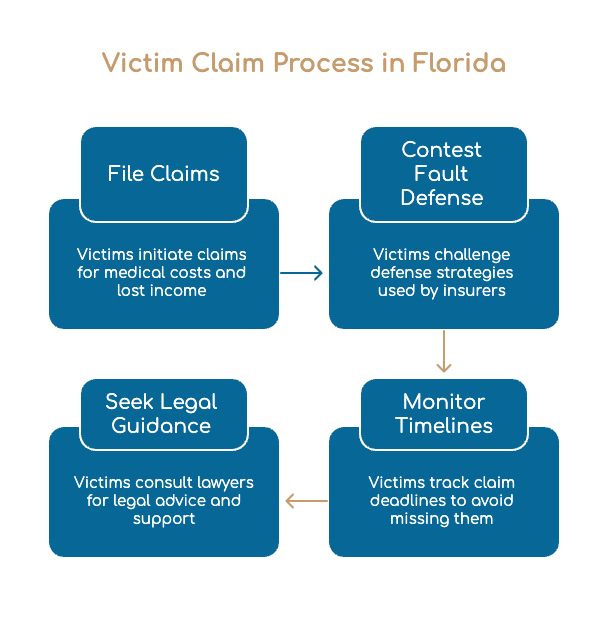
Although Florida law allows injury victims to pursue compensation after an accident, comparative negligence can directly affect the amount they may recover. A claimant’s rights include seeking damages, presenting evidence, and challenging unfair blame assessments. These rights support accountability while helping injured persons preserve resources needed for care, recovery, and continued service to family or community.
- Victims may file claims for medical costs, lost income, and other proven losses, subject to Florida’s modified comparative negligence rules.
- They may contest fault defense strategies used by insurers or opposing parties to reduce payment or shift responsibility.
- They should monitor insurance claim timelines because missed deadlines can weaken or bar an otherwise valid claim.
- They may seek legal guidance to document injuries, evaluate settlement offers, and protect their interests during negotiations or litigation.
These protections are designed to ensure that fault is measured fairly, rather than assumed broadly or applied without evidence.
Why Do Florida Comparative Negligence Injuries Happen?
Florida comparative negligence injuries often occur because several parties make unsafe choices or fail to take reasonable precautions in the same incident. A driver may speed while another changes lanes without signaling, or a property owner may ignore hazards while a visitor overlooks posted warnings. In the workplace, traffic, premises, and product-related incidents can result in harm from combined acts or omissions rather than one person’s conduct alone.
These cases develop when preventable risks overlap, and each participant’s decisions contribute to the outcome. Shared liability may arise from poor maintenance, distracted conduct, inadequate supervision, unsafe policies, or failure to follow established safety standards. For communities and professionals committed to serving others, understanding these causes supports careful attention to prevention and accountability.
Insurance defenses commonly focus on assigning fault to the injured person or another party. Because Florida law reduces recovery by fault percentage, the cause of the injury often becomes a central issue in the claim.
What Should You Do After a Florida Comparative Negligence Injury?
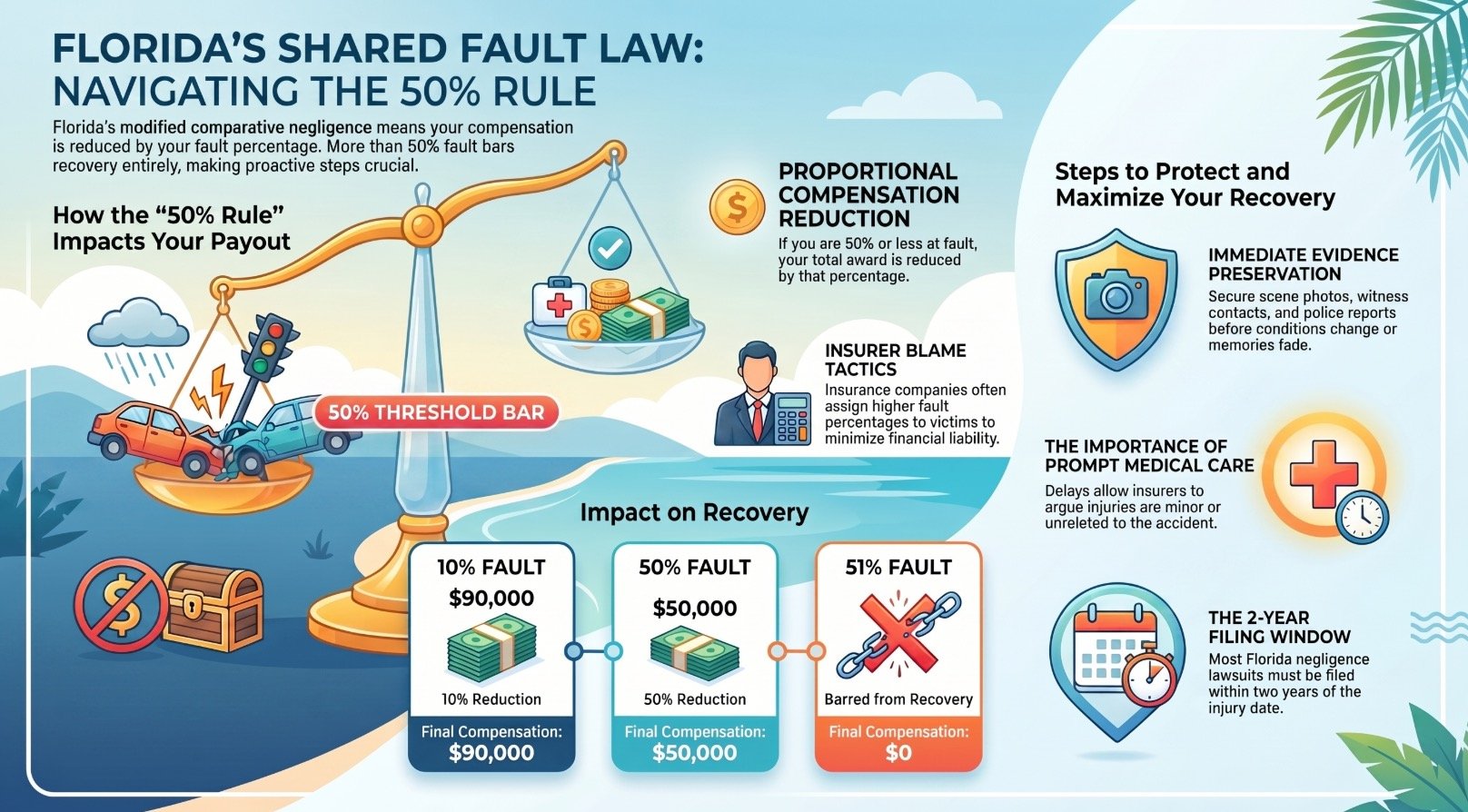
After a Florida comparative negligence injury, the injured party should act promptly to protect their health, preserve evidence, and protect their legal rights. Medical care should be obtained without delay, while photographs, witness information, records, and other essential evidence should be preserved. Consulting an attorney can help assess fault allocation, address insurance issues, and protect the value of a potential injury claim.
Seek Medical Care
Why is prompt medical care so important after an injury involving comparative negligence? A timely medical evaluation protects the injured person’s health and helps clarify how the injury occurred, what harm resulted, and what care is reasonably necessary. In Florida, delays in treatment may allow insurers to argue that the condition was minor, unrelated, or worsened by the person’s own choices. Those who serve injured individuals should encourage immediate assessment, even when symptoms appear manageable. Some conditions develop gradually, and early care may prevent recoverable complications. Follow-up treatment should be completed as directed, as missed appointments can hinder recovery and reduce claim value. The injured person should also document symptoms consistently, including pain levels, limitations, and changes in daily function, to support accurate medical decision-making.
Preserve Key Evidence
Because fault may be divided among multiple parties, preserving evidence is critical in a Florida comparative negligence injury claim. An injured person should gather accident documentation as soon as safety allows, including photographs, video, witness names, incident reports, damaged property, and records of medical treatment. These materials may help show how the event occurred, who acted carelessly, and how the injury affected daily responsibilities, work, family, and service to others. Written notes should capture weather, lighting, hazards, statements made at the scene, and any later symptoms. Copies of emails, letters, claim numbers, and insurance response materials should also be kept in an organized file. Preserved evidence can support accurate evaluation of fault, reduce confusion, and help guarantee that responsibility is assessed with fairness and care.
Consult An Attorney
Preserved evidence is most effective when it is reviewed in light of Florida’s comparative negligence rules, insurance practices, and filing deadlines. An injured person should consult an attorney promptly, especially when medical needs, family responsibilities, or service to others depend on a fair recovery. Counsel can assess liability, identify potential defendants, and explain how a shared blame defense may reduce compensation. A timely consultation also helps establish a case evaluation timeline, including records collection, witness review, insurance notice, and settlement strategy. Legal guidance may prevent statements or omissions that weaken a claim. It can also help coordinate communication with insurers, medical providers, and investigators. With informed representation, the injured person can make responsible decisions while protecting legal rights and pursuing appropriate accountability.
Critical Evidence in a Florida Comparative Negligence Injury Case
In a Florida comparative negligence injury case, the strength of the claim often depends on evidence that clarifies fault, damages, and the conduct of each party. Vital evidence may include: 1. Accident Scene Documentation, 2. Witness Statements, 3. Medical Records, and 4. Expert Analysis. Each category can help establish how the injury occurred, how responsibility should be apportioned, and what compensation may be supported under Florida law.
Accident Scene Documentation
After a collision or injury incident, accident scene documentation can become one of the most important sources of evidence in a Florida comparative negligence case. Photographs, video recordings, skid marks, debris patterns, property damage, traffic signals, lighting, and weather details may help clarify how the event occurred. Careful documentation can assist those serving injured persons by preserving facts before conditions change or hazards are removed. Images showing vehicle speed indicators, point of impact, lane positions, and road conditions may support or challenge claims about each party’s share of fault. Medical responders, law enforcement personnel, and legal professionals often rely on these records to evaluate responsibility with greater accuracy. Prompt, organized documentation promotes fairness, supports accountability, and helps protect the injured person’s right to a reasoned assessment.
Witness Statements
Physical evidence from the accident scene may show what happened, but witness statements can explain how and why the incident unfolded. In a Florida comparative negligence case, neutral observers may clarify speed, distance, signals, lighting, warnings, or conduct before impact. Their observations can help assign responsibility fairly, especially when each party gives a different account. The credibility of witness accounts depends on proximity, attention, bias, and the ability to recall details without pressure. Attorneys may conduct statement consistency checks by comparing early remarks, recorded interviews, police summaries, and later testimony. This process can reveal reliable patterns or identify contradictions that affect fault percentages. Careful collection of witness information also supports the honest evaluation of claims, helping injured people, insurers, and courts reach decisions grounded in facts rather than assumptions.
Medical Records
Documenting injuries in medical records is essential to linking an accident to the harm claimed in a Florida comparative negligence case. Treatment notes, diagnostic results, prescriptions, referrals, and discharge instructions can show the timing, severity, and progression of injuries. These records help demonstrate whether care was sought promptly and whether the treatment was consistent with the reported incident. Medical billing documentation also supports the value of claimed losses, including emergency care, follow-up visits, therapy, and medication costs. Accurate records may reduce confusion when fault is divided among parties under Florida law. Attorneys often assist clients with records release forms to obtain complete files from providers. Organized medical evidence allows insurers, courts, and opposing parties to assess the claim fairly and understand the injured person’s needs.
Expert Analysis
How can specialist analysis affect the outcome of a Florida comparative negligence injury case? Specialist testimony helps clarify disputed facts, especially when injuries, accident mechanics, or safety duties are complex. Physicians may explain causation and long-term impairment, while a reconstruction specialist may identify how each party’s conduct contributed to the event. These opinions assist attorneys, insurers, and the court in measuring conduct against Negligence Standards. In the service of fairness, specialist analysis can protect injured persons from unfounded blame while also recognizing legitimate responsibility. When a case reaches trial, clear specialist findings may influence the jury’s allocation of fault percentages under Florida law. Careful specialist review also supports settlement discussions by providing both sides with reliable guidance on damages, liability, and future care needs, promoting informed decisions and a responsible resolution for all parties involved.
Long-Term Effects of Florida Comparative Negligence Injuries
Long-term effects of Florida comparative negligence injuries may include ongoing medical needs, reduced earning capacity, and lasting pain that affects daily function. These consequences can influence the value of a claim, particularly when future treatment, work limitations, or permanent impairment must be considered. A careful evaluation helps connect the injury’s continuing impact to the damages sought under Florida law.
Ongoing Medical Needs
When an injury produces lasting complications, ongoing medical needs often become a central issue in a Florida comparative negligence claim. Treatment may include follow-up evaluations, surgeries, therapy, medication, medical equipment, home health support, or modifications that allow safer daily functioning. These needs must be identified with care because Florida’s comparative negligence rules can reduce recovery based on assigned fault. Accurate medical records, expert opinions, and disability documentation help clarify the nature, duration, and practical impact of the condition. Long-term care costs may require review by physicians, planners, and other qualified professionals who can explain future treatment requirements. For those seeking to serve injured individuals responsibly, careful attention to ongoing care helps ensure that present and future medical needs are not overlooked during the evaluation and resolution of claims.
Reduced Earning Capacity
Although medical recovery may stabilize over time, an injury can still reduce a person’s ability to earn income in the future. In Florida comparative negligence cases, reduced earning capacity may involve fewer hours, restricted duties, missed promotions, or a required move to lower-paying work. A temporary disability may initially explain time away from employment, but lasting work limitations can create extended wage loss beyond the immediate recovery period. Careful documentation of prior earnings, job skills, medical restrictions, and vocational options helps clarify the financial impact. Employers, caregivers, and advocates who serve injured workers may also recognize concerns involving wrongful termination when job loss follows protected medical leave or disability-related limits. Comparative negligence can reduce recovery, making accurate proof of work-related losses especially important in evaluating long-term damages.
Lasting Pain Impacts
Work limitations often reflect only part of the harm caused by a serious injury, because persistent pain can affect daily function even after employment issues are measured. In Florida comparative negligence cases, lasting pain may influence mobility, sleep, concentration, family roles, and the ability to serve others with steadiness. Chronic disability can develop when symptoms remain despite treatment, requiring ongoing care, adaptive routines, and support from relatives or caregivers. These effects may also create emotional trauma, particularly when an injured person loses independence or must rely on others for basic tasks. A careful legal evaluation considers how fault allocation may reduce recovery, while still documenting the full human cost of pain. Medical records, expert opinions, and daily limitations help accurately and respectfully show the ongoing impact.
Proving Liability in Florida Comparative Negligence Injury Cases
How liability is proven in a Florida comparative negligence injury case often determines both whether compensation is available and how much may be recovered. The process generally requires showing that another person or entity owed a duty of care, breached that duty, and caused measurable harm. Negligence standards guide this review by asking whether the conduct fell below what a reasonably careful person would have done under similar circumstances.
Evidence may include photographs, medical records, witness statements, incident reports, expert opinions, and documentation of unsafe conditions. Each item can help clarify how the injury occurred and who contributed to it. Because Florida law may reduce recovery based on comparative fault factors, the injured person’s actions are also examined. Courts consider whether reasonable precautions were taken, warnings were followed, or avoidable risks were created. Careful presentation of facts supports accountability, promotes fairness, and helps ensure that responsibility is assigned according to the evidence.
Dealing With Insurance Companies After a Florida Comparative Negligence Injury
After a Florida comparative negligence injury, dealing with insurance companies often becomes a central part of the recovery process. Insurers may review statements, medical records, photographs, and repair estimates while evaluating how much responsibility belongs to each party. Because Florida’s rule can reduce compensation according to assigned fault, even small characterizations may affect the value of a claim.
A careful approach helps protect the injured person and supports fair treatment. Written communication should be accurate, complete, and consistent with available evidence. When adjusters request recorded statements, caution is important, particularly when disputing recorded fault or correcting assumptions that shift blame unfairly. Insurance claim delays may also arise when carriers request repeated documentation, question treatment, or wait to evaluate liability.
A Florida comparative negligence injury lawyer may assist by organizing evidence, communicating with adjusters, and addressing fault allegations in a disciplined manner. This guidance can help preserve dignity, accountability, and practical support for recovery.
What to Expect During a Florida Comparative Negligence Injury Claim Process
A Florida comparative negligence injury claim typically begins with an initial evaluation of the incident, the injuries, and the potential legal grounds for recovery. The process then focuses on determining each party’s percentage of fault, supported by evidence such as medical records, accident reports, witness statements, and expert analysis. Once liability and damages are better defined, settlement negotiations proceed with careful attention to how any assigned fault may reduce the claimant’s recovery.
Initial Claim Evaluation
Before liability is assigned or damages are valued, the initial claim evaluation in a Florida comparative negligence injury case focuses on identifying the facts that may affect fault, causation, and recoverable losses. This review may include accident reports, medical records, witness accounts, photographs, insurance information, and employment documentation. A lawyer may also consider whether the injured person acted promptly, followed medical advice, and preserved available evidence. These early steps help organize the claim in a manner that supports fair treatment and responsible service to the injured party. Liability allocation is not decided at this stage, but relevant facts are gathered for later analysis. Settlement timelines may also be discussed, since documentation, medical progress, and insurer response can influence how efficiently the claim may proceed.
Fault Percentage Assessment
When the available evidence has been organized, fault percentage assessment begins by examining how each party’s conduct may have contributed to the injury. In Florida, this evaluation affects recovery because compensation may be reduced by the claimant’s assigned share of responsibility. The review typically considers traffic rules, property duties, safety practices, and whether reasonable care was used under the circumstances. A lawyer may compare statements, records, and applicable standards to identify weaknesses in opposing arguments. Practical evidence-preservation tips may also guide the future handling of materials already identified, helping to prevent confusion or loss. Fault percent disputes often arise when insurers overstate a claimant’s role or minimize another party’s negligence. Careful assessment supports fair allocation, promotes accountability, and helps injured individuals pursue recovery with integrity and purpose.
Evidence Gathering Process
After fault concerns are identified, the evidence-gathering process usually focuses on collecting materials that show how the incident occurred, what injuries resulted, and how each party’s conduct affected the outcome. This stage may include collecting police reports, requesting medical records, identifying witnesses, documenting property damage, and reviewing accident footage from nearby cameras or vehicles. A lawyer may also preserve photographs, roadway conditions, inspection records, and communication with insurers. Each item can help clarify whether another party failed to use reasonable care, while also addressing claims that the injured person contributed to the harm. Careful organization supports accurate evaluation, protects vital facts, and helps present the claim responsibly. For service-minded advocates, thorough evidence work also honors the injured person’s need for fairness, dignity, and informed guidance.
Settlement Negotiation Steps
Once the evidence is organized and the damages are reasonably understood, settlement negotiations typically begin with a demand package sent to the insurance company or opposing party. This package may summarize liability, medical treatment, lost income, damage estimation, and evidence preservation efforts. In Florida comparative negligence cases, the insurer often responds by disputing fault percentages or reducing claimed losses. The attorney then evaluates the response, consults the injured person’s needs, and prepares counteroffers that reflect the available proof. Insurance negotiations may also rely on expert testimony, especially when medical causation, future care, or accident reconstruction is disputed. Each exchange should be documented carefully, because accurate records support fair resolution. If negotiations do not produce a just outcome, the claim may proceed toward litigation.
Compensation for Florida Comparative Negligence Injury Damages
Because Florida follows a modified comparative negligence system, compensation for injury damages depends on both the value of the claim and the injured person’s percentage of fault. If the claimant is found more than 50 percent responsible, recovery is generally barred. When the fault is 50 percent or less, the award is reduced in proportion to the assigned responsibility.
A careful attorney evaluates liability evidence, policy limits, medical support, and settlement posture before advising a path forward. This guidance can help injured people, families, and service-minded caregivers understand realistic outcomes while preserving dignity and practical needs. Insurance payout timelines may vary based on the length of the investigation, documentation quality, disputed fault, and carrier review procedures. In limited cases involving intentional misconduct or gross negligence, punitive damages eligibility may also be assessed, although such awards require a heightened legal showing. Accurate fault analysis remains central to every compensation decision in Florida injury cases.
Economic vs Non-Economic Damages in Florida Comparative Negligence Cases
In Florida comparative negligence cases, damages are generally divided into economic losses, such as medical expenses and lost income, and non-economic losses, such as pain, suffering, and reduced quality of life. Each category requires careful evaluation, because the evidence needed to prove financial harm differs from the proof used to establish personal and emotional harm. Under Florida’s fault rules, any compensation awarded may be reduced according to the injured person’s percentage of responsibility.
Economic Damages Explained
Economic damages are the measurable financial losses a person suffers as a result of an injury, including medical bills, lost wages, reduced earning capacity, and out-of-pocket expenses. In Florida comparative negligence cases, these losses are documented through invoices, employment records, tax returns, and expert assessments. A lawyer may help organize proof so the claim reflects actual costs after any percentage of fault is applied. This process often involves budgeting compensation plans that address immediate needs, ongoing treatment, transportation, assistive devices, and household services. Calculating future expenses is also important when injuries require long-term care, rehabilitation, or job retraining. Careful evaluation helps ensure the injured person can meet practical obligations while continuing to support family, work, and community responsibilities with dignity and financial stability after a serious preventable accident.
Non-Economic Losses
When an injury affects daily life beyond measurable bills and lost income, non-economic losses address the human consequences of pain, disability, and emotional disruption. These damages may include physical suffering, anxiety, loss of enjoyment, disfigurement, inconvenience, and strain on family relationships. Because no invoice proves these harms, careful documentation is critical. Medical records, therapy notes, photographs, daily journals, and testimony from caregivers can help explain how the injury changed ordinary routines and service to others.
Florida cases often require a practical showing of severity, duration, and credibility. A person’s Pain threshold may vary, but the claim should focus on consistent limitations and observable impact. During insurance negotiations, advocates may present these losses with evidence tied to treatment, recovery, and prognosis, while addressing the asserted liability share without discussing final reductions.
Fault Reduces Compensation
After the full value of economic and non-economic damages is identified, Florida comparative negligence rules may reduce the amount recoverable according to the injured person’s percentage of fault. If a claimant is found partly responsible, the final award is reduced in proportion to that fault. This principle applies to medical expenses, lost income, pain, suffering, and other proven losses.
Shared Liability requires careful review because small factual differences may affect compensation. For those serving injured individuals, clear documentation helps protect a fair evaluation of responsibility. Evidence Preservation may include photographs, witness information, medical records, incident reports, and communications with insurers. When preserved early, these materials may clarify conduct, limit unfair blame, and support an accurate damages calculation under Florida law for each injured person.
When a Florida Comparative Negligence Injury Case Goes to Trial vs Settlement
Although many Florida comparative negligence injury cases resolve through settlement, some disputes require trial when liability, fault percentages, or damages remain contested. Settlement often allows injured individuals and insurers to reach a practical resolution without the delay, expense, and uncertainty of courtroom proceedings. This approach may support recovery by preserving resources for medical care, lost income, and family needs.
Trial becomes more likely when evidence challenges prevent agreement about how the incident occurred, whether the injured person shared fault, or how serious the losses are. At trial, each side presents testimony, records, expert opinions, and other proof. A jury decision may then determine fault allocation and the amount of compensation, if any.
For those serving injured people, the distinction matters. Settlement can offer stability and timely assistance, while a trial may be necessary to pursue accountability when fair terms are not offered. Careful preparation supports either path with discipline.
Florida Laws That May Affect Your Florida Comparative Negligence Case
Florida law shapes how fault, deadlines, damages, and insurance issues may affect a comparative negligence injury case. These rules guide how responsibility is assigned and how compensation may be reduced when an injured person shares blame. For individuals committed to serving others, understanding these principles supports careful, fair, and responsible decision-making after harm occurs.
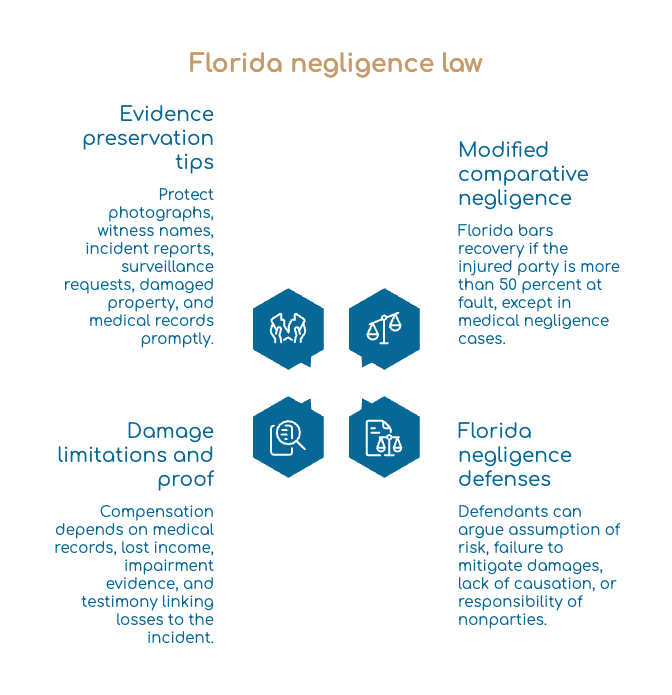
- Modified comparative negligence: Florida generally bars recovery when an injured party is more than 50 percent at fault, except in certain medical negligence matters.
- Florida negligence defenses: Defendants may argue assumption of risk, failure to mitigate damages, lack of causation, or responsibility of nonparties.
- Damage limitations and proof: Compensation may depend on medical records, lost-income documentation, evidence of impairment, and credible testimony linking losses to the incident.
- Evidence preservation tips: Photographs, witness names, incident reports, surveillance requests, damaged property, and medical follow-up records should be protected promptly to support an accurate assessment.
The Statute of Limitations for Florida Comparative Negligence Injury Cases
When must an injured person act to preserve a Florida comparative negligence claim? In most Florida negligence cases, a lawsuit must be filed within two years of the injury date. This deadline can control whether an injured person may seek compensation, even when another party clearly caused harm. Certain claims, including those involving government entities, medical negligence, or wrongful death, may be subject to different notice rules or filing periods.
Damages timelines should be evaluated early, because medical treatment, lost income, and lasting limitations often develop over time. Delay can also weaken Comparative fault evidence, including photographs, witness accounts, incident reports, and records showing how responsibility should be divided. For those committed to serving injured individuals and families, prompt attention to these deadlines supports fairness and accountability. Missing the statute of limitations may prevent recovery entirely, regardless of the severity of the harm or the percentage of fault assigned to another party under Florida law.
How a Florida Comparative Negligence Injury Lawyer Can Help You
After filing deadlines are identified and preserved, the focus often shifts to proving fault, documenting losses, and responding to allegations that the injured person shares responsibility. A Florida comparative negligence injury lawyer helps organize the claim so that responsibility is evaluated fairly and losses are supported by reliable evidence. This work can protect resources needed for care, recovery, and service to family or community.
- Evidence preservation: Counsel may secure photographs, reports, video, witness statements, and damaged property before crucial proof is lost or altered.
- Fault analysis: The lawyer reviews conduct by all parties, applies Florida’s comparative negligence rules, and challenges unsupported blame.
- Medical documentation: Treatment records, diagnostic findings, physician opinions, and future care needs are gathered to connect injuries to the incident.
- Claim presentation: Damages are calculated, insurer communications are managed, and settlement positions are prepared with disciplined accuracy.
Through this structured advocacy, the injured person’s account receives careful, informed protection.
When to Contact a Florida Comparative Negligence Injury Lawyer
Why should legal counsel be contacted early if fault may be disputed? In Florida injury matters, shared fault questions can develop quickly, especially when insurers review statements, photographs, reports, and medical records. Prompt consultation allows an injured person, family member, or advocate to understand deadlines, communication risks, and practical next steps before information is lost or misunderstood.
Early involvement also supports Evidence preservation steps, including securing scene photographs, vehicle data, surveillance footage, incident reports, damaged property, and medical documentation. These materials may help clarify how the event occurred and protect the injured person’s ability to present an accurate account.
Timing is especially important when contacting witnesses immediately. Memories fade, contact information changes, and independent observers may become difficult to locate. A Florida comparative negligence injury lawyer should be contacted as soon as possible after treatment is addressed, particularly when another party disputes responsibility, minimizes injuries, or requests recorded statements.
Why You Need an Experienced Florida Comparative Negligence Injury Lawyer
Because fault allocation can directly affect the value and viability of an injury claim, an experienced Florida comparative negligence injury lawyer may provide crucial guidance from the outset. Such counsel can evaluate how Florida’s modified comparative negligence rules may limit recovery, especially when opposing parties attempt to shift blame onto the injured person. Careful analysis helps ensure that responsibility is assigned based on facts, not assumptions.
A lawyer may coordinate Accident Scene Evidence, witness statements, medical documentation, and expert input to present a clear account of what occurred. This work supports fair treatment for injured individuals while promoting accountability for negligent conduct. An Insurance Coverage Review is also important, as available policies may determine the practical sources of compensation for medical care, lost income, and other losses.
Through disciplined case preparation, an attorney helps protect the injured person’s interests, reduces avoidable mistakes, and supports a lawful resolution that recognizes both responsibility and human need.
How to Choose the Right Florida Comparative Negligence Injury Lawyer for Your Case
When selecting a Florida comparative negligence injury lawyer, the injured person should consider whether the attorney has direct experience with fault disputes and reduced-recovery arguments under Florida law. The right lawyer should understand how insurers assign blame, evaluate damages, and challenge responsibility when an injured person is accused of contributing to the accident.
Strong Client communication is also crucial because the injured person should receive clear updates, practical guidance, and respectful answers throughout the case timeline. A qualified attorney should explain expected steps, potential delays, and decisions that may affect recovery.
The lawyer’s evidence strategy should include prompt investigation, review of witnesses, medical documentation, accident analysis, and the preservation of records that may reduce unfair blame. Careful preparation can improve settlement leverage by showing the opposing party that liability, damages, and comparative fault issues will be contested effectively. This supports a focused claim and helps protect the injured person’s opportunity for fair compensation.
About The Law Offices of Anidjar & Levine
For individuals facing a comparative negligence dispute after an injury in Florida, The Law Offices of Anidjar & Levine provides legal representation focused on protecting the client’s right to pursue compensation despite allegations of shared fault. The firm evaluates accident evidence, liability arguments, insurance positions, and damages to build a clear claim strategy.
Anidjar & Levine assists injured clients through each stage of the legal process, including investigation, communication with insurers, settlement negotiations, and, when necessary, litigation. Its approach emphasizes Client-Centered Guidance, giving clients consistent information so they can make informed decisions during a difficult time.
The firm’s attorneys understand how comparative negligence can affect recovery in Florida injury cases. By addressing fault disputes directly and documenting the full extent of losses, they aim to present each claim accurately and purposefully. This service supports clients seeking fair treatment, accountability, and meaningful recovery after preventable harm caused by another party’s negligence in serious circumstances.
Frequently Asked Questions
Can Tourists File Comparative Negligence Injury Claims in Florida?
Yes, tourists may file comparative negligence injury claims in Florida when another party contributed to their harm. In a resort accident, liability may be shared among the property owner, staff, vendors, or the injured visitor. Tourist responsibility is assessed by examining conduct, warnings, and reasonable care. Damages may be reduced by the visitor’s percentage of fault, so prompt reporting, medical care, and evidence preservation remain key for fair evaluation.
Does Comparative Negligence Apply to Bicycle Accident Cases?
Yes, comparative negligence applies to bicycle accident cases when evidence shows shared fault. A cyclist’s recovery may be reduced if rider negligence contributed, such as ignoring traffic signals, leaving a Bicycle lane unsafely, or failing to yield. Drivers may also bear responsibility for unsafe passing, distraction, or dooring. Each party’s conduct is evaluated carefully, allowing injured cyclists to seek compensation while promoting accountability, safety, and service to the public.
Can Fault Percentages Change After a Claim Is Filed?
Yes, fault percentages can change after a claim is filed. Insurers, attorneys, or courts may revise responsibility when updated evidence reveals new facts, such as witness statements, medical findings, photographs, or expert analysis. This reassessment can affect settlement revaluation, especially when the goal is to serve injured persons fairly and responsibly. Accurate fault allocation requires careful review, documented support, and disciplined advocacy throughout the claim process.
Are Children Treated Differently Under Florida Comparative Negligence Laws?
Yes. Children may be treated differently because Florida law considers age, maturity, and capacity when evaluating negligence. A young child may not be held to the same standard as an adult, while older minors may face closer review. Courts may also examine parental fault when supervision or decisions contributed to harm. Those serving injured families should prioritize child safety, careful documentation, and fair assessment of each child’s conduct and vulnerability.
Does Comparative Negligence Affect Wrongful Death Claims in Florida?
Yes, comparative negligence can affect Wrongful Death claims in Florida. If the deceased person shared responsibility, Contributory Negligence principles may reduce recoverable damages. Courts examine evidence, assign Fault Apportionment among responsible parties, and apply Damages Allocation accordingly. Survivors may still pursue compensation, but recovery can be limited by the decedent’s percentage of fault, ensuring accountability while preserving support for families harmed by preventable loss.
—————————
Florida comparative negligence claims require careful review of the evidence, accurate fault analysis, and timely legal action. Injured parties may still recover compensation when they share partial responsibility, but the value of a claim depends on the assigned percentage of fault. A qualified Florida comparative negligence injury lawyer can protect legal rights, challenge unfair blame, and pursue appropriate damages.
The Law Offices of Anidjar and Levine offers experienced guidance for victims seeking informed representation after an injury, including help from a Florida Car Accident Lawyer.