The Law Offices of Anidjar and Levine helps survivors assess potential civil claims, preserve evidence, and identify responsible parties, including the trainer, gym, or related entities.
Legal counsel may review texts, policies, witness statements, and facility records to evaluate misconduct, consent issues, and negligent supervision.
An attorney can also explain reporting options, damages for therapy and lost income, and important Florida deadlines.
The sections that follow outline central rights, steps, and case considerations.
Learn more from a Florida Sexual Assault Lawyer.
Main Takeaways
- A Florida personal trainer sexual misconduct lawyer can assess claims against the trainer, gym, franchise, or other responsible parties.
- Lawyers review texts, surveillance, intake forms, witness statements, and prior complaints to evaluate misconduct and preserve evidence.
- Claims may involve unwanted touching, coercive communications, stalking, harassment, or conduct exceeding legitimate training purposes.
- A lawyer can explain reporting options, statute deadlines, privacy protections, and steps to seek accountability without unnecessary public exposure.
- Compensation may include therapy costs, medical care, lost income, emotional distress, and other damages tied to the misconduct.
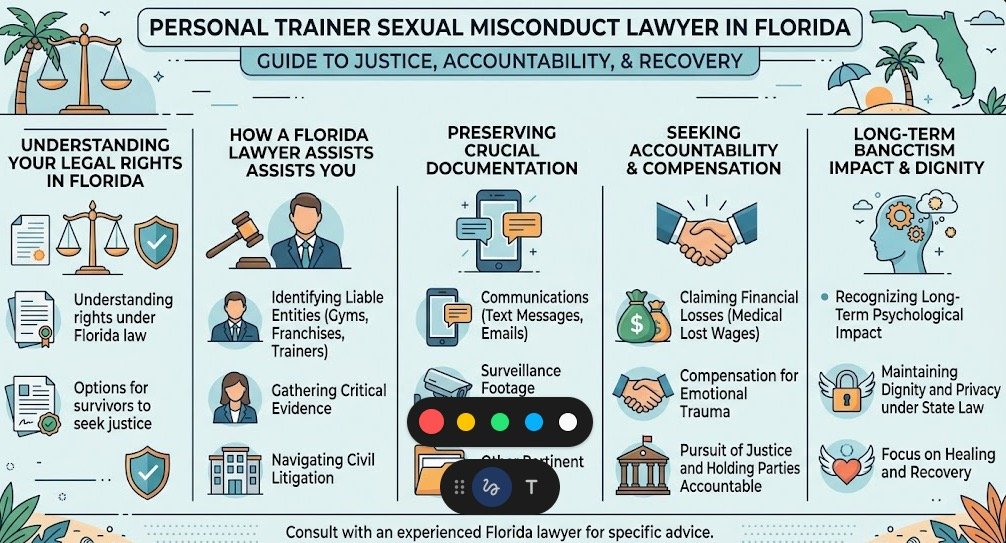
How We Can Help With Your Florida Personal Trainer Sexual Misconduct Claim
When a personal trainer abuses a position of trust, a Florida sexual misconduct claim requires prompt, informed legal attention. Counsel can assist by organizing facts, protecting confidentiality, and creating a clear path toward accountability. This support helps clients act with dignity while preserving their ability to serve family, work, and community responsibilities.
A law firm’s role includes early case assessment, strategic communication, and practical guidance through each stage of the claim. Attorneys can explain Victim compensation options, identify available insurance or institutional resources, and pursue damages related to therapy, lost income, and emotional harm. They also provide evidence preservation tips, such as saving messages, photographs, appointment records, billing statements, and witness names.
When necessary, counsel coordinates with counselors, physicians, and investigators to strengthen documentation and reduce unnecessary burdens on the client. Throughout representation, the focus remains steady: protect the client’s interests, honor their voice, and seek a just civil outcome.
Understanding Personal Trainer Sexual Misconduct Cases in Florida


Because fitness instruction often involves close physical proximity, individualized coaching, and repeated private contact, personal trainer sexual misconduct cases in Florida present distinct factual and legal issues. These matters often require careful review of communications, facility policies, witness statements, and the professional relationship between trainer and client.
OUR CONSULTATIONSARE FREE
START YOUR FREE CASE REVIEW

Florida claims may involve civil liability, criminal conduct, or both, depending on the facts. A proper evaluation considers Consent and boundaries, power imbalance, age, capacity, and whether touching exceeded legitimate training purposes. Documentation may include texts, assessments, surveillance footage, intake forms, and prior complaints. Institutions such as gyms, studios, and wellness centers may also face scrutiny for negligent hiring, supervision, or retention when warning signs were overlooked.
An informed legal response also considers state reporting requirements, preservation of evidence, and measures that protect others from harm. A careful, service-oriented approach seeks accountability, supports community safety, and respects the dignity and well-being of every affected person involved.
Common Scenarios When Personal Trainer Sexual Misconduct Might Take Place in Florida


Personal trainer sexual misconduct in Florida may arise in several settings where privacy, physical contact, or reduced supervision create opportunities for boundary violations. Common examples include private training sessions, locker room encounters, and inappropriate physical adjustments made under the guise of instruction. Concerns may also arise during after-hours gym meetings, where informal conditions can increase the risk of improper conduct.
Private Training Sessions
Why do private training sessions present heightened concerns in these cases? One-on-one settings can reduce oversight, increase power imbalances, and make it harder for others to observe troubling conduct. In Florida, these circumstances may create opportunities for blurred professional roles, ignored client boundaries, and subtle grooming behaviors that develop over time.
A detached review often notes that misconduct during private sessions may involve unnecessary touching, intrusive comments about a client’s body, or exercises arranged to isolate the client further. When a trainer uses authority to pressure participation or dismiss discomfort, consent violations may occur. Facilities, supervisors, and witnesses may have limited awareness because the interaction happens behind closed doors or in secluded areas. Careful documentation, prompt reporting, and supportive legal guidance can help protect clients and strengthen accountability for those affected.
Locker Room Encounters
Although locker rooms are intended to serve routine changing and hygiene needs, they can present elevated risks when a trainer uses the setting to cross professional boundaries or exploit a client’s vulnerability. In Florida facilities, misconduct allegations may arise from lingering after sessions, appearing uninvited during changing periods, following clients into secluded areas, or making sexual comments where privacy expectations are heightened.
These circumstances often require careful reporting, because nearby patrons, staff members, and surveillance systems may affect Witness credibility and support timely clarification of events. Responsible response measures include preserving messages, access logs, camera footage, and facility incident reports through proper evidence handling. A detached legal review can help determine whether negligent supervision, inadequate security, or policy failures enabled the encounter and left the client without the expected protection or recourse.
Inappropriate Physical Adjustments
When a trainer claims that hands-on guidance is necessary to correct form, the line between legitimate instruction and sexual misconduct can become difficult to recognize in the moment. In Florida fitness settings, inappropriate physical adjustments may involve touching intimate areas, prolonged contact, or repeated corrections without clear boundary consent. Misconduct concerns increase when a client appears uncomfortable, objects, or is not informed in advance about the nature of the contact.
A professional trainer is expected to explain adjustments, request permission, and respect immediate refusals. Problems may also arise when touching occurs in spaces with limited venue privacy, where oversight is reduced and the client feels isolated. For those committed to protecting others, recognizing these warning signs can support timely reporting, preserve dignity, and help prevent similar harm within the broader fitness community.
After-Hours Gym Meetings
Because gyms often operate with reduced staff and limited oversight outside normal business hours, after-hours meetings can create conditions in which personal trainer sexual misconduct is more likely to occur in Florida fitness settings. In these circumstances, private access, locked entrances, and fewer witnesses may increase risk for clients seeking guidance and support. What begins as extra coaching, schedule flexibility, or individualized attention may shift into boundary violations, especially when authority and trust are misused.
Disputes may also arise regarding whether communications, touching, or invitations were welcome, leading to consent disputes that require careful review. For organizations committed to protecting others, clear policies, surveillance, reporting channels, and documented session times can help reduce opportunities for misconduct and promote safer, more accountable training environments across Florida communities for all.

Legal Rights of Personal Trainer Sexual Misconduct Victims in Florida
While each case turns on its specific facts, victims of personal trainer sexual misconduct in Florida generally have important legal rights that may be enforced through both civil and criminal processes. Florida law may protect bodily autonomy, dignity, and safety when Consent and boundaries are ignored, manipulated, or exploited in a training environment.
Victims may have rights involving:
- reporting conduct that may constitute assault, battery, stalking, harassment, or other criminal acts
- pursuing civil claims for damages against an individual trainer or a negligent gym
- relying on Workplace policy violations to show notice, foreseeability, or institutional failure
- seeking measures that promote privacy, accountability, and protection from retaliation
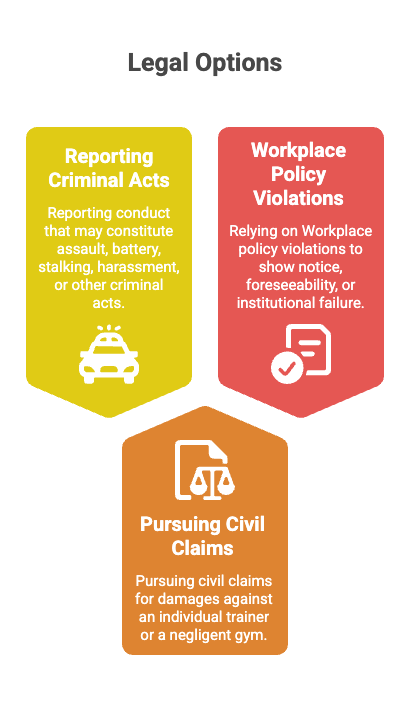
These rights may arise even when misconduct occurred during sessions that appeared professional on the surface. Depending on the evidence, liability may extend beyond the trainer to employers, contractors, or facilities that failed to supervise, screen, or respond appropriately. A careful legal review can clarify available remedies under Florida law for survivors.
Steps to Take After a Personal Trainer Sexual Misconduct Incident in Florida
After a personal trainer’s sexual misconduct incident in Florida, prompt action can affect both physical well-being and any future legal claim. Immediate medical care may address injuries and create important records, while reporting the misconduct to law enforcement, gym management, or other appropriate authorities may help establish an official account. It is also important to preserve critical evidence, including communications, photographs, witness information, and clothing or other relevant items.
Seek Immediate Medical Care
If a personal trainer’s conduct results in sexual misconduct, immediate medical care should be a priority to recover injuries, assess overall health, and preserve important evidence. Prompt evaluation can recover visible injuries, identify hidden harm, and reduce the risk of untreated complications. Medical professionals may also provide trauma support, helping the individual feel safer and more stable during an overwhelming time.
A timely examination can create medical documentation that records symptoms, findings, and recommended care. This record may later help clarify what occurred and support the individual’s recovery needs. Depending on the circumstances, emergency care, urgent care, or a primary physician may be appropriate. Follow-up treatment, counseling referrals, and testing for related health concerns can also be important. Seeking care promptly promotes protection, stability, and informed next steps after harm.
Report The Misconduct
Medical attention can address immediate health needs, and reporting the misconduct can help safeguard the individual’s safety, preserve evidence, and create an official record of the incident. Prompt notice to gym management, franchise leadership, or law enforcement may reduce the risk of harm to others and support community accountability.
A survivor may also consider notifying relevant licensing boards, certification organizations, or state agencies that oversee fitness professionals. In some settings, Mandatory reporting rules may require certain professionals or institutions to alert authorities when abuse is disclosed. Clear, timely reporting can strengthen Evidence preservation efforts by documenting dates, locations, witnesses, and prior complaints.
A trusted advocate, family member, or attorney may assist with communications, accompany the individual during interviews, and help ensure the report is handled with dignity, seriousness, and care.
Preserve Key Evidence
Because important details can fade quickly, preserving crucial evidence should begin as soon as the individual is safe and able to act. A careful record can support accountability, protect others, and strengthen any future legal claim or investigation. The individual should save messages, emails, call logs, appointment records, billing statements, and relevant social media communications or posts.
They should also write a detailed timeline of what occurred, noting dates, times, locations, statements, and any physical contact. Witness accounts should be gathered promptly, while memories remain fresh. Copies of incident reports made to the gym, employer, or law enforcement should be retained. If available, requests should be made to preserve video footage from training areas, entrances, hallways, or parking lots. Photographs of injuries or torn clothing may also be helpful later.
How a Florida Personal Trainer Sexual Misconduct Lawyer Can Help You Initiate a Case
At the outset, a Florida personal trainer sexual misconduct lawyer can help initiate a case by evaluating the reported conduct, identifying potential legal claims, and advising on the steps needed to preserve relevant evidence.
Through careful case assessment, counsel may determine whether civil claims against the trainer, the gym, or related parties are available and explain the Statute of Limitations and procedural requirements under Florida law.
- Conducting Evidence collection, including messages, contracts, surveillance requests, and witness names
- Providing survivor support through clear communication, referrals, and respectful planning
- Identifying liable individuals or entities and outlining available legal pathways
- Preparing notices, records requests, and other filings needed to begin the matter properly
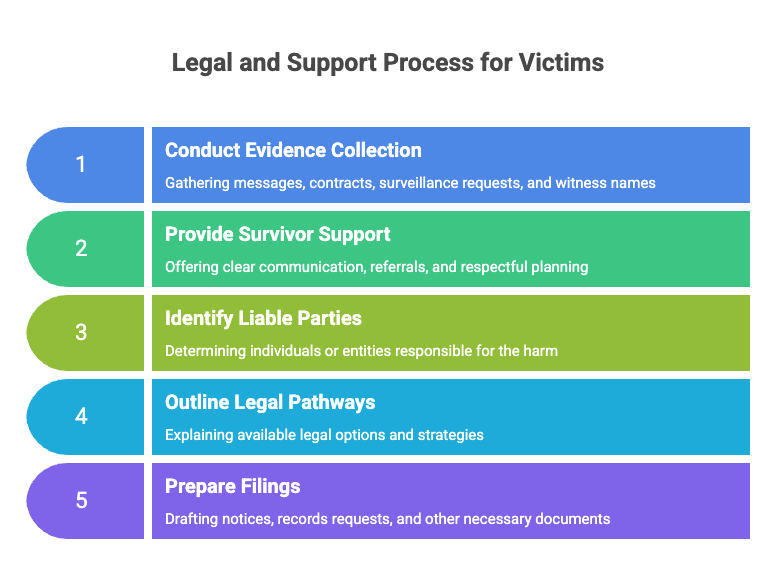
This early guidance can help an affected person act with purpose and dignity while serving broader community safety. A lawyer may also coordinate communications with insurers, employers, or facility representatives to reduce confusion and protect the integrity of the case from avoidable mistakes or delay.
Long Term Effects of Personal Trainer Sexual Misconduct Trauma
Personal trainer sexual misconduct can produce lasting emotional and psychological harm, including anxiety, depression, and persistent distress that extends well beyond the initial incident. Survivors may also experience serious trust and relationship struggles, as the abuse can affect their sense of safety, personal boundaries, and ability to engage confidently with others. In many cases, these effects also disrupt careers and daily life, making it more difficult to maintain employment, focus on routine responsibilities, and participate in normal activities.
Emotional And Psychological Harm
Over time, the emotional and psychological harm caused by sexual misconduct in a personal training setting can extend far beyond the initial incident and disrupt nearly every part of a survivor’s life. Survivors may experience long-term PTSD, persistent anxiety, depression, sleep disturbance, panic, shame, and difficulty concentrating during ordinary responsibilities. These effects can impair work performance, academic progress, physical health, and a person’s sense of safety in daily environments.
In many cases, trauma also alters self-worth and creates lasting emotional exhaustion. Survivors may question their own perceptions, especially when concerns about victim credibility discourage reporting or delay treatment. A service-minded legal and support response recognizes that recovery often requires counseling, medical care, and stable advocacy. Careful documentation and compassionate intervention can help address invisible injuries that remain serious, disabling, and deeply disruptive over many years.
Trust And Relationship Struggles
Rebuilding trust after sexual misconduct by a personal trainer is often a prolonged and destabilizing process that affects both intimate and everyday relationships. Survivors may become guarded with partners, relatives, friends, and helpers who genuinely wish to support recovery. Ordinary interactions can feel unsafe because prior boundary-consent violations have distorted expectations of respect, safety, and personal agency.
Trust struggles are often intensified by gym power dynamics, in which authority, access, and physical proximity have previously been misused. A survivor may question motives, misread benign behavior as threatening, or withdraw from community settings that once felt welcoming. These responses can burden marriages, friendships, caregiving roles, and faith communities. With informed support, patient listening, and consistent respect for autonomy, relationships can gradually become more stable, dependable, and restorative over time.
Career And Daily Disruption
The effects of sexual misconduct by a personal trainer often extend beyond relationships and into a survivor’s ability to work, maintain routines, and manage ordinary responsibilities. Concentration may decline, sleep may worsen, and previously manageable tasks can become burdensome. Some survivors miss work, avoid fitness environments, or leave positions tied to health and wellness.
Career disruption may also arise when trauma interacts with Workplace power dynamics, especially if the trainer held influence within a gym, referral network, or wellness community. Fear of disbelief, retaliation, or professional damage can contribute to reporting delays. Daily life may narrow as errands, exercise, and social obligations begin to feel unsafe or exhausting. In service-oriented communities, these disruptions can affect caregiving, volunteer roles, and financial stability, creating long-term barriers to recovery, independence, and consistent employment.

What to Expect During a Florida Personal Trainer Sexual Misconduct Claim Process
A Florida personal trainer sexual misconduct claim typically begins with an initial case evaluation, during which the available facts, legal options, and potential grounds for liability are assessed. The process then centers on gathering evidence and documentation, followed by formal filing and investigation to establish the relevant timeline, conduct, and damages. Depending on the strength of the evidence and the parties’ positions, the matter may conclude through settlement negotiations or proceed to trial.
Initial Case Evaluation
Often, the initial case evaluation in a Florida personal trainer sexual misconduct claim is the stage where counsel assesses the reported conduct, identifies potential legal claims, and explains how state law may apply to the known facts. During this meeting, the attorney typically asks for a clear timeline, the setting of the interactions, and whether any reports were made to a gym, employer, or law enforcement. Counsel may also discuss Witness statements and evidence preservation notes as part of an organized intake process.
The purpose is to determine whether the matter may support a civil action and what immediate protective steps may be appropriate. For individuals motivated by concern for personal safety and community well-being, this consultation often provides structure, informed guidance, and a careful path toward accountable next actions.
Evidence And Documentation
Documenting relevant facts and preserving available records typically becomes central to a Florida personal trainer sexual misconduct claim, because the strength of the matter may depend on whether the reported conduct can be supported by clear, consistent evidence.
Useful materials may include Victim statements, text messages, emails, appointment logs, gym policies, security footage, billing records, and, when appropriate, medical or counseling notes. Careful document preservation helps prevent accidental loss of information that may later clarify disputed events. Witness identification can also matter, including staff members, clients, or others who observed interactions before or after the alleged misconduct.
In many matters, timeline reconstruction helps organize dates, locations, communications, and behavioral changes into a coherent account. Thorough documentation often assists advocates and counsel in accurately understanding the circumstances and responding with informed, service-minded support.
Filing And Investigation
When a Florida personal trainer’s sexual misconduct claim moves from initial reporting into formal filing and investigation, the process typically shifts from information gathering to structured review by counsel, insurers, facility representatives, or other relevant authorities. During this stage, careful attention is often given to reporting timelines, documenting injuries, and preserving statements so the record remains accurate and useful.
Interviewing witnesses may occur early, especially when memories are fresh and facility records are still available. Relevant materials can include contracts, incident reports, communications, surveillance footage, and internal policies. Counsel or investigators may also assess whether the gym, studio, or employer had prior notice of concerning conduct. A service-minded approach values accuracy, dignity, and responsible action, helping affected individuals and supporting safer training environments for future clients and staff across Florida communities statewide.
Settlement Or Trial
Although many Florida personal trainer sexual misconduct claims resolve before a courtroom proceeding becomes necessary, the settlement or trial phase still requires careful preparation, realistic expectations, and a clear understanding of potential outcomes. During this stage, counsel generally evaluates evidence, damages, and liability while protecting a claimant’s Rights to privacy and supporting witness protection measures when sensitive testimony is involved.
Mediation strategies may help both sides assess risk, promote accountability, and reach practical resolutions without further harm. If settlement negotiations succeed, the parties may agree to compensation, confidentiality terms, and policy changes that better protect future clients. If no agreement is reached, trial preparation becomes more demanding, requiring organized testimony, expert input, and consistent documentation. Throughout either path, informed guidance helps claimants pursue justice while preserving dignity, safety, and the broader public interest.
Compensation for Florida Personal Trainer Sexual Misconduct Damages
Because sexual misconduct by a personal trainer can cause harm that extends far beyond the underlying incident, compensation in a Florida civil claim may include damages for both economic and non-economic losses. In practice, counsel often emphasizes proof of damages and careful document preparation, helping survivors present medical records, therapy invoices, employment information, communications, and witness accounts in a clear, service-oriented case narrative.
| Area | Supporting material |
|---|---|
| Treatment needs | Medical and counseling records |
| Life disruption | Work history and witness statements |
Compensation may address trauma-related treatment, lost income, reduced earning capacity, and other measurable consequences tied to the misconduct. It may also reflect the personal impact on dignity, daily functioning, relationships, and trust when supported by credible evidence. Florida courts and insurers generally evaluate the severity of harm, the consistency of documentation, and the connection between the trainer’s conduct and the claimed losses. Thorough case development can strengthen accountability and support a survivor’s path toward stability and recovery.
Economic vs Non-Economic Damages in Florida Personal Trainer Sexual Misconduct Cases
In Florida personal trainer sexual misconduct cases, damages generally fall into two categories, economic and non-economic, each addressing a different form of loss. Economic damages typically include measurable financial harms such as medical expenses, therapy costs, and lost income, while non-economic damages concern pain and suffering, emotional distress, and other intangible effects. Establishing either type of damage in Florida requires credible documentation, consistent testimony, and evidence that clearly links the misconduct to the claimed losses.
Economic Damages Overview
When a personal trainer’s sexual misconduct causes measurable financial harm, Florida law generally permits recovery of economic damages to address those tangible losses. These damages may include medical bills, counseling costs, lost wages, reduced earning capacity, transportation expenses, and other documented out-of-pocket losses tied to the misconduct.
Although emotional trauma may motivate treatment, this section concerns only the financial effects that can be calculated with reasonable certainty. Courts and insurers usually require proof of compensation, such as invoices, payroll records, receipts, employment files, and professional opinions demonstrating the value of future care or income loss. Careful documentation helps survivors and those supporting them pursue resources needed for recovery, stability, and continued service to others. A lawyer may organize these records, connect losses to the misconduct, and present a clear demand grounded in Florida evidence standards.
Non-Economic Harm Explained
Economic losses address the costs that can be counted, while non-economic damages concern the human harm that does not appear on a bill or payroll record. In Florida personal trainer sexual misconduct cases, these damages may include pain, emotional distress, humiliation, anxiety, loss of dignity, and disruption of trusted relationships.
Such harm often affects daily functioning, sleep, concentration, and a person’s sense of safety in fitness or wellness settings. It may also involve confusion around boundaries, including violations where Nonverbal consent was ignored or misread. From a service-oriented perspective, recognizing non-economic harm reflects respect for the whole person, not merely financial consequences. Thoughtful victim advocacy emphasizes repairing, stability, and accountability, while acknowledging that some injuries are profoundly real even when they cannot be measured through receipts, invoices, or wage statements alone.
Proving Damages In Florida
Because damages must be supported by evidence, Florida personal trainer sexual misconduct cases often turn on the quality and consistency of the proof offered for both financial and personal harm. Economic damages may include therapy costs, lost wages, medication expenses, and future treatment needs, all of which are commonly documented through invoices, employment records, and medical records. Non-economic damages address pain, emotional distress, humiliation, and loss of enjoyment of life, which often require careful presentation.
Courts and insurers evaluate several types of evidence, including treating provider notes, expert opinions, witness statements, journals, and documentation showing changes in daily functioning. Consistent timelines and credible testimony strengthen the connection between the misconduct and the claimed losses. Thorough proof helps survivors seek accountability, supports informed legal evaluation, and promotes outcomes that honor dignity, safety, and recovery.
When a Florida Personal Trainer Sexual Misconduct Case Goes to Trial vs Settlement
A Florida personal trainer sexual misconduct case may be resolved through settlement or proceed to trial, depending on the strength of the evidence, the extent of the alleged harm, and the parties’ willingness to accept risk. Attorneys assess witness credibility, documentation, expert opinions, and available insurance coverage before advising a course that protects the client’s interests and supports accountability.
A Trial strategy overview considers whether testimony will be persuasive, whether disputed facts can be clarified, and whether a jury may fairly value physical, emotional, and financial harm. Settlement negotiation factors often include confidentiality terms, litigation costs, emotional burden, public exposure, and the likelihood of collecting a judgment. When liability appears strong and damages are substantial, a settlement may provide prompt relief and reduce further strain.
When fault is contested or the offered amount is inadequate, trial may better serve the injured person and the broader interests of safety, transparency, and responsible conduct. Each path requires careful preparation and principled decision-making.
The Statute of Limitations for Florida Personal Trainer Sexual Misconduct Cases
Timing often shapes the viability of a Florida personal trainer’s sexual misconduct claim just as much as the choice between settlement and trial. Florida law imposes filing deadlines that can affect both civil claims and any related criminal charges, although the applicable period depends on the facts, the victim’s age, and the legal theory asserted.
Because these cases often involve delayed reporting, careful attention to limitations periods is critical for those seeking accountability and protection for others. Some claims may be governed by deadlines tied to assault, battery, negligence, or intentional tort theories, while others may involve exceptions that extend or toll the time to sue. Criminal charges follow separate rules, and prosecutors evaluate timing under different statutes.
Accurate evidence preservation remains important from the outset, since records, communications, surveillance footage, and witness memories can deteriorate over time. A timely review of filing deadlines helps preserve options and supports a more informed path toward lawful resolution.
When to Contact a Personal Trainer Sexual Misconduct Lawyer in Florida
When concerns about sexual misconduct by a personal trainer arise, prompt consultation with a Florida attorney is often advisable, even if the available information seems incomplete. Early Legal Consultation can help a person understand immediate options, protect personal well-being, and identify practical next steps before important details are lost or overlooked in the confusion following a disturbing event.
Contact may also be appropriate after repeated boundary violations, coercive messages, unwanted touching, threats, retaliation, or reports to a gym, studio, or licensing body. Counsel can guide Document Evidence Gathering, including the preservation of texts, emails, schedules, payment records, photographs, witness names, and written recollections. Reaching out soon may also assist families, caregivers, and community advocates who are trying to support someone respectfully and responsibly.
Even when uncertainty remains about what occurred, a timely legal discussion can clarify whether conduct should be documented, reported, or addressed through protective measures, while helping concerned individuals proceed with care and dignity.
Why You Need an Experienced Florida Personal Trainer Sexual Misconduct Lawyer
Because these matters often involve disputed facts, privacy concerns, and overlapping civil, criminal, and institutional issues, experienced Florida counsel can provide structure and protection that general legal guidance may not offer. A seasoned attorney can assess evidence, preserve records, and help survivors respond without jeopardizing related claims or investigations. That guidance supports accountability while reducing unnecessary harm to the person seeking help.
Experienced counsel also understands how allegations of misconduct may intersect with employer policies, licensing concerns, insurance issues, and reporting obligations. In cases involving Workplace intimidation strategies, a lawyer can identify coercive patterns that might otherwise be minimized or misunderstood. Knowledge of Gym consent boundaries is equally important because trainer-client interactions often involve physical contact, trust, and unequal influence.
An attorney with focused experience can clearly frame these facts, communicate effectively with institutions, and pursue remedies that protect the client and promote safer environments for others in the broader community statewide.
How to Choose the Right Personal Trainer Sexual Misconduct Lawyer for Your Case in Florida
How should a survivor evaluate legal representation in a matter involving alleged personal trainer sexual misconduct in Florida? A careful review should focus on the lawyer’s experience handling sexual misconduct claims, knowledge of civil deadlines, and ability to explain options with clarity and respect. Counsel should demonstrate a structured approach to Evidence preservation, witness interviews, and case strategy from the earliest stage.
A strong candidate will also prioritize confidentiality protections and victim support throughout the process. This includes secure communication practices, sensitivity to trauma, and coordination with counselors or advocates when appropriate. Survivors and their families may also assess responsiveness, courtroom preparation, and past results in comparable matters. Fee structure, availability, and willingness to pursue institutional accountability can further guide selection.
Choosing counsel is not only a legal decision but also a practical step toward safety, dignity, and informed advocacy for those seeking justice and protection in Florida communities statewide.
About The Law Offices of Anidjar & Levine
After considering the qualities that matter in selecting counsel, attention may turn to the Law Offices of Anidjar & Levine and the role the firm may serve in Florida personal trainer sexual misconduct matters.
The firm is positioned to help clients understand legal standards that may apply to trainer conduct, gym policies, and civil liability.
Its work may include reviewing evidence, explaining reporting options, and determining whether misconduct involved violated consent boundaries or created safety risks.
The firm may also evaluate whether a gym, franchise, or employer failed to respond appropriately after notice of concerning behavior. In some matters, attorneys may address related harms, including employment retaliation, reputational damage, and emotional distress.
A service-minded audience may value a firm that approaches these cases with careful attention, respect, and practical guidance. By offering structured case evaluations and client communication, the firm may help individuals pursue accountability while protecting dignity, privacy, and the ability to make informed decisions throughout the legal process.

Frequently Asked Questions
Can Gyms Be Liable for Independent Contractor Personal Trainers’ Misconduct?
Yes, gyms can be liable for an independent contractor trainer’s misconduct, depending on the facts. Courts often examine vicarious liability, the gym’s hiring practices, and the degree of control the contractor exercises over training methods, scheduling, supervision, and client interactions. Liability may also arise if the gym knew of risks, ignored complaints, or presented the trainer as its representative. Careful policies and oversight are critical to protect clients and uphold community trust.
Will Filing a Claim Affect My Gym Membership or Contract?
Filing a claim does not automatically end a gym membership or void a contract, though contract impact depends on the membership terms, the gym’s policies, and the facts involved. Claim timing can also matter, especially if cancellation rights, freezes, or notice deadlines apply. A careful review helps protect the claimant’s interests while preserving options for continued access, refund requests, or lawful termination if the gym’s conduct materially breached agreed obligations.
Can Surveillance Footage From the Gym Help Prove Misconduct?
Yes, surveillance footage from the gym can help prove misconduct, especially when it confirms timelines, locations, and interactions. Its value depends on preservation, authenticity, and compliance with evidentiary standards. Footage may also raise issues of digital privacy, particularly regarding who accessed or shared it. An attorney can evaluate whether the recording supports witness accounts, reveals policy violations, and strengthens a claim intended to protect others from similar harm.
Are Incidents During Off-Site Training Sessions Handled Differently in Florida?
Yes, incidents during off-site training sessions may be handled differently in Florida because off-site obligations and liability distinctions often affect duty, supervision, and the availability of evidence. A careful review usually considers the trainer’s role, the location, any contracts, and whether the conduct remained connected to professional services. Those seeking to protect others should understand that reporting options, civil claims, and organizational responsibility may still apply even if the session occurs elsewhere.
Can I Remain Anonymous When Filing a Sexual Misconduct Claim?
Yes, a person may remain anonymous at certain stages through confidential reporting or anonymous complaints, depending on the forum and available evidence. However, full anonymity is not always possible if a formal investigation, lawsuit, or disciplinary hearing proceeds. Institutions may protect identity as much as possible while still ensuring fairness. Careful legal guidance helps individuals serve others by responsibly reporting misconduct, protecting both personal privacy and the integrity of the process.
—————————
Victims of personal trainer sexual misconduct in Florida may have important legal options, and timely action can help protect both their rights and their well-being.
A qualified lawyer can assess the facts, preserve evidence, and pursue accountability against the trainer and any negligent facility.
The Florida Sexual Assault Lawyer team at Law Offices of Anidjar & Levine provides informed guidance throughout this process, helping clients understand their claims and seek appropriate compensation under Florida law with clarity, diligence, and experienced legal support.